

If you’ve heard of GLP-1, there’s a good chance it has been in connection with weight-loss medications. But GLP-1 isn’t something invented for a medication. Your body makes GLP-1 naturally. So what is GLP-1?
GLP1 is a hormone released primarily from specialised cells in your gut after you eat. It forms part of the communication system between your digestive system, pancreas and brain, helping your body respond appropriately to a meal.
Among its best-established roles, GLP-1 helps:
- regulate blood glucose after eating
- stimulate insulin secretion when glucose is elevated
- suppress glucagon
- influence gastric emptying
- promote feelings of satiation and reduce hunger
This combination of effects is why GLP-1 has become such an important area of research in appetite, weight management and metabolic health.
Going deeper on exactly what is GLP-1, where GLP-1 comes from, and what you can eat to influence your body’s own GLP-1 response?
Let’s look at the science.
What does GLP-1 stand for?
What is GLP-1 stands for glucagon-like peptide-1.
It belongs to a group of hormones known as incretin hormones.
GLP-1 is produced predominantly by specialised enteroendocrine L-cells in the intestine. When nutrients enter the digestive system after a meal, GLP-1 secretion increases.
This means your gut isn’t simply a tube through which food travels.
It is also an important endocrine organ, detecting nutrients and sending hormonal signals around the body.
Where is GLP-1 made?
Most circulating GLP-1 originates in the gastrointestinal tract.
L-cells are found throughout the intestine, with particularly high numbers towards the distal small intestine and colon.
After eating, GLP-1 concentrations rise rapidly. The early response may involve neural and hormonal signalling, while later secretion occurs as nutrients interact with L-cells further along the digestive tract.
A simplified pathway looks like this:
YOU EAT
↓
Nutrients enter the digestive tract
↓
Gut nutrient-sensing pathways are activated
↓
L-cells release GLP-1
↓
Signals reach the pancreas, digestive system and brain
↓
GLP-1 helps coordinate the body’s response to the meal
That gut-to-body signalling is one reason GLP-1 is so interesting.
What does GLP-1 actually do?
GLP-1 doesn’t have one single function.
It participates in several processes that collectively affect what happens after you eat.
1. GLP-1 stimulates insulin
One of GLP-1’s best-established functions is its incretin effect.
When blood glucose rises after eating, GLP-1 enhances glucose-dependent insulin secretion from pancreatic beta cells.
Insulin then helps glucose move from the bloodstream into cells where it can be used or stored.
Importantly, GLP-1’s insulin-stimulating action is glucose dependent — its effect is greater when glucose concentrations are elevated.
Your next read: More about what is insulin resistance
2. GLP-1 suppresses glucagon
GLP-1 can also reduce secretion of glucagon.
Glucagon generally acts in opposition to insulin by signalling the liver to release glucose.
After a meal, therefore, GLP-1 helps coordinate glucose regulation through two complementary actions:
↑ insulin
and
↓ glucagon
Together, these actions help limit the rise in blood glucose following food intake.
3. GLP-1 influences how quickly food leaves the stomach
GLP-1 also participates in the regulation of gastric emptying — the rate at which food moves from your stomach into your small intestine.
Slower gastric emptying can moderate how quickly nutrients, including glucose, reach the intestine and enter circulation.
This is another mechanism connecting GLP-1 with post-meal blood glucose regulation and satiation.
4. GLP-1 communicates with the brain
GLP-1 signalling also interacts with brain regions involved in appetite regulation.
The result can be:
↓ hunger
↑ satiation
↓ subsequent food intake
Research into nutrient-induced appetite regulation describes communication between the gastrointestinal tract and brain through both hormonal and neural pathways.
This is an important distinction:
GLP-1 doesn’t simply “switch appetite off.”
Appetite is controlled by a complex network involving the gut, brain, nervous system and numerous hormones including ghrelin, leptin, PYY, CCK and GLP-1.
GLP-1 is one part of that system.
What triggers natural GLP-1 release?
Food triggers natural GLP-1 release.
More specifically, your intestine contains nutrient-sensing mechanisms capable of detecting products derived from carbohydrates, fats and proteins.
All three macronutrients have been shown to stimulate GLP-1 secretion, although they use different sensing and signalling mechanisms.
For example:
| Nutrient | Relationship with GLP-1 |
|---|---|
| Carbohydrate | Glucose and carbohydrate digestion products can stimulate intestinal GLP-1 secretion |
| Protein | Amino acids and peptides can stimulate GLP-1 release |
| Fat | Fatty acids can activate nutrient-sensing pathways involved in GLP-1 secretion |
| Certain fibres | May influence GLP-1 indirectly through fermentation and gut microbial metabolites |
Protein is particularly interesting because several amino-acid and peptide-sensing pathways have been identified in intestinal cells.
But fibre gives us another fascinating pathway.
Interested in adding more fibre to your day?
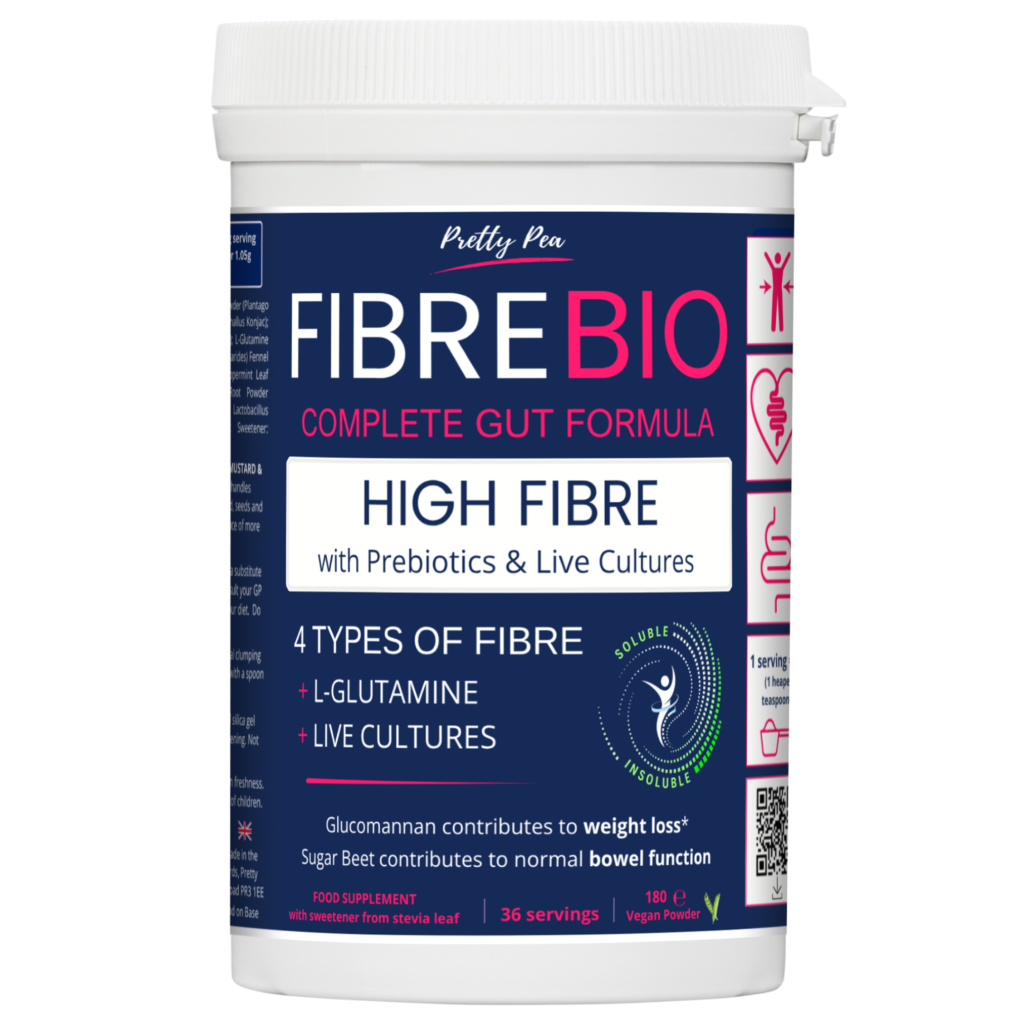
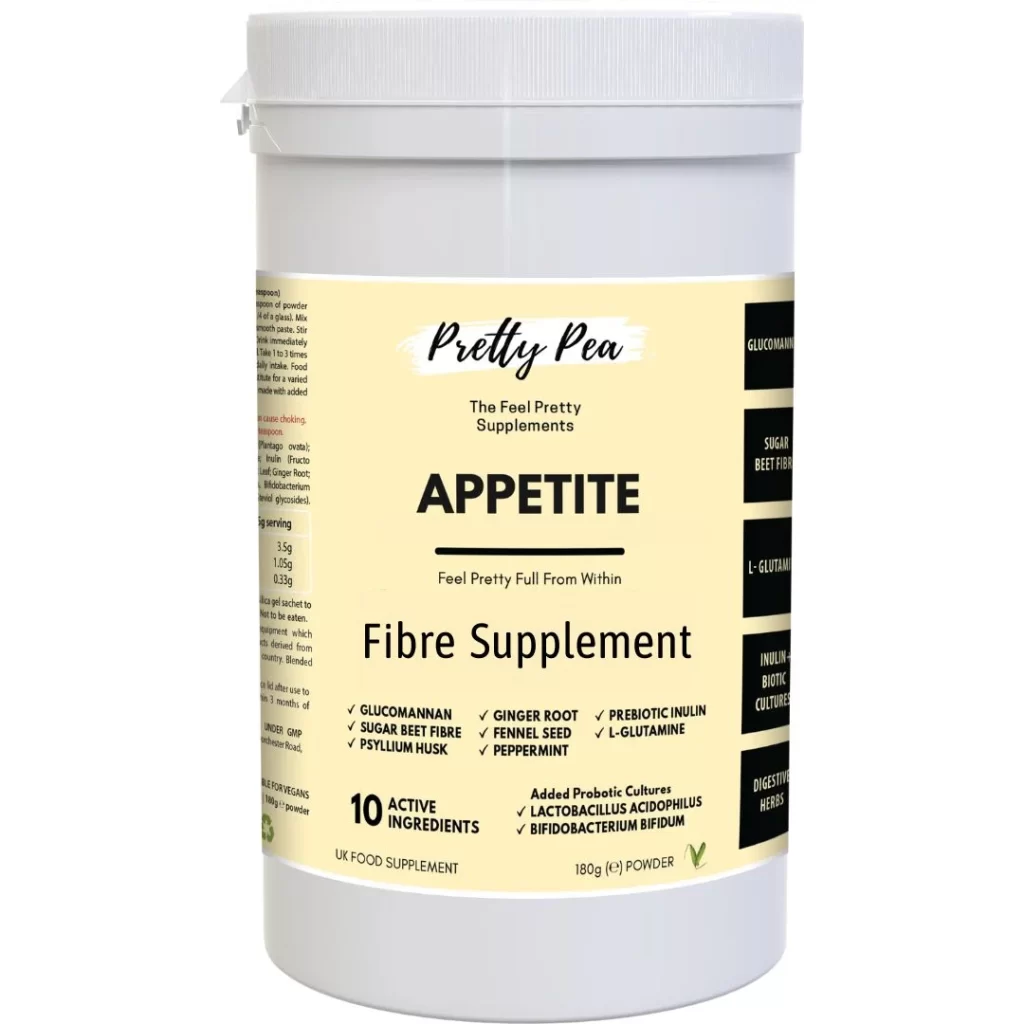
FibreBio is our multi-fibre powder combining psyllium husk, inulin, glucomannan and sugar beet fibre, alongside live cultures, L-glutamine and traditional digestive botanicals.
It’s designed as a simple way to add a blend of different fibre sources to your daily routine.
FIBREBIO Psyllium Husk Powder | High Fibre Supplement
Why FIBREBIO?
- High-fibre, diverse multi-fibre formula
- Psyllium husk + glucomannan
- Prebiotics + live cultures
- Sugar beet fibre contributes to an increase in faecal bulk*
- Glucomannan contributes to weight loss in the context of an energy-restricted diet*
- 36 servings | Vegan | UK made
What does fibre have to do with GLP-1?
This is where the gut microbiome enters the picture.
Some dietary fibres reach the large intestine without being completely digested in the small intestine.
There, certain fibres can be fermented by gut bacteria.
FERMENTABLE FIBRE
↓
GUT BACTERIA
↓
FERMENTATION
↓
SHORT-CHAIN FATTY ACIDS (SCFAs)
↓
GUT SIGNALLING
↓
GLP-1 secretion may be influenced
SCFAs include compounds such as acetate, propionate and butyrate.
Research suggests that SCFA-sensing receptors participate in signalling pathways involved in incretin secretion.
This provides a biologically plausible connection between:
dietary fibre → gut microbiome → microbial metabolites → appetite hormones.
However, this needs an important caveat.
Does eating more fibre automatically increase GLP-1?
Not necessarily.
This is exactly where internet discussions about “natural GLP-1 foods” often become much more certain than the research warrants.
A 2026 scoping review examined human randomised controlled trials investigating individual dietary fibres, circulating GLP-1 and satiety. It identified 52 studies involving 1,085 participants, but most studies were small and acute, and results varied according to fibre type and study design.
So it would be misleading to say:
“Fibre boosts GLP-1 just like a GLP-1 medication.”
It doesn’t.
A more accurate conclusion is:
Certain dietary fibres may influence endogenous GLP-1 secretion through several mechanisms, including microbial fermentation, but responses vary considerably between fibre types and individuals.
We’ll explore this in much more detail in our separate guide to fibre, the gut microbiome and GLP-1.
GLP-1 and fullness: what’s the connection?
Compare GLP-1 and Fullness
Your desire to stop eating isn’t determined simply by whether your stomach is physically full.
After eating, numerous signals begin communicating information about the meal to the brain.
GLP-1 is one of these.
GLP-1 receptor signalling is associated with activation of brain pathways involved in satiation and appetite regulation, while GLP-1 also influences gastric emptying.
Think of fullness as the result of multiple overlapping signals:
Food volume
- stomach stretching
- nutrient sensing
- gut hormones
- brain signalling
- previous energy intake
- sleep, stress and activity
= how hungry or satisfied you feel
This is why reducing appetite biology to one hormone is an oversimplification.
Your next read: Appetite Regulation: How Fibre vs GLP-1 Compare
GLP-1 vs ghrelin: what’s the difference?
Compare GLP-1 and Grehelin
GLP-1 and ghrelin are both involved in appetite regulation, but they behave differently.
| GLP-1 | Ghrelin | |
|---|---|---|
| Often described as | Satiation/incretin hormone | Hunger hormone |
| Generally rises | Following food intake | Before meals |
| Appetite effect | Tends to reduce food intake | Tends to stimulate hunger |
| Major source | Primarily intestine | Primarily stomach |
| Other important role | Glucose regulation | Meal initiation/energy regulation |
They’re not simply an on/off pair, however.
Human appetite is regulated by a much larger network of hormones and neural signals.
GLP-1 vs leptin
Compare GLP-1 and Leptin
Leptin is different again.
Leptin is produced primarily by fat cells, and circulating concentrations broadly reflect the amount of energy stored in adipose tissue.
GLP-1, by contrast, is closely involved in the short-term response to eating.
A simple way to remember the distinction is:
GLP-1:
“We’ve eaten — here’s information about this meal.”
Ghrelin:
“It’s time to seek food.”
Leptin:
“Here’s information about longer-term energy stores.”
The reality is considerably more complicated, but this is a useful starting framework.
Why does GLP-1 matter for weight management?
GLP-1 and Weight Management
Because several of GLP-1’s physiological effects intersect with processes relevant to body weight:
appetite → satiation → food intake → glucose regulation → gastric emptying
That doesn’t mean having a particular food that stimulates GLP-1 will automatically produce weight loss.
Energy intake, diet quality, protein intake, fibre, physical activity, muscle mass, sleep, hormones, genetics and many other factors influence long-term body weight.
But GLP-1 has provided scientists with an important window into how the gut communicates with the brain to help regulate eating behaviour.
Natural GLP-1 isn’t the same as GLP-1 medication
Natural GLP-1 Vs GLP-1 Medication
When describing what is GLP-1, it’s important to distinguish that natural GLP-1 isn’t exactly the same as GLP-1 medication. This distinction is important.
Your body releases GLP-1 naturally following food intake.
Natural GLP-1 is then rapidly broken down, principally by the enzyme DPP-4. Much of secreted GLP-1 is inactivated extremely quickly.
GLP-1 receptor agonist medicines are pharmacological treatments designed to activate GLP-1 receptors for much longer.
Therefore:
Eating foods that stimulate your natural GLP-1 system is NOT equivalent to taking a GLP-1 receptor agonist medication.
Claims such as “natural Ozempic” or foods that supposedly produce an “Ozempic effect” considerably overstate what nutrition research demonstrates.
Can you support natural GLP-1 through diet?
Rather than trying to find one magical “GLP-1 boosting food,” it makes more sense to look at the dietary pattern.
Research shows that carbohydrates, fats and proteins can all stimulate GLP-1 secretion, while certain fibres may additionally interact with the microbiome and SCFA pathways.
That makes foods such as:
high-fibre plant foods
whole grains
beans and lentils
fruit and vegetables
nuts and seeds
protein-rich foods
far more interesting as part of an overall diet than searching for one supposed GLP-1 superfood.
Your next read: see the list of which foods have been studied for their effects on GLP-1?
Building your fibre intake?
Food should form the foundation of your fibre intake. If you’re looking for a convenient way to supplement it, FibreBio combines multiple fibre sources — including psyllium, inulin, glucomannan and sugar beet fibre — in one daily powder.
FIND OUT MORE ABOUT FIBREBIO →
FIBREBIO Psyllium Husk Powder | High Fibre Supplement
Why FIBREBIO?
- High-fibre, diverse multi-fibre formula
- Psyllium husk + glucomannan
- Prebiotics + live cultures
- Sugar beet fibre contributes to an increase in faecal bulk*
- Glucomannan contributes to weight loss in the context of an energy-restricted diet*
- 36 servings | Vegan | UK made
What Is GLP-1 – Frequently Asked Questions
Is GLP-1 naturally produced by the body?
Yes GLP-1 is naturally produced in the body. GLP-1 is an endogenous hormone released primarily from intestinal enteroendocrine cells in response to eating.
Is GLP-1 a hunger hormone?
It is better described as an incretin and satiation-related gut hormone. GLP-1 participates in appetite regulation and can reduce hunger and food intake, but appetite is regulated by many hormones and neural pathways.
Does GLP-1 help control blood sugar?
GLP-1 plays an important physiological role in post-meal glucose regulation. Among other actions, it enhances glucose-dependent insulin secretion and suppresses glucagon.
Does protein increase GLP-1?
Protein and its digestion products can stimulate GLP-1 secretion. Research suggests the response may vary according to protein source, processing and amino-acid composition.
Does fibre increase GLP-1?
Yes some fibres may affect endogenous GLP-1 secretion directly or indirectly, including through microbial fermentation. However, human research produces variable results, and effects differ substantially between fibre types
Do gut bacteria affect GLP-1?
There is evidence linking microbial fermentation products such as SCFAs with signalling pathways involved in GLP-1 secretion. This is an active area of research rather than evidence that simply having “more good bacteria” automatically means higher GLP-1.
What foods naturally contain GLP-1?
GLP-1 isn’t a nutrient that you need to obtain from food. Your body produces it. Food provides stimuli that can trigger GLP-1 secretion.
Can food have the same effect as GLP-1 medication?
No. The physiological GLP-1 response to food should not be equated with pharmacological GLP-1 receptor agonism.
What is GLP-1 : The Bottom Line
What is GLP-1: GLP-1 is much more than a buzzword associated with weight-loss medication.
It’s part of a sophisticated communication network linking your gut, pancreas and brain.
After you eat, GLP-1 helps your body respond to incoming nutrients by contributing to:
blood glucose regulation
insulin secretion
glucagon suppression
gastric emptying
satiation and appetite regulation
And increasingly, scientists are investigating another intriguing part of the picture: how dietary fibre, the gut microbiome and microbial metabolites such as SCFAs interact with this system.
So rather than asking:
“How can I hack my GLP-1?”
the more interesting question may be:
“How does what I eat interact with the gut’s natural appetite-regulating system?”
That’s where the science gets particularly interesting.
FIBREBIO Psyllium Husk Powder | High Fibre Supplement
Why FIBREBIO?
- High-fibre, diverse multi-fibre formula
- Psyllium husk + glucomannan
- Prebiotics + live cultures
- Sugar beet fibre contributes to an increase in faecal bulk*
- Glucomannan contributes to weight loss in the context of an energy-restricted diet*
- 36 servings | Vegan | UK made
Latest Products
-
Menopause Supplement UK – Women’s Nutritional Support with Vitamins, Fibre & Botanicals
Original price was: £25.00.£19.99Current price is: £19.99. -
Menopause Supplement Bundle 3 for 2 Offer
Original price was: £77.97.£50.00Current price is: £50.00. -

-

-
-
Ashwagandha Supplement plus B Vitamins
Original price was: £25.00.£19.99Current price is: £19.99.


You may also be interested in:
- GLP-1 Foods: The Ultimate List for Appetite Control, Fat Loss & Blood Sugar
- 50 High Fibre Foods Ranked by Fibre Content
- Best Fibre Supplements for Women | Complete UK Fibre Supplement Guide
- Why Fibre and Water Always Go Together
- Signs You Need More Fibre | Common Low Fibre Symptoms Explained
- Plantago Ovata (Psyllium Husk): Benefits, Uses, Science and FAQs
- Appetite Regulation: How Fibre vs GLP-1 Compare
- Why Fibre Could Be the Secret to a Better Menopause
- Soluble vs Insoluble Fibre Explained
- Psyllium Husk: Benefits, How to Take It & Fibre Comparisons – Pretty Pea

Sources: What is GLP-1
Puddu A, Sanguineti R, Montecucco F, Viviani GL. Evidence for the gut microbiota short-chain fatty acids as key pathophysiological molecules improving diabetes.Mediators of Inflammation. 2014. Discusses SCFAs produced through bacterial fermentation and their metabolic signalling roles.
Akhlaghi M. The role of dietary fibers in regulating appetite, an overview of mechanisms and weight consequences.Critical Reviews in Food Science and Nutrition. 2024. Reviews mechanical, microbial and endocrine pathways through which fibre may influence appetite and satiety.
Deehan EC, et al. Effects of dietary fibre on metabolic health and obesity. 2024. Reviews human and mechanistic evidence around fibre, metabolism, microbiome-mediated effects and obesity. A psyllium fibre-enriched meal strongly attenuates postprandial gastrointestinal signalling. Human feeding study demonstrating an important nuance: psyllium does not necessarily increase GLP-1, reinforcing that different fibre types can produce different hormonal responses.
Kubota S, et al. A review of recent findings on meal sequence. 2020. Reviews how food order and macronutrient sequence may affect GLP-1, insulin, glucagon and postprandial glucose responses.
