
GLP-1 medications have changed the conversation around appetite, blood sugar, and weight regulation. But long before injections entered the picture, the body already had its own systems for managing hunger and fullness — and dietary fibre plays a key role in supporting them. So how does fibre vs GLP-1 compare?
This doesn’t mean fibre works like GLP-1 medication or replaces it. But it does mean fibre supports many of the same natural pathways involved in digestion, satiety, and blood sugar stability — especially relevant during perimenopause and menopause, when appetite cues often feel unpredictable.
Like many women navigating midlife, I’ve become increasingly interested in how appetite, energy, and digestion change over time.
So with the growing interest in GLP-1 medications — alongside questions about whether more natural, food-based approaches could play a role, this prompted me to look more closely at how fibre interacts with appetite regulation and satiety pathways, and how it compares, scientifically, to pharmaceutical approaches.
Let’s explore how fibre fits into the picture as we compare fibre vs GLP-1.
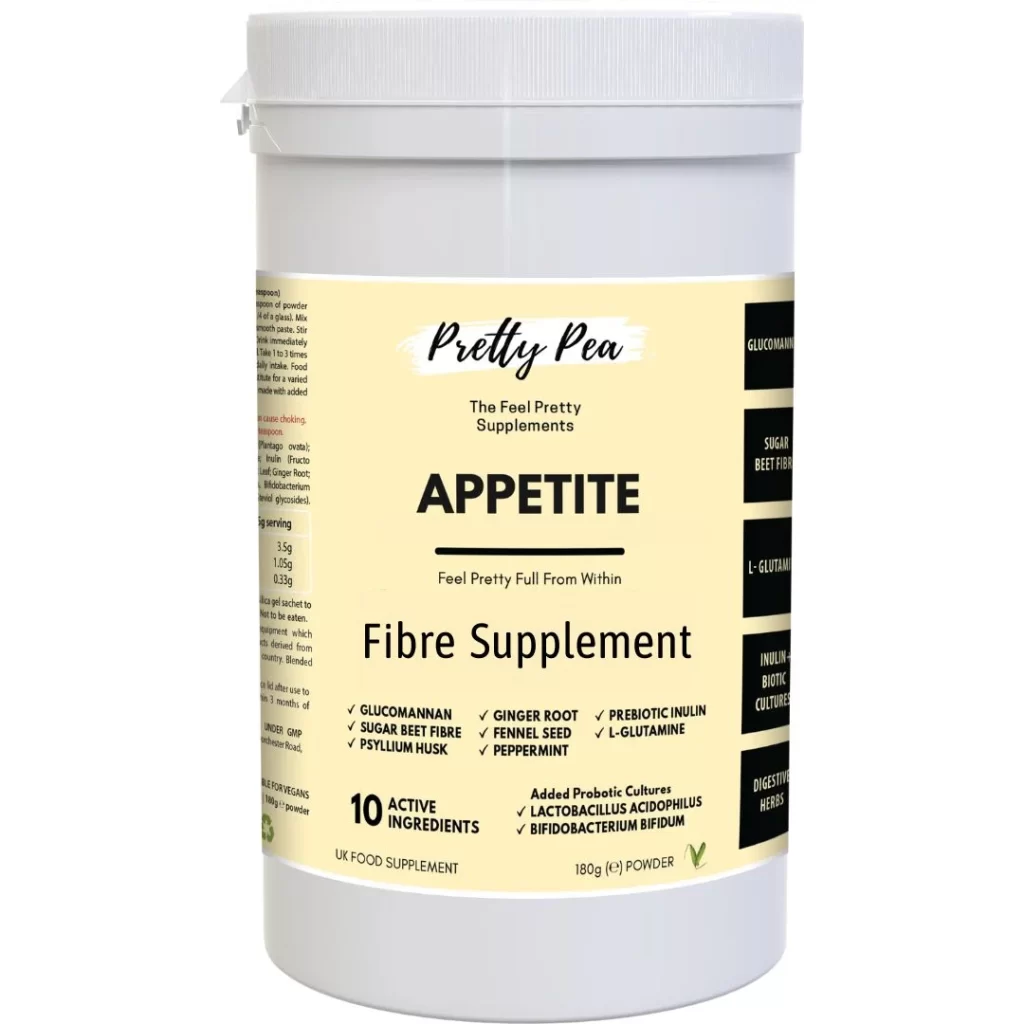
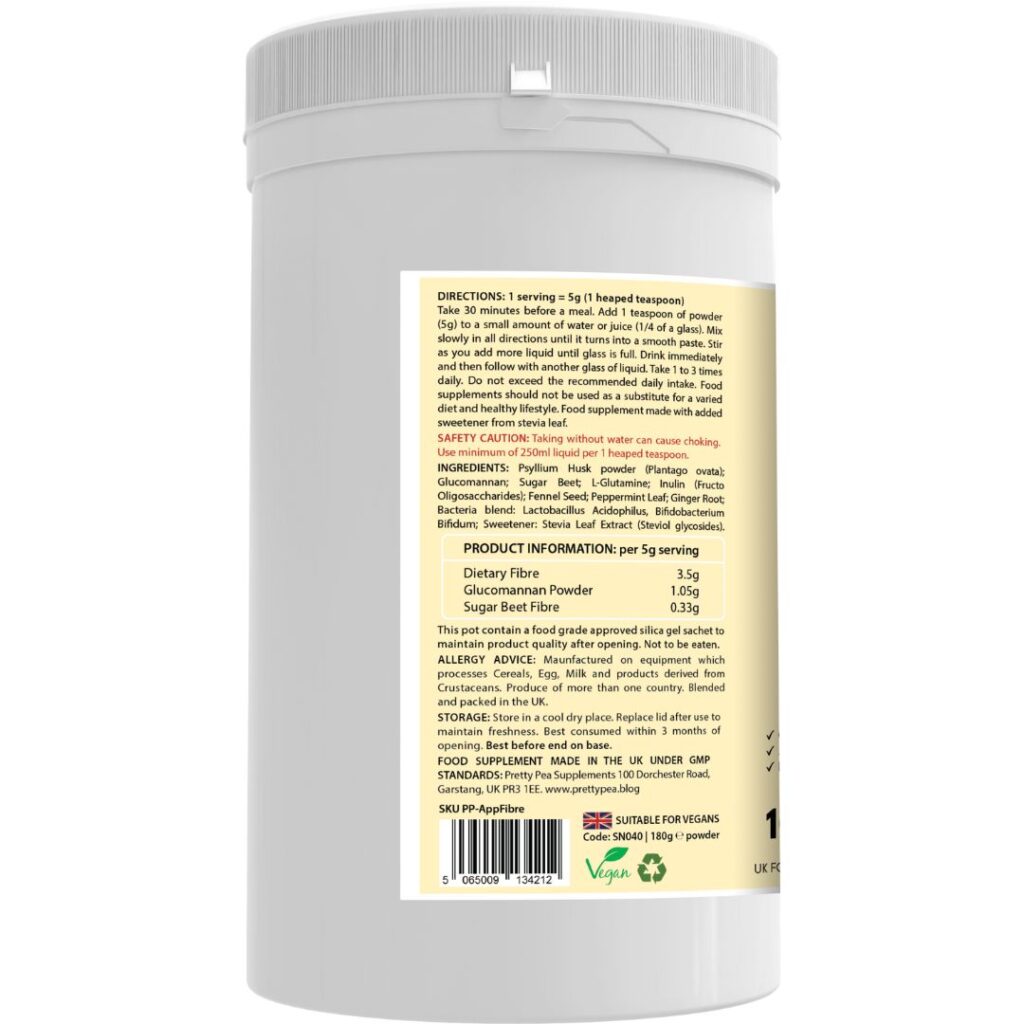

Fibre Powder
What is GLP-1 (in simple terms)?
GLP-1 (glucagon-like peptide-1) is a hormone released in the gut after eating.
It helps the body by:
- signalling fullness to the brain
- slowing the emptying of the stomach
- supporting healthy blood sugar responses after meals
In everyday terms, GLP-1 helps you feel:
- satisfied sooner
- full for longer
- less prone to sharp hunger swings
Fibre vs GLP1: GLP-1 medications amplify these signals. Fibre, on the other hand, supports the body’s own appetite regulation through digestion and gut health.

How Fibre Supports Your Body’s Natural GLP-1 Response
When most people hear “GLP-1”, they think of weight-loss medications. However, GLP-1 (glucagon-like peptide-1) is actually a hormone your body naturally produces every day after you eat.
One of the most interesting ways to support your body’s natural GLP-1 response is by eating enough fibre—particularly soluble, fermentable fibre.
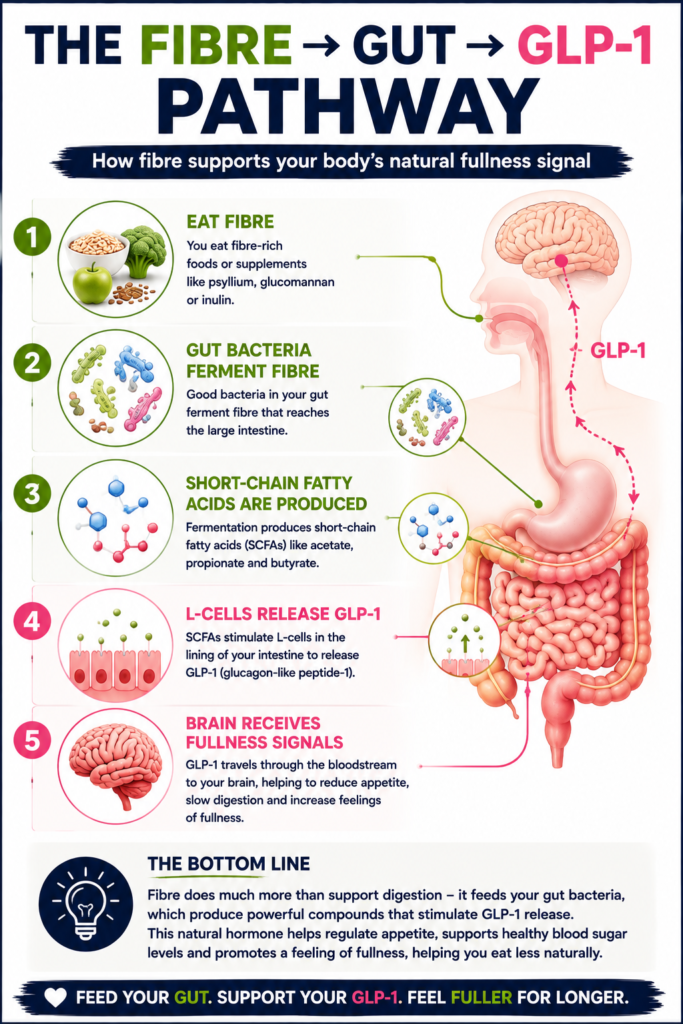
Unlike digestible carbohydrates, fibre reaches the large intestine largely intact. There, it becomes food for your beneficial gut bacteria. As these bacteria ferment fibre, they produce compounds called short-chain fatty acids (SCFAs), including acetate, propionate and butyrate.
Research suggests these SCFAs can stimulate specialised cells in the lining of the intestine (known as L-cells) to release GLP-1.
Once released, GLP-1 travels through the bloodstream and communicates with the brain and digestive system, helping regulate appetite and digestion.
While eating fibre does not produce the same effect as GLP-1 medications, it supports one of the body’s natural pathways involved in fullness and healthy appetite regulation.
The Fibre → Gut → GLP-1 Pathway
Understanding this pathway helps explain why fibre offers benefits far beyond regular bowel movements.
Step 1 — Eat Fibre
Soluble fibres such as glucomannan, psyllium, inulin, oat beta-glucan and pectin are found naturally in foods and some supplements.
↓
Step 2 — Gut Bacteria Ferment Fibre
Because fibre isn’t fully digested in the stomach or small intestine, it reaches the large intestine where beneficial gut bacteria ferment it.
↓
Step 3 — Short-Chain Fatty Acids Are Produced
Fermentation produces beneficial compounds called short-chain fatty acids (SCFAs), including acetate, propionate and butyrate.
↓
Step 4 — L-Cells Release GLP-1
SCFAs stimulate specialised intestinal cells called L-cells, which naturally release GLP-1.
↓
Step 5 — Your Brain Receives Fullness Signals
GLP-1 helps regulate appetite, slows stomach emptying and contributes to feelings of fullness after eating.
How fibre supports similar outcomes (without acting as a drug)
1️⃣ Fibre slows digestion naturally
Soluble fibre absorbs water and forms a gel-like substance in the gut. This:
- slows how quickly food leaves the stomach
- reduces rapid absorption of carbohydrates
- helps meals feel more sustaining
Fibre vs GLP1 – GLP-1 medications slow gastric emptying pharmacologically. Fibre achieves a similar digestive effect through food structure, not hormone manipulation.
2️⃣ Fibre supports steadier blood sugar
Slower digestion means glucose enters the bloodstream more gradually. This can help:
- reduce post-meal spikes
- prevent energy crashes
- limit rebound hunger
Blood sugar swings are a major driver of cravings and appetite volatility — something many women notice more strongly during hormonal transitions.
Get started today with your free recipe guide.
3️⃣ Fibre feeds gut bacteria that influence satiety
Certain fibres are fermented by gut bacteria into short-chain fatty acids (SCFAs).
So when it comes to gut hormones and appetite these compounds help support:
- gut-brain signalling
- feelings of fullness
- appetite-related hormone release
Research suggests this gut activity may encourage the body’s natural production of satiety hormones — including GLP-1 — as part of normal digestive physiology.
In other words, fibre helps create the internal conditions where appetite signals work properly.
Fibre Supplements.
.

4 types of fibres, including Psyllium & Glucomannan, prebiotic, probiotic live cultures and digestive herbs

Reset Glucomannan Fibre Capsules
Advanced fibre formula supporting satiety, weight, hormone regulation, metabolism and energy

Healthy Bowels Formula – Soluble and insoluble fibre capsules from 11 high fibre foods.
4️⃣ Fibre helps quiet “food noise”
Many people describe GLP-1 medications as reducing constant thoughts about food.
Fibre can support this in a gentler way:
- meals feel more complete
- hunger returns more predictably
- grazing becomes less frequent
Fibre vs GLP1 – Fibre supports fullness, but rather than suppressing appetite, fibre helps normalise hunger cues — which is often what’s disrupted during perimenopause and menopause.
Further reading: GLP-1 Foods: The Ultimate List for Appetite Control, Fat Loss & Blood Sugar
Soluble vs Insoluble Fibre: Which Has the Strongest Connection to GLP-1?
Not all fibre behaves in the same way.
| Soluble Fibre | Insoluble Fibre |
|---|---|
| Dissolves in water | Does not dissolve in water |
| Forms a gentle gel | Adds bulk to stools |
| Often fermented by gut bacteria | Less fermentable |
| Can contribute to SCFA production | Mainly supports bowel regularity |
| Greater potential to support the body’s natural GLP-1 pathway | Important for digestive health but through different mechanisms |
Both types of fibre are important, and most experts recommend eating a variety of fibre-rich foods rather than focusing on one single type.
Fibre vs GLP-1 medications: a realistic comparison
| Feature | Fibre | GLP-1 Medications |
| Type | Nutrient | Prescription medicine |
| How it works | Digestion & gut signalling | Hormone receptor activation |
| Appetite | Supports fullness | Amplifies satiety signals |
| Blood sugar | Slows absorption | Enhances insulin response |
| Speed | Gradual | Rapid |
| Role | Foundational nutrition | Medical intervention |
Fibre is not a substitute for medication — but it is a powerful nutritional foundation that supports the same systems.
Foods That Naturally Support Your Body’s GLP-1 Response
Rather than searching for one “magic food”, build meals around a variety of fibre-rich whole foods.
| Food | Why it’s useful |
|---|---|
| Oats | Rich in beta-glucan soluble fibre |
| Lentils | Fibre and resistant starch |
| Chickpeas | Fibre and plant protein |
| Beans | Excellent source of fermentable fibre |
| Apples | Natural pectin |
| Pears | Soluble fibre |
| Berries | Fibre and polyphenols |
| Broccoli | Fibre-rich vegetable |
| Flaxseed | Soluble fibre and healthy fats |
| Chia seeds | Highly absorbent soluble fibre |
| Psyllium husk | Viscous soluble fibre |
| Glucomannan | Highly viscous soluble fibre from konjac root |
A varied, plant-rich diet also supports a more diverse gut microbiome, which is associated with better overall gut health.
Why Fibre matters more in Menopause
During perimenopause and menopause, many women notice:
- appetite feels less reliable
- cravings increase
- digestion slows
- extreme dieting backfires
Rather than forcing results, fibre supports menopause appetite changes by:
- working with digestion
- reducing overstimulation
- supporting consistency over extremes
Small, steady inputs often outperform aggressive approaches during this phase of life.
Choosing Fibre Wisely
Not all fibre feels the same.
Many women find:
- soluble fibre is better tolerated
- very rough or bran-heavy fibres worsen bloating
- starting slowly improves comfort
Hydration can really matter — fibre needs water to work effectively.
The Protein + Fibre Formula
One of the simplest ways to build more satisfying meals is to combine protein with fibre.
| Protein | Fibre |
|---|---|
| Helps maintain muscle mass | Supports digestive health |
| Slower digestion | Adds volume to meals |
| Supports fullness | Supports your body’s natural GLP-1 pathway |
| Helps preserve lean tissue during weight loss | Feeds beneficial gut bacteria |
Together they help create meals that are:
- More filling
- More nutritious
- Richer in vitamins and minerals
- Better balanced
- Easier to sustain long term
Are You Eating Enough Fibre?
The UK recommendation for adults is around 30 g of fibre per day, yet average intakes remain considerably lower.
Quick checklist
Do you regularly eat:
☐ Wholegrains
☐ Beans or lentils
☐ Fruit every day
☐ Vegetables with lunch and dinner
☐ Nuts or seeds
☐ Oats
☐ High-fibre breakfasts
If not, gradually increasing your fibre intake could benefit both digestive health and overall diet quality.
Supporting Your Body
Understanding how fibre and appetite regulation work can help you make more informed decisions about your wellbeing, especially during midlife.
While pharmaceutical options may be appropriate for some individuals under medical supervision, nutrition and lifestyle remain foundational to long-term health.
At Pretty Pea, our focus is on providing carefully formulated, food-based supplements designed to complement a balanced diet and healthy lifestyle.
If you’re exploring ways to increase your fibre intake, you may find our range of fibre powders and capsules helpful as part of your routine.
How to Increase Fibre Without Digestive Discomfort
Increasing fibre too quickly may cause bloating or discomfort, particularly if your current intake is low.
Instead:
- Increase fibre gradually over several weeks.
- Drink enough fluids, especially with fibre supplements.
- Eat a variety of fibre sources rather than relying on one food.
- Include both soluble and insoluble fibre.
- Continue eating enough protein and healthy fats to create balanced meals.
Most people find these symptoms improve as the gut adapts.
Fibre vs GLP-1 – The Takeaway
GLP-1 medications have highlighted an important truth: appetite regulation isn’t about willpower.
Fibre supports many of the same physiological processes — digestion speed, blood sugar stability, and gut-derived fullness signals — without overriding the body’s natural systems.
For women navigating menopause, fibre isn’t a shortcut.
It’s a foundation.
Fibre vs GLP-1 FAQ
What is GLP-1?
GLP-1 (glucagon-like peptide-1) is a naturally occurring hormone released in the gut after eating.
It helps the body:
signal fullness
slow stomach emptying
support steady blood sugar
GLP-1 medications amplify these signals for medical purposes, but the body produces GLP-1 naturally.
Does fibre work like GLP-1 medication?
Not exactly. Fibre does not act as a medication or replace prescription treatment.
Fibre supports the body’s natural fullness and digestion signals by:
- slowing digestion
- supporting steady blood sugar
- feeding gut bacteria that influence satiety
It works with your body rather than on hormone receptors.
How can fibre help with appetite?
Fibre can make meals feel more satisfying and hunger more predictable.
This effect comes from:
- slower digestion
- steadier blood sugar
- improved gut-derived satiety signals
It is gentle, gradual, and works best as part of a balanced routine including protein, hydration, and sleep.
Is fibre effective for weight management?
Fibre supports fullness and appetite regulation, but it is not a weight-loss drug.
Its main benefits are:
- helping you feel calmer after meals
- reducing mindless snacking
- supporting steady energy
It’s most effective when combined.
Which type of fibre is best?
Many women find soluble fibre easier to tolerate than very coarse or bran-heavy fibres.
Soluble fibre:
- dissolves in water
- slows digestion gently
- supports fullness and gut health
Start gradually and increase intake over time to reduce bloating.
Why is fibre especially important during menopause?
During perimenopause and menopause:
- appetite cues often feel less reliable
- blood sugar regulation can shift
- digestion can become slower
Fibre supports:
- steadier appetite
- calmer digestion
- more predictable energy
It’s a gentle, supportive tool for navigating hormonal changes.
Is fibre effective for weight management?
Fibre supports fullness and appetite regulation, but it is not a weight-loss drug.
Its main benefits are:
- helping you feel calmer after meals
- reducing mindless snacking
- supporting steady energy
It’s most effective when combined with other healthy lifestyle habits
If you’re interested in learning more about fibre, digestion, and women’s health, you can explore our educational blog for further science-backed guidance and practical tips.
Which type of fibre is best?
Many women find soluble fibre easier to tolerate than very coarse or bran-heavy fibres.
Soluble fibre:
- dissolves in water
- slows digestion gently
- supports fullness and gut health
Start gradually and increase intake over time to reduce bloating
Can fibre cause bloating or discomfort?
Some temporary bloating can happen if fibre intake is increased too quickly.
Tips to reduce discomfort:
- introduce fibre gradually
- drink plenty of water
- avoid multiple new fibre sources at once
Your gut usually adapts over a few days to a couple of weeks.
How much fibre should I aim for?
Recommended fibre intake varies by age and diet. Many adults benefit from around 25–30g of fibre daily, ideally from a mix of:
- fruits and vegetables
- legumes
- whole grains
- soluble fibre supplements (if needed)
Always increase gradually to allow your digestive system to adjust.
Can I take fibre at any time of day?
Yes — but many people find it easiest to include fibre with meals to:
- feel fuller longer
- slow digestion
- support blood sugar stability
Consistency matters more than exact timing.
Can fibre replace medication or other interventions?
No. Fibre is a foundational, supportive nutrient, not a medical treatment.
It complements other healthy habits and, if relevant, medical guidance — but it does not replace GLP-1 medication or any prescribed therapies.
For more fibre advice:
Understanding Visceral Fat: The Ultimate Belly Fat Guide
Everything Psyllium How To Use: A Comprehensive Guide on How to Use It for Maximum Health Benefits
Can You Use Psyllium Husk for Weight Loss? Benefits, Dosage & Science Explained
GLP-1 Foods: The Ultimate List for Appetite Control, Fat Loss & Blood Sugar
The 100 Symptoms of Perimenopause
Weird Perimenopause Symptoms: 25 Unusual Signs You Didn’t Expect
Early Signs of Perimenopause in Your 40s: What to Look For
Hormone Imbalance in Women: Causes, Symptoms & How Hormones Work
Best Menopause Supplements UK (2026)
Menopause Weight Changes Explained (UK Guide)
The Menopause Diet 5 Day Plan to Lose Weight
Why Fibre Could Be the Secret to a Better Menopause
Glucomannan for Weight Loss: Does It Work and How Does It Compare to Medications?
Latest Products
-
Menopause Supplement UK – Women’s Nutritional Support with Vitamins, Fibre & Botanicals
Original price was: £25.00.£19.99Current price is: £19.99. -
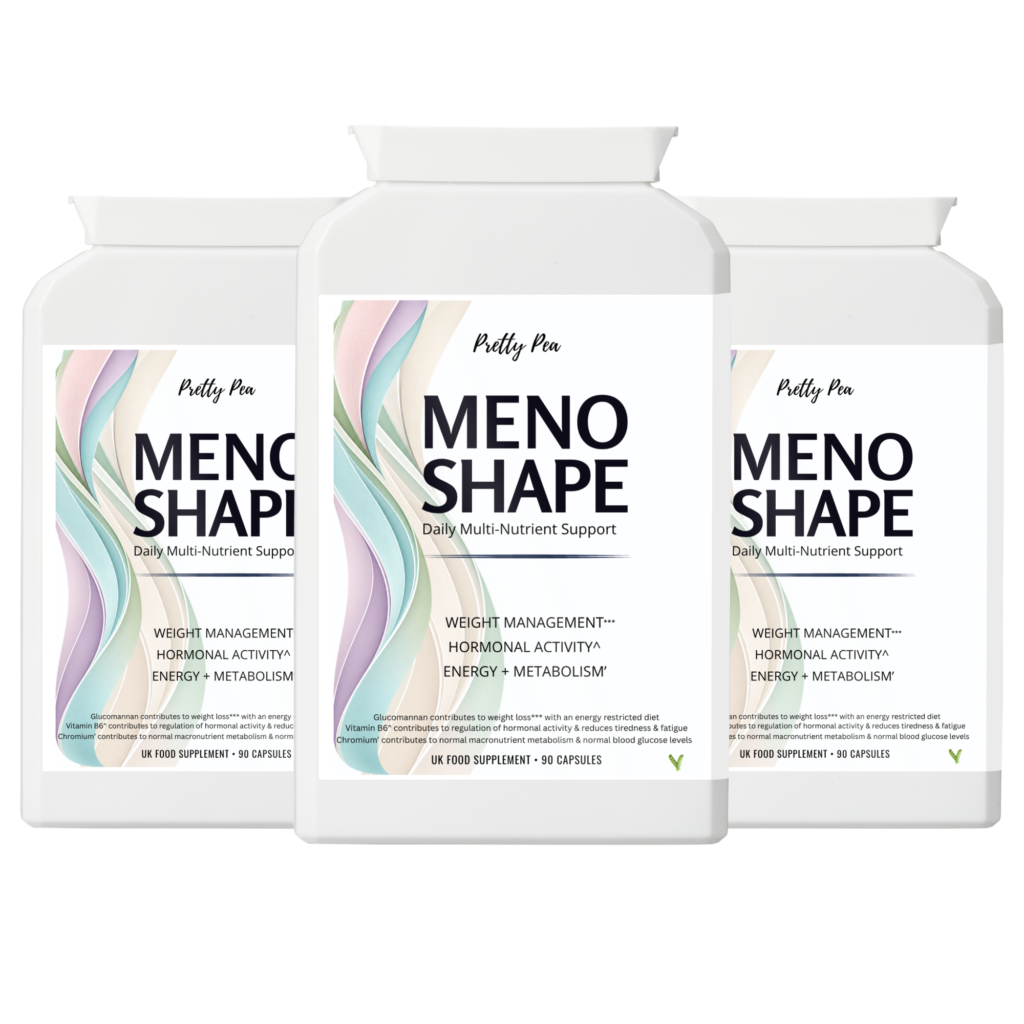
Menopause Supplement Bundle 3 for 2 Offer
Original price was: £77.97.£50.00Current price is: £50.00. -

-

-
-
Ashwagandha Supplement plus B Vitamins
Original price was: £25.00.£19.99Current price is: £19.99.



Fibre vs GLP-1 Sources:
- Slavin JL. Dietary fiber and body weight. Nutrition (2005)
- Byrne CS et al. The role of short-chain fatty acids in appetite regulation. Int J Obesity (2015)
- Delzenne NM et al. Gut microbiota and satiety signalling. Nat Rev Endocrinol (2010)
- Jenkins DJA et al. Effect of viscous fibre on glycaemic control. BMJ (1978)
