
Looking for high fibre foods? Most adults in the UK eat far less fibre than recommended.
The NHS recommends adults consume around 30g of fibre per day, yet average intakes are often closer to 18–20g. This matters because fibre plays an important role in digestive health, gut health, fullness, blood sugar balance and long-term health.
The good news is that increasing fibre doesn’t have to be complicated. Many everyday foods contain surprisingly high amounts of fibre while also providing protein, vitamins, minerals and beneficial plant compounds.
This guide ranks 50 of the best high fibre foods and shows exactly how much fibre they contain.
Why Is Fibre Important?
Fibre is a type of carbohydrate that passes through the digestive system largely undigested.
Different fibres perform different functions:
Soluble Fibre
Dissolves in water to form a gel.
Found in:
- Psyllium husk
- Oats
- Apples
- Beans
- Lentils
Benefits:
- Supports fullness
- Helps slow digestion
- Supports healthy cholesterol levels
- Helps regulate blood sugar
Insoluble Fibre
Adds bulk to stools.
Found in:
- Wholegrains
- Wheat bran
- Nuts
- Vegetables
Benefits:
- Supports bowel regularity
- Helps food move through the digestive tract
Prebiotic Fibre
Feeds beneficial gut bacteria.
Found in:
- Garlic
- Onions
- Leeks
- Asparagus
- Chicory root
Benefits:
- Supports gut microbiome diversity
- Produces beneficial short-chain fatty acids
50 High Fibre Foods Ranked by Fibre Content
- Best High Fibre Foods for Women Over 40
- Best High Fibre Foods for Fullness
- Best High Fibre Foods for Gut Health
- Best High Fibre Foods for Blood Sugar Balance
- Best High Fibre Foods for Regularity
- Fibre Supplement Comparison
- Fibre Hall of Fame
- What Does 30g of Fibre Look Like?
- The Top 50 High Fibre Foods
- Fibre Supplements.
- Easy Ways to Eat More Fibre
Best High Fibre Foods for Women Over 40
If you only focus on a handful of fibre-rich foods, start with these. They provide a combination of fibre, protein, healthy fats and beneficial plant compounds that can help support digestion, fullness and overall wellbeing.
| Food | Fibre (g) | Protein (g) |
|---|---|---|
| Chia Seeds | 10.3 | 5.0 |
| Lentils | 7.9 | 9.0 |
| Chickpeas | 7.6 | 8.9 |
| Oats | 5.1 | 6.5 |
| Flaxseed | 4.0 | 2.6 |
| Pear | 5.5 | 0.6 |
| Avocado | 6.7 | 2.0 |
| Raspberries | 6.5 | 1.2 |
| Broccoli | 3.0 | 2.8 |
| Edamame Beans | 5.2 | 11.9 |
Best High Fibre Foods for Fullness
Certain fibres absorb water and form a gel in the digestive tract, helping food move more slowly through the stomach. This may help support fullness and satisfaction after meals.
| Food | Fibre (g) |
|---|---|
| Chia Seeds | 10.3 |
| Lentils | 7.9 |
| Chickpeas | 7.6 |
| Pear | 5.5 |
| Oats | 5.1 |
| Apple (with skin) | 4.4 |
| Avocado | 6.7 |
| Black Beans | 8.7 |
Best High Fibre Foods for Gut Health
These fibres contain prebiotic fibres that feed beneficial gut bacteria and support production of short-chain fatty acids.
| Food | Main Fibre Type |
|---|---|
| Garlic | Inulin |
| Onion | Inulin |
| Leeks | Inulin |
| Asparagus | Inulin |
| Apples | Pectin |
| Oats | Beta-Glucans |
| Lentils | Soluble Fibre |
| Chickpeas | Soluble Fibre |
Best High Fibre Foods for Blood Sugar Balance
Foods rich in soluble fibre can help slow digestion and carbohydrate absorption.
| Food | Fibre (g) |
|---|---|
| Oats | 5.1 |
| Lentils | 7.9 |
| Chickpeas | 7.6 |
| Pear | 5.5 |
| Apples | 4.4 |
| Black Beans | 8.7 |
| Navy Beans | 10.5 |
Best High Fibre Foods for Regularity
These foods help add bulk to stools and support healthy bowel function.
| Food | Fibre (g) |
|---|---|
| Prunes | 7.1 |
| Lentils | 7.9 |
| Wholegrain Rye Bread | 5.0 |
| Kiwi Fruit | 2.1 |
| Brussels Sprouts | 3.8 |
| Pears | 5.5 |
| Green Peas | 5.7 |
Fibre Supplement Comparison
While whole foods should form the foundation of a healthy diet, fibre supplements can be a convenient way to increase daily fibre intake.
| Supplement | Typical Serving | Fibre |
|---|---|---|
| Psyllium Husk | 10g | ~8g |
| Glucomannan | 3g | ~2.5–2.9g |
| Inulin | 10g | ~8–9g |
| Wheat Dextrin | 10g | ~8g |
Fibre Hall of Fame
Best Whole Food High Fibre Source
🏆 Chia Seeds
Best Legume
🏆 Lentils
Best Fruit
🏆 Raspberries
Best Budget High Fibre Food
🏆 Oats
Best for Gut Health
🏆 Garlic
Best High Fibre Supplement for Fullness
🏆 Glucomannan
Best All-Round High Fibre Supplement
🏆 Psyllium Husk
Best for Regularity
🏆 Psyllium Husk
Best High Fibre Combination for Women Over 40
🏆 Chia Seeds + Oats + Psyllium Husk
What Does 30g of Fibre Look Like?
Many people are surprised how easy it can be to reach the recommended daily fibre target.
Breakfast ≈ 12g fibre
Porridge oats, chia seeds and raspberries
Lunch ≈ 8g fibre
Lentil soup with wholegrain bread
Dinner ≈ 10g fibre
Bean chilli with vegetables
Daily Total ≈ 30g fibre
Small changes throughout the day can make a significant difference to overall fibre intake.
The Top 50 High Fibre Foods
| Food | Ser/g | Fibre (g) | Calorie |
|---|---|---|---|
| 1. Chia Seeds | 30g | 10.3 | 146 |
| 2. Psyllium Husk | 10g | 8.0 | 20 |
| 3. Black Beans | 100g | 8.7 | 132 |
| 4.Lentils | 100g | 7.9 | 116 |
| 5. Chickpea | 100g | 7.6 | 164 |
| 6. Artichoke | 1 medium | 6.8 | 60 |
| 7. Avocado | 100g | 6.7 | 160 |
| 8. Raspberry | 100g | 6.5 | 52 |
| 9. Green Peas | 100g | 5.7 | 84 |
| 10. Pear | Medium | 5.5 | 101 |
| 11. Edamame | 100g | 5.2 | 121 |
| 12. Oats | 50g | 5.1 | 190 |
| 13. Rye Bread | 2 slices | 5.0 | 180 |
| 14. Sweet Potato | Medium | 4.8 | 112 |
| 15. Baked Potato | Medium | 4.7 | 161 |
| 16. Apple (skin on) | Medium | 4.4 | 95 |
| 17. Kidney Beans | 100g | 6.4 | 127 |
| 18. Navy Beans | 100g | 10.5 | 140 |
| 19. Pinto Beans | 100g | 9.0 | 143 |
| 20. Flaxseed | 15g | 4.0 | 80 |
| 21. Almonds | 30g | 3.8 | 174 |
| 22. Brussels Sprouts | 100g | 3.8 | 43 |
| 23. Broccoli | 100g | 3.0 | 34 |
| 24. Carrots | 100g | 2.8 | 41 |
| 25. Kale | 100g | 3.6 | 49 |
| 26. Quinoa | 100g cooked | 2.8 | 120 |
| 27. Brown Rice | 100g cooked | 1.8 | 123 |
| 28. Barley | 100g cooked | 3.8 | 123 |
| 29. Bulgur Wheat | 100g cooked | 4.5 | 83 |
| 30. Figs | 100g | 3.0 | 74 |
| 31. Dates | 100g | 6.7 | 277 |
| 32. Prunes | 100g | 7.1 | 240 |
| 33. Blackberry | 100g | 5.3 | 43 |
| 34. Blueberry | 100g | 2.4 | 57 |
| 35.Strawberry | 100g | 2.0 | 32 |
| 36. Orange | Medium | 3.1 | 62 |
| 37. Kiwi | Medium | 2.1 | 42 |
| 38. Banana | Medium | 2.6 | 105 |
| 39. Pistachio | 30g | 3.0 | 160 |
| 40. Walnuts | 30g | 2.0 | 185 |
| 41. Hazelnut | 30g | 2.8 | 178 |
| 42. Sunflower Seeds | 30g | 3.1 | 170 |
| 43. Pumpkin Seeds | 30g | 1.7 | 168 |
| 44. Asparagus | 100g | 2.1 | 20 |
| 45. Leeks | 100g | 1.8 | 31 |
| 46. Onion | 100g | 1.7 | 40 |
| 47. Garlic | 100g | 2.1 | 149 |
| 48. Cabbage | 100g | 2.5 | 25 |
| 49. Cauliflower | 100g | 2.0 | 25 |
| 50. Spinach | 100g | 2.2 | 23 |
Soluble Fibre Key: Very High, High, Moderate, Low
| Food | Fibre (g) | Calories | Soluble Fibre |
|---|---|---|---|
| Chia Seeds | 10.3 | 146 | High |
| Psyllium Husk | 8.0 | 20 | Very High |
| Black Beans | 8.7 | 132 | High |
| Lentils | 7.9 | 116 | Moderate |
| Chickpea | 7.6 | 164 | Moderate |
| Artichoke | 6.8 | 60 | Moderate |
| Avocado | 6.7 | 160 | Moderate |
| Raspberry | 6.5 | 52 | Moderate |
| Green Peas | 5.7 | 84 | Moderate |
| Pear | 5.5 | 101 | High (Pectin) |
| Edamame | 5.2 | 121 | Moderate |
| Oats | 5.1 | 190 | High (Beta-glucans) |
| Rye Bread | 5.0 | 180 | Moderate |
| Sweet Potato | 4.8 | 112 | Moderate |
| Baked Potato | 4.7 | 161 | Low |
| Apple (skin on) | 4.4 | 95 | High (Pectin) |
| Kidney Beans | 6.4 | 127 | High |
| Navy Beans | 10.5 | 140 | High |
| Pinto Beans | 9.0 | 143 | High |
| Flaxseed | 4.0 | 80 | High |
| Almonds | 3.8 | 174 | Low |
| Brussels Sprouts | 3.8 | 43 | Moderate |
| Broccoli | 3.0 | 34 | Moderate |
| Carrots | 2.8 | 41 | Moderate |
| Kale | 3.6 | 49 | Moderate |
| Quinoa | 2.8 | 120 | Low |
| Brown Rice | 1.8 | 123 | Low |
| Barley | 3.8 | 123 | High (Beta-glucans) |
| Bulgur Wheat | 4.5 | 83 | Moderate |
| Figs | 3.0 | 74 | Moderate |
| Dates | 6.7 | 277 | Moderate |
| Prunes | 7.1 | 240 | Moderate |
| Blackberry | 5.3 | 43 | Moderate |
| Blueberry | 2.4 | 57 | Moderate |
| Strawberry | 2.0 | 32 | Moderate |
| Orange | 3.1 | 62 | High (Pectin) |
| Kiwi | 2.1 | 42 | Moderate |
| Banana | 2.6 | 105 | Moderate |
| Pistachios | 3.0 | 160 | Low |
| Walnuts | 2.0 | 185 | Low |
| Hazelnuts | 2.8 | 178 | Low |
| Sunflower Seeds | 3.1 | 170 | Low |
| Pumpkin Seeds | 1.7 | 168 | Low |
| Asparagus | 2.1 | 20 | High (Prebiotic) |
| Leeks | 1.8 | 31 | High (Prebiotic) |
| Onion | 1.7 | 40 | High (Prebiotic) |
| Garlic | 2.1 | 149 | High (Prebiotic) |
| Cabbage | 2.5 | 25 | Moderate |
| Cauliflower | 2.0 | 25 | Moderate |
| Spinach | 2.2 | 23 | Low |
Fibre Supplements.



Easy Ways to Eat More Fibre
Breakfast
- Oats with berries and chia seeds
- Greek yogurt with flaxseed
- Wholegrain toast with avocado
Lunch
- Lentil soup
- Chickpea salad
- Bean wraps
Dinner
- Add beans to stews
- Swap white rice for barley
- Include vegetables at every meal
Snacks
- Pears
- Apples
- Nuts
- Roasted chickpeas
High Fibre Foods -Frequently Asked Questions
What food has the most fibre?
Among commonly eaten foods, chia seeds, beans, lentils and psyllium husk are some of the richest sources of fibre.
How much fibre should women eat daily?
UK guidelines recommend around 30g of fibre per day for adults.
Is psyllium husk a good source of fibre?
Yes. Psyllium husk is one of the richest sources of soluble fibre and is often used to support digestive health, regularity and fullness.
Can fibre help with fullness?
Soluble fibres absorb water and slow digestion, helping many people feel fuller for longer.
Can you eat too much fibre?
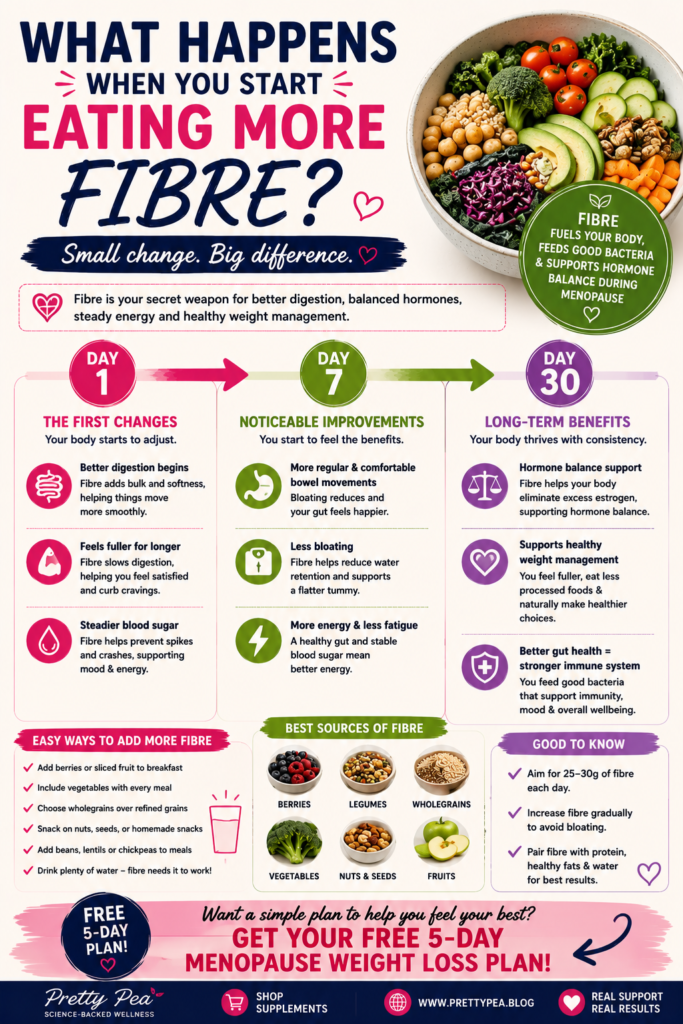
Increasing fibre too quickly may cause bloating or digestive discomfort. Increase intake gradually and drink plenty of water.
The Bottom Line
Most people would benefit from eating more fibre-rich foods. Beans, lentils, oats, berries, vegetables, nuts, seeds and psyllium husk can all help increase fibre intake while also providing valuable vitamins, minerals and plant nutrients.
Rather than focusing on a single food, aim to include a variety of fibre-rich foods throughout the day to support digestion, gut health and overall wellbeing.
Looking For More Fibre Advice?
- Soluble vs Insoluble Fibre Explained
- Why Fibre Could Be the Secret to a Better Menopause
- What Is Glucomannan? Benefits, Uses & Side Effects
- 9 Benefits of Fibre
- Appetite Regulation: How Fibre vs GLP-1 Compare
- Glucomannan for Weight Loss: Does It Work and How Does It Compare to Medications?
- The Real Causes of Bloating (and What Actually Helps)
- Plantago Ovata (Psyllium Husk): Benefits, Uses, Science and FAQs
- GLP-1 Foods: The Ultimate List for Appetite Control, Fat Loss & Blood Sugar




Sources: High fibre foods
Aune D, Keum N, Giovannucci E, et al. (2016). Whole grain consumption and risk of cardiovascular disease, cancer, and all cause mortality: systematic review and dose-response meta-analysis of prospective studies. BMJ, 353, i2716.
Dahl WJ, Stewart ML. (2015). Position of the Academy of Nutrition and Dietetics: Health implications of dietary fibre. Journal of the Academy of Nutrition and Dietetics, 115(11), 1861–1870.
El Khoury D, Cuda C, Luhovyy BL, Anderson GH. (2012). Beta glucan: Health benefits in obesity and metabolic syndrome. Journal of Nutrition and Metabolism, 2012, 851362.
European Food Safety Authority (EFSA). (2010). Scientific Opinion on Dietary Reference Values for carbohydrates and dietary fibre. EFSA Journal, 8(3), 1462.
Gill SK, Rossi M, Bajka B, Whelan K. (2021). Dietary fibre in gastrointestinal health and disease. Nature Reviews Gastroenterology & Hepatology, 18, 101–116.
Jovanovski E, Yashpal S, Komishon A, et al. (2018). The effect of psyllium fibre on cholesterol levels: A systematic review and meta-analysis. American Journal of Clinical Nutrition, 108(5), 922–932.
Makki K, Deehan EC, Walter J, Bäckhed F. (2018). The impact of dietary fibre on gut microbiota in host health and disease. Cell Host & Microbe, 23(6), 705–715.
McRorie JW Jr. (2015). Evidence-based approach to fibre supplements and clinically meaningful health benefits. Part 1: What to look for and how to recommend an effective fibre therapy. Nutrition Today, 50(2), 82–89.
McRorie JW Jr., Fahey GC Jr. (2015). A review of gastrointestinal physiology and the mechanisms underlying the health benefits of fibre. Nutrition Today, 50(4), 172–184.
Reynolds A, Mann J, Cummings J, Winter N, Mete E, Te Morenga L. (2019). Carbohydrate quality and human health: A series of systematic reviews and meta-analyses. The Lancet, 393(10170), 434–445.
Slavin JL. (2013). Fibre and prebiotics: Mechanisms and health benefits. Nutrients, 5(4), 1417–1435.
Stephen AM, Champ MMJ, Cloran SJ, et al. (2017). Dietary fibre in Europe: Current state of knowledge on definitions, sources, recommendations, intakes and relationships to health. Nutrition Research Reviews, 30(2), 149–190.
United Kingdom National Health Service (NHS). Fibre: How to increase your intake. Available at: https://www.nhs.uk/live-well/eat-well/food-types/fibre/
United States Department of Agriculture (USDA). FoodData Central Database. Available at: https://fdc.nal.usda.gov/
Veronese N, Solmi M, Caruso MG, et al. (2018). Dietary fibre and health outcomes: Umbrella review of systematic reviews and meta-analyses. American Journal of Clinical Nutrition, 107(3), 436–444.
Weickert MO, Pfeiffer AFH. (2018). Impact of dietary fibre consumption on insulin resistance and the prevention of type 2 diabetes. Journal of Nutrition, 148(1), 7–12.
Wong JMW, de Souza R, Kendall CWC, Emam A, Jenkins DJA. (2006). Colonic health: Fermentation and short-chain fatty acids. Journal of Clinical Gastroenterology, 40(3), 235–243.
Lovegrove JA, Hodson L, Sharma S, Lanham-New SA. (2023). Nutrition and healthy ageing in women. Proceedings of the Nutrition Society.
