
You’ve probably never heard of inulin, yet it may already be hiding in your fibre supplement, protein bar or gut health product. So what is inulin?
Inulin is one of the most researched prebiotic fibres available. It feeds beneficial gut bacteria, supports digestive health and may offer benefits beyond simply helping you reach your daily fibre target.
So what exactly is inulin, and why are so many nutrition experts talking about it?
What Is Inulin?
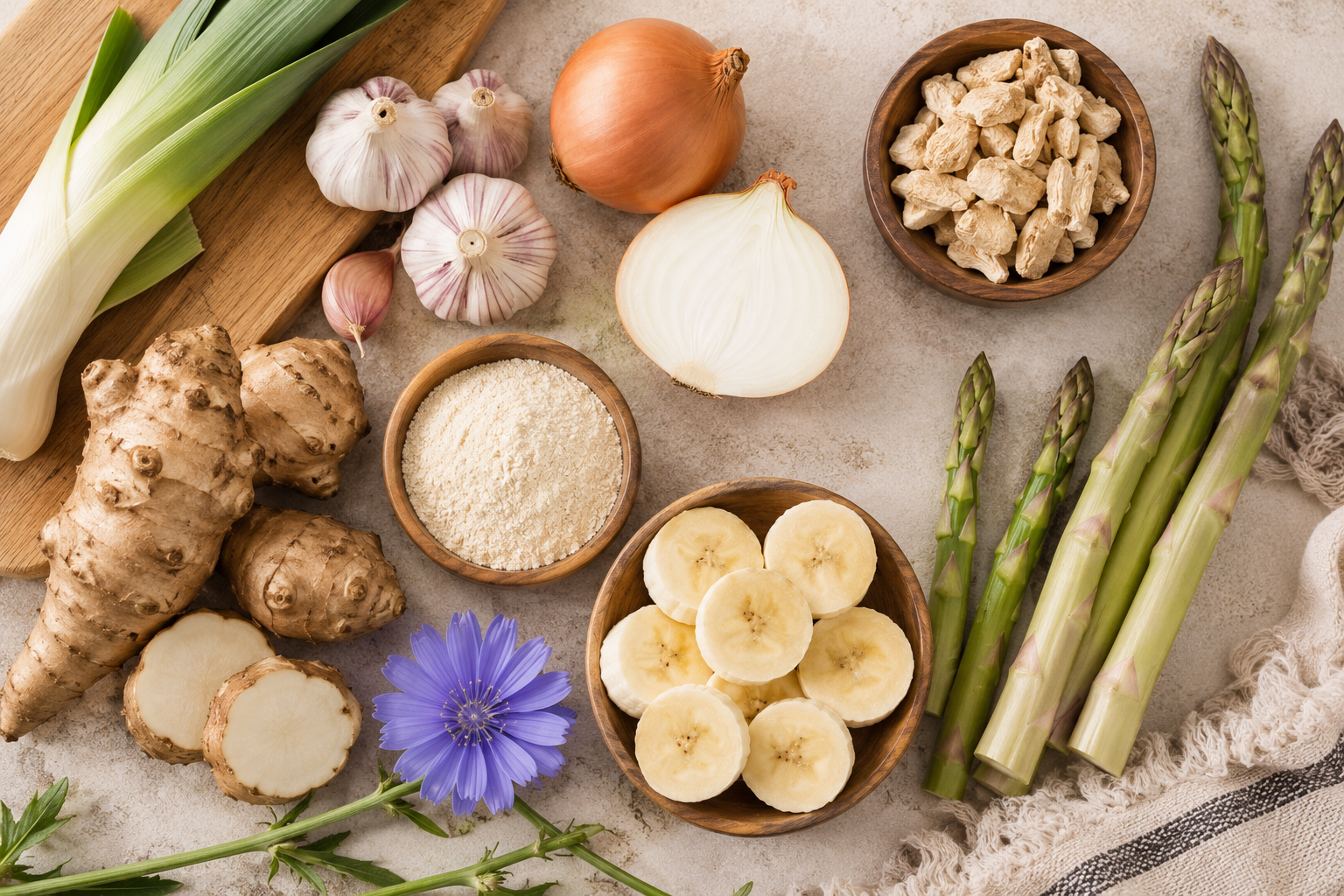
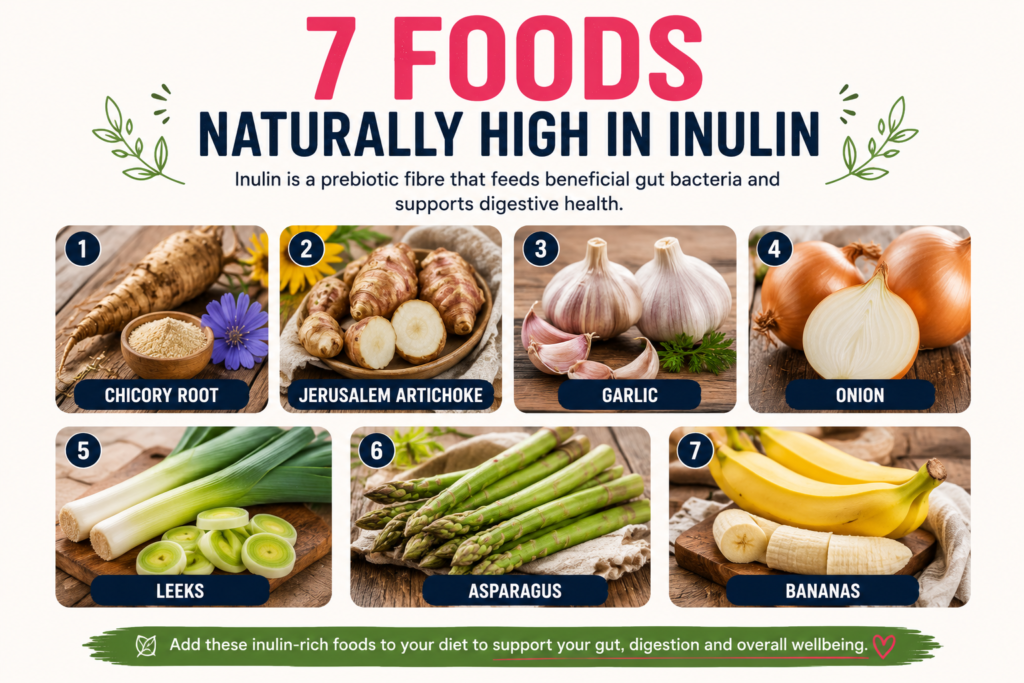
Inulin belongs to a special group known as prebiotic fibres. It is a naturally occurring soluble fibre found in a variety of plant foods, including:
- Chicory root
- Jerusalem artichokes
- Garlic
- Onions
- Leeks
- Asparagus
- Bananas
Inulin is made up of chains of fructose molecules that are not digested in the upper digestive tract. Instead, it passes through the stomach and small intestine largely intact before reaching the large intestine, where it serves as a food source for beneficial gut bacteria.
Because it passes through the stomach and small intestine without being broken down, it reaches the colon where it can be fermented by beneficial bacteria.
Prebiotics vs Probiotics: What’s The Difference?
Although the terms prebiotic and probiotic are often used together, they are not the same thing.
Prebiotics are types of fibre that feed the beneficial bacteria already living in your gut. Inulin is one of the best-known prebiotic fibres and is found naturally in foods such as chicory root, garlic, onions, leeks and asparagus.
Probiotics, on the other hand, are live microorganisms that can be found in fermented foods such as yoghurt, kefir, sauerkraut and kimchi, as well as in some supplements.
A simple way to think about it is:
- Prebiotics feed beneficial bacteria
- Probiotics add beneficial bacteria
Many gut health experts describe them as working together. Prebiotics provide nourishment for beneficial microbes, while probiotics help introduce additional beneficial bacteria into the gut.
Which Is Better: Prebiotics Or Probiotics?
Neither is necessarily better. They perform different roles and may complement one another as part of a healthy diet.
Prebiotic fibres such as inulin help create an environment where beneficial bacteria can thrive, while probiotic foods and supplements provide live microorganisms that may contribute to a balanced gut microbiome.
For this reason, many people choose to include both prebiotic-rich foods and probiotic foods in their diet.
Common Sources Of Prebiotics And Probiotics
| Prebiotic Foods | Probiotic Foods |
|---|---|
| Chicory Root | Yoghurt |
| Garlic | Kefir |
| Onions | Sauerkraut |
| Leeks | Kimchi |
| Asparagus | Miso |
| Bananas | Kombucha |
The combination of prebiotic fibres and probiotic foods is sometimes referred to as a “synbiotic” approach because the two work together to support a healthy gut environment.
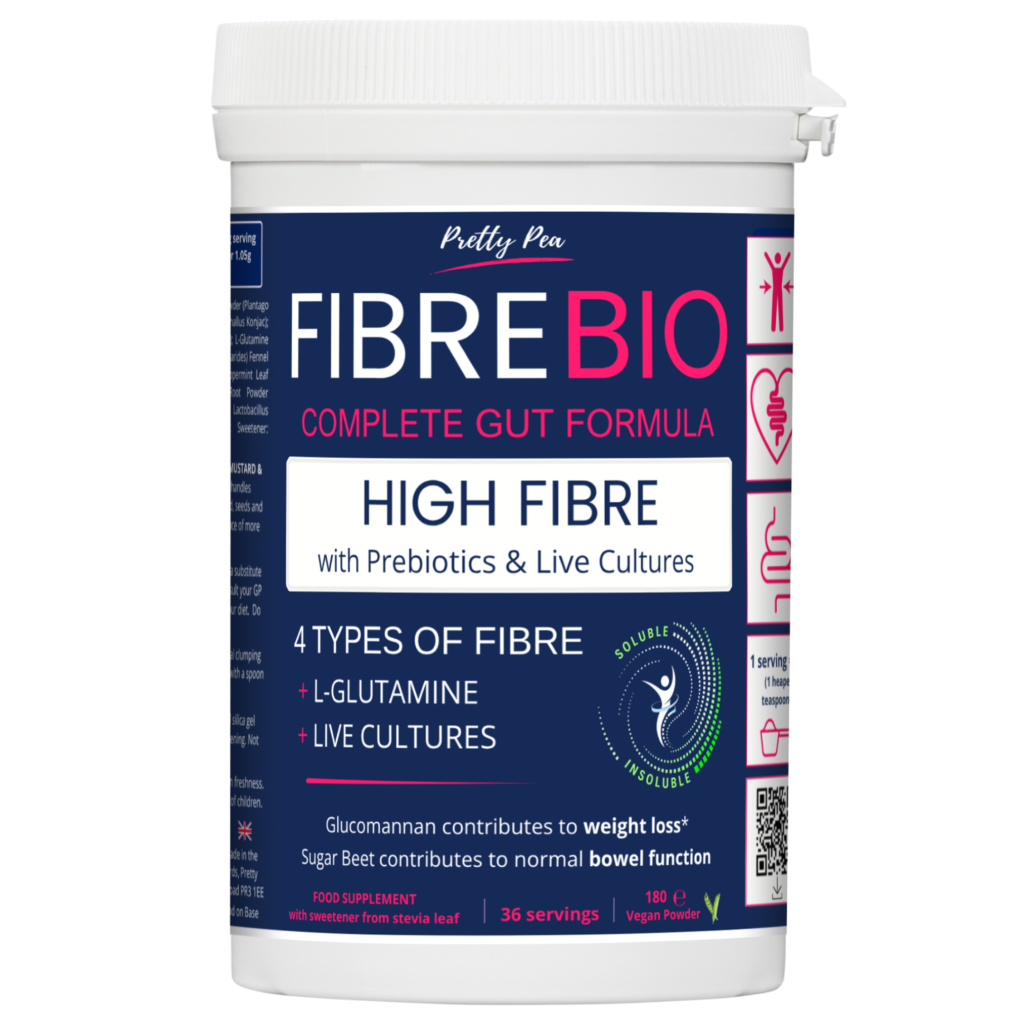
See our recommended synbiotic fibre supplement, Appetite, with prebiotic inulin and live cultures, and more.
Inulin Benefits At A Glance
✓ Prebiotic fibre
✓ Feeds beneficial gut bacteria
✓ Supports digestive health
✓ Supports regularity
✓ Helps increase fibre intake
✓ Found naturally in many plant foods
Why Is Everyone Talking About Inulin?
Interest in gut health has exploded in recent years. As scientists learn more about the gut microbiome, attention has shifted towards the foods and fibres that help beneficial bacteria thrive.
Inulin is one of the best-studied prebiotic fibres and is increasingly being added to supplements, protein products and functional foods.
Why Is Inulin Called A Prebiotic?
Prebiotics are fibres that selectively feed beneficial bacteria in the gut.
Think of probiotics as the beneficial bacteria themselves, while prebiotics are the food that helps them grow and thrive.
When gut bacteria ferment inulin, they produce compounds called short-chain fatty acids (SCFAs), including butyrate, acetate and propionate. These compounds play important roles in gut health and may contribute to wider health benefits.
Potential Benefits Of Inulin
1. Supports Beneficial Gut Bacteria
One of the best-known benefits of inulin is its ability to support populations of beneficial bacteria, particularly Bifidobacteria.
Multiple studies have shown that inulin supplementation can increase levels of these beneficial microbes.
2. Supports Digestive Health
As a soluble fibre, inulin may help support normal digestive function.
It adds fermentable fibre to the diet and may contribute to a healthy gut environment.
3. May Help Support Regularity
Research suggests inulin may help increase stool frequency and improve stool consistency in some individuals, particularly those with low fibre intakes.
4. Supports Daily Fibre Intake
Most adults consume significantly less fibre than recommended.
In the UK, adults are advised to consume approximately 30g of fibre daily, yet average intakes remain considerably lower.
Adding foods rich in inulin can help increase overall fibre consumption.
5. May Support Mineral Absorption
Some research suggests inulin may enhance the absorption of certain minerals, including calcium and magnesium.
This area continues to be actively researched.
6. Supports Overall Gut Health
By feeding beneficial bacteria and contributing to the production of short-chain fatty acids, inulin helps support a healthy gut ecosystem.
Food Sources Of Inulin
Some of the richest natural sources include:
| Food | Inulin Content Approx. |
|---|---|
| Chicory Root | Very High |
| Jerusalem Artichoke | Very High |
| Garlic | High |
| Onion | Moderate |
| Leeks | Moderate |
| Asparagus | Moderate |
| Bananas | Lower |
Chicory root is one of the richest natural sources of inulin and is commonly used in supplements.
How Does Inulin Work?
- You eat inulin.
- It passes through the stomach undigested.
- It reaches the large intestine.
- Beneficial bacteria ferment it.
- Short-chain fatty acids are produced.
- These compounds help support a healthy gut environment.
Who Might Benefit From Inulin?
People looking to:
- Increase fibre intake
- Support gut health
- Support regularity
- Feed beneficial gut bacteria
- Improve dietary fibre diversity
Read: Signs You Need More Fibre | Common Low Fibre Symptoms Explained
Inulin vs Psyllium Husk
| Inulin | Psyllium |
|---|---|
| Prebiotic fibre | Viscous fibre |
| Feeds gut bacteria | Adds bulk |
| Highly fermentable | Less fermentable |
| Supports microbiome | Supports regularity |
Read more: Plantago Ovata (Psyllium Husk): Benefits, Uses, Science
Are There Any Side Effects?
Inulin is generally considered safe for most people.
However, because it is highly fermentable, some people may experience:
- Gas
- Bloating
- Increased digestive activity
This is more common when large amounts are introduced quickly.
For this reason, many people find it helpful to increase intake gradually while maintaining adequate hydration.
The Bottom Line
Inulin is a naturally occurring prebiotic fibre that feeds beneficial gut bacteria and helps support overall gut health.
Found naturally in foods such as chicory root, onions, garlic and Jerusalem artichokes, it offers a simple way to increase fibre intake while supporting a healthy digestive system.
As research into the gut microbiome continues to evolve, inulin remains one of the most widely studied and promising prebiotic fibres available.
For more fibre advice:
- Soluble vs Insoluble Fibre Explained
- Why Fibre Could Be the Secret to a Better Menopause
- What Is Glucomannan? Benefits, Uses & Side Effects
- 9 Benefits of Fibre
- Appetite Regulation: How Fibre vs GLP-1 Compare
- Glucomannan for Weight Loss: Does It Work and How Does It Compare to Medications?
- What is the Highest Fibre Food
- Bloating Isn’t Just “Too Much Gas”: The Real Causes of Bloating (and What Actually Helps)
- Appetite Regulation: How Fibre vs GLP-1 Compare
- GLP-1 Foods: The Ultimate List for Appetite Control, Fat Loss & Blood Sugar
- 50 High Fibre Foods Ranked by Fibre Content
- Best Fibre Supplements for Women | Complete UK Fibre Supplement Guide
- Why Fibre and Water Always Go Together
FAQ – What Is Inulin
What is inulin?
Inulin is a naturally occurring soluble prebiotic fibre found in plants such as chicory root, onions, garlic and Jerusalem artichokes.
Is inulin a probiotic?
No. Inulin is a prebiotic fibre. It feeds beneficial gut bacteria, whereas probiotics are the live bacteria themselves.
What foods contain inulin?
Chicory root, Jerusalem artichokes, garlic, onions, leeks, asparagus and bananas are among the best-known dietary sources.
Can inulin help digestion?
Research suggests inulin may support digestive health, beneficial gut bacteria and regularity as part of a balanced diet.
Does inulin cause bloating?
Some people may experience bloating or gas when first increasing inulin intake. Increasing fibre gradually can help minimise this.
Is inulin good for gut bacteria?
Yes. Inulin is one of the most studied prebiotic fibres and has been shown to support the growth of beneficial bacteria such as Bifidobacteria
Can You Take Inulin Every Day?
Inulin can be consumed daily as part of a balanced diet. Many people obtain it naturally through foods such as onions, garlic and chicory root, while others choose supplements or fibre blends containing inulin.
Browse Collection




What is Inulin – Sources
Gibson GR, Hutkins R, Sanders ME, et al. (2017). The International Scientific Association for Probiotics and Prebiotics (ISAPP) consensus statement on the definition and scope of prebiotics. Nature Reviews Gastroenterology & Hepatology, 14(8), 491-502.
Roberfroid M. (2007). Prebiotics: The concept revisited. Journal of Nutrition, 137(3), 830S-837S.
Slavin J. (2013). Fiber and prebiotics: Mechanisms and health benefits. Nutrients, 5(4), 1417-1435.
Scott KP, Gratz SW, Sheridan PO, Flint HJ, Duncan SH. (2013). The influence of diet on the gut microbiota. Pharmacological Research, 69(1), 52-60.
Holscher HD. (2017). Dietary fibre and prebiotics and the gastrointestinal microbiota. Gut Microbes, 8(2), 172-184.
