
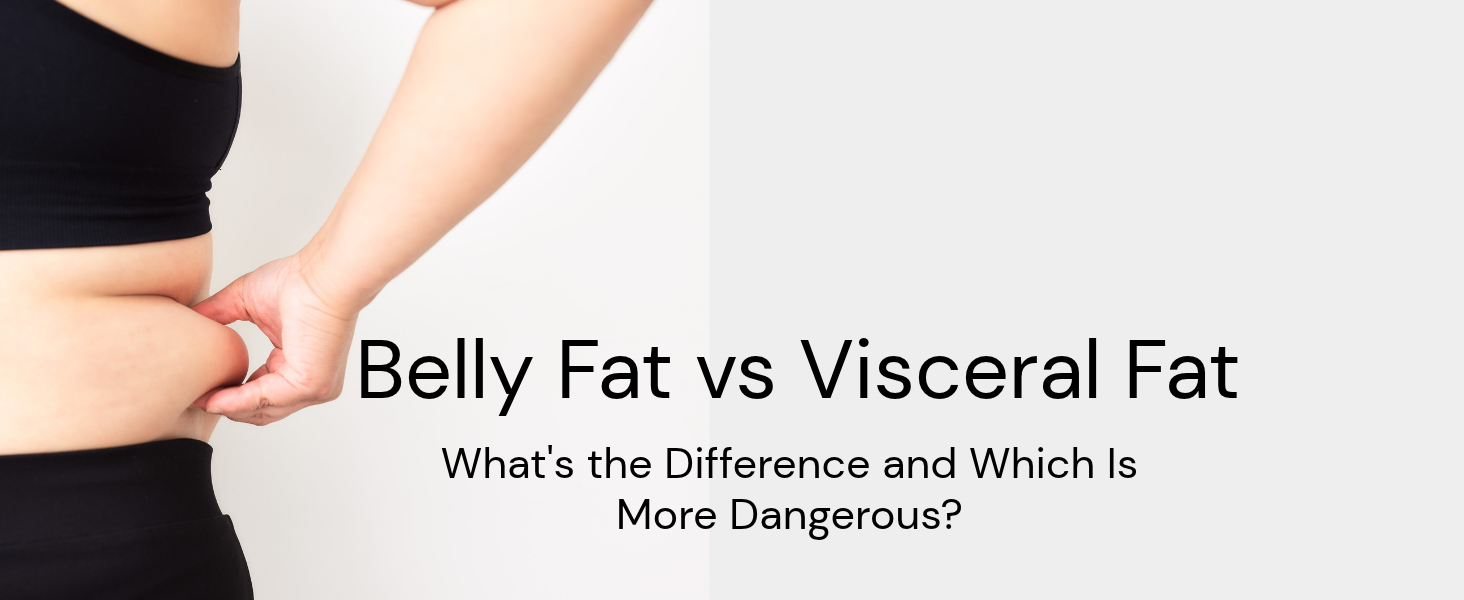
What’s the difference between belly fat vs visceral fat because not all belly fat is the same. While some fat sits directly beneath the skin and can be pinched between your fingers, another type is stored much deeper inside your abdomen, surrounding your internal organs.
This deeper fat is called visceral fat, and research suggests that where your body stores fat can be just as important for your health as how much you weigh.
You might have a soft stomach but relatively little visceral fat. Equally, someone with a healthy body weight may still carry excess fat around their internal organs.
So, what’s the difference between belly fat and visceral fat? Can you tell which type you have? And does one pose a greater health risk than the other?
Belly Fat vs Visceral Fat: The Key Difference
Belly fat is a general term for fat stored around your abdomen, whereas visceral fat is a specific type of abdominal fat stored deep inside the body.
There are two main types of fat around your stomach:
- Subcutaneous fat: The softer fat directly beneath your skin. This is the fat you can usually pinch.
- Visceral fat: Fat stored inside the abdominal cavity, surrounding organs such as your intestines and liver.
Both are normal components of the human body. However, excessive visceral fat is more strongly associated with metabolic and cardiovascular health risks.
Visceral Fat vs Subcutaneous Fat: Quick Comparison
| Feature | Subcutaneous Belly Fat | Visceral Fat |
|---|---|---|
| Location | Directly beneath the skin | Deep inside the abdomen |
| Can you pinch it? | Usually yes | No |
| Visible from outside? | Often | Not necessarily |
| Main function | Energy storage, insulation and cushioning | Energy storage and cushioning around organs |
| Health risks | Depends on amount and location | More strongly linked to metabolic disease when excessive |
| Can you reduce it? | Yes | Yes |
| Measurement | Skinfolds and body composition assessments | MRI, CT, DEXA estimates or less precise home-scale estimates |
The important distinction is that belly fat isn’t automatically visceral fat. A larger waist can reflect both types, and appearance alone cannot tell you how much of each is present.

What Is Subcutaneous Belly Fat?
Subcutaneous fat is the layer of fat stored immediately beneath your skin.
You’ll find it around your stomach, hips, thighs, upper arms and other areas of the body.
If you can gently pinch a fold of soft tissue around your waist, much of the fatty tissue within that fold is likely to be subcutaneous fat.
Is Subcutaneous Fat Unhealthy?
Not necessarily.
Subcutaneous fat performs several important functions, including storing energy, helping insulate the body and providing cushioning.
Interestingly, research suggests that where subcutaneous fat is stored also matters.
Fat stored around the hips and thighs generally has a different relationship with metabolic health than fat concentrated around the upper body and abdomen.
Subcutaneous fat is therefore not inherently harmful, although excessive overall body fat can still contribute to health problems.
The distinction becomes particularly important when comparing subcutaneous fat with visceral fat.
What Is Visceral Fat?
Visceral fat, sometimes called hidden belly fat, is stored inside the abdominal cavity, behind the abdominal muscles and around internal organs.
Unlike subcutaneous fat, you cannot pinch visceral fat between your fingers.
This deeper fat can accumulate around structures such as the intestines and within the omentum, a fold of fatty tissue inside the abdomen.
Although some visceral fat is normal, excessive accumulation is associated with an increased risk of several metabolic conditions.
Why Is Visceral Fat Considered More Dangerous?
Visceral fat isn’t simply an inactive energy reserve.
It is metabolically active tissue that releases fatty acids and signalling molecules involved in inflammation and metabolic regulation.
Because some of the blood draining visceral fat travels towards the liver, excess visceral fat may influence how the body regulates blood glucose, blood fats and insulin.
Research links higher visceral fat levels with increased risks of:
- Insulin resistance and type 2 diabetes
- High blood pressure
- Unfavourable cholesterol and triglyceride levels
- Cardiovascular disease
- Metabolic dysfunction-associated fatty liver disease
This doesn’t mean everyone with elevated visceral fat will develop these conditions. Rather, visceral fat is one of several factors that can influence long-term metabolic health.
Importantly, visceral fat is not the only fat depot associated with health risks. Overall body composition, genetics, physical activity and existing medical conditions also matter.

Hard Belly Fat vs Soft Belly Fat: Can You Tell the Difference?
You may have heard that soft, pinchable belly fat is subcutaneous fat, while a firm or protruding stomach indicates visceral fat.
There is some truth behind the distinction, but the way your stomach feels is not a reliable test for visceral fat.
Subcutaneous fat usually feels softer because it sits directly beneath the skin.
Visceral fat, on the other hand, is positioned deeper inside the abdominal cavity and may contribute to an outwardly protruding abdomen.
However, a firm stomach can also have other explanations, including bloating, abdominal muscle tension and digestive changes.
Similarly, having a soft stomach doesn’t rule out excess visceral fat.
The takeaway: You cannot accurately determine your visceral fat level by pinching, pressing or looking at your stomach.
If abdominal swelling is new, persistent, painful or unexplained, seek medical advice rather than assuming it is fat.
Can You Have Too Much Visceral Fat at a Healthy Weight?
Yes. Someone can have a BMI within the healthy range while still carrying a relatively high amount of abdominal or visceral fat.
BMI considers weight relative to height, but it cannot distinguish muscle from fat or show where fat is stored.
This is one reason researchers increasingly consider body fat distribution alongside body weight when studying metabolic health.
For example, two women of similar height and weight could have different amounts of muscle, subcutaneous fat and visceral fat.
Their metabolic risk profiles may therefore differ, even if their BMI is identical.
A healthy weight is useful information, but it doesn’t tell the whole story about body composition.
How Can You Tell If You Have Too Much Visceral Fat?
There are several ways to assess abdominal fat, although some methods are considerably more accurate than others.
1. Waist Circumference and Waist-to-Height Ratio
Measuring your waist is one of the simplest ways to assess central adiposity — excess fat carried around the abdomen.
NICE recommends that most adults aim to keep their waist circumference below half their height.
For example:
| Your height | Waist measurement to aim below |
|---|---|
| 155 cm | 77.5 cm |
| 160 cm | 80 cm |
| 165 cm | 82.5 cm |
| 170 cm | 85 cm |
| 175 cm | 87.5 cm |
To measure your waist, locate the midpoint between the bottom of your ribs and the top of your hips. Wrap a tape measure around this point, keeping it level, and take the reading after breathing out naturally.
This measurement cannot distinguish visceral from subcutaneous fat, but it provides a useful indication of abdominal fat-related health risks.
2. Smart Body Composition Scales
Some home scales provide a visceral fat rating using bioelectrical impedance analysis (BIA).
These devices estimate body composition using electrical signals and mathematical calculations rather than directly imaging internal fat.
They are convenient, but accuracy varies between manufacturers and readings may be influenced by hydration and measurement conditions.
There is also no single universal rating system. For example, different brands can classify a visceral fat rating of 10 differently.
For a detailed explanation of visceral fat levels and ratings, see our guide to healthy visceral fat levels for women.
3. DEXA, MRI and CT Scans
For a more detailed assessment, imaging methods can help estimate or measure internal fat distribution.
- DEXA (DXA): Provides detailed body composition information. Certain systems can estimate visceral fat using specialised analysis software.
- MRI: Can measure visceral fat distribution and volume without exposing the body to ionising radiation.
- CT: Provides detailed images of abdominal fat but involves ionising radiation.
Research comparing different methods has found that DEXA-derived visceral fat estimates can correlate more closely with MRI measurements than bioelectrical impedance estimates.
However, specialist scans are expensive and generally unnecessary for routine weight monitoring. A healthcare professional can help determine whether further assessment is appropriate.
Why Does Belly Fat Change During Menopause?
Many women notice that their waistline changes during perimenopause and menopause, sometimes without a dramatic increase in body weight.
Part of this change relates to declining oestrogen levels, which can influence where fat is stored.
Before menopause, women tend to store proportionally more fat around the hips and thighs. Following menopause, fat distribution often shifts towards the abdomen, including deeper visceral fat.
Age-related changes in muscle mass, physical activity and energy expenditure may also contribute.
What Does the Research Show?
A study from the Study of Women’s Health Across the Nation (SWAN), published in JCI Insight in 2019, followed changes in body composition around the menopause transition.
Researchers found that the rate of fat gain increased while lean mass declined during the transition, without a corresponding acceleration in overall weight gain.
This helps explain why body composition can change even when the scales appear relatively stable.
Other longitudinal research has specifically reported increases in visceral fat during the menopausal transition.
These changes are common, but they do not mean that visceral fat accumulation is inevitable or that it cannot be reduced.
Read: How to Lose Weight During Menopause (Without Eating Less and Exercising More) – Pretty Pea
Can You Reduce Visceral Fat and Subcutaneous Belly Fat?
Yes. Both types of fat can decrease through sustainable changes in physical activity and overall energy balance.
However, you cannot reliably choose which specific fat deposit your body uses first.
Abdominal exercises can strengthen the underlying muscles, but sit-ups and crunches alone are not an effective strategy for selectively removing visceral fat.
Research supports several approaches.
Regular Aerobic Exercise
Brisk walking, cycling, swimming and other aerobic activities can help reduce abdominal fat.
A 2024 systematic review of 84 randomised controlled trials found that aerobic exercise, resistance training, combined training and high-intensity interval training could reduce visceral fat in adults with overweight or obesity.
The UK physical activity guidelines recommend at least 150 minutes of moderate-intensity exercise per week.
Strength Training
Resistance exercise helps preserve or increase muscle mass, which becomes particularly important during midlife.
A combination of aerobic activity and strength training can support improvements in body composition and metabolic health.
Dietary Quality and Sustainable Weight Management
A balanced eating pattern built around vegetables, fruit, wholegrains, pulses, healthy fats and adequate protein can support overall health and weight management.
Fibre-rich foods may also help promote fullness, making it easier to maintain a sustainable eating pattern.

However, no individual food or supplement has been shown to selectively eliminate visceral fat.
Sleep and Everyday Habits
Adequate sleep, regular movement and moderating alcohol intake can also support metabolic health and longer-term weight management.
The aim should be improving body composition and health, not simply achieving a particular number on the scales.
For more detailed strategies, read our complete visceral fat guide, including how to reduce visceral fat in women.
Belly Fat vs Visceral Fat FAQ’s
Is belly fat the same as visceral fat?
No. Belly fat includes both subcutaneous fat, stored directly beneath the skin, and visceral fat, stored deeper inside the abdomen around internal organs. Visceral fat is one type of belly fat, but not all belly fat is visceral.
Is visceral fat more dangerous than ordinary belly fat?
Excess visceral fat is generally more strongly associated with insulin resistance, type 2 diabetes and cardiovascular disease than fat stored beneath the skin. However, overall health risk depends on several factors, including total body fat, fat distribution and metabolic health.
How can I tell if my belly fat is visceral or subcutaneous?
Soft, pinchable tissue around the abdomen is generally subcutaneous fat. Visceral fat is stored too deeply to pinch. However, appearance and touch cannot reliably distinguish how much of each type you have. Waist measurements can help assess risk, while imaging offers more detailed information.
Is hard belly fat always visceral fat?
No. Although excess visceral fat may contribute to a firm or protruding abdomen, stomach firmness can also be influenced by bloating, digestive problems and abdominal muscle tension. A hard stomach alone is not evidence of excessive visceral fat.
Can you have visceral fat if you are slim?
Yes. A person with a healthy BMI may still carry excess visceral fat. BMI does not measure body composition or distinguish between fat stored beneath the skin and fat surrounding internal organs.
Does menopause cause more visceral fat?
The menopause transition is associated with changes in body fat distribution, including increased abdominal and visceral fat. Declining oestrogen, age-related muscle changes and lifestyle factors can contribute, although the extent varies between women.
Can walking reduce visceral fat?
Yes, regular brisk walking can contribute to reductions in visceral fat as part of an active lifestyle. You don’t necessarily need high-intensity workouts. Consistency, total activity levels and overall dietary habits are important.
Can you lose visceral fat without losing weight?
Yes. Visceral fat can decrease even when overall body weight changes relatively little. This can happen when fat mass decreases while muscle mass is maintained or increases. However, body weight alone cannot confirm changes in visceral fat.
Does liposuction remove visceral fat?
No. Conventional liposuction removes accessible subcutaneous fat beneath the skin. It does not remove the deeper visceral fat surrounding organs inside the abdominal cavity. Cosmetic fat removal should not be confused with reducing visceral fat-related metabolic risk.
Is a DEXA scan better than a smart scale for measuring visceral fat?
DEXA systems with appropriate visceral fat analysis software generally provide more detailed estimates than many home body composition scales. However, MRI and CT remain more direct imaging methods for assessing internal fat. DEXA is also more expensive, and not every provider offers visceral fat assessment.
Latest Products
-
Menopause Supplement UK – Women’s Nutritional Support with Vitamins, Fibre & Botanicals
Original price was: £25.00.£19.99Current price is: £19.99. -
Menopause Supplement Bundle 3 for 2 Offer
Original price was: £77.97.£50.00Current price is: £50.00. -

-

-
-
Original price was: £25.00.£19.99Current price is: £19.99.
-
Original price was: £25.99.£19.99Current price is: £19.99.



The Bottom Line
The main difference between belly fat and visceral fat is where the fat is stored.
Subcutaneous fat sits beneath the skin and performs several normal biological functions. Visceral fat is located deeper inside the abdomen and, when excessive, is associated with greater metabolic and cardiovascular health risks.
But appearance alone cannot tell you how much visceral fat you have.
Looking beyond body weight — particularly at waist measurements, physical activity and other indicators of metabolic health — provides a more useful picture than focusing solely on whether your stomach looks flat.
And importantly, both types of abdominal fat can respond to sustainable lifestyle changes.
You may also like:
- Why Fibre Could Be the Secret to a Better Menopause
- Menopause Weight Changes Explained (UK Guide): What Research Says About Body Composition, Metabolism & Nutrition
- The Menopause Diet 5 Day Plan to Lose Weight
- Understanding Visceral Fat: The Ultimate Belly Fat Guide
- 10 Green Tea Benefits: The Ultimate Science-Backed Guide
- Which Foods Increase GLP-1 Naturally? | Science Explained – Pretty Pea
- Calories Explained: Where Do Calories Go (And What Really Happens After You Eat) – Pretty Pea
- Everything Psyllium How To Use: A Comprehensive Guide on How to Use It for Maximum Health Benefits
- Simple Food Group Swaps – Make Life Easier for Yourself
- The 100 Symptoms of Perimenopause
- Can You Take Supplements with HRT? What’s Safe and What to Avoid –
- Soluble vs Insoluble Fibre Explained
- Appetite Regulation: How Fibre vs GLP-1 Compare


Belly Fat Vs Visceral Fat: References and Further Reading
- Cleveland Clinic. Visceral Fat vs. Subcutaneous Fat: What’s the Difference? Read article
- NICE. Overweight and Obesity Management, Guideline NG246. Recommendations on waist-to-height ratio and central adiposity. Read guidance
- NHS. Calculate Your Waist-to-Height Ratio. NHS guidance and calculator
- Chan B, et al. (2023). Towards visceral fat estimation at population scale: correlation of visceral adipose tissue assessment using three-dimensional cross-sectional imaging with BIA, DXA, and single-slice CT. Frontiers in Endocrinology. Read research
- Greendale GA, et al. (2019). Changes in body composition and weight during the menopause transition. JCI Insight. Read study
- Lovejoy JC, et al. (2008). Increased visceral fat and decreased energy expenditure during the menopausal transition. International Journal of Obesity. Read study
- Chen et al. (2024). Effects of various exercise types on visceral adipose tissue in individuals with overweight and obesity: A systematic review and network meta-analysis of 84 randomized controlled trials. Obesity Reviews. Read study
- UK Chief Medical Officers. Physical Activity Guidelines for Adults and Older Adults. Read guidance
- Cleveland Clinic. Subcutaneous Fat: What You Need to Know About the Fat Beneath Your Skin. Read article
