What is Visceral Fat
What you can pinch actually matters when you’re looking how to lose belly fat and your waist size can offer clues to how much visceral fat you have.
In this article we breakdown the different types of fat, how much fat women need and why, the causes of visceral fat, how common visceral fat really is, how to measure and when visceral fat levels become unhealthy.
It’s common to see abdominal fat being called various names such as cortisol belly or menopause belly fat, visceral fat, so let’s break it down.
There are different types of body fat in the body, and when it comes to belly fat there are typically 2 types of fat (1) subcutaneous belly fat, and (2) visceral belly fat.
| Visceral Fat | Belly Fat |
|---|---|
| A specific type of fat | A general term |
| Stored around internal organs | Includes both visceral and subcutaneous fat |
| Cannot usually be pinched | Some belly fat can be pinched |
| Linked to higher health risks when excessive | Depends on how much is visceral vs subcutaneous |
| May not be obvious from appearance | More noticeable externally |
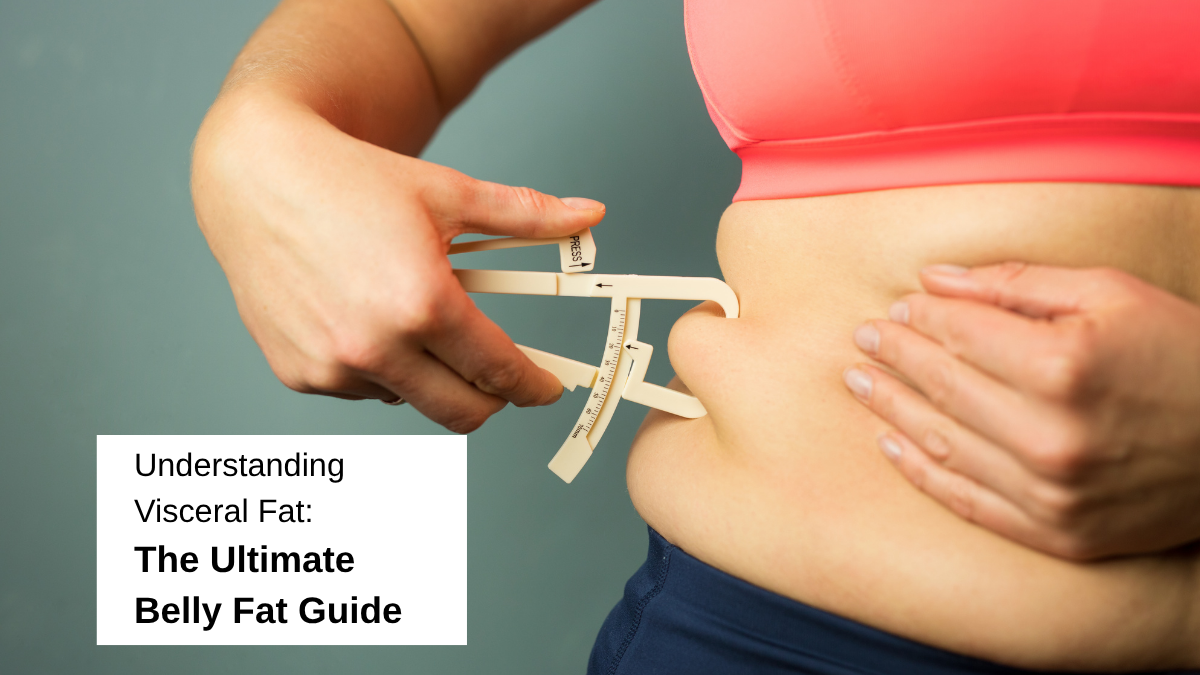
The fat you can pinch is subcutaneous fat and the belly fat you can’t pinch is visceral fat.
You can’t pinch visceral fat because it’s hidden and stored deep inside the belly. It’s wrapped around important internal organs including the liver, pancreas, and intestines.
Unlike the pinchable fat just under your skin, visceral fat isn’t visible and, because we don’t physically see it we don’t always know of the hidden dangers it creates.
Most people have around 90% of body fat that is subcutaneous, the kind of fat that lies in a layer just beneath the skin and feels soft when you poke your belly. The remaining 10% visceral fat.
Visceral fat cannot be reduced by one particular food or supplement alone. Instead, the focus should be on sustainable habits that support healthy weight management, including a balanced diet, regular exercise and adequate fibre intake.
For those looking to increase their fibre intake, or weight management support, RESET Glucomannan Capsules contain glucomannan, which has an EFSA health claim for contributing to weight loss when consumed as part of an energy-restricted diet.*
*The beneficial effect is obtained with a daily intake of 3 g of glucomannan, taken in three 1 g doses, together with 1–2 glasses of water before meals, as part of an energy-restricted diet.
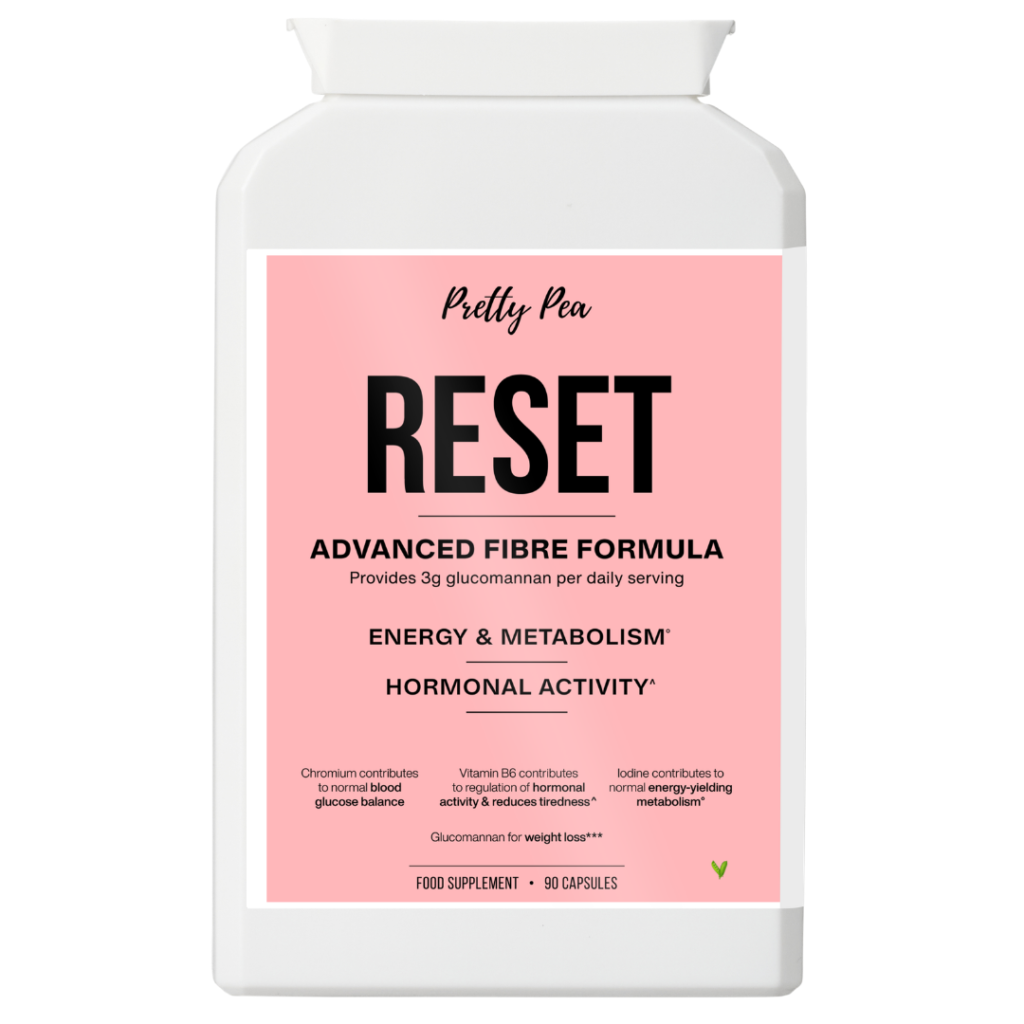
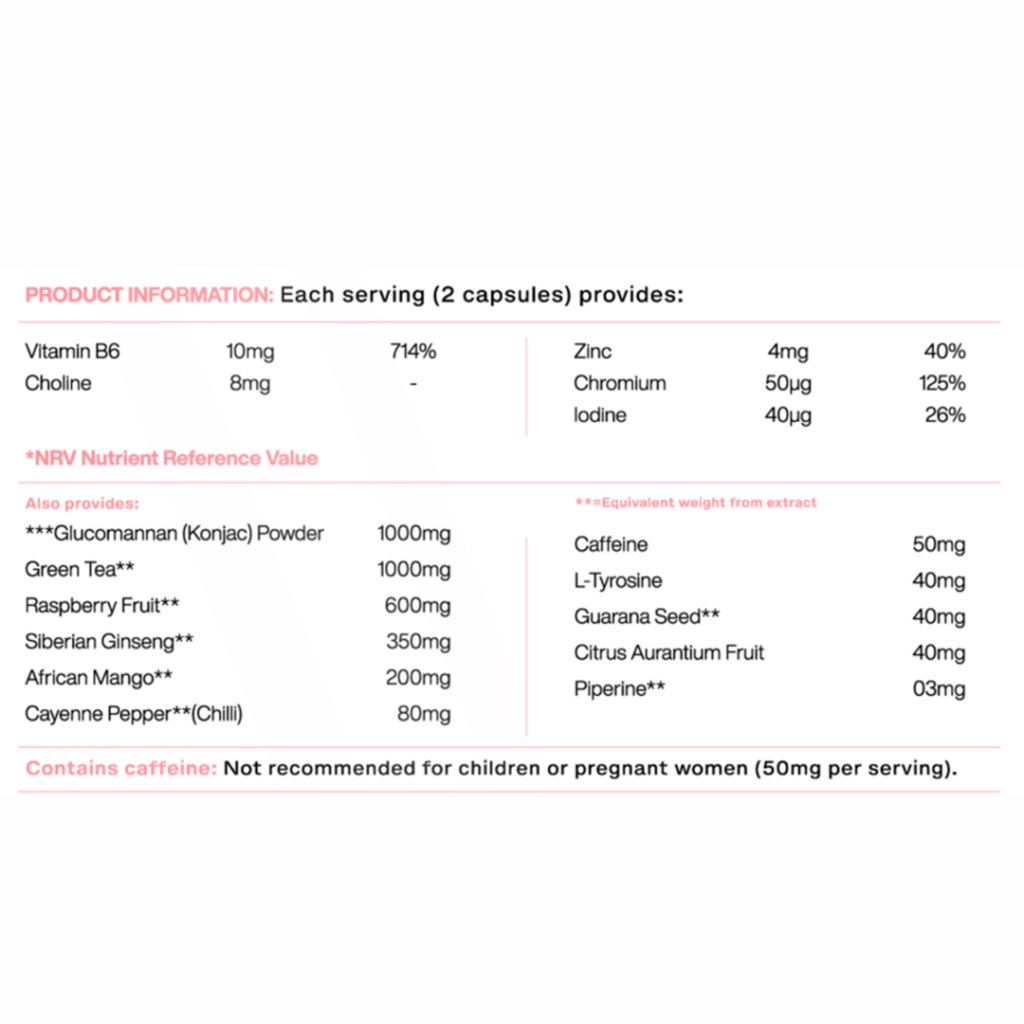
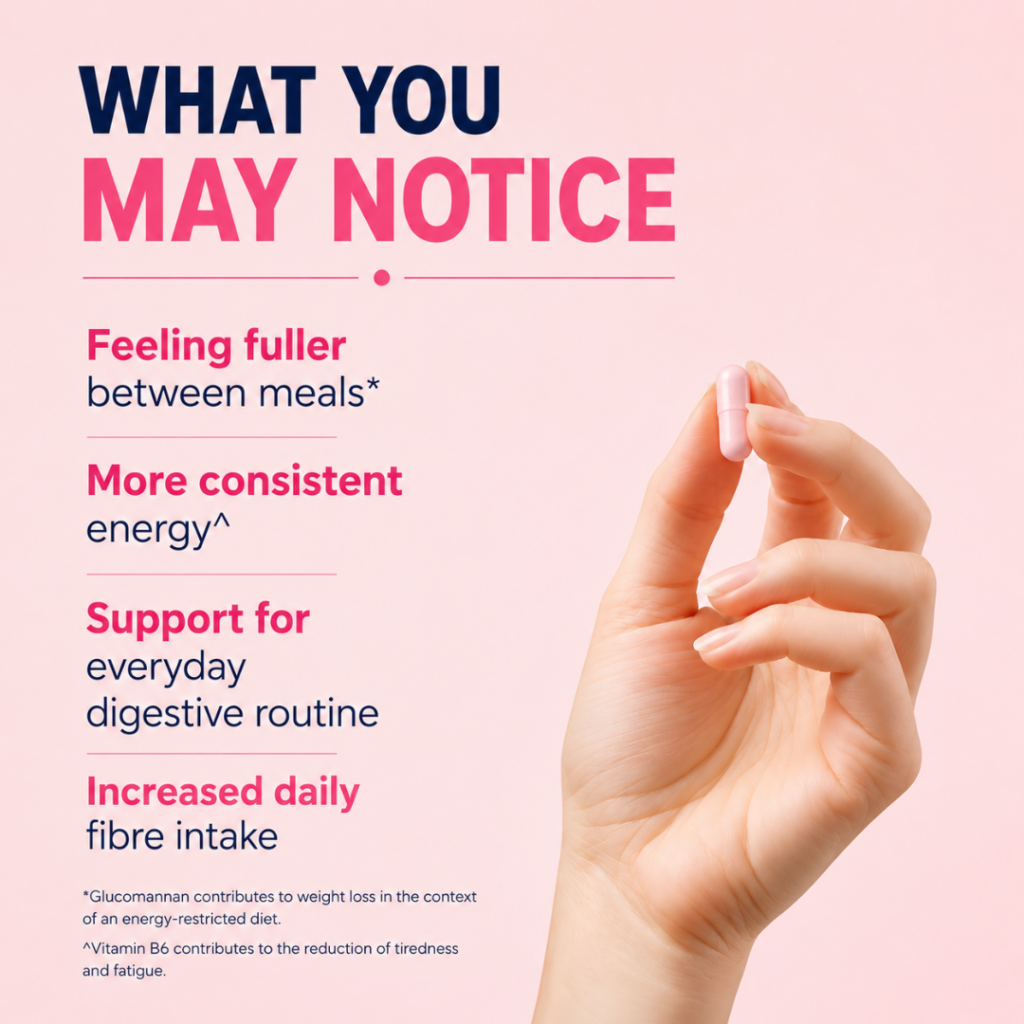
Glucomannan Reset | Fibre Supplement
Glucomannan fibre supplement | Formulated to support fullness, digestive health, energy and daily wellbeing.
Each full daily serving delivers 3g of glucomannan, a soluble fibre derived from konjac root that expands in the stomach to help promote fullness.
Visceral Belly Fat vs Other Body Fat
To get a better understanding of belly fat and what is visceral fat, let’s compare the different types of women’s body fat.
| Subcutaneous Fat | Visceral Fat |
|---|---|
| Location: Just beneath the skin | Location: Deep inside the abdomen, surrounding internal organs |
| Can you pinch it? ✔ Yes | Can you pinch it? ✘ No |
| Visible? Usually yes | Often hidden |
| Main role: Energy storage, insulation and cushioning | Protects organs, but excess amounts can affect health |
| Health risk: Lower when present in healthy amounts | Higher when present in excess |
| How to measure: Skinfolds, body fat %, body shape | Waist circumference, waist-to-hip ratio, CT or MRI scans |
| Can you reduce it? Yes, through overall fat loss | Yes, through overall fat loss and healthy lifestyle changes |
White fat is the most common type of fat in the body and includes subcutaneous fat, visceral fat and bone marrow fat. It’s made up of droplets of lipids, fatty acids and is the fat that stores extra calories.
Brown fat can be considered more of a good fat as it’s the type of fat that burns calories. It’s found around the chest and neck and involved in maintaining body temperature.
Brown fat cells are full of mitochondria and rich in iron. However, adults have very little brown fat. Babies have the most brown fat at birth and it mostly disappears with age.
Subcutaneous fat: This is the fat just under your skin. Our skin is comprised of several layers and this is the deepest skin layer. Think of the kind of fat you can pinch on your arms, thighs, or belly.
Subcutaneous fat produces a higher amount of beneficial molecules than visceral fat.
| Brown Fat | White Fat |
|---|---|
| Burns energy to produce heat | Stores excess energy |
| More common in babies | Most common fat in adults |
| Helps regulate body temperature | Cushions and protects organs |
| Contains many mitochondria | Stores large fat droplets |
| Generally considered beneficial | Necessary in healthy amounts, but excess can increase health risks |
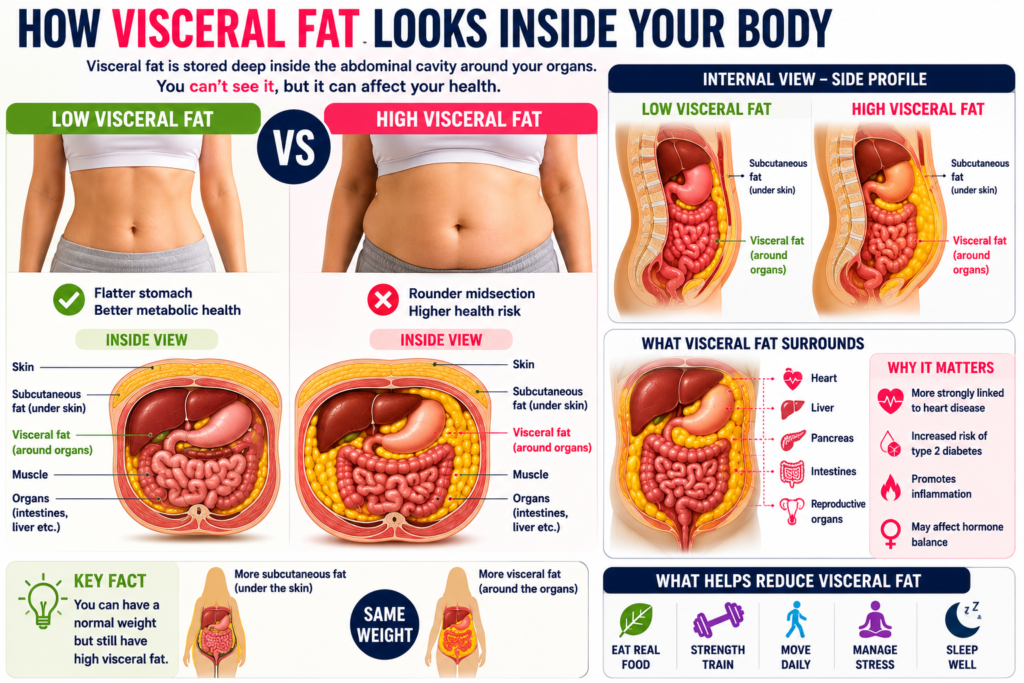
Visceral fat: This fat is stored as belly fat, but located deep inside the abdominal cavity. It surrounds our vital organs and is associated with more serious health problems than other types of fat.
It’s stored in the omentum, which is an apron-like flap of tissue that lies under the belly muscles and blankets the intestines. The omentum gets harder and thicker as it fills with fat.
Visceral fat produces a higher amount of molecules that can have negative health effects. It makes more of the proteins called cytokines.
They can trigger low-level inflammation, and are a risk factor for heart disease and other chronic conditions.
Visceral belly fat also produces a precursor to a protein that causes blood vessels to constrict and blood pressure to rise.
Intramuscular fat: This fat is found within muscles, and it provides energy during exercise.
Glucomannan Reset | Fibre Supplement
Glucomannan fibre supplement | Formulated to support fullness, digestive health, energy and daily wellbeing.
Each full daily serving delivers 3g of glucomannan, a soluble fibre derived from konjac root that expands in the stomach to help promote fullness.
Muscle vs Fat: What’s the Difference?
One of the biggest myths about weight loss is that muscle weighs more than fat.
In reality, 1 kilogram of muscle weighs exactly the same as 1 kilogram of fat. A kilogram is a kilogram.
The real difference is density.
Muscle tissue is much denser than fat tissue, meaning it takes up less space for the same weight. This is why someone can stay the same weight—or even gain a little weight—while looking noticeably leaner and wearing smaller clothes after building muscle.
This is particularly relevant during perimenopause and menopause, when falling oestrogen levels, reduced physical activity and age-related muscle loss (known as sarcopenia) can gradually shift body composition. Even if the number on the scales changes very little, losing muscle while gaining fat—especially visceral fat around the abdomen—can affect health and metabolism.
Rather than focusing solely on body weight, it’s often more helpful to think about body composition: the proportion of muscle, fat, bone and other tissues that make up your body.
Why Muscle Matters
Muscle is far more than something that helps you lift weights or stay strong.
Healthy muscle tissue plays an important role in everyday movement, balance and independence, while also contributing to your body’s resting energy expenditure. In simple terms, muscle requires energy to maintain, even when you’re resting.
Maintaining muscle mass can support long-term energy balance and make it easier to stay active as you age.
For women in midlife, preserving muscle may also help:
- Support healthy ageing and independence.
- Improve strength for everyday activities.
- Support balance and reduce the risk of falls.
- Help maintain a healthy body composition.
- Complement lifestyle changes aimed at reducing visceral fat.
The goal isn’t to become bodybuilder-lean—it’s to protect the muscle you already have while reducing excess visceral fat through a combination of regular strength training, adequate protein intake, daily movement and a balanced diet.
Muscle vs Fat Comparison
| Muscle | Fat |
|---|---|
| Dense tissue that takes up less space | Less dense, so it takes up more space for the same weight |
| Helps support movement and strength | Stores energy for future use |
| Contributes to resting energy expenditure | Requires less energy to maintain |
| Supports balance, posture and healthy ageing | Essential in healthy amounts, but excess visceral fat is linked with poorer metabolic health |
| Can help improve body composition | Excess body fat, particularly visceral fat, may increase health risks |
| May help clothes fit better even if weight stays similar | Larger volume means body measurements may increase |
Remember
The scales only tell you how much you weigh—they don’t tell you what your weight is made of.
That’s why two women of the same height and weight can look completely different and have very different levels of metabolic health. One may have more lean muscle and less visceral fat, while the other has less muscle and a greater proportion of abdominal fat.
When it comes to long-term health during perimenopause and menopause, improving body composition—not simply losing weight—is often the more meaningful goal.
Looking for extra support? RESET Contains glucomannan, which contributes to weight loss as part of an energy-restricted diet when 3 g is consumed daily in three 1 g doses before meals with 1–2 glasses of water, plus Green Tea and metabolic support nutrients.
Glucomannan Reset | Fibre Supplement
Glucomannan fibre supplement | Formulated to support fullness, digestive health, energy and daily wellbeing.
Each full daily serving delivers 3g of glucomannan, a soluble fibre derived from konjac root that expands in the stomach to help promote fullness.
Common Fat Loss Myths
Many popular beliefs about fat loss are misleading. Understanding what actually happens in the body can help you focus on habits that make a real difference.
Myth 1: Fat weighs more than muscle
This is one of the most common fitness myths.
A kilogram of fat weighs exactly the same as a kilogram of muscle — one kilogram.
The difference is density. Muscle is much denser than fat, meaning it takes up less space (see above).
Imagine holding:
- 1 kg of muscle – compact and firm.
- 1 kg of fat – larger and softer.
This is why someone can stay the same weight on the scales but look noticeably leaner after building muscle and losing body fat.
If you’re exercising and eating well, don’t rely on the scales alone.
Consider:
- Waist measurements
- How your clothes fit
- Progress photos
- Strength improvements
- These often show progress long before the scales do.
Myth 2: You can target belly fat with specific exercises
Unfortunately, hundreds of sit-ups won’t specifically burn fat from your stomach.
The body decides where it stores and loses fat based largely on genetics, hormones, age and sex. As you lose body fat overall, visceral fat inside the abdomen is often among the first types to decrease because it is more metabolically active than the fat stored just beneath the skin.
Abdominal exercises can strengthen your core muscles, but they don’t selectively burn belly fat.
Myth 3: Sweating means you’re burning fat
Sweating is simply your body’s way of cooling itself.
Most of the weight lost during a very sweaty workout is water, which returns once you rehydrate. Fat loss happens when your body uses stored energy over time, not because you sweat more.
Myth 4: You have to cut out all carbohydrates
Carbohydrates are an important source of energy and many healthy foods, including oats, beans, fruit and vegetables, are naturally rich in carbohydrates.
These foods also provide fibre, which may help increase feelings of fullness and support digestive health. Choosing minimally processed, high-fibre carbohydrates is generally a better long-term strategy than eliminating carbohydrates completely.
Myth 5: Skipping meals speeds up fat loss
Missing meals may leave you feeling hungrier later in the day, making it easier to overeat.
Many people find that regular meals containing protein, healthy fats and fibre help them feel fuller for longer and make it easier to maintain healthy eating habits.
Myth 6: Visceral fat is impossible to lose after 40
Hormonal changes during perimenopause and menopause can make fat distribution change, often increasing fat around the abdomen.
However, visceral fat can still be reduced. Regular physical activity, strength training, adequate protein, plenty of fibre, quality sleep and maintaining an overall calorie balance can all help reduce visceral fat over time.
Looking for extra support? Alongside a balanced diet, regular exercise and strength training, a fibre supplement such as RESET Fibre Capsules can help increase your daily fibre intake. Contains glucomannan, which contributes to weight loss as part of an energy-restricted diet when 3 g is consumed daily in three 1 g doses before meals with 1–2 glasses of water.
Can Women Have A Normal BMI And High Visceral Fat?
Yes. While BMI (Body Mass Index) can be a useful screening tool, it does not show where body fat is stored.
Some people with a BMI in the “healthy” range may still carry higher levels of visceral fat – the fat stored deep inside the abdomen around the organs.
This is sometimes referred to as “normal weight obesity” or being “thin outside, fat inside” (TOFI).
Unlike the fat you can pinch under the skin, visceral fat is metabolically active and has been linked to insulin resistance, inflammation, fatty liver disease, type 2 diabetes and cardiovascular disease.
Factors such as genetics, age, declining oestrogen levels, chronic stress, poor sleep and physical inactivity can all influence visceral fat accumulation, regardless of body weight.
This means that two people with the same BMI may have very different levels of visceral fat and different health risks.
For this reason, waist circumference, body composition and lifestyle habits can sometimes provide a more complete picture of health than BMI alone.
Glucomannan Reset | Fibre Supplement
Glucomannan fibre supplement | Formulated to support fullness, digestive health, energy and daily wellbeing.
Each full daily serving delivers 3g of glucomannan, a soluble fibre derived from konjac root that expands in the stomach to help promote fullness.
Why Women Need Body Fat
We all need some body fat and physiologically women need more essential body fat than men, this is linked to child bearing.
Fat has the role of being the body’s energy provider and reserve tank.
Studies demonstrate that estrogen reduces a woman’s ability to burn energy after eating with the result of fat being stored around the body.
More than just storing excess calories, body fat has several essential roles in the body. Body fat is needed for:
- Insulating the body and temperature regulation
- Protecting and cushioning vital organs
- Vitamin storage
- Hormone regulation
There are a number of factors that contribute to where women gain fat:
- Genes
- Age
- Hormones
- Whether you’ve had children (women who have given birth often gain more visceral fat than those who haven’t)
- Your weight at birth (smaller babies tend to gain more belly fat later in life)
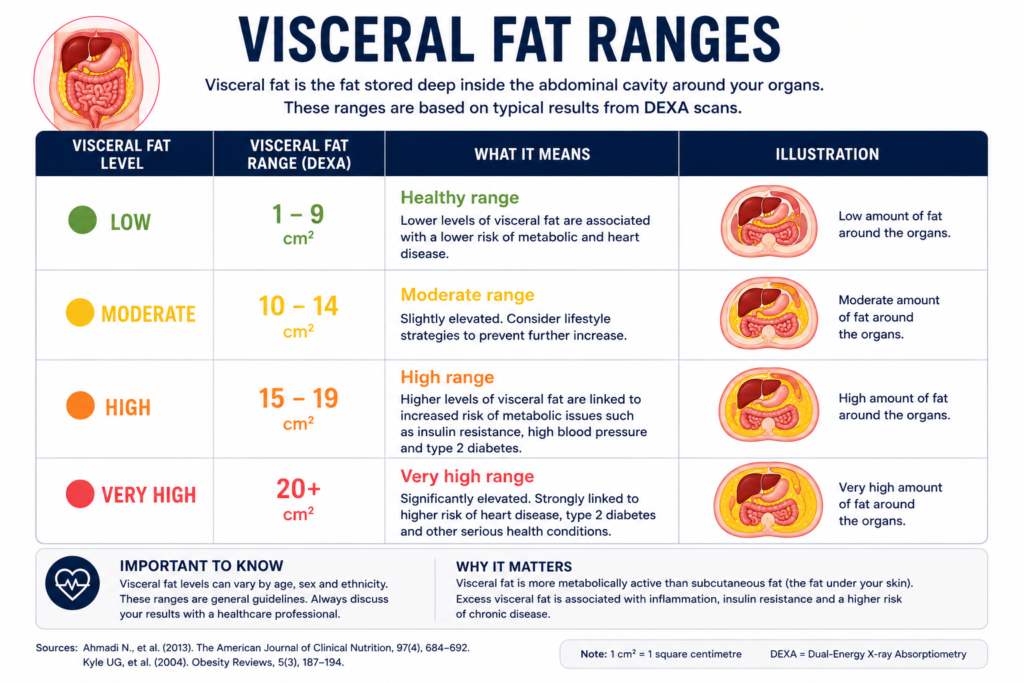
How Much Visceral Fat is Healthy for Women
On average, as young adults women tend to have less visceral fat than men, however, that changes with menopause. It’s important for women to maintain a healthy level of visceral fat.
According to health guidelines, women should aim for a visceral fat rating below 12%.
A rating over 12%, between 13-59% is considered high and increases health risk consequences.
So how do you know how much visceral fat you have?
Don’t rely on your weight to tell you because, even if you don’t actually gain weight, your waistline can grow in inches as visceral fat pushes out against the abdominal wall.
Your waist size, however, can offer clues. The NHS suggests that a waist circumference over 80 cm (31.5 inches) may indicate higher levels of visceral fat and potential health risks.
Calculating Visceral Fat Levels
As visceral fat is hidden doctors use several methods to calculate visceral fat levels:
- MRI and CT scans: These are the most accurate diagnostic method (but not always readily accessible).
- Bioelectrical impedance scales: These body fat scales measure body composition, including visceral fat percentage. Bio-impedance scales will typically measure body fat, visceral fat, muscle mass, water, bone density, BMR and can be a really useful way to monitor body fat levels and body composition metrics from home.
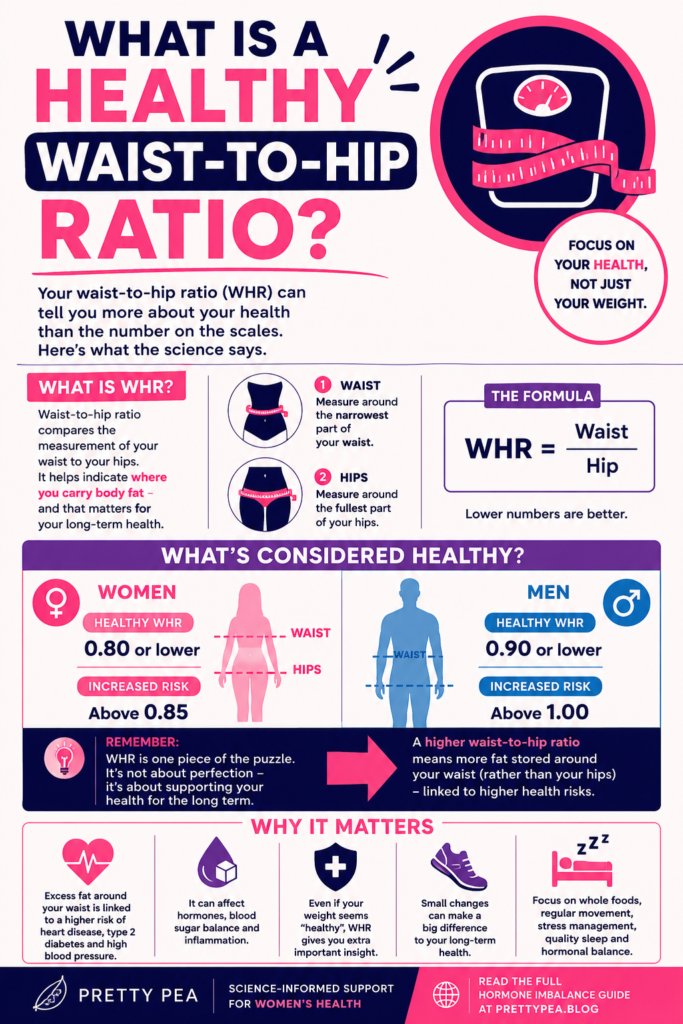
- Waist-to-hip ratio (WHR): Comparing your waist size to your hip size gives an estimate of abdominal fat.
How to calculate waist to hip ratio
- Waist circumference: Breathe normally and use a measuring tape around your waist (under clothes). Measure your waist either just above your belly button or at your narrowest point.
- Waist-to-hip ratio: Then measure your hips (the widest part), and divide your waist measurement by your hip measurement.
What Causes Visceral Belly Fat
Understanding what causes visceral fat, is key to knowing how to lose belly fat.
Factors:
- Diet: Consuming too many sugary foods, refined carbs, and unhealthy fats contributes to fat storage.
- Lack of exercise: A sedentary lifestyle leads to weight gain and more visceral fat. Moving more and building muscle mass are key to shaping your body and building metabolism.
- Hormones: Changes in hormones, especially estrogen, as women age and around menopause can shift both how and where fat is stored.
Women’s body shape can shift post menopause, with pre menopause fat storage moving from the hips and thighs to abdominal belly fat post menopause.
Body shape can change from pear shape to more apple shape with what’s often called menopause belly.
- Estrogen: Before menopause, higher estrogen levels encourage fat to be stored in the child-bearing hips and thighs, which poses fewer health risks.
- However, as estrogen levels drop during perimenopause, fat tends to shift to around the abdomen, increasing visceral belly fat.
Research suggests this hormonal shift is a significant factor in why women experience more belly fat as they age.
- Stress and Cortisol: Stress triggers the release of cortisol, a hormone that encourages fat storage, especially belly fat.
- Studies show that people with higher cortisol responses to stress tend to have more abdominal fat.
This is because abdominal visceral fat cells have around 4x more cortisol receptors than subcutaneous fat cells, making this type of belly fat more responsive to stress hormones.
- Sleep deprivation: Poor sleep affects metabolism and hunger hormones, increasing visceral fat.
- Studies have shown that adults who sleep less than 6 hours a night are more likely to have increased waist circumference and higher visceral fat levels.
When you don’t get enough sleep, it disrupts the balance of two key hunger hormones — ghrelin and leptin.
Ghrelin send hunger signals, while leptin signals when you’re full. Sleep deprivation increases ghrelin and decreases leptin, causing you to feel hungrier and less satisfied after eating.
Furthermore, poor sleep also raises cortisol levels, and further encourage visceral fat storage.
Genetics: Some women are naturally more prone to storing fat around their belly.
Glucomannan Reset | Fibre Supplement
Glucomannan fibre supplement | Formulated to support fullness, digestive health, energy and daily wellbeing.
Each full daily serving delivers 3g of glucomannan, a soluble fibre derived from konjac root that expands in the stomach to help promote fullness.
Why Excess Visceral Belly Fat can be Dangerous Fat
While some fat is necessary, however, excess visceral fat brings health risks.
Until as recently as the 1990’s body fat was believed to be little more than a storage depot for fat that’s waiting to be used for energy and the main danger of visceral fat was releasing free fatty acids into the bloodstream and liver influencing cholesterol.
However, a science breakthrough found that fat cells — and especially visceral fat cells — are biologically active and they act as an endocrine organ secreting hormones, chemicals and molecules that have far-reaching effects.
Too much of this active fat, visceral fat, can increase the risk of metabolic disorders and several serious health conditions:
- Type 2 diabetes: Visceral fat affects how insulin (your fat storage hormone) works, increasing blood sugar levels.
- Heart disease: Visceral fat releases chemicals that raise blood pressure and cholesterol.
- Stroke: Visceral fat contributes to narrowing blood vessels, increasing stroke risk.
- Cancer: Studies link excess visceral fat to both breast and colon cancer.
- Dementia: Research suggests visceral fat may raise the risk of cognitive decline.
Researchers at Kaiser Permanente found that people in their early 40s with the highest levels of abdominal fat, were almost 3x times more likely to develop dementia by their mid-70s-80’s
How Common is Visceral Fat in Women
Women’s obesity levels are rising in the UK and while there is limited data specifically on visceral fat, these broader obesity statistics offer insight:
- Obesity Rates: Approximately 28% of adults in England are classified as obese, with an additional 36% considered overweight. (UK Parliament, House of Commons Library)
- Average Dress Size: A You Gov poll found that the average UK dress size is 16
- Average Waist Size: Women’s average waist size has increased by 7 inches since 1951 – that’s pretty much one inch per decade – food for thought for future decades.
- Gender Differences: Between 2011 and 2019, obesity prevalence among women ranged from 24% to 30%, while 57% to 62% were either overweight or obese. (NHS Digital)
How to Lose Belly Fat (and prevent visceral fat)
There is good news. Visceral fat is more readily metabolized into fatty acids, and therefore responds more efficiently to diet and exercise (than subcutaneous fat on the hips and thighs).
Here are some approaches on how to lose belly fat :
Tips How to Lose Belly Fat:
- Move More. Exercise can help reduce waist size. So even when the number on the scales doesn’t move to say you’ve lost weight, you can lose visceral belly fat and gain all important muscle mass (metabolic boost)
- Studies have shown that you can lose visceral belly fat and/or prevent gaining visceral belly fat with both aerobic movement (brisk walking) and with resistance/strength training.
- Note that spot exercises, that target one area such as sit-ups, can tighten your abdominal muscles but they won’t specifically target abdominal visceral fat. Instead focus on full body compound moves like squats that use multiple muscle groups.
- Eat a Balanced Calorie Controlled Diet. Focus on filling foods protein and fibre based at every meal. Avoid simple sugars like fructose-sweetened foods and beverages which seem to encourage belly fat.
- Smokers Beware. The more you smoke, the more likely you are to store fat in your abdomen.
- Get Balanced Sleep. Not too little – A 5 year study found that adults under 40 who got five hours or less sleep a night accumulated significantly more visceral fat. And not too much — younger adults who slept more than eight hours also gained visceral fat. (Note, this correlation wasn’t found in those over 40)
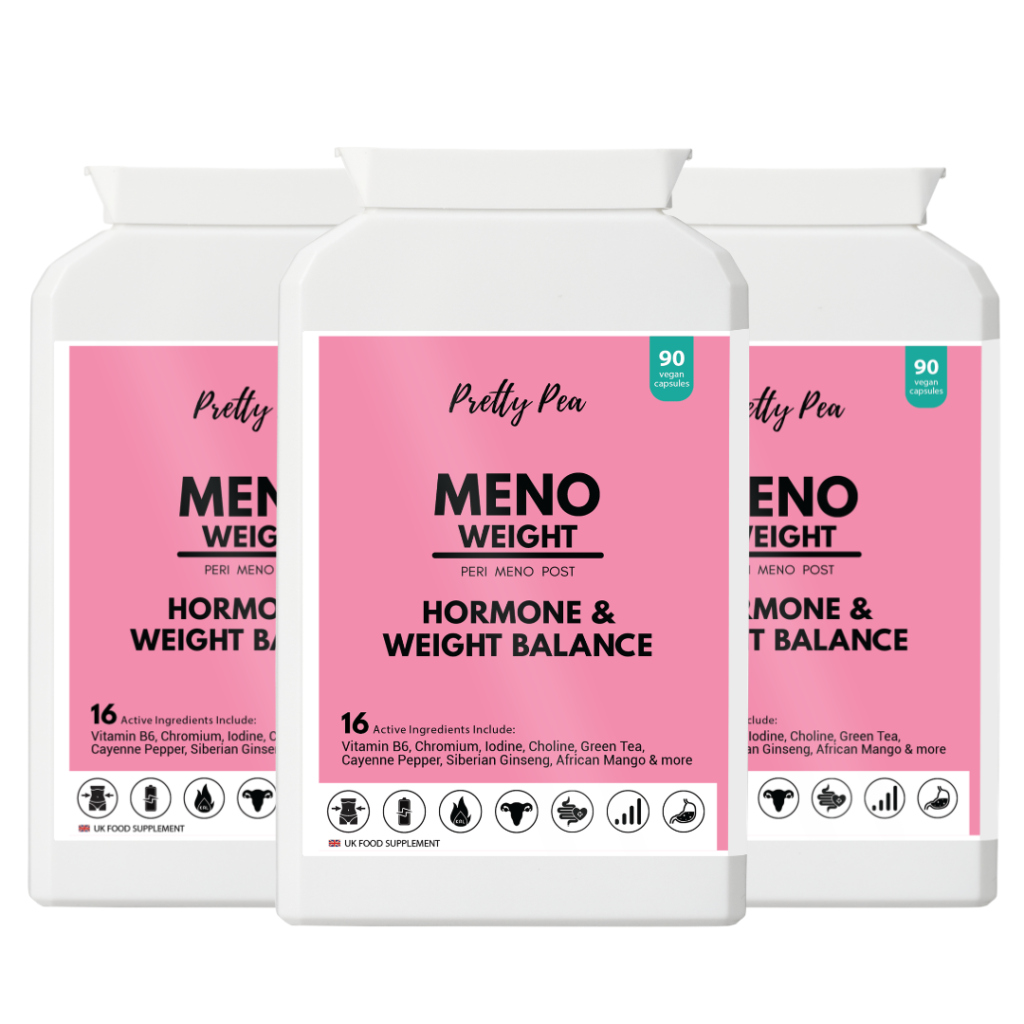
- Green Tea Supplements: Some of the best supplements to lose menopause belly fat include Green Tea Extract. This extract has been studied extensively in relation to its weight loss properties and has been shown to support metabolism and fat oxidation.
- A 2022 study looking at post menopause overweight and obese women found that 60 days of green tea supplementation may cause positive effects on body composition. Body composition was evaluated by dual-energy X-ray absorptiometry (DXA) and found that the women supplementing with green tea had a statistically significant decrease in visceral fat and fat mass.
- Supplement Recommendation: You’ll find Green Tea as a key ingredient in Pretty Pea Reset Capsules
- Finally Forget Instant Fat Loss Fixes. Forget how to lose belly fat in a week. Cosmetic fat removal procedures such as liposuction don’t reach visceral fat inside the abdominal wall.
Further reading: The Menopause Diet 5-Day Plan to Lose Weight – Pretty Pea
Latest Products
-
Menopause Supplement UK – Women’s Nutritional Support with Vitamins, Fibre & Botanicals
Original price was: £25.00.£19.99Current price is: £19.99. -
Menopause Supplement Bundle 3 for 2 Offer
Original price was: £77.97.£50.00Current price is: £50.00. -

-

-
-
Ashwagandha Supplement plus B Vitamins
Original price was: £25.00.£19.99Current price is: £19.99.

FAQ – What is Visceral Fat
What is visceral fat?
Visceral fat is fat stored deep inside the abdomen around your internal organs, including the liver, intestines and pancreas.
Unlike subcutaneous fat, which sits just beneath the skin, visceral fat cannot usually be seen or pinched.
Although some visceral fat is normal, higher amounts are associated with an increased risk of health conditions such as type 2 diabetes and cardiovascular disease.
What causes visceral fat?
Several factors can contribute to increased visceral fat, including ageing, hormonal changes during perimenopause and menopause, excess calorie intake, physical inactivity, poor sleep, chronic stress, genetics and excessive alcohol consumption.
Can you have visceral fat if you’re slim?
Yes. People with a healthy BMI can still carry excess visceral fat around their organs. This is why waist circumference and waist-to-hip ratio can provide useful information alongside body weight.
What’s the difference between visceral fat and belly fat?
Belly fat is a general term that includes all fat around the abdomen. Visceral fat is the deeper fat stored around internal organs, while subcutaneous fat is the softer fat just beneath the skin that you can pinch.
How do you know if you have too much visceral fat?
You cannot measure visceral fat by looking in the mirror alone. Healthcare professionals may use waist circumference, waist-to-hip ratio or imaging scans such as CT or MRI.
At home, keeping an eye on your waist measurement can be a useful indicator of abdominal fat.
Does menopause increase visceral fat?
Yes. During menopause, declining oestrogen levels can contribute to changes in where fat is stored, making it more common for women to gain fat around the waist rather than the hips and thighs.
Lifestyle factors such as reduced muscle mass, lower activity levels and poor sleep can also contribute.
Read: Hormone Imbalance in Women: Causes, Symptoms & How Hormones Work
Can visceral fat be reduced?
Yes. Visceral fat responds well to healthy lifestyle changes. Regular exercise, strength training, a balanced diet, adequate protein, higher fibre intake, quality sleep and maintaining a healthy weight can all help reduce visceral fat over time.
Can fibre help with visceral fat?
Fibre does not directly burn visceral fat, but increasing your fibre intake can support fullness, healthy digestion and weight management. Soluble fibres such as glucomannan and psyllium can be useful additions as part of a healthy diet.
Read: Can You Use Psyllium Husk for Weight Loss? Benefits, Dosage & Science Explained – Pretty Pea
Read: Glucomannan for Weight Loss: Does It Work and How Does It Compare to Medications?
Is waist-to-hip ratio better than BMI?
BMI is useful for assessing body weight relative to height, but it does not show where fat is stored.
Waist-to-hip ratio and waist circumference can provide additional information about abdominal fat distribution and health risk.
Can stress increase visceral fat?
Chronic stress may contribute to weight gain through changes in eating habits, sleep quality and physical activity.
Elevated cortisol levels have also been associated with increased abdominal fat storage, although many factors influence this relationship.
Read: Hormone Imbalance in Women: Causes, Symptoms & How Hormones Work
Does alcohol increase visceral fat?
Regular excessive alcohol intake may contribute to increased abdominal fat and weight gain.
Reducing alcohol consumption can be one of several lifestyle changes that support a healthier body composition.
How long does it take to lose visceral fat?
There is no fixed timeline. Visceral fat can begin to reduce as overall body fat decreases through sustainable dietary changes, regular exercise and healthy lifestyle habits.
Consistency is more important than rapid weight loss.
For Fibre Advice
- Bloating Isn’t Just “Too Much Gas”: The Real Causes of Bloating (and What Actually Helps)
- Plantago Ovata (Psyllium Husk): Benefits, Uses, Science
- GLP-1 Foods: The Ultimate List for Appetite Control, Fat Loss & Blood Sugar
- 50 High Fibre Foods Ranked by Fibre Content
- Best Fibre Supplements for Women | Complete UK Fibre Supplement Guide
- Why Fibre and Water Always Go Together
- Signs You Need More Fibre | Common Low Fibre Symptoms Explained