
Perimenopause weight gain is one of the most common and frustrating changes women experience in their 30s and 40s. Many notice that weight increases—particularly around the abdomen—even when diet and exercise habits haven’t changed.
This isn’t just about calories or willpower. Hormonal changes during perimenopause can affect how your body stores fat, regulates appetite, and uses energy.
Understanding these changes is key to managing weight more effectively.
In this guide, we’ll explain:
Why does Perimenopause Cause Weight Gain?
During perimenopause, levels of oestrogen begin to fluctuate and gradually decline. This affects several systems in the body:
- Fat distribution: Lower oestrogen is linked to increased abdominal fat storage
- Insulin sensitivity: Hormonal changes can make it easier to gain weight and harder to lose it
- Appetite regulation: Changes in hunger hormones may increase cravings
- Muscle mass: Natural age-related muscle loss slows metabolism
“Menopause is a high-risk time for weight gain in women. Although the average woman gains 2-5 pounds during menopausal transition, some women are at risk for greater weight gains. There is also a hormonally driven shift in body fat distribution from peripheral to abdominal at menopause, which may increase health risks.”
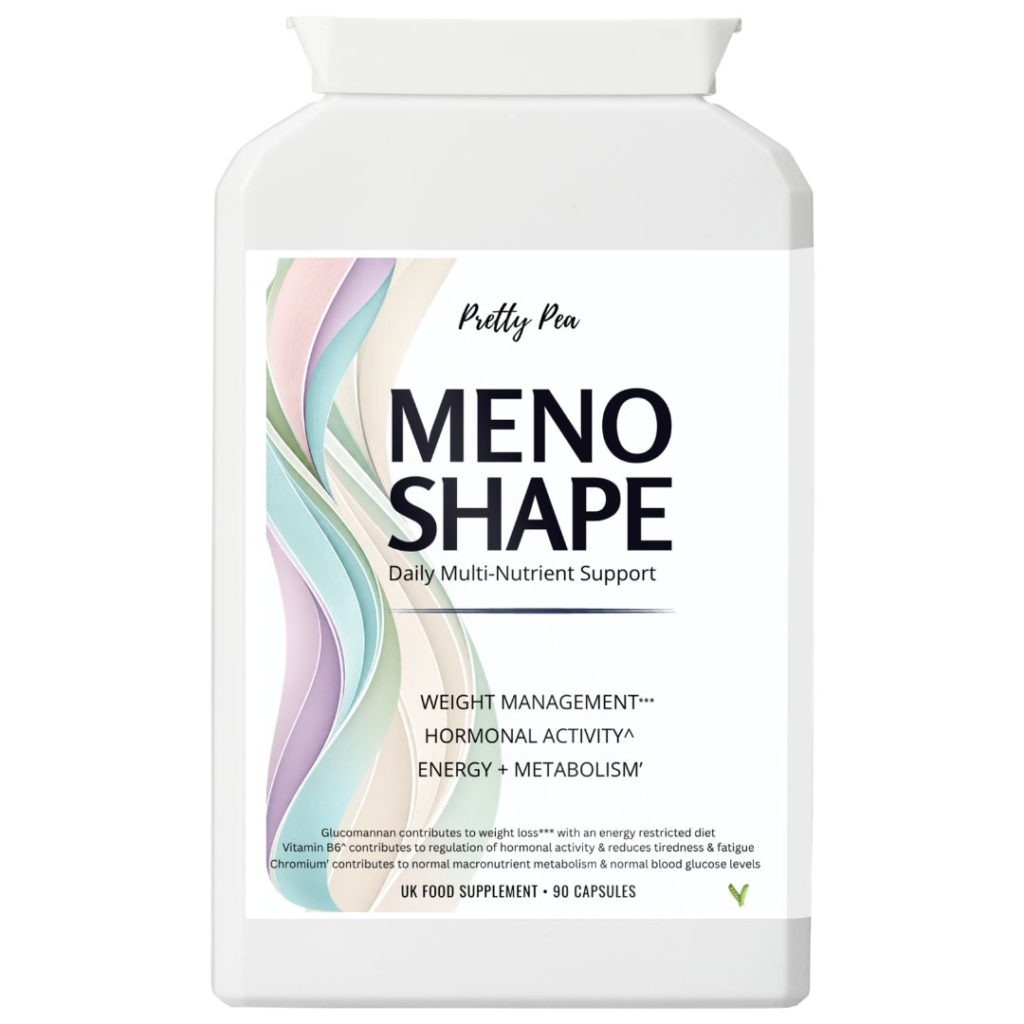
Menopause Supplement UK – Women’s Nutritional Support with Vitamins, Fibre & Botanicals
A carefully formulated menopause supplement designed to support women’s nutritional needs during this stage of life. This daily supplement combines vitamins, minerals, and botanical ingredients that contribute to general wellbeing, energy levels, and everyday nutritional balance.
As women go through perimenopause and menopause, nutritional requirements can change. This formula is designed to help support those changing needs as part of a healthy lifestyle and balanced diet.
Key nutrients and botanical extracts have been selected to complement overall wellness, including:
– Vitamin and mineral support for general health maintenance
– Glucomannan fibre to support digestion
– Botanical ingredients traditionally used in women’s wellness routines
– Nutrients that contribute to normal energy-yielding metabolism and normal hormonal activity
This supplement is suitable for women looking to support their daily nutrition during perimenopause and menopause as part of a balanced diet and active lifestyle. Commonly searched as a menopause supplement for women, this product is designed to support nutritional intake during menopause.
Perimenopause Weight Gain
The calories in -v- calories out equation is all well and good in your 20’s, when the metabolism is fired up by your muscle mass and hormones are happily in sync. It’s when you approach perimenopause and your hormones go into free-fall that you face new obstacles. Unbalanced hormones are a real issue for women as it’s hormones that control how our calories are used. Hormones decide whether to store your calories as energy or store them as fat.
Calories and weight loss
A recent study published in the Science Journal found that our metabolism doesn’t actually start to slow down until age 60, not around 40 as previously thought!
The study recognised that muscle mass plays a role as it’s more metabolically active than fat tissues, ie muscle burns more calories than fat does.
When hormones are unbalanced it’s often the case that no amount of cardio or calorie restriction will shift the number on the scales.
Why is it harder to lose weight
During perimenopause our sex hormones oestrogen, progesterone and testosterone start to decline. Whilst your ovaries start shutting up shop they call on your adrenal glands (they produce your stress hormones) for help (as your body still needs some oestrogen for other functions in your body).
Adrenal fatigue is an issue for many women, making menopause feel like more than a normal transition, because for many the adrenals are already taxed by the time they reach menopause.
Hormones drive whether calories are stored as FAT or as ENERGY
Other hormones include fat storing hormone Insulin, hunger hormone Leptin and Thyroid which controls your metabolism. So many women have sluggish metabolism at this age and it’s no coincidence. Years of yo-yo dieting programmed into women can cause havoc on the your metabolism too.
How to Manage Weight During Perimenopause
From years of training women, and my own early menopause experience I can’t emphasise the power of nutrition and exercise enough when it comes to transforming both how you look and how you feel.
Here are my 7 steps that every woman can start implementing today to start taking charge of her hormones and body. Practical everyday steps to make a difference.
7 Steps to Manage Perimenopause Weight Gain
Step 1 – Blood Tests
Ask your GP to check your hormones and other essential markers, especially if you’ve been feeling tired or run down. A simple blood test can give you vital information on what you body could be lacking. It can be useful to obtain a copy of the results. Because there is usually a wide bracket of what’s deemed as ‘normal’ and what’s deficient. You want to know if you are at the lower end of any of these brackets so you can do something about it.
Step 2 – Stop Dieting
It’s time to ditch the diet mentality and adopt the quality not quantity approach to your food. Stop counting calories and start eating for nutrition instead. Get off the dieting roundabout of points, syns and counting. Not all calories are created equal. Some calories are packed with nutrients, whereas alcohol is empty calories. We can’t outsmart our hormones nor metabolism. Put your focus on your food quality and start thinking about your food as the nutrients that feed your cells and balance your hormones.
Step 3 – Add Protein & Fibre at Every Meal
Protein, protein, protein…. most women don’t eat enough despite it being the number one macronutrient for weight loss. To lose weight eat your bodyweight in protein each day, at least 1 gram per kg of bodyweight. Do this and there won’t be room for snacking. Take an honest review to see if you’re getting enough. Consider supplementing with protein powder to top up any gaps if necessary.
Step 4 – Stop Snacking
Talking of snacking, it’s time to ditch eating every 2-3 hours. Snacking doesn’t boost the metabolism. Plus it’s not how your body is designed to eat either. Grazing like this is the green light for fat storage as it spikes your Insulin fat storing hormone. If you feel the need to eat every 2 hours it’s definitely time to look at the quality of your food, focus on protein and fibre to re-set your hormones and switch them from fat storing to fat burning mode.
Step 5 – Add Hormone Balancing Foods + Adaptogens
The decline in sex hormones means fat storage goes to the abdomen now more now than ever. The typical pear shape carrying fat on the thighs and buttocks can start to become more apple shape with fat going straight to the abdomen instead.
Hormone balancing foods
You can give your hormones (and weight) a helping hand with foods such as cruciferous veggies (think cauliflower, broccoli, sprouts, kale – the veggies that look like trees) as they contain specific compounds. Harmonising adaptogens include Maca root, Ashwangandha, Spirulina, Seaweed, Red Clover, Sage to name a few. These clever herbals adapt to what your body needs. All adaptogens you can find in the Pretty Pea range.
Note some herbal hormone balancing supplements are not recommended for those on HRT prescription medication. It’s always advisable to consult your GP before changing your diet and /or taking supplements.
Further reading: Can You Take Supplements with HRT? What’s Safe and What to Avoid
Step 6 – Manage Daily Stress
Manage daily stress levels as cortisol, your stress hormone, is also associated with fat storage especially around your middle. Modern life has created a constant undercurrent of continuous stressors which the body isn’t designed for. Our stress hormones were designed to be used in short bursts, not the continuous worries we have going on in the background 24-7.
Relationships, family drama, work issues, financial worries, endless to-do lists, pandemics, living on caffeine and sugar, anxiety, depression and mental health concerns and being at the bottom of your own to-do list all ultimately take their toll.
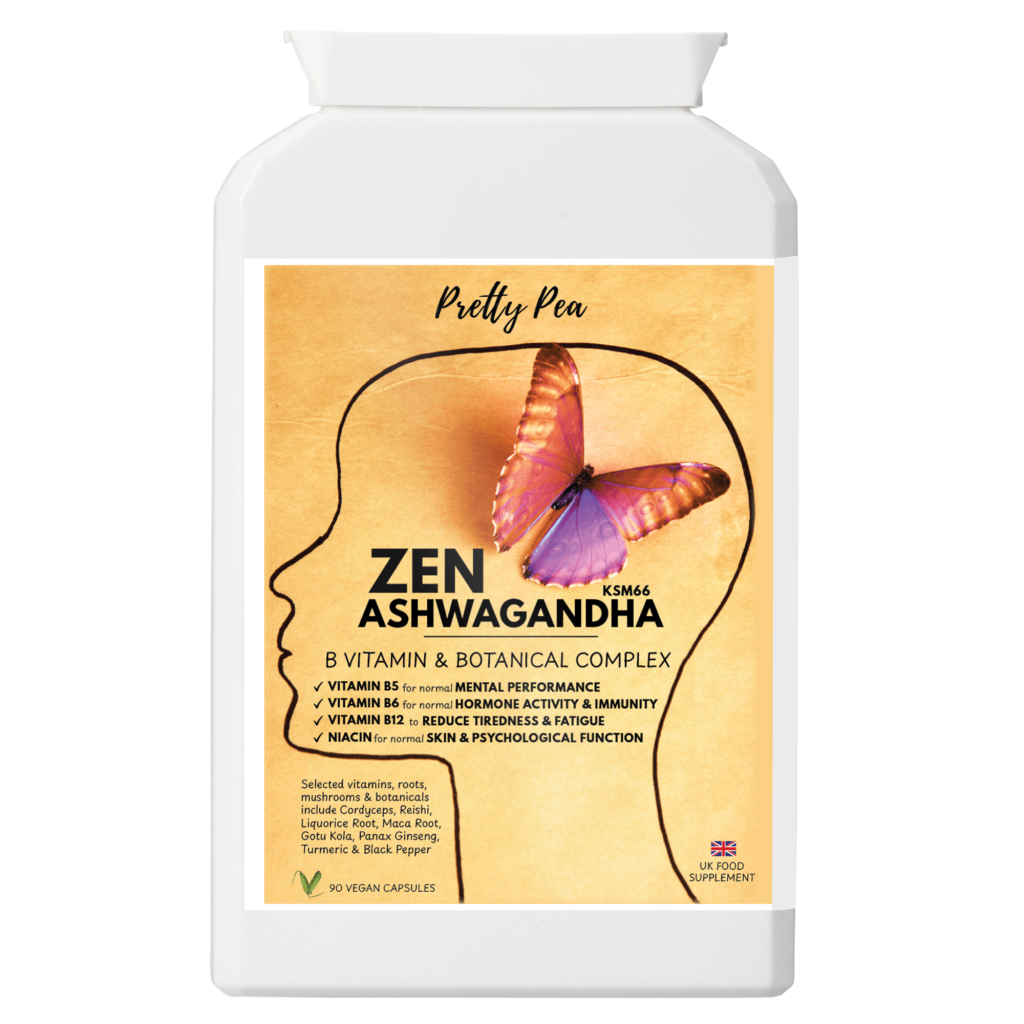
Ashwagandha Supplement plus B Vitamins
ZEN Ashwagandha supplement. A synergistic blend of nature’s most powerful Adaptogens and B Vitamins formulated to support the immune system, energy levels, mental performance along with promoting a sense of calm, focus & vitality, with 1000% NRV of Vitamin B12.
Step 7 – Strength Training
Strength training, also known as resistance training, doesn’t require a gym membership. Resistance training simply means your body is resisting, working against something. It could be gravity using your own bodyweight or it can be using a weight such as a kettlebell, dumbbell or medicine ball etc.
Your body releases HGH, Human Growth Hormone, when working against a force. HGH, known as the youth hormone, plays a vital role in cell regeneration and in maintaining healthy tissues and optimising metabolic function.
Age and loss of muscle mass
With each decade after 50 we lose around 6% muscle mass. That’s associated with a 10-15% loss in strength making you feel physically weaker and less functional.
Losing muscle makes it more difficult to lose weight. Fat burns 2-3 calories per pound whereas muscle burns around 50 calories. This is why those who strength train regularly and have built up their lean muscle tissue can eat thousands of calories each day – muscles is metabolically active tissue and hungry!
It also explains why most men cab lose weight quicker than women – they naturally have more muscle mass than women. Women typically carry more bodyfat.
Know that the more muscle you have the more calories your body will burn 24/7 and not just when you’re working out.
These 7 steps can make perimenopause weight loss easier. You just have to start and take it step by step.
FAQ – Perimenopause Weight Gain
Why do I gain weight during perimenopause?
Hormonal changes, particularly declining oestrogen levels, can affect fat storage, metabolism, and appetite regulation.
Where does perimenopause weight gain occur?
Weight is often gained around the abdomen, sometimes referred to as “menopause belly fat”.
Can you lose weight during perimenopause?
Yes, but it may require adjustments to diet, exercise, and lifestyle to account for hormonal changes.
What is the best diet for perimenopause weight gain?
A balanced diet including protein, fibre, and whole foods is generally recommended.
Does fibre help with menopause weight gain?
Fibre may support appetite control and help regulate blood sugar, which can be beneficial for weight management.
RELATED ARTICLES
Understanding Visceral Fat: The Ultimate Belly Fat Guide
9 Benefits of Fibre: Why It’s Essential for Gut Health, Weight and Wellbeing
Your Gut Microbiome Is Talking to Your Brain — Are You Listening?
Appetite Regulation: How Fibre vs GLP-1 Compare
Glucomannan for Weight Loss: Does It Work and How Does It Compare to Medications?
What is the Highest Fibre Food
The Ultimate Guide to Fibre Supplements for a Happier Gut: Unlocking Your Digestive Health
10 Green Tea Benefits: The Ultimate Science-Backed Guide
The Ultimate Superfood List: What are Superfoods, Benefits, Best Choices, and How to Use
The Rich List: Insoluble Fibre Rich Food List
Understanding Visceral Fat: The Ultimate Belly Fat Guide
Everything Psyllium How To Use: A Comprehensive Guide on How to Use It for Maximum Health Benefits
Can You Use Psyllium Husk for Weight Loss? Benefits, Dosage & Science Explained – Pretty Pea
Simple Food Group Swaps – Make Life Easier for Yourself
The 100 Symptoms of Perimenopause
Sources: Perimenopause Weight Gain
- NHS – Menopause and weight changes
- British Nutrition Foundation – Healthy eating guidelines
- Lovejoy, J. C. (2008). The menopause and obesity. Primary Care
- Davis, S. R. et al. (2012). Menopause and weight management. Climacteric
- Ko, S. H., & Kim, H. S. (2020). Menopause-associated metabolic changes. Journal of Menopausal Medicine
DISCLAIMER The information provided on www.prettypea.blog is for education purposes only. The information provided is based on my own experience as well as my own interpretations of current research available at the time. This page does not provide medical advice; it is intended for informational purposes only. It is not a substitute for professional medical advice, diagnosis or treatment. Never ignore obtaining or following professional medical advice in seeking treatment because of something you have read on the internet. Always seek professional medical advice.
