
 Cate Boyd
Cate Boyd
Cate Boyd
Changes during menopause can make losing weight feel like a completely different challenge. You may be eating “healthily,” trying to move more, and doing all the things that used to work — yet the scales won’t budge. Meanwhile, bloating, cravings, poor sleep, and stubborn belly fat can seem to show up out of nowhere.
If that sounds familiar, you’re not imagining it. Up to 70% of women experience weight gain during perimenopause and menopause.
Hormonal changes during perimenopause and menopause can affect how your body stores fat, regulates appetite, responds to insulin, and uses energy. The good news? You do not need to starve yourself, cut out carbs, or follow an extreme plan to start feeling better.
What you do need is a more menopause-friendly way of eating — one that supports your hormones, metabolism, muscle mass, digestion, and energy levels.
In this guide, we’ll walk through:
- why weight gain happens during menopause
- the best foods to eat for menopause weight loss
- a realistic 5-day menopause diet plan to lose weight
- simple nutrition tips to help you stay consistent
Why is it harder to lose weight during menopause?
If weight loss feels harder than it used to, there are several real biological reasons behind it.
1. Estrogen levels start to fall
As estrogen declines during perimenopause and menopause, the body becomes more likely to store fat around the abdomen. This shift is incredibly common and is one of the main reasons many women notice a thicker waistline during this stage of life.
2. Muscle mass naturally declines
From around your 30s onwards, we gradually begin to lose muscle mass — and this can accelerate with age and hormonal changes.
Since muscle helps support your metabolism, losing it can make it easier to gain weight and harder to lose it.
3. Blood sugar becomes more unstable
Hormonal changes can affect insulin sensitivity, which may lead to more energy crashes, stronger cravings, and increased fat storage if meals are not balanced.
4. Sleep and stress often get worse
Hot flushes, night sweats, anxiety, and broken sleep are common during menopause — and poor sleep can affect hunger hormones, appetite, and cravings the next day.
5. Dieting can backfire
Many women respond to menopause weight gain by eating less and less, but overly restrictive diets often make things worse.
Under-eating can increase cravings, reduce energy, affect mood, and make it harder to preserve lean muscle.
The goal is not to eat less at all costs — it’s to eat smarter.
Below we breakdown the menopause diet 5 day plan to lose weight, it’s key principles, sample menu and FAQ’s
The Menopause Diet 5 Day Plan to Lose Weight
A 5-day meal plan can be a great starting point (see below) — but what matters most is what you do consistently over time.
Here are the key habits that tend to make the biggest difference.
The best menopause diet is one that helps you:
This helps:
- stay fuller for longer
- support muscle mass
- reduce cravings
- balance blood sugar
- support digestion and bloating
- feel realistic enough to stick to
That usually means building daily meals around:
1. Prioritise Protein: The Muscle Preserver
Prioritising protein at every meal is one of the most helpful changes for menopause weight loss is making sure each meal includes a meaningful source of protein.
- keep you fuller for longer
- support muscle mass
- reduce snacking
- stabilise energy
A rough guide is to aim for 20–30g of protein per meal, although individual needs vary.

Easy ways to do this: The Menopause Diet 5 Day Plan to Lose Weight
- add Greek yoghurt or protein powder to breakfast
- build lunches around chicken, eggs, tuna, tofu, or lentils
- make dinner protein-first rather than carb-first
Why it matters:
During menopause, women naturally lose muscle mass due to declining estrogen and age.
Less muscle = slower metabolism = easier weight gain, especially around the middle.
How it helps weight loss:
Protein plays a crucial role in preserving muscle mass, it boosts metabolism, and helps you feel fuller for longer. This makes it easier to maintain a calorie deficit without feeling deprived.
What’s happening in the body:
Protein takes more energy to digest (known as the thermic effect/thermogenic), and it slows stomach emptying, helping you stay full. It also reduces cravings by regulating hunger hormones like ghrelin.
Study facts:
A 2015 study in The American Journal of Clinical Nutrition1 found that higher protein intake (1.2g/kg of body weight) preserved lean mass during weight loss in postmenopausal women better than lower-protein diets.
2. Healthy Fats – The Hormone Helpers
Healthy fats can help support hormones, satiety, and overall health.
The Menopause Diet 5 Day Plan to Lose Weight: Why it matters:
Fat isn’t the enemy — it’s essential for hormone production, brain health, and satiety. During menopause, your body relies more on dietary fat as estrogen naturally declines.
Healthy fats, particularly omega-3 fatty acids found in salmon, walnuts, chia seeds, and flaxseeds, are essential for reducing inflammation and supporting heart health (womens risk increases post menopause).
These fats can also aid in hormone regulation, which is particularly beneficial for managing menopausal symptoms and preventing weight gain
How it helps weight loss:
Healthy fats help balance hormones and keep you feeling full, reducing the need to snack or overeat. They also reduce inflammation, which is often higher during menopause and linked to weight gain.
What’s happening in the body:
Fats slow digestion and provide essential building blocks for hormones. Omega-3 fatty acids, in particular, support brain function and reduce belly fat accumulation.
Study facts:
A 2010 review in The Journal of Nutrition2 found that diets rich in monounsaturated fats (like olive oil and avocado) led to more abdominal fat loss compared to low-fat diets.
Good sources include:
- Avocado
- Olive oil
- Nuts and seeds
- Oily fish
- Nut butters
3. Don’t Skip Fibre – Your Gut Guardian
Fibre is often overlooked, but it can be one of the most useful nutrients for women during menopause.
It can help support:
- fullness
- digestion
- blood sugar balance
- cholesterol levels
- bowel regularity
The Menopause Diet 5 Day Plan to Lose Weight: Try to include fibre across the day from:
- vegetables
- berries
- oats
- lentils
- beans
- chia or flaxseeds
- wholegrains
Why it matters:
Menopause can slow digestion and increase bloating. Complex carbohydrates such as whole grains, legumes, and vegetables provide a steady release of energy and are rich in fibre. Fibre keeps things moving and supports a healthy gut microbiome — which influences weight and hormones.
How it helps weight loss:
Fibre reduces appetite, regulates blood sugar, and improves insulin sensitivity — key for reducing belly fat. It also feeds good gut bacteria, which play a role in weight regulation.
What’s happening in the body:
Soluble fibre (psyllium husk, glucomannan) forms a gel in your gut, slowing digestion and the release of glucose. They provide a steady release of energy. This reduces insulin spikes (which can promote fat storage). Insoluble fibre adds bulk and keeps bowels regular.
Study facts:
A 2015 study in Annals of Internal Medicine3 showed that simply increasing fibre intake to 30g per day helped overweight adults lose weight even without other dietary changes.
A study looking at dietary intakes in premenopausal middle aged women, published in Science Direct 4found that both high fibre and high protein intakes are associated with increased satiety and decreased food intake 5, and that fibre was the strongest single predictor of body fat.

4. Don’t fear carbs — just choose them wisely
Carbohydrates are not the enemy — but choosing higher-fibre, slower-digesting that can help with energy and cravings. Cutting out all carbs is rarely necessary and often makes eating harder to maintain.
Instead of removing carbs completely, focus on better-quality carbohydrates that help support energy and fullness, such as:
- Oats
- Sweet potato
- Brown rice
- Quinoa
- Wholegrain bread
- Beans & Lentils
- Fruit
Be careful with “healthy” snacks. Many women eat well at meals but end up unknowingly consuming lots of extra calories through:
- granola
- nut clusters
- smoothies with no protein
- dried fruit
- grazing on “healthy” snack bars
This doesn’t mean these foods are bad — but if weight loss is your goal, it helps to choose snacks that are more filling and balanced.
Better snack ideas:
- Greek yoghurt
- boiled eggs
- fruit with nut butter
- cottage cheese
- edamame
- protein-rich snack pots
Also pairing carbs with protein and healthy fats is one of the easiest ways to improve blood sugar balance and reduce cravings.
5. Hydration – The Metabolism Mover
Hormonal changes can sometimes increase bloating, constipation, and fatigue — and dehydration can make all of these feel worse.
Try to drink water regularly throughout the day, and remember that:
- herbal teas count
- high-fibre diets need enough fluid to work well
- thirst can sometimes feel like hunger
The Menopause Diet 5 Day Plan to Lose Weight: Why it matters:
Staying hydrated is vital for overall health and may help manage menopausal symptoms like hot flushes and dry skin. Drinking enough water also supports metabolism and can help curb hunger, making it easier to manage calorie intake. Even mild dehydration can slow metabolism, increase cravings (as we often disguise thirst for hunger), and cause fatigue — all of which make weight loss harder.
How it helps weight loss:
Water helps burn fat more efficiently, prevents overeating, and can even modestly increase calorie burn (thermogenesis).
What’s happening in the body:
Water is involved in every metabolic process, including fat breakdown. It also helps manage body temperature, joint health, and energy levels.
Study facts:
In a 2010 study published in Obesity6, adults who drank 500ml of water before meals lost 44% more weight over 12 weeks than those who didn’t.
6. Sugar – The Fat Trigger
The Menopause Diet 5 Day Plan to Lose Weight: Why it matters:
High sugar consumption can lead to insulin spikes and increased fat storage, particularly around the abdomen. Reducing added sugars in your diet helps stabilize blood sugar levels, reduce cravings, and promote weight loss. Hormonal shifts during menopause make the body more insulin resistant — meaning sugar is more likely to be stored as fat, especially around the belly.
How it hinders weight loss:
High sugar intake leads to blood sugar spikes and crashes, increased hunger, and fat storage. It also drives inflammation and mood swings, which can lead to emotional eating.
What’s happening in the body:
Insulin is the “fat storage” hormone. When sugar intake is high, insulin rises, encouraging the body to store excess calories as fat. During menopause, this process is more sensitive and more easily triggered.
Study facts:
A 2016 study in The Journal of Clinical Endocrinology & Metabolism7 found that midlife women who consumed high levels of sugar had higher rates of abdominal obesity and insulin resistance.
7. Phytoestrogens – Plant Based Estrogen Support
The Menopause Diet 5 Day Plan to Lose Weight: Why it matters:
Phytoestrogens are plant compounds that gently mimic estrogen in the body. Foods like soy products, chickpeas, and flaxseeds may help alleviate some menopausal symptoms such as hot flushes and may support hormonal balance.
As the loss of estrogen during menopause is linked to weight gain, they may also potentially reduce weight gain linked to hormonal shifts.
How it helps weight loss:
Studies show by supporting hormonal balance, phytoestrogens may reduce fat accumulation and cravings. They may also improve mood and sleep — both of which impact appetite and metabolism.
What’s happening in the body:
These compounds bind to estrogen receptors in the body, acting as weak estrogens when your natural levels drop. They’re found in foods like soy, flaxseeds, and legumes.
Study facts:
A 2021 meta-analysis in Climacteric8 showed that phytoestrogens, particularly from soy isoflavones, improved body composition and reduced fat mass in postmenopausal women over 12 weeks.
8. Calorie Control – The Energy Equation
The Menopause Diet 5 Day Plan to Lose Weight: Why it matters:
If you’ve read this far, then you’ve no doubt realised that your body can no longer lose weight as easily as it once could. This is because during and after menopause, your body naturally burns fewer calories. This is due to a drop in estrogen, loss of muscle mass, and often reduced physical activity. That means if you keep eating the same amount as before, you’re more likely to gain weight — especially around the abdomen.
How it helps weight loss:
To lose weight, you need to eat fewer calories than your body uses — this is called a calorie deficit. But it doesn’t mean starving yourself. The key is controlling portions, eating more nutrient-dense foods, and cutting down on empty calories (like sugary drinks and snacks).
What’s happening in the body:
With age and hormonal changes, your basal metabolic rate (BMR) — the number of calories your body burns at rest — slows down. Estrogen also affects how fat is stored, encouraging more fat around the belly. Without calorie control, fat gain becomes easier and fat loss becomes harder.
With reductions in basal energy expenditure, the menopausal body requires fewer calories to run on.
Menopause women can experience a decrease in total 24-hour energy expenditure by 9%.
Studies have found there can be a reduction in 24 hours energy expenditure of 200 calories a day.
Studies show there is also a decrease in physical activity energy expenditure by 30%.
The amount of energy used during sleep also decreases significantly with age.
Over time and combined these changes in energy requirements could lead to significant weight gain unless changes are made to decrease energy intake.
Note, restricting calories is not without potential negative implications for body composition. In an ideal world weight loss would be lost exclusively from fat mass , however, weight is typically lost from muscle mass too – so this is where protein and resistance training again can make all the difference.
Weight loss aside, on a positive note, calorie restriction is one of the main nutritional measures proven to extend life span and improve age-related metabolic syndrome.
Study facts:
- A 2015 study in The Journal of Clinical Endocrinology & Metabolism found that resting metabolic rate drops significantly after menopause, even when accounting for body size and composition.
- Research from the Women’s Health Initiative (2013) found that postmenopausal women who tracked calories and reduced intake by just 200–300 calories/day lost more weight and kept it off over 12 months compared to those who didn’t track intake.
- A 2021 meta-analysis in Nutrients confirmed that calorie reduction remains the most effective approach for weight loss in menopausal and postmenopausal women when combined with protein and fibre-rich diets.
Practical tips:
Track meals for a few days using an app to understand your current intake – not forever.
Use smaller plates, eat slowly, and stop when you’re 80% full.
Focus on low-calorie, high-volume foods (vegetables, broth-based soups, whole fruits).
Avoid “diet culture” extremes — slow, sustainable changes are most effective.
Be realistic: 1lb = 3500 calories
Example: average daily energy deficit of 500 calories to create a sustainable 1lb a week loss (500 calories x 7 days = 3500 calories)
Bio-impedance scales are useful to monitor important metrics such as muscle mass, hydration, BMR age and bone density.

Don’t rely on the number on the scales as a sole metric of your success. Some weeks the scales won’t budge at all, because weight loss isn’t linear, it doesn’t go in a straight line. When this happens it doesn’t mean it’s not working.
It means be patient and focus on other changes, the bigger picture, how you feel, energy levels, stress levels, sleep quality, how your clothes fit, strength & fitness levels.
If a plateau persists over a few weeks, however, you may need to revisit your energy intake/expenditure.
Menopause Diet 5 Day Plan to Lose Weight
Here’s a sample Menopause Diet 5 Day Plan meal plan designed to be realistic, satisfying, and supportive of weight loss — without being overly restrictive.
It focuses on:
- protein at every meal
- plenty of fibre
- balanced blood sugar
- foods that support fullness and energy
Important: This is a general guide, not a medical prescription. Portion sizes can be adjusted depending on your appetite, activity level, and goals.
Day 1
Breakfast: Greek yoghurt berry protein bowl
- 200g Greek yoghurt
- 1 handful berries
- 1 tbsp chia seeds
- 1 tbsp ground flaxseed
- Small handful chopped nuts
- Optional: sprinkle of cinnamon
Why it works: High in protein, fibre, and healthy fats to help reduce cravings later in the day.
Lunch: Chicken and avocado salad
- Grilled chicken breast
- Mixed salad leaves
- Cucumber, tomato, peppers
- ½ avocado
- Olive oil and lemon dressing
- Optional: quinoa or chickpeas for extra fibre
Why it works: Packed with protein and healthy fats to keep you satisfied.
Snack: Apple with 1 tbsp peanut butter
Dinner: Salmon, sweet potato and greens
- Baked salmon fillet
- 1 small sweet potato
- Steamed broccoli and green beans
- Olive oil drizzle
Why it works: Rich in protein, fibre, and omega-3 fats to support overall health.
Day 2
Breakfast: Protein oats
- 40–50g oats
- Milk or fortified plant milk
- 1 scoop protein powder
- 1 tbsp chia seeds
- Berries or sliced banana
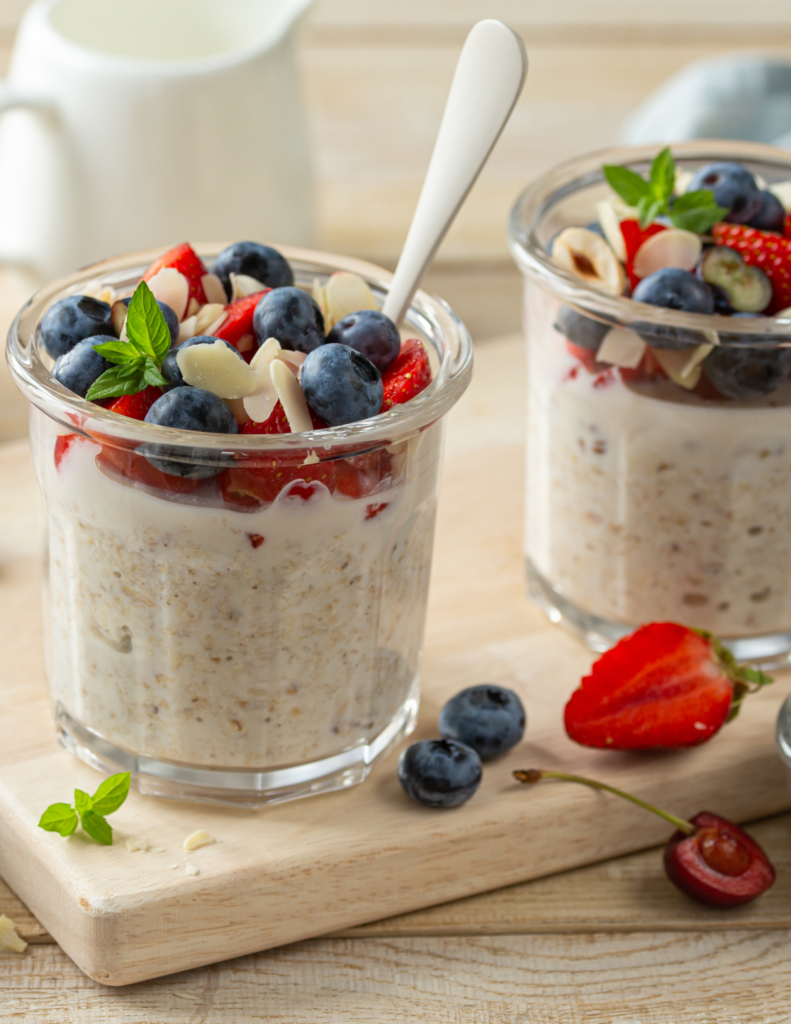
Why it works: A balanced breakfast that supports fullness and stable energy.
Lunch: Tuna and bean lunch bowl
- Tuna
- Mixed leaves
- Cannellini beans or lentils
- Cucumber, tomatoes, red onion
- Olive oil and lemon dressing
Snack: Cottage cheese with cucumber or cherry tomatoes
Dinner: Turkey mince stir-fry
- Turkey mince
- Stir-fry vegetables
- Brown rice or cauliflower rice
- Soy sauce, garlic, ginger
Why it works: Protein-rich and satisfying without feeling heavy.
Day 3
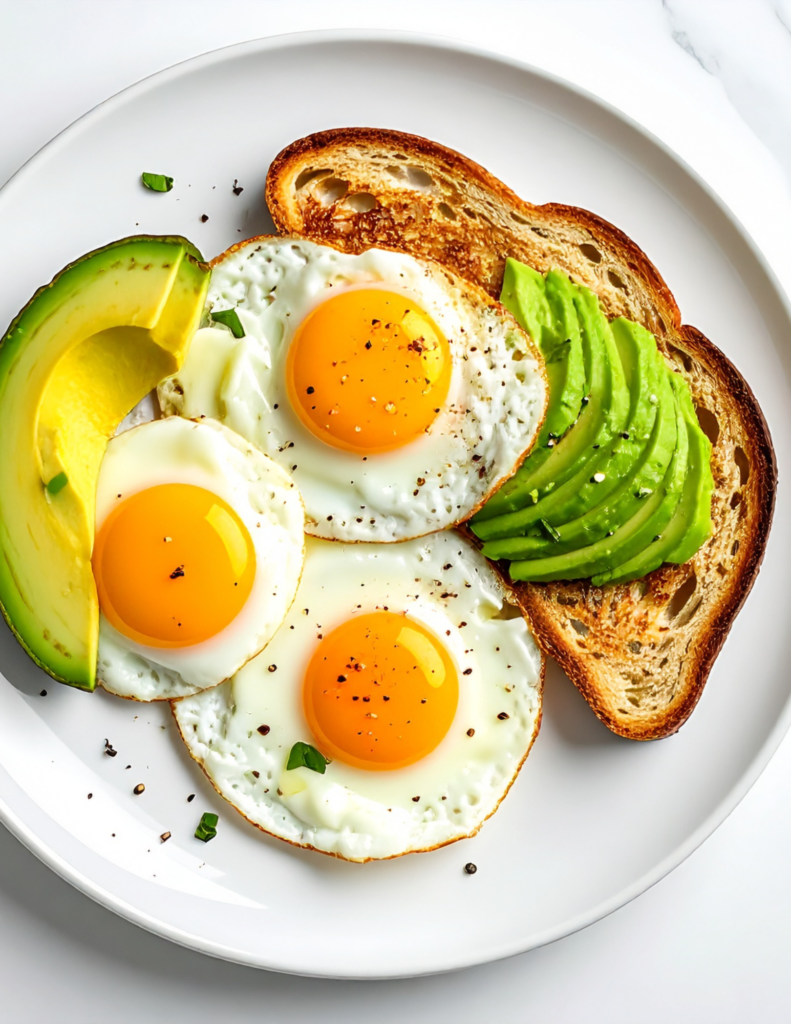
Breakfast: Eggs on wholegrain toast
- 2 eggs
- 1 slice wholegrain toast
- Sautéed spinach
- Optional: sliced tomato or avocado
Lunch: Lentil soup with side salad
- Homemade or low-salt lentil soup
- Side salad with olive oil dressing
Why it works: Fibre-rich, warming, and helpful for fullness.
Snack: Handful of nuts and a pear
Dinner: Chicken traybake
- Chicken thighs or breast
- Roasted peppers, courgette, onions, carrots
- Baby potatoes or quinoa
Why it works: Simple, balanced, and ideal for batch cooking.
Day 4
Breakfast: Menopause smoothie
- Protein powder
- Spinach
- Frozen berries
- Flaxseed
- Unsweetened milk
- Optional: oats or nut butter
Why it works: Quick, nourishing, and ideal for busy mornings.
Lunch: Egg and hummus wrap
- Wholegrain wrap
- 2 boiled eggs
- Hummus
- Spinach, grated carrot, cucumber
Snack: Greek yoghurt with cinnamon
Dinner: Cod with roasted vegetables
- White fish or cod
- Roasted Mediterranean vegetables
- Quinoa or brown rice
- Olive oil drizzle
Day 5
Breakfast: Cottage cheese breakfast bowl
- Cottage cheese
- Berries
- Pumpkin seeds
- Chia seeds
- Cinnamon
Lunch: Leftover protein bowl
Use leftovers from the week:
- Chicken, turkey, fish, or tofu
- Salad or roasted vegetables
- Quinoa, lentils, or sweet potato
- Olive oil dressing
Snack: Boiled egg and fruit
Dinner: Turkey or lentil chilli
- Turkey mince or lentils
- Chopped tomatoes
- Beans
- Peppers, onions, garlic
- Serve with brown rice or extra veg
Why it works: A high-protein, high-fibre dinner that is comforting and filling.
Foods to avoid during menopause weight loss
You do not need to be “perfect,” but some foods can make symptoms or appetite regulation harder if eaten too often.
These may include:
- sugary cereals
- pastries and biscuits
- ultra-processed snack foods
- large amounts of alcohol
- heavily refined carbohydrates
- high-sugar drinks
Again, this is not about cutting everything out forever. It’s about making sure the majority of your diet supports your goals.
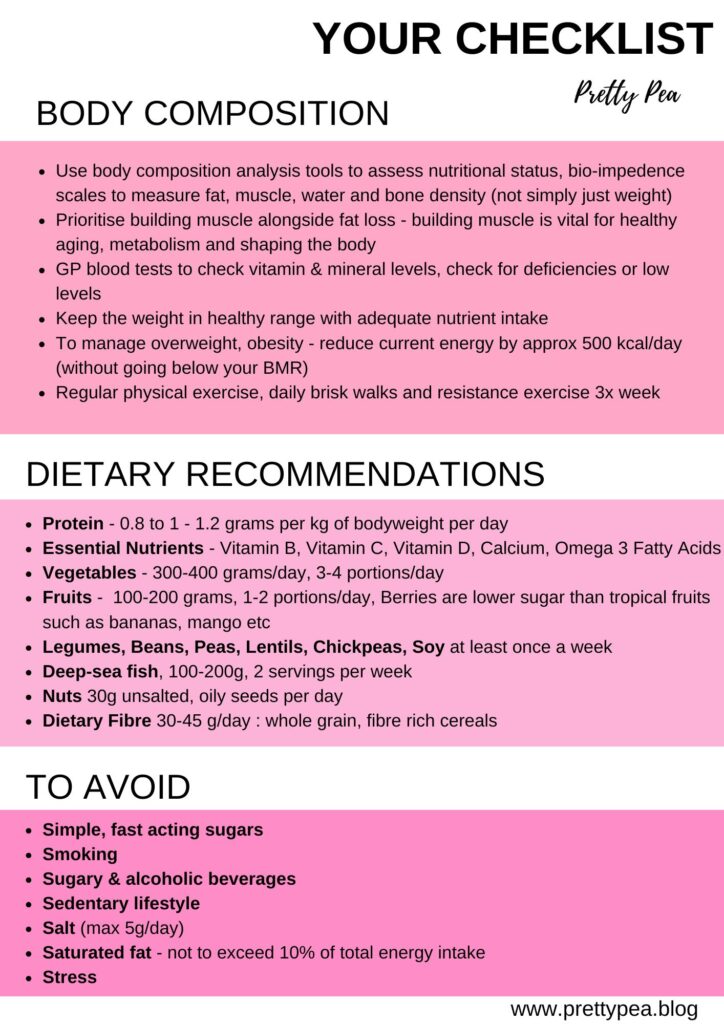
Checklist: The Menopause Diet 5 Day Plan to Lose Weight
BODY COMPOSITION
- Use body composition analysis tools to assess nutritional status / bio-impedance scales to measure fat, muscle, water and bone density
- Prioritise building muscle alongside fat loss – building muscle is vital for healthy aging and shaping the body
- Consider GP blood tests to check vitamin & mineral levels / deficiencies or low levels
- Keep the weight in healthy range with adequate nutrient intake
- To manage overweight, obesity – reduce current energy by approx 500 kcal/day (amount dependant on current status)
- Regular physical exercise, daily brisk walks and resistance exercise 3x week
DIETARY RECOMMENDATIONS
- Protein – 0.8 to 1 – 1.2 grams per kg of bodyweight per day
- Essential Nutrients – Vitamin B, Vitamin C, Vitamin D, Calcium, Omega 3 Fatty Acids
- Vegetables – 300-400 grams/day, 3-4 portions/day
- Fruits – 100-200 grams, 1-2 portions/day, Berries are lower sugar than tropical fruits such as bananas, mango etc
- Legumes, Beans, Peas, Lentils, Chickpeas, Soy at least once a week
- Deep-sea fish, 100-200g, 2 servings per week
- Nuts 30g unsalted, oily seeds per day
- Dietary Fibre 30g/day : whole grain, fibre rich cereals
TO AVOID
- Simple, fast acting sugars
- Smoking
- Sugary & alcoholic beverages
- Sedentary lifestyle
- Salt (max 5g/day)
- Saturated fat – not to exceed 10% of total energy intake
- Stress
Can the menopause diet 5 day plan to lose weight help with belly fat?
It can help support overall fat loss, which may reduce abdominal fat over time.
Menopause-related belly fat is common and is influenced by:
- hormonal changes
- stress
- poor sleep
- muscle loss
- blood sugar regulation
You cannot spot-reduce fat from one area, but you can support your body with habits that improve body composition more broadly.
The most effective combination usually includes:
- a high-protein diet
- strength training
- walking or daily movement
- good sleep habits
- stress management
What else helps with menopause weight loss besides diet?
Food matters — but it’s not the whole picture.
1. Strength training
This is one of the most important tools during menopause because it helps preserve or build muscle, which supports metabolism and body composition.
2. Walking
Walking can help with:
- calorie burn
- blood sugar control
- stress reduction
- digestion
- consistency
3. Sleep
If sleep is poor, hunger and cravings often become much harder to manage.
4. Stress management
Chronic stress can affect appetite, energy, and eating habits. Even small things like a daily walk, gentle movement, or quiet time can help.
Final thoughts: A menopause diet should support you, not punish you
If you’re trying to lose weight during menopause, the answer is usually not to eat less and less.
Instead, the most effective approach is to:
- eat enough protein
- build meals around fibre and whole foods
- support blood sugar balance
- stay consistent
- focus on habits you can actually maintain
The menopause diet 5 day plan to lose weight is a realistic place to start — but the real magic comes from repeating the basics often enough for them to work.
You do not need to be perfect. You just need a plan that works with your body, not against it.
Checklist: The Menopause Diet 5 Day Plan to Lose Weight
1. Can you really lose weight during menopause?
Yes, it is absolutely possible to lose weight during menopause, although it may feel harder than it used to. Hormonal changes, reduced muscle mass, poor sleep, and increased stress can all make weight gain more common during this stage of life. The key is focusing on a sustainable eating plan that supports blood sugar balance, muscle maintenance, and satiety rather than extreme dieting.
2. What is the best diet for menopause weight loss?
The best menopause diet for weight loss is one that is high in protein, rich in fibre, balanced in healthy fats, and based on whole foods. A good menopause-friendly eating plan should help reduce cravings, support gut health, preserve lean muscle, and keep you fuller for longer. Diets that are too restrictive often backfire, especially during menopause.
3. Why is it harder to lose weight during menopause?
Weight loss can feel more difficult during menopause because of several factors happening at once, including:
Falling oestrogen levels
Increased insulin resistance
Slower metabolism
Loss of muscle mass
Poor sleep and higher cortisol levels
These changes can make it easier to gain weight, especially around the middle, and harder to lose it with the same methods that may have worked in your 20s or 30s.
4. Does a menopause meal plan help with belly fat?
A healthy menopause meal plan may help reduce stubborn belly fat over time, especially when it includes enough protein, fibre, and minimally processed foods. While you cannot spot-reduce fat from one area, improving overall diet quality, managing stress, and staying active can help reduce abdominal weight gain commonly linked to menopause.
5. How much protein should I eat during menopause to lose weight?
Many women in menopause benefit from eating more protein than they realise, especially if weight loss is the goal. Protein helps preserve muscle mass, supports metabolism, and keeps you fuller for longer. Aiming to include a source of protein at every meal and snack can make a big difference in appetite control and body composition.
6. What foods should I avoid during menopause if I want to lose weight?
You do not need to completely cut out foods you enjoy, but it may help to reduce foods that can worsen cravings, energy dips, or bloating, such as:
- Sugary snacks and desserts
- Highly processed foods
- Refined carbohydrates
- Excess alcohol
- Very salty packaged foods
The goal is not perfection, but building most meals around nourishing foods that support hormone and metabolic health.
7. Can I follow a menopause diet plan if I am always hungry?
Yes — and in fact, if you are always hungry, that may be a sign your current diet is not balanced enough. A good menopause meal plan should help you feel satisfied by including:
- Protein at each meal
- High-fibre foods
- Healthy fats
- Regular meals and snacks
If your meals are too low in protein or calories, it can make weight loss harder, not easier.
8. Is walking enough for menopause weight loss?
Walking is an excellent form of movement during menopause and can absolutely support weight loss, especially when combined with a healthy eating plan. However, adding strength training is also important because it helps preserve muscle mass, which naturally declines with age and plays a key role in metabolism.
9. How quickly can you lose weight on a menopause diet plan?
Healthy, sustainable weight loss during menopause is usually gradual. While some women may notice reduced bloating and improved energy within a few days, fat loss often takes more time. A realistic goal is focusing on steady progress, better habits, and long-term consistency rather than quick fixes.
10. Should I count calories during menopause?
Not always. Some women find calorie tracking helpful, but many benefit more from focusing on meal quality, portion balance, protein, and fibre intake. During menopause, under-eating can sometimes make symptoms worse or lead to stronger cravings later on, so a more balanced and realistic approach is often more effective.
11. What should I eat for breakfast during menopause to lose weight?
A menopause-friendly breakfast should ideally include protein, fibre, and healthy fats to help reduce cravings later in the day. Good options include:
- Greek yoghurt with berries and seeds
- Eggs on wholegrain toast
- Protein oats
- Smoothies with protein, fruit, and flaxseed
A balanced breakfast can help stabilise energy and reduce snacking later on.
12. Can this 5-day menopause diet plan help with bloating too?
It may help, yes. Many menopause-friendly meal plans naturally support digestion because they include more whole foods, fibre, hydration, and less ultra-processed food. If bloating is a common issue for you, it can also help to eat more slowly, manage stress, and pay attention to how certain foods affect you personally.
The Menopause Diet 5 Day Plan to Lose Weight – Supplements
We know it can be difficult to meet the recommended amounts for daily nutrient, especially if you have a restricted diet. That’s where supplementing can really makes sense for some women.
For example if you don’t consume oily fish at least once or twice a week your body is missing out on vital Omega’s. (These are a staple in my diet).
Protein is another where women often don’t meet recommended amounts for weight loss. Are you getting at least 1 gram of protein per kg of your bodyweight each day?
Fibre, the RDA is 25-30g per day. Most people consume around 17g. Our capsules combine insoluble and soluble fibres, such as figs, prunes to support a sluggish digestion.
Fruit & Veggies – Our fruit & veg capsules combine the goodness of over 35 fruits, veggies, mushrooms, seeds and digestive enzymes.
Pretty Pea fruit & veg capsules are made from organic real fruit & veggies – no synthetic nonsense! You really can get the goodness of organic broccoli, carrot, kale, quinoa, spirulina, kelp, linseed, bilberry, cauliflower, cranberry, acai berry, nettle, tomato, mushrooms and more all in just one capsule!
Meno Weight – is for those looking for a extra helping hand with weight gain, with Pretty Pea glucomannan feel full fibre, with targeted hormone regulating support – check our Pretty Pea Meno supplements.
The menopause diet is about adding in, not taking away.
Meno Weight Review: I Feel Like a New Woman!
Recommended Supplements
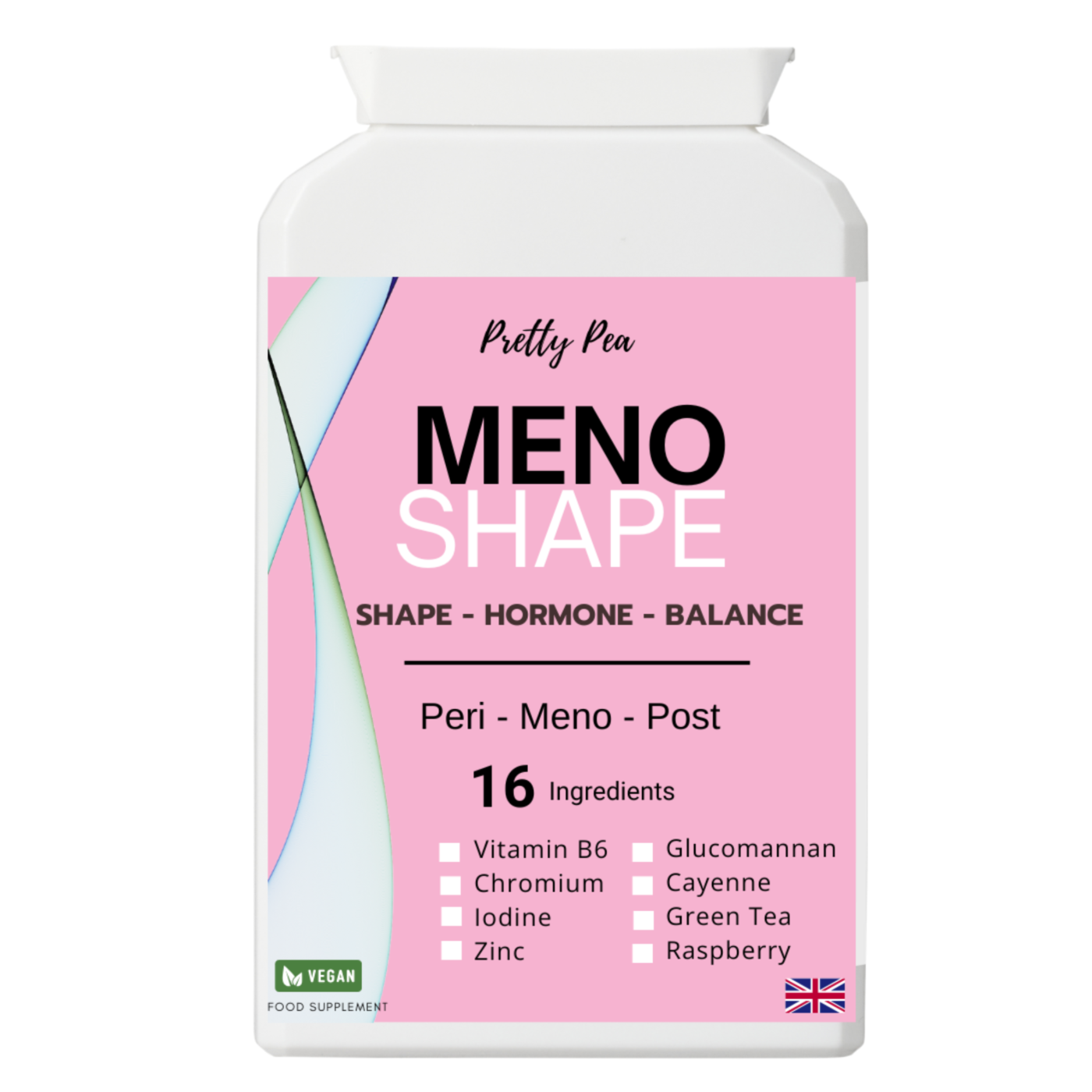
MENO SHAPE
MENO FORMULA For Every Woman’s Ever Evolving Body. Nutrition support during perimenopause, menopause & beyond
I have not had a great time over the last few months, along with personal things on top of the menopause! I have been really struggling with my weight and sleeping has been virtually non existent. I have tried so many herbal based tablets and Meno-weight was my last option. I can not even explain my delight in discovering this product! I feel like a different woman. My weight is coming down, my constant hunger pangs have completely gone, my sleep is better, I just feel completely different! Pretty Pea you are Pretty amazing! This product has genuinely changed my life. I very rarely leave reviews but I am so passionate and truly thankful for this product that I had to shout about it so all the women out there that are really struggling with the menopause are aware of these tablets because they really have helped to turn me around! Just one tip, don’t leave it too late before re-ordering because like me, you will run out and find yourself stressing that you haven’t got any! They really are that good!
Thank you Pretty Pea! – CAROL
You might also be interested in:
9 Benefits of Fibre: Why It’s Essential for Gut Health, Weight and Wellbeing
Your Gut Microbiome Is Talking to Your Brain — Are You Listening?
Appetite Regulation: How Fibre vs GLP-1 Compare
What is the Highest Fibre Food
The Ultimate Guide to Fibre Supplements for a Happier Gut: Unlocking Your Digestive Health
10 Green Tea Benefits: The Ultimate Science-Backed Guide
The Ultimate Superfood List: What are Superfoods, Benefits, Best Choices, and How to Use
The Rich List: Insoluble Fibre Rich Food List
Understanding Visceral Fat: The Ultimate Belly Fat Guide
Everything Psyllium How To Use: A Comprehensive Guide on How to Use It for Maximum Health Benefits
Simple Food Group Swaps – Make Life Easier for Yourself
The 100 Symptoms of Perimenopause
The Menopause Diet 5 Day Plan to Lose Weight : Sources
- Leidy, H. J., et al. (2015). The role of protein in weight loss and maintenance. American Journal of Clinical Nutrition, 101(6), 1320S–1329S. ↩︎
- Paniagua, J. A., et al. (2010). Monounsaturated fat-rich diet prevents central body fat distribution. The Journal of Nutrition, 140(2), 291–297 ↩︎
- Soliman, G. A. (2019). Dietary fiber, atherosclerosis, and cardiovascular disease. Nutrients, 11(5), 1155 ↩︎
- Ethnic differences in dietary intakes, physical activity, and energy expenditure in middle-aged, premenopausal women: the Healthy Transitions Study – PubMed ↩︎
- The role of dietary fat in body fatness: evidence from a preliminary meta-analysis of ad libitum low-fat dietary intervention studies | British Journal of Nutrition | Cambridge Core ↩︎
- Dennis, E. A., et al. (2010). Water consumption increases weight loss during a hypocaloric diet intervention. Obesity, 18(2), 300–307 ↩︎
- Sacks, F. M., et al. (2014). Dietary sugars and body weight. The Journal of Clinical Endocrinology & Metabolism, 99(2), 437–445 ↩︎
- Chen, M. N., et al. (2021). Soy isoflavones and body composition. Climacteric, 24(5), 480–489 ↩︎
North American Menopause Society (NAMS). (2023). “Nutrition and Menopause.” menopause.org
Mayo Clinic. (2023). “Healthy Eating During Menopause.” mayoclinic.org
Harvard T.H. Chan School of Public Health. (2023). “The Menopause Diet: A Balanced Approach.” hsph.harvard.edu


