
If you’re a woman over 30+ struggling with bloating, tiredness, or weight that won’t budge—fibre might be your secret weapon.
You’ve probably heard fibre helps with digestion, but it does so much more. From regulating hormones to supporting weight management, fibre is essential for women—especially in their 30s, 40s and 50s. Yet over 90% of UK adults don’t meet daily fibre intake recommendations [1].
In this article, we’ll explore why fibre is crucial for women, how it supports your body as you age, and simple ways to get more without completely overhauling your diet.
What Exactly Is Fibre—and Why Should You Care?
Fibre is the part of plant-based food your body can’t digest. It travels through your system, supporting digestion, blood sugar balance, and gut bacteria. There are two main types:
- Soluble fibre: dissolves in water to form a gel that slows digestion and helps lower cholesterol
- Insoluble fibre: adds bulk to stool and keeps things moving
Fibre also plays a vital role in feeding beneficial gut microbes, which support immune function, hormone regulation, and mental health [2].
Read: The Rich List: Insoluble Fibre Rich Food List
How Fibre Supports Hormones, Skin & Weight
Fibre is especially important for women over 30. Here’s how it helps:
- Regulates estrogen: Fibre binds excess estrogen in the gut, helping it be excreted [3]
- Balances blood sugar: High-fibre diets reduce insulin spikes, which affect energy and weight [4]
- Supports satiety: Helps you feel full, leading to lower calorie intake [5]
- Improves gut health: A high-fibre diet increases beneficial bacteria diversity [6]
- Reduces systemic inflammation: Linked to clearer skin and better mood [7]
Many women experience increased bloating, cravings, and weight gain during perimenopause and menopause—and fibre can be a natural ally in managing these.
Signs You’re Not Getting Enough Fibre
The NHS recommends at least 30g of fibre per day for adults, yet the average UK woman gets only around 17g [1].
Common signs of low fibre intake include:
- Constipation or irregularity
- Persistent bloating or gas
- Fatigue and brain fog
- Feeling hungry soon after meals
- Hormonal skin breakouts
- Difficulty losing weight
How Much Fibre Do Women Actually Need?
According to the British Nutrition Foundation and NHS guidelines:
- Women should aim for 30g of fibre daily [1]
- Most common foods provide 3–6g per serving
| Food | Fibre (approx.) |
| 1 apple (with skin) | 3–4g |
| ½ cup lentils | 8g |
| 2 slices wholemeal bread | 5g |
| 1 tbsp chia seeds | 5g |
It can be difficult to meet your fibre needs through diet alone, especially when busy—making supplements a helpful option.
5 Easy Ways to Increase Fibre (Without Overhauling Your Diet)
- Add 1 tbsp flax or chia seeds to yogurt or smoothies
- Swap white bread and pasta for wholegrain versions
- Include lentils, beans or chickpeas in weekly meals
- Eat more high-fibre fruits (e.g., pears, raspberries, apples)
- Use a fibre supplement designed for women
Start slowly and increase water intake as your fibre goes up.
Read: Simple Food Group Swaps – Make Life Easier for Yourself
Read: What is the Highest Fibre Food
Fibre and Gut Health: A Game-Changer for Women
Your gut contains trillions of bacteria—known as your gut microbiome—that influence everything from immunity to mood to weight regulation.
Prebiotic fibres (such as inulin or galacto-oligosaccharides) feed these good bacteria, increasing beneficial strains like Bifidobacteria and Lactobacilli [6].
A study published in Cell Host & Microbe found that dietary fibre was the single most important factor in improving microbiome diversity [6].
Read: Your Gut Microbiome Is Talking to Your Brain — Are You Listening?
Where to Start if You’re New to Fibre Supplements
If increasing fibre through food feels unrealistic, consider a low-dose, UK-tested fibre supplement that contains:
- Prebiotic fibres like inulin
- No added sugars or artificial ingredients
- A gradual release formula to reduce bloating
Start with 1–2g and build up over 1–2 weeks.
Read: The Ultimate Guide to Fibre Supplements for a Happier Gut: Unlocking Your Digestive Health
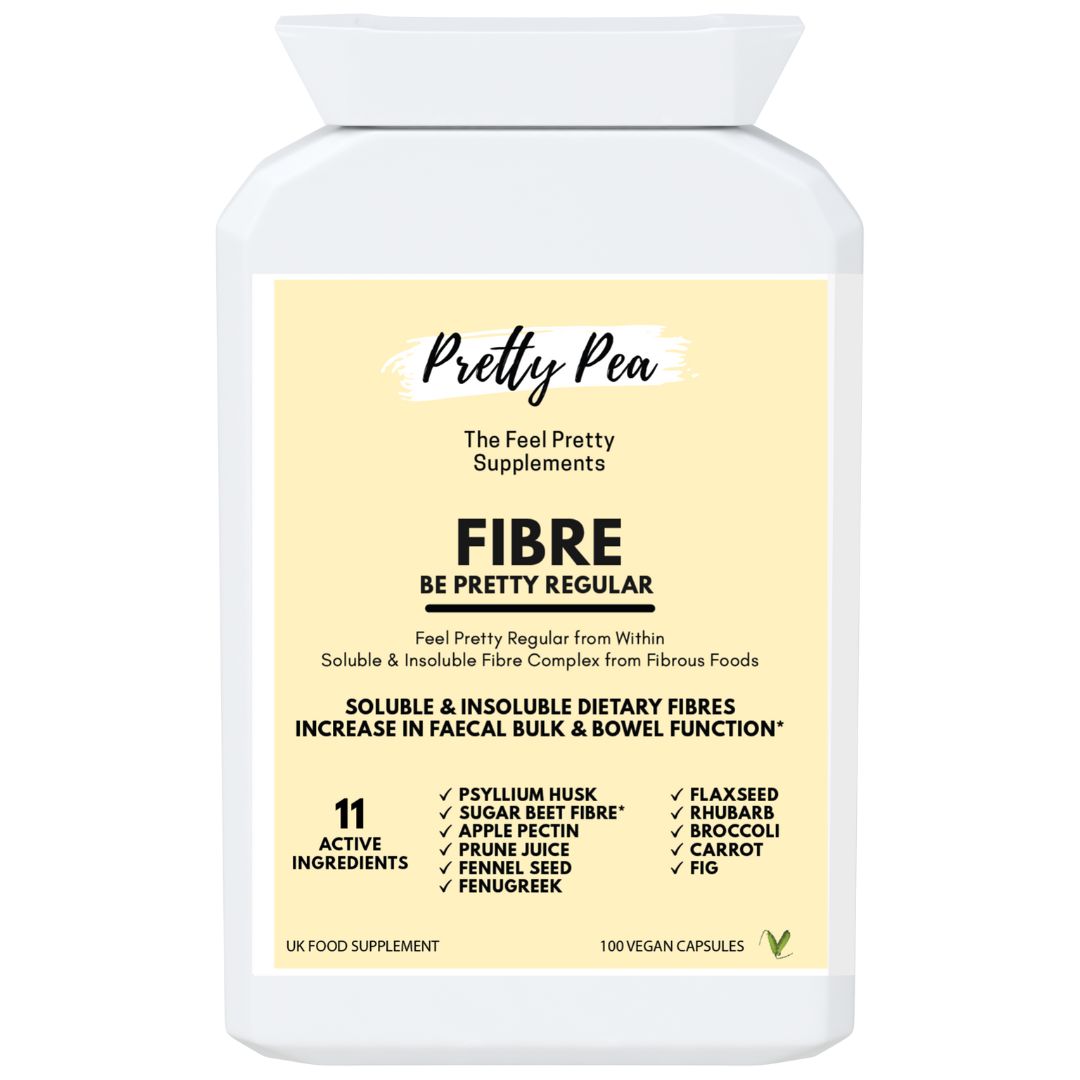
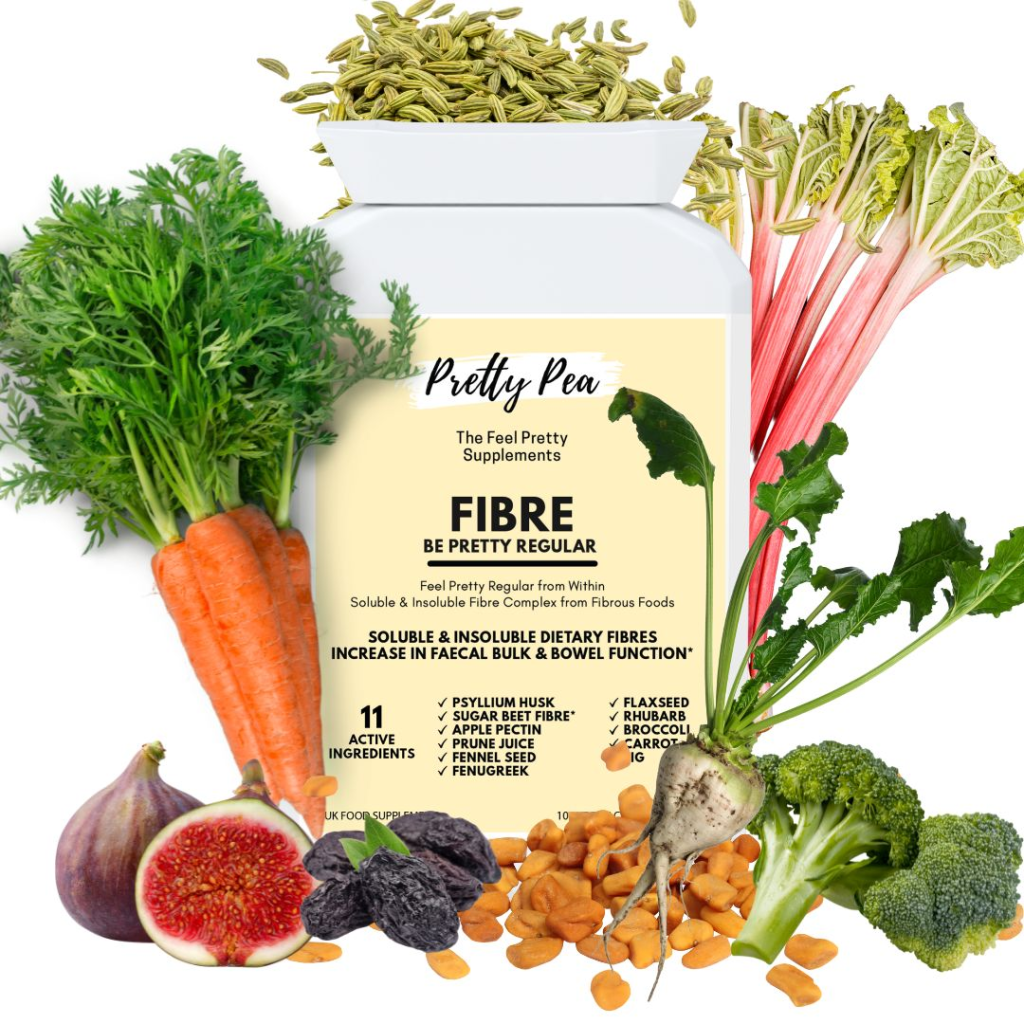
FIBRE CAPSULES
High fibre pills derived from psyllium husk, flaxseed, sugar beet, prune juice, fig fruit, rhubarb, pectin, fenugreek and other naturally high fibre botanicals and foods. More than just roughage, these fibre pills contains cellulose, pectin, hemicellulose, lignin and gums.
Fibre Pills Ingredients: Psyllium Husk, Flaxseed, Sugar Beet Fibre, Fenugreek, Apple pectin, Rhubarb, Prune Juice, Broccoli, Carrot, Fig Fruit, Fennel Seed. Vegan, Dairy Free, Gluten Free. 100 capsules
Final Thoughts: Fibre Is Your Overlooked Superpower
If you’re tired, bloated, and just feel “off,” it could be down to low fibre. From gut balance to clearer skin and better energy, this one simple change could make a huge difference to how you feel daily.
Frequently Asked Questions About Fibre for Women Over 30+
Q. How much fibre do women over 30+ need each day?
Most adult women are advised to aim for around 25–30g of fibre per day, though many fall short. Needs can vary depending on diet, activity levels, and digestion. Gradually increasing fibre intake and drinking enough water can help support comfort.
Q. Why does digestion often change after 30+?
Hormonal shifts, stress, sleep changes, and lifestyle factors can affect gut motility and the balance of gut bacteria. These changes may influence bloating, appetite, and bowel regularity, making fibre intake increasingly important.
Q. Can fibre help with bloating in midlife?
Yes, when introduced gradually, fibre can help support regular digestion and gut balance. However, increasing fibre too quickly may temporarily worsen bloating, so slow adjustments are recommended.
Q. Is fibre important during perimenopause and menopause?
Fibre plays a role in supporting digestive health, blood sugar balance, and appetite regulation, all of which can be affected during hormonal transition. Many women find fibre particularly helpful during this stage of life.
Q. What are the best sources of fibre for women over 30+?
Good sources include vegetables, fruits, whole grains, legumes, seeds, nuts, and plant-based fibre supplements. A varied intake ensures a mix of soluble and insoluble fibres to support both digestion and gut microbiome diversity.
Q. Can fibre support healthy weight management?
Fibre contributes to feelings of fullness and can help regulate appetite. This may support balanced eating habits as metabolism and hormonal patterns change with age.
Q. Should I use a fibre supplement?
Some women find it difficult to meet fibre needs through diet alone. In these cases, gentle, plant-based fibre supplements can be a convenient way to support daily intake alongside a balanced diet.
Q. How quickly will I notice changes after increasing fibre?
Some people notice improvements in digestion within a few days, while for others it may take a few weeks. Consistency and gradual increases are key.
A Note from the Founder
Pretty Pea was created from a simple belief: that women deserve honest, evidence-informed support through every stage of life. Like many women, I experienced first-hand how digestion, energy, and confidence can change in your thirties and forties — often without clear answers. That experience shaped our approach: gentle formulations, transparent ingredients, and a focus on long-term wellbeing rather than quick fixes. Everything we create is designed to fit into real life, because feeling well should feel achievable, not overwhelming
You might also like..
Appetite Regulation: How Fibre vs GLP-1 Compare – Pretty Pea
10 Green Tea Benefits: The Ultimate Science-Backed Guide – Pretty Pea
Understanding Visceral Fat: The Ultimate Belly Fat Guide – Pretty Pea
The 100 Symptoms of Perimenopause – Pretty Pea
Why Every Woman Over 30+ Should Care About Gut Health: References & Studies
- Public Health England (2021). NDNS Results: Average fibre intake in the UK.
- Gill SK et al. (2021). Dietary fibre and the human gut microbiome. Nutrients.
- Goldin BR et al. (1982). The effect of dietary fibre on estrogen metabolism. J Natl Cancer Inst.
- Weickert MO & Pfeiffer AF (2008). Metabolic effects of dietary fibre consumption. Curr Opin Clin Nutr.
- Slavin JL (2005). Dietary fibre and body weight. Nutrition.
- Sonnenburg ED et al. (2016). Diet-induced extinctions in the gut microbiota compound over generations. Cell Host Microbe.
- King DE et al. (2007). Dietary fibre intake and markers of inflammation in the US adult population. Am J Clin Nutr.