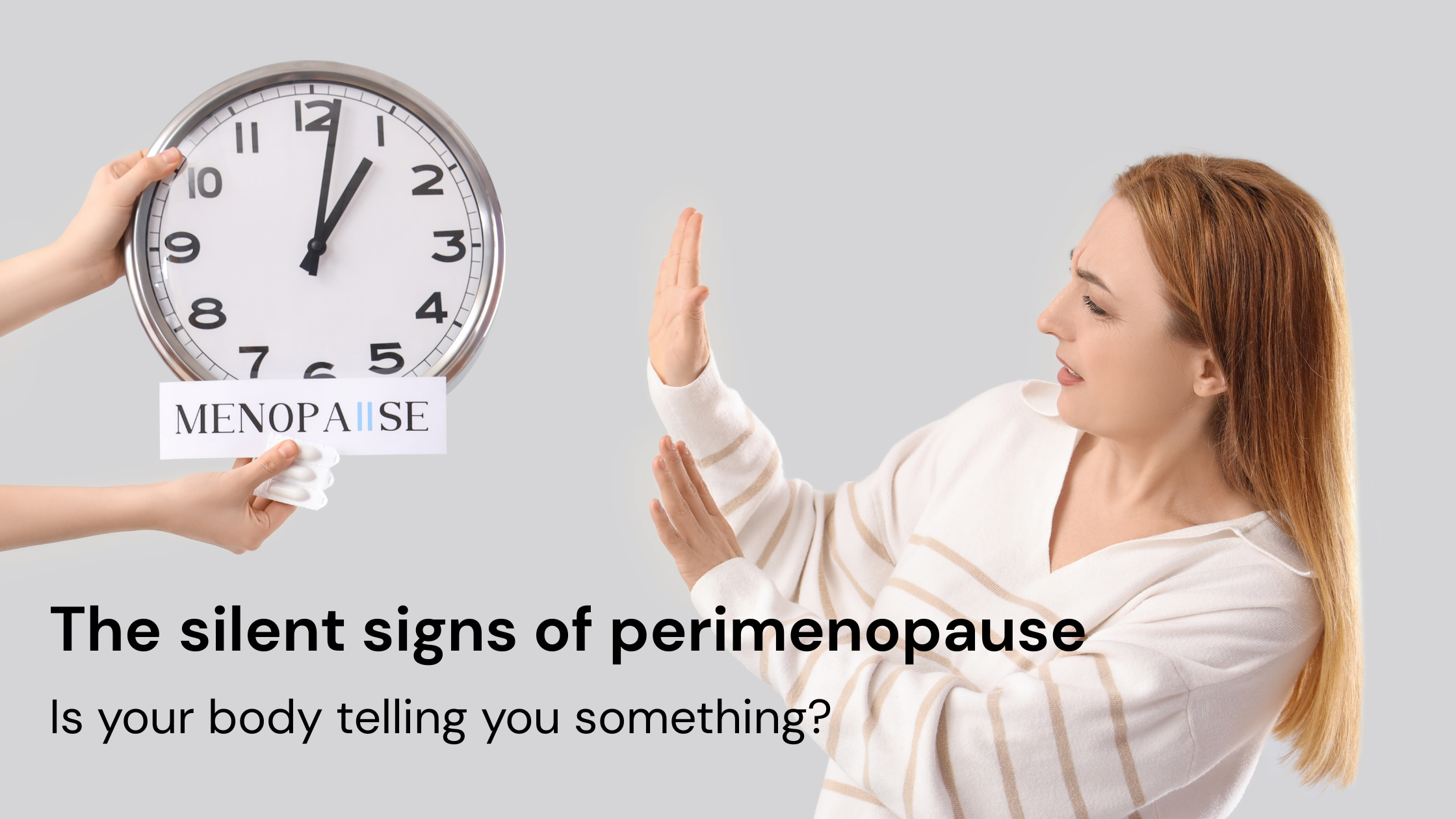
The very earliest signs of perimenopause can start some 10 years before women hit menopause. Well before the first symptoms of perimenopause says hello, however, there are several subtle and even silent signs that can tell you change is on the way if you know what to look out for.
Here we share 7 subtle early first symptoms of perimenopause you could be missing plus what is happening in your body before the first symptoms of perimenopause arrive.
‘Emma’ was 42 when she realised something in her life had shifted — but she couldn’t pin down what. Nothing dramatic had happened. No hot flushes. No dramatic mood swings. Nothing that looked like the “classic” perimenopause symptoms she’d heard about.
Instead, it was small things.
Her sleep felt lighter. Her patience shorter. Some days she woke up already tired. Her cycle, once predictable, started arriving early… then late… then early again. She blamed stress, work, the kids, not drinking enough water — anything except her hormones.
Like many women, Emma didn’t realise she was experiencing the first symptoms of perimenopause — subtle, creeping changes caused by shifting hormones long before the word “menopause” was on her radar.
And she’s most definitely not alone.
Perimenopause can begin up to 8–10 years before your final period, often without any dramatic warning signs.
Below, we’ll explore these quieter symptoms, how they affect day-to-day life, and the underlying biological changes — because even if you don’t notice much on the surface, your hormones absolutely do.
7 Subtle First Symptoms of Perimenopause to Know About
- Subtle Sleep Disturbances
You fall asleep but wake up at 3:00am — mind buzzing, body alert for no clear reason.
Impact on daily life:
- Morning fatigue
- Slower thinking
- Irritability
- Increased cravings for sugar and caffeine
What’s happening biologically:
- Declining progesterone (a calming, sleep-supporting hormone) makes it harder to stay asleep.
- Cortisol rises more easily, making your sleep cycle more sensitive to stress.
2. Changing Mood and Emotional Sensitivity
You might feel more easily overwhelmed or more tearful than usual — but still feel like “you.”
Impact on daily life:
- Feeling overstimulated
- Decreased resilience to stress
- Heightened emotional responses
Underlying cause:
- Fluctuating estrogen affects neurotransmitters like serotonin and dopamine.
- Lower progesterone removes its natural calming effect on the brain.
Even mild hormonal shifts can feel like emotional static in the background.

3. Cycle Changes That Don’t Feel Dramatic… Yet
Instead of completely irregular cycles, you may notice:
- Periods arriving a few days off
- Heavier or lighter bleeding
- Shortened cycles (often the first subtle sign)
Impact:
- Difficulty predicting your cycle
- Energy dips before your period feel stronger
Biological cause:
- Early perimenopause often begins with a shortened luteal phase (the second half of the cycle), caused by reduced progesterone.
- Estrogen starts fluctuating more wildly — sometimes higher than normal, sometimes lower.
4. Unexplained Fatigue
Not exhaustion — just a slow drain on your energy levels.
Impact:
- Reduced motivation
- Slower recovery after exercise
- Feeling “wired but tired”
What’s happening:
- Sleep disruption
- Hormonal fluctuations affecting blood sugar
- Lower thyroid-support from shifting estrogen
This kind of fatigue often creeps in before any obvious symptom appears.
5. Subtle Weight and Body Composition Changes
Your weight stays the same… but your shape shifts slightly. Or weight creeps up despite eating normally.
Impact:
- Increased abdominal weight
- Feeling “inflamed” or puffy
- Clothes fitting differently
Underlying physiology:
- Estrogen influences where fat is stored and how efficiently you burn carbohydrates.
- Changes in insulin sensitivity make blood sugar spikes more common.
- Sleep issues elevate hunger hormones (ghrelin) and lower satiety hormones (leptin).
6. Lower Stress Tolerance
You’re not suddenly anxious — but daily stress feels heavier.
Impact:
- Feeling overwhelmed more quickly
- Difficulty “switching off” at night
- Increased emotional reactivity
Biological changes:
- Estrogen helps regulate the stress response; when levels fluctuate, the body becomes more sensitive to cortisol.
- Progesterone normally has a calming, GABA-enhancing effect; as it drops, your nervous system becomes more reactive.
7. Increased Sensitivity to Alcohol and Caffeine
You might notice:
- Poor sleep after one drink
- Anxiety or shakiness after your usual coffee
- Worse PMS after alcohol
Underlying causes:
- Liver enzymes shift with changes in estrogen
- Alcohol lowers progesterone and disturbs blood sugar
- Caffeine tolerance decreases when estrogen destabilises neurotransmitters
First Symptoms of Perimenopause: What’s Changing in Your Body — Even if You Feel “Totally Fine”
Most women 40+ experiencing these subtle first perimenopause symptoms and even those with no noticeable symptoms are experiencing significant hormonal changes in perimenopause. It’s important to recognise that these shifts can begin silently years before physical symptoms show up.
Here’s what’s happening beneath the surface with these subtle, or even silent first perimenopause symptoms:
1. Progesterone Declines First
Progesterone is the soothing, stabilising hormone — it helps regulate sleep, calm the nervous system, balance estrogen, and support metabolic function.
In early perimenopause:
- Ovulation becomes less consistent
- Progesterone levels drop
- Cycles shorten
This alone can create subtle symptoms without dramatic changes.
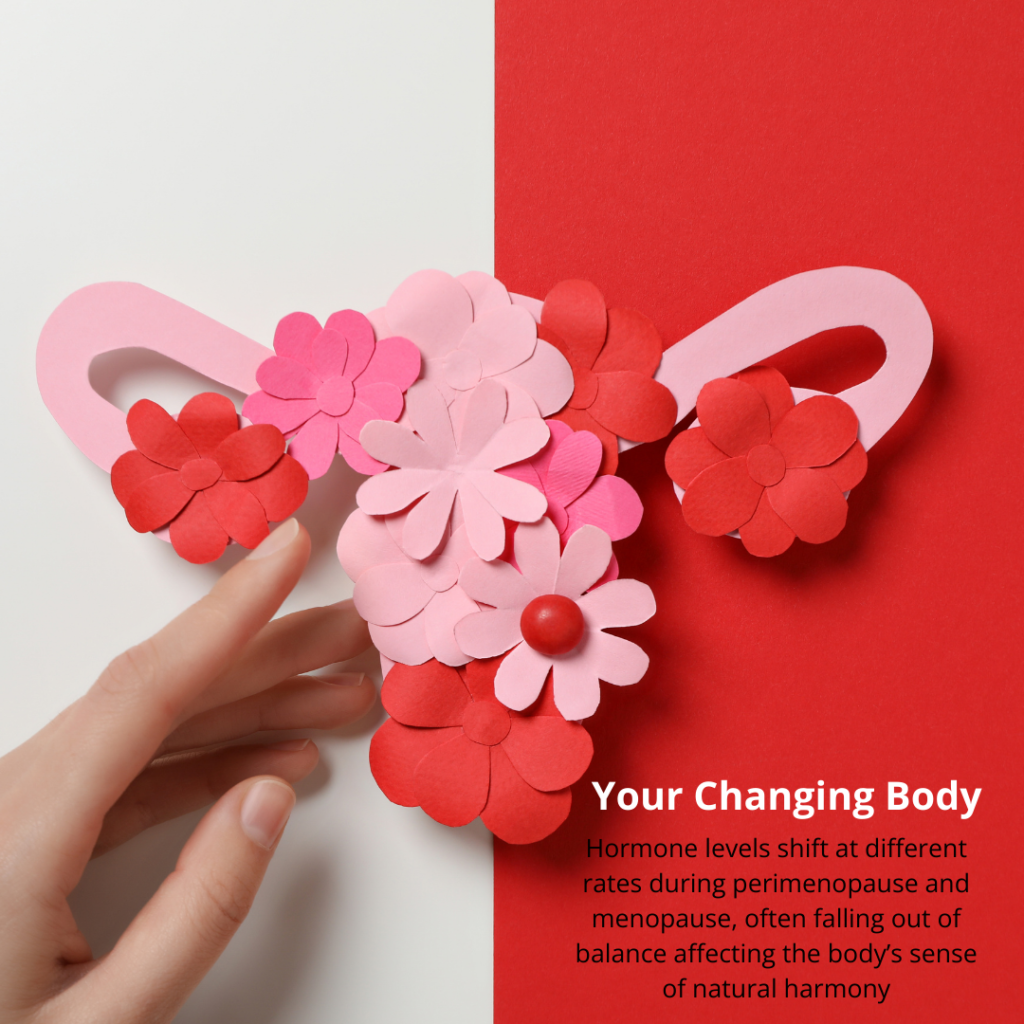
2. Estrogen Becomes Erratic — Not Just Low
Estrogen does NOT simply decrease in early perimenopause.
It becomes spiky, rising higher and falling lower than ever before.
These fluctuations affect:
- Brain chemistry
- Stress regulation
- Metabolism
- Skin and hair quality
- Menstrual cycles
Even if you don’t feel symptoms yet, your body is adjusting to these shifts.
3. Cortisol Reactivity Increases
Your stress system becomes more sensitive. This can affect sleep, mood, metabolism and inflammation — all without dramatic symptoms.
4. Blood Sugar Becomes Less Stable
Estrogen and progesterone both influence insulin sensitivity. When they fluctuate, so does your ability to manage blood sugar — which can lead to fatigue, cravings, and weight shifts that can appear from seemingly no-where.

5. Inflammation and Immune Activity Shift
Many women notice increased sensitivity to:
- Stress
- Illness
- Allergies
- Joint stiffness
Even if these don’t feel like “symptoms,” they’re signs of hormonal shifts.
Why Understanding Silent Symptoms Matters
Many women feel blindsided when “real” symptoms later appear — hot flushes, night sweats, mood swings, heavy bleeding.
Recognising the early, subtle signs enables you to:
- Support your hormones sooner
- Protect long-term bone, heart, and metabolic health
- Check your weight status now, as weight gain affects most women and it can be harder to shift during this time
- Reduce future symptom severity
- Improve energy, sleep, and mood
- Make informed decisions about lifestyle and treatment options
Perimenopause isn’t just a phase — it’s a profound biological transition that affects every woman.
And the earlier you understand what’s happening in your body, the better you can support yourself through it.

You might also be interested in…
RELATED ARTICLES
The Menopause Diet 5 Day Plan to Lose Weight
List of The 100 Symptoms of Perimenopause
Early First Symptoms of Perimenopause – 7 Telling Subtle Signs
The Role of Perimenopause Vitamins Supplements: A Guide for Women
Why Fibre Could Be the Secret to a Better Menopause
The Ultimate Superfood List: What are Superfoods, Benefits, Best Choices, and How to Use