
Did you know that around two-thirds of the calories you eat are simply used to keep you alive? If you’ve ever wondered where do calories go, what happens after you eat, or how your body uses energy, this guide explains everything in simple terms. You’ll learn what calories really are, how metabolism works, where excess calories are stored, and why hormones, muscle and lifestyle all influence your body’s energy needs.
What Is a Calorie?
A calorie is a unit of energy.
In nutrition, the term Calorie (with a capital C) refers to a kilocalorie (kcal)—the amount of energy needed to raise the temperature of one kilogram of water by one degree Celsius.
Calories provide the fuel your body needs to:
- breathe
- pump blood
- regulate body temperature
- think
- digest food
- repair cells
- move muscles
- produce hormones
Without calories, your body simply could not function.
All three macronutrients provide calories:
| Nutrient | Calories per gram |
|---|---|
| Carbohydrate | 4 kcal |
| Protein | 4 kcal |
| Fat | 9 kcal |
| Alcohol | 7 kcal |
Although calories represent energy, the nutritional quality of foods still matters because different foods provide different vitamins, minerals, fibre and protein.
Where Do Your Calories Go?
One of the biggest misconceptions is that exercise burns most of the calories you eat.
In reality, most calories are used simply to keep your body functioning.
1. Basal Metabolic Rate (BMR) (60–70%)
This is the energy your body uses while completely at rest.
It powers:
- heart beating
- breathing
- brain function
- liver function
- kidneys
- immune system
- hormone production
- body temperature
- cell repair
This is why even lying in bed all day still burns calories.
2. Physical Activity (15–30%)
Movement includes far more than exercise.
Your body uses calories for:
- walking
- standing
- climbing stairs
- gardening
- housework
- shopping
- structured exercise
People who move more throughout the day generally burn considerably more calories.
3. Digesting Food (Around 10%)
Digesting food also requires energy.
This is known as the thermic effect of food (TEF).
Protein requires the most energy to digest, followed by carbohydrates and fats.

Glucomannan Reset | Fibre Supplement
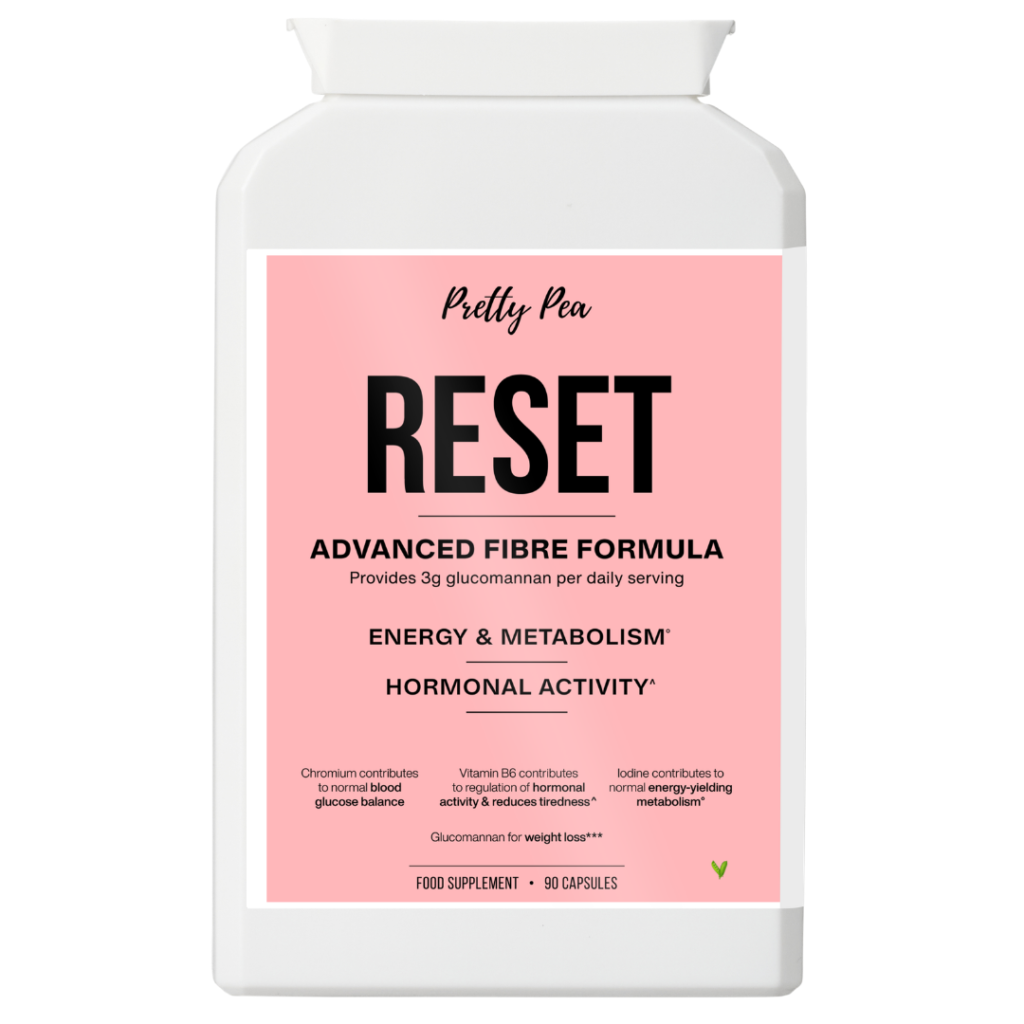
Glucomannan fibre supplement | Formulated to support fullness, digestive health, energy and daily wellbeing.
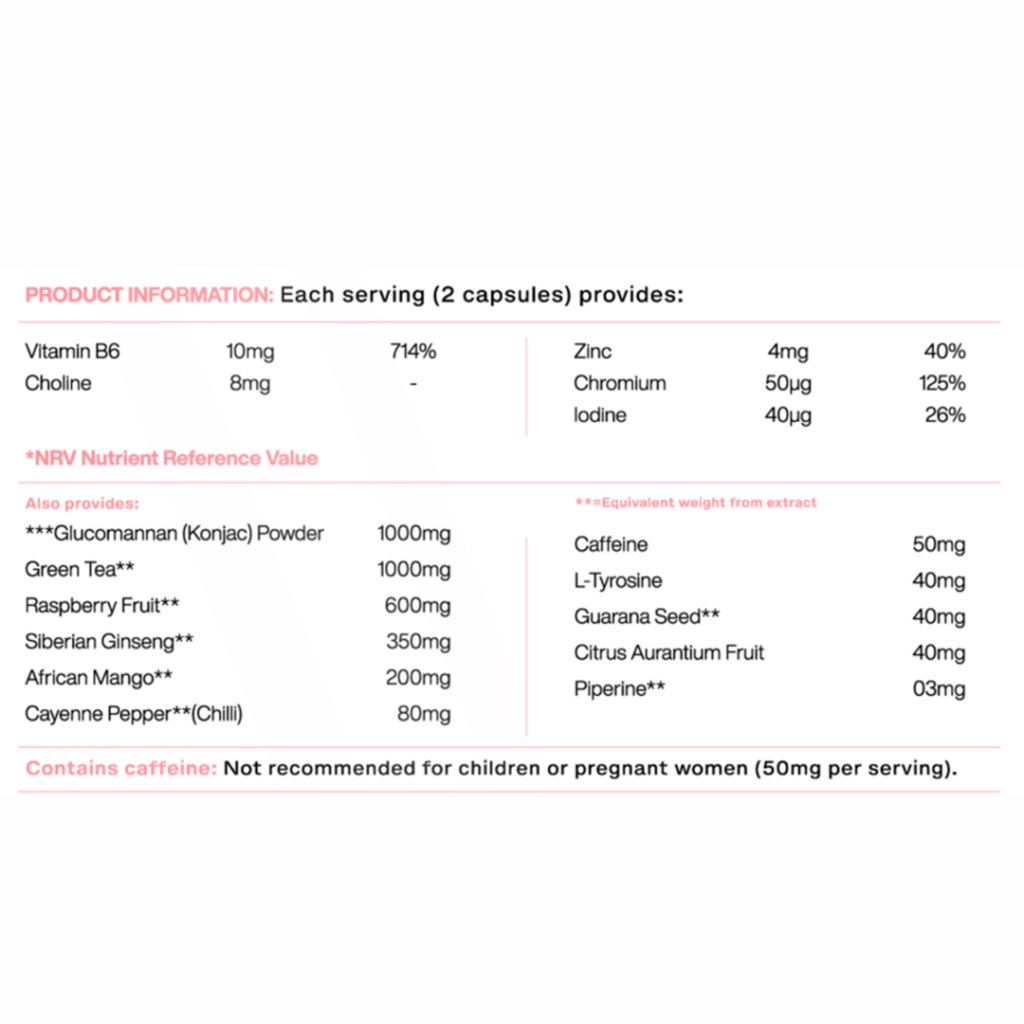
Each full daily serving delivers 3g of glucomannan, a soluble fibre derived from konjac root that expands in the stomach to help promote fullness.
4. Other Body Functions (5–10%)
Your body constantly uses energy for processes such as:
- hormone production
- immune function
- tissue repair
- nervous system activity
- growth
- healing
Although these functions use fewer calories than BMR, they are still essential.
What Is Metabolism?
Metabolism refers to all the chemical reactions that keep your body alive.
It is not a single process and it is not simply about “burning calories.”
Metabolism includes:
- converting food into energy
- storing energy
- building muscle
- repairing tissues
- producing hormones
- supporting the immune system
- maintaining body temperature
Your metabolism is working every second of every day—even while you sleep.
What Happens to Excess Calories?
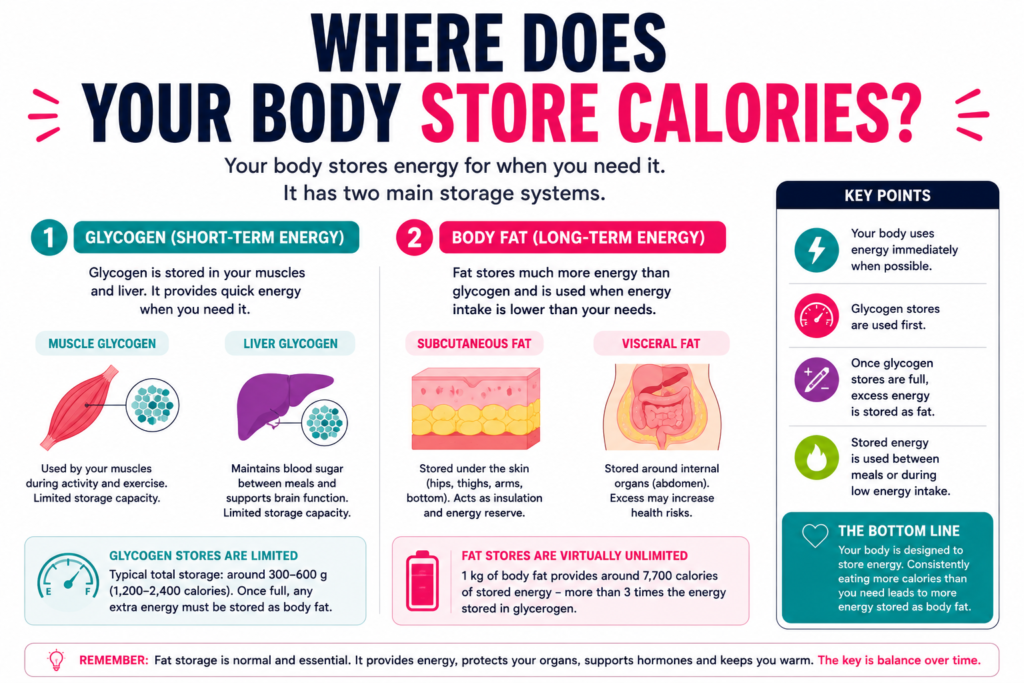
If you consistently consume more calories than your body needs, the excess energy is stored.
Initially, your body stores some energy as glycogen in the liver and muscles.
Once these stores are full, most additional energy is stored as body fat, which can later be used when energy intake is lower than energy expenditure.
Importantly, this is a normal biological process. Fat storage helps the body prepare for times when food may be less available.
For a breakdown of the different types of fat in your body read: Understanding Visceral Fat: The Ultimate Belly Fat Guide
Where Does Your Body Store Calories?
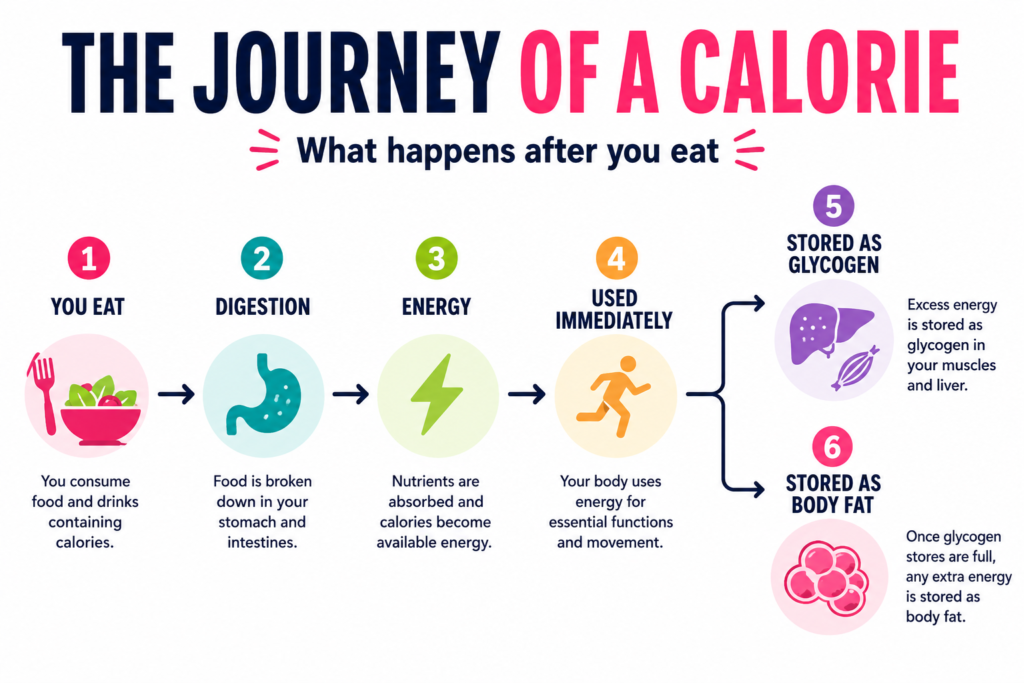
Your body is incredibly efficient at managing energy. It doesn’t immediately turn every extra calorie you eat into body fat. Instead, it follows a sequence to make sure energy is available when you need it.
1. Calories are used immediately
After you eat, your digestive system breaks food down into nutrients, which are absorbed into the bloodstream.
Your body first uses these calories to fuel essential functions such as:
- Breathing
- Heart function
- Brain activity
- Digestion
- Muscle movement
- Cell repair
- Hormone production
If your body needs energy straight away, these calories are used almost immediately.
2. Excess energy is stored as glycogen
If you eat more energy than your body needs immediately, some of the excess is stored as glycogen.
Glycogen is the body’s short-term energy reserve and is stored mainly in:
- Your muscles – to fuel movement and exercise.
- Your liver – to help maintain stable blood glucose levels between meals.
These stores are limited and can be filled or depleted depending on your diet and activity levels.
Think of glycogen as your body’s “rechargeable battery.” It provides a readily available source of energy when you haven’t eaten for a few hours or during physical activity.
3. Once glycogen stores are full…
When your glycogen stores reach capacity, your body stores additional energy as body fat.
This is a completely normal process and an important survival mechanism. Body fat acts as a long-term energy reserve that your body can draw upon when food intake is lower than your energy needs.
Your body stores fat in two main ways:
- Subcutaneous fat – stored beneath the skin.
- Visceral fat – stored deeper inside the abdomen around internal organs.
Both forms store energy, but excess visceral fat is associated with a higher risk of metabolic and cardiovascular disease.
➡️ Read next: Understanding Visceral Fat: The Ultimate Belly Fat Guide
Does every extra calorie become body fat?
Not necessarily.
Your body is constantly using, storing and releasing energy throughout the day. Factors such as physical activity, muscle glycogen levels, meal timing and total daily energy balance all influence how calories are used.
However, if you consistently consume more calories than your body uses over time, the surplus energy is largely stored as body fat.
Key takeaway
Your body follows a simple energy pathway: use calories first, store some as glycogen for quick access, and store any long-term surplus as body fat. This efficient system helps ensure you always have energy available—even between meals or during periods of increased demand.
Are All Calories Equal?
From an energy perspective, a calorie is always a calorie.
However, foods that contain the same number of calories can affect hunger, fullness, nutrition and health differently.
For example, foods rich in protein and fibre often promote greater satiety than foods high in refined sugars.
This means food quality remains important even when total calorie intake is similar.
Fibre can help increase feelings of fullness as part of a balanced diet. If you’re looking to increase your soluble fibre intake, our RESET Glucomannan Capsules provide glucomannan, which contributes to weight loss as part of an energy-restricted diet when consumed at 3 g per day with water before meals.
Glucomannan Reset | Fibre Supplement
Get your free High Fibre Food Guide here.
Calories, Hormones and Menopause
Hormones influence appetite, energy use and body composition.
During perimenopause and menopause, changes in oestrogen, progesterone and other hormones can make weight management feel more challenging.
These changes may affect:
- appetite
- fat distribution
- muscle mass
- sleep quality
- physical activity
- insulin sensitivity
Rather than focusing on calories alone, combining a balanced diet with regular activity, adequate protein and fibre, good sleep and stress management is likely to provide the greatest long-term benefits.
For menopause weight loss support see Meno Shape supplements.
Menopause Supplement UK – Women’s Nutritional Support with Vitamins, Fibre & Botanicals
Your next read: Hormone Imbalance in Women: Causes, Symptoms & How Hormones Work
Your next read: Menopause Weight Changes Explained (UK Guide): What Research Says About Body Composition, Metabolism & Nutrition – Pretty Pea
Common Calorie Myths
Myth 1: Eating after 6 pm causes weight gain
Fact: Your body doesn’t automatically store food as fat because you eat in the evening. Overall calorie intake, food choices and activity levels over time are generally more important than the clock.
Myth 2: Exercise burns most of your calories
Fact: For most people, 60–70% of daily calories are used by your Basal Metabolic Rate (BMR) to keep your body functioning. Exercise is important for health, but it usually accounts for a much smaller proportion of total daily energy expenditure.
Myth 3: All calories are equal
Fact: A calorie is a unit of energy, but foods containing the same number of calories can affect fullness, digestion and nutrition differently. Foods rich in protein and fibre are generally more filling than highly processed foods and may help make a calorie-controlled diet easier to maintain.
Myth 4: Carbohydrates automatically turn into body fat
Fact: Carbohydrates are your body’s preferred source of energy. Excess calories from any macronutrient—carbohydrate, fat or protein—can contribute to body fat storage if consumed consistently in excess of your energy needs.
Myth 5: A slow metabolism is the main reason people gain weight
Fact: While metabolism varies between individuals, differences are usually smaller than many people think. Factors such as muscle mass, activity levels, sleep, age, hormones and total energy intake all play a role in body weight.
Myth 6: Skipping meals helps you burn more fat
Fact: Skipping meals doesn’t automatically increase fat burning and may leave some people feeling hungrier later in the day. What matters most is your overall eating pattern and whether it supports your energy needs and long-term goals.
Myth 7: You can eat unlimited “healthy foods” without gaining weight
Fact: Nutritious foods are an important part of a balanced diet, but they still contain calories. Portion sizes and overall dietary patterns remain important for weight management.
Myth 8: Fat makes you fat
Fact: Dietary fat provides 9 calories per gram and is an important part of a healthy diet. Healthy fats support hormone production, brain function and the absorption of fat-soluble vitamins. Weight gain occurs when you consistently consume more energy than your body uses, regardless of whether the calories come from fat, carbohydrates or protein.
Myth 9: Protein has no calories
Fact: Protein contains 4 calories per gram, just like carbohydrates. However, protein generally has a higher thermic effect of food (TEF), meaning your body uses more energy to digest and process it than it does for fats or carbohydrates.
Myth 10: Drinking cold water burns lots of calories
Fact: Your body does use a small amount of energy to warm cold water to body temperature, but the effect is modest and is unlikely to make a meaningful difference to weight management on its own.
Myth 11: You stop burning calories when you sleep
Fact: Your body continues to burn calories 24 hours a day. While sleeping, energy is still needed for breathing, circulation, brain activity, hormone production, immune function and cell repair.
Myth 12: Muscle weighs more than fat
Fact: A kilogram of muscle and a kilogram of fat weigh exactly the same. However, muscle is denser than fat, so it takes up less space. This is why body shape can change even if the number on the scales stays the same.
Myth 13: Calories don’t count at weekends
Fact: Your body doesn’t reset at the weekend. Regularly consuming more calories than you need over several days can still affect your overall energy balance, even if you eat well during the week.
Myth 14: You need to ‘earn’ your food through exercise
Fact: Food provides energy and nutrients that your body needs every day. Exercise offers many health benefits beyond calorie burning, including supporting muscle strength, cardiovascular health and mental wellbeing. It shouldn’t be viewed solely as a way to offset eating.
Myth 15: Menopause stops your body burning calories
Fact: Menopause doesn’t switch off your metabolism. However, hormonal changes, age-related muscle loss, reduced activity levels and poorer sleep can all influence energy expenditure and body composition, making weight management feel more challenging.
Menopause Supplement UK – Women’s Nutritional Support with Vitamins, Fibre & Botanicals
Myth 16: Eating late at night automatically causes weight gain.
Overall energy intake and lifestyle generally matter more than the time you eat.
Myth 17: Exercise burns most of your calories.
In reality, Basal Metabolic Rate accounts for the largest proportion of daily energy expenditure.
Myth 18: Starving yourself speeds up weight loss.
Very restrictive diets can make them difficult to maintain and may reduce muscle mass if protein intake and resistance exercise are inadequate.
Myth 19: A “fast metabolism” is everything.
Genetics play a role, but muscle mass, physical activity, sleep and diet all influence energy expenditure.
The bottom line: Calories provide energy, but what you eat, how active you are, your muscle mass, sleep, hormones and long-term habits all influence how your body uses that energy. Rather than focusing on one myth or “quick fix”, aim for a balanced, sustainable approach to nutrition and lifestyle.
Latest Products
-
Menopause Supplement UK – Women’s Nutritional Support with Vitamins, Fibre & Botanicals
Original price was: £25.00.£19.99Current price is: £19.99. -
Menopause Supplement Bundle 3 for 2 Offer
Original price was: £77.97.£50.00Current price is: £50.00. -

-

-
-
Ashwagandha Supplement plus B Vitamins
Original price was: £25.00.£19.99Current price is: £19.99.



Frequently Asked Questions
What are calories?
Calories are units of energy that fuel every process in the body.
What happens to the calories you eat?
Calories are used for essential body functions, movement, digestion and other biological processes. Any consistent excess may be stored for future energy needs.
What is metabolism?
Metabolism is the collection of chemical reactions that convert food into energy and keep your body functioning.
What is Basal Metabolic Rate?
BMR is the energy your body uses while completely at rest to maintain vital functions such as breathing, circulation and temperature regulation.
Do all excess calories become body fat?
Excess energy may first be stored as glycogen. When glycogen stores are full, ongoing excess energy is mainly stored as body fat.
Does protein burn more calories to digest?
Yes. Protein has a higher thermic effect of food than carbohydrates or fats, meaning your body uses more energy to digest and process it.
Do hormones affect how the body uses calories?
Hormones can influence appetite, body composition, muscle mass, fat distribution and energy balance, which may affect weight management.
Why is weight loss harder during menopause?
Hormonal changes, reduced muscle mass, ageing, sleep disturbances and lifestyle factors can all contribute to changes in energy balance and body composition.
Does fibre help with calorie control?
Fibre can increase feelings of fullness and support healthy digestion, making it easier for some people to manage their energy intake as part of a balanced diet.
References
- Hall KD, Guo J. Obesity Energetics: Body Weight Regulation and the Effects of Diet Composition. Gastroenterology. 2017.
- British Nutrition Foundation. Healthy eating and energy balance resources.
- NHS. Healthy weight guidance.
- World Health Organization. Healthy diet facts.
- European Food Safety Authority. Scientific opinions on energy and nutrition.
- Levine JA. Non-Exercise Activity Thermogenesis (NEAT). American Journal of Clinical Nutrition.
- Westerterp KR. Diet-Induced Thermogenesis. Nutrition & Metabolism.
