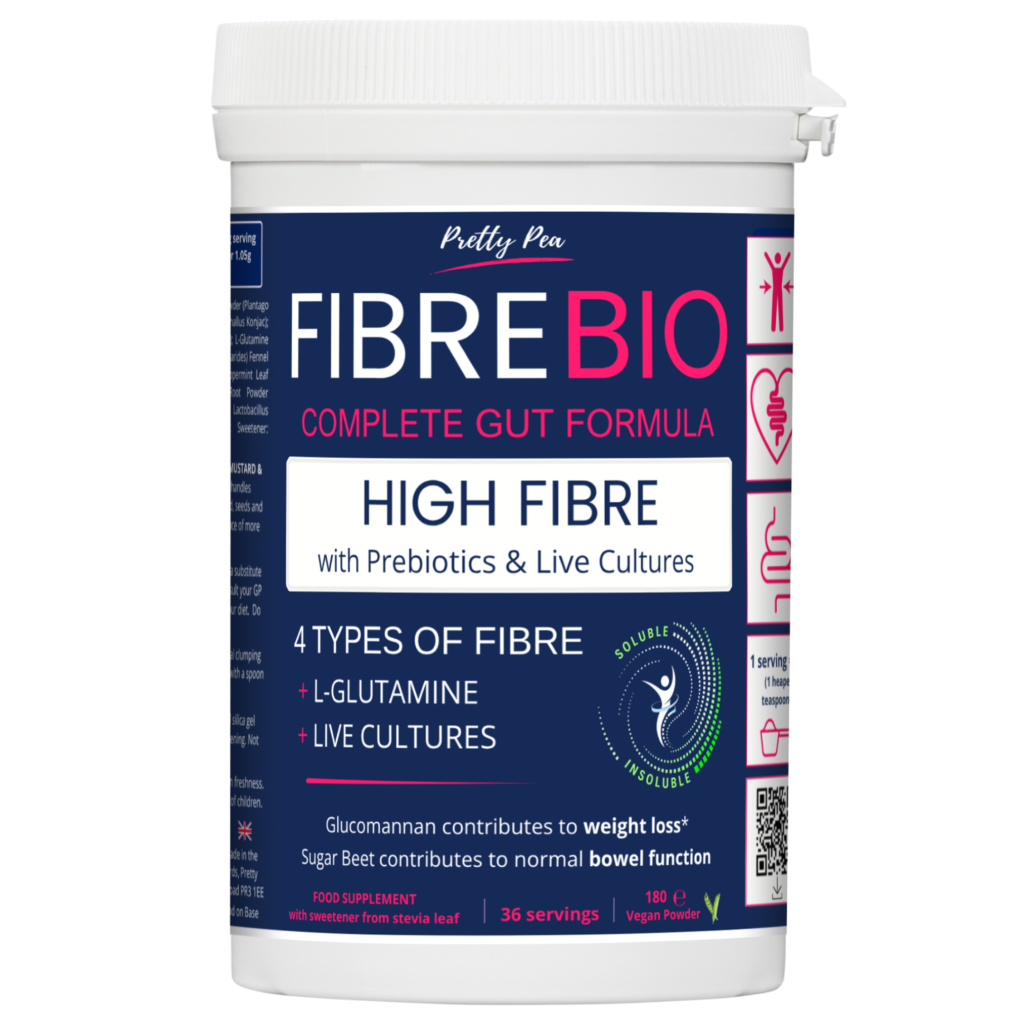
FIBREBIO – PSYLLIUM HUSK SUPPLEMENT
More than psyllium. A complete multi-fibre formula
£21.99
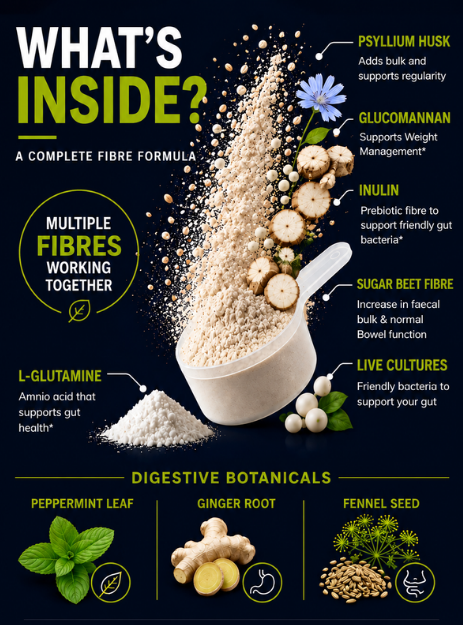
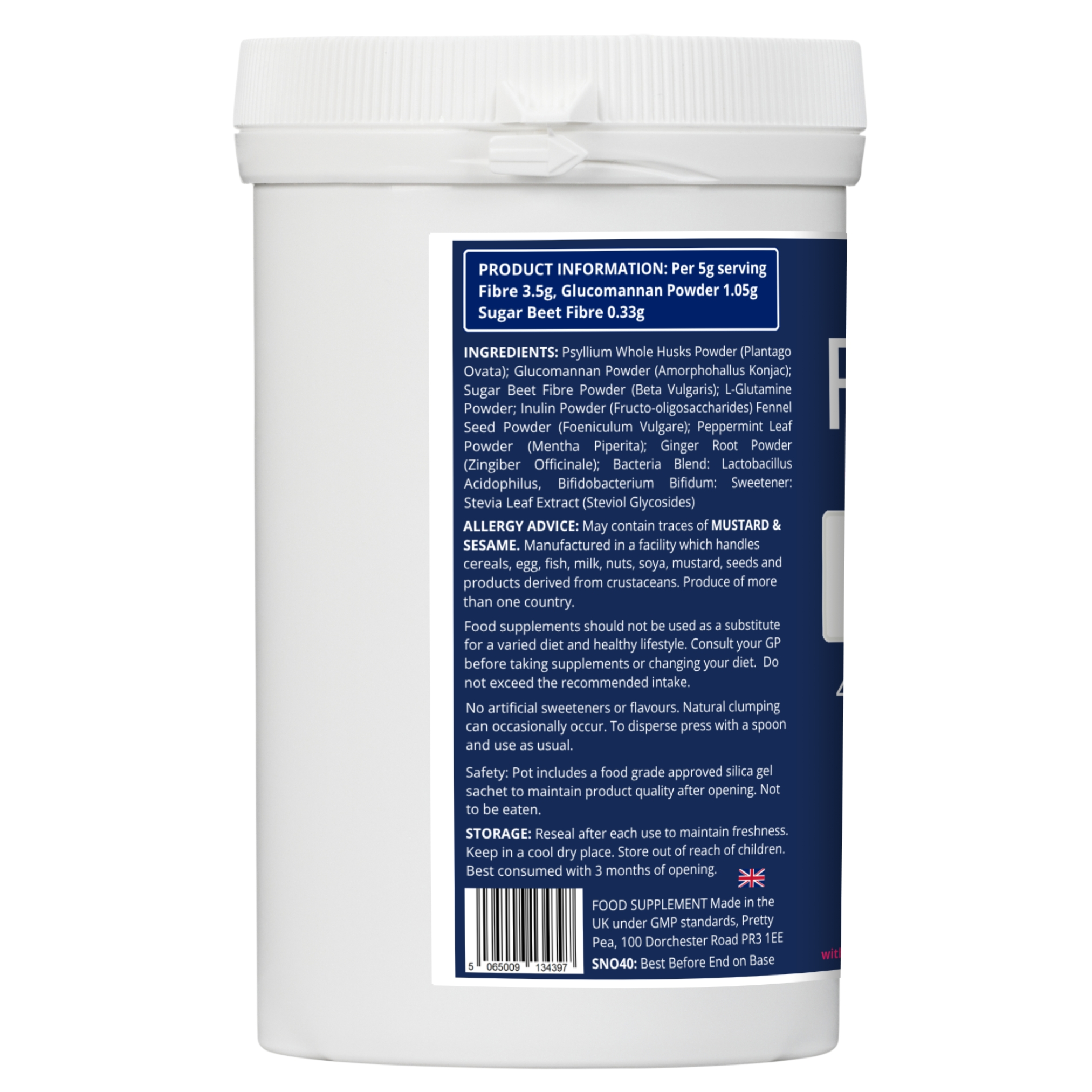
- 4 types of fibre — psyllium, glucomannan, inulin & sugar beet
- High fibre with soluble + insoluble fibre
- Nourish your gut: Prebiotics + live cultures
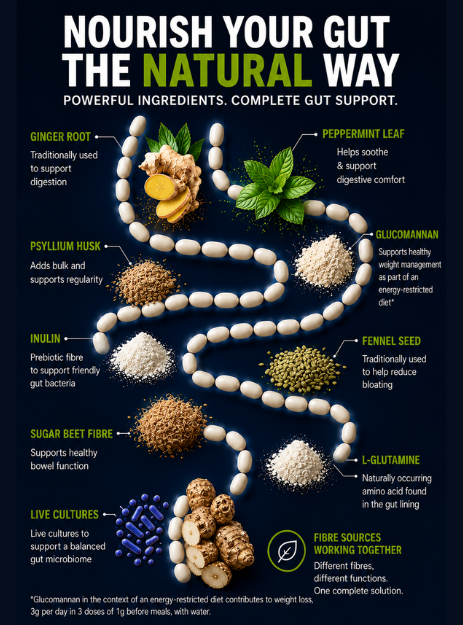
- With L-glutamine, peppermint, ginger & fennel
- Sugar Beet Fibre Powder* for Bowel Function
- Amino Acid L-Glutamine gut health digestive building blocks
- No add sugar
- 36 servings | Vegan | UK made
FEEL PRETTY FULL FROM WITHIN
FIBRE POWDER POWER
More Than Just Psyllium
FIBREBIO is a high fibre psyllium husk supplement designed to combine 4 different types of fibre in one daily formula
Rather than relying on a single fibre source, FIBREBIO combines psyllium husk, glucomannan, inulin and sugar beet fibre, alongside live cultures, L-glutamine and traditional botanicals.
Different fibres have different characteristics — including their solubility, viscosity, fermentability and water-holding properties. Supporting gut diversity, FIBREBIO brings several of them together in one convenient powder.

Glucomannan
A soluble, viscous fibre derived from the konjac plant. Glucomannan contributes to weight loss in the context of an energy-restricted diet.*

Sugar Beet Fibre
Contains both soluble and insoluble fibre. Sugar beet fibre contributes to an increase in faecal bulk.*

Psyllium Husk Powder
A naturally derived fibre containing both soluble and insoluble components. Psyllium is particularly known for its viscous, gel-forming bulking properties when mixed with water.

Inulin Powder
A soluble, fermentable fibre commonly known as a prebiotic fibre because it is utilised by intestinal bacteria.
| Fibre Type | Key Fibre characteristic |
|---|---|
| Psyllium Husk | Viscous, gel-forming fibre |
| Glucomannan | Highly viscous soluble fibre |
| Inulin Fibre | Fermentable prebiotic fibre |
| Sugar beet fibre | Soluble + insoluble fibre |
Psyllium Powder Benefits
What is FIBREBIO?
+
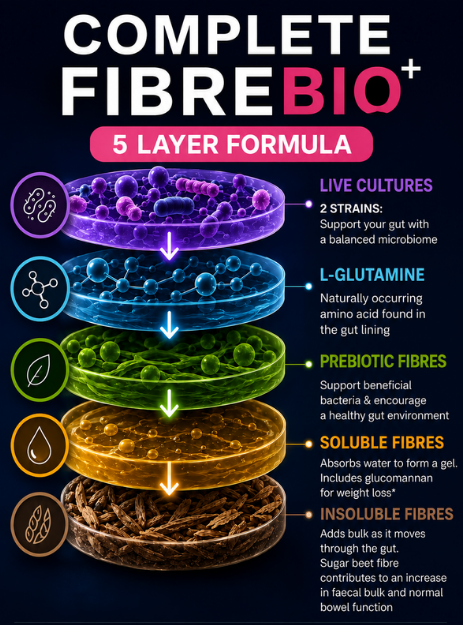
FIBREBIO is a high fibre powder supplement combining four fibre sources: psyllium husk, glucomannan, inulin and sugar beet fibre. The formula also contains two live culture strains, L-glutamine and the traditional botanicals peppermint leaf, ginger root and fennel seed.
Is FIBREBIO a psyllium husk supplement?
+
Yes. Psyllium husk is one of the four fibre sources in FIBREBIO, alongside glucomannan, inulin and sugar beet fibre. This makes FIBREBIO different from a standard single-ingredient psyllium husk powder.
What is psyllium husk?
+
Psyllium husk is obtained from the outer coating of seeds from Plantago ovata. It is particularly rich in soluble, viscous fibre and forms a gel-like consistency when it comes into contact with water.
What is inulin?
Inulin is a type of soluble, fermentable fibre found naturally in many plants. It is commonly described as a prebiotic fibre because it can be utilised by bacteria within the gut.
Does FIBREBIO contain prebiotics?
Yes. FIBREBIO contains inulin, a prebiotic fibre, alongside its other fibre sources.
Does FIBREBIO contain live cultures?
Yes. FIBREBIO contains two live culture strains as part of its multi-ingredient formula.
Does psyllium husk contain soluble and insoluble fibre?
+
Yes. Psyllium contains both soluble and insoluble fibre, although it is particularly valued for being a viscous, gel-forming soluble fibre.
What’s the difference between psyllium and glucomannan?
+
Both are viscous, soluble fibres, but they come from different plants and have different characteristics. Psyllium comes from Plantago ovata seed husks, while glucomannan is obtained from the konjac plant.
Glucomannan also has an authorised health claim in Great Britain: glucomannan in the context of an energy-restricted diet contributes to weight loss, when the required conditions of use are met.*
Can glucomannan help with weight loss?
+
Glucomannan has an authorised health claim for weight loss. The beneficial effect is obtained from a daily intake of 3g glucomannan in three doses of 1g each, together with 1–2 glasses of water, before meals and in the context of an energy-restricted diet.*
Free From Supplement
+
Under 10 calories per serving. With no artificial sweeteners, Fibre full blend is free from artificial nasties. Vegan and gluten free.
Is FIBREBIO vegan?
Yes. FIBREBIO is suitable for vegans.
Is FIBREBIO made in the UK?
Yes. FIBREBIO is made in the UK.
How to use
+
FIBREBIO psyllium husk fibre powder formula comes in 180g pot and contains 36 servings.
Add 1 serving (a heaped teaspoon) to a small amount of water or juice (1/4 glass).
Mix slowly in all directions until its turns into a smooth paste. Continue to stir as more liquid is added until the glass is full or your desired consistency is achieved.
Consume the fibre powder immediately and follow with another large glass of water to ensure the the fibres reach the stomach quickly where it will naturally get to work.
If taking for weight management: For best weight results it’s recommended to take Glucomannan 3g daily (1g each x 3 daily before each meal) and in the context of a energy controlled diet.
To be taken with water approximately before each meal (3x daily) for best actions.
Individual results will vary.
Why is water important when taking psyllium?
Psyllium is a viscous, gel-forming fibre. When hydrated, it absorbs and retains water and develops its characteristic gel-like consistency. This is why psyllium products should be consumed with sufficient fluid and according to their directions.
Safety
+
It’s important to note that, as with all fibre, when increasing any dietary fibre intake, for those with a sensitive digestion or perhaps not used to much fibre on a regular basis then it can be advisable to start on a reduced dose, for a few days and then increasing as your body adapts to the increased fibre. Results may vary from person to person.
Do not exceed the recommended daily intake. A food supplement should not be used as a substitute for a varied, balanced diet and healthy lifestyle. Always consult your GP before taking food supplements if you are taking medication or have an existing medical condition.
GLUCOMANNAN SAFETY CONSIDERATIONS
Glucomannan is considered safe and well tolerated. For those who may experience mild side effects, such as flatulence, bloating, soft stools or diarrhoea, these effects are usually transient as the body adapts and are typically uncommon.
WARNING: FIBREBIO must be taken with 1-2 glasses of water to ensure it reaches the stomach before expanding. This is especially important for people with swallowing difficulties when ingesting as it may cause choking or blockage of the throat.
As with all supplements, if you feel unwell whilst taking this supplement discontinue use immediately and seek medical advice.
FIBREBio Psyllium Powder Benefits
+
DAILY NUTRITION
The recommended daily amount of fibre is 25-30g. With many only achieving half the RDA supplementing with fibre including psyllium husk inulin, sugar beet and glucomannan can help increase daily fibre intake.
Combining the nutritional goodness of 4 fibre types, soluble, insoluble, and prebiotic fibres, plus live cultures FIBREBIO supports the diversity the body needs to be at its best from the inside out.
PSYLLIUM HUSK POWDER
Psyllium Husk powder, a water-soluble high fibre, that has long been used in Asia as a bowel regulator. Psyllium husk seeds absorb water and expand to increase bulk and moisture content to stools to stimulate normal movements.
Studies have shown psyllium husk to provide nutritional benefits including capacity to reduce the glycaemic index and constipation problems.
Psyllium husk is the only fibre recommended by the American Society of Gastroenterology for IBS.
Psyllium husk is also readily fermentable, thereby causes less abdominal bloating than some fibres may do in some people, making it a popular fibre supplement.
PREBIOTIC INULIN FIBRE
Inulin powder: Prebiotic Inulin fibres are non-digestible carbohydrates that promote the growth of beneficial bacteria in the gut.
SUGAR BEET FIBRE
Sugar Beet fibre supports bowel function with an increase in faecal bulk which can make for easier bowel movements.
Sugar Beet fibre is clinically proven to contribute to an increase in faecal bulk in 2 ways:
(1) The insoluble components of the fibre increase bulk by absorbing water in the large intestine
(2) the soluble components are fermented by bacteria to help keep your digestive tract moving as it should be.
Glucomannan
+
GLUCOMANNAN
High in dietary fibre, soluble fibre Glucomannan*** is particularly effective for weight loss and weight management. It’s a natural water soluble fibre extracted from the Konjac plant and has an exceptional ability to absorb water up to 50 times its weight.
Glucomannan differs from most other soluble fibres, it is exceptionally viscous, making it particularly effective for weight loss. It works by absorbing water in your stomach and gently expanding taking up space.
With many supplements nowadays purporting to support weight loss you can be assured that Glucomannan is EFSA approved to support weight loss, when taken 3g daily, 1g x 3 daily before meals with water in the context of a calorie controlled diet.
For weight loss benefits glucomannan needs to be taken (approx 30 minutes) before meals.
Backed by science, studies show that at the correct dose Glucomannan can result in significant weight loss in overweight and obese individuals.
L-Glutamine, Live Biotics & Herbals
+
HERBALS
FIBREBIO psyllium husk powder blend also combines Peppermint Leaf, Ginger Root and Fennel Seed, herbals traditionally used to soothe the digestive system.
LIVE BIOTIC CULTURES
Plus with added Live Biotic Cultures, 2 carefully selected bacterial strains. and vegan Amino Acid L-Glutamine
L-GLUTAMINE
A naturally occurring intestinal protein building block also typically found in meat sources.
L-Glutamine is not only the most abundant amino acid for muscle tissue but it’s also pretty much one of the most important and abundant nutrients in your entire body as it heals the tissue in your body, and especially irritated tissues in the digestive tract and gut lining.
Sources
+
Gut microbiota composition correlates with changes in body fat content due to weight loss – PubMed (nih.gov)
[Plantago ovata] – PubMed
The Prebiotic Potential of Inulin-Type Fructans: A Systematic Review – PubMed (nih.gov)
Scientific Opinion on the substantiation of a health claim related to sugar beet fibre and increasing faecal bulk pursuant to Article 13(5) of Regulation (EC) No 1924/2006 (wiley.com)
Psyllium: a useful functional ingredient in food systems – PubMed (nih.gov)
Peppermint oil for the treatment of irritable bowel syndrome: a systematic review and meta-analysis – PubMed (nih.gov)
Review article: probiotics and prebiotics in irritable bowel syndrome – PubMed (nih.gov)
Evaluation of mint efficacy regarding dysmenorrhea in comparison with mefenamic acid: A double blinded randomized crossover study – PubMed (nih.gov)
Dietary fibres in the regulation of appetite and food intake. Importance of viscosity. Appetite. 2011 Feb;56(1):65-70. doi: 10.1016/j.appet.2010.11.147. Epub 2010 Nov 27. PMID: 21115081.Beck EJ, Tapsell LC, Batterham MJ, pubmed.ncbi.nlm.nih.gov/21115081/
How to get more fibre into your diet – NHS (www.nhs.uk)
Scientific Opinion on the substantiation of a health claim related to sugar beet fibre and increasing faecal bulk pursuant to Article 13(5) of Regulation (EC) No 1924/2006 (wiley.com)
Effect of Fennel on the Health Status of Menopausal Women: A Systematic and Meta-analysis – PMC (nih.gov)
Gut microbiota, obesity and diabetes – PubMed (nih.gov)
A Descriptive Overview of the Medical Uses Given to Mentha Aromatic Herbs throughout History – PMC (nih.gov)
Peppermint oil in irritable bowel syndrome – PubMed (nih.gov)
Peppermint oil for the treatment of irritable bowel syndrome: a systematic review and meta-analysis – PubMed (nih.gov)
Evaluation of mint efficacy regarding dysmenorrhea in comparison with mefenamic acid: A double blinded randomized crossover study – PubMed (nih.gov)
Food supplements and diet as treatment options in irritable bowel syndrome – PubMed (nih.gov)
Glucomannan and obesity: a critical review – PubMed (nih.gov)
The Wonderful Activities of the Genus Mentha: Not Only Antioxidant Properties – PMC (nih.gov)
Ginger on Human Health: A Comprehensive Systematic Review of 109 Randomized Controlled Trials – PMC (nih.gov)
Dietary fiber and weight regulation. Nutr Rev. 2001 May;59(5):129-39. doi: 10.1111/j.1753-4887.2001.tb07001.x. PMID: 11396693.
Experiences with three different fiber supplements in weight reduction. Med Sci Monit. 2005 Jan;11(1):PI5-8. PMID: 15614200.
Probiotic supplements and bone health in postmenopausal women: a meta-analysis of randomised controlled trials | BMJ Open
Fennel (Foeniculum vulgare) and Fenugreek (Trigonella foenum-graecum) Tea Drinking Suppresses Subjective Short-term Appetite in Overweight Women – PMC (nih.gov)
Foeniculum vulgare: A comprehensive review of its traditional use, phytochemistry, pharmacology, and safety – ScienceDirect
Ginger on Human Health: A Comprehensive Systematic Review of 109 Randomized Controlled Trials – PMC (nih.gov)
The Amazing and Mighty Ginger – Herbal Medicine – NCBI Bookshelf (nih.gov)
Gut microbiota, obesity and diabetes – PubMed (nih.gov)
Scientific Opinion on the substantiation of a health claim related to sugar beet fibre and increasing faecal bulk pursuant to Article 13(5) of Regulation (EC) No 1924/2006 (wiley.com)
Effect of glucomannan on plasma lipid and glucose concentrations, body weight, and blood pressure: systematic review and meta-analysis. Am J Clin Nutr. 2008 Oct;88(4):1167-75. doi: 10.1093/ajcn/88.4.1167. PMID: 18842808.
Effect of glucomannan on obese patients: a clinical study. Int J Obes. 1984;8(4):289-93. PMID: 6096282
EFSA Panel on Dietetic Products, Nutrition and Allergies (NDA); Scientific Opinion on the substantiation of a health claim related to sugar beet fibre and increasing faecal bulk pursuant to Article 13(5) of Regulation (EC) No 1924/2006. EFSA Journal 2011; 9(12):2468. [8 pp.]. doi:10.2903/j.efsa.2011.2468.
The Prebiotic Potential of Inulin-Type Fructans: A Systematic Review. Adv Nutr. 2022 Mar;13(2):492-529. doi: 10.1093/advances/nmab119. Epub 2023 Feb 10. PMID: 34555168; PMCID: PMC8970830.
Prebiotic fiber modulation of the gut microbiota improves risk factors for obesity and the metabolic syndrome – PubMed (nih.gov)
Food & mood: a review of supplementary prebiotic and probiotic interventions in the treatment of anxiety and depression in adults – PMC (nih.gov)
Review article: prebiotics in the gastrointestinal tract. Aliment Pharmacol Ther. 2006 Sep 1;24(5):701-14. doi: 10.1111/j.1365-2036.2006.03042.x. PMID: 16918875.
Psyllium: a useful functional ingredient in food systems. Crit Rev Food Sci Nutr. 2022;62(2):527-538. doi: 10.1080/10408398.2020.1822276. Epub 2020 Sep 21. PMID: 32951436.
Glutamine and intestinal barrier function. Amino Acids. 2015 Oct;47(10):2143-54. doi: 10.1007/s00726-014-1773-4. Epub 2014 Jun 26. PMID: 24965526.
Glutamine: an essential amino acid for the gut. Nutrition. 1996 Nov-Dec;12(11-12 Suppl):S78-81. doi: 10.1016/s0899-9007(97)85206-9. PMID: 8974125.
Glutamine supplementation favors weight loss in nondieting obese female patients. A pilot study. Eur J Clin Nutr. 2014 Nov;68(11):1264-6. doi: 10.1038/ejcn.2014.184. Epub 2014 Sep 17. PMID: 25226827.
The Role of Glutamine in the Complex Interaction between Gut Microbiota and Health: A Narrative Review. Int J Mol Sci. 2019 Oct 22;20(20):5232. doi: 10.3390/ijms20205232. PMID: 31652531; PMCID: PMC6834172.
The Gut Microbiome and Its Role in Obesity. Nutr Today. 2016 Jul-Aug;51(4):167-174. doi: 10.1097/NT.0000000000000167. PMID: 27795585; PMCID: PMC5082693.
Gut microbiota composition correlates with changes in body fat content due to weight loss – PubMed (nih.gov)
Combined Red Clover isoflavones and probiotics potently reduce menopausal vasomotor symptoms | PLOS ONE
Probiotic supplements and bone health in postmenopausal women: a meta-analysis of randomised controlled trials
Food supplements and diet as treatment options in irritable bowel syndrome – PubMed (nih.gov)
A Novel Delivery System of Peppermint Oil Is an Effective Therapy for Irritable Bowel Syndrome Symptoms. Dig Dis Sci. 2016 Feb;61(2):560-71. doi: 10.1007/s10620-015-3858-7. Epub 2015 Aug 29. PMID: 26319955; PMCID: PMC4729798. Food supplements and diet as treatment options in irritable bowel syndrome. Neurogastroenterol Motil. 2020 Aug;32(8):e13951. doi: 10.1111/nmo.13951. PMID: 32697018.
Peppermint oil for the treatment of irritable bowel syndrome: a systematic review and meta-analysis. J Clin Gastroenterol. 2014 Jul;48(6):505-12. doi: 10.1097/MCG.0b013e3182a88357. PMID: 24100754.
Fennel (Foeniculum vulgare) and Fenugreek (Trigonella foenum-graecum) Tea Drinking Suppresses Subjective Short-term Appetite in Overweight Women – PubMed (nih.gov)
Effect of Fennel on the Health Status of Menopausal Women: A Systematic and Meta-analysis – PubMed (nih.gov)
The Amazing and Mighty Ginger. In: Benzie IFF, Wachtel-Galor S, editors. Herbal Medicine: Biomolecular and Clinical Aspects. 2nd edition. Boca Raton (FL): CRC Press/Taylor & Francis; 2011. Chapter 7. Available from: https://www.ncbi.nlm.nih.gov/books/NBK92775/
Ford AC, Moayyedi P, Chey WD, et al. American College of Gastroenterology monograph on management of irritable bowel syndrome. Am J Gastroenterol 2018; 113 (Suppl 2): 1-18.
You Might Also Like….Psyllium Husk in our Fibre Capsules
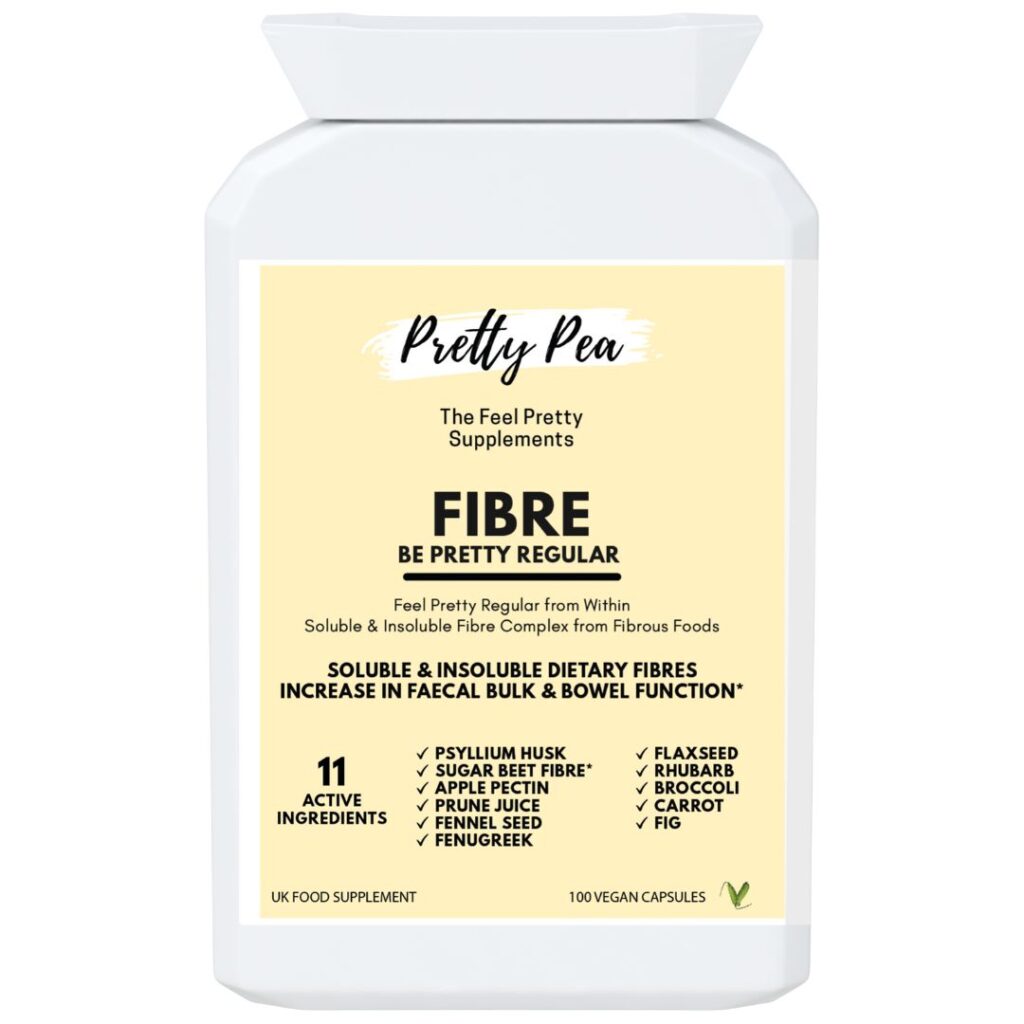
Fibre Capsules
High fibre pills derived from psyllium husk, flaxseed, sugar beet, prune juice, fig fruit, rhubarb, pectin, fenugreek and other naturally high fibre botanicals and foods. More than just roughage, these fibre pills contains cellulose, pectin, hemicellulose, lignin and gums.
Fibre Pills Ingredients: Psyllium Husk, Flaxseed, Sugar Beet Fibre, Fenugreek, Apple pectin, Rhubarb, Prune Juice, Broccoli, Carrot, Fig Fruit, Fennel Seed. Vegan, Dairy Free, Gluten Free. 100 capsules