Generated by All in One SEO Pro v4.9.10, this is an llms-full.txt file, used by LLMs to index the site.
# Pretty Pea
Fibre Supplements for Women
## Posts
### [Blog](https://prettypea.blog/blog/)
**Published:** October 24, 2023
**Author:** Cate Boyd
**Content:**
## Articles & Expert Guidance
Browse our collection of expert, science-backed articles on nutrition, menopause, fibre, superfoods and supplements. Designed to help you make informed choices and support your health at every stage.

### Explore Menopause Nutrition
Support your body through menopause with clear, realistic nutrition advice. Learn what to eat for weight management, hormone balance, energy and long-term health.
👉 Begin with the **menopause 5-day diet plan for weight loss** to see a practical example of structured eating.
👉 Explore wider guidance on **[menopause-friendly eating patterns and food swaps](https://prettypea.blog/simple-food-group-swaps-make-life-easier-for-yourself/ "menopause-friendly eating patterns and food swaps")** for long-term support.
### Explore Supplements
Understand which supplements are worth taking and how they may support your health. Explore evidence-based guidance on vitamins, minerals and supplements for women.
👉 Learn more about **[fibre supplements and appetite support](https://prettypea.blog/appetite-regulation-how-fibre-vs-glp-1-compare/ "fibre supplements and appetite support")** if you’re looking at weight management options.
👉 You may also find it helpful to read about how **[supplements interact with medications such as HRT.](https://prettypea.blog/can-you-take-supplements-with-hrt-whats-safe-and-what-to-avoid/ "supplements interact with medications such as HRT.")**
### Explore Fibre & Gut Health
Improve your digestion and overall health with simple, practical advice on increasing fibre intake. Explore high-fibre foods, gut health tips, and easy ways to support bloating, constipation and daily wellbeing.
Start with **20 highest fibre foods** for an easy way to increase your daily intake.
👉 You can also [read **the best 15 fibres for weight loss.**](https://prettypea.blog/15-best-high-fibre-foods-for-weight-loss-that-actually-keep-you-full/ "read the 15 fibres for weight loss.")
### Discover top Superfoods
Discover nutrient-dense foods that can support your health. Learn what superfoods are, their benefits, and simple ways to include them in your daily diet.
**👉** Read **the ultimate** **superfood list** to understand the best options to include in your diet.
👉 Explore how different superfoods support energy, immunity and overall wellbeing.
### Explore Hormones & HRT
Learn more about hormones, menopause and HRT with simple, trustworthy guidance. Explore how diet and supplements may support hormone health and what to be aware of.
👉 Read **[can you take supplements with HRT](https://prettypea.blog/can-you-take-supplements-with-hrt-whats-safe-and-what-to-avoid/ "can you take supplements with HRT")** to understand safety and interactions.
👉 You may also find it useful to explore **phytoestrogens and hormone balance**.
- [](https://prettypea.blog/the-menopause-diet-5-day-plan-to-lose-weight/)
## [The Menopause Diet 5-Day Plan to Lose Weight](https://prettypea.blog/the-menopause-diet-5-day-plan-to-lose-weight/)
Losing weight during menopause can feel frustrating, especially when the same eating habits that used to work suddenly stop making a difference. The Menopause Diet 5-Day Plan to…
[**Continue Reading**](https://prettypea.blog/the-menopause-diet-5-day-plan-to-lose-weight/)
- [](https://prettypea.blog/superfood-list/)
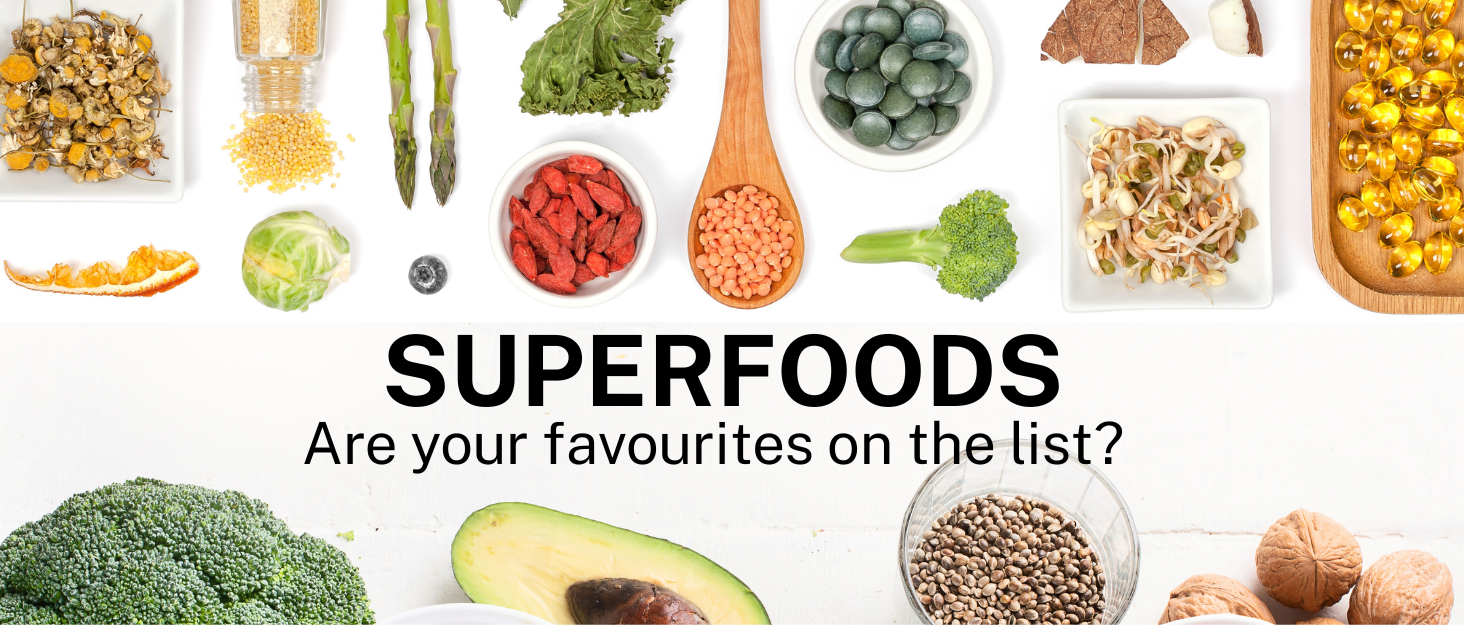
## [Top 15 Superfood List for Energy, Immunity and Women’s Health](https://prettypea.blog/superfood-list/)
Looking to improve your energy, support your immune system, or simply eat a little healthier? This top superfood list is for you. Superfoods are often talked about as…
[**Continue Reading**](https://prettypea.blog/superfood-list/)
- [](https://prettypea.blog/d-mannose-and-cranberry-for-women/)
D-Mannose and cranberry for women have become increasingly popular in supplements focused on urinary and intimate health. Cranberry has been associated with women’s urinary health for generations, while…
[**Continue Reading**](https://prettypea.blog/d-mannose-and-cranberry-for-women/)
- [](https://prettypea.blog/what-is-glp-1/)
## [What Is GLP-1? The Gut Hormone That Helps Regulate Hunger & Blood Sugar](https://prettypea.blog/what-is-glp-1/)
If you’ve heard of GLP-1, there’s a good chance it has been in connection with weight-loss medications. But GLP-1 isn’t something invented for a medication. Your body makes…
[**Continue Reading**](https://prettypea.blog/what-is-glp-1/)
- [](https://prettypea.blog/psyllium-husk-benefits/)
## [Psyllium Husk: Benefits, How to Take It, Side Effects & How It Compares](https://prettypea.blog/psyllium-husk-benefits/)
Psyllium husk has become one of the most popular fibre supplements — but what actually makes it different from other types of fibre? Also known as ispaghula husk,…
[**Continue Reading**](https://prettypea.blog/psyllium-husk-benefits/)
- [](https://prettypea.blog/why-am-i-always-tired/)
## [Why Am I Always Tired? The Ultimate Guide to Fighting Fatigue Naturally](https://prettypea.blog/why-am-i-always-tired/)
Do you find yourself asking why am I always tired? Whilst feeling tired occasionally is normal. But when low energy follows you through the day—despite getting what seems…
[**Continue Reading**](https://prettypea.blog/why-am-i-always-tired/)
- [](https://prettypea.blog/best-supplements-for-women/)
## [Which Supplements Do Women Really Need? An Evidence-Based Guide](https://prettypea.blog/best-supplements-for-women/)
Searching for the best supplements for women? How do you know the page you land on is actually evidence-based nutrition, not marketing hype? The supplement industry is worth…
[**Continue Reading**](https://prettypea.blog/best-supplements-for-women/)
- [](https://prettypea.blog/how-to-lose-weight-during-menopause/)
## [How to Lose Weight During Menopause (Without Eating Less and Exercising More)](https://prettypea.blog/how-to-lose-weight-during-menopause/)
If you’re eating less than ever, exercising more than ever, and still struggling to lose weight, you’re far from alone. How to lose weight during menopause can feel,…
[**Continue Reading**](https://prettypea.blog/how-to-lose-weight-during-menopause/)
1[2](?query-33-page=2&doing_wp_cron=1792147625.9723339080810546875000)[3](?query-33-page=3&doing_wp_cron=1792147625.9723339080810546875000)…[14](?query-33-page=14&doing_wp_cron=1792147625.9723339080810546875000)
[→](/wp-cron.php?doing_wp_cron=1792147625.9723339080810546875000&query-33-page=2)
---
### [Hormone Imbalance in Women: Causes, Symptoms & How Hormones Affect Your Health](https://prettypea.blog/hormone-imbalance-in-women/)
**Published:** June 26, 2026
**Author:** Cate Boyd
**Excerpt:** Hormone imbalance is a phrase many women use when their body starts to feel different. This guide explains what hormones do, why symptoms can change during perimenopause and menopause, and how diet, fibre, protein, sleep, stress and lifestyle habits can support women’s health.
**Content:**
Discover the causes, symptoms and science behind hormone imbalance in women. Learn how hormones affect weight, mood, sleep, digestion, menopause and overall health.
Have you ever felt like your body has changed overnight?
Perhaps you’ve started gaining weight despite eating the same foods, you’re waking at 3 am for no obvious reason, struggling with brain fog, feeling more anxious than usual or finding that your energy simply isn’t what it used to be.
For many women, these changes can feel confusing and frustrating. It’s common to wonder whether stress, ageing, diet or lifestyle are to blame—or whether your hormones have something to do with it.
The reality is that hormones influence almost every system in your body. They don’t just regulate your menstrual cycle. They also help control your metabolism, appetite, body fat distribution, digestion, sleep, mood, bone health, muscle mass, energy levels and much more.
During your late 30s and 40s, hormone levels naturally begin to fluctuate as the body transitions towards menopause. At the same time, everyday factors such as poor sleep, chronic stress, inactivity, weight changes and some medical conditions can also influence how hormones work.
## [Hormone Imbalance in Women: Causes, Symptoms & How Hormones Affect Your Health](https://prettypea.blog/hormone-imbalance-in-women/)
The term **“hormone imbalance”** is widely searched online and commonly used to describe these symptoms. However, it’s important to understand that hormone imbalance isn’t a single medical diagnosis. Instead, it is an umbrella term that describes changes in one or more hormones that may occur naturally, particularly during perimenopause and menopause, or as part of another underlying medical condition.
Understanding how hormones work can help explain why symptoms develop and what practical lifestyle strategies may support your health.
In this guide, you’ll learn:
- What hormones are and why they matter.
- What people mean by “hormone imbalance.”
- Why hormones naturally change during perimenopause and menopause.
- The major hormones that influence women’s health.
- How hormones affect weight, metabolism, appetite and body fat.
- Lifestyle and dietary factors that support overall hormone health.
- When symptoms should be discussed with your GP.
---
## What Are Hormones?
Hormones are chemical messengers produced by specialised glands within the endocrine system. Once released into the bloodstream, they travel throughout the body, carrying signals that help different organs and tissues communicate with one another.
Although hormones circulate in tiny amounts, they have remarkably powerful effects. Even relatively small changes in hormone levels or the way tissues respond to hormones can influence many aspects of health.
Rather than acting independently, hormones work together as an interconnected network. Changes in one hormone can influence several others, which helps explain why hormone-related symptoms are often varied and sometimes difficult to pinpoint.
For example:
- **Oestrogen** influences bone health, cardiovascular health, skin, the brain and body fat distribution.
- **Progesterone** supports the menstrual cycle and also affects sleep and mood.
- **Insulin** regulates blood glucose but also influences fat storage.
- **Cortisol** helps the body respond to stress but also affects appetite and energy metabolism.
- **Leptin** and **ghrelin** work together to regulate hunger and fullness.
- **Thyroid** hormones help regulate metabolic rate and energy production.
Because these hormones interact constantly, symptoms rarely result from one hormone acting alone.
[See Supplements](https://prettypea.blog/womens-health-supplements/)
---
## What Does “Hormone Imbalance” Actually Mean?
“Hormone imbalance” has become a popular phrase across social media, wellness websites and online searches.
However, healthcare professionals often use more specific medical terms depending on the underlying cause.
For example, rather than diagnosing someone with “hormone imbalance,” a doctor may identify:
- Perimenopause
- Menopause
- Polycystic ovary syndrome (PCOS)
- Thyroid disease
- Diabetes or insulin resistance
- Hyperprolactinaemia
- Cushing’s syndrome
- Other endocrine disorders
This distinction is important because hormone changes can occur for many different reasons, and the appropriate treatment depends on identifying the underlying cause.
Nevertheless, the phrase “hormone imbalance” remains useful because many women first notice symptoms before they know exactly which hormones are changing.
Common symptoms that people associate with hormone imbalance include:
- Weight gain, particularly around the abdomen.
- Fatigue.
- Brain fog.
- Poor concentration.
- Mood changes.
- Anxiety.
- Low mood.
- Poor sleep.
- Night sweats.
- Hot flushes.
- Irregular periods.
- Heavy periods.
- Hair thinning.
- Dry skin.
- Low libido.
- Joint aches.
- Digestive changes.
These symptoms are not unique to hormone changes and may have other medical causes, which is why persistent or severe symptoms should always be assessed by a healthcare professional.
For all in one menopause weight management, hormone regulation, digestion and energy metabolism support see [Meno Weight ](https://prettypea.blog/menopause-supplement-womens-nutrition-support/ "Meno Weight ")supplement support.
## [Hormone Imbalance in Women: Causes, Symptoms & How Hormones Affect Your Health](https://prettypea.blog/hormone-imbalance-in-women/)
---
## Why Hormones Change During Perimenopause
One of the biggest hormonal transitions in a woman’s life occurs during **perimenopause**, the years leading up to menopause.
Perimenopause often begins during the 40s, although some women notice changes earlier. See [Early Signs of Perimenopause in Your 40s: What to Look For](https://prettypea.blog/early-signs-of-perimenopause/)
During this time, ovarian function gradually becomes less predictable.
Rather than steadily declining, hormone production fluctuates from month to month.
Oestrogen levels may rise, fall and temporarily increase again.
Progesterone often begins declining earlier because ovulation becomes less regular.
These changing hormone patterns help explain why symptoms can appear inconsistent. Some months women feel completely normal.
Other months they may experience:
- Poor sleep.
- Mood changes.
- Breast tenderness.
- Bloating.
- Weight changes.
- Anxiety.
- Heavy periods.
- Brain fog.
Eventually, hormone production declines further until menopause occurs, defined as **12 consecutive months without a menstrual period.**
Understanding that these fluctuations are part of a normal biological transition can help explain why symptoms often seem unpredictable rather than following a steady progression.
In the next section, we’ll explore the individual hormones that influence women’s health, how they interact, and why they affect everything from appetite and body composition to sleep, mood and energy.
## [Hormone Imbalance in Women: Causes, Symptoms & How Hormones Affect Your Health](https://prettypea.blog/hormone-imbalance-in-women/)
## The Hormones Every Woman Should Understand
Hormones rarely work in isolation. They act more like an orchestra than a single instrument. When one hormone changes, others often respond.
This is why symptoms such as weight gain, tiredness, anxiety, poor sleep, hunger, hot flushes or digestive changes can feel connected, even when they seem to involve different parts of the body.
For women over 35, it is especially helpful to understand the hormones that influence perimenopause, menopause, appetite, metabolism, body composition and energy.
### Oestrogen
Oestrogen is one of the main female sex hormones. It is often linked with periods and fertility, but its effects go far beyond the reproductive system.
Oestrogen also influences the brain, bones, skin, heart, blood vessels, joints, pelvic tissues and the way fat is stored in the body.
During the reproductive years, oestrogen rises and falls across the menstrual cycle. In perimenopause, these patterns become less predictable. Some months oestrogen may be higher than expected. Other months it may fall sharply. This fluctuation is one reason symptoms can feel inconsistent.
Oestrogen changes may contribute to symptoms such as:
- Hot flushes
- Night sweats
- Irregular periods
- Breast tenderness
- Mood changes
- Brain fog
- Vaginal dryness
- Skin changes
- Joint discomfort
- Changes in body fat distribution
After menopause, oestrogen levels remain lower than they were during the reproductive years. This can influence long-term health, including bone density, cardiovascular health and body composition.
One important change many women notice is that weight becomes more likely to settle around the middle. This does not mean oestrogen is the only cause of menopause weight gain. Ageing, muscle loss, insulin sensitivity, sleep, stress, diet and activity levels all matter. However, lower oestrogen can affect where fat is stored, particularly around the abdomen.
This is why many women say:
> “I haven’t changed anything, but my body shape has changed.”
That experience is common during perimenopause and menopause.
---
### Progesterone
Progesterone is another key female sex hormone. It rises after ovulation and helps prepare the body for a possible pregnancy.
Progesterone also has **calming effects** in the brain and may influence sleep, mood and temperature regulation.
During perimenopause, progesterone often starts to decline before oestrogen does. This is because ovulation becomes less regular. If ovulation does not happen, progesterone does not rise in the same way.
This changing balance between oestrogen and progesterone may help explain why some women experience:
- Heavier periods
- Shorter or more irregular cycles
- PMS-like symptoms
- Breast tenderness
- Mood swings
- Anxiety
- Poor sleep
- Feeling more emotionally reactive
This is also where the phrase “oestrogen dominance” often appears online. It usually refers to a situation where oestrogen activity feels high relative to progesterone.
However, it is important to be careful with this phrase. “Oestrogen dominance” is widely used in wellness content, but it is not usually used as a formal medical diagnosis. A more accurate way to describe it is that some symptoms may be linked to changes in the balance between oestrogen and progesterone, especially during perimenopause.
For example, a woman may not have unusually high oestrogen overall, but if progesterone has fallen, oestrogen may feel more dominant in comparison.
This is why symptoms can appear before periods stop completely.
Read: [The 100 Symptoms of Perimenopause](https://prettypea.blog/the-100-symptoms-of-perimenopause/)
---
### Cortisol
Cortisol is often called the **stress hormone**, but that description is too simple.
Cortisol is essential for life. It helps regulate energy, blood pressure, inflammation, immune function and the body’s response to stress.
Cortisol follows a natural daily rhythm. It is usually higher in the morning to help you wake up and gradually falls throughout the day so your body can wind down at night.
Problems can occur when stress, poor sleep, shift work, under-eating, overtraining or ongoing worry disrupt this rhythm.
When cortisol is frequently elevated or poorly regulated, some women may notice:
- Waking at night
- Feeling wired but tired
- Cravings for sugar or caffeine
- Feeling more anxious
- Poor recovery from exercise
- Increased appetite
- More abdominal weight gain
- Low energy in the afternoon
Cortisol does not directly “cause belly fat” on its own, but long-term stress can affect behaviours and biology in ways that make weight management harder.
For example, stress may increase emotional eating, reduce sleep quality, increase cravings and reduce motivation to exercise. Poor sleep can then affect appetite hormones, blood sugar control and energy levels.
This creates a cycle:
Stress affects sleep.
Poor sleep affects appetite and energy.
Low energy affects food choices and movement.
Weight gain increases frustration.
Frustration increases stress.
This is why hormone health is not only about individual hormones. It is also about daily rhythms, sleep, food, movement and recovery.
---
### Insulin
Insulin is a hormone produced by the pancreas. Its main job is to help move glucose from the bloodstream into cells, where it can be used for energy or stored for later.
After eating carbohydrate-containing foods, blood glucose rises. In response, insulin helps move that glucose into muscle, liver and fat cells.
Insulin is not a “bad” hormone. It is essential.
The issue is insulin resistance.
Insulin resistance means the body’s cells do not respond to insulin as effectively as they should. As a result, the pancreas may need to produce more insulin to keep blood sugar levels stable.
Over time, insulin resistance can make weight management more difficult and may increase the risk of type 2 diabetes and other metabolic health concerns.
Signs that may be associated with blood sugar swings or insulin resistance include:
- Energy crashes after meals
- Strong sugar cravings
- Feeling hungry soon after eating
- Weight gain around the middle
- Difficulty losing weight
- Tiredness
- Brain fog
- Increased thirst or frequent urination
These symptoms can have many causes, so they should not be self-diagnosed. However, insulin resistance is an important concept for women to understand, especially during midlife.
After menopause, some women become more prone to changes in body composition, including more abdominal fat and reduced muscle mass. Since muscle helps use glucose effectively, maintaining muscle through strength training and adequate protein becomes increasingly important.
Diet also matters.
Meals that combine protein, fibre and healthy fats tend to be more satisfying and may support steadier blood sugar levels than meals based mostly on refined carbohydrates.
Fibre is particularly relevant because it slows digestion, supports gut health and can help improve meal satisfaction.
This is one reason why fibre becomes such an important nutrition focus for women over 40.
Read more: [**What Is Insulin Resistance? Signs, Causes & What Helps**](https://prettypea.blog/what-is-insulin-resistance/)
## [Hormone Imbalance in Women: Causes, Symptoms & How Hormones Affect Your Health](https://prettypea.blog/hormone-imbalance-in-women/)
---
### Leptin
Leptin is sometimes called the **fullness hormone.**
It is produced mainly by fat cells and helps signal to the brain that the body has enough stored energy.
In simple terms, leptin tells the brain:
> “We have enough energy stored.”
When leptin signalling works well, it helps regulate appetite and energy balance.
However, in some people, leptin signalling becomes less effective. This is sometimes called leptin resistance. In this state, the body may have plenty of stored energy, but the brain does not respond to leptin’s message properly.
This can make appetite regulation harder.
Leptin is also influenced by weight loss. When someone loses weight, leptin levels often fall. This may increase hunger and reduce energy expenditure, making weight maintenance more difficult.
This is one reason many people feel hungrier after dieting.
It is not simply a lack of willpower. The body has biological systems designed to defend against weight loss.
For women in midlife, this matters because weight gain, dieting, stress, sleep problems and hormonal changes can all affect appetite regulation.
Rather than relying on restrictive diets, it is often more helpful to focus on meals that support fullness naturally.
That means building meals around:
- Protein
- Fibre
- Whole foods
- Plenty of plants
- Enough calories
- Regular meal patterns
Very low-calorie dieting can sometimes backfire by increasing hunger, reducing energy and making bingeing or overeating more likely later.
[Shop Supplements](https://prettypea.blog/womens-health-supplements/)
---
### Ghrelin
Ghrelin is often described as the **hunger hormone.**
It is produced mainly in the stomach and rises before meals, helping signal hunger to the brain. After eating, ghrelin usually falls.
Ghrelin is one reason hunger can feel physical and urgent, not just psychological.
Several factors may influence ghrelin, including:
- Meal timing
- Sleep
- Dieting
- Stress
- Weight loss
- Protein intake
- Meal composition
Poor sleep can affect hunger and appetite regulation. Many women notice that after a bad night’s sleep, they crave more carbohydrates or snack more often the next day.
This is not imagined. Sleep and appetite hormones are closely linked.
Ghrelin may also rise during weight loss, which can make dieting feel harder over time. This is one reason aggressive restriction often fails.
The goal should not be to “shut down hunger.” Hunger is a normal biological signal.
The goal is to support more stable hunger patterns through better sleep, balanced meals, adequate protein and fibre-rich foods.
For example, a breakfast made with Greek yoghurt, berries, oats, chia seeds and psyllium husk is likely to be more filling than a low-fibre breakfast that is high in refined carbohydrates.
This is where practical nutrition becomes powerful. You do not need to micromanage every hormone. You need daily habits that support the systems those hormones belong to.
---
## Thyroid Hormones
Thyroid hormones help regulate metabolic rate, body temperature, energy production, digestion, heart rate and many other body functions.
The thyroid gland produces hormones including thyroxine, also known as T4, and triiodothyronine, known as T3.
If thyroid hormone levels are too low, this is called hypothyroidism. If they are too high, this is called hyperthyroidism.
An underactive thyroid can cause symptoms such as:
- Fatigue
- Feeling cold
- Constipation
- Dry skin
- Weight gain
- Low mood
- Heavy or irregular periods
- Hair thinning
- Sluggishness
An overactive thyroid can cause symptoms such as:
- Anxiety
- Palpitations
- Weight loss
- Heat intolerance
- Trembling
- Sweating
- Sleep problems
- Frequent bowel movements
Some thyroid symptoms overlap with perimenopause and menopause symptoms, which can make it confusing.
For example, fatigue, weight changes, low mood, poor sleep and changes to periods may be linked with menopause, thyroid problems or something else entirely.
This is why it is important not to assume every symptom after 40 is “just hormones” or “just menopause.”
If symptoms are persistent, worsening or unusual for you, it is worth speaking to your GP. Thyroid function can usually be assessed with a blood test.
[See Supplements](https://prettypea.blog/womens-health-supplements/)
---
## Why These Hormones Matter Together
The reason hormone symptoms can feel so complex is that these systems overlap.
Poor sleep can affect cortisol, hunger and cravings.
Stress can affect appetite and food choices.
Insulin resistance can make weight management harder.
Lower oestrogen can affect body fat distribution.
Reduced muscle mass can affect glucose control.
Dieting can affect leptin and ghrelin.
Thyroid changes can mimic menopause symptoms.
This does not mean every symptom is caused by hormones. It means hormones are part of a wider picture that includes age, lifestyle, medical history, nutrition, sleep, movement and stress.
For most women, supporting hormone health is not about chasing perfect hormone levels.
It is about creating a body environment that supports better regulation.
That includes:
- Eating enough protein.
- Increasing fibre intake.
- Building muscle through strength training.
- Prioritising sleep.
- Managing stress.
- Supporting gut health.
- Avoiding extreme diets.
- Seeking medical help when symptoms are persistent or concerning.
The next section explores the most common symptoms linked with hormone changes and when they should be checked by a healthcare professional.
---
## Common Symptoms of Hormone Imbalance in Women
Hormone changes can affect many areas of the body. This is one reason symptoms can feel confusing.
One woman may notice poor sleep and anxiety.
Another may notice weight gain, cravings and heavy periods.
Another may mainly experience hot flushes, low mood, joint aches or digestive changes.
This does not mean every symptom is caused by hormones. Many symptoms linked with hormone changes can also be caused by thyroid problems, anaemia, vitamin deficiencies, stress, poor sleep, medication side effects or other medical conditions.
However, during perimenopause and menopause, hormonal fluctuation can be an important part of the picture.
The symptoms below are commonly discussed in relation to female hormone changes.
Read: [**The 100 Symptoms of Perimenopause**](https://prettypea.blog/the-100-symptoms-of-perimenopause/)
---
### 1. Changes to Periods
Changes to your menstrual cycle are often one of the earliest signs of perimenopause.
You may notice:
- Periods becoming closer together.
- Longer gaps between periods.
- Heavier bleeding.
- Lighter bleeding.
- More spotting.
- More painful periods.
- PMS symptoms feeling stronger.
- Periods becoming unpredictable.
This happens because ovulation becomes less regular during perimenopause.
When ovulation is less predictable, progesterone levels may not rise in the same way. Oestrogen can also fluctuate from month to month. These changes can affect the lining of the womb and lead to changes in bleeding patterns.
Although cycle changes are common during perimenopause, very heavy bleeding, bleeding after sex, bleeding between periods or any bleeding after menopause should always be discussed with your GP.
---
### 2. Hot Flushes and Night Sweats
Hot flushes are one of the best-known menopause symptoms.
A hot flush may feel like a sudden wave of heat across the face, neck, chest or whole body. Some women also experience sweating, flushing, a racing heart or a feeling of panic.
Night sweats are hot flushes that happen during sleep. They can leave you waking up hot, damp, uncomfortable or unable to get back to sleep.
These symptoms are linked to changes in how the brain regulates body temperature. Oestrogen plays a role in this system, which is why hot flushes and night sweats often appear during perimenopause and menopause.
For some women, hot flushes are mild.
For others, they are frequent and disruptive.
If they affect your sleep, confidence, work or quality of life, it is worth speaking to your GP. Treatment options are available.
---
### 3. Poor Sleep and Waking at 3am
Sleep problems are very common during perimenopause and menopause.
Some women struggle to fall asleep.
Others fall asleep normally but wake during the night.
Many describe waking around 3am and feeling unable to switch their brain off.
Sleep disruption can be caused by several overlapping factors:
- Night sweats.
- Stress.
- Anxiety.
- Changes in progesterone.
- Changes in body temperature.
- Alcohol.
- Caffeine.
- Blood sugar swings.
- Lifestyle pressures.
- Pain or joint discomfort.
Poor sleep can then affect other areas of health.
After a bad night, many women notice stronger cravings, lower motivation, worse mood, lower energy and more difficulty making healthy food choices.
This is why sleep is not a luxury. It is a key part of hormone health, appetite regulation and overall wellbeing.
---
### 4. Mood Changes, Anxiety and Irritability
Hormone changes can affect mood.
Some women notice they feel more anxious than usual. Others feel irritable, tearful, overwhelmed or emotionally reactive.
This can feel especially confusing if you have never struggled with anxiety or low mood before.
Oestrogen interacts with several brain chemicals, including serotonin and dopamine. These chemicals are involved in mood, motivation and emotional regulation.
Progesterone can also affect the nervous system and may have a calming influence for some women. When hormone levels fluctuate, mood can feel less stable.
Common emotional symptoms include:
- Anxiety.
- Low mood.
- Irritability.
- Tearfulness.
- Feeling overwhelmed.
- Loss of confidence.
- Mood swings.
- Feeling less resilient.
- Feeling unlike yourself.
It is important to take these symptoms seriously.
They are not “just in your head”.
If mood changes are severe, persistent or affecting your daily life, speak to a healthcare professional. Support is available.
---
### 5. Brain Fog and Poor Concentration
Brain fog is one of the most frustrating symptoms women report during perimenopause.
It may feel like:
- Forgetting words.
- Losing your train of thought.
- Walking into a room and forgetting why.
- Struggling to concentrate.
- Feeling mentally slower.
- Finding work tasks harder than usual.
- Forgetting names or appointments.
Brain fog can be linked to hormone changes, but it is often made worse by poor sleep, stress, anxiety, low mood and fatigue.
It can be frightening, but for many women it improves with the right support.
Practical steps that may help include improving sleep, managing stress, eating regular balanced meals, staying hydrated, moving daily and seeking medical advice if symptoms are worsening or unusual for you.
---
### 6. Weight Gain and Body Shape Changes
Many women notice that weight becomes harder to manage during their 40s and 50s.
This can feel deeply frustrating, especially if your diet has not changed.
You may notice:
- Weight gain around the middle.
- A thicker waist.
- Clothes fitting differently.
- Less muscle tone.
- More belly fat.
- Slower progress when dieting.
- Less tolerance for foods you used to eat easily.
Hormones can play a role, but they are not the only factor.
During midlife, several changes often happen at the same time:
- Oestrogen levels fluctuate and then decline.
- Muscle mass may reduce with age.
- Activity levels may fall.
- Sleep may worsen.
- Stress may increase.
- Insulin sensitivity may change.
- Appetite and cravings may feel harder to manage.
Lower oestrogen may also influence where fat is stored. This is why some women notice a shift from storing fat around the hips and thighs to storing more around the waist.
This does not mean weight gain is inevitable.
It does mean the strategies that worked in your 20s or 30s may not work as well now.
Midlife weight management often needs a stronger focus on:
- Protein.
- Fibre.
- Strength training.
- Walking.
- Sleep.
- Stress management.
- Blood sugar balance.
- Sustainable habits rather than strict dieting.
---
### 7. Cravings, Hunger and Appetite Changes
Some women feel hungrier during perimenopause and menopause.
Others notice cravings for sweet foods, salty snacks, caffeine or alcohol.
This can be linked to several factors:
- Poor sleep.
- Stress.
- Blood sugar swings.
- Lower protein intake.
- Low fibre intake.
- Dieting.
- Emotional eating.
- Changes in appetite hormones.
Leptin and ghrelin are two hormones involved in hunger and fullness. Insulin and cortisol also influence appetite, energy and cravings.
This is why appetite is not simply about willpower.
If you are sleeping badly, under-eating during the day, stressed, low in protein or not eating enough fibre, cravings can feel much stronger.
A more supportive approach is to build meals that keep you satisfied.
That usually means including:
- A source of protein.
- A high-fibre carbohydrate.
- Healthy fats.
- Colourful plants.
- Enough food to avoid feeling deprived.
For example, a breakfast made with yoghurt, berries, oats, chia seeds and psyllium husk is likely to be more filling than a low-fibre breakfast based mostly on refined carbohydrates.
## Are Your Cravings Physical or Emotional?
Not every craving means your body needs food. **Physical hunger** develops gradually and is your body’s way of asking for energy. You might notice a growling stomach, low energy or difficulty concentrating, and almost any nourishing meal will usually satisfy you.
**Emotional hunger**, on the other hand, often appears suddenly. It is commonly triggered by stress, boredom, anxiety, loneliness or habit rather than a true need for food. It tends to create cravings for specific comfort foods—often those high in sugar, fat or salt—and eating them doesn’t always leave you feeling satisfied.
During **perimenopause and menopause**, changing hormones, poor sleep and increased stress can make emotional eating more common. For example, poor sleep can increase hunger hormones the following day, while stress may make highly palatable foods feel more rewarding. Recognising whether you’re experiencing physical or emotional hunger can help you respond in a way that better supports your health, rather than reaching for food automatically.
**Physical Hunger****Emotional Hunger**Builds graduallyAppears suddenlyStomach feels empty or growlsTriggered by emotions, stress or boredomHappy with a range of foodsUsually craves specific comfort foodsStops when you’re comfortably fullCan continue even after feeling fullLeaves you feeling satisfiedMay leave you feeling guilty or frustrated### Quick self-check
Before reaching for a snack, ask yourself:
- **Did this hunger come on gradually or all at once?**
- **Would I happily eat a balanced meal, or do I only want one specific food?**
- **Am I physically hungry, or am I feeling stressed, tired, bored or upset?**
- **Will eating solve the problem, or do I actually need rest, hydration, a break or emotional support?**
There is nothing wrong with eating for comfort from time to time. The goal isn’t to eliminate emotional eating altogether, but to recognise it, understand what’s driving it, and choose the response that best meets your needs.
## [Hormone Imbalance in Women: Causes, Symptoms & How Hormones Affect Your Health](https://prettypea.blog/hormone-imbalance-in-women/)
---
### 8. Digestive Changes
Digestive symptoms can also change during midlife.
Some women notice:
- Bloating.
- Constipation.
- Looser stools.
- More gas.
- Slower digestion.
- Changes in appetite.
- Feeling more sensitive to certain foods.
Hormones can influence digestion, but gut symptoms may also be affected by stress, diet, fibre intake, hydration, medications, alcohol and changes to the gut microbiome.
Constipation can become more common if fibre intake is low, fluid intake is poor or activity levels drop.
Increasing fibre gradually may help support regular bowel habits, but it is important to do this slowly.
Adding too much fibre too quickly can make gas and bloating worse.
Good fibre sources include:
- Oats.
- Beans.
- Lentils.
- Fruit.
- Vegetables.
- Chia seeds.
- Flaxseed.
- Psyllium husk.
- Wholegrains.
- Nuts and seeds.
If you experience persistent bloating, unexplained weight loss, blood in your stool, severe pain or a major change in bowel habits, speak to your GP.
---
### 9. Skin, Hair and Body Changes
Hormone changes can affect the skin, hair and body tissues.
Some women notice:
- Drier skin.
- Itchy skin.
- Adult acne.
- Hair thinning.
- More facial hair.
- Dry eyes.
- Changes in body odour.
- Lower skin elasticity.
- Slower recovery after exercise.
Oestrogen supports skin hydration, collagen and elasticity. As oestrogen declines, skin may feel drier or thinner.
Hair changes can also be influenced by thyroid function, iron levels, stress, genetics, medications and other hormone-related conditions.
If hair loss is sudden, patchy or severe, it is worth seeking medical advice.
---
### 10. Joint Aches and Muscle Changes
Joint aches are another symptom many women do not immediately connect with perimenopause.
You may notice:
- Stiffness in the morning.
- Aching joints.
- More muscle soreness.
- Reduced strength.
- Slower recovery.
- New aches that seem to appear from nowhere.
Oestrogen has effects on connective tissue, joints and inflammation. Sleep disruption and reduced activity can also make aches feel worse.
At the same time, muscle mass naturally tends to decline with age unless we actively maintain it.
This is why strength training becomes especially important after 40.
It supports:
- Muscle mass.
- Bone health.
- Metabolic health.
- Glucose control.
- Strength.
- Confidence.
- Long-term independence.
You do not need to train like an athlete. Even two or three short strength sessions each week can make a meaningful difference over time.
---
### 11. Low Libido and Vaginal Dryness
Lower libido, vaginal dryness and discomfort during sex can occur during perimenopause and menopause.
These symptoms are common, but many women feel embarrassed to talk about them.
Oestrogen helps support vaginal tissue, lubrication and elasticity. When oestrogen levels decline, tissues may become drier, thinner or more sensitive.
This can lead to:
- Vaginal dryness.
- Discomfort during sex.
- Recurrent urinary tract infections.
- Urinary urgency.
- Lower libido.
- Reduced confidence.
These symptoms can often be improved with the right support.
Options may include vaginal moisturisers, lubricants, local vaginal oestrogen or other treatments. Speak to your GP or pharmacist for advice.
---
### 12. Symptoms That Should Not Be Ignored
Hormone changes are common, but not every symptom should be assumed to be perimenopause or menopause.
You should speak to your GP if you experience:
- Bleeding after menopause.
- Very heavy or unusual bleeding.
- Bleeding after sex.
- Unexplained weight loss.
- Severe fatigue.
- Chest pain.
- New heart palpitations.
- Shortness of breath.
- Severe headaches.
- New neurological symptoms.
- Persistent low mood.
- Thoughts of self-harm.
- Blood in your stool.
- A major change in bowel habits.
- Sudden or severe hair loss.
It is also worth asking for medical advice if symptoms are affecting your work, relationships, sleep or quality of life.
You do not need to wait until things feel unbearable.
---
## The Key Takeaway
Hormone-related symptoms can affect mood, sleep, appetite, digestion, periods, weight, skin, joints and energy.
But hormones are only one part of the picture.
Your symptoms may also be influenced by:
- Sleep.
- Stress.
- Diet.
- Fibre intake.
- Protein intake.
- Activity levels.
- Muscle mass.
- Medical conditions.
- Medications.
- Life pressures.
This is why a whole-body approach is often more helpful than trying to “fix” one hormone in isolation.
In the next section, we will look at how hormones influence weight gain, belly fat, visceral fat, cravings and metabolism during perimenopause and menopause.
## Hormones, Weight Gain and Belly Fat After 40
One of the most common concerns women describe during perimenopause and menopause is weight gain, especially around the middle.
Many women say the same thing:
> “I’m eating the same, but my body has changed.”
This can feel frustrating, especially if the habits that worked in your 20s or 30s no longer seem to produce the same results.
The important thing to understand is that midlife weight gain is rarely caused by one single factor. It is usually the result of several changes happening at the same time.
These may include:
- Fluctuating oestrogen.
- Lower progesterone.
- Poor sleep.
- Higher stress.
- Reduced muscle mass.
- Lower activity levels.
- Changes in insulin sensitivity.
- Changes in appetite and cravings.
- Lower fibre intake.
- More alcohol or comfort eating.
- Busy lifestyle pressures.
- Age-related changes in energy expenditure.
This means weight gain is not simply about “willpower”.
It also does not mean your body is broken.
It means your body may need a different approach than it did ten or twenty years ago.
---
## Why Body Shape Often Changes During Menopause
During the reproductive years, many women tend to store more fat around the hips, thighs and bottom.
During perimenopause and menopause, this pattern can change.
As oestrogen levels fluctuate and eventually decline, fat distribution may shift towards the abdomen and upper body. This is why some women notice a thicker waist, more belly fat or a change in how clothes fit, even if their overall weight has not changed dramatically.
This change in fat distribution is one reason the phrase “menopause belly” has become so common.
However, it is important to avoid blaming oestrogen alone.
Several other factors influence body shape, including:
- Genetics.
- Muscle mass.
- Diet quality.
- Sleep.
- Stress.
- Alcohol intake.
- Physical activity.
- Insulin sensitivity.
- Medical conditions.
- Medication.
- Previous dieting history.
Hormones influence the environment in which weight gain can happen, but daily habits still matter.
This is good news because it means there are practical areas you can work on.
---
## What Is Visceral Fat?
Not all belly fat is the same.
The fat you can pinch under the skin is called subcutaneous fat.
Visceral fat is different.
Visceral fat sits deeper inside the abdomen, around internal organs such as the liver, pancreas and intestines.
You cannot always tell how much visceral fat someone has by looking at them. Some women have a higher body weight but relatively lower visceral fat. Others may have a normal BMI but still carry more fat around the waist.
This is why waist measurement and body shape can sometimes give useful extra information alongside body weight.
Visceral fat matters because it is more metabolically active than subcutaneous fat. Higher levels are linked with greater risk of insulin resistance, type 2 diabetes, cardiovascular disease and other metabolic health problems.
This does not mean you should panic about belly fat.
It does mean that understanding fat distribution can be more useful than focusing only on the number on the scales.
---
## Why Visceral Fat Can Increase After Menopause
Hormonal changes can influence where fat is stored.
As oestrogen levels decline after menopause, women may become more prone to storing fat around the abdomen.
This does not happen to every woman in the same way, and it is not the only factor involved. However, it is one reason many women notice their waist changing even if their overall weight gain is modest.
Visceral fat can also be influenced by:
- Low physical activity.
- Loss of muscle mass.
- Poor sleep.
- Chronic stress.
- High alcohol intake.
- Diets high in ultra-processed foods.
- Low fibre intake.
- Insulin resistance.
- Genetics.
- Ageing.
This is why a whole-body approach is usually more effective than focusing only on calories.
Calories still matter for weight management, but hormones, appetite, sleep, stress and muscle mass influence how easy or difficult it feels to maintain a healthy weight.
---
## The Role of Muscle Loss
Muscle is one of the most overlooked parts of midlife weight management.
From around midlife onwards, adults gradually lose muscle unless they actively work to maintain it.
This matters because muscle is metabolically active tissue.
It helps support:
- Strength.
- Mobility.
- Balance.
- Bone health.
- Glucose control.
- Healthy ageing.
- Energy expenditure.
When muscle mass declines, the body may burn fewer calories at rest. This can make weight gain easier over time, especially if food intake stays the same but activity levels fall.
Muscle also helps the body use glucose more effectively. This is important for insulin sensitivity and blood sugar balance.
This is why strength training becomes especially important for women over 40.
It does not need to be extreme.
Useful forms of strength training include:
- Resistance bands.
- Dumbbells.
- Kettlebells.
- Gym machines.
- Bodyweight exercises.
- Pilates-style strength work.
- Squats, lunges, presses and rows.
The goal is not to become smaller at any cost.
The goal is to become stronger, healthier and more metabolically resilient.
---
## Insulin Resistance and Weight Gain
Insulin is the hormone that helps move glucose from the bloodstream into cells.
When insulin is working well, the body can use glucose efficiently for energy.
Insulin resistance means the cells do not respond to insulin as effectively as they should. The pancreas may then produce more insulin to help keep blood sugar levels stable.
Over time, insulin resistance can make weight management harder and may increase the risk of type 2 diabetes.
Insulin resistance can affect people of different body sizes, but it is more likely when there is more abdominal fat, lower activity levels, poor sleep, a family history of type 2 diabetes or certain medical conditions such as PCOS.
Signs that may be associated with blood sugar swings include:
- Feeling tired after meals.
- Strong sugar cravings.
- Feeling hungry soon after eating.
- Energy crashes.
- Brain fog.
- Weight gain around the middle.
- Difficulty losing weight.
These symptoms can have many causes, so they should not be used to self-diagnose insulin resistance.
However, they can be a useful reason to speak to your GP, especially if you also have risk factors such as high waist measurement, family history of diabetes, previous gestational diabetes or symptoms such as increased thirst or frequent urination.
---
## Blood Sugar, Fibre and Fullness
One reason fibre is so important during midlife is that it supports several systems linked with weight and metabolic health.
Fibre can help:
- Slow digestion.
- Support regular bowel movements.
- Feed beneficial gut bacteria.
- Increase meal satisfaction.
- Support steadier blood sugar responses.
- Help you feel fuller after meals.
Many people in the UK do not eat enough fibre. This matters because low-fibre meals are often digested more quickly, which can leave you feeling hungry again sooner.
Higher-fibre meals tend to be more filling, especially when combined with protein.
For example, compare these two breakfasts:
A low-fibre breakfast might be:
- White toast with jam.
- Sugary cereal.
- A pastry.
- Coffee only.
A more supportive breakfast might be:
- Greek yoghurt.
- Berries.
- Oats.
- Chia seeds.
- Psyllium husk.
- Nuts or seeds.
The second option contains more protein and fibre, which can help support fullness and more stable energy.
This does not mean you need to eat perfectly.
It means small changes to meal structure can make appetite feel easier to manage.
Get your **free 25 Psyllium Husk Recipe Guide**
---
## Cortisol, Stress and Belly Fat
Cortisol is the body’s main stress hormone.
It helps you respond to challenges, wake up in the morning and regulate energy.
Short-term cortisol is normal and necessary.
The issue is when stress becomes constant and recovery is poor.
Long-term stress can indirectly affect weight by influencing:
- Sleep quality.
- Cravings.
- Emotional eating.
- Alcohol intake.
- Caffeine reliance.
- Motivation to exercise.
- Blood sugar regulation.
- Appetite.
- Energy levels.
This is why some women feel stuck in a cycle.
They feel stressed, so they sleep badly.
They sleep badly, so they crave sugar and caffeine.
They feel tired, so they move less.
They feel frustrated, so they restrict food.
Then hunger and cravings increase.
This cycle is not a character flaw. It is biology, behaviour and lifestyle interacting.
Stress management does not mean avoiding all stress. That is unrealistic.
It means building small recovery habits into daily life.
Helpful options may include:
- Morning light.
- Walking.
- Breathing exercises.
- Strength training.
- Less alcohol.
- More consistent meals.
- Reducing caffeine later in the day.
- Better bedtime routines.
- Asking for support.
---
## Sleep and Appetite Hormones
Poor sleep can make weight management significantly harder.
After a bad night, many women notice:
- Stronger cravings.
- More hunger.
- Lower motivation.
- Poorer food choices.
- Lower energy.
- More emotional eating.
- Less desire to exercise.
This is partly because sleep affects hormones involved in appetite and blood sugar regulation.
Ghrelin, often called the hunger hormone, may increase when sleep is poor.
Leptin, often called the fullness hormone, may become less effective.
Cortisol may also be affected by poor sleep and stress.
This is why waking at 3am is not just annoying. Over time, disrupted sleep can affect the choices you make the next day and how your body responds to food.
Improving sleep does not always require a complicated routine.
Start with the basics:
- Keep caffeine earlier in the day.
- Reduce alcohol, especially in the evening.
- Eat enough during the day.
- Get natural light in the morning.
- Keep the bedroom cool.
- Reduce late-night scrolling.
- Create a consistent wind-down routine.
If night sweats, anxiety or insomnia are seriously affecting your sleep, speak to your GP. You do not need to just put up with it.
---
## Why Dieting Often Feels Harder After 40
Many women respond to weight gain by eating less and trying harder.
Sometimes this works in the short term. But strict dieting can backfire, especially during midlife.
Very restrictive diets may lead to:
- Increased hunger.
- Low energy.
- Poor sleep.
- More cravings.
- Loss of muscle.
- Binge-restrict cycles.
- Reduced enjoyment of food.
- Lower long-term consistency.
This is especially relevant if you have been dieting for many years.
Instead of repeatedly cutting calories lower and lower, it is often more effective to improve the structure and quality of meals.
That means focusing on:
- Protein at each meal.
- Fibre-rich foods.
- Vegetables and fruit.
- Wholegrains.
- Healthy fats.
- Strength training.
- Daily movement.
- Sleep.
- Consistency.
The goal is to feel more satisfied, not more deprived.
### You’re eating less but not seeing results
One reason a menopause diet may stop working is that the body often responds differently to food during perimenopause and menopause. Falling oestrogen levels can affect how the body stores fat, responds to insulin, manages blood sugar and maintains muscle mass.
This means that simply cutting calories or eating “healthy” may not be enough if meals are low in protein, low in fibre, too irregular or heavily focused on restriction.
A more effective approach is usually to build meals around protein, high-fibre carbohydrates, colourful plants and healthy fats, while also supporting sleep, stress levels and strength training.
The goal is not to eat less and less, but to help your body feel more **stable, satisfied** and **supported**.
---
## A Better Approach to Midlife Weight Management
If your body has changed after 40, the answer is usually not another extreme diet.
A better approach is to support the systems that influence weight regulation.
That includes:
### 1. Build meals around protein
Protein supports muscle, fullness and healthy ageing.
Useful protein sources include:
- Eggs.
- Greek yoghurt.
- Fish.
- Chicken.
- Turkey.
- Tofu.
- Tempeh.
- Beans.
- Lentils.
- Protein powders.
- Lean meat.
- Cottage cheese.
### 2. Increase fibre gradually
Fibre supports digestion, gut health and fullness.
Good sources include:
- Oats.
- Beans.
- Lentils.
- Berries.
- Apples.
- Pears.
- Vegetables.
- Chia seeds.
- Flaxseed.
- Psyllium husk.
- Wholegrains.
- Nuts and seeds.
Increase fibre slowly and drink enough fluid.
### 3. Strength train
Strength training helps preserve muscle, support bone health and improve metabolic health.
Aim for two or three sessions per week if possible.
### 4. Walk more
Walking is underrated.
It supports blood sugar, mood, digestion and energy without adding too much stress to the body.
### 5. Prioritise sleep
Sleep affects appetite, cravings, energy and mood.
Improving sleep can make nutrition and exercise feel much easier.
You do not need a perfect morning routine.
### 6. Manage stress realistically
You need small, repeatable recovery habits that fit your real life.
### 7. Track more than weight
The scales can be useful, but they are not the whole picture.
You may also track:
- Waist measurement.
- Energy.
- Sleep.
- Strength.
- Mood.
- Digestion.
- Cravings.
- How clothes fit.
- Fitness.
This gives a more complete picture of progress.
---
## When to Speak to Your GP
Weight gain during perimenopause and menopause is common, but it should not automatically be dismissed.
Speak to your GP if you experience:
- Rapid or unexplained weight gain.
- Unexplained weight loss.
- Severe fatigue.
- Increased thirst.
- Frequent urination.
- Irregular bleeding.
- Bleeding after menopause.
- New palpitations.
- Severe sleep problems.
- Symptoms of thyroid disease.
- Persistent low mood or anxiety.
It may be appropriate to check blood pressure, blood glucose, cholesterol, thyroid function, iron, vitamin B12, vitamin D or other markers depending on your symptoms.
---
## The Key Takeaway
Hormones can influence weight gain, body shape, appetite, cravings, sleep, insulin sensitivity and where fat is stored.
But hormones do not act alone.
Midlife weight gain is usually caused by a combination of hormonal changes, lifestyle factors, muscle loss, stress, sleep, diet and ageing.
The good news is that many of these areas can be supported.
You do not need to fight your body.
You need to understand what has changed and build habits that work with your body now.
In the next section, we will look at how diet can support hormone health, including the role of protein, fibre, healthy fats, phytoestrogens and key micronutrients.
# How Diet Can Support Hormone Health
Diet cannot “fix” hormones overnight.
It also cannot replace medical care if you have a hormone-related condition such as thyroid disease, PCOS, diabetes or early menopause.
However, food does play an important role in the systems that hormones rely on.
The way you eat can influence:
- Blood sugar balance.
- Appetite and fullness.
- Gut health.
- Energy levels.
- Muscle maintenance.
- Bone health.
- Cholesterol.
- Inflammation.
- Sleep quality.
- Body weight.
- Visceral fat risk.
This is why nutrition matters so much during perimenopause and menopause.
The goal is not to follow a perfect “hormone diet”.
The goal is to build meals that support your body more consistently.
That means focusing on protein, fibre, healthy fats, colourful plants, calcium, vitamin D, hydration and regular meal patterns.
---
## Start With a Balanced Plate
A simple plate method can make healthy eating feel much easier.
For most meals, aim for:
- ½ plate vegetables or salad.
- ¼ plate protein.
- ¼ plate higher-fibre carbohydrates.
- A small amount of healthy fat.
This structure helps you build meals that are filling, nutrient-rich and balanced.
For example:
- Salmon, roasted vegetables, new potatoes and olive oil.
- Greek yoghurt, berries, oats, chia seeds and nuts.
- Lentil soup with wholegrain bread and salad.
- Chicken, brown rice, avocado and vegetables.
- Tofu stir-fry with noodles and mixed vegetables.
This approach is not about restriction.
It is about giving your body the nutrients it needs to regulate energy, appetite, digestion and metabolism.
---
## Protein: Important for Muscle, Fullness and Healthy Ageing
Protein becomes especially important after 40.
This is because muscle mass naturally tends to decline with age unless we actively work to maintain it.
Muscle matters for much more than appearance.
It supports:
- Strength.
- Mobility.
- Bone health.
- Metabolic health.
- Blood sugar control.
- Healthy ageing.
- Resting energy expenditure.
Protein also helps you feel fuller after meals, which can make cravings and snacking easier to manage.
Many women undereat protein at breakfast and lunch, then feel hungry later in the day.
A simple goal is to include a protein source at each meal.
Good protein sources include:
- Eggs.
- Greek yoghurt.
- Cottage cheese.
- Fish.
- Chicken.
- Turkey.
- Lean meat.
- Tofu.
- Tempeh.
- Beans.
- Lentils.
- Chickpeas.
- Soya foods.
- Protein powder, if helpful.
You do not need to eat huge amounts of protein.
But you do need enough, spread across the day.
For example, instead of having toast alone for breakfast, you could add eggs, Greek yoghurt or cottage cheese.
Instead of having a salad with no protein, you could add chicken, salmon, tofu, lentils or beans.
These small changes can make meals far more satisfying.
---
## Fibre: One of the Most Important Nutrients for Women Over 40
Fibre is one of the most overlooked nutrients in hormone health.
It does not act like a hormone, but it supports several systems that hormones influence.
Fibre can help support:
- Regular bowel movements.
- Gut health.
- Fullness after meals.
- Blood sugar control.
- Cholesterol levels.
- A healthy gut microbiome.
- Weight management.
Most adults in the UK do not reach the recommended fibre intake.
This matters because low-fibre diets are often less filling and may be linked with poorer metabolic health.
Fibre is found in plant foods, including:
- Oats.
- Beans.
- Lentils.
- Chickpeas.
- Vegetables.
- Fruit.
- Nuts.
- Seeds.
- Wholegrains.
- Psyllium husk.
- Flaxseed.
- Chia seeds.
There are two main types of fibre: soluble and insoluble.
Soluble fibre forms a gel-like substance in the gut. It can help slow digestion and support more stable energy after meals.
Good sources include oats, beans, lentils, apples, citrus fruit, chia seeds, flaxseed and psyllium husk.
Insoluble fibre helps add bulk to stools and supports regular bowel movements.
Good sources include wholegrains, wheat bran, nuts, seeds and the skins of fruit and vegetables.
Most high-fibre foods contain a mixture of both types.
The key is to increase fibre gradually.
Adding too much too quickly can cause gas, bloating or discomfort, especially if your gut is not used to it.
A better approach is to add one extra fibre-rich food each day, drink enough water and build up slowly.
Simple ways to increase fibre include:
- Add berries to breakfast.
- Choose oats instead of low-fibre cereal.
- Add beans or lentils to soups.
- Keep the skin on potatoes.
- Add chia seeds to yoghurt.
- Swap white bread for seeded or wholegrain bread.
- Add an extra portion of vegetables at dinner.
- Use psyllium husk in smoothies, porridge or yoghurt.
Fibre is one of the easiest ways to make meals more satisfying without relying on extreme dieting.
Looking to increase your daily fibre intake? Explore Pretty Pea fibre supplements designed to support everyday nutrition, fullness and digestive wellbeing as part of a balanced diet.
[Shop Fibre Supplements](https://prettypea.blog/womens-health-supplements/)
---
## Carbohydrates: Choose the Type That Supports You
Carbohydrates are often blamed for weight gain, but they are not the enemy.
Your body uses carbohydrates for energy.
The type, amount and quality of carbohydrate matters more than avoiding them completely.
Higher-fibre, slower-digesting carbohydrates are usually more supportive than refined, low-fibre options.
Better choices include:
- Oats.
- New potatoes.
- Sweet potatoes.
- Brown rice.
- Basmati rice.
- Wholegrain pasta.
- Rye bread.
- Seeded bread.
- Beans.
- Lentils.
- Chickpeas.
- Quinoa.
- Barley.
- Fruit.
These foods provide fibre, vitamins, minerals and longer-lasting energy.
In contrast, highly refined carbohydrates can be easier to overeat and may leave some people feeling hungry again sooner.
Examples include:
- Sugary cereals.
- White bread.
- Cakes.
- Biscuits.
- Pastries.
- Sweets.
- Sugary drinks.
You do not need to cut these foods out completely.
But if your energy crashes, cravings or hunger feel hard to manage, improving carbohydrate quality can make a noticeable difference.
A simple rule is:
Pair carbohydrates with protein and fibre.
For example:
- Toast with eggs instead of toast alone.
- Oats with Greek yoghurt instead of instant sugary cereal.
- Apple with peanut butter instead of biscuits.
- Rice with chicken, beans and vegetables instead of plain rice alone.
This helps slow digestion and supports steadier energy.
---
## Healthy Fats: Important for Hormones, Brain and Heart Health
Fat is another nutrient many women have been taught to fear.
But healthy fats are important.
They support:
- Cell membranes.
- Brain health.
- Hormone production.
- Absorption of fat-soluble vitamins.
- Heart health.
- Meal satisfaction.
The focus should be on choosing more unsaturated fats and reducing excess saturated fat.
Helpful fat sources include:
- Olive oil.
- Avocado.
- Nuts.
- Seeds.
- Oily fish.
- Nut butters.
- Flaxseed.
- Chia seeds.
Oily fish such as salmon, sardines, trout and mackerel provide omega-3 fats, which are important for heart and brain health.
This matters during menopause because cardiovascular risk increases after menopause for many women.
A Mediterranean-style diet is often a useful pattern to follow.
It focuses on:
- Vegetables.
- Fruit.
- Beans.
- Lentils.
- Wholegrains.
- Olive oil.
- Nuts.
- Seeds.
- Fish.
- Moderate amounts of dairy.
- Less ultra-processed food.
This style of eating is not a short-term diet.
It is a sustainable way to support long-term health.
---
## Phytoestrogens: Can Plant Oestrogens Help?
Phytoestrogens are natural plant compounds that have a weak oestrogen-like effect in the body.
They are found in foods such as:
- Soya beans.
- Tofu.
- Tempeh.
- Soya milk.
- Edamame.
- Flaxseed.
- Linseed.
- Chickpeas.
- Lentils.
Some women find that regularly eating phytoestrogen-rich foods helps with menopause symptoms, especially hot flushes.
However, the evidence is mixed.
They do not work for everyone.
Part of this may be because gut bacteria influence how some phytoestrogens are processed in the body.
This is another reason gut health may matter during menopause.
If you want to try phytoestrogens, it is usually better to use whole foods rather than relying only on supplements.
For example:
- Add soya milk to porridge.
- Use tofu in stir-fries.
- Add edamame beans to salads.
- Sprinkle ground flaxseed onto yoghurt.
- Add lentils to soups or curries.
Phytoestrogens are not a magic solution, but they can be part of a balanced, plant-rich diet.
---
## Calcium and Vitamin D: Essential for Bone Health
Bone health becomes especially important after menopause.
As oestrogen levels fall, bone loss can happen more quickly.
This increases the risk of osteoporosis and fractures later in life.
Calcium and vitamin D are two of the most important nutrients for bones.
Calcium helps build and maintain strong bones and teeth.
Vitamin D helps the body absorb calcium.
Good calcium sources include:
- Milk.
- Yoghurt.
- Cheese.
- Fortified plant milks.
- Calcium-set tofu.
- Sardines with bones.
- Kale.
- Broccoli.
- Fortified foods.
Vitamin D is harder to get from food alone.
The body makes vitamin D when skin is exposed to sunlight, but in the UK this can be limited, especially during autumn and winter.
Many women may need a vitamin D supplement, particularly during the darker months.
If you are unsure, speak to your GP, pharmacist or registered dietitian.
Bone health is not only about calcium and vitamin D.
It is also supported by:
- Protein.
- Strength training.
- Weight-bearing exercise.
- Not smoking.
- Limiting alcohol.
- Eating enough overall.
---
## Micronutrients That Matter
Hormone health depends on many vitamins and minerals.
This does not mean you need dozens of supplements.
It means a varied diet matters.
Important nutrients include:
## Magnesium
Magnesium is involved in muscle function, nervous system function and energy production.
Food sources include:
- Nuts.
- Seeds.
- Wholegrains.
- Dark chocolate.
- Leafy greens.
- Beans.
- Lentils.
## B Vitamins
B vitamins support energy metabolism and nervous system function.
Food sources include:
- Wholegrains.
- Eggs.
- Dairy.
- Meat.
- Fish.
- Beans.
- Lentils.
- Leafy greens.
Vitamin B12 is mainly found in animal foods and fortified foods, so vegans may need a supplement.
## Iodine and Selenium
Iodine and selenium are important for thyroid function.
Food sources include:
- Fish.
- Dairy.
- Eggs.
- Seaweed.
- Brazil nuts.
- Meat.
Seaweed can be very high in iodine, so it should be used carefully and not in large amounts.
If you have thyroid disease or take thyroid medication, always speak to a healthcare professional before using iodine or kelp supplements.
## Iron
Iron supports oxygen transport and energy.
Women with heavy periods may be more at risk of low iron.
Food sources include:
- Red meat.
- Beans.
- Lentils.
- Spinach.
- Fortified cereals.
- Pumpkin seeds.
- Tofu.
If you suspect low iron, ask your GP about testing before supplementing.
---
## Alcohol, Caffeine and Hot Flushes
Some women find that alcohol, caffeine, spicy foods or hot drinks trigger hot flushes or night sweats.
This does not mean everyone needs to avoid them completely.
But if symptoms are affecting your sleep or quality of life, it may be worth tracking your own triggers.
Common triggers include:
- Wine.
- Spirits.
- Coffee.
- Strong tea.
- Energy drinks.
- Spicy meals.
- Hot drinks before bed.
Alcohol can also affect sleep quality, appetite, mood and weight management.
Even small reductions may help some women feel better.
For example:
- Keep alcohol to weekends.
- Alternate alcoholic drinks with water.
- Avoid alcohol close to bedtime.
- Switch afternoon coffee to decaf.
- Keep caffeine earlier in the day.
These changes are not glamorous, but they can be very effective.
---
## Gut Health and Hormones
The gut is closely connected to overall health.
Your gut microbiome is the community of bacteria and other microorganisms living in your digestive system.
A healthy gut microbiome is supported by:
- Fibre-rich foods.
- Plant variety.
- Fermented foods.
- Adequate hydration.
- Regular meals.
- Less ultra-processed food.
- Less excessive alcohol.
- Good sleep.
- Regular movement.
Gut health may influence digestion, immune function, inflammation and how some plant compounds are processed.
This is why a high-fibre, plant-rich diet is so useful.
Rather than focusing only on one “superfood”, aim for variety.
Try to include different plant foods across the week, such as:
- Vegetables.
- Fruit.
- Beans.
- Lentils.
- Herbs.
- Spices.
- Nuts.
- Seeds.
- Wholegrains.
A simple goal is to add one extra plant food to each meal.
---
## A Simple Hormone-Supportive Day of Eating
Here is an example of what a balanced day could look like.
### Breakfast
Greek yoghurt with berries, oats, chia seeds and ground flaxseed.
Or porridge made with soya milk, topped with berries, nuts and psyllium husk.
### Lunch
Lentil and vegetable soup with wholegrain bread.
Or chicken, tofu or salmon salad with quinoa, avocado and mixed vegetables.
### Snack
Apple with peanut butter.
Or yoghurt with berries and pumpkin seeds.
Or oatcakes with hummus.
## Dinner
Salmon, tofu or chicken with roasted vegetables, sweet potato and olive oil.
Or bean chilli with brown rice and salad.
## Evening
Herbal tea.
A small protein-rich snack if you are genuinely hungry.
The aim is not perfection.
The aim is steady energy, enough protein, enough fibre and meals that leave you satisfied.
---
## What About Supplements?
Supplements can be useful in some situations, but they should not replace a healthy diet.
Some women may benefit from vitamin D, especially in the UK during autumn and winter.
Others may need specific nutrients if they have a diagnosed deficiency, follow a vegan diet or have increased needs.
However, more is not always better.
High-dose supplements can sometimes cause side effects or interact with medication.
Before taking supplements for hormone symptoms, consider:
- Do I know what I am trying to support?
- Could this interact with medication?
- Is the dose appropriate?
- Is there evidence behind it?
- Could I improve this through food first?
- Should I speak to my GP, pharmacist or dietitian?
A food-first approach is usually the safest foundation.
Supplements should add to that foundation, not replace it.
---
## The Key Takeaway
There is no perfect hormone-balancing diet.
But there is a clear pattern that supports women’s health during perimenopause and menopause.
Focus on:
- Protein at each meal.
- More fibre-rich foods.
- Higher-fibre carbohydrates.
- Healthy fats.
- Plenty of colourful plants.
- Calcium and vitamin D for bones.
- Hydration.
- Less alcohol if it worsens symptoms.
- Less caffeine if it affects sleep or flushes.
- Consistent meals rather than extreme dieting.
The aim is not to control every hormone.
The aim is to support the systems that help your body feel more stable, energised and resilient.
In the next section, we will look at lifestyle habits that support hormone health, including strength training, walking, sleep, stress management and recovery.
# Lifestyle Habits That Support Hormone Health
Hormone health is not only about what you eat.
Your hormones are also influenced by sleep, stress, exercise, body composition, alcohol, daily routines and how much recovery your body gets.
This does not mean you need a perfect lifestyle.
Most women do not have unlimited time, energy or freedom to follow complicated wellness routines.
The goal is to focus on the habits that make the biggest difference and build them into real life.
Small, consistent changes often work better than extreme plans that only last a few weeks.
---
## Strength Training: One of the Most Important Habits After 40
Strength training is one of the most valuable habits women can build during perimenopause and menopause.
This is because muscle naturally becomes harder to maintain with age.
If we do not actively use muscle, we gradually lose it.
This matters because muscle supports:
- Strength.
- Mobility.
- Bone health.
- Glucose control.
- Insulin sensitivity.
- Metabolic health.
- Healthy ageing.
- Confidence.
- Long-term independence.
Many women focus mostly on cardio when they want to lose weight.
Cardio is useful, but strength training becomes especially important after 40 because it helps protect muscle and bone.
Muscle also acts as a storage site for glucose. When you build and maintain muscle, your body can often use glucose more effectively.
This is one reason strength training is helpful for metabolic health and blood sugar regulation.
You do not need to lift very heavy weights at the start.
Good options include:
- Bodyweight exercises.
- Resistance bands.
- Dumbbells.
- Kettlebells.
- Gym machines.
- Pilates-style strength work.
- Squats.
- Lunges.
- Step-ups.
- Presses.
- Rows.
- Deadlifts.
The best strength training is the version you can repeat consistently.
For beginners, two sessions per week is a good starting point.
Each session could include simple movements for the major muscle groups:
- Legs.
- Hips.
- Back.
- Chest.
- Shoulders.
- Arms.
- Core.
Over time, you can gradually increase resistance, repetitions or difficulty.
This progressive challenge is what encourages the body to adapt.
The goal is not punishment.
The goal is to tell your body:
> “This muscle is needed. Keep it.”
---
## Walking: Simple, Underrated and Powerful
Walking is one of the most underrated health habits.
It is accessible, low-cost and easier to recover from than intense exercise.
Walking may support:
- Blood sugar control.
- Digestion.
- Mood.
- Sleep.
- Heart health.
- Stress reduction.
- Weight management.
- Energy levels.
A short walk after meals can be especially useful because movement helps muscles use glucose from the bloodstream.
You do not need to reach a perfect step count every day.
Instead, look for easy ways to increase movement:
- Take a 10-minute walk after lunch.
- Walk while listening to a podcast.
- Park slightly further away.
- Take the stairs when possible.
- Walk around during phone calls.
- Add a short evening walk after dinner.
- Break up long periods of sitting.
For many women, walking is also a form of nervous system regulation.
It gives the body movement, light, rhythm and space to process stress.
This makes it useful not only for physical health, but also for emotional wellbeing.
---
## Cardio: Support Your Heart and Energy
Cardiovascular exercise is still important during midlife.
It supports heart health, fitness, mood, circulation and long-term disease prevention.
Useful forms of cardio include:
- Brisk walking.
- Cycling.
- Swimming.
- Dancing.
- Jogging.
- Hiking.
- Aerobics.
- Rowing.
- Using a cross-trainer.
- Fitness classes.
The key is to choose a form you enjoy enough to repeat.
You do not need to exhaust yourself.
Moderate-intensity activity means you are breathing faster, but you can still talk.
Vigorous activity means you are breathing hard and would struggle to hold a full conversation.
For most women, a mix of walking, strength training and some moderate cardio is more sustainable than relying only on intense workouts.
Too much intense exercise without enough food, sleep or recovery can sometimes make fatigue, cravings and stress feel worse.
This is especially true if you are already under a lot of pressure.
Exercise should leave you feeling stronger over time, not constantly drained.
---
## Sleep: The Foundation Many Women Underestimate
Sleep is one of the most important parts of hormone health.
Poor sleep can affect:
- Appetite.
- Cravings.
- Cortisol.
- Blood sugar regulation.
- Energy.
- Mood.
- Motivation.
- Recovery from exercise.
- Food choices.
- Weight management.
During perimenopause and menopause, sleep can become disrupted by night sweats, anxiety, temperature changes, stress, alcohol, caffeine or waking during the night.
Many women describe waking around 3am and feeling wide awake.
This can become a cycle.
Poor sleep makes the next day harder.
The next day feels more stressful.
Stress makes sleep harder again.
Improving sleep does not mean you need a perfect bedtime routine.
Start with the basics.
Helpful sleep habits include:
- Keeping caffeine earlier in the day.
- Reducing alcohol, especially in the evening.
- Keeping the bedroom cool.
- Getting morning daylight.
- Eating enough during the day.
- Avoiding very heavy meals right before bed.
- Reducing late-night scrolling.
- Creating a short wind-down routine.
- Going to bed and waking up at similar times where possible.
- Using breathable bedding and nightwear if you get hot flushes.
If night sweats are the main reason you wake, lifestyle changes may not be enough on their own.
It is worth speaking to your GP about treatment options.
You do not need to simply tolerate poor sleep for years.
---
## Stress and Cortisol: Support Your Nervous System
Cortisol is your main stress hormone.
It helps your body respond to challenges.
This is useful in the short term.
The problem is when stress becomes constant and recovery is limited.
Modern life can keep the body in a high-alert state.
Work, family responsibilities, caring roles, financial pressure, poor sleep and emotional stress can all increase the load on the body.
Over time, ongoing stress can influence:
- Appetite.
- Cravings.
- Sleep.
- Digestion.
- Energy.
- Mood.
- Blood sugar regulation.
- Alcohol or caffeine use.
- Motivation to exercise.
Stress management does not mean eliminating stress completely.
That is not realistic.
It means creating small signals of safety and recovery throughout the day.
Useful habits include:
- Walking outside.
- Slow breathing.
- Gentle stretching.
- Yoga.
- Journaling.
- Time away from screens.
- Talking to someone supportive.
- Spending time in nature.
- Listening to calming music.
- Reducing overcommitment.
- Taking breaks before you are exhausted.
Even five minutes can help if it is repeated regularly.
A simple breathing practice could be:
Breathe in slowly through the nose.
Pause briefly.
Breathe out slowly.
Repeat for two to five minutes.
This will not solve every source of stress, but it can help shift the body out of constant urgency.
---
## Recovery: The Missing Piece
Many women are very good at doing more.
More work.
More responsibilities.
More exercise.
More dieting.
More effort.
But hormone health also needs recovery.
Recovery means giving the body enough resources to repair, regulate and adapt.
Poor recovery can show up as:
- Constant fatigue.
- Poor sleep.
- Irritability.
- Reduced exercise performance.
- More cravings.
- Feeling wired but tired.
- Low motivation.
- More aches and pains.
- Getting ill more often.
Recovery is not laziness.
It is part of health.
Good recovery habits include:
- Eating enough.
- Rest days from intense exercise.
- Gentle movement.
- Protein after workouts.
- Hydration.
- Sleep.
- Relaxation.
- Time outdoors.
- Taking breaks during the day.
- Not dieting aggressively all the time.
If you are strength training, walking more and improving your nutrition, recovery helps those habits work better.
Your body does not become stronger during the workout itself.
It becomes stronger when it has the chance to repair afterwards.
---
## Alcohol: A Small Change That Can Make a Big Difference
Alcohol can affect women differently during perimenopause and menopause.
Some women notice that alcohol worsens:
- Hot flushes.
- Night sweats.
- Sleep quality.
- Anxiety.
- Mood.
- Cravings.
- Weight management.
- Energy the next day.
Alcohol can also make it easier to snack more, sleep poorly and feel less motivated to exercise.
This does not mean everyone needs to give up alcohol completely.
But it is worth being honest about whether it is helping or hurting your symptoms.
Useful strategies include:
- Keeping alcohol to fewer nights per week.
- Avoiding alcohol close to bedtime.
- Choosing smaller servings.
- Alternating alcoholic drinks with water.
- Trying alcohol-free alternatives.
- Not using alcohol as the main way to unwind.
Even a small reduction can improve sleep and energy for some women.
---
## Caffeine: Helpful for Energy, But Timing Matters
Caffeine can be useful.
It can improve alertness and help you feel more focused.
However, caffeine can also affect sleep, anxiety, palpitations and hot flushes in some women.
The issue is often timing.
A coffee at 8am may be fine.
A coffee at 4pm may still affect sleep later that night.
If you wake at night, feel anxious or struggle to fall asleep, it may be worth experimenting with:
- Keeping caffeine to the morning.
- Switching to decaf after lunch.
- Reducing strong coffee.
- Avoiding energy drinks.
- Tracking whether caffeine affects hot flushes.
You do not need to remove caffeine unless it clearly affects you.
The aim is to understand your own response.
---
## Light, Routine and Circadian Rhythm
Your body has an internal clock called the circadian rhythm.
This rhythm helps regulate sleep, energy, hunger, body temperature and hormone patterns across the day.
Modern life can disrupt this rhythm.
Common disruptors include:
- Late nights.
- Bright screens at night.
- Not getting daylight in the morning.
- Irregular meals.
- Shift work.
- Alcohol.
- Stress.
- Sleeping in very late at weekends.
One of the simplest ways to support your body clock is to get natural light in the morning.
Morning light helps signal that it is daytime.
Even 10 minutes outside can help create a stronger day-night rhythm.
Other helpful habits include:
- Eating meals at fairly regular times.
- Keeping caffeine earlier.
- Dimming lights in the evening.
- Reducing screens before bed.
- Keeping the bedroom dark.
- Getting up at a similar time most days.
This is especially useful if your sleep has become disrupted during perimenopause.
---
## Gut Health and Daily Habits
Gut health is not only about food.
Daily habits also influence digestion and the gut microbiome.
Helpful habits include:
- Eating at regular times.
- Chewing food properly.
- Drinking enough fluid.
- Walking after meals.
- Managing stress.
- Eating fibre gradually.
- Including a variety of plant foods.
- Avoiding unnecessary restrictive diets.
- Limiting excessive alcohol.
- Sleeping well.
Stress can affect digestion.
So can rushing meals, eating very quickly or skipping meals and then overeating later.
If digestion feels sluggish, start with simple foundations:
- More water.
- More walking.
- More fibre, added slowly.
- More vegetables.
- Regular meals.
- Less rushing.
Small changes often make a noticeable difference.
---
## Avoid Extreme Dieting
Extreme dieting can feel tempting when weight changes quickly or clothes stop fitting.
But aggressive restriction often backfires.
Very low-calorie diets may increase hunger, reduce energy, worsen mood, affect sleep and make cravings stronger.
They can also make it harder to maintain muscle if protein intake and strength training are too low.
This is especially important after 40, when protecting muscle becomes a priority.
A better approach is to create a modest, sustainable calorie deficit if weight loss is the goal, while still prioritising:
- Protein.
- Fibre.
- Strength training.
- Sleep.
- Daily movement.
- Enough food to feel satisfied.
The aim is not to eat as little as possible.
The aim is to eat in a way you can sustain.
---
## Track Patterns, Not Perfection
One of the most useful things you can do is track patterns.
You do not need to track everything forever.
But short-term tracking can help you understand your body.
You might track:
- Sleep.
- Energy.
- Hunger.
- Cravings.
- Hot flushes.
- Alcohol.
- Caffeine.
- Fibre intake.
- Protein intake.
- Cycle changes.
- Stress.
- Movement.
- Waist measurement.
This can help you spot connections.
For example:
- Do hot flushes worsen after wine?
- Do cravings increase after poor sleep?
- Does walking after dinner improve digestion?
- Does protein at breakfast reduce snacking?
- Does caffeine after lunch affect waking at night?
- Does stress worsen bloating?
These patterns give you practical information.
They help you move from guessing to understanding.
---
## A Simple Weekly Hormone-Supportive Routine
A realistic routine might look like this:
## Daily
- Eat protein at each meal.
- Include fibre-rich foods.
- Drink enough water.
- Walk for 10 to 30 minutes.
- Get morning daylight.
- Keep caffeine earlier.
- Take short breaks from sitting.
- Create a simple wind-down routine.
## Two to Three Times Per Week
- Strength training.
- Resistance bands, weights or bodyweight exercises.
- Focus on major muscle groups.
## Weekly
- Plan a few balanced meals.
- Prepare fibre-rich foods.
- Check alcohol habits.
- Review sleep patterns.
- Make time for rest.
- Track one symptom or habit.
This does not need to be perfect.
Consistency matters more than intensity.
---
## When Lifestyle Is Not Enough
Lifestyle habits can support hormone health, but they are not a replacement for medical care.
If symptoms are severe, persistent or affecting your quality of life, speak to your GP.
This is especially important if you have:
- Bleeding after menopause.
- Very heavy bleeding.
- Severe anxiety or depression.
- Palpitations.
- Unexplained weight changes.
- Severe fatigue.
- Symptoms of thyroid disease.
- Frequent urination or increased thirst.
- Severe night sweats.
- Pain during sex.
- Recurrent urinary symptoms.
- Symptoms that feel unusual for you.
Treatment options are available.
Depending on your symptoms, these may include HRT, non-hormonal treatments, vaginal oestrogen, CBT, blood tests, medication reviews or referral to a specialist.
You do not need to fix everything with lifestyle alone.
---
## The Key Takeaway
Supporting hormone health is not about chasing a perfect routine.
It is about building daily habits that help your body regulate better.
The most useful foundations are:
- Strength training.
- Walking.
- Regular movement.
- Better sleep.
- Stress recovery.
- Protein.
- Fibre.
- Balanced meals.
- Less alcohol if it worsens symptoms.
- Caffeine timing.
- Medical support when needed.
Hormones matter, but they are part of a wider system.
When you support sleep, muscle, blood sugar, digestion, stress and recovery, you support the environment in which hormones work.
In the next section, we will look at when to seek medical advice, what tests may be useful, and why symptoms should not always be dismissed as “just hormones”.
# When to Seek Medical Advice
Hormone changes are common during perimenopause and menopause, but not every symptom should be dismissed as “just hormones.”
This is especially important because many hormone-related symptoms overlap with other conditions.
Fatigue, weight changes, low mood, poor sleep, heavy periods, hair thinning, palpitations, anxiety and digestive changes can all have more than one possible cause.
For example, similar symptoms may be linked with:
- Perimenopause.
- Menopause.
- Thyroid disease.
- Anaemia.
- Low vitamin B12.
- Low vitamin D.
- Diabetes or insulin resistance.
- Polycystic ovary syndrome.
- Depression or anxiety.
- Medication side effects.
- Autoimmune conditions.
- Digestive disorders.
- Chronic stress.
- Poor sleep.
This does not mean you should worry about every symptom.
But it does mean persistent, severe, unusual or worsening symptoms should be discussed with a healthcare professional.
---
## When Hormone Symptoms Should Be Checked
It is worth speaking to your GP if symptoms are affecting your quality of life, your sleep, your work, your relationships or your ability to function normally.
You do not need to wait until symptoms feel unbearable.
Speak to your GP if you experience:
- Symptoms that are new or unusual for you.
- Symptoms that are getting worse.
- Symptoms that interfere with daily life.
- Severe fatigue.
- Severe anxiety or low mood.
- Persistent insomnia.
- Heavy or irregular bleeding.
- Bleeding between periods.
- Bleeding after sex.
- Bleeding after menopause.
- Unexplained weight gain or weight loss.
- Palpitations.
- Increased thirst.
- Passing urine more often than usual.
- Recurrent thrush or urinary symptoms.
- Severe night sweats.
- Sudden hair loss.
- New headaches.
- Severe digestive changes.
- Joint pain that is persistent or worsening.
It is also worth seeking help if you simply feel that something is not right.
You know your body better than anyone else.
---
## Bleeding After Menopause Should Always Be Checked
Menopause is usually defined as 12 consecutive months without a period.
Any bleeding after this point should be discussed with your GP, even if it only happens once or is only light spotting.
Most cases of postmenopausal bleeding are not caused by cancer, but it still needs to be checked properly.
Bleeding after menopause may be caused by several things, including vaginal dryness, polyps, HRT, thickening of the womb lining or other gynaecological conditions.
The important message is simple:
Do not ignore bleeding after menopause.
Do not assume it is normal.
Book a GP appointment.
---
## Heavy, Irregular or Unusual Bleeding Before Menopause
During perimenopause, periods can become irregular, lighter, heavier, closer together or further apart.
That can be normal.
However, some bleeding patterns should still be checked.
Speak to your GP if you have:
- Very heavy bleeding.
- Bleeding that is much heavier than normal for you.
- Bleeding between periods.
- Bleeding after sex.
- Periods that last much longer than usual.
- Severe pelvic pain.
- Symptoms of anaemia, such as extreme tiredness, dizziness or shortness of breath.
- Any bleeding pattern that worries you.
Heavy bleeding can affect iron levels, energy and quality of life.
You do not have to simply put up with it.
---
## Mood Changes, Anxiety and Low Mood
Mood symptoms are common during perimenopause and menopause, but they should still be taken seriously.
Hormonal fluctuation can affect mood, but so can stress, poor sleep, life changes, grief, work pressure, caring responsibilities and previous mental health history.
Speak to your GP if you experience:
- Persistent low mood.
- Anxiety that feels difficult to manage.
- Panic attacks.
- Loss of interest in normal activities.
- Feeling overwhelmed most days.
- Severe irritability.
- Poor sleep linked with anxiety.
- Thoughts of self-harm.
- Feeling unable to cope.
If you are having thoughts of self-harm or feel unsafe, seek urgent help.
This could mean contacting your GP urgently, calling NHS 111, going to A&E or contacting a crisis helpline.
You deserve support.
---
## Palpitations, Chest Pain and Breathlessness
Some women experience palpitations during perimenopause.
A palpitation may feel like your heart is racing, fluttering, skipping beats or beating harder than usual.
These symptoms can be linked with anxiety, hot flushes, caffeine, alcohol or hormonal changes.
However, heart symptoms should be treated carefully.
Seek medical advice if palpitations are new, frequent, worsening or worrying.
Seek urgent medical help if palpitations happen with:
- Chest pain.
- Shortness of breath.
- Fainting.
- Severe dizziness.
- Pain spreading to the arm, jaw, back or neck.
- A feeling of pressure or tightness in the chest.
Do not assume heart symptoms are “just menopause.”
---
## Symptoms That May Suggest Thyroid Problems
Thyroid symptoms can overlap with perimenopause and menopause.
An underactive thyroid may cause symptoms such as:
- Fatigue.
- Weight gain.
- Feeling cold.
- Constipation.
- Dry skin.
- Hair thinning.
- Low mood.
- Brain fog.
- Heavy periods.
An overactive thyroid may cause symptoms such as:
- Weight loss.
- Anxiety.
- Palpitations.
- Feeling hot.
- Sweating.
- Trembling.
- Frequent bowel movements.
- Poor sleep.
Because these symptoms overlap with hormone changes, thyroid problems can sometimes be missed.
If symptoms are persistent or do not fit your usual pattern, ask your GP whether thyroid testing is appropriate.
---
## Symptoms That May Suggest Blood Sugar Problems
Blood sugar problems can also overlap with midlife hormone symptoms.
Insulin resistance and type 2 diabetes can develop gradually, sometimes with subtle symptoms.
Speak to your GP if you notice:
- Feeling unusually thirsty.
- Passing urine more often than usual.
- Feeling very tired.
- Blurred vision.
- Slow-healing cuts or wounds.
- Recurrent thrush.
- Unexplained weight loss.
- Strong energy crashes after meals.
These symptoms do not automatically mean diabetes, but they are worth checking.
A GP may recommend blood tests such as HbA1c or fasting blood glucose depending on your symptoms and risk factors.
---
## Do You Need Hormone Blood Tests?
This is one of the most common questions women ask.
The answer depends on your age, symptoms and medical history.
For many women over 45 with typical perimenopause or menopause symptoms, diagnosis is often based on symptoms rather than hormone blood tests.
This is because hormone levels can fluctuate significantly during perimenopause.
A blood test may show a “normal” result on one day, even though symptoms are clearly happening.
This can make hormone blood tests less useful for diagnosing perimenopause in many women over 45.
However, blood tests may be helpful in some situations.
Your GP may consider testing if:
- You are under 45 and periods have become irregular or stopped.
- You are under 40 and menopause is suspected.
- Symptoms are unusual.
- Another condition needs to be ruled out.
- Thyroid disease is suspected.
- PCOS is suspected.
- Diabetes or insulin resistance is suspected.
- Prolactin or other hormone issues are suspected.
- You have symptoms that do not fit a typical perimenopause pattern.
The key point is that blood tests should be guided by symptoms, age and clinical judgement.
---
## Useful Tests to Discuss With Your GP
You do not need to request every test on this list.
But depending on your symptoms, your GP may consider checking some of the following.
### Full Blood Count
A full blood count can help look for anaemia or signs of infection or inflammation.
This may be relevant if you have fatigue, heavy periods, breathlessness, dizziness or feeling unusually weak.
### Ferritin or Iron Studies
Ferritin reflects stored iron.
Low iron stores can contribute to fatigue, hair shedding, dizziness, restless legs and poor exercise tolerance.
This may be especially relevant if you have heavy periods.
### Thyroid Function Tests
Thyroid tests usually include TSH and sometimes free T4.
These can help check whether the thyroid is underactive or overactive.
### HbA1c or Fasting Glucose
These tests help assess blood sugar control.
They may be useful if you have symptoms of blood sugar problems or risk factors for type 2 diabetes.
### Lipid Profile
A lipid profile checks cholesterol and other blood fats.
This can be useful during midlife because cardiovascular risk changes after menopause.
### Liver and Kidney Function
These tests help assess general health and may be needed before certain medications.
### Vitamin B12 and Folate
Low B12 or folate can contribute to fatigue, weakness, pins and needles, mouth ulcers, memory problems or low mood.
B12 is especially important for vegans, vegetarians, people with digestive conditions and those taking some medications.
### Vitamin D
Vitamin D supports bone and muscle health.
Low vitamin D is common in the UK, especially during autumn and winter.
### Reproductive Hormones
In some situations, your GP may check hormones such as FSH, LH, oestradiol, prolactin or testosterone.
These are not always needed for typical menopause diagnosis over 45, but may be useful in younger women, unusual symptoms or suspected conditions such as PCOS or premature ovarian insufficiency.
---
## Be Careful With At-Home Hormone Tests
At-home hormone testing has become popular.
Some tests can provide useful information in specific circumstances, but they can also be misleading.
Hormones fluctuate across the menstrual cycle, across perimenopause and even across the day.
A single result may not explain your symptoms.
There is also a risk of treating numbers rather than the person.
If you use private testing, it is still important to interpret results with a qualified healthcare professional.
Symptoms, age, cycle history, medical background and medication all matter.
Do not start high-dose supplements or hormone treatments based only on an at-home test result.
---
## What to Tell Your GP
To get the most from your appointment, it can help to prepare.
Before you go, write down:
- Your main symptoms.
- When they started.
- How often they happen.
- Whether they are getting worse.
- Your cycle pattern.
- Any bleeding changes.
- Sleep changes.
- Mood changes.
- Weight changes.
- Hot flushes or night sweats.
- Medication or supplements you take.
- Family history of thyroid disease, diabetes, early menopause or osteoporosis.
- Anything that seems to trigger symptoms.
- What you have already tried.
If you still have periods, tracking your cycle can be especially helpful.
You may want to note:
- Cycle length.
- Bleeding heaviness.
- PMS symptoms.
- Mood changes.
- Sleep.
- Headaches.
- Breast tenderness.
- Hot flushes.
- Pain.
This gives your GP a clearer picture than trying to remember everything during the appointment.
---
## Treatment Options May Be Available
If symptoms are affecting your life, treatment may help.
Depending on your symptoms and medical history, options may include:
- Lifestyle support.
- HRT.
- Vaginal oestrogen.
- Non-hormonal treatments for hot flushes.
- Psychological support.
- CBT.
- Sleep support.
- Treatment for thyroid disease.
- Treatment for anaemia.
- Diabetes prevention or management support.
- PCOS management.
- Referral to a menopause specialist or endocrinologist.
The right option depends on the cause of your symptoms and your individual risk factors.
This article focuses on lifestyle and nutrition, but it is important to say clearly:
You do not have to manage difficult symptoms alone.
---
## The Key Takeaway
Hormone changes are common during perimenopause and menopause, but symptoms should still be taken seriously.
Speak to your GP if symptoms are severe, persistent, unusual, worsening or affecting your quality of life.
Bleeding after menopause should always be checked.
So should severe fatigue, unexplained weight changes, palpitations, increased thirst, frequent urination, persistent low mood, severe anxiety or symptoms that feel unusual for you.
Lifestyle and nutrition can support hormone health, but medical assessment is sometimes needed.
# How to Start Supporting Your Hormones Today
By this point, it should be clear that hormone health is not about one single hormone, one supplement or one perfect routine.
Hormones are part of a wider system.
They are influenced by age, perimenopause, menopause, sleep, stress, diet, movement, muscle mass, gut health, medical conditions and daily habits.
That can sound overwhelming, but it also means there are many small ways to support your body.
You do not need to change everything at once.
Start with the foundations.
---
## Step 1: Know What Has Changed
Before trying to “fix” your hormones, it helps to understand what has changed.
Ask yourself:
- Are my periods different?
- Am I sleeping differently?
- Have my cravings changed?
- Has my waist changed?
- Am I more anxious or irritable?
- Do I feel more tired than usual?
- Have my digestion or bowel habits changed?
- Am I waking with night sweats?
- Do I feel hungry soon after eating?
- Am I recovering more slowly from exercise?
- Has my weight changed suddenly or gradually?
These clues can help you see patterns.
For example, if cravings are worse after poor sleep, sleep may be the first habit to focus on.
If weight is settling around the middle, it may be useful to look at strength training, protein, fibre, alcohol, stress and blood sugar balance.
If periods have become very heavy, it may be important to speak to your GP and check iron levels.
Tracking does not need to be complicated. You can simply use a notebook, notes app or symptom tracker for two to four weeks.
---
## Step 2: Build a Better Breakfast
Breakfast is one of the easiest places to improve hormone-supportive nutrition.
Many women start the day with something quick but low in protein and fibre, such as toast, cereal, biscuits or coffee alone.
This can leave you hungry again quickly and may make cravings stronger later in the day.
A better breakfast includes:
- Protein.
- Fibre.
- Slow-digesting carbohydrates.
- Healthy fats.
- Colourful plant foods.
Examples include:
- Greek yoghurt with berries, oats, chia seeds and ground flaxseed.
- Porridge with soya milk, psyllium husk, berries and nuts.
- Eggs with wholegrain toast and avocado.
- Cottage cheese with fruit and seeds.
- Protein smoothie with berries, oats, flaxseed and yoghurt.
- Tofu scramble with vegetables and seeded toast.
The goal is not to make breakfast complicated.
The goal is to make it more satisfying.
If you can reduce mid-morning hunger and improve energy, the rest of the day often becomes easier.
---
## Step 3: Increase Fibre Gradually
Fibre is one of the most practical nutrients for women over 40.
It supports digestion, gut health, fullness, regularity and metabolic health.
However, many people increase fibre too quickly and then feel bloated or uncomfortable.
The key is to build up slowly.
Start by adding one extra fibre-rich food per day.
For example:
- Add berries to breakfast.
- Add chia seeds to yoghurt.
- Swap white bread for seeded bread.
- Add lentils to soup.
- Add beans to chilli.
- Keep the skin on potatoes.
- Add vegetables to lunch.
- Add psyllium husk to porridge or smoothies.
- Snack on fruit with nuts.
Drink enough fluid, especially if using fibre supplements such as psyllium husk or glucomannan.
Fibre works best when it has enough water.
---
## Step 4: Add Protein to Every Meal
Protein supports muscle, fullness and healthy ageing.
This becomes especially important during midlife because muscle mass becomes harder to maintain with age.
You do not need to eat a bodybuilder-style diet.
But you do need regular protein.
Aim to include one protein source at each meal.
Examples include:
- Eggs.
- Greek yoghurt.
- Cottage cheese.
- Fish.
- Chicken.
- Turkey.
- Lean meat.
- Tofu.
- Tempeh.
- Beans.
- Lentils.
- Chickpeas.
- Soya foods.
- Protein powder if useful.
A simple question to ask at each meal is:
> “Where is my protein?”
If the answer is unclear, add some.
---
## Step 5: Strength Train Twice a Week
Strength training is one of the most important habits for women in their 40s, 50s and beyond.
It helps support muscle, bones, strength, metabolism, insulin sensitivity and long-term independence.
You do not need to join a gym if you do not want to.
You can start with:
- Resistance bands.
- Dumbbells.
- Bodyweight exercises.
- Pilates-style strength.
- Wall push-ups.
- Squats to a chair.
- Step-ups.
- Glute bridges.
- Rows.
- Shoulder presses.
Two short sessions per week is a good starting point.
The aim is to gradually challenge your muscles over time.
This tells your body that muscle is still needed.
---
## Step 6: Walk After Meals
Walking is simple, but powerful.
A short walk after meals can support digestion, mood, blood sugar balance and energy.
You do not need to do long workouts every day.
Start with 10 minutes after one meal.
For example:
- Walk after lunch.
- Walk after dinner.
- Walk while listening to a podcast.
- Walk around the block.
- Walk after taking children or dogs out.
- Walk during phone calls.
Movement after eating can be especially useful if you feel tired, sluggish or crave sugar after meals.
---
## Step 7: Protect Your Sleep
Sleep affects almost everything.
It influences appetite, cravings, cortisol, blood sugar, mood, energy and recovery.
If your sleep has changed during perimenopause or menopause, do not ignore it.
Start with simple steps:
- Keep caffeine earlier in the day.
- Reduce alcohol near bedtime.
- Keep the bedroom cool.
- Get morning daylight.
- Eat enough during the day.
- Reduce late-night scrolling.
- Try a calming wind-down routine.
- Use breathable bedding if you get hot at night.
If night sweats, anxiety or insomnia are seriously affecting your life, speak to your GP.
Poor sleep is not something you simply have to tolerate.
---
## Step 8: Reduce Alcohol If It Worsens Symptoms
Alcohol can affect sleep, hot flushes, night sweats, mood, appetite and weight management.
Not every woman reacts the same way, but many women notice symptoms worsen after wine, spirits or evening drinking.
You do not have to stop completely unless you want to.
Try experimenting.
For two weeks, notice whether reducing alcohol improves:
- Sleep.
- Night sweats.
- Anxiety.
- Cravings.
- Energy.
- Digestion.
- Hot flushes.
If you feel better, that gives you useful information.
---
## Step 9: Stop Chasing Perfect Hormones
A lot of online hormone advice makes women feel as though they need to control every hormone perfectly.
This is not realistic.
Hormones naturally fluctuate.
They change across the menstrual cycle.
They change during perimenopause.
They change after menopause.
They also respond to illness, stress, sleep, food, exercise and medication.
The goal is not perfect hormone levels.
The goal is better regulation, fewer disruptive symptoms and a body that feels more supported.
That comes from strong foundations:
- Enough food.
- Enough protein.
- More fibre.
- Better sleep.
- Daily movement.
- Strength training.
- Stress recovery.
- Medical support when needed.
---
# A Simple 7-Day Hormone-Supportive Reset
This is not a detox.
It is not a strict diet.
It is a simple way to begin supporting the systems that influence hormone health.
## Day 1: Add Protein to Breakfast
Choose eggs, yoghurt, cottage cheese, tofu, protein powder or another protein source.
Notice whether you feel fuller for longer.
## Day 2: Add One Extra Fibre Food
Add berries, oats, beans, lentils, chia seeds, flaxseed, vegetables or psyllium husk.
Build gradually.
## Day 3: Walk for 10 Minutes After a Meal
Choose lunch or dinner.
Notice digestion, mood and energy.
## Day 4: Keep Caffeine Earlier
Try switching to decaf after lunch.
Notice whether sleep or anxiety improves.
## Day 5: Do a Short Strength Session
Try 15 to 20 minutes of squats, wall push-ups, rows, glute bridges and step-ups.
Keep it simple.
## Day 6: Reduce Alcohol or Skip It
Notice whether night sweats, sleep or cravings change.
## Day 7: Review Your Patterns
Ask yourself:
- What helped most?
- What felt realistic?
- What was difficult?
- What symptom changed?
- What habit could I repeat next week?
The aim is not perfection.
The aim is progress.
---
# Frequently Asked Questions About Hormone Imbalance in Women
### Can hormone imbalance cause weight gain?
Hormone changes can contribute to weight gain and body shape changes, especially during perimenopause and menopause.
However, weight gain is usually not caused by hormones alone.
It is often influenced by sleep, stress, muscle loss, insulin sensitivity, diet, alcohol, activity levels, appetite, age and medical conditions.
A helpful approach is to focus on protein, fibre, strength training, walking, sleep and stress recovery.
---
### Can hormone imbalance cause belly fat?
Hormonal changes can affect where fat is stored.
After menopause, many women notice more fat around the waist and abdomen.
This may be linked partly to lower oestrogen, but other factors also matter, including age, muscle mass, insulin sensitivity, stress, sleep and lifestyle.
Belly fat can include both subcutaneous fat, which sits under the skin, and visceral fat, which sits deeper around internal organs.
---
### What is the difference ween belly fat and visceral fat?
Belly fat is a general phrase
It can include the fat you can pinch under the skin, known as subcutaneous fat.
Visceral fat is deeper abdominal fat stored around internal organs.
Visceral fat is more closely linked with metabolic health risks such as insulin resistance, type 2 diabetes and heart disease.
You cannot always judge visceral fat by appearance alone, which is why waist measurement, blood pressure, blood glucose and cholesterol can provide useful additional information.
---
## Is oestrogen dominance real?
“Oestrogen dominance” is a popular wellness term, but it is not usually used as a formal medical diagnosis.
It is often used to describe symptoms that may occur when oestrogen activity feels high relative to progesterone.
This can happen during perimenopause because progesterone often declines as ovulation becomes less regular, while oestrogen may fluctuate.
A more balanced way to describe it is “changes in the balance between oestrogen and progesterone.”
If symptoms are severe or unusual, speak to your GP rather than self-diagnosing.
---
## Can stress affect hormones?
Yes. Stress affects the body through cortisol and the nervous system.
Short-term stress is normal.
Long-term stress can influence sleep, appetite, cravings, digestion, blood sugar, energy, mood and food choices.
Stress management does not mean removing all stress. It means building recovery habits such as walking, breathing, better sleep, boundaries, relaxation and support.
---
## Can poor sleep affect hormones?
Poor sleep can affect appetite, cravings, cortisol, blood sugar regulation, mood, energy and recovery.
Many women notice stronger cravings and lower motivation after a poor night’s sleep.
Sleep problems are common during perimenopause and menopause, especially if night sweats, anxiety or temperature changes are involved.
If sleep disruption is persistent, speak to your GP.
---
## Can fibre help hormone health?
Fibre does not “balance hormones” directly, but it supports several systems connected to hormone health.
Fibre supports digestion, gut health, fullness, cholesterol, bowel regularity and blood sugar control.
It may also help with appetite regulation because higher-fibre meals are usually more satisfying.
Good fibre sources include oats, beans, lentils, vegetables, fruit, chia seeds, flaxseed, psyllium husk and wholegrains.
---
## Can protein help hormone health?
Protein supports muscle mass, fullness, bone health and healthy ageing.
It becomes especially important after 40 because muscle mass can decline with age.
Protein also helps meals feel more satisfying, which may support appetite control and reduce cravings.
Try to include a protein source at each meal.
---
## Should I take supplements for hormone imbalance?
Supplements may be useful in some situations, especially if you have a diagnosed deficiency or specific dietary need.
For example, many people in the UK consider vitamin D during autumn and winter.
However, supplements should not replace medical care or a balanced diet.
Be careful with high-dose hormone, iodine, herbal or “hormone balancing” supplements, especially if you take medication, have thyroid disease or have a medical condition.
Speak to a GP, pharmacist or registered dietitian if unsure.
---
## Do I need a hormone blood test?
Not always.
For many women over 45 with typical perimenopause or menopause symptoms, diagnosis is often based on symptoms rather than routine hormone blood tests.
This is because hormone levels can fluctuate significantly during perimenopause.
However, blood tests may be useful if you are younger, symptoms are unusual, periods stop early, or another condition needs to be ruled out.
Your GP can advise what is appropriate.
---
## When should I see a GP about hormone symptoms?
Speak to your GP if symptoms are severe, persistent, unusual, worsening or affecting your quality of life.
You should also seek medical advice for:
- Bleeding after menopause.
- Very heavy bleeding.
- Bleeding after sex.
- Unexplained weight changes.
- Severe fatigue.
- Palpitations.
- Chest pain.
- Shortness of breath.
- Increased thirst.
- Frequent urination.
- Persistent low mood.
- Severe anxiety.
- Sudden hair loss.
- Major bowel habit changes.
Do not assume everything after 40 is “just hormones.”
---
### Related Articles
You may also find these guides helpful:
**Fibre & Food Guides**
- [Why Fibre Could Be the Secret to a Better Menopause](https://prettypea.blog/why-fibre-could-be-the-secret-to-a-better-menopause/)
- [What is the Highest Fibre Food](https://prettypea.blog/what-is-the-highest-fibre-food/)
- [Appetite Regulation: How Fibre vs GLP-1 Compare](https://prettypea.blog/appetite-regulation-how-fibre-vs-glp-1-compare/)
- [50 High Fibre Foods Ranked by Fibre Content](https://prettypea.blog/50-high-fibre-foods-ranked-by-fibre-content-full-nutrition-chart/)
- [Everything Psyllium How To Use: A Comprehensive Guide on How to Use It for Maximum Health Benefits](https://prettypea.blog/psyllium-how-to-use/)
- [GLP-1 Foods: The Ultimate List for Appetite Control, Fat Loss & Blood Sugar](https://prettypea.blog/glp-1-foods/)
- [The Menopause Diet 5 Day Plan to Lose Weight](https://prettypea.blog/the-menopause-diet-5-day-plan-to-lose-weight/)
**Menopause & Your Body**
- [Understanding Visceral Fat: The Ultimate Belly Fat Guide](https://prettypea.blog/understanding-visceral-fat-the-ultimate-belly-fat-guide/)
- [The 100 Symptoms of Perimenopause](https://prettypea.blog/the-100-symptoms-of-perimenopause/)
- [Weird Perimenopause Symptoms: 25 Unusual Signs You Didn’t Expect](https://prettypea.blog/weird-perimenopause-symptoms-25-unusual-signs-you-didnt-expect/)
- [Best Menopause Supplements UK (2026): What to Look For + Evidence-Based Comparison Guide](https://prettypea.blog/best-menopause-supplements-uk-2026-what-to-look-for-evidence-based-comparison-guide/)
- [Menopause Weight Changes Explained (UK Guide): What Research Says About Body Composition, Metabolism & Nutrition](https://prettypea.blog/menopause-weight-changes-explained-uk-guide-what-research-says-about-body-composition-metabolism-nutrition/)
---
# Final Thoughts
Hormone imbalance is a phrase many women use when their body starts to feel different.
Maybe your weight has changed.
Maybe your sleep is disrupted.
Maybe your mood feels less stable.
Maybe your periods are unpredictable.
Maybe you feel tired, hungry, anxious, foggy or simply not like yourself.
These symptoms can feel frustrating, but they are also signals worth listening to.
Hormones influence many parts of the body, including metabolism, appetite, sleep, mood, digestion, skin, bones, muscle and body fat distribution.
During perimenopause and menopause, hormone patterns naturally change. At the same time, lifestyle factors such as stress, sleep, diet, movement, alcohol, muscle loss and medical conditions can also affect how you feel.
The most useful approach is not to chase perfect hormones.
It is to understand your body better and support the foundations that help it function well.
Start with simple steps:
- Eat enough protein.
- Increase fibre gradually.
- Build balanced meals.
- Strength train.
- Walk more.
- Prioritise sleep.
- Manage stress realistically.
- Reduce alcohol if it worsens symptoms.
- Seek medical advice when symptoms are persistent or concerning.
You do not need to fight your body.
You need to understand what has changed and give your body the support it needs now.
Hormone health is not about perfection.
It is about building a stronger, calmer and more resilient foundation for the next stage of life.
---
This article is intended for general educational purposes only and should not replace personalised medical advice. If you are experiencing severe, persistent or unusual symptoms, speak to your GP or another qualified healthcare professional.
## Latest Products
[View All → →](#)
### [Hormone Imbalance in Women: Causes, Symptoms & How Hormones Affect Your Health](https://prettypea.blog/hormone-imbalance-in-women/)
### Sources – Hormone Imbalance in Women
[NHS. Menopause and perimenopause symptoms.](https://www.keepingwellnwl.nhs.uk/self-help-resources/womens-health/menopause-and-perimenopause "NHS. Menopause and perimenopause symptoms.")
NHS. Early or premature menopause.
NHS. Postmenopausal bleeding.
NICE. Menopause: identification and management.
NICE Clinical Knowledge Summary. Diagnosis of menopause and perimenopause.
British Dietetic Association. Eating well for the perimenopause and menopause.
Women’s Health Concern. Nutrition in menopause.
Diabetes UK. Insulin resistance.
Diabetes UK. Diabetes symptoms.
Diabetes UK. HbA1c and diagnostic criteria for diabetes.
---
[Shop Fibre Supplements](https://prettypea.blog/womens-health-supplements/)
---
###### Disclaimer
This article is for educational purposes only and is not intended to diagnose, treat or replace medical advice. Hormone symptoms can have many possible causes. Speak to your GP if symptoms are severe, persistent, unusual or affecting your quality of life.
**Categories:** Hormones & HRT, Pretty Pea
---
### [The Menopause Diet 5-Day Plan to Lose Weight](https://prettypea.blog/the-menopause-diet-5-day-plan-to-lose-weight/)
**Published:** May 13, 2026
**Author:** Cate Boyd
**Content:**
Losing weight during menopause can feel frustrating, especially when the same eating habits that used to work suddenly stop making a difference. The Menopause Diet 5-Day Plan to Lose Weight is designed to make healthy eating simpler, with balanced meals that support protein intake, fibre, blood sugar balance and fullness.
Hormonal changes, a slower metabolism, increased appetite and changes in body fat distribution can all make menopause weight gain harder to manage.
Whether your goal is to reduce bloating, feel more in control of cravings or support gradual fat loss, this plan gives you a realistic starting point.
In this guide, we’ll walk through why dieting feels harder, why you can be eating less and not seeing results, share the get started menopause diet 5-day meal plan, plus 8 steps to keep you on track and answer the FAQ’s every woman has about menopause weight gain.
---
## Why Dieting Often Feels Harder After 40
If weight loss feels harder than it used to, you’re not alone. **Upto 70%** **of women** experience weight gain during perimenopause and menopause.
There are several real biological reasons behind it.
During menopause, the body becomes more likely to store fat around the abdomen than the hips and thighs and many women notice a thicker waistline during this stage of life.
Hormonal changes can also affect insulin sensitivity, which may lead to more energy crashes, stronger cravings, and increased fat storage if meals are not balanced.
Many women respond to menopause weight gain by eating less. Sometimes this works in the short term. But strict dieting can backfire, especially during midlife, and overly restrictive diets often make things worse.
Very restrictive diets may lead to:
- Increased hunger.
- Low energy.
- Poor sleep.
- More cravings.
- Loss of muscle.
- Binge-restrict cycles.
- Reduced enjoyment of food.
- Lower long-term consistency.
This is especially relevant if you have been dieting for many years.
Instead of repeatedly cutting calories lower and lower, it is often more effective to improve the structure and quality of meals.
That means focusing on:
- Protein at each meal.
- Fibre-rich foods.
- Vegetables and fruit.
- Wholegrains.
- Healthy fats.
- Strength training.
- Daily movement.
- Sleep.
- Consistency.
The goal is to feel more satisfied, not more deprived.
---
## You’re eating less but not seeing results
One reason a menopause diet plan may stop working is that the body often responds differently to food during perimenopause and menopause.
Falling oestrogen levels can affect how the body stores fat, responds to insulin, manages blood sugar and maintains muscle mass.
This means that simply cutting calories or eating “healthy” may not be enough if meals are low in protein, low in fibre, too irregular or heavily focused on restriction.
A more effective approach is usually to build meals around protein, high-fibre carbohydrates, colourful plants and healthy fats, while also supporting sleep, stress levels and strength training.
The goal is not to eat less and less, but to help your body feel more **stable, satisfied** and **supported**.
## [The Menopause Diet 5-Day Plan to Lose Weight](https://prettypea.blog/the-menopause-diet-5-day-plan-to-lose-weight/)
---
## A Better Approach to Midlife Weight Management
If your body has changed after 40, the answer is usually not another extreme diet. A better approach is to support the systems that influence weight regulation.
That includes:
### 1. Build meals around protein
Protein supports muscle, fullness and healthy ageing.
Useful protein sources include:
- Eggs.
- Greek yoghurt.
- Fish.
- Chicken.
- Turkey.
- Tofu.
- Tempeh.
- Beans.
- Lentils.
- Protein powders.
- Lean meat.
- Cottage cheese.
### 2. Increase fibre gradually
Fibre supports digestion, gut health and fullness.
Good sources include:
- Oats.
- Beans.
- Lentils.
- Berries.
- Apples.
- Pears.
- Vegetables.
- Chia seeds.
- Flaxseed.
- Psyllium husk.
- Wholegrains.
- Nuts and seeds.
Increase fibre slowly and drink enough fluid.
### 3. Strength train
Strength training helps preserve muscle, support bone health and improve metabolic health.
Aim for two or three sessions per week if possible.
### 4. Walk more
Walking is underrated.
It supports blood sugar, mood, digestion and energy without adding too much stress to the body.
### 5. Prioritise sleep
Sleep affects appetite, cravings, energy and mood.
Improving sleep can make nutrition and exercise feel much easier.
You do not need a perfect morning routine.
### 6. Manage stress realistically
You need small, repeatable recovery habits that fit your real life.
### 7. Track more than weight
The scales can be useful, but they are not the whole picture. If you do use scales opt for bio-impedance scales – they measure more than just weight, they measure body fat, muscles mass, water, bone density, basal metabolic rate and more.
It’s also useful to track:
- Waist measurement.
- Energy.
- Sleep.
- Strength.
- Mood.
- Digestion.
- Cravings.
- How clothes fit.
- Fitness.
This gives a more complete picture of progress.
---
## When to Speak to Your GP
Weight gain during perimenopause and menopause is common, but it should not automatically be dismissed.
Speak to your GP if you experience:
- Rapid or unexplained weight gain.
- Unexplained weight loss.
- Severe fatigue.
- Increased thirst.
- Frequent urination.
- Irregular bleeding.
- Bleeding after menopause.
- New palpitations.
- Severe sleep problems.
- Symptoms of thyroid disease.
- Persistent low mood or anxiety.
It may be appropriate to check blood pressure, blood glucose, cholesterol, thyroid function, iron, vitamin B12, vitamin D or other markers depending on your symptoms.
---
## The Key Takeaway
Hormones can influence weight gain, body shape, appetite, cravings, sleep, insulin sensitivity and where fat is stored.
But hormones do not act alone.
Midlife weight gain is usually caused by a combination of hormonal changes, lifestyle factors, muscle loss, stress, sleep, diet and ageing.
The good news is that many of these areas can be supported. You do not need to fight your body. You need to understand what has changed and build habits that work with your body now.
You might also like: **[GLP-1 Foods: The Ultimate List for Appetite Control, Fat Loss & Blood Sugar](https://prettypea.blog/glp-1-foods/)**
---
## Menopause Diet Plan: A 5-Day Meal Plan to Lose Weight
A 5-day meal plan can be a great starting point (see below) — but what matters most is what you do consistently over time.
The best menopause diet is one that helps you:
- **stay fuller for longer**
- **support muscle mass**
- **reduce cravings**
- **balance blood sugar**
- **support digestion and bloating**
- **feel realistic enough to stick to**
That usually means building daily meals around:
## 1. Prioritise Protein: The Muscle Preserver
Prioritising protein at every meal is one of the most helpful changes for menopause weight loss is making sure each meal includes a meaningful source of protein.
- keep you fuller for longer
- support muscle mass
- reduce snacking
- stabilise energy
A rough guide is to aim for 20–30g of protein per meal, although individual needs vary.
**Easy ways to do this:** The Menopause Diet 5-Day Plan to Lose Weight
- add Greek yoghurt or protein powder to breakfast
- build lunches around chicken, eggs, tuna, tofu, or lentils
- make dinner protein-first rather than carb-first
**Why it matters:**
During menopause, women naturally lose muscle mass due to declining estrogen and age.
Think Less muscle = slower metabolism = easier weight gain, especially around the middle.
## [The Menopause Diet 5-Day Plan to Lose Weight](https://prettypea.blog/the-menopause-diet-5-day-plan-to-lose-weight/)
**How protein supports weight loss:**
Protein can support weight loss during menopause by helping you feel fuller for longer, making it easier to maintain a calorie deficit while also preserving muscle mass, strength and a healthier body composition as hormone levels change with age.
**What’s happening in the body:**
In the body, protein is broken down into amino acids, which act as building blocks for muscles, skin, enzymes, hormones and immune cells.
Protein is also **thermogenic**, as it uses more calories than other food groups to digest, known as the thermic effect.
Including enough protein with meals can also help you feel fuller for longer, support steady energy and reduce the natural loss of muscle that can happen in midlife, especially when combined with regular strength training.
**Study facts:** A 2015 study in *The American Journal of Clinical Nutrition*[1](#8438936f-8b7f-4b23-ae46-a89ad85296c8) found that higher protein intake (1.2g/kg of body weight) preserved lean mass during weight loss in postmenopausal women better than lower-protein diets.
## 2. Healthy Fats – The Hormone Helpers
**Why it matters:** Fat isn’t the enemy — Healthy fats are especially important during menopause because falling oestrogen levels can affect heart health, cholesterol balance, brain function and how the body stores fat.
Including mostly unsaturated fats, such as olive oil, avocado, nuts, seeds and oily fish, helps support cardiovascular health while also aiding the absorption of fat-soluble vitamins A, D, E and K. They can also make meals more satisfying, helping to support steadier energy and appetite balance through midlife.
[](https://prettypea.blog/nutrition-support-for-women-during-menopause/)**How it helps weight loss:** Healthy fats help balance hormones and keep you feeling full, reducing the need to snack or overeat. They also reduce inflammation, which is often higher during menopause and linked to weight gain.
**What’s happening in the body:** Fats slow digestion and provide essential building blocks for hormones. Omega-3 fatty acids also support brain function.
**Study facts:** A 2010 review in *The Journal of Nutrition*[2](#232d61c6-8f3b-4e94-9ca6-9bfa28884e49) found that diets rich in monounsaturated fats (like olive oil and avocado) led to **more abdominal fat loss compared to low-fat diets.**
**Good sources include:**
- Avocado
- Olive oil
- Nuts and seeds
- Oily fish
- Nut butters
## 3. Fibre Filler– Your Gut Guardian
Fibre is often overlooked, but it can be one of the most useful nutrients for women during menopause.
It can help support:
- fullness
- digestion
- blood sugar balance
- cholesterol levels
- bowel regularity
**The Menopause Diet 5-Day Plan to Lose Weight:** Try to include fibre across the day from:
- vegetables
- berries
- oats
- lentils
- beans
- chia or flaxseeds
- wholegrains
See the top 20 [Highest Fibre Food](https://prettypea.blog/what-is-the-highest-fibre-food/)
**Why fibre matters during menopause:** During menopause, digestion can feel slower for some women. Shifting oestrogen and progesterone levels may affect how quickly food moves through the gut, while changes in the gut microbiome, stress and poorer sleep can also contribute to bloating, constipation or digestive discomfort.
This is why fibre, fluids, regular movement and a balanced diet become especially important during midlife.
Complex carbohydrates such as whole grains, legumes, and vegetables provide a steady release of energy and are rich in fibre. Fibre keeps things moving and supports a healthy gut microbiome.
New, persistent or severe bloating should always be checked by a GP, especially if it comes with unexplained weight loss, bleeding, pain, vomiting or a noticeable change in bowel habits.
**What’s happening in the body:** Fibre is the part of plant foods that your body cannot fully digest, so it moves through the digestive system more slowly and helps support healthy bowel function. Some fibres, known as **prebiotic fibres**, also feed beneficial gut bacteria, helping to support a healthier gut environment.
Soluble fibres, such as oats, beans, apples, psyllium, [inulin ](https://prettypea.blog/what-is-inulin/ "inulin ")and[ glucomannan](https://prettypea.blog/what-is-glucomannan-2/ " glucomannan"), can form a gel-like texture in the gut, which may slow digestion, steady the release of glucose and help meals feel more satisfying. **Insoluble fibre** adds bulk and keeps bowels regular.
**How it supports weight loss:** Fibre may support weight management by increasing fullness, reducing the urge to snack and making it easier to manage portions as part of a balanced, calorie-controlled diet.
**Study insights:** A 2015 study in *Annals of Internal Medicine*[3](#60fce0ce-7052-4d82-a0cb-1aaa11d40e7e) showed that **increasing fibre** intake to **30g per day** helped overweight adults **lose weight** even without other dietary changes**.**
A further study looking at dietary intakes in premenopausal middle aged women, published in *Science Direct* [4](#a435726f-e006-4770-8188-5c397c53cb9a)found that both high fibre and high [protein intakes](https://www.sciencedirect.com/topics/medicine-and-dentistry/protein-intake) are associated with increased satiety and decreased [food intake](https://www.sciencedirect.com/topics/agricultural-and-biological-sciences/food-intake) [5](#2a2e741f-5597-4ae9-9196-1e4bcd7142eb), and that **fibre was the strongest single predictor of body fat.**
You’ll find glucomannan fibre in[ Pretty Pea Reset](https://prettypea.blog/womens-health-supplements/ " Pretty Pea Reset"), our advanced fibre formula supporting women with fullness, hormone regulation, energy and metabolism.
## [The Menopause Diet 5-Day Plan to Lose Weight](https://prettypea.blog/the-menopause-diet-5-day-plan-to-lose-weight/)
## 4. Don’t fear carbs — just choose them wisely
Carbohydrates are not the enemy — but choosing higher-fibre, slower-digesting that can help with energy and cravings**.** Cutting out all carbs is rarely necessary and often makes eating harder to maintain.
**How they work:** Carbohydrates are an important source of energy, especially for the brain, muscles and daily activity. In the body, carbohydrates are broken down into glucose, which can be used for immediate energy or stored in the muscles and liver as glycogen.
During menopause, choosing the right types of carbohydrates becomes especially important because hormone changes may affect blood sugar balance, cravings and how the body stores fat.
**Why it matter for weight loss:** Carbohydrates do not need to be removed completely, but focusing on higher-fibre options such as oats, beans, lentils, vegetables, fruit and wholegrains can help you feel fuller for longer, support digestion and make it easier to maintain a calorie deficit.
Focus on foods such as:
- Oats
- Sweet potato
- Brown rice
- Quinoa
- Wholegrain bread
- Beans & Lentils
- Fruit
Be careful with “healthy” snacks. Many women eat well at meals but end up unknowingly consuming lots of extra calories through:
- granola
- nut clusters
- smoothies with no protein
- dried fruit
- grazing on “healthy” snack bars
This doesn’t mean these foods are bad — but if weight loss is your goal, it helps to choose snacks that are more filling and balanced.
Better snack ideas:
- Greek yoghurt
- boiled eggs
- fruit with nut butter
- cottage cheese
- edamame
- protein-rich snack pots
Also **pairing carbs with protein and healthy fats** is one of the easiest ways to improve blood sugar balance and reduce cravings.
Get started today with your free Psyllium Husk recipe guide below.
## 5. Hydration – The Metabolism Mover
Hormonal changes can sometimes increase bloating, constipation, and fatigue — and dehydration can make all of these feel worse.
Try to drink water regularly throughout the day, and remember that:
- herbal teas count
- high-fibre diets need enough fluid to work well
- thirst can sometimes feel like hunger
**The Menopause Diet 5-Day Plan to Lose Weight: Why it matters:** Staying hydrated is vital for overall health and can be especially helpful during menopause, when hot flushes, night sweats and dry skin may become more noticeable.
Drinking enough fluid helps replace water lost through sweating, supports digestion, energy and concentration, and may help you feel more comfortable throughout the day.
While water does not directly “speed up” fat loss, dehydration can leave you feeling tired, sluggish and less able to stay active.
**How it helps weight loss:** Water supports normal metabolism, digestion and energy levels, and may help with weight management by increasing fullness, especially when taken before meals.
Good hydration can also support the body’s natural processes involved in using stored fat for energy, while drinking water instead of sugary drinks can reduce overall calorie intake.
**What’s happening in the body:** Water is involved in every metabolic process, including fat breakdown. It also helps manage body temperature, joint health, and energy levels.
**Study facts:** In a 2010 study published in *Obesity*[6](#d67c8bef-44bf-4fc7-8d3c-9354a3f377f5), adults who drank 500ml of water before meals lost 44% more weight over 12 weeks than those who didn’t.
## **6.** Sugar – The Fat Trigger
**The Menopause Diet 5-Day Plan to Lose Weight**: **Why It Matters During Menopause**
During perimenopause and menopause, changing oestrogen levels can affect how the body uses insulin and stores fat, especially around the middle. This can make some women feel more sensitive to blood sugar swings, with stronger cravings, energy dips or stubborn weight gain.
Managing sugar intake can help support steadier energy, better appetite control and overall metabolic health during midlife.
**How it hinders weight loss:** Managing sugar intake can support weight loss by helping reduce excess calories from sweets, sugary drinks and highly processed foods.
Choosing higher-fibre carbohydrates, protein-rich meals and balanced snacks can help keep you fuller for longer and make it easier to maintain a calorie deficit without constant cravings or energy crashes.
Frequent high-sugar intake can lead to sharp rises and falls in blood sugar, which may leave you feeling tired, hungry or craving more sugar soon after.
**What’s happening in the body:** When you eat sugary foods or refined carbohydrates, they are quickly broken down into glucose, which enters the bloodstream and raises blood sugar levels. In response, the body releases insulin, a hormone that helps move glucose from the blood into the cells for energy.
**Study facts:** A 2016 study in *The Journal of Clinical Endocrinology & Metabolism*[7](#d1153e0b-a5de-43ff-bb8b-81c49411a45e) found that midlife women who consumed high levels of sugar had higher rates of abdominal obesity and insulin resistance.
## 7. Phytoestrogens
**The Menopause Diet 5-Day Plan to Lose Weight:
Why Phytoestrogens Matter**
Phytoestrogens are natural plant compounds found in foods such as soy, flaxseed, chickpeas, lentils, legumes and some wholegrains. They are often discussed during menopause because they have a similar, but much weaker, structure to oestrogen.
As oestrogen levels decline, including phytoestrogen-rich foods as part of a balanced diet may help support overall hormonal wellbeing and may be useful for some women experiencing menopause-related changes.
**How it helps weight loss:** Phytoestrogens do not directly cause weight loss, but many phytoestrogen-rich foods are also high in fibre, protein and beneficial plant nutrients. Foods such as soya beans, lentils, chickpeas and flaxseed can help meals feel more satisfying, support digestion and make it easier to manage appetite as part of a balanced diet.
This may indirectly support weight management during menopause, especially when combined with regular movement and strength training.
Some studies show by supporting hormonal balance, phytoestrogens may reduce fat accumulation and cravings. They may also improve mood and sleep — both of which impact appetite and metabolism but further research is needed.
**What’s happening in the body:** Phytoestrogens can bind to oestrogen receptors in the body, but their effect is much gentler than the oestrogen the body naturally produces.
This means they may have a mild oestrogen-like or balancing effect depending on the body’s needs and existing hormone levels. They are not the same as HRT and do not replace oestrogen, but they may form part of a food-first approach to supporting midlife health.
**Study facts:** A 2021 meta-analysis in *Climacteric*[8](#6c5d38d1-2bf5-4579-87b6-2f1f9f047e1c) showed that phytoestrogens, particularly from soy isoflavones, improved body composition and reduced fat mass in postmenopausal women over 12 weeks.
[](https://prettypea.blog/menopause-supplement-womens-nutrition-support/)## 8. Calorie Control – The Energy Equation
**The Menopause Diet 5-Day Plan to Lose Weight: Why it matters:**
The calorie equation is the balance between the energy you take in from food and drink and the energy your body uses each day.
During menopause, weight management can feel harder because changes in hormones, sleep, muscle mass and activity levels may affect appetite, cravings and how the body stores fat. However, the basic principle still matters: to lose weight, the body needs to use more energy than it takes in over time.
This is due to a combined **drop in oestrogen**, **loss of muscle mass**, and often **reduced physical activity**. That means if you keep eating the same amount as before, you’re more likely to gain weight — and now especially around the abdomen.
**How it helps weight loss:**
Understanding the calorie equation can make weight loss feel less confusing, but it does not mean you need to count every calorie forever. The quality of your food still matters because protein, fibre and healthy fats can help you feel fuller, protect muscle mass and support steadier energy.
During menopause, combining a modest calorie deficit with strength training, enough protein, fibre-rich foods and good sleep can make weight loss more sustainable.
**What’s happening in the body:**
Your body uses calories for essential functions such as breathing, circulation, digestion, brain function and movement. This is known as energy expenditure.
If you regularly eat more calories than your body uses, the extra energy can be stored as body fat. If you consistently eat fewer calories than your body uses, the body can draw on stored energy, including fat, to make up the difference.
Muscle tissue is **metabolically active**, meaning it **uses more energy than fat tissue**, even at rest. This is why preserving muscle during weight loss is so important: the more lean muscle you maintain, the better your body is at supporting daily energy use, strength and long-term weight management.
**Protein** provides the amino acids needed to repair and maintain muscle, while strength training gives the body the signal to keep it.
Evidence shows:
Menopausal women can experience a decrease in their energy expenditure by 9%.
Studies have found there can be a reduction in energy expenditure of 200 calories a day.
Studies also show menopause is associated by a decrease in physical activity energy expenditure by 30%.
The amount of energy used during sleep also decreases significantly with age.
Over time, combined these decreases in energy requirements can lead to significant weight gain unless changes are made to energy intake.
In an ideal world weight loss would be lost solely from fat mass , however, weight is also lost from muscle mass. Without enough protein and resistance training, a meaningful portion of weight loss can come from lean muscle rather than fat.
Strength training and protein help protect muscle mass, support strength and keep the body using more energy at rest, making weight loss healthier and more sustainable.
**Study facts:**
- A 2015 study in *The Journal of Clinical Endocrinology & Metabolism* found that **resting metabolic rate drops significantly after menopause**, even when accounting for body size and composition.
- Research from the *Women’s Health Initiative* (2013) found that postmenopausal women who tracked calories and reduced intake by just **200–300 calories/day** lost more weight and kept it off over 12 months compared to those who didn’t track intake.
- A 2021 meta-analysis in *Nutrients* confirmed that **calorie reduction remains the most effective approach** for weight loss in menopausal and postmenopausal women when combined with protein and fibre-rich diets.
**Practical tips:**
Track meals for a few days using an app to understand your current intake – not forever.
Use smaller plates, eat slowly, and stop when you’re 80% full.
Focus on low-calorie, high-volume foods (vegetables, broth-based soups, whole fruits).
Avoid “diet culture” extremes — slow, sustainable changes are most effective.
Be realistic: 1lb of fat = 3500 calories
Example: average daily energy deficit of 500 calories to create a sustainable 1lb a week loss (500 calories x 7 days = 3500 calories)
Bio-impedance scales are useful to monitor important metrics such as muscle mass, hydration, BMR age and bone density.

Don’t rely on the number on the scales as a sole metric of your success. Some weeks the scales won’t budge at all, because weight loss isn’t linear, it doesn’t go in a straight line. When this happens it doesn’t mean it’s not working.
It means be patient and focus on other changes, the bigger picture, how you feel, energy levels, stress levels, sleep quality, how your clothes fit, strength & fitness levels.
If a plateau persists over a few weeks, however, you may need to revisit your energy intake and expenditure.
---
## Menopause Diet Plan: A 5-Day Meal Plan to Lose Weight
Here’s a sample of the Menopause Diet 5-Day Plan to Lose Weight designed to be realistic, satisfying, and supportive of weight loss — without being overly restrictive.
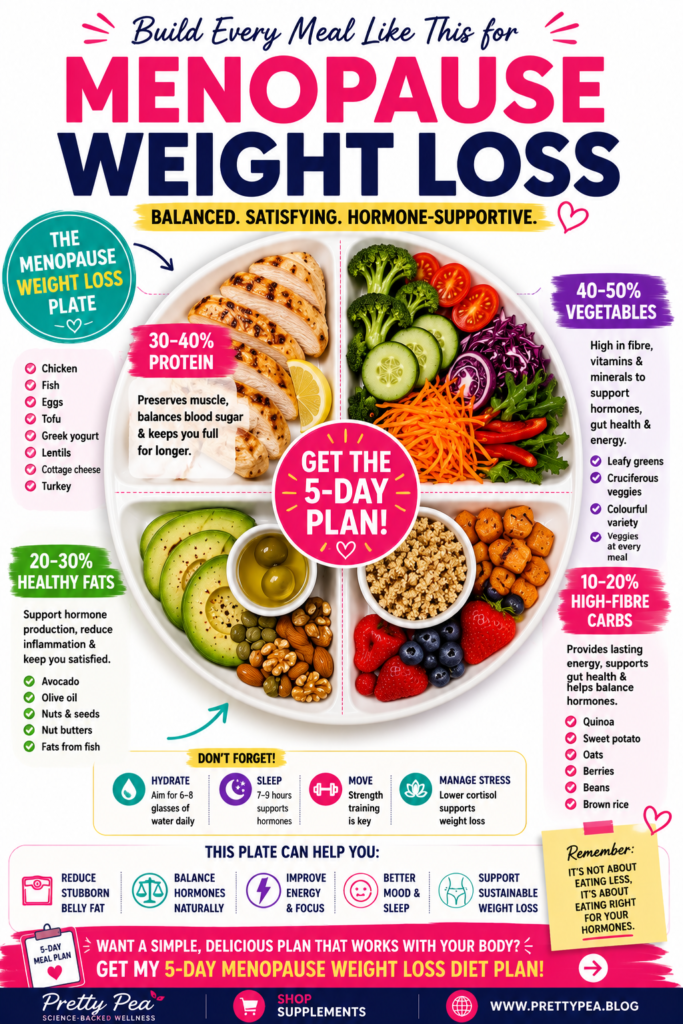It focuses on:
- protein at every meal
- plenty of fibre
- balanced blood sugar
- foods that support fullness and energy
Important: This is a general guide, not a medical advice. Portion sizes can be adjusted depending on your appetite, activity level, and goals.
### **Day 1**
**Breakfast**: Greek yoghurt berry protein bowl
- 200g Greek yoghurt
- 1 handful berries
- 1 tbsp chia seeds
- 1 tbsp ground flaxseed
- Small handful chopped nuts
- Optional: sprinkle of cinnamon
**Why it works:** High in protein, fibre, and healthy fats to help reduce cravings later in the day.
**Lunch**: Chicken and avocado salad
- Grilled chicken breast
- Mixed salad leaves
- Cucumber, tomato, peppers
- ½ avocado
- Olive oil and lemon dressing
- Optional: quinoa or chickpeas for extra fibre
**Why it works:** Packed with protein and healthy fats to keep you satisfied.
**Snack**: Apple with 1 tbsp peanut butter
**Dinner**: Salmon, sweet potato and greens
- Baked salmon fillet
- 1 small sweet potato
- Steamed broccoli and green beans
- Olive oil drizzle
**Why it works:** Rich in protein, fibre, and omega-3 fats to support overall health.
---
### **Day 2**
**Breakfast**: Protein oats
- 40–50g oats
- Milk or fortified plant milk
- 1 scoop protein powder
- 1 tbsp chia seeds
- Berries or sliced banana
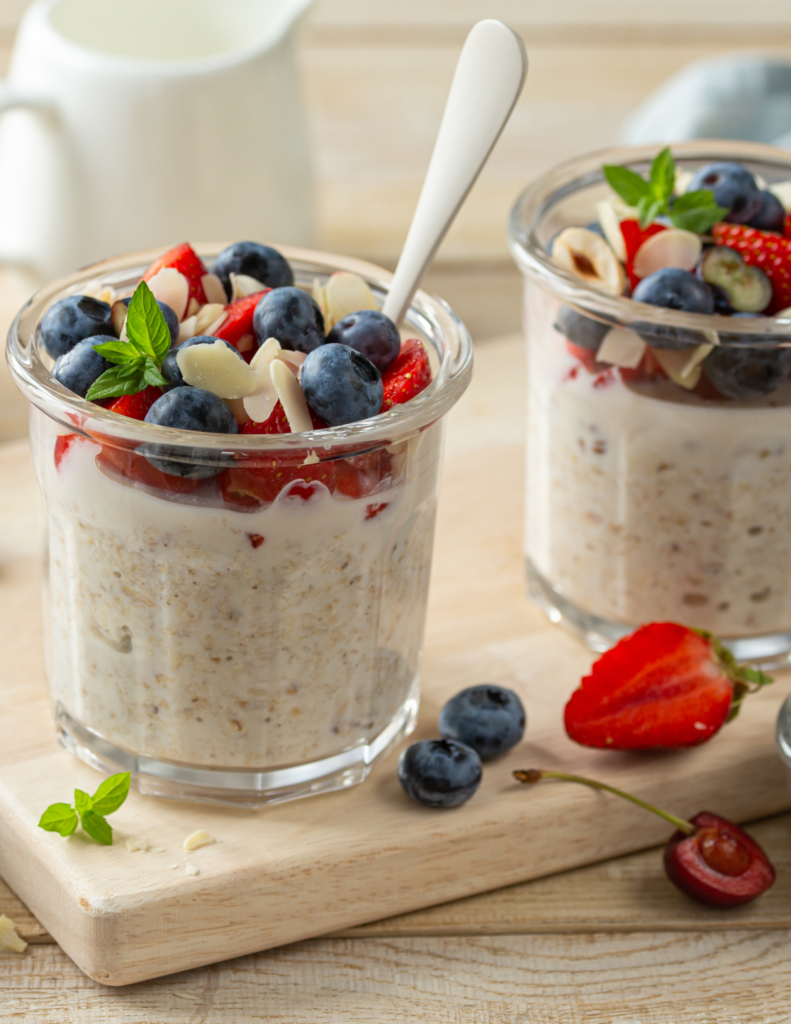**Why it works:** A balanced breakfast that supports fullness and stable energy.
**Lunch**: Tuna and bean lunch bowl
- **Tuna**
- Mixed leaves
- Cannellini beans or lentils
- Cucumber, tomatoes, red onion
- Olive oil and lemon dressing
**Snack**: Cottage cheese with cucumber or cherry tomatoes
**Dinner**: Turkey mince stir-fry
- Turkey mince
- Stir-fry vegetables
- Brown rice or cauliflower rice
- Soy sauce, garlic, ginger
**Why it works:** Protein-rich and satisfying without feeling heavy.
---
### **Day 3**
**Breakfast**: Eggs on wholegrain toast
- 2 eggs
- 1 slice wholegrain toast
- Sautéed spinach
- Optional: sliced tomato or avocado
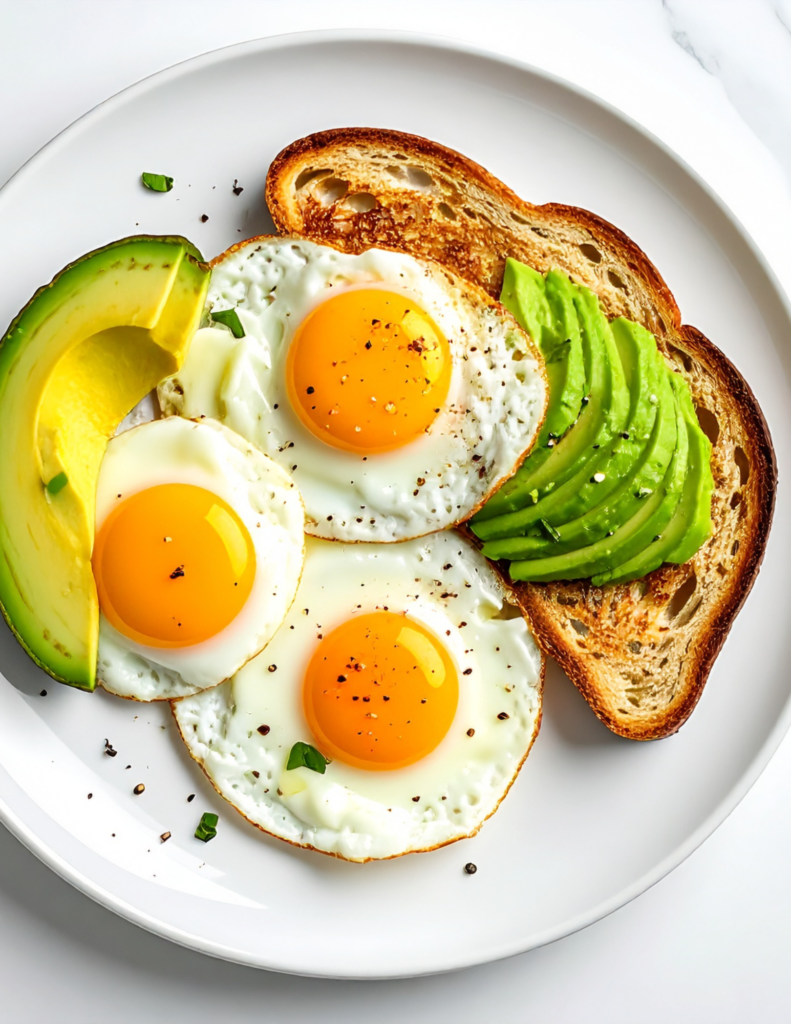**Lunch**: Lentil soup with side salad
- Homemade or low-salt lentil soup
- Side salad with olive oil dressing
**Why it works:** Fibre-rich, warming, and helpful for fullness.
**Snack**: Handful of nuts and a pear
**Dinner**: Chicken traybake
- Chicken thighs or breast
- Roasted peppers, courgette, onions, carrots
- Baby potatoes or quinoa
**Why it works:** Simple, balanced, and ideal for batch cooking.
---
#### **Day 4**
**Breakfast**: Menopause smoothie
- Pretty Pea Chocolate Protein powder
- Spinach
- Frozen berries
- Flaxseed
- Unsweetened milk
- Optional: oats or nut butter
**Why it works:** Quick, nourishing, and ideal for busy mornings.
**Lunch**: Egg and hummus wrap
- Wholegrain wrap
- 2 boiled eggs
- Hummus
- Spinach, grated carrot, cucumber
**Snack**: Greek yoghurt with cinnamon
**Dinner**: Cod with roasted vegetables
- White fish or cod
- Roasted Mediterranean vegetables
- Quinoa or brown rice
- Olive oil drizzle
---
#### **Day 5**
**Breakfast**: Cottage cheese breakfast bowl
- Cottage cheese
- Berries
- Pumpkin seeds
- Chia seeds
- Cinnamon
**Lunch**: Leftover protein bowl
Use leftovers from the week:
- Chicken, turkey, fish, or tofu
- Salad or roasted vegetables
- Quinoa, lentils, or sweet potato
- Olive oil dressing
**Snack**: Boiled egg and fruit
**Dinner**: Turkey or lentil chilli
- Turkey mince or lentils
- Chopped tomatoes
- Beans
- Peppers, onions, garlic
- Serve with brown rice or extra veg
**Why it works:** A high-protein, high-fibre dinner that is comforting and filling.
---
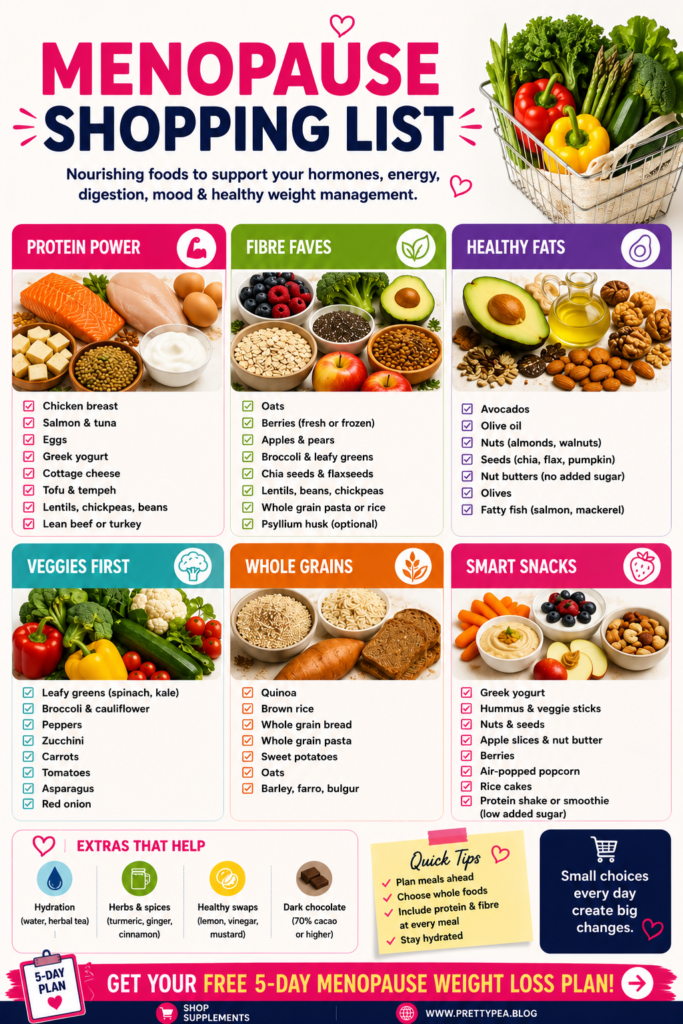## Foods to avoid during menopause weight loss
You do not need to be “perfect,” but some foods can make symptoms or appetite regulation harder if eaten too often.
These may include:
- sugary cereals
- pastries and biscuits
- ultra-processed snack foods
- large amounts of alcohol
- heavily refined carbohydrates
- high-sugar drinks
Again, this is not about cutting everything out forever. It’s about making sure the majority of your diet supports your goals.
---
## Body Composition Checklist
- Use body composition analysis tools to assess nutritional status (bio-impedance scales) to measure body fat, muscle mass, BMR, water and bone density
- Prioritise building muscle alongside fat loss
- Consider GP blood tests
- Keep the weight in healthy range with adequate nutrient intake
- To manage overweight, obesity – reduce current energy by approx 500 kcal/day (individual amount dependant on current status)
- Regular physical exercise, daily brisk walks and resistance exercise 3x week
## Dietary Recommendation Checklist
- **Protein** – 0.8 to 1 – 1.2 grams per kg of bodyweight per day
- **Essential Nutrients** – Vitamin B, Vitamin C, Vitamin D, Calcium, Omega 3 Fatty Acids
- **Vegetables** – 300-400 grams/day, 3-4 portions/day
- **Fruits** – 100-200 grams, 1-2 portions/day, Berries are lower sugar than tropical fruits such as bananas, mango etc
- **Legumes, Beans, Peas, Lentils, Chickpeas, Soy** at least once a week
- **Deep-sea fish**, 100-200g, 2 servings per week
- **Nuts** 30g unsalted, oily seeds per day
- **Dietary Fibre** 30g/day : whole grain, fibre rich cereals
## To Avoid Checklist
- **Simple, fast acting sugars**
- **Smoking**
- **Sugary & alcoholic beverages**
- **Sedentary lifestyle**
- **Salt** (max 5g/day)
- **Saturated fat** – not to exceed 10% of total energy intake
- **Stress**
---
## Can the menopause diet 5-day plan to lose weight help with belly fat?
It can help support overall fat loss, which may reduce abdominal fat over time.
Menopause-related belly fat is common and is influenced by:
- hormonal changes
- stress
- poor sleep
- muscle loss
- blood sugar regulation
You cannot spot-reduce fat from one area, but you *can* support your body with habits that improve body composition more broadly.
The most effective combination usually includes:
- a high-protein diet
- strength training
- walking or daily movement
- good sleep habits
- stress management
---
## What else helps with menopause weight loss besides diet?
Food matters — but it’s not the whole picture.
### 1. Strength training
This is one of the most important tools during menopause because it helps preserve or build muscle, which supports metabolism and body composition.
### 2. Walking
Walking can help with:
- calorie burn
- blood sugar control
- stress reduction
- digestion
- consistency
### 3. Sleep
If sleep is poor, hunger and cravings often become much harder to manage.
### 4. Stress management
Chronic stress can affect appetite, energy, and eating habits. Even small things like a daily walk, gentle movement, or quiet time can help.
### 5. Supplements
Supplements work best alongside a balanced diet, enough protein, fibre-rich foods and regular movement and can be important for those on limited diets or women topping up gaps in their diet.
Pretty Pea **[RESET ](https://prettypea.blog/product/pretty-reset/ "RESET ")**provides a source of soluble fibre that expands with water in the stomach, helping to **support fullness** and **weight loss\*** as part of an energy-restricted diet. It’s advanced formula also supports hormone regulation, energy and metabolism.
See: [Best Menopause Supplements UK (2026): What to Look For + Evidence-Based Comparison Guide](https://prettypea.blog/best-menopause-supplements-uk-2026-what-to-look-for-evidence-based-comparison-guide/)
For best results, take with plenty of water before meals and always follow the label directions.
## [The Menopause Diet 5-Day Plan to Lose Weight](https://prettypea.blog/the-menopause-diet-5-day-plan-to-lose-weight/)
---
### Key takeaway
A menopause diet should support you, not punish you. If you’re trying to lose weight during menopause, the answer is usually not to eat less and less.
Instead, the most effective approach is to:
- **eat enough protein**
- **build meals around fibre and whole foods**
- **support blood sugar balance**
- **stay consistent**
- **focus on habits you can actually maintain**
The Menopause Diet 5-Day Plan to Lose Weight is a realistic place to start — but the real magic comes from repeating the basics often enough for them to work.
You do not need to be perfect. You just need a plan that works with your body, not against it.
Further reading: [**Menopause Weight Changes Explained (UK Guide): What Research Says About Body Composition, Metabolism & Nutrition**](https://prettypea.blog/menopause-weight-changes-explained-uk-guide-what-research-says-about-body-composition-metabolism-nutrition/)
[**Hormone Imbalance in Women: Causes, Symptoms & How Hormones Work**](https://prettypea.blog/hormone-imbalance-in-women/)
---
### FAQ Menopause Diet 5-Day Plan to Lose Weight
Can you really lose weight during menopause?
Yes, it is absolutely possible to lose weight during menopause, although it may feel harder than it used to. Hormonal changes, reduced muscle mass, poor sleep, and increased stress can all make weight gain more common during this stage of life.
The key is focusing on a sustainable eating plan that supports blood sugar balance, muscle maintenance, and satiety rather than extreme dieting.
### What is the best diet for menopause weight loss?
The best menopause diet for weight loss is one that is **high in protein, rich in fibre, balanced in healthy fats, and based on whole foods**. A good menopause-friendly eating plan should help reduce cravings, support gut health, preserve lean muscle, and keep you fuller for longer. Diets that are too restrictive often backfire, especially during menopause.
### Why is it harder to lose weight during menopause?
Weight loss can feel more difficult during menopause because of several factors happening at once, including:
1.Falling oestrogen levels
2.Increased insulin resistance
3.Slower metabolism
4.Loss of muscle mass
5.Poor sleep and higher cortisol levels
These changes can make it easier to gain weight, especially around the middle, and harder to lose it with the same methods that may have worked in your 20s or 30s.
### Does a menopause meal plan help with belly fat?
A healthy menopause meal plan may help reduce **stubborn belly fat** over time, especially when it includes enough protein, fibre, and minimally processed foods.
While you cannot spot-reduce fat from one area, improving overall diet quality, managing stress, and staying active can help reduce abdominal weight gain commonly linked to menopause.
### How much protein should I eat during menopause to lose weight?
Many women in menopause benefit from eating **more protein than they realise**, especially if weight loss is the goal. Protein helps preserve muscle mass, supports metabolism, and keeps you fuller for longer.
Aiming to include a source of protein at every meal and snack can make a big difference in appetite control and body composition.
### What foods should I avoid during menopause if I want to lose weight?
You do not need to completely cut out foods you enjoy, but it may help to reduce foods that can worsen cravings, energy dips, or bloating, such as:
- Sugary snacks and desserts
- Highly processed foods
- Refined carbohydrates
- Excess alcohol
- Very salty packaged foods
The goal is not perfection, but building most meals around nourishing foods that support hormone and metabolic health.
### Can I follow a menopause diet plan if I am always hungry?
Yes — and in fact, if you are always hungry, that may be a sign your current diet is not balanced enough. A good menopause meal plan should help you feel satisfied by including:
- Protein at each meal
- High-fibre foods
- Healthy fats
- Regular meals and snacks
If your meals are too low in protein or calories, it can make weight loss harder, not easier.
### Is walking enough for menopause weight loss?
Walking is an excellent form of movement during menopause and can absolutely support weight loss, especially when combined with a healthy eating plan.
However, adding **strength training** is also important because it helps preserve muscle mass, which naturally declines with age and plays a key role in metabolism.
### How quickly can you lose weight on a menopause diet plan?
Healthy, sustainable weight loss during menopause is usually gradual. While some women may notice reduced bloating and improved energy within a few days, fat loss often takes more time.
A realistic goal is focusing on **steady progress**, better habits, and long-term consistency rather than quick fixes.
### Should I count calories during menopause?
Not always. Some women find calorie tracking helpful, but many benefit more from focusing on **meal quality, portion balance, protein, and fibre intake**.
During menopause, under-eating can sometimes make symptoms worse or lead to stronger cravings later on, so a more balanced and realistic approach is often more effective.
### What should I eat for breakfast during menopause to lose weight?
A menopause-friendly breakfast should ideally include **protein, fibre, and healthy fats** to help reduce cravings later in the day. Good options include:
- Greek yoghurt with berries and seeds
- Eggs on wholegrain toast
- Protein oats
- Smoothies with protein, fruit, and flaxseed
A balanced breakfast can help stabilise energy and reduce snacking later on.
### Can this 5-day menopause diet plan help with bloating too?
It may help, yes. Many menopause-friendly meal plans naturally support digestion because they include more **whole foods, fibre, hydration, and less ultra-processed food**.
If bloating is a common issue for you, it can also help to eat more slowly, manage stress, and pay attention to how certain foods affect you personally.
## Latest Products
[View All → →](#)
### [The Menopause Diet 5-Day Plan to Lose Weight](https://prettypea.blog/the-menopause-diet-5-day-plan-to-lose-weight/)
**Meno Shape Review: I Feel Like a New Woman!**
I have not had a great time over the last few months, along with personal things on top of the menopause! I have been really struggling with my weight and sleeping has been virtually non existent. I have tried so many herbal based tablets and Meno-shape was my last option. I can not even explain my delight in discovering this product! I feel like a different woman.
My weight is coming down, my constant hunger pangs have completely gone, my sleep is better, I just feel completely different! Pretty Pea you are Pretty amazing! This product has genuinely changed my life. I very rarely leave reviews but I am so passionate and truly thankful for this product that I had to shout about it so all the women out there that are really struggling with the menopause are aware of these tablets because they really have helped to turn me around! Just one tip, don’t leave it too late before re-ordering because like me, you will run out and find yourself stressing that you haven’t got any! They really are that good!
Thank you Pretty Pea! – **CAROL**
- [](https://prettypea.blog/d-mannose-and-cranberry-for-women/)[Menopause Nutrition](https://prettypea.blog/category/menopause/) · [Superfoods](https://prettypea.blog/category/superfoods/) · [Supplements](https://prettypea.blog/category/supplements/)
October 8, 2026
- [](https://prettypea.blog/what-is-glp-1/)[Fibre & Gut Health](https://prettypea.blog/category/fibre/) · [Hormones & HRT](https://prettypea.blog/category/hormones-hrt/) · [Menopause Nutrition](https://prettypea.blog/category/menopause/) · [Supplements](https://prettypea.blog/category/supplements/)
### [What Is GLP-1? The Gut Hormone That Helps Regulate Hunger & Blood Sugar](https://prettypea.blog/what-is-glp-1/)
August 18, 2026
- [](https://prettypea.blog/psyllium-husk-benefits/)[Pretty Pea](https://prettypea.blog/category/pretty-pea/)
### [Psyllium Husk: Benefits, How to Take It, Side Effects & How It Compares](https://prettypea.blog/psyllium-husk-benefits/)
August 15, 2026
#### You might also be interested in:
[9 Benefits of Fibre: Why It’s Essential for Gut Health, Weight and Wellbeing](https://prettypea.blog/9-benefits-of-fibre-why-its-essential-for-gut-health-weight-and-wellbeing/)
[Your Gut Microbiome Is Talking to Your Brain — Are You Listening?](https://prettypea.blog/your-gut-microbiome-is-talking-to-your-brain-are-you-listening/)
[Appetite Regulation: How Fibre vs GLP-1 Compare](https://prettypea.blog/appetite-regulation-how-fibre-vs-glp-1-compare/)
[What is the Highest Fibre Food](https://prettypea.blog/what-is-the-highest-fibre-food/)
[The Ultimate Guide to Fibre Supplements for a Happier Gut: Unlocking Your Digestive Health](https://prettypea.blog/the-ultimate-guide-to-fibre-supplements-for-a-happier-gut-unlocking-your-digestive-health/)
[10 Green Tea Benefits: The Ultimate Science-Backed Guide](https://prettypea.blog/10-green-tea-benefits-the-ultimate-science-backed-guide/)
[The Ultimate Superfood List: What are Superfoods, Benefits, Best Choices, and How to Use](https://prettypea.blog/the-ultimate-superfood-list-what-are-superfoods-benefits-best-choices-and-how-to-use/)
[The Rich List: Insoluble Fibre Rich Food List](https://prettypea.blog/the-rich-list-insoluble-fibre-rich-food-list/)
[Understanding Visceral Fat: The Ultimate Belly Fat Guide](https://prettypea.blog/understanding-visceral-fat-the-ultimate-belly-fat-guide/)
[Everything Psyllium How To Use: A Comprehensive Guide on How to Use It for Maximum Health Benefits](https://prettypea.blog/psyllium-how-to-use/)
[Simple Food Group Swaps – Make Life Easier for Yourself](https://prettypea.blog/simple-food-group-swaps-make-life-easier-for-yourself/)
[The 100 Symptoms of Perimenopause](https://prettypea.blog/the-100-symptoms-of-perimenopause/)
### **The Menopause Diet 5-Day Plan to Lose Weight : Sources**
1. Leidy, H. J., et al. (2015). The role of protein in weight loss and maintenance. *American Journal of Clinical Nutrition*, 101(6), 1320S–1329S. [↩︎](#8438936f-8b7f-4b23-ae46-a89ad85296c8-link)
2. Paniagua, J. A., et al. (2010). Monounsaturated fat-rich diet prevents central body fat distribution. *The Journal of Nutrition*, 140(2), 291–297 [↩︎](#232d61c6-8f3b-4e94-9ca6-9bfa28884e49-link)
3. Soliman, G. A. (2019). Dietary fiber, atherosclerosis, and cardiovascular disease. *Nutrients*, 11(5), 1155 [↩︎](#60fce0ce-7052-4d82-a0cb-1aaa11d40e7e-link)
4. Ethnic differences in dietary intakes, physical activity, and energy expenditure in middle-aged, premenopausal women: the Healthy Transitions Study – PubMed [↩︎](#a435726f-e006-4770-8188-5c397c53cb9a-link)
5. The role of dietary fat in body fatness: evidence from a preliminary meta-analysis of ad libitum low-fat dietary intervention studies | British Journal of Nutrition | Cambridge Core [↩︎](#2a2e741f-5597-4ae9-9196-1e4bcd7142eb-link)
6. Dennis, E. A., et al. (2010). Water consumption increases weight loss during a hypocaloric diet intervention. *Obesity*, 18(2), 300–307 [↩︎](#d67c8bef-44bf-4fc7-8d3c-9354a3f377f5-link)
7. Sacks, F. M., et al. (2014). Dietary sugars and body weight. *The Journal of Clinical Endocrinology & Metabolism*, 99(2), 437–445 [↩︎](#d1153e0b-a5de-43ff-bb8b-81c49411a45e-link)
8. Chen, M. N., et al. (2021). Soy isoflavones and body composition. *Climacteric*, 24(5), 480–489 [↩︎](#6c5d38d1-2bf5-4579-87b6-2f1f9f047e1c-link)
North American Menopause Society (NAMS). (2023). “Nutrition and Menopause.” [menopause.org](https://www.menopause.org)
Mayo Clinic. (2023). “Healthy Eating During Menopause.” [mayoclinic.org](https://www.mayoclinic.org)
Harvard T.H. Chan School of Public Health. (2023). “The Menopause Diet: A Balanced Approach.” [hsph.harvard.edu](https://www.hsph.harvard.edu)
**Categories:** Menopause Nutrition
---
### [How to Lose Weight During Menopause (Without Eating Less and Exercising More)](https://prettypea.blog/how-to-lose-weight-during-menopause/)
**Published:** July 24, 2026
**Author:** Cate Boyd
**Content:**
If you’re eating less than ever, exercising more than ever, and still struggling to lose weight, you’re far from alone. How to lose weight during menopause can feel, for many women, that someone has quietly changed the rules. The diet that worked in your 30s suddenly stops working. The scales refuse to budge, fat seems to gather around your middle, and every article tells you to simply cut more calories.
The truth is more complicated.
Menopause changes the hormones that influence muscle mass, body fat distribution, appetite, sleep, insulin sensitivity and energy expenditure. That doesn’t mean weight loss becomes impossible—but it does mean your approach needs to change.
Rather than asking **“How can I eat less?”**, a better question is:
**“How can I help my body work better?”**
Ironically, that’s often when healthy, sustainable weight loss begins.
**In this guide you’ll learn:**
- Why weight loss becomes harder during menopause
- Why muscle matters more than ever
- How protein and fibre support healthy ageing
- The role of strength training and sleep
- Common menopause weight loss myths
- Practical steps to support long-term health and sustainable menopause fat loss
---
## [How to Lose Weight During Menopause (Without Eating Less and Exercising More)](https://prettypea.blog/how-to-lose-weight-during-menopause/)
## Why Weight Loss Gets Harder During Menopause
During menopause, falling oestrogen affects much more than your reproductive system.
It influences how your body stores fat, maintains muscle, regulates blood sugar and responds to exercise.
These changes happen gradually, but together they can make weight management during perimenopause and menopause feel far more difficult than it did ten or twenty years ago.
## What Changes Inside Your Body During Menopause?
Before MenopauseDuring MenopauseOestrogen helps maintain muscleMuscle is lost more quicklyFat is more evenly distributedMore fat is stored around the abdomenBetter insulin sensitivityBlood sugar regulation may become less efficientHigher daily calorie needsEnergy requirements gradually declineFaster recovery from exerciseRecovery often takes longerNone of these changes mean you cannot lose weight.
They simply mean your body responds differently.
---
## Why “Eat Less and Move More” Often Stops Working
For years, women have been told that losing weight is simply a matter of eating fewer calories and exercising more.
Many women respond by:
- cutting portion sizes
- skipping meals
- avoiding carbohydrates
- doing more cardio
- eating as little as possible
While a calorie deficit is still required for fat loss, **how you create that deficit matters**.
Very restrictive diets often make it difficult to consume enough protein, fibre, vitamins and minerals. At the same time, long periods of dieting can leave you feeling constantly hungry, tired and less motivated to stay active.
Many women also unconsciously move less during the day when calories become very low, reducing the amount of energy they burn outside of formal exercise.
The result?
You work harder but often see fewer results.
---
## Myth vs Fact: How to Lose Weight During Menopause
MythFactEating less is always better.Eating too little can make it harder to consume enough protein and preserve muscle.Cardio is the best way to lose weight.Cardio is excellent for heart health, but strength training becomes increasingly important during menopause.Muscle turns into fat.Muscle and fat are completely different tissues. One cannot turn into the other.Fat weighs more than muscle.A kilogram of fat and a kilogram of muscle weigh exactly the same. Muscle is simply much denser and takes up less space.Menopause causes weight gain that can’t be prevented.Hormonal changes make weight management harder, but healthy habits still make a significant difference.Carbohydrates should be avoided.Wholegrain, fibre-rich carbohydrates can support gut health, fullness and overall nutrition.For more on fat loss read **[Understanding Visceral Fat: The Ultimate Belly Fat Guide ](https://prettypea.blog/understanding-visceral-fat-the-ultimate-belly-fat-guide/)**
---
## The Hidden Problem in Menopause Weight Loss: Losing Muscle Instead of Fat
One of the biggest reasons weight loss becomes harder after 40 is the gradual loss of muscle.
From around the age of 30, adults naturally begin losing muscle mass. During perimenopause and menopause, declining oestrogen can accelerate this process if muscle isn’t protected through resistance exercise and adequate protein intake.
Many women unknowingly lose muscle while trying to lose weight.
Whereas, muscle is actually one of your greatest allies.
Most people assume that every kilogram they lose is body fat. In reality, that’s rarely the case. Research suggests that around **1/4 of the weight lost during calorie-restricted diets comes from lean mass,** including muscle, while roughly 3/4 comes from fat.
This is one reason why preserving muscle through adequate protein intake and resistance training is so important—particularly during menopause, when muscle loss is already accelerated by declining oestrogen levels.
A recent 2025 BMJ review discussing both calorie restriction and GLP-1 medications states:
- roughly **60% of weight loss comes from fat**
- around **30% comes from lean mass**
- **more severe calorie restriction results in greater muscle loss**
- resistance training and higher protein intake can substantially reduce this lean muscle loss during menopause
## Muscle Timeline
AgeWhat typically happens**20s**Peak muscle mass and strength. Easier to build and maintain muscle with training.**30s**Muscle loss can begin gradually (around 3–8% per decade if inactive). Recovery may become slightly slower.**40s**Perimenopause may begin. Oestrogen starts fluctuating, making it harder to maintain muscle and easier to gain abdominal fat. Strength training becomes increasingly important.**50s**Menopause for most women (average UK age ~51). Muscle loss often accelerates without resistance training and adequate protein. Weight management becomes more challenging.**60s**Resting metabolic rate begins to decline more noticeably (supported by the Pontzer 2021 study after adjusting for body composition). Risk of sarcopenia increases. Balance and power also start declining.**70s+**Faster muscle loss, reduced strength and mobility if not actively maintained. Resistance exercise and adequate protein remain highly beneficial.## Why Muscle Matters
Muscle helps to:
- support your resting metabolic rate
- improve insulin sensitivity
- store glucose efficiently
- increase strength and mobility
- reduce the risk of falls as you age
- make everyday activities easier
The goal shouldn’t simply be to weigh less.
It should be to keep as much healthy muscle as possible while reducing excess body fat.
> **Many women spend years trying to lose weight while unknowingly losing the very tissue that helps them maintain a healthy weight.**
>
> **Why preserving muscle matters**
>
> > **Research suggests around 1/4 of weight lost during calorie-restricted dieting comes from lean mass, including muscle.** Higher protein intakes and resistance training can substantially reduce this loss, helping maintain strength and metabolic health during weight loss.
> >
> > *Reference: Systematic Review & Meta-analysis (2024), 49 studies, 4,785 participants.*
## [How to Lose Weight During Menopause (Without Eating Less and Exercising More)](https://prettypea.blog/how-to-lose-weight-during-menopause/)
---
## Why Traditional Weight Loss Diets Often Fail During Menopause
Eat less
↓
Less protein
↓
Lose muscle
↓
Lower daily energy needs
↓
Weight loss slows
↓
Eat even less
↓
Cycle repeats
## Instead
Eat enough protein
↓
Strength train
↓
Preserve muscle
↓
Support metabolism
↓
Improve body composition
↓
More sustainable fat loss
---
## Cardio vs Strength Training
Both forms of exercise have important health benefits—but they do different jobs.
CardioStrength TrainingSupports heart healthBuilds and preserves muscleBurns calories during exerciseHelps maintain metabolic healthImproves fitnessImproves strength and bone healthCan improve moodSupports healthy ageingExcellent alongside resistance trainingParticularly important during menopauseWalking, cycling and swimming are all excellent forms of cardiovascular exercise.
However, resistance training becomes increasingly important during menopause because it helps preserve the muscle that naturally declines with age.
**Strength training**
Resistance training is consistently shown to improve muscle strength, preserve lean mass and support healthy ageing in postmenopausal women.
---
## Why Protein Becomes More Important
Protein isn’t just for athletes.
Every day your body repairs muscle, produces enzymes and hormones, and replaces old cells. Protein provides the building blocks for these processes.
Eating enough protein may help:
- preserve muscle during weight loss
- increase fullness after meals
- support exercise recovery
- maintain healthy ageing
Aim to include a good source of protein with each meal rather than eating most of it at dinner.
**Protein after menopause**
Evidence suggests women become less responsive to protein with age (“anabolic resistance”), meaning adequate protein intake becomes increasingly important for maintaining muscle after menopause.
---
## Why Fibre Is One of the Most Overlooked Nutrients
Protein receives most of the attention, but fibre deserves just as much.
Many adults in the UK consume significantly less fibre than recommended.
Increasing fibre intake can help support:
- digestive health
- healthy gut bacteria
- fullness after meals
- healthy cholesterol levels
- more gradual rises in blood sugar after eating
Different fibres work in different ways.
For example, soluble fibres absorb water to form a gel-like consistency, while insoluble fibres help add bulk to the stool.
Some fibres, such as glucomannan, have also been authorised in the UK and EU for specific health claims relating to weight loss when consumed as part of an energy-restricted diet at the required daily amount.
**Get your FREE 14 Menopause Diet Plan:**
\[
**Related reading:**
- [High-fibre foods](https://prettypea.blog/wp-content/uploads/2025/07/What-is-the-highest-fibre-food.webp "What is the highest fibre food")
- [Glucomannan explained](https://prettypea.blog/what-is-glucomannan-2/ "What Is Glucomannan? Benefits, Uses, Side Effects and How It Works")
- [Psyllium vs glucomannan](https://prettypea.blog/how-to-use-psyllium-husk/ "Psyllium vs glucomannan")
- [Natural foods that support GLP-1](https://prettypea.blog/which-foods-increase-glp-1-naturally-heres-what-the-research-says/ "Natural foods that support GLP-1")
## [How to Lose Weight During Menopause (Without Eating Less and Exercising More)](https://prettypea.blog/how-to-lose-weight-during-menopause/)
**Fibre & fullness**
Glucomannan is one of the few fibres with an authorised UK/EU health claim for weight loss. Consuming **3 g daily**, divided into three 1 g doses before meals, contributes to weight loss as part of an energy-restricted diet.
---
## Sleep May Be Affecting Your Waistline
Sleep is often overlooked when discussing weight loss.
Poor sleep can influence:
- hunger hormones
- food cravings
- energy levels
- exercise performance
- food choices the following day
Many women experience disrupted sleep during menopause because of hot flushes, night sweats or hormonal changes.
Improving sleep won’t magically cause weight loss, but it can make healthy eating and regular exercise much easier to maintain.
---
## Stress Matters Too
Menopause often coincides with one of the busiest stages of life.
Many women are balancing careers, ageing parents, teenagers, financial pressures and disrupted sleep—all while navigating significant hormonal changes.
Chronic stress doesn’t stop fat loss on its own, but it can influence:
- appetite
- food choices
- sleep quality
- motivation to exercise
- recovery from training
Reducing stress where possible supports overall health and makes healthy habits easier to maintain.
---
## Focus on Metabolic Health, Not Just the Scales
The scales only measure body weight.
They cannot tell you:
- how much muscle you’ve built
- whether you’ve improved your fitness
- whether your blood sugar control has improved
- whether your cholesterol has improved
- whether you’ve become stronger
Sometimes the healthiest changes happen long before dramatic weight loss appears.
That’s why success should never be measured by the scales alone.
---
## Common Menopause Weight Loss Mistakes
Instead of…Try…Eating as little as possibleEating enough protein and nutrient-rich foodsHours of cardio onlyCombining walking with strength trainingSkipping mealsBuilding balanced mealsAvoiding all carbohydratesChoosing fibre-rich whole foodsChasing quick fixesBuilding sustainable habitsObsessing over the scalesTracking strength, energy and waist measurements---
## A Better Menopause Weight Loss Formula
Rather than asking your body to survive on less, help it become healthier.
A simple framework looks like this:
✓ Prioritise protein
✓ Eat more fibre
✓ Lift weights regularly
✓ Walk most days
✓ Sleep as well as possible
✓ Manage stress
✓ Stay consistent
Small habits repeated over months are far more powerful than extreme diets followed for weeks.
If you’re looking for an easy way to add more soluble fibre to your diet, **Meno** **Weight Capsules** contain **glucomannan**, a highly viscous soluble fibre, alongside carefully selected ingredients to complement a healthy lifestyle.
## [How to Lose Weight During Menopause (Without Eating Less and Exercising More)](https://prettypea.blog/how-to-lose-weight-during-menopause/)
---
## A Day of Eating for Menopause Weight Management
**Breakfast**
Greek yoghurt
Berries
Chia seeds
Oats
≈ 30 g protein
≈ 10 g fibre
---
**Lunch**
Chicken salad
Mixed beans
Olive oil
Wholegrain wrap
≈ 35 g protein
≈ 12 g fibre
---
**Snack**
Apple
Handful of almonds
≈ 6 g protein
≈ 6 g fibre
---
**Dinner**
Salmon
Roasted vegetables
Quinoa
≈ 35 g protein
≈ 9 g fibre
---
**Daily total**
✔ around 100 g protein
✔ around 35 g fibre
You could add
> This is simply an example—not a meal plan. Individual requirements vary.
>
> See: **[The Menopause Diet 5 Day Plan to Lose Weight](https://prettypea.blog/the-menopause-diet-5-day-plan-to-lose-weight/)**
---
## Don’t Lose Weight to Get Healthy—Get Healthy to Lose Weight
For years we’ve been told that health comes after weight loss.
In reality, the relationship often works the other way around.
When you support your muscles, nourish your body with protein and fibre, prioritise sleep, manage stress and stay active, you’re creating the conditions that allow your metabolism to function at its best.
That doesn’t guarantee rapid weight loss—and no honest health professional should promise that.
But it gives your body the best chance of losing fat while preserving the muscle that keeps you strong, mobile and healthy as you age.
Instead of punishing your body into becoming smaller, focus on helping it become healthier.
Because the goal isn’t simply to lose weight.
It’s to build a healthier body that can support you through menopause and for many years beyond.
## Key Takeaways
- Menopause changes how your body regulates fat, muscle and energy.
- Extreme dieting often makes it harder to preserve muscle and meet your nutritional needs.
- Strength training, protein and fibre become increasingly important after 40.
- Sleep and stress influence the habits that support successful weight management.
- Sustainable weight loss starts with improving your overall health—not simply eating less.
Healthy weight loss during menopause isn’t about fighting your body.
It’s about understanding how it has changed and working with it rather than against it.
## Latest Products
[View All → →](#)
### [How to Lose Weight During Menopause (Without Eating Less and Exercising More)](https://prettypea.blog/how-to-lose-weight-during-menopause/)
## FAQ – Why can’t I lose weight during menopause?
### Why can’t I lose weight during menopause?
Because menopause affects hormones that influence muscle mass, fat distribution, appetite, sleep and insulin sensitivity. Weight loss is still possible, but many women benefit from focusing on preserving muscle, eating enough protein and increasing fibre rather than simply cutting calories.
---
### Does menopause slow your metabolism?
Metabolism generally slows gradually with age, largely because muscle mass naturally declines. Hormonal changes during menopause can accelerate muscle loss, making it even more important to stay active and consume enough protein.
---
### What is the best exercise for menopause weight loss?
A combination of resistance training and regular cardiovascular exercise is ideal. Strength training helps preserve muscle, while walking, cycling or swimming support cardiovascular health and energy expenditure.
---
### How much protein should women over 50 eat?
Many experts recommend a higher protein intake than the minimum recommended amount, particularly during weight loss or regular resistance training. Individual needs depend on age, body weight and activity levels
---
### Does fibre help with menopause weight loss?
Increasing fibre intake can help improve fullness, support digestive health and contribute to a healthy diet. Certain fibres, such as glucomannan, have authorised health claims relating to weight loss when consumed at the required daily amount as part of an energy-restricted diet.
---
### Can I lose belly fat after menopause?
Yes. Fat cannot be lost from one specific area, but overall body fat can be reduced through sustainable nutrition, regular activity and preserving muscle mass.
---
### Is walking enough?
Walking is excellent for overall health, but combining it with resistance training generally provides greater benefits for preserving muscle.
---
### Should I stop eating carbohydrates?
No. Wholegrain carbohydrates provide fibre, vitamins and minerals and can form part of a healthy menopause diet.
---
### Does stress stop weight loss?
Stress doesn’t automatically prevent fat loss, but it can affect sleep, appetite, food choices and exercise habits, making weight management more challenging.
---
### Is lifting weights safe after menopause?
For most women, yes. Resistance training is one of the most effective ways to maintain muscle and bone health as you age. If you’re new to exercise or have medical conditions, seek personalised advice before starting.
### Further reading:
[The 100 Symptoms of Perimenopause](https://prettypea.blog/the-100-symptoms-of-perimenopause/)
[Weird Perimenopause Symptoms: 25 Unusual Signs You Didn’t Expect](https://prettypea.blog/weird-perimenopause-symptoms-25-unusual-signs-you-didnt-expect/)
[Early Signs of Perimenopause in Your 40s: What to Look For ](https://prettypea.blog/early-signs-of-perimenopause/)
[Hormone Imbalance in Women: Causes, Symptoms & How Hormones Work](https://prettypea.blog/hormone-imbalance-in-women/)
[Best Menopause Supplements UK (2026): What to Look For + Evidence-Based Comparison Guide](https://prettypea.blog/best-menopause-supplements-uk-2026-what-to-look-for-evidence-based-comparison-guide/)
[Menopause Weight Changes Explained (UK Guide): What Research Says About Body Composition, Metabolism & Nutrition](https://prettypea.blog/menopause-weight-changes-explained-uk-guide-what-research-says-about-body-composition-metabolism-nutrition/)
[The Menopause Diet 5 Day Plan to Lose Weight](https://prettypea.blog/the-menopause-diet-5-day-plan-to-lose-weight/)
[Why Fibre Could Be the Secret to a Better Menopause](https://prettypea.blog/why-fibre-could-be-the-secret-to-a-better-menopause/)
- [](https://prettypea.blog/d-mannose-and-cranberry-for-women/)[Menopause Nutrition](https://prettypea.blog/category/menopause/) · [Superfoods](https://prettypea.blog/category/superfoods/) · [Supplements](https://prettypea.blog/category/supplements/)
October 8, 2026
- [](https://prettypea.blog/what-is-glp-1/)[Fibre & Gut Health](https://prettypea.blog/category/fibre/) · [Hormones & HRT](https://prettypea.blog/category/hormones-hrt/) · [Menopause Nutrition](https://prettypea.blog/category/menopause/) · [Supplements](https://prettypea.blog/category/supplements/)
August 18, 2026
### [What Is GLP-1? The Gut Hormone That Helps Regulate Hunger & Blood Sugar](https://prettypea.blog/what-is-glp-1/)
- [](https://prettypea.blog/psyllium-husk-benefits/)[Pretty Pea](https://prettypea.blog/category/pretty-pea/)
August 15, 2026
### [Psyllium Husk: Benefits, How to Take It, Side Effects & How It Compares](https://prettypea.blog/psyllium-husk-benefits/)
- [](https://prettypea.blog/why-am-i-always-tired/)[Supplements](https://prettypea.blog/category/supplements/)
August 4, 2026
### [Why Am I Always Tired? The Ultimate Guide to Fighting Fatigue Naturally](https://prettypea.blog/why-am-i-always-tired/)
### How To Lose Weight During Menopause – Sources
1. El Khoury D, et al. **Lean mass loss during weight loss in adults with and without type 2 diabetes: a systematic review and meta-analysis.** *The American Journal of Clinical Nutrition.* 2024.
2. Stokes T, Hector AJ, Morton RW, McGlory C, Phillips SM. **Recent perspectives regarding the role of dietary protein for the promotion of muscle hypertrophy with resistance exercise training.** *Nutrients.* 2018;10(2):180.
3. Bauer J, Biolo G, Cederholm T, et al. **Evidence-based recommendations for optimal dietary protein intake in older people.** *Journal of the American Medical Directors Association.* 2013;14(8):542–559.
4. European Society for Clinical Nutrition and Metabolism. **ESPEN guideline on clinical nutrition and hydration in geriatrics.** *Clinical Nutrition.* 2022.
5. European Menopause and Andropause Society. **EMAS Clinical Guide: Menopause and Lifestyle.** *Maturitas.* 2023.
6. North American Menopause Society. **The 2022 Hormone Therapy Position Statement of The North American Menopause Society.** *Menopause.* 2022.
7. Dent JR, et al. **Lean mass losses during obesity treatment are not inevitable: current evidence and strategies for preservation.** *BMJ Open Sport & Exercise Medicine.* 2025.
8. Morton RW, Murphy KT, McKellar SR, et al. **A systematic review, meta-analysis and meta-regression of protein supplementation on resistance training-induced gains in muscle mass and strength.** *British Journal of Sports Medicine.* 2018;52(6):376–384.
9. Phillips SM, Fulgoni VL, Heaney RP, et al. **Commonly consumed protein foods contribute to nutrient intake, diet quality and nutrient adequacy.** *American Journal of Clinical Nutrition.* 2015.
10. Reynolds A, Mann J, Cummings J, Winter N, Mete E, Te Morenga L. **Carbohydrate quality and human health: a series of systematic reviews and meta-analyses.** *The Lancet.* 2019;393(10170):434–445.
11. European Food Safety Authority. **Scientific Opinion on the substantiation of health claims related to glucomannan and weight loss.** *EFSA Journal.* 2010;8(10):1798.
12. European Commission. **Authorised Health Claim: Glucomannan contributes to weight loss in the context of an energy-restricted diet.** Commission Regulation (EU) No 432/2012.
13. Westcott WL. **Resistance training is medicine: effects of strength training on health.** *Current Sports Medicine Reports.* 2012;11(4):209–216.
14. Watson SL, Weeks BK, Weis LJ, et al. **High-intensity resistance and impact training improves bone mineral density and physical function in postmenopausal women.** *Journal of Bone and Mineral Research.* 2018.
15. Zhang Y, et al. **Natural GLP-1 Secretagogues: A Review of Dietary Compounds and Botanical Extracts That Modulate Endogenous GLP-1 Secretion.** 2025.
16. NHS. **Healthy weight and menopause guidance.**
17. British Nutrition Foundation. **Healthy eating and dietary fibre resources.**
18. World Health Organization. **Healthy diet.**
**Categories:** Pretty Pea
---
### [Glucomannan for Weight Loss: Does It Work and How Does It Compare to Medications?](https://prettypea.blog/glucomannan-weight-loss/)
**Published:** October 16, 2024
**Author:** Cate Boyd
**Content:**
**Glucomannan for Weight Loss: How does it compare to medications,** **such as Ozempic?**
Glucomannan is a natural, water-soluble fibre that has gained attention for its potential role in weight loss and appetite control. Often found in supplements derived from the konjac root, it works by expanding in the stomach to help you feel fuller for longer.
With growing interest in both natural approaches and prescription treatments for weight management, many people are looking for simple, effective ways to support their health. This has led to increased curiosity around how fibre supplements like glucomannan compare to other options used to manage appetite and weight.
In this article, we’ll explore how glucomannan works, its potential benefits for weight loss, and how it differs from prescription medications designed to help manage type 2 diabetes — so you can make an informed choice about what may be right for you.
## [Glucomannan for Weight Loss: Does It Work and How Does It Compare to Medications?](https://prettypea.blog/glucomannan-weight-loss/)
## What is Glucomannan
Glucomannan is a water-soluble dietary fibre extracted from the root of the konjac plant, native to Asia. It has been used for centuries in traditional Asian cuisine and medicine for its ability to expand in water, forming a gel-like substance. This quality makes glucomannan unique and highly effective as a natural supplement for managing weight and promoting overall health.
When consumed, glucomannan absorbs water in the stomach, expanding to form a thick gel. This process slows down the digestive system, creating a feeling of fullness and reducing appetite.
As a result, individuals taking glucomannan are more likely to eat fewer calories, which can contribute to weight loss.
The supplement has gained attention for its ability to:
1\. **Promote Satiety**: By expanding in the stomach, glucomannan helps create a sense of fullness, which reduces the likelihood of overeating and snacking.
2\. **Slow Digestion**: The thick gel formed by glucomannan slows the absorption of nutrients, particularly carbohydrates and fats, leading to more balanced blood sugar levels and prolonged satiety.
3\. **Improve Gut Health**: As a dietary fibre, glucomannan also helps to improve bowel regularity and support the growth of healthy gut bacteria, both of which contribute to overall digestive health.
In recent years, glucomannan has been extensively studied for its weight loss benefits. Studies suggest that regular intake of glucomannan, combined with a healthy diet and lifestyle, can support significant weight reduction in overweight and obese individuals. You can find glucomannan, plus vitamin and mineral support in Pretty Pea Meno Weight.
## [Glucomannan for Weight Loss: Does It Work and How Does It Compare to Medications?](https://prettypea.blog/glucomannan-weight-loss/)
---
## Glucomannan and Weight Loss
The primary way glucomannan supports weight loss is by promoting feelings of fullness (satiety), which may naturally reduce calorie intake. There are several specific mechanisms through which glucomannan works to help people shed unwanted pounds:
## 1. Reduced Appetite
By expanding in the stomach, glucomannan physically takes up space, which triggers receptors that tell the brain you’re full. This reduces the desire to consume more food during meals, and may even help prevent snacking between meals.
A study published in the *American Journal of Clinical Nutrition* found that glucomannan supplements led to significant weight loss in overweight individuals. Participants who took the fibre lost an average of 5.5 pounds over an eight-week period without making any drastic changes to their diet or exercise routine .
> > **Study: (2005) – “Glucomannan and Obesity: A Critical Review”**
> >
> > This critical review of multiple clinical trials examined the impact of glucomannan on weight loss and obesity. One of the key studies within this review involved overweight individuals who were given glucomannan supplements over an 8-week period. The participants consumed 1 gram of glucomannan three times daily before meals, without making any other lifestyle changes.
> >
> > **Results**: Participants lost an average of 5.5 pounds (2.5 kg) over the course of the study. The researchers concluded that glucomannan supplementation led to significant reductions in body weight, primarily due to its ability to create a feeling of fullness and reduce overall calorie intake.
> >
> > **Findings:** The findings highlighted glucomannan as a promising, natural, and effective supplement for weight loss, primarily through appetite suppression and delayed gastric emptying.
## 2. Calorie Control
Since glucomannan acts as a bulking agent in the stomach, it can slow the emptying of the stomach. This delays the absorption of calories, particularly from carbohydrates, helping to regulate blood sugar levels and prevent insulin spikes. When blood sugar is controlled, it reduces hunger and the likelihood of overeating.
## [Glucomannan for Weight Loss: Does It Work and How Does It Compare to Medications?](https://prettypea.blog/glucomannan-weight-loss/)
## 3. Lower Fat Absorption
Some studies have suggested that glucomannan may help reduce the absorption of fat. The thick gel formed by glucomannan can trap dietary fats, preventing them from being absorbed into the bloodstream and instead allowing them to be excreted. This could contribute to lower calorie intake and, over time, promote fat loss.
> **Study:** A 2008 meta-analysis reviewed several randomized controlled trials to assess the effects of glucomannan on body weight, blood pressure, and metabolic markers.
>
> Among the analyzed studies, one trial followed 200 obese adults over a 16-week period. Participants were divided into two groups: one group took 1 gram of glucomannan three times daily before meals, and the other group received a placebo.
>
> **Results**: The glucomannan group experienced an average weight loss of 8-10 pounds (3.6-4.5 kg) by the end of the study, while the placebo group showed minimal weight change. In addition to weight loss, the glucomannan group also showed improvements in blood lipid profiles and blood sugar regulation.
>
> **Conclusion**: The meta-analysis confirmed that glucomannan supplementation supports weight loss and improves cardiovascular health markers, likely due to its ability to delay gastric emptying and improve satiety.
## 4. Improved Gut Health
Dietary fibre is known for its benefits in promoting gut health, and glucomannan is no exception. Glucomannan helps maintain healthy digestive functions with normal bowel/ colonic function and helps promote intestinal regularity.
It has a **prebiotic effect**, feeding the beneficial bacteria in your gut. These bacteria play an important role in regulating weight by influencing metabolism, appetite, and even inflammation. Glucomannan helps to stimulate the growth of beneficial **colon bacteria**, stimulating the **growth of Bifidobacteria**.
## 5. Blood Sugar Control
The EFSA consider glucomannan suitable for diabetics. Glucomannan helps induce a low glycemic response and therefore helps sustain steady blood sugar levels. Preventing energy crashes may help snacking and over-eating.
Studies show when taken at 2.5-5 grams daily, Glucomannan helps balance blood glucose levels. With it’s beneficial effect on blood glucose levels it can help to reduce the glycemic index of a meal.
Additionally, for people with elevated blood cholesterol Glucomannan, when taken at 4 grams per day, may help maintain normal blood cholesterol levels.
You’ll find Glucomannan along with other vitamin and mineral support for women in Meno Weight.
## [Glucomannan for Weight Loss: Does It Work and How Does It Compare to Medications?](https://prettypea.blog/glucomannan-weight-loss/)
## Glucomannan’s Endorsement by the European Food Safety Authority (EFSA)
The European Food Safety Authority (EFSA) has approved glucomannan as an effective weight loss supplement when used in conjunction with a calorie-controlled diet. In its scientific opinion, the EFSA determined that taking 3 grams of glucomannan daily (taken with water, in three 1-gram doses before meals) contributes to weight loss.
EFSA’s assessment was based on a review of clinical studies that consistently showed a reduction in body weight in overweight or obese individuals when glucomannan was taken at this dosage. The mechanism by which glucomannan aids weight loss, according to the EFSA, is through the creation of a feeling of fullness (satiety) by expanding in the stomach, which leads to reduced calorie intake.
## Glucomannan for Weight Loss: Does It Work and How Does It Compare to Medications?
**Glucomannan and prescription weight loss medications work in very different ways, even though they may both be discussed in relation to appetite and weight management.**
Glucomannan is a natural, soluble fibre derived from the konjac root. When taken with water, it expands in the stomach, helping to promote a feeling of fullness. This may support reduced calorie intake as part of a balanced diet.
Prescription medications such as Ozempic belong to a class of drugs known as GLP-1 receptor agonists. These medications work by influencing appetite regulation, slowing gastric emptying, and helping to manage blood sugar levels.
**While both can affect appetite, their roles are not directly comparable.**
Glucomannan works mechanically by adding bulk and promoting satiety, whereas medications act on hormonal pathways involved in hunger and metabolism.
For this reason, glucomannan is often used as a **dietary support tool**, while prescription medications are used under medical supervision for specific health conditions, including obesity and type 2 diabetes.
**If you are considering using either approach, it’s important to choose what is appropriate for your individual health needs and to seek professional advice where necessary.**
## [Glucomannan for Weight Loss: Does It Work and How Does It Compare to Medications?](https://prettypea.blog/glucomannan-weight-loss/)
## How They Work
The key difference between glucomannan and these types of weight loss injections lies in their mechanisms of action. Glucomannan works primarily through physical expansion in the stomach, whereas weight loss jabs act on the brain’s hunger-regulating centres by increasing the levels of GLP-1.
Their effect on satiety is often more pronounced because it directly influences hormonal pathways that regulate hunger and fullness. It reduces the desire to eat by making the individual feel full after smaller meals.
Glucomannan, on the other hand, promotes fullness by slowing digestion and physically taking up space in the stomach. While it may not have the same dramatic appetite-suppressing effects, it still provides effective satiety without altering hormonal systems.
## Comparing Weight Loss Outcomes
Studies show that both can support weight loss, but the degree of weight loss may vary. Some of these medications have been shown to result in significant weight loss in clinical trials, with some individuals losing up to 15% of their body weight over the course of a year .
In comparison, glucomannan supplementation tends to lead to more moderate weight loss. Most studies report average weight loss of 5-10 pounds over several weeks to months. However, glucomannan’s slower, steadier approach may be more sustainable for long-term use, especially when combined with healthy lifestyle changes.
## Side Effects
The side effects of weight loss medications and glucomannan present a critical point of comparison, especially for those looking for a safe, long-term solution to weight loss.
• **Weight Loss Jabs Side Effects**: While effective for weight loss, it comes with several potential side effects. Prescription weight loss medications are typically used under medical supervision and may not be suitable for everyone. They are usually prescribed based on individual health needs and medical history. As with any medication, they may also come with potential side effects, which should be discussed with a healthcare professional.
• **Glucomannan Side Effects**: Glucomannan is considered safe when taken in appropriate amounts. However, those with a sensitive digestion or don’t regularly consume the fibre RDA (25-30g) it may cause mild transient gastrointestinal issues, such as bloating, gas, when first introduced into the diet. These symptoms tend to resolve quickly, as the body adjusts to the increased fibre intake. These individuals are advised to start on a reduced dose.
## [Glucomannan for Weight Loss: Does It Work and How Does It Compare to Medications?](https://prettypea.blog/glucomannan-weight-loss/)
## Long-Term Sustainability & Re-Gaining Weight
For those seeking sustainable, long-term weight loss solutions, glucomannan may be a more suitable choice. Since glucomannan is a natural fibre supplement, it can be used indefinitely without significant health risks. Its ability to promote gut health and support healthy digestion makes it a valuable addition to any dietary or weight management plan.
In addition, many women do not currently consume the recommended amount of fibre (25g-30g per day) and would benefit from an increase to their dietary fibre intake.
On the other hand, prescription drugs are typically not recommended for indefinite use due to their side effects and potential risks. Individuals may need to stop the medication after achieving their weight loss goals, which can lead to the risk of weight regain if lifestyle changes are not made as the body will have adapted to requiring fewer calories.
## When might a fibre supplement like glucomannan help?
While improving your diet should always be the foundation of weight management, some people find it difficult to consistently get enough fibre from food alone.
A fibre supplement such as glucomannan may be helpful if you:
- struggle with appetite or frequent snacking
- find it difficult to feel full between meals
- have a low-fibre diet
- are trying to manage portion sizes
- want additional support alongside a balanced diet
While the jabs may seem like the quick fix with faster and more dramatic results in terms of weight loss, glucomannan offers several key advantages for individuals looking for a safer, natural, and sustainable approach to managing their weight.
#### **Sustainable Weight Loss**
Glucomannan promotes gradual, steady weight loss, which is more likely to be sustainable over time. Results will of course vary depending on diet, lifestyle and individual factors.
But by encouraging healthy eating habits and improving satiety, glucomannan can help individuals maintain their weight loss without relying on medication.
Glucomannan offers the added benefit of improving gut health. This can have positive effects on overall well-being, including better digestion, improved immune function, and reduced inflammation and even mood.
## A simple way to increase fibre intake
If you’re not getting enough fibre through food alone, a supplement can be a convenient way to support your intake.
[](https://prettypea.blog/nutrition-support-for-women-during-menopause/)A glucomannan-based fibre supplement can help support fullness and make it easier to manage appetite as part of a balanced diet.
Explore [ 20 of the Highest Fibre Food](https://prettypea.blog/what-is-the-highest-fibre-food/)
Pretty Pea Meno Weight is designed to provide a simple, effective source of fibre that can be taken before meals.
## [Glucomannan for Weight Loss: Does It Work and How Does It Compare to Medications?](https://prettypea.blog/glucomannan-weight-loss/)
You may also like: [The Ultimate Guide to Fibre Supplements for a Happier Gut: Unlocking Your Digestive Health](https://prettypea.blog/the-ultimate-guide-to-fibre-supplements-for-a-happier-gut-unlocking-your-digestive-health/)
[10 Green Tea Benefits: The Ultimate Science-Backed Guide](https://prettypea.blog/10-green-tea-benefits-the-ultimate-science-backed-guide/)
[The Ultimate Superfood List: What are Superfoods, Benefits, Best Choices, and How to Use](https://prettypea.blog/the-ultimate-superfood-list-what-are-superfoods-benefits-best-choices-and-how-to-use/)
[The Rich List: Insoluble Fibre Rich Food List](https://prettypea.blog/the-rich-list-insoluble-fibre-rich-food-list/)
[Can You Take Supplements with HRT? What’s Safe and What to Avoid](https://prettypea.blog/can-you-take-supplements-with-hrt-whats-safe-and-what-to-avoid/)
[Bloating Isn’t Just “Too Much Gas”: The Real Causes of Bloating (and What Actually Helps)](https://prettypea.blog/7-real-causes-of-bloating-and-what-actually-helps/)
[Understanding Visceral Fat: The Ultimate Belly Fat Guide](https://prettypea.blog/understanding-visceral-fat-the-ultimate-belly-fat-guide/)
[How To Use Psyllium Husk: A Comprehensive Guide for Maximum Health Benefits – Pretty Pea](https://prettypea.blog/how-to-use-psyllium-husk/)
## Latest Products
[View All → →](#)
### [Glucomannan for Weight Loss: Does It Work and How Does It Compare to Medications?](https://prettypea.blog/glucomannan-weight-loss/)
### **FAQ: Glucomannan and Weight Loss Medications**
### Can glucomannan replace weight loss medications like Ozempic?
No, glucomannan is a dietary fibre supplement and works differently from prescription medications such as Ozempic. While it may support fullness and appetite control, it is not a substitute for medical treatments. Always speak to a healthcare professional before making changes to your treatment plan.
### How does glucomannan help with weight loss?
Glucomannan is a soluble fibre that absorbs water and expands in the stomach, helping you feel fuller for longer. This may support reduced calorie intake as part of a balanced diet.
### Is glucomannan as effective as Ozempic?
Glucomannan and medications such as Ozempic work in very different ways. Prescription medications are designed to affect appetite and blood sugar regulation, while glucomannan supports fullness and digestion. Their effects are not directly comparable.
### Is glucomannan safe to take?
Glucomannan is generally considered safe when taken as directed, alongside adequate water. However, it may not be suitable for everyone, and it’s best to check with a healthcare professional if you have any medical conditions or take medication.
### Can I take glucomannan with other supplements?
In most cases, glucomannan can be taken with other supplements, but timing may matter as it can affect absorption. It’s best taken before meals with water and spaced away from other supplements or medications.
***You can find Glucomannan in Pretty Pea Meno Shape***
- [](https://prettypea.blog/d-mannose-and-cranberry-for-women/)[Menopause Nutrition](https://prettypea.blog/category/menopause/) · [Superfoods](https://prettypea.blog/category/superfoods/) · [Supplements](https://prettypea.blog/category/supplements/)
October 8, 2026
- [](https://prettypea.blog/what-is-glp-1/)[Fibre & Gut Health](https://prettypea.blog/category/fibre/) · [Hormones & HRT](https://prettypea.blog/category/hormones-hrt/) · [Menopause Nutrition](https://prettypea.blog/category/menopause/) · [Supplements](https://prettypea.blog/category/supplements/)
### [What Is GLP-1? The Gut Hormone That Helps Regulate Hunger & Blood Sugar](https://prettypea.blog/what-is-glp-1/)
August 18, 2026
- [](https://prettypea.blog/psyllium-husk-benefits/)[Pretty Pea](https://prettypea.blog/category/pretty-pea/)
### [Psyllium Husk: Benefits, How to Take It, Side Effects & How It Compares](https://prettypea.blog/psyllium-husk-benefits/)
August 15, 2026
## [Glucomannan for Weight Loss: Does It Work and How Does It Compare to Medications?](https://prettypea.blog/glucomannan-weight-loss/)
### Sources: Glucomannan for Weight Loss
**Reference**: [EFSA-health-claims-overview.pdf](https://betterlives.com/wp-content/uploads/2023/12/EFSA-health-claims-overview.pdf)
Scientific Opinion on the substantiation of health claims related to konjac mannan (glucomannan) and reduction of body weight (ID 854, 1556, 3725), reduction of post‐prandial glycaemic responses (ID 1559), maintenance of normal blood glucose concentrations (ID 835, 3724), maintenance of normal (fasting) blood concentrations of triglycerides (ID 3217), maintenance of normal blood cholesterol concentrations (ID 3100, 3217), maintenance of normal bowel function (ID 834, 1557, 3901) and decreasing potentially pathogenic gastro‐intestinal microorganisms (ID 1558) pursuant to Article 13(1) of Regulation (EC) No 1924/2006 – – 2010 – EFSA Journal – Wiley Online Library
1\. Keithley, J., & Swanson, B. (2005). Glucomannan and obesity: a critical review. *Alternative Therapies in Health and Medicine*, 11(6), 30-34.
2\. Sood, N., Baker, W. L., & Coleman, C. I. (2008). Effect of glucomannan on plasma lipid and glucose concentrations, body weight, and blood pressure: systematic review and meta-analysis. *The American Journal of Clinical Nutrition*, 88(4), 1167-1175.
3\. Astrup, A., Rössner, S., Van Gaal, L., Rissanen, A., Niskanen, L., Al Hakim, M., … & Davies, M. (2009). Effects of liraglutide in the treatment of obesity: a randomized, double-blind, placebo-controlled study. *The Lancet*, 374(9701), 1606-1616.
4\. Wadden, T. A., Bailey, T. S., Billings, L. K., Davies, M., Frias, J. P., Koroleva, A., … & Rosenstock, J. (2021). Effect of subcutaneous semaglutide vs placebo as an adjunct to intensive behavioral therapy on body weight in adults with overweight or obesity: The STEP 3 randomized clinical trial. *JAMA*, 325(14), 1403-1413.
5\. Kaats, G. R., Bagchi, D., & Preuss, H. G. (2015). Konjac Glucomannan dietary supplementation causes significant fat loss in compliant overweight adults. *Journal of the American College of Nutrition*, 34(6), 422-427.
Effect of Glucomannan on Plasma Lipid and Glucose Concentrations, Body Weight, and Blood Pressure: Systematic Review and Meta-Analysis (2008)
**Categories:** Fibre & Gut Health, Menopause Nutrition, Superfoods, Supplements
---
### [Which Foods Increase GLP-1 Naturally? Here's What the Research Says](https://prettypea.blog/which-foods-increase-glp-1-naturally-heres-what-the-research-says/)
**Published:** July 11, 2026
**Author:** Cate Boyd
**Content:**
---
# Which Foods Increase GLP-1 Naturally?
**Short answer: Possibly.**
Emerging research suggests that some foods, herbs and plant compounds may help support your body’s natural GLP-1 response. While they don’t produce the same effects as GLP-1 medications such as Wegovy®, Ozempic® or Mounjaro®, studies suggest that certain foods may influence GLP-1 production, secretion or signalling in ways that support fullness, blood sugar regulation and metabolic health. So which foods increase GLP-1 naturally?
Scientists are particularly interested in **foods rich in fibre**, **polyphenols** and other **naturally occurring compounds** that interact with specialised hormone-producing cells in the gut. Although much of the research is still at the laboratory and animal stage, several foods have already shown promising results in human studies.
In this guide, we’ll explore the foods currently being investigated for their effects on GLP-1, explain what the research actually shows, and separate well-supported evidence from early discoveries.
[Shop Supplements](https://prettypea.blog/womens-health-supplements/)
---
## What Is GLP-1?
GLP-1 (glucagon-like peptide-1) is a hormone produced naturally by specialised **L cells** in the small intestine after you eat.
Often called the body’s natural “fullness hormone”, GLP-1 plays several important roles in metabolism.
It helps:
- Promote feelings of fullness after meals
- Slow the rate at which food leaves the stomach
- Stimulate insulin release when blood glucose rises
- Reduce glucagon secretion
- Help regulate appetite through the brain
- Support healthy blood sugar control
Because GLP-1 acts on multiple organs—including the gut, pancreas, brain and liver—it has become one of the most important targets for treating type 2 diabetes and obesity.
Prescription medications such as Wegovy®, Ozempic® and Mounjaro® work by activating this pathway. Researchers are now investigating whether certain foods may also influence the body’s own natural GLP-1 response.
**Your next read:** [Appetite Regulation: How Fibre vs GLP-1 Compare](https://prettypea.blog/appetite-regulation-how-fibre-vs-glp-1-compare/)
---
## Can Food Really Increase GLP-1?
This is one of the biggest questions in nutrition research today.
The answer is **yes—but with an important caveat**.
No food has been shown to reproduce the powerful effects of GLP-1 medications. However, an increasing number of studies suggest that certain foods and naturally occurring plant compounds may influence GLP-1 production, release or activity.
Some appear to encourage the gut to release more GLP-1 after eating, while others may improve the hormone’s signalling pathways or help increase the sensitivity of GLP-1 receptors.
**NEW SCIENTIFIC REVIEW** │
▼
Researchers examined
foods and plant compounds
that may influence
natural GLP-1 secretion
│
▼
Eight foods emerged
as promising dietary
options
│
▼
Incorporate them into
an overall balanced,
high-fibre diet
The strongest evidence currently exists for **dietary fibre and prebiotic fibres**, while compounds found in green tea, ginger, cinnamon and several fruits and vegetables are also attracting scientific interest.
Much of this research is still developing, so it’s important to distinguish between findings from laboratory experiments, animal studies and clinical trials in people.
[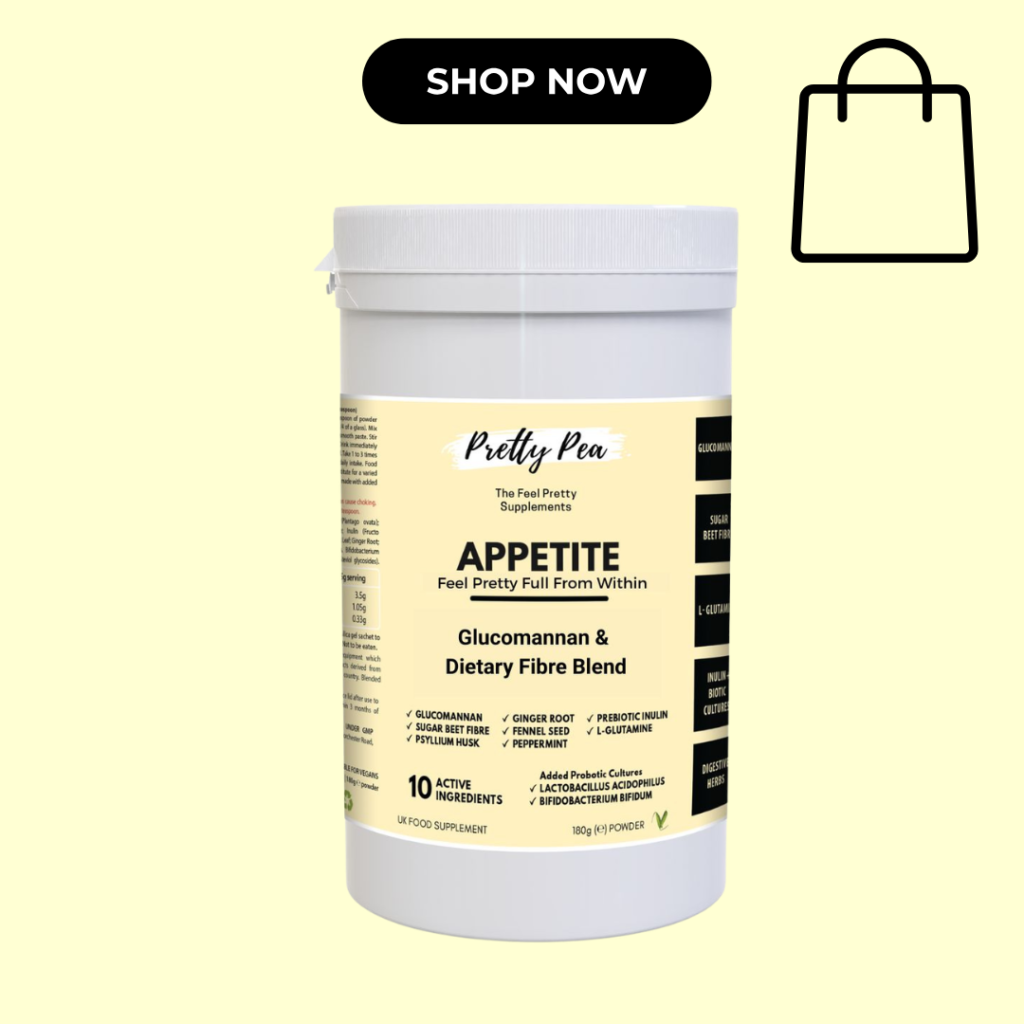](https://prettypea.blog/fibre-powder/)**Expert commentary**
Interest in GLP-1 has increased dramatically with the popularity of GLP-1 medications. However, GLP-1 is a hormone your body naturally produces after eating. Current research suggests that certain dietary fibres, polyphenol-rich foods and botanical compounds may help support this natural response as part of an overall healthy dietary pattern. While no individual food can replicate the effects of prescription GLP-1 medications, eating a varied diet rich in whole plant foods remains one of the most evidence-supported ways to support metabolic health.
---
## Which Foods Increase GLP-1 Naturally
Foods That May Support Your Body’s Natural GLP-1 Response
Below are the foods with the most promising evidence to date, ranked according to the current strength of research.
---
### ⭐⭐⭐⭐⭐ 1. Fibre-Rich Foods (Strongest Evidence)
If there is one dietary factor consistently linked with a healthier GLP-1 response, it is **fibre**.
Unlike rapidly digested carbohydrates, soluble and fermentable fibres travel further through the digestive system before being broken down by beneficial gut bacteria.
This fermentation process produces **short-chain fatty acids (SCFAs)** such as butyrate, acetate and propionate. These compounds interact directly with the specialised L cells that produce GLP-1, encouraging the body to release more of the hormone after meals.
The recent review also highlights **fructo-oligosaccharides (FOS)** and other fermentable fibres as promising natural modulators of GLP-1 secretion.
In addition, studies examining different types of fibre-rich bread demonstrate that the structure and processing of foods may also influence the body’s GLP-1 response.
Foods naturally rich in fermentable fibre include:
- Oats
- Barley
- Beans
- Lentils
- Chickpeas
- Onions
- Garlic
- Asparagus
- Chicory root
- Jerusalem artichokes
Increasing your overall fibre intake also supports a healthier gut microbiome, creating an environment that may further enhance natural GLP-1 production.
**Evidence strength:** ★★★★★ Human studies, mechanistic research and a well-established biological pathway.
[Shop Supplements](https://prettypea.blog/womens-health-supplements/)
---
## ⭐⭐⭐⭐ 2. Green Tea
Green tea has long been associated with metabolic health, and researchers are now investigating whether it may also support the body’s natural GLP-1 response.
Green tea is rich in plant compounds called **catechins**, particularly **epigallocatechin gallate (EGCG)**. These powerful polyphenols have been shown to influence several biological pathways involved in glucose regulation, inflammation and gut health.
The review identified green tea as one of the most promising natural foods currently being studied for its **GLP-1-stimulating properties**. Researchers believe green tea may help support GLP-1 signalling directly while also improving the health of the gut microbiome, which plays an important role in hormone production.
Although more large human studies are needed, green tea remains one of the most widely researched beverages for metabolic health.
**Ways to enjoy more green tea**
- Freshly brewed green tea
- Matcha
- Iced green tea without added sugar
- Supplements
**Evidence strength:** ★★★★☆ Promising human and experimental evidence.
**RESET Fibre Capsules** provide **Green Tea** and soluble **glucomannan fibre** as part of a carefully formulated daily supplement.
**Read:** [10 Green Tea Benefits: The Ultimate Science-Backed Guide](https://prettypea.blog/10-green-tea-benefits-the-ultimate-science-backed-guide/)
[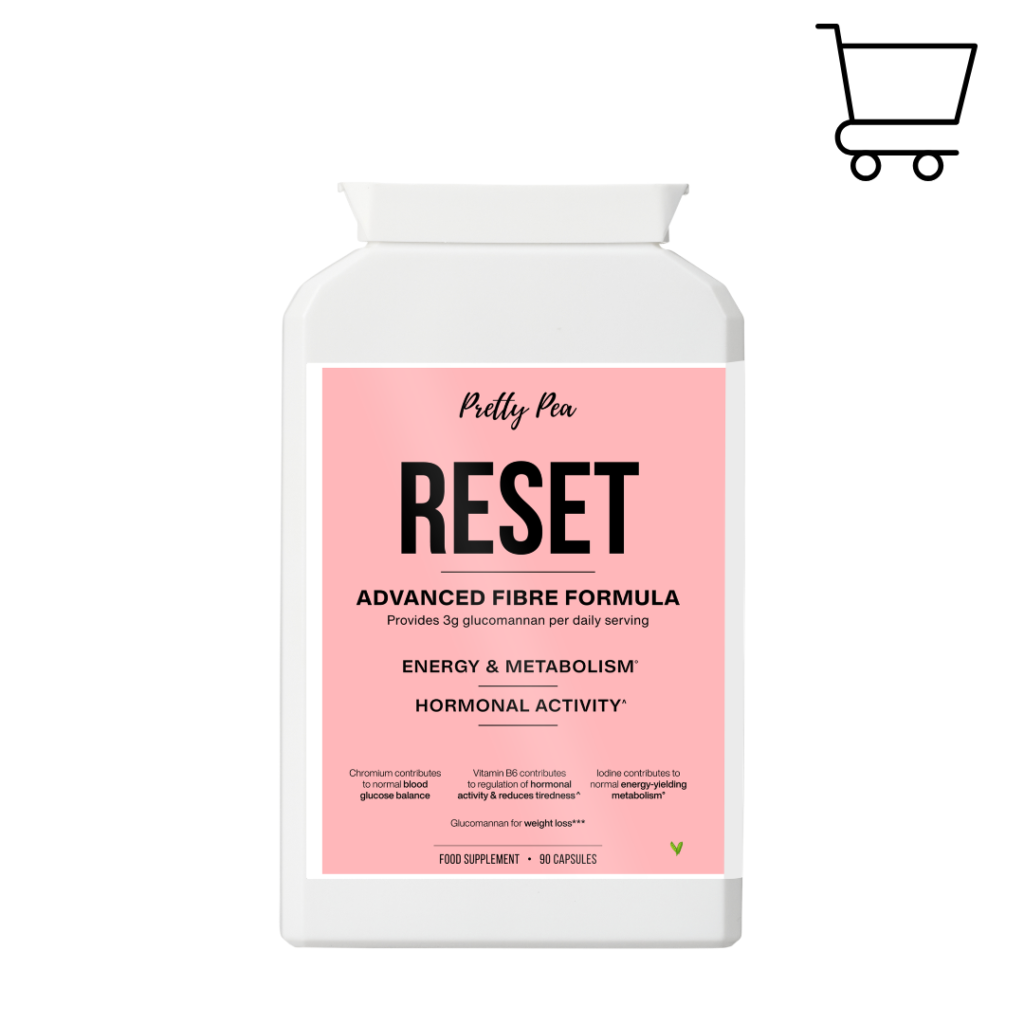](https://prettypea.blog/fibre-supplement-reset-glucomannan-supplement-complex/)---
## ⭐⭐⭐⭐ 3. Cinnamon
Cinnamon is more than a popular spice—it’s also one of the natural ingredients receiving increasing scientific attention for its potential effects on GLP-1.
The review highlights research suggesting that cinnamon extracts may:
- Increase GLP-1 secretion
- Improve GLP-1 sensitivity
- Help protect GLP-1 from breakdown
- Support healthy blood sugar regulation
Some human studies have reported improvements in post-meal glucose control following cinnamon supplementation, although results remain mixed and further research is needed.
Fortunately, adding cinnamon to meals is an easy way to increase flavour while following a healthy dietary pattern.
**Easy ways to include cinnamon**
- Sprinkle over porridge
- Add to Greek yoghurt
- Blend into smoothies
- Stir into overnight oats
- Add to coffee
**Evidence strength:** ★★★★☆ Promising, with several human studies alongside laboratory research.
---
## ⭐⭐⭐ 4. Ginger
Ginger has been used traditionally for digestive health for centuries, but scientists are now exploring whether its natural compounds may also influence GLP-1.
The review describes research showing that **6-gingerol**, one of ginger’s main active compounds, increased GLP-1 production in diabetic mice. Researchers also observed improvements in insulin secretion, glucose tolerance and blood sugar regulation.
These findings are encouraging, but most evidence currently comes from animal studies rather than clinical trials in people.
That said, ginger is an excellent addition to a healthy diet and offers several other well-established benefits, including supporting normal digestion and providing antioxidant compounds.
**Simple ways to eat more ginger**
- Fresh ginger tea
- Stir-fries
- Curries
- Smoothies
- Soups
**Evidence strength:** ★★★☆☆ Mainly laboratory and animal research.
Since **dietary fibre has the strongest evidence for supporting the body’s natural GLP-1 response**, increasing your fibre intake can be a practical first step. If you struggle to consume enough fibre through food alone, **[APPETITE ](https://prettypea.blog/fibre-powder/ "APPETITE ")Fibre powder** provides four types of fibre including **glucomannan**, psyllium husk, prebiotic inulin and **ginger root**.
[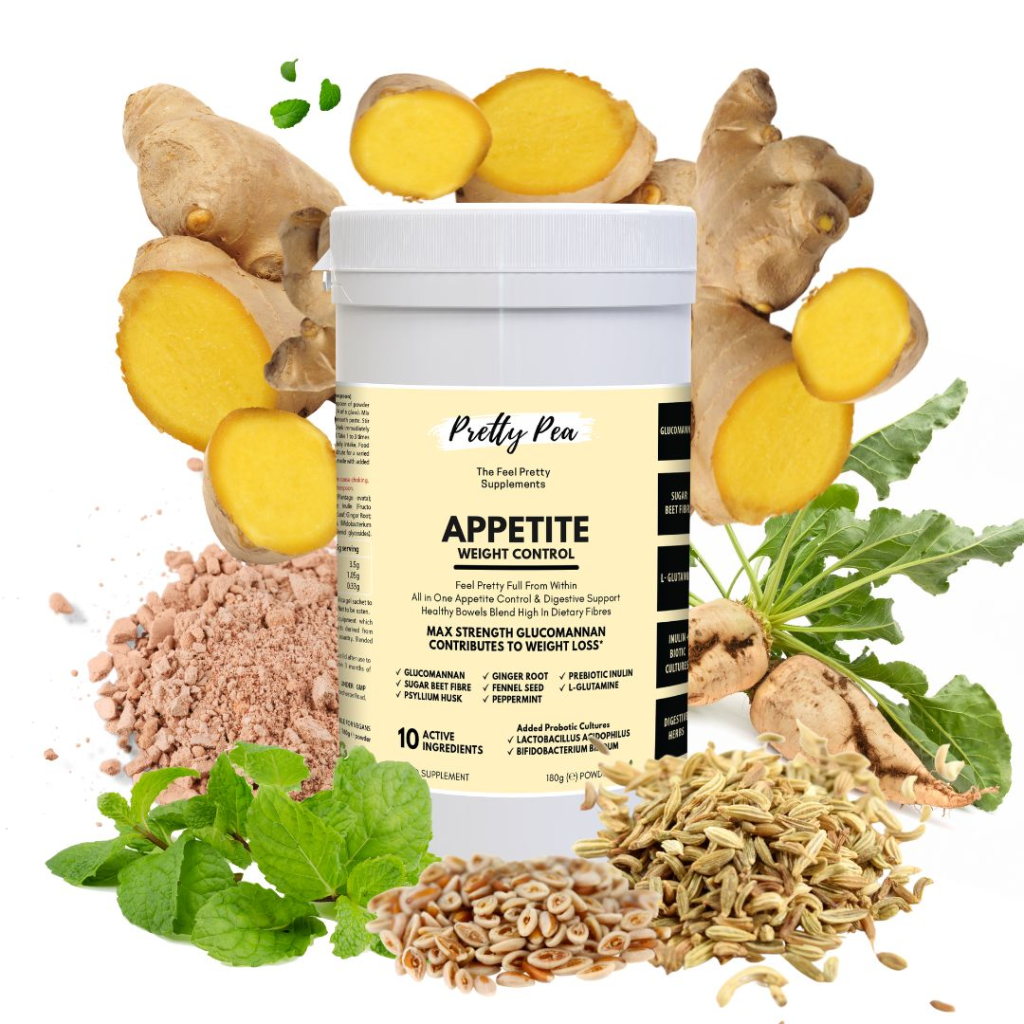](https://prettypea.blog/fibre-powder/)---
## ⭐⭐⭐ 5. Quercetin-Rich Foods
Quercetin is a naturally occurring flavonoid found in many fruits and vegetables.
The review discusses research suggesting quercetin may influence GLP-1 signalling while also improving insulin sensitivity and glucose metabolism.
Rather than taking supplements, most people can obtain quercetin from everyday foods.
Good sources include:
- Apples
- Red onions
- Berries
- Cherries
- Kale
- Broccoli
- Grapes
Although research is still developing, these foods are already recognised as valuable components of a healthy diet.
**Evidence strength:** ★★★☆☆ Early but promising.
**Read:** [GLP-1 Foods: The Ultimate List for Appetite Control, Fat Loss & Blood Sugar](https://prettypea.blog/glp-1-foods/)
---
## ⭐⭐⭐ 6. Turmeric
Turmeric contains **curcumin**, a bright yellow polyphenol that has attracted considerable research interest.
The review suggests curcumin may:
- Support GLP-1 secretion
- Reduce inflammation
- Improve insulin sensitivity
- Influence gut hormone signalling
However, much of the evidence currently comes from laboratory and animal studies.
Adding turmeric to meals remains an easy way to increase dietary variety while benefiting from its antioxidant properties.
**Try turmeric in**
- Curries
- Soups
- Rice dishes
- Roasted vegetables
**Evidence strength:** ★★★☆☆ Emerging evidence.
---
## ⭐⭐ 7. Fenugreek
Fenugreek seeds are commonly used in Indian and Middle Eastern cooking and have traditionally been used to support healthy blood sugar regulation.
The review discusses evidence suggesting fenugreek may enhance GLP-1 secretion and improve post-meal glucose responses.
Fenugreek also contains soluble fibre, which may contribute to its beneficial metabolic effects.
Although results are encouraging, further human studies are needed.
**Evidence strength:** ★★☆☆☆ Emerging evidence.
[Shop Fibre Supplements](https://prettypea.blog/womens-health-supplements/)
---
## ⭐⭐ 8. Berberine
Berberine is a naturally occurring plant compound found in several medicinal plants.
The review highlights berberine as one of the most extensively researched natural compounds affecting GLP-1 pathways.
Studies suggest berberine may:
- Increase GLP-1 secretion
- Improve insulin sensitivity
- Support healthy blood sugar regulation
However, berberine is **not a food** and can interact with prescription medications. It should only be taken under the guidance of a healthcare professional.
**Evidence strength:** ★★★★☆ Strong mechanistic evidence, but not suitable as a general food recommendation.
---
## Why Fibre Still Comes Out on Top
Although many individual foods and plant compounds are being investigated, one message stands out from the research:
A **high-fibre dietary pattern** is likely to have the greatest overall impact on your body’s natural GLP-1 response.
Fibre doesn’t simply provide one active ingredient. It supports GLP-1 through several complementary mechanisms by:
- Feeding beneficial gut bacteria
- Increasing production of short-chain fatty acids
- Slowing digestion
- Supporting healthy blood sugar responses
- Helping you feel fuller for longer
This is one reason diets rich in vegetables, legumes, whole grains and other fibre-rich foods are consistently associated with better metabolic health.
---
## Fibre Supplements
[Reset Advanced Fibre capsules](https://prettypea.blog/fibre-supplement-reset-glucomannan-supplement-complex/ "Reset Advanced Fibre capsules")
[Appetite Fibre](https://prettypea.blog/fibre-powder/)
**[Meno Weight](https://prettypea.blog/menopause-supplement-womens-nutrition-support/ "Meno Weight")**
## Foods That Support the Gut Microbiome May Also Support GLP-1
Scientists increasingly recognise that the gut microbiome plays a central role in GLP-1 production.
**HIGH-FIBRE FOODS** │
▼
**GUT MICROBIOME** │
▼
**SHORT-CHAIN FATTY ACIDS** │
▼
**GLP-1 RELEASE** │
┌──────┼──────┐
▼ ▼ ▼
**FULLNESS BLOOD SUGAR DIGESTION**
When beneficial bacteria ferment certain fibres, they produce **short-chain fatty acids (SCFAs)** such as acetate, propionate and butyrate. These compounds stimulate specialised L cells in the intestine, encouraging the release of GLP-1.
This helps explain why foods that nourish the microbiome may also support healthy appetite regulation.
Examples include:
- Onions
- Garlic
- Leeks
- Chicory root
- Asparagus
- Oats
- Barley
- Beans
- Lentils
Rather than focusing on a single “superfood”, researchers increasingly believe that eating a wide variety of fibre-rich plant foods is likely to provide the greatest benefit.
FoodGLP-1 evidenceHuman studiesOverall evidenceSoluble fibre⭐⭐⭐⭐⭐✔✔✔StrongGreen tea⭐⭐⭐⭐✔✔PromisingCinnamon⭐⭐⭐⭐✔✔PromisingGinger⭐⭐⭐LimitedEmergingQuercetin foods⭐⭐⭐LimitedEmergingTurmeric⭐⭐⭐LimitedEmergingFenugreek⭐⭐LimitedEarlyBerberine⭐⭐⭐⭐✔✔Strong compound evidence (supplement, not food)## Putting It Into Practice
If you want to support your body’s natural GLP-1 response, focus on your overall dietary pattern rather than one ingredient.
```
GLP-1 SUPPORT
🥣 Wholegrains
```
🫘 Legumes 🫐 Berries
🥬 Greens 🫒 Olive oil
🍵 Green tea
🥛 Fermented foods
```
🫚 Ginger
```
A balanced day might include:
**Breakfast**
- Porridge topped with berries and cinnamon
- Green Tea
- **Overnight oats** with:
- ✓ Oats
- ✓ Greek yoghurt
- ✓ Blueberries
- ✓ Flaxseed
- ✓ Cinnamon
- **Green Smoothie** with:
- Spinach
- Kefir
- Frozen berries
- Fresh ginger
- **Fibre bowl** with:
- Rolled oats
- Walnuts
- Mixed berries
- Live yoghurt
**Lunch**
- **Lentil and vegetable soup** with:
- Wholegrain bread
- **Mediterranean lentil salad** with:
- Extra virgin olive oil
- Mixed beans
- Rocket
- Tomatoes
- **Chickpea soup** with:
- Chickpeas
- Leafy greens
- Olive oil
- Fresh herbs
**Snack**
- Apple with a handful of nuts
- Greek yoghurt + berries
- Edamame
- Green tea
- Apple with nut butter
- Hummus
**Dinner**
- **Salmon or tofu** with:
- Roasted vegetables
- Barley or quinoa
- **Ginger and garlic stir-fry** with:
- Bean chilli
- Black beans
- Kidney beans
- Brown rice
- Greek yoghurt
- **Salmon with greens** with:
- Leafy greens
- Broccoli
- Olive oil
- Lentils
- **Stir fry** with:
- Tofu
- Ginger
- Pak choi
- Mixed vegetables
Small changes made consistently are likely to have a greater long-term impact than relying on a single food or supplement.
**Important:** This review examined foods and dietary compounds that may support the body’s natural GLP-1 response. These foods are **not** alternatives to prescription GLP-1 medications, and the effects are not considered equivalent.
[Shop Fibre Supplements](https://prettypea.blog/womens-health-supplements/)
## Key Takeaway
✔ Focus on your overall dietary pattern rather than one “superfood”.
✔ Fibre-rich foods, polyphenol-rich foods and fermented foods all contribute to a healthy eating pattern.
✔ No individual food works like a GLP-1 medication, but many can form part of a balanced diet that supports overall metabolic health.
---
# The Bottom Line
Research into natural ways to support GLP-1 is expanding rapidly. Foods rich in fibre, along with green tea, cinnamon, ginger and other plant compounds, show promising potential to influence the body’s natural GLP-1 response.
However, it’s important to keep expectations realistic. Most of these foods **do not work in the same way or to the same extent as prescription GLP-1 medications**, and much of the evidence is still emerging.
The strongest evidence continues to support eating a varied, fibre-rich diet that nourishes the gut microbiome and promotes overall metabolic health.
### What this study DOES show
✔ Certain foods contain compounds that may influence GLP-1 secretion.
✔ Many are naturally high in fibre and polyphenols.
✔ Most also support overall dietary quality.
---
### What this study DOESN’T show
✘ That any food works like Ozempic.
✘ That one food alone increases GLP-1 enough to cause weight loss.
✘ That everyone will respond the same way.
---
## Frequently Asked Questions
### Which foods increase GLP-1 naturally?
Current research suggests that **fibre-rich foods, green tea, cinnamon, ginger and foods rich in polyphenols** may support the body’s natural GLP-1 response. Fibre has the strongest evidence because it helps produce short-chain fatty acids that stimulate GLP-1 release in the gut.
---
### **Does green tea increase GLP-1?**
Green tea contains catechins such as EGCG that are being studied for their potential effects on GLP-1 signalling. While findings are promising, more high-quality human studies are needed before firm conclusions can be drawn.
---
### Does ginger increase GLP-1?
Animal studies suggest that compounds in ginger, particularly 6-gingerol, may increase GLP-1 production and improve glucose metabolism. More clinical studies in people are needed to confirm these effects.
---
### Is cinnamon good for GLP-1?
Research suggests cinnamon may support GLP-1 secretion and healthy blood sugar regulation. Adding cinnamon to meals is an easy way to enjoy its flavour as part of a balanced diet.
---
### Is fibre the best food for supporting GLP-1?
Based on current evidence, fibre-rich foods appear to have the strongest support. Fermentable fibres help nourish beneficial gut bacteria, leading to the production of short-chain fatty acids that stimulate GLP-1 release.
---
### Can foods replace GLP-1 medications?
No. While some foods may support the body’s natural GLP-1 response, they do not produce the same effects as prescription GLP-1 receptor agonists. Diet and medication should be viewed as complementary approaches rather than direct alternatives.
For more advice:
[The Menopause Diet 5 Day Plan to Lose Weight](https://prettypea.blog/the-menopause-diet-5-day-plan-to-lose-weight/)
[Why Fibre Could Be the Secret to a Better Menopause](https://prettypea.blog/why-fibre-could-be-the-secret-to-a-better-menopause/)
[Glucomannan for Weight Loss: Does It Work and How Does It Compare to Medications?](https://prettypea.blog/glucomannan-weight-loss/)
[What is the Highest Fibre Food](https://prettypea.blog/what-is-the-highest-fibre-food/)
[Everything Psyllium How To Use: A Comprehensive Guide on How to Use It for Maximum Health Benefits](https://prettypea.blog/psyllium-how-to-use/)
[Can You Use Psyllium Husk for Weight Loss? Benefits, Dosage & Science Explained – Pretty Pea](https://prettypea.blog/psyllium-husk-for-weight-loss/)
- [](https://prettypea.blog/d-mannose-and-cranberry-for-women/)[Menopause Nutrition](https://prettypea.blog/category/menopause/) · [Superfoods](https://prettypea.blog/category/superfoods/) · [Supplements](https://prettypea.blog/category/supplements/)
October 8, 2026
- [](https://prettypea.blog/what-is-glp-1/)[Fibre & Gut Health](https://prettypea.blog/category/fibre/) · [Hormones & HRT](https://prettypea.blog/category/hormones-hrt/) · [Menopause Nutrition](https://prettypea.blog/category/menopause/) · [Supplements](https://prettypea.blog/category/supplements/)
### [What Is GLP-1? The Gut Hormone That Helps Regulate Hunger & Blood Sugar](https://prettypea.blog/what-is-glp-1/)
August 18, 2026
- [](https://prettypea.blog/psyllium-husk-benefits/)[Pretty Pea](https://prettypea.blog/category/pretty-pea/)
### [Psyllium Husk: Benefits, How to Take It, Side Effects & How It Compares](https://prettypea.blog/psyllium-husk-benefits/)
August 15, 2026
### Which Foods Increase GLP-1 :Sources
[Zhang Y, et al. (2025). *Natural GLP-1 secretagogues: A review of dietary compounds and botanical extracts that modulate endogenous GLP-1 secretion.*](https://www.sciencedirect.com/science/article/abs/pii/S0144861725008082 "Zhang Y, et al. (2025). Natural GLP-1 secretagogues: A review of dietary compounds and botanical extracts that modulate endogenous GLP-1 secretion.")
Holst JJ. (2007). The physiology of glucagon-like peptide 1
Drucker DJ
Delzenne NM, Cani PD. Interaction between obesity and the gut microbiota.
Chambers ES et al. Effects of targeted delivery of propionate to the human colon on appetite regulation.
Canfora EE et al. Gut microbial metabolites in obesity and type 2 diabetes.
Morrison DJ & Preston T. Formation of short-chain fatty acids by the gut microbiota.
Yang CS et al. Green tea catechins and metabolic health.
Li Y et al. 6-Gingerol increases GLP-1 secretion in diabetic mice.
Anderson RA et al. Cinnamon and glucose metabolism.
Anand David AV et al. Quercetin and metabolic disease.
Panahi Y et al. Curcumin supplementation and metabolic markers.
Yin J et al. Berberine in type 2 diabetes.
---
**Categories:** Pretty Pea
---
### [How to Increase Fibre Intake (30g a Day): Easy, Science-Backed Tips That Actually Work](https://prettypea.blog/how-to-increase-fibre-intake-30g-a-day-easy-science-backed-tips-that-actually-work/)
**Published:** April 15, 2026
**Author:** Cate Boyd
**Content:**
**How to Increase Fibre Intake (30g a Day): A Simple, Science-Backed Guide for Women 30+**
---
If you’ve ever tried to “eat healthier” and felt overwhelmed, fibre is one of the easiest — and most powerful — places to start.
I’ll be honest: for years, I thought I was eating well. Porridge for breakfast, salads here and there… but when I actually tracked my fibre intake, I was barely hitting half of the recommended amount.
And I’m not alone.
In the UK, most adults consume **around 18g of fibre per day**, well below the recommended **30g daily target set by UK health guidelines**.
In this guide we cover:
- [Why Fibre Matters More Than You Think](#aioseo-why-fibre-matters-more-than-you-think-9)
- [How Much Fibre Do You Actually Need?](#aioseo-how-much-fibre-do-you-actually-need-24)
- [How to Increase Fibre Intake](#aioseo-simple-daily-fibre-boost-plan-example-109)
- [Do You Need a Fibre Supplement?](#aioseo-do-you-need-a-fibre-supplement-116)
- [Common Mistakes ](#aioseo-common-mistakes-to-avoid-130)
---
## Why Fibre Matters More Than You Think
Fibre isn’t just about digestion.
Research consistently shows that higher fibre intake is linked to:
- Improved gut health
- Reduced bloating and constipation
- Better blood sugar control
- Lower cholesterol levels
- Support for weight management
A major review published in *The Lancet* found that higher fibre intake is associated with:
> “15–30% reduction in risk of cardiovascular-related mortality and disease”
>
> “*When comparing the lowest fibre intakes.., the greatest benefits were observed for individuals consuming **25–29 g per day***“
Fibre also plays a critical role in gut health. Because it isn’t fully digested, it reaches the large intestine where it feeds beneficial gut bacteria — supporting digestion, metabolism, and even hormone balance.
Find out here why [fibre could even be the key to a better menopause](https://prettypea.blog/why-fibre-could-be-the-secret-to-a-better-menopause/ "fibre could even be the key to a better menopause").
---
## How Much Fibre Do You Actually Need?
According to UK recommendations:
- Adults should aim for **30g of fibre per day**
- Most women consume closer to **18–22g on average**
This gap is significant — and closing it can have meaningful health benefits.
Research suggests that even increasing intake to **25–29g per day** is associated with measurable improvements in long-term health outcomes.
[Evidence](https://www.thelancet.com/journals/lancet/article/PIIS0140-6736(18)31809-9/fulltext#tbl2 "Evidence") suggests additional benefits are also likely to accrue with even higher fibre intakes.
---
## How to Increase Fibre Intake (What Actually Worked for Me)
When I consciously increased my fibre intake, I noticed:
- Less snacking (I felt fuller for longer)
- More stable energy (fewer afternoon crashes)
- Improved digestion within days
The biggest shift?
I found the best way to increase fibre intake wasn’t about eating perfectly — it was about making **small, consistent upgrades**.
---
## How to Increase Fibre Intake (Without Overhauling Your Diet)
### **1. Start With Breakfast (The Easiest Win)**
Most breakfasts are surprisingly low in fibre.
Simple upgrades:
- White toast → **wholegrain or seeded bread**
- Cereal → **oats + chia seeds + berries**
Examples:
- 1 tbsp chia seeds = ~5g fibre
- Berries = ~3–4g fibre
👉 A fibre-focused breakfast can provide **10g+ in one meal**
---
### **2. Add, Don’t Restrict**
One of the most sustainable strategies is to **add fibre rather than remove foods**.
For example:
- Add lentils to sauces
- Add beans to salads
- Add vegetables to every meal
This approach supports consistency and avoids the “all-or-nothing” mindset.
---
### **3. Upgrade Your Carbs**
Whole grains are a key source of dietary fibre.
Choosing:
- Brown rice instead of white
- Wholewheat pasta
- Oats, quinoa, bulgur
…can significantly increase daily intake.
Not all carbs are equal when it comes to fibre.
A study in *The American Journal of Clinical Nutrition* found that whole grains significantly improve digestive health and reduce disease risk.
---
### **4. Snack Smarter**
Swap low-fibre snacks for:
- Apple + nut butter
- Carrots + hummus
- Nuts and seeds
These not only increase fibre but also help stabilise blood sugar levels.
> [How to Combine Foods for Weight Loss: Simple Pairing Rules That Work](https://prettypea.blog/how-to-combine-foods-for-weight-loss/)
---
### **5. Include Fibre-Rich Foods Daily**
Focus on foods like:
- Chia seeds
- Flaxseeds
- Lentils
- Chickpeas
- Avocado
- Berries
- Oats
Aim to include **at least 2–3 high-fibre foods per meal**.
For more on how to eat more fibre daily check out **[20 Highest Fibre Foods to Add to Your Diet ](https://prettypea.blog/what-is-the-highest-fibre-food/)**
---
### 6. Increase Fibre Gradually (Important)
If you suddenly go from low fibre to high fibre, you might experience:
- Bloating
- Gas
- Discomfort
This is normal — your gut bacteria are adjusting.
👉 Increase intake slowly over 1–2 weeks and drink plenty of water.
---
### 7. Don’t Forget Hydration
Fibre works best when paired with fluid.
Without enough water, increasing fibre can actually worsen constipation.
👉 Aim for at least **1.5–2 litres per day**
Further reading: [Why Fibre and Water Always Go Together ](https://prettypea.blog/why-fibre-and-water-always-go-together/)
---
## How to Increase Fibre Intake: Simple Daily Fibre Boost Plan
How to increase fibre intake quickly:
**Breakfast:**
Oats + chia seeds + berries (10–12g)
**Lunch:**
Wholegrain wrap + hummus + veg (8–10g)
**Snack:**
Apple + almonds (5g)
**Dinner:**
Chicken + quinoa + roasted veg (8–10g)
👉 Total: ~30g fibre (without being restrictive)
> [The Menopause Diet 5-Day Plan to Lose Weight](https://prettypea.blog/the-menopause-diet-5-day-plan-to-lose-weight/)
---
## Do You Need a Fibre Supplement?
If you’re looking for how to get more fibre in your diet, whole foods should always come first.
However, supplements can help if:
- You struggle to reach 25–30g daily
- You have digestive issues
- Your diet is inconsistent
Look for:
- Natural fibre blends
- Minimal additives
- Gentle on digestion
(You can read more in our guide to **[best supplement for bloating for women 30+](https://prettypea.blog/supplement-for-menopause-bloating/ "best supplement for bloating for women 30+")**)
## [How to Increase Fibre Intake (30g a Day): Easy, Science-Backed Tips That Actually Work](https://prettypea.blog/how-to-increase-fibre-intake-30g-a-day-easy-science-backed-tips-that-actually-work/)
You’ll find Glucomannan Fibre in [Pretty Pea Meno Shape ](https://prettypea.blog/nutrition-support-for-women-during-menopause "Pretty Pea Meno Shape ")
**Further reading check out** [The Ultimate Guide to Fibre Supplements for a Happier Gut: Unlocking Your Digestive Health ](https://prettypea.blog/the-ultimate-guide-to-fibre-supplements-for-a-happier-gut-unlocking-your-digestive-health/)
---
## How to Increase Fibre Intake: Common Mistakes to Avoid
- Increasing fibre too quickly
- Not drinking enough water
- Relying only on supplements
- Assuming “healthy foods” = high fibre
---
## Key Takeaway
Increasing fibre is one of the simplest changes you can make for long-term health.
You don’t need a perfect diet.
You don’t need to track everything.
👉 Just start with one or two small changes — and build from there.
---
## FAQ How to Increase Fibre Intake
### **How can I increase fibre quickly?**
Focus on adding high-fibre foods like oats, beans, and seeds to each meal. Small daily swaps can increase intake rapidly.
### **What happens if you eat more fibre?**
You may experience improved digestion, better fullness, and more stable energy levels. [Evidence ](https://www.thelancet.com/journals/lancet/article/PIIS0140-6736(18)31809-9/fulltext#tbl2 "Evidence ")suggests fibre should be no less than 25–29 g per day with additional benefits likely to accrue with even higher intakes.
### **Is 30g of fibre a day realistic?**
Yes — with the right food choices, most people can reach 30g without drastic diet changes.
---
## Sources
- [NHS. *Fibre and digestive health guidelines*](https://www.nhs.uk/live-well/eat-well/digestive-health/how-to-get-more-fibre-into-your-diet/ "NHS. Fibre and digestive health guidelines")
- British Nutrition Foundation. *Fibre intake and recommendations*
- [The Lancet. *Dietary fibre and chronic disease risk*](https://www.thelancet.com/journals/lancet/article/PIIS0140-6736(18)31809-9/fulltext "The Lancet. Dietary fibre and chronic disease risk")
- Reynolds et al. (2019). *Carbohydrate quality and human health*
- Food & Drink Federation. *UK fibre intake trends*
- NHS. *Fibre and health benefits*
- The BMJ (2022) *Fibre intake and disease prevention*
- Food & Drink Federation (2025) UK fibre intake awareness study
- European Journal of Clinical Nutrition. UK fibre intake trends
Last updated: April 2026
Written by: Cate Boyd, specialising in women’s nutrition and gut health
---
## [How to Increase Fibre Intake (30g a Day): Easy, Science-Backed Tips That Actually Work](https://prettypea.blog/how-to-increase-fibre-intake-30g-a-day-easy-science-backed-tips-that-actually-work/)
## [How to Increase Fibre Intake (30g a Day): Easy, Science-Backed Tips That Actually Work](https://prettypea.blog/how-to-increase-fibre-intake-30g-a-day-easy-science-backed-tips-that-actually-work/)
---
- [](https://prettypea.blog/d-mannose-and-cranberry-for-women/)[Menopause Nutrition](https://prettypea.blog/category/menopause/) · [Superfoods](https://prettypea.blog/category/superfoods/) · [Supplements](https://prettypea.blog/category/supplements/)
October 8, 2026
- [](https://prettypea.blog/what-is-glp-1/)[Fibre & Gut Health](https://prettypea.blog/category/fibre/) · [Hormones & HRT](https://prettypea.blog/category/hormones-hrt/) · [Menopause Nutrition](https://prettypea.blog/category/menopause/) · [Supplements](https://prettypea.blog/category/supplements/)
### [What Is GLP-1? The Gut Hormone That Helps Regulate Hunger & Blood Sugar](https://prettypea.blog/what-is-glp-1/)
August 18, 2026
- [](https://prettypea.blog/psyllium-husk-benefits/)[Pretty Pea](https://prettypea.blog/category/pretty-pea/)
### [Psyllium Husk: Benefits, How to Take It, Side Effects & How It Compares](https://prettypea.blog/psyllium-husk-benefits/)
August 15, 2026
**Categories:** Fibre & Gut Health, Menopause Nutrition, Superfoods
---
### [What Is Glucomannan? Benefits, Uses, Side Effects and How It Works](https://prettypea.blog/what-is-glucomannan-2/)
**Published:** June 7, 2026
**Author:** Cate Boyd
**Content:**
Glucomannan has become one of the most popular dietary fibres in the health and wellness space, particularly among people looking to support weight management, digestive health, and healthy cholesterol levels. But exactly what is glucomannan, and does it live up to the health claims surrounding it?
Derived from the root of the konjac plant, this natural fibre has unique properties that allow it to absorb large amounts of water and form a gel-like substance in the digestive tract.
In this guide, we’ll explore what glucomannan is, how it works, its potential health benefits, recommended dosage, side effects, and whether it’s worth adding to your daily routine.
- [What Is Glucomannan?](#aioseo-what-is-glucomannan-4)
- [How Does Glucomannan Work?](#aioseo-how-does-glucomannan-work-14)
- [Nutritional Profile of Glucomannan](#aioseo-nutritional-profile-of-glucomannan-24)
- [Recommended Glucomannan Supplement](#aioseo-glucomannan-supplement-42)
- [Potential Health Benefits ](#aioseo-potential-health-benefits-of-glucomannan-51)
- [Glucomannan and Weight Loss: What Does the Science Say?](#aioseo-glucomannan-and-weight-loss-what-does-the-science-say-94)
- [How Much To Take?](#aioseo-how-much-glucomannan-should-you-take-110)
- [Possible Side Effects ](#aioseo-possible-side-effects-of-glucomannan-120)
- [Who Should Avoid Glucomannan?](#aioseo-who-should-avoid-glucomannan-133)
- [Food Sources ](#aioseo-food-sources-of-glucomannan-141)
- [Is Glucomannan Worth Taking?](#aioseo-is-glucomannan-worth-taking-155)
## What Is Glucomannan?
Glucomannan is a soluble dietary fibre extracted from the root of the konjac plant (*Amorphophallus konjac*), which is native to parts of Asia, including China, Japan, and Indonesia.
Unlike many other fibres, glucomannan has an exceptional ability to absorb water. In fact, it can absorb up to 50 times its weight in water, making it one of the most viscous dietary fibres available.
When consumed with water, glucomannan expands in the stomach and forms a thick gel. This process can help increase feelings of fullness, slow digestion, and support healthy bowel movements.
Glucomannan fibre has traditionally been used in Asian cuisine and is commonly found in products such as:
- Shirataki noodles
- Konjac rice
- Konjac jelly
- Dietary supplements
## How Does Glucomannan Work?
The effectiveness of glucomannan comes from its ability to absorb water and increase viscosity within the digestive system.
Once consumed:
1. It absorbs water and expands in the stomach.
2. It creates a feeling of fullness (satiety).
3. It slows the emptying of food from the stomach.
4. It may reduce calorie intake by helping you feel satisfied for longer.
5. It acts as a prebiotic fibre, feeding beneficial gut bacteria.
Because it is not fully digested by the body, glucomannan travels through the digestive tract where it can support gut health and regularity.
## Nutritional Profile of Glucomannan
Glucomannan contains very few calories because it is primarily fibre.
Per serving, it’s primarily fibre, providing:
- Soluble dietary fibre
- Minimal carbohydrates
- Negligible fat
- Negligible protein
- Very low calorie content
Its primary nutritional value comes from its fibre content.
[](https://prettypea.blog/product/pretty-reset/)
# Glucomannan Supplement
**£19.99**
At the heart of Pretty Reset is glucomannan, a natural soluble fibre derived from konjac root.
**Glucomannan contributes to weight loss in the context of an energy-restricted diet\*.**
Combined with vitamin B6, chromium, iodine, green tea extract and botanical ingredients, Pretty Reset has been formulated to complement healthy lifestyle habits.
£19.99 sale
[Buy Now →](https://prettypea.blog/product/pretty-reset/)
30-days Money Back Guarantee
Free Shipping in UK
## Potential Health Benefits of Glucomannan
### 1. May Support Weight Management
One of the most widely studied uses of glucomannan is weight management.
Because glucomannan expands significantly in the stomach, it may help:
- Increase fullness after meals
- Reduce hunger between meals
- Lower overall calorie intake
Several studies suggest that soluble fibres such as glucomannan may support weight loss when combined with a calorie-controlled diet and regular physical activity.
However, glucomannan fibre is not a magic solution and works best as part of a broader healthy lifestyle.
### 2. Supports Digestive Health
As a soluble fibre, glucomannan can help improve bowel regularity by increasing stool bulk and water content.
Benefits may include:
- Reduced constipation
- More regular bowel movements
- Improved stool consistency
Research has shown that glucomannan supplementation can be particularly helpful for individuals experiencing occasional constipation.
### 3. Acts as a Prebiotic
Prebiotics are substances that feed beneficial bacteria in the gut.
When gut bacteria ferment glucomannan, they produce short-chain fatty acids (SCFAs), which may help support:
- Gut barrier function
- Digestive health
- Immune function
- Metabolic health
A healthier gut microbiome is increasingly associated with improved overall wellbeing.
Whilst all prebiotics are fibre, not all fibres are prebiotic. The fermentability of dietary fibre varies greatly. For example, ranging from lignin not being prebiotic at all to pectin being almost complete fermentation.
**Read more** about the different types of fibre : [The Fibre Fix: Insoluble vs Soluble Fibre and Womens Health ](https://prettypea.blog/the-fibre-fix-insoluble-vs-soluble-fibre/)
### 4. May Help Maintain Healthy Cholesterol Levels
Some research suggests that glucomannan may contribute to healthy cholesterol levels by binding to bile acids in the digestive tract.
This may help:
- Lower total cholesterol
- Reduce LDL (“bad”) cholesterol
- Support cardiovascular health
The cholesterol-lowering effect appears similar to that of other soluble fibres such as psyllium and beta-glucans from oats.
### 5. May Help Support Healthy Blood Sugar Control
Because glucomannan slows digestion and carbohydrate absorption, it may help reduce rapid spikes in blood sugar after meals.
Potential benefits include:
- Improved post-meal glucose response
- Slower carbohydrate absorption
- Better glycaemic control
These effects may be particularly beneficial when glucomannan is consumed before carbohydrate-containing meals.
## What Happens When You Take Glucomannan?
**Within 24 hours:**
Glucomannan begins absorbing water in the stomach and digestive tract, forming a viscous gel. Many people don’t notice dramatic changes immediately, but some report feeling fuller after meals when taken correctly with water before eating.
**After 1 week:**
As glucomannan becomes part of a daily routine, some people find it easier to manage hunger between meals. Others notice improvements in their overall fibre intake, particularly if their diet was previously low in fibre.
**After 2 weeks:**
Regular use alongside a balanced diet may help support healthy eating habits by promoting fullness before meals. Some people also notice improvements in digestive regularity as their overall fibre intake increases.
**After 1 month:**
By this stage, glucomannan has become part of a consistent routine. Combined with an energy-restricted diet and healthy lifestyle, it may help support weight management goals. Many users also report finding it easier to meet their daily fibre targets compared with relying on food alone.
## Glucomannan and Weight Loss: What Does the Science Say?
Weight loss is often the primary reason people take glucomannan supplements.
Research findings are mixed, but evidence suggests glucomannan may support weight management through:
- Appetite regulation
- Increased satiety
- Reduced calorie intake
- Improved digestive function
EFSA guidelines state Glucomannan can contribute to weight loss when taken 3g daily, taking 1g x 3 daily before meals, with a large glass of water and in the context of an energy-restricted diet.
The most successful outcomes occur when glucomannan is used alongside:
- A balanced calorie-controlled diet
- Regular exercise
- Adequate protein intake
- Healthy sleep habits
No supplement can replace the fundamentals of healthy weight management.
**Read more:** [Can Glucomannan Help Weight Loss? What the Science Says](https://prettypea.blog/can-glucomannan-help-weight-loss-what-the-science-says/)
## How Much Glucomannan Should You Take?
Clinical research suggests that 3–4g of glucomannan daily may support feelings of fullness, healthy cholesterol levels, digestive regularity, and weight-management efforts when combined with a balanced diet and healthy lifestyle.
Most studies use doses ranging from:
**1–3 grams per day**
Typically divided into:
- 1 gram before breakfast
- 1 gram before lunch
- 1 gram before dinner
It is usually recommended to take glucomannan approximately 30–60 minutes before meals with plenty of water.
To achieve weight loss its recommended to take \*Glucomannan 3g daily, taking 1g x 3 daily before meals, with a large glass of water and in the context of an energy-restricted diet.
Always follow the dosage instructions provided on the product label.
## The 5 Biggest Glucomannan Mistakes
1. **Taking too little** – Research supporting weight loss used 3g per day, not occasional low doses.
2. **Not drinking enough water** – Glucomannan needs water to form the gel that contributes to fullness.
3. **Taking it at the wrong time** – Many studies used glucomannan before meals rather than after eating.
4. **Expecting overnight results** – Consistency over weeks matters more than what happens in the first few days.
5. **Ignoring the rest of your diet** – Glucomannan works best as part of an energy-restricted diet and healthy lifestyle, not as a substitute for them.
## Possible Side Effects of Glucomannan
Glucomannan is generally considered safe for most healthy adults when consumed correctly.
However, some people may experience:
- Bloating
- Gas
- Abdominal discomfort
- Diarrhoea
- Loose stools
These symptoms are often temporary and may improve as the digestive system adapts to increased fibre intake.
### Important Safety Warning
Because glucomannan absorbs large amounts of water and expands significantly, it should always be taken with plenty of fluids.
Taking glucomannan without sufficient water may increase the risk of choking or oesophageal blockage.
## Who Should Avoid Glucomannan?
Speak with a healthcare professional before using glucomannan if you:
- Have swallowing difficulties
- Have digestive tract narrowing or obstruction
- Take medication that may be affected by fibre supplements
- Are pregnant or breastfeeding
- Have a medical condition requiring specialist dietary advice
## Food Sources of Glucomannan
Natural sources of glucomannan include products made from konjac root:
### Shirataki Noodles
Low-calorie noodles made primarily from konjac flour and water.
### Konjac Rice
A rice alternative commonly used in low-carb meal plans.
### Konjac Jelly
Popular in Asian countries as a low-calorie snack.
### Glucomannan Supplements
Available as:
- Capsules
- Powders
- Tablets
**Further reading:** [GLP-1 Foods: The Ultimate List for Appetite Control, Fat Loss & Blood Sugar](https://prettypea.blog/glp-1-foods/)
## Fibre Supplements.
Browse Pretty Pea Fibre Supplements.
**[Fibre Powder](https://prettypea.blog/fibre-powder/ "Fibre Powder")**
Love your Gut with APPETITE, a Blend of 4 Fibres with prebiotic and live cultures.
**[Glucomannan Reset Capsules](https://prettypea.blog/product/pretty-reset/ "Glucomannan Reset Capsules")**
Glucomannan capsules for weight management, energy & hormone harmony
**[Fibre Capsules](https://prettypea.blog/fibre-capsules/ "Fibre Capsules")**
Soluble & Insoluble Fibre blend from high fibre foods
## Is Glucomannan Worth Taking?
Glucomannan is a well-researched soluble fibre that may support digestive health, satiety, cholesterol management, and healthy blood sugar responses.
While it is unlikely to produce dramatic results on its own, it can be a useful addition to a healthy lifestyle, particularly for individuals who struggle to meet their daily fibre requirements.
As with any supplement, consistency, proper hydration, and a balanced diet remain the most important factors for long-term health.
## Key Takeaway
Glucomannan is a natural soluble fibre derived from the konjac root. Its unique ability to absorb water and form a gel in the digestive tract makes it valuable for supporting fullness, digestive regularity, gut health, and healthy cholesterol levels.
Although glucomannan is often marketed for weight loss, the best results occur when it is used alongside a nutritious diet and regular physical activity. For those looking to increase their fibre intake and support overall wellbeing, glucomannan may be a convenient and effective option.
# Frequently Asked Questions (FAQ)
### What is glucomannan made from?
Glucomannan is extracted from the root of the konjac plant (*Amorphophallus konjac*), a plant native to Asia.
### Is glucomannan good for weight loss?
Glucomannan may support weight loss by increasing feelings of fullness and reducing overall calorie intake, but it works best when combined with a healthy diet and exercise.
### How much glucomannan should I take daily?
Most studies use between 1 and 3 grams per day, usually taken before meals with plenty of water.
### Does glucomannan help with constipation?
Yes. As a soluble fibre, glucomannan can increase stool bulk and improve bowel regularity, making it useful for relieving occasional constipation.
### What are the side effects of glucomannan?
Possible side effects include bloating, gas, abdominal discomfort, diarrhoea, and loose stools, particularly when first increasing fibre intake.
### Can glucomannan lower cholesterol?
Research suggests glucomannan may help lower total and LDL cholesterol levels by binding to bile acids in the digestive tract.
### Is glucomannan safe to take every day?
For most healthy adults, glucomannan is considered safe when taken according to directions and with adequate water intake
### What’s the difference between glucomannan and psyllium husk?
Both are soluble fibres that support digestive health and satiety. Glucomannan generally has a higher water-holding capacity, while psyllium is more commonly used for bowel regularity.
### Are shirataki noodles a good source of glucomannan?
Yes. Shirataki noodles are made primarily from konjac root and are one of the most common food sources of glucomannan.
### When should I take glucomannan?
Glucomannan is typically taken 30–60 minutes before meals with at least one to two glasses of water.
**You might also be interested in:**
[9 Benefits of Fibre: Why It’s Essential for Gut Health, Weight and Wellbeing](https://prettypea.blog/9-benefits-of-fibre-why-its-essential-for-gut-health-weight-and-wellbeing/)
[Appetite Regulation: How Fibre vs GLP-1 Compare](https://prettypea.blog/appetite-regulation-how-fibre-vs-glp-1-compare/)
[Glucomannan for Weight Loss: Does It Work and How Does It Compare to Medications?](https://prettypea.blog/glucomannan-weight-loss/)
[What is the Highest Fibre Food](https://prettypea.blog/what-is-the-highest-fibre-food/)
[Understanding Visceral Fat: The Ultimate Belly Fat Guide](https://prettypea.blog/understanding-visceral-fat-the-ultimate-belly-fat-guide/)
[Weird Perimenopause Symptoms: 25 Unusual Signs You Didn’t Expect](https://prettypea.blog/weird-perimenopause-symptoms-25-unusual-signs-you-didnt-expect/)
- [](https://prettypea.blog/d-mannose-and-cranberry-for-women/)[Menopause Nutrition](https://prettypea.blog/category/menopause/) · [Superfoods](https://prettypea.blog/category/superfoods/) · [Supplements](https://prettypea.blog/category/supplements/)
October 8, 2026
- [](https://prettypea.blog/what-is-glp-1/)[Fibre & Gut Health](https://prettypea.blog/category/fibre/) · [Hormones & HRT](https://prettypea.blog/category/hormones-hrt/) · [Menopause Nutrition](https://prettypea.blog/category/menopause/) · [Supplements](https://prettypea.blog/category/supplements/)
### [What Is GLP-1? The Gut Hormone That Helps Regulate Hunger & Blood Sugar](https://prettypea.blog/what-is-glp-1/)
August 18, 2026
- [](https://prettypea.blog/psyllium-husk-benefits/)[Pretty Pea](https://prettypea.blog/category/pretty-pea/)
### [Psyllium Husk: Benefits, How to Take It, Side Effects & How It Compares](https://prettypea.blog/psyllium-husk-benefits/)
August 15, 2026
### Sources – What is Glucomannan
1. Keithley J, Swanson B. Effects of dietary fiber supplements on weight loss in overweight and obese adults: a systematic review of randomized controlled trials. *Journal of the American Academy of Nurse Practitioners*. 2005;17(11):491-497.
2. Onakpoya I, Posadzki P, Ernst E. The efficacy of glucomannan supplementation in overweight and obesity: a systematic review and meta-analysis of randomized clinical trials. *Journal of the American College of Nutrition*. 2014;33(1):70-78.
3. Sood N, Baker WL, Coleman CI. Effect of glucomannan on plasma lipid and glucose concentrations, body weight, and blood pressure: systematic review and meta-analysis. *The American Journal of Clinical Nutrition*. 2008;88(4):1167-1175.
4. Chen HL, Sheu WHH, Tai TS, Liaw YP, Chen YC. Konjac supplement alleviated hypercholesterolemia and hyperglycemia in type 2 diabetic subjects—a randomized double-blind trial. *Journal of the American College of Nutrition*. 2003;22(1):36-42.
5. Doi K. Effect of konjac fibre (glucomannan) on glucose and lipids. *European Journal of Clinical Nutrition*. 1995;49(Suppl 3):S190-S197.
6. EFSA Panel on Dietetic Products, Nutrition and Allergies (NDA). Scientific opinion on the substantiation of a health claim related to glucomannan and reduction of body weight. *EFSA Journal*. 2010;8(10):1798.
7. EFSA Panel on Dietetic Products, Nutrition and Allergies (NDA). Scientific opinion on the substantiation of a health claim related to glucomannan and maintenance of normal blood cholesterol concentrations. *EFSA Journal*. 2010;8(10):1799.
8. Tester RF, Al-Ghazzewi FH. Beneficial health characteristics of native and hydrolysed konjac (Amorphophallus konjac). *Journal of the Science of Food and Agriculture*. 2016;96(10):3283-3291.
9. Behera SS, Ray RC. Konjac glucomannan, a promising polysaccharide of Amorphophallus konjac K. Koch in health care. *International Journal of Biological Macromolecules*. 2017;95:942-956.
10. Slavin JL. Dietary fiber and body weight. *Nutrition*. 2005;21(3):411-418.
11. Barber TM, Kabisch S, Pfeiffer AFH, Weickert MO. The health benefits of dietary fibre. *Nutrients*. 2020;12(10):3209.
12. Makki K, Deehan EC, Walter J, Bäckhed F. The impact of dietary fiber on gut microbiota in host health and disease. *Cell Host & Microbe*. 2018;23(6):705-715.
13. Reynolds A, Mann J, Cummings J, Winter N, Mete E, Te Morenga L. Carbohydrate quality and human health: a series of systematic reviews and meta-analyses. *The Lancet*. 2019;393(10170):434-445.
14. Solah VA, Kerr DA, Adikara CD, et al. Differences in satiety effects of various dietary fibres. *Nutrients*. 2017;9(12):149.
15. U.S. National Library of Medicine. PubMed Database. Available at:
16. European Food Safety Authority (EFSA). Glucomannan health claim opinions. Available at:
17. National Institutes of Health Office of Dietary Supplements. Dietary Fiber Fact Sheet for Health Professionals. Available at:
### References Most Relevant to Key Claims
- **Weight loss and satiety:** References 1, 2, 6, 14
- **Cholesterol reduction:** References 3, 4, 7
- **Blood sugar support:** References 3, 4
- **Gut health and prebiotic effects:** References 8, 9, 11, 12
- **General fibre health benefits:** References 10, 11, 13
**Categories:** Fibre & Gut Health, Menopause Nutrition, Superfoods, Supplements
---
### [Hormone Balance in Women - 9 Key Hormones](https://prettypea.blog/hormone-balance-in-women/)
**Published:** August 7, 2024
**Author:** Cate Boyd
**Content:**
Hormone play a crucial role in our body, from mood and motivation, to metabolism and appetite to reproductive health and healthy skin, hormones are key to how we look and feel on a daily basis. Here we list the 9 key players to know supporting hormone balance in women at every age.
- [Estrogen](#aioseo-1-estrogen-6)
- [Progesterone](#aioseo-2-progesterone-21)
- [Testosterone](#aioseo-3-testosterone-33)
- [Thyroid Hormones (T3 and T4)](#aioseo-4-thyroid-hormones-t3-and-t4-48)
- [Cortisol](#aioseo-5-cortisol-63)
- [Insulin](#aioseo-6-insulin-77)
- [Leptin](#aioseo-7-leptin-93)
- [Ghrelin](#aioseo-8-ghrelin-107)
- [Adiponectin](#aioseo-9-adiponectin-119)
## Key Hormones and Their Roles
## **Estrogen**
Estrogen is primarily responsible for the development of female secondary sexual characteristics, such as breasts and hips. It regulates the menstrual cycle, maintains the reproductive system, and influences bone density, skin health, and cardiovascular function. It also influences mood and fat distribution.
### Management
- Maintain a healthy body weight
- Include phytoestrogen-rich foods (e.g. flaxseeds, soy)
- Limit alcohol intake and stress
- Support gut health (important for estrogen metabolism)
#### Supplement support
- **Isoflavones (soy extract)**
- **Flaxseed lignans**
- **Vitamin D** (supports hormone function)
For delicious soy protein check out **[Pretty Pea Vitamin packed Proteins powders](https://prettypea.blog/vegan-chocolate-protein-powder/ "Pretty Pea Vitamin packed Proteins powders")**
## Progesterone
Progesterone regulates the menstrual cycle and maintains the early stages of pregnancy. It also influences mood, has a calming effects on the nervous system and supports sleep.
#### Management
- Manage stress (chronic stress lowers progesterone)
- Ensure adequate calorie intake
- Support ovulation through balanced nutrition – adequate intake of vitamin B6, magnesium, and zinc can support progesterone production.
#### Supplement support
- **Magnesium** (supports relaxation and sleep)
- **Vitamin B6** (involved in hormone regulation)
- **[Pretty ](https://prettypea.blog/nutrition-support-for-women-during-menopause/ "Pretty Pea Meno Shape")**Pea Meno contains vitamins and minerals including Vitamin B6 and Zinc.
## **Testosterone**
Often overlooked in women, testosterone supports muscle mass, libido, energy and motivation.
#### Management
- Resistance training
- Adequate protein intake
- Diet rich in healthy fat intake (e.g. omega-3s), including avocados, nuts, and seeds, can support testosterone production
#### Supplement support
- **Zinc**
- **Vitamin D**
- **Ashwagandha** (may support energy and stress resilience)
- **Protein** to support resistance training and muscle mass. Aim for at least 1g per kg of your bodyweight each day. Supplement with [**Pretty Pea Protein** ](https://prettypea.blog/vegan-chocolate-protein-powder/ "Pretty Pea Protein ")to top up your dietary intake.
## **Thyroid Hormones (T3 and T4)**
Thyroid hormones regulate metabolism, energy production, and body temperature. They influence heart rate, digestive function, and brain development.
#### Management
- Ensuring adequate iodine intake is crucial for thyroid health, include iodized salt, seafood, and dairy products in your diet
- Manage stress
- Avoid extreme dieting
- Avoiding excessive consumption of goitrogens (found in soy and cruciferous vegetables) may be helpful for those with thyroid issues
#### Supplement support
- **Iodine** (if deficient)
- **Selenium** (important for thyroid conversion)
- **Zinc**
- **Pretty Clean Seaweed** is packed full of nutrient dense seaweed – nature’s richest sources of iodine.
## Cortisol
Cortisol is the body’s primary stress hormone and affects energy, sleep, and fat storage. It also plays a role in metabolism, inflammation regulation, and blood sugar levels. Chronic elevated levels can contribute to the accumulation of belly fat storage
#### Management
- Prioritise sleep
- Reduce chronic stress
- Avoid excessive caffeine
#### Supplement support
- **Ashwagandha** (adaptogen with evidence for stress reduction)
- **Magnesium**
- **Rhodiola**
- **Pretty Pea [ZEN Ashwagandha](https://prettypea.blog/ashwagandha-supplements/ "ZEN Ashwagandha")**
## **Insulin**
Insulin regulates blood sugar levels by facilitating the uptake of glucose into cells. It is crucial for energy production and metabolic balance and plays a major role in fat storage and energy balance.
#### Management
- Balance meals (protein + fibre + healthy fats)
- Fibre can help maintain stable insulin levels
- Reduce refined carbohydrates and sugar intake
- Regular physical activity enhances insulin sensitivity
#### Supplement support
- **Inositol** (supports insulin sensitivity)
- Chromium supports the maintenance of normal blood glucose levels.
- **Berberine** (some evidence for blood sugar regulation)
- **Magnesium**
Pretty Pea ‘s weight loss supplements [**Apple Cider Vinegar** ](https://prettypea.blog/apple-cider-vinegar/ "Apple Cider Vinegar ")and **Meno Shape** contain important nutrient Chromium to support the maintenance of normal blood glucose levels.
## **Leptin**
Leptin signals fullness and helps regulate long-term energy balance. Often called the “satiety hormone,” it’s produced by fat cells and helps regulate energy balance by inhibiting hunger. It communicates with the brain to signal when the body has enough fat stored and reduces appetite.
#### Management
- Maintain healthy body weight
- A balanced diet with plenty of fibre and protein can help maintain leptin sensitivity
- Reduce ultra-processed foods. Avoiding highly processed foods and excessive sugar intake can help support healthy leptin levels
- Support sleep as sleep deprivation can lead to leptin resistance
#### Supplement support
- **Omega-3 fatty acids**
- **Fibre** (supports satiety signalling)
- **Pretty Pea’s fibre capsules** contain both soluble and insoluble fibre rich foods such as Psyllium Husk, Broccoli, Figs, Rhubarb, Prunes and more
## **Ghrelin**
Known as the “hunger hormone,” ghrelin stimulates appetite, signalling when to eat and promotes fat storage. It is produced in the stomach and signals the brain to increase hunger when the **stomach is empty.**
#### Management
- Eating regular, balanced meals can help regulate ghrelin levels
- Prioritise protein and fibre, foods high in these can increase satiety and reduce ghrelin secretion
- Adequate sleep is crucial, as sleep deprivation can increase ghrelin levels and appetite
#### Supplement support
- No direct supplements, but **protein and fibre intake** help regulate ghrelin levels
- Pretty Pea [**Appetite fibre**](https://prettypea.blog/fibre-powder/ "Appetite fibre") powder blend helps support appetite regulation
## **Adiponectin**
Adiponectin is a hormone produced by fat cells that regulates glucose levels and fatty acid breakdown, supporting metabolic health. It enhances insulin sensitivity and has anti-inflammatory properties.
#### Management
- Maintain healthy weight
- Regular exercise
- Balanced diet, a diet rich in monounsaturated fats, such as those found in olive oil and nuts, and omega-3 fatty acids, found in fish and flaxseeds, can support healthy adiponectin levels. Avoiding trans fats and excessive refined sugars is also beneficial.
#### Supplement support
- **Omega-3 fatty acids**
- **Magnesium**
- **Polyphenols** (e.g. green tea extract)
- You can find Green Tea in **[Meno Shape](https://prettypea.blog/nutrition-support-for-women-during-menopause/)**
### **Key Takeaway**
To understand hormone balance in women, means understanding hormones don’t work in isolation — they are part of a complex, interconnected system influenced by diet, lifestyle and overall health.
Rather than focusing on a single hormone, supporting your body through balanced nutrition, regular movement, stress management and targeted supplementation where appropriate is the most effective long-term approach.
Understanding the roles of different hormones and how to manage them is essential for women’s health. By adopting a healthy lifestyle that includes balanced nutrition, regular exercise, stress management, and adequate sleep, women can support their hormonal health and overall well-being.
Regular medical check-ups can help monitor hormone balance in women and identify any hormone imbalance early. Work with your healthcare provider to address any concerns and to get personalized advice and treatment options.
*Supplements are not intended to replace a healthy diet and lifestyle.*
## FAQ
### What is the most important hormone for women?
There is no single most important hormone. Estrogen and progesterone play central roles in reproductive health, but insulin, cortisol and thyroid hormones are equally important for metabolism and overall wellbeing.
---
### Can supplements balance hormones?
Supplements can support hormone function, particularly where there are deficiencies or increased needs. However, they work best alongside a balanced diet and healthy lifestyle.
---
### How do I know if my hormones are imbalanced?
Symptoms may include fatigue, weight changes, mood swings, poor sleep or irregular cycles. If you are concerned, it’s best to speak to a healthcare professional.
---
### Do hormones affect weight loss?
Yes. Hormones such as insulin, cortisol, leptin and ghrelin all play a role in appetite, fat storage and metabolism
---
- [Menopause Nutrition](https://prettypea.blog/category/menopause/) [Superfoods](https://prettypea.blog/category/superfoods/) [Supplements](https://prettypea.blog/category/supplements/)

Cate Boyd
October 8, 2026
4 min read
- [](https://prettypea.blog/what-is-glp-1/)## [What Is GLP-1? The Gut Hormone That Helps Regulate Hunger & Blood Sugar](https://prettypea.blog/what-is-glp-1/)
August 18, 2026
- [](https://prettypea.blog/psyllium-husk-benefits/)## [Psyllium Husk: Benefits, How to Take It, Side Effects & How It Compares](https://prettypea.blog/psyllium-husk-benefits/)
August 15, 2026
- [](https://prettypea.blog/why-am-i-always-tired/)## [Why Am I Always Tired? The Ultimate Guide to Fighting Fatigue Naturally](https://prettypea.blog/why-am-i-always-tired/)
August 4, 2026
### **Sources**: Hormone Balance in Women
1\. “Leptin and its role in obesity and related diseases,” National Center for Biotechnology Information. \[NCBI\]()
2\. “Ghrelin: much more than a hunger hormone,” National Center for Biotechnology Information. \[NCBI\]()
3\. “Adiponectin: an adipokine regulating glucose and lipid metabolism,” National Center for Biotechnology Information. \[NCBI\]()
4\. “Adiponectin: Role in Metabolic and Cardiovascular Disease,” National Center for Biotechnology Information. \[NCBI\]()
**Categories:** Hormones & HRT
---
### [Find the best supplement for menopause bloating - Understanding Why Women Bloat](https://prettypea.blog/supplement-for-menopause-bloating/)
**Published:** February 11, 2025
**Author:** Cate Boyd
**Content:**
- [The Link Between Menopause and Bloating](#aioseo-understanding-menopause-and-bloating)
- [What Causes Bloating](#aioseo-so-what-causes-bloating)
- [Hormonal Menopause Bloating](#aioseo-what-causes-menopause-bloating)
- [The Science Behind Menopause-Related Bloating](#aioseo-the-science-behind-menopause-related-bloating)
- [Common Symptoms of Menopause Bloating](#aioseo-common-symptoms-of-menopause-bloating)
- [The Role of Supplements in Alleviating Bloating](#aioseo-the-role-of-supplements-in-alleviating-bloating)
- [Types of Supplement for Menopause Bloating](#aioseo-top-supplement-for-menopause-bloating)
- [How to Choose the Right Supplement for Menopause Bloating](#aioseo-how-to-choose-the-right-supplement-for-menopause-bloating)
- [What Else Matters](#aioseo-lifestyle-changes-to-complement-using-supplement-for-menopause-bloating)
- [Potential Side Effects and Precautions](#aioseo-potential-side-effects-and-precautions)
- [Expert Recommendations and Testimonials](#aioseo-expert-recommendations-and-testimonials)
- [Finding Relief: Start Your Supplement for Menopause Bloating](#aioseo-finding-relief-start-your-supplement-for-menopause-bloating)
- [Recommended Supplements](#aioseo-recommended-supplement-for-you)
Bloating is an uncomfortable condition that affects as many as 75% of women at various stages of their lives. This is particularly so during hormonal transitions such as menstruation, pregnancy and menopause. As hormone levels fluctuate, the body undergoes numerous changes, leading to that frustrating feeling of fullness and discomfort. But don’t let menopause bloating disrupt your life. You can get relief from targeted supplement for menopause bloating, and regain control over your body and well-being.
In this article, we’ll explore the top supplements specifically designed to ease bloating during menopause, providing insights into how each can help reduce discomfort and promote digestive health. Say goodbye to the days of feeling bloated and hello to feeling your best again.
## The Link Between Menopause and Bloating
Menopause marks a significant transition in a woman’s life, characterized by the end of menstrual cycles and a myriad of hormonal changes. This phase typically begins between the ages of 45 and 55 on average and can bring about various physical and emotional symptoms.
One of the most common and bothersome symptoms experienced during menopause is bloating and the *menopause belly.* This uncomfortable sensation of fullness and swelling in the abdomen can significantly impact a woman’s quality of life, making it essential to understand its causes and find effective ways to manage it.
The hormonal fluctuations associated with menopause, particularly the decline in estrogen and progesterone levels, play a crucial role in the onset of bloating. Estrogen is known to affect the body’s water retention, and as its levels drop, the tendency to retain water increases, leading to bloating.
Additionally, the imbalance between estrogen and progesterone can slow down the digestive process, causing gas and abdominal discomfort. Understanding these underlying mechanisms is key to addressing and alleviating bloating during menopause.
Bloating during menopause is not just a physical issue; it can also take a toll on mental well-being. The discomfort and self-consciousness associated with a bloated abdomen can lead to decreased self-esteem and increased stress levels.
## **What Causes Bloating**
When considering the best supplement for menopause bloating it’s important to understand why women bloat, as despite its prevalence, bloating remains misunderstood and often dismissed.
The pathophysiology of bloating, remains ambiguous and a number of mechanisms are suggested, these include:
excessive intestinal gas accumulation
small intestinal bacterial overgrowth
abnormal gut microbiota
altered gut motility
impaired gas handling
fluid retention
abnormal abdominal-diaphragmatic reflexes
visceral hypersensitivity
food intolerance
malabsorption of carbohydrates
constipation and hard stools
increased in lumbar lordosis
role of sex hormones
and psychological factors
In addition to this list, as the body ages the level of digestive enzymes in the body can decrease – *enzymes help break down food after we eat.* Digestive enzymes reduce with age and can also be impacted in times of illness and stress.
As you can see it’s quite a list, with sex hormones just one factor, but a significant factor:
A 2011 study related gastrointestinal orders to **ovary function** and noted that the prevalence of visceral pain disorders such as irritable bowel syndrome (IBS), gastroesophageal reflux disease, gallbladder and biliary tract diseases are significantly higher in women.
The study reported that symptoms such as nausea, vomiting, abdominal pain, distension, satiety, bloating, diarrhoea or constipation, frequently appears in relation with pregnancy, the luteal phase of the menstrual cycle and during perimenopause and menopause.
- **Menstruation:** Hormonal changes during the luteal phase can cause fluid retention and bloating stomach.
- **Pregnancy:** The growing uterus and hormonal shifts can slow digestion, leading to bloating.
- **Menopause:** Reduced estrogen levels can impact gut motility and increase gas production.
Certain female specific medical conditions can also cause bloating stomach, including endometriosis and ovarian cysts, so if you have persistent bloating it’s important to rule these conditions out with your healthcare provider.
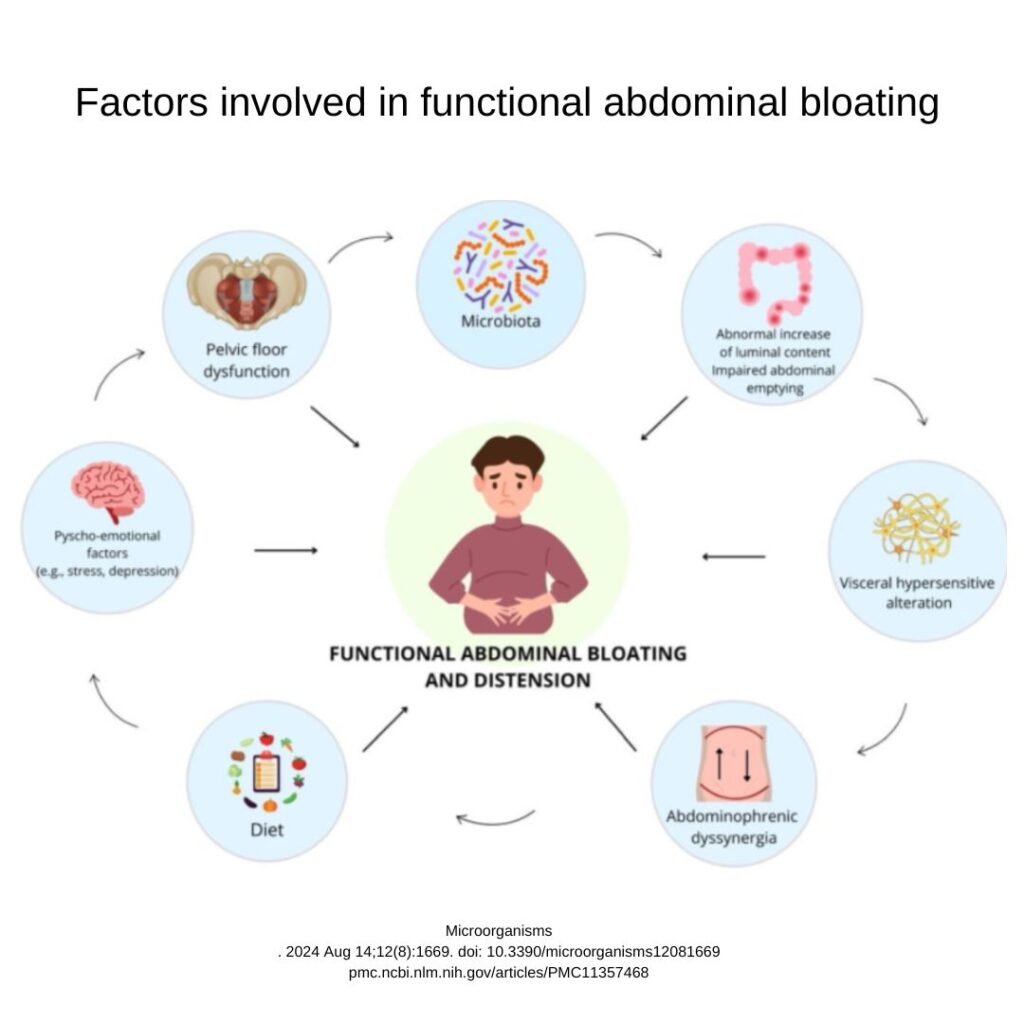## Hormonal Menopause Bloating
Estrogen and progesterone are not only involved in reproductive functions but also play a significant role in regulating various bodily processes, including digestion.
As estrogen levels decline, the gastrointestinal tract can become more sluggish, leading to slower transit times for food and increased gas production. This slowdown in digestion is a primary contributor to the bloating experienced by many menopausal women.
Moreover, the decrease in estrogen can affect the balance of gut bacteria, known as the *microbiome*. A healthy microbiome is essential for efficient digestion and nutrient absorption.
When estrogen levels drop, it can disrupt this delicate balance, potentially leading to an overgrowth of harmful bacteria (*see list above*) and further exacerbating bloating and digestive discomfort.
Understanding the interplay between hormones and gut health is crucial for identifying effective strategies to manage menopause-related bloating and choosing the best supplement for menopause bloating.
Another factor contributing to bloating during menopause is the increased sensitivity of the gastrointestinal tract. Hormonal changes can make the digestive system more reactive to certain foods, leading to food intolerances and sensitivities that were not present before menopause.
This heightened sensitivity can cause bloating, gas, and abdominal pain in response to specific dietary triggers. By recognizing and addressing these sensitivities, women can better manage their symptoms and improve their overall digestive health.
## **The Science Behind Menopause-Related Bloating**
The intricate relationship between hormones and the digestive system becomes particularly evident during menopause.
The hormonal shifts that occur during menopause significantly influence gastrointestinal function. Estrogen and progesterone are integral to maintaining a healthy digestive system.
Estrogen helps regulate the production of bile, which is essential for digesting fats, while progesterone aids in muscle relaxation, including the muscles of the gastrointestinal tract. When these hormones decrease, digestive processes can become sluggish, leading to increased gas production and water retention.
Moreover, lower estrogen levels can affect the gut microbiome, the community of bacteria living in the intestines. A healthy balance of gut bacteria is crucial for efficient digestion and absorption of nutrients.
Disruptions in this balance can lead to increased fermentation of undigested food, producing excess gas and contributing to bloating. Understanding these physiological changes highlights the importance of supporting digestive health during menopause.
Another factor contributing to menopause-related bloating is the body’s tendency to retain fluid in response to declining estrogen levels. Estrogen influences the balance of sodium and water in the body. As estrogen levels drop, the body may hold onto more sodium, leading to fluid retention and a bloated feeling. This physiological response underscores the need for interventions that address both digestive health and fluid balance to effectively manage bloating during menopause.
## [Find the best supplement for menopause bloating – Understanding Why Women Bloat](https://prettypea.blog/supplement-for-menopause-bloating/)
## **Common Symptoms of Menopause Bloating**
Menopause bloating can manifest in various ways, making it a multifaceted symptom that can be challenging to pinpoint. One of the most common signs is a noticeable swelling or distension of the abdomen, which can fluctuate throughout the day. This bloating is often accompanied by a sensation of tightness or fullness, which can be uncomfortable and sometimes painful. Women may find that their clothes fit more snugly around the waist, adding to the discomfort.
In addition to abdominal distension, other digestive symptoms often accompany menopause bloating. These can include increased gas, which may cause burping or flatulence, and changes in bowel habits, such as constipation or diarrhea. These symptoms can be exacerbated by certain foods and stress, making it essential to identify and manage triggers to reduce their impact.
Emotional and psychological symptoms can also accompany menopause bloating. The discomfort and physical changes can lead to feelings of self-consciousness, anxiety, and frustration. These emotional responses can create a cycle where stress exacerbates bloating, and bloating increases stress. Addressing both the physical and emotional aspects of menopause bloating is crucial for comprehensive relief.
While occasional bloating is normal, persistent or severe bloating may be a signal of hormonal changes or underlying health issues and should be investigated with a healthcare practitioner.
## **The Role of Supplements in Alleviating Bloating**
Finding the right supplement for menopause bloating can play a vital role in managing menopause bloating by addressing the underlying causes and providing targeted support.
Identifying patterns, triggers and root causes are important factors when selecting the right supplement for menopause bloating. The right supplements to help balance hormones, improve digestive health, and reduce fluid retention can provide a multi-pronged approach to alleviating symptoms.
One of the primary benefits of using a supplement for menopause bloating is their ability to provide targeted nutrients that may be lacking in the diet. For example, certain vitamins and minerals are essential for hormone regulation and digestive health.
Supplements can help fill these nutritional gaps, promoting better overall health and reducing the severity of bloating. Additionally, some supplements contain natural compounds that can directly address digestive issues, such as probiotics and digestive enzymes.
Another advantage of supplements is their convenience and ease of use. Unlike major lifestyle changes, which can be challenging to implement and maintain, taking a daily supplement is a simple and sustainable way to support health during menopause. By selecting high-quality, evidence-based supplements, women can effectively manage bloating and other menopausal symptoms with minimal disruption to their daily routines.
## **Types of Supplement for Menopause Bloating**
**Probiotics**
Probiotics are beneficial bacteria that support a healthy gut microbiome. A balanced gut microbiome is crucial for optimal digestion and reducing bloating. Probiotics can help restore the natural balance of bacteria in the intestines, reducing the production of gas and improving overall digestive function. They are available in various forms, including capsules, powders, and fermented foods such as yogurt and kefir.
We recommend [Pretty Pea Appetite Weight Control](https://prettypea.blog/psyllium-husk/) Fibre blend, a Psyllium Husk fibre blend of prebiotics and probiotics, plus digestive herbals peppermint, ginger, fennel, with gut protector L-Glutamine.
**Fibre**
Where bloating is accompanied by constipation this could be eased by increasing dietary fibre. If this is difficult to do so by diet alone then topping up with quality fibre supplements that include Psyllium Husk or Sugar Beet Fibre can be a convenient and effective solution.
**Digestive Enzymes**
Digestive enzymes assist in breaking down food into nutrients that the body can absorb. As hormone levels fluctuate during menopause, digestive efficiency can decrease, leading to incomplete digestion and increased gas production.
Many women find supplementing with Digestive Enzymes can be a useful addition when selecting the best supplement for menopause bloating. Supplementing with digestive enzymes can enhance the breakdown of proteins, fats, and carbohydrates, reducing bloating and discomfort. Common digestive enzymes include amylase, protease, and lipase.
**Magnesium**
Magnesium is a vital mineral that supports muscle relaxation and fluid balance in the body. It can help reduce bloating by preventing water retention and promoting regular bowel movements. Magnesium supplements are available in various forms, including magnesium citrate, which is particularly effective for alleviating constipation-related bloating. Including magnesium in your supplement regimen can provide significant relief from menopause bloating.
**Vitamin B6**
Vitamin B6 plays a crucial role in hormone regulation and fluid balance. It can help alleviate bloating by reducing water retention and supporting the production of neurotransmitters that regulate mood and stress. Taking a daily vitamin B6 supplement can help manage both physical and emotional symptoms of menopause.
We recommend[ Pretty Pea Meno Weight](https://prettypea.blog/menopause-weight-loss-supplements/), with 10mg Vitamin B6, Glucomannan fibre and a whole host of other beneficial nutrients these clever capsules target the menopause belly from the inside out.
## [Find the best supplement for menopause bloating – Understanding Why Women Bloat](https://prettypea.blog/supplement-for-menopause-bloating/)
**Fennel**
Fennel is a natural herb known for its digestive benefits. It can help reduce bloating by relaxing the muscles of the gastrointestinal tract and promoting the expulsion of gas. Fennel supplements are available in various forms, including capsules, teas, and essential oils.
We recommended [Pretty Pea Fibre Pills](https://prettypea.blog/fibre-pills/) which include Fennel along with Fenugreek, Psyllium Husk, Fig, Prune Juice, Rhubarb, Pectin, Sugar Beet Fibre and more. Incorporating fennel into your daily routine can provide natural relief from bloating and improve overall digestive health.
## **How to Choose the Right Supplement for Menopause Bloating**
Selecting the right supplements for menopause bloating involves considering your specific symptoms, health status, and preferences. It’s essential to choose high-quality supplements from reputable brands to ensure safety and efficacy and avoid supplements with unnecessary additives or fillers.
It’s also essential to start with a single supplement and monitor your body’s response before introducing additional products. This approach allows you to identify which supplements are most effective for your symptoms and reduces the risk of adverse reactions.
Keeping a record of bloating symptoms, including the type, frequency and duration of symptoms is important when considering the best supplement for menopause bloating.
In addition to hormonal changes, diet can also be a common factor and changing diet or lifestyle habits can be effective in easing symptoms.
Keeping a journal to track your symptoms and any changes can help you and your healthcare provider make informed decisions about your supplement regimen.
## **What Else Matters**
In addition to using supplements, making lifestyle changes can significantly enhance your efforts to reduce menopause bloating. Dietary adjustments, such as reducing the intake of gas-producing foods, can help minimize bloating.
Common culprits include beans, cruciferous vegetables, carbonated drinks, and high-fat foods. Incorporating fibre rich foods, such as fruits, vegetables, and whole grains, can promote regular bowel movements and reduce bloating.
Staying hydrated is another crucial aspect of managing bloating. Drinking plenty of water helps flush out excess sodium and reduces water retention.
Aim to drink at least eight glasses of water a day, and consider limiting the consumption of caffeinated and alcoholic beverages, which can contribute to dehydration and bloating. Herbal teas, such as peppermint or chamomile, can provide additional digestive benefits.
Regular physical activity can also help reduce bloating by promoting healthy digestion and preventing constipation. Engage in exercises that you enjoy, such as walking, swimming, or yoga, for at least 30 minutes a day.
Physical activity can also help manage stress, which is a common trigger for bloating. Incorporating relaxation techniques, such as deep breathing, meditation, or mindfulness, can further support digestive health and reduce stress-related bloating.
## **Potential Side Effects and Precautions**
While supplements can provide significant relief from menopause bloating, it’s essential to be aware of potential side effects and precautions. Some supplements may cause temporary gastrointestinal discomfort, such as gas or diarrhoea, especially when taken in high doses. Starting with a lower dose and gradually increasing, allowing your body time to acclimatise, can help minimize these side effects.
Certain supplements may interact with medications or other health conditions. For example, magnesium supplements can interact with certain heart medications or antibiotics, while vitamin B6 can affect the efficacy of anticonvulsant drugs. Always consult with a healthcare professional before starting any new supplement, particularly if you have underlying health conditions or are taking other medications.
## **Expert Recommendations and Testimonials**
Insight can also be gained from testimonials from other women who have successfully found the right supplement for menopause bloating:
Josie has been taking Pretty Pea Meno Weight for 4 months and will be continuing as they have really helped her symptoms.
“After having a hysterectomy I really piled the weight especially around the stomach, I was also struggling with hot flushes mood swings and constant food cravings, I tried so many things the help, calorie counting and 1 full hour per day of treadmill and 7 different supplements per day. Nothing was having and real impact on my weight. I came across these and thought they were a little pricey but I’ll give them ago and I was so shocked that after the first week I had lost 2 pound and stopped craving food constantly. Now 4 months on I’m back to 9 stone and my bloaty stomach is gone. I’m no longer snacking all day/night because I’m not hungry after I’ve eaten my meals. I feel a lot calmer and I’m having less hot flushes too!
Needless to say that this is the only supplement I need to take now and I will continue on them. If you are having similar issues than I was then these are really worth a shot.”
Rachel H has also been taking Meno Weight for 3 months, and noticed a difference with bloating with in a couple of weeks. She added that she “Stopped using for a month and the bloating started to come back!” So now she has them on subscription so she never runs out. So a good reminder that it can take time for supplements to get to work, with times will vary from person to person.
As a bonus, Rachel adds that her hot flushes are fewer and sleep is better and she describe these capsules as being “worth every penny!”
## **Finding Relief: Start Your Supplement** **for Menopause Bloating**
Menopause is a natural part of aging, but its symptoms, including bloating, can significantly impact a woman’s quality of life. Understanding the hormonal changes that contribute to bloating and addressing them with targeted supplements can provide significant relief. By incorporating probiotics, digestive enzymes, magnesium, vitamin B6, fibre and fennel into your daily routine, you can alleviate bloating and support overall digestive health.
Choosing the right supplements involves considering your specific symptoms, consulting with healthcare professionals, and selecting high-quality products. Complementing supplement use with lifestyle changes, such as dietary adjustments, staying hydrated, and engaging in regular physical activity, can further enhance your efforts to manage bloating. Being mindful of potential side effects and precautions ensures that you use supplements safely and effectively.
Ultimately, finding relief from menopause bloating is about embracing change and taking proactive steps to support your well-being.
[See More Supplements](https://prettypea.blog/menopause-weight-loss-supplement/)
### Recommended Supplements
## [Find the best supplement for menopause bloating – Understanding Why Women Bloat](https://prettypea.blog/supplement-for-menopause-bloating/)
## [Find the best supplement for menopause bloating – Understanding Why Women Bloat](https://prettypea.blog/supplement-for-menopause-bloating/)
## [Find the best supplement for menopause bloating – Understanding Why Women Bloat](https://prettypea.blog/supplement-for-menopause-bloating/)
## Frequently Asked Questions
### Supplement for Menopause Bloating
### What causes menopause bloating?
Hormonal shifts that occur during menopause significantly influence gastrointestinal function. Reduced estrogen levels during menopause can impact gut motility and increase gas production.
### How to Choose the Best Supplement for Menopause Bloating
Selecting the right supplements for menopause bloating involves considering your specific symptoms, health status, and preferences. It’s essential to choose high-quality supplements from reputable brands to ensure safety and efficacy and avoid supplements with unnecessary additives or fillers.
### Best Supplement for Menopause Bloating
Supplements for menopause bloating typically include digestive enzymes, probiotics, vitamin B6, magnesium, fibre, fennel and other digestive herbals. Choosing the right supplement depends on individual factors,
### Why Do Women Bloat More than Men
A 2011 study related gastrointestinal orders to **ovary function**, noting the prevalence of pain disorders such as irritable bowel syndrome (IBS), gastroesophageal reflux disease, gallbladder and biliary tract diseases are significantly higher in women.
The study reported that symptoms such as nausea, vomiting, abdominal pain, distension, satiety, bloating, diarrhoea or constipation, frequently appears in relation with **pregnancy**, the luteal phase of the **menstrual cycle** and during **perimenopause** and **menopause**.
### Supplement for Menopause Bloating – **References**
[Prevalence and Associated Factors of Bloating: Results From the Rome Foundation Global Epidemiology Study – PubMed](https://pubmed.ncbi.nlm.nih.gov/37315866/)
[Review article: the treatment of functional abdominal bloating and distension – PubMed](https://pubmed.ncbi.nlm.nih.gov/21488913/)
[Abdominal bloating: pathophysiology and treatment – PubMed](https://pubmed.ncbi.nlm.nih.gov/24199004/)
[Bloating and functional gastro-intestinal disorders: where are we and where are we going? – PubMed](https://pubmed.ncbi.nlm.nih.gov/25339827/)
[Review article: bloating in functional bowel disorders – PubMed](https://pubmed.ncbi.nlm.nih.gov/12390095/)
[Ovarian function and gastrointestinal motor activity – PubMed](https://pubmed.ncbi.nlm.nih.gov/22322653/)
[Sex Differences, Menses-Related Symptoms and Menopause in Disorders of Gut-Brain Interaction – PubMed](https://pubmed.ncbi.nlm.nih.gov/39748465/)
**Categories:** Fibre & Gut Health, Supplements
---
### [Can You Use Psyllium Husk for Weight Loss? Benefits, Dosage & Science Explained](https://prettypea.blog/psyllium-husk-for-weight-loss/)
**Published:** June 23, 2025
**Author:** Cate Boyd
**Content:**
Psyllium husk is one of the most researched natural fibre supplements used to support digestion and weight management. It is commonly found in powder or capsule form and is derived from the seeds of the Plantago ovata plant. But the real question being searched by many is: can you use psyllium husk for weight loss and does it actually help you lose weight?
The short answer is that it may help indirectly by improving fullness, reducing appetite, and supporting better blood sugar control. However, it is not a magic weight loss solution on its own.
Here we break down exactly how psyllium husk works, what the research says, how to take it properly, and whether it’s worth adding to your routine.
- [Psyllium & Weight Loss](#aioseo-how-psyllium-husk-helps-with-weight-loss-8)
- [What Does the Research Say?](#aioseo-what-does-the-research-say-14)
- [Psyllium Husk Benefits](#aioseo-benefits-of-psyllium-husk-to-lose-weight)
- [How to Take Psyllium Husk for Weight Loss](#aioseo-incorporating-psyllium-husk-to-lose-weight-into-your-diet)
- [Benefits Beyond Weight Loss](#aioseo-benefits-beyond-weight-loss-142)
- [Psyllium Husk VS Other Fibre Supplements](#aioseo-psyllium-husk-vs-other-fibre-supplements-171)
- [Who Should Use Psyllium Husk?](#aioseo-who-should-use-psyllium-husk-190)
## What is Psyllium Husk
Psyllium husk is a soluble fibre that absorbs water and forms a gel-like substance in the gut. This slows digestion and helps food pass more gradually through the digestive system.
Whilst primarily a soluble fibre, it contains both soluble and insoluble fibre at a ratio of 7:3 making it an ideal source of beneficial fibre[1](#9808baed-e3e7-40d0-87fd-348737f9185d).One tablespoon of psyllium husk contains approximately 5 grams of fibre, making it an incredibly dense source of dietary fibre.
Because of this property, it is commonly used for:
- Occasional Constipation
- Gut health support
- Cholesterol management
- Appetite regulation
It is also widely used in high-fibre diets for weight management support.
## How Psyllium Husk Helps With Weight Loss
Psyllium husk does not burn fat directly. Instead, it supports weight loss through several indirect mechanisms:
### 1. Increases fullness (satiety)
When psyllium absorbs water, it expands in the stomach. This creates a feeling of fullness, which may reduce overall calorie intake.
### 2. Slows digestion
By slowing gastric emptying, food stays in the stomach longer, helping reduce hunger between meals.
### 3. Helps regulate blood sugar
Stable blood sugar levels can reduce cravings and energy crashes, which often lead to overeating.
### 4. Supports healthier eating habits
People consuming more fibre tend to naturally eat fewer ultra-processed foods and more whole foods.
[](https://prettypea.blog/fibre-powder/)\#image\_title## What Does the Research Say?
The science behind psyllium husk lies in its high fibre content. Psyllium husk is a water soluble fibre and when consumed, psyllium husk absorbs water forming a gel-like substance in the digestive tract.
This gel slows down the digestion process, allowing for a more gradual absorption of nutrients and prolonged feelings of fullness, reducing hunger, cravings and crucially overall calorie intake.
By expanding and creating bulk in the stomach, it signals to the brain that you are full, thereby reducing overall food and calorie intake.
Studies suggest that increasing soluble fibre intake may support modest weight loss over time when combined with a balanced diet.
Research has shown:
- Higher fibre intake is linked with lower body weight
- Soluble fibre improves satiety signals
- Fibre supplementation may reduce overall calorie intake
However, psyllium husk works best as part of a wider lifestyle approach rather than a standalone solution.
Several studies have shown Psyllium can support both constipation (both occasional and chronic) and diarrhoea (acute and chronic). Results of studies indicate that the use of psyllium husk for bowel disorders has “significantly higher efficacy compared to pharmacological preparations such as sodium docusate or loperamide”.
As science learns more about the gut, the role of faecal microbiota in gut physiology is being increasingly recognised. A 2019 study[2](#7461edfd-445d-46cc-bf5f-2500663d02a8) found that psyllium supplementation was associated with significant changes in microbiota.
Psyllium husk has even been described as the fibre deserving the name of the gold standard in regulating bowel movements.[3](#f9082e9d-af49-4ca0-b6bd-af6c61b42dbb)
By promoting a balanced gut flora[4](#e89b2f12-4266-446f-859c-346dad0e2e8c) and regular bowel movements, psyllium husk contributes to overall well-being, ensuring nutrients are effectively absorbed and waste is efficiently eliminated, reducing bloat and supporting weight loss efforts.
**[Recommended fibre blend Psyllium Husk capsules](https://prettypea.blog/fibre-pills/)**
## [Can You Use Psyllium Husk for Weight Loss? Benefits, Dosage & Science Explained](https://prettypea.blog/psyllium-husk-for-weight-loss/)
## Benefits of Psyllium Husk for Weight Loss
Studies show Psyllium husk helps regulate blood sugar levels. Stable blood sugar levels prevent the sudden spikes and crashes that can lead to cravings for sugary or high-calorie foods.
By promoting a gradual release of glucose into the bloodstream, psyllium husk helps maintain energy levels and reduces the likelihood of overeating.
A 2022 study found that “*psyllium husk fibre along with lifestyle modification has a significant effect on fasting blood glucose and reduce significantly insulin resistance value and can improve the biomarker of cardiovascular health among the healthy individuals”*
[5](#6b720cde-a0e1-4efc-8787-89b4d6c742a1)The study highlights that the link between **soluble fibre** and insulin resistance was reduced by 32%
One of the most compelling benefits of psyllium husk to lose weight is its ability to **enhance satiety**[6](#a73a55b6-ffae-4acc-b2ab-4271ac27d459).
Studies have demonstrated psyllium can **significantly suppress appetite** and energy intake that can contribute to weight loss, body mass index (BMI), and waist circumference (WC).
When consumed before meals, psyllium husk can help you feel fuller for longer periods, reducing the urge to snack between meals. This can lead to a reduction in overall caloric intake, making it easier to achieve a calorie deficit.
**[Recommended Psyllium Husk Fibre Blend Powder](https://prettypea.blog/psyllium-husk/)**
## [Can You Use Psyllium Husk for Weight Loss? Benefits, Dosage & Science Explained](https://prettypea.blog/psyllium-husk-for-weight-loss/)
## Psyllium Husk to Lose Weight – Study 1
A 2023 review[7](#b802c0ca-60ba-4e5b-8a14-4523c8c61a2e) of literature found that gel-forming nonfermented psyllium fibre, dosed just before meals, taking 10.8 g/day for 4.8 months, is effective in facilitating weight loss in overweight and obese people.
Weight Loss -2.1kg
BMI reduction -0.8kg
Waist circumference reduction -2.2cm
Psyllium husk also had a significant effect in people with metabolic syndrome and type-2 diabetes on glycemic control, while lowering serum cholesterol in hypercholesterolemic patients.
## Psyllium Husk to Lose Weight – Study 2
A 2024 study[8](#1a4ef60f-7750-4fb0-aff4-2afa9df83309) published in Nutrients journal found that supplementing with a combination of psyllium husk, glucomannan and inulin fibre can effectively support weight loss and improve body composition with potential for a **reduction of -6.5kg** bodyweight over 180 days.
112 overweight adults with an average age of 46 were given either a supplement combining glucomannan, psyllium husk and inulin or a placebo. Participants also adhered to 500 kcal deficit per day with 150 min per week of physical activity, such as walking, encouraged.
The results found the Psyllium Husk, Inulin & Glucomannan fibre group showed **significant reductions** i**n body weight and BMI with an average reduction in bodyweight of -6.5kg** over 180 days.
## Study Results
59.2% lost 5% or more of their bodyweight
21.1% lose 10% or more of their bodyweight
Absolute Bodyweight Change (-6.5kg)
BMI (−2.2 kg/m2))
Fat mass (−19.4%)
Visceral fat rating (−1.9)
Hunger & food consumption significantly reduced
Fullness and satiety significantly increased
A high incidence of gastrointestinal events was also reported (because it’s always advisable to increase fibre intake slowly to allow the GI tract time to acclimatise.
Overall pretty impressive, making fibre food for thought!
You’ll find ALL 3 of these fibres (plus more) in Pretty Pea [APPETITE](https://prettypea.blog/appetite-suppressants/) fibre support supplement.
[](https://prettypea.blog/psyllium-husk/)## How to Take Psyllium Husk for Weight Loss
### Recommended dosage
- Start with **5g per day**
- Increase gradually up to **10–15g daily**
### Best timing
- 20–30 minutes before meals
- Or split between breakfast and dinner
### How to take it safely
Always mix psyllium husk with at least **250–300ml of water**. Without enough fluid, it can cause digestive discomfort or blockage.
So how do you use psyllium husk to lose weight? Incorporating psyllium husk into your diet is pretty simple, thanks to its versatility. One of the easiest ways to consume psyllium husk is by mixing it with water.
Simply add a tablespoon of psyllium husk to a glass of water, stir well, and drink immediately. It is important to drink it quickly, as it will start to thicken and form a gel-like consistency.
For those who find the texture unpalatable, psyllium husk can also be mixed with fruit juice, smoothies, or yogurt to mask the taste and improve the overall experience.
Remember its the gel-like consistency that takes up space and create feelings of fullness.
Psyllium husk can also be added to various recipes to boost fibre content and can be used in baked goods such as bread and pancakes.
When using psyllium husk in baking, it is essential to adjust the liquid content of the recipe, as psyllium husk absorbs a significant amount of water.
Additionally, psyllium husk can be sprinkled over cereals, soups, and salads to enhance their nutritional profile without altering the flavour significantly.
## Benefits Beyond Weight Loss
Psyllium husk offers several additional health benefits:
### Gut health support
It promotes regular bowel movements and supports healthy digestion. The soluble fibre in psyllium husk also acts as a prebiotic, feeding the beneficial bacteria in the gut with the large bowel bacteria producing short-chain fatty acids (SCFA) from the fermentation of fibre
### Cholesterol reduction
Soluble fibre may help reduce LDL (“bad”) cholesterol levels.
### Blood sugar control
It can slow carbohydrate absorption and help stabilise blood sugar levels. A 2022 study found that “*psyllium husk fibre along with lifestyle modification has a significant effect on fasting blood glucose and reduce significantly insulin resistance value and can improve the biomarker of cardiovascular health among the healthy individuals”*
[5](#6b720cde-a0e1-4efc-8787-89b4d6c742a1)The study highlights that the link between **soluble fibre** and insulin resistance was reduced by 32%.
### Constipation support
Widely used for constipation[10](#9663f6b7-9301-4938-b248-42a1d5534c0e) one of its most common uses is improving stool consistency and regularity. It works by trapping water in the intestine increasing stool water, this eases movements and alters the colonic environment.
## Potential Side Effects and Precautions
While generally safe, psyllium husk may cause:
- Bloating
- Gas
- Mild stomach discomfort
Less commonly:
- Choking risk if taken without enough water
- Interaction with certain medications (should be spaced 1–2 hours apart)
It is important to increase fibre intake gradually and drink plenty of water. While psyllium husk is generally considered safe for most people, it can cause some side effects, particularly when not taken with sufficient water. These typically include bloating, gas, and abdominal discomfort.
These symptoms are usually temporary and can be minimized by starting with a lower dose and gradually increasing to allow the body time to acclimatise to the increase fibre intake along with ensuring adequate water intake.
If you experience severe or persistent symptoms, it is important to discontinue use and consult with a healthcare professional.
Individuals with certain medical conditions should proceed with caution when using psyllium husk. For example, those with a history of bowel obstructions, gastrointestinal disorders, or difficulty swallowing should avoid psyllium husk or use it only under the guidance of a healthcare professional.
Additionally, psyllium husk can interact with certain medications, such as blood thinners and diabetes medications, by affecting their absorption.
It’s essential to consult with a healthcare provider before starting psyllium husk if you are taking any medications or have underlying health conditions.
Allergic reactions to psyllium husk are rare but can occur. Symptoms of an allergic reaction may include itching, rash, hives, or difficulty breathing. If you experience any of these symptoms, discontinue use immediately and seek medical attention.
It’s also important to use psyllium husk as directed and not exceed the recommended dosage, as excessive intake can lead to severe gastrointestinal issues. Always read the product label and follow the instructions provided.
## Psyllium Husk VS Other Fibre Supplements
### Chia seeds
- Natural food source
- Also high in omega-3
- Less concentrated fibre dose
### Flaxseed
- Contains lignans and omega-3
- Slightly lower gel-forming effect
### Inulin
- Prebiotic fibre
- Can cause more bloating in some people
Psyllium husk is often preferred because it is:
- Highly soluble
- Well-researched
- Effective for satiety
## Who Should Use Psyllium Husk?
It may be helpful for:
- People trying to increase fibre intake
- Those struggling with hunger control
- Individuals supporting weight management goals
- People with irregular digestion
---
## Final Verdict
Psyllium husk for weight loss? Psyllium husk is not a quick-fix weight loss supplement. However, it can be a useful tool for supporting appetite control, digestion, and long-term healthy eating habits.
When used consistently with a balanced diet, it may help support gradual and sustainable weight loss.
## [Can You Use Psyllium Husk for Weight Loss? Benefits, Dosage & Science Explained](https://prettypea.blog/psyllium-husk-for-weight-loss/)
## FAQ about Psyllium Husk for Weight Loss
### Does psyllium husk really help with weight loss?
Psyllium husk may support weight loss indirectly by increasing fullness and reducing appetite. It is not a fat burner, but it can help reduce overall calorie intake when used consistently.
---
### How long does psyllium husk take to work for weight loss?
Some people notice reduced appetite within a few days, but meaningful changes in weight typically take several weeks when combined with a healthy diet.
---
---
### Can I take psyllium husk every day?
Yes, psyllium husk can be taken daily. It is important to start with a low dose and increase gradually while drinking plenty of water.
---
### Does psyllium husk have side effects?
Possible side effects include bloating, gas, and mild stomach discomfort, especially when first starting. Taking it with enough water reduces this risk.
---
### Is psyllium husk better than other fibre supplements?
It is one of the most effective soluble fibres for satiety and digestion. However, chia seeds, flaxseed, and inulin also offer benefits depending on your goals.
### Find the Right Supplements For You
## [Can You Use Psyllium Husk for Weight Loss? Benefits, Dosage & Science Explained](https://prettypea.blog/psyllium-husk-for-weight-loss/)
1[2](?query-page=2&doing_wp_cron=1792147625.9723339080810546875000)[3](?query-page=3&doing_wp_cron=1792147625.9723339080810546875000)…[9](?query-page=9&doing_wp_cron=1792147625.9723339080810546875000)
[Next Page](/wp-cron.php?doing_wp_cron=1792147625.9723339080810546875000&query-page=2)You might also like:
[9 Benefits of Fibre: Why It’s Essential for Gut Health, Weight and Wellbeing](https://prettypea.blog/9-benefits-of-fibre-why-its-essential-for-gut-health-weight-and-wellbeing/)
[Your Gut Microbiome Is Talking to Your Brain — Are You Listening?](https://prettypea.blog/your-gut-microbiome-is-talking-to-your-brain-are-you-listening/)
[Appetite Regulation: How Fibre vs GLP-1 Compare](https://prettypea.blog/appetite-regulation-how-fibre-vs-glp-1-compare/)
[Glucomannan for Weight Loss: Does It Work and How Does It Compare to Medications?](https://prettypea.blog/glucomannan-weight-loss/)
[What is the Highest Fibre Food](https://prettypea.blog/what-is-the-highest-fibre-food/)
[**The Menopause Diet 5 Day Plan to Lose Weight**](https://prettypea.blog/the-menopause-diet-5-day-plan-to-lose-weight/)
**List of** [**The 100 Symptoms of Perimenopause**](https://prettypea.blog/the-100-symptoms-of-perimenopause/)
[**Early First Symptoms of Perimenopause – 7 Telling Subtle Signs**](https://prettypea.blog/early-first-symptoms-of-perimenopause-7-telling-subtle-signs/)
[**Why Fibre Could Be the Secret to a Better Menopause**](https://prettypea.blog/why-fibre-could-be-the-secret-to-a-better-menopause/)
[**The Ultimate Superfood List: What are Superfoods, Benefits, Best Choices, and How to Use**](https://prettypea.blog/the-ultimate-superfood-list-what-are-superfoods-benefits-best-choices-and-how-to-use/)
- [](https://prettypea.blog/d-mannose-and-cranberry-for-women/)[Menopause Nutrition](https://prettypea.blog/category/menopause/) · [Superfoods](https://prettypea.blog/category/superfoods/) · [Supplements](https://prettypea.blog/category/supplements/)
October 8, 2026
- [](https://prettypea.blog/what-is-glp-1/)[Fibre & Gut Health](https://prettypea.blog/category/fibre/) · [Hormones & HRT](https://prettypea.blog/category/hormones-hrt/) · [Menopause Nutrition](https://prettypea.blog/category/menopause/) · [Supplements](https://prettypea.blog/category/supplements/)
### [What Is GLP-1? The Gut Hormone That Helps Regulate Hunger & Blood Sugar](https://prettypea.blog/what-is-glp-1/)
August 18, 2026
- [](https://prettypea.blog/psyllium-husk-benefits/)[Pretty Pea](https://prettypea.blog/category/pretty-pea/)
### [Psyllium Husk: Benefits, How to Take It, Side Effects & How It Compares](https://prettypea.blog/psyllium-husk-benefits/)
August 15, 2026
#### Psyllium Husk for Weight Loss: Sources
1. [↩︎](#9808baed-e3e7-40d0-87fd-348737f9185d-link)
2. [The Effect of Psyllium Husk on Intestinal Microbiota in Constipated Patients and Healthy Controls – PubMed](https://pubmed.ncbi.nlm.nih.gov/30669509/) [↩︎](#7461edfd-445d-46cc-bf5f-2500663d02a8-link)
3. [The role and therapeutic effectiveness of Plantago ovata husk (psyllium husk) in the prevention and non-pharmacological treatment of gastrointestinal diseases. Part 2. Clinical use of psyllium husk in the treatment of constipation and diarrhea – PubMed](https://pubmed.ncbi.nlm.nih.gov/40620304/) [↩︎](#f9082e9d-af49-4ca0-b6bd-af6c61b42dbb-link)
4. [Nutraceuticals and Herbal Food Supplements for Weight Loss: Is There a Prebiotic Role in the Mechanism of Action?](https://www.mdpi.com/2076-2607/9/12/2427) [↩︎](#e89b2f12-4266-446f-859c-346dad0e2e8c-link)
5. [Effect of Psyllium husk fiber and lifestyle modification on human body insulin resistance – Amjad Ali Bacha, Zia Ud Din, Imran khan, 2022](https://journals.sagepub.com/doi/10.1177/11786388221107797) [↩︎](#6b720cde-a0e1-4efc-8787-89b4d6c742a1-link)
6. [Beneficial effects of psyllium on the prevention and treatment of cardiometabolic diseases – Food & Function (RSC Publishing)](https://pubs.rsc.org/en/content/articlelanding/2022/fo/d2fo00560c) [↩︎](#a73a55b6-ffae-4acc-b2ab-4271ac27d459-link)
7. [Psyllium is a natural nonfermented gel-forming fiber that is effective for weight loss: A comprehensive review and meta-analysis – PubMed](https://pubmed.ncbi.nlm.nih.gov/37163454/) [↩︎](#b802c0ca-60ba-4e5b-8a14-4523c8c61a2e-link)
8. [The Impact of Glucomannan, Inulin, and Psyllium Supplementation (SolowaysTM) on Weight Loss in Adults with FTO, LEP, LEPR, and MC4R Polymorphisms: A Randomized, Double-Blind, Placebo-Controlled Trial – PubMed](https://pubmed.ncbi.nlm.nih.gov/38398881/) [↩︎](#1a4ef60f-7750-4fb0-aff4-2afa9df83309-link)
9. [Effect of Psyllium husk fiber and lifestyle modification on human body insulin resistance – Amjad Ali Bacha, Zia Ud Din, Imran khan, 2022](https://journals.sagepub.com/doi/10.1177/11786388221107797) [↩︎](#6b720cde-a0e1-4efc-8787-89b4d6c742a1-link)
10. [The Effect of Psyllium Husk on Intestinal Microbiota in Constipated Patients and Healthy Controls – PubMed](https://pubmed.ncbi.nlm.nih.gov/30669509/)
[↩︎](#9663f6b7-9301-4938-b248-42a1d5534c0e-link)
[Frontiers | Role of dietary fiber and lifestyle modification in gut health and sleep quality](https://www.frontiersin.org/journals/nutrition/articles/10.3389/fnut.2024.1324793/full#B46)
[\[Plantago ovata\] – PubMed](https://pubmed.ncbi.nlm.nih.gov/16989139/)
The Impact of Glucomannan, Inulin, and Psyllium Supplementation (SolowaysTM) on Weight Loss in Adults with FTO, LEP, LEPR, and MC4R Polymorphisms: A Randomized, Double-Blind, Placebo-Controlled Trial – PubMed
[Psyllium: a useful functional ingredient in food systems – PubMed](https://pubmed.ncbi.nlm.nih.gov/32951436/)
**Categories:** Fibre & Gut Health, Menopause Nutrition
---
### [10 Key Signs and Symptoms Perimenopause Women Should Know About](https://prettypea.blog/10-key-signs-and-symptoms-perimenopause-women-should-know-about/)
**Published:** July 25, 2025
**Author:** Cate Boyd
**Content:**
Perimenopause is a pivotal stage of life which can start several years before menopause, and brings with it a range of physical and emotional changes that every woman should be prepared for. Speaking from first hand experience of being under prepared, understanding the signs and symptoms of perimenopause is essential. From unpredictable menstrual cycles to extreme fatigue, joint pain and sudden emotions and mood swings, the signs can vary widely from one individual to another. This stage of life often feels daunting, and it can feel like your body is taking over control but arming yourself with knowledge can help demystify the experience and help you take back control. In this article, we’ll explore 10 key signs and symptoms perimenopause brings, to ensure you feel informed as you navigate this significant transition.
## **What is Perimenopause?**
Perimenopause marks the period during which a woman’s body begins to undergo the natural transition toward permanent infertility. Typically, perimenopause can start as early as a woman’s late 30s or as late as her mid-40s, lasting for several years. This transitional phase is characterized by fluctuations in hormone levels, particularly estrogen and progesterone, which can lead to a variety of physical and emotional changes.
Understanding perimenopause and the 10 key signs and symptoms perimenopause brings is crucial because it equips women with the knowledge to manage symptoms effectively and make informed decisions regarding their health.
During perimenopause, the ovaries gradually produce less estrogen, leading to various physiological changes. These changes can affect the menstrual cycle, making periods irregular and sometimes more painful.
As estrogen levels fluctuate, women may experience a range of symptoms, from mild to severe. Whilst perimenopause is a normal part of aging and not a medical condition symptoms can sometimes be severe enough to disrupt daily life.
Recognizing the onset of perimenopause can be challenging, as its symptoms often overlap with other conditions. Many women find themselves unsure whether the changes they are experiencing are related to perimenopause or other factors. This uncertainty underscores the importance of being aware of the 10 key signs and symptoms perimenopause brings.
[](https://prettypea.blog/menopause-tablets-for-weight-loss/)By learning to identify these changes, women can take proactive steps to manage their health and well-being during perimenopause. In this article we’ll share:
- [The Hormonal Changes During Perimenopause](#aioseo-the-hormonal-changes-during-perimenopause)
- [10 Key Signs and Symptoms Perimenopause Brings](#aioseo-10-key-signs-and-symptoms-perimenopause)
- [The Emotional Impact of Perimenopause](#aioseo-common-symptoms-experienced-during-perimenopause)
- [Physical Changes to Expect in Perimenopause](#aioseo-physical-changes-to-expect-in-perimenopause)
- [How Long Does Perimenopause Last?](#aioseo-how-long-does-perimenopause-last)
- [Lifestyle Changes to Manage Perimenopause Symptoms](#aioseo-lifestyle-changes-to-manage-perimenopause-symptoms)
- [When to Seek Medical Advice](#aioseo-when-to-seek-medical-advice)
- [RELATED ARTICLES](#)
## **The Hormonal Changes During Perimenopause**
Hormonal changes are the hallmark of perimenopause, primarily involving fluctuations in estrogen and progesterone levels. Estrogen, a hormone produced by the ovaries, plays a vital role in regulating the menstrual cycle and maintaining various bodily functions.
During perimenopause, the production of estrogen becomes erratic, leading to many of the symptoms associated with this transition. These hormonal fluctuations can affect everything from the menstrual cycle to mood and energy levels and even shifts where your body stores fat.
Progesterone, another hormone produced by the ovaries, also plays a significant role in the menstrual cycle. It prepares the lining of the uterus for a potential pregnancy each month.
As perimenopause progresses, progesterone levels may decline, leading to changes in the menstrual cycle, such as heavier or lighter periods, and increased frequency of cycles. These hormonal changes can also lead to symptoms such as mood swings, sleep disturbances, and hot flushes.
The interaction between estrogen and progesterone is complex, and their fluctuating levels during perimenopause can affect each woman differently. Some women may experience severe symptoms, while others may have a relatively smooth transition with mild discomfort.
I can’t stress enough how important understanding these hormonal changes are for managing symptoms effectively and seeking appropriate treatments, such as hormone therapy, (HRT) if necessary.
## [10 Key Signs and Symptoms Perimenopause Women Should Know About](https://prettypea.blog/10-key-signs-and-symptoms-perimenopause-women-should-know-about/)
It took me months of knowing something significant was happening in my body, I wasn’t just tired, I wasn’t just low or sad, I wasn’t just out of sorts, I knew something was very different – something felt wrong. I had become a totally different person and over a very short period of time, but I couldn’t for the life of me put my finger on why or what to do.
At 39 perimenopause was not on my radar. How wrong was I.
By staying informed about the hormonal dynamics of perimenopause, women can better navigate this transition.
## **10 Key Signs and Symptoms Perimenopause** **Brings**
---
**1. Irregular Periods**
One of the first signs of 10 key signs and symptoms perimenopause brings is **changes in menstrual cycle frequency or flow**. Periods may come closer together, further apart, or skip months and also become heavier, or lighter. These changes are due to the fluctuating hormone levels that affect the ovaries’ ability to release eggs consistently.
- A longitudinal study found that **over 90% of women experienced menstrual changes** during perimenopause.¹
- Irregular ovulation is caused by **fluctuating levels of estrogen and follicle-stimulating hormone (FSH)**.
---
**2. Hot Flushes and Night Sweats**
These sudden feelings of intense heat, often accompanied by sweating and flushed skin can occur at any time of day or night. Hot flushes are caused by changes in the body’s temperature regulation, which are linked to fluctuating estrogen levels. A common sign of perimenopause, they can be uncomfortable and disruptive, especially if they occur frequently.
- Up to **75% of women** experience hot flushes in perimenopause.²
- Caused by disrupted **thermoregulation in the brain due to estrogen withdrawal**.
---
**3. Mood Swings and Anxiety**
Women may find themselves experiencing sudden and intense emotions, ranging from irritability and anxiety to sadness and even depression. These mood changes are thought to be related to hormonal fluctuations which can affect neurotransmitters like **serotonin and dopamine**, leading to emotional instability, as well as the stress of dealing with other perimenopausal symptoms.
- A 2021 study in *JAMA Psychiatry* found a **60% increased risk of depression** in perimenopausal women.³
- Anxiety and irritability are also common, even in women with no prior mental health history.
---
**4. Sleep Disturbances**
Sleep disturbances, including **difficulty falling asleep or staying asleep**, are frequently reported and make it into the 10 key signs and symptoms perimenopause brings. These issues may be exacerbated by night sweats, another key perimenopause symptom, which can disrupt sleep and lead to fatigue and irritability during the day.
- According to the *Study of Women’s Health Across the Nation (SWAN)*, **40–60% of perimenopausal women** report sleep issues.⁴
---
**5. Dryness and Discomfort**
Lower estrogen levels lead to **thinning and drying of delicate tissues**, reduced lubrication, and discomfort during intercourse with increased susceptibility to infections.
This symptom can impact a woman’s quality of life, making it important to address with appropriate treatments such as estrogen therapy.
- This symptom affects up to **50% of women during perimenopause**, yet many do not seek help.⁵
---
**6. Low Libido**
A decline in desire can be related to **hormonal changes, discomfort, fatigue**, and emotional shifts.
- A large UK study reported that **over 30% of women aged 40–55** experienced reduced sexual desire.⁶
---
**7. Weight Gain and Metabolism Changes**
**Weight gain** is also up there in the 10 key signs and symptoms perimenopause brings. Many women report gaining weight — especially **around the abdomen** — **despite no changes in diet or activity**.
Many women notice an increase in abdominal fat, which can be attributed to hormonal changes as well as aging and lifestyle factors. These changes can affect a woman’s self-esteem and overall health, highlighting the importance of a balanced diet and regular exercise to maintain a healthy weight during this transition.
- This is due to declining **estrogen, insulin sensitivity**, and loss of **lean muscle mass**.⁷
- A 2020 review found perimenopausal women experience a **decrease in resting metabolic rate**.⁸
---
## [10 Key Signs and Symptoms Perimenopause Women Should Know About](https://prettypea.blog/10-key-signs-and-symptoms-perimenopause-women-should-know-about/)
**8. Brain Fog and Memory Issues**
Cognitive changes such as **forgetfulness, reduced concentration**, and mental fatigue are widely reported.
- A 2016 study from Harvard showed that **women in perimenopause scored lower on memory and attention tasks**.⁹
---
**9. Breast Tenderness**
Fluctuating oestrogen and progesterone levels can cause **soreness, swelling**, or **lumpiness** in the breasts.
- Similar to PMS symptoms, but may be more prolonged or unpredictable.¹⁰
---
**10. Joint and Muscle Aches**
**Joint stiffness, muscle pain**, or general achiness is a lesser known symptom but common enough to make it into the 10 key signs and symptoms perimenopause brings.
- Thought to be linked to **inflammation, ageing, and declining estrogen**.
- Over **50% of perimenopausal women** in a UK survey reported new or worsened musculoskeletal pain.¹¹
---
## **The Emotional Impact of Perimenopause**
The emotional impact of perimenopause can be significant, as hormonal fluctuations can lead to mood swings, anxiety, and depression.
These emotional changes can be challenging to cope with, especially when combined with physical symptoms such as hot flushes and sleep disturbances. Women may find themselves feeling overwhelmed, stressed, or even disconnected from themselves and others.
Managing the emotional impact of perimenopause requires a combination of self-care, support, and sometimes professional help.
Engaging in regular physical activity, maintaining a healthy diet, and practicing stress-reduction techniques such as meditation or yoga can help alleviate some of the emotional symptoms.
Hormone therapy or antidepressants may also be considered to help balance mood and alleviate symptoms. It is important for women to remember that they are not alone in their experiences and that help is available to navigate the emotional challenges of perimenopause.
[](https://prettypea.blog/menopause-tablets-for-weight-loss/)## **Physical Changes to Expect in Perimenopause**
During perimenopause, women may notice a variety of physical changes, some of which can be surprising or distressing.
Changes in skin and hair are common, as decreased estrogen levels can lead to drier, thinner skin and increased hair shedding.
Some women may also notice increased facial hair or changes in hair texture.
Breast tenderness and changes in breast size are also common during perimenopause. These changes can be attributed to hormonal fluctuations and may cause discomfort or concern for some women. It is important to continue regular breast self-examinations and mammograms during this time to monitor any changes and ensure breast health.
Bone health is another important consideration during perimenopause, as decreased estrogen levels can lead to decreased bone density and an increased risk of osteoporosis.
Women should ensure they are getting enough calcium and vitamin D in their diet, as well as engaging in weight-bearing exercises to maintain bone strength. Regular bone density screenings may also be recommended to monitor changes and prevent bone loss.
## **How Long Does Perimenopause Last?**
The duration of perimenopause can vary widely among women, with some experiencing symptoms for only a few years and others for a decade or more.
On average, perimenopause lasts about four years, but it can range from a few months to as long as ten years. The length of perimenopause can be influenced by factors such as genetics, lifestyle, and overall health.
During perimenopause, women may experience periods of stability where symptoms are mild or manageable, followed by periods of more intense symptoms. This variability can make it difficult to predict how long perimenopause will last for any individual woman.
While perimenopause is a natural part of aging, it is important for women to be proactive about their health during this time. Regular check-ups with a healthcare provider, as well as discussions about symptoms and treatment options, can help women navigate the perimenopausal transition more comfortably.
## **Lifestyle Changes to Manage Perimenopause Symptoms**
Making lifestyle changes can be an effective way to manage perimenopause symptoms and improve overall well-being. A balanced diet rich in fruits, vegetables, whole grains, and lean proteins can provide essential nutrients and support hormonal balance. Limiting caffeine, alcohol, and processed foods can also help reduce symptoms such as hot flushes and mood swings.
Regular physical activity is another important aspect of managing perimenopause symptoms. Exercise can help regulate mood, improve sleep, and maintain a healthy weight. Activities such as walking, swimming, yoga, and strength training can be beneficial for both physical and mental health. Finding an enjoyable form of exercise can make it easier to incorporate into daily life.
Stress management is also crucial during perimenopause, as stress can exacerbate symptoms and impact overall health. Techniques such as deep breathing, meditation, or mindfulness can help reduce stress and promote relaxation.
## **When to Seek Medical Advice**
While perimenopause is a natural process, it is important for women to seek medical advice if symptoms become severe or interfere with daily life. Heavy or prolonged bleeding, severe mood swings, or debilitating hot flushes may require medical intervention. A healthcare provider can offer guidance on treatment options, such as hormone therapy or other medications, to help manage symptoms.
Women should also seek medical advice if they experience symptoms that are unusual or concerning, such as unexplained weight loss, persistent fatigue, or changes in breast health. These symptoms may indicate other health issues that require evaluation and treatment. Regular check-ups and open communication with a healthcare provider can help ensure that any potential health concerns are addressed promptly.
It is also important for women to discuss their family history and any risk factors for conditions such as osteoporosis or heart disease with their healthcare provider. Preventive measures and screenings can be tailored to each woman’s individual needs, helping to maintain optimal health during perimenopause and beyond.
After reading 10 key signs and symptoms perimenopause brings, you might also like..
## [10 Key Signs and Symptoms Perimenopause Women Should Know About](https://prettypea.blog/10-key-signs-and-symptoms-perimenopause-women-should-know-about/)
### After reading 10 Key Signs and Symptoms Perimenopause Brings, you might also like…
## RELATED ARTICLES
[**The Menopause Diet 5 Day Plan to Lose Weight**](https://prettypea.blog/the-menopause-diet-5-day-plan-to-lose-weight/ "The Menopause Diet 5 Day Plan to Lose Weight")
**List of** [**The 100 Symptoms of Perimenopause** ](https://prettypea.blog/the-100-symptoms-of-perimenopause/)
[**Early First Symptoms of Perimenopause – 7 Telling Subtle Signs**](https://prettypea.blog/early-first-symptoms-of-perimenopause-7-telling-subtle-signs/)
[**The Role of Perimenopause Vitamins Supplements: A Guide for Women**](https://prettypea.blog/perimenopause-vitamins-supplements/)
[**Why Fibre Could Be the Secret to a Better Menopause** ](https://prettypea.blog/why-fibre-could-be-the-secret-to-a-better-menopause/)
[**The Ultimate Superfood List: What are Superfoods, Benefits, Best Choices, and How to Use** ](https://prettypea.blog/the-ultimate-superfood-list-what-are-superfoods-benefits-best-choices-and-how-to-use/)
- [](https://prettypea.blog/d-mannose-and-cranberry-for-women/)[Menopause Nutrition](https://prettypea.blog/category/menopause/) · [Superfoods](https://prettypea.blog/category/superfoods/) · [Supplements](https://prettypea.blog/category/supplements/)
October 8, 2026
- [](https://prettypea.blog/what-is-glp-1/)[Fibre & Gut Health](https://prettypea.blog/category/fibre/) · [Hormones & HRT](https://prettypea.blog/category/hormones-hrt/) · [Menopause Nutrition](https://prettypea.blog/category/menopause/) · [Supplements](https://prettypea.blog/category/supplements/)
### [What Is GLP-1? The Gut Hormone That Helps Regulate Hunger & Blood Sugar](https://prettypea.blog/what-is-glp-1/)
August 18, 2026
- [](https://prettypea.blog/psyllium-husk-benefits/)[Pretty Pea](https://prettypea.blog/category/pretty-pea/)
### [Psyllium Husk: Benefits, How to Take It, Side Effects & How It Compares](https://prettypea.blog/psyllium-husk-benefits/)
August 15, 2026
## [10 Key Signs and Symptoms Perimenopause Women Should Know About](https://prettypea.blog/10-key-signs-and-symptoms-perimenopause-women-should-know-about/)
### References – 10 Key Signs and Symptoms Perimenopause Brings
1. Harlow SD, Gass M, Hall JE, et al. (2012). *Executive Summary: Stages of Reproductive Aging Workshop (STRAW)*. *Menopause*, 19(4): 387–395.
2. Freeman EW, Sammel MD, Lin H, et al. (2005). *Duration of menopausal hot flushes: a longitudinal study*. *BJOG*, 112(5): 586–593.
3. Gordon JL, Rubinow DR, Eisenlohr-Moul TA, et al. (2021). *Depression during perimenopause: evidence and mechanisms*. *JAMA Psychiatry*, 78(5): 489–498.
4. Kravitz HM, Janssen I, Santoro N, et al. (2003). *Sleep difficulty in women at midlife: a SWAN study*. *Sleep*, 26(8): 973–979.
5. Parish SJ, Nappi RE, Krychman ML, et al. (2013). *Impact of vulvovaginal atrophy on sexual health in menopausal women*. *J Sex Med*, 10(7): 1790–1799.
6. Avis NE, Brockwell S, Randolph JF, et al. (2009). *Sexual functioning among midlife women: the SWAN study*. *Arch Intern Med*, 169(12): 1186–1194.
7. Lovejoy JC. (2003). *Weight gain in women at midlife: the influence of menopause*. *Obes Res*, 11(5): 498–503.
8. Poehlman ET, Toth MJ, Gardner AW. (1995). *Changes in energy balance and body composition at menopause*. *J Gerontol A Biol Sci Med Sci*, 50A(1): B21–B26.
9. Greendale GA, Huang MH, Wight RG, et al. (2010). *Menopause-associated symptoms and cognitive performance*. *J Am Geriatr Soc*, 58(7): 1237–1244.
10. Gold EB, Sternfeld B, Kelsey JL, et al. (2000). *Relation of demographic and lifestyle factors to symptoms in a multi-racial/ethnic population of women 40–55 years of age*. *Am J Epidemiol*, 152(5): 463–473.
11. [Mishra GD, Kuh D. (2012). *Health symptoms during midlife in relation to menopausal transition:* ](https://www.bmj.com/content/344/bmj.e402)*British cohort study*. *BJOG*, 119(9): 1090–1097.
**Categories:** Hormones & HRT, Menopause Nutrition
---
### [Top 15 Superfood List for Energy, Immunity and Women’s Health](https://prettypea.blog/superfood-list/)
**Published:** September 14, 2025
**Author:** Cate Boyd
**Content:**
Looking to improve your energy, support your immune system, or simply eat a little healthier? This top superfood list is for you. Superfoods are often talked about as a simple way to boost nutrition, but understanding which ones to choose — and how to use them — can make all the difference.
Superfoods are nutrient-dense foods that provide vitamins, minerals, antioxidants and other beneficial compounds that support overall health. While no single food is a magic solution, adding a variety of superfoods to your diet can help support energy levels, digestion, immunity and long-term wellbeing.
In this guide, you’ll find a list of some of the best superfoods to include in your diet, along with their key benefits and simple ways to use them in everyday meals. You can also explore more detailed guides for each superfood to help you get the most out of them.
This guide will walk you through:
- [What Superfoods are (and what they’re not)](#aioseo-1-what-are-superfoods)
- [The Superfood List : Everyday Accessibles](#aioseo-everyday-accessible-superfoods)
- [How Superfoods Work in the Body](#aioseo-2-why-superfoods-matter-for-health)
- [Main Categories of Superfoods You Need to Know](#aioseo-3-categories-of-superfoods)
- [Everyday Accessible Superfood List](#aioseo-everyday-accessible-superfood-list-heres-15-foods-just-for-starters-82)
- [Immune-Boosting Superfood List](#aioseo-immune-boosting-superfood-list-102)
- [Brain & Mood Superfood List](#aioseo-brain-mood-superfood-list-113)
- [Energy Superfood List](#aioseo-energy-superfood-list-124)
- [Women’s Health Superfood List](#aioseo-womens-health-superfood-list-136)
- [Gut Health Superfood List](#aioseo-gut-health-superfood-list-147)
- [Trendy Superfood List](#aioseo-trendy-superfood-list-157)
- [Longevity & Anti-Aging Superfood List](#aioseo-longevity-anti-aging-superfood-list-167)
- [How to Add Superfoods Into Your Meals](#aioseo-4-how-to-add-superfoods-into-your-diet)
- [Seasonal Superfood List: What to Eat Throughout the Year](#aioseo-seasonal-superfoods-what-to-eat-throughout-the-year)
- [Budget-Friendly Superfoods](#aioseo-budget-friendly-superfoods-eating-healthy-without-breaking-the-bank)
- [Superfood Myths : Are Superfoods Overrated?](#aioseo-5-are-superfoods-overrated)
---
## **What Are Superfoods**
Superfoods are not a scientific classification but a way to describe foods with a high concentration of beneficial nutrients. Think of them as **nutrient upgrades** to your daily diet.
At its core, a *superfood* is a nutrient-dense food packed. *A food that’s really really good for you!* The nutritional benefits of superfoods come from their high concentrations of essential nutrients and bioactive compounds that support health in measurable ways.
They are foods with significant health benefits, i.e., foods that can prevent diseases, like diabetes, cardiovascular disease, cancer, and obesity, (although there is not a consensual definition).
Rich in some very clever *health-promoting* nutrients, including phytochemicals, carotenoids, flavonoids, and polyphenols these super-foods can deliver real benefits, such as improving immunity, lowering inflammation, calming the mind and balancing the body and boosting brain health.
What makes superfoods special is not just their nutrient density but also the unique compounds they contain.
For example, a typical example we all know are antioxidants found in superfoods like **berries** and dark **leafy greens**, these help neutralize free radicals in the body, reducing oxidative stress and lowering the risk of chronic diseases such as heart disease and cancer.
Similarly, **quinoa** contains all nine essential amino acids, making it a complete protein source. These unique properties make superfoods a valuable addition to any diet.
Good old **fibre** is another crucial component of many superfoods. Foods like **chia seeds**, **flaxseeds**, and **legumes** are rich in dietary fibre, which supports digestive health, helps regulate blood sugar levels, and aids in weight management.
[Fibre ](https://prettypea.blog/fibre-pills/ "Fibre ")also plays a role in maintaining a healthy gut microbiome, which is essential for overall health and well-being. By consuming fibre-rich superfoods, you can improve your digestive health and support a balanced gut flora.
You can read **[9 Benefits of Fibre: Why It’s Essential for Gut Health, Weight and Wellbeing](https://prettypea.blog/9-benefits-of-fibre-why-its-essential-for-gut-health-weight-and-wellbeing/)**
**Key takeaway:** Superfoods are foods with significant health benefits that have high nutrient density or are high in unique compounds (or a combination of both).
## **Superfood List :** **Everyday Accessibles**
- **Blueberries** → Antioxidant powerhouse for brain and skin health rich in anthocyanins that support memory and brain health.
- **Salmon** → high in omega-3 fatty acids, linked to reduced inflammation.
- **Spinach** → provides iron, folate, and magnesium.
- **Ashwagandha** → an adaptogen studied for reducing stress and cortisol.
- **Spinach & Leafy Greens** → Iron, magnesium, and hormone support
- **Oats** → Heart health, fibre, and blood sugar balance
- **Nuts & Seeds** (Almonds, Chia, Flax, Walnuts) → Healthy fats and omega-3s
- **Green Tea** → Catechins for metabolism and longevity
- **Dark Chocolate (70%+)** → Flavanols and mood support
**Read:** [**10 Green Tea Benefits: The Ultimate Science-Backed Guide**](https://prettypea.blog/10-green-tea-benefits-the-ultimate-science-backed-guide/)
---
## **Why Superfoods Matter for Health**
### **Antioxidants and Cellular Protection**
**Oxidative stress**—an imbalance between free radicals and antioxidants—contributes to aging and diseases like heart disease, cancer, and diabetes.
Superfoods like **berries, green tea**, and **broccoli sprouts** are packed with antioxidants that neutralise free radicals.
**Nutrient Highlight***:* A 2010 review found **berry consumption** improved cardiovascular health by reducing oxidative stress (Basu et al., 2010).
### **Superfoods for Longevity & Anti-Aging**
- **Olive Oil**: Mediterranean diet cornerstone for heart health
- **Green Tea**: Linked to lower risk of chronic disease
- **Pomegranates**: Polyphenols for cardiovascular and skin health
- **Tomatoes**: Lycopene for skin protection and heart health
- **Broccoli & Cruciferous Vegetables**: Detoxification and cancer-prevention compounds
**Why it matters:** Superfoods rich in antioxidants act like a shield for your cells, slowing damage, reducing inflammation, and protecting long-term health.
---
### **Gut Health and Immunity**
A healthy gut microbiome is directly linked to immunity, digestion, and even mood. Fibre-rich foods like **apples, oats,** and **chia seeds** feed beneficial bacteria, while **fermented foods** like kefir and sauerkraut add probiotics.
**Sprouts** and **green** powders (**chlorella, wheatgrass, barleygrass**) also support detoxification and digestive health.
**Nutrient Highlight**: Fermented foods improve microbiota diversity and immune function (Marco et al., 2017).
**Why it matters:** Gut-friendly superfoods help your immune system work smarter, not harder—keeping everything from digestion to energy levels more stable.
---
### **Hormones and Energy**
Certain superfoods impact hormone balance and energy regulation:
- **Omega-3s** (salmon, walnuts) regulate inflammation and mood.
- **Flaxseeds** provide lignans, acting as gentle phytoestrogens for women’s health.
- **Adaptogens** like **ashwagandha** and **Siberian ginseng** support stress resilience.
- **Kelp** provides iodine for thyroid health, which regulates metabolism.
**Nutrient Highlight:** Omega-3s have been shown to reduce symptoms of depression, demonstrating their hormonal and neurological impact (Grosso et al., 2014).
**Why it matters:** Hormone-balancing superfoods help you feel more energetic, manage stress better, and maintain metabolic stability.
---
### **Blood Sugar Control**
Research has also recently identified certain ‘superfoods’ as having beneficial impact on glycaemic control, such as:
- **Polyphenol foods** (e.g., berries, grapes, tea, coffee)
- **Fermented dairy products** (yoghurt)
- **Whole cereals/grains** (e.g., mixed grain, barley, oatmeal)
- **Nuts** (e.g., almonds, Brazil nuts, cashews, hazelnuts, macadamias, pecans, pine nuts, pistachios, walnuts)
- **Proteins** (including plant based chickpeas, hummus, beans etc)
Studies have found the possibility of an reduction in Hb1Ac with fermented dairy products, **especially yoghurts enriched with vitamin D or probiotics** or **by increasing the fibre intake by 15g**.
**Why it matters:** Everyday foods like yoghurt and an increased fibre intake (by 15 g or up to 35 g) can be used as nutraceuticals to keep blood sugar balance under control (alongside an appropriate diet and exercise plan) and support long term metabolic health.
The American Diabetes Association recommends the consumption of the following ‘*superfoods’* in the diet of T2DM patients:
(i) **beans** (e.g., kidney, pinto, navy or black beans), because they provide protein without the saturated fat;
(ii) **dark green leafy vegetables** (e.g., spinach, collards and kale), because they provide vitamins, such as vitamin K, iron, calcium and potassium, and are low in calories and carbohydrates;
(iii) **citrus fruits**, since they contain fibre, vitamin C, folate and potassium;
(iv) **berries** (e.g., blueberries and strawberries) due to their antioxidant activity;
(v) **tomatoes**, due to their vitamin C, vitamin E and potassium content;
(vi) **fish that is high in omega-3 fatty acids** (e.g., salmon, herring, sardines, mackerel, trout and albacore tuna), as omega-3 fats reduce the risk of heart disease and inflammation;
(vii) **nuts**, which contribute to controlling hunger and are generally a good source of omega-3 fats;
(viii) **whole grains** (whole oats, quinoa, whole grain barley and farro), which are good sources of fibre, as well as vitamins and minerals; and
(ix) **milk and yoghurt** (lower in fat and added sugar), which are rich in calcium and vitamin D (enriched products).
## **Superfood** **List** – **Categories**
---
### **Everyday Accessible Superfood** **List**
Here’s 15 Foods.. (just for starters)
- **Carrots**: Good source of beta-carotene for skin and eye health.
- **Parsley**: Vitamin C and antioxidants.
- **Apples**: Soluble fibre for gut health. (*an apple a day keeps the doctor away*)
- **Blueberries, Bilberries, Cranberries, Raspberries**: Rich in anthocyanins (antioxidants) which help protect the brain and reduce inflammation and good source of fibre and vitamin C.
- **Montmorency Cherry**: Natural melatonin for sleep support.
- **Citrus Fruits**: Good source of Vitamin C for immune function and collagen support.
- **Kale**: Nutritional powerhouse, rich in vitamins A, C, and K, with calcium & fibre. High antioxidant help combat oxidative stress and support heart health.
- **Quinoa**: This ancient grain high in protein with all 9 essential amino acids (complete protein source). Rich in fibre, magnesium and iron.
- **Salmon**: Fatty fish excellent sources of omega-3 fatty acids, essential for brain health and reducing inflammation. High in protein and vitamin D.
- **Chia Seeds**: Nutritional powerhouse, high in omega-3 fatty acids, fibre, and protein. Rich in antioxidants and can help improve digestive health.
- **Spinach**: Loaded with vitamins A, C, K, plus folate, iron and calcium. Rich in antioxidants it supports overall health.
- **Almonds**: Rich in healthy fats, protein, and fibre, great snack for sustained energy. Good amount of vitamin E, magnesium and potassium.
- **Sweet Potatoes**: High in beta-carotene, excellent for eye health and immune support. Good source of fibre, vitamins A and C and potassium.
- **Turmeric**: Contains curcumin, a powerful anti-inflammatory and antioxidant compound, it can help reduce inflammation and support joint health.
- **Greek Yogurt**: Rich in protein and probiotics, supports digestive health and provides essential nutrients like calcium, potassium, and vitamin B12.
**Why it matters:** Everyday foods can be just as “super” as exotic powders. They’re cost-effective, widely available, and easy to add into your routine. Consistently eating these builds a strong nutritional foundation. Because what we eat now lays the foundations for our health 10,20 years ahead.
---
### **Immune-Boosting Superfood** **List**
- **Acerola Cherry**: Extremely high vitamin C.
- **Papaya & Passionfruit**: Vitamin C, fibre, and digestive enzymes.
- **Broccoli Sprouts, Cauliflower Sprouts, Kale Sprouts, Alfalfa Sprouts**: Sulforaphane-rich for detox and immune support.
- **Green Cabbage**: Vitamin C and sulphur compounds.
- **Nettle**: Mineral-rich immune support.
- **Black Pepper**: Enhances nutrient absorption, especially curcumin from turmeric.
**Nutrient highlight***:* **Sprouts** contain sulforaphane, which activates detoxification enzymes and may lower cancer risk (Clarke et al., 2008).
**Why it matters:** Immune superfoods don’t just fight infections; they strengthen your body’s defence system long term. Think of them as **daily insurance** for your immune resilience.
---
### **Brain & Mood Superfood List**
- **Blueberries, Bilberries, Raspberries**: Improve memory and cognition.
- **Montmorency Cherry**: Supports sleep cycles.
- **Ashwagandha**: Reduces stress and cortisol.
- **Siberian Ginseng**: Improves mental stamina.
- **Schisandra Berry**: Stress resilience and focus.
- **Liquorice Root**: Cortisol regulation (cautiously used).
- **Guarana Seed**: Natural caffeine for energy and focus.
**Why it matters:** Brain superfoods sharpen memory, calm stress, and support better sleep—all of which improve productivity and mood in everyday life.
---
### **Energy Superfood** **List**
- **Pre-Sprouted Activated Barley**: Steady-release carbohydrate for endurance.
- **Wheatgrass & Wheatgrass Juice**: Chlorophyll and minerals for oxygenation.
- **Barleygrass & Barleygrass Juice**: Vitamins A, C, K, and magnesium.
- **Chlorella**: Detoxifying protein-rich algae.
- **Kelp**: Thyroid-supporting iodine.
- **Guarana Seed**: Energy boost.
- **Cayenne Pepper**: Capsaicin supports metabolism.
**Nutrient Highlight:** Cayenne pepper has been shown to increase calorie burning and fat oxidation after meals (Ludy et al., 2012).
**Why it matters:** Energy superfoods keep your body fuelled for both workouts and daily life—helping you perform better, recover faster, and maintain steady energy without crashes.
---
### **Women’s Health Superfood** **List**
- **Flaxseeds**: Hormone balance via phytoestrogens.
- **Soy**: Isoflavones support menopause.
- **Leafy Greens & Nettle**: Iron, calcium, folate.
- **Ashwagandha**: Reduces stress, supports fertility.
- **Maca Root**: Desire and hormone support.
- **Montmorency Cherry**: Supports restful sleep.
**Why it matters:** Women’s health superfoods address unique needs across life stages, from fertility to menopause. They provide targeted support for hormones, energy, and bone health.
---
### **Gut Health Superfood** **List**
- **Apples**: Pectin fibre for digestion.
- **Parsley**: Aids bloating and digestion.
- **Chia Seeds & Oats**: Prebiotic fibre.
- **Garlic & Onions**: Feed good gut bacteria.
- **Kefir, Kimchi, Sauerkraut**: Probiotics.
- **Barleygrass, Wheatgrass, Chlorella**: Detoxifying chlorophyll sources.
**Why it matters:** Gut superfoods improve digestion, reduce bloating, and strengthen immunity by nourishing your microbiome.
---
### **Trendy Superfood** **List**
- **Açai Berry**: Antioxidant-rich, often blended in smoothies.
- **Goji Berry**: Eye and skin health.
- **Spirulina & Chlorella**: Protein-rich algae.
- **Maca Root, Moringa, Baobab**: Hormone and energy balance.
- **Lacuma Fruit**: Antioxidant-rich natural sweetener.
- **African Mango**: Studied for weight management.
**Why it matters:** Trendy superfoods are exciting additions, best used to complement—not replace—accessible daily foods. They offer diversity and add nutrient depth to your diet. As creatures of comfort it’s good to try new things!
---
### **Longevity & Anti-Aging Superfood List**
- **Broccoli, Kale, Cauliflower Sprouts**: Sulforaphane for cellular protection.
- **Olive Oil**: Mediterranean diet cornerstone.
- **Pomegranates & Berries**: Polyphenols for anti-aging.
- **Tomatoes**: Lycopene for skin and heart protection.
- **Green Tea & Matcha**: Antioxidant catechins.
- **Cayenne Pepper**: Circulation support.
- **Nettle**: Mineral-rich for bones and aging.
**Why it matters:** Longevity superfoods protect against chronic disease and cellular damage, supporting vitality and healthy aging. They help you feel younger for longer—inside and out.
---
## **How to Add Superfoods Into Your Diet**
Adding superfoods doesn’t mean overhauling your entire lifestyle. Start with small, sustainable swaps.
**Making it onto the Superfood List:** **Practical Tips:**
- Blend berries, spinach, and chia seeds into a smoothie.
- Add garlic and ginger to stir-fries.
- Top oatmeal with walnuts and flaxseeds.
- Swap regular cooking oils for olive oil.
- Choose dark chocolate over milk chocolate.
- Add parsley, kale, or sprouts to salads and smoothies.
- Sprinkle flax or chia seeds on breakfast bowls.
- Use black pepper with turmeric for better absorption.
- Blend wheatgrass or chlorella into juices.
- Swap snacks for apples + almond butter.
**Why it matters:** Consistency is key. A little every day adds up to a big difference for health.
- **Simple swaps:**
- White rice → quinoa
- Sugary snacks → 70% dark chocolate + nuts
- Regular tea → green tea or matcha
- **Pairings:** Healthy fats improve absorption (olive oil with tomatoes for lycopene). See article below for more on Simple Food Swaps & Pairings.
- **Meal ideas:**
- Protein Smoothie with berries + chia + spinach
- Overnight oats with flax + walnuts
- Stir-fry with broccoli + garlic + ginger
- See more [**Simple Food Group Swaps – Make Life Easier for Yourself**](https://prettypea.blog/simple-food-group-swaps-make-life-easier-for-yourself/)
**Key takeaway:** Small daily additions of superfoods make the biggest long-term difference.
See the: **List of**[ **the 20 Highest Fibre Food**](https://prettypea.blog/what-is-the-highest-fibre-food/)
### Superfood Recipe Ideas
**Breakfast**: Start your day with a nutrient-packed breakfast by adding blueberries, chia seeds, and Greek yogurt to your morning smoothie or oatmeal. This combination provides a balance of antioxidants, protein, and healthy fats to keep you energized throughout the day
**Lunch**: Prepare a quinoa salad with kale or spinach as the base with, top with cherry tomatoes, cucumber, and avocado. Toss with a simple lemon vinaigrette for a refreshing and satisfying meal that’s packed with vitamins, minerals, and healthy fats.
**Dinner**: Make a salmon and sweet potato sheet pan dinner. Season salmon fillets and sweet potato wedges with olive oil, turmeric, and your favorite spices. Roast in the oven until the salmon is cooked through and the sweet potatoes are tender. Serve with a side of steamed spinach for a nutrient-dense meal.
**Snack**: Create energy bites using a combination of oats, almond butter, chia seeds, and dark chocolate chips. Roll the mixture into small balls and refrigerate for a convenient and healthy snack that’s perfect for on-the-go.
---
## Seasonal Superfood List: What to Eat Throughout the Year
Each season offers a variety of superfoods that can keep your diet fresh, diverse and flavourful and can be more cost-effective too
**In the spring**, look for leafy greens like spinach and kale, as well as berries such as strawberries and blueberries. These foods are rich in vitamins and antioxidants that can help rejuvenate your body after the winter months.
**Summer** brings a bounty of colourful fruits and vegetables, including tomatoes, bell peppers, and watermelon. These hydrating and nutrient-dense options are perfect for refreshing salads and cooling snacks. Summer is also a great time to enjoy fresh herbs like basil and mint, which add flavour and health benefits to your meals.
**Autumn** is the season for root vegetables and squash, such as sweet potatoes, pumpkins, and carrots. These hearty superfoods are high in beta-carotene and fiber, making them ideal for comforting soups and roasted dishes. Apples and pears are also in season and provide a sweet, nutritious treat.
**Winter** offers a variety of nutrient-rich superfoods like citrus fruits, which are high in vitamin C and can help boost your immune system. Cruciferous vegetables such as Brussels sprouts, cabbage, and broccoli are also abundant and provide essential vitamins and minerals to support your health during the colder months.
### Budget-Friendly Superfoods: Eating Healthy Without Breaking the Bank
Healthy eating doesn’t have to be expensive. Many superfoods are budget-friendly and widely available. For instance, beans and lentils are affordable sources of protein, fiber, and essential nutrients. They can be used in a variety of dishes, from soups and stews to salads and casseroles.
Frozen fruits and vegetables are another cost-effective option. They are often just as nutritious as fresh produce and can be stored for longer periods, reducing food waste. Incorporate frozen berries into smoothies, or add frozen spinach and broccoli to soups and stir-fries.
Buying in bulk can also help save money. Nuts, seeds, and whole grains like quinoa and oats are often available in bulk sections of grocery stores. Purchasing these items in larger quantities can reduce the cost per serving and ensure you always have nutritious ingredients on hand.
## **Are Superfoods Overrated**
Yes and no. While some “superfood” marketing is exaggerated, the **nutrient density and proven benefits** of many foods are supported by science.
While superfoods offer numerous health benefits, it’s essential to approach them with realistic expectations.
### **Debunking Superfood Myths**
One common myth is that consuming superfoods alone can cure diseases or compensate for an otherwise unhealthy diet. In reality, superfoods should be part of a balanced diet that includes a variety of nutrient-dense foods.
The key is context: adding açai powder won’t fix a poor diet, but including nutrient-rich foods as part of a balanced eating pattern (like the Mediterranean, plant-rich diets) can support health and longevity.
Another misconception is that superfoods are inherently better than other nutritious foods. While superfoods are nutrient-dense, many other foods, like whole grains, legumes, and a wide range of fruits and vegetables, also offer significant health benefits. It’s important to focus on overall dietary patterns rather than singling out specific foods.
Lastly, the idea that superfoods must be exotic or expensive is a myth. Many accessible and affordable foods, such as spinach, sweet potatoes, and beans, are considered superfoods due to their high nutrient content. Eating a balanced and varied diet is more important than seeking out trendy or rare ingredients.
**Why it matters:** Superfoods are upgrades, not cures. Their power is in consistent use within a whole-food diet. Where to start? Here’s a handy superfood list to get you started..
---
### **Everyday Accessible Superfood** **List**
- **Blueberries:** Antioxidant powerhouse for brain and skin health
- **Spinach & Leafy Greens:** Iron, magnesium, and hormone support
- **Oats:** Heart health, fibre, and blood sugar balance
- **Nuts & Seeds** (Almonds, Chia, Flax, Walnuts): Healthy fats and omega-3s
- **Green Tea:** Catechins for metabolism and longevity
- **Dark Chocolate (70%+)**: Flavanols and mood support
---
### **Immune-Boosting Superfood** **List**
- **Citrus Fruits** (Oranges, Lemons, Kiwi): Vitamin C and immune defence
- **Garlic:** Natural antimicrobial and heart health benefits
- **Ginger**: Anti-inflammatory and digestion aid
- **Turmeric**: Curcumin for inflammation and joint support
- **Mushrooms** (Shiitake, Reishi, Maitake): Immune-modulating compounds
---
### **Brain & Mood** **Superfood** **List**
- **Avocado**: Healthy fats for brain function
- **Walnuts:** Omega-3s and cognitive health
- **Blueberries**: Linked to memory support in aging
- **Dark Chocolate** (70% minimum): Boosts serotonin and focus
- **Matcha**: L-theanine + caffeine for calm alertness
---
### **Energy & Fitness Superfood** **List**
- **Quinoa**: Plant-based complete protein
- **Beetroot**: Nitrates for improved endurance
- **Bananas**: Fast fuel for workouts
- **Salmon**: Protein + omega-3s for recovery
- **Pumpkin Seeds**: Magnesium for energy production
---
### **Women’s Health Superfood** **List**
- **Flaxseeds**: Phytoestrogens for hormonal balance
- **Berries**: Rich in antioxidants for skin and hormone health
- **Lentils & Beans**: Iron and fibre for energy and satiety
- **Soy**: Isoflavones for menopause support
- **Dark Leafy Greens**: Folate for reproductive health
---
### **Gut Health Superfood List**
- **Kefir**: Fermented probiotic drink
- **Sauerkraut & Kimchi:** Fermented vegetables for microbiome health
- **Garlic & Onions**: Natural prebiotics
- **Oats**: Beta-glucans for digestion
- **Chia Seeds**: Fibre-rich and gut-friendly
---
### **Exotic & Trendy Superfood** **List**
- **Acai Berries:** Antioxidant-rich smoothie bowl favourite
- **Goji Berries**: Traditional Chinese medicine staple
- **Spirulina**: Algae with high protein and micronutrients
- **Maca Root**: Energy, libido, and hormone balance
- **Moringa:** “Miracle tree” leaves rich in vitamins and minerals
- **Baobab:** African fruit high in vitamin C and fibre
---
## **Frequently Asked Questions (FAQs) About Superfoods**
### Which superfoods help boost energy naturally?
Foods like spirulina, oats, and chia seeds provide vitamins and antioxidants that naturally increase energy and stamina.
### What are the best superfoods for immunity?
Blueberries, turmeric, and green tea contain nutrients that support immune function and help fight inflammation.
### How can women over 40 include superfoods in their diet?
Add them to smoothies, salads, or daily meals. Focus on antioxidant-rich fruits, leafy greens, and protein-packed seeds.
### Can superfoods help with weight management?
Many superfoods are high in fiber and protein, which can help you feel full longer and support healthy weight management.
### How do I use superfoods in everyday meals?
Incorporate them into breakfasts, snacks, or main meals: sprinkle seeds on yogurt, add greens to smoothies, or include berries in oatmeal.
## [Top 15 Superfood List for Energy, Immunity and Women’s Health](https://prettypea.blog/superfood-list/)
## [Top 15 Superfood List for Energy, Immunity and Women’s Health](https://prettypea.blog/superfood-list/)
## [Top 15 Superfood List for Energy, Immunity and Women’s Health](https://prettypea.blog/superfood-list/)
## [Top 15 Superfood List for Energy, Immunity and Women’s Health](https://prettypea.blog/superfood-list/)
- [](https://prettypea.blog/d-mannose-and-cranberry-for-women/)[Menopause Nutrition](https://prettypea.blog/category/menopause/) · [Superfoods](https://prettypea.blog/category/superfoods/) · [Supplements](https://prettypea.blog/category/supplements/)
October 8, 2026
- [](https://prettypea.blog/what-is-glp-1/)[Fibre & Gut Health](https://prettypea.blog/category/fibre/) · [Hormones & HRT](https://prettypea.blog/category/hormones-hrt/) · [Menopause Nutrition](https://prettypea.blog/category/menopause/) · [Supplements](https://prettypea.blog/category/supplements/)
### [What Is GLP-1? The Gut Hormone That Helps Regulate Hunger & Blood Sugar](https://prettypea.blog/what-is-glp-1/)
August 18, 2026
- [](https://prettypea.blog/psyllium-husk-benefits/)[Pretty Pea](https://prettypea.blog/category/pretty-pea/)
### [Psyllium Husk: Benefits, How to Take It, Side Effects & How It Compares](https://prettypea.blog/psyllium-husk-benefits/)
August 15, 2026
---
You may also be interested in:
[**Your Gut Microbiome Is Talking to Your Brain — Are You Listening?**](https://prettypea.blog/your-gut-microbiome-is-talking-to-your-brain-are-you-listening/)
[**Appetite Regulation: How Fibre vs GLP-1 Compare**](https://prettypea.blog/appetite-regulation-how-fibre-vs-glp-1-compare/)
[**The Ultimate Guide to Fibre Supplements for a Happier Gut: Unlocking Your Digestive Health**](https://prettypea.blog/the-ultimate-guide-to-fibre-supplements-for-a-happier-gut-unlocking-your-digestive-health/)
[**The Rich List: Insoluble Fibre Rich Food List**](https://prettypea.blog/the-rich-list-insoluble-fibre-rich-food-list/)
[**Understanding Visceral Fat: The Ultimate Belly Fat Guide**](https://prettypea.blog/understanding-visceral-fat-the-ultimate-belly-fat-guide/)
[**Everything Psyllium How To Use: A Comprehensive Guide on How to Use It for Maximum Health Benefits**](https://prettypea.blog/psyllium-how-to-use/)
[**The 100 Symptoms of Perimenopause**](https://prettypea.blog/the-100-symptoms-of-perimenopause/)
### Superfood List : Sources
- Basu, A., et al. (2010). Berries: Emerging impact on cardiovascular health. *Nutr Rev, 68*(3), 168–177.
- Estruch, R., et al. (2013). Primary prevention of cardiovascular disease with a Mediterranean diet. *N Engl J Med, 368*(14), 1279–1290.
- Grosso, G., et al. (2014). Role of omega-3 fatty acids in the treatment of depressive disorders: A comprehensive meta-analysis. *PLoS ONE, 9*(5), e96905.
- [Josling, P. (2001). Preventing the common cold with a garlic supplement: A double-blind, placebo-controlled survey. *Adv Ther, 18*(4), 189–193.](https://pubmed.ncbi.nlm.nih.gov/11697022/)
- Krikorian, R., et al. (2010). Blueberry supplementation improves memory in older adults. *J Agric Food Chem, 58*(7), 3996–4000.
- Lansley, K. E., et al. (2011). Dietary nitrate supplementation reduces the O2 cost of walking and running. *J Appl Physiol, 110*(3), 591–600.
- Marco, M. L., et al. (2017). Health benefits of fermented foods: Microbiota and beyond. *Curr Opin Biotechnol, 44*, 94–102.
- Messina, M. (2014). Soy foods, isoflavones, and menopausal health. *Nutr J, 13*, 118.
- *Clarke et al. 2008*
- *Ludy et al. 2012,*
- [Superfoods for Type 2 Diabetes: A Narrative Review and Proposal for New International Recommendations – PMC](https://pmc.ncbi.nlm.nih.gov/articles/PMC10384771/)
- [What superstar foods are good for diabetes? | ADA](https://diabetes.org/food-nutrition/food-and-blood-sugar/diabetes-superstar-foods)
---
**Categories:** Superfoods
---
### [](https://prettypea.blog/d-mannose-and-cranberry-for-women/)
**Published:** October 8, 2026
**Author:** Cate Boyd
**Content:**
D-Mannose and cranberry for women have become increasingly popular in supplements focused on urinary and intimate health. Cranberry has been associated with women’s urinary health for generations, while more recently D-mannose, probiotics and the female microbiome have become major areas of scientific interest.
But they don’t all work in the same way — and the research behind them is more interesting than simply labelling them “urinary health ingredients”.
**FEM URELA** was developed as a multi-ingredient women’s formula bringing several of these areas together.
Each serving provides:
- **900 mg D-mannose**
- **Cranberry extract equivalent to 2160 mg cranberry**
- **2 billion CFU Lactobacillus acidophilus**
- **Zinc**
- **Bamboo leaf providing silica**
- **Ceylon cinnamon**
- **Oregano leaf**
So what does the science actually tell us about these ingredients?
And why are researchers increasingly interested not just in the urinary tract itself, but in the relationship between the **urinary microbiome, vaginal microbiome, bacteria and menopause**?
---
## Why are urinary tract problems so common in women?
Urinary tract infections — or UTIs — are among the most common bacterial infections experienced by women.
Female anatomy is one reason.
The urethra, which carries urine from the bladder out of the body, is considerably shorter in women than in men. This gives bacteria a much shorter distance to travel to reach the bladder.
The position of the urethral opening in relation to the vaginal and anal areas also means that bacteria originating in the gastrointestinal tract can potentially move into the urinary tract.
The bacterium most frequently associated with uncomplicated UTIs is **Escherichia coli (E. coli)**.
But scientists are now discovering that urinary health is more complicated than the simple presence or absence of one particular bacterium.
The microbial populations living within the vagina and urinary tract may also matter.
This has opened up an entirely new field of research: the **female genitourinary microbiome**.
---
## What is D-mannose?
D-mannose is a naturally occurring simple sugar.
It is chemically related to glucose and occurs naturally in small quantities in various fruits and plants.
But the body handles D-mannose differently from ordinary glucose.
Following consumption, much of it is absorbed and subsequently excreted through the urinary tract.
This characteristic is one of the reasons researchers became interested in D-mannose in the first place.
And to understand that research, we need to look at something called **FimH**.
---
## What is FimH?
Some strains of E. coli responsible for urinary infections have microscopic hair-like projections known as **type 1 pili**.
At the end of these structures sits an adhesion protein called **FimH**.
Think of FimH as part of the bacterium’s attachment equipment.
FimH can recognise and attach to mannose-containing structures on cells lining the urinary tract.
This ability to adhere to the urinary tract is important because bacteria that cannot remain attached are more readily removed during urination.
Researchers have therefore investigated compounds capable of interacting with this adhesion process.
### Where does D-mannose fit in?
FimH has an affinity for mannose.
The proposed mechanism behind D-mannose is therefore not that it acts like an antibiotic or directly “kills” E. coli.
Instead, researchers have investigated whether free D-mannose within the urinary tract can interact with FimH, potentially interfering with the bacterium’s ability to adhere to urinary tract cells.
The FimH-mannose interaction is well established at a biological level and remains an active field of scientific research. \[1\]
This explains why D-mannose has become so strongly associated with urinary supplements.
However, biological plausibility and clinical effectiveness are not necessarily the same thing.
---
## What does the research say about D-mannose?
D-mannose has attracted considerable scientific interest because of the way it interacts with **FimH**, an adhesion protein used by certain strains of *E. coli* to attach to cells lining the urinary tract.
Because FimH has a strong affinity for mannose, researchers have investigated whether D-mannose may help interfere with this attachment process. Rather than acting like an antibiotic or directly killing bacteria, the proposed mechanism is based on **reducing bacterial adhesion within the urinary tract**.
Clinical studies have explored D-mannose both in women with recurrent UTIs and in those experiencing symptoms of acute cystitis.
Some studies have reported encouraging results. A systematic review examining D-mannose for urinary tract infection and cystitis symptoms found that **D-mannose may be useful in improving symptoms**, although the evidence was limited by small study sizes and by the fact that several trials used D-mannose alongside other ingredients rather than on its own.
Earlier studies investigating recurrent UTIs also suggested that D-mannose could reduce recurrence, which helped drive much of the interest in the ingredient.
However, more recent and larger placebo-controlled trials have produced less convincing results for **preventing recurrent UTIs**, and recent meta-analyses have not shown a clear statistically significant reduction in recurrence overall.
The current picture is therefore mixed rather than negative.
The **FimH–mannose mechanism is biologically well established**, and some clinical studies suggest D-mannose may be useful for urinary symptoms, but the strength of evidence varies depending on whether researchers are looking at **acute symptoms** or **prevention of recurrent infections.**
For that reason, D-mannose remains an interesting and widely researched ingredient in urinary health, while further well-designed clinical trials are still needed to determine exactly where it is most effective.
FEM URELA provides **900 mg D-mannose per serving** as part of a wider formulation alongside cranberry, *Lactobacillus acidophilus*, zinc and selected botanicals.
---
## What is cranberry extract?
Cranberries contain a wide variety of naturally occurring plant compounds, including polyphenols.
Among the most interesting are compounds called:
**proanthocyanidins — usually abbreviated to PACs.**
Cranberries are particularly notable for containing **A-type proanthocyanidins**.
These molecules have become one of the major areas of cranberry research.
---
## What are cranberry PACs?
Proanthocyanidins belong to the flavonoid family of plant compounds.
Different foods contain different forms.
Cranberries are unusual because they contain significant quantities of **A-type PACs**, whereas many other fruits predominantly contain B-type PACs.
Researchers have investigated cranberry PACs because of their potential **anti-adhesion properties**.
Again, the important word here is *adhesion*.
Certain E. coli bacteria need to attach to the surface of urinary tract cells. Laboratory research suggests cranberry PACs may interfere with some of these bacterial attachment mechanisms.
That gives cranberry and D-mannose an interesting connection.
They are completely different compounds, but scientific interest in both has partly centred around **how bacteria interact with the surfaces lining the urinary tract**.
---
## What does the latest research say about cranberry?
> **What does the latest research say about cranberry?**
> Cranberry is one of the most extensively studied non-antibiotic approaches in women with recurrent urinary tract infections. A major Cochrane review found that cranberry products reduced the risk of symptomatic, culture-confirmed UTIs in several groups, including women with recurrent UTIs.
>
> More recent reviews have strengthened interest in the role of **proanthocyanidins (PACs)** — particularly the amount provided each day. A 2026 review concluded that cranberry products may help reduce recurrence risk in women with recurrent uncomplicated cystitis, with the most consistent results seen in products providing around **36 mg PACs per day or more**.
>
> A separate meta-analysis also found that cranberry products providing at least 36 mg PACs daily were associated with a modest reduction in UTI risk.
>
> This suggests that the **PAC content and standardisation of a cranberry extract may be more important than the headline cranberry-equivalent dose alone**. However, cranberry should not be presented as a treatment for an active UTI, and results still vary according to formulation, population and study design.
---
## Cranberry juice or cranberry extract?
Cranberry juice has a long history of traditional use.
But cranberry juice and cranberry extract aren’t interchangeable.
The composition of commercial drinks varies enormously. Some contain relatively small quantities of cranberry alongside water, other juices and added sugars or sweeteners.
A concentrated extract allows cranberry compounds to be delivered without requiring somebody to drink large volumes of juice.
**Where PAC content is standardised, this can provide more useful information about the extract than cranberry-equivalent weight alone.**
FEM URELA therefore uses a **concentrated cranberry extract equivalent to 2160 mg cranberry per serving**.
---
## D-mannose vs cranberry for women: what’s the difference?
D-mannose and cranberry are often grouped together, but they’re very different substances.
### D-mannose
D-mannose is a simple sugar.
Scientific interest has particularly focused on the interaction between mannose and the **FimH adhesion protein** found on certain uropathogenic E. coli.
### Cranberry
Cranberry is a fruit containing numerous naturally occurring phytochemicals.
Its **A-type proanthocyanidins** have attracted particular interest because laboratory research suggests they can influence bacterial adhesion.
### So which is better?
There isn’t a simple answer.
The evidence bases are different.
Cranberry currently has stronger clinical evidence for reducing the recurrence of symptomatic UTIs in certain groups of women, while D-mannose is scientifically interesting because the FimH-mannose attachment pathway itself is well characterised.
Rather than treating them as interchangeable, it makes more sense to understand that they represent **different areas of urinary-tract research**.
---
## Can you take D-mannose and cranberry together?
They are commonly combined in food supplements.
There is no scientific reason to assume that because their research involves bacterial adhesion they are simply duplicates of one another.
Cranberry contains a complex mixture of plant compounds, while D-mannose is an individual sugar with a very specific relationship to mannose-binding structures such as FimH.
FEM URELA combines:
**900 mg D-mannose + 2160 mg cranberry equivalent per serving**
rather than relying on either ingredient alone.
But FEM URELA doesn’t stop there.
One of the most interesting developments in women’s health science concerns something we didn’t even fully recognise several decades ago:
**the urinary microbiome.**
---
## Does the bladder have a microbiome?
The traditional medical view was that healthy urine was sterile.
Modern molecular techniques have changed that understanding.
Researchers can now identify communities of microorganisms living within the urinary tract.
These microbial communities are collectively known as the **urinary microbiota or urinary microbiome — sometimes called the urobiome**.
Compared with the gut, the urinary tract contains relatively low concentrations of microorganisms.
But that doesn’t necessarily mean they’re unimportant.
Research is now examining relationships between urinary microbial communities and factors including:
- age
- menopause
- oestrogen
- vaginal microbiota
- previous UTIs
- recurrent UTIs
- bladder symptoms
The science is still developing, but the urinary tract can no longer simply be viewed as an entirely sterile environment. \[5\]
---
## Lactobacillus and the female microbiome
One bacterial genus appears repeatedly in research into the female vaginal and urinary microbiomes:
**Lactobacillus.**
Different Lactobacillus species occur naturally within the vagina and can also be detected within the urinary microbiota.
In many premenopausal women, Lactobacillus species are dominant members of the vaginal microbial community. They produce substances including **lactic acid**, helping to maintain the characteristically acidic vaginal environment.
This matters because vaginal pH and microbial composition can influence which microorganisms are able to thrive.
However, the female microbiome is complex. It would be too simplistic to describe individual bacteria as universally “good” or “bad”, or to assume that increasing Lactobacillus automatically produces a particular health outcome.
What researchers are increasingly interested in is the relationship between **Lactobacillus abundance, vaginal pH, hormones and urinary health**.
---
## What happens to Lactobacillus during and after menopause?
This becomes particularly interesting around menopause.
Falling oestrogen levels affect the tissues of the vagina and urinary tract and are commonly associated with changes in the surrounding microbial environment.
Research has repeatedly observed that postmenopausal women tend to have:
- lower abundance of Lactobacillus species
- higher vaginal pH
- greater microbial diversity
- changes in both vaginal and urinary microbial communities
These changes do not mean that every postmenopausal woman will experience urinary or vaginal symptoms, but they help explain why researchers are increasingly studying the **genitourinary microbiome** alongside hormonal changes.
A 2026 systematic review investigating Lactobacillus-based probiotics specifically in postmenopausal women included **nine studies involving 751 participants**. Five studies examined urinary outcomes including recurrent cystitis, recurrent UTIs and lower urinary tract symptoms, while four examined vaginal outcomes such as microbiota composition and vaginal pH.
---
## What does the latest research say about probiotics and recurrent UTIs?
There is growing interest in whether probiotic interventions could influence recurrent urinary tract infections, particularly because of the close relationship between the vaginal and urinary microbial environments.
A 2026 systematic review of non-antibiotic approaches to recurrent UTIs in adult women assessed **12 studies, including 10 randomised controlled trials and two observational studies**.
The review examined D-mannose, cranberry, probiotics, vaginal oestrogen, methenamine hippurate and immunoprophylaxis.
One of its findings was that **probiotic interventions significantly prolonged the time to first UTI recurrence** in the studies assessed.
That is an encouraging finding, but it needs to be interpreted carefully.
“Probiotics” are not one single intervention.
The effect of a probiotic can depend on:
- the bacterial **species**
- the exact **strain**
- the number of viable organisms supplied
- whether it is taken orally or used intravaginally
- the duration of supplementation
- the age and hormonal status of the women studied
Results from one probiotic preparation therefore cannot automatically be applied to every probiotic supplement.
---
## Oral probiotics versus vaginal Lactobacillus
This distinction is particularly important.
The 2026 systematic review of Lactobacillus-based interventions in postmenopausal women found some encouraging results for **intravaginal Lactobacillus**, particularly in observational studies of recurrent cystitis.
However, randomised controlled trials produced **mixed or negative results compared with antibiotic prophylaxis**, and evidence for oral probiotic supplementation was described as particularly limited and heterogeneous.
The authors concluded that Lactobacillus-based interventions may have potential as a complementary approach in selected postmenopausal women, but that better-designed randomised trials are still needed.
So the emerging picture is interesting rather than definitive.
There is enough research to make Lactobacillus an important area of women’s microbiome science, but not enough to say that any oral Lactobacillus supplement will prevent recurrent UTIs.
---
## Why does FEM URELA contain Lactobacillus acidophilus?
FEM URELA provides:
### 2 billion CFU Lactobacillus acidophilus per serving
Lactobacillus acidophilus is one of the better-known members of the Lactobacillus genus and occurs naturally within parts of the human gastrointestinal and female reproductive environments.
Like other Lactobacillus species, it produces **lactic acid** during its metabolism.
The inclusion of L. acidophilus in FEM URELA reflects the growing scientific interest in:
- Lactobacillus and the female microbiome
- vaginal microbial ecology
- vaginal pH
- the relationship between the vaginal and urinary environments
- changes in microbial populations across the female lifespan
However, this distinction is important:
## Species is not the same as strain
Clinical probiotic research is often **strain-specific**.
A study showing an effect from one particular strain of Lactobacillus cannot automatically be used as evidence that every strain of the same species will produce the same result.
FEM URELA therefore does not claim that its L. acidophilus prevents or treats a UTI.
Instead, **2 billion CFU L. acidophilus** forms one part of a wider women’s formulation alongside D-mannose, cranberry, zinc and selected botanicals.
---
## The vaginal-bladder-gut connection
One of the most interesting developments in current women’s health research is the growing recognition that the vagina, urinary tract and gastrointestinal tract may not function as entirely separate microbial environments.
Researchers increasingly discuss a possible:
## vaginal–bladder–gut axis
Many bacteria associated with urinary infection originate in the gastrointestinal tract.
The vaginal environment may then provide an intermediate reservoir from which bacteria can potentially enter the urinary tract.
At the same time, hormones such as oestrogen influence vaginal tissues, pH and microbial composition.
The urinary microbiome itself also appears to change with age and menopause.
This means urinary health may be better understood as part of a wider **genitourinary microbial ecosystem**, rather than simply as an isolated issue involving the bladder.
Research in this area is still evolving, but it provides an important scientific context for why Lactobacillus has become such a major focus in women’s intimate-health research.
---
## What happens to Lactobacillus during menopause?
This becomes particularly relevant during and after menopause.
Falling oestrogen levels affect vaginal tissues and the surrounding environment.
One frequently observed change is an **increase in vaginal pH accompanied by lower abundance of Lactobacillus species**.
Changes have also been detected within the urinary microbiome.
A 2023 review found that menopause was associated with greater urinary microbial diversity and a lower proportion of Lactobacillus.
More recent research continues to support an association between menopause, Lactobacillus depletion and changes in the vaginal and urinary microbiomes. \[5,6\]
A 2026 systematic review examining more than 5,000 participants found that postmenopausal women consistently showed reduced Lactobacillus abundance alongside increased microbial diversity.
However, importantly, simply restoring Lactobacillus did **not consistently predict improvement in symptoms**. \[6\]
Again, biology is more complicated than “good bacteria versus bad bacteria”.
---
## What about probiotics?
This is another area where supplement marketing can get ahead of the research.
Probiotic effects are highly specific.
Results can depend on:
- bacterial species
- exact bacterial strain
- dose
- formulation
- route of administration
- the population being studied
Research involving one Lactobacillus strain cannot automatically be applied to every other Lactobacillus product.
A 2026 systematic review of Lactobacillus-based interventions in postmenopausal women found some encouraging observations but described the overall evidence as **limited and heterogeneous**, particularly for orally consumed probiotic products. \[7\]
So we don’t describe FEM URELA’s live cultures as a treatment for UTIs or menopausal genitourinary symptoms.
What we can say is that the role of Lactobacillus within the female microbiome is an increasingly important field of research.
---
## Why does FEM URELA contain zinc?
FEM URELA also contains **zinc**.
This ingredient is different from D-mannose and cranberry for women and the botanical ingredients because zinc has established authorised nutritional health claims. \[8\]
Zinc contributes to:
- **normal fertility and reproduction**
- **normal function of the immune system**
- **normal acid-base metabolism**
- **maintenance of normal skin**
- **maintenance of normal hair**
- **maintenance of normal nails**
- **maintenance of normal bones**
FEM URELA uses **zinc glycinate**, in which zinc is bound to the amino acid glycine.
---
## Why bamboo leaf and silica?
Bamboo is naturally rich in **silica**, a source of the element silicon.
Silicon is present in connective tissues including **bone, cartilage and skin**, and has attracted scientific interest because of its possible role in collagen formation, connective-tissue structure and bone mineralisation. Reviews have reported positive associations between dietary silicon intake and measures of bone health, although its precise biological role in humans is still not fully established. [PubMed](https://pubmed.ncbi.nlm.nih.gov/17435952/?utm_source=chatgpt.com)
More recent research continues to investigate silicon as a nutritional factor in bone and connective-tissue biology. A 2024 umbrella review concluded that the evidence is biologically interesting but that the available data are still insufficient to define an effective supplemental dose for skeletal health. [PubMed](https://pubmed.ncbi.nlm.nih.gov/38337624/?utm_source=chatgpt.com)
FEM URELA therefore includes **bamboo leaf providing 15 mg silica per serving** as part of its wider botanical and mineral complex.
Because there is currently no established UK Nutrient Reference Value for silica, we prefer to describe the research rather than make specific health claims for silica supplementation.
---
## Why Ceylon cinnamon?
**Ceylon cinnamon** is a traditional botanical containing numerous naturally occurring phytochemicals.
One of the best known is **cinnamaldehyde**, which contributes to cinnamon’s characteristic aroma.
Cinnamon extracts, essential oils and individual cinnamon compounds have been studied extensively in laboratory research for their interactions with microorganisms and bacterial biofilms.
However, laboratory antimicrobial activity should not be confused with evidence that consuming cinnamon can treat an infection in a human being, nor be seen as a substitute for antibiotics or medical treatment. The two are very different levels of evidence.
---
## Why oregano leaf?
Oregano is another traditional herb with an interesting phytochemical profile.
Among its naturally occurring components are:
- **carvacrol**
- **thymol**
These compounds have been extensively investigated in laboratory antimicrobial research.
Studies have included experiments involving E. coli and other microorganisms.
But, once again, evidence that an oregano compound affects microorganisms under laboratory conditions does **not** demonstrate that an oregano supplement prevents or treats a UTI.
FEM URELA contains **oregano leaf as part of its wider botanical complex**.
---
## What makes FEM URELA different?
There are plenty of cranberry supplements.
There are also plenty of single-ingredient D-mannose products.
FEM URELA was designed differently.
Rather than simply increasing the quantity of one familiar ingredient, the formulation brings together several distinct nutritional and scientific areas:
### D-mannose
**900 mg per serving**
An individual sugar of particular scientific interest because of the mannose-binding FimH adhesion mechanism.
### Cranberry
**2160 mg cranberry equivalent per serving**
A concentrated botanical extract containing naturally occurring phytochemicals, including compounds from the proanthocyanidin family.
### Lactobacillus acidophilus
**2 billion CFU per serving**
A Lactobacillus species included against the background of growing research into Lactobacillus and the female microbial environment.
### Zinc
An essential mineral with authorised health claims including contributions to **normal fertility and reproduction, immune function and normal acid-base metabolism**, plus the maintenance of normal hair, skin, nails and bones.
### Bamboo leaf
Included as a natural source of silica.
### Ceylon cinnamon + oregano leaf
Two traditional botanicals containing naturally occurring plant compounds of continuing scientific interest in women’s health.
It is therefore better described as a **combined women’s nutritional complex** than simply another cranberry supplement.
---
## D-mannose and cranberry for women: frequently asked questions
### Is D-mannose the same as cranberry?
No.
D-mannose is an individual naturally occurring sugar.
Cranberry is a fruit containing numerous plant compounds, including proanthocyanidins.
Their chemistry and biological behaviour are completely different.
---
### Does cranberry contain D-mannose?
Cranberries can naturally contain very small quantities of various sugars, but a cranberry supplement should not be considered equivalent to a clinically meaningful dose of isolated D-mannose.
The D-mannose in FEM URELA is included separately.
---
### Can D-mannose and cranberry for women be taken together?
They are commonly combined in food supplements and are present together in FEM URELA.
Their areas of scientific interest overlap in relation to bacterial adhesion, but they are different compounds with different mechanisms and evidence bases.
---
### Is cranberry juice the same as cranberry extract?
No.
Juice products vary greatly in concentration and composition.
A cranberry extract allows cranberry-derived compounds to be supplied in a much smaller quantity of material.
FEM URELA provides cranberry extract equivalent to **2160 mg cranberry per serving**.
---
### What are cranberry PACs?
PAC stands for **proanthocyanidin**.
Cranberries contain unusual A-type proanthocyanidins which have been investigated particularly for their interaction with bacterial adhesion.
---
### What is FimH?
FimH is an adhesion protein found at the tip of structures on certain E. coli bacteria.
It can bind to mannose-containing structures on urinary tract cells.
This interaction explains much of the scientific interest surrounding D-mannose.
---
### Does D-mannose cure a UTI?
No food supplement should be presented as curing a UTI.
Although D-mannose has an interesting biological mechanism, newer randomised evidence has not demonstrated a clear reduction in recurrent UTIs. \[2\]
Anyone who believes they have a UTI should seek appropriate medical advice rather than relying on a supplement.
---
### Does cranberry treat a UTI?
Current evidence does **not** establish cranberry as a treatment for an existing UTI.
Research is stronger in relation to recurrence in certain populations than it is for treating an active infection. \[3,4\]
---
### Are probiotics good for the female microbiome?
Lactobacillus species are an important part of the vaginal microbial communities of many women.
However, probiotic research is strain-specific and results vary depending on the particular organism, dose, route and population studied.
It is therefore too simplistic to say that any probiotic automatically improves the vaginal or urinary microbiome.
---
### Does menopause change the vaginal microbiome?
Yes, research has repeatedly identified changes associated with menopause.
Reduced oestrogen is commonly associated with increased vaginal pH, lower Lactobacillus abundance and greater microbial diversity.
Changes have also been observed in the urinary microbiome. \[5,6\]
This is one reason the relationship between menopause and genitourinary health has become such an active area of research.
---
## The science is evolving
D-mannose, cranberry and the female microbiome are sometimes discussed online as though the science is settled.
It isn’t.
We now understand far more about bacterial adhesion, FimH, cranberry PACs and the urinary microbiome than we did a generation ago.
But new research also challenges earlier assumptions.
Recent D-mannose trials, for example, have been less encouraging than earlier studies.
Probiotic research continues to show how important species, strain and route of administration can be.
And the discovery of the urinary microbiome has changed the old idea that healthy urine is simply sterile.
That’s exactly why we believe women’s supplements should be **science-informed rather than science-exaggerated**.
FEM URELA brings together D-mannose, concentrated cranberry, Lactobacillus acidophilus, zinc and selected botanicals in one women’s formula — while recognising that a supplement and a medical treatment are not the same thing.
## FEM URELA
**900 mg D-Mannose | 2160 mg Cranberry Equivalent | 2 Billion CFU L. acidophilus | Zinc | Bamboo Silica | Ceylon Cinnamon | Oregano Leaf**
**Explore FEM URELA and discover the complete formula.**
---
## Important
FEM URELA is a food supplement and is not intended to diagnose, treat, cure or prevent disease.
Symptoms of a UTI can include pain or burning when urinating, needing to urinate more frequently or urgently, cloudy or bloody urine and lower abdominal discomfort.
Seek medical advice for suspected UTIs, particularly where symptoms are severe, worsening or recurrent, or where there is fever, shivering, pain in the back or side, pregnancy or feeling significantly unwell.
---
## Women’s Supplements
[View All → →](#)
- [](https://prettypea.blog/d-mannose-and-cranberry-for-women/)[Menopause Nutrition](https://prettypea.blog/category/menopause/) · [Superfoods](https://prettypea.blog/category/superfoods/) · [Supplements](https://prettypea.blog/category/supplements/)
October 8, 2026
- [](https://prettypea.blog/what-is-glp-1/)[Fibre & Gut Health](https://prettypea.blog/category/fibre/) · [Hormones & HRT](https://prettypea.blog/category/hormones-hrt/) · [Menopause Nutrition](https://prettypea.blog/category/menopause/) · [Supplements](https://prettypea.blog/category/supplements/)
### [What Is GLP-1? The Gut Hormone That Helps Regulate Hunger & Blood Sugar](https://prettypea.blog/what-is-glp-1/)
August 18, 2026
- [](https://prettypea.blog/psyllium-husk-benefits/)[Pretty Pea](https://prettypea.blog/category/pretty-pea/)
### [Psyllium Husk: Benefits, How to Take It, Side Effects & How It Compares](https://prettypea.blog/psyllium-husk-benefits/)
August 15, 2026
You may also like:
[Hormone Imbalance in Women: Causes, Symptoms & How Hormones Work](https://prettypea.blog/hormone-imbalance-in-women/)
[The 100 Symptoms of Perimenopause: Full List + Early Signs – Pretty Pea](https://prettypea.blog/the-100-symptoms-of-perimenopause/)
[Your Gut Microbiome Is Talking to Your Brain — Are You Listening? – Pretty Pea](https://prettypea.blog/your-gut-microbiome-is-talking-to-your-brain-are-you-listening/)
[How to Choose the Best Menopause Supplement (What to Look For) – Evidence-Based Comparison Guide – Pretty Pea](https://prettypea.blog/best-menopause-supplements-uk-2026-what-to-look-for-evidence-based-comparison-guide/)
## D-Mannose and Cranberry for Women: Sources
**1.** [Mydock-McGrane L, Cusumano ZT, Janetka JW. *Developments in Mannose-Based Treatments for Uropathogenic Escherichia coli-Induced Urinary Tract Infections.* Research into the FimH-mannose adhesion pathway.](https://www.researchgate.net/publication/344071417_Developments_in_Mannose-Based_Treatments_for_Uropathogenic_Escherichia_coli-Induced_Urinary_Tract_Infections)
**2.** [*Efficacy of D-mannose as prophylaxis of recurrent urinary tract infection: a systematic review and meta-analysis of randomized controlled trials.* Six RCTs involving 1,167 participants did not demonstrate a statistically clear reduction in recurrent UTI with D-mannose.](https://www.bjnephrology.org/en/article/efficacy-of-d-mannose-as-prophylaxis-of-recurrent-urinary-tractinfection-a-systematic-review-and-meta-analysis-of-randomized-controlledtrials/)
**3.** [Williams G et al. *Cranberries for preventing urinary tract infections.* Cochrane Database of Systematic Reviews, 2023. The review included 50 trials and 8,857 participants.](https://pmc.ncbi.nlm.nih.gov/articles/PMC10108827/)
**4.** Jepson RG, Mihaljevic L, Craig JC. *Cranberries for treating urinary tract infections.* Cochrane Database of Systematic Reviews, 2023. The review found insufficient evidence for cranberry as a treatment for an existing UTI.
**5.**[ *Menopausal Changes in the Microbiome — A Review Focused on the Genitourinary Microbiome.* Research describes reduced Lactobacillus and changes in urinary and vaginal microbial populations following menopause.](https://www.mdpi.com/2075-4418/13/6/1193)
**6.** [Tsuboi I et al. *Gut, vaginal, and urinary microbiome alterations in women with genitourinary syndrome of menopause: A systematic review.* Maturitas, 2026. The review included 23 studies and 5,027 participants and reported lower Lactobacillus abundance and greater microbial diversity following menopause.](https://pubmed.ncbi.nlm.nih.gov/42341424/)
**7.** [Tsuboi I et al. *Effect of Lactobacillus-based probiotics on genitourinary syndrome of menopause in post-menopausal women: A systematic review.* Maturitas, 2026. Evidence was described as promising in some settings but limited and heterogeneous overall.](https://pubmed.ncbi.nlm.nih.gov/41903368/)
**8.**[ Great Britain Nutrition and Health Claims Register. Authorised zinc claims include normal fertility and reproduction, normal immune function, and maintenance of normal skin, hair, nails and bones.](https://www.gov.uk/government/publications/great-britain-nutrition-and-health-claims-nhc-register)
9\. **Jugdaohsingh R. *Silicon and bone health.* J Nutr Health Aging. 2007;11(2):99–110.** The review discusses human observational data linking silicon intake with bone mineral density, while also stressing that the exact biological role remains uncertain. [PubMed](https://pubmed.ncbi.nlm.nih.gov/17435952/?utm_source=chatgpt.com)
**Categories:** Menopause Nutrition, Superfoods, Supplements
---
### [Psyllium Husk: Benefits, How to Take It, Side Effects & How It Compares](https://prettypea.blog/psyllium-husk-benefits/)
**Published:** August 15, 2026
**Author:** Cate Boyd
**Content:**
**Psyllium husk has become one of the most popular fibre supplements — but what actually makes it different from other types of fibre?**
Also known as **ispaghula husk**, psyllium is a plant-derived fibre made from the outer coating of the seeds of *Plantago ovata*. When mixed with water, the husk rapidly absorbs liquid and forms a thick, gel-like substance.
It is this ability to form a gel — rather than simply the fact that it contains fibre — that explains many of psyllium’s interesting properties.
Psyllium is commonly used to increase dietary fibre intake and support bowel regularity. Research has also investigated its effects on fullness, cholesterol levels and the glucose response to meals.
And unlike highly fermentable fibres such as inulin, psyllium is relatively resistant to fermentation by gut bacteria. This means different fibres can behave very differently once they reach the digestive system.
## [Psyllium Husk: Benefits, How to Take It, Side Effects & How It Compares](https://prettypea.blog/psyllium-husk-benefits/)
This guide explains:
- what psyllium husk is
- how psyllium works
- psyllium husk benefits
- psyllium for constipation and bowel regularity
- whether psyllium helps you feel fuller
- psyllium and weight loss
- psyllium and gut bacteria
- psyllium vs glucomannan
- psyllium vs inulin
- soluble vs insoluble fibre
- how much psyllium to take
- how to take psyllium safely
- possible side effects
- frequently asked questions about psyllium
---
## Psyllium Husk at a Glance
Psyllium**Also called**Ispaghula husk**Plant source***Plantago ovata***Type of fibre**Mainly soluble, viscous, gel-forming fibre**What happens in water?**Swells and forms a thick gel**Highly fermented?**No — relatively resistant to fermentation**Common use**Increasing fibre and supporting bowel regularity**May affect fullness?**Yes**Studied for cholesterol?**Yes**Needs water?**AbsolutelyPsyllium is also frequently known online using the US spelling **psyllium fiber**.
---
## What Is Psyllium Husk?
[**Psyllium**]() (ispaghula husk) comes from plants in the *Plantago* genus, with commercial psyllium supplements usually produced from *Plantago ovata*.
The **husk** is the outer coating surrounding the seed.
It contains a high concentration of mucilage — plant compounds capable of absorbing large amounts of water.
When psyllium husk comes into contact with liquid it:
**absorbs water → swells → thickens → forms a viscous gel**
This physical transformation is important.
Many of psyllium’s effects are associated with what happens when this hydrated fibre moves through the digestive tract.
The European Medicines Agency recognises ispaghula husk (*Plantago ovata*) as a bulk-forming substance used for habitual constipation.
## [Psyllium Husk: Benefits, How to Take It, Side Effects & How It Compares](https://prettypea.blog/psyllium-husk-benefits/)
---
## Psyllium Husk vs Psyllium Powder: What’s the Difference?
You may see products labelled:
- psyllium husk
- whole psyllium husk
- psyllium husk powder
- ispaghula husk
- ispaghula powder
- psyllium fibre
They generally originate from the same part of the plant.
The main difference is **particle size**.
Whole psyllium husks consist of larger flakes, whereas psyllium husk powder has been ground more finely.
Finely ground powder can hydrate quickly, which is why psyllium drinks should normally be consumed soon after mixing rather than left sitting until they become extremely thick.
Always follow the directions provided with the particular product you are using.
## [Psyllium Husk: Benefits, How to Take It, Side Effects & How It Compares](https://prettypea.blog/psyllium-husk-benefits/)
---
## Why Is Psyllium Different From Other Fibre?
One of the biggest mistakes when talking about fibre is treating every type of fibre as though it does the same thing.
It doesn’t.
Fibres differ in several important ways:
- whether they dissolve in water
- whether they form a gel
- how viscous that gel becomes
- how much water they retain
- whether gut bacteria ferment them
- where in the digestive tract they exert their effects
Psyllium is particularly interesting because it is a **viscous, gel-forming soluble fibre that largely retains its physical structure as it moves through the bowel**.
Researchers studying fibre supplements have found that viscosity is particularly important for some of the physiological effects associated with fibres such as psyllium.
In other words:
> **Fibre isn’t just about grams. The type of fibre matters too.**
---
## What Happens When You Mix Psyllium With Water?
This is probably the easiest way to understand how psyllium works.
Place dry psyllium husk in water and it begins absorbing the liquid almost immediately.
The mixture becomes progressively thicker and more gel-like.
Inside the digestive system, hydrated psyllium also holds onto water.
That gel-forming ability helps explain why psyllium can influence stool consistency, while its viscosity may also alter how quickly nutrients come into contact with the intestinal surface.
### The basic process
**Dry psyllium**
↓
**Water is added**
↓
**Psyllium hydrates**
↓
**Volume increases**
↓
**A viscous gel forms**
↓
**The hydrated fibre travels through the digestive tract**
This is also why **psyllium should never be swallowed dry**.
## [Psyllium Husk: Benefits, How to Take It, Side Effects & How It Compares](https://prettypea.blog/psyllium-husk-benefits/)
---
## 1. Psyllium Can Help Increase Your Daily Fibre Intake
UK adults are advised to consume around **30g of fibre every day**.
Yet the latest National Diet and Nutrition Survey data found that around **96% of adults failed to meet the recommended fibre intake**.
Ideally, most fibre should come from a varied diet containing foods such as:
- vegetables
- fruit
- beans
- lentils
- peas
- whole grains
- oats
- nuts
- seeds
But fibre supplements can provide an additional concentrated source when dietary intake is falling short.
Psyllium is therefore best thought of as **one way of increasing fibre intake — not a substitute for eating a varied plant-rich diet**.
---
## 2. Psyllium for Constipation and Bowel Regularity
This is one of the best-established uses of psyllium.
In the UK, ispaghula husk is used as a **bulk-forming laxative**.
When psyllium absorbs water, it increases the water content and volume of stool. This can make hard stool softer and easier to pass.
NICE guidance includes ispaghula among bulk-forming treatments used for constipation, while the NHS explains that ispaghula works by bulking stool with fluid so it becomes softer.
### Psyllium + water
**Psyllium absorbs fluid**
↓
**Stool retains more water**
↓
**Stool volume increases**
↓
**Stool becomes softer and easier to move**
This is one reason psyllium is sometimes described as a **bowel-regulating fibre** rather than simply a laxative.
Its water-holding properties can help produce a softer, more formed stool rather than simply stimulating bowel contractions.
---
## How Quickly Does Psyllium Work for Constipation?
Psyllium is not usually an immediate laxative.
The NHS advises that ispaghula products such as Fybogel generally take around **two to three days to work**.
That makes psyllium very different from stimulant laxatives such as senna or bisacodyl, which work by stimulating intestinal movement and may act more quickly.
Psyllium’s action is predominantly **physical and water-dependent**.
---
## 3. Psyllium May Help You Feel Fuller
One reason psyllium frequently appears in discussions about weight management is its ability to absorb water and increase viscosity.
Once hydrated, psyllium occupies more volume than the dry powder.
Controlled human studies have investigated whether this translates into greater feelings of fullness.
In one randomised crossover study, psyllium taken before meals reduced reported hunger and desire to eat while increasing feelings of fullness compared with placebo.
That does **not** mean psyllium works as a pharmaceutical appetite suppressant.
A better way to describe it is:
**Psyllium + water → increased volume and viscosity → greater meal-related fullness in some people**
This makes psyllium an interesting fibre for people looking at the relationship between:
- fibre and fullness
- fibre and hunger
- fibre and satiety
- high-fibre diets and weight management
Read here to compare [**fibre and GLP-1 appetite regulation**](https://prettypea.blog/appetite-regulation-how-fibre-vs-glp-1-compare/ "fibre and GLP-1 appetite regulation")
## [Psyllium Husk: Benefits, How to Take It, Side Effects & How It Compares](https://prettypea.blog/psyllium-husk-benefits/)
---
## 4. Does Psyllium Help With Weight Loss?
This needs a more nuanced answer.
### Psyllium may help with fullness.
But:
### Greater fullness does not automatically equal significant weight loss.
Studies examining psyllium and body weight have produced mixed results.
A systematic review and dose-response meta-analysis of randomised controlled trials found **no significant overall reduction in body weight, BMI or waist circumference** from psyllium supplementation.
Other analyses and individual trials have reported modest changes under certain conditions.
The most sensible conclusion is therefore:
> **Psyllium may be useful as part of a higher-fibre approach to weight management because it can increase fullness, but it should not be viewed as a stand-alone weight-loss solution.**
Weight management still depends on the wider dietary pattern, energy intake, physical activity, sleep, muscle mass and numerous other factors.
---
## Psyllium vs Glucomannan for Weight Management
Psyllium and glucomannan are often grouped together because both are **water-absorbing soluble fibres**.
But they are not identical.
**Psyllium****Glucomannan**Source*Plantago ovata* huskKonjac rootSolubleYesYesForms a gelYesYesWater absorbingHighVery highFermentationRelatively lowMore fermentableFullness researchYesYesGlucomannan has also been specifically assessed in relation to body weight, although—as with many fibre interventions—results across studies are not completely consistent.
The key similarity is that both fibres work partly through their **physical interaction with water**.
The key difference is that they are different plant fibres with different chemical structures and fermentation characteristics.
### Which is better: psyllium or glucomannan?
That depends on the reason you are taking fibre.
For general bowel regularity, psyllium has extensive clinical use.
For a fibre formula designed around fullness and weight management, glucomannan is often used because of its exceptionally high water-binding capacity.
Some supplements combine several fibre types rather than relying on just one, such as Pretty Pea FibreBio.
## [Psyllium Husk: Benefits, How to Take It, Side Effects & How It Compares](https://prettypea.blog/psyllium-husk-benefits/)
Read here for more on **[Glucomannan and weight loss](https://prettypea.blog/glucomannan-weight-loss/ "Glucomannan and weight loss")**
---
## 5. Psyllium and Cholesterol
Psyllium is also one of the more extensively researched fibre supplements in relation to blood lipids.
A systematic review and meta-analysis of 28 randomised controlled trials involving around 1,900 participants found that a median psyllium intake of approximately **10.2g per day** reduced LDL cholesterol compared with control.
The pooled reduction in LDL cholesterol was approximately **0.33 mmol/L**.
Researchers believe viscosity plays an important role.
One proposed mechanism is that the gel formed by psyllium interferes with the normal reabsorption of bile acids in the intestine. The body then needs to use more cholesterol to produce replacement bile acids.
This doesn’t mean a psyllium supplement should replace prescribed cholesterol medication.
Anyone who has high cholesterol or cardiovascular disease should follow the treatment plan recommended by their healthcare professional.
---
## 6. Psyllium and Blood Sugar
Viscous fibres may also alter the speed at which nutrients move through and are absorbed from the digestive tract.
A meta-analysis of 35 randomised controlled studies found that psyllium’s effects on glycaemic control varied depending on a person’s starting glucose control.
The largest effects were seen among people already being treated for type 2 diabetes, while little effect was seen in people with normal blood glucose regulation.
A more recent systematic review also reported reductions in fasting glucose and HbA1c across included studies, although results and study populations varied.
This is important because it means claims such as **“psyllium balances everyone’s blood sugar”** are far too simplistic.
If you take insulin or diabetes medication, speak to your doctor or pharmacist before substantially increasing psyllium intake because changes in fibre intake can affect medication requirements and absorption.
---
## 7. Is Psyllium Good for Gut Health?
Psyllium can certainly influence the gut environment, but it works differently from classic prebiotic fibres such as inulin.
Psyllium is comparatively resistant to fermentation.
Inulin, by contrast, is rapidly fermented by gut bacteria.
That means psyllium’s main actions are largely linked to:
- water retention
- gel formation
- stool consistency
- intestinal viscosity
rather than large-scale fermentation.
Human research has nevertheless shown that taking psyllium can alter the intestinal microbiota, particularly in people with constipation.
So it is reasonable to say that psyllium **interacts with the gut ecosystem**, but it should not simply be described as interchangeable with a highly fermentable prebiotic.
---
## Psyllium vs Inulin
This is an important distinction.
Both psyllium and inulin are classified as soluble fibres, but their behaviour in the digestive system is very different.
**Psyllium****Inulin**Soluble fibreYesYesGel-formingStronglyNoHighly viscousYesNoFermentationLowHighPrebiotic effectLimited/indirectStrongGas potentialUsually lowerOften higher### Psyllium
Psyllium’s most distinctive property is **gel formation**.
### Inulin
Inulin’s most distinctive property is **fermentation by gut bacteria**.
During fermentation, bacteria produce compounds including short-chain fatty acids.
Fermentation also produces gas, which helps explain why rapidly increasing highly fermentable fibres can cause:
- wind
- abdominal pressure
- bloating
- digestive discomfort
This doesn’t make one fibre “better” than the other.
They simply perform different jobs.
A varied fibre intake is generally more useful than thinking there is one perfect fibre. You’ll find inulin, psyllium and more fibres in Pretty Pea FibreBio.
## [Psyllium Husk: Benefits, How to Take It, Side Effects & How It Compares](https://prettypea.blog/psyllium-husk-benefits/)
Read here for more about what science says about this prebiotic fibre: [**What Is Inulin?** ](https://prettypea.blog/what-is-inulin/)
---
## Psyllium vs Insoluble Fibre
The traditional way of discussing fibre divides it into:
**soluble fibre** and **insoluble fibre**.
That distinction is useful, but modern fibre science goes further because solubility alone doesn’t tell us how a fibre behaves.
**Soluble fibre****Insoluble fibre**Dissolves/disperses in waterDoes not dissolve readilyMay form gelsUsually does not form gelsIncludes psylliumIncludes much wheat branCan affect viscosityOften increases physical bulkPsyllium is unusual because it is **soluble and strongly gel-forming while still contributing to stool bulk**.
This is why simply saying “soluble fibre dissolves and insoluble fibre bulks stool” can be misleading.
Psyllium does both.
---
## Psyllium vs Wheat Bran
Wheat bran and psyllium can both increase stool bulk, but they achieve this differently.
Wheat bran is predominantly insoluble.
Psyllium is predominantly soluble and gel-forming.
### Wheat bran
Adds coarse physical material to the stool.
### Psyllium
Absorbs and retains water, creating a hydrated gel that contributes to stool mass.
For some people, coarse wheat bran can feel more irritating than gentler gel-forming fibres, although individual tolerance varies considerably.
---
## Psyllium vs Chia Seeds
Chia seeds also swell in water and contain soluble fibre.
However, chia seeds are a **whole food**, providing:
- fibre
- fat
- protein
- minerals
- plant compounds
Psyllium husk is much more concentrated as a fibre ingredient.
So if the goal is specifically to increase fibre without adding a significant amount of food volume or calories, psyllium is more concentrated.
If the goal is increasing the overall variety of whole plant foods in your diet, chia seeds offer nutritional components that isolated psyllium does not.
Again, the two do not need to compete.
---
## Is Psyllium Husk a Prebiotic?
Not in the same sense as inulin, fructooligosaccharides or other highly fermentable prebiotic fibres.
A prebiotic is a substrate that is selectively used by microorganisms and produces a health benefit.
Psyllium is relatively resistant to bacterial fermentation, so describing it simply as a **“prebiotic fibre”** can give the wrong impression about its primary mechanism.
However, changes in stool environment and bowel transit can indirectly influence the microbiome, and human studies have observed changes in gut bacteria following psyllium supplementation.
Think of it this way:
**Inulin → primarily feeds bacteria**
**Psyllium → primarily holds water and forms a gel**
Both can influence the gut, but through different mechanisms.
---
## Can Psyllium Cause Bloating?
Yes — particularly when you suddenly increase your fibre intake.
The NHS lists **wind and bloating** among the common side effects of ispaghula husk and notes that they can occur because of the sudden increase in dietary fibre.
This is one reason it can make sense to increase fibre gradually.
Your digestive system may need time to adjust.
If you currently eat very little fibre, jumping immediately from a low-fibre diet to a large amount of psyllium plus beans, lentils, vegetables and other fibres all at once may be uncomfortable.
---
## How to Start Taking Psyllium
A gradual approach is often easier.
For example:
**Start low**
↓
**Take with plenty of water**
↓
**Assess tolerance**
↓
**Increase gradually if needed**
There isn’t one universal psyllium dose appropriate for every person or every product.
Different products also contain different quantities of actual psyllium per serving.
Always check the label.
## [Psyllium Husk: Benefits, How to Take It, Side Effects & How It Compares](https://prettypea.blog/psyllium-husk-benefits/)
---
## How Much Psyllium Should You Take?
The appropriate amount depends on:
- why you are using it
- the concentration of the product
- your existing fibre intake
- your digestive tolerance
- other medication you take
Medicinal ispaghula products sold for constipation have their own specific dosing instructions.
For example, NHS guidance for Fybogel advises adults and children aged 12 and over to take one sachet twice daily, with each dose mixed into at least 150ml water. That guidance applies to **that medicine**, rather than establishing a universal dose for every psyllium powder or supplement.
Research studies looking at different outcomes have also used different amounts.
So avoid assuming that “one tablespoon” is automatically the right dose.
Check the actual **grams of psyllium per serving**.
---
## How Much Water Should You Drink With Psyllium?
Water is essential.
Dry psyllium can swell rapidly when exposed to liquid.
Medicinal guidance for ispaghula therefore specifically warns that it **must not be taken dry**.
Products such as Fybogel are mixed with at least 150ml of liquid per sachet, with adequate fluid intake throughout the day also advised.
For ordinary psyllium supplements, follow the manufacturer’s instructions because serving sizes differ.
The important rule is:
> **Never take psyllium without sufficient fluid.**
---
## What Happens If You Don’t Drink Enough Water With Psyllium?
Without enough liquid, a bulk-forming fibre can become excessively thick.
Official product guidance warns that inadequate fluid intake can, in rare circumstances, result in obstruction of the throat or oesophagus and choking.
That is why the “psyllium before and after water” visual is more than just an interesting experiment.
It demonstrates the most important rule about taking psyllium:
**PSYLLIUM NEEDS WATER.**
---
## When Is the Best Time to Take Psyllium Husk ?
There isn’t one universally “best” time.
The ideal timing depends on why you are taking it and the instructions for your particular product.
Psyllium may be taken:
- in the morning
- around meals
- between meals
- later in the day
However, medicinal ispaghula guidance advises against taking it immediately before going to sleep.
If using psyllium specifically in relation to fullness, studies investigating satiety have typically administered it before meals.
Always prioritise the instructions supplied with your product.
---
## Can You Take Psyllium Husk Every Day?
Many people use psyllium regularly as part of their daily fibre intake.
However, if you are relying on a laxative every day because of persistent constipation, it is worth discussing the underlying reason with a healthcare professional rather than simply continuing to increase the dose.
Persistent changes in bowel habits should not automatically be assumed to be caused by insufficient fibre.
---
## Can You Put Psyllium Husk in Food?
Psyllium husk powder is sometimes added to:
- yoghurt
- porridge
- overnight oats
- smoothies
- high-fibre puddings
- baking
- bread
- pancakes
Because psyllium absorbs water rapidly, adding it to recipes can dramatically change texture.
If adding psyllium to a relatively dry meal, remember that it still requires adequate fluid.
---
## Psyllium in Smoothies
Psyllium can thicken a smoothie remarkably quickly.
If using it this way:
1. Prepare the smoothie.
2. Add the psyllium last.
3. Blend briefly.
4. Drink promptly.
5. Continue to consume adequate water.
Leave a psyllium smoothie sitting for long enough and you may end up with something closer to pudding than a drink.
---
## Psyllium Husk in Yoghurt
Psyllium can also be mixed into yoghurt.
Again, the important consideration is hydration.
Because yoghurt itself is thick, you should still drink sufficient water alongside it rather than relying purely on the moisture within the food.
---
## Psyllium Husk for Women Over 40 and During Menopause
There is nothing inherently female-specific about the way psyllium works.
However, fibre becomes particularly relevant when looking at nutrition during midlife.
Priorities during this period commonly include:
- maintaining a balanced diet
- supporting digestive regularity
- increasing plant food intake
- managing weight
- maintaining healthy cholesterol levels
- supporting long-term cardiovascular and metabolic health
Psyllium may provide a practical way to increase fibre intake, but it should sit alongside a diet containing plenty of whole fibre-rich foods rather than replacing them.
This also makes psyllium particularly useful to understand alongside topics such as:
- **[fibre during menopause]()**
- **[protein and muscle after 40](https://prettypea.blog/hormone-imbalance-in-women/ "Hormone Imbalance in Women: Causes, Symptoms & How Hormones Affect Your Health")**
- **[foods that keep you fuller for longer](https://prettypea.blog/glp-1-foods/ "foods that keep you fuller for longer")**
- **[visceral fat during menopause](https://prettypea.blog/understanding-visceral-fat-the-ultimate-belly-fat-guide/ "Understanding Visceral Fat: The Ultimate Belly Fat Guide")**
- **[GLP-1 and appetite regulation](https://prettypea.blog/appetite-regulation-how-fibre-vs-glp-1-compare/ "GLP-1 and appetite regulation")**
---
## Whole Foods vs Psyllium Husk Supplements
Psyllium is useful.
But more psyllium is not necessarily the same thing as eating a more varied high-fibre diet.
Whole plant foods supply substances that isolated fibre powders do not, including:
- vitamins
- minerals
- polyphenols
- resistant starch
- different fibres
- plant proteins
- healthy fats
Different gut microbes also favour different substrates.
A useful approach is therefore:
### Foundation
A varied plant-rich diet.
### Supplement
Additional fibre when useful or necessary.
Not:
### Replacement
Using one fibre powder instead of eating fibre-rich foods.
---
## Which Fibre Is Best?
There isn’t one best fibre for every purpose.
**Goal****Fibre worth considering**Stool regularityPsylliumHighly fermentable prebioticInulinGel-forming fibrePsylliumFullness-focused fibrePsyllium or glucomannanInsoluble bulkWheat branWhole-food fibreOats, pulses, vegetables, fruit, seedsFibre varietyCombination approachRather than asking:
**“What is the best fibre?”**
a better question is:
**“What type of fibre am I currently missing?”**
---
## Psyllium, Inulin and Glucomannan: Why Combine Different Fibres?
This is where multi-fibre formulas become interesting.
A mixture can potentially provide different fibre characteristics within the same product.
For example:
### Psyllium
**Gel-forming + stool-water retention**
### Inulin
**Fermentable + prebiotic**
### Glucomannan
**Highly water-absorbing + viscous**
Rather than one fibre trying to perform every role, each ingredient contributes different physical or fermentative properties.
This mirrors a fundamental principle of nutrition:
> **Fibre diversity matters.**
>
>
>
>
>
>
>
>
>
> ## [Psyllium Husk: Benefits, How to Take It, Side Effects & How It Compares](https://prettypea.blog/psyllium-husk-benefits/)
---
## Possible Psyllium Husk Side Effects
Psyllium is generally well tolerated, but increasing fibre too quickly can cause digestive symptoms.
Possible side effects include:
- wind
- bloating
- abdominal discomfort
- changes in bowel movements
Symptoms often improve as the digestive system adapts to a higher fibre intake.
Reducing the amount and increasing more gradually may help.
---
## Who Should Be Careful With Psyllium Husk ?
Psyllium is not appropriate for everyone.
Seek medical advice before taking psyllium husk if you have:
- difficulty swallowing
- narrowing of the gastrointestinal tract
- known or suspected intestinal obstruction
- faecal impaction
- unexplained abdominal pain
- nausea or vomiting alongside constipation
- sudden unexplained changes in bowel habits
Official ispaghula product information specifically warns against its use in people with swallowing disorders or gastrointestinal obstruction.
If you experience **chest pain, difficulty swallowing, difficulty breathing or vomiting after taking psyllium**, seek urgent medical advice.
---
## Can Psyllium Husk Affect Medication?
Potentially.
Because psyllium alters the physical contents of the digestive tract, it can affect how some medicines are absorbed.
The NHS recommends taking Fybogel at least **30 minutes before or after other medicines**, while its medicines-interaction guidance advises separating it by more than an hour from other medicines, remedies or supplements in some circumstances.
Particular care may be required with medicines including:
- diabetes medication
- lithium
- carbamazepine
- digoxin
- some bowel medications
If you regularly take prescription medicines, ask your pharmacist how far apart your medication and psyllium should be taken.
---
## The Bottom Line on Psyllium Husk
Psyllium husk is much more interesting than simply being “another fibre powder”.
Its defining characteristic is its ability to **absorb water and form a highly viscous gel**.
That helps explain why psyllium has been researched for:
- bowel regularity
- constipation
- stool consistency
- fullness
- cholesterol
- glucose responses
It also explains why psyllium behaves differently from highly fermentable fibres such as inulin.
And it highlights something increasingly important in nutrition science:
> **Not all fibre is the same.**
Rather than searching for one “best” fibre, think about fibre as a collection of different compounds performing different roles.
Psyllium husk can be one useful part of that picture.
But a varied diet containing whole grains, vegetables, fruits, beans, lentils, nuts and seeds should still form the foundation of your fibre intake.
## [Psyllium Husk: Benefits, How to Take It, Side Effects & How It Compares](https://prettypea.blog/psyllium-husk-benefits/)
---
## Frequently Asked Questions About Psyllium Husk
### What is psyllium husk?
Psyllium husk is the fibre-rich outer coating of seeds from *Plantago ovata*. It absorbs water and forms a thick gel inside the digestive tract.
### Is psyllium husk the same as ispaghula husk?
Yes. **Ispaghula husk** is the term commonly used for psyllium in UK medicines such as Fybogel. Both usually refer to husk from *Plantago ovata*.
### Is psyllium husk soluble or insoluble fibre?
Psyllium is predominantly considered a **soluble, viscous, gel-forming fibre**, although its behaviour is unusual because it remains relatively intact and also contributes significant stool bulk.
### Is psyllium husk a prebiotic?
Psyllium is not a highly fermentable prebiotic in the way that inulin is. It is relatively resistant to fermentation, although taking psyllium can still change the intestinal environment and influence gut microbiota.
### Does psyllium husk make you poo?
Psyllium can make stool larger, softer and easier to pass by absorbing and retaining water. This is why ispaghula husk is used as a bulk-forming laxative for constipation.
### How long does psyllium husk take to work?
For constipation, NHS guidance says ispaghula products generally take around **two to three days** to work.
### Does psyllium husk help with constipation?
Yes. Constipation is one of the best-established uses of psyllium. It works by retaining water and increasing stool volume.
### Does psyllium husk cause diarrhoea?
Taking too much fibre can alter stool consistency and bowel frequency. Psyllium’s gel-forming properties can also help bind water, however, which is why it is sometimes described as stool-normalising rather than simply laxative.
Persistent diarrhoea should be investigated rather than self-treated indefinitely with fibre.
### Can psyllium husk cause bloating?
Yes. Wind and bloating are common when fibre intake is increased rapidly. Starting with a smaller amount and increasing gradually can improve tolerance.
### Does psyllium husk help you feel full?
Research suggests it can. Controlled trials have found greater fullness and reductions in hunger after psyllium compared with placebo.
### Does psyllium husk cause weight loss?
Not necessarily. Psyllium may increase fullness, but systematic reviews examining actual changes in body weight have produced mixed results. It should not be viewed as a stand-alone weight-loss treatment.
### Is psyllium better than glucomannan?
Neither is universally better. Both are soluble, viscous fibres that absorb water. Psyllium has extensive use for bowel regularity, while glucomannan has particularly high water-binding capacity and is frequently used in weight-management fibre formulas.
### Is psyllium better than inulin?
They perform different roles. Psyllium is primarily a water-holding, gel-forming fibre. Inulin is a highly fermentable prebiotic fibre used by gut bacteria.
Combining different fibre types may offer greater fibre diversity.
### Can you take psyllium every day?
Many people consume psyllium regularly, but the appropriate amount depends on the product, your diet and why you are using it. Persistent constipation or other bowel symptoms should be discussed with a healthcare professional.
### Should you take psyllium before or after food?
It depends on the product and purpose. Medicinal ispaghula is often taken after meals, while studies investigating fullness have commonly used psyllium before meals.
### Can you take psyllium before bed?
It is better not to take psyllium immediately before lying down. UK medicinal ispaghula guidance specifically advises against taking the final dose immediately before sleep.
### Can I mix psyllium with yoghurt?
Yes, but psyllium still needs adequate fluid. Drink water alongside thicker foods containing psyllium
### Can I put psyllium in a smoothie?
Yes. Add it near the end, blend and drink fairly promptly because the smoothie will continue thickening as the psyllium absorbs liquid.
### Can psyllium be taken with medication?
Psyllium may interfere with the absorption of some medicines. Separate it from medication according to the advice provided with the product or by your pharmacist.
### Is psyllium gluten free?
Psyllium itself does not naturally contain gluten. However, anyone who needs to strictly avoid gluten should check the label of the individual product for manufacturing and cross-contamination information.
### Is psyllium the same as a laxative?
Psyllium is classed as a **bulk-forming laxative** when used medicinally for constipation, but it works differently from stimulant laxatives. Rather than directly stimulating bowel contractions, it absorbs water and increases stool bulk.
### Is more psyllium better?
No.
Fibre works best as part of an appropriate overall intake. Excessively increasing psyllium can simply increase the likelihood of wind, bloating or abdominal discomfort.
With fibre, **more isn’t automatically better — consistency and variety matter.**
---
## Latest Products
[View All → →](#)
### [Psyllium Husk: Benefits, How to Take It, Side Effects & How It Compares](https://prettypea.blog/psyllium-husk-benefits/)
- [](https://prettypea.blog/d-mannose-and-cranberry-for-women/)[Menopause Nutrition](https://prettypea.blog/category/menopause/) · [Superfoods](https://prettypea.blog/category/superfoods/) · [Supplements](https://prettypea.blog/category/supplements/)
October 8, 2026
- [](https://prettypea.blog/what-is-glp-1/)[Fibre & Gut Health](https://prettypea.blog/category/fibre/) · [Hormones & HRT](https://prettypea.blog/category/hormones-hrt/) · [Menopause Nutrition](https://prettypea.blog/category/menopause/) · [Supplements](https://prettypea.blog/category/supplements/)
August 18, 2026
### [What Is GLP-1? The Gut Hormone That Helps Regulate Hunger & Blood Sugar](https://prettypea.blog/what-is-glp-1/)
- [](https://prettypea.blog/psyllium-husk-benefits/)[Pretty Pea](https://prettypea.blog/category/pretty-pea/)
August 15, 2026
### [Psyllium Husk: Benefits, How to Take It, Side Effects & How It Compares](https://prettypea.blog/psyllium-husk-benefits/)
- [](https://prettypea.blog/why-am-i-always-tired/)[Supplements](https://prettypea.blog/category/supplements/)
August 4, 2026
### [Why Am I Always Tired? The Ultimate Guide to Fighting Fatigue Naturally](https://prettypea.blog/why-am-i-always-tired/)
- [9 Benefits of Fibre](https://prettypea.blog/9-benefits-of-fibre-why-its-essential-for-gut-health-weight-and-wellbeing/)
- [Appetite Regulation: How Fibre vs GLP-1 Compare](https://prettypea.blog/appetite-regulation-how-fibre-vs-glp-1-compare/)
- [Glucomannan for Weight Loss: Does It Work and How Does It Compare to Medications?](https://prettypea.blog/glucomannan-weight-loss/)
- [What is the Highest Fibre Food](https://prettypea.blog/what-is-the-highest-fibre-food/)
- [Bloating Isn’t Just “Too Much Gas”: The Real Causes of Bloating (and What Actually Helps)](https://prettypea.blog/7-real-causes-of-bloating-and-what-actually-helps/)
- [Appetite Regulation: How Fibre vs GLP-1 Compare](https://prettypea.blog/appetite-regulation-how-fibre-vs-glp-1-compare/)
- [What Is Inulin? Benefits, Uses and What the Science Says About This Prebiotic Fibre – Pretty Pea](https://prettypea.blog/what-is-inulin/)
- [Plantago Ovata (Psyllium Husk): Benefits, Uses, Science and FAQs](https://prettypea.blog/plantago-ovata-psyllium-husk-benefits-uses-science-and-faqs/)
- [GLP-1 Foods: The Ultimate List for Appetite Control, Fat Loss & Blood Sugar](https://prettypea.blog/glp-1-foods/)
- [50 High Fibre Foods Ranked by Fibre Content](https://prettypea.blog/50-high-fibre-foods-ranked-by-fibre-content-full-nutrition-chart/)
- [Best Fibre Supplements for Women | Complete UK Fibre Supplement Guide](https://prettypea.blog/fibre-supplements-for-women/)
- [Why Fibre and Water Always Go Together](https://prettypea.blog/why-fibre-and-water-always-go-together/)
- [Signs You Need More Fibre | Common Low Fibre Symptoms Explained](https://prettypea.blog/signs-you-need-more-fibre/)
### Sources: Psyllium Husk Fiber (Ispaghula Husk)
1. National Health Service. **How to get more fibre into your diet.** NHS. UK guidance recommends approximately 30g dietary fibre daily for adults.
2. Office for Health Improvement and Disparities. **National Diet and Nutrition Survey 2019 to 2023.** UK Government, 2025. The survey reports that the majority of the UK population does not achieve recommended fibre intake.
3. Lambeau KV, McRorie JW Jr. **Fiber supplements and clinically proven health benefits: How to recognise and recommend an effective fiber therapy.** *Journal of the American Association of Nurse Practitioners.* 2017;29(4):216–223.
4. Chutkan R, Fahey G, Wright WL, McRorie J. **Viscous versus nonviscous soluble fiber supplements: mechanisms and evidence for fiber-specific health benefits.** *Journal of the American Academy of Nurse Practitioners.* 2012.
5. Jovanovski E, Yashpal S, Komishon A, et al. **Effect of psyllium (*Plantago ovata*) fiber on LDL cholesterol and alternative lipid targets, non-HDL cholesterol and apolipoprotein B: a systematic review and meta-analysis of randomized controlled trials.** *American Journal of Clinical Nutrition.* 2018.
6. Gibb RD, McRorie JW Jr, Russell DA, Hasselblad V, D’Alessio DA. **Psyllium fiber improves glycemic control proportional to loss of glycemic control: a meta-analysis of data in euglycemic subjects, patients at risk of type 2 diabetes and patients being treated for type 2 diabetes.** *American Journal of Clinical Nutrition.* 2015.
7. [Mofrad MD, Mozaffari H, Mousavi SM, et al. **The effects of psyllium supplementation on body weight, body mass index and waist circumference in adults: a systematic review and dose-response meta-analysis of randomized controlled trials.** *Critical Reviews in Food Science and Nutrition.* 2020.](https://www.tandfonline.com/doi/full/10.1080/10408398.2018.1553140 "Mofrad MD, Mozaffari H, Mousavi SM, et al. The effects of psyllium supplementation on body weight, body mass index and waist circumference in adults: a systematic review and dose-response meta-analysis of randomized controlled trials. Critical Reviews in Food Science and Nutrition. 2020.")
8. Brum JM, Gibb RD, Peters JC, Mattes RD. **Satiety effects of psyllium in healthy volunteers.** *Appetite.* 2016;105:27–36.
9. Jalanka J, Major G, Murray K, et al. **The effect of psyllium husk on intestinal microbiota in constipated patients and healthy controls.** *International Journal of Molecular Sciences.* 2019.
10. Holscher HD. **Dietary fiber and prebiotics and the gastrointestinal microbiota.** *Gut Microbes.* 2017.
11. National Health Service. **About Fybogel (ispaghula husk).** NHS.
12. National Health Service. **How and when to take Fybogel.** NHS. Page reviewed January 2026.
13. National Health Service. **Side effects of Fybogel.** NHS.
14. National Institute for Health and Care Excellence. **Constipation: management in adults.** NICE Clinical Knowledge Summaries.
---
*This article is for general nutritional information and is not intended to diagnose, treat or replace individual medical advice. Speak to your doctor or pharmacist if you have persistent bowel symptoms, difficulty swallowing, a gastrointestinal condition or take medication that could interact with fibre supplements.*
---
**Categories:** Pretty Pea
---
### [GLP-1 Foods: The Ultimate List for Appetite Control, Fat Loss & Blood Sugar](https://prettypea.blog/glp-1-foods/)
**Published:** May 26, 2026
**Author:** Cate Boyd
**Content:**
Interest in GLP-1 medications like Ozempic and Wegovy has exploded the conversation around GLP-1 foods — with many people are now asking:
Can you naturally support GLP-1 with food?
The answer is yes.
There are certain foods that naturally increase GLP-1 production, foods that keep you fuller for longer, stabilise blood sugar, reduce cravings, and make weight management easier — without medication.
This guide combines the best ideas from popular GLP-1 food lists and breaks down:
- [What Is GLP-1?](#aioseo-what-is-glp-1-14)
- [Foods to Eat on GLP-1](#aioseo-the-ultimate-glp-1-foods-list-31)
- [GLP-1 Vegetables](#aioseo-vegetables-66)
- [GLP-1 Fruits](#aioseo-fruits-88)
- [GLP-1 Healthy Fats](#aioseo-healthy-fats-113)
- [Natural GLP-1 Boosters](#aioseo-glp-1-supporting-fibres-supplements-142)
- [Psyllium Husk](#aioseo-psyllium-husk-144)
- [Glucomannan](#aioseo-glucomannan-161)
- [Foods To Avoid ](#aioseo-foods-to-avoid-on-a-glp-1-friendly-diet-149)
- [How GLP-1 Foods Work](#aioseo-how-glp-1-foods-work-181)
- [GLP-1 Foods vs GLP-1 Medications](#aioseo-glp-1-foods-vs-glp-1-medications-193)
- [Sample Natural GLP-1 Meal Plan](#aioseo-sample-glp-1-friendly-day-of-eating-232)
- [S](#aioseo-latest-products-407)
---
## [GLP-1 Foods: The Ultimate List for Appetite Control, Fat Loss & Blood Sugar](https://prettypea.blog/glp-1-foods/)
## What Is GLP-1?
[GLP-1]() stands for **glucagon-like peptide-1**, a hormone naturally released in your gut after eating.
It helps:
- Slow stomach emptying
- Increase fullness
- Reduce appetite
- Stabilise blood sugar
- Reduce cravings
- Improve insulin response
Certain foods appear to naturally encourage GLP-1 release — especially foods high in:
- Protein
- Fibre
- Healthy fats
- Slow-digesting carbohydrates
Continue here for the full read on [What is GLP-1]()
---
## Foods to Eat on GLP-1
### GLP-1 Protein Foods
These foods help increase fullness and support stable blood sugar.
#### Best Choices
- Chicken breast
- Turkey breast
- Eggs
- Egg whites
- Salmon
- Tuna
- Cod
- Tilapia
- Sardines
- Shrimp
- Crab
- Lean ground turkey
- Lean ground beef
- Sirloin steak
- Pork tenderloin
- Skinless rotisserie chicken
- Plain Greek yogurt
- Cottage cheese
- Skyr yogurt
- Low-fat mozzarella
- String cheese (light)
- Tofu
- Tempeh
- Edamame
- Lentils
- Chickpeas
- Black beans
- Kidney beans
- Split peas
## [GLP-1 Foods: The Ultimate List for Appetite Control, Fat Loss & Blood Sugar](https://prettypea.blog/glp-1-foods/)
---
## GLP-1 Vegetables
Low-calorie, fibre-rich vegetables help slow digestion and improve fullness.
### GLP-1 Friendly Vegetables
- Spinach
- Kale
- Arugula
- Romaine lettuce
- Broccoli
- Cauliflower
- Brussels sprouts
- Bell peppers
- Cucumbers
- Tomatoes
- Zucchini
- Squash
- Green beans
- Asparagus
- Mushrooms
- Carrots (moderate portions)
- Sweet potatoes (small portions)
---
## [GLP-1 Foods: The Ultimate List for Appetite Control, Fat Loss & Blood Sugar](https://prettypea.blog/glp-1-foods/)
## GLP-1 Fruits
Fruit provides fibre and nutrients while satisfying sweet cravings naturally.
### Best Fruits
- Strawberries
- Blueberries
- Raspberries
- Blackberries
- Apples
- Pears
- Oranges
- Clementines
- Cherries
- Grapefruit
- Kiwi
- Dragon fruit
### Limit Larger Portions Of
- Bananas
- Mango
- Grapes
- Watermelon
- Fruit juice
- Sweet smoothies
---
## GLP-1 Healthy Fats
Healthy fats help increase satiety and reduce overeating.
### Best Healthy Fats
- Avocados
- Olive oil
- Nuts (almonds, walnuts, pistachios)
- Seeds (pumpkin, sunflower, chia, flax)
- Nut butters (no added sugar)
- Coconut oil (moderation)
---
## GLP-1 Fibre-Rich Carbohydrates
These digest more slowly and help avoid blood sugar spikes.
### Better Carb Choices
- Quinoa
- Brown rice
- Wild rice
- Oats
- Whole-grain bread
- Whole-grain tortillas
- Whole-grain pasta
- Barley
- Farro
### Foods To Limit
- White bread
- Bagels
- Croissants
- White rice
- Fries
- Sugary cereal
- Crackers
- Pretzels
- Tortilla chips
Further reading: [What is the Highest Fibre Food](https://prettypea.blog/what-is-the-highest-fibre-food/)
[9 Benefits of Fibre: Why It’s Essential for Gut Health, Weight and Wellbeing](https://prettypea.blog/9-benefits-of-fibre-why-its-essential-for-gut-health-weight-and-wellbeing/)
[See Supplements](https://prettypea.blog/womens-health-supplements/)
---
## Natural GLP-1 Boosters
Certain fibres may help support fullness, appetite control, digestion, and blood sugar balance by slowing stomach emptying — similar to one of the mechanisms of GLP-1 medications.
### Psyllium Husk
Psyllium husk is a soluble fibre that absorbs water and forms a gel-like texture in the gut.
It may help:
- Increase fullness
- Reduce appetite
- Slow digestion
- Improve blood sugar control
- Support regular digestion
### Best Ways to Use Psyllium Husk
- Mixed into yogurt
- Added to smoothies
- Stirred into oats
- Mixed with water before meals
Further reading: [Everything Psyllium How To Use: A Comprehensive Guide on How to Use It for Maximum Health Benefits](https://prettypea.blog/psyllium-how-to-use/)
[Can You Use Psyllium Husk for Weight Loss? Benefits, Dosage & Science Explained ](https://prettypea.blog/psyllium-husk-for-weight-loss/)
---
### Glucomannan
Glucomannan is a fibre derived from konjac root and is known for absorbing large amounts of water.
It may help:
- Increase satiety
- Reduce calorie intake
- Slow gastric emptying
- Support weight management
Because it expands significantly, it should always be taken with plenty of water.
You’ll find Glucomannan and Psyllium in FibreBio, along with other prebiotics, live cultures and gut nourishing nutrients.
## [GLP-1 Foods: The Ultimate List for Appetite Control, Fat Loss & Blood Sugar](https://prettypea.blog/glp-1-foods/)
### **Best Ways to Use Glucomannan**
- Capsules before meals
- Powder mixed into shakes
- Added to soups or smoothies
- Konjac noodles as a lower-calorie pasta alternative
Further reading: [Glucomannan for Weight Loss: Does It Work and How Does It Compare to Medications?](https://prettypea.blog/glucomannan-weight-loss/)
**Supplements:** You’ll find Glucomannan in Pretty Pea [Meno Capsules](https://prettypea.blog/menopause-supplement-womens-nutrition-support/ "Meno Capsules") and, Psyllium Husk in [Fibre Capsules](https://prettypea.blog/fibre-capsules/ "Fibre Capsules") and, both Psyllium Husk and Glucomannan in [Fibre Powder](https://prettypea.blog/fibre-powder/ "Fibre Powder").
---
## Foods To Avoid on a GLP-1 Friendly Diet
These foods tend to increase cravings, blood sugar spikes, and overeating.
### Ultra-Processed Foods
- Fried chicken
- Chicken nuggets
- Fast food burgers
- Pepperoni pizza
- Frozen pizza
- Instant noodles
- Microwave burritos
### Sugary Foods
- Donuts
- Cakes
- Cookies
- Brownies
- Pastries
- Ice cream
- Candy bars
- Chocolate spreads
- Sugary granola bars
### Sugary Drinks
- Soda
- Milkshakes
- Energy drinks
- Sweet tea
- Bubble tea
- Sports drinks
- Packaged fruit juice
## [GLP-1 Foods: The Ultimate List for Appetite Control, Fat Loss & Blood Sugar](https://prettypea.blog/glp-1-foods/)
---
## How GLP-1 Foods Work
GLP-1 friendly foods work through several mechanisms:
### 1. Protein Increases Fullness
Protein stimulates satiety hormones and may help increase natural GLP-1 release after meals.
### 2. Fibre Slows Digestion
Fibre slows glucose absorption, helping reduce spikes and crashes that trigger hunger.
### 3. Healthy Fats Improve Satiety
Healthy fats help meals feel more satisfying and reduce constant snacking.
### 4. Stable Blood Sugar Reduces Cravings
Highly processed foods can cause rapid blood sugar spikes followed by crashes — often leading to hunger and cravings.
Whole foods help create steadier energy and appetite control.
Further reading: [Understanding Visceral Fat: The Ultimate Belly Fat Guide](https://prettypea.blog/understanding-visceral-fat-the-ultimate-belly-fat-guide/)
---
## GLP-1 Foods vs GLP-1 Medications
### GLP-1 Medications
Medications like:
- Ozempic
- Wegovy
- Mounjaro
are designed to mimic or enhance GLP-1 hormone activity.
They can:
- Reduce appetite significantly
- Slow stomach emptying
- Improve blood sugar control
- Support substantial weight loss
However, they may also cause:
- Nausea
- Digestive symptoms
- Muscle loss if protein intake is low
- Cost concerns
- Weight regain after stopping in some people
You might also be interested in: [Appetite Regulation: How Fibre vs GLP-1 Compare](https://prettypea.blog/appetite-regulation-how-fibre-vs-glp-1-compare/)
---
## Natural GLP-1 Foods
Foods do not act as powerfully as medication, but foods that naturally increase GLP-1 may:
- Support natural appetite regulation
- Improve fullness
- Reduce overeating
- Support sustainable fat loss
- Improve metabolic health long term
For many people, combining:
- High protein
- Fibre-rich foods
- Strength training
- Sleep
- Blood sugar management
can dramatically improve appetite control naturally.
If you are looking to supplement you can find Glucomannan in Pretty Pea [Meno Capsules](https://prettypea.blog/menopause-supplement-womens-nutrition-support/ "Meno Capsules") and, Psyllium Husk in [Fibre Capsules](https://prettypea.blog/fibre-capsules/ "Fibre Capsules") and, both Psyllium Husk and Glucomannan in [Fibre Powder](https://prettypea.blog/fibre-powder/ "Fibre Powder")
## [GLP-1 Foods: The Ultimate List for Appetite Control, Fat Loss & Blood Sugar](https://prettypea.blog/glp-1-foods/)
---
## Sample Natural GLP-1 Meal Plan
### Breakfast
Greek yogurt with berries and chia seeds
### Lunch
Chicken salad with olive oil dressing and quinoa
### Snack
Apple with almond butter
### Dinner
Salmon, broccoli, and sweet potato
### Dessert
Frozen berries or dark chocolate
You may be interested in: [The Menopause Diet 5 Day Plan to Lose Weight](https://prettypea.blog/the-menopause-diet-5-day-plan-to-lose-weight/)
[Why Fibre Could Be the Secret to a Better Menopause](https://prettypea.blog/why-fibre-could-be-the-secret-to-a-better-menopause/)
---
## FAQs : GLP-1 Foods
### **What foods naturally increase GLP-1?**
Protein-rich foods, fibre-rich vegetables, legumes, whole grains, and healthy fats appear to support natural GLP-1 release.
---
### **Can you lose weight with GLP-1 foods alone?**
Yes — many people can lose weight through improved appetite control, stable blood sugar, and reduced calorie intake from higher satiety foods.
---
### Are GLP-1 foods as effective as Ozempic?
No. Natural foods cannot replicate the strength of prescription GLP-1 medications, but they can still meaningfully support appetite and metabolic health.
---
### What is the best breakfast for GLP-1 support?
High-protein breakfasts tend to work best:
- Eggs
- Greek yogurt
- Protein oats
- Cottage cheese
- Smoked salmon
---
### Are carbs bad for GLP-1?
Not necessarily. Whole-food, fibre-rich carbohydrates are usually much better tolerated than refined carbohydrates and sugary foods.
---
### Do GLP-1 foods help insulin resistance?
They may help improve blood sugar stability and reduce overeating, which can support insulin sensitivity over time.
---
## Key Takeaway
GLP-1 medications may be changing the weight loss landscape, but nutrition still matters enormously.
A diet focused on:
- Lean protein
- Fibre
- Whole foods
- Healthy fats
- Minimally processed carbohydrates
These foods can naturally support appetite control, blood sugar balance, and sustainable fat loss.
The goal isn’t perfection — it’s creating meals that keep you fuller for longer while reducing the cycle of cravings and overeating.
## Latest Products
[View All → →](#)
### [GLP-1 Foods: The Ultimate List for Appetite Control, Fat Loss & Blood Sugar](https://prettypea.blog/glp-1-foods/)
- [](https://prettypea.blog/d-mannose-and-cranberry-for-women/)[Menopause Nutrition](https://prettypea.blog/category/menopause/) · [Superfoods](https://prettypea.blog/category/superfoods/) · [Supplements](https://prettypea.blog/category/supplements/)
October 8, 2026
- [](https://prettypea.blog/what-is-glp-1/)[Fibre & Gut Health](https://prettypea.blog/category/fibre/) · [Hormones & HRT](https://prettypea.blog/category/hormones-hrt/) · [Menopause Nutrition](https://prettypea.blog/category/menopause/) · [Supplements](https://prettypea.blog/category/supplements/)
### [What Is GLP-1? The Gut Hormone That Helps Regulate Hunger & Blood Sugar](https://prettypea.blog/what-is-glp-1/)
August 18, 2026
- [](https://prettypea.blog/psyllium-husk-benefits/)[Pretty Pea](https://prettypea.blog/category/pretty-pea/)
### [Psyllium Husk: Benefits, How to Take It, Side Effects & How It Compares](https://prettypea.blog/psyllium-husk-benefits/)
August 15, 2026
**Categories:** Fibre & Gut Health, Menopause Nutrition, Superfoods
---
### [What Is GLP-1? The Gut Hormone That Helps Regulate Hunger & Blood Sugar](https://prettypea.blog/what-is-glp-1/)
**Published:** August 18, 2026
**Author:** Cate Boyd
**Content:**
If you’ve heard of **GLP-1**, there’s a good chance it has been in connection with weight-loss medications. But GLP-1 isn’t something invented for a medication. **Your body makes GLP-1 naturally.** So what is GLP-1?
GLP1 is a hormone released primarily from specialised cells in your gut after you eat. It forms part of the communication system between your **digestive system, pancreas and brain**, helping your body respond appropriately to a meal.
Among its best-established roles, GLP-1 helps:
- regulate blood glucose after eating
- stimulate insulin secretion when glucose is elevated
- suppress glucagon
- influence gastric emptying
- promote feelings of satiation and reduce hunger
This combination of effects is why GLP-1 has become such an important area of research in **appetite, weight management and metabolic health**.
Going deeper on exactly what is GLP-1, where GLP-1 comes from, and what you can eat to influence your body’s own GLP-1 response?
Let’s look at the science.
[See Supplements](https://prettypea.blog/womens-health-supplements/)
---
## What does GLP-1 stand for?
What is **GLP-1 stands for glucagon-like peptide-1.**
It belongs to a group of hormones known as **incretin hormones**.
GLP-1 is produced predominantly by specialised **enteroendocrine L-cells** in the intestine. When nutrients enter the digestive system after a meal, GLP-1 secretion increases.
This means your gut isn’t simply a tube through which food travels.
It is also an important **endocrine organ**, detecting nutrients and sending hormonal signals around the body.
[See Supplements](https://prettypea.blog/womens-health-supplements/)
---
## Where is GLP-1 made?
Most circulating GLP-1 originates in the gastrointestinal tract.
L-cells are found throughout the intestine, with particularly high numbers towards the **distal small intestine and colon**.
After eating, GLP-1 concentrations rise rapidly. The early response may involve neural and hormonal signalling, while later secretion occurs as nutrients interact with L-cells further along the digestive tract.
A simplified pathway looks like this:
**YOU EAT**
↓
**Nutrients enter the digestive tract**
↓
**Gut nutrient-sensing pathways are activated**
↓
**L-cells release GLP-1**
↓
**Signals reach the pancreas, digestive system and brain**
↓
**GLP-1 helps coordinate the body’s response to the meal**
That gut-to-body signalling is one reason GLP-1 is so interesting.
---
## What does GLP-1 actually do?
GLP-1 doesn’t have one single function.
It participates in several processes that collectively affect what happens **after you eat**.
### 1. GLP-1 stimulates insulin
One of GLP-1’s best-established functions is its **incretin effect**.
When blood glucose rises after eating, GLP-1 enhances glucose-dependent insulin secretion from pancreatic beta cells.
Insulin then helps glucose move from the bloodstream into cells where it can be used or stored.
Importantly, GLP-1’s insulin-stimulating action is **glucose dependent** — its effect is greater when glucose concentrations are elevated.
Your next read: More about[ what is insulin resistance](https://prettypea.blog/what-is-insulin-resistance/ " insulin resistance")
[See Supplements](https://prettypea.blog/womens-health-supplements/)
---
### 2. GLP-1 suppresses glucagon
GLP-1 can also reduce secretion of **glucagon**.
Glucagon generally acts in opposition to insulin by signalling the liver to release glucose.
After a meal, therefore, GLP-1 helps coordinate glucose regulation through two complementary actions:
**↑ insulin**
and
**↓ glucagon**
Together, these actions help limit the rise in blood glucose following food intake.
---
### 3. GLP-1 influences how quickly food leaves the stomach
GLP-1 also participates in the regulation of **gastric emptying** — the rate at which food moves from your stomach into your small intestine.
Slower gastric emptying can moderate how quickly nutrients, including glucose, reach the intestine and enter circulation.
This is another mechanism connecting GLP-1 with post-meal blood glucose regulation and satiation.
---
### 4. GLP-1 communicates with the brain
GLP-1 signalling also interacts with brain regions involved in appetite regulation.
The result can be:
**↓ hunger**
**↑ satiation**
**↓ subsequent food intake**
Research into nutrient-induced appetite regulation describes communication between the gastrointestinal tract and brain through both hormonal and neural pathways.
This is an important distinction:
**GLP-1 doesn’t simply “switch appetite off.”**
Appetite is controlled by a complex network involving the gut, brain, nervous system and numerous hormones including **ghrelin, leptin, PYY, CCK and GLP-1**.
GLP-1 is one part of that system.
[Appetite Supplements](https://prettypea.blog/womens-health-supplements/)
---
## What triggers natural GLP-1 release?
Food triggers natural GLP-1 release.
More specifically, your intestine contains nutrient-sensing mechanisms capable of detecting products derived from **carbohydrates, fats and proteins**.
All three macronutrients have been shown to **stimulate GLP-1 secretion**, although they use different sensing and signalling mechanisms.
For example:
NutrientRelationship with GLP-1**Carbohydrate**Glucose and carbohydrate digestion products can stimulate intestinal GLP-1 secretion**Protein**Amino acids and peptides can stimulate GLP-1 release**Fat**Fatty acids can activate nutrient-sensing pathways involved in GLP-1 secretion**Certain fibres**May influence GLP-1 indirectly through fermentation and gut microbial metabolitesProtein is particularly interesting because several amino-acid and peptide-sensing pathways have been identified in intestinal cells.
But fibre gives us another fascinating pathway.
**Interested in adding more fibre to your day?**
**FibreBio** is our multi-fibre powder combining **psyllium husk, inulin, glucomannan and sugar beet fibre**, alongside live cultures, L-glutamine and traditional digestive botanicals.
It’s designed as a simple way to add a blend of different fibre sources to your daily routine.
## [What Is GLP-1? The Gut Hormone That Helps Regulate Hunger & Blood Sugar](https://prettypea.blog/what-is-glp-1/)
---
## What does fibre have to do with GLP-1?
This is where the **gut microbiome** enters the picture.
Some dietary fibres reach the large intestine without being completely digested in the small intestine.
There, certain fibres can be fermented by gut bacteria.
**FERMENTABLE FIBRE**
↓
**GUT BACTERIA**
↓
**FERMENTATION**
↓
**SHORT-CHAIN FATTY ACIDS (SCFAs)**
↓
**GUT SIGNALLING**
↓
**GLP-1 secretion may be influenced**
SCFAs include compounds such as **acetate, propionate and butyrate**.
Research suggests that SCFA-sensing receptors participate in signalling pathways involved in incretin secretion.
This provides a biologically plausible connection between:
**dietary fibre → gut microbiome → microbial metabolites → appetite hormones.**
However, this needs an important caveat.
[See Supplements](https://prettypea.blog/womens-health-supplements/)
---
## Does eating more fibre automatically increase GLP-1?
Not necessarily.
This is exactly where internet discussions about “natural GLP-1 foods” often become much more certain than the research warrants.
A 2026 scoping review examined human randomised controlled trials investigating individual dietary fibres, circulating GLP-1 and satiety. It identified **52 studies involving 1,085 participants**, but most studies were small and acute, and results varied according to fibre type and study design.
So it would be misleading to say:
**“Fibre boosts GLP-1 just like a GLP-1 medication.”**
It doesn’t.
A more accurate conclusion is:
> **Certain dietary fibres may influence endogenous GLP-1 secretion through several mechanisms, including microbial fermentation, but responses vary considerably between fibre types and individuals.**
We’ll explore this in much more detail in our separate guide to **fibre, the gut microbiome and GLP-1**.
---
## GLP-1 and fullness: what’s the connection?
### Compare GLP-1 and Fullness
Your desire to stop eating isn’t determined simply by whether your stomach is physically full.
After eating, numerous signals begin communicating information about the meal to the brain.
GLP-1 is one of these.
GLP-1 receptor signalling is associated with activation of brain pathways involved in **satiation and appetite regulation**, while GLP-1 also influences gastric emptying.
Think of fullness as the result of multiple overlapping signals:
**Food volume**
- **stomach stretching**
- **nutrient sensing**
- **gut hormones**
- **brain signalling**
- **previous energy intake**
- **sleep, stress and activity**
= **how hungry or satisfied you feel**
This is why reducing appetite biology to one hormone is an oversimplification.
Your next read: [Appetite Regulation: How Fibre vs GLP-1 Compare](https://prettypea.blog/appetite-regulation-how-fibre-vs-glp-1-compare/)
[See Supplements](https://prettypea.blog/womens-health-supplements/)
---
## GLP-1 vs ghrelin: what’s the difference?
### Compare GLP-1 and Grehelin
GLP-1 and **ghrelin** are both involved in appetite regulation, but they behave differently.
**GLP-1****Ghrelin**Often described asSatiation/incretin hormoneHunger hormoneGenerally risesFollowing food intakeBefore mealsAppetite effectTends to reduce food intakeTends to stimulate hungerMajor sourcePrimarily intestinePrimarily stomachOther important roleGlucose regulationMeal initiation/energy regulationThey’re not simply an on/off pair, however.
Human appetite is regulated by a much larger network of hormones and neural signals.
---
## GLP-1 vs leptin
### Compare GLP-1 and Leptin
**Leptin** is different again.
Leptin is produced primarily by **fat cells**, and circulating concentrations broadly reflect the amount of energy stored in adipose tissue.
GLP-1, by contrast, is closely involved in the **short-term response to eating**.
A simple way to remember the distinction is:
**GLP-1:**
*“We’ve eaten — here’s information about this meal.”*
**Ghrelin:**
*“It’s time to seek food.”*
**Leptin:**
*“Here’s information about longer-term energy stores.”*
The reality is considerably more complicated, but this is a useful starting framework.
[See Supplements](https://prettypea.blog/womens-health-supplements/)
---
## Why does GLP-1 matter for weight management?
## GLP-1 and Weight Management
Because several of GLP-1’s physiological effects intersect with processes relevant to body weight:
**appetite → satiation → food intake → glucose regulation → gastric emptying**
That doesn’t mean having a particular food that stimulates GLP-1 will automatically produce weight loss.
Energy intake, diet quality, protein intake, fibre, physical activity, muscle mass, sleep, hormones, genetics and many other factors influence long-term body weight.
But GLP-1 has provided scientists with an important window into **how the gut communicates with the brain to help regulate eating behaviour**.
---
## Natural GLP-1 isn’t the same as GLP-1 medication
## Natural GLP-1 Vs GLP-1 Medication
When describing *what is GLP-1*, it’s important to distinguish that natural GLP-1 isn’t exactly the same as GLP-1 medication. This distinction is important.
Your body releases GLP-1 naturally following food intake.
Natural GLP-1 is then **rapidly broken down**, principally by the enzyme DPP-4. Much of secreted GLP-1 is inactivated extremely quickly.
GLP-1 receptor agonist medicines are pharmacological treatments designed to activate GLP-1 receptors for much longer.
Therefore:
**Eating foods that stimulate your natural GLP-1 system is NOT equivalent to taking a GLP-1 receptor agonist medication.**
Claims such as **“natural Ozempic”** or foods that supposedly produce an “Ozempic effect” considerably overstate what nutrition research demonstrates.
---
## Can you support natural GLP-1 through diet?
Rather than trying to find one magical **“GLP-1 boosting food,”** it makes more sense to look at the dietary pattern.
Research shows that carbohydrates, fats and proteins can all stimulate GLP-1 secretion, while certain fibres may additionally interact with the microbiome and SCFA pathways.
That makes foods such as:
**high-fibre plant foods**
**whole grains**
**beans and lentils**
**fruit and vegetables**
**nuts and seeds**
**protein-rich foods**
far more interesting as part of an overall diet than searching for one supposed GLP-1 superfood.
Your next read: see the[ **list of which foods have been studied for their effects on GLP-1?**](https://prettypea.blog/glp-1-foods/ "GLP-1 Foods: The Ultimate List for Appetite Control, Fat Loss & Blood Sugar")
**Building your fibre intake?**
Food should form the foundation of your fibre intake. If you’re looking for a convenient way to supplement it, **FibreBio combines multiple fibre sources — including psyllium, inulin, glucomannan and sugar beet fibre — in one daily powder.**
**FIND OUT MORE ABOUT FIBREBIO →**
## [What Is GLP-1? The Gut Hormone That Helps Regulate Hunger & Blood Sugar](https://prettypea.blog/what-is-glp-1/)
---
### What Is GLP-1 – Frequently Asked Questions
### Is GLP-1 naturally produced by the body?
Yes GLP-1 is naturally produced in the body. GLP-1 is an endogenous hormone released primarily from intestinal enteroendocrine cells in response to eating.
### Is GLP-1 a hunger hormone?
It is better described as an **incretin and satiation-related gut hormone**. GLP-1 participates in appetite regulation and can reduce hunger and food intake, but appetite is regulated by many hormones and neural pathways.
### Does GLP-1 help control blood sugar?
GLP-1 plays an important physiological role in post-meal glucose regulation. Among other actions, it enhances glucose-dependent insulin secretion and suppresses glucagon.
### Does protein increase GLP-1?
Protein and its digestion products can stimulate GLP-1 secretion. Research suggests the response may vary according to protein source, processing and amino-acid composition.
### Does fibre increase GLP-1?
Yes some fibres may affect endogenous GLP-1 secretion directly or indirectly, including through microbial fermentation. However, human research produces variable results, and effects differ substantially between fibre types
### Do gut bacteria affect GLP-1?
There is evidence linking microbial fermentation products such as SCFAs with signalling pathways involved in GLP-1 secretion. This is an active area of research rather than evidence that simply having “more good bacteria” automatically means higher GLP-1.
### What foods naturally contain GLP-1?
GLP-1 isn’t a nutrient that you need to obtain from food. **Your body produces it.** Food provides stimuli that can trigger GLP-1 secretion.
### Can food have the same effect as GLP-1 medication?
No. The physiological GLP-1 response to food should not be equated with pharmacological GLP-1 receptor agonism.
---
## What is GLP-1 : The Bottom Line
What is GLP-1: GLP-1 is much more than a buzzword associated with weight-loss medication.
It’s part of a sophisticated communication network linking your **gut, pancreas and brain**.
After you eat, GLP-1 helps your body respond to incoming nutrients by contributing to:
**blood glucose regulation**
**insulin secretion**
**glucagon suppression**
**gastric emptying**
**satiation and appetite regulation**
And increasingly, scientists are investigating another intriguing part of the picture: how **dietary fibre, the gut microbiome and microbial metabolites such as SCFAs** interact with this system.
So rather than asking:
**“How can I hack my GLP-1?”**
the more interesting question may be:
**“How does what I eat interact with the gut’s natural appetite-regulating system?”**
That’s where the science gets particularly interesting.
## [What Is GLP-1? The Gut Hormone That Helps Regulate Hunger & Blood Sugar](https://prettypea.blog/what-is-glp-1/)
---
## Latest Products
[View All → →](#)
### [What Is GLP-1? The Gut Hormone That Helps Regulate Hunger & Blood Sugar](https://prettypea.blog/what-is-glp-1/)
You may also be interested in:
- [GLP-1 Foods: The Ultimate List for Appetite Control, Fat Loss & Blood Sugar](https://prettypea.blog/glp-1-foods/)
- [50 High Fibre Foods Ranked by Fibre Content](https://prettypea.blog/50-high-fibre-foods-ranked-by-fibre-content-full-nutrition-chart/)
- [Best Fibre Supplements for Women | Complete UK Fibre Supplement Guide](https://prettypea.blog/fibre-supplements-for-women/)
- [Why Fibre and Water Always Go Together](https://prettypea.blog/why-fibre-and-water-always-go-together/)
- [Signs You Need More Fibre | Common Low Fibre Symptoms Explained](https://prettypea.blog/signs-you-need-more-fibre/)
- [Plantago Ovata (Psyllium Husk): Benefits, Uses, Science and FAQs](https://prettypea.blog/plantago-ovata-psyllium-husk-benefits-uses-science-and-faqs/)
- [Appetite Regulation: How Fibre vs GLP-1 Compare](https://prettypea.blog/appetite-regulation-how-fibre-vs-glp-1-compare/)
- [Why Fibre Could Be the Secret to a Better Menopause](https://prettypea.blog/why-fibre-could-be-the-secret-to-a-better-menopause/)
- [Soluble vs Insoluble Fibre Explained](https://prettypea.blog/the-fibre-fix-insoluble-vs-soluble-fibre/)
- [Psyllium Husk: Benefits, How to Take It & Fibre Comparisons – Pretty Pea](https://prettypea.blog/psyllium-husk-benefits/)
- [](https://prettypea.blog/d-mannose-and-cranberry-for-women/)[Menopause Nutrition](https://prettypea.blog/category/menopause/) · [Superfoods](https://prettypea.blog/category/superfoods/) · [Supplements](https://prettypea.blog/category/supplements/)
October 8, 2026
- [](https://prettypea.blog/what-is-glp-1/)[Fibre & Gut Health](https://prettypea.blog/category/fibre/) · [Hormones & HRT](https://prettypea.blog/category/hormones-hrt/) · [Menopause Nutrition](https://prettypea.blog/category/menopause/) · [Supplements](https://prettypea.blog/category/supplements/)
August 18, 2026
### [What Is GLP-1? The Gut Hormone That Helps Regulate Hunger & Blood Sugar](https://prettypea.blog/what-is-glp-1/)
- [](https://prettypea.blog/psyllium-husk-benefits/)[Pretty Pea](https://prettypea.blog/category/pretty-pea/)
August 15, 2026
### [Psyllium Husk: Benefits, How to Take It, Side Effects & How It Compares](https://prettypea.blog/psyllium-husk-benefits/)
- [](https://prettypea.blog/why-am-i-always-tired/)[Supplements](https://prettypea.blog/category/supplements/)
August 4, 2026
### [Why Am I Always Tired? The Ultimate Guide to Fighting Fatigue Naturally](https://prettypea.blog/why-am-i-always-tired/)
### Sources: What is GLP-1
[Puddu A, Sanguineti R, Montecucco F, Viviani GL](https://pubmed.ncbi.nlm.nih.gov/25214711/ "Puddu A, Sanguineti R, Montecucco F, Viviani GL"). **Evidence for the gut microbiota short-chain fatty acids as key pathophysiological molecules improving diabetes.***Mediators of Inflammation.* 2014. Discusses SCFAs produced through bacterial fermentation and their metabolic signalling roles.
[Akhlaghi M. **The role of dietary fibers in regulating appetite**](https://www.tandfonline.com/doi/full/10.1080/10408398.2022.2130160 "Akhlaghi M. The role of dietary fibers in regulating appetite")**, an overview of mechanisms and weight consequences.***Critical Reviews in Food Science and Nutrition.* 2024. Reviews mechanical, microbial and endocrine pathways through which fibre may influence appetite and satiety.
[Deehan EC, et al. **Effects of dietary fibre on metabolic health and obesity**](https://pubmed.ncbi.nlm.nih.gov/38326443/ "Deehan EC, et al. Effects of dietary fibre on metabolic health and obesity")**.** 2024. Reviews human and mechanistic evidence around fibre, metabolism, microbiome-mediated effects and obesity. **A psyllium fibre-enriched meal strongly attenuates postprandial gastrointestinal signalling.** Human feeding study demonstrating an important nuance: psyllium does **not necessarily increase GLP-1**, reinforcing that different fibre types can produce different hormonal responses.
[Kubota S, et al. **A review of recent findings on meal sequence**](https://pubmed.ncbi.nlm.nih.gov/32825124/)**.** 2020. Reviews how food order and macronutrient sequence may affect GLP-1, insulin, glucagon and postprandial glucose responses.
**Categories:** Fibre & Gut Health, Hormones & HRT, Menopause Nutrition, Supplements
---
### [How To Use Psyllium Husk: A Comprehensive Guide for Maximum Health Benefits](https://prettypea.blog/how-to-use-psyllium-husk/)
**Published:** May 13, 2026
**Author:** Cate Boyd
**Content:**
If you’re wondering how to use psyllium husk, you’re not alone. Psyllium husk is one of the most popular fibre supplements in the UK, used to support digestive health, regular bowel movements, healthy cholesterol levels, blood sugar balance, and feelings of fullness.
But knowing how to use psyllium husk correctly is important. Taking the right amount, drinking enough water, and choosing the best time to take it can help you get the most from this soluble fibre.
[See Fibre Supplements](https://prettypea.blog/womens-health-supplements/)
Get your **free 25 fibre fuelled Recipe Guide here**
In this guide, you’ll learn how much psyllium husk to take, when to take it, expert recommendations, easy ways to add it to meals and drinks, and practical tips to avoid common mistakes.
Whether your goal is to improve digestive regularity, increase your daily fibre intake, support heart health, or feel fuller between meals, psyllium husk is a simple and versatile addition to a healthy diet.
Want more than psyllium husk alone, Pretty Pea 4 Fibre supplement provides **satiety**, **weight loss**\*, **bowel support** and more combining Psyllium Husk, Glucomannan, Sugar Beet fibre, prebiotic Inulin with live cultures and complementary Ginger, Peppermint and Fennel in one convenient, science-informed daily formula.
## [How To Use Psyllium Husk: A Comprehensive Guide for Maximum Health Benefits](https://prettypea.blog/how-to-use-psyllium-husk/)
## The Nutritional Profile of Psyllium: Key Components and Benefits
[Psyllium husk](https://prettypea.blog/psyllium-husk-benefits/ "Psyllium husk") is high in natural soluble fibre made from the outer husks of the seeds of the Plantago ovata plant.
Psyllium husk is well known for its powerful benefits for digestive health, gut health, cholesterol management, blood sugar control, and weight management.
Psyllium is primarily made up of complex carbohydrates called polysaccharides, which are not fully digested or absorbed by the body. Psyllium contains insoluble fibre at a ratio of **7:3 soluble to insoluble**, which adds bulk to stools to aid in the digestive process. [1](#23db0244-db6f-4971-90b7-b33f314e31d3)
This allows psyllium husk to support digestive function and overall health without adding significant calories. One of the main health benefits of psyllium husk is its unique ability to absorb water and form a thick, gel-like substance in the digestive tract.
This soluble fibre helps soften stools, promote regular bowel movements, and support a healthy digestive system. As the gel moves through the gut, it may slow the absorption of sugar, helping to balance blood sugar levels after meals.
Because psyllium expands in the stomach when mixed with liquid, it can help increase **feelings of fullness**.
In addition, psyllium acts as a **prebiotic fibre**, helping to nourish beneficial gut bacteria and support a healthy gut microbiome, which plays an important role in digestion, immunity, and overall wellbeing.
Additionally, psyllium contains a small amount of protein and essential minerals such as potassium, calcium, and magnesium, which contribute to its overall nutritional value.
[See Supplements](https://prettypea.blog/womens-health-supplements/)
*Recommended Psyllium Husk fibre blend powder*
## [How To Use Psyllium Husk: A Comprehensive Guide for Maximum Health Benefits](https://prettypea.blog/how-to-use-psyllium-husk/)
## Health Benefits of Psyllium Husk
Psyllium’s impact on digestive health is perhaps its most well-known benefit. By forming a gel-like substance when mixed with water, psyllium helps to soften stools and **promote regular bowel movements**.
This makes it popular for constipation and diarrhoea, as it can add bulk to loose stools while also making hard stools easier to pass. [2](#38d9dd91-7f48-4ae4-bfab-362323b3fdc3)
Moreover, studies suggest psyllium may regulate bowel movements which may support **irritable bowel syndrome (IBS)** and other digestive disorders.[3](#4649bd1b-2dd6-4b0e-b3bb-f002fd6dd001)
Beyond its digestive benefits, psyllium has been shown to have a positive effect on cardiovascular health. Studies have demonstrated that regular consumption of psyllium may **significantly reduce levels of LDL (bad) cholesterol**, which is a major risk factor for heart disease. [4](#027897d5-acff-4dbe-b889-65f78abde4ee)
**How it works:** Cholesterol is one of the main components of bile. The soluble fibre in psyllium forms a viscous gel that binds to bile salts in the digestive tract, and increases their extraction with stools, leading to a reduction of bile acid.
This process forces the liver to use more cholesterol to produce new bile acids, thereby lowering the amount of cholesterol circulating in the blood.
Psyllium also plays a crucial role in **blood sugar management**, making it particularly beneficial for individuals with diabetes or those at risk of developing the condition.
**How it works:** The soluble fibre in psyllium slows down the absorption of sugar in the digestive tract, leading to more stable blood sugar levels. [5](#e0f72703-c17d-49e0-a0ad-be089f386cbf)
Additionally, the feeling of fullness provided by psyllium may help **curb appetite**. Studies have shown that gel-forming nonfermented psyllium fibre, dosed just before meals, to be effective in facilitating weight loss in overweight and obese participants.[6](#883650e5-8acb-4a2d-8801-dafcca008481)
**How much to take:** A review of studies [7](#4ee00cba-816a-4352-845d-2ebc262476b2) found that psyllium, dosed just before meals, 10.8g/day for 4.8 months) was effective for **decreasing body weight** by 2.1kg, **BMI** by 0.8kg, **waist circumference** 2.2cm in overweight and obese populations.
[See Supplements](https://prettypea.blog/womens-health-supplements/)
---
If psyllium husk isn’t right for you, **Glucomannan** fibre is another soluble fibre, that can be another simple way to increase your satiety intake, daily fibre intake and support digestive wellbeing (see comparison table below). Glucomannan is the key ingredient in Pretty Pea [**RESET advanced Fibre capsules.**](https://prettypea.blog/fibre-supplement-reset-glucomannan-supplement-complex/ "RESET advanced Fibre capsules.")
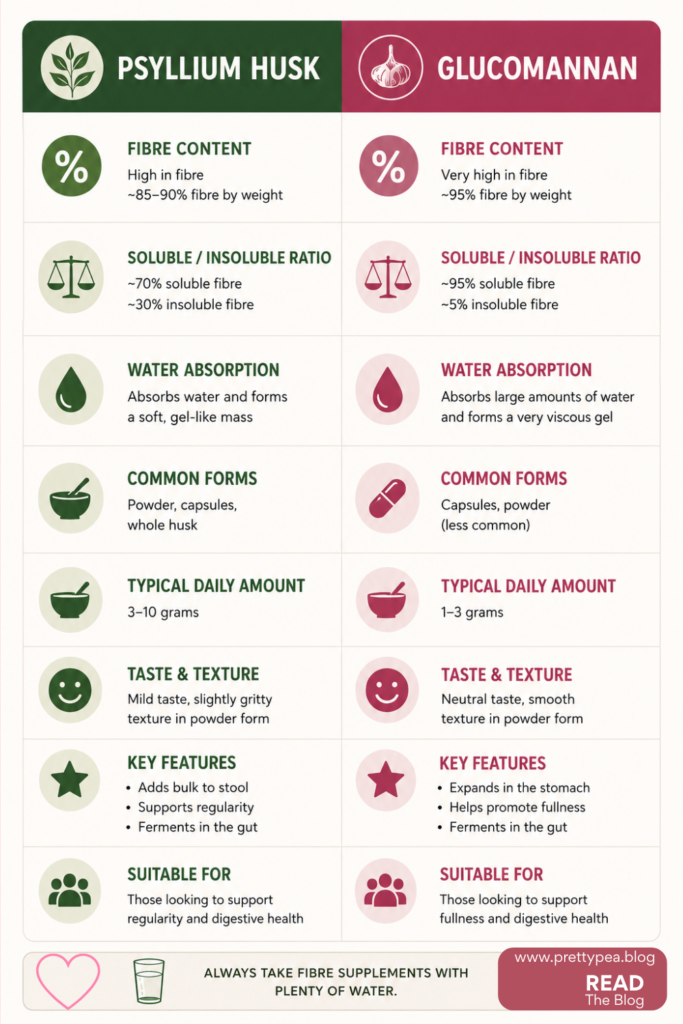
## [How To Use Psyllium Husk: A Comprehensive Guide for Maximum Health Benefits](https://prettypea.blog/how-to-use-psyllium-husk/)
**Your next read:** [Glucomannan for Weight Loss: Does It Work and How Does It Compare to Medications?](https://prettypea.blog/glucomannan-weight-loss/)
---
## How To Use Psyllium Husk In Your Diet
Incorporating psyllium into your diet can be simple and versatile, thanks to its neutral taste and easy-to-use form.
One of the most common ways to consume psyllium is by mixing it with water or another liquid. To do this, simply stir a teaspoon of psyllium husk powder into a glass of water, juice, or smoothie, and drink it immediately before it thickens.
This method ensures that you receive the full benefits of psyllium’s soluble fibre, making it an excellent addition to your daily routine.
[Psyllium ](https://prettypea.blog/plantago-ovata-psyllium-husk-benefits-uses-science-and-faqs/ "Psyllium ")can also be added to a variety of foods to boost their fibre content. For example, you can sprinkle psyllium husk powder over your morning cereal or yogurt, or mix it into your oatmeal or porridge.
When using psyllium husk in baking, it is important to remember that it absorbs a significant amount of liquid, so you may need to adjust the liquid ingredients in your recipes accordingly.
Additionally, psyllium can be incorporated into baked goods such as bread, muffins, and pancakes. For more inspiration get your **free recipe guide below.**
Prefer a **multi-fibre capsule** approach? Discover our **soluble and insoluble** Fibre capsules from high fibrous foods including **psyllium husk**, **sugar beet fibre**, **apple pectin**, **prune juice**, **flaxseed**, **rhubarb**, **fig**, **fenugreek**, **fennel seed** and more developed to support your daily fibre intake**.**
## [How To Use Psyllium Husk: A Comprehensive Guide for Maximum Health Benefits](https://prettypea.blog/how-to-use-psyllium-husk/)
## How to Use Psyllium Husk: Recommended Dosage
The recommended dosage of how to use psyllium husk in your diet can vary depending on the specific health goal you are targeting.
If you are new to psyllium, start with a lower dose and increase gradually as tolerated. If you have a medical condition or take prescription medications, speak with your healthcare provider before using psyllium supplements.
Psyllium absorbs water and expands into a gel-like fibre. For this reason, it should always be taken with a **full glass of water** and followed by adequate fluid intake throughout the day.
[Psyllium Husk Supplements](https://prettypea.blog/womens-health-supplements/)
### Digestive Health and Regularity
A common starting dose is **5–10 grams per day,** taken with plenty of water. Many people find it easiest to split this into two smaller servings taken throughout the day.
Increasing fibre intake too quickly may cause temporary bloating or digestive discomfort, so it is best to build up gradually.
### Cholesterol Support
Research suggests that doses of **10–20 grams** **per day** may help support healthy cholesterol levels when taken consistently as part of a healthy diet. [8](#f9884640-2700-4f39-b6e0-65fe438df69d)
### Blood Sugar Management
Studies have shown that taking **5–15 grams daily** before meals may help slow the absorption of carbohydrates, supporting more stable blood sugar levels. This should not replace any medication or treatment advised by your healthcare professional.
### Fullness and Weight Management
When it comes to filling up on fibre, the effects of **satiety and appetite** have been studied at various doses.
Several studies have found that taking psyllium before meals may increase feelings of fullness and reduce hunger. Research has used doses ranging from approximately **7–10 grams daily**, **often divided before meals**.⁹⁻¹²
**Satiety Study 1**A study [9](#800c10a0-ffc4-4287-9a67-36c92a4dd6fe) investigating the satiety effects of psyllium in healthy individuals found that doses of **psyllium 6.8 g and 10.2 g** taken before breakfast, lunch, and dinner for 3 consecutive days reduced hunger and desire to eat, and increased fullness between meals.
Satiety Study 2Other studies [10](#b2ce7f54-8ad5-43fe-bf91-aca79fc469d6) have also confirmed the efficacy of psyllium for increasing satiety/decreasing hunger. After dosing with**7.4 g/d**, it was found that post meal, hunger feelings and energy intake were significantly lower with psyllium compared to the placebo.
Satiety Study 3A 12-week study of 51 patients with type 2 diabetes and chronic constipation also compared the effects of psyllium (taking **10 g/d,** divided doses before meals) on weight. The study found that psyllium significantly reduced body weight by 2.0 kg *versus* placebo.
Satiety Study 4Other studies [11](#8f2a57a1-be3b-478a-95ba-35ebfdfdf4b0) showed that psyllium, dosed just before meals (average dose **10.8 g/day**, average **duration 4.8 months**), was effective for **decreasing body** **weight** by 2.1 kg, **BMI** -0.8 kg/m 2, and **waist circumference** -2.2 cm in overweight and obese populations.
Satiety Study 5A study investigating the satiety effects of psyllium in healthy individuals found that doses of **psyllium 6.8 g and 10.2 g** taken before breakfast, lunch, and dinner for 3 consecutive days reduced hunger and desire to eat, and increased fullness between meals. [12](#9432141b-5470-4628-b47c-ad86b30a0ff0)
[](https://prettypea.blog/fibre-powder/)Further reading: [GLP-1 Foods: The Ultimate List for Appetite Control, Fat Loss & Blood Sugar ](https://prettypea.blog/glp-1-foods/)
More here on [Psyllium Husk benefits and the full fibre comparisons](https://prettypea.blog/psyllium-husk-benefits/ "Psyllium Husk benefits and the full fibre comparisons")
## Psyllium Husk Recipes
Psyllium is easy to incorporate into everyday meals:
- **Smoothies:** Add 1 teaspoon to smoothies for extra fibre and a thicker texture.
- **Gluten-free baking:** Helps improve the structure of breads, muffins and pancakes.
- **Soups and sauces:** Stir in a small amount near the end of cooking to naturally thicken dishes.
- **Fibre puddings:** Mix with milk or a dairy-free alternative and allow to thicken before serving.
Never be stuck for ideas, get your **free fibre fuelled Recipe Guide:**
## The Biggest Psyllium Husk Mistakes
- **Not drinking enough water** – Psyllium absorbs water and forms a gel-like substance in the digestive tract. Without adequate fluid intake, it may not work as intended and can cause digestive discomfort.
- **Starting with too much** – Jumping straight to a large dose can increase the likelihood of bloating, gas or digestive upset. It’s usually best to increase intake gradually.
- **Increasing too quickly** – Your digestive system needs time to adapt to a higher fibre intake. A gradual increase is often more comfortable than making a dramatic change overnight.
- **Taking it inconsistently** – Occasional use is unlikely to provide the same benefits as making psyllium part of a regular daily routine.
- **Expecting immediate results** – While some people notice changes quickly, consistency over days and weeks is often more important than what happens after a single serving.
- **Ignoring your overall fibre intake** – Psyllium can help increase fibre consumption, but it works best as part of a balanced diet that includes a variety of fibre-rich foods.
**Top tip:** For best results, take psyllium with plenty of water, start slowly and give your body time to adjust.
[See Supplements](https://prettypea.blog/womens-health-supplements/)
---
## Potential Side Effects When Using Psyllium
While psyllium is generally considered safe and well tolerated by most people (at 10.5g, 52 weeks)[13](#0da3ccb1-dcfb-486b-ab1b-31b18128fa78), it is important to be aware of potential side effects and take necessary precautions.
One of the most common side effects of psyllium is gastrointestinal discomfort, which can include bloating, gas, and cramping. These symptoms are often temporary and may subside as your body adjusts to the increased fibre intake.
To minimize these effects, it is recommended to start with a lower dose of psyllium and gradually increase it while ensuring adequate hydration. It should be noted, however, that not all experts agree that psyllium causes excess gas.[14](#218f823c-ea97-42f2-a2ef-91c4c84dbc05) [15](#60b9bf75-ec77-4de0-aede-b3dfebc9450f)
In rare cases, psyllium can cause allergic reactions, which may manifest as skin rashes, itching, or difficulty breathing.[16](#3377f6d6-df3f-4478-a279-93f7e6d255fe) If you experience any of these symptoms, it is important to discontinue use and seek medical attention immediately.
Additionally, psyllium can interact with certain medications, including those for diabetes, high blood pressure, and cholesterol. It is important to consult with a healthcare provider before starting psyllium if you are taking any medications or have underlying health conditions.
Another precaution to consider is the risk of choking or blockages in the digestive tract if psyllium is not taken with enough water. Psyllium absorbs a significant amount of liquid and expands, so it is **essential to drink plenty of water** when consuming it.
This helps ensure that psyllium moves smoothly through the digestive system and prevents it from causing any obstructions.
[Fibre Supplements](https://prettypea.blog/womens-health-supplements/)
---
## Psyllium vs Other Fibre Supplements
Psyllium is one of several fibre supplements available, but its unique ability to absorb water and form a gel sets it apart.
## Glucomannan vs Psyllium Husk: What’s the Difference?
Glucomannan and psyllium husk are two of the best-known soluble fibres, but although they share some similarities, they behave quite differently in the digestive system.
Both absorb water and form a gel when mixed with liquid, helping to slow the movement of food through the digestive tract and support feelings of fullness.
However, **glucomannan is significantly more viscous** than psyllium. It has one of the highest water-binding capacities of any natural dietary fibre, with the ability to absorb **up to around 50 times its own weight in water**, whereas psyllium typically absorbs around **10–15 times its weight**. This means much less glucomannan is needed to produce a thick gel.
Psyllium husk, derived from the seeds of *Plantago ovata*, contains both **soluble and insoluble fibre**. The soluble portion forms a viscous gel, while the insoluble fibre helps add bulk to stool, making psyllium particularly well known for supporting bowel regularity.
Glucomannan, extracted from the root of the konjac plant (*Amorphophallus konjac*), is almost entirely **soluble fibre**. Because it forms such a highly viscous gel, it has been extensively studied for its effects on fullness and is the only fibre with an authorised European health claim stating that it **contributes to weight loss in the context of an energy-restricted diet** when consumed at **3 g per day in three 1 g doses before meals with 1–2 glasses of water**.
Both fibres also act as fermentable fibres, meaning they can be utilised by beneficial gut bacteria in the colon. During fermentation they produce short-chain fatty acids (SCFAs), compounds that help nourish the cells lining the colon and contribute to a healthy gut environment.
### Glucomannan vs Psyllium at a Glance
**Feature****Glucomannan****Psyllium Husk****Source**Konjac root (*Amorphophallus konjac*)*Plantago ovata* seed husks**Fibre type**Almost entirely soluble fibreMixture of soluble and insoluble fibre**Water absorption**Up to ~50× its weightAround 10–15× its weight**Gel formation**Extremely thick, highly viscous gelThick viscous gel**Best known for**Fullness and authorised weight-loss claim\*Bowel regularity and stool bulk**Fermentable by gut bacteria**YesYes (partially)**Supports bowel regularity**YesYes**Typical use**Capsules, powders, noodles, food thickenerPowders, capsules, cereals, baking### **Psyllium vs Methylcellulose**
Like psyllium, methylcellulose is a soluble fibre that can help support regular bowel movements. However, methylcellulose is not fermented by gut bacteria, making it less likely to cause gas. Unlike psyllium, it does not provide meaningful prebiotic benefits for the gut microbiome.
### **Psyllium vs Inulin**
[Inulin](https://prettypea.blog/what-is-inulin/ "Inulin") is a **prebiotic fibre** found naturally in chicory root and other plants. While it helps feed beneficial gut bacteria, it does not form a gel and may cause more gas and bloating in some individuals. Psyllium is generally better tolerated and may be more effective for stool softening and bowel regularity.
### **Psyllium vs Chia and Flaxseeds**
Chia and flaxseeds provide fibre alongside healthy fats and other nutrients. However, they can alter the texture of foods and typically require larger serving sizes. Psyllium offers a simple way to increase fibre intake with minimal impact on taste or texture.
[Shop Supplements](https://prettypea.blog/womens-health-supplements/)
---
### Which Fibre Should You Choose?
The answer depends on your goals.
If your priority is **supporting bowel regularity and increasing stool bulk**, psyllium husk has an excellent evidence base and is widely used for digestive health.
If your goal is **supporting fullness as part of a calorie-controlled diet**, glucomannan’s exceptional ability to absorb water and form a highly viscous gel makes it a distinctive choice, and it is the only fibre currently carrying an authorised European weight-loss health claim.
That said, these fibres don’t have to compete. Because they work in slightly different ways, many comprehensive fibre supplements combine **glucomannan, psyllium, prebiotic fibres such as inulin, and other complementary ingredients** to provide broader digestive support than a single fibre alone.
## [How To Use Psyllium Husk: A Comprehensive Guide for Maximum Health Benefits](https://prettypea.blog/how-to-use-psyllium-husk/)
Not ready to buy yet, **get your free Fibre Checklist Guide**
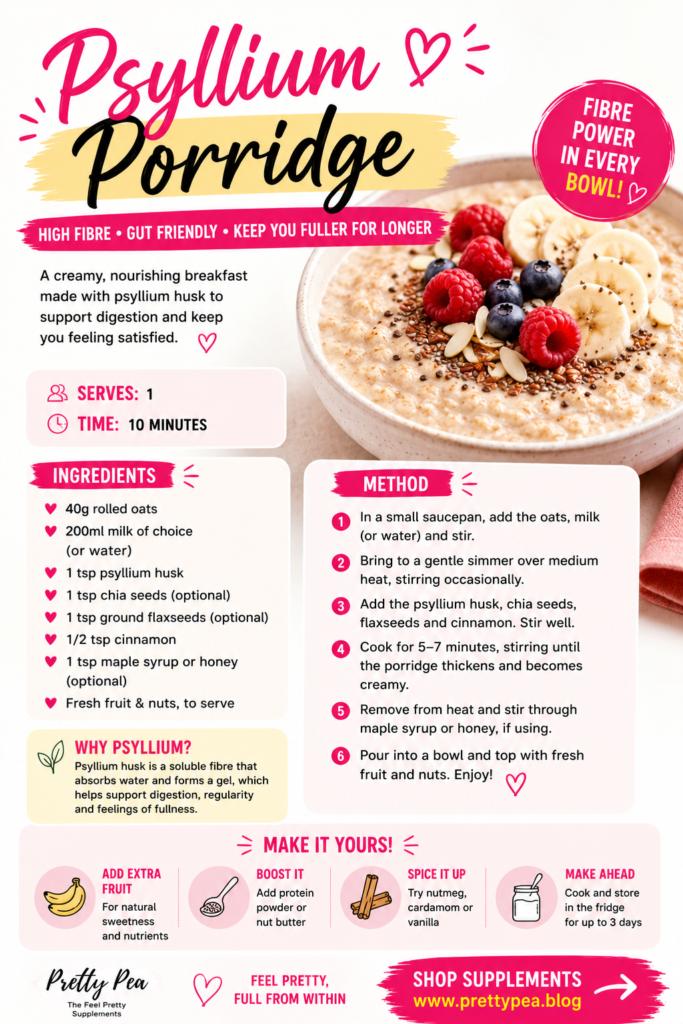## Latest Products & Psyllium Husk FAQ
[View All → →](#)
### [How To Use Psyllium Husk: A Comprehensive Guide for Maximum Health Benefits](https://prettypea.blog/how-to-use-psyllium-husk/)
## Frequently Asked Questions About Psyllium How to Use
### **What is psyllium and where does it come from?**
Psyllium is a form of soluble fibre derived from the husks of the seeds of the Plantago ovata plant. It is primarily grown in India and has been used for centuries in traditional medicine for its digestive health benefits.
Psyllium is available in various forms, including husk, powder, capsules, and tablets.
### ****How does psyllium benefit digestive health?****
Psyllium benefits digestive health by absorbing water and forming a gel-like substance in the digestive tract. This helps to soften stools, promote regular bowel movements, and alleviate symptoms of constipation and diarrhoea.
Psyllium also acts as a prebiotic, nourishing beneficial gut bacteria and supporting a healthy microbiome.
### ******Can psyllium help with weight loss?******
Psyllium can aid in weight loss by promoting feelings of fullness and reducing appetite.
The soluble fibre in psyllium slows down digestion and helps control blood sugar levels, making it easier to manage cravings and maintain a healthy diet.
However, psyllium should be used as part of a balanced diet and healthy lifestyle for optimal results.
### ********Are there any side effects of taking psyllium?********
While psyllium is generally safe and well tolerated by most people, it can cause gastrointestinal discomfort, such as bloating, gas, and cramping, especially when first introduced to the diet and in large amounts.
These symptoms usually subside as the body adjusts to the increased fibre intake. It is important to drink plenty of water when taking psyllium to prevent blockages in the digestive tract.
### **********Can psyllium interact with medications?**********
Psyllium can interact with certain medications, including those for diabetes, high blood pressure, and cholesterol. Psyllium may affect the absorption of some medications, so timing and dosage adjustments may be necessary.
It is important to consult with a healthcare provider before starting psyllium if you are taking any medications or have underlying health conditions.
### How To Use Psyllium For a Healthier Lifestyle
Incorporating psyllium into your daily routine can have a profound impact on your overall health and well-being.
This versatile soluble fibre offers a wide range of benefits, from improving digestive health and regulating bowel movements to lowering cholesterol levels and stabilizing blood sugar.
Whether you choose to mix psyllium with water, add it to your favorite recipes, or take it as a supplement, the key is to find a method that works best for you and fits seamlessly into your lifestyle.
By staying mindful of recommended dosages and potential side effects, you can safely and effectively harness the power of psyllium to enhance your health.
- [](https://prettypea.blog/d-mannose-and-cranberry-for-women/)[Menopause Nutrition](https://prettypea.blog/category/menopause/) · [Superfoods](https://prettypea.blog/category/superfoods/) · [Supplements](https://prettypea.blog/category/supplements/)
October 8, 2026
- [](https://prettypea.blog/what-is-glp-1/)[Fibre & Gut Health](https://prettypea.blog/category/fibre/) · [Hormones & HRT](https://prettypea.blog/category/hormones-hrt/) · [Menopause Nutrition](https://prettypea.blog/category/menopause/) · [Supplements](https://prettypea.blog/category/supplements/)
### [What Is GLP-1? The Gut Hormone That Helps Regulate Hunger & Blood Sugar](https://prettypea.blog/what-is-glp-1/)
August 18, 2026
- [](https://prettypea.blog/psyllium-husk-benefits/)[Pretty Pea](https://prettypea.blog/category/pretty-pea/)
### [Psyllium Husk: Benefits, How to Take It, Side Effects & How It Compares](https://prettypea.blog/psyllium-husk-benefits/)
August 15, 2026
##### **You might also be interested in:**
[Hormone Imbalance in Women: Causes, Symptoms & How Hormones Work](https://prettypea.blog/hormone-imbalance-in-women/)
[Bloating Isn’t Just “Too Much Gas”: The Real Causes of Bloating (and What Actually Helps)](https://prettypea.blog/7-real-causes-of-bloating-and-what-actually-helps/)
[Understanding Visceral Fat: The Ultimate Belly Fat Guide – Pretty Pea](https://prettypea.blog/understanding-visceral-fat-the-ultimate-belly-fat-guide/)
[The Menopause Diet 5 Day Plan to Lose Weight](https://prettypea.blog/the-menopause-diet-5-day-plan-to-lose-weight/)
[Why Fibre Could Be the Secret to a Better Menopause](https://prettypea.blog/why-fibre-could-be-the-secret-to-a-better-menopause/)
[The 100 Symptoms of Perimenopause](https://prettypea.blog/the-100-symptoms-of-perimenopause/)
[What Is Insulin Resistance? Signs, Causes & What Helps – Pretty Pea](https://prettypea.blog/what-is-insulin-resistance/)
[9 Benefits of Fibre: Why It’s Essential for Gut Health, Weight and Wellbeing](https://prettypea.blog/9-benefits-of-fibre-why-its-essential-for-gut-health-weight-and-wellbeing/)
[What Is Glucomannan? Benefits, Uses & Side Effects](https://prettypea.blog/what-is-glucomannan-2/)
[GLP-1 Foods: The Ultimate List for Appetite Control, Fat Loss & Blood Sugar](https://prettypea.blog/glp-1-foods/)
[Best Fibre Supplements for Women | Complete UK Fibre Supplement Guide](https://prettypea.blog/fibre-supplements-for-women/)
---
### References : How to Use Psyllium Husk
1. [The r](https://pubmed.ncbi.nlm.nih.gov/40620304/ "The role a")[ole and therapeutic effectiveness of Plantago ovata seed husk (psyllium husk) in the prevention and non-pharmacological treatment of gastrointestinal diseases. Part 1. Clinical use of psyllium husk in the treatment of irritable bowel syndrome, ulcerative ](https://pubmed.ncbi.nlm.nih.gov/40620304/ "ole and therapeutic effectiveness of Plantago ovata seed husk (psyllium husk) in the prevention and non-pharmacological treatment of gastrointestinal diseases. Part 1. Clinical use of psyllium husk in the treatment of irritable bowel syndrome, ulcerative ")colitis, and colorectal cancer – PubMed [↩︎](#23db0244-db6f-4971-90b7-b33f314e31d3-link)
2. [The Effect of Psyllium Husk on Intestinal Microbiota in Constipated Patients and Healthy Controls – PubMed](https://pubmed.ncbi.nlm.nih.gov/30669509/) [↩︎](#38d9dd91-7f48-4ae4-bfab-362323b3fdc3-link)
3. [The role and therapeutic effectiveness of Plantago ovata seed husk (psyllium husk) in the prevention and non-pharmacological treatment of gastrointestinal diseases. Part 1. Clinical use of psyllium husk in the treatment of irritable bowel syndrome, ulcerative colitis, and colorectal cancer – PubMed](https://pubmed.ncbi.nlm.nih.gov/38939069/) [↩︎](#4649bd1b-2dd6-4b0e-b3bb-f002fd6dd001-link)
4. [Beneficial effects of psyllium on the prevention and treatment of cardiometabolic diseases – Food & Function (RSC Publishing)]() [↩︎](#027897d5-acff-4dbe-b889-65f78abde4ee-link)
5. [Psyllium: a useful functional ingredient in food systems – PubMed](https://pubmed.ncbi.nlm.nih.gov/32951436/) [↩︎](#e0f72703-c17d-49e0-a0ad-be089f386cbf-link)
6. [Psyllium is a natural nonfermented gel-forming fiber that is effective for weight loss: A comprehensive review and meta-analysis – PubMed](https://pubmed.ncbi.nlm.nih.gov/37163454/) [↩︎](#883650e5-8acb-4a2d-8801-dafcca008481-link)
7. [Psyllium is a natural nonfermented gel-forming fiber that is effective for weight loss: A comprehensive review and meta-analysis – PubMed](https://pubmed.ncbi.nlm.nih.gov/37163454/) [↩︎](#4ee00cba-816a-4352-845d-2ebc262476b2-link)
8. [Beneficial effects of psyllium on the prevention and](https://pubs.rsc.org/en/content/articlelanding/2022/fo/d2fo00560c#cit22) [treatment of cardiometabolic diseases – Food & Function (RSC Publishing)](https://pubs.rsc.org/en/content/articlelanding/2022/fo/d2fo00560c#cit22) [↩︎](#f9884640-2700-4f39-b6e0-65fe438df69d-link)
9. [Beneficial effects of psyllium on the prevention and treatment of cardiometabolic diseases – Food & Function (RSC Publishing)](https://pubs.rsc.org/en/content/articlelanding/2022/fo/d2fo00560c) [↩︎](#800c10a0-ffc4-4287-9a67-36c92a4dd6fe-link)
10. [Psyllium is a natural nonfermented gel-forming fiber that is effective for weight loss: A comprehensive review and meta-analysis – PubMed](https://pubmed.ncbi.nlm.nih.gov/37163454/) [↩︎](#b2ce7f54-8ad5-43fe-bf91-aca79fc469d6-link)
11. [Psyllium is a natural nonfermented gel-forming fiber that is effective for weight loss: A comprehensive review and meta-analysis – PubMed](https://pubmed.ncbi.nlm.nih.gov/37163454/) [↩︎](#8f2a57a1-be3b-478a-95ba-35ebfdfdf4b0-link)
12. Beneficial effects of psyllium on the prevention and treatment of cardiometabolic diseases – Food & Function (RSC Publishing) [↩︎](#9432141b-5470-4628-b47c-ad86b30a0ff0-link)
13. Beneficial effects of psyllium on the prevention and treatment of cardiometabolic diseases – Food & Function (RSC Publishing) [↩︎](#0da3ccb1-dcfb-486b-ab1b-31b18128fa78-link)
14. [Psyllium is not fermented in the human gut – PubMed](https://pubmed.ncbi.nlm.nih.gov/26503164/) [↩︎](#218f823c-ea97-42f2-a2ef-91c4c84dbc05-link)
15. [Clinical data support that psyllium is not fermented in the gut – PubMed](https://pubmed.ncbi.nlm.nih.gov/24005363/) [↩︎](#60b9bf75-ec77-4de0-aede-b3dfebc9450f-link)
16. [Anaphylaxis following ingestion of a psyllium-containing cereal – PubMed](https://pubmed.ncbi.nlm.nih.gov/2232020/) [↩︎](#3377f6d6-df3f-4478-a279-93f7e6d255fe-link)
[The role and therapeutic effectiveness of Plantago ovata husk (psyllium husk) in the prevention and non-pharmacological treatment of gastrointestinal diseases. Part 2. Clinical use of psyllium husk in the treatment of constipation and diarrhea – PubMed](https://pubmed.ncbi.nlm.nih.gov/40620304/)
**Categories:** Fibre & Gut Health, Menopause Nutrition, Superfoods, Supplements
---
### [Appetite Regulation: How Fibre vs GLP-1 Compare](https://prettypea.blog/appetite-regulation-how-fibre-vs-glp-1-compare/)
**Published:** February 4, 2026
**Author:** Cate Boyd
**Content:**
GLP-1 medications have changed the conversation around appetite, blood sugar, and weight regulation. But long before injections entered the picture, the body already had its own systems for managing hunger and fullness — and **dietary fibre plays a key role in supporting them**. So how does fibre vs GLP-1 compare?
This doesn’t mean fibre works *like* GLP-1 medication or replaces it. But it does mean fibre supports **many of the same natural pathways** involved in digestion, satiety, and blood sugar stability — especially relevant during perimenopause and menopause, when appetite cues often feel unpredictable.
Like many women navigating midlife, I’ve become increasingly interested in how appetite, energy, and digestion change over time.
So with the growing interest in GLP-1 medications — alongside questions about whether more natural, food-based approaches could play a role, this prompted me to look more closely at how fibre interacts with appetite regulation and satiety pathways, and how it compares, scientifically, to pharmaceutical approaches.
Let’s explore how fibre fits into the picture as we compare fibre vs GLP-1.
## [Appetite Regulation: How Fibre vs GLP-1 Compare](https://prettypea.blog/appetite-regulation-how-fibre-vs-glp-1-compare/)
---
## What is GLP-1 (in simple terms)?
GLP-1 (glucagon-like peptide-1) is a hormone released in the gut after eating.
It helps the body by:
- signalling fullness to the brain
- slowing the emptying of the stomach
- supporting healthy blood sugar responses after meals
In everyday terms, GLP-1 helps you feel:
- satisfied sooner
- full for longer
- less prone to sharp hunger swings
**Fibre vs GLP1**: GLP-1 medications amplify these signals. Fibre, on the other hand, **supports the body’s own appetite regulation through digestion and gut health**.
[](https://prettypea.blog/fibre-powder/)---
## How Fibre Supports Your Body’s Natural GLP-1 Response
When most people hear “GLP-1”, they think of weight-loss medications. However, GLP-1 (glucagon-like peptide-1) is actually a hormone your body naturally produces every day after you eat.
One of the most interesting ways to support your body’s natural GLP-1 response is by eating enough fibre—particularly soluble, fermentable fibre.
Unlike digestible carbohydrates, fibre reaches the large intestine largely intact. There, it becomes food for your beneficial gut bacteria. As these bacteria ferment fibre, they produce compounds called **short-chain fatty acids (SCFAs)**, including acetate, propionate and butyrate.
Research suggests these SCFAs can stimulate specialised cells in the lining of the intestine (known as **L-cells**) to release GLP-1.
Once released, GLP-1 travels through the bloodstream and communicates with the brain and digestive system, helping regulate appetite and digestion.
While eating fibre does not produce the same effect as GLP-1 medications, it supports one of the body’s natural pathways involved in fullness and healthy appetite regulation.
---
## The Fibre → Gut → GLP-1 Pathway
Understanding this pathway helps explain why fibre offers benefits far beyond regular bowel movements.
### Step 1 — Eat Fibre
Soluble fibres such as glucomannan, psyllium, inulin, oat beta-glucan and pectin are found naturally in foods and some supplements.
↓
### Step 2 — Gut Bacteria Ferment Fibre
Because fibre isn’t fully digested in the stomach or small intestine, it reaches the large intestine where beneficial gut bacteria ferment it.
↓
### Step 3 — Short-Chain Fatty Acids Are Produced
Fermentation produces beneficial compounds called **short-chain fatty acids (SCFAs)**, including acetate, propionate and butyrate.
↓
### Step 4 — L-Cells Release GLP-1
SCFAs stimulate specialised intestinal cells called **L-cells**, which naturally release GLP-1.
↓
### Step 5 — Your Brain Receives Fullness Signals
GLP-1 helps regulate appetite, slows stomach emptying and contributes to feelings of fullness after eating.
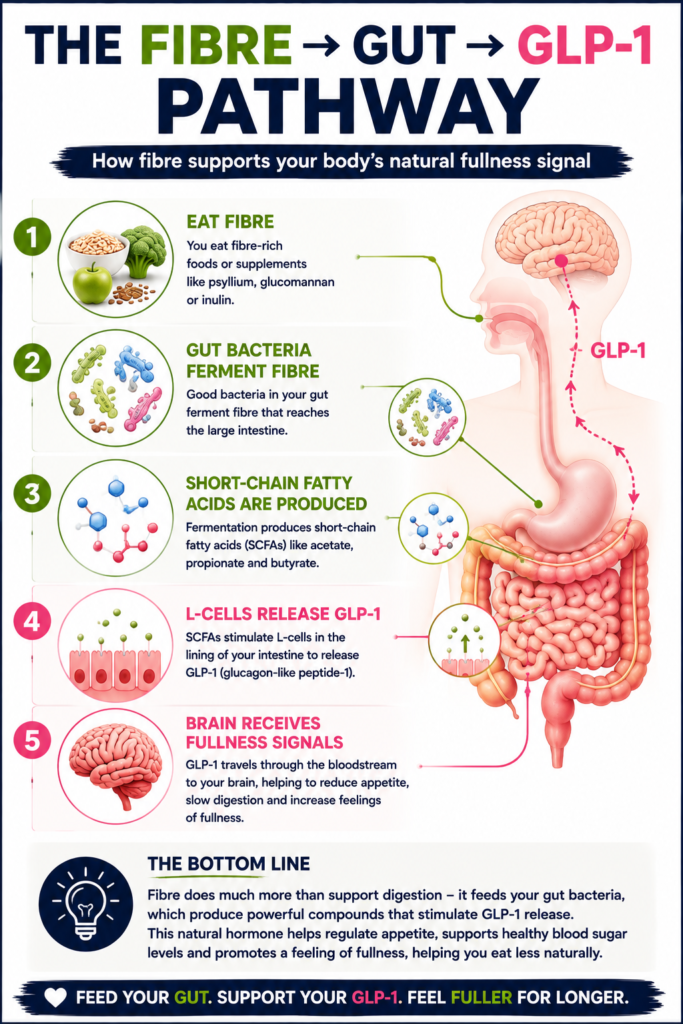---
## How fibre supports similar outcomes (without acting as a drug)
### **1️⃣ Fibre slows digestion naturally**
Soluble fibre absorbs water and forms a gel-like substance in the gut. This:
- slows how quickly food leaves the stomach
- reduces rapid absorption of carbohydrates
- helps meals feel more sustaining
**Fibre vs GLP1** – GLP-1 medications slow gastric emptying pharmacologically. Fibre achieves a **similar digestive effect through food structure**, not hormone manipulation.
---
### **2️⃣ Fibre supports steadier blood sugar**
Slower digestion means glucose enters the bloodstream more gradually. This can help:
- reduce post-meal spikes
- prevent energy crashes
- limit rebound hunger
Blood sugar swings are a major driver of cravings and appetite volatility — something many women notice more strongly during hormonal transitions.
Get started today with your **free recipe guide.**
---
### **3️⃣ Fibre feeds gut bacteria that influence satiety**
Certain fibres are fermented by gut bacteria into short-chain fatty acids (SCFAs).
So when it comes to gut hormones and appetite these compounds help support:
- gut-brain signalling
- feelings of fullness
- appetite-related hormone release
Research suggests this gut activity may encourage the body’s natural production of satiety hormones — including GLP-1 — as part of normal digestive physiology.
In other words, fibre helps **create the internal conditions** where appetite signals work properly.
---
## Fibre Supplements.
.
**[Appetite Fibre Powder](https://prettypea.blog/fibre-powder/ "Appetite Fibre Powder")**
4 types of fibres, including Psyllium & Glucomannan, prebiotic, probiotic live cultures and digestive herbs
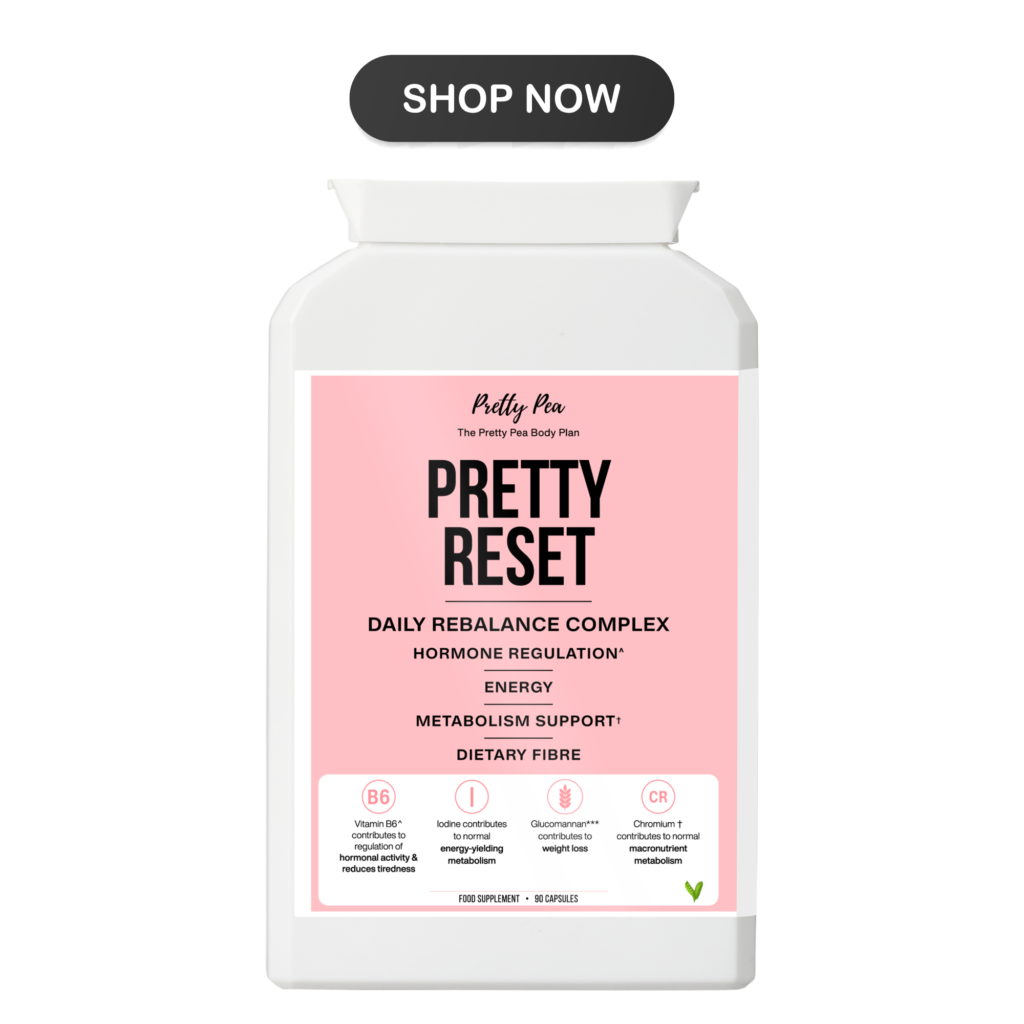**[Reset Glucomannan Fibre Capsules](https://prettypea.blog/product/pretty-reset/ "Reset Glucomannan Fibre Capsules")**
Advanced fibre formula supporting satiety, weight, hormone regulation, metabolism and energy
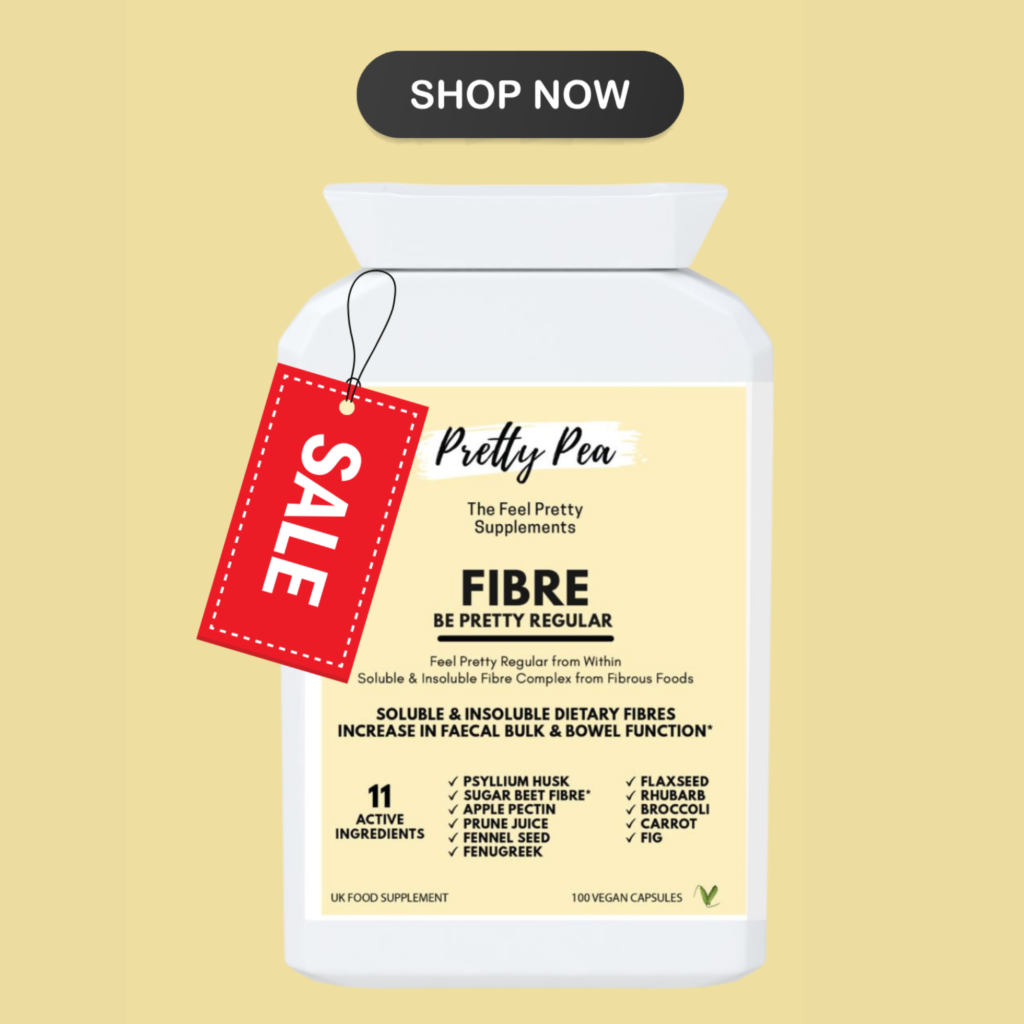[Healthy Bowels **Capsules**](https://prettypea.blog/fibre-capsules/ "Healthy Bowels Capsules")
Healthy Bowels Formula – Soluble and insoluble fibre capsules from 11 high fibre foods.
### **4️⃣ Fibre helps quiet “food noise”**
Many people describe GLP-1 medications as reducing constant thoughts about food.
Fibre can support this in a gentler way:
- meals feel more complete
- hunger returns more predictably
- grazing becomes less frequent
**Fibre vs GLP1** – Fibre supports fullness, but rather than suppressing appetite, fibre helps **normalise hunger cues** — which is often what’s disrupted during perimenopause and menopause.
Further reading: [GLP-1 Foods: The Ultimate List for Appetite Control, Fat Loss & Blood Sugar](https://prettypea.blog/glp-1-foods/)
---
## Soluble vs Insoluble Fibre: Which Has the Strongest Connection to GLP-1?
Not all fibre behaves in the same way.
**Soluble Fibre****Insoluble Fibre**Dissolves in waterDoes not dissolve in waterForms a gentle gelAdds bulk to stoolsOften fermented by gut bacteriaLess fermentableCan contribute to SCFA productionMainly supports bowel regularityGreater potential to support the body’s natural GLP-1 pathwayImportant for digestive health but through different mechanismsBoth types of fibre are important, and most experts recommend eating a variety of fibre-rich foods rather than focusing on one single type.
---
## Fibre vs GLP-1 medications: a realistic comparison
**Feature****Fibre****GLP-1 Medications**TypeNutrientPrescription medicineHow it worksDigestion & gut signallingHormone receptor activationAppetiteSupports fullnessAmplifies satiety signalsBlood sugarSlows absorptionEnhances insulin responseSpeedGradualRapidRoleFoundational nutritionMedical interventionFibre is **not a substitute** for medication — but it *is* a powerful nutritional foundation that supports the same systems.
---
## Foods That Naturally Support Your Body’s GLP-1 Response
Rather than searching for one “magic food”, build meals around a variety of fibre-rich whole foods.
**Food****Why it’s useful**OatsRich in beta-glucan soluble fibreLentilsFibre and resistant starchChickpeasFibre and plant proteinBeansExcellent source of fermentable fibreApplesNatural pectinPearsSoluble fibreBerriesFibre and polyphenolsBroccoliFibre-rich vegetableFlaxseedSoluble fibre and healthy fatsChia seedsHighly absorbent soluble fibrePsyllium huskViscous soluble fibreGlucomannanHighly viscous soluble fibre from konjac rootA varied, plant-rich diet also supports a more diverse gut microbiome, which is associated with better overall gut health.
---
## Why Fibre matters more in Menopause
During perimenopause and menopause, many women notice:
- appetite feels less reliable
- cravings increase
- digestion slows
- extreme dieting backfires
Rather than forcing results, fibre supports menopause appetite changes by:
- working with digestion
- reducing overstimulation
- supporting consistency over extremes
Small, steady inputs often outperform aggressive approaches during this phase of life.
---
## Choosing Fibre Wisely
Not all fibre feels the same.
Many women find:
- soluble fibre is better tolerated
- very rough or bran-heavy fibres worsen bloating
- starting slowly improves comfort
Hydration can really matter — fibre needs water to work effectively.
---
## The Protein + Fibre Formula
One of the simplest ways to build more satisfying meals is to combine **protein with fibre**.
**Protein****Fibre**Helps maintain muscle massSupports digestive healthSlower digestionAdds volume to mealsSupports fullnessSupports your body’s natural GLP-1 pathwayHelps preserve lean tissue during weight lossFeeds beneficial gut bacteria### Together they help create meals that are:
- More filling
- More nutritious
- Richer in vitamins and minerals
- Better balanced
- Easier to sustain long term
---
## Are You Eating Enough Fibre?
The UK recommendation for adults is **around 30 g of fibre per day**, yet average intakes remain considerably lower.
### Quick checklist
Do you regularly eat:
☐ Wholegrains
☐ Beans or lentils
☐ Fruit every day
☐ Vegetables with lunch and dinner
☐ Nuts or seeds
☐ Oats
☐ High-fibre breakfasts
If not, gradually increasing your fibre intake could benefit both digestive health and overall diet quality.
---
## Supporting Your Body
> Understanding how fibre and appetite regulation work can help you make more informed decisions about your wellbeing, especially during midlife.
>
> While pharmaceutical options may be appropriate for some individuals under medical supervision, nutrition and lifestyle remain foundational to long-term health.
>
> At Pretty Pea, our focus is on providing carefully formulated, food-based supplements designed to complement a balanced diet and healthy lifestyle.
>
> If you’re exploring ways to increase your fibre intake, you may find our range of fibre powders and capsules helpful as part of your routine.
>
>
>
>
>
>
>
>
>
> ## [Appetite Regulation: How Fibre vs GLP-1 Compare](https://prettypea.blog/appetite-regulation-how-fibre-vs-glp-1-compare/)
## How to Increase Fibre Without Digestive Discomfort
Increasing fibre too quickly may cause bloating or discomfort, particularly if your current intake is low.
Instead:
- Increase fibre gradually over several weeks.
- Drink enough fluids, especially with fibre supplements.
- Eat a variety of fibre sources rather than relying on one food.
- Include both soluble and insoluble fibre.
- Continue eating enough protein and healthy fats to create balanced meals.
Most people find these symptoms improve as the gut adapts.
---
## Fibre vs GLP-1 – The Takeaway
GLP-1 medications have highlighted an important truth: **appetite regulation isn’t about willpower**.
Fibre supports many of the same physiological processes — digestion speed, blood sugar stability, and gut-derived fullness signals — without overriding the body’s natural systems.
For women navigating menopause, fibre isn’t a shortcut.
It’s a **foundation**.
## Fibre vs GLP-1 FAQ
### **What is GLP-1?**
GLP-1 (glucagon-like peptide-1) is a naturally occurring hormone released in the gut after eating.
It helps the body:
signal fullness
slow stomach emptying
support steady blood sugar
GLP-1 medications amplify these signals for medical purposes, but the body produces GLP-1 naturally.
### Does fibre work like GLP-1 medication?
Not exactly. Fibre does not act as a medication or replace prescription treatment.
Fibre supports the body’s **natural fullness and digestion signals** by:
- slowing digestion
- supporting steady blood sugar
- feeding gut bacteria that influence satiety
It works with your body rather than on hormone receptors.
### How can fibre help with appetite?
Fibre can make meals feel more satisfying and hunger more predictable.
This effect comes from:
- slower digestion
- steadier blood sugar
- improved gut-derived satiety signals
It is gentle, gradual, and works best as part of a balanced routine including protein, hydration, and sleep.
### Is fibre effective for weight management?
Fibre supports fullness and appetite regulation, but it is **not a weight-loss drug**.
Its main benefits are:
- helping you feel calmer after meals
- reducing mindless snacking
- supporting steady energy
It’s most effective when combined.
### Which type of fibre is best?
Many women find **soluble fibre** easier to tolerate than very coarse or bran-heavy fibres.
Soluble fibre:
- dissolves in water
- slows digestion gently
- supports fullness and gut health
Start gradually and increase intake over time to reduce bloating.
### Why is fibre especially important during menopause?
During perimenopause and menopause:
- appetite cues often feel less reliable
- blood sugar regulation can shift
- digestion can become slower
Fibre supports:
- steadier appetite
- calmer digestion
- more predictable energy
It’s a gentle, supportive tool for navigating hormonal changes.
### **Is fibre effective for weight management?**
Fibre supports fullness and appetite regulation, but it is **not a weight-loss drug**.
Its main benefits are:
- helping you feel calmer after meals
- reducing mindless snacking
- supporting steady energy
It’s most effective when combined with other healthy lifestyle habits
If you’re interested in learning more about fibre, digestion, and women’s health, you can explore our educational blog for further science-backed guidance and practical tips.
### ****Which type of fibre is best?****
Many women find **soluble fibre** easier to tolerate than very coarse or bran-heavy fibres.
Soluble fibre:
- dissolves in water
- slows digestion gently
- supports fullness and gut health
Start gradually and increase intake over time to reduce bloating
### ******Can fibre cause bloating or discomfort?******
Some temporary bloating can happen if fibre intake is increased too quickly.
Tips to reduce discomfort:
- introduce fibre gradually
- drink plenty of water
- avoid multiple new fibre sources at once
Your gut usually adapts over a few days to a couple of weeks.
### ********How much fibre should I aim for?********
Recommended fibre intake varies by age and diet. Many adults benefit from around **25–30g of fibre daily**, ideally from a mix of:
- fruits and vegetables
- legumes
- whole grains
- soluble fibre supplements (if needed)
Always increase gradually to allow your digestive system to adjust.
### **********Can I take fibre at any time of day?**********
Yes — but many people find it easiest to include fibre with meals to:
- feel fuller longer
- slow digestion
- support blood sugar stability
Consistency matters more than exact timing.
### **Can fibre replace medication or other interventions?**
No. Fibre is a **foundational, supportive nutrient**, not a medical treatment.
It complements other healthy habits and, if relevant, medical guidance — but it does not replace GLP-1 medication or any prescribed therapies.
**For more fibre advice:**
[Understanding Visceral Fat: The Ultimate Belly Fat Guide](https://prettypea.blog/understanding-visceral-fat-the-ultimate-belly-fat-guide/)
[Everything Psyllium How To Use: A Comprehensive Guide on How to Use It for Maximum Health Benefits](https://prettypea.blog/psyllium-how-to-use/)
[Can You Use Psyllium Husk for Weight Loss? Benefits, Dosage & Science Explained ](https://prettypea.blog/psyllium-husk-for-weight-loss/)
[GLP-1 Foods: The Ultimate List for Appetite Control, Fat Loss & Blood Sugar](https://prettypea.blog/glp-1-foods/)
[The 100 Symptoms of Perimenopause](https://prettypea.blog/the-100-symptoms-of-perimenopause/)
[Weird Perimenopause Symptoms: 25 Unusual Signs You Didn’t Expect](https://prettypea.blog/weird-perimenopause-symptoms-25-unusual-signs-you-didnt-expect/)
[Early Signs of Perimenopause in Your 40s: What to Look For ](https://prettypea.blog/early-signs-of-perimenopause/)
[Hormone Imbalance in Women: Causes, Symptoms & How Hormones Work](https://prettypea.blog/hormone-imbalance-in-women/)
[Best Menopause Supplements UK (2026)](https://prettypea.blog/best-menopause-supplements-uk-2026-what-to-look-for-evidence-based-comparison-guide/)
[Menopause Weight Changes Explained (UK Guide)](https://prettypea.blog/menopause-weight-changes-explained-uk-guide-what-research-says-about-body-composition-metabolism-nutrition/)
[The Menopause Diet 5 Day Plan to Lose Weight](https://prettypea.blog/the-menopause-diet-5-day-plan-to-lose-weight/)
[Why Fibre Could Be the Secret to a Better Menopause](https://prettypea.blog/why-fibre-could-be-the-secret-to-a-better-menopause/)
[Glucomannan for Weight Loss: Does It Work and How Does It Compare to Medications?](https://prettypea.blog/glucomannan-weight-loss/)
## Latest Products
[View All → →](#)
### [Appetite Regulation: How Fibre vs GLP-1 Compare](https://prettypea.blog/appetite-regulation-how-fibre-vs-glp-1-compare/)
### Fibre vs GLP-1 Sources:
- [Slavin JL. *Dietary fiber and body weight.* Nutrition (2005)](https://pubmed.ncbi.nlm.nih.gov/15797686/ "Slavin JL. Dietary fiber and body weight. Nutrition (2005)")
- Byrne CS et al. *The role of short-chain fatty acids in appetite regulation.* Int J Obesity (2015)
- Delzenne NM et al. *Gut microbiota and satiety signalling.* Nat Rev Endocrinol (2010)
- Jenkins DJA et al. *Effect of viscous fibre on glycaemic control.* BMJ (1978)
**Categories:** Fibre & Gut Health, Menopause Nutrition, Superfoods, Supplements
---
### [Why Am I Always Tired? The Ultimate Guide to Fighting Fatigue Naturally](https://prettypea.blog/why-am-i-always-tired/)
**Published:** August 4, 2026
**Author:** Cate Boyd
**Content:**
Do you find yourself asking why am I always tired? Whilst feeling tired occasionally is normal. But when low energy follows you through the day—despite getting what seems like enough sleep—it can affect your concentration, motivation, exercise, food choices and overall quality of life.
Fatigue can have many causes. Poor sleep, stress, an unbalanced diet and inactivity are common contributors, but persistent tiredness may also be associated with iron deficiency, vitamin B12 or folate deficiency, thyroid disorders, diabetes, sleep apnoea, medication side effects or another underlying condition. The NHS advises speaking to a GP when tiredness lasts for several weeks, affects daily life or is accompanied by other unexplained symptoms.
This guide explains how to increase energy naturally through food, sleep, movement and evidence-informed supplementation—without relying on caffeine, restrictive diets or products promising an instant energy boost.
[See Supplements](https://prettypea.blog/womens-health-supplements/)
---
## Tiredness vs Fatigue: What Is the Difference?
The words are often used interchangeably, but they can describe slightly different experiences.
**Tiredness****Fatigue**Often follows a busy day or poor night’s sleepCan feel overwhelming or persistentUsually improves with restMay not fully improve after sleepOften has an obvious causeMay have several overlapping causesShort-livedCan continue for weeks or longerFatigue may feel physical, mental or both. You may experience heavy limbs, reduced stamina, brain fog, poor motivation, irritability or difficulty concentrating.
Persistent fatigue should not automatically be blamed on getting older, menopause or a busy lifestyle.
---
## Why Am I Always Tired?
There is rarely one universal cause to why you feel tired all the time. Your energy is influenced by how well you sleep, what and how much you eat, your stress levels, activity, hormones, health and medication.
### Poor-quality sleep fatigue
You may spend eight hours in bed without obtaining eight hours of deep **restorative sleep** your body needs. Night waking, hot flushes, anxiety, alcohol, pain, restless legs and an inconsistent routine can all reduce sleep quality – as it’s not just the number of sleep hours that matters, it’s sleep quality.
Sleep apnoea is another possible cause of low energy. Warning signs include loud snoring, gasping or choking during sleep, morning headaches and excessive daytime tiredness. It is important to seek assessment because untreated sleep apnoea can be serious.
### Low Food Fatigue – Not eating enough
Chronic dieting, skipping meals or cutting out entire food groups can leave you short of energy and essential nutrients.
Food supplies the calories your body uses for movement, body temperature, brain activity, digestion, tissue repair and every other biological process. Eating substantially less than your body needs can lead to tiredness, weakness, reduced exercise performance and difficulty concentrating.
A balanced diet should contain a variety of fruit and vegetables, starchy carbohydrates, protein foods, dairy or suitable alternatives, and small amounts of unsaturated fats.
### Carb Fatigue – Meals dominated by refined carbohydrates
A sugary snack can produce a rapid source of energy, but it is often less satisfying than a balanced meal containing protein, fibre and healthy fat.
Rather than eliminating carbohydrates, choose more nutrient-dense sources such as:
- Oats
- Wholegrain bread
- Potatoes with their skins
- Beans and lentils
- Brown rice
- Wholewheat pasta
- Fruit and vegetables
Combining carbohydrate with protein and fibre generally creates a more balanced and satisfying meal.
### Low iron fatigue
Iron is required for the production of haemoglobin, which transports oxygen in the blood.
Iron-deficiency anaemia can cause tiredness, low energy, headaches, shortness of breath, palpitations and paler-than-usual skin. Heavy periods are a common cause, making iron particularly relevant during perimenopause when bleeding may become heavier or more irregular.
Good food sources include:
- Lean red meat
- Shellfish
- Lentils and beans
- Tofu
- Fortified breakfast cereals
- Pumpkin seeds
- Dark green vegetables
Plant-based iron is absorbed less efficiently than iron from animal foods. Eating a source of vitamin C—such as peppers, berries, citrus fruit or tomatoes—with plant-based iron may improve absorption.
Do not begin high-dose iron supplements simply because you feel tired. Excess iron can be harmful, and fatigue should be properly investigated.
### Low vitamin B12 or folate deficiency
Vitamin B12 and folate are involved in **red-blood-cell formation** and normal **nervous-system function**.
Folate or vitamin B12 **deficiency** may cause extreme tiredness, weakness, pins and needles, a sore tongue, muscle weakness and cognitive changes. Some neurological effects of untreated B12 deficiency can become irreversible, so early diagnosis matters.
Vitamin B12 is naturally found mainly in:
- Meat
- Fish
- Eggs
- Milk and dairy foods
- Fortified plant milks
- Fortified nutritional yeast
- Fortified breakfast cereals
People following a **vegan diet** need a reliable fortified food or supplement source of B12.
Folate is found in:
- Leafy green vegetables
- Broccoli
- Brussels sprouts
- Peas
- Chickpeas
- Kidney beans
- Oranges
- Fortified cereals
[See Supplements](https://prettypea.blog/womens-health-supplements/)
### Thyroid fatigue
An underactive thyroid can cause fatigue, feeling unusually cold, weight gain, constipation, poor concentration, low mood and dry skin or hair. These symptoms often develop gradually and can overlap with perimenopause. A blood test is needed to diagnose thyroid dysfunction.
### Stress fatigue and mental overload
Stress can be physically exhausting. It may interfere with sleep, change eating habits and leave you feeling permanently alert but never restored.
The problem is not simply that stress “uses up” nutrients. More often, chronic stress disrupts the behaviours that sustain energy:
- Sleep becomes fragmented.
- Meals become irregular.
- Caffeine intake increases.
- Movement decreases—or exercise becomes excessive.
- Alcohol is used to unwind.
- Recovery time disappears.
Stress management therefore belongs in any realistic fatigue plan.
### Perimenopause and menopause fatigue
Women can feel especially tired during menopause. Fatigue during the perimenopause and menopause transition may result from several factors occurring together:
- Night sweats and disrupted sleep
- Mood changes or anxiety
- Heavy or irregular periods contributing to iron loss
- Reduced physical activity
- Muscle loss
- Caring and work pressures
- Thyroid or other health problems occurring at the same life stage
Menopause should not become a catch-all explanation for persistent exhaustion. NICE recommends an individualised approach to menopause symptoms and consideration of appropriate treatment options, including HRT where suitable.
Further reading: [The 100 Symptoms of Perimenopause: Full List + Early Signs – Pretty Pea](https://prettypea.blog/the-100-symptoms-of-perimenopause/)
## [Why Am I Always Tired? The Ultimate Guide to Fighting Fatigue Naturally](https://prettypea.blog/why-am-i-always-tired/)
---
## Signs Your Fatigue May Need Medical Investigation
Arrange a GP appointment when tiredness:
- Has lasted several weeks
- Is becoming worse
- Interferes with work or normal activities
- Continues despite improving sleep and nutrition
- Is accompanied by unexplained weight loss
- Comes with breathlessness or palpitations
- Occurs alongside very heavy periods
- Includes persistent thirst or frequent urination
- Is associated with loud snoring, gasping or choking during sleep
- Comes with weakness, numbness or pins and needles
- Is accompanied by feeling unusually cold, constipation or hair loss
Blood tests may be appropriate depending on your symptoms and medical history. These might assess a full blood count, ferritin, vitamin B12, folate, thyroid function, blood glucose or vitamin D—but the tests needed are individual.
---
## The Best Foods for Energy
There is no one best food for energy as no single food creates limitless energy. The goal is to eat enough overall and choose foods that a supply a combination of protein, fibre, complex carbohydrates, fats, vitamins and minerals.
Here are some of the typical foods that give you energy and why:
**Food**s for Energy**Why include it?****Easy use**OatsFibre and slow-digesting carbohydratePorridge or overnight oatsEggsProtein, B12 and other micronutrientsBreakfast, salad or snackSalmonProtein, B12 and omega-3 fatsAdd to rice, potatoes or saladGreek yoghurtProtein and calciumAdd berries, oats and seedsLentilsFibre, protein, folate and ironSoups, curries and saladsSpinachFolate, iron and magnesiumAdd to eggs, curries or pastaPumpkin seedsMagnesium, iron and proteinSprinkle over yoghurt or oatsBananasCarbohydrate and potassiumPair with yoghurt or nut butterPotatoesCarbohydrate, potassium and vitamin CTop with beans, tuna or cottage cheeseBeansFibre, carbohydrate and plant proteinAdd to chilli, wraps and saladsBerriesFibre, vitamin C and polyphenolsAdd to breakfast or yoghurtLean meat or tofuProtein and key mineralsBuild into a balanced main meal
## Foods for Energy – Build a Meal for Steadier Energy
To build a meal for steadier energy use this flexible food formula:
### 1. Include protein
Protein supports the maintenance of muscle mass (your metabolic engine) and helps make meals more satisfying.
Examples:
- Eggs
- Greek yoghurt or Skyr
- Chicken or turkey
- Fish
- Tofu or tempeh
- Beans and lentils
- Cottage cheese
- Soy foods
A practical target for many adults is approximately **20–30 g of protein at a main meal**, although individual needs vary according to body size, age, activity and health.
### 2. Add a fibre-rich carbohydrate
Carbohydrate is an important fuel source. Choosing fibre-rich varieties provides additional digestive and nutritional benefits.
Examples:
- Oats
- Wholegrain bread
- Potatoes with skins
- Brown rice
- Quinoa
- Wholewheat pasta
- Beans
- Fruit
If you struggle to read the recommended 25-30g each day we have a range of Fibre supplements including soluble fibres popular **Psyllium Husk** and **Glucomannan** which supports weight management.
[See Fibre Supplements](https://prettypea.blog/womens-health-supplements/)
### 3. Add vegetables or fruit
Aim for colour and variety rather than relying on one “superfood”.
If you struggle to consume a variety (at least 5 portions a day, and 30 varieties weekly), consider Pretty Pea Pretty Nourished supplements, a blend of 35+ organic fruits, vegetables, supergreens, mushrooms, seeds and digestive enzymes for optimum absorption. Glow up with real foods your body recognises.
## [Why Am I Always Tired? The Ultimate Guide to Fighting Fatigue Naturally](https://prettypea.blog/why-am-i-always-tired/)
### 4. Include some healthy fat
Examples include:
- Extra-virgin olive oil
- Avocado
- Nuts
- Seeds
- Oily fish
If you’re not eating oily fish on a regular basis consider supplementing.
[See Omega Supplement](https://prettypea.blog/omega-369-benefits/)
### Example meal
**Salmon energy bowl**
- Grilled salmon
- Cooked quinoa or baby potatoes
- Spinach and roasted peppers
- Chickpeas
- Olive-oil and lemon dressing
- Pumpkin seeds
This supplies protein, fibre, complex carbohydrate, fats and a range of micronutrients without depending on stimulants.
More reading: [The Menopause Diet 5-Day Plan to Lose Weight – Pretty Pea](https://prettypea.blog/the-menopause-diet-5-day-plan-to-lose-weight/)
---
## Should You Eat Breakfast for More Energy?
Breakfast is not compulsory for everyone. Some people feel well eating later, while others experience low energy, overeating or poor concentration when they skip it.
A useful breakfast contains more than refined cereal or toast on its own.
Try:
- Greek yoghurt, berries, oats and seeds
- Eggs on wholegrain toast with tomatoes
- Porridge with milk, chia seeds and fruit
- Tofu scramble with vegetables and wholegrain toast
- A smoothie containing yoghurt or protein powder, fruit, oats and nut butter
The best pattern is one that provides adequate nutrition and works consistently with your appetite, schedule and health needs.
---
## Can Caffeine Make Fatigue Worse?
Caffeine can temporarily improve alertness, but it does not correct the reason you are tired.
Large amounts—or caffeine consumed late in the day—may interfere with sleep and create a cycle:
**Poor sleep → more caffeine → poorer sleep → more fatigue**
Try to:
- Avoid using caffeine instead of food.
- Monitor how it affects anxiety, palpitations and hot flushes.
- Reduce intake gradually if you consume a lot.
- Switch to decaffeinated drinks later in the day.
- Avoid energy drinks as a routine fatigue strategy.
[See Supplements](https://prettypea.blog/womens-health-supplements/)
---
## Hydration and Energy
Even mild dehydration can leave some people feeling sluggish, headachy or less able to concentrate.
There is no need to force excessive amounts of water. Drink regularly and increase fluids during hot weather, exercise, fever, diarrhoea or vomiting.
Water, milk, unsweetened drinks, tea and coffee all contribute to fluid intake, although large amounts of caffeine may not be suitable for everyone.
---
## Exercise When You Feel Tired
It can feel counterintuitive, but regular movement can improve sleep, fitness, mood and day-to-day energy. The NHS includes regular exercise among its self-help strategies for tiredness.
The key is to match activity to your current capacity.
Start with:
- A 10-minute walk
- Light resistance exercises
- Gentle cycling
- Mobility work
- Short activity breaks during the day
Then gradually build towards a combination of:
- Moderate aerobic activity
- Resistance training
- Mobility and balance work
- Adequate rest
Constantly training hard while under-eating and sleeping poorly can worsen fatigue. Recovery is part of the plan.
---
## Why Strength Training Matters After 40
Muscle supports strength, mobility and physical independence. It is also metabolically active tissue and helps your body manage everyday movement more efficiently.
A sensible routine might include:
- Squats or sit-to-stands
- Rows
- Presses
- Hip hinges
- Step-ups
- Carries
- Calf raises
Two or three full-body sessions per week can be effective, but beginners may start with less. Technique and gradual progression matter more than intensity at the beginning.
---
## Sleep Strategies That May Improve Energy
Good sleep hygiene cannot resolve every sleep disorder, but it creates the conditions for better rest.
Try to:
- Wake at roughly the same time each day.
- Get daylight exposure in the morning.
- Reduce bright screens before bed.
- Keep the bedroom cool and dark.
- Avoid large amounts of alcohol.
- Limit late caffeine.
- Create a short wind-down routine.
- Address night sweats, pain or urinary symptoms.
- Seek help for persistent insomnia or suspected sleep apnoea.
If menopause symptoms are repeatedly disrupting sleep, discuss treatment options with your healthcare professional rather than simply accepting chronic exhaustion.
---
## Vitamins for Energy & Tiredness
Supplements for fatigue are most useful when they correct a genuine shortfall, meeting a recognised nutritional need or making it easier to achieve an appropriate intake.
They are not a substitute for investigating persistent fatigue.
### Iron
Iron contributes to normal **oxygen transport** and normal **energy-yielding metabolism**. However, iron supplements should generally be used when deficiency has been identified or on professional advice.
They can cause constipation, nausea and abdominal discomfort, and taking iron unnecessarily may be harmful.
### Vitamin B12
Vitamin B12 contributes to normal **energy-yielding metabolism**, normal **red-blood-cell formation**, normal **nervous-system function** and the **reduction of tiredness and fatigue.**
Vitamin B 12 supplementation is particularly relevant for vegans, people with diagnosed deficiency, those with absorption problems and some people taking medications that affect B12 status.
### Folate
Folate contributes to normal **blood formation** and the **reduction of tiredness and** **fatigue**.
Folate supplement may be recommended in certain circumstances, but unexplained fatigue should not be self-treated with folic acid because high doses can mask some signs of vitamin B12 deficiency.
### Vitamin D
Vitamin D supports normal **muscle and immune function** and the maintenance of **normal bones**. It is not a stimulant and does not directly “boost energy”.
UK guidance recommends that people consider a **daily vitamin D supplement during autumn and winter,** with year-round supplementation advised for people at higher risk of low vitamin D.
### Magnesium
Magnesium contributes to normal **energy-yielding metabolism**, normal **muscle** and **psychological function**, and the **reduction of tiredness and fatigue**.
However, taking extra magnesium will not necessarily improve fatigue when your intake and status are already adequate.
Food sources include:
- Pumpkin seeds
- Almonds
- Cashews
- Wholegrains
- Beans
- Spinach
- Dark chocolate
- Avocado
### B-vitamin complexes
Several B vitamins, including vitamin B6, contribute to normal **energy metabolism**, but this does not mean taking high doses produces extra energy. Vitamin B6 also **reduces tiredness and fatigue**.
A broad vitamin B complex supplement may be useful for someone with a restricted diet, but more is not always better. Long-term high-dose vitamin B6 can cause nerve damage, so check the amount supplied by combined supplements.
### Iodine
Iodine contributes to normal **thyroid-hormone production**, normal **thyroid function** and normal **energy-yielding metabolism.**
That does not mean iodine treats fatigue or “speeds up” the thyroid. Excessive iodine can disrupt thyroid function, so avoid stacking several iodine-containing products or taking high doses without professional guidance.
### Protein powder
Protein powder is a convenient food supplement rather than an energy stimulant. It can help people who struggle to consume enough protein through food—particularly at breakfast, after exercise or during weight loss.
Choose a product that fits your dietary needs and check the label for serving size, protein content and added sugar.
## [Why Am I Always Tired? The Ultimate Guide to Fighting Fatigue Naturally](https://prettypea.blog/why-am-i-always-tired/)
---
## Choosing Supplements for Fatigue Safely
Before adding supplements or vitamins for energy and tiredness, ask:
1. **What problem am I trying to solve?**
2. **Could I reasonably obtain this nutrient through food?**
3. **Do my symptoms suggest that I need a blood test or medical assessment?**
4. **Am I already getting the same nutrient from another product?**
5. **Could it interact with medication or a health condition?**
6. **Does the dose stay within safe limits?**
A supplement should have a clear purpose—not simply appear in a routine because it has been promoted as an “energy booster”.
---
## A Practical Seven-Day Energy Reset
This is not a detox. It is a short period of returning to basics.
### Every day for one week
- Eat three balanced meals—or a meal pattern that provides enough overall food.
- Include protein at each main meal.
- Add a fibre-rich carbohydrate.
- Eat at least five portions of fruit and vegetables.
- Drink regularly.
- Take a 10–30-minute walk.
- Keep caffeine earlier in the day.
- Use the same approximate wake time.
- Record when your energy is highest and lowest.
- Note any associated symptoms.
At the end of the week, look for patterns:
- Is your afternoon slump linked to skipping lunch?
- Does late caffeine affect your sleep?
- Are heavy periods occurring alongside fatigue?
- Is your energy worse after very restrictive eating?
- Do you wake tired despite sleeping for long enough?
- Are you trying to exercise intensely without eating enough?
This information can also be useful if you need to speak to your GP.
## Quick Comparison: Common Fatigue Patterns
**What you notice****Possible consideration**Fatigue, breathlessness, palpitations, pale skinIron-deficiency anaemiaFatigue, pins and needles, sore tongue, memory changesVitamin B12 or folate deficiencyFatigue, feeling cold, constipation, weight gainUnderactive thyroidFatigue, thirst, frequent urinationDiabetesLoud snoring, gasping, morning headachesSleep apnoeaFatigue after poor sleep and night sweatsMenopause-related sleep disruptionLow energy during restrictive dietingInsufficient energy or nutrient intakeFatigue with persistent low mood or anxietyMental-health or chronic-stress support may be neededThis table cannot diagnose the cause. Several conditions share similar symptoms, and more than one factor may be present.
## Latest Products
[View All → →](#)
### [Why Am I Always Tired? The Ultimate Guide to Fighting Fatigue Naturally](https://prettypea.blog/why-am-i-always-tired/)
## Why Am Always Tired: Frequently Asked Questions
### What foods give you energy quickly?
Foods for energy include fruit, bread, rice, oats and other carbohydrate-containing foods provide readily available fuel. For more sustained satisfaction, combine carbohydrate with protein, fibre or healthy fat—for example, a banana with yoghurt or wholegrain toast with eggs.
### What foods help with tiredness and fatigue?
There is no single best food for energy. A varied diet containing protein, wholegrain carbohydrates, beans, fruit, vegetables, nuts, seeds and healthy fats is more useful than focusing on one ingredient. Particular foods only correct fatigue when the underlying problem relates to inadequate intake or deficiency.
### Why am I always tired even after eight hours of sleep?
Possible explanations include poor sleep quality, repeated waking, sleep apnoea, stress, pain, menopause symptoms, alcohol, medication effects, iron deficiency, thyroid problems or another medical condition. Seek advice when this is persistent.
### Does magnesium help with fatigue?
Magnesium contributes to normal energy-yielding metabolism and the reduction of tiredness and fatigue. Supplementation may help when intake is inadequate, but it is not a universal treatment for fatigue.
### Does vitamin B12 give you energy?
Vitamin B12 is required for normal energy metabolism and red-blood-cell formation. Correcting a deficiency can improve deficiency-related fatigue, but taking extra B12 does not necessarily produce additional energy when your status is already adequate.
### Should I take i take vitamin B12 if I am tired?
Vitamin B12 is required for normal energy metabolism and red-blood-cell formation. Correcting a deficiency can improve deficiency-related fatigue, but taking extra B12 does not necessarily produce additional energy when your status is already adequate.
### Should I take iron if I am tired?
Not unless deficiency is suspected or confirmed, or a healthcare professional recommends it. Fatigue has many causes, and unnecessary iron can cause side effects and potentially be harmful.
### Can menopause cause extreme fatigue?
Perimenopause and menopause can contribute through disrupted sleep, night sweats, mood changes and heavy periods. However, extreme or persistent fatigue should still be investigated rather than automatically attributed to hormones.
### What is the best vitamin for tiredness?
There is no universal “best vitamin”. Iron, B12, folate, vitamin D and other nutrients may matter in particular circumstances, but the right choice depends on diet, symptoms, medication, health history and test results.
### How can I improve energy without caffeine?
Eat enough, include balanced meals, hydrate regularly, move daily, get morning light, improve sleep routines and address medical or menopause symptoms that interrupt rest.
### How long should fatigue last before seeing a GP?
Seek advice when fatigue has lasted several weeks, affects everyday life, is worsening or occurs with symptoms such as weight loss, breathlessness, palpitations, heavy bleeding, excessive thirst, numbness or loud snoring with disrupted breathing.
## The Bottom Line
Fighting fatigue naturally is not about finding one miracle food or swallowing a long list of supplements.
It starts with the foundations:
- Enough food
- Regular balanced meals
- Adequate protein and fibre
- A varied, nutrient-rich diet
- Restorative sleep
- Appropriate movement
- Stress management
- Investigation of persistent symptoms
Supplements can help fill specific nutritional gaps, but they work best when chosen for a clear reason. If fatigue is persistent, severe or unexplained, seek medical advice before assuming that you simply need another vitamin.
**Explore Pretty Pea’s science-informed supplements designed to complement a balanced diet and support women through midlife and beyond.**
[See Supplements](https://prettypea.blog/womens-health-supplements/)
You may also be interested in:
[The Menopause Diet 5 Day Plan to Lose Weight](https://prettypea.blog/the-menopause-diet-5-day-plan-to-lose-weight/)
[Why Fibre Could Be the Secret to a Better Menopause](https://prettypea.blog/why-fibre-could-be-the-secret-to-a-better-menopause/)
[The 100 Symptoms of Perimenopause](https://prettypea.blog/the-100-symptoms-of-perimenopause/)
[Weird Perimenopause Symptoms: 25 Unusual Signs You Didn’t Expect](https://prettypea.blog/weird-perimenopause-symptoms-25-unusual-signs-you-didnt-expect/)
[Hormone Imbalance in Women: Causes, Symptoms & How Hormones Work](https://prettypea.blog/hormone-imbalance-in-women/)
[What Is Insulin Resistance? Signs, Causes & What Helps – Pretty Pea](https://prettypea.blog/what-is-insulin-resistance/)
[9 Benefits of Fibre: Why It’s Essential for Gut Health, Weight and Wellbeing](https://prettypea.blog/9-benefits-of-fibre-why-its-essential-for-gut-health-weight-and-wellbeing/)
[What Is Glucomannan? Benefits, Uses & Side Effects](https://prettypea.blog/what-is-glucomannan-2/)
[GLP-1 Foods: The Ultimate List for Appetite Control, Fat Loss & Blood Sugar](https://prettypea.blog/glp-1-foods/)
[Best Fibre Supplements for Women | Complete UK Fibre Supplement Guide](https://prettypea.blog/fibre-supplements-for-women/)
[Your Gut Microbiome Is Talking to Your Brain — Are You Listening?](https://prettypea.blog/your-gut-microbiome-is-talking-to-your-brain-are-you-listening/)
[Appetite Regulation: How Fibre vs GLP-1 Compare](https://prettypea.blog/appetite-regulation-how-fibre-vs-glp-1-compare/)
[Glucomannan for Weight Loss: Does It Work and How Does It Compare to Medications?](https://prettypea.blog/glucomannan-weight-loss/)
[What is the Highest Fibre Food](https://prettypea.blog/what-is-the-highest-fibre-food/)
- [](https://prettypea.blog/d-mannose-and-cranberry-for-women/)[Menopause Nutrition](https://prettypea.blog/category/menopause/) · [Superfoods](https://prettypea.blog/category/superfoods/) · [Supplements](https://prettypea.blog/category/supplements/)
October 8, 2026
- [](https://prettypea.blog/what-is-glp-1/)[Fibre & Gut Health](https://prettypea.blog/category/fibre/) · [Hormones & HRT](https://prettypea.blog/category/hormones-hrt/) · [Menopause Nutrition](https://prettypea.blog/category/menopause/) · [Supplements](https://prettypea.blog/category/supplements/)
August 18, 2026
### [What Is GLP-1? The Gut Hormone That Helps Regulate Hunger & Blood Sugar](https://prettypea.blog/what-is-glp-1/)
- [](https://prettypea.blog/psyllium-husk-benefits/)[Pretty Pea](https://prettypea.blog/category/pretty-pea/)
August 15, 2026
### [Psyllium Husk: Benefits, How to Take It, Side Effects & How It Compares](https://prettypea.blog/psyllium-husk-benefits/)
- [](https://prettypea.blog/why-am-i-always-tired/)[Supplements](https://prettypea.blog/category/supplements/)
August 4, 2026
### [Why Am I Always Tired? The Ultimate Guide to Fighting Fatigue Naturally](https://prettypea.blog/why-am-i-always-tired/)
### Why am I always tired: Sources
1. NHS. *Tiredness and fatigue.*
2. NHS. *Self-help tips to fight tiredness.*
3. NHS. *Eating a balanced diet.*
4. NHS. *The Eatwell Guide.*
5. NHS. *Iron deficiency anaemia.*
6. NHS. *Vitamin B12 or folate deficiency anaemia.*
7. NHS. *Vitamin B12 or folate deficiency anaemia: symptoms.*
8. NHS. *Vitamin B12 or folate deficiency anaemia: complications.*
9. NHS. *Underactive thyroid (hypothyroidism).*
10. NHS. *Sleep apnoea.*
11. NICE. *Menopause: identification and management, NG23.*
12. UK Government. *Government Dietary Recommendations.*
13. [Azzolino D, et al. *Nutritional Status as a Mediator of Fatigue and Its Underlying Mechanisms in Older People.* Nutrients. 2020.](https://pubmed.ncbi.nlm.nih.gov/32050677/ "Azzolino D, et al. Nutritional Status as a Mediator of Fatigue and Its Underlying Mechanisms in Older People. Nutrients. 2020.")
**Categories:** Supplements
---
### [Best Fibre Supplements for Women | Complete UK Fibre Supplement Guide](https://prettypea.blog/fibre-supplements-for-women/)
**Published:** June 7, 2026
**Author:** Cate Boyd
**Content:**
Many women struggle to achieve the recommended daily fibre intake through diet alone making fibre supplements for women a popular choice. Busy schedules, highly processed foods, travel, and changing dietary habits can make it difficult to consistently consume enough fibre-rich foods every day.
According to UK dietary guidelines, adults should aim for approximately 30g of fibre daily. However, surveys suggest that average intakes remain significantly below this target. For women looking to support their fibre intake, fibre supplements can offer a convenient addition to a balanced diet.
This guide explains what fibre is, why it matters, the different types of fibre supplements available, and how to choose the best fibre supplement for your needs.
---
## Why Is Fibre Important?
Fibre is a type of carbohydrate naturally found in plant foods that passes through the digestive system without being fully digested.
Unlike other carbohydrates, fibre is not absorbed in the small intestine. Instead, it continues through the digestive tract where it contributes to normal digestive function and overall dietary balance.
Fibre is naturally present in foods such as:
- Fruits
- Vegetables
- Whole grains
- Legumes
- Nuts
- Seeds
Many health organisations recommend increasing fibre intake as part of a healthy eating pattern.
**See more at:** [9 Benefits of Fibre](https://prettypea.blog/9-benefits-of-fibre-why-its-essential-for-gut-health-weight-and-wellbeing/)
---
## What Happens When You Start Eating More Fibre?
**Within 24 hours:**
You may notice meals feel more filling and satisfying, particularly if you’ve increased soluble fibre from foods or supplements such as psyllium husk or glucomannan. Some people also become more aware of how often they usually snack between meals.
**After 1 week:**
As fibre intake becomes more consistent, many people find it easier to stay satisfied between meals. Digestive habits may also start to feel more predictable as your body adapts to the increase in fibre.
**After 2 weeks:**
Regular fibre intake often becomes part of your daily routine. Whether you’re getting fibre from foods, supplements or both, you may find it easier to meet your daily target and maintain a consistent intake.
**After 1 month:**
By this stage, many people are consuming significantly more fibre than before. Consistent fibre intake can support digestive health, regularity and feelings of fullness, making it easier to maintain healthy eating habits over the long term.
**Top tip:** Increase fibre gradually and drink plenty of fluids. A sudden increase in fibre intake may cause temporary digestive discomfort while your body adapts. Give your digestive system time to adapt can help minimise temporary bloating or digestive discomfort.
To find out more continue reading at: **[Signs You Need More Fibre](https://prettypea.blog/signs-you-need-more-fibre/)**
---
## [Best Fibre Supplements for Women | Complete UK Fibre Supplement Guide](https://prettypea.blog/fibre-supplements-for-women/)
## How Much Fibre Do Women Need?
The NHS recommends that adults consume around **30 grams of fibre per day**.
Unfortunately, many women consume considerably less.
Factors that may contribute to lower fibre intake include:
- Skipping meals
- Low vegetable consumption
- Frequent consumption of processed foods
- Busy lifestyles
- Restrictive diets
Monitoring daily fibre intake can help identify potential gaps in the diet. For more fibre guidance get your free guide below:
---
## Common Signs Your Fibre Intake May Be Low
Although fibre requirements vary between individuals, some signs that your diet may benefit from additional fibre-rich foods include:
### Digestive Irregularity
Fibre contributes to normal digestive function and helps support regular bowel habits.
### Low Fruit and Vegetable Intake
If vegetables, fruits and whole grains rarely appear in your meals, your fibre intake may be below recommended levels.
### Frequent Reliance on Processed Foods
Highly processed foods are often lower in fibre than their whole-food alternatives.
### Difficulty Reaching Daily Fibre Targets
Many women simply find it difficult to consume 30g of fibre every day through food alone.
**Read:** [What is the Highest Fibre Food](https://prettypea.blog/what-is-the-highest-fibre-food/)
## Glucomannan vs Psyllium Husk: Key Differences at a Glance
Both **[glucomannan]()** and [**psyllium husk**]() are popular fibre supplements that absorb water and form a gel-like consistency in the digestive tract. Both can help increase daily fibre intake, support digestive health and contribute to feelings of fullness when used as part of a healthy diet.
The main difference is that glucomannan is derived from the konjac root and is an extremely viscous soluble fibre, whereas psyllium husk comes from the seeds of the Plantago ovata plant and contains a mixture of soluble and insoluble fibre.
Many people use glucomannan as a concentrated fibre supplement, while psyllium husk is often chosen as a versatile daily fibre that can be added to drinks, smoothies, yoghurt, porridge and recipes.
Find out more about: [**Glucomannan for Weight Loss: Does It Work and How Does It Compare to Medications?**](https://prettypea.blog/glucomannan-weight-loss/)
FeatureGlucomannanPsyllium HuskSourceKonjac rootPlantago ovata seedsType of FibreSoluble, highly viscous fibreSoluble and insoluble fibreForms AvailableCapsules, powders, drinksPowders, capsules, husksWater AbsorptionVery highHighSupports FullnessYesYesSupports RegularityYesYesSupports Gut HealthYesYesFermented By Gut BacteriaPartiallyPartiallyCommon UseFullness and fibre intakeDigestive health and regularityBest Taken WithPlenty of water before mealsPlenty of water throughout the dayTypical Daily AmountAround 3g daily5–10g daily (varies)Suitable For Vegetarians & VegansYesYesNaturally Gluten FreeYesYesMain ConsiderationMust be taken with adequate waterMust be introduced graduallyBest ForPeople seeking a concentrated soluble fibrePeople wanting a versatile daily fibre supplementGet your **free Fibre Checklist below:**
---
## Types of Fibre Supplements for Women
Not all fibre supplements are the same.
Understanding the different types can help you choose an option that fits your lifestyle and dietary preferences.
### Fibre Capsules
Fibre capsules provide a convenient way to supplement dietary fibre intake without the need for mixing powders or preparing fibre-rich foods.
Unlike single-ingredient fibre supplements, some fibre capsules contain a blend of naturally derived fibre sources, providing both soluble and insoluble fibre.
**[Soluble fibre](https://prettypea.blog/the-fibre-fix-insoluble-vs-soluble-fibre/ "Soluble fibre")** dissolves in water to form a gel-like substance, while insoluble fibre adds bulk and contributes to overall fibre intake. Both types of fibre play different roles within a balanced diet.
Pretty Pea Daily Fibre Capsules contain a carefully selected blend of fibre-rich plant ingredients, providing a combination of soluble and insoluble fibre from multiple natural food sources.
This approach reflects the way fibre is typically consumed through a varied diet, where different fruits, vegetables, seeds and plant foods contribute different types of fibre.
Whereas **[Pretty Reset](https://prettypea.blog/product/pretty-reset/ "Pretty Reset")** capsules primary ingredient soluble **[Glucomannan fibre]()** expands in the stomach increasing feelings of fullness.
For women looking for a convenient alternative to powders, fibre capsules can be an easy way to support daily fibre intake alongside a healthy, balanced diet.
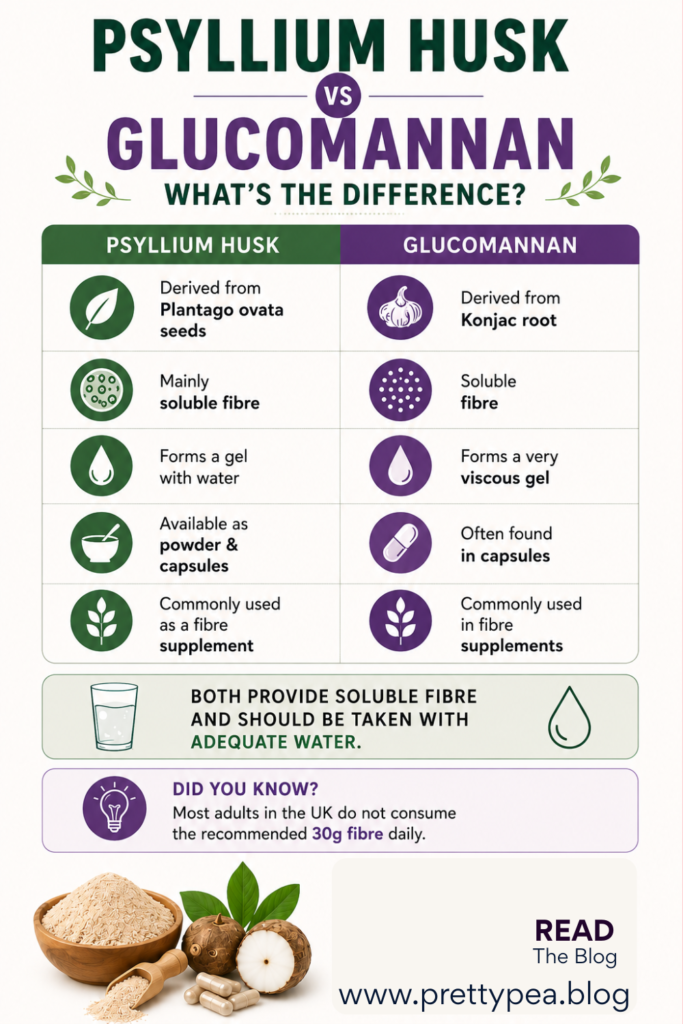## Fibre Powder with Prebiotic Inulin and Live Cultures
If you’re choosing a fibre powder, then it’s worth knowing that some fibre powders offer more than fibre alone.
Formulas containing prebiotic fibres such as inulin and added live cultures provide a broader approach to supporting daily dietary habits.
**[Inulin]()** is a naturally occurring fibre found in foods such as chicory root, onions and garlic. It is classified as a **prebiotic fibre**, meaning it serves as a food source for beneficial bacteria naturally present in the gut.
When combined with live cultures and dietary fibre, a powder format can offer a convenient way to incorporate multiple complementary ingredients into a daily routine.
For women looking for a versatile supplement that combines fibre, prebiotic ingredients and live cultures in one serving, a fibre powder may be an attractive option.
Powdered fibre supplements can be mixed into:
- Water
- Smoothies
- Yoghurts
- Protein shakes
They are popular among people who prefer flexible serving sizes. Get your **free psyllium husk fibre powder recipe guide** here.
FeatureFibre CapsulesFibre PowderNo mixing required✓–Easy for travel✓–Add to smoothies/yoghurt–✓Quick daily routine✓✓## Which Fibre Supplement Is Right For You?
If you want…Recommended OptionThe convenience of capsulesDaily Fibre CapsulesA psyllium-based fibre supplementDaily Fibre CapsulesFibre plus prebiotic inulin and live culturesFibre PowderSomething to add to smoothies or yoghurtFibre PowderA travel-friendly optionFibre CapsulesA blend of soluble and insoluble fibreDaily Fibre CapsulesFibre supplements for women are available as powders, capsules, gummies and sachets. At Pretty Pea, we focus on powders and capsules because they provide a simple and convenient and sugar free way to supplement fibre intake.
## [Best Fibre Supplements for Women | Complete UK Fibre Supplement Guide](https://prettypea.blog/fibre-supplements-for-women/)
Pretty Pea FormatIdeal For[Appetite](https://prettypea.blog/fibre-powder "Appetite")PowderWomen who prefer adding fibre to drinks, smoothies or yoghurt with prebiotic & live cultures[High Fibre](https://prettypea.blog/fibre-capsules/ "High Fibre")CapsulesWomen looking for a quick, convenient daily option (soluble & insoluble)[Pretty Reset](https://prettypea.blog/product/pretty-reset/ "Pretty Reset")CapsulesWomen seeking a filling fibre with additional ingredient profile (inc. hormonal regulation)---
## Soluble vs Insoluble Fibre
When choosing a fibre supplement, it helps to understand the two primary categories of fibre.
### Soluble Fibre
Soluble fibre dissolves in water to form a gel-like substance.
Common sources include:
- Psyllium
- Oats
- Barley
- Apples
- Beans
Many popular fibre supplements contain soluble fibre due to its versatility and convenience.
### Insoluble Fibre
Insoluble fibre adds bulk to food as it moves through the digestive tract.
Sources include:
- Whole grains
- Wheat bran
- Vegetables
- Nuts
- Seeds
A balanced diet typically contains a combination of both fibre types.
See**[: Insoluble Fibre Rich Food List](https://prettypea.blog/the-rich-list-insoluble-fibre-rich-food-list/)**
---
## Fibre Supplements for Women – What to look for?
When comparing women’s fibre supplements, consider the following factors.
### Fibre Content Per Serving
Check how much fibre is provided in each serving.
Different products vary considerably.
### Ingredient Simplicity
Many consumers prefer products with:
- Minimal ingredients (after active ingredients)
- No unnecessary fillers
- Transparent labelling
### Convenience
The best supplement is often the one you will consistently remember to take.
Consider whether you prefer:
- Capsules
- Powders
### Quality Standards
Look for products manufactured according to recognised UK Good Manufacturing Practice (GMP) quality and safety standards.
### Suitable For Your Lifestyle
Some products may be suitable for:
- Vegetarians
- Vegans
- Gluten-free diets
Always check the label if you have specific dietary requirements.
---
## Fibre Supplements.
**[Appetite Fibre Powder](https://prettypea.blog/fibre-powder/ "Appetite Fibre Powder")**
Blend of 4 Fibres, prebiotic fibre, live cultures & more
**[Glucomannan Reset Capsules](https://prettypea.blog/product/pretty-reset/ "Glucomannan Reset Capsules")**
Drive in style with our top-of-the-line premium vehicles
**[High Fibre Capsules](https://prettypea.blog/fibre-capsules/ "High Fibre Capsules")**
Soluble & Insoluble fibre from high fibrous foods
## Psyllium Husk Powder Vs Psyllium Husk Capsules
Psyllium husk is one of the most widely used fibre supplements. Derived from the seeds of the Plantago ovata plant, psyllium contains primarily soluble fibre.
Psyllium husk fibre capsules have become increasingly popular among women seeking a simple way to supplement their fibre intake.
Benefits of psyllium husk capsules include:
- Easy to take
- No mixing required
- Convenient for travel
- Consistent serving sizes
- Portable and discreet
For many busy women, capsules fit more easily into a daily wellness routine than powders or drinks.
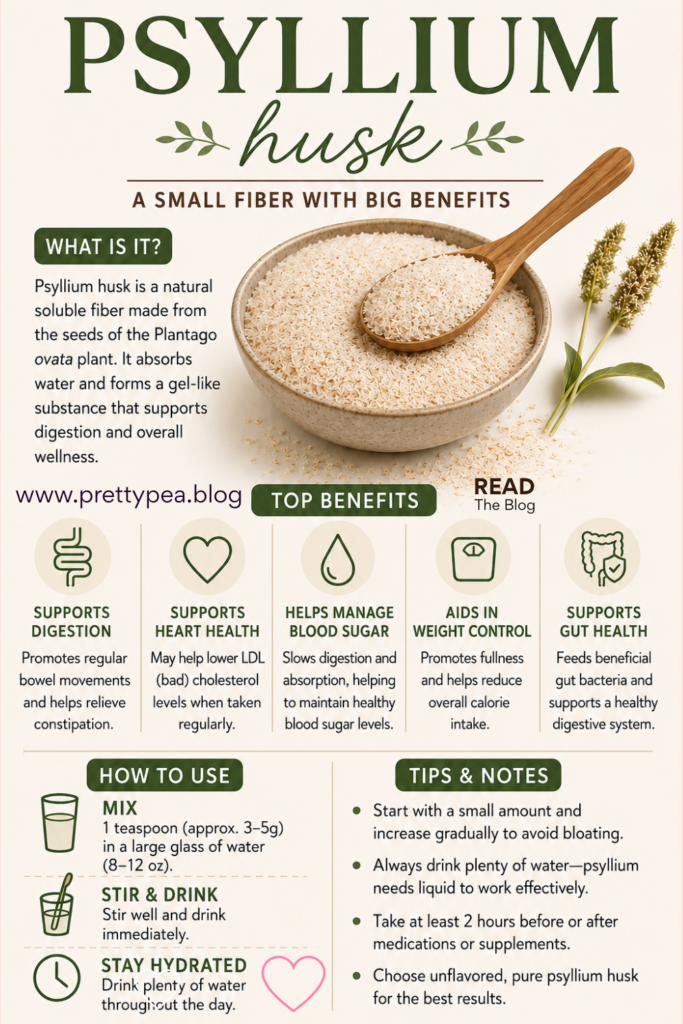### Why Choose Psyllium Husk Fibre Powder?
Fibre powders offer flexibility and can be easily incorporated into your daily routine. They can be mixed into water, smoothies, yoghurt, porridge or other foods, making them a versatile option for those who enjoy customising their fibre intake.
Some people prefer powders because they allow larger amounts of fibre to be consumed in a single serving and can be seamlessly added to meals and drinks without the need to take multiple capsules.
Fibre powders may be particularly suitable for individuals who regularly prepare smoothies, breakfast bowls or homemade wellness drinks.
## [Best Fibre Supplements for Women | Complete UK Fibre Supplement Guide](https://prettypea.blog/fibre-supplements-for-women/)
## Fibre Supplements Comparison Table
FeaturePsyllium Husk CapsulesPsyllium Husk PowderConvenienceVery convenient and easy to takeRequires measuring and mixingPreparationNo preparation requiredMust be mixed with water or another liquidTravel FriendlyExcellent for travel and on-the-go useLess convenient when travellingTasteVirtually tastelessSome people dislike the texture or tasteServing SizeMay require several capsules per servingLarger amounts can be taken in a single servingFlexibilityFixed serving sizeEasy to adjust serving sizeUse in RecipesNot suitableCan be added to smoothies, porridge, yoghurt and bakingPortabilityEasy to carry in a handbag or travel bagBulkier to transportDaily RoutineQuick and simpleTakes slightly more time to prepareBest ForBusy individuals seeking conveniencePeople who enjoy adding fibre to foods and drinks### Which Type Is Better?
Neither format is inherently better—the best choice depends on your lifestyle and preferences.
Psyllium husk capsules may suit those looking for a quick, convenient option that can easily fit into a busy routine.
Psyllium husk powder may appeal to those who prefer flexible serving sizes or enjoy adding fibre to smoothies, yoghurt, porridge or recipes.
Whichever format you choose, it should be used alongside a varied, balanced diet rich in naturally fibre-containing foods such as fruits, vegetables, legumes, whole grains, nuts and seeds.
For more: [**Everything Psyllium How To Use: A Comprehensive Guide on How to Use It for Maximum Health Benefits**](https://prettypea.blog/psyllium-how-to-use/)
##### **Not ready to buy yet,** **Get your Free Psyllium Husk Recipe Guide**
---
## Can Fibre Supplements Replace Fibre-Rich Foods?
No. Whole foods should remain the foundation of a healthy diet.
Fruits, vegetables, legumes, nuts, seeds and whole grains provide a wide range of nutrients beyond fibre alone.
Fibre supplements are best viewed as a complement to a balanced diet rather than a replacement for healthy eating habits.
A practical approach is to:
1. Prioritise fibre-rich foods.
2. Monitor your daily fibre intake.
3. Use supplements when needed to help bridge dietary gaps.
---
## Tips For Increasing Fibre Intake
Alongside supplementation, consider these simple strategies:
### Start The Day With Oats
Oats provide a useful source of soluble fibre and can be incorporated into breakfast easily.
### Add Seeds To Meals
Flaxseed and chia seeds can be sprinkled onto:
- Yoghurt
- Porridge
- Smoothies
- Salads
### Choose Wholegrain Options
Swap:
- White bread for wholegrain bread
- White rice for brown rice
- Refined cereals for higher-fibre alternatives
### Include More Legumes
Beans, chickpeas and lentils are among the richest natural sources of fibre.
### Increase Fibre Gradually
A gradual increase allows the digestive system time to adapt comfortably.
Adequate hydration is also important.
---
## Why Women Often Choose Fibre Supplements
Many women choose fibre supplements because they:
- Have busy schedules
- Travel frequently
- Struggle to consistently achieve recommended fibre intake
- Want a convenient daily routine
- Prefer capsules over powders
The best fibre supplement for women is ultimately the one that fits comfortably into a sustainable, balanced lifestyle.
---
## Choosing The Right Fibre Supplement for Women
Before purchasing any fibre supplement, consider:
- Your current dietary fibre intake
- Preferred format (capsule or powder)
- Ingredient quality
- Convenience
- Lifestyle compatibility
A product that is simple, easy to use and fits your daily routine is often the easiest to take consistently.
---
## Explore Our Daily Fibre Capsules
Pretty Pea fibre supplements provide a convenient way to support your fibre intake alongside a balanced diet.
Designed for busy women, they offer:
- Convenient format
- Easy integration into daily routines
- Suitable alongside healthy eating habits
## Latest Products
[View All → →](#)
### [Best Fibre Supplements for Women | Complete UK Fibre Supplement Guide](https://prettypea.blog/fibre-supplements-for-women/)
### Looking For More Fibre Advice?
You may also find these guides helpful:
- [Soluble vs Insoluble Fibre Explained](https://prettypea.blog/the-fibre-fix-insoluble-vs-soluble-fibre/ "Soluble vs Insoluble Fibre Explained")
- [Why Fibre Could Be the Secret to a Better Menopause](https://prettypea.blog/why-fibre-could-be-the-secret-to-a-better-menopause/)
- [9 Benefits of Fibre: Why It’s Essential for Gut Health, Weight and Wellbeing](https://prettypea.blog/9-benefits-of-fibre-why-its-essential-for-gut-health-weight-and-wellbeing/)
- [Appetite Regulation: How Fibre vs GLP-1 Compare](https://prettypea.blog/appetite-regulation-how-fibre-vs-glp-1-compare/)
- [Glucomannan for Weight Loss: Does It Work and How Does It Compare to Medications?](https://prettypea.blog/glucomannan-weight-loss/)
- [What is the Highest Fibre Food](https://prettypea.blog/what-is-the-highest-fibre-food/)
- [What Is Inulin?](https://prettypea.blog/what-is-inulin/)
- [Bloating Isn’t Just “Too Much Gas”: The Real Causes of Bloating (and What Actually Helps)](https://prettypea.blog/7-real-causes-of-bloating-and-what-actually-helps/)
---
## FAQ – Fibre Supplements for Women
### What is the best fibre supplement for women?
The best fibre supplement depends on individual preferences and lifestyle. Many women choose psyllium fibre capsules because they are convenient, portable and easy to incorporate into a daily routine.
### How much fibre should women consume each day?
UK guidelines recommend that adults consume approximately 30 grams of fibre daily.
### Are fibre capsules as effective as fibre powders?
Both capsules and powders can provide dietary fibre. The best choice often comes down to personal preference and consistency of use.
### Should I take fibre supplements every day?
Always follow the manufacturer’s instructions. Fibre supplements are intended to complement a balanced diet rather than replace fibre-rich foods.
### Can fibre supplements replace fruits and vegetables?
No. Whole foods provide a variety of nutrients, vitamins and minerals that supplements cannot fully replicate.
### What foods contain the most fibre?
Examples include:
- Lentils
- Beans
- Chickpeas
- Oats
- Berries
- Vegetables
- Nuts
- Seeds
### Are psyllium fibre capsules suitable for women?
Many women choose psyllium fibre capsules because they offer a convenient and portable way to supplement fibre intake.
- [](https://prettypea.blog/d-mannose-and-cranberry-for-women/)[Menopause Nutrition](https://prettypea.blog/category/menopause/) · [Superfoods](https://prettypea.blog/category/superfoods/) · [Supplements](https://prettypea.blog/category/supplements/)
October 8, 2026
- [](https://prettypea.blog/what-is-glp-1/)[Fibre & Gut Health](https://prettypea.blog/category/fibre/) · [Hormones & HRT](https://prettypea.blog/category/hormones-hrt/) · [Menopause Nutrition](https://prettypea.blog/category/menopause/) · [Supplements](https://prettypea.blog/category/supplements/)
### [What Is GLP-1? The Gut Hormone That Helps Regulate Hunger & Blood Sugar](https://prettypea.blog/what-is-glp-1/)
August 18, 2026
- [](https://prettypea.blog/psyllium-husk-benefits/)[Pretty Pea](https://prettypea.blog/category/pretty-pea/)
### [Psyllium Husk: Benefits, How to Take It, Side Effects & How It Compares](https://prettypea.blog/psyllium-husk-benefits/)
August 15, 2026
---
## Browse Collection
### Best Fibre Supplements for Women: Sources
1. NHS. Fibre in your diet.
2. Scientific Advisory Committee on Nutrition (SACN). Carbohydrates and Health Report.
3. British Nutrition Foundation. Fibre and Health.
4. World Health Organization. Healthy Diet Fact Sheet.
5. Reynolds A, Mann J, Cummings J, et al. Carbohydrate quality and human health: systematic reviews and meta-analyses. The Lancet. 2019;393(10170):434-445.
6. National Diet and Nutrition Survey (NDNS). UK Government.
**Categories:** Fibre & Gut Health, Menopause Nutrition, Superfoods, Supplements
---
### [The 100 Symptoms of Perimenopause: Full List + Early Signs](https://prettypea.blog/the-100-symptoms-of-perimenopause/)
**Published:** May 1, 2026
**Author:** Cate Boyd
**Content:**
Most women associate menopause with hot flushes and missed periods, but the early signs of perimenopause often begin years earlier and can feel confusing or unrelated. Perimenopause is the transitional stage before menopause, but many women don’t realise just how many symptoms it can cause. In fact, there are over **100 symptoms of perimenopause** — affecting everything from your mood and sleep to your metabolism, skin, and brain.
Studies show that **over 75% of women experience physical or psychological perimenopause symptoms**, yet many don’t recognise them as hormone-related.
This is because perimenopause is driven by **fluctuating (not just declining) levels of oestrogen and progesterone**, which affect nearly every system in the body — including the brain, metabolism, skin, and cardiovascular system.
Below is a comprehensive, research-informed list of the **100 symptoms of perimenopause**, grouped by body system — with a clear explanation of each.
## Key Facts About Perimenopause
- Over **75% of women experience symptoms** (National Health Service)
- Symptoms can last **4–10 years** (NICE)
- There are **100+ recognised symptoms** across multiple body systems
---
## Quick Summary: 100 Symptoms of Perimenopause
**Perimenopause can cause over 100 symptoms due to fluctuating hormone levels, particularly oestrogen and progesterone.**
**The most common symptoms include:**
- Irregular periods
- Hot flushes and night sweats
- Anxiety and mood swings
- Sleep disturbances
- Brain fog and memory issues
- Weight gain and fatigue
Most women experience symptoms for **4–10 years before menopause** (NHS).
**Support your menopause journey with Meno Shape**. Our advanced daily formula combines feel full glucomannan fibre, vitamins, minerals and botanical extracts selected to support hormonal activity, energy metabolism, cognitive function and overall wellbeing as part of a healthy lifestyle.
## [The 100 Symptoms of Perimenopause: Full List + Early Signs](https://prettypea.blog/the-100-symptoms-of-perimenopause/)
---
## What to Expect at Each Stage of Menopause
The menopause transition usually happens gradually over several years and is divided into four stages. Although every woman’s experience is unique, understanding what typically happens at each stage can help explain why symptoms change over time.
**Late 30s–40s** → **Early Perimenopause** → **Late Perimenopause** → **Menopause (average age 51)** → **Postmenopause**
---
## Early Perimenopause
**Typical age:** Late 30s to mid-40s
**What happens?**
Hormone levels, particularly oestrogen, begin to fluctuate, although periods are usually still regular.
**Common symptoms**
- Irregular or heavier periods
- Mood changes
- Breast tenderness
- Bloating
- Poor sleep
- Anxiety
- Headaches
- Early weight changes
**How long?**
Typically **2–5 years**, although it varies considerably.
---
## Late Perimenopause
**Typical age:** Mid-40s to early 50s
**What happens?**
Periods become increasingly irregular as hormone fluctuations become more pronounced.
**Common symptoms**
- Hot flushes
- Night sweats
- Brain fog
- Fatigue
- Vaginal dryness
- Reduced libido
- Joint aches
- Sleep disturbances
- Weight gain around the middle
**How long?**
Usually **1–4 years**.
---
## Menopause
**Typical age:** Around **51 years** in the UK.
**What happens?**
Menopause is officially reached when you have gone **12 consecutive months without a menstrual period**. It marks the end of natural fertility.
**Common symptoms**
Many symptoms continue from perimenopause, although some women begin to notice improvements while others experience their most troublesome symptoms around this time.
**How long?**
Menopause itself is **one day** — it isn’t a stage that lasts for years.
---
## Postmenopause
**Typical age:** Usually from age **52 onwards**
**What happens?**
Hormone levels become more stable at consistently lower levels. Some symptoms improve, while others may continue.
**Common symptoms**
- Vaginal dryness
- Urinary symptoms
- Reduced bone density
- Loss of muscle mass
- Changes in cholesterol
- Persistent hot flushes (for some women)
**How long?**
Postmenopause lasts **for the rest of your life**.
---
## How Long Does Perimenopause Last?
Most women experience perimenopause for around **4 to 8 years**, although some notice symptoms for only a couple of years, while others experience changes for up to 10 years. Symptoms often come and go because hormone levels fluctuate rather than decline in a straight line.
---
## When Are Symptoms Usually at Their Worst?
Many women find that symptoms become more noticeable during **late perimenopause**, when hormone fluctuations are greatest. Hot flushes, disturbed sleep, mood changes and irregular periods often become more frequent during this stage. However, every woman’s experience is different, and symptoms don’t always follow the same pattern.
---
## Perimenopause vs Menopause: What’s the Difference?
Perimenopause is the transition phase where hormones fluctuate and symptoms begin, while menopause is defined as 12 months without a period, and postmenopause is the stage after this when hormone levels stabilise.
Here’s a simple comparison of perimenopause vs menopause vs postmenopause
---
**Key differences:**
StageDefinitionHormonesPeriodsSymptomsHealth RisksPerimenopauseTransition phase before menopauseFluctuatingIrregularWide range (100+ symptoms)Early bone changesMenopause12 months without a periodLowStoppedHot flushes, sleep issues↑ heart disease riskPostmenopauseAfter menopauseStable lowNoneSome symptoms persist↑ osteoporosis risk
- Perimenopause = changing hormones
- Menopause = a diagnosis point
- Postmenopause = long-term health phase
---
## Perimenopause Symptom Checker
**Tick any symptoms you’re experiencing:**
- Irregular periods
- Anxiety or mood swings
- Sleep problems
- Brain fog
- Weight gain
- Hot flushes
**If you recognise multiple symptoms, you may be in perimenopause.**
Always consult a GP for diagnosis (National Health Service).
---
## The 100 Symptoms of Perimenopause (Full List Explained)
This full list of the **100 symptoms of perimenopause** highlights how wide-ranging hormonal changes can be.
### Hormonal & Menstrual Symptoms
These are often the earliest signs of perimenopause, caused by irregular ovulation and shifting progesterone levels.
1. **Irregular periods** – cycles become unpredictable due to inconsistent ovulation
2. **Shorter cycles** – luteal phase shortens with declining progesterone
3. **Longer cycles** – delayed ovulation extends cycle length
4. **Missed periods** – anovulatory cycles become more common
5. **Heavier bleeding** – oestrogen thickens uterine lining (Munro et al., 2011)
6. **Lighter bleeding** – reduced hormone stimulation of endometrium
7. **Clotting** – heavier flow leads to coagulated blood loss
8. **Spotting** – unstable hormones cause breakthrough bleeding
9. **Worsening PMS** – hormonal swings intensify symptoms
10. **New PMS** – symptoms can appear for the first time
11. **Increased cramping** – prostaglandin changes increase uterine contractions
12. **Reduced fertility** – ovulation becomes irregular
---
### Vasomotor Symptoms (Temperature Regulation)
These are among the most recognised perimenopause symptoms and are linked to brain temperature regulation.
13. **Hot flushes** – Sudden feelings of intense heat due to hypothalamic changes.
14. **Night sweats** – Hot flushes that occur during sleep, often disrupting rest.
15. **Chills** – Feeling cold after a hot flush as body temperature drops.
16. **Cold sensitivity** – Increased sensitivity to cooler environments.
17. **Sudden flushing** – Rapid reddening of the face and chest.
18. **Excessive sweating** – Overactive sweat response linked to hormone changes.
Up to **75% of women** experience these types of perimenopause symptoms during the transition.
## [The 100 Symptoms of Perimenopause: Full List + Early Signs](https://prettypea.blog/the-100-symptoms-of-perimenopause/)
---
### Sleep Disturbances
Sleep issues are often one of the **earliest signs of perimenopause**.
19. **Difficulty falling asleep** – Hormonal shifts affect melatonin and relaxation.
20. **Night waking** – Frequent waking due to temperature or anxiety changes.
21. **Early morning waking** – Cortisol disruption can cause early rising.
22. **Non-restorative sleep** – Sleep feels unrefreshing despite enough hours.
23. **Insomnia** – Persistent difficulty sleeping.
24. **Vivid dreams** – Hormonal fluctuations can intensify dreaming.
25. **Night-time anxiety** – Increased cortisol can trigger anxious thoughts at night.
---
### Mood & Emotional Symptoms
Hormonal volatility plays a major role in emotional wellbeing.
26. **Anxiety** – Heightened nervous system sensitivity increases worry.
27. **Low mood** – Reduced serotonin activity can affect mood stability.
28. **Irritability** – Lower stress tolerance leads to frustration.
29. **Mood swings** – Rapid emotional changes due to hormonal shifts.
30. **Tearfulness** – Increased emotional sensitivity.
31. **Reduced stress tolerance** – Everyday stress feels harder to manage.
32. **Panic attacks** – Sudden episodes of intense fear or discomfort.
33. **Loss of confidence** – Emotional and physical changes affect self-esteem.
34. **Social withdrawal** – Reduced desire for social interaction.
35. **Depression-like symptoms** – Persistent low mood or lack of motivation.
Large cohort studies show hormonal volatility — rather than low hormone levels alone — increases vulnerability to anxiety, low mood and and depressive symptoms during perimenopause.
---
### Cognitive & Neurological Symptoms
Oestrogen plays a key role in brain function, which explains these changes.
36. **Brain fog** – Feeling mentally slow or unclear.
37. **Poor concentration** – Difficulty focusing on tasks.
38. **Memory lapses** – Forgetting names, dates, or tasks.
39. **Word-finding difficulty** – Struggling to recall words mid-sentence.
40. **Reduced mental clarity** – Slower thinking processes.
41. **Headaches** – Hormonal changes can trigger tension headaches.
42. **Migraines (new or worsening)** – Fluctuating oestrogen can trigger migraines.
43. **Dizziness** – Hormonal effects on circulation and the nervous system.
44. **Tingling sensations** – Nerve sensitivity changes (paresthesia).
45. **Sensitivity to noise or light** – Increased neurological sensitivity.
Neuroimaging studies indicate oestrogen plays a key role in brain glucose metabolism, explaining cognitive changes during hormonal transition.
### Energy & Fatigue
(Oestrogen plays a key role in brain function and energy metabolism)
46. **Chronic fatigue** – Persistent tiredness not relieved by rest.
47. **Morning exhaustion** – Waking up feeling tired.
48. **Post-exertional fatigue** – Increased tiredness after activity.
49. **Reduced stamina** – Lower energy levels during exercise.
50. **Lack of motivation** – Hormonal changes affect drive and energy.
Fatigue often results from a combination of sleep disruption, cortisol imbalance, and fluctuating oestrogen levels.
## [The 100 Symptoms of Perimenopause: Full List + Early Signs](https://prettypea.blog/the-100-symptoms-of-perimenopause/)
---
### Musculoskeletal Symptoms
Declining oestrogen affects joints, muscles, and connective tissue.
51. **Joint pain** – Inflammation and reduced lubrication.
52. **Muscle aches** – Increased muscle soreness.
53. **Stiffness** – Reduced flexibility, especially in the morning.
54. **Reduced muscle strength** – Loss of muscle mass over time.
55. **Slower recovery from exercise** – Increased repair time.
56. **Frozen shoulder** – Hormonal link to joint stiffness conditions.
57. **Back pain** – Changes in muscle and joint support.
Oestrogen has anti-inflammatory effects and supports collagen production, which explains the rise in joint and connective tissue pain.
### Weight & Metabolic Changes
Hormones significantly influence metabolism and fat storage.
58. **Weight gain** – Particularly common during hormonal transition.
59. **Abdominal fat gain** – Fat shifts toward the midsection.
60. **Difficulty losing weight** – Slower metabolism and insulin changes.
61. **Blood sugar instability** – Increased risk of energy crashes.
62. **Increased cravings** – Hormones affect hunger signals.
63. **Reduced metabolic rate** – Energy expenditure declines.
Research shows insulin sensitivity can decline during perimenopause, even without changes in diet or exercise.
Declining oestrogen also shifts where the body stores fat, accumulating more abdominal fat.
The loss of oestrogen can see women change from fat storage around the hips and thighs (during childbearing years) shift to becoming more ‘apple’ shape post menopause.
**Looking for nutritional support during perimenopause?** **Meno Shape** combines glucomannan with carefully selected vitamins, minerals and botanical extracts, including glucomannan for **weight management**, vitamin B6 to support the regulation of **hormonal activity**, iodine to support normal thyroid function and energy-yielding metabolism, chromium to support normal **blood glucose levels,** and zinc to support normal **cognitive function** and **carbohydrate metabolism**.
## [The 100 Symptoms of Perimenopause: Full List + Early Signs](https://prettypea.blog/the-100-symptoms-of-perimenopause/)
---
### Cardiovascular Symptoms
Heart-related symptoms can feel alarming but are often hormone-related.
64. **Heart palpitations** – Awareness of heartbeat or irregular rhythm.
65. **Racing heart** – Sudden increase in heart rate.
66. **Blood pressure changes** – Hormonal effects on blood vessels.
67. **Shortness of breath** – Changes in cardiovascular response.
68. **Exercise intolerance** – Reduced cardiovascular endurance.
Palpitations are common and usually benign but can be distressing.
As oestrogen levels and it’s protective effect decline, women’s risk of heart disease increases (a leading cause of death in women post menopause).
---
### Digestive Symptoms
Hormones also influence gut function and the microbiome.
69. **Bloating** – Slower digestion or hormonal water retention.
70. **Constipation** – Reduced gut motility.
71. **Diarrhoea** – Hormonal fluctuations affecting digestion.
72. **Acid reflux** – Changes in digestive function.
73. **Food sensitivities** – Increased gut sensitivity.
74. **Slower digestion** – Delayed gastric emptying.
---
### Skin, Hair & Nails
Collagen decline accelerates during perimenopause.
75. **Dry skin** – Reduced oil production.
76. **Itching** – Skin dryness and sensitivity.
77. **Thinning hair** – Hormonal impact on hair growth cycles.
78. **Hair shedding** – Increased hair loss.
79. **Brittle nails** – Weaker nail structure.
80. **Acne** – Hormonal imbalance can trigger breakouts.
81. **Changes in skin texture** – Loss of elasticity and firmness.
---
### Sexual & Urogenital Symptoms
These symptoms are often under-discussed but very common.
82. **Vaginal dryness** – Reduced lubrication due to low oestrogen.
83. **Reduced libido** – Changes in testosterone and oestrogen.
84. **Pain during sex** – Thinner vaginal tissues increase discomfort.
85. **Reduced arousal** – Slower physical response.
86. **Recurrent UTIs** – Changes in urinary tract health.
87. **Urinary urgency** – Increased need to urinate.
88. **Stress incontinence** – Leakage during coughing or exercise.
---
### Immune & Sensory Changes
Hormonal shifts can affect immune responses and senses.
89. **Increased allergies** – Heightened immune sensitivity.
90. **Sensitivity to smells** – Changes in sensory perception.
91. **Changes in taste** – Altered taste sensations.
92. **Burning mouth sensation** – Hormone-related nerve sensitivity.
93. **Dry eyes** – Reduced tear production.
94. **Dry mouth** – Reduced saliva production.
---
## Perimenopause vs Menopause vs Postmenopause (Quick Comparison)
StageWhat HappensKey Symptoms**Perimenopause**Hormones fluctuate unpredictablyIrregular periods, anxiety, sleep issues, brain fog**Menopause**12 months without a period (NICE)Hot flushes, night sweats, vaginal dryness**Postmenopause**Hormones stabilise at low levelsFewer fluctuations, ongoing joint, skin, and urogenital symptomsUnderstanding where you are in the menopause transition can help explain your symptoms and what to expect next.
## [The 100 Symptoms of Perimenopause: Full List + Early Signs](https://prettypea.blog/the-100-symptoms-of-perimenopause/)
---
## Key Differences to Know
- **Perimenopause = hormonal chaos** → symptoms fluctuate and can feel unpredictable
- **Menopause = a point in time** → confirmed after 12 months without a period
- **Postmenopause = long-term phase** → focus shifts to prevention and long-term health
---
## Why This Matters for Symptoms
Many women search for *“100 symptoms of perimenopause”* because symptoms can feel confusing and inconsistent.
- If your symptoms are **changing month-to-month**, you are likely in **perimenopause**
- If your periods have **completely stopped for a year**, you are in **menopause**
- If symptoms persist but cycles are long gone, you are **postmenopausal**
---
## Other Common Perimenopause Symptoms
Some symptoms don’t fit neatly into one category but are still widely reported.
95. **Jaw pain** – Muscle tension or inflammation.
96. **Gum problems** – Hormonal effects on oral health.
97. **Tinnitus** – Ringing in the ears.
98. **Electric shock sensations** – Brief nerve-related sensations.
99. **Breast tenderness** – Hormonal fluctuations affecting breast tissue.
100. **Feeling “not like yourself”** – A common but hard-to-define sense of change.
---
## Most Common Perimenopause Symptoms
- Irregular periods
- Hot flushes
- Night sweats
- Anxiety
- Sleep disturbances
## Less Known Perimenopause Symptoms
- Burning mouth
- Electric shock sensations
- Tinnitus
- Gum problems
- Sensitivity to smells
---
## Perimenopause Symptoms Timeline
**Early stage (late 30s–early 40s):**
- Anxiety
- Sleep issues
- Brain fog
- Subtle cycle changes
**Mid stage:**
- Irregular periods
- Mood swings
- Fatigue
- Weight changes
**Late stage:**
- Hot flushes
- Night sweats
- Missed periods
---
## How Long Do Perimenopause Symptoms Last?
Perimenopause symptoms can last anywhere from **4 to 10 years**, depending on genetics, lifestyle, and overall health.
Symptoms are often **non-linear**, meaning they can come and go, change in intensity, or appear in new forms over time.
Oestrogen influences gut motility and the gut microbiome, which may explain digestive changes.
---
## Why Perimenopause Symptoms Vary So Widely
No two women experience perimenopause the same way. Studies show symptom severity and type can be influenced a woman’s personal history, current health status (especially obesity).
Factors can include:
- Genetics
- Stress levels
- Nutritional status
- Gut health
- Lifestyle factors
Many women experience **clusters of perimenopause symptoms**, which can vary month to month.
---
## How to Manage Perimenopause Symptoms
### 1. Nutrition
- Increase protein, fibre, and omega-3s
- Support blood sugar balance
## [The 100 Symptoms of Perimenopause: Full List + Early Signs](https://prettypea.blog/the-100-symptoms-of-perimenopause/)
[Pretty Nourished 35+ ](https://prettypea.blog/fruit-and-vegetable-supplement/ "Pretty Nourished 35+ ")Organic Real food form Fruit, Greens, Mushrooms, Seeds & Digestive Enzymes & more!
### 2. Exercise
- Strength training supports metabolism and bone health
### 3. Sleep support
- Consistent sleep routine
- Reduce caffeine and alcohol
### 4. Medical support
- Hormone Replacement Therapy (HRT) may be recommended
Refer to NICE guidelines for treatment options.
## When to Seek Support
If symptoms:
- Interfere with daily life
- Affect work or relationships
- Cause persistent low mood or anxiety
It’s important to speak with a healthcare professional knowledgeable about menopause care.
### Need Extra Nutritional Support?
Diet and lifestyle form the foundation of menopause health, but some women also choose to use a supplement. **Meno Shape** combines glucomannan soluble fibre with vitamin B6, iodine, chromium, zinc and carefully selected botanical extracts to support weight management with hormonal activity, energy metabolism, normal blood glucose levels and overall wellbeing. Explore the formula to see whether it’s the right fit for your menopause journey.
---
[](https://prettypea.blog/menopause-supplement-womens-nutrition-support/)As you can see, the **100 symptoms of perimenopause** can affect nearly every system in the body.
Further reading:
- [Appetite Regulation: How Fibre vs GLP-1 Compare](https://prettypea.blog/appetite-regulation-how-fibre-vs-glp-1-compare/)
- [Glucomannan for Weight Loss: Does It Work and How Does It Compare to Medications?](https://prettypea.blog/glucomannan-weight-loss/)
- [Why Fibre Could Be the Secret to a Better Menopause](https://prettypea.blog/why-fibre-could-be-the-secret-to-a-better-menopause/)
- [GLP-1 Foods: The Ultimate List for Appetite Control, Fat Loss & Blood Sugar](https://prettypea.blog/glp-1-foods/)
- [Understanding Visceral Fat: The Ultimate Belly Fat Guide](https://prettypea.blog/understanding-visceral-fat-the-ultimate-belly-fat-guide/)
- [Hormone Imbalance in Women: Causes, Symptoms & How Hormones Work](https://prettypea.blog/hormone-imbalance-in-women/)
- [The Menopause Diet 5 Day Plan to Lose Weight](https://prettypea.blog/the-menopause-diet-5-day-plan-to-lose-weight/)
## Latest Products
[View All → →](#)
### [The 100 Symptoms of Perimenopause: Full List + Early Signs](https://prettypea.blog/the-100-symptoms-of-perimenopause/)
# FAQ: Perimenopause Symptoms
### What are the 100 symptoms of perimenopause?
The 100 symptoms of perimenopause include physical, emotional, and cognitive changes caused by fluctuating hormones.
### What are the first signs of perimenopause?
The earliest signs often include **irregular periods, sleep disturbances, anxiety, and subtle mood changes** — sometimes years before hot flushes begin.
### Can perimenopause cause anxiety and depression?
Yes. Hormonal fluctuations — especially changes in oestrogen — can significantly affect neurotransmitters like serotonin, increasing the risk of anxiety and low mood.
### Why do I feel tired all the time during perimenopause?
Fatigue is usually caused by a combination of **poor sleep, cortisol imbalance, and fluctuating hormones**.
### Is weight gain inevitable during perimenopause?
Not inevitable, but common. Hormonal changes can slow metabolism and increase fat storage — especially around the abdomen.
### When should I speak to a doctor?
If symptoms are affecting your quality of life, mental health, or sleep, it’s important to seek medical advice. Many effective treatments and lifestyle strategies are available
[](https://prettypea.blog/menopause-supplement-womens-nutrition-support/)Meno Shape is the multi-function supplement supporting women during perimenopause and menopause.
You might also be interested in:
- [](https://prettypea.blog/d-mannose-and-cranberry-for-women/)[Menopause Nutrition](https://prettypea.blog/category/menopause/) · [Superfoods](https://prettypea.blog/category/superfoods/) · [Supplements](https://prettypea.blog/category/supplements/)
October 8, 2026
- [](https://prettypea.blog/what-is-glp-1/)[Fibre & Gut Health](https://prettypea.blog/category/fibre/) · [Hormones & HRT](https://prettypea.blog/category/hormones-hrt/) · [Menopause Nutrition](https://prettypea.blog/category/menopause/) · [Supplements](https://prettypea.blog/category/supplements/)
### [What Is GLP-1? The Gut Hormone That Helps Regulate Hunger & Blood Sugar](https://prettypea.blog/what-is-glp-1/)
August 18, 2026
- [](https://prettypea.blog/psyllium-husk-benefits/)[Pretty Pea](https://prettypea.blog/category/pretty-pea/)
### [Psyllium Husk: Benefits, How to Take It, Side Effects & How It Compares](https://prettypea.blog/psyllium-husk-benefits/)
August 15, 2026
> *Supplements are not to be used as a substitute for a varied diet and healthy lifestyle. Consult your doctor before taking any supplements or changing your diet.*
---
## The 100 Symptoms of Perimenopause: **Sources**
1. Santoro, N. et al. (2015). *Perimenopause and hormonal changes*. Endocrine Reviews.
2. Freeman, E. W. et al. (2014). *Mood disorders during the menopausal transition*. Psychological Medicine.
3. Avis, N. E. et al. (2015). *Duration and predictors of vasomotor symptoms*. Menopause.
4. Greendale, G. A. et al. (2019). *Cognitive changes in perimenopause*. Neurology.
5. Thurston, R. C. et al. (2018). *Sleep disturbances and menopause*. Sleep Medicine Reviews.
6. Davis, S. R. et al. (2015). *Sexual function and menopause*. The Lancet.
7. Monteleone, P. et al. (2018). *Metabolic changes during perimenopause*. Climacteric.
8. Nappi, R. E. & Palacios, S. (2014). *Genitourinary syndrome of menopause*. Climacteric.
9. [Onset of the Menopause Transition: The Earliest Signs and Symptoms – PubMed](https://pubmed.ncbi.nlm.nih.gov/30401544/)
10. [Symptoms of menopause — global prevalence, physiology and implications | Nature Reviews Endocrinology](https://www.nature.com/articles/nrendo.2017.180)
11. References
12. National Health Service – Menopause overview
13. NICE (2015) Menopause guidelines
14. British Menopause Society
15. North American Menopause Society (2020)
16. Brinton RD. (2013). *Estrogen regulation of brain metabolism*
17. Freeman EW et al. (2014). *Vasomotor symptoms and menopause*
18. Soares CN. (2014). *Mood disorders in perimenopause*
19. Greendale GA et al. (2009). *Joint pain and menopause*
20. Carr MC. (2003). *Metabolic changes in menopause*
21. Kim & Park (2017). *Oestrogen and gut microbiome*
22. Thornton MJ. (2013). *Skin ageing and menopause*
23. Avis NE et al. (2001). *Fatigue in midlife women*
24. MacGregor EA. (2017). *Migraine and hormonal changes*
25. Munro MG et al. (2011). *Abnormal uterine bleeding classification*
**Categories:** Hormones & HRT
---
### [Why Increasing Fibre In Your Diet During Menopause Could Be the Secret to a Better Menopause](https://prettypea.blog/why-fibre-could-be-the-secret-to-a-better-menopause/)
**Published:** October 19, 2025
**Author:** Cate Boyd
**Content:**
Could something as simple as increasing fibre in your diet during menopause improve menopause symptoms? Recent research has highlighted the importance of **carbohydrate quality** — especially the amount of fibre and whole grains in your diet — for **improving menopause symptoms** and quality of life.
It’s estimated that approximately 1.1 billion women will have entered menopause by 2025 and quality of life matters – as women can reach menopause with a third of their life ahead of them.
We know menopause often comes with unwanted changes such as hot flushes, sleep disturbances, nervousness, anxiety, mood shifts, bone and joint issues, decreased desire, changes in eating habits, weight gain (and more) – and these factors can impact on the quality of life for women [1](#3db687ba-438e-46c8-81ba-8ba3e99d8b33)
While hormone levels are the driving force behind many of these symptoms, it makes sense that your diet during menopause can also play a significant role in menopause symptoms.
- [Study: How Carbohydrate Quality Affects Menopausal Health](#aioseo-the-study-how-carbohydrate-quality-affects-menopausal-health)
- [The Importance of Fibre In Your Diet During Menopause](#aioseo-why-fibre-matters-so-much-during-menopause)
- [The Glycaemic Index Connection](#aioseo-the-glycaemic-index-connection)
- [Fibre, Mood, and Mental Wellbeing](#aioseo-fibre-mood-and-mental-wellbeing)
- [Food Sources of Fibre for Menopausal Health](#aioseo-food-sources-of-fibre-for-menopausal-health)
- [Why Fibre Supplements Can Help During Menopause](#aioseo-why-fibre-supplements-can-help)
- [The Takeaway: Fibre In Your Diet During Menopause is Fundamental for Menopausal Wellness](#aioseo-the-takeaway-fibre-is-fundamental-for-menopausal-wellness)
---
## Study: How Carbohydrate Quality Affects Menopausal Health
A large study of over 600 postmenopausal women explored how the Carbohydrate Quality Index (CQI) — a measure that considers fibre intake, whole grain consumption, and glycaemic index — relates to menopausal symptoms and quality of life.[2](#231c8000-a71f-46c2-ad8a-14f7a7a1059a)
Women who scored highest on this index (ate most fibre and whole grains, and fewer refined carbs) had:
Fewer and less severe menopausal symptoms
Better overall quality of life
Lower glycaemic index diets (steady blood sugar)
Higher fibre intake
In contrast, women who consumed **more refined grains**, sugary foods, and low-fibre carbohydrates experienced **more intense symptoms**, including mood changes, sleep disruption, and fatigue.
These findings are consistent with previous studies showing that whole grains and unprocessed, fibre-rich foods are linked with fewer hot flushes, better energy levels, and improved mental wellbeing during menopause.
**A previous study** [3](#428c9ac5-f4b6-43af-ab74-2a185f88902c) **found that:**
Higher consumption of vegetables was associated with lower intensity of vasomotor (hot flushes) symptoms, sleep disorders and better quality of life.
Intake of ultra-processed foods was associated with more intense vasomotor and sexual symptoms.
Intakes of sugar-sweetened beverages and sausage were related to greater intensity of somatic symptoms and worse memory.
---
## The Importance of Fibre In Your Diet During Menopause
### 1. Supports Hormonal Balance and Blood Sugar
As oestrogen levels drop during menopause, blood sugar regulation becomes less efficient — leading to cravings, energy dips, and fat gain around the abdomen.
Fibre slows digestion and helps stabilise blood sugar levels, reducing insulin spikes and the hormonal fluctuations that can worsen menopausal symptoms.
### 2. Promotes Healthy Weight and Reduces Belly Fat
Menopause often brings a shift in body fat distribution, with more fat stored around the the *meno belly*.
Studies show that high-fibre diets help with appetite control, reduce calorie intake naturally, and support a healthy metabolism.
Soluble fibre (found in glucomannan, oats, flaxseeds) forms a gel-like substance in the gut, helping you feel full for longer — which can support healthy weight management during menopause.
[](https://prettypea.blog/product/menopause-tablets-for-weight-loss-3-for-2-offer/)### 3. Improves Gut Health and Mood
Your gut microbiome plays a key role in hormone metabolism, inflammation, and even mood regulation.
Fibre acts as fuel for beneficial gut bacteria, producing short-chain fatty acids (SCFAs) that support gut integrity and reduce inflammation. Emerging evidence also links a healthy gut with better mood and cognitive function — crucial for women navigating the emotional changes of menopause.
### 4. Protects Heart and Bone Health
After menopause, declining oestrogen levels can increase the risk of heart disease and osteoporosis.
Fibre helps lower cholesterol levels, improve blood pressure, and may even support bone density. One study reported that women with higher fibre intake had greater bone mineral density, potentially reducing the risk of fractures and bone loss.[4](#7d5709b7-35c5-41fb-9951-2a53600bd30e)
---
## The Glycaemic Index Connection
The study also highlighted that low glycaemic index (GI) diets — those rich in whole grains, pulses, fruits, and vegetables — were linked to fewer menopausal symptoms.
High-GI foods such as white bread, rice, pastries, and sugary drinks cause rapid spikes in blood glucose, triggering inflammation and oxidative stress. Over time, this can worsen hot flushes, mood swings, and fatigue.
A low-GI, high-fibre diet keeps blood sugar levels steady, promoting hormonal stability and reducing stress on the body — key factors for a smoother menopausal transition.
---
## Fibre, Mood, and Mental Wellbeing
Interestingly, the research found that women with better carbohydrate quality (i.e., more fibre and whole grains) reported fewer psychological symptoms, including irritability and low mood.
This may be due to fibre’s positive effects on:
Blood sugar balance (preventing mood dips)
Gut-brain communication via the vagus nerve
Lower inflammation, which has been linked to depression and anxiety
Together, these effects help women feel more emotionally balanced and resilient during menopause.
---
## Food Sources of Fibre for Menopausal Health
Aim for at least 25–30 grams of fibre per day from a variety of foods. Great sources include:
Whole grains: oats, barley, brown rice, quinoa
Legumes: chickpeas, lentils, black beans
Fruits: apples, pears, berries, oranges
Vegetables: broccoli, carrots, leafy greens
Seeds: flaxseed, chia, psyllium husk
If you struggle to reach your fibre goals through diet alone, a high-quality fibre supplement can be a simple and effective way to bridge the gap — especially one that’s gentle on digestion and clinically proven to support gut and hormonal health.
## [Why Increasing Fibre In Your Diet During Menopause Could Be the Secret to a Better Menopause](https://prettypea.blog/why-fibre-could-be-the-secret-to-a-better-menopause/)
## Why Fibre Supplements Can Help During Menopause
Even with the best intentions, most women only consume around half the recommended daily fibre.
Fibre supplements can make it easier to meet your needs — particularly during menopause when digestive comfort and hormonal balance are key priorities.
### Look for supplements that:
Contain soluble fibres like psyllium husk or inulin
Are low-FODMAP if you have IBS symptoms
Can be easily mixed into water, smoothies, or breakfast bowls
Regular use can help:
Regulate digestion and reduce bloating
Support steady energy and appetite control
Improve cholesterol and blood sugar balance
Promote a healthier gut microbiome
---
## The Takeaway: Fibre In Your Diet During Menopause is Fundamental for Menopausal Wellness
This study reinforces what many women’s health experts have long suspected — it’s not just how many carbohydrates you eat, but the quality of them that determines how you feel during menopause.
- By focusing on high-fibre, whole-grain, low-GI foods, you can:
Reduce the severity of hot flushes and mood swings
Improve energy, sleep, and digestion
Support heart, bone, and gut health
Enhance overall quality of life
If dietary changes alone aren’t enough, adding a daily fibre supplement can be a game-changer — a simple step with big benefits for your hormonal health and long-term wellbeing.
### Practical Tips:
1.Start gradually. Increase your fibre intake over 1–2 weeks
2.Drink plenty of water to help your body adjust smoothly
## Latest Products
[View All → →](#)
### [Why Increasing Fibre In Your Diet During Menopause Could Be the Secret to a Better Menopause](https://prettypea.blog/why-fibre-could-be-the-secret-to-a-better-menopause/)
##### **You might also be interested in..**
## RELATED ARTICLES
[**The Menopause Diet 5 Day Plan to Lose Weight**](https://prettypea.blog/the-menopause-diet-5-day-plan-to-lose-weight/ "The Menopause Diet 5 Day Plan to Lose Weight")
- [Appetite Regulation: How Fibre vs GLP-1 Compare](https://prettypea.blog/appetite-regulation-how-fibre-vs-glp-1-compare/)
- [Glucomannan for Weight Loss: Does It Work and How Does It Compare to Medications?](https://prettypea.blog/glucomannan-weight-loss/)
- [What Is Glucomannan? Benefits, Uses & Side Effects](https://prettypea.blog/what-is-glucomannan-2/)
- [Bloating Isn’t Just “Too Much Gas”: The Real Causes of Bloating (and What Actually Helps)](https://prettypea.blog/7-real-causes-of-bloating-and-what-actually-helps/)
- [Plantago Ovata (Psyllium Husk): Benefits, Uses, Science and FAQs – Pretty Pea](https://prettypea.blog/plantago-ovata-psyllium-husk-benefits-uses-science-and-faqs/)
- [Can You Use Psyllium Husk for Weight Loss? ](https://prettypea.blog/psyllium-husk-for-weight-loss/)
- [How to Lose Weight During Menopause (Without Eating Less and Exercising More) – Pretty Pea](https://prettypea.blog/how-to-lose-weight-during-menopause/)
- [The Menopause Diet 5 Day Plan to Lose Weight](https://prettypea.blog/the-menopause-diet-5-day-plan-to-lose-weight/)
- [The 100 Symptoms of Perimenopause](https://prettypea.blog/the-100-symptoms-of-perimenopause/)
- [Weird Perimenopause Symptoms: 25 Unusual Signs You Didn’t Expect](https://prettypea.blog/weird-perimenopause-symptoms-25-unusual-signs-you-didnt-expect/)
- [Hormone Imbalance in Women: Causes, Symptoms & How Hormones Work](https://prettypea.blog/hormone-imbalance-in-women/)
- [What Is Insulin Resistance? Signs, Causes & What Helps – Pretty Pea](https://prettypea.blog/what-is-insulin-resistance/)
- [Early First Symptoms of Perimenopause – 7 Telling Subtle Signs](https://prettypea.blog/early-first-symptoms-of-perimenopause-7-telling-subtle-signs/)
### Fibre in Your Diet During Menopause – Sources:
1. [Health-related quality of life among menopausal women: A cross-sectional study from Pokhara, Nepal – PMC](https://pmc.ncbi.nlm.nih.gov/articles/PMC9858775/) [↩︎](#3db687ba-438e-46c8-81ba-8ba3e99d8b33-link)
2. [The impact of carbohydrate quality index on menopausal symptoms and quality of life in postmenopausal women | BMC Women’s Health | Full Text](https://bmcwomenshealth.biomedcentral.com/articles/10.1186/s12905-025-03822-z) [↩︎](#231c8000-a71f-46c2-ad8a-14f7a7a1059a-link)
3. [Life habits of postmenopausal women: Association of menopause symptom intensity and food consumption by degree of food processing – PubMed](https://pubmed.ncbi.nlm.nih.gov/35033227/) [↩︎](#428c9ac5-f4b6-43af-ab74-2a185f88902c-link)
4. [How do carbohydrate quality indices influence on bone mass density in postmenopausal women? A case-control study – PubMed](https://pubmed.ncbi.nlm.nih.gov/36721166/) [↩︎](#7d5709b7-35c5-41fb-9951-2a53600bd30e-link)
[The impact of carbohydrate quality index on menopausal symptoms and quality of life in postmenopausal women | BMC Women’s Health | Full Text](https://bmcwomenshealth.biomedcentral.com/articles/10.1186/s12905-025-03822-z)
**Categories:** Fibre & Gut Health, Menopause Nutrition
---
### [Which Supplements Do Women Really Need? An Evidence-Based Guide](https://prettypea.blog/best-supplements-for-women/)
**Published:** July 26, 2026
**Author:** Cate Boyd
**Content:**
Searching for the best supplements for women? How do you know the page you land on is actually **evidence-based nutrition, not marketing hype**?
The supplement industry is worth billions of pounds each year, with products promising everything from more energy and stronger immunity to faster weight loss and younger-looking skin. Yet despite the growing popularity of supplements, one question remains:
**Do they actually work?**
The honest answer is **yes – some do. But not all supplements are created equal, and no supplement can replace the foundations of good health.**
Some nutrients have decades of high-quality research behind them and are recommended by the NHS or healthcare professionals in certain circumstances. Others show promise but need more research. Some are marketed far beyond what the scientific evidence can support.
This guide looks at the supplements most relevant to women’s health, explaining:
- Which nutrients are genuinely important
- Who may benefit from supplementation
- When food should come first
- UK Reference Nutrient Intakes (RNIs)
- Safe supplementation guidance
- What the evidence really says
Rather than asking *“Best supplements for women?”*, the better question is:
> **“Is this the right supplement, at the right dose, for the right person?”**
---
## Supplements Are Designed to Supplement
A supplement should **add to** a healthy diet—not replace it.
Even the highest-quality supplement cannot compensate for:
- A diet low in fruit, vegetables and wholegrains
- Too little fibre
- Poor sleep
- Lack of exercise
- Smoking
- Excess alcohol
- Chronic stress
For most women, these lifestyle factors have a far greater impact on long-term health than any individual supplement.
Think of supplements as one tool in a much larger health toolkit.
---
## Why Women Have Different Nutritional Needs
Women’s nutritional requirements change throughout life.
Hormonal changes, menstruation, pregnancy, breastfeeding and menopause all influence nutrient needs.
For example:
Life stageNutrients that may become more importantMenstruationIronPregnancy planningFolic acid, iodine, vitamin DPregnancyFolic acid, iodine, iron (if required), vitamin DBreastfeedingIodine, vitamin D, calciumPerimenopauseProtein, fibre, vitamin D, calciumMenopauseProtein, fibre, calcium, vitamin DThis doesn’t mean every woman needs supplements—but it does explain why nutritional requirements are not identical throughout life.
## [Which Supplements Do Women Really Need? An Evidence-Based Guide](https://prettypea.blog/best-supplements-for-women/)
---
## Food First or Supplements?
Healthcare professionals generally recommend a **food-first approach** wherever possible.
Whole foods provide:
- vitamins
- minerals
- fibre
- healthy fats
- antioxidants
- phytochemicals
- protein
all working together in ways that a single capsule cannot fully replicate.
However, supplements become useful when:
- dietary intake is consistently low
- requirements increase
- absorption is reduced
- deficiency is confirmed
- achieving recommended intakes through food alone is difficult
---
## Understanding UK Reference Nutrient Intakes (RNIs)
Throughout this guide you’ll see the term **RNI**.
The **Reference Nutrient Intake** is the amount estimated to meet the needs of almost all healthy people.
It is not a target to exceed, and consuming significantly more doesn’t necessarily provide additional benefits.
You’ll also see references to **safe upper intake levels** or guidance values. These represent the amount that most healthy adults can consume daily over the long term without an appreciable risk of adverse effects. They are intended to help avoid excessive supplementation—not to discourage appropriate use within recommended amounts.
---
## Understanding RNIs, NRVs and Safe Upper Levels
When comparing supplements, you’ll often see terms such as **RNI**, **NRV** and **safe upper level**. Although they sound similar, they mean different things.
### Reference Nutrient Intake (RNI)
The **Reference Nutrient Intake (RNI)** is the amount of a nutrient that is considered sufficient to meet the needs of almost all healthy people in a particular age and sex group.
For example, the UK RNI for vitamin B6 is **1.2 mg per day for women** and **1.4 mg per day for men**.
Meeting the RNI helps ensure you’re getting enough of a nutrient for normal health.
### Lower Reference Nutrient Intake (LRNI)
The **Lower Reference Nutrient Intake (LRNI)** is much lower than the RNI.
Regularly consuming less than the LRNI increases the likelihood that your intake is insufficient and that deficiency could develop over time.
Healthcare professionals sometimes use the LRNI when assessing dietary adequacy.
### Nutrient Reference Value (NRV)
You’ll often see **NRV** on supplement labels.
This is the reference value used for nutrition labelling across Great Britain and the European Union. It allows you to compare products by showing what percentage of the daily reference amount each serving provides.
For example, a supplement providing 10 micrograms of vitamin D supplies **200% of the NRV**.
This does **not** necessarily mean it provides “too much” vitamin D—it simply reflects that the NRV used for labelling differs from some UK recommendations.
### Safe Upper Intake Levels
More is not always better.
For some nutrients, scientists have established a **safe upper intake level** or guidance level. This represents the amount that most healthy adults can consume every day over a prolonged period without an appreciable risk of adverse effects.
Exceeding these levels occasionally is unlikely to cause harm, but regularly consuming large amounts from multiple supplements may increase the risk of unwanted effects.
The goal of supplementation is not to take the highest dose available—it’s to consume enough to meet your needs safely.
---
## How We Rated the Evidence
★★★★★ Strong evidence, supported by multiple clinical studies and established public health guidance.
★★★★ Good evidence, although benefits depend on the individual.
★★★ Promising evidence with ongoing research.
★★ Limited or inconsistent evidence.
★ Little convincing evidence for routine use.
It’s important to remember that these ratings relate to **supplementation**, not whether a nutrient is essential.
For example, magnesium is unquestionably essential for human health. However, the evidence supporting routine magnesium supplementation in healthy adults with adequate dietary intake is less convincing than the evidence for correcting a magnesium deficiency.
Similarly, vitamin D has very strong evidence because both deficiency and the benefits of correcting inadequate intake are well established.
---
## 1. Fibre ★★★★★
## Why fibre matters
If there is one nutrient that deserves far more attention, it is fibre.
Most adults in the UK consume around **20 g of fibre per day**, well below the recommended **30 g daily**.
Low fibre intake has been linked with poorer digestive health and is associated with a higher risk of several long-term conditions.
Increasing fibre intake is one of the simplest dietary improvements many women can make.
---
## Not all fibres are the same
Different fibres perform different roles.
### Soluble fibre
Forms a gel when mixed with water.
Examples include:
- [Glucomannan](https://prettypea.blog/what-is-glucomannan/ "What is Glucomannan")
- [Psyllium husk]()
- Oats
- Barley
These fibres can help increase stool softness and support feelings of fullness.
Read: [Can You Use Psyllium Husk for Weight Loss? Benefits, Dosage & Science Explained – Pretty Pea](https://prettypea.blog/psyllium-husk-for-weight-loss/)
[Glucomannan for Weight Loss: Does It Work and How Does It Compare to Medications?](https://prettypea.blog/glucomannan-weight-loss/)
---
### Insoluble fibre
Adds bulk to stool.
Examples include:
- Wheat bran
- Wholegrains
- Vegetable skins
---
### Prebiotic fibre
Feeds beneficial gut bacteria.
Examples include:
- Inulin
- Chicory root fibre
- Garlic
- Onions
---
## UK recommendation
**30 g fibre/day**
---
## Can food provide enough?
Yes.
Excellent sources include:
- beans
- lentils
- oats
- vegetables
- berries
- nuts
- seeds
- wholegrains
Unfortunately, many adults still struggle to reach the recommended intake consistently.
---
## When can fibre supplements help?
Fibre supplements can be useful when dietary intake is low or increasing fibre through food alone is difficult.
Different fibre supplements have different properties.
For example:
- Psyllium provides a gel-forming soluble fibre.
- Glucomannan is a highly viscous soluble fibre. At 3 g daily, taken in three 1 g doses before meals with water as part of an energy-restricted diet, it has an authorised health claim for contributing to **weight loss.**
- Inulin acts primarily as a prebiotic fibre.
The aim should be to increase **total daily fibre intake**, whether through food, supplements or a combination of both.
Read: [Glucomannan for Weight Loss: Does It Work and How Does It Compare to Medications?](https://prettypea.blog/glucomannan-weight-loss/)
## [Which Supplements Do Women Really Need? An Evidence-Based Guide](https://prettypea.blog/best-supplements-for-women/)
---
### At a Glance
RecommendationFibreUK recommendation30 g/dayEvidence★★★★★Food first?YesSupplement useful?Often, if dietary intake is lowRead: [Why Fibre Could Be the Secret to a Better Menopause](https://prettypea.blog/why-fibre-could-be-the-secret-to-a-better-menopause/)
---
## 2. Vitamin D ★★★★★
## Why is it important?
Vitamin D contributes to:
- normal immune function
- maintenance of bones
- normal muscle function
- normal teeth
Unlike many vitamins, sunlight is the main source.
During autumn and winter, the UK receives insufficient UVB sunlight for most people to make enough vitamin D through the skin.
---
## UK recommendation
**10 micrograms (400 IU) daily**
The NHS advises most people should consider a daily vitamin D supplement during autumn and winter, with some individuals advised to supplement all year round.
---
## Safe upper intake
**100 micrograms (4,000 IU) per day** for healthy adults unless under medical supervision.
---
## Food sources
- Oily fish
- Eggs
- Fortified breakfast cereals
- Fortified dairy alternatives
---
## Evidence
★★★★★
Vitamin D supplementation is one of the most evidence-supported supplements where intake or sun exposure is insufficient.
---
### At a Glance
Vitamin DUK recommendation10 µg/dayEvidence★★★★★Food alone sufficient?SometimesSupplement useful?Often---
## 3. Vitamin B6 ★★★★★
Vitamin B6 is involved in more than 100 enzyme reactions throughout the body.
It contributes to normal:
- energy-yielding metabolism
- nervous system function
- psychological function
- immune function
- protein and glycogen metabolism
- red blood cell formation
- regulation of hormonal activity
- reduction of tiredness and fatigue
These are authorised health claims in Great Britain and the EU.
---
## UK RNI
GroupVitamin B6Women1.2 mg/dayMen1.4 mg/day---
## Food sources
- Chicken
- Turkey
- Salmon
- Potatoes
- Chickpeas
- Bananas
---
## Should women supplement?
Many women achieve adequate vitamin B6 through diet.
However, supplementation may be appropriate where dietary intake is low or where a healthcare professional recommends it.
Vitamin B6 is commonly included in multivitamins and women’s health formulations because of its well-established role in normal energy metabolism, hormonal activity and nervous system function.
---
## Safe supplementation
Vitamin B6 has an excellent safety profile when used as directed.
Very high intakes taken over prolonged periods have been associated with nerve-related side effects in some individuals. For this reason, UK regulators have adopted a cautious approach to higher-dose supplementation, and many well-formulated products provide around **10 mg per daily serving**. As with all supplements, it is sensible to follow the manufacturer’s recommended intake and avoid combining multiple products that contain the same nutrient unless advised by a healthcare professional.
---
## Evidence
★★★★★
Vitamin B6 is an essential nutrient with well-established physiological functions, although additional supplementation is most beneficial when dietary intake is inadequate or individual requirements are increased.
You can find vitamin B6 in Meno Weight.
## [Which Supplements Do Women Really Need? An Evidence-Based Guide](https://prettypea.blog/best-supplements-for-women/)
---
### At a Glance
Vitamin B6UK recommendation1.2 mg/day (women)Evidence★★★★★Food first?YesSupplement useful?In some women---
## 4. Iron ★★★★★
Iron is one of the nutrients most commonly lacking in women of reproductive age.
It is essential for making haemoglobin, the protein in red blood cells that carries oxygen around the body. Iron also contributes to normal cognitive function, energy-yielding metabolism, immune function and the reduction of tiredness and fatigue.
Women lose iron through menstruation, meaning requirements are higher than for men before the menopause.
---
## UK Reference Nutrient Intake (RNI)
GroupIronWomen (19–50 years)**14.8 mg/day**Women (50+ years)**8.7 mg/day**Men**8.7 mg/day**---
## Good Food Sources
### Haem Iron (more easily absorbed)
- Lean red meat
- Liver (avoid in pregnancy due to high vitamin A)
- Poultry
- Fish
### Non-Haem Iron
- Lentils
- Chickpeas
- Kidney beans
- Tofu
- Pumpkin seeds
- Fortified breakfast cereals
- Spinach
Vitamin C helps improve the absorption of non-haem iron, so pairing plant sources with foods such as peppers, berries or citrus fruit is a simple way to increase iron uptake.
---
## Who May Benefit from Supplementation?
Iron supplements may be appropriate for:
- Women with heavy menstrual bleeding
- Women with confirmed iron deficiency
- Some pregnant women (under medical advice)
- People following diets low in iron-rich foods
- Individuals with conditions affecting iron absorption
However, **iron is not a supplement that everyone should take “just in case.”**
Too much iron can be harmful, and symptoms such as tiredness are not always caused by iron deficiency.
Whenever possible, iron deficiency should be confirmed through appropriate testing before starting supplementation.
---
## Safe Supplementation
Iron supplements commonly cause digestive side effects, including constipation, nausea or stomach discomfort.
If supplementation is needed:
- Take only the amount recommended by your healthcare professional or the product directions.
- Keep iron supplements out of the reach of children, as accidental overdose can be extremely dangerous.
---
## Evidence
★★★★★
Iron supplementation is highly effective when iron deficiency is present.
There is much less evidence of benefit in women whose iron stores are already adequate.
---
## At a Glance
IronUK recommendation14.8 mg/day (women 19–50)Evidence★★★★★Food first?YesSupplement useful?If deficiency or increased requirements---
## 5. Iodine ★★★★★
Although it receives far less attention than vitamin D or iron, iodine is an essential nutrient for women.
It is required to produce thyroid hormones, which help regulate growth, brain development, metabolism and normal nervous system function.
Iodine is particularly important before and during pregnancy because the developing baby’s brain depends on an adequate supply.
---
## UK Reference Nutrient Intake (RNI)
GroupIodineAdults**140 micrograms/day**---
## Good Food Sources
- Milk
- Yoghurt
- Cheese
- White fish
- Oily fish
- Eggs
Seaweed can contain very large and highly variable amounts of iodine, making it unsuitable as a regular source for many people.
---
## Who May Benefit?
Women who may have lower iodine intakes include:
- Vegans
- Some vegetarians
- Women who avoid dairy
- Women planning pregnancy
- Pregnant women (following professional advice)
---
## Safe Supplementation
Iodine is essential—but more is not necessarily better.
Excessive iodine intake can affect normal thyroid function in some individuals, particularly those with underlying thyroid disorders.
People with diagnosed thyroid disease should seek medical advice before taking iodine supplements.
---
## Evidence
★★★★★
Adequate iodine intake is well established as being important for normal thyroid hormone production and healthy development during pregnancy.
---
### At a Glance
IodineUK recommendation140 µg/dayEvidence★★★★★Food first?YesSupplement useful?Some women---
## 6. Zinc ★★★★★
Zinc is involved in hundreds of enzyme reactions throughout the body.
It contributes to the normal:
- function of the immune system
- maintenance of normal hair
- maintenance of normal skin
- maintenance of normal nails
- cognitive function
- fertility and reproduction
- carbohydrate metabolism
- protein synthesis
- maintenance of bones
- maintenance of normal testosterone levels in the blood
- protection of cells from oxidative stress
Despite its importance, mild zinc deficiency can occur in people with low dietary intake.
---
## UK Reference Nutrient Intake (RNI)
GroupZincWomen**7 mg/day**Men**9.5 mg/day**---
## Food Sources
- Beef
- Lamb
- Seafood
- Pumpkin seeds
- Chickpeas
- Cashews
- Cheese
---
## Should Women Supplement?
Many women obtain sufficient zinc from food.
Supplementation may be useful where intake is consistently low or dietary patterns reduce zinc consumption.
Because zinc and copper compete for absorption, prolonged high-dose zinc supplementation should generally be avoided unless supervised by a healthcare professional.
---
## Evidence
★★★★★
Zinc is an essential mineral with well-established roles throughout the body, although supplementation is most useful when intake is inadequate.
---
### At a Glance
ZincUK recommendation7 mg/dayEvidence★★★★★Food first?YesSupplement useful?Sometimes---
## 7. Magnesium ★★★★☆
Magnesium has become one of the most talked-about supplements in recent years.
It contributes to:
- normal muscle function
- normal psychological function
- reduction of tiredness and fatigue
- maintenance of normal bones
- electrolyte balance
- normal energy-yielding metabolism
- normal nervous system function
While many claims are made about magnesium online, not all are supported by strong clinical evidence.
---
## UK Reference Nutrient Intake (RNI)
GroupMagnesiumWomen**270 mg/day**Men**300 mg/day**---
## Food Sources
- Almonds
- Pumpkin seeds
- Spinach
- Wholegrain cereals
- Beans
- Dark chocolate
---
## Should Women Supplement?
Most women can meet their magnesium needs through a balanced diet.
Supplementation may be appropriate when intake is consistently low or where deficiency has been identified.
Claims that magnesium routinely improves sleep, anxiety or muscle cramps in everyone remain an active area of research, with mixed findings depending on the population studied and the form of magnesium used.
---
## Safe Supplementation
High amounts of supplemental magnesium may cause diarrhoea or stomach upset.
Taking more is not necessarily better, and it is sensible to follow the manufacturer’s recommended daily intake.
---
## Evidence
★★★★☆
Magnesium is unquestionably essential for health, but the evidence for routine supplementation in healthy adults is less clear than for correcting an inadequate intake.
---
### At a Glance
MagnesiumUK recommendation270 mg/dayEvidence★★★★☆Food first?YesSupplement useful?Some women## 8. Vitamin B12 ★★★★★
Vitamin B12 is essential for keeping the body’s nerve cells healthy, producing red blood cells and supporting normal energy metabolism.
Unlike many vitamins, vitamin B12 is found naturally almost exclusively in foods of animal origin, making it one of the nutrients that deserves particular attention in people following plant-based diets.
Vitamin B12 contributes to normal:
- Energy-yielding metabolism
- Nervous system function
- Psychological function
- Immune system function
- Red blood cell formation
- Homocysteine metabolism
- Reduction of tiredness and fatigue
---
## UK Reference Nutrient Intake (RNI)
GroupVitamin B12Adults**1.5 micrograms/day**---
## Good Food Sources
- Beef
- Chicken
- Fish
- Eggs
- Milk
- Cheese
- Fortified breakfast cereals
- Fortified plant-based drinks
---
## Who May Benefit?
Vitamin B12 supplementation is commonly recommended for:
- Vegans
- Some vegetarians
- Older adults with reduced stomach acid
- People with digestive disorders affecting absorption
- Individuals taking certain medications, such as long-term metformin or proton pump inhibitors (under medical advice)
---
## Safe Supplementation
Vitamin B12 has a very low potential for toxicity because excess amounts are generally excreted in the urine.
However, taking more than needed is unlikely to provide additional benefits in someone whose vitamin B12 status is already adequate.
---
## Evidence
★★★★★
Vitamin B12 supplementation is highly effective when dietary intake or absorption is inadequate.
---
### At a Glance
Vitamin B12UK recommendation1.5 µg/dayEvidence★★★★★Food first?YesSupplement useful?Vegans, some vegetarians and others at risk of low intake---
## 9. Calcium ★★★★★
Calcium is best known for maintaining healthy bones and teeth, but it also plays essential roles in muscle contraction, nerve signalling and blood clotting.
Bone health becomes increasingly important during and after the menopause, when falling oestrogen levels accelerate bone loss.
Although calcium often receives attention, maintaining healthy bones also depends on adequate vitamin D, regular weight-bearing exercise, sufficient protein intake and avoiding smoking.
---
## UK Reference Nutrient Intake (RNI)
GroupCalciumAdults**700 mg/day**---
## Good Food Sources
- Milk
- Cheese
- Yoghurt
- Fortified plant-based alternatives
- Tofu made with calcium salts
- Sardines (with bones)
- Kale
- Broccoli
---
## Should Women Supplement?
Most women can meet their calcium requirements through diet.
Supplementation may be appropriate for women with consistently low dietary intake, those avoiding dairy without suitable alternatives, or where recommended by a healthcare professional.
---
## Safe Supplementation
Large doses of calcium are generally unnecessary unless advised by a healthcare professional.
Obtaining calcium from food is usually preferred because intake is spread throughout the day and foods provide additional nutrients that support bone health.
---
## Evidence
★★★★★
Calcium is essential throughout life, although supplements appear to provide the greatest benefit when dietary intake is inadequate.
---
### At a Glance
CalciumUK recommendation700 mg/dayEvidence★★★★★Food first?YesSupplement useful?If dietary intake is consistently low---
## 10. Omega-3 ★★★★☆
Omega-3 fatty acids are a group of healthy fats that play important roles throughout the body.
The two long-chain omega-3 fats with the strongest evidence are:
- EPA (eicosapentaenoic acid)
- DHA (docosahexaenoic acid)
These are found primarily in oily fish.
A third omega-3 fat, ALA (alpha-linolenic acid), is found in plant foods such as flaxseed, chia seeds and walnuts, although only a small proportion is converted into EPA and DHA.
---
## Is There an RNI?
There is currently **no UK RNI for omega-3**.
However, public health advice recommends eating **at least two portions of fish each week, including one portion of oily fish.**
---
## Food Sources
- Salmon
- Sardines
- Mackerel
- Herring
- Trout
- Anchovies
Plant sources include:
- Chia seeds
- Flaxseed
- Walnuts
---
## Who May Benefit?
Women who rarely eat oily fish may benefit from increasing their intake through diet or supplementation.
Algae-derived omega-3 supplements are suitable for vegetarians and vegans.
---
## Evidence
★★★★☆
The evidence supporting omega-3 is strongest for individuals with low dietary intake rather than suggesting everyone should routinely take a supplement.
---
### At a Glance
Omega-3UK recommendationTwo portions of fish weeklyEvidence★★★★☆Food first?YesSupplement useful?If oily fish intake is low---
## 11. Protein ★★★★★
Strictly speaking, protein is **not a supplement**—it is an essential macronutrient.
However, protein powders are among the most commonly purchased nutritional supplements, particularly by women trying to support muscle health or healthy ageing.
Protein provides the building blocks (amino acids) needed to maintain and repair muscle and other tissues.
Maintaining muscle becomes increasingly important during perimenopause and menopause, when age-related muscle loss (known as sarcopenia) gradually accelerates.
---
## UK Reference Nutrient Intake (RNI)
Adults require approximately:
**0.75 g of protein per kilogram of body weight per day**
For example:
Body WeightApproximate Daily Protein Requirement60 kg45 g70 kg53 g80 kg60 gOlder adults, highly active individuals and women aiming to preserve muscle mass may benefit from higher intakes, although recommendations vary depending on individual circumstances.
---
## Good Food Sources
- Chicken
- Fish
- Eggs
- Greek yoghurt
- Cottage cheese
- Lentils
- Beans
- Tofu
- Soy products
---
## Are Protein Powders Necessary?
Not usually.
Most women can achieve adequate protein intake through food.
However, protein powders can provide a convenient option for those who struggle to consume enough protein from meals alone.
---
## Evidence
★★★★★
Higher protein intakes, alongside regular resistance exercise, are well supported for maintaining muscle mass and strength as we age.
---
## At a Glance
ProteinUK recommendation0.75 g/kg/dayEvidence★★★★★Food first?YesPowder useful?Sometimes, for convenience---
## Research Summary
One of the biggest misconceptions about supplements is that **essential** always means **everyone needs more**.
For most nutrients, research consistently shows the greatest benefits occur when a deficiency is corrected or dietary intake is improved. Once nutritional needs are met, taking larger amounts does not necessarily produce additional health benefits.
For this reason, the goal of supplementation should be to **fill genuine nutritional gaps rather than chase increasingly higher doses.**
## Understanding the Different Types of Supplements
One reason supplements can seem confusing is that they are often grouped together, even though they serve very different purposes.
A vitamin tablet, a protein shake and a botanical extract are all sold as “supplements”, but the evidence supporting them—and the reasons for taking them—can be very different.
Understanding these differences makes it much easier to decide which products are worth considering.
---
## Essential Nutrients
These are vitamins and minerals that your body needs to function normally but cannot produce in sufficient amounts itself.
Examples include:
- Vitamin D
- Vitamin B12
- Iron
- Calcium
- Iodine
- Zinc
- Magnesium
- Folate
If your intake is too low, deficiency can develop over time.
For these nutrients, supplementation can be highly effective **when there is an inadequate intake, increased requirement or confirmed deficiency**.
These generally have the strongest scientific evidence.
---
## Macronutrients
Macronutrients are nutrients the body needs in much larger quantities.
These include:
- Protein
- Fibre
- Carbohydrate
- Fat
Only protein and fibre are commonly sold as supplements.
Unlike vitamins and minerals, they are not correcting a deficiency in the traditional sense. Instead, they help people reach recommended dietary intakes.
For example:
A fibre supplement can help someone increase their daily fibre intake from 18 g to the recommended 30 g.
A protein powder may help someone consistently achieve their daily protein target.
---
## Probiotics
Probiotics are live microorganisms that may provide health benefits when consumed in adequate amounts.
Unlike vitamins, probiotics are **strain-specific**.
This means that one probiotic cannot automatically be assumed to have the same effects as another.
When reading research on probiotics, always look for the specific strain rather than simply the number of billions of bacteria.
The scientific evidence is growing, but benefits depend on:
- the strain
- the dose
- the condition being studied
- the individual taking it
## [Which Supplements Do Women Really Need? An Evidence-Based Guide](https://prettypea.blog/best-supplements-for-women/)
---
## Botanicals
Botanical supplements contain concentrated extracts from plants.
Examples include:
- Green tea
- Turmeric (curcumin)
- Ginger
- Ashwagandha
- Rhodiola
- Siberian ginseng
- Garlic
- Peppermint
Many botanicals have been used traditionally for centuries.
Some now have encouraging scientific evidence, while others still require larger, well-designed clinical trials before firm conclusions can be drawn.
Unlike vitamins, botanicals are not considered essential nutrients.
---
## Performance Supplements
These supplements are primarily used to improve physical performance or body composition.
Examples include:
- Creatine
- Protein powders
- Electrolytes
- Caffeine
Although often associated with athletes, some performance supplements are now being researched for healthy ageing, including maintaining muscle mass and physical function in older adults.
---
## Weight Management Supplements
This category contains some of the strongest—and weakest—evidence in nutrition.
Many products promise:
- Fat burning
- Appetite suppression
- Faster metabolism
- Rapid weight loss
Unfortunately, most of these claims are poorly supported.
However, there are exceptions.
For example, **glucomannan** has one of the few authorised health claims for weight loss in Great Britain and the EU.
To qualify for this claim it must be consumed:
- at a total daily intake of **3 g**
- divided into **three 1 g doses**
- before meals
- with water
- alongside an energy-restricted diet
This illustrates an important point:
The evidence should always be judged **ingredient by ingredient**, rather than assuming all products within a category work equally well.
---
## 12. Creatine ★★★★★
Creatine is one of the most extensively researched sports nutrition ingredients.
Although traditionally associated with bodybuilding, research over the past decade has shown that creatine may also be valuable for women, particularly during midlife and older age.
Creatine is naturally stored in muscles, where it helps produce energy during short bursts of high-intensity activity.
---
## Food Sources
Small amounts are found in:
- Beef
- Pork
- Fish
However, obtaining the amounts commonly used in research through food alone would require consuming large quantities every day.
---
## Who May Benefit?
Research suggests creatine may be particularly useful for:
- Women performing resistance training
- Older adults
- Women concerned about maintaining muscle strength during and after menopause
- Vegetarians and vegans, who generally have lower muscle creatine stores
Importantly, creatine works best when combined with regular strength training.
It is **not** a substitute for exercise.
---
## Does Creatine Cause Water Retention?
This is one of the most common myths.
Creatine increases water stored **inside muscle cells**, not under the skin.
This is different from the type of fluid retention many women worry about.
Some people notice a small increase in body weight when they first begin taking creatine, largely due to this increase in muscle water content.
---
## Safe Supplementation
Creatine monohydrate is the form used in the vast majority of research.
For healthy adults, long-term supplementation at commonly recommended doses has been shown to have a good safety profile.
Anyone with kidney disease or another significant medical condition should seek advice from their healthcare professional before taking creatine.
---
## Evidence
★★★★★
Creatine has some of the strongest scientific evidence of any performance supplement.
Research consistently supports its role in improving strength and high-intensity exercise performance, with growing evidence for supporting healthy ageing when combined with resistance exercise.
---
### At a Glance
CreatineEssential nutrient?NoEvidence★★★★★Food first?YesSupplement useful?Often for active women and healthy ageing---
## 13. Probiotics ★★★☆☆
Interest in gut health has grown enormously over the past decade.
While probiotics are among the most popular supplements available, the science is often more complex than the marketing suggests.
---
## What Are Probiotics?
Probiotics are live microorganisms that may provide health benefits when consumed in adequate amounts.
Different strains perform different functions.
This is why it is impossible to say that “probiotics work” or “probiotics don’t work.”
The correct question is:
**“Has this specific strain been studied for this specific purpose?”**
---
## Should Everyone Take One?
Not necessarily.
A healthy, varied diet rich in fibre helps support a diverse gut microbiome.
For many healthy people, increasing fibre intake may have a greater impact than simply adding a probiotic supplement.
Some probiotic strains have shown benefits in specific situations, but routine supplementation is not essential for everyone.
---
## What About Prebiotics?
Prebiotics are different.
Rather than adding bacteria, prebiotics feed the beneficial bacteria already living in the gut.
Examples include:
- Inulin
- Chicory root fibre
- Resistant starch
Eating a variety of plant foods provides a natural source of prebiotic fibres.
You can find prebiotic fibre plus live cultures in Pretty Pea Fibre Powder.
## [Which Supplements Do Women Really Need? An Evidence-Based Guide](https://prettypea.blog/best-supplements-for-women/)
---
## Evidence
★★★☆☆
Some strains have strong evidence for specific uses, while others have little supporting research.
Always look beyond the headline “contains 20 billion bacteria” and consider the strains included and the evidence behind them.
---
### At a Glance
ProbioticsEssential nutrient?NoEvidence★★★☆☆Food first?YesSupplement useful?Depends on the strain and individual## Synbiotics, Postbiotics and the Future of Gut Health
As research into the gut microbiome has expanded, you’ve probably come across terms such as **prebiotics**, **probiotics**, **synbiotics** and **postbiotics**.
Although they sound similar, they describe different things.
### Probiotics
Live microorganisms that may provide health benefits when consumed in adequate amounts.
### Prebiotics
Types of fibre that feed beneficial bacteria already living in your gut.
Examples include:
- [Inulin](https://prettypea.blog/what-is-inulin/ "Inulin")
- Chicory root fibre
- Resistant starch
- Galacto-oligosaccharides (GOS)
### Synbiotics
A synbiotic combines **probiotics and prebiotics** in the same product.
The idea is simple: the probiotic introduces beneficial bacteria, while the prebiotic provides a food source to help support them.
### Postbiotics
Postbiotics are beneficial compounds produced by microorganisms during fermentation.
Research into postbiotics is still developing, but they represent an exciting area of microbiome science.
### Which Is Best?
There isn’t one simple answer.
Current evidence suggests that maintaining a healthy, diverse gut microbiome depends primarily on eating a varied diet rich in plant foods and fibre.
Supplements may play a role for some people, but they should complement—not replace—a fibre-rich diet.
---
## 14. Collagen ★★★☆☆
Collagen supplements have become increasingly popular, particularly among women interested in supporting skin, hair, joints and healthy ageing.
But what does the science actually say?
Collagen is the most abundant protein in the human body and forms an important structural component of:
- Skin
- Bones
- Tendons
- Ligaments
- Cartilage
- Blood vessels
As we age, collagen production naturally declines. This contributes to visible skin ageing and, alongside many other factors, changes in joint and connective tissue health.
---
## Can Eating Collagen Replace Lost Collagen?
Not exactly.
When you consume collagen, your digestive system breaks it down into amino acids and small peptides, just like other dietary proteins.
These amino acids can then be used throughout the body wherever they are needed—they are not automatically directed to the skin or joints.
However, research suggests certain collagen peptides may influence collagen synthesis in some tissues, which is why collagen has become an active area of scientific research.
---
## Food Sources
Collagen naturally occurs in:
- Meat
- Fish
- Bone broth
- Gelatin
Your body also makes collagen from amino acids obtained from protein-rich foods, alongside nutrients such as vitamin C, zinc and copper.
---
## What Does the Evidence Say?
The strongest evidence currently relates to:
- Skin hydration
- Skin elasticity
- Skin appearance
Some studies have also reported improvements in joint comfort, particularly in physically active adults and older individuals.
However:
- Studies often use different collagen types.
- Doses vary considerably.
- Many trials are relatively small.
- Some studies are industry funded.
Overall, the evidence is encouraging but not yet as strong as for essential nutrients such as vitamin D or iron.
---
## Should Women Take Collagen?
Collagen may be worth considering for women specifically interested in supporting skin health or joint comfort.
However, maintaining an adequate intake of total dietary protein remains far more important than adding collagen alone.
---
## Evidence
★★★☆☆
Promising evidence, particularly for skin health, but more large independent studies are needed.
---
## At a Glance
CollagenEssential nutrient?NoEvidence★★★☆☆Food first?YesSupplement useful?May be, depending on your goals---
## 15. Green Tea Extract ★★★☆☆
Green tea has been consumed for thousands of years and contains naturally occurring compounds called catechins, particularly **epigallocatechin gallate (EGCG)**.
It also naturally contains caffeine, although the amount varies depending on the extract used.
---
### Why Do People Take It?
Green tea supplements are commonly marketed for:
- Weight management
- Metabolism
- Fat burning
- Antioxidant support
While some studies suggest green tea extract may have modest effects on energy expenditure or fat oxidation, these effects are generally modest and should not be viewed as a substitute for healthy eating and physical activity.
---
## Weight Management
Research suggests green tea extract may provide modest support when used alongside a calorie-controlled diet and regular exercise.
However, expectations should remain realistic.
No tea extract will produce substantial weight loss on its own.
---
### Safety
Green tea consumed as a drink has an excellent safety record.
Concentrated extracts provide much higher levels of catechins than a typical cup of tea.
For this reason:
- Always follow the manufacturer’s directions.
- Avoid taking concentrated green tea extracts on an empty stomach unless advised otherwise.
- People with liver disease or those taking medication should seek medical advice before using concentrated extracts.
---
### Evidence
★★★☆☆
Some promising evidence, although effects are generally modest.
You can find Green Tea as one of the ingredients in Pretty Pea Meno Weight formula.
## [Which Supplements Do Women Really Need? An Evidence-Based Guide](https://prettypea.blog/best-supplements-for-women/)
---
### At a Glance
Green TeaEssential nutrient?NoEvidence★★★☆☆Food first?YesSupplement useful?May provide modest supportRead: **[10 Green Tea Benefits: The Ultimate Science-Backed Guide](https://prettypea.blog/10-green-tea-benefits-the-ultimate-science-backed-guide/)**
---
## 16. Curcumin (Turmeric Extract) ★★★☆☆
Turmeric is the bright yellow spice widely used in Indian and South Asian cooking.
Its best-known active compound is **curcumin**.
Curcumin has attracted considerable scientific interest because laboratory studies suggest it possesses antioxidant and anti-inflammatory properties.
---
### A Challenge: Poor Absorption
One of the biggest challenges with curcumin is that it is naturally absorbed poorly.
Many supplements therefore combine curcumin with ingredients designed to improve absorption, such as black pepper extract (piperine), or use specialised formulations.
This makes it difficult to compare studies directly because different products may deliver very different amounts of curcumin to the body.
---
### What Does the Research Show?
Research has investigated curcumin for a wide range of health conditions.
Some studies have shown encouraging results, particularly in people with joint discomfort.
However:
- Results remain inconsistent.
- Studies often use different formulations.
- Larger, longer-term trials are still needed for many proposed uses.
---
### Evidence
★★★☆☆
Promising, but more high-quality research is needed before broad conclusions can be drawn.
---
### At a Glance
CurcuminEssential nutrient?NoEvidence★★★☆☆Food first?YesSupplement useful?Potentially, depending on individual circumstances---
## 17. Ashwagandha ★★☆☆☆
Ashwagandha is one of the most popular herbal supplements in the wellness industry.
Traditionally used in Ayurvedic medicine, it is commonly marketed for stress, sleep and general wellbeing.
Interest in ashwagandha has grown rapidly over the past decade, with a number of clinical trials reporting positive findings.
However, there are still important questions regarding:
- Long-term safety
- Differences between extracts
- Appropriate dosage
- Which populations are most likely to benefit
Not all ashwagandha supplements use the same extract, making comparisons difficult.
---
### Is It Suitable for Everyone?
No.
Ashwagandha may not be suitable for everyone and can interact with some medications.
It should generally be avoided during pregnancy, and people with thyroid disorders or autoimmune conditions should seek advice from a healthcare professional before taking it.
---
### Evidence
★★☆☆☆
Encouraging early research, but considerably less evidence than exists for essential vitamins and minerals.
---
### At a Glance
AshwagandhaEssential nutrient?NoEvidence★★☆☆☆Food first?Not applicableSupplement useful?Possibly for some adults, but more research is needed---
## 18. Multivitamins ★★★☆☆
Multivitamins are among the most commonly purchased supplements in the UK.
They can provide a convenient way to top up several vitamins and minerals at once.
However, they are not a substitute for a varied diet.
---
## Are They Worth Taking?
That depends on the individual.
A multivitamin may be useful for someone whose diet is consistently low in a range of nutrients.
On the other hand, a healthy adult who already consumes a balanced diet may obtain little additional benefit from taking a daily multivitamin.
---
## Look Beyond the Marketing
When choosing a multivitamin, consider:
- Does it provide sensible amounts of nutrients?
- Does it avoid unnecessarily high doses?
- Is it manufactured to recognised quality standards?
- Does it contain nutrients that are relevant to your life stage?
A product containing dozens of ingredients is not automatically better than one with fewer, well-chosen nutrients.
---
## Evidence
★★★☆☆
Useful in some circumstances, but not essential for everyone.
---
## Myth vs Fact
### Myth
“If it’s natural, it must be safe.”
### Fact
Many natural substances can cause side effects or interact with medicines. Natural does not automatically mean risk-free.
---
### Myth
“The more vitamins I take, the healthier I’ll become.”
### Fact
Once your nutritional needs are met, taking more does not usually provide extra benefit and, for some nutrients, excessive intakes may increase the risk of unwanted effects.
---
### Myth
“Expensive supplements must be better.”
### Fact
Price is not a reliable indicator of quality. Look for transparent ingredient lists, appropriate doses and reputable manufacturers rather than marketing claims.
---
### Myth
“Supplements can replace healthy eating.”
### Fact
Supplements should complement—not replace—a balanced diet rich in fruit, vegetables, wholegrains, protein and healthy fats.
---
## Choosing a Supplement: A Simple Checklist
The quality of supplements varies considerably.
Before buying any product, ask yourself the following questions.
✓ Does it clearly state the amount of every active ingredient?
✓ Are the doses sensible rather than unnecessarily high?
✓ Does the manufacturer avoid exaggerated health claims?
✓ Is the product manufactured to recognised quality standards such as Good Manufacturing Practice (GMP)?
✓ Are there clear directions for use?
✓ Is the product suitable for your age, health status and life stage?
✓ Is there scientific evidence supporting the ingredients?
Remember, a supplement containing 30 ingredients isn’t automatically better than one containing five carefully chosen nutrients at appropriate doses.
Choosing supplements based on quality and evidence is far more important than choosing them based on the length of the ingredient list.
## Latest Supplements for Women
[View All → →](#)
### [Which Supplements Do Women Really Need? An Evidence-Based Guide](https://prettypea.blog/best-supplements-for-women/)
## Best Supplements for Women – FAQ
### Is it better to get nutrients from food or supplements?
Food should usually be the first choice because it provides a wide range of nutrients and beneficial compounds that work together. Supplements are most useful when dietary intake is insufficient, requirements are increased or a deficiency has been identified.
### Can I take several supplements together?
In many cases, yes, but it is important to check the total intake of vitamins and minerals from all products combined. Taking multiple supplements containing the same nutrient can result in unnecessarily high intakes.
### Can supplements replace a healthy diet?
No. Supplements are designed to complement a balanced diet, not replace it. Regular exercise, adequate sleep, a varied diet and other healthy lifestyle habits remain the foundations of good health.
---
# The Bottom Line
The biggest myth isn’t that supplements work—or that they don’t.
The truth is far more nuanced.
Some supplements, such as vitamin D and fibre, have strong evidence and can be particularly useful where dietary intake or lifestyle makes it difficult to meet recommendations.
Others are beneficial in specific circumstances, such as iron for confirmed deficiency or folic acid before and during early pregnancy.
The best supplements for women aren’t necessarily the newest or most expensive. It is the one that addresses a genuine nutritional need, is supported by good evidence and is used at an appropriate dose.
When chosen carefully and used alongside a healthy lifestyle, supplements can play a valuable role in supporting long-term health—but they should never be seen as a shortcut or substitute for a balanced diet.
---
You might also like:
- [GLP-1 Foods: The Ultimate List for Appetite Control, Fat Loss & Blood Sugar](https://prettypea.blog/glp-1-foods/)
- [50 High Fibre Foods Ranked by Fibre Content](https://prettypea.blog/50-high-fibre-foods-ranked-by-fibre-content-full-nutrition-chart/)
- [Best Fibre Supplements for Women | Complete UK Fibre Supplement Guide](https://prettypea.blog/fibre-supplements-for-women/)
- [Appetite Regulation: How Fibre vs GLP-1 Compare](https://prettypea.blog/appetite-regulation-how-fibre-vs-glp-1-compare/)
- [The 100 Symptoms of Perimenopause](https://prettypea.blog/the-100-symptoms-of-perimenopause/)
- [Weird Perimenopause Symptoms: 25 Unusual Signs You Didn’t Expect](https://prettypea.blog/weird-perimenopause-symptoms-25-unusual-signs-you-didnt-expect/)
- [Early Signs of Perimenopause in Your 40s: What to Look For ](https://prettypea.blog/early-signs-of-perimenopause/)
- [Hormone Imbalance in Women: Causes, Symptoms & How Hormones Work](https://prettypea.blog/hormone-imbalance-in-women/)
- [Best Menopause Supplements UK (2026): What to Look For + Evidence-Based Comparison Guide](https://prettypea.blog/best-menopause-supplements-uk-2026-what-to-look-for-evidence-based-comparison-guide/)
- [Menopause Weight Changes Explained (UK Guide): What Research Says About Body Composition, Metabolism & Nutrition](https://prettypea.blog/menopause-weight-changes-explained-uk-guide-what-research-says-about-body-composition-metabolism-nutrition/)
- [The Menopause Diet 5 Day Plan to Lose Weight](https://prettypea.blog/the-menopause-diet-5-day-plan-to-lose-weight/)
- [](https://prettypea.blog/d-mannose-and-cranberry-for-women/)[Menopause Nutrition](https://prettypea.blog/category/menopause/) · [Superfoods](https://prettypea.blog/category/superfoods/) · [Supplements](https://prettypea.blog/category/supplements/)
October 8, 2026
- [](https://prettypea.blog/what-is-glp-1/)[Fibre & Gut Health](https://prettypea.blog/category/fibre/) · [Hormones & HRT](https://prettypea.blog/category/hormones-hrt/) · [Menopause Nutrition](https://prettypea.blog/category/menopause/) · [Supplements](https://prettypea.blog/category/supplements/)
August 18, 2026
### [What Is GLP-1? The Gut Hormone That Helps Regulate Hunger & Blood Sugar](https://prettypea.blog/what-is-glp-1/)
- [](https://prettypea.blog/psyllium-husk-benefits/)[Pretty Pea](https://prettypea.blog/category/pretty-pea/)
August 15, 2026
### [Psyllium Husk: Benefits, How to Take It, Side Effects & How It Compares](https://prettypea.blog/psyllium-husk-benefits/)
- [](https://prettypea.blog/why-am-i-always-tired/)[Supplements](https://prettypea.blog/category/supplements/)
August 4, 2026
### [Why Am I Always Tired? The Ultimate Guide to Fighting Fatigue Naturally](https://prettypea.blog/why-am-i-always-tired/)
## Best Supplements for Women: Sources
1. [NHS. *Vitamins and Minerals*.](https://www.nhs.uk/conditions/vitamins-and-minerals/ "NHS. Vitamins and Minerals.")
2. [NHS. *Vitamin D Advice*.](https://www.nhs.uk/conditions/vitamins-and-minerals/vitamin-d/ "NHS. Vitamin D Advice.")
3. Scientific Advisory Committee on Nutrition (SACN). *Vitamin D and Health Report*.
4. SACN. *Dietary Reference Values for Energy and Nutrients*.
5. European Food Safety Authority (EFSA). *Dietary Reference Values for Vitamins and Minerals*.
6. EFSA Register of Nutrition and Health Claims.
7. British Nutrition Foundation. *Healthy Eating and Nutrients*.
8. World Health Organization. *Healthy Diet Fact Sheet*.
9. Cochrane Library. Selected systematic reviews on vitamin D, omega-3 fatty acids and micronutrient supplementation.
**Categories:** Pretty Pea
---
### [Glucomannan To Lose Weight: Does It Really Help Stop Snacking?](https://prettypea.blog/glucomannan-to-lose-weight/)
**Published:** January 26, 2025
**Author:** Cate Boyd
**Content:**
## **Glucomannan To Lose Weight– The Feel Full Fibre**
If you’re looking for a natural alternative to weight loss jabs to help manage hunger or portion control, unscheduled snacking, or help regaining control over eating patterns then you need to know about the feel full fibre Glucomannan to lose weight. Fibre is a natural ally with so many benefits – yet many people don’t consume anywhere near the fibre RDA, Here we explore the uses for this *super-fibre* and what the science says about the role of this feel full fibre glucomannan to lose weight.
## **What is Glucomannan?**
Glucomannan is a water-soluble dietary fibre, which has gained significant attention for its health benefits and applications in appetite control and weight management.
Derived from the medicinal stem of *Dendrobium catenatum* and the root of the konjac plant, glucomannan has exceptional gel-forming and water-retentive properties.
## Glucomannan promotes satiety so you feel fuller for longer
Traditionally used in Japanese cuisine Glucomannan can be found in noodles, tofu, and vegetarian meat. It also has roots in Chinese medicine being valued for its yin-nourishing properties.
Beyond traditional uses, virtually calorie-free glucomannan has become a popular supplement to regulate appetite and weight loss, and with studies also supporting lower blood sugar, cholesterol and lipid levels and gut health, making Glucomannan a promising natural remedy.
## **How Glucomannan to Lose Weight Works**
Konjac Glucomannan is most well-known for its considerable soluble fibre content, exceptional viscosity, and gel-forming capacity owing to its unique water-absorbing properties.
This fibre’s exceptional ability to absorb water means it can expand up to 50 times its weight, forming a thick gel-like substance in the digestive tract.
This gel slows digestion, promotes satiety so you feel fuller for longer. Filling up on this fibre is making glucomannan to lose weight a natural alternative to weight loss jabs.
## **Glucomannan Benefits**
Glucomannan is supported by the European Food Safety Authority (EFSA) for use as a weight loss supplement.
There is also on-going research on Glucomannan’s bioactive properties showing potential in developing treatments for chronic diseases and obesity-related conditions. (see below image)
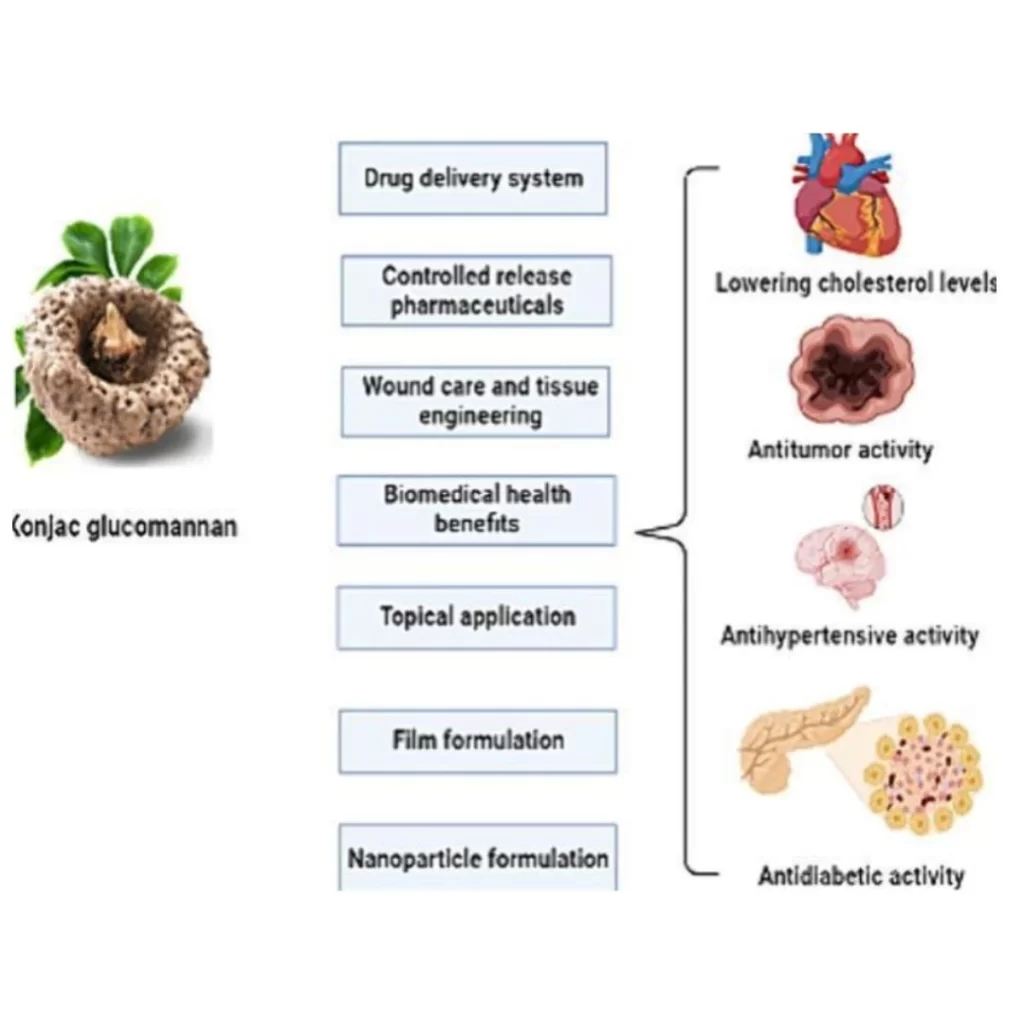
Beyond weight management, studies show glucomannan contributes to improved metabolic health. It helps lower blood glucose, cholesterol, triglycerides, and blood pressure, making it beneficial for individuals with diabetes or metabolic disorders. It’s also a prebiotic, with additional anti-inflammatory, antioxidant, and antibacterial properties.
## **Glucomannan & Gut** **Health**
As a fermenting fibre, Glucomannan supports digestive health, helping control bowel movements, preventing constipation and maintaining beneficial gut flora.
A prebiotic fibre Glucomannan passes through the upper digestive tract, reaching the colon intact, where it acts as a prebiotic for gut microbiota *(food for our beneficial gut bacteria*).
## What the Science Says
Studies highlight glucomannan’s appetite suppression powers with its ability to promote a feeling of fullness, reduce calorie intake, and aid weight loss. When consumed at doses of 2-4 grams per day, Glucomannan has been shown to be well-tolerated and effective in overweight and obese individuals
By expanding in the stomach, glucomannan physically takes up space, which triggers receptors that tell the brain you’re full. This reduces the desire to consume more food during meals, and may even help prevent snacking between meals.
A study published in the *[American Journal of Clinical Nutrition](https://pubmed.ncbi.nlm.nih.gov/16320857/ "American Journal of Clinical Nutrition")* found that glucomannan supplements led to **significant weight loss** in overweight individuals.
Participants took 1 gram of glucomannan three times daily before meals, and lost an average of 5.5 pounds over an eight-week period without making any drastic changes to their diet or exercise routine.
###### The researchers concluded that glucomannan supplementation led to significant body weight reductions, with its ability to create feelings of fullness and reduce overall calorie intake.
Alongside bodyweight Glucomannan has also been studied for its effects on metabolic health and blood pressure.
A study followed 200 obese adults over a 16-week period. Participants were divided into two groups: one group took 1 gram of glucomannan three times daily before meals, and the other group received a placebo.
**Results**: The glucomannan group experienced an average weight loss of 8-10 pounds (3.6-4.5 kg) by the end of the study, while the placebo group showed minimal weight change.
In addition to weight loss, the glucomannan group also showed improvements in blood lipid profiles and blood sugar regulation.
## Glucomannan to Lose Weight – The Science
A recent 2024 study published in Nutrients journal found that combining Psyllium Husk, Inulin and Glucomannan can also effectively support weight loss and improve body composition with potential for a **reduction of -6.5kg bodyweight over 180 days.**
112 adults with an average age of 46 and weight of 89.9kg and BMI 30.9 kg/m2, indicating overweight status, were given either a supplement combining glucomannan, psyllium husk and inulin or a placebo. Participants also adhered to 500 kcal deficit per day with 150 min per week of physical activity, such as walking, encouraged.
The results found the Psyllium Husk, Inulin & Glucomannan fibre group showed **significant reductions** i**n body weight and BMI with an average reduction in bodyweight of -6.5kg** over 180 days.
## Glucomannan to Lose Weight – Study Results
59.2% lost 5% or more of their bodyweight (dark blue column in graph above)
21.1% lose 10% or more of their bodyweight (dark blue column in graph above)
Absolute Bodyweight Change (-6.5kg)
BMI (−2.2 kg/m2))
Fat mass (−19.4%)
Visceral fat rating (−1.9)
Hunger & food consumption significantly reduced
Fullness and satiety significantly increased
A high incidence of gastrointestinal events was also reported (because it’s always advisable to increase fibre intake slowly to allow the GI tract time to acclimatise.
Overall pretty impressive, making fibre food for thought!
If Glucomannan to lose weight sounds like something you’d like to add to your diet you’ll find ALL 3 of these FIBRES (plus more) in [APPETITE](https://prettypea.blog/appetite-suppressants/) supplement. The daily all in one weight management and digestive supplement.
## Is Glucomannan Safe
Like all fibres consuming increasing intake too much too soon can cause temporary digestive upset, so its important to increase intake on gradually.
When consumed at doses of 2-4 grams per day, Glucomannan has been shown to be well-tolerated and effective in overweight and obese individuals.
## Conclusion: Glucomannan to Lose Weight
The science supports glucomannan to lose weight as a promising, natural and effective supplement for weight loss, through appetite suppression and delayed gastric emptying. So if you’re looking for an appetite suppressant as some support to regain control over eating patterns, and looking for a more natural approach to weight loss jabs then Glucomannan supplements represents a powerful ally.
**Glucomannan products recommended for you..**
## [Glucomannan To Lose Weight: Does It Really Help Stop Snacking?](https://prettypea.blog/glucomannan-to-lose-weight/)
## [Glucomannan To Lose Weight: Does It Really Help Stop Snacking?](https://prettypea.blog/glucomannan-to-lose-weight/)
## Frequently Asked Questions
### Glucomannan to Lose Weight
### **Q. What is Glucomannan?**
A: Glucomannan is a water-soluble dietary fibre known for its exceptional water-absorbing properties and health benefits.
### **Q: Are there any side effects of taking glucomannan****?**
A: At recommended doses (2-4 grams per day), glucomannan has been well studied and is generally well-tolerated. However, excessive intake may cause digestive discomfort, such as bloating or gas.
### **Q. How Much Glucomannan should I take?**
A: In its scientific opinion, the EFSA determined that taking 3 grams of glucomannan daily (divided into three 1-gram doses before meals) contributes to weight loss.
### Q. **Can you use Glucomannan to lose weight**?
A: The European Food Safety Authority (EFSA) has officially approved glucomannan as an effective weight loss aid when used in conjunction with a calorie-controlled diet. Glucomannan promotes a feeling of fullness by forming a gel-like substance in the digestive tract. This slows digestion, reduces calorie intake, and minimizes snacking.
### **Q: How can I incorporate glucomannan into my diet?**
A: Glucomannan is available in as a supplement in either powder Pretty Pea [Appetite,](https://prettypea.blog/appetite-suppressants/) or in capsule form Pretty Pea [Meno Weight](https://prettypea.blog/menopause-weight-loss-supplement/ "Meno Weight"). Glucomannan is also found in konjac-based foods like noodles and tofu.
### **Q: Is glucomannan suitable for everyone?**
A: While glucomannan is safe for most individuals, those with swallowing difficulties or certain medical conditions should consult a healthcare provider before use. It’s also advisable for those with any fibre sensitivity, or who do not currently consume the fibre RDA, to start on a reduced dose to allow time for the digestive system to acclimatise to the increase in fibre content.
Any further questions?
We are here to help.
[hello@prettypea.blog](https://prettypea.blog/contact/)
- [](https://prettypea.blog/d-mannose-and-cranberry-for-women/)[Menopause Nutrition](https://prettypea.blog/category/menopause/) · [Superfoods](https://prettypea.blog/category/superfoods/) · [Supplements](https://prettypea.blog/category/supplements/)
October 8, 2026
- [](https://prettypea.blog/what-is-glp-1/)[Fibre & Gut Health](https://prettypea.blog/category/fibre/) · [Hormones & HRT](https://prettypea.blog/category/hormones-hrt/) · [Menopause Nutrition](https://prettypea.blog/category/menopause/) · [Supplements](https://prettypea.blog/category/supplements/)
### [What Is GLP-1? The Gut Hormone That Helps Regulate Hunger & Blood Sugar](https://prettypea.blog/what-is-glp-1/)
August 18, 2026
- [](https://prettypea.blog/psyllium-husk-benefits/)[Pretty Pea](https://prettypea.blog/category/pretty-pea/)
### [Psyllium Husk: Benefits, How to Take It, Side Effects & How It Compares](https://prettypea.blog/psyllium-husk-benefits/)
August 15, 2026
### Glucomannan to Lose Weight – References
[The Impact of Glucomannan, Inulin, and Psyllium Supplementation (SolowaysTM) on Weight Loss in Adults with FTO, LEP, LEPR, and MC4R Polymorphisms: A Randomized, Double-Blind, Placebo-Controlled Trial – PubMed](https://pubmed.ncbi.nlm.nih.gov/38398881/)
[Health-promoting effects of konjac glucomannan and its practical applications: A critical review – PubMed](https://pubmed.ncbi.nlm.nih.gov/30586587/)
Glucomannan related health claims | EFSA
**Categories:** Fibre & Gut Health, Superfoods, Supplements
---
### [Can Glucomannan Help Weight Loss? What the Science Says](https://prettypea.blog/can-glucomannan-help-weight-loss-what-the-science-says/)
**Published:** March 15, 2026
**Author:** Cate Boyd
**Content:**
Weight loss can feel challenging, particularly when appetite and cravings make it difficult to maintain balanced eating habits. Increasing dietary fibre intake has become a popular strategy that may help support satiety, and one fibre in particular that has received attention around weight loss is [**glucomannan**.](https://prettypea.blog/what-is-glucomannan-2/ "glucomannan.")
Let’s break down the science of this unique fibre and the ways glucomannan may help **women lose weight**, naturally and sustainably.
- [What Is Glucomannan?](#aioseo-what-is-glucomannan-8)
- [HowGlucomannan May Support Weight Management](#aioseo-how-glucomannan-may-support-weight-management-25)
- [What Does the Science Say?](#aioseo-what-does-the-science-say-25)
- [The 5 Biggest Glucomannan Mistakes](#aioseo-the-5-biggest-glucomannan-mistakes-40)
- [How to Take Glucomannan Safely](#aioseo-how-to-take-glucomannan-safely-34)
---
## What Is Glucomannan?
Glucomannan is a **natural, water-soluble dietary fibre** extracted from the root of the **konjac plant** (also called elephant yam).
With roots in Chinese medicine for its yin-nourishing properties, Glucomannan has been used for centuries in Japanese cuisine, virtually calorie free, can be found in tofu, noodles and vegetarian meat.
It has a remarkable ability to absorb water — up to **50x its weight** — forming a viscous gel in the stomach.
Because of this property, it is often used in foods and supplements designed to support:
- sateity
- digestive health
- healthy cholesterol levels
## How Does Glucomannan Work?
---
Konjac Glucomannan is most well-known for its considerable soluble fibre content, exceptional viscosity, and gel-forming capacity owing to its unique water-absorbing properties.
This fibre’s exceptional ability to absorb water means it can expand up to 50 times its weight, forming a thick gel-like substance in the digestive tract.
When mixed with water, glucomannan **expands in your stomach**, forming a gel-like substance that **promotes fullness**, slows digestion, and **reduces appetite**.
This gel slows digestion, promotes satiety so you feel fuller for longer. Filling up on this fibre has become a popular natural alternative to weight loss jabs.
---
## How Glucomannan May Support Weight Management
Several mechanisms may explain how glucomannan supports weight management.
**1. Promotes Fullness**
When glucomannan absorbs water, it expands in the stomach. This can increase feelings of fullness, which may help reduce the desire to snack between meals and **reduce overall calorie intake.**
Several studies have shown that glucomannan supplementation can help **lower total calorie intake** without drastically changing your diet.
**2. Slows Digestion**
Soluble fibres like glucomannan form a gel that slows gastric emptying. This may help maintain satiety for longer after meals.
**3. Supports Blood Sugar Balance**
Fibre can slow carbohydrate absorption, helping to **prevent insulin spikes** and moderate blood sugar fluctuations helping reduce energy crashes and sugar cravings — common struggles during perimenopause.
4\. **Improves Gut Health**
It also acts as a **prebiotic**, feeding good gut bacteria that may support metabolism, mood, and digestion.
**Further reading:** [What Is Glucomannan? Benefits, Uses & Side Effects](https://prettypea.blog/what-is-glucomannan-2/)
---
## What Does the Science Say?
Some clinical studies suggest glucomannan may support weight loss when used alongside a balanced diet.
**✅ Study 1: Glucomannan + Weight Loss**
In a double-blind study published in the *International Journal of Obesity*, 176 healthy overweight adults were given either glucomannan or a placebo before meals for 5 weeks.
**Results:**
Those taking glucomannan alongside a balanced 1200 kcal diet lost **significantly more weight** than the placebo group.
---
**✅ Study 2: Glucomannan + Appetite Control**
A comprehensive review of fibre supplements found that **glucomannan was one of the only fibres to consistently aid weight loss**, thanks to its unique water-absorbing properties and effect on satiety hormones like **ghrelin**.
---
## The 5 Biggest Glucomannan Mistakes
1. **Taking too little** – Research supporting weight loss used 3g per day, not occasional low doses.
2. **Not drinking enough water** – Glucomannan needs water to form the gel that contributes to fullness.
3. **Taking it at the wrong time** – Many studies used glucomannan before meals rather than after eating.
4. **Expecting overnight results** – Consistency over weeks matters more than what happens in the first few days.
5. **Ignoring the rest of your diet** – Glucomannan works best as part of an energy-restricted diet and healthy lifestyle, not as a substitute for them.
---
## How to Take Glucomannan Safely
**Form****Capsules, powder, gummies****When to take**15–30 minutes before meals**Dosage**1–3g per day (usually divided across meals)**Water intake**Always take with **1–2 glasses of water**Glucomannan is supported by the European Food Safety Authority (EFSA) for weight loss when taking **3g daily**, split 1g x 3 before meals, with water, as part of a calorie controlled diet.
Glucomannan is commonly taken **before meals with water**, allowing the fibre to expand before food is consumed.
It is important to drink sufficient water when consuming glucomannan to ensure it moves safely through the digestive system.
As with any supplement, individuals should consult a healthcare professional if they have medical conditions or take medications.
⚠️ *Always introduce gradually and consult your GP, especially if you’re on medication (it may interfere with absorption).*
---
## Is Glucomannan Right for You?
If you’re:
- Over 30 and struggling with appetite or weight plateaus
- Experiencing hormonal weight gain (especially around the belly)
- Looking for a **gentle, natural supplement** with real science behind it
— then **glucomannan** may be worth exploring.
It won’t do the work for you, but it can make the work easier — by calming cravings and supporting digestion, naturally and in our opinion is one of the best fibre supplements for weight management.
---
### Key Takeaway
**The Fibre That Works With You, Not Against You**
Glucomannan is a unique soluble fibre that may support weight management by promoting fullness and helping regulate appetite.
Unlike harsh fat-burners or fad diets, glucomannan supports your biology — not fights it. For women navigating real life, real hormones, and real busy schedules, it could be a **simple but powerful addition** to your routine.
Whether you’re navigating weight changes with what feels like a slower metabolism, hormone shifts, and stubborn cravings that can all feel like your body has changed — glucomannan is one natural ingredient that might just help tip the balance back in your favour.
While it is not a quick fix, it can be a useful addition to a balanced diet rich in whole foods and fibre.
Understanding how nutrients like fibre influence satiety can help create **sustainable approaches** to nutrition and wellbeing.
---
### Want to Try Glucomannan Fibre Supplements?
## [Can Glucomannan Help Weight Loss? What the Science Says](https://prettypea.blog/can-glucomannan-help-weight-loss-what-the-science-says/)
### Glucomannan Weight Loss – FAQ
What is Glucomannan?
Glucomannan is a **soluble dietary fibre** extracted from the konjac root. It absorbs water and expands in your stomach, helping you feel fuller. This naturally slows digestion and can support a balanced eating routine.
### How does Glucomannan contribute to weight management?
EFSA-approved studies show that **glucomannan contributes to weight loss in the context of an energy-restricted diet**. Taken before meals with plenty of water, it can help you feel fuller and reduce overall calorie intake over time.
### How should I take Glucomannan for best results?
For the beneficial effect, **a daily intake of 3g divided into three doses** is recommended, taken with **1–2 glasses of water before meals**. Consistent use over several weeks alongside a balanced diet is key.
### Are there any side effects?
Glucomannan is generally well tolerated by most people. Some people may experience mild bloating or soft stools at first as their body adjusts. Drinking plenty of water with each dose helps reduce this effect.
### Can everyone take Glucomannan?
Glucomannan is **suitable for most adults**, including vegetarians and vegans. People with difficulty swallowing, gastrointestinal disorders, or who are on medication affecting the gut should however consult a healthcare professional before use.
### How long does it take to see effects?
Every body is different. Some people notice reduced appetite within a week, while others may take several weeks of consistent use. Pairing glucomannan with a **healthy, energy-controlled diet** improves results significantly.
### Is Glucomannan safe during menopause or perimenopause?
Yes — glucomannan is generally safe for most women 30+ and during menopause. It’s **vegan-friendly and free from artificial colours or flavours**. If you have any digestive conditions or take medication, check with a healthcare professional before starting.
### Can Glucomannan help with bloating?
Glucomannan is a soluble fibre that absorbs water in your gut, helping your digestive system work smoothly. While it won’t “cure” bloating, many women notice **less digestive discomfort** and a feeling of lightness when taken consistently with plenty of water.
## **Glucomannan Fibre Supplement**
## [Can Glucomannan Help Weight Loss? What the Science Says](https://prettypea.blog/can-glucomannan-help-weight-loss-what-the-science-says/)
- [](https://prettypea.blog/d-mannose-and-cranberry-for-women/)[Menopause Nutrition](https://prettypea.blog/category/menopause/) · [Superfoods](https://prettypea.blog/category/superfoods/) · [Supplements](https://prettypea.blog/category/supplements/)
October 8, 2026
- [](https://prettypea.blog/what-is-glp-1/)[Fibre & Gut Health](https://prettypea.blog/category/fibre/) · [Hormones & HRT](https://prettypea.blog/category/hormones-hrt/) · [Menopause Nutrition](https://prettypea.blog/category/menopause/) · [Supplements](https://prettypea.blog/category/supplements/)
### [What Is GLP-1? The Gut Hormone That Helps Regulate Hunger & Blood Sugar](https://prettypea.blog/what-is-glp-1/)
August 18, 2026
- [](https://prettypea.blog/psyllium-husk-benefits/)[Pretty Pea](https://prettypea.blog/category/pretty-pea/)
### [Psyllium Husk: Benefits, How to Take It, Side Effects & How It Compares](https://prettypea.blog/psyllium-husk-benefits/)
August 15, 2026
### **You might also be interested in:**
- [Bloating Isn’t Just “Too Much Gas”: The Real Causes of Bloating (and What Actually Helps)](https://prettypea.blog/7-real-causes-of-bloating-and-what-actually-helps/)
- [Plantago Ovata (Psyllium Husk): Benefits, Uses, Science](https://prettypea.blog/plantago-ovata-psyllium-husk-benefits-uses-science-and-faqs/)
- [GLP-1 Foods: The Ultimate List for Appetite Control, Fat Loss & Blood Sugar](https://prettypea.blog/glp-1-foods/)
- [50 High Fibre Foods Ranked by Fibre Content](https://prettypea.blog/50-high-fibre-foods-ranked-by-fibre-content-full-nutrition-chart/)
- [Best Fibre Supplements for Women | Complete UK Fibre Supplement Guide](https://prettypea.blog/fibre-supplements-for-women/)
- [Why Fibre and Water Always Go Together](https://prettypea.blog/why-fibre-and-water-always-go-together/)
- [Appetite Regulation: How Fibre vs GLP-1 Compare](https://prettypea.blog/appetite-regulation-how-fibre-vs-glp-1-compare/)
- [What is the Highest Fibre Food](https://prettypea.blog/what-is-the-highest-fibre-food/)
### **References: Can Glucomannan help weight loss**
*[Birketvedt GS et al., “A randomized, double-blind, placebo-controlled study of the efficacy of glucomannan in overweight and moderately obese people.” Int J Obes. 2005](https://pubmed.ncbi.nlm.nih.gov/15614200/ "Birketvedt GS et al., "A randomized, double-blind, placebo-controlled study of the efficacy of glucomannan in overweight and moderately obese people." Int J Obes. 2005");*
[Keithley JK, Swanson B. “Glucomannan and obesity: a critical review.” Altern Ther Health Med. 2005; 11(6):30–34.](https://pubmed.ncbi.nlm.nih.gov/16320857/ "Keithley JK, Swanson B. "Glucomannan and obesity: a critical review." Altern Ther Health Med. 2005; 11(6):30–34.")
**Categories:** Fibre & Gut Health
---
### [How to Choose the Best Menopause Supplement (What to Look For) - Evidence-Based Comparison Guide](https://prettypea.blog/best-menopause-supplements-uk-2026-what-to-look-for-evidence-based-comparison-guide/)
**Published:** April 30, 2026
**Author:** Cate Boyd
**Content:**
---
With a growing number of menopause supplements available in the UK, it can be difficult to understand what actually matters when choosing a product.
Rather than focusing on marketing claims, it is more useful to look at **evidence-based nutrients and formulation quality**.
This guide explores the **best supplements during menopause in the UK**, focusing on vitamins, minerals and fibre that support nutritional needs.
---
## How to Choose the Best Supplements During Menopause?
A well-formulated supplement should focus on:
- essential vitamins and minerals
- dietary fibre where appropriate
- transparent labelling
- evidence-based ingredients
Avoid products that rely on exaggerated claims or promise to “fix” menopause symptoms.
### Essential nutrients to look for
- Vitamin D
- Calcium
- Magnesium
- Vitamin B6
- Vitamin B12
- Zinc
- Protein
- Omega-3
### Other ingredients you may find
- Iodine
- Chromium
- Choline
- Glucomannan
- Psyllium husk
- Probiotics
- Sage
- Red clover
- Soy isoflavones
- Black cohosh
- Ashwagandha
## Before You Buy
✔ Ingredients supported by evidence
✔ Transparent ingredient amounts
✔ Appropriate doses
✔ Matches your health goals
✔ Reputable manufacturer
✔ Realistic claims
---
## **How to Choose a Menopause Supplement**
✓ Does it target your symptoms?
✓ Does it contain evidence-based ingredients?
✓ Are the vitamin and mineral doses meaningful?
✓ Does it make authorised health claims?
✓ Is it suitable for your diet?
✓ Does it contain unnecessary fillers?
---
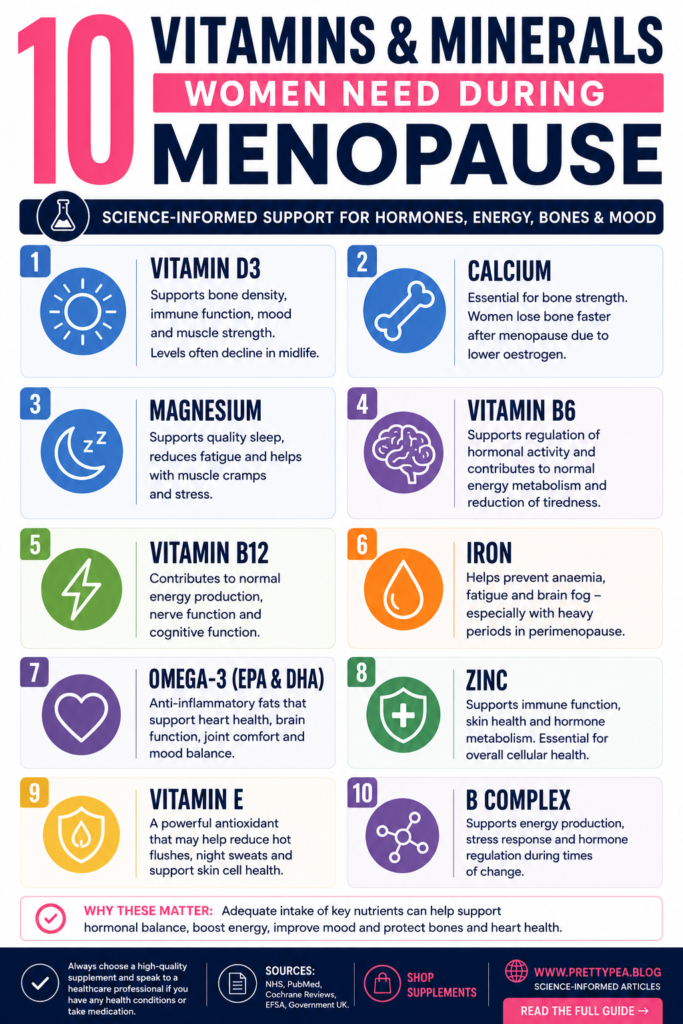## Different symptoms need different nutrients
**If your main concern is…****Consider looking for…**Bone healthVitamin D, Calcium, Vitamin K2Energy & tirednessVitamin B12, Vitamin B6, Iron (if deficient)Muscle functionMagnesium, Vitamin D, ProteinHormonal activityVitamin B6Cognitive functionIodine, Vitamin B12, ZincHeart healthOmega-3Feelings of fullnessGlucomannan, psyllium huskDigestive healthPsyllium husk, fibre blends, probiotics and live cultures**Note:** Glucomannan contributes to weight loss in the context of an energy-restricted diet when consumed at 3 g daily in three 1 g doses with 1–2 glasses of water before meals.
Psyllium husk is a soluble fibre that forms a gel when mixed with water, helping to increase feelings of fullness and support digestive health, although it does not have an equivalent authorised EU weight-loss health claim.
---
## What to Look for When Choosing a Menopause Supplement
### ✓ Evidence-based ingredients
Choose supplements containing ingredients with authorised health claims or supported by high-quality scientific research rather than relying on marketing claims alone.
**Strength of Scientific Evidence for Common Menopause Supplement Ingredients**
**Ingredient****Strength of Evidence****Why?****Vitamin D**⭐⭐⭐⭐⭐Strong evidence for supporting bone, muscle and immune health, particularly important after menopause.**Calcium**⭐⭐⭐⭐⭐Well-established role in maintaining normal bones and reducing age-related bone loss when intake is adequate.**Protein**⭐⭐⭐⭐⭐Strong evidence for preserving muscle mass and supporting healthy ageing alongside resistance exercise.**Magnesium**⭐⭐⭐⭐☆Good evidence for supporting muscle function, energy metabolism and reducing tiredness and fatigue.**Vitamin B6**⭐⭐⭐⭐☆Authorised health claims for hormonal activity, energy metabolism and reduction of tiredness and fatigue.**Vitamin B12**⭐⭐⭐⭐☆Strong evidence for energy metabolism, nervous system function and reducing tiredness and fatigue.**Zinc**⭐⭐⭐⭐☆Well-supported for immune function, cognition, carbohydrate metabolism and maintenance of hair, skin, nails and bones.**Iodine**⭐⭐⭐⭐☆Strong evidence for thyroid hormone production, thyroid function and energy-yielding metabolism.**Omega-3**⭐⭐⭐⭐☆Good evidence for supporting heart and brain health, although not menopause-specific.**Psyllium husk**⭐⭐⭐⭐☆Good evidence for digestive health, regularity and increasing feelings of fullness.**Glucomannan**⭐⭐⭐⭐⭐Has an authorised health claim for contributing to weight loss in the context of an energy-restricted diet when used as directed.**Chromium**⭐⭐⭐☆☆Supports normal blood glucose levels and macronutrient metabolism, but evidence for menopause-specific benefits is more limited.**Probiotics / Live Cultures**⭐⭐⭐☆☆Growing evidence for gut health, but menopause-specific research is still developing.**Choline**⭐⭐⭐☆☆Essential nutrient with authorised health claims for lipid metabolism and liver function, but limited menopause-specific evidence.**Soy Isoflavones**⭐⭐⭐☆☆Moderate evidence for helping some women with menopausal symptoms, although results vary between studies.**Sage**⭐⭐☆☆☆Some evidence for menopausal symptoms, but larger, higher-quality studies are needed.**Black Cohosh**⭐⭐☆☆☆Mixed evidence; some studies suggest benefits, while others show little effect.**Red Clover**⭐⭐☆☆☆Contains isoflavones, but overall evidence for symptom relief remains inconsistent.**Ashwagandha**⭐⭐☆☆☆Emerging evidence for stress and wellbeing, but limited research specifically in menopause.**How to interpret these ratings:** These star ratings reflect the current strength and consistency of scientific evidence, together with authorised UK/EU health claims where applicable. A lower rating does not necessarily mean an ingredient is ineffective; it may simply indicate that less high-quality research is currently available, particularly for menopause-specific outcomes.
---
### ✓ Meaningful ingredient doses
A long ingredient list doesn’t always mean a better product. Check whether nutrients are included in meaningful amounts rather than tiny “label dressing” doses.
---
### ✓ Transparent labelling
Look for products that clearly state the amount of every active ingredient.
---
### ✓ Your main health goal
The best menopause supplement depends on what you’re trying to support.
---
### ✓ Quality manufacturing
Choose supplements manufactured to recognised quality standards and purchased from reputable retailers or brands that provide clear ingredient information.
---
### ✓ Realistic claims
Be cautious of products claiming to:
- “balance hormones”
- “melt belly fat”
- “reverse menopause”
- “cure symptoms”
Menopause supplements can support health, but they should not promise unrealistic results.
---
## Key Ingredients to Look for in a Menopause Supplement
IngredientWhat to look forVitamin DAround 10–25 µg (400–1000 IU), depending on individual needs and guidance.MagnesiumWell-absorbed forms such as citrate or glycinate.GlucomannanAt least **3 g/day** for the authorised weight-loss claim.Psyllium huskAim for products providing several grams of soluble fibre per serving.Omega-3Look for the combined EPA and DHA content rather than just the total fish oil amount.**Essential Vitamins & Minerals**
Many menopause supplements contain a combination of vitamins, minerals and botanical ingredients designed to support specific aspects of health during midlife. While no single supplement can prevent or treat menopause, certain nutrients have authorised health claims and may help support normal bodily functions that become increasingly important as women age.
### Vitamin D
Vitamin D contributes to the maintenance of normal bones, muscle function and the normal function of the immune system. As oestrogen levels decline during menopause, maintaining healthy bones becomes increasingly important.
### Calcium
Calcium contributes to the maintenance of normal bones and teeth and supports normal muscle function. Adequate calcium intake, together with vitamin D, is essential for lifelong bone health.
### Magnesium
Magnesium contributes to normal muscle function, normal psychological function, normal energy-yielding metabolism and the reduction of tiredness and fatigue. It also contributes to the maintenance of normal bones.
### Vitamin B6
Vitamin B6 contributes to the regulation of hormonal activity, normal energy-yielding metabolism and the reduction of tiredness and fatigue. It also supports the normal function of the immune system.
### Vitamin B12
Vitamin B12 contributes to normal energy-yielding metabolism, normal psychological function, normal nervous system function and the reduction of tiredness and fatigue.
### Chromium
Chromium contributes to the maintenance of normal blood glucose levels and normal macronutrient metabolism. It is commonly included in menopause supplements designed to support healthy carbohydrate metabolism and blood sugar balance.
### Choline
Choline contributes to normal lipid metabolism, normal homocysteine metabolism and the maintenance of normal liver function. Although it is not included in every menopause supplement, choline plays important roles in fat metabolism and overall health, making it a valuable addition to some formulations.
### Zinc
Zinc contributes to normal carbohydrate metabolism, normal cognitive function, normal fertility and reproduction, maintenance of normal testosterone levels in the blood, normal immune system function, and the maintenance of normal bones, vision, hair, nails and skin.
### Iodine
Iodine contributes to normal energy-yielding metabolism, normal cognitive function, the production of thyroid hormones and normal thyroid function.
**Other Ingredients You May See**:
### Omega-3 Fatty Acids
Omega-3 fatty acids, particularly EPA and DHA, are commonly included in women’s health supplements. Although they do not carry specific authorised health claims relating to menopause symptoms, they play recognised roles in supporting heart and brain health.
### Glucomannan
Glucomannan is a highly soluble dietary fibre derived from the konjac root. It contributes to weight loss in the context of an energy-restricted diet when consumed at 3 g per day in three 1 g doses with 1–2 glasses of water before meals.
## [How to Choose the Best Menopause Supplement (What to Look For) – Evidence-Based Comparison Guide](https://prettypea.blog/best-menopause-supplements-uk-2026-what-to-look-for-evidence-based-comparison-guide/)
### Psyllium Husk
Psyllium husk is a soluble fibre that absorbs water to form a gel in the digestive tract. It is commonly used to support digestive health, regular bowel movements and feelings of fullness, making it a popular ingredient in weight management and fibre supplements.
### Protein
Maintaining adequate protein intake becomes increasingly important during menopause to help preserve muscle mass alongside regular resistance exercise. Protein also contributes to the maintenance of normal bones.
### Probiotics and Live Cultures
Some menopause supplements include live cultures to support the balance of beneficial gut bacteria. Research into the gut microbiome and women’s health is growing, although evidence for specific menopause-related benefits is still developing.
### Botanical Ingredients
Many menopause supplements also contain herbal ingredients such as sage, red clover, soy isoflavones, black cohosh or ashwagandha. These botanicals are commonly included to support women during menopause, although the strength of scientific evidence varies between ingredients. When choosing a supplement, look for products that are transparent about ingredient amounts and avoid products making unrealistic or unsupported claims.
## Key Ingredients Compared
**Ingredient****Best for**Glucomannan⭐⭐⭐⭐⭐ Weight management & fullnessProtein⭐⭐⭐⭐⭐ Muscle maintenance & healthy ageingPsyllium husk⭐⭐⭐⭐☆ Digestive health & fullnessVitamin D⭐⭐⭐⭐⭐ Bone & muscle healthMagnesium⭐⭐⭐⭐☆ Energy, muscles & fatigueVitamin B6⭐⭐⭐⭐☆ Hormonal activity & energyVitamin B12⭐⭐⭐⭐☆ Energy & nervous systemCalcium⭐⭐⭐⭐⭐ Bone healthZinc⭐⭐⭐⭐☆ Immunity, cognition & skinIodine⭐⭐⭐⭐☆ Thyroid & energy metabolismChromium⭐⭐⭐☆☆ Blood glucose & metabolismCholine⭐⭐⭐☆☆ Lipid metabolism & liver functionOmega-3⭐⭐⭐⭐☆ Heart & brain healthProbiotics⭐⭐⭐☆☆ Gut healthBotanicals⭐⭐☆☆☆ Evidence varies by ingredient### 1. Vitamins & Minerals
Most evidence-based supplements include:
- B vitamins (energy metabolism support)
- Vitamin D (bone health support)
- Magnesium (nervous system function)
- Vitamin B6 (hormone regulation)
These nutrients are widely studied and form the foundation of menopause nutrition.
---
### 2. Fibre-Based Supplements
Some formulations include dietary fibre to support nutritional balance.
Fibre such as **glucomannan**:
- is water-soluble
- forms a gel in the digestive system
- contributes to daily fibre intake
This makes it a useful addition for women not meeting fibre targets through diet alone.
Read more: [Appetite Regulation: How Fibre vs GLP-1 Compare](https://prettypea.blog/appetite-regulation-how-fibre-vs-glp-1-compare/)
---
## [How to Choose the Best Menopause Supplement (What to Look For) – Evidence-Based Comparison Guide](https://prettypea.blog/best-menopause-supplements-uk-2026-what-to-look-for-evidence-based-comparison-guide/)
### 3. Botanical Ingredients
Plant-based ingredients such as soy isoflavones or herbal extracts are often included.
However, research findings on these ingredients are **mixed**, and they are generally considered supportive rather than essential nutrients.
### What Does the Research Say?
Botanical ingredients are commonly included in menopause supplements, particularly plant-based compounds such as soy isoflavones, black cohosh, and red clover.
### Soy Isoflavones
Soy isoflavones are plant compounds that have a similar structure to oestrogen.
Some clinical studies suggest they may have mild effects on menopausal symptoms, particularly in populations with higher habitual soy intake. However, results across studies are inconsistent, and effects tend to be modest.
Systematic reviews generally conclude that while soy isoflavones may have potential, the evidence is **not strong enough to draw firm conclusions**.
---
### Black Cohosh
Black cohosh is one of the most widely studied herbal ingredients in menopause supplements.
Research findings are mixed:
- some trials report small improvements in certain symptoms
- others show no significant difference compared to placebo
Major reviews, including those referenced by health organisations, note that evidence remains **inconclusive**.
---
### Red Clover
Red clover contains isoflavones similar to soy.
Some studies suggest potential benefits, but systematic reviews again report:
- inconsistent results
- variation in study quality
- limited long-term data
---
### Overall Evidence Summary
Across botanical ingredients:
- results are **mixed and inconsistent**
- effects (if present) are generally modest
- quality of evidence varies between studies
For this reason, botanical ingredients are typically considered **supportive additions rather than core nutritional components**.
## What Research Suggests
Nutrition research in midlife women consistently highlights:
- importance of micronutrient adequacy
- role of dietary fibre in gut health
- value of overall diet quality over single ingredients
No single supplement has been shown to address menopause as a whole — instead, **combined nutritional support is most relevant**.
Overall, research consistently supports vitamins, minerals, and dietary fibre as foundational components of menopause nutrition, while evidence for botanical ingredients remains mixed.
---
## Menopause Weight Management
IngredientEvidence for Menopause Weight ManagementGlucomannan⭐⭐⭐⭐⭐Protein⭐⭐⭐⭐⭐Psyllium husk⭐⭐⭐⭐☆Chromium⭐⭐⭐☆☆Omega-3⭐⭐☆☆☆Magnesium⭐⭐☆☆☆Vitamin D⭐⭐☆☆☆Green Tea Extract⭐⭐☆☆☆Probiotics⭐⭐☆☆☆Choline⭐⭐☆☆☆Vitamin B6⭐☆☆☆☆Calcium⭐☆☆☆☆Zinc⭐☆☆☆☆Iodine⭐☆☆☆☆These ratings reflect the current strength of scientific evidence for supporting healthy weight management during menopause. They consider the quality of published research, the consistency of findings and, where applicable, authorised health claims.
A higher rating does not necessarily mean an ingredient causes weight loss on its own. Lasting weight management still depends on factors such as overall diet, physical activity, sleep and lifestyle.
### Why these ratings?
- **⭐⭐⭐⭐⭐ Glucomannan** – Has an authorised EU/UK health claim for contributing to weight loss in the context of an energy-restricted diet when consumed under the specified conditions.
- **⭐⭐⭐⭐⭐ Protein** – Strong evidence for supporting satiety, preserving muscle mass during weight loss and helping maintain metabolic health.
- **⭐⭐⭐⭐☆ Psyllium husk** – Good evidence for increasing feelings of fullness and supporting calorie control, although it does not have the same authorised weight-loss claim as glucomannan.
- **⭐⭐⭐☆☆ Chromium** – Supports normal blood glucose levels and normal macronutrient metabolism, which may be helpful as part of an overall healthy lifestyle.
- **⭐⭐☆☆☆** ingredients – Some promising or indirect evidence, but results are less consistent or they support general health rather than weight management specifically.
- **⭐☆☆☆☆** ingredients – Important for overall health and normal body functions, but there is little evidence that they directly support menopause weight management.
## [How to Choose the Best Menopause Supplement (What to Look For) – Evidence-Based Comparison Guide](https://prettypea.blog/best-menopause-supplements-uk-2026-what-to-look-for-evidence-based-comparison-guide/)
---
## How to Choose the Right Product
When choosing the right supplements for menopause look for:
- clear ingredient transparency
- evidence-based nutrients
- realistic claims
- fibre inclusion if needed
Ingredients to be cautious of:
- promise rapid weight loss
- claim to “balance hormones”
- hide ingredient doses
---
## Final Thoughts
The best menopause supplements are those that support **nutritional intake consistently and transparently**, rather than relying on exaggerated claims.
A balanced approach combining diet and targeted supplementation is most commonly recommended in nutrition research.
---
## Best Menopause Supplements UK (2026) FAQ
### **What are the best supplements during menopause in the UK?**
There is no single best product, but supplements with vitamins, minerals, and fibre are commonly used for nutritional support.
---
### **Do menopause supplements work?**
They do not treat menopause but may support nutritional intake where dietary gaps exist.
---
### **What should I look for in a menopause supplement?**
Look for evidence-based nutrients, transparent labelling, and no exaggerated health claims.
---
### **Are herbal menopause supplements effective?**
Research on herbal ingredients is mixed, and they are generally considered supportive rather than essential.
---
### **Is fibre important in menopause supplements?**
Yes, fibre contributes to normal digestive function and dietary balance**.**
#### You might also like:
[**Why Fibre Could Be the Secret to a Better Menopause**](https://prettypea.blog/why-fibre-could-be-the-secret-to-a-better-menopause/)
[**The Menopause Diet 5 Day Plan to Lose Weight**](https://prettypea.blog/the-menopause-diet-5-day-plan-to-lose-weight/)
[**The 100 Symptoms of Perimenopause**](https://prettypea.blog/the-100-symptoms-of-perimenopause/)
## Latest Products
[View All → →](#)
### [How to Choose the Best Menopause Supplement (What to Look For) – Evidence-Based Comparison Guide](https://prettypea.blog/best-menopause-supplements-uk-2026-what-to-look-for-evidence-based-comparison-guide/)
- [](https://prettypea.blog/d-mannose-and-cranberry-for-women/)[Menopause Nutrition](https://prettypea.blog/category/menopause/) · [Superfoods](https://prettypea.blog/category/superfoods/) · [Supplements](https://prettypea.blog/category/supplements/)
October 8, 2026
- [](https://prettypea.blog/what-is-glp-1/)[Fibre & Gut Health](https://prettypea.blog/category/fibre/) · [Hormones & HRT](https://prettypea.blog/category/hormones-hrt/) · [Menopause Nutrition](https://prettypea.blog/category/menopause/) · [Supplements](https://prettypea.blog/category/supplements/)
### [What Is GLP-1? The Gut Hormone That Helps Regulate Hunger & Blood Sugar](https://prettypea.blog/what-is-glp-1/)
August 18, 2026
- [](https://prettypea.blog/psyllium-husk-benefits/)[Pretty Pea](https://prettypea.blog/category/pretty-pea/)
### [Psyllium Husk: Benefits, How to Take It, Side Effects & How It Compares](https://prettypea.blog/psyllium-husk-benefits/)
August 15, 2026
## Best Menopause Supplements UK 2026 – References & Evidence
This article is based on current nutrition research and reviews of menopause health, including:
- Systematic reviews of menopause nutrition and dietary patterns from National Institutes of Health (PMC database)
- Evidence summaries on micronutrients and menopause from British Nutrition Foundation
- EU-authorised nutrition and health claims guidance from European Food Safety Authority
- Reviews of midlife women’s health and metabolism published in peer-reviewed journals
- Scientific Opinion on the substantiation of health claims related to vitamin B6 and contribution to normal homocysteine metabolism (ID 73, 76, 199), maintenance of normal bone (ID 74), maintenance of normal teeth (ID 74), maintenance of normal hair (ID 74), maintenance of normal skin (ID 74), maintenance of normal nails (ID 74), contribution to normal energy‐yielding metabolism (ID 75, 214), contribution to normal psychological functions (ID 77), reduction of tiredness and fatigue (ID 78), and contribution to normal cysteine synthesis (ID 4283) pursuant to Article 13(1) of Regulation (EC) No 1924/2006 – – 2010 – EFSA Journal – Wiley Online Library
These sources consistently highlight the importance of:
- adequate micronutrient intake
- dietary fibre consumption
- overall diet quality during menopause
**Categories:** Pretty Pea, Supplements
---
### [7 Reasons Women Can't Lose Weight](https://prettypea.blog/7-reasons-women-cant-lose-weight/)
**Published:** October 15, 2024
**Author:** Cate Boyd
**Content:**
Any women over 40 will know that losing weight is not just about eating less and exercising more. Weight loss is influenced by a wide range of factors, from genetics and hormonal changes to environmental and psychological challenges.
Research has shown that only ≈20% of overweight individuals are successful at long-term weight loss. Studies point out that weight loss eventually slows down, stagnates or reverses in 85% of the cases.
The exact reasons for obesity remain unknown, but there is a complex link between biological, psychosocial and behavioural factors. Here we delve into 7 reasons why women may struggle with weight loss, backed by research and evidence.
[See Weight Loss Supplements](https://prettypea.blog/menopause-weight-loss-supplement/)
## **1. Previous Weight Loss Attempts**
Repeated attempts at weight loss can make it harder to lose weight in the future. Yo-yo dieting, characterized by cycles of weight loss followed by weight regain, disrupts metabolic processes.
Each time the body loses weight, it slows its metabolism to conserve energy, a survival mechanism from our evolutionary past.
So when women repeatedly lose and regain weight, their metabolic rate may not return to its original level, making it harder to shed pounds in subsequent attempts.
Studies show that frequent dieting can also increase cravings for high-calorie foods, further hindering weight loss success.
## **2. Anthropometry (the study of the body’s measurements/proportions)**
A woman’s body composition—her ratio of muscle to fat, body shape, and fat distribution—can make weight loss more difficult. In anthropology, factors like height, weight, body composition, size and BMI are considered.
Body size, influenced by fat-free mass, plays a vital role in weight loss outcomes.
Women tend to store more fat in the hips, thighs, and buttocks due to reproductive needs, and this fat is often more resistant to being burned for energy than fat in other areas.
Taller or heavier individuals with more fat-free mass typically have a higher basal metabolic rate, potentially facilitating quicker weight loss with similar calorie intake.
Conversely, shorter and lighter individuals may find weight loss more challenging.
Several studies have also identified that those with a BMI > 30 kg/m2 struggle with recommended physical activity, whereas those with a BMI of 25 kg/m2 perform better.
Concluding for these trials, that high adiposity (bodyfat) is linked to low physical activity that in turn affects weight loss outcomes.
Initial success, quick wins at the start, are also crucial for eventual success in weight loss efforts.
It appears that those that have fewer follow-ups, have a lower initial BMI and have minimal initial weight loss are more likely to fail to maintain any weight loss after 12 months.
[See Price & Purchase](https://prettypea.blog/menopause-weight-loss-supplement/)
## **3. Stress**
Chronic stress increases levels of the hormone cortisol, which promotes fat storage, particularly belly fat.
Women under stress often turn to comfort foods high in sugar and fat. This combination of increased fat storage and overeating makes weight loss, particularly belly fat loss, challenging for women.
Additionally, poor sleep quality is linked to higher levels of stress, leading to an increase in cortisol, a hormone that promotes fat storage, and again especially around the abdominal area.
## **4. Medications**
Certain medications may affect weight loss efforts by influencing metabolism, appetite, or how the body stores fat.
Common medications like antidepressants, antipsychotics, steroids, and even birth control pills may lead to weight gain in some women.
These drugs may alter hormonal balance or increase water retention, making it harder for women to shed pounds.
For those on long-term medication, discussing alternative treatments, or lifestyle adjustments with a healthcare provider can help minimize weight gain.
#### Contraception use
Recent evidence suggests no clinically and statistically significant short or long-term effects of oral contraceptives on weight in women with normal or higher BMI.
That said, a recent secondary analysis suggested an association between oral contraceptive use and weight gain after weight loss, although, only a small number of individuals were studied for any conclusive evidence.
The available evidence is also insufficient to estimate the effect of oral contraception on weight loss outcomes during energy (calorie) restriction.
But it does make us aware that there could potentially be a link, and that this area warrants further clinical trials for a better understanding of how contraception may or may not affect weight loss success.
#### Polycystic ovarian syndrome (PCOS)
Weight gain and obesity can contribute to PCOS/PCOD development in genetically predisposed women.
In particular it appears to be the psychological factors, including depression and low self-control, that may hinder weight loss efforts in certain PCOS patients and not the physical condition itself.
A systematic review of 14 lifestyle intervention studies found no statistically significant difference in weight loss between women with and without PCOS.
At this time, it appears to be the psychological effects of PCOS are more impactful than physiological PCOS changes – further studies are required.
[See More Meno Weight Loss](https://prettypea.blog/menopause-weight-loss-supplement/)
## **5. Menopause**
Menopause is a significant hurdle for many women when it comes to weight loss.
During menopause, the body undergoes hormonal changes, particularly a drop in estrogen levels, which leads to a slower metabolism and changes in fat distribution.
This hormonal shift can cause women to gain weight, especially around the abdomen, resulting in belly fat that can become difficult to shift.
Moreover, menopause can bring on other symptoms like sleep disturbances, mood swings, and fatigue, making it harder to maintain the energy and motivation needed to pursue weight loss goals.
It’s important for women to discuss options such as HRT with their GP and alternative remedies such as menopause weight loss supplements.
## **6. Insulin Resistance**
Insulin resistance is another major factor that can make weight loss difficult for women.
This condition occurs when the body’s cells become less responsive to insulin, a hormone that regulates blood sugar.
As a result, more insulin is needed to process glucose, leading to elevated levels of this hormone.
High insulin levels are associated with fat storage, particularly around the abdomen, making weight loss challenging.
Insulin resistance is commonly linked to conditions like polycystic ovary syndrome (PCOS) and type 2 diabetes, which further complicate weight management .
## **7. Genetics**
Genetics can play a significant role in a woman’s ability to lose weight.
Studies suggest that genetics can be estimated at 40% to 70% of an individual’s body mass index (BMI), affecting how fat is stored and how easily the body burns calories.
It’s a complex area still being studied with genetic factors contributing to varied weight loss responses between people.
Variations in genes related to appetite control, metabolism, and fat storage can predispose some women to struggle with weight loss.
And as we’ve seen above, other variables like age (menopause and build up of insulin resistance), sex, race, deficit accumulation (previous weight loss attempts) and baseline weight (your body composition make up) do make weight loss more challenging for specific women.
[](https://prettypea.blog/store-two/)[See Supplements](https://prettypea.blog/store-two/)
### **Conclusion**
Losing weight is a multifaceted challenge for women, influenced by factors that range from how you’re your body is made up and your genetics to hormonal fluctuations due to menopause and PCOS, stress and insulin resistance and past dieting attempts.
While these obstacles can make weight loss difficult, understanding these factors can help women adopt more effective strategies for long-term weight loss success.
Lifestyle adjustments, hormonal balance, and individualized approaches are key to overcoming these challenges.
[Shop Weight Loss Supplements](https://prettypea.blog/menopause-weight-loss-supplement/)
## Latest Products
[View All → →](#)
### [7 Reasons Women Can’t Lose Weight](https://prettypea.blog/7-reasons-women-cant-lose-weight/)
### You might also like:
[The 100 Symptoms of Perimenopause](https://prettypea.blog/the-100-symptoms-of-perimenopause/)
[Weird Perimenopause Symptoms: 25 Unusual Signs You Didn’t Expect](https://prettypea.blog/weird-perimenopause-symptoms-25-unusual-signs-you-didnt-expect/)
[Early Signs of Perimenopause in Your 40s: What to Look For ](https://prettypea.blog/early-signs-of-perimenopause/)
[Hormone Imbalance in Women: Causes, Symptoms & How Hormones Work](https://prettypea.blog/hormone-imbalance-in-women/)
[Best Menopause Supplements UK (2026): What to Look For + Evidence-Based Comparison Guide](https://prettypea.blog/best-menopause-supplements-uk-2026-what-to-look-for-evidence-based-comparison-guide/)
[Menopause Weight Changes Explained (UK Guide): What Research Says About Body Composition, Metabolism & Nutrition](https://prettypea.blog/menopause-weight-changes-explained-uk-guide-what-research-says-about-body-composition-metabolism-nutrition/)
[The Menopause Diet 5 Day Plan to Lose Weight](https://prettypea.blog/the-menopause-diet-5-day-plan-to-lose-weight/)
[Why Fibre Could Be the Secret to a Better Menopause](https://prettypea.blog/why-fibre-could-be-the-secret-to-a-better-menopause/)
[Your Gut Microbiome Is Talking to Your Brain — Are You Listening?](https://prettypea.blog/your-gut-microbiome-is-talking-to-your-brain-are-you-listening/)
[10 Green Tea Benefits: The Ultimate Science-Backed Guide](https://prettypea.blog/10-green-tea-benefits-the-ultimate-science-backed-guide/)
[Which Foods Increase GLP-1 Naturally? | Science Explained – Pretty Pea](https://prettypea.blog/which-foods-increase-glp-1-naturally-heres-what-the-research-says/)
[Calories Explained: Where Do Calories Go (And What Really Happens After You Eat) – Pretty Pea](https://prettypea.blog/where-do-calories-go/)
**Categories:** Menopause Nutrition
---
### [9 Science Backed Protein Benefits for Women: Why Every Woman Needs It](https://prettypea.blog/9-science-protein-benefits-for-women-why-every-woman-needs-it/)
**Published:** August 22, 2025
**Author:** Cate Boyd
**Content:**
Protein is one of the most essential nutrients for women at every stage of life. It’s not only vital for building muscle but also plays a crucial role in supporting metabolism, bone health, skin, hair, hormones and overall wellbeing. Yet many women struggle to get enough protein in their daily diet. Understanding protein benefits can help you make smarter nutrition choices and maintain optimal health.
Here we’ll explore **9 key protein benefits for women**, backed by scientific research, and offer tips on how to incorporate more protein into your diet.
- [1. Supports Muscle Growth and Maintenance](#aioseo-1-supports-muscle-growth-and-maintenance)
- [Muscle Loss During Dieting](#aioseo-muscle-loss-during-dieting)
- [2. Aids in Weight Management](#aioseo-2-aids-in-weight-management)
- [3. Supports Bone Health](#aioseo-3-supports-bone-health)
- [4. Helps Maintain Healthy Skin, Hair, and Nails](#aioseo-4-helps-maintain-healthy-skin-hair-and-nails)
- [Factors That Accelerate Collagen Loss](#aioseo-factors-that-accelerate-collagen-loss)
- [5. Supports Hormonal Balance](#aioseo-5-supports-hormonal-balance)
- [6. Boosts Immunity](#aioseo-6-boosts-immunity)
- [7. Enhances Exercise Recovery](#aioseo-7-enhances-exercise-recovery)
- [8. Supports Metabolism](#aioseo-8-supports-metabolism)
- [9. May Reduce Cravings and Improve Mood](#aioseo-9-may-reduce-cravings-and-improve-mood)
---
## **1. Supports Muscle Growth and Maintenance**
Protein is the building block of muscles. Women naturally have less muscle mass than men, and maintaining it is essential for strength, mobility, metabolism and a firmer body. Protein provides the essential amino acids needed to maintain and build muscle tissue.
As women age, especially after 30, muscle mass naturally declines. This decrease in muscle and metabolic rate is a gradual process. After age 30 we start to lose as much as 3-5% per decade. This is compounded with the addition of some dramatic hormonal changes affecting women usually in their 40’s and this invariably can be the start of the ‘middle age spread’ for many women.
Studies show that adequate protein intake, combined with resistance training, helps women preserve lean muscle mass, especially during weight loss or aging.
Protein benefits the body helping preserve muscle[ ](https://pubmed.ncbi.nlm.nih.gov/22258266/)during calorie restriction. The body will use both body fat and muscle mass for energy during calorie restriction, so whilst you lose weight you’re also likely losing muscle mass also.
## Muscle Loss During Dieting
- Studies have shown weight loss, via a calorie reduced diet, decreases both fat and fat free mass (lean body/muscle).
- In normal weight persons, fat-free mass loss (muscle loss) often exceeds 35% of total weight loss and weight regain promotes relatively more fat gain.
- Compared to overweight and obese persons, fat-free mass contributes to around 20-30 total weight loss.
**Key Protein Benefits**: Protein is important to build muscle mass that’s declining with age and preserve muscle that’s going to keep your metabolism revved up after weight loss or a period of calorie restriction.
**Tips:** Include lean meats, fish, eggs, Greek yogurt, or plant-based proteins like lentils and chickpeas.
## [9 Science Backed Protein Benefits for Women: Why Every Woman Needs It](https://prettypea.blog/9-science-protein-benefits-for-women-why-every-woman-needs-it/)
---
## **2.** **Aids in Weight Management**
One of the strongest reasons women increase protein intake is its effect on **weight management** and metabolism.
Protein increases satiety — helping you feel fuller for longer — which can help reduce overeating, snacking and overall calorie intake making it easier to manage weight naturally.
Protein benefits have been extensively researched and the evidence confirms that high-protein diets can [increase energy expenditure](https://pubmed.ncbi.nlm.nih.gov/19640952/). More on protein’s metabolic effects below.
Clinical trials confirm that women following higher-protein diets experience greater fat loss and better weight maintenance compared with standard diets. This makes protein particularly valuable during calorie restriction.
**Key Protein Benefits:** Protein supports weight loss as it helps promotes feelings of fullness making it easier to manage calorie intake and weight naturally.
**Tips:** Add a protein source to every meal, like nuts with breakfast or a protein-rich salad for lunch.
---
## **3. Supports Bone Health**
Adequate protein intake is crucial for bone density and reducing the risk of osteoporosis, particularly important where risk increases in postmenopausal women. Protein works synergistically with calcium and vitamin D to maintain strong bones.
**Tips:** Include dairy, soy products, and fish with bones, like sardines, in your diet.
---
## **4. Helps Maintain Healthy Skin, Hair, and Nails**
Protein is essential for collagen production, which keeps skin firm, hair strong, and nails healthy. Amino acids from protein are the building blocks for these tissues, supporting youthful and resilient skin.
- **20s:** Collagen production starts to slow slightly in the mid-20s.
- **30s:** Decline becomes more noticeable, around **1% per year** for skin collagen.
- **40s–50s:** The rate of collagen loss accelerates, partly due to hormonal changes (especially estrogen in women), sun exposure, and lifestyle factors.
- **60s+:** Collagen loss can be significant, leading to more visible wrinkles, decreased skin elasticity, joint stiffness, and slower tissue repair.
### **Factors That Accelerate Collagen Loss**
- **Hormonal changes:** Menopause can accelerate loss in women.
- **Sun exposure:** UV radiation breaks down collagen in the skin.
- **Smoking:** Toxins reduce collagen synthesis.
- **High sugar intake:** Glycation damages collagen fibers.
- **Stress & poor sleep:** Chronic stress and low sleep quality impair collagen production.
Collagen is found not only in the skin, but also in **bones, joints, tendons, and blood vessels**. Loss in these tissues contributes to joint pain, reduced flexibility, and bone density issues.
Nutrition and lifestyle can influence collagen levels—so alongside protein, **vitamin C, zinc, and glycine** are also important for natural collagen synthesis.
**Key Protein Benefits:** Protein and its amino acids are the building blocks for collagen production and maintaining hair, skin, nails, bones, joints and tendons.
**Tips:** Incorporate collagen-rich foods or protein supplements that include amino acids.
---
## **5. Supports Hormonal Balance**
Protein plays a **crucial role in supporting hormone balance**, especially for women, and it works in several interconnected ways. Protein benefits hormone production, influencing those that regulate metabolism, appetite, and reproductive health.
Consuming enough protein can help stabilize blood sugar levels, which is especially important for women with hormonal fluctuations during menstrual cycles or menopause. Here’s a detailed, easy-to-understand explanation:
### **Amino Acids Are Hormone Building Blocks**
- Hormones are chemical messengers made from **amino acids**, the building blocks of protein.
- Examples:
- **Insulin** – regulates blood sugar.
- **Glucagon** – balances insulin.
- **Thyroid hormones (T3 & T4)** – partially dependent on amino acids for synthesis.
- Without adequate protein, your body may struggle to produce these hormones efficiently, which can affect energy, metabolism, and mood.
### **Supports Blood Sugar Regulation**
- Protein slows digestion and **stabilizes blood sugar**.
- Stable blood sugar helps regulate hormones like **insulin, cortisol, and ghrelin** (the hunger hormone).
- Erratic blood sugar spikes from low-protein, high-carb meals can trigger **stress hormones** like cortisol, which can interfere with estrogen and progesterone balance in women.
### **Helps Maintain Muscle & Metabolic Health**
- Muscle is metabolically active tissue, and maintaining it supports **healthy hormone levels**, including:
- **Growth hormone** – peaks during exercise and recovery.
- **Sex hormones (estrogen and testosterone)** – muscle mass influences their levels and balance.
- Adequate protein intake supports muscle repair, which indirectly supports hormone regulation.
### **Supports Neurotransmitters and Mood**
- Certain hormones are closely linked to neurotransmitters that are made from amino acids:
- **Serotonin (mood stabilizer)** comes from tryptophan.
- **Dopamine (motivation, focus)** comes from tyrosine.
- Eating sufficient protein ensures your body has the raw materials to make these mood- and stress-related hormones.
### **Especially Important for Women During Menopause**
- Hormone fluctuations (estrogen and progesterone decline) can affect energy, sleep, and mood.
- Protein helps stabilize blood sugar and supports muscle mass, which can mitigate some of the **weight gain and fatigue** often associated with menopause.
- Including **high-quality protein at each meal** can help maintain more consistent hormone function throughout the day.
### **Practical Takeaways**
- Aim for **20–30g of protein per meal** to optimize hormone support.
- Include a mix of protein sources: eggs, fish, lean meats, dairy, and plant-based options like lentils, beans, and pea protein.
- Combine protein with **healthy fats and fibre** to further stabilize blood sugar and hormone output.
**Key Protein Benefits:** Protein supports hormone balance by providing building blocks for hormone synthesis, stabilizing blood sugar, supporting muscle mass, and aiding neurotransmitter production — all of which help regulate energy, mood, and metabolism.
**Tips:** Include protein with every meal to maintain stable energy and hormonal balance. Top up with [Pretty Pea protein powder ](https://prettypea.blog/vegan-chocolate-protein-powder/)to ensure adequate intake.
## [9 Science Backed Protein Benefits for Women: Why Every Woman Needs It](https://prettypea.blog/9-science-protein-benefits-for-women-why-every-woman-needs-it/)
---
## **6. Boosts Immunity**
Protein is critical for producing antibodies and immune system cells. Women who consume sufficient protein have better immune responses and recover more efficiently from illness or injury.
**Tips:** Lean meats, legumes, and eggs are excellent protein sources that support immune health.
---
## **7. Enhances Exercise Recovery**
After physical activity, protein helps repair and rebuild muscles, reducing soreness and improving overall recovery. This is important for women who exercise regularly, whether strength training, cardio, or endurance activities.
**Tips:** Aim for protein intake within 30–60 minutes post-workout through shakes, yogurt, or lean protein meals.
---
## **8. Supports Metabolism**
The **thermic effect of food (TEF)** refers to the energy your body uses to digest, absorb, and metabolize nutrients. Protein has a significantly higher TEF than fats or carbs. Here’s a clear breakdown:
### **Thermic Effect by Macronutrient**
MacronutrientApproximate TEF (% of calories burned during digestion)**Protein**20–30%**Carbohydrates**5–10%**Fat**0–3%**Explanation:**
- Eating 100 kcal of protein may burn 20–30 kcal just through digestion and metabolism.
- By contrast, 100 kcal of carbs burns only 5–10 kcal, and fat barely increases energy expenditure at all.
### **Why Protein’s TEF is Higher**
- Protein requires more **enzymatic activity** and energy to break down amino acids.
- Amino acids undergo **deamination** (removal of nitrogen), which costs extra energy.
- Some of the energy is lost as heat, which is why protein can slightly boost metabolism.
### **Practical Takeaways**
- High-protein diets can help with **weight management**, because:
- You burn more calories just digesting the protein.
- Protein increases satiety, reducing overall calorie intake.
- TEF contributes only a portion of total energy expenditure, but combined with satiety benefits, it’s significant for metabolism.
**Key Protein Benefits:** **Protein has a TEF of ~20–30%, much higher than carbs (5–10%) or fats (0–3%),** making it the most “metabolically expensive” macronutrient to process.
**Tips:** Include protein-rich snacks like Greek yogurt, boiled eggs, or [protein shakes ](https://prettypea.blog/vegan-chocolate-protein-powder/)or bars throughout the day.
---
## **9. May Reduce Cravings and Improve Mood**
Protein helps regulate neurotransmitters like serotonin and dopamine, which influence mood and cravings. Consuming protein-rich meals may help stabilize energy and reduce sugar cravings, leading to better emotional and physical wellbeing.
**Tips:** Combine protein with complex carbs and healthy fats to balance meals.
---
**Conclusion**
Protein is a powerhouse nutrient that supports women’s health in multiple ways, from maintaining muscle and bone strength to supporting skin, hair, hormonal balance, and metabolism. By incorporating adequate protein into your daily diet, you can feel stronger, healthier, and more energized.
**Top Protein Sources for Women:**
- Lean meats: chicken, turkey, beef
- Fish: salmon, tuna, sardines
- Eggs and dairy: eggs, Greek yogurt, cottage cheese
- Plant-based: lentils, chickpeas, tofu, tempeh, quinoa
- Nuts and seeds: almonds, pumpkin seeds, chia seeds
- [Pretty Pea protein powder](https://prettypea.blog/vegan-chocolate-protein-powder/)
**Aim for a balanced intake of protein throughout the day** to enjoy all the benefits for women’s health.
---
## [9 Science Backed Protein Benefits for Women: Why Every Woman Needs It](https://prettypea.blog/9-science-protein-benefits-for-women-why-every-woman-needs-it/)
**You might also be interested in..**
- [](https://prettypea.blog/d-mannose-and-cranberry-for-women/)[Menopause Nutrition](https://prettypea.blog/category/menopause/) · [Superfoods](https://prettypea.blog/category/superfoods/) · [Supplements](https://prettypea.blog/category/supplements/)
October 8, 2026
- [](https://prettypea.blog/what-is-glp-1/)[Fibre & Gut Health](https://prettypea.blog/category/fibre/) · [Hormones & HRT](https://prettypea.blog/category/hormones-hrt/) · [Menopause Nutrition](https://prettypea.blog/category/menopause/) · [Supplements](https://prettypea.blog/category/supplements/)
### [What Is GLP-1? The Gut Hormone That Helps Regulate Hunger & Blood Sugar](https://prettypea.blog/what-is-glp-1/)
August 18, 2026
- [](https://prettypea.blog/psyllium-husk-benefits/)[Pretty Pea](https://prettypea.blog/category/pretty-pea/)
### [Psyllium Husk: Benefits, How to Take It, Side Effects & How It Compares](https://prettypea.blog/psyllium-husk-benefits/)
August 15, 2026
## [9 Science Backed Protein Benefits for Women: Why Every Woman Needs It](https://prettypea.blog/9-science-protein-benefits-for-women-why-every-woman-needs-it/)
### Protein Benefits : Sources
1. Phillips, S. M., & Van Loon, L. J. (2011). Dietary protein for athletes: From requirements to optimum adaptation. *Journal of Sports Sciences*, 29(S1), S29–S38.
2. Bauer, J., et al. (2013). Evidence-based recommendations for optimal dietary protein intake in older people: A position paper from the PROT-AGE Study Group. *Journal of the American Medical Directors Association*, 14(8), 542–559.
3. Leidy, H. J., et al. (2015). The role of protein in weight management and satiety. *American Journal of Clinical Nutrition*, 101(6), 1320S–1329S.
4. Wolfe, R. R. (2017). The role of dietary protein in optimizing muscle mass, function, and health outcomes in older adults. *Journal of the American College of Nutrition*, 36(2), 143–154.
5. Rizzoli, R., et al. (2014). Protein intake and bone health. *Osteoporosis International*, 25(12), 2859–2871.
**Categories:** Menopause Nutrition, Supplements
---
### [9 Benefits of Fibre: Why It’s Essential for Gut Health, Weight and Wellbeing](https://prettypea.blog/9-benefits-of-fibre-why-its-essential-for-gut-health-weight-and-wellbeing/)
**Published:** March 24, 2026
**Author:** Cate Boyd
**Content:**
The 9 benefits of fibre may surprise you. As we move into our 40s, many women notice subtle but frustrating changes — digestion may feel slower, weight becomes harder to manage, and energy levels can fluctuate more than before.
While hormones often take the spotlight, one overlooked factor is **fibre intake**.
In fact, many adults consume significantly less than the recommended daily intake, which can have a noticeable impact on digestion, appetite and overall wellbeing.
Fibre supplements can offer a convenient way to support intake — and their benefits go far beyond digestion.
- [1. Supports More Regular Digestion](#aioseo-1-supports-more-regular-digestion-6)
- [2. Helps You Feel Fuller for Longer](#aioseo-2-helps-you-feel-fuller-for-longer-10)
- [3. May Help Reduce Cravings](#aioseo-3-may-help-reduce-cravings-15)
- [4. Supports Gut Health](#aioseo-4-supports-gut-health-19)
- [5. Can Support Weight Management](#aioseo-5-can-support-weight-management-23)
- [6. Helps Support Heart Health](#aioseo-6-helps-support-heart-health-28)
- [7. May Help Balance Energy Levels](#aioseo-7-may-help-balance-energy-levels-32)
- [8. Supports Hormonal Health Indirectly](#aioseo-8-supports-hormonal-health-indirectly-36)
- [9. Encourages Long-Term Healthy Habits](#aioseo-9-convenient-way-to-increase-intake-40)
- [Convenient Way to Increase Fibre Intake](#aioseo-10-encourages-long-term-healthy-habits-44)
- [Key Takeaway: 9 Benefits of Fibre](#aioseo-final-thoughts-47)
- [How much fibre should women over 40 aim for daily?](#aioseo-how-much-fibre-shoulsd-women-over-40-aim-for-50)
- [Can fibre supplements help with weight management?](#aioseo-can-fibre-supplements-help-with-weight-management-54)
- [What is the best time to take fibre supplements?](#aioseo-can-fibre-supplements-help-with-weight-management-fibre-supplements-may-support-weight-management-by-increasing-feelings-of-fullness-and-helping-to-reduce-overall-calorie-intake-some-types-of-fibre-particularly-soluble-fibre-slow-digestion-and-may-help-regulate-appetite-however-they-are-most-effective-when-combined-with-a-balanced-diet-and-healthy-lifestyle-what-is-the-best-time-to-take-fibre-supplements-fibre-supplements-are-often-taken-before-meals-with-water-which-may-help-support-fullness-however-timing-can-vary-depending-on-the-type-of-fibre-and-individual-preference-its-important-to-follow-product-guidance-and-stay-well-hydrated-can-fibre-supplements-help-with-menopause-symptoms-fibre-does-not-directly-treat-menopause-symptoms-but-it-may-support-areas-that-are-commonly-affected-such-as-digestion-weight-management-blood-sugar-balance-additionally-gut-health-plays-a-role-in-hormone-metabolism-which-may-indirectly-support-overall-wellbeing-during-menopause-are-fibre-supplements-safe-to-take-daily-fibre-supplements-are-generally-considered-safe-for-most-people-when-used-as-directed-however-its-important-to-increase-intake-gradually-drink-plenty-of-water-consult-a-healthcare-professional-if-you-have-underlying-conditions-or-take-medication-why-can-fibre-sometimes-cause-bloating-increasing-fibre-intake-too-quickly-can-lead-to-bloating-or-discomfort-especially-if-the-gut-is-not-used-to-higher-fibre-levels-this-can-usually-be-managed-by-increasing-fibre-gradually-drinking-more-water-supporting-gut-health-over-time-what-types-of-fibre-are-most-beneficial-there-are-two-main-types-of-fibre-soluble-fibre-helps-slow-digestion-and-support-blood-sugar-balance-insoluble-fibre-supports-bowel-regularity-both-types-are-important-and-a-mix-of-fibre-sources-is-generally-recommended-can-i-get-enough-fibre-from-food-alone-it-is-possible-to-meet-fibre-needs-through-a-diet-rich-in-vegetables-fruits-whole-grains-legumes-however-many-people-find-this-challenging-in-practice-which-is-why-fibre-supplements-can-be-a-convenient-addition-how-long-does-it-take-to-notice-benefits-from-fibre-some-people-notice-improvements-in-digestion-within-a-few-days-while-other-benefits-such-as-appetite-regulation-or-gut-health-may-take-longer-and-depend-on-overall-diet-and-consistency-do-fibre-supplements-affect-gut-bacteria-yes-certain-fibres-act-as-prebiotics-meaning-they-help-feed-beneficial-gut-bacteria-supporting-a-healthy-gut-microbiome-is-linked-with-digestion-immunity-and-overall-health-55)
- [Can fibre supplements help with menopause symptoms?](#aioseo-can-fibre-supplements-help-with-weight-management-fibre-supplements-may-support-weight-management-by-increasing-feelings-of-fullness-and-helping-to-reduce-overall-calorie-intake-some-types-of-fibre-particularly-soluble-fibre-slow-digestion-and-may-help-regulate-appetite-however-they-are-most-effective-when-combined-with-a-balanced-diet-and-healthy-lifestyle-what-is-the-best-time-to-take-fibre-supplements-fibre-supplements-are-often-taken-before-meals-with-water-which-may-help-support-fullness-however-timing-can-vary-depending-on-the-type-of-fibre-and-individual-preference-its-important-to-follow-product-guidance-and-stay-well-hydrated-can-fibre-supplements-help-with-menopause-symptoms-fibre-does-not-directly-treat-menopause-symptoms-but-it-may-support-areas-that-are-commonly-affected-such-as-digestion-weight-management-blood-sugar-balance-additionally-gut-health-plays-a-role-in-hormone-metabolism-which-may-indirectly-support-overall-wellbeing-during-menopause-are-fibre-supplements-safe-to-take-daily-fibre-supplements-are-generally-considered-safe-for-most-people-when-used-as-directed-however-its-important-to-increase-intake-gradually-drink-plenty-of-water-consult-a-healthcare-professional-if-you-have-underlying-conditions-or-take-medication-why-can-fibre-sometimes-cause-bloating-increasing-fibre-intake-too-quickly-can-lead-to-bloating-or-discomfort-especially-if-the-gut-is-not-used-to-higher-fibre-levels-this-can-usually-be-managed-by-increasing-fibre-gradually-drinking-more-water-supporting-gut-health-over-time-what-types-of-fibre-are-most-beneficial-there-are-two-main-types-of-fibre-soluble-fibre-helps-slow-digestion-and-support-blood-sugar-balance-insoluble-fibre-supports-bowel-regularity-both-types-are-important-and-a-mix-of-fibre-sources-is-generally-recommended-can-i-get-enough-fibre-from-food-alone-it-is-possible-to-meet-fibre-needs-through-a-diet-rich-in-vegetables-fruits-whole-grains-legumes-however-many-people-find-this-challenging-in-practice-which-is-why-fibre-supplements-can-be-a-convenient-addition-how-long-does-it-take-to-notice-benefits-from-fibre-some-people-notice-improvements-in-digestion-within-a-few-days-while-other-benefits-such-as-appetite-regulation-or-gut-health-may-take-longer-and-depend-on-overall-diet-and-consistency-do-fibre-supplements-affect-gut-bacteria-yes-certain-fibres-act-as-prebiotics-meaning-they-help-feed-beneficial-gut-bacteria-supporting-a-healthy-gut-microbiome-is-linked-with-digestion-immunity-and-overall-health-55)
---
## 1. Supports More Regular Digestion
Digestive changes are common with age. Fibre helps add bulk to stool and supports regular bowel movements.
A review published in *Alimentary Pharmacology & Therapeutics* found that increased fibre intake is associated with improved bowel regularity.
Read more in our article: [**The Ultimate Guide to Fibre Supplements for a Happier Gut: Unlocking Your Digestive Health** ](https://prettypea.blog/the-ultimate-guide-to-fibre-supplements-for-a-happier-gut-unlocking-your-digestive-health/)
---
## 2. Helps You Feel Fuller for Longer
Fibre slows digestion and can increase satiety.
A study in the *Journal of Nutrition* found that higher fibre intake is associated with reduced hunger and lower overall calorie intake.
Many women find this particularly helpful when managing weight after 40.
Read more in our article: [**Appetite Regulation: How Fibre vs GLP-1 Compare** ](https://prettypea.blog/appetite-regulation-how-fibre-vs-glp-1-compare/)
---
## 3. May Help Reduce Cravings
Fluctuations in blood sugar can contribute to cravings.
Soluble fibre slows carbohydrate absorption, which may help stabilise blood sugar levels and reduce sudden hunger.
---
## 4. Supports Gut Health
Certain fibres can act as a **prebiotic**, feeding beneficial gut bacteria.
A diverse gut microbiome is linked with better digestion, immune function and even mood.
---
## 5. Can Support Weight Management
Weight changes during midlife are common.
Research suggests that increasing fibre intake, such as Glucomannan, may support weight management by promoting fullness and reducing overall calorie intake.
This fibre’s exceptional ability to absorb water means it can expand up to 50 times its weight, forming a thick gel-like substance in the digestive tract.
This gel slows digestion, promotes satiety so you feel fuller for longer.
---
## 6. Helps Support Heart Health
Certain fibres can help maintain healthy cholesterol levels.
Studies have shown that soluble fibre may help reduce LDL cholesterol when consumed regularly.
---
## 7. May Help Balance Energy Levels
Low fibre meals can lead to rapid spikes and dips in blood sugar.
Including fibre — including via supplements — may help support more stable energy throughout the day.
---
## 8. Supports Hormonal Health Indirectly
Gut health plays a role in hormone regulation.
The gut microbiome is involved in the metabolism of estrogen, which may influence hormonal balance during midlife.
---
## 9. Encourages Long-Term Healthy Habits
Adding fibre often leads to broader dietary awareness — more whole foods, more hydration and improved nutrition overall.
Check out: [**What is the Highest Fibre Food** ](https://prettypea.blog/what-is-the-highest-fibre-food/)
---
## Convenient Way to Increase Fibre Intake
Many people struggle to reach recommended fibre levels through diet alone. Fibre supplements can be a practical addition to help bridge the gap.
Glucomannan fibre is a key ingredient in Pretty Pea Meno Shape supplements.
## [9 Benefits of Fibre: Why It’s Essential for Gut Health, Weight and Wellbeing](https://prettypea.blog/9-benefits-of-fibre-why-its-essential-for-gut-health-weight-and-wellbeing/)
---
## Key Takeaway: 9 Benefits of Fibre
Fibre supplements are often viewed as a simple digestive aid, but their benefits can extend much further — particularly for women over 40 navigating changes in metabolism, hormones and energy.
While they’re not a replacement for a balanced diet, they can be a valuable addition to a broader approach to health and wellbeing.
### How much fibre should women over 40 aim for daily?
In the UK, adults are generally advised to consume around **30g of fibre per day**. However, many people consume significantly less than this.
Gradually increasing fibre intake — through foods and, where appropriate, supplements — may help support digestion and overall health.
### Can fibre supplements help with weight management?
Fibre supplements may support weight management by **increasing feelings of fullness** and helping to reduce overall calorie intake.
Some types of fibre, particularly soluble fibre, slow digestion and may help regulate appetite. However, they are most effective when combined with a balanced diet and healthy lifestyle.
### What is the best time to take fibre supplements?
Fibre supplements are often taken **before meals with water**, which may help support fullness.
However, timing can vary depending on the type of fibre and individual preference. It’s important to follow product guidance and stay well hydrated.
###
Can fibre supplements help with menopause symptoms?
Fibre does not directly treat menopause symptoms, but it may support areas that are commonly affected, such as:
• **digestion** • **weight management**
• **blood sugar balance**
Additionally, gut health plays a role in hormone metabolism, which may indirectly support overall wellbeing during menopause.
###
Are fibre supplements safe to take daily?
Fibre supplements are generally considered safe for most people when used as directed.
However, it’s important to:
• increase intake gradually
• drink plenty of water
• consult a healthcare professional if you have underlying conditions or take medication
###
Why can fibre sometimes cause bloating?
Increasing fibre intake too quickly can lead to **bloating or discomfort**, especially if the gut is not used to higher fibre levels.
This can usually be managed by:
• **increasing fibre gradually
• drinking more water
• supporting gut health over time**
###
What types of fibre are most beneficial?
There are two main types of fibre:
• **Soluble fibre** – helps slow digestion and support blood sugar balance
• **Insoluble fibre** – supports bowel regularity
Both types are important, and a mix of fibre sources is generally recommended.
### Can I get enough fibre from food alone?
It is possible to meet fibre needs through a diet rich in:
• **vegetables
• fruits
• whole grains
• legumes**
However, many people find this challenging in practice, which is why fibre supplements can be a convenient addition.
###
How long does it take to notice benefits from fibre?
Some people notice improvements in digestion within a few days, while other benefits — such as appetite regulation or gut health — may take longer and depend on overall diet and consistency.
### Do fibre supplements affect gut bacteria?
Yes, certain fibres act as **prebiotics**, meaning they help feed beneficial gut bacteria.
Supporting a healthy gut microbiome is linked with digestion, immunity and overall health.
## [9 Benefits of Fibre: Why It’s Essential for Gut Health, Weight and Wellbeing](https://prettypea.blog/9-benefits-of-fibre-why-its-essential-for-gut-health-weight-and-wellbeing/)
- [](https://prettypea.blog/d-mannose-and-cranberry-for-women/)[Menopause Nutrition](https://prettypea.blog/category/menopause/) · [Superfoods](https://prettypea.blog/category/superfoods/) · [Supplements](https://prettypea.blog/category/supplements/)
October 8, 2026
- [](https://prettypea.blog/what-is-glp-1/)[Fibre & Gut Health](https://prettypea.blog/category/fibre/) · [Hormones & HRT](https://prettypea.blog/category/hormones-hrt/) · [Menopause Nutrition](https://prettypea.blog/category/menopause/) · [Supplements](https://prettypea.blog/category/supplements/)
### [What Is GLP-1? The Gut Hormone That Helps Regulate Hunger & Blood Sugar](https://prettypea.blog/what-is-glp-1/)
August 18, 2026
- [](https://prettypea.blog/psyllium-husk-benefits/)[Pretty Pea](https://prettypea.blog/category/pretty-pea/)
### [Psyllium Husk: Benefits, How to Take It, Side Effects & How It Compares](https://prettypea.blog/psyllium-husk-benefits/)
August 15, 2026
#### You might also like..
**[Your Gut Microbiome Is Talking to Your Brain — Are You Listening? ](https://prettypea.blog/your-gut-microbiome-is-talking-to-your-brain-are-you-listening/)**
[**10 Green Tea Benefits: The Ultimate Science-Backed Guide**](https://prettypea.blog/10-green-tea-benefits-the-ultimate-science-backed-guide/)
[**The Ultimate Superfood List: What are Superfoods, Benefits, Best Choices, and How to Use** ](https://prettypea.blog/the-ultimate-superfood-list-what-are-superfoods-benefits-best-choices-and-how-to-use/)
[**The Rich List: Insoluble Fibre Rich Food List** ](https://prettypea.blog/the-rich-list-insoluble-fibre-rich-food-list/)
[**Understanding Visceral Fat: The Ultimate Belly Fat Guide** ](https://prettypea.blog/understanding-visceral-fat-the-ultimate-belly-fat-guide/)
[**Everything Psyllium How To Use: A Comprehensive Guide on How to Use It for Maximum Health Benefits**](https://prettypea.blog/psyllium-how-to-use/)
[**Simple Food Group Swaps – Make Life Easier for Yourself** ](https://prettypea.blog/simple-food-group-swaps-make-life-easier-for-yourself/)
[**The 100 Symptoms of Perimenopause** ](https://prettypea.blog/the-100-symptoms-of-perimenopause/)
### 9 Benefits of Fibre: Sources
[Slavin, J. (2013). Dietary fibre and body weight. *Nutrition*](https://pubmed.ncbi.nlm.nih.gov/15797686/ "Slavin, J. (2013). Dietary fibre and body weight. Nutrition")
Anderson, J.W. et al. (2009). Health benefits of dietary fibre. *Nutrition Reviews*
Reynolds, A. et al. (2019). Carbohydrate quality and health outcomes. *The Lancet*
Makki, K. et al. (2018). The impact of dietary fibre on gut microbiota. *Cell Host & Microbe*
**Categories:** Fibre & Gut Health
---
### [20 Gut Microbiome Facts](https://prettypea.blog/20-things-you-didnt-know-about-your-gut-microbiome/)
**Published:** October 15, 2024
**Author:** Cate Boyd
**Content:**
Unless you have avoided all mass media recently, you are likely hearing about the *“gut microbiome”*, and how people are sampling their own feces for the purposes of science, taking probiotics, eating yogurt, kombucha or kimchi – to try to foster the “good” bacteria.
The science is exploding and we are just in the early stages of making some sense of it all, so here are 20 things about the gut microbiome taken from an article published in *J Cardiovasc Nurs.* that you might find helpful to know.
1\. The microbiome is defined as all the bacteria, viruses, fungi, archaea, and eukaryotes that inhabit the human body.
Collectively referred to as the ***“second human genome”***[1](https://www.ncbi.nlm.nih.gov/pmc/articles/PMC4191858/#R1), the gut microbiome in particular is now being considered **a separate “organ”** with distinct metabolic and immune activity.
2\. There are **10x the number of microbial cells in the human gut than in the whole human body**, totalling roughly 100 trillion microbes representing as many as 5,000 different species and weighing approximately 2 kilograms.[2](https://www.ncbi.nlm.nih.gov/pmc/articles/PMC4191858/#R2)
There are other human **microbiome sites** as well, including **skin, oral, and vaginal**, but the **gut** is the most popular and diverse neighbourhood!
3\. Until the entry of next generation sequencing in 2005 and the birth of metagenomics, the ability to measure the vast community of microbiota in the GI tract was not possible since most of the bacteria which reside in the gut are anaerobic and unable to be grown via culture.
4\. **Our understanding** **of the “normal” microbiome patterns, including what constitutes a healthy versus diseased pattern is still in its infancy.** Only a few associations have been established in human studies thus far.
5\. The Human Microbiome Project, funded by the NIH from 2007-2015 and the American Gut Project are the two major studies in the US aiming to characterize the composition and diversity of the human microbiome and establish a dataset library of human microbial communities. For a fee of $99, **anyone can participate in the American Gut Project to get their gut microbiome sequenced .**
6\. Though once thought that the fetal intrauterine environment and GI tract were sterile, the evidence of microbes in meconium suggests that the microbiome may develop sometime during fetal development.[3](https://www.ncbi.nlm.nih.gov/pmc/articles/PMC4191858/#R3)
**The neonatal microbiome is further influenced by delivery type (vaginal versus C-section) and feeding type (breast milk versus formula) and continues to develop until age 2-3 years** when the gut micobiota stabilizes and resembles that of adults.
7\. **Antibiotic therapy alters the patterns of gut microbiota and when given early in life (infancy and childhood) may shift the bacterial profile towards one that promotes obesity, metabolic abnormalities and/or autoimmune diseases.**
This relationship is seen in livestock animals given low-dose antibiotics to enhance growth and weight gain, so this relationship in humans is also being explored.
8\. “Normal” gut microbiota in healthy persons include such pathogenic strains as E. coli and Enterococci – but as of yet, **there is no clear distinction of which are the good versus the bad bacteria**,[4](https://www.ncbi.nlm.nih.gov/pmc/articles/PMC4191858/#R4) or if some have both roles.
9\. Gut bacteria are **involved in harvesting energy** from food, **balancing the good versus bad** bacterial composition, **manufacturing neurotransmitters** such as serotonin, enzymes and vitamins like vitamin K and are **involved with immune and metabolic functions.**
10\. The gut microbiome of Americans and most other **Westernized, industrialized populations is less diverse** and dominated by different bacterial species than that of people from rural, less developed populations.
**Diet plays a role,** but a general shift away from natural environments with little exposure to soil, animals, and other environmental microbes seems to be impacting the gut microbiome in potentially detrimental ways.
11\. Children raised in homes with pets have less risk of allergic diseases and new evidence is demonstrating a link with gut microbiome patterns.
**Exposure to dogs seems to alter the gut microbiome to be protective against allergic airway issues and respiratory viruses.**[5](https://www.ncbi.nlm.nih.gov/pmc/articles/PMC4191858/#R5) So, Lucy was wrong and a dog kiss a day may help keep bad things away!
12\. **Gut microbiota differ in obese individuals versus lean individuals**, and those with atherosclerosis, diabetes, and metabolic syndrome but the significance of these differences is not yet understood.[6](https://www.ncbi.nlm.nih.gov/pmc/articles/PMC4191858/#R6)
13\. **Fecal microbiota transplant, a treatment that dates back over 1000 years to Chinese practitioners and was first published as a modern therapeutic intervention in 1958**,[7](https://www.ncbi.nlm.nih.gov/pmc/articles/PMC4191858/#R7) is the process by which a fecal sample from a “healthy” individual is transplanted into the gut via enema, nasogastric tube or colonoscopy of a diseased patient.
It has been the most successful treatment for patients with antibiotic resistant C. difficile thus far.[8](https://www.ncbi.nlm.nih.gov/pmc/articles/PMC4191858/#R8)
A nonprofit organization called OpenBiome () collects and store fecal samples for fecal microbiota transplant for C. difficile patients. This is a new era of “organ” transplant!
14\. **Fecal microbiota transplant from lean healthy donors has also found to be successful in improving insulin sensitivity in men with metabolic syndrome.**[9](https://www.ncbi.nlm.nih.gov/pmc/articles/PMC4191858/#R9)
15\. **Diet seems to be the most powerful influence of the gut microbiome**.
Processed foods containing emulsifiers and detergent-like compounds may damage the intestinal lining, potentially leading to “leaky gut” and systemic inflammation (contributing to inflammatory-based diseases such as diabetes and CVD).
16\. **Fibres – including food-based resistant starch, soluble fibre and insoluble** **fibre are some of the key nutrients for promoting fermentation and ensuring a diverse microbiome**.
[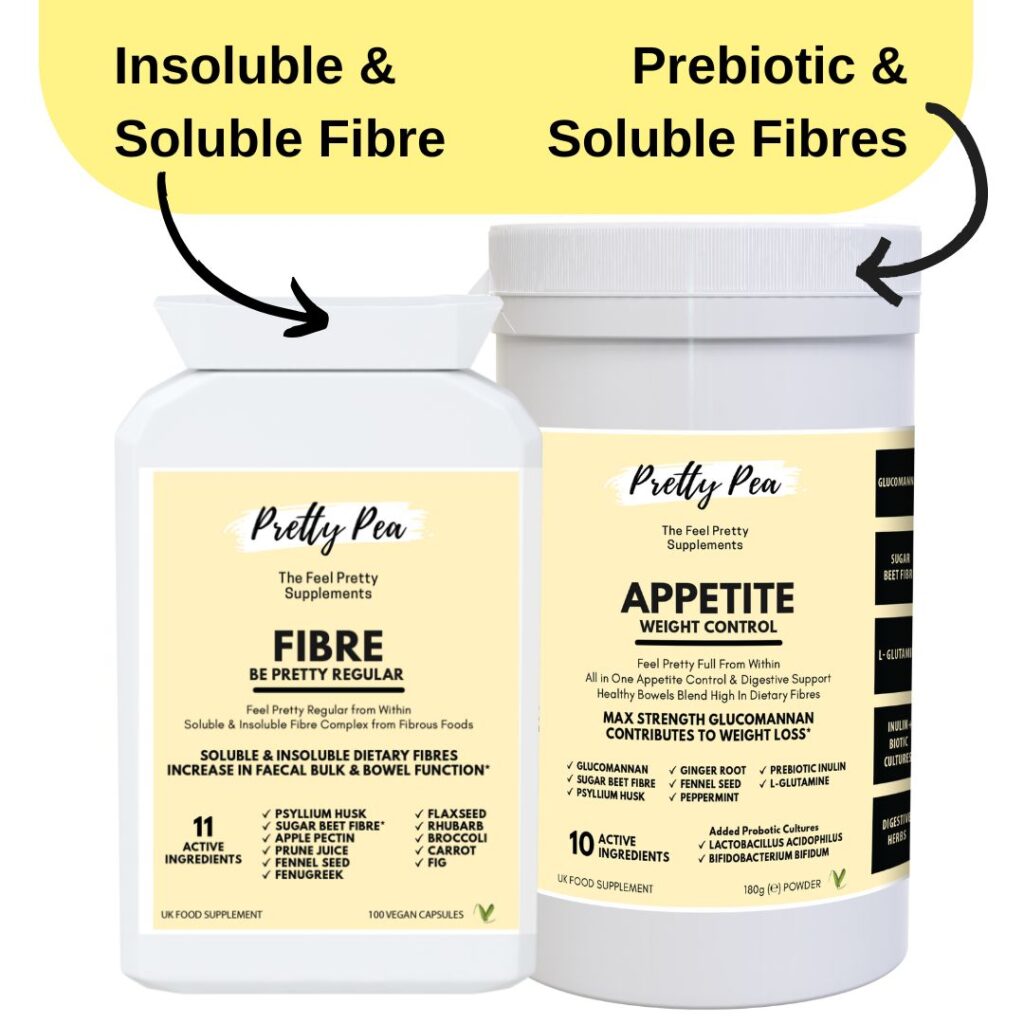](https://prettypea.blog/store-two/)Such non-digestible dietary components are known as **prebiotics**, which **stimulate the growth or activity of the gut microbiota**.
17\. A wide diversity of gut microbiota is currently thought to be the healthier composition than having only a select few bugs.
This **diversity is affected by a varied diet rich in plants, vegetables and fruit, so those who have a limited diet also have a low diversity of microbiota**.
18\. **Aging is associated with decreasing microbial diversity and the reduced diversity correlates with nutritional status, increased inflammation and frailty.**[11](https://www.ncbi.nlm.nih.gov/pmc/articles/PMC4191858/#R11)
19\. In one study, **individuals with type 2 diabetes (T2D) had a gut microbiome composition that was distinctive enough to be more predictive of the disease** state than BMI compared to control subjects.[12](https://www.ncbi.nlm.nih.gov/pmc/articles/PMC4191858/#R12) The individuals with T2D had fewer bacteria with anti-inflammatory properties. The shift in gut microbiota following gastric bypass may be the reason why T2D is improved or resolved even before weight reduction begins.[13](https://www.ncbi.nlm.nih.gov/pmc/articles/PMC4191858/#R13)
20\. So, to conclude – what we don’t know about the gut microbiome and its contribution to health and disease is a lot more than what we do know. But one thing is for sure – this is a tremendous area of research with new discoveries and relevant cardiovascular implications, published even faster than we could outline this list.
There seems to be great potential for the role of this second human (or non-human, rather) genome and the role it may have in future therapeutic targets.
Who knew the power of feces or the smooch of a pup!
## Latest Products
[View All → →](#)
### [20 Gut Microbiome Facts](https://prettypea.blog/20-things-you-didnt-know-about-your-gut-microbiome/)
You might also like:
[The 100 Symptoms of Perimenopause](https://prettypea.blog/the-100-symptoms-of-perimenopause/)
[Weird Perimenopause Symptoms: 25 Unusual Signs You Didn’t Expect](https://prettypea.blog/weird-perimenopause-symptoms-25-unusual-signs-you-didnt-expect/)
[Early Signs of Perimenopause in Your 40s: What to Look For ](https://prettypea.blog/early-signs-of-perimenopause/)
[Hormone Imbalance in Women: Causes, Symptoms & How Hormones Work](https://prettypea.blog/hormone-imbalance-in-women/)
[Best Menopause Supplements UK (2026): What to Look For + Evidence-Based Comparison Guide](https://prettypea.blog/best-menopause-supplements-uk-2026-what-to-look-for-evidence-based-comparison-guide/)
[Menopause Weight Changes Explained (UK Guide): What Research Says About Body Composition, Metabolism & Nutrition](https://prettypea.blog/menopause-weight-changes-explained-uk-guide-what-research-says-about-body-composition-metabolism-nutrition/)
[The Menopause Diet 5 Day Plan to Lose Weight](https://prettypea.blog/the-menopause-diet-5-day-plan-to-lose-weight/)
[Why Fibre Could Be the Secret to a Better Menopause](https://prettypea.blog/why-fibre-could-be-the-secret-to-a-better-menopause/)
[Your Gut Microbiome Is Talking to Your Brain — Are You Listening?](https://prettypea.blog/your-gut-microbiome-is-talking-to-your-brain-are-you-listening/)
[10 Green Tea Benefits: The Ultimate Science-Backed Guide](https://prettypea.blog/10-green-tea-benefits-the-ultimate-science-backed-guide/)
[Which Foods Increase GLP-1 Naturally? | Science Explained – Pretty Pea](https://prettypea.blog/which-foods-increase-glp-1-naturally-heres-what-the-research-says/)
[Calories Explained: Where Do Calories Go (And What Really Happens After You Eat) – Pretty Pea](https://prettypea.blog/where-do-calories-go/)
### Gut Microbiome – Sources
*Published in final edited form as:* J Cardiovasc Nurs. 2014 Nov-Dec; 29(6): 479–481. Author manuscript; available in PMC 2015 Nov 1. PMID: [25290618](https://pubmed.ncbi.nlm.nih.gov/25290618) NIHMSID: NIHMS589935 PMID: [25290618](https://pubmed.ncbi.nlm.nih.gov/25290618) doi: [10.1097/JCN.0000000000000166](https://doi.org/10.1097%2FJCN.0000000000000166)
**Categories:** Fibre & Gut Health
---
### [The Fibre Fix: Insoluble vs Soluble Fibre and Womens Health](https://prettypea.blog/the-fibre-fix-insoluble-vs-soluble-fibre/)
**Published:** May 14, 2026
**Author:** Cate Boyd
**Content:**
If you’re a woman over 30 struggling with bloating, tiredness, or weight that won’t budge—fibre might just be your secret weapon. You’ve probably heard fibre helps with digestion, but it does so much more. From regulating hormones to supporting weight management, fibre is essential for women—especially in their 30s, 40s and 50’s. Yet **over 90% of adults don’t meet the UK fibre RDA** \[1\]. Here we compare the difference between insoluble vs soluble fibre and how each supports your body as you age.
Plus simple ways to get more fibre on a daily basis – *without completely overhauling your diet.*
[Shop Fibre Supplements](https://prettypea.blog/womens-health-supplements/)
- [What Exactly Is Insoluble vs Soluble Fibre —and Why Should Women Care?](#aioseo-what-exactly-is-insoluble-vs-soluble-fibre-and-why-women-should-care)
- [What Happens When You Start Eating More Fibre?](#aioseo-what-happens-when-you-start-eating-more-fibre-21)
- [Insoluble vs Soluble Fibre: Hormones, Skin & Weight Benefits](#aioseo-how-insoluble-vs-soluble-fibre-support-hormones-skin-weight)
- [Signs You’re Not Getting Enough Fibre](#aioseo-signs-youre-not-getting-enough-fibre)
- [Fibre Supplements.](#aioseo-rent-a-car-at-the-best-price-72)
- [How Much Fibre Do Women Need?](#aioseo-how-much-fibre-do-women-actually-need)
- [Insoluble & Soluble Fibre Comparison Table](#aioseo-insoluble-soluble-fibre-comparison-table-68)
- [Insoluble vs Soluble Fibre and Prebiotics: A Game-Changer for Your Gut](#aioseo-insoluble-vs-soluble-fibre-and-gut-health-a-game-changer-for-women)
- [6 Easy Ways to Increase Fibre Intake (Without Overhauling Your Diet)](#aioseo-6-easy-ways-to-increase-fibre-intake-without-overhauling-your-diet-85)
- [Where to Start if You’re New to Fibre Supplements](#aioseo-where-to-start-if-youre-new-to-fibre-supplements)
- [Best seller products](#aioseo-best-seller-products-198)
---
## **What Exactly Is Insoluble vs Soluble Fibre —and Why Should Women Care?**
Fibre is the part of plant-based food your body can’t digest. It travels through your system, supporting digestion, blood sugar balance, and gut bacteria.
Dietary fibres are generally classified by their physicochemical properties such as their solubility, viscosity and fermentability.
Dietary fibres can be water-soluble or water-insoluble, with most plant foods containing a mixture of both.
- **Soluble fibre**: dissolves in water to form a gel that slows digestion, delay gastric emptying, decreasing glucose absorption, enhance immune function and lower cholesterol
- **Approximately 20 per cent** of consumed dietary fibre is soluble. Examples of soluble fibre include psyllium husk, glucomannan, oats, barley, flaxseed and in some fruits such as dried prunes, oranges, and grapefruit, barley, dried beans, and legumes
Example: Glucomannan contributes to weight loss\* and consists **Soluble Fibre: ~85.0g – 90.0g** (almost entirely glucomannan, a highly viscous polysaccharide) **Insoluble Fibre: ~2.0g – 4.0g (residual cellulose**)
**Glucomannan** also contributes to the maintenance of normal **blood cholesterol** levels. This beneficial effect is obtained with a daily intake of 4g of glucomannan per day.
- **Insoluble fibre**: Insoluble fibres are important for increasing faecal bulk and stool softening (for easier movements) and decreasing bowel transit time
- **Approximately 80 per cent** of dietary fibre consumed is insoluble. Examples of insoluble fibre include wheat bran, nuts, seeds, skins of fruit and vegetables
Example: **Sugar beet fibre** contributes to an increase in faecal bulk consists of a unique 1:2 ratio of soluble to insoluble fibre. A standard 100g breakdown includes:
**Total Dietary Fibre: ~70.0g**
**Insoluble Fibre: ~45.0g – 48.0g** (primarily hemicellulose and cellulose, providing structural bulk)
**Soluble Fibre: ~22.0g – 25.0g** (primarily pectin, which forms a moderate gel)
Fibre also serves as a substrate for beneficial bacteria to feed on and there are certain fibres that are also prebiotic playing **a vital role in feeding beneficial gut microbes.**
Soluble fibres are fermented in the colon which results in the production of short-chain fatty acids (SCFAs). These in turn have anti-inflammatory effects in the gut, and help maintain intestinal barrier integrity. Insoluble fibres, whereas, are more slowly fermented.
[**Inulin** ](https://prettypea.blog/what-is-inulin/)and fructo-oligosaccharides (FOS) and GOS are well known **prebiotic fibres**. You can find these types of prebiotic fibres in wheat, chicory, garlic, onions, artichokes, asparagus and bananas. GOS are found in legumes such as lentils, beans, artichoke and in seaweed.
Other fibres such as cellulose, hemicellulose, pectin and lignins and resistant starches also provide important digestive benefits.
**Cellulose** is found in the cell wall of most plants, grains, fruits and vegetables.
**Pectin** is also found in plant cell walls and in the outer layers of fruit, such as apples, oranges and vegetables.
**Looking for extra support?** A fibre supplement such as RESET Fibre Capsules or RESET Fibre Powder can help increase your daily fibre intake. They both contain glucomannan which can also contributes to weight loss.\*
## [The Fibre Fix: Insoluble vs Soluble Fibre and Womens Health](https://prettypea.blog/the-fibre-fix-insoluble-vs-soluble-fibre/)
---
## What Happens When You Start Eating More Fibre?
**Within 24 hours:**
You may notice meals feel more filling and satisfying, particularly if you’ve increased soluble fibre from foods or supplements such as psyllium husk or glucomannan. Some people also become more aware of how often they usually snack between meals.
**After 1 week:**
As fibre intake becomes more consistent, many people find it easier to stay satisfied between meals. Digestive habits may also start to feel more predictable as your body adapts to the increase in fibre.
**After 2 weeks:**
Regular fibre intake often becomes part of your daily routine. Whether you’re getting fibre from foods, supplements or both, you may find it easier to meet your daily target and maintain a consistent intake.
**After 1 month:**
By this stage, many people are consuming significantly more fibre than before. Consistent fibre intake can support digestive health, regularity and feelings of fullness, making it easier to maintain healthy eating habits over the long term.
**Top tip:** Increase fibre gradually and drink plenty of fluids. A sudden increase in fibre intake may cause temporary digestive discomfort while your body adapts. Give your digestive system time to adapt can help minimise temporary bloating or digestive discomfort.
To find out more continue reading at: **[Signs You Need More Fibre](https://prettypea.blog/signs-you-need-more-fibre/)**
[See Supplements](https://prettypea.blog/womens-health-supplements/)
---
## ****Insoluble vs Soluble** Fibre:** **Hormones, Skin & Weight** **Benefits**
Fibre is especially important for women over 30.
Here’s how it helps:
**Regulates estrogen**: Fibre binds excess estrogen in the gut, helping excretion and preventing estrogen dominance \[3\].
Hormone regulation is especially important for women entering perimenopause when estrogen and progesterone levels start to fluctuate causing hormone imbalances.
**Further reading:** [The Rich List: Insoluble Fibre Rich Food List](https://prettypea.blog/the-rich-list-insoluble-fibre-rich-food-list/)
[FIBRE CAPSULES](https://prettypea.blog/fibre-capsules "FIBRE CAPSULES")
[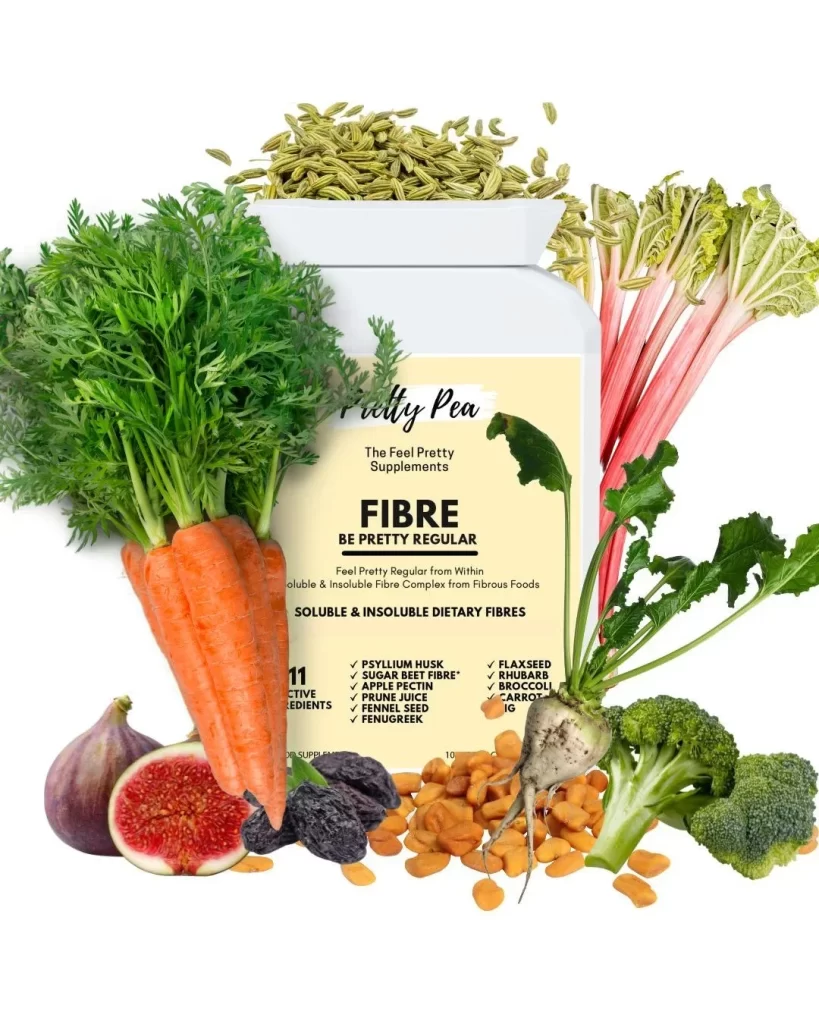](https://prettypea.blog/fibre-pills/)
## **Insoluble vs Soluble Fibre** : The Type of Fibre Matters
The type of fibre, however, may matter. A study published in *Science Direct* looked at the effect of dietary fibre on serum estrogen concentrations in 62 premenopausal women.
They increased their daily dietary fibre intake from an average of ∼ 15 g to 30 g/d by supplementation with **wheat, oat, or corn bran.**
After 2 months on the high-fibre diets, the **wheat-bran** group showed significant reductions in serum estrone and estradiol. The serum estrogens were unaffected by dietary-fibre supplementation **with oat or corn brans.**
[Shop Fibre Capsules](https://prettypea.blog/fibre-capsules/)
**Balances blood sugar**: High-fibre diets reduce insulin spikes, which affect energy and weight \[4\]
**Supports satiety**: Helps you feel full, leading to lower calorie intake \[5\]
Many women experience **increased bloating, cravings, and weight gain** during perimenopause—and fibre can be a natural ally in managing these.
**Further reading:** [Can You Use Psyllium Husk for Weight Loss? Benefits, Dosage & Science Explained ](https://prettypea.blog/psyllium-husk-for-weight-loss/)
---
## **Signs You’re Not Getting Enough Fibre**
The NHS recommends at least **30g of fibre per day** for adults, yet the average UK woman gets only around 17g \[1\].
Do you recognise these common signs of low fibre intake:
- Constipation or irregularity
- Persistent bloating or gas
- Fatigue and brain fog
- Feeling hungry soon after meals
- Hormonal skin breakouts
- Difficulty losing weight
---
## Fibre Supplements.
See the range of Pretty Pea Fibre Supplements
**[Fibre Powder](https://prettypea.blog/fibre-powder/)**
**[Glucomannan Reset Capsules](https://prettypea.blog/product/pretty-reset/ "Glucomannan Reset Capsules")**
[**Insoluble & Soluble Fibre** Capsules](https://prettypea.blog/fibre-capsules/ "Insoluble & Soluble Fibre Capsules")
## **How Much Fibre Do Women Need?**
According to the **British Nutrition Foundation** and **NHS guidelines**:
- Women should aim for **30g of fibre daily** \[1\]
- This should include a combination of both **Insoluble vs Soluble Fibre**
- Most common foods provide 3–6g per serving
**Further reading for women:** [Why Fibre Could Be the Secret to a Better Menopause](https://prettypea.blog/why-fibre-could-be-the-secret-to-a-better-menopause/)
**Food****Fibre (approx.)**1 apple (with skin)3–4g½ cup lentils8g2 slices wholemeal bread5g1 tbsp chia seeds5gIt can be difficult to meet your fibre needs through diet alone, especially when busy – **fibre capsules and powder supplements can be a useful solution** for many.
You might also like: [Menopause Weight Changes Explained (UK Guide): What Research Says About Body Composition, Metabolism & Nutrition](https://prettypea.blog/menopause-weight-changes-explained-uk-guide-what-research-says-about-body-composition-metabolism-nutrition/)
---
## **Insoluble & Soluble Fibre Comparison Table**
Fibre TypeSoluble or InsolubleViscous?Fermentable?Main BenefitsCommon Food SourcesInulinSolubleNoHighly Supports gut bacteria, increases bifidobacteria, may support fullness and bowel healthChicory root, onions, garlic, leeks, asparagusFructooligosaccharides (FOS)SolubleNoHighly Prebiotic effects, feeds beneficial bacteria, supports digestionBananas, onions, garlic, chicory rootGalactooligosaccharides (GOS)SolubleSlightlyHighly Supports bifidobacteria growth, gut and immune healthLegumes, dairy products, human milkPectinSolubleYesHighly Slows digestion, supports cholesterol and blood sugar balanceApples, citrus fruits, berriesBeta-glucanSolubleHighly viscousFermentableHelps lower cholesterol, supports satiety and blood sugar controlOats, barley, mushroomsPsylliumSolubleHighly viscousPoorly Improves stool consistency, supports cholesterol and fullnessPsyllium husk supplementsCelluloseInsolubleNoPoorly Adds stool bulk, supports regular bowel movementsWheat bran, vegetables, nutsHemicelluloseMostly insolubleSlightlyPartially fermentableAdds bulk and may support gut bacteria depending on typeWhole grains, bran, legumesLigninInsolubleNoNon-fermentableAdds stool bulk and speeds transit timeSeeds, flaxseeds, mature vegetablesResistant starchFunctional fibreNoHighly Produces butyrate, supports gut health and insulin sensitivityCooked and cooled potatoes, green bananas, legumesPolydextroseSolubleLowSlowly fermentableSupports digestive health and may improve fullnessFortified foods and supplementsGuar gumSolubleHighly viscousFermentableSlows gastric emptying, supports blood sugar controlGuar beans, thickened foodsAcacia fibreSolubleLow viscositySlowly Gentle prebiotic fibre, often well toleratedAcacia tree sap supplementsArabinoxylanSoluble & insolubleModerateFermentableSupports microbiome diversity and blood sugar regulationRye, wheat bran, cereals[See Fibre Supplements](https://prettypea.blog/womens-health-supplements/)
---
## ******Insoluble vs Soluble Fibre**** and Prebiotics: A Game-Changer for Your Gut**
Your gut contains trillions of bacteria—known as your **gut microbiome**—that influence everything from immunity to mood to weight regulation.
**Prebiotic fibres** (such as inulin or galacto-oligosaccharides) feed these good bacteria, increasing beneficial strains like *Bifidobacteria* and *Lactobacilli* \[6\].
A study published in *Cell Host & Microbe* found that **dietary fibre was the single most important factor in improving microbiome diversity** \[6\].
> Prebiotics are defined as *“a substrate that is selectively utilised by host microorganisms conferring a health benefit”.*
Up to 80% of immune cells and *happy hormone* serotonin are in the gut, making fibre vital for supporting immune function, hormone regulation, and mental health \[2\].
However, whilst all prebiotics are fibre, not all fibres are prebiotic. The fermentability of dietary fibre varies greatly. For example, ranging from lignin not being prebiotic at all to pectin being almost complete fermentation. (see table above)
## [The Fibre Fix: Insoluble vs Soluble Fibre and Womens Health](https://prettypea.blog/the-fibre-fix-insoluble-vs-soluble-fibre/)
**Glucomannan\*** contributes to weight loss in the context of an energy-restricted diet. This beneficial effect is obtained with a daily intake of 3g of glucomannan in three doses of 1g each, together with 1-2 glasses of water, before meals.
---
## **6 Easy Ways to Increase Fibre Intake (Without Overhauling Your Diet)**
1. **Add 1 tbsp flax or chia seeds** to yogurt or smoothies
2. **Swap white bread and pasta** for wholegrain versions
3. **Include lentils, beans or chickpeas** in weekly meals
4. **Keep the peel on your fruit & veggies** where possible (eg potato peels are known sources of dietary fibre, so much so that it doubles if the peel is consumed)
5. **Eat more high-fibre fruits** (e.g., pears, raspberries, apples)
6. **Use a prebiotic fibre supplement** designed for women
Start slowly and **increase water intake** as your fibre goes up.
**Further reading:** [Bloating Isn’t Just “Too Much Gas”: The Real Causes of Bloating (and What Actually Helps)](https://prettypea.blog/7-real-causes-of-bloating-and-what-actually-helps/)
[See Supplements](https://prettypea.blog/womens-health-supplements/)
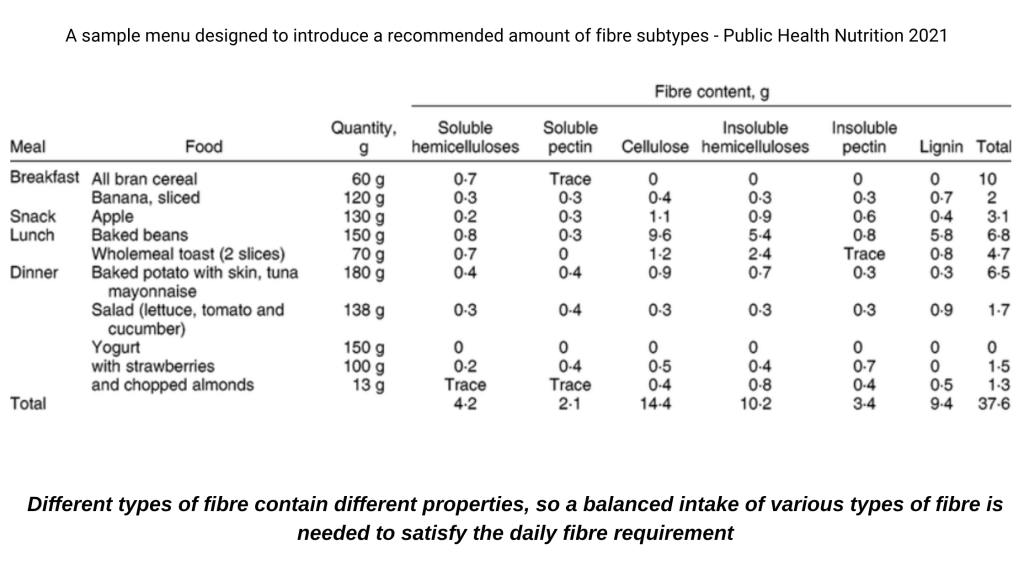---
## **Where to Start if You’re New to Fibre Supplements**
If increasing fibre through food feels unrealistic, or you’re simply not a fibre fan (because not everyone is) consider a **low-dose, (or powder formula where you control the dose), UK fibre supplement** that contains:
- **Pectins** or **Prebiotic fibres** like inulin
- **Sugar Beet Fibre** this adds bulk to stools for easier movements
- **No added sugars or artificial ingredients**
- **A blend of soluble and insoluble fibre**
Start with 1–2g and build up gradually over 1–2 weeks whilst listening to your body.
Studies indicate that small increases in daily fibre content, as low as 6–8 g of wheat fibre per day may mediate changes to microbiota composition.
**Further reading:** [Everything Psyllium How To Use: A Comprehensive Guide on How to Use It for Maximum Health Benefits](https://prettypea.blog/psyllium-how-to-use/)
---
[See Supplements](https://prettypea.blog/womens-health-supplements/)
## **Don’t Forget: ****Insoluble vs Soluble Fibre**** Could Be Your Everyday Superpower**
If you’re tired, bloated, and just feel “off,” it could be down to low fibre. From gut balance to clearer skin and better energy, **this one simple change** could make a huge difference to how you feel daily. Start increasing and see for yourself.
---
## Frequently Asked Questions
## **Insoluble vs Soluble Fibre**
### How Much Fibre Do I Need?
The NHS recommends at least **30g of fibre per day** for adults, yet the average UK woman gets only around 17g.
### What are the signs of not getting enough fibre?
Constipation or irregularity
Persistent bloating or gas
Fatigue and brain fog
Feeling hungry soon after meals
Hormonal skin breakouts
Difficulty losing weight
### Sources of **Insoluble vs Soluble Fibre** ?
**Soluble fibre**: dissolves in water to form a gel that slows digestion, such as psyllium husk, glucomannan, oats and flaxseeds.
**Insoluble fibre:** adds bulk to stools to keep things moving, examples include wheat bran, nuts, seeds, skins of fruit and vegetables
### Can I Increase Fibre with Fibre Pills?
Yes, fibre pills and supplements are a useful solution to help top up any gaps in the diet to help meet the fibre RDA.
You might also like: [The Ultimate Guide to Fibre Supplements for a Happier Gut: Unlocking Your Digestive Health](https://prettypea.blog/the-ultimate-guide-to-fibre-supplements-for-a-happier-gut-unlocking-your-digestive-health/)
[10 Green Tea Benefits: The Ultimate Science-Backed Guide](https://prettypea.blog/10-green-tea-benefits-the-ultimate-science-backed-guide/)
[The Ultimate Superfood List: What are Superfoods, Benefits, Best Choices, and How to Use](https://prettypea.blog/the-ultimate-superfood-list-what-are-superfoods-benefits-best-choices-and-how-to-use/)
[Understanding Visceral Fat: The Ultimate Belly Fat Guide](https://prettypea.blog/understanding-visceral-fat-the-ultimate-belly-fat-guide/)
[Simple Food Group Swaps – Make Life Easier for Yourself](https://prettypea.blog/simple-food-group-swaps-make-life-easier-for-yourself/)
[The 100 Symptoms of Perimenopause](https://prettypea.blog/the-100-symptoms-of-perimenopause/)
[Weird Perimenopause Symptoms: 25 Unusual Signs You Didn’t Expect](https://prettypea.blog/weird-perimenopause-symptoms-25-unusual-signs-you-didnt-expect/)
[Early Signs of Perimenopause in Your 40s: What to Look For ](https://prettypea.blog/early-signs-of-perimenopause/)
[Best Menopause Supplements UK (2026): What to Look For + Evidence-Based Comparison Guide](https://prettypea.blog/best-menopause-supplements-uk-2026-what-to-look-for-evidence-based-comparison-guide/)
[The Menopause Diet 5 Day Plan to Lose Weight](https://prettypea.blog/the-menopause-diet-5-day-plan-to-lose-weight/)
[**10 Green Tea Benefits: The Ultimate Science-Backed Guide**](https://prettypea.blog/10-green-tea-benefits-the-ultimate-science-backed-guide/)
## Best seller products
[View All →](#)
### [The Fibre Fix: Insoluble vs Soluble Fibre and Womens Health](https://prettypea.blog/the-fibre-fix-insoluble-vs-soluble-fibre/)
### ****Insoluble vs Soluble Fibre** – References & Studies**
1. Public Health England (2021). *NDNS Results: Average fibre intake in the UK.*
2. Gill SK et al. (2021). *Dietary fibre and the human gut microbiome.* Nutrients.
3. Goldin BR et al. (1982). *The effect of dietary fibre on estrogen metabolism.* J Natl Cancer Inst.
4. Weickert MO & Pfeiffer AF (2008). *Metabolic effects of dietary fibre consumption.* Curr Opin Clin Nutr.
5. Slavin JL (2005). *Dietary fibre and body weight.* Nutrition.
6. Sonnenburg ED et al. (2016). *Diet-induced extinctions in the gut microbiota compound over generations.* Cell Host Microbe.
7. King DE et al. (2007). *Dietary fibre intake and markers of inflammation in the US adult population.* Am J Clin Nutr.
8. [High-fiber diet reduces serum estrogen concentrations in premenopausal women – ScienceDirect](https://www.sciencedirect.com/science/article/abs/pii/S0002916523318525)
9. [Reference values for intake of six types of soluble and insoluble fibre in healthy UK inhabitants based on the UK Biobank data – PubMed](https://pubmed.ncbi.nlm.nih.gov/34105446/)
**Categories:** Fibre & Gut Health, Menopause Nutrition, Superfoods
---
### [Understanding Visceral Fat: The Ultimate Belly Fat Guide](https://prettypea.blog/understanding-visceral-fat-the-ultimate-belly-fat-guide/)
**Published:** June 20, 2026
**Author:** Cate Boyd
**Content:**
# What is Visceral Fat
What you can pinch actually matters when you’re looking how to lose belly fat and your waist size can offer clues to how much visceral fat you have.
In this article we breakdown the different types of fat, how much fat women need and why, the causes of visceral fat, how common visceral fat really is, how to measure and when visceral fat levels become unhealthy.
It’s common to see abdominal fat being called various names such as cortisol belly or menopause belly fat, visceral fat, so let’s break it down.
There are different types of body fat in the body, and when it comes to belly fat there are typically 2 types of fat **(1) subcutaneous belly fat**, and **(2) visceral belly fat.**
**Visceral Fat****Belly Fat**A specific type of fatA general termStored around internal organsIncludes both visceral and subcutaneous fatCannot usually be pinchedSome belly fat can be pinchedLinked to higher health risks when excessiveDepends on how much is visceral vs subcutaneousMay not be obvious from appearanceMore noticeable externallyThe fat you can pinch is subcutaneous fat and the belly fat you can’t pinch is visceral fat.
You can’t pinch visceral fat because it’s hidden and stored deep inside the belly. It’s wrapped around important internal organs including the liver, pancreas, and intestines.
Unlike the pinchable fat just under your skin, visceral fat isn’t visible and, because we don’t physically see it we don’t always know of the hidden dangers it creates.
Most people have around 90% of body fat that is subcutaneous, the kind of fat that lies in a layer just beneath the skin and feels soft when you poke your belly. The remaining 10% visceral fat.
Visceral fat cannot be reduced by one particular food or supplement alone. Instead, the focus should be on sustainable habits that support healthy weight management, including a balanced diet, regular exercise and adequate fibre intake.
For those looking to increase their fibre intake, or weight management support, **RESET Glucomannan Capsules** contain glucomannan, which has an EFSA health claim for contributing to **weight loss** when consumed as part of an energy-restricted diet.\*
[See RESET Capsules](https://prettypea.blog/fibre-supplement-reset-glucomannan-supplement-complex/)
\*The beneficial effect is obtained with a daily intake of 3 g of glucomannan, taken in three 1 g doses, together with 1–2 glasses of water before meals, as part of an energy-restricted diet.
## [Understanding Visceral Fat: The Ultimate Belly Fat Guide](https://prettypea.blog/understanding-visceral-fat-the-ultimate-belly-fat-guide/)
## Visceral Belly Fat vs Other Body Fat
To get a better understanding of belly fat and what is visceral fat, let’s compare the different types of women’s body fat.
**Subcutaneous Fat****Visceral Fat****Location:** Just beneath the skin**Location:** Deep inside the abdomen, surrounding internal organs**Can you pinch it?** ✔ Yes**Can you pinch it?** ✘ No**Visible?** Usually yesOften hidden**Main role:** Energy storage, insulation and cushioningProtects organs, but excess amounts can affect health**Health risk:** Lower when present in healthy amountsHigher when present in excess**How to measure:** Skinfolds, body fat %, body shapeWaist circumference, waist-to-hip ratio, CT or MRI scans**Can you reduce it?** Yes, through overall fat lossYes, through overall fat loss and healthy lifestyle changes**White fat** is the most common type of fat in the body and includes subcutaneous fat, visceral fat and bone marrow fat. It’s made up of droplets of lipids, fatty acids and is the fat that stores extra calories.
**Brown fat** can be considered more of a *good fat* as it’s the type of fat that burns calories. It’s found around the chest and neck and involved in maintaining body temperature.
Brown fat cells are full of mitochondria and rich in iron. However, adults have very little brown fat. Babies have the most brown fat at birth and it mostly disappears with age.
**Subcutaneous fat:** This is the fat just under your skin. Our skin is comprised of several layers and this is the deepest skin layer. Think of the kind of fat you can pinch on your arms, thighs, or belly.
Subcutaneous fat produces a higher amount of beneficial molecules than visceral fat.
**Brown Fat****White Fat**Burns energy to produce heatStores excess energyMore common in babiesMost common fat in adultsHelps regulate body temperatureCushions and protects organsContains many mitochondriaStores large fat dropletsGenerally considered beneficialNecessary in healthy amounts, but excess can increase health risks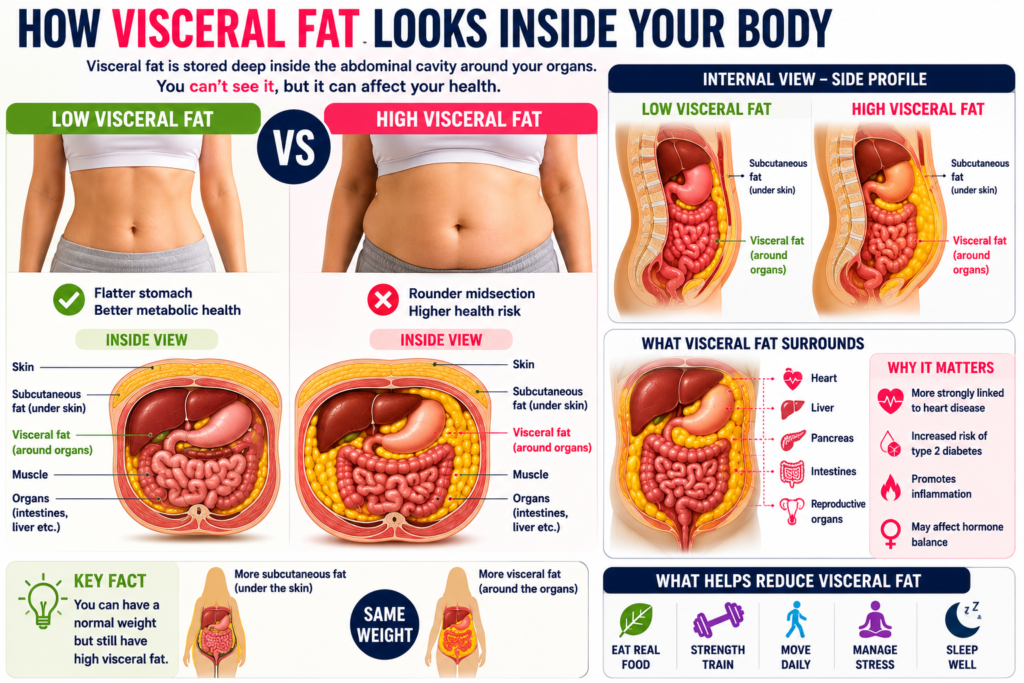**Visceral fat:** This fat is stored as belly fat, but located deep inside the abdominal cavity. It surrounds our vital organs and is associated with more serious health problems than other types of fat.
It’s stored in the omentum, which is an apron-like flap of tissue that lies under the belly muscles and blankets the intestines. The omentum gets harder and thicker as it fills with fat.
Visceral fat produces a higher amount of molecules that can have negative health effects. It makes more of the proteins called cytokines.
They can trigger low-level inflammation, and are a risk factor for heart disease and other chronic conditions.
Visceral belly fat also produces a precursor to a protein that causes blood vessels to constrict and blood pressure to rise.
**Intramuscular fat:** This fat is found within muscles, and it provides energy during exercise.
## [Understanding Visceral Fat: The Ultimate Belly Fat Guide](https://prettypea.blog/understanding-visceral-fat-the-ultimate-belly-fat-guide/)
## Muscle vs Fat: What’s the Difference?
One of the biggest myths about weight loss is that **muscle weighs more than fat**.
In reality, **1 kilogram of muscle weighs exactly the same as 1 kilogram of fat**. A kilogram is a kilogram.
The real difference is **density**.
Muscle tissue is much denser than fat tissue, meaning it takes up less space for the same weight. This is why someone can stay the same weight—or even gain a little weight—while looking noticeably leaner and wearing smaller clothes after building muscle.
This is particularly relevant during **perimenopause and menopause**, when falling oestrogen levels, reduced physical activity and age-related muscle loss (known as sarcopenia) can gradually shift body composition. Even if the number on the scales changes very little, losing muscle while gaining fat—especially visceral fat around the abdomen—can affect health and metabolism.
Rather than focusing solely on body weight, it’s often more helpful to think about **body composition**: the proportion of muscle, fat, bone and other tissues that make up your body.
### Why Muscle Matters
Muscle is far more than something that helps you lift weights or stay strong.
Healthy muscle tissue plays an important role in everyday movement, balance and independence, while also contributing to your body’s resting energy expenditure. In simple terms, muscle requires energy to maintain, even when you’re resting.
Maintaining muscle mass can support long-term energy balance and make it easier to stay active as you age.
For women in midlife, preserving muscle may also help:
- Support healthy ageing and independence.
- Improve strength for everyday activities.
- Support balance and reduce the risk of falls.
- Help maintain a healthy body composition.
- Complement lifestyle changes aimed at reducing visceral fat.
The goal isn’t to become bodybuilder-lean—it’s to protect the muscle you already have while reducing excess visceral fat through a combination of regular strength training, adequate protein intake, daily movement and a balanced diet.
---
## Muscle vs Fat Comparison
**Muscle****Fat**Dense tissue that takes up less spaceLess dense, so it takes up more space for the same weightHelps support movement and strengthStores energy for future useContributes to resting energy expenditureRequires less energy to maintainSupports balance, posture and healthy ageingEssential in healthy amounts, but excess visceral fat is linked with poorer metabolic healthCan help improve body compositionExcess body fat, particularly visceral fat, may increase health risksMay help clothes fit better even if weight stays similarLarger volume means body measurements may increase### Remember
The scales only tell you **how much you weigh**—they don’t tell you **what your weight is made of**.
That’s why two women of the same height and weight can look completely different and have very different levels of metabolic health. One may have more lean muscle and less visceral fat, while the other has less muscle and a greater proportion of abdominal fat.
When it comes to long-term health during perimenopause and menopause, **improving body composition—not simply losing weight—is often the more meaningful goal.**
**Looking for extra support?** **RESET** Contains glucomannan, which **contributes to weight loss as part of an energy-restricted diet** when 3 g is consumed daily in three 1 g doses before meals with 1–2 glasses of water, plus Green Tea and metabolic support nutrients.
## [Understanding Visceral Fat: The Ultimate Belly Fat Guide](https://prettypea.blog/understanding-visceral-fat-the-ultimate-belly-fat-guide/)
---
## Common Fat Loss Myths
Many popular beliefs about fat loss are misleading. Understanding what actually happens in the body can help you focus on habits that make a real difference.
#### Myth 1: Fat weighs more than muscle
This is one of the most common fitness myths.
**A kilogram of fat weighs exactly the same as a kilogram of muscle** — one kilogram.
The difference is **density**. Muscle is much denser than fat, meaning it takes up less space (see above).
Imagine holding:
- **1 kg of muscle** – compact and firm.
- **1 kg of fat** – larger and softer.
This is why someone can stay the same weight on the scales but look noticeably leaner after building muscle and losing body fat.
If you’re exercising and eating well, don’t rely on the scales alone.
Consider:
- Waist measurements
- How your clothes fit
- Progress photos
- Strength improvements
- These often show progress long before the scales do.
---
#### Myth 2: You can target belly fat with specific exercises
Unfortunately, hundreds of sit-ups won’t specifically burn fat from your stomach.
The body decides where it stores and loses fat based largely on genetics, hormones, age and sex. As you lose body fat overall, visceral fat inside the abdomen is often among the first types to decrease because it is more metabolically active than the fat stored just beneath the skin.
Abdominal exercises can strengthen your core muscles, but they don’t selectively burn belly fat.
---
#### Myth 3: Sweating means you’re burning fat
Sweating is simply your body’s way of cooling itself.
Most of the weight lost during a very sweaty workout is water, which returns once you rehydrate. Fat loss happens when your body uses stored energy over time, not because you sweat more.
---
#### Myth 4: You have to cut out all carbohydrates
Carbohydrates are an important source of energy and many healthy foods, including oats, beans, fruit and vegetables, are naturally rich in carbohydrates.
These foods also provide fibre, which may help increase feelings of fullness and support digestive health. Choosing minimally processed, high-fibre carbohydrates is generally a better long-term strategy than eliminating carbohydrates completely.
---
#### Myth 5: Skipping meals speeds up fat loss
Missing meals may leave you feeling hungrier later in the day, making it easier to overeat.
Many people find that regular meals containing protein, healthy fats and fibre help them feel fuller for longer and make it easier to maintain healthy eating habits.
---
#### Myth 6: Visceral fat is impossible to lose after 40
Hormonal changes during perimenopause and menopause can make fat distribution change, often increasing fat around the abdomen.
However, visceral fat can still be reduced. Regular physical activity, strength training, adequate protein, plenty of fibre, quality sleep and maintaining an overall calorie balance can all help reduce visceral fat over time.
**Looking for extra support?** Alongside a balanced diet, regular exercise and strength training, a fibre supplement such as **RESET Fibre Capsules** can help increase your daily fibre intake. Contains glucomannan, which **contributes to weight loss as part of an energy-restricted diet** when 3 g is consumed daily in three 1 g doses before meals with 1–2 glasses of water.
## [Understanding Visceral Fat: The Ultimate Belly Fat Guide](https://prettypea.blog/understanding-visceral-fat-the-ultimate-belly-fat-guide/)
---
## Can Women Have A Normal BMI And High Visceral Fat?
Yes. While BMI (Body Mass Index) can be a useful screening tool, it does not show where body fat is stored.
Some people with a BMI in the “healthy” range may still carry higher levels of visceral fat – the fat stored deep inside the abdomen around the organs.
This is sometimes referred to as “normal weight obesity” or being “thin outside, fat inside” (TOFI).
Unlike the fat you can pinch under the skin, visceral fat is metabolically active and has been linked to insulin resistance, inflammation, fatty liver disease, type 2 diabetes and cardiovascular disease.
Factors such as genetics, age, declining oestrogen levels, chronic stress, poor sleep and physical inactivity can all influence visceral fat accumulation, regardless of body weight.
This means that two people with the same BMI may have very different levels of visceral fat and different health risks.
For this reason, waist circumference, body composition and lifestyle habits can sometimes provide a more complete picture of health than BMI alone.
## [Understanding Visceral Fat: The Ultimate Belly Fat Guide](https://prettypea.blog/understanding-visceral-fat-the-ultimate-belly-fat-guide/)
---
## Why Women Need Body Fat
We all need some body fat and physiologically women need more essential body fat than men, this is linked to child bearing.
Fat has the role of being the body’s energy provider and reserve tank.
Studies demonstrate that **estrogen** reduces a woman’s ability to burn energy after eating with the result of fat being stored around the body.
More than just storing excess calories, body fat has several essential roles in the body. Body fat is needed for:
- Insulating the body and temperature regulation
- Protecting and cushioning vital organs
- Vitamin storage
- Hormone regulation
There are a number of factors that contribute to where women gain fat:
- Genes
- Age
- Hormones
- Whether you’ve had children (women who have given birth often gain more visceral fat than those who haven’t)
- Your weight at birth (smaller babies tend to gain more belly fat later in life)
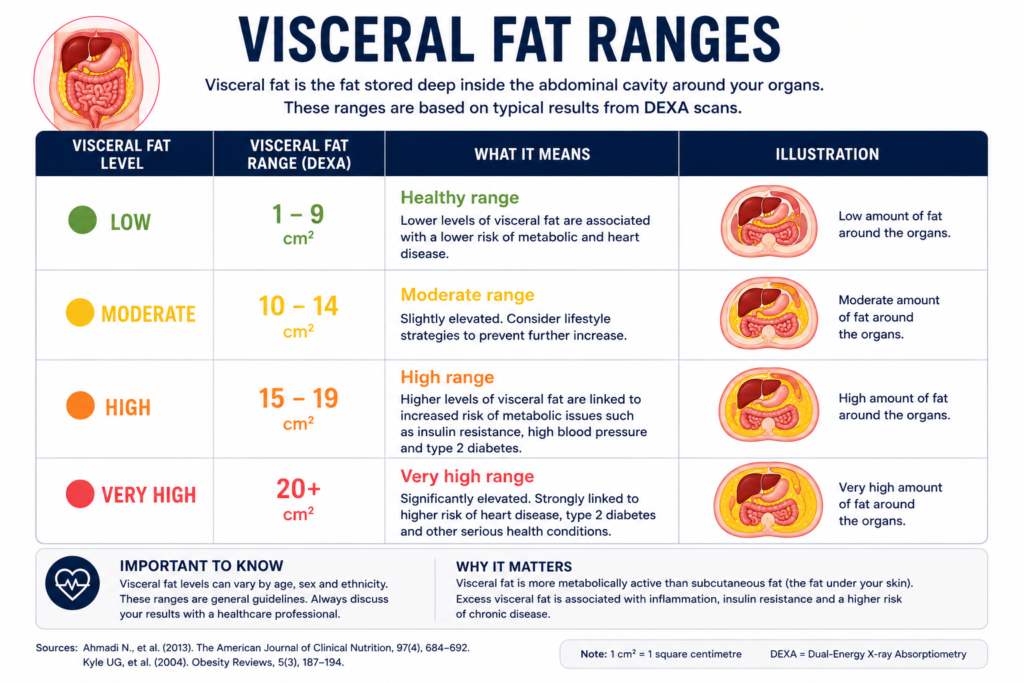## How Much Visceral Fat is Healthy for Women
On average, as young adults women tend to have less visceral fat than men, however, that changes with menopause. It’s important for women to maintain a healthy level of visceral fat.
According to health guidelines, women should aim for a v**isceral fat rating below 12%**.
A rating over 12%, **between 13-59% is considered high** and **increases health risk consequences.**
So how do you know how much visceral fat you have?
Don’t rely on your weight to tell you because, even if you don’t actually gain weight, your waistline can grow in inches as visceral fat pushes out against the abdominal wall.
Your waist size, however, can offer clues. The NHS suggests that a waist circumference over 80 cm (31.5 inches) may indicate higher levels of visceral fat and potential health risks.
[Shop Supplements](https://prettypea.blog/womens-health-supplements/)
---
## Calculating Visceral Fat Levels
As visceral fat is hidden doctors use several methods to calculate visceral fat levels:
- **MRI and CT scans:** These are the most accurate diagnostic method (but not always readily accessible).
- **Bioelectrical impedance scales:** These body fat scales measure body composition, including visceral fat percentage. Bio-impedance scales will typically measure body fat, visceral fat, muscle mass, water, bone density, BMR and can be a really useful way to monitor body fat levels and body composition metrics from home.
- **Waist-to-hip ratio (WHR):** Comparing your waist size to your hip size gives an estimate of abdominal fat.
## How to calculate waist to hip ratio
- **Waist circumference:** Breathe normally and use a measuring tape around your waist (under clothes). Measure your waist either just above your belly button or at your narrowest point.
- **Waist-to-hip ratio**: Then measure your hips (the widest part), and divide your waist measurement by your hip measurement.
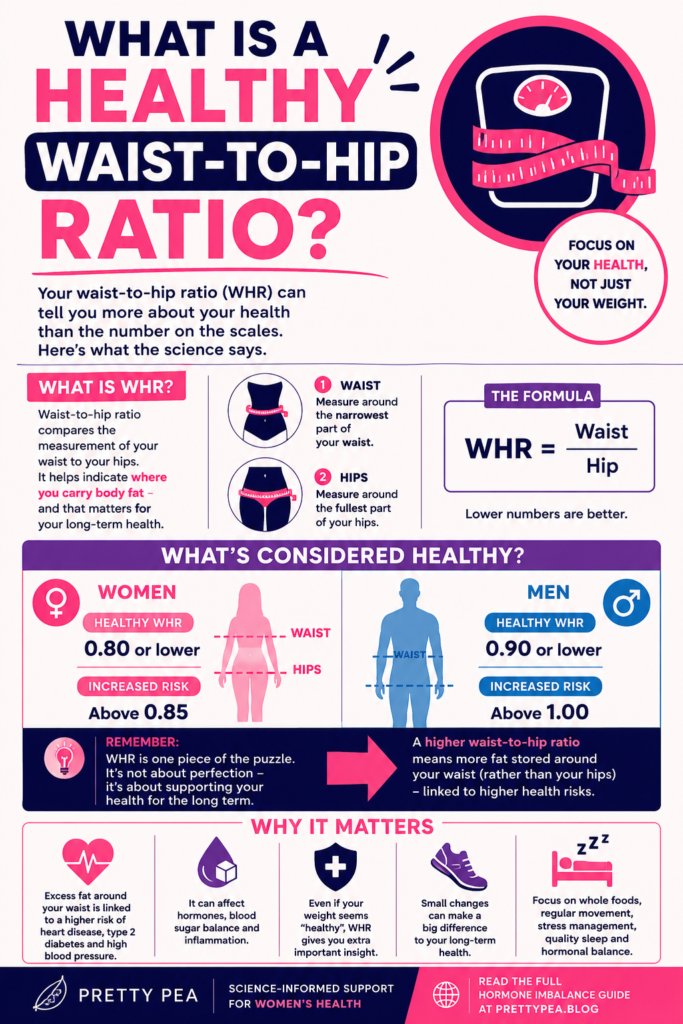## What Causes Visceral Belly Fat
Understanding what causes visceral fat, is key to knowing how to lose belly fat.
## Factors:
- **Diet:** Consuming too many sugary foods, refined carbs, and unhealthy fats contributes to fat storage.
- **Lack of exercise**: A sedentary lifestyle leads to weight gain and more visceral fat. Moving more and building muscle mass are key to shaping your body and building metabolism.
- **Hormones**: Changes in hormones, especially estrogen, as women age and around menopause can shift both how and where fat is stored.
Women’s body shape can shift post menopause, with pre menopause fat storage moving from the hips and thighs to abdominal belly fat post menopause.
Body shape can change from pear shape to more apple shape with what’s often called menopause belly.
- **Estrogen**: Before menopause, higher estrogen levels encourage fat to be stored in the child-bearing hips and thighs, which poses fewer health risks.
- However, as estrogen levels drop during perimenopause, fat tends to shift to around the abdomen, increasing visceral belly fat.
Research suggests this hormonal shift is a significant factor in why women experience more belly fat as they age.
- **Stress and Cortisol**: Stress triggers the release of cortisol, a hormone that encourages fat storage, especially belly fat.
- Studies show that people with higher cortisol responses to stress tend to have more abdominal fat.
This is because abdominal visceral fat cells have around 4x more cortisol receptors than subcutaneous fat cells, making this type of belly fat more responsive to stress hormones.
- **Sleep deprivation**: Poor sleep affects metabolism and hunger hormones, increasing visceral fat.
- Studies have shown that adults who sleep **less than 6 hours** a night are more likely to have increased waist circumference and higher visceral fat levels.
When you don’t get enough sleep, it disrupts the balance of two key hunger hormones — ghrelin and leptin.
Ghrelin send hunger signals, while leptin signals when you’re full. Sleep deprivation increases ghrelin and decreases leptin, causing you to feel hungrier and less satisfied after eating.
Furthermore, poor sleep also raises cortisol levels, and further encourage visceral fat storage.
**Genetics**: Some women are naturally more prone to storing fat around their belly.
## [Understanding Visceral Fat: The Ultimate Belly Fat Guide](https://prettypea.blog/understanding-visceral-fat-the-ultimate-belly-fat-guide/)
## Why Excess Visceral Belly Fat can be Dangerous Fat
While some fat is necessary, however, excess visceral fat brings health risks.
Until as recently as the 1990’s body fat was believed to be little more than a storage depot for fat that’s waiting to be used for energy and the main danger of visceral fat was releasing free fatty acids into the bloodstream and liver influencing cholesterol.
However, a science breakthrough found that fat cells — and especially visceral fat cells — are biologically active and they act as an endocrine organ secreting hormones, chemicals and molecules that have far-reaching effects.
Too much of this active fat, visceral fat, can increase the risk of metabolic disorders and several serious health conditions:
- **Type 2 diabetes**: Visceral fat affects how insulin (your fat storage hormone) works, increasing blood sugar levels.
- **Heart disease**: Visceral fat releases chemicals that raise blood pressure and cholesterol.
- **Stroke**: Visceral fat contributes to narrowing blood vessels, increasing stroke risk.
- **Cancer**: Studies link excess visceral fat to both breast and colon cancer.
- **Dementia**: Research suggests visceral fat may raise the risk of cognitive decline.
Researchers at Kaiser Permanente found that people in their early 40s with the highest levels of abdominal fat, were **almost 3x times** more likely to develop dementia by their mid-70s-80’s
## [Understanding Visceral Fat: The Ultimate Belly Fat Guide](https://prettypea.blog/understanding-visceral-fat-the-ultimate-belly-fat-guide/)
---
## How Common is Visceral Fat in Women
Women’s obesity levels are rising in the UK and while there is limited data specifically on visceral fat, these broader obesity statistics offer insight:
- **Obesity Rates**: Approximately 28% of adults in England are classified as obese, with an additional 36% considered overweight. ([UK Parliament, House of Commons Library](https://commonslibrary.parliament.uk/research-briefings/sn03336/))
- **Average Dress Size**: A You Gov poll found that the average UK dress size is 16
- **Average Waist Size**: Women’s average waist size has increased by 7 inches since 1951 – that’s pretty much one inch per decade – food for thought for future decades.
- **Gender Differences**: Between 2011 and 2019, obesity prevalence among women ranged from 24% to 30%, while 57% to 62% were either overweight or obese. (NHS Digital)
---
## How to Lose Belly Fat (and prevent visceral fat)
There is good news. Visceral fat is more readily metabolized into fatty acids, and therefore responds more efficiently to diet and exercise (than subcutaneous fat on the hips and thighs).
Here are some approaches on how to lose belly fat :
### Tips How to Lose Belly Fat:
- **Move More**. Exercise can help reduce waist size. So even when the number on the scales doesn’t move to say you’ve lost weight, you can lose visceral belly fat and gain all important muscle mass (metabolic boost)
- Studies have shown that you can lose visceral belly fat and/or prevent gaining visceral belly fat with both aerobic movement (brisk walking) and with resistance/strength training.
- Note that ***spot exercises*,** that target one area such as sit-ups, can tighten your abdominal muscles but they won’t specifically target abdominal visceral fat. Instead focus on full body compound moves like squats that use multiple muscle groups.
- **Eat a Balanced** **Calorie Controlled Diet**. Focus on filling foods protein and fibre based at every meal. Avoid simple sugars like fructose-sweetened foods and beverages which seem to encourage belly fat.
- **Smokers Beware**. The more you smoke, the more likely you are to store fat in your abdomen.
- **Get Balanced Sleep**. **Not too little** – A 5 year study found that adults under 40 who got five hours or less sleep a night accumulated significantly more visceral fat. **And not too much** — younger adults who slept more than eight hours also gained visceral fat. (Note, this correlation wasn’t found in those over 40)
- **Green Tea Supplements**: Some of the best supplements to lose menopause belly fat include Green Tea Extract. This extract has been studied extensively in relation to its weight loss properties and has been shown to support metabolism and fat oxidation.
- A 2022 study looking at post menopause overweight and obese women found that 60 days of green tea supplementation may cause positive effects on body composition. Body composition was evaluated by dual-energy X-ray absorptiometry (DXA) and found that the women supplementing with green tea had a **statistically significant decrease in visceral fat** and fat mass.
- **Supplement Recommendation**: You’ll find Green Tea as a key ingredient in Pretty Pea [**Reset Capsules**](https://prettypea.blog/fibre-supplement-reset-glucomannan-supplement-complex "Reset Capsules")
- **Finally Forget Instant Fat Loss Fixes**. Forget how to lose belly fat in a week. Cosmetic fat removal procedures such as liposuction don’t reach visceral fat inside the abdominal wall.
#### Further reading: [The Menopause Diet 5-Day Plan to Lose Weight – Pretty Pea](https://prettypea.blog/the-menopause-diet-5-day-plan-to-lose-weight/)
## Latest Products
[View All → →](#)
### [Understanding Visceral Fat: The Ultimate Belly Fat Guide](https://prettypea.blog/understanding-visceral-fat-the-ultimate-belly-fat-guide/)
### FAQ – What is Visceral Fat
What is visceral fat?
Visceral fat is fat stored deep inside the abdomen around your internal organs, including the liver, intestines and pancreas.
Unlike subcutaneous fat, which sits just beneath the skin, visceral fat cannot usually be seen or pinched.
Although some visceral fat is normal, higher amounts are associated with an increased risk of health conditions such as type 2 diabetes and cardiovascular disease.
## **What causes visceral fat?**
Several factors can contribute to increased visceral fat, including ageing, hormonal changes during perimenopause and menopause, excess calorie intake, physical inactivity, poor sleep, chronic stress, genetics and excessive alcohol consumption.
## **Can you have visceral fat if you’re slim?**
Yes. People with a healthy BMI can still carry excess visceral fat around their organs. This is why waist circumference and waist-to-hip ratio can provide useful information alongside body weight.
## **What’s the difference between visceral fat and belly fat?**
Belly fat is a general term that includes all fat around the abdomen. Visceral fat is the deeper fat stored around internal organs, while subcutaneous fat is the softer fat just beneath the skin that you can pinch.
## **How do you know if you have too much visceral fat?**
You cannot measure visceral fat by looking in the mirror alone. Healthcare professionals may use waist circumference, waist-to-hip ratio or imaging scans such as CT or MRI.
At home, keeping an eye on your waist measurement can be a useful indicator of abdominal fat.
## **Does menopause increase visceral fat?**
Yes. During menopause, declining oestrogen levels can contribute to changes in where fat is stored, making it more common for women to gain fat around the waist rather than the hips and thighs.
Lifestyle factors such as reduced muscle mass, lower activity levels and poor sleep can also contribute.
Read: [Hormone Imbalance in Women: Causes, Symptoms & How Hormones Work](https://prettypea.blog/hormone-imbalance-in-women/)
## **Can visceral fat be reduced?**
Yes. Visceral fat responds well to healthy lifestyle changes. Regular exercise, strength training, a balanced diet, adequate protein, higher fibre intake, quality sleep and maintaining a healthy weight can all help reduce visceral fat over time.
## **Can fibre help with visceral fat?**
Fibre does not directly burn visceral fat, but increasing your fibre intake can support fullness, healthy digestion and weight management. Soluble fibres such as glucomannan and psyllium can be useful additions as part of a healthy diet.
Read: [Can You Use Psyllium Husk for Weight Loss? Benefits, Dosage & Science Explained – Pretty Pea](https://prettypea.blog/psyllium-husk-for-weight-loss/)
Read: [Glucomannan for Weight Loss: Does It Work and How Does It Compare to Medications?](https://prettypea.blog/glucomannan-weight-loss/)
## **Is waist-to-hip ratio better than BMI?**
BMI is useful for assessing body weight relative to height, but it does not show where fat is stored.
Waist-to-hip ratio and waist circumference can provide additional information about abdominal fat distribution and health risk.
## **Can stress increase visceral fat?**
Chronic stress may contribute to weight gain through changes in eating habits, sleep quality and physical activity.
Elevated cortisol levels have also been associated with increased abdominal fat storage, although many factors influence this relationship.
Read: [Hormone Imbalance in Women: Causes, Symptoms & How Hormones Work](https://prettypea.blog/hormone-imbalance-in-women/)
## **Does alcohol increase visceral fat?**
Regular excessive alcohol intake may contribute to increased abdominal fat and weight gain.
Reducing alcohol consumption can be one of several lifestyle changes that support a healthier body composition.
## **How long does it take to lose visceral fat?**
There is no fixed timeline. Visceral fat can begin to reduce as overall body fat decreases through sustainable dietary changes, regular exercise and healthy lifestyle habits.
Consistency is more important than rapid weight loss.
## **For Fibre Advice**
- [Bloating Isn’t Just “Too Much Gas”: The Real Causes of Bloating (and What Actually Helps)](https://prettypea.blog/7-real-causes-of-bloating-and-what-actually-helps/)
- [Plantago Ovata (Psyllium Husk): Benefits, Uses, Science](https://prettypea.blog/plantago-ovata-psyllium-husk-benefits-uses-science-and-faqs/)
- [GLP-1 Foods: The Ultimate List for Appetite Control, Fat Loss & Blood Sugar](https://prettypea.blog/glp-1-foods/)
- [50 High Fibre Foods Ranked by Fibre Content](https://prettypea.blog/50-high-fibre-foods-ranked-by-fibre-content-full-nutrition-chart/)
- [Best Fibre Supplements for Women | Complete UK Fibre Supplement Guide](https://prettypea.blog/fibre-supplements-for-women/)
- [Why Fibre and Water Always Go Together](https://prettypea.blog/why-fibre-and-water-always-go-together/)
- [Signs You Need More Fibre | Common Low Fibre Symptoms Explained](https://prettypea.blog/signs-you-need-more-fibre/)
- [](https://prettypea.blog/d-mannose-and-cranberry-for-women/)[Menopause Nutrition](https://prettypea.blog/category/menopause/) · [Superfoods](https://prettypea.blog/category/superfoods/) · [Supplements](https://prettypea.blog/category/supplements/)
October 8, 2026
- [](https://prettypea.blog/what-is-glp-1/)[Fibre & Gut Health](https://prettypea.blog/category/fibre/) · [Hormones & HRT](https://prettypea.blog/category/hormones-hrt/) · [Menopause Nutrition](https://prettypea.blog/category/menopause/) · [Supplements](https://prettypea.blog/category/supplements/)
### [What Is GLP-1? The Gut Hormone That Helps Regulate Hunger & Blood Sugar](https://prettypea.blog/what-is-glp-1/)
August 18, 2026
- [](https://prettypea.blog/psyllium-husk-benefits/)[Pretty Pea](https://prettypea.blog/category/pretty-pea/)
### [Psyllium Husk: Benefits, How to Take It, Side Effects & How It Compares](https://prettypea.blog/psyllium-husk-benefits/)
August 15, 2026
**Categories:** Fibre & Gut Health, Hormones & HRT, Menopause Nutrition
---
### [Bloating Isn’t Just “Too Much Gas”: The Real Causes of Bloating (and What Actually Helps)](https://prettypea.blog/7-real-causes-of-bloating-and-what-actually-helps/)
**Published:** May 9, 2026
**Author:** Cate Boyd
**Content:**
# Bloating Isn’t Always About Food
When it comes to causes of bloating most people think bloating means they “ate badly.”
But bloating is often far more complicated than simply eating broccoli or drinking fizzy drinks.
For some people, it’s constipation.
For others, it’s hormones.
For many, it’s stress, gut dysfunction, altered gut bacteria, or digestive slowing that creates the perfect environment for gas build-up and abdominal pressure.
And frustratingly? Two people can eat the exact same meal and only one ends up looking six months pregnant by the evening.
That’s because bloating is not one single condition — it’s a symptom with multiple possible root causes.
[See Supplements](https://prettypea.blog/womens-health-supplements/)
---
## Causes of Bloating – What Bloating Actually Is
Bloating is the sensation of:
- abdominal fullness
- pressure
- tightness
- swelling or distension
Sometimes there’s visible stomach expansion. Sometimes there isn’t.
In many cases, bloating is caused by:
- excess gas production
- poor gas clearance
- slowed digestion
- altered gut sensitivity
- fluid retention
- constipation
- gut microbiome imbalances
Research increasingly shows that gut dysbiosis (imbalances in gut bacteria) and disorders like IBS and SIBO can play a major role in chronic bloating.
---
## 1. Constipation: The Most Overlooked Cause
A surprising number of people are constipated without realising it.
You do **not** need to go a week without a bowel movement to be constipated.
Signs include:
- incomplete emptying
- small hard stools
- needing coffee to “go”
- daily bloating that worsens through the day
- feeling heavy after meals
When stool sits in the colon longer than it should, bacteria ferment food residues for longer, producing more gas.
This is one reason fibre can help some people dramatically — but make others worse initially.
## The Fix
- Increase fibre gradually
- Hydrate properly
- Walk daily
- Don’t ignore the urge to go
- Magnesium citrate may help some people
- Consider pelvic floor dysfunction if constipation persists
## [Bloating Isn’t Just “Too Much Gas”: The Real Causes of Bloating (and What Actually Helps)](https://prettypea.blog/7-real-causes-of-bloating-and-what-actually-helps/)
---
## 2. IBS and Gut Hypersensitivity
Many people with IBS don’t actually produce dramatically more gas than other people.
Instead, they’re **more sensitive to normal amounts of gas and intestinal stretching**.
This is called visceral hypersensitivity.
Studies show IBS is linked with altered gut-brain communication, gut dysbiosis and changes in intestinal motility.
This explains why stress and anxiety can make bloating dramatically worse.
## Common IBS Bloating Triggers
- large meals
- high FODMAP foods
- stress
- poor sleep
- hormonal shifts
- eating too quickly
## The Fix
- Track patterns, not random foods
- Trial a structured low-FODMAP approach if appropriate
- Eat slower
- Nervous system regulation matters more than most people realise
Research shows low-FODMAP diets can significantly reduce IBS symptoms including bloating.
---
## 3. SIBO: When Bacteria Are in the Wrong Place
One of the biggest reasons chronic bloating gets missed is because people are told:
> “Your tests are normal.”
Meanwhile they still look heavily bloated after eating almost anything.
SIBO (Small Intestinal Bacterial Overgrowth) occurs when excessive bacteria populate the small intestine instead of mostly remaining in the colon.
These bacteria ferment carbohydrates too early in digestion, producing gas, pressure and bloating.
Symptoms often include:
- bloating shortly after eating
- excessive burping
- food intolerances
- constipation or diarrhoea
- brain fog
- abdominal discomfort
Research shows significant overlap between IBS and SIBO.
## The Fix
Treatment depends on the root cause, but may include:
- improving gut motility
- addressing constipation
- dietary strategies
- targeted antibiotics prescribed by clinicians
- reducing grazing/snacking constantly
This is why random probiotics sometimes help… and sometimes make people worse.
---
## 4. Hormones and Bloating in Women
Many women notice:
- bloating before periods
- worsening bloating during perimenopause
- abdominal puffiness linked to stress or poor sleep
Hormones influence:
- fluid retention
- bowel motility
- gut sensitivity
Lower oestrogen and progesterone fluctuations can slow digestion and alter gut function.
This is why menopause bloating is real — and not “just ageing.”
Stress hormones also affect digestion. When the nervous system is chronically activated, blood flow shifts away from digestion and motility can slow down.
Your next read: [Hormone Imbalance in Women: Causes, Symptoms & How Hormones Work](https://prettypea.blog/hormone-imbalance-in-women/)
## [Bloating Isn’t Just “Too Much Gas”: The Real Causes of Bloating (and What Actually Helps)](https://prettypea.blog/7-real-causes-of-bloating-and-what-actually-helps/)
---
## 5. Eating “Healthy” Foods Too Quickly
One of the most relatable causes of bloating?
People suddenly trying to become healthy overnight.
Huge salads.
Protein bars.
Chia puddings.
Beans.
Green powders.
The gut often needs time to adapt.
Fibre is incredibly beneficial long term, but increasing it too aggressively can temporarily increase gas production.
## The Fix
Increase fibre slowly:
- start low
- build gradually
- increase water alongside it
Your gut microbiome adapts over time.
## [Bloating Isn’t Just “Too Much Gas”: The Real Causes of Bloating (and What Actually Helps)](https://prettypea.blog/7-real-causes-of-bloating-and-what-actually-helps/)
---
## 6. Food Intolerances Aren’t Always the Problem
Many people assume:
> “I’m bloated, so I must be intolerant to gluten or dairy.”
Sometimes true. Often not.
Many bloating triggers are actually related to:
- quantity
- gut bacteria
- stress
- digestion speed
- constipation
FODMAP carbohydrates are a common trigger because they ferment rapidly in the gut.
But overly restrictive diets can backfire by:
- reducing microbiome diversity
- increasing food fear
- worsening stress around eating
---
## 7. Stress and the Gut-Brain Connection
This is the piece most people underestimate when it comes to causes of bloating.
The gut and brain communicate constantly.
Stress can:
- slow digestion
- alter gut motility
- increase gut sensitivity
- worsen IBS symptoms
Research increasingly links IBS with disturbances in the gut-brain axis.
This explains why some people bloat more:
- during stressful weeks
- around travel
- after poor sleep
- during anxiety flare-ups
---
## When Bloating Might Need Medical Attention
See a healthcare professional if bloating is:
- persistent and worsening
- accompanied by unexplained weight loss
- associated with vomiting
- linked with blood in stool
- waking you at night
- severe and painful
- associated with iron deficiency or major bowel habit changes
---
## What Actually Helps Most People Long Term
The best bloating solutions are usually boring — but effective.
### Helpful foundations:
- regular meals
- adequate fibre
- hydration
- movement
- stress management
- improving constipation
- slower eating
- identifying patterns instead of eliminating everything
Quick-fix “debloat teas” rarely address root causes.
---
**For for more fibre advice:**
- [What Is Inulin? Benefits, Uses and What the Science Says About This Prebiotic Fibre](https://prettypea.blog/what-is-inulin/)
- [Plantago Ovata (Psyllium Husk): Benefits, Uses, Science and FAQs](https://prettypea.blog/plantago-ovata-psyllium-husk-benefits-uses-science-and-faqs/)
- [GLP-1 Foods: The Ultimate List for Appetite Control, Fat Loss & Blood Sugar](https://prettypea.blog/glp-1-foods/)
- [50 High Fibre Foods Ranked by Fibre Content](https://prettypea.blog/50-high-fibre-foods-ranked-by-fibre-content-full-nutrition-chart/)
- [Best Fibre Supplements for Women | Complete UK Fibre Supplement Guide](https://prettypea.blog/fibre-supplements-for-women/)
- [Appetite Regulation: How Fibre vs GLP-1 Compare](https://prettypea.blog/appetite-regulation-how-fibre-vs-glp-1-compare/)
- [Glucomannan for Weight Loss: Does It Work and How Does It Compare to Medications?](https://prettypea.blog/glucomannan-weight-loss/)
## Causes of Bloating FAQ
### Why do I look pregnant after eating?
This can happen from gas build-up, slowed digestion, constipation, IBS, SIBO or increased abdominal sensitivity.
---
### Can stress really cause bloating?
Yes. Stress affects the gut-brain axis, digestion speed and gut sensitivity, all of which can worsen bloating.
---
### Is bloating always caused by food intolerance?
No. Constipation, hormones, stress, IBS and gut dysbiosis are all common causes.
---
### What foods commonly trigger bloating?
Common triggers include onions, garlic, beans, excess sugar alcohols, fizzy drinks and large amounts of high-FODMAP foods.
---
### Does fibre help or worsen bloating?
Both can happen. Increasing fibre too quickly may temporarily worsen bloating, but long term fibre often improves gut health and bowel regularity.
---
## See Supplements
[View All → →](#)
### [Bloating Isn’t Just “Too Much Gas”: The Real Causes of Bloating (and What Actually Helps)](https://prettypea.blog/7-real-causes-of-bloating-and-what-actually-helps/)
- [](https://prettypea.blog/d-mannose-and-cranberry-for-women/)[Menopause Nutrition](https://prettypea.blog/category/menopause/) · [Superfoods](https://prettypea.blog/category/superfoods/) · [Supplements](https://prettypea.blog/category/supplements/)
October 8, 2026
- [](https://prettypea.blog/what-is-glp-1/)[Fibre & Gut Health](https://prettypea.blog/category/fibre/) · [Hormones & HRT](https://prettypea.blog/category/hormones-hrt/) · [Menopause Nutrition](https://prettypea.blog/category/menopause/) · [Supplements](https://prettypea.blog/category/supplements/)
August 18, 2026
### [What Is GLP-1? The Gut Hormone That Helps Regulate Hunger & Blood Sugar](https://prettypea.blog/what-is-glp-1/)
- [](https://prettypea.blog/psyllium-husk-benefits/)[Pretty Pea](https://prettypea.blog/category/pretty-pea/)
August 15, 2026
### [Psyllium Husk: Benefits, How to Take It, Side Effects & How It Compares](https://prettypea.blog/psyllium-husk-benefits/)
- [](https://prettypea.blog/why-am-i-always-tired/)[Supplements](https://prettypea.blog/category/supplements/)
August 4, 2026
### [Why Am I Always Tired? The Ultimate Guide to Fighting Fatigue Naturally](https://prettypea.blog/why-am-i-always-tired/)
### Causes of Bloating : Sources
1. [Ghoshal UC et al. *Small Intestinal Bacterial Overgrowth and Irritable Bowel Syndrome*. 2017.](https://pubmed.ncbi.nlm.nih.gov/28274108/ "Ghoshal UC et al. Small Intestinal Bacterial Overgrowth and Irritable Bowel Syndrome. 2017.")
2. Menees S et al. *The Gut Microbiome and Irritable Bowel Syndrome*. 2018.
3. Takakura W & Pimentel M. *Small Intestinal Bacterial Overgrowth and IBS — An Update*. 2020.
4. Halmos EP et al. *A Diet Low in FODMAPs Reduces Symptoms of IBS*. Gastroenterology. 2014.
5. Mayo Clinic. *Small Intestinal Bacterial Overgrowth (SIBO)*. 2024.
6. Cleveland Clinic. *SIBO Overview*. 2024.
7. Verywell Health. *What Causes IBS?* 2023.
8. TIME Magazine. *What Causes Bloating — and What to Do About It*. 2022.
**Categories:** Fibre & Gut Health, Hormones & HRT, Menopause Nutrition
---
### [Plantago Ovata (Psyllium Husk): Benefits, Uses, Science and FAQs](https://prettypea.blog/plantago-ovata-psyllium-husk-benefits-uses-science-and-faqs/)
**Published:** June 10, 2026
**Author:** Cate Boyd
**Content:**
## What Is Plantago Ovata?
Plantago ovata is the plant that produces **psyllium husk,** one of the world’s most widely researched sources of soluble dietary fibre. Native to India, Pakistan and parts of the Middle East, its tiny seeds are surrounded by a fibre-rich outer layer that has been used for centuries to support digestive health and overall wellbeing.
When mixed with water, psyllium husk absorbs liquid and forms a gentle gel. This unique property helps explain why it has become one of the most extensively studied fibres for promoting regular bowel movements, supporting healthy cholesterol levels, helping maintain healthy blood sugar levels after meals, and increasing feelings of fullness as part of a healthy, balanced diet.
If you’re looking for a convenient way to increase your daily fibre intake, a high-quality psyllium supplement can make it easier to reach your fibre goals. At Pretty Pea, our**[ fibre range](https://prettypea.blog/womens-health-supplements/ " fibre range")** combines carefully selected ingredients to help support digestive wellbeing and make adding more fibre to your daily routine simple.
Get your **free** Psyllium Husk Recipe Guide below.
## [Plantago Ovata (Psyllium Husk): Benefits, Uses, Science and FAQs](https://prettypea.blog/plantago-ovata-psyllium-husk-benefits-uses-science-and-faqs/)
In this guide, you’ll discover exactly what Plantago ovata is, how psyllium husk works, its evidence-based health benefits, recommended dosages, potential side effects, and how to choose the right fibre supplement for your needs.
---
## Plantago Ovata at a Glance
FeatureDetailsScientific name*Plantago ovata*Common namesPsyllium, Blond Psyllium, Ispaghula, Ispaghula HuskPlant familyPlantaginaceaeNative regionsIndia, Pakistan, IranMain active componentSoluble fibre (arabinoxylans)Common formsHusk, powder, capsulesMain benefitsDigestive health, bowel regularity, cholesterol support, blood sugar support, satietySuitable forMost adults looking to increase fibre intake
## [Plantago Ovata (Psyllium Husk): Benefits, Uses, Science and FAQs](https://prettypea.blog/plantago-ovata-psyllium-husk-benefits-uses-science-and-faqs/)
---
## Plantago Ovata, Psyllium and Ispaghula: What’s the Difference?
The terms are often used interchangeably, but they refer to slightly different things.
- **Plantago ovata** is the botanical name of the plant.
- **Psyllium husk** refers to the outer coating of the seeds.
- **Ispaghula husk** is another common name for psyllium husk.
- **Psyllium seed powder** may contain the whole seed rather than just the husk.
Most supplements contain psyllium husk because it provides the highest concentration of soluble fibre.
---
## Where Does Plantago Ovata Come From?
India produces approximately 80–90% of the world’s psyllium supply and remains the leading global exporter.
The plant thrives in dry climates and sandy soils. Once harvested, the seeds are mechanically processed to separate the husk from the seed. The husk is then cleaned, milled and used in supplements, functional foods and fibre-enriched products.
---
## Why Is Plantago Ovata So Unique?
Many fibre sources provide health benefits, but psyllium stands apart because of its exceptional ability to absorb water.
Unlike some fibres that simply add bulk, psyllium forms a soft, viscous gel within the digestive tract. This allows it to work in multiple ways simultaneously.
Its gel-forming properties may help:
- Support regular bowel movements
- Increase stool moisture
- Slow digestion
- Promote fullness after meals
- Support healthy cholesterol levels
- Contribute to healthy blood sugar responses
This combination of actions makes psyllium one of the most versatile fibres available.
---
## The Science Explained Simply
### Why Does Psyllium Form a Gel?
The fibre found in psyllium husk consists largely of complex carbohydrates called arabinoxylans.
These fibre molecules attract and hold water. When psyllium comes into contact with liquid, it swells and forms a soft gel.
Think of it like a sponge. The fibre absorbs water and expands, creating a thicker consistency that moves through the digestive system more slowly than liquid alone.
This gel is responsible for many of psyllium’s recognised health benefits.
---
## Nutritional Composition
Psyllium husk is composed almost entirely of dietary fibre.
Typically, it contains:
- 70–80% soluble fibre
- Small amounts of insoluble fibre
- Very few calories
- Negligible fat
- Negligible sugar
- Trace minerals
A typical 5g serving may provide around 4g of fibre, although exact amounts vary between products.
---
## Health Benefits of Plantago Ovata
### 1. Supports Digestive Health and Regularity
Psyllium is perhaps best known for its role in supporting bowel regularity.
By absorbing water and increasing stool bulk, it helps stools move more comfortably through the digestive tract.
Research suggests psyllium can improve stool frequency and consistency, particularly in individuals consuming insufficient fibre.
A review published in the *World Journal of Gastroenterology* concluded that psyllium is among the most effective fibre supplements for improving bowel function.
> “Psyllium appears to be superior to insoluble fibre for increasing stool water content and overall stool output.”
---
### 2. Helps Support Gut Health
Although psyllium is not as highly fermentable as fibres such as inulin, it still contributes to a healthy gut environment.
Some of the fibre reaches the large intestine, where beneficial bacteria can partially ferment it, producing short-chain fatty acids (SCFAs) such as butyrate.
These compounds play important roles in supporting:
- Colon health
- Gut barrier integrity
- Healthy digestive function
- Microbial diversity
## [Plantago Ovata (Psyllium Husk): Benefits, Uses, Science and FAQs](https://prettypea.blog/plantago-ovata-psyllium-husk-benefits-uses-science-and-faqs/)
---
### 3. Supports Healthy Cholesterol Levels
One of the most extensively researched benefits of psyllium is its ability to support healthy cholesterol levels.
The gel formed by psyllium can bind bile acids in the digestive tract. Because bile acids are produced from cholesterol, the body must use additional cholesterol to replace those lost.
Numerous clinical studies have demonstrated reductions in LDL cholesterol when psyllium is consumed regularly as part of a healthy diet.
The European Food Safety Authority (EFSA) and U.S. Food and Drug Administration (FDA) both recognise evidence supporting psyllium’s role in maintaining normal cholesterol levels.
---
### 4. Supports Healthy Blood Sugar Responses
Psyllium’s gel-forming ability slows the digestion and absorption of carbohydrates.
As a result, glucose may enter the bloodstream more gradually following meals.
Research suggests psyllium may help:
- Support healthy post-meal blood sugar responses
- Improve glycaemic control
- Promote steadier energy levels throughout the day
---
### 5. Promotes Fullness and Satiety
Because soluble fibre such as psyllium expands significantly when mixed with water, it can help increase feelings of fullness after eating.
This may help:
- Reduce hunger between meals
- Support portion control
- Complement healthy weight-management habits
Glucomannan is another soluble fibre to support satiety and may support weight loss when taken as directed. You’ll find Glucomannan in Pretty Pea RESET capsules.
## [Plantago Ovata (Psyllium Husk): Benefits, Uses, Science and FAQs](https://prettypea.blog/plantago-ovata-psyllium-husk-benefits-uses-science-and-faqs/)
---
### 6. Helps Close the Fibre Gap
One of the biggest nutritional challenges in the UK is inadequate fibre intake.
Adults are advised to consume around 30g of fibre daily, yet average intakes remain considerably lower.
Many women consume closer to 18g per day.
For people struggling to reach fibre recommendations through food alone, psyllium can provide a convenient and effective way to increase overall fibre intake.
## [Plantago Ovata (Psyllium Husk): Benefits, Uses, Science and FAQs](https://prettypea.blog/plantago-ovata-psyllium-husk-benefits-uses-science-and-faqs/)
---
## Who May Benefit Most from Plantago Ovata?
Plantago ovata may be particularly useful for:
- Adults who struggle to consume enough fibre
- Individuals looking to support digestive regularity
- Those wanting to support healthy cholesterol levels
- People seeking greater fullness between meals
- Adults interested in supporting overall gut health
- Individuals transitioning to a higher-fibre diet
---
## Is Plantago Ovata a Prebiotic?
Psyllium is often described as a moderately fermentable fibre.
This means some of it can be utilised by beneficial gut bacteria, although not to the same extent as highly fermentable fibres such as:
- Inulin
- Fructooligosaccharides (FOS)
- Galactooligosaccharides (GOS)
For this reason, psyllium occupies a unique position between traditional bulking fibres and highly fermentable prebiotic fibres.
---
## Psyllium Husk Timeline: What to Expect
**24 Hours:**
Psyllium begins absorbing water and expanding into a gel-like fibre. You may notice increased fullness after meals and a boost to your daily fibre intake.
**1 Week:**
Some people begin to notice improvements in digestive regularity and find it easier to stay satisfied between meals.
**2 Weeks:**
As fibre intake becomes more consistent, digestive habits may feel more predictable and maintaining a higher-fibre diet often becomes easier.
**1 Month:**
Regular psyllium use can become a simple way to support daily fibre intake, digestive health and regularity as part of a balanced lifestyle.
---
## The Biggest Psyllium Husk Mistakes
- **Not drinking enough water** – Psyllium absorbs water and forms a gel-like substance in the digestive tract. Without adequate fluid intake, it may not work as intended and can cause digestive discomfort.
- **Starting with too much** – Jumping straight to a large dose can increase the likelihood of bloating, gas or digestive upset. It’s usually best to increase intake gradually.
- **Increasing too quickly** – Your digestive system needs time to adapt to a higher fibre intake. A gradual increase is often more comfortable than making a dramatic change overnight.
- **Taking it inconsistently** – Occasional use is unlikely to provide the same benefits as making psyllium part of a regular daily routine.
- **Expecting immediate results** – While some people notice changes quickly, consistency over days and weeks is often more important than what happens after a single serving.
- **Ignoring your overall fibre intake** – Psyllium can help increase fibre consumption, but it works best as part of a balanced diet that includes a variety of fibre-rich foods.
**Top tip:** For best results, take psyllium with plenty of water, start slowly and give your body time to adjust.
---
## Plantago Ovata vs Other Popular Fibre Sources
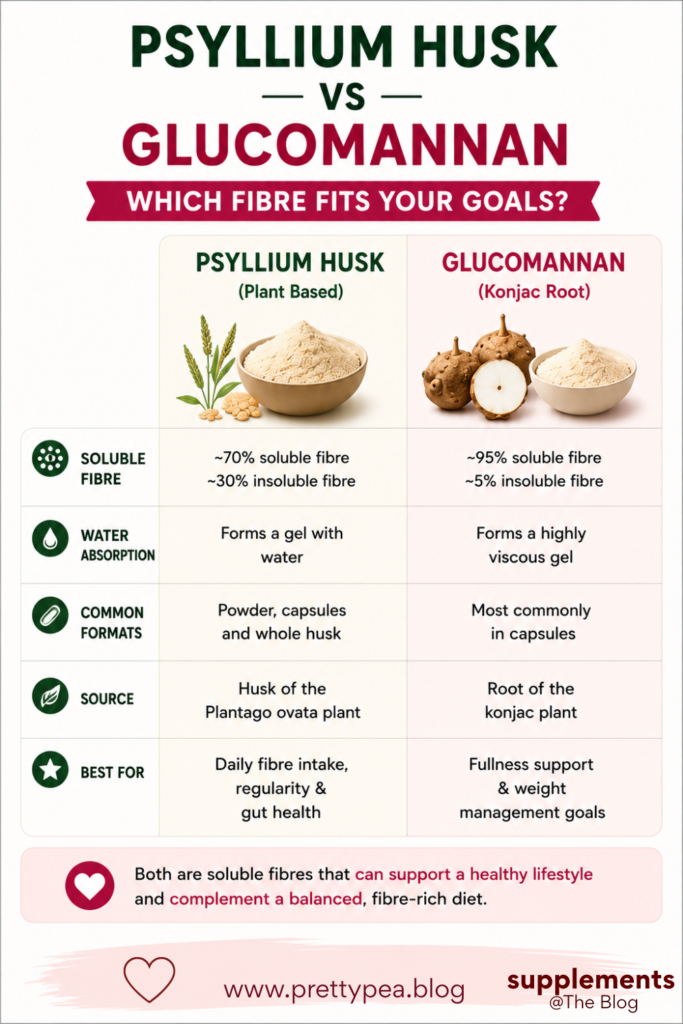## Plantago Ovata vs Inulin
Plantago OvataInulinForms a gelDoes not form a significant gelExcellent for bowel regularityPrimarily prebioticGenerally well toleratedMore likely to cause gas and bloatingSupports cholesterol levelsLimited cholesterol evidenceModerate fermentationHigh fermentation### Which is better?
Neither is universally better. Psyllium is often preferred for digestive regularity and cholesterol support, while inulin is frequently chosen for its stronger prebiotic effects.
---
## Plantago Ovata vs Flaxseed
Plantago OvataFlaxseedAlmost entirely fibreContains fibre, protein and fatsForms a strong gelForms a weaker gelHigher soluble fibre contentContains omega-3 fatsNeutral flavourNutty flavour### Which is better?
Psyllium is typically more effective for increasing fibre intake, while flaxseed provides additional nutritional benefits including omega-3 fatty acids.
---
## [Plantago Ovata (Psyllium Husk): Benefits, Uses, Science and FAQs](https://prettypea.blog/plantago-ovata-psyllium-husk-benefits-uses-science-and-faqs/)
## Plantago Ovata vs Chia Seeds
Plantago OvataChia SeedsHigher fibre concentrationLower fibre concentration per gramPrimarily fibreFibre plus protein and healthy fatsMinimal caloriesMore calorie-denseStrong gel formationModerate gel formation### Which is better?
Psyllium provides a more concentrated source of fibre, whereas chia seeds offer broader nutritional benefits.
---
## Plantago Ovata vs Wheat Bran
Plantago OvataWheat BranMostly soluble fibreMostly insoluble fibreForms a gelDoes not form a gelSupports cholesterol levelsLimited cholesterol benefitsSuitable for many gluten-free dietsContains gluten unless specifically processed### Which is better?
Psyllium tends to offer broader health benefits due to its soluble fibre content and gel-forming properties.
---
## Is Plantago Ovata Safe?
For most healthy adults, psyllium is considered safe and well tolerated.
However, because it absorbs significant amounts of water, adequate fluid intake is essential.
Some people may experience:
- Mild bloating
- Gas
- Temporary digestive discomfort
These effects often improve as fibre intake gradually increases.
Individuals with swallowing difficulties or specific gastrointestinal conditions should consult a healthcare professional before use.
---
## Plantago Ovata Facts
- India produces approximately 80–90% of the world’s psyllium supply.
- Psyllium husk can absorb several times its weight in water.
- It has been used in traditional Ayurvedic practices for centuries.
- Both EFSA and the FDA recognise evidence supporting psyllium’s role in maintaining healthy cholesterol levels.
- Psyllium is one of the few fibres shown to help support both hard and loose stools due to its gel-forming properties.
- Psyllium is one of the most extensively studied fibre supplements available today.
---
## Fibre Supplements.
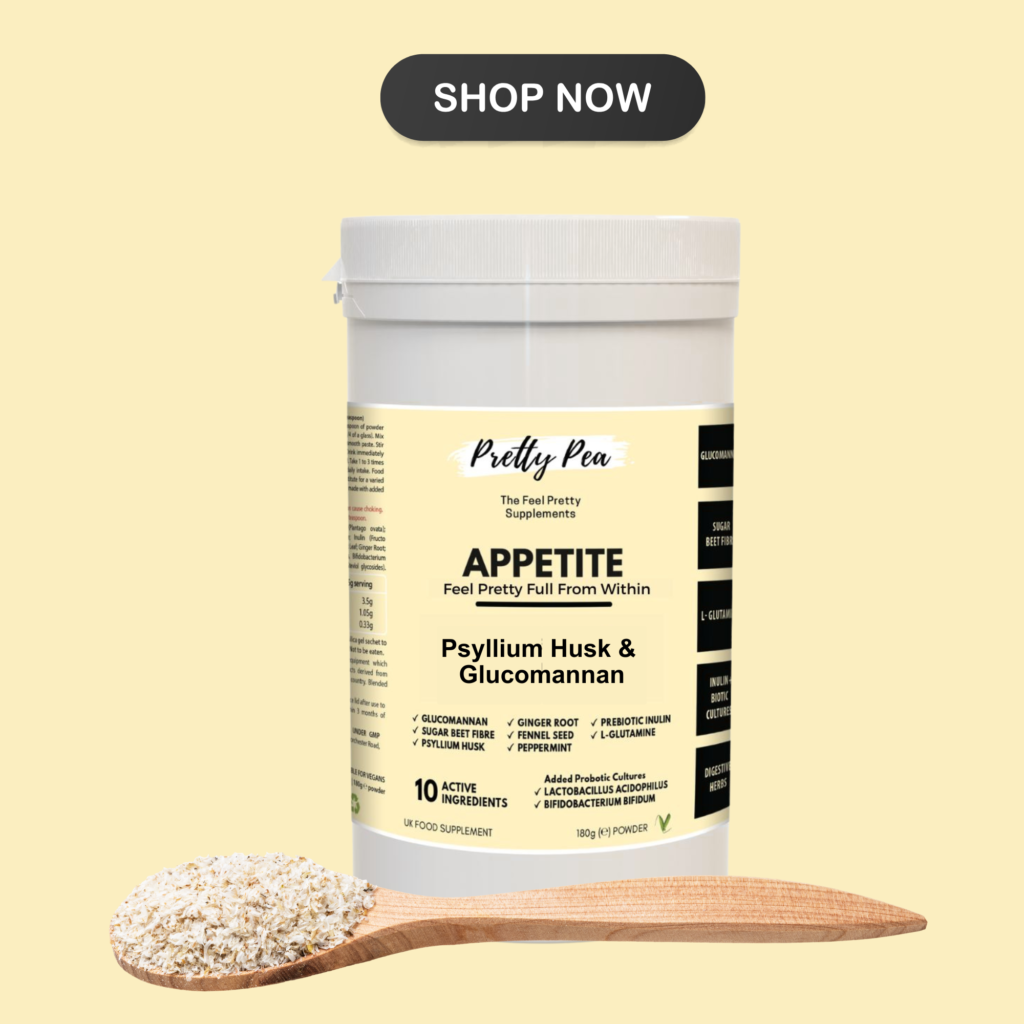[**Fibre Pow**der](https://prettypea.blog/fibre-powder/ "Fibre Powder")
Appetite blends 4 fibres, prebiotics, live cultures & botanicals for digestive love
[Glucomannan **Reset Capsules**](https://prettypea.blog/product/pretty-reset/ "Glucomannan Reset Capsules")
Glucomannan based capsules combine with metabolism, energy and hormone support nutrients
**[Fibre Capsules](https://prettypea.blog/fibre-capsules/ "Fibre Capsules")**
Insoluble and soluble fibre from 11 high fibrous foods
## Psyllium Husk FAQ
### What is Plantago ovata used for?
Plantago ovata is primarily used as a source of psyllium fibre to support digestive health, bowel regularity, cholesterol management and healthy blood sugar responses.
### Is Plantago ovata the same as psyllium husk?
Not exactly. Plantago ovata is the plant, while psyllium husk is the fibre-rich outer coating of its seeds.
### Is Plantago ovata the same as ispaghula husk?
Yes. Ispaghula husk and psyllium husk are different names for the same fibre source derived from Plantago ovata.
### Is Plantago ovata soluble or insoluble fibre?
It contains both, but is predominantly composed of soluble fibre.
### Is Plantago ovata gluten free?
Pure psyllium husk is naturally gluten free. However, individuals with coeliac disease should choose products certified gluten free to avoid cross-contamination.
### Is Plantago ovata prebiotic?
It has mild prebiotic properties because some of its fibre can be fermented by beneficial gut bacteria.
### Can Plantago ovata help with weight management?
Psyllium may help increase feelings of fullness and support appetite management as part of a balanced diet and healthy lifestyle.
### Can Plantago ovata help lower cholesterol?
Yes. Numerous clinical studies have shown psyllium can help support healthy LDL cholesterol levels.
### What is the difference between psyllium husk and chia seeds?
Psyllium is a more concentrated source of fibre, while chia seeds provide fibre alongside protein, omega-3 fats and minerals.
### What is the difference between psyllium husk and flaxseed?
Psyllium primarily provides fibre, whereas flaxseed also supplies omega-3 fats, protein and lignans.
### Can Plantago ovata be taken long term?
Research suggests psyllium can be safely consumed long term by most healthy adults when taken with adequate fluid intake.
### Does Plantago ovata cause bloating?
Some people experience temporary bloating when increasing fibre intake, although psyllium is often better tolerated than highly fermentable fibres such as inulin.
**Looking For More Fibre Advice?**
- [Bloating Isn’t Just “Too Much Gas”: The Real Causes of Bloating (and What Actually Helps)](https://prettypea.blog/7-real-causes-of-bloating-and-what-actually-helps/)
- [Soluble vs Insoluble Fibre Explained](https://prettypea.blog/the-fibre-fix-insoluble-vs-soluble-fibre/)
- [Why Fibre Could Be the Secret to a Better Menopause](https://prettypea.blog/why-fibre-could-be-the-secret-to-a-better-menopause/)
- [What Is Glucomannan? Benefits, Uses & Side Effects](https://prettypea.blog/what-is-glucomannan-2/)
- [9 Benefits of Fibre: Why It’s Essential for Gut Health, Weight and Wellbeing](https://prettypea.blog/9-benefits-of-fibre-why-its-essential-for-gut-health-weight-and-wellbeing/)
- [Appetite Regulation: How Fibre vs GLP-1 Compare](https://prettypea.blog/appetite-regulation-how-fibre-vs-glp-1-compare/)
- [Glucomannan for Weight Loss: Does It Work and How Does It Compare to Medications?](https://prettypea.blog/glucomannan-weight-loss/)
- [What is the Highest Fibre Food](https://prettypea.blog/what-is-the-highest-fibre-food/)
---
- [](https://prettypea.blog/d-mannose-and-cranberry-for-women/)[Menopause Nutrition](https://prettypea.blog/category/menopause/) · [Superfoods](https://prettypea.blog/category/superfoods/) · [Supplements](https://prettypea.blog/category/supplements/)
October 8, 2026
- [](https://prettypea.blog/what-is-glp-1/)[Fibre & Gut Health](https://prettypea.blog/category/fibre/) · [Hormones & HRT](https://prettypea.blog/category/hormones-hrt/) · [Menopause Nutrition](https://prettypea.blog/category/menopause/) · [Supplements](https://prettypea.blog/category/supplements/)
### [What Is GLP-1? The Gut Hormone That Helps Regulate Hunger & Blood Sugar](https://prettypea.blog/what-is-glp-1/)
August 18, 2026
- [](https://prettypea.blog/psyllium-husk-benefits/)[Pretty Pea](https://prettypea.blog/category/pretty-pea/)
### [Psyllium Husk: Benefits, How to Take It, Side Effects & How It Compares](https://prettypea.blog/psyllium-husk-benefits/)
August 15, 2026
### Ispaghula husk: Sources
[Psyllium Husk: A Comprehensive Review of its Functional Properties, Health Benefits, Mechanisms of Action, and Potential Adverse Effects – PubMed](https://pubmed.ncbi.nlm.nih.gov/41697448/)
Anderson JW, Davidson MH, Blonde L, et al. Long-term cholesterol-lowering effects of psyllium as an adjunct to diet therapy in the treatment of hypercholesterolemia. *American Journal of Clinical Nutrition*. 2000.
McRorie JW Jr, Fahey GC Jr. A review of gastrointestinal physiology and the mechanisms underlying the health benefits of dietary fibre. *Nutrition Today*. 2015;50(2):82–89.
McRorie JW Jr, McKeown NM. Understanding the physics of functional fibres in the gastrointestinal tract. *Nutrients*. 2017;9(8):895.
Pal S, Radavelli-Bagatini S. Effects of psyllium fibre on blood glucose and serum lipid concentrations in adults. *Nutrients*. 2021.
Yang J, Wang HP, Zhou L, Xu CF. Effect of dietary fibre on constipation: a meta-analysis. *World Journal of Gastroenterology*. 2012;18(48):7378–7383.
European Food Safety Authority (EFSA). Scientific Opinion on the substantiation of health claims related to psyllium and maintenance of normal blood cholesterol concentrations. *EFSA Journal*.
U.S. Food and Drug Administration (FDA). Health Claims: Soluble Fibre from Certain Foods and Risk of Coronary Heart Disease.
National Diet and Nutrition Survey (NDNS). UK Government reports on fibre intake among adults.
---
**Categories:** Fibre & Gut Health, Menopause Nutrition, Superfoods, Supplements
---
### [Calories Explained: Where Do Calories Go (And What Really Happens After You Eat)](https://prettypea.blog/where-do-calories-go/)
**Published:** July 4, 2026
**Author:** Cate Boyd
**Content:**
---
Did you know that around two-thirds of the calories you eat are simply used to keep you alive? If you’ve ever wondered **where do calories go**, **what happens after you eat**, or **how your body uses energy**, this guide explains everything in simple terms. You’ll learn what calories really are, how metabolism works, where excess calories are stored, and why hormones, muscle and lifestyle all influence your body’s energy needs.
---
## What Is a Calorie?
A calorie is a unit of energy.
In nutrition, the term **Calorie** (with a capital C) refers to a **kilocalorie (kcal)**—the amount of energy needed to raise the temperature of one kilogram of water by one degree Celsius.
Calories provide the fuel your body needs to:
- breathe
- pump blood
- regulate body temperature
- think
- digest food
- repair cells
- move muscles
- produce hormones
Without calories, your body simply could not function.
All three macronutrients provide calories:
NutrientCalories per gramCarbohydrate4 kcalProtein4 kcalFat9 kcalAlcohol7 kcalAlthough calories represent energy, the nutritional quality of foods still matters because different foods provide different vitamins, minerals, fibre and protein.
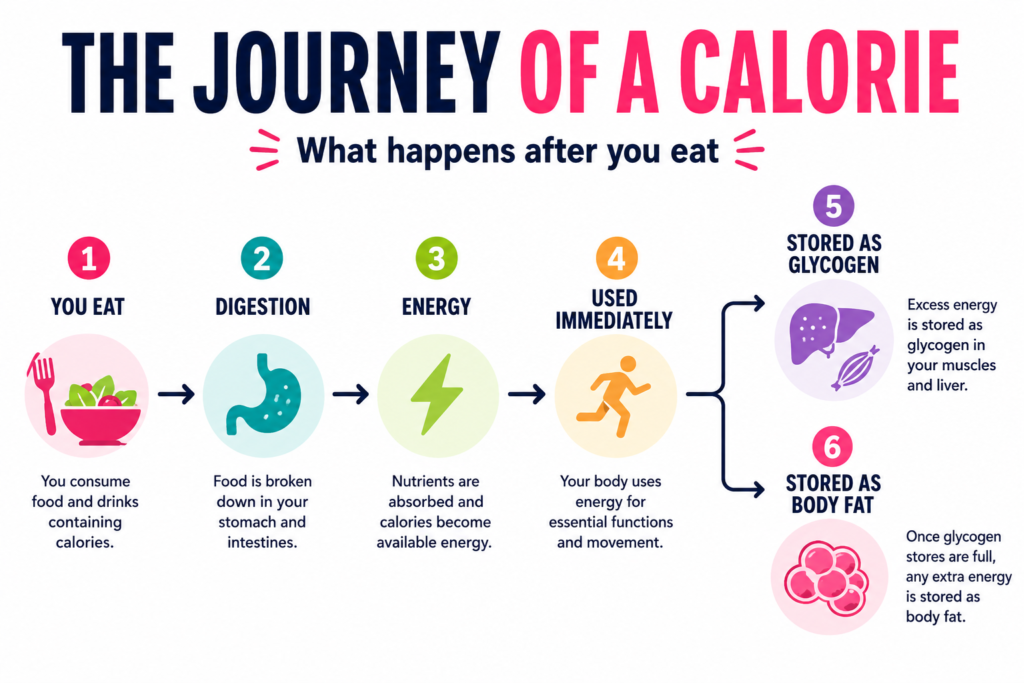---
## Where Do Your Calories Go?
One of the biggest misconceptions is that exercise burns most of the calories you eat.
In reality, most calories are used simply to keep your body functioning.
### 1. Basal Metabolic Rate (BMR) (60–70%)
This is the energy your body uses while completely at rest.
It powers:
- heart beating
- breathing
- brain function
- liver function
- kidneys
- immune system
- hormone production
- body temperature
- cell repair
This is why even lying in bed all day still burns calories.
---
### 2. Physical Activity (15–30%)
Movement includes far more than exercise.
Your body uses calories for:
- walking
- standing
- climbing stairs
- gardening
- housework
- shopping
- structured exercise
People who move more throughout the day generally burn considerably more calories.
---
### 3. Digesting Food (Around 10%)
Digesting food also requires energy.
This is known as the **thermic effect of food (TEF).**
Protein requires the most energy to digest, followed by carbohydrates and fats.
## [Calories Explained: Where Do Calories Go (And What Really Happens After You Eat)](https://prettypea.blog/where-do-calories-go/)
---
### 4. Other Body Functions (5–10%)
Your body constantly uses energy for processes such as:
- hormone production
- immune function
- tissue repair
- nervous system activity
- growth
- healing
Although these functions use fewer calories than BMR, they are still essential.
---
## What Is Metabolism?
Metabolism refers to **all the chemical reactions that keep your body alive**.
It is not a single process and it is not simply about “burning calories.”
Metabolism includes:
- converting food into energy
- storing energy
- building muscle
- repairing tissues
- producing hormones
- supporting the immune system
- maintaining body temperature
Your metabolism is working every second of every day—even while you sleep.
---
## What Happens to Excess Calories?
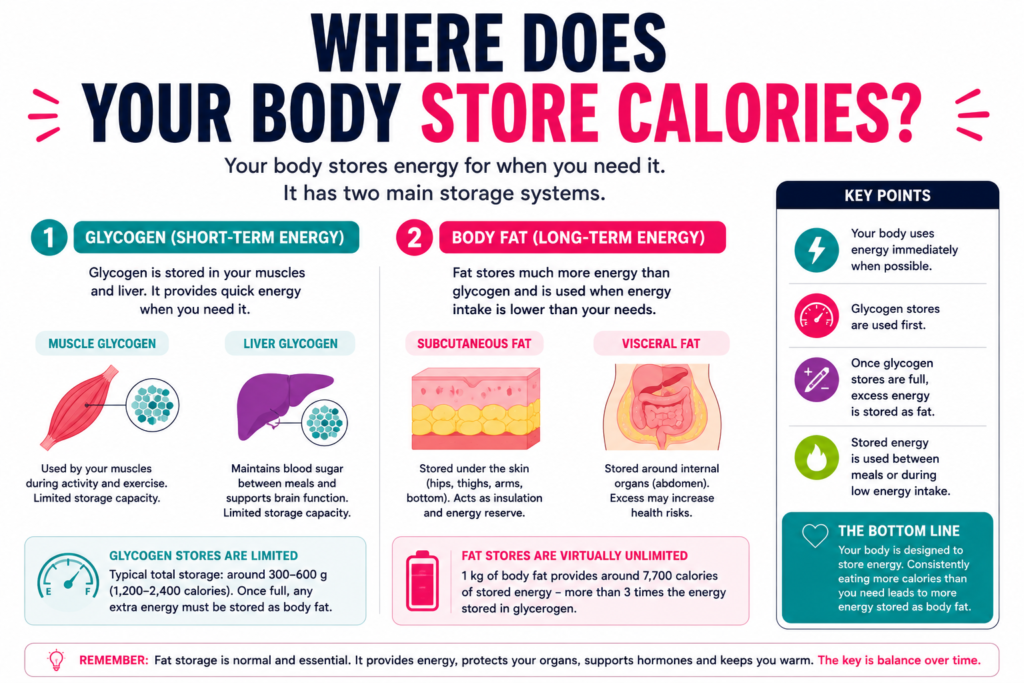If you consistently consume more calories than your body needs, the excess energy is stored.
Initially, your body stores some energy as **glycogen** in the liver and muscles.
Once these stores are full, most additional energy is stored as **body fat**, which can later be used when energy intake is lower than energy expenditure.
Importantly, this is a normal biological process. Fat storage helps the body prepare for times when food may be less available.
For a breakdown of the different types of fat in your body read: [Understanding Visceral Fat: The Ultimate Belly Fat Guide ](https://prettypea.blog/understanding-visceral-fat-the-ultimate-belly-fat-guide/)
---
## Where Does Your Body Store Calories?
Your body is incredibly efficient at managing energy. It doesn’t immediately turn every extra calorie you eat into body fat. Instead, it follows a sequence to make sure energy is available when you need it.
### 1. Calories are used immediately
After you eat, your digestive system breaks food down into nutrients, which are absorbed into the bloodstream.
Your body first uses these calories to fuel essential functions such as:
- Breathing
- Heart function
- Brain activity
- Digestion
- Muscle movement
- Cell repair
- Hormone production
If your body needs energy straight away, these calories are used almost immediately.
---
### 2. Excess energy is stored as glycogen
If you eat more energy than your body needs immediately, some of the excess is stored as **glycogen**.
Glycogen is the body’s short-term energy reserve and is stored mainly in:
- **Your muscles** – to fuel movement and exercise.
- **Your liver** – to help maintain stable blood glucose levels between meals.
These stores are limited and can be filled or depleted depending on your diet and activity levels.
Think of glycogen as your body’s **“rechargeable battery.”** It provides a readily available source of energy when you haven’t eaten for a few hours or during physical activity.
---
### 3. Once glycogen stores are full…
When your glycogen stores reach capacity, your body stores additional energy as **body fat**.
This is a completely normal process and an important survival mechanism. Body fat acts as a long-term energy reserve that your body can draw upon when food intake is lower than your energy needs.
Your body stores fat in two main ways:
- **Subcutaneous fat** – stored beneath the skin.
- **Visceral fat** – stored deeper inside the abdomen around internal organs.
Both forms store energy, but excess visceral fat is associated with a higher risk of metabolic and cardiovascular disease.
**➡️ Read next:** [Understanding Visceral Fat: The Ultimate Belly Fat Guide](https://prettypea.blog/understanding-visceral-fat-the-ultimate-belly-fat-guide/)
---
## Does every extra calorie become body fat?
Not necessarily.
Your body is constantly using, storing and releasing energy throughout the day. Factors such as physical activity, muscle glycogen levels, meal timing and total daily energy balance all influence how calories are used.
However, **if you consistently consume more calories than your body uses over time, the surplus energy is largely stored as body fat.**
### Key takeaway
> **Your body follows a simple energy pathway:** use calories first, store some as glycogen for quick access, and store any long-term surplus as body fat. This efficient system helps ensure you always have energy available—even between meals or during periods of increased demand.
---
## Are All Calories Equal?
From an energy perspective, a calorie is always a calorie.
However, foods that contain the same number of calories can affect hunger, fullness, nutrition and health differently.
For example, foods rich in protein and fibre often promote greater satiety than foods high in refined sugars.
This means food quality remains important even when total calorie intake is similar.
Fibre can help increase feelings of fullness as part of a balanced diet. If you’re looking to increase your soluble fibre intake, our RESET Glucomannan Capsules provide glucomannan, which contributes to weight loss as part of an energy-restricted diet when consumed at 3 g per day with water before meals.
## [Calories Explained: Where Do Calories Go (And What Really Happens After You Eat)](https://prettypea.blog/where-do-calories-go/)
---
Get your free High Fibre Food Guide here.
## Calories, Hormones and Menopause
Hormones influence appetite, energy use and body composition.
During perimenopause and menopause, changes in oestrogen, progesterone and other hormones can make weight management feel more challenging.
These changes may affect:
- appetite
- fat distribution
- muscle mass
- sleep quality
- physical activity
- insulin sensitivity
Rather than focusing on calories alone, combining a balanced diet with regular activity, adequate protein and fibre, good sleep and stress management is likely to provide the greatest long-term benefits.
For menopause weight loss support see Meno Shape supplements.
## [Calories Explained: Where Do Calories Go (And What Really Happens After You Eat)](https://prettypea.blog/where-do-calories-go/)
Your next read: [Hormone Imbalance in Women: Causes, Symptoms & How Hormones Work](https://prettypea.blog/hormone-imbalance-in-women/)
Your next read: [Menopause Weight Changes Explained (UK Guide): What Research Says About Body Composition, Metabolism & Nutrition – Pretty Pea](https://prettypea.blog/menopause-weight-changes-explained-uk-guide-what-research-says-about-body-composition-metabolism-nutrition/)
---
## Common Calorie Myths
### Myth 1: Eating after 6 pm causes weight gain
**Fact:** Your body doesn’t automatically store food as fat because you eat in the evening. Overall calorie intake, food choices and activity levels over time are generally more important than the clock.
---
### Myth 2: Exercise burns most of your calories
**Fact:** For most people, **60–70%** of daily calories are used by your **Basal Metabolic Rate (BMR)** to keep your body functioning. Exercise is important for health, but it usually accounts for a much smaller proportion of total daily energy expenditure.
---
### Myth 3: All calories are equal
**Fact:** A calorie is a unit of energy, but foods containing the same number of calories can affect fullness, digestion and nutrition differently. Foods rich in protein and fibre are generally more filling than highly processed foods and may help make a calorie-controlled diet easier to maintain.
---
### Myth 4: Carbohydrates automatically turn into body fat
**Fact:** Carbohydrates are your body’s preferred source of energy. Excess calories from **any** macronutrient—carbohydrate, fat or protein—can contribute to body fat storage if consumed consistently in excess of your energy needs.
---
### Myth 5: A slow metabolism is the main reason people gain weight
**Fact:** While metabolism varies between individuals, differences are usually smaller than many people think. Factors such as muscle mass, activity levels, sleep, age, hormones and total energy intake all play a role in body weight.
---
### Myth 6: Skipping meals helps you burn more fat
**Fact:** Skipping meals doesn’t automatically increase fat burning and may leave some people feeling hungrier later in the day. What matters most is your overall eating pattern and whether it supports your energy needs and long-term goals.
---
### Myth 7: You can eat unlimited “healthy foods” without gaining weight
**Fact:** Nutritious foods are an important part of a balanced diet, but they still contain calories. Portion sizes and overall dietary patterns remain important for weight management.
---
### Myth 8: Fat makes you fat
**Fact:** Dietary fat provides **9 calories per gram** and is an important part of a healthy diet. Healthy fats support hormone production, brain function and the absorption of fat-soluble vitamins. Weight gain occurs when you consistently consume more energy than your body uses, regardless of whether the calories come from fat, carbohydrates or protein.
---
### Myth 9: Protein has no calories
**Fact:** Protein contains **4 calories per gram**, just like carbohydrates. However, protein generally has a higher thermic effect of food (TEF), meaning your body uses more energy to digest and process it than it does for fats or carbohydrates.
---
### Myth 10: Drinking cold water burns lots of calories
**Fact:** Your body does use a small amount of energy to warm cold water to body temperature, but the effect is modest and is unlikely to make a meaningful difference to weight management on its own.
---
### Myth 11: You stop burning calories when you sleep
**Fact:** Your body continues to burn calories 24 hours a day. While sleeping, energy is still needed for breathing, circulation, brain activity, hormone production, immune function and cell repair.
---
### Myth 12: Muscle weighs more than fat
**Fact:** A kilogram of muscle and a kilogram of fat weigh exactly the same. However, muscle is denser than fat, so it takes up less space. This is why body shape can change even if the number on the scales stays the same.
---
### Myth 13: Calories don’t count at weekends
**Fact:** Your body doesn’t reset at the weekend. Regularly consuming more calories than you need over several days can still affect your overall energy balance, even if you eat well during the week.
---
### Myth 14: You need to ‘earn’ your food through exercise
**Fact:** Food provides energy and nutrients that your body needs every day. Exercise offers many health benefits beyond calorie burning, including supporting muscle strength, cardiovascular health and mental wellbeing. It shouldn’t be viewed solely as a way to offset eating.
---
### Myth 15: Menopause stops your body burning calories
**Fact:** Menopause doesn’t switch off your metabolism. However, hormonal changes, age-related muscle loss, reduced activity levels and poorer sleep can all influence energy expenditure and body composition, making weight management feel more challenging.
## [Calories Explained: Where Do Calories Go (And What Really Happens After You Eat)](https://prettypea.blog/where-do-calories-go/)
### Myth 16: Eating late at night automatically causes weight gain.
Overall energy intake and lifestyle generally matter more than the time you eat.
### Myth 17: Exercise burns most of your calories.
In reality, Basal Metabolic Rate accounts for the largest proportion of daily energy expenditure.
### Myth 18: Starving yourself speeds up weight loss.
Very restrictive diets can make them difficult to maintain and may reduce muscle mass if protein intake and resistance exercise are inadequate.
### Myth 19: A “fast metabolism” is everything.
Genetics play a role, but muscle mass, physical activity, sleep and diet all influence energy expenditure.
**The bottom line:** Calories provide energy, but **what you eat, how active you are, your muscle mass, sleep, hormones and long-term habits all influence how your body uses that energy.** Rather than focusing on one myth or “quick fix”, aim for a balanced, sustainable approach to nutrition and lifestyle.
## Latest Products
[View All → →](#)
### [Calories Explained: Where Do Calories Go (And What Really Happens After You Eat)](https://prettypea.blog/where-do-calories-go/)
---
## Frequently Asked Questions
### What are calories?
Calories are units of energy that fuel every process in the body.
---
### What happens to the calories you eat?
Calories are used for essential body functions, movement, digestion and other biological processes. Any consistent excess may be stored for future energy needs.
---
### What is metabolism?
Metabolism is the collection of chemical reactions that convert food into energy and keep your body functioning.
---
### What is Basal Metabolic Rate?
BMR is the energy your body uses while completely at rest to maintain vital functions such as breathing, circulation and temperature regulation.
---
### Do all excess calories become body fat?
Excess energy may first be stored as glycogen. When glycogen stores are full, ongoing excess energy is mainly stored as body fat.
---
### Does protein burn more calories to digest?
Yes. Protein has a higher thermic effect of food than carbohydrates or fats, meaning your body uses more energy to digest and process it.
---
### Do hormones affect how the body uses calories?
Hormones can influence appetite, body composition, muscle mass, fat distribution and energy balance, which may affect weight management.
---
### Why is weight loss harder during menopause?
Hormonal changes, reduced muscle mass, ageing, sleep disturbances and lifestyle factors can all contribute to changes in energy balance and body composition.
---
### Does fibre help with calorie control?
Fibre can increase feelings of fullness and support healthy digestion, making it easier for some people to manage their energy intake as part of a balanced diet.
---
### References
1. [Hall KD, Guo J. *Obesity Energetics: Body Weight Regulation and the Effects of Diet Composition.* Gastroenterology. 2017.](https://pubmed.ncbi.nlm.nih.gov/28193517/ "Hall KD, Guo J. Obesity Energetics: Body Weight Regulation and the Effects of Diet Composition. Gastroenterology. 2017.")
2. British Nutrition Foundation. Healthy eating and energy balance resources.
3. NHS. Healthy weight guidance.
4. World Health Organization. Healthy diet facts.
5. European Food Safety Authority. Scientific opinions on energy and nutrition.
6. Levine JA. *Non-Exercise Activity Thermogenesis (NEAT).* American Journal of Clinical Nutrition.
7. Westerterp KR. *Diet-Induced Thermogenesis.* Nutrition & Metabolism.
**Categories:** Pretty Pea
---
### [Signs You May Have High Cortisol: What Your Body Could Be Telling You (And How to Fix It)](https://prettypea.blog/signs-of-high-cortisol-in-women/)
**Published:** April 26, 2026
**Author:** Cate Boyd
**Content:**
Is your body signalling signs of high cortisol? Cortisol isn’t the enemy — it’s essential for survival. It helps you wake up, respond to stress, regulate blood sugar, and maintain energy.
But when cortisol stays elevated for too long, it shifts from helpful to harmful.
And for many women, this isn’t just about stress — it’s about **chronic, invisible pressure**:
- balancing careers, family, and expectations
- under-eating or dieting for years
- over-exercising in pursuit of results
- running on caffeine and poor sleep
Over time, your body adapts — but not in a way that serves you.
Instead, it starts sending signals.
The problem is, most of these signals are often dismissed or misunderstood
---
## What Is Cortisol and How Should It Work?
Cortisol is a steroid hormone released as part of the **hypothalamic–pituitary–adrenal (HPA) axis** in response to stress. Its main role is to mobilise energy—raising blood sugar, increasing blood pressure, and priming the body for “fight or flight” (Sapolsky et al., 2000).
Short bursts of cortisol are essential. But when modern-day stressors—like long working hours, poor sleep, or emotional pressure—keep cortisol elevated, it can disrupt many body systems
Cortisol is produced by the adrenal glands and follows a circadian rhythm:
- Peaks in the early morning (to wake you up)
- Gradually declines throughout the day
- Reaches its lowest point at night (to allow sleep)
When this rhythm is disrupted — either too high, too low, or mistimed — symptoms start to appear. Here we share the typically signs of high cortisol in women along with nutrients and popular supplements to lower cortisol:
- [Signs of High Cortisol](#aioseo-signs-of-high-cortisol-23)
- [1. Stubborn Belly Fat and Changes in Body Composition](#aioseo-1-stubborn-belly-fat-and-changes-in-body-composition-23)
- [2. Fatigue + “Wired But Tired” Feeling](#aioseo-2-fatigue-wired-but-tired-feeling-36)
- [3. Sleep Disruption (Especially 2–4am Waking)](#aioseo-3-sleep-disruption-especially-24am-waking-44)
- [4. Intense Sugar and Carb Cravings](#aioseo-4-intense-sugar-and-carb-cravings-53)
- [5. Anxiety, Overwhelm, and Nervous System Dysregulation](#aioseo-5-anxiety-overwhelm-and-nervous-system-dysregulation-62)
- [6. Hormonal Imbalances and Cycle Changes](#aioseo-6-hormonal-imbalances-and-cycle-changes-72)
- [7. Weakened Immunity and Slower Recovery](#aioseo-7-weakened-immunity-and-slower-recovery-82)
- [Root Causes of High Cortisol](#aioseo-root-causes-of-high-cortisol-90)
- [How to Lower Cortisol Naturally](#aioseo-how-to-lower-cortisol-naturally-101)
- [Supplements That May Support Cortisol Balance](#aioseo-supplements-that-may-support-cortisol-balance-127)
- [Key Nutrients for Cortisol Regulation](#aioseo-key-nutrients-for-cortisol-regulation-128)
---
## Signs of High Cortisol
## 1. Stubborn Belly Fat and Changes in Body Composition
One of the most researched effects of elevated cortisol is **increased abdominal fat storage**.
Why?
- Cortisol raises blood glucose
- Excess glucose gets stored as fat
- Abdominal fat cells have a higher density of cortisol receptors
This is why you might notice:
- Weight gain around the middle
- A “softer” body composition despite exercise
- Difficulty losing fat even in a calorie deficit
---
## 2. Fatigue + “Wired But Tired” Feeling
High cortisol often leads to a **misaligned energy rhythm**:
- Morning: exhausted, groggy
- Afternoon: energy dips
- Evening: sudden alertness or second wind
This pattern is a key sign your cortisol curve is off.
---
## 3. Sleep Disruption (Especially 2–4am Waking)
Cortisol and melatonin work in opposition.
When cortisol is elevated at night:
- Melatonin is suppressed
- Deep sleep is disrupted
- You may wake in the early hours feeling alert or anxious
Blood sugar dips overnight can also trigger cortisol release, waking you suddenly.
---
## 4. Intense Sugar and Carb Cravings
Cortisol drives blood sugar fluctuations.
You may experience:
- Strong cravings for quick energy foods
- Afternoon “crashes”
- Dependence on caffeine or sugar
This creates a **self-perpetuating cycle** of stress and energy instability.
## [Signs You May Have High Cortisol: What Your Body Could Be Telling You (And How to Fix It)](https://prettypea.blog/signs-of-high-cortisol-in-women/)
---
## 5. Anxiety, Overwhelm, and Nervous System Dysregulation
Chronically elevated cortisol keeps your body in a **sympathetic (fight-or-flight) state**.
This can feel like:
- Constant background anxiety
- Irritability or low tolerance to stress
- Racing thoughts
- Difficulty switching off
Even when life looks “calm,” your body may still feel under threat.
---
## 6. Hormonal Imbalances and Cycle Changes
Cortisol directly impacts reproductive hormones.
Chronic stress may contribute to:
- Irregular or missed periods
- Worsened PMS
- Low progesterone symptoms (anxiety, poor sleep)
- Reduced libido
This is partly due to the *pregnenolone steal*, where the body prioritises cortisol production over sex hormones.
---
## 7. Weakened Immunity and Slower Recovery
Over time, high cortisol suppresses immune function.
Signs include:
- Frequent colds or infections
- Longer recovery times
- Increased inflammation
---
## Root Causes of High Cortisol
Common contributors include:
- Chronic psychological stress
- Poor sleep quality or duration
- Blood sugar instability
- Excess caffeine intake
- Overtraining (especially frequent HIIT)
- Undereating or restrictive diets
Often, it’s not one factor — but a **combination over time**.
---
## How to Lower Cortisol Naturally
### 1. Stabilise Blood Sugar
- Eat regular meals
- Prioritise protein (20–30g per meal)
- Include fibre and healthy fats
---
### 2. Support Your Nervous System Daily
- Walking outdoors
- Breathwork (e.g. slow nasal breathing)
- Mindfulness or journaling
Consistency matters more than intensity.
---
### 3. Improve Sleep Quality
- Aim for 7–9 hours
- Avoid screens 60–90 minutes before bed
- Keep a consistent sleep-wake time
---
### 4. Adjust Exercise Intensity
If you’re already stressed:
- Reduce excessive HIIT
- Focus on strength training, Pilates, walking
---
## Supplements That May Support Cortisol Balance
## Key Nutrients for Cortisol Regulation
### Magnesium
Often referred to as the “anti-stress mineral,” magnesium plays a critical role in regulating the nervous system and lowering cortisol levels.
**Benefits:**
- Supports relaxation and sleep quality
- Helps regulate the HPA axis (stress response system)
- May reduce anxiety and muscle tension
**Common signs you may need more:**
- Poor sleep
- Muscle tightness
- Headaches
- Anxiety
---
### Vitamin C
Vitamin C is highly concentrated in the adrenal glands and is rapidly depleted during stress.
**Benefits:**
- Helps reduce cortisol levels during acute stress
- Supports immune function
- Aids adrenal recovery
---
### B Vitamins (Especially B5 & B6)
B vitamins are essential for energy production and adrenal function.
**Benefits:**
- Support energy levels
- Help the body cope with stress
- Involved in neurotransmitter production (mood regulation)
---
### Omega-3 Fatty Acids
Omega-3s have anti-inflammatory effects and may help regulate the stress response.
**Benefits:**
- May lower cortisol and inflammation
- Support brain health and mood
- Help stabilise blood sugar
---
## Adaptogens for Stress & Cortisol Balance
Adaptogens help the body *adapt* to stress rather than simply suppressing it.
---
### Ashwagandha (*Withania somnifera*)
A well-studied adaptogen shown to help reduce cortisol levels and perceived stress. In one double-blind study, participants taking ashwagandha root extract experienced a **27.9% reduction in serum cortisol** compared to placebo.
- May lower serum cortisol
- Supports resilience to stress
- Can improve sleep quality
---
### Liquorice Root (*Glycyrrhiza glabra*)
Supports adrenal function and may help regulate cortisol metabolism.
- Can prolong cortisol activity (helpful in low cortisol patterns)
- May support energy and reduce fatigue
*Important:* Not suitable for long-term use in high doses or for those with high blood pressure.
---
### Rhodiola Rosea
A powerful adaptogen known for improving resilience to physical and mental stress.
**Benefits:**
- May reduce fatigue and burnout
- Supports mental clarity and focus
- Can help regulate cortisol rhythm
Best suited for:
Fatigue, brain fog, burnout
---
### Holy Basil (Tulsi)
Traditionally used in Ayurvedic medicine for stress and mood balance.
**Benefits:**
- May reduce cortisol and anxiety
- Supports blood sugar balance
- Has calming effects without sedation
---
### Ginseng (Panax Ginseng)
A well-known adaptogen that supports energy and resilience.
**Benefits:**
- Enhances physical and mental performance
- Supports stress tolerance
- May improve fatigue
## [Signs You May Have High Cortisol: What Your Body Could Be Telling You (And How to Fix It)](https://prettypea.blog/signs-of-high-cortisol-in-women/)
---
## Nervous System Support Herbs
These don’t directly lower cortisol but help shift the body out of “fight-or-flight.”
---
### Lemon Balm
A calming herb that supports relaxation and sleep.
**Benefits:**
- Reduces anxiety
- Improves sleep quality
- Supports mood
---
### Passionflower
Often used for anxiety and sleep disturbances.
**Benefits:**
- Calms the nervous system
- May improve sleep onset
- Helps reduce restlessness
---
## Blood Sugar Support (Indirect Cortisol Control)
Because cortisol and blood sugar are closely linked, stabilising glucose is key.
---
### Cinnamon
**Benefits:**
- Helps regulate blood sugar
- May reduce insulin spikes
- Supports energy stability
---
### Chromium
**Benefits:**
- Improves insulin sensitivity
- May reduce sugar cravings
- Supports stable energy
---
## How to Choose What’s Right for You
Not every supplement works the same for everyone.
For example:
- If cortisol is **high at night**, calming adaptogens (ashwagandha, lemon balm) may help
- If cortisol is **low in the morning**, stimulating adaptogens (rhodiola, ginseng) may be more appropriate
This is why a personalised approach is often most effective.
Instead of taking everything, focus on:
- Your main symptoms (fatigue vs anxiety vs poor sleep)
- Your daily rhythm (wired at night vs exhausted all day)
- Your lifestyle (diet, stress load, exercise)
Start simple → build gradually.
---
## A Quick Word of Caution
- Always check for interactions (especially with medications)
- Avoid long-term unsupervised use of certain herbs (e.g. liquorice root)
- Quality and dosage matter
---
## When to Seek Further Support
If symptoms persist, consider:
- Salivary cortisol testing (to assess daily rhythm)
- Functional medicine support
- Nutritional and lifestyle interventions tailored to you
---
## FAQ: Signs of High Cortisol in Women
### What is the fastest way to lower cortisol?
There’s no instant fix, but combining blood sugar balance, sleep optimisation, and stress management can lead to noticeable improvements within weeks.
---
### Can high cortisol cause weight gain even in a calorie deficit?
Yes. Cortisol can affect metabolism, increase fat storage (especially abdominal), and influence water retention.
---
### Is caffeine bad for cortisol?
In excess, yes. Caffeine can increase cortisol levels, especially when consumed on an empty stomach or during periods of high stress.
---
### How long does it take to rebalance cortisol?
This varies, but many people notice improvements within 4–8 weeks with consistent lifestyle changes.
---
- [](https://prettypea.blog/d-mannose-and-cranberry-for-women/)[Menopause Nutrition](https://prettypea.blog/category/menopause/) · [Superfoods](https://prettypea.blog/category/superfoods/) · [Supplements](https://prettypea.blog/category/supplements/)
October 8, 2026
- [](https://prettypea.blog/what-is-glp-1/)[Fibre & Gut Health](https://prettypea.blog/category/fibre/) · [Hormones & HRT](https://prettypea.blog/category/hormones-hrt/) · [Menopause Nutrition](https://prettypea.blog/category/menopause/) · [Supplements](https://prettypea.blog/category/supplements/)
### [What Is GLP-1? The Gut Hormone That Helps Regulate Hunger & Blood Sugar](https://prettypea.blog/what-is-glp-1/)
August 18, 2026
- [](https://prettypea.blog/psyllium-husk-benefits/)[Pretty Pea](https://prettypea.blog/category/pretty-pea/)
### [Psyllium Husk: Benefits, How to Take It, Side Effects & How It Compares](https://prettypea.blog/psyllium-husk-benefits/)
August 15, 2026
---
### Frequently Asked Questions (FAQs) Signs of High Cortisol
1. **What happens when cortisol is too high?**
When cortisol stays elevated for long periods, it can lead to **weight gain (especially belly fat)**, poor sleep, anxiety, weakened immunity, and increased risk of conditions like high blood pressure and type 2 diabetes.
### 2. **Can cortisol cause weight gain?**
Yes. Cortisol increases appetite, particularly for sugary and fatty foods, while also promoting **abdominal fat storage**. This type of fat is linked with metabolic health risks
### 3. **What foods lower cortisol levels naturally?**
Foods rich in **magnesium (leafy greens, nuts, seeds)**, **vitamin C (citrus, kiwi, peppers)**, and **omega-3 fatty acids (oily fish, flaxseeds, chia)** may help regulate cortisol. Green tea and dark chocolate also contain compounds that support stress resilience.
### 4. **Which herbs help reduce cortisol?**
Adaptogenic herbs like **ashwagandha and licorice root** have been studied for their ability to balance stress hormones. Ashwagandha, in particular, has shown significant reductions in cortisol levels in clinical studies.
### 5. **How can I lower cortisol quickly?**
Simple lifestyle shifts—like **deep breathing, a short walk, drinking water, or practicing mindfulness**—can help lower cortisol in the moment. For long-term balance, focus on consistent sleep, regular movement, and a nutrient-dense diet.
### 6. **What is the best time of day to test cortisol levels?**
Cortisol naturally peaks in the morning and drops at night. Doctors typically test cortisol in the morning (around 8–9 a.m.) when levels are highest, to assess adrenal function and rhythm.
---
**RELATED ARTICLES**
[**The Menopause Diet 5 Day Plan to Lose Weight**](https://prettypea.blog/the-menopause-diet-5-day-plan-to-lose-weight/)
**List of** [**The 100 Symptoms of Perimenopause**](https://prettypea.blog/the-100-symptoms-of-perimenopause/)
[**Early First Symptoms of Perimenopause – 7 Telling Subtle Signs**](https://prettypea.blog/early-first-symptoms-of-perimenopause-7-telling-subtle-signs/)
[**The Role of Perimenopause Vitamins Supplements: A Guide for Women**](https://prettypea.blog/perimenopause-vitamins-supplements/)
[**Why Fibre Could Be the Secret to a Better Menopause**](https://prettypea.blog/why-fibre-could-be-the-secret-to-a-better-menopause/)
[**The Ultimate Superfood List: What are Superfoods, Benefits, Best Choices, and How to Use**](https://prettypea.blog/the-ultimate-superfood-list-what-are-superfoods-benefits-best-choices-and-how-to-use/)
### **Signs of High Cortisol – Sources**
- [Boyle, N. B., et al. (2017). The effects of magnesium supplementation on subjective anxiety and stress.](https://www.mdpi.com/2072-6643/9/5/429) *Nutrients, 9*(5), 429.
- Brody, S., et al. (2002). Vitamin C high-dose supplementation reduces cortisol. *Psychopharmacology, 159*(3), 319–324.
- Chandrasekhar, K., et al. (2012). A prospective, randomized double-blind, placebo-controlled study of safety and efficacy of ashwagandha root extract in reducing stress and anxiety. *Indian Journal of Psychological Medicine, 34*(3), 255–262.
- Cohen, M. M., et al. (2014). Tulsi—Ocimum sanctum: A herb for all reasons. *Journal of Ayurveda and Integrative Medicine, 5*(4), 251–259.
- Delarue, J., et al. (2003). Fish oil supplementation reduces stress-induced cortisol secretion. *Diabetes & Metabolism, 29*(4), 289–295.
- Epel, E. S., et al. (2001). Stress may add bite to appetite in women: a laboratory study of stress-induced cortisol and eating behavior. *Psychoneuroendocrinology, 26*(1), 37–49.
- Franchimont, D. (2004). Overview of the actions of glucocorticoids on the immune response. *European Journal of Clinical Investigation, 34*(7), 429–440.
- Fountoulakis, K. N., et al. (2004). Thyroid function and depression: A review. *Annals of General Hospital Psychiatry, 3*(1), 6.
- Hackett, R. A., & Steptoe, A. (2017). Type 2 diabetes mellitus and psychological stress—a modifiable risk factor. *Nature Reviews Endocrinology, 13*(9), 547–560.
- Kennedy, D. O., et al. (2010). Vitamins and the brain: mechanisms, effects and their relevance to disease. *Nutritional Neuroscience, 13*(2), 119–125.
- Kumari, M., et al. (2009). Associations of salivary cortisol with social and economic factors. *Psychoneuroendocrinology, 34*(9), 1425–1436.
- Nepomnaschy, P. A., et al. (2006). Cortisol levels and menstrual cycle. *American Journal of Human Biology, 18*(2), 151–162.
- Panossian, A., et al. (2010). Rhodiola rosea as a putative botanical antidepressant. *Phytomedicine, 17*(7), 481–493.
- Rosmond, R. (2005). Role of stress in the pathogenesis of the metabolic syndrome. *Psychoneuroendocrinology, 30*(1), 1–10.
- Sapolsky, R. M., et al. (2000). How do glucocorticoids influence stress responses? *Endocrine Reviews, 21*(1), 55–89.
- Sigurjónsdóttir, H. A., et al. (2001). Liquorice-induced rise in blood pressure. *Journal of Human Hypertension, 15*(8), 549–552.
- Trüeb, R. M. (2002). Stress and hair loss: Areview. *Dermatology, 205*(2), 153–157.
- Whitworth, J. A., et al. (2005). Mechanisms of glucocorticoid-induced hypertension. *Endocrine Reviews, 26*(6), 753–772.
- Yoto, A., et al. (2012). Effects of L-theanine on stress-related symptoms. *Biological Psychology, 89*(3), 298–303.
- Chandrasekhar, K. et al. (2012). *A prospective, randomized double-blind study of safety and efficacy of ashwagandha root extract in reducing stress and anxiety in adults.* Indian Journal of Psychological Medicine.
- Lopresti, A.L. et al. (2019). *A systematic review of the effects of ashwagandha on stress and anxiety.* Medicine (Baltimore).
- Walker, B.R. (2007). *Glucocorticoids and cardiovascular disease.* European Journal of Endocrinology.
- Brooks, N.A. et al. (2008). *Beneficial effects of maca on psychological symptoms in menopausal women.* Menopause Journal.
- Jeong, J.W. et al. (2012). *Maca extract effects on hormone balance and stress response.* Journal of Ethnopharmacology.
- Tsigos, C. & Chrousos, G.P. (2002). *Hypothalamic–pituitary–adrenal axis and stress.* Endotext.
- Adam, T.C. & Epel, E.S. (2007). *Stress, eating and the reward system.* Physiology & Behaviour
**Categories:** Hormones & HRT, Menopause Nutrition
---
### [20 Highest Fibre Foods to Add to Your Diet](https://prettypea.blog/what-is-the-highest-fibre-food/)
**Published:** June 12, 2026
**Author:** Cate Boyd
**Content:**
If you’ve ever wondered what are the highest fibre foods, and what you should be eating more of to reach your goals you’re in the right place. In this guide, we’ll look at 20 highest fibre foods, detailing their **nutrient profiles**, **fibre content per serving**, and the **added health benefits** they offer — all backed by science.
Whether your goal is better digestion, more balanced eating or simply increasing your daily fibre intake, this handy list can help you get started.
- [Understanding Fibre](#aioseo-understanding-fibre-what-it-is-and-why-it-matters)
- [Why Fibre Matters for Gut Health and Digestion](#aioseo-health-benefits-of-fibre)
- [How to Eat More Fibre Without Feeling Bloated](#aioseo-how-to-eat-more-fibre-without-feeling-bloated-28)
- [What Is the Highest Fibre Food?](#aioseo-what-is-the-highest-fibre-food-23)
- [Tips to Boost Your Daily Fibre Intake](#aioseo-tips-to-boost-your-daily-fibre-intake-100)
- [Intake for Different Dietary Requirements](#aioseo-you-might-also-be-interested-in)
- [Fibre Supplements.](#aioseo-rent-a-car-at-the-best-price-139)
- [Daily Fibre Recommendations: How Much Fibre Do Women Need?](#aioseo-daily-fibre-recommendations-how-much-do-women-need)
- [What is the Highest Fibre Foods for Different Dietary Needs](#aioseo-what-is-the-highest-fibre-food-for-different-dietary-needs)
- [Increasing Fibre Intake Safely](#aioseo-tips-for-increasing-fibre-intake-safely)
- [Recommended Supplements](#aioseo-latest-products-193)
## Understanding Fibre
Fibre is a type of carbohydrate that the body can’t digest. Unlike other carbs that break down into sugar molecules, fibre remains intact as it passes through the digestive system.
There are two main types of fibre: soluble and insoluble.
Soluble fibre[1](#07d85d4b-24ca-467d-bbb3-e720db548b1e) dissolves in water to form a gel-like substance, which helps slow down digestion and can lower cholesterol and blood sugar levels.
Insoluble fibre does not dissolve in water and adds bulk to the stool, aiding in the movement of materials through the digestive tract.
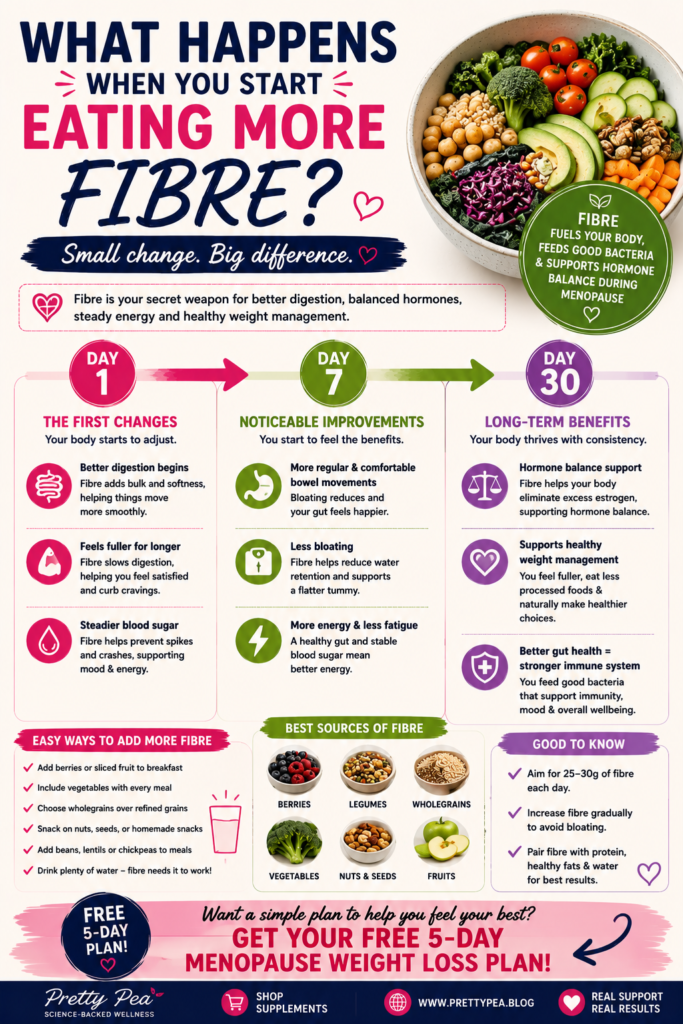## Why Fibre Matters for Gut Health and Digestion
Fibre plays an important role in digestion, bowel regularity, fullness and overall gut health.
It can help support healthy digestion, feed beneficial gut bacteria and make meals more satisfying, which is one reason fibre-rich foods are typically recommended as part of a balanced diet.
---
## How to Eat More Fibre Without Feeling Bloated
If you’re increasing your fibre intake, it’s best to do it gradually. Eating too much fibre too quickly can lead to bloating or discomfort, especially if your usual intake is low.
Drinking enough water and spreading fibre-rich foods throughout the day can help your digestion adjust more comfortably.
## What Is the Highest Fibre Food?
Before you dive into the list; There isn’t just one “best” high-fibre food, because different foods provide different types and amounts of fibre. However, foods like chia seeds, lentils, flaxseeds, beans and certain whole grains are among the highest in fibre per serving.
In practice, eating a range of fibre-rich foods is usually more beneficial than relying on one alone.
## [20 Highest Fibre Foods to Add to Your Diet](https://prettypea.blog/what-is-the-highest-fibre-food/)
## List of 20 Highest Fibre Food to Include in Your Diet
**Food****Serving Size****Fibre (g)****Key Nutrients****1. Split Peas (Cooked)**
**Fibre:** 16.3g per 1 cup (200g)
**Nutrients:** Protein (16g), Iron (2.5mg), Folate (127µg), Magnesium (50mg), Potassium (710mg)
Great in soups and stews, split peas are fibre and protein powerhouses.
---
**2. Lentils (Cooked)**
**Fibre:** 15.6g per 1 cup (198g)
**Nutrients:** Protein (18g), Folate (90% DV), Iron (6.6mg), Manganese, Zinc
Lentils are easy to cook and perfect in curries or salads.
---
**3. Black Beans (Cooked)**
**Fibre:** 15g per 1 cup (172g)
**Nutrients:** Protein (15g), Magnesium (120mg), Folate (256µg), Antioxidants
An excellent source of resistant starch and gut-friendly fibre.
---
**4. Chia Seeds**
**Fibre:** 10.6g per 28g (2 tbsp)
**Nutrients:** Omega-3s (5g ALA), Calcium (179mg), Magnesium, Iron
Add to smoothies, overnight oats, or yoghurt for an instant fibre boost.
---
#### **Get your Fibre Checklist sent straight to your inbox with everything fibre you need to know!**
**5. Flaxseeds (Ground)**
**Fibre:** 7.6g per 2 tbsp (20g)
**Nutrients:** Omega-3s (ALA), Lignans (antioxidants), Manganese, Thiamin
Best consumed ground for maximum absorption of nutrients.
---
**6. Kidney Beans (Cooked)**
**Fibre:** 13.6g per 1 cup (177g)
**Nutrients:** Protein (15g), Iron (3.9mg), Potassium (713mg), Phosphorus
Perfect for chilli, stews or bean salads.
---
**7. Avocado**
**Fibre:** 9.2g per medium avocado (200g flesh)
**Nutrients:** Monounsaturated fats, Vitamin E, Potassium, Folate
A creamy source of both soluble and insoluble fibre.
---
**8. Raspberries**
**Fibre:** 8g per 1 cup (123g)
**Nutrients:** Vitamin C (54% DV), Manganese, Antioxidants
One of the highest-fibre fruits, with anti-inflammatory benefits.
---
**9. Artichokes (Cooked)**
**Fibre:** 10.3g per medium (120g)
**Nutrients:** Vitamin C, Magnesium, Folate, Antioxidants
Supports liver health and digestion.
---
**10. Bran Flakes Cereal**
**Fibre:** 7g per 40g serving
**Nutrients:** Iron (45% DV), B vitamins, Folate, Zinc
Quick breakfast choice to boost fibre intake.
---
**11. Oats (Rolled, Cooked)**
**Fibre:** 4g per 1 cup (234g cooked)
**Nutrients:** Beta-glucan (soluble fibre), Manganese, Iron, B vitamins
Supports heart health and stable energy levels.
---
**12. Pears (With Skin)**
**Fibre:** 5.5g per medium (180g)
**Nutrients:** Vitamin C, Potassium, Polyphenols
A juicy way to satisfy sweet cravings with fibre.
---
**13. Quinoa (Cooked)**
**Fibre:** 5.2g per 1 cup (185g)
**Nutrients:** Complete protein (8g), Magnesium, Manganese, Iron
A gluten-free grain alternative rich in nutrients.
---
**14. Sweet Potato (With Skin)**
**Fibre:** 5.9g per medium (150g)
**Nutrients:** Beta-carotene, Vitamin C, Potassium
The skin provides most of the fibre — don’t peel it!
---
**15. Green Peas (Cooked)**
**Fibre:** 8.8g per 1 cup (160g)
**Nutrients:** Vitamin A, C, K, B vitamins, Protein
An easy addition to pasta, soups, and rice dishes.
---
**16. Almonds**
**Fibre:** 3.5g per 28g (23 almonds)
**Nutrients:** Healthy fats, Vitamin E, Magnesium, Protein
Snackable and satiating.
---
**17. Broccoli (Cooked)**
**Fibre:** 5.1g per 1 cup (150g)
**Nutrients:** Vitamin C, K, Folate, Sulforaphane (a cancer-fighting compound)
A cruciferous hero for digestion and detoxification.
---
**18. Carrots (Raw)**
**Fibre:** 3.6g per 1 cup (130g)
**Nutrients:** Beta-carotene, Vitamin K, Potassium
Great raw, roasted or blended into soups.
---
**19. Popcorn (Air-popped)**
**Fibre:** 3.6g per 3 cups (24g)
**Nutrients:** Polyphenols, Whole grains
A low-calorie snack — just skip the butter!
---
**20. Barley (Cooked, Hulled)**
**Fibre:** 6g per 1 cup (157g)
**Nutrients:** Selenium, Phosphorus, Niacin
Contains **beta-glucan**, a powerful cholesterol-lowering fibre.
---
## Tips to Boost Your Daily Fibre Intake
- Eat **whole fruits and vegetables with the skin** on.
- Swap white bread/pasta for **whole grain versions**.
- Add **beans or lentils** to salads, soups, or stir-fries.
- Start the day with **oats or bran cereal**.
- Snack on **nuts, popcorn or fruit**.
- Hydrate — fibre needs **water** to function properly in the gut.
- Top up with **fibre supplement** – an easy and convenient way to top up and especially useful for those on restricted diets
## What is the Highest Fibre Foods Types to add into Your Meals
Incorporating high-fibre foods into your meals doesn’t have to be challenging. Start by making small changes to your daily diet.
### What is the highest fibre foods for breakfast?
Consider swapping your usual cereal for oatmeal topped with berries and chia seeds. This simple switch can significantly increase your fibre intake and provide a nutritious start to your day.
### What is the highest fibre foods for lunch and dinner?
Lunch and dinner offer plenty of opportunities to add more fibre to your diet. Try adding a variety of beans and legumes to your salads, soups, and stews. Whole grains like quinoa or brown rice can replace refined grains in many dishes, providing more fibre and nutrients.
Don’t forget to include plenty of vegetables, such as broccoli and sweet potatoes, as side dishes or main components of your meals.
#### Include Whole Grains
Whole grains like oats, quinoa, and brown rice are not only high in fibre but also loaded with essential nutrients.
For example, one cup of cooked quinoa provides around 5 grams of fibre. Whole grains can be easily incorporated into meals as a base for salads, in soups, or as side dishes.
#### Include Beans and Legumes
Beans and legumes, such as black beans, lentils, and chickpeas, are some of the richest sources of fibre. A single cup of cooked black beans contains approximately 15 grams of fibre, which is more than half of the recommended daily intake for women.
These foods are also packed with protein, making them an excellent choice for vegetarians and vegans.
### What is the highest fibre foods for snacking?
Think high-fibre snacks on hand, such as apples, pears, nuts, and seeds. These can be easily packed for on-the-go snacking and can help you meet your daily fibre goals.
By making these small adjustments and being mindful of your food choices, you can effortlessly increase your fibre intake and enjoy the numerous health benefits that come with it.
#### Include Berries
Berries, including raspberries, blackberries, and strawberries, are delicious and fibre-rich. One cup of raspberries contains about 8 grams of fibre. These fruits are also high in antioxidants and can be added to yogurt, smoothies, or eaten on their own as a healthy snack.
#### Include Apples
Apples are a convenient and tasty source of fibre. One medium apple contains about 4 grams of fibre, primarily in the skin. Enjoy apples as a snack, add them to salads, or use them in baking to increase your fibre intake.
#### **Include** Nuts and Seeds
Nuts and seeds, such as almonds, flaxseeds, and sunflower seeds, are excellent sources of fibre. A quarter cup of almonds contains around 4 grams of fibre. They can be eaten as a snack, added to salads, or used in baking to boost fibre content.
#### Fibre Supplements
Fibre supplements are of course an option for support topping up your fibre needs and meeting the recommended daily amount.
## Fibre Supplements.
**[Appetite Fibre Powder](https://prettypea.blog/fibre-powder/)**
Feel pretty full from within with 4 fibre blend, prebiotic & live cultures, L-glutamine, ginger, fennel & peppermint
**[Glucomannan Reset Capsules](https://prettypea.blog/product/pretty-reset "Glucomannan Reset Capsules")**
Supporting satiety, energy metabolism, hormonal activity & blood sugar balance
**[High Fibre Capsules](https://prettypea.blog/fibre-capsules/ "High Fibre Capsules")**
Healthy bowel blend of soluble and insoluble fibre from 11 high fibrous foods
## Daily Fibre Recommendations: How Much Fibre Do Women Need?
The amount of fibre you need daily depends on your age, sex, and overall health. The NHS however **recommends 30g of fibre** per day, but most adults only average around 18g. [2](#601286e8-bef3-47bf-ad76-c687f6c45268)
Increasing your intake of fibre-rich foods is one of the easiest and most powerful ways to improve your digestion, stabilise blood sugar, manage weight, and reduce chronic disease risk.
It’s important to gradually increase your fibre intake to avoid digestive discomfort such as bloating and gas. Start by incorporating small amounts of high-fibre foods into your diet and gradually increase the portion sizes.
Drinking plenty of water is also essential when increasing fibre intake, as fibre works best when it absorbs water, helping to keep stools soft and bulky.
Tracking your fibre intake can also be beneficial in ensuring you meet the recommended daily amounts. There are various apps and tools available that can help you log your daily food intake and calculate the fibre content.
## What is the Highest Fibre Foods for Different Dietary Needs
The highest fibre food for differing dietary needs require different approaches. For example, **vegetarians and vegans**, beans, legumes, and whole grains are excellent sources of fibre and protein.
For individuals following a **gluten-free diet**, there are still plenty of high-fibre options available. Quinoa, brown rice, and gluten-free oats are excellent sources of fibre that can be included in a gluten-free diet.
Additionally, fruits, vegetables, nuts, and seeds are naturally gluten-free and high in fibre.
For those on a **low-carb or ketogenic diet,** it can be challenging to meet fibre needs while keeping carbohydrate intake low. Non-starchy vegetables, such as broccoli, spinach, and cauliflower, are low in carbs and high in fibre. Nuts and seeds, particularly chia seeds and flaxseeds, are also great options.
## Tips for Increasing Fibre Intake Safely
Increasing fibre intake safely requires a gradual approach to avoid digestive discomfort.
Now you know what is the highest fibre fibre food, it’s important to start by introducing **small amounts** of high-fibre foods into your diet and gradually increase the portion sizes over time. This allows your digestive system to adjust and minimizes the risk of bloating and gas.
**Staying hydrated** is crucial when increasing fibre intake. Fibre works best when it absorbs water, helping to keep stools soft and bulky. Aim to drink at least eight glasses of water a day, and consider drinking more if you are increasing your fibre intake significantly.
Variety is key when it comes to fibre. Incorporate a wide range of high-fibre foods into your diet to ensure you get both **soluble and insoluble fibre**. This can be achieved by including fruits, vegetables, whole grains, beans, legumes, nuts, and seeds in your meals.
By following these tips, you can safely increase your fibre intake and enjoy the numerous health benefits that come with a high-fibre diet.
## FAQ’s
### What are the highest fibre foods?
Some of the foods highest in fibre include **chia seeds, lentils, beans, flaxseeds and certain whole grains**. Rather than focusing on just one food, eating a variety of high-fibre foods is often the best way to support digestion and overall health.
### Can fibre help with constipation?
Yes, fibre can help support regular bowel movements, especially when combined with **enough fluids**. Both soluble and insoluble fibre play a role in digestive health, so eating a variety of fibre-rich foods is helpful.
### What vegetables are high in fibre?
Vegetables rich in fibre include **broccoli, Brussels sprouts, carrots, peas, sweet potatoes and artichokes**. Including a range of vegetables in your meals is a simple way to eat more fibre.
### What are the best high-fibre foods for women?
Some of the best high-fibre foods for women include **chia seeds, lentils, oats, berries, flaxseeds, avocado and beans**. These foods can support gut health, fullness and balanced eating, and may be especially useful during midlife and menopause.
### Are fibre supplements better than high-fibre foods?
Whole foods are usually the best place to start because they provide **fibre along with vitamins, minerals and plant compounds**. Fibre supplements can be useful in some situations, but fibre-rich foods offer broader nutritional benefits.
### What fruits are highest in fibre?
Some of the highest fibre fruits include **raspberries, pears, blackberries, apples (with the skin on), figs and avocado**. These can help increase your daily fibre intake while also providing vitamins and antioxidants.
### How can I add more fibre to my diet?
You can increase fibre by adding **beans, lentils, oats, fruit, vegetables, seeds and whole grains** to your meals. Small changes, like choosing wholegrain bread or adding chia seeds to yoghurt, can make a big difference over time.
### How much fibre should I eat each day?
Adults in the UK are generally advised to aim for around **30g of fibre per day**. Many people eat less than this, so gradually increasing high-fibre foods can help support digestion and overall health.
**Looking For More Fibre Advice?**
- [Soluble vs Insoluble Fibre Explained](https://prettypea.blog/the-fibre-fix-insoluble-vs-soluble-fibre/)
- [Why Fibre Could Be the Secret to a Better Menopause](https://prettypea.blog/why-fibre-could-be-the-secret-to-a-better-menopause/)
- [What Is Glucomannan? Benefits, Uses & Side Effects](https://prettypea.blog/what-is-glucomannan-2/)
- [9 Benefits of Fibre: Why It’s Essential for Gut Health, Weight and Wellbeing](https://prettypea.blog/9-benefits-of-fibre-why-its-essential-for-gut-health-weight-and-wellbeing/)
- [Appetite Regulation: How Fibre vs GLP-1 Compare](https://prettypea.blog/appetite-regulation-how-fibre-vs-glp-1-compare/)
- [Glucomannan for Weight Loss: Does It Work and How Does It Compare to Medications?](https://prettypea.blog/glucomannan-weight-loss/)
- [The Real Causes of Bloating (and What Actually Helps)](https://prettypea.blog/7-real-causes-of-bloating-and-what-actually-helps/)
- [Plantago Ovata (Psyllium Husk): Benefits, Uses, Science and FAQs](https://prettypea.blog/plantago-ovata-psyllium-husk-benefits-uses-science-and-faqs/)
- [GLP-1 Foods: The Ultimate List for Appetite Control, Fat Loss & Blood Sugar](https://prettypea.blog/glp-1-foods/)
- [50 High Fibre Foods Ranked by Fibre Content](https://prettypea.blog/50-high-fibre-foods-ranked-by-fibre-content-full-nutrition-chart/)
- [Best Fibre Supplements for Women | Complete UK Fibre Supplement Guide](https://prettypea.blog/fibre-supplements-for-women/)
## Recommended Supplements
[View All → →](#)
### [20 Highest Fibre Foods to Add to Your Diet](https://prettypea.blog/what-is-the-highest-fibre-food/)
## You might also be interested in..
- [](https://prettypea.blog/d-mannose-and-cranberry-for-women/)[Menopause Nutrition](https://prettypea.blog/category/menopause/) · [Superfoods](https://prettypea.blog/category/superfoods/) · [Supplements](https://prettypea.blog/category/supplements/)
October 8, 2026
- [](https://prettypea.blog/what-is-glp-1/)[Fibre & Gut Health](https://prettypea.blog/category/fibre/) · [Hormones & HRT](https://prettypea.blog/category/hormones-hrt/) · [Menopause Nutrition](https://prettypea.blog/category/menopause/) · [Supplements](https://prettypea.blog/category/supplements/)
August 18, 2026
### [What Is GLP-1? The Gut Hormone That Helps Regulate Hunger & Blood Sugar](https://prettypea.blog/what-is-glp-1/)
- [](https://prettypea.blog/psyllium-husk-benefits/)[Pretty Pea](https://prettypea.blog/category/pretty-pea/)
August 15, 2026
### [Psyllium Husk: Benefits, How to Take It, Side Effects & How It Compares](https://prettypea.blog/psyllium-husk-benefits/)
- [](https://prettypea.blog/why-am-i-always-tired/)[Supplements](https://prettypea.blog/category/supplements/)
August 4, 2026
### [Why Am I Always Tired? The Ultimate Guide to Fighting Fatigue Naturally](https://prettypea.blog/why-am-i-always-tired/)
You may also like:
[**Your Gut Microbiome Is Talking to Your Brain — Are You Listenin**](https://prettypea.blog/your-gut-microbiome-is-talking-to-your-brain-are-you-listening/)g
[**The Ultimate Guide to Fibre Supplements for a Happier Gut: Unlocking Your Digestive Health**](https://prettypea.blog/the-ultimate-guide-to-fibre-supplements-for-a-happier-gut-unlocking-your-digestive-health/)
[**10 Green Tea Benefits: The Ultimate Science-Backed Guide**](https://prettypea.blog/10-green-tea-benefits-the-ultimate-science-backed-guide/)
[**Understanding Visceral Fat: The Ultimate Belly Fat Guide**](https://prettypea.blog/understanding-visceral-fat-the-ultimate-belly-fat-guide/)
[**Everything Psyllium How To Use: A Comprehensive Guide on How to Use It for Maximum Health Benefits**](https://prettypea.blog/psyllium-how-to-use/)
[**Simple Food Group Swaps – Make Life Easier for Yourself**](https://prettypea.blog/simple-food-group-swaps-make-life-easier-for-yourself/)
[**The 100 Symptoms of Perimenopause**](https://prettypea.blog/the-100-symptoms-of-perimenopause/)
## What is the Highest Fibre Food – References
Public Health England. (2015). *Scientific Advisory Committee on Nutrition: Carbohydrates and Health Report.*
Slavin, J. (2013). Dietary fiber and body weight. *Nutrition*, 29(4), 486–489.
Anderson, J. W. et al. (2009). Health benefits of dietary fibre. *Nutrition Reviews*, 67(4), 188–205.
USDA FoodData Central. (2024). Nutrient database for standard reference.
NHS UK. (2023). *How to get more fibre into your diet.* Retrieved from [www.nhs.uk](https://www.nhs.uk)
1. [Soluble Dietary Fiber, One of the Most Important Nutrients for the Gut Microbiota – PubMed](https://pubmed.ncbi.nlm.nih.gov/34833893/) [↩︎](#07d85d4b-24ca-467d-bbb3-e720db548b1e-link)
2. [Dietary fibre in Europe: current state of knowledge on definitions, sources, recommendations, intakes and relationships to health – PubMed](https://pubmed.ncbi.nlm.nih.gov/28676135/) [↩︎](#601286e8-bef3-47bf-ad76-c687f6c45268-link)
**Categories:** Fibre & Gut Health, Menopause Nutrition, Superfoods
---
### [50 High Fibre Foods Ranked by Fibre Content (+ Full Nutrition Chart)](https://prettypea.blog/50-high-fibre-foods-ranked-by-fibre-content-full-nutrition-chart/)
**Published:** June 13, 2026
**Author:** Cate Boyd
**Content:**
Looking for high fibre foods? Most adults in the UK eat far less fibre than recommended.
The NHS recommends adults consume around 30g of fibre per day, yet average intakes are often closer to 18–20g. This matters because fibre plays an important role in digestive health, gut health, fullness, blood sugar balance and long-term health.
The good news is that increasing fibre doesn’t have to be complicated. Many everyday foods contain surprisingly high amounts of fibre while also providing protein, vitamins, minerals and beneficial plant compounds.
This guide ranks 50 of the best high fibre foods and shows exactly how much fibre they contain.
---
## Why Is Fibre Important?
Fibre is a type of carbohydrate that passes through the digestive system largely undigested.
Different fibres perform different functions:
### Soluble Fibre
Dissolves in water to form a gel.
Found in:
- Psyllium husk
- Oats
- Apples
- Beans
- Lentils
Benefits:
- Supports fullness
- Helps slow digestion
- Supports healthy cholesterol levels
- Helps regulate blood sugar
### Insoluble Fibre
Adds bulk to stools.
Found in:
- Wholegrains
- Wheat bran
- Nuts
- Vegetables
Benefits:
- Supports bowel regularity
- Helps food move through the digestive tract
### Prebiotic Fibre
Feeds beneficial gut bacteria.
Found in:
- Garlic
- Onions
- Leeks
- Asparagus
- Chicory root
Benefits:
- Supports gut microbiome diversity
- Produces beneficial short-chain fatty acids
# 50 High Fibre Foods Ranked by Fibre Content
- [Best High Fibre Foods for Women Over 40](#aioseo-best-high-fibre-foods-for-women-over-40-58)
- [Best High Fibre Foods for Fullness](#aioseo-️-best-high-fibre-foods-for-fullness-62)
- [Best High Fibre Foods for Gut Health](#aioseo-best-high-fibre-foods-for-gut-health-66)
- [Best High Fibre Foods for Blood Sugar Balance](#aioseo-best-high-fibre-foods-for-blood-sugar-balance-70)
- [Best High Fibre Foods for Regularity](#aioseo-best-high-fibre-foods-for-regularity-74)
- [Fibre Supplement Comparison](#aioseo-fibre-supplement-comparison-78)
- [Fibre Hall of Fame](#aioseo-fibre-hall-of-fame-82)
- [What Does 30g of Fibre Look Like?](#aioseo-what-does-30g-of-fibre-look-like-102)
- [The Top 50 High Fibre Foods](#aioseo-the-top-50-high-fibre-foods-113)
- [Fibre Supplements.](#aioseo-fibre-supplements-150)
- [Easy Ways to Eat More Fibre](#aioseo-easy-ways-to-eat-more-fibre-171)
---
## Best High Fibre Foods for Women Over 40
If you only focus on a handful of fibre-rich foods, start with these. They provide a combination of fibre, protein, healthy fats and beneficial plant compounds that can help support digestion, fullness and overall wellbeing.
FoodFibre (g)Protein (g)Chia Seeds10.35.0Lentils7.99.0Chickpeas7.68.9Oats5.16.5Flaxseed4.02.6Pear5.50.6Avocado6.72.0Raspberries6.51.2Broccoli3.02.8Edamame Beans5.211.9---
## Best High Fibre Foods for Fullness
Certain fibres absorb water and form a gel in the digestive tract, helping food move more slowly through the stomach. This may help support fullness and satisfaction after meals.
FoodFibre (g)Chia Seeds10.3Lentils7.9Chickpeas7.6Pear5.5Oats5.1Apple (with skin)4.4Avocado6.7Black Beans8.7---
## Best High Fibre Foods for Gut Health
These fibres contain prebiotic fibres that feed beneficial gut bacteria and support production of short-chain fatty acids.
FoodMain Fibre TypeGarlicInulinOnionInulinLeeksInulinAsparagusInulinApplesPectinOatsBeta-GlucansLentilsSoluble FibreChickpeasSoluble Fibre---
## Best High Fibre Foods for Blood Sugar Balance
Foods rich in soluble fibre can help slow digestion and carbohydrate absorption.
FoodFibre (g)Oats5.1Lentils7.9Chickpeas7.6Pear5.5Apples4.4Black Beans8.7Navy Beans10.5---
## Best High Fibre Foods for Regularity
These foods help add bulk to stools and support healthy bowel function.
FoodFibre (g)Prunes7.1Lentils7.9Wholegrain Rye Bread5.0Kiwi Fruit2.1Brussels Sprouts3.8Pears5.5Green Peas5.7---
## Fibre Supplement Comparison
While whole foods should form the foundation of a healthy diet, fibre supplements can be a convenient way to increase daily fibre intake.
SupplementTypical ServingFibrePsyllium Husk10g~8gGlucomannan3g~2.5–2.9gInulin10g~8–9gWheat Dextrin10g~8g---
## Fibre Hall of Fame
### Best Whole Food High Fibre Source
🏆 Chia Seeds
### Best Legume
🏆 Lentils
### Best Fruit
🏆 Raspberries
### Best Budget High Fibre Food
🏆 Oats
### Best for Gut Health
🏆 Garlic
### Best High Fibre Supplement for Fullness
🏆 Glucomannan
### Best All-Round High Fibre Supplement
🏆 Psyllium Husk
### Best for Regularity
🏆 Psyllium Husk
### Best High Fibre Combination for Women Over 40
🏆 Chia Seeds + Oats + Psyllium Husk
---
## What Does 30g of Fibre Look Like?
Many people are surprised how easy it can be to reach the recommended daily fibre target.
### Breakfast ≈ 12g fibre
Porridge oats, chia seeds and raspberries
### Lunch ≈ 8g fibre
Lentil soup with wholegrain bread
### Dinner ≈ 10g fibre
Bean chilli with vegetables
### Daily Total ≈ 30g fibre
Small changes throughout the day can make a significant difference to overall fibre intake.
---
## The Top 50 High Fibre Foods
FoodSer/gFibre (g)Calorie**1. Chia Seeds**30g10.3146**2. Psyllium Husk**10g8.020**3. Black Beans**100g8.7132**4**.**Lentils**100g7.9116**5. Chickpea**100g7.6164**6. Artichoke**1 medium6.860**7. Avocado**100g6.7160**8. Raspberry**100g6.552**9. Green Peas**100g5.784**10. Pear**Medium5.5101**11. Edamame**100g5.2121**12. Oats**50g5.1190**13. Rye Bread**2 slices5.0180**14. Sweet Potato**Medium4.8112**15. Baked Potato**Medium4.7161**16. Apple (skin on)**Medium4.495**17. Kidney Beans**100g6.4127**18. Navy Beans**100g10.5140**19. Pinto Beans**100g9.0143**20. Flaxseed**15g4.080**21. Almonds**30g3.8174**22. Brussels Sprouts**100g3.843**23. Broccoli**100g3.034**24. Carrots**100g2.841**25. Kale**100g3.649**26. Quinoa**100g cooked2.8120**27. Brown Rice**100g cooked1.8123**28. Barley**100g cooked3.8123**29. Bulgur Wheat**100g cooked4.583**30. Figs**100g3.074**31. Dates**100g6.7277**32. Prunes**100g7.1240**33. Blackberry**100g5.343**34. Blueberry**100g2.457**35.Strawberry**100g2.032**36.
Orange**Medium3.162**37. Kiwi**Medium2.142**38. Banana**Medium2.6105**39. Pistachio**30g3.0160**40. Walnuts**30g2.0185**41. Hazelnut**30g2.8178**42. Sunflower Seeds**30g3.1170**43. Pumpkin Seeds**30g1.7168**44. Asparagus**100g2.120**45. Leeks**100g1.831**46. Onion**100g1.740**47. Garlic**100g2.1149**48. Cabbage**100g2.525**49. Cauliflower**100g2.025**50.** **Spinach**100g2.223---
### Soluble Fibre Key: Very High, High, Moderate, Low
FoodFibre (g)CaloriesSoluble FibreChia Seeds10.3146HighPsyllium Husk8.020Very HighBlack Beans8.7132HighLentils7.9116ModerateChickpea7.6164ModerateArtichoke6.860ModerateAvocado6.7160ModerateRaspberry6.552ModerateGreen Peas5.784ModeratePear5.5101High (Pectin)Edamame5.2121ModerateOats5.1190High (Beta-glucans)Rye Bread5.0180ModerateSweet Potato4.8112ModerateBaked Potato4.7161LowApple (skin on)4.495High (Pectin)Kidney Beans6.4127HighNavy Beans10.5140HighPinto Beans9.0143HighFlaxseed4.080HighAlmonds3.8174LowBrussels Sprouts3.843ModerateBroccoli3.034ModerateCarrots2.841ModerateKale3.649ModerateQuinoa2.8120LowBrown Rice1.8123LowBarley3.8123High (Beta-glucans)Bulgur Wheat4.583ModerateFigs3.074ModerateDates6.7277ModeratePrunes7.1240ModerateBlackberry5.343ModerateBlueberry2.457ModerateStrawberry2.032ModerateOrange3.162High (Pectin)Kiwi2.142ModerateBanana2.6105ModeratePistachios3.0160LowWalnuts2.0185LowHazelnuts2.8178LowSunflower Seeds3.1170LowPumpkin Seeds1.7168LowAsparagus2.120High (Prebiotic)Leeks1.831High (Prebiotic)Onion1.740High (Prebiotic)Garlic2.1149High (Prebiotic)Cabbage2.525ModerateCauliflower2.025ModerateSpinach2.223Low## Fibre Supplements.
**[Appetite Fibre Powder](ttps://prettypea.blog/fibre-powder/)**
**[Glucomannan Reset Capsules](https://prettypea.blog/product/pretty-reset/ "Glucomannan Reset Capsules")**
**[High Fibre Capsules](https://prettypea.blog/fibre-capsules/ "High Fibre Capsules")**
---
## Easy Ways to Eat More Fibre
### Breakfast
- Oats with berries and chia seeds
- Greek yogurt with flaxseed
- Wholegrain toast with avocado
### Lunch
- Lentil soup
- Chickpea salad
- Bean wraps
### Dinner
- Add beans to stews
- Swap white rice for barley
- Include vegetables at every meal
### Snacks
- Pears
- Apples
- Nuts
- Roasted chickpeas
---
## High Fibre Foods -Frequently Asked Questions
### What food has the most fibre?
Among commonly eaten foods, chia seeds, beans, lentils and psyllium husk are some of the richest sources of fibre.
### How much fibre should women eat daily?
UK guidelines recommend around 30g of fibre per day for adults.
### Is psyllium husk a good source of fibre?
Yes. Psyllium husk is one of the richest sources of soluble fibre and is often used to support digestive health, regularity and fullness.
### Can fibre help with fullness?
Soluble fibres absorb water and slow digestion, helping many people feel fuller for longer.
### Can you eat too much fibre?
Increasing fibre too quickly may cause bloating or digestive discomfort. Increase intake gradually and drink plenty of water.
---
## The Bottom Line
Most people would benefit from eating more fibre-rich foods. Beans, lentils, oats, berries, vegetables, nuts, seeds and psyllium husk can all help increase fibre intake while also providing valuable vitamins, minerals and plant nutrients.
Rather than focusing on a single food, aim to include a variety of fibre-rich foods throughout the day to support digestion, gut health and overall wellbeing.
**Looking For More Fibre Advice?**
- [Soluble vs Insoluble Fibre Explained](https://prettypea.blog/the-fibre-fix-insoluble-vs-soluble-fibre/)
- [Why Fibre Could Be the Secret to a Better Menopause](https://prettypea.blog/why-fibre-could-be-the-secret-to-a-better-menopause/)
- [What Is Glucomannan? Benefits, Uses & Side Effects](https://prettypea.blog/what-is-glucomannan-2/)
- [9 Benefits of Fibre](https://prettypea.blog/9-benefits-of-fibre-why-its-essential-for-gut-health-weight-and-wellbeing/)
- [Appetite Regulation: How Fibre vs GLP-1 Compare](https://prettypea.blog/appetite-regulation-how-fibre-vs-glp-1-compare/)
- [Glucomannan for Weight Loss: Does It Work and How Does It Compare to Medications?](https://prettypea.blog/glucomannan-weight-loss/)
- [The Real Causes of Bloating (and What Actually Helps](https://prettypea.blog/7-real-causes-of-bloating-and-what-actually-helps/))
- [Plantago Ovata (Psyllium Husk): Benefits, Uses, Science and FAQs](https://prettypea.blog/plantago-ovata-psyllium-husk-benefits-uses-science-and-faqs/)
- [GLP-1 Foods: The Ultimate List for Appetite Control, Fat Loss & Blood Sugar](https://prettypea.blog/glp-1-foods/)
- [](https://prettypea.blog/d-mannose-and-cranberry-for-women/)[Menopause Nutrition](https://prettypea.blog/category/menopause/) · [Superfoods](https://prettypea.blog/category/superfoods/) · [Supplements](https://prettypea.blog/category/supplements/)
October 8, 2026
- [](https://prettypea.blog/what-is-glp-1/)[Fibre & Gut Health](https://prettypea.blog/category/fibre/) · [Hormones & HRT](https://prettypea.blog/category/hormones-hrt/) · [Menopause Nutrition](https://prettypea.blog/category/menopause/) · [Supplements](https://prettypea.blog/category/supplements/)
August 18, 2026
### [What Is GLP-1? The Gut Hormone That Helps Regulate Hunger & Blood Sugar](https://prettypea.blog/what-is-glp-1/)
- [](https://prettypea.blog/psyllium-husk-benefits/)[Pretty Pea](https://prettypea.blog/category/pretty-pea/)
August 15, 2026
### [Psyllium Husk: Benefits, How to Take It, Side Effects & How It Compares](https://prettypea.blog/psyllium-husk-benefits/)
- [](https://prettypea.blog/why-am-i-always-tired/)[Supplements](https://prettypea.blog/category/supplements/)
August 4, 2026
### [Why Am I Always Tired? The Ultimate Guide to Fighting Fatigue Naturally](https://prettypea.blog/why-am-i-always-tired/)
### Sources: High fibre foods
[Anderson JW, Baird P, Davis RH Jr, Ferreri S, Knudtson M, Koraym A, Waters V, Williams CL. (2009). Health benefits of dietary fibre. *Nutrition Reviews*, 67(4), 188–205.](https://onlinelibrary.wiley.com/doi/full/10.1111/j.1753-4887.2009.00189.x?msockid=32736ff622fa602c3b5d78c7238b6188 "Anderson JW, Baird P, Davis RH Jr, Ferreri S, Knudtson M, Koraym A, Waters V, Williams CL. (2009). Health benefits of dietary fibre. Nutrition Reviews, 67(4), 188–205.")
Aune D, Keum N, Giovannucci E, et al. (2016). Whole grain consumption and risk of cardiovascular disease, cancer, and all cause mortality: systematic review and dose-response meta-analysis of prospective studies. *BMJ*, 353, i2716.
Dahl WJ, Stewart ML. (2015). Position of the Academy of Nutrition and Dietetics: Health implications of dietary fibre. *Journal of the Academy of Nutrition and Dietetics*, 115(11), 1861–1870.
El Khoury D, Cuda C, Luhovyy BL, Anderson GH. (2012). Beta glucan: Health benefits in obesity and metabolic syndrome. *Journal of Nutrition and Metabolism*, 2012, 851362.
European Food Safety Authority (EFSA). (2010). Scientific Opinion on Dietary Reference Values for carbohydrates and dietary fibre. *EFSA Journal*, 8(3), 1462.
Gill SK, Rossi M, Bajka B, Whelan K. (2021). Dietary fibre in gastrointestinal health and disease. *Nature Reviews Gastroenterology & Hepatology*, 18, 101–116.
Jovanovski E, Yashpal S, Komishon A, et al. (2018). The effect of psyllium fibre on cholesterol levels: A systematic review and meta-analysis. *American Journal of Clinical Nutrition*, 108(5), 922–932.
Makki K, Deehan EC, Walter J, Bäckhed F. (2018). The impact of dietary fibre on gut microbiota in host health and disease. *Cell Host & Microbe*, 23(6), 705–715.
McRorie JW Jr. (2015). Evidence-based approach to fibre supplements and clinically meaningful health benefits. Part 1: What to look for and how to recommend an effective fibre therapy. *Nutrition Today*, 50(2), 82–89.
McRorie JW Jr., Fahey GC Jr. (2015). A review of gastrointestinal physiology and the mechanisms underlying the health benefits of fibre. *Nutrition Today*, 50(4), 172–184.
Reynolds A, Mann J, Cummings J, Winter N, Mete E, Te Morenga L. (2019). Carbohydrate quality and human health: A series of systematic reviews and meta-analyses. *The Lancet*, 393(10170), 434–445.
Slavin JL. (2013). Fibre and prebiotics: Mechanisms and health benefits. *Nutrients*, 5(4), 1417–1435.
Stephen AM, Champ MMJ, Cloran SJ, et al. (2017). Dietary fibre in Europe: Current state of knowledge on definitions, sources, recommendations, intakes and relationships to health. *Nutrition Research Reviews*, 30(2), 149–190.
United Kingdom National Health Service (NHS). Fibre: How to increase your intake. Available at:
United States Department of Agriculture (USDA). FoodData Central Database. Available at:
Veronese N, Solmi M, Caruso MG, et al. (2018). Dietary fibre and health outcomes: Umbrella review of systematic reviews and meta-analyses. *American Journal of Clinical Nutrition*, 107(3), 436–444.
Weickert MO, Pfeiffer AFH. (2018). Impact of dietary fibre consumption on insulin resistance and the prevention of type 2 diabetes. *Journal of Nutrition*, 148(1), 7–12.
Wong JMW, de Souza R, Kendall CWC, Emam A, Jenkins DJA. (2006). Colonic health: Fermentation and short-chain fatty acids. *Journal of Clinical Gastroenterology*, 40(3), 235–243.
Lovegrove JA, Hodson L, Sharma S, Lanham-New SA. (2023). Nutrition and healthy ageing in women. Proceedings of the Nutrition Society.
**Categories:** Fibre & Gut Health, Menopause Nutrition, Superfoods
---
### [What Is Inulin? Benefits, Uses and What the Science Says About This Prebiotic Fibre](https://prettypea.blog/what-is-inulin/)
**Published:** June 21, 2026
**Author:** Cate Boyd
**Content:**
You’ve probably never heard of inulin, yet it may already be hiding in your fibre supplement, protein bar or gut health product. So what is inulin?
Inulin is one of the most researched prebiotic fibres available. It feeds beneficial gut bacteria, supports digestive health and may offer benefits beyond simply helping you reach your daily fibre target.
So what exactly is inulin, and why are so many nutrition experts talking about it?
- [What Is Inulin?](#aioseo-what-is-inulin-4)
- [Prebiotics vs Probiotics](#aioseo-prebiotics-vs-probiotics-whats-the-difference-16)
- [Common Sources Of Prebiotics And Probiotics](#aioseo-common-sources-of-prebiotics-and-probiotics-29)
- [Why Is Inulin Called A Prebiotic?](#aioseo-why-is-inulin-called-a-prebiotic-16)
- [Potential Benefits Of Inulin](#aioseo-potential-benefits-of-inulin-20)
- [Food Sources ](#aioseo-food-sources-of-inulin-38)
- [How Does Inulin Work?](#aioseo-how-does-inulin-work-50)
- [Who Might Benefit From Inulin?](#aioseo-who-might-benefit-from-inulin-50)
- [Inulin vs Psyllium Husk](#aioseo-inulin-vs-psyllium-husk-58)
- [Are There Any Side Effects?](#aioseo-are-there-any-side-effects-42)
- [Supplements](#aioseo-browse-collection-80)
## What Is Inulin?
Inulin belongs to a special group known as **prebiotic fibres**. It is a naturally occurring soluble fibre found in a variety of plant foods, including:
- Chicory root
- Jerusalem artichokes
- Garlic
- Onions
- Leeks
- Asparagus
- Bananas
Inulin is made up of chains of fructose molecules that are not digested in the upper digestive tract. Instead, it passes through the stomach and small intestine largely intact before reaching the large intestine, where it serves as a food source for beneficial gut bacteria.
Because it passes through the stomach and small intestine without being broken down, it reaches the colon where it can be fermented by beneficial bacteria.
## Prebiotics vs Probiotics: What’s The Difference?
Although the terms prebiotic and probiotic are often used together, they are not the same thing.
**Prebiotics** are types of fibre that feed the beneficial bacteria already living in your gut. Inulin is one of the best-known prebiotic fibres and is found naturally in foods such as chicory root, garlic, onions, leeks and asparagus.
**Probiotics**, on the other hand, are live microorganisms that can be found in fermented foods such as yoghurt, kefir, sauerkraut and kimchi, as well as in some supplements.
A simple way to think about it is:
- **Prebiotics feed beneficial bacteria**
- **Probiotics add beneficial bacteria**
Many gut health experts describe them as working together. Prebiotics provide nourishment for beneficial microbes, while probiotics help introduce additional beneficial bacteria into the gut.
## Which Is Better: Prebiotics Or Probiotics?
Neither is necessarily better. They perform different roles and may complement one another as part of a healthy diet.
Prebiotic fibres such as inulin help create an environment where beneficial bacteria can thrive, while probiotic foods and supplements provide live microorganisms that may contribute to a balanced gut microbiome.
For this reason, many people choose to include both prebiotic-rich foods and probiotic foods in their diet.
## Common Sources Of Prebiotics And Probiotics
Prebiotic FoodsProbiotic FoodsChicory RootYoghurtGarlicKefirOnionsSauerkrautLeeksKimchiAsparagusMisoBananasKombuchaThe combination of prebiotic fibres and probiotic foods is sometimes referred to as a “synbiotic” approach because the two work together to support a healthy gut environment.
See our recommended synbiotic fibre supplement, [Appetite](https://prettypea.blog/fibre-powder/#), with prebiotic inulin and live cultures, and more.
[](https://prettypea.blog/fibre-powder/)## Inulin Benefits At A Glance
✓ Prebiotic fibre
✓ Feeds beneficial gut bacteria
✓ Supports digestive health
✓ Supports regularity
✓ Helps increase fibre intake
✓ Found naturally in many plant foods
## Why Is Everyone Talking About Inulin?
Interest in gut health has exploded in recent years. As scientists learn more about the gut microbiome, attention has shifted towards the foods and fibres that help beneficial bacteria thrive.
Inulin is one of the best-studied prebiotic fibres and is increasingly being added to supplements, protein products and functional foods.
## Why Is Inulin Called A Prebiotic?
Prebiotics are fibres that selectively feed beneficial bacteria in the gut.
Think of probiotics as the beneficial bacteria themselves, while prebiotics are the food that helps them grow and thrive.
When gut bacteria ferment inulin, they produce compounds called **short-chain fatty acids (SCFAs)**, including butyrate, acetate and propionate. These compounds play important roles in gut health and may contribute to wider health benefits.
## Potential Benefits Of Inulin
### 1. Supports Beneficial Gut Bacteria
One of the best-known benefits of inulin is its ability to support populations of beneficial bacteria, particularly Bifidobacteria.
Multiple studies have shown that inulin supplementation can increase levels of these beneficial microbes.
### 2. Supports Digestive Health
As a soluble fibre, inulin may help support normal digestive function.
It adds fermentable fibre to the diet and may contribute to a healthy gut environment.
### 3. May Help Support Regularity
Research suggests inulin may help increase stool frequency and improve stool consistency in some individuals, particularly those with low fibre intakes.
### 4. Supports Daily Fibre Intake
[](https://prettypea.blog/fibre-powder/)Most adults consume significantly less fibre than recommended.
In the UK, adults are advised to consume approximately 30g of fibre daily, yet average intakes remain considerably lower.
Adding foods rich in inulin can help increase overall fibre consumption.
### 5. May Support Mineral Absorption
Some research suggests inulin may enhance the absorption of certain minerals, including calcium and magnesium.
This area continues to be actively researched.
### 6. Supports Overall Gut Health
By feeding beneficial bacteria and contributing to the production of short-chain fatty acids, inulin helps support a healthy gut ecosystem.
## Food Sources Of Inulin
Some of the richest natural sources include:
FoodInulin Content Approx. Chicory RootVery HighJerusalem ArtichokeVery HighGarlicHighOnionModerateLeeksModerateAsparagusModerateBananasLowerChicory root is one of the richest natural sources of inulin and is commonly used in supplements.
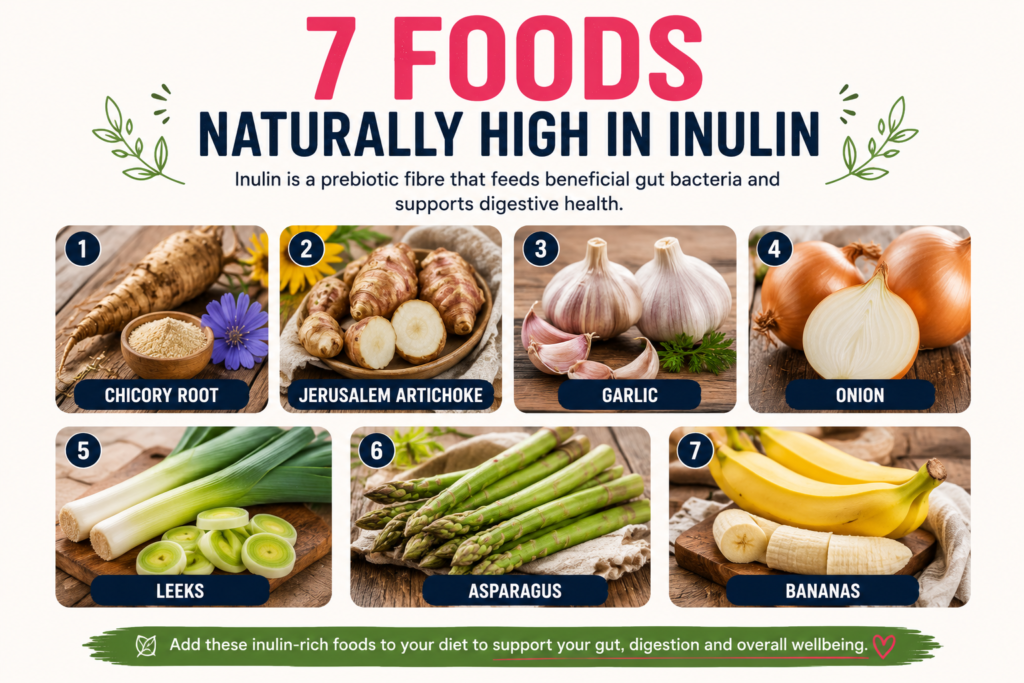## How Does Inulin Work?
1. You eat inulin.
2. It passes through the stomach undigested.
3. It reaches the large intestine.
4. Beneficial bacteria ferment it.
5. Short-chain fatty acids are produced.
6. These compounds help support a healthy gut environment.
## Who Might Benefit From Inulin?
People looking to:
- Increase fibre intake
- Support gut health
- Support regularity
- Feed beneficial gut bacteria
- Improve dietary fibre diversity
Read: **[Signs You Need More Fibre | Common Low Fibre Symptoms Explained](https://prettypea.blog/signs-you-need-more-fibre/)**
## Inulin vs Psyllium Husk
InulinPsylliumPrebiotic fibreViscous fibreFeeds gut bacteriaAdds bulkHighly fermentableLess fermentableSupports microbiomeSupports regularityRead more: [**Plantago Ovata (Psyllium Husk): Benefits, Uses, Science**](https://prettypea.blog/plantago-ovata-psyllium-husk-benefits-uses-science-and-faqs/)
## Are There Any Side Effects?
Inulin is generally considered safe for most people.
However, because it is highly fermentable, some people may experience:
- Gas
- Bloating
- Increased digestive activity
This is more common when large amounts are introduced quickly.
For this reason, many people find it helpful to increase intake gradually while maintaining adequate hydration.
## The Bottom Line
Inulin is a naturally occurring prebiotic fibre that feeds beneficial gut bacteria and helps support overall gut health.
Found naturally in foods such as chicory root, onions, garlic and Jerusalem artichokes, it offers a simple way to increase fibre intake while supporting a healthy digestive system.
As research into the gut microbiome continues to evolve, inulin remains one of the most widely studied and promising prebiotic fibres available.
**For more fibre advice:**
- [Soluble vs Insoluble Fibre Explained](https://prettypea.blog/the-fibre-fix-insoluble-vs-soluble-fibre/)
- [Why Fibre Could Be the Secret to a Better Menopause](https://prettypea.blog/why-fibre-could-be-the-secret-to-a-better-menopause/)
- [What Is Glucomannan? Benefits, Uses & Side Effects](https://prettypea.blog/what-is-glucomannan-2/)
- [9 Benefits of Fibre](https://prettypea.blog/9-benefits-of-fibre-why-its-essential-for-gut-health-weight-and-wellbeing/)
- [Appetite Regulation: How Fibre vs GLP-1 Compare](https://prettypea.blog/appetite-regulation-how-fibre-vs-glp-1-compare/)
- [Glucomannan for Weight Loss: Does It Work and How Does It Compare to Medications?](https://prettypea.blog/glucomannan-weight-loss/)
- [What is the Highest Fibre Food](https://prettypea.blog/what-is-the-highest-fibre-food/)
- [Bloating Isn’t Just “Too Much Gas”: The Real Causes of Bloating (and What Actually Helps)](https://prettypea.blog/7-real-causes-of-bloating-and-what-actually-helps/)
- [Appetite Regulation: How Fibre vs GLP-1 Compare](https://prettypea.blog/appetite-regulation-how-fibre-vs-glp-1-compare/)
- [GLP-1 Foods: The Ultimate List for Appetite Control, Fat Loss & Blood Sugar](https://prettypea.blog/glp-1-foods/)
- [50 High Fibre Foods Ranked by Fibre Content](https://prettypea.blog/50-high-fibre-foods-ranked-by-fibre-content-full-nutrition-chart/)
- [Best Fibre Supplements for Women | Complete UK Fibre Supplement Guide](https://prettypea.blog/fibre-supplements-for-women/)
- [Why Fibre and Water Always Go Together](https://prettypea.blog/why-fibre-and-water-always-go-together/)
## FAQ – What Is Inulin
### What is inulin?
Inulin is a naturally occurring soluble prebiotic fibre found in plants such as chicory root, onions, garlic and Jerusalem artichokes.
### Is inulin a probiotic?
No. Inulin is a prebiotic fibre. It feeds beneficial gut bacteria, whereas probiotics are the live bacteria themselves.
### What foods contain inulin?
Chicory root, Jerusalem artichokes, garlic, onions, leeks, asparagus and bananas are among the best-known dietary sources.
### Can inulin help digestion?
Research suggests inulin may support digestive health, beneficial gut bacteria and regularity as part of a balanced diet.
### Does inulin cause bloating?
Some people may experience bloating or gas when first increasing inulin intake. Increasing fibre gradually can help minimise this.
### Is inulin good for gut bacteria?
Yes. Inulin is one of the most studied prebiotic fibres and has been shown to support the growth of beneficial bacteria such as Bifidobacteria
### Can You Take Inulin Every Day?
Inulin can be consumed daily as part of a balanced diet. Many people obtain it naturally through foods such as onions, garlic and chicory root, while others choose supplements or fibre blends containing inulin.
## Browse Collection
- [](https://prettypea.blog/d-mannose-and-cranberry-for-women/)[Menopause Nutrition](https://prettypea.blog/category/menopause/) · [Superfoods](https://prettypea.blog/category/superfoods/) · [Supplements](https://prettypea.blog/category/supplements/)
October 8, 2026
- [](https://prettypea.blog/what-is-glp-1/)[Fibre & Gut Health](https://prettypea.blog/category/fibre/) · [Hormones & HRT](https://prettypea.blog/category/hormones-hrt/) · [Menopause Nutrition](https://prettypea.blog/category/menopause/) · [Supplements](https://prettypea.blog/category/supplements/)
### [What Is GLP-1? The Gut Hormone That Helps Regulate Hunger & Blood Sugar](https://prettypea.blog/what-is-glp-1/)
August 18, 2026
- [](https://prettypea.blog/psyllium-husk-benefits/)[Pretty Pea](https://prettypea.blog/category/pretty-pea/)
### [Psyllium Husk: Benefits, How to Take It, Side Effects & How It Compares](https://prettypea.blog/psyllium-husk-benefits/)
August 15, 2026
### What is Inulin – Sources
Gibson GR, Hutkins R, Sanders ME, et al. (2017). The International Scientific Association for Probiotics and Prebiotics (ISAPP) consensus statement on the definition and scope of prebiotics. Nature Reviews Gastroenterology & Hepatology, 14(8), 491-502.
Roberfroid M. (2007). Prebiotics: The concept revisited. Journal of Nutrition, 137(3), 830S-837S.
[Slavin J. (2013). Fiber and prebiotics: Mechanisms and health benefits. Nutrients, 5(4), 1417-1435.](https://pmc.ncbi.nlm.nih.gov/articles/PMC3705355/ "Slavin J. (2013). Fiber and prebiotics: Mechanisms and health benefits. Nutrients, 5(4), 1417-1435.")
Scott KP, Gratz SW, Sheridan PO, Flint HJ, Duncan SH. (2013). The influence of diet on the gut microbiota. Pharmacological Research, 69(1), 52-60.
Holscher HD. (2017). Dietary fibre and prebiotics and the gastrointestinal microbiota. Gut Microbes, 8(2), 172-184.
**Categories:** Fibre & Gut Health, Menopause Nutrition, Superfoods
---
### [Signs You Need More Fibre](https://prettypea.blog/signs-you-need-more-fibre/)
**Published:** June 18, 2026
**Author:** Cate Boyd
**Content:**
Many women are surprised to learn that they may not be getting enough fibre. Despite fibre being an essential part of a balanced diet, most UK adults consume significantly less than the recommended **25-30g per day**. Yet because low fibre intake often develops gradually, many people don’t immediately recognise the signs you need more fibre.
Get started with your **free fibre packed recipe guide!**
---
## What Is Fibre?
Fibre is a type of carbohydrate found in plant foods that the body cannot fully digest. Unlike other carbohydrates, fibre passes through the digestive system largely intact.
There are two main types:
### Soluble Fibre
Soluble fibre dissolves in water to form a gel-like substance. It can be found in:
- Oats
- Psyllium husk
- Apples
- Citrus fruits
- Beans
- Lentils
### Insoluble Fibre
Insoluble fibre adds bulk and helps food move through the digestive system. Sources include:
- Whole grains
- Vegetables
- Nuts
- Seeds
- Wheat bran
Most fibre-rich foods naturally contain a combination of both types.
**Further reading:** [The Fibre Fix: **Insoluble vs Soluble Fibre and Womens Health**](https://prettypea.blog/the-fibre-fix-insoluble-vs-soluble-fibre/)
[**9 Benefits of Fibre:** Why It’s Essential for Gut Health, Weight and Wellbeing](https://prettypea.blog/9-benefits-of-fibre-why-its-essential-for-gut-health-weight-and-wellbeing/)
---
## Digestive Signs You May Need More Fibre
One of fibre’s most important roles is supporting healthy digestion and regular bowel movements. When fibre intake is too low, your digestive system is often one of the first places you may notice a difference.
Common digestive signs of low fibre intake include:
- Constipation or infrequent bowel movements
- Hard, dry or difficult-to-pass stools
- Feeling like you haven’t completely emptied your bowels
- Irregular bowel habits
- Digestive discomfort
- Spending longer on the toilet than usual
- Needing to rely on laxatives regularly
- Going several days without a bowel movement
Fibre helps add bulk to stool and supports the movement of waste through the digestive tract. Soluble fibres, such as psyllium husk, absorb water and form a gel-like substance, while insoluble fibres help add bulk and support regularity.
If you’re experiencing persistent constipation, digestive symptoms or changes in bowel habits, it’s important to speak with a healthcare professional to rule out underlying causes.
---
## How Low Fibre Can Make You Feel
Not getting enough fibre doesn’t just affect digestion. Because fibre plays a role in fullness, blood sugar balance and overall gut health, low fibre intake can affect how you feel physically throughout the day.
Some people who aren’t getting enough fibre report:
- Feeling hungry again soon after eating
- Frequent snacking or cravings between meals
- Feeling less satisfied after meals
- Digestive discomfort or irregular bowel habits
- Feeling sluggish after eating highly processed foods
- Difficulty reaching or maintaining a healthy weight
- Relying on convenience foods that are naturally low in fibre
- Finding it difficult to meet the **recommended 30g of fibre per day**
While these symptoms can have many causes, **low fibre intake is surprisingly common**. Most UK adults consume only around **18–20g** of fibre per day, well below the recommended 30g target.
If several of these signs sound familiar, increasing your fibre intake through fibre-rich foods—or, where appropriate, a fibre supplement—may help close the gap.
[](https://prettypea.blog/fibre-powder/)---
## Common Signs You Need More Fibre
Low fibre intake does not always produce obvious symptoms. However, several signs may indicate that your diet could benefit from more fibre-rich foods.
### 1. Your Diet Contains Few Fibre-Rich Foods
One of the clearest indicators is simply looking at what you eat.
If a typical day contains:
- White bread
- Refined cereals
- Processed snacks
- Limited fruit
- Limited vegetables
then your fibre intake may be lower than recommended.
Compare these examples:
Lower Fibre ChoicesHigher Fibre ChoicesWhite toastWholegrain toastSugary cerealPorridge oatsCrispsNuts and seedsWhite riceBrown riceBiscuitsFruit and berriesSmall swaps can gradually increase daily fibre intake.
---
### 2. You Rarely Eat Fruits and Vegetables
Fruit and vegetables are among the most important contributors to dietary fibre.
The NHS recommends at least five portions per day, yet many adults consume fewer than this amount.
If vegetables only appear occasionally on your plate, increasing your intake may help improve overall dietary fibre consumption.
---
### 3. Your Meals Leave You Feeling Less Satisfied
Fibre-rich foods often require more chewing and take longer to digest than highly refined foods.
Meals containing:
- Vegetables
- Whole grains
- Beans
- Lentils
- Nuts
- Seeds
can help create meals that feel more substantial and satisfying as part of a balanced diet.
---
### 4. You Frequently Choose Convenience Foods
Modern diets often contain highly processed foods that are lower in fibre.
Examples include:
Lower Fibre OptionHigher Fibre AlternativeWhite pastaWholewheat pastaWhite breadWholegrain breadRefined breakfast cerealOats or muesliSweet snacksFruit and nutsWhile convenience foods can fit into a balanced lifestyle, relying on them heavily may reduce overall fibre intake.
---
### 5. You Struggle To Reach The Recommended 30g Daily
Many women simply do not realise how much fibre 30 grams actually is.
A typical high-fibre day might include:
MealFibre-Rich FoodsBreakfastPorridge oats, berries, flaxseedLunchWholegrain wrap, salad, chickpeasSnackApple and almondsDinnerLentil curry with vegetables and brown riceTracking your food intake for a few days can help determine whether you’re reaching your target.
---
### 6. You Follow Restrictive Eating Patterns
Some restrictive diets can unintentionally reduce fibre intake.
Examples may include:
- Very low-carbohydrate diets
- Diets that exclude grains
- Diets low in legumes
- Highly processed meal replacement plans
If entire food groups are excluded, fibre intake can sometimes fall below recommended levels.
Also See: [Tired, Bloated, or Moody? Signs You Need More Fibre?](https://prettypea.blog/tired-bloated-or-moody-signs-you-need-more-fibre/)
## Fibre Supplements.
[Appetite Fibre Powder](https://prettypea.blog/fibre-powder/ "Appetite Fibre Powder")
[Glucomannan Reset Capsules](https://prettypea.blog/product/pretty-reset/ "Glucomannan Reset Capsules")
[High Fibre Capsules](https://prettypea.blog/fibre-capsules "High Fibre Capsules")
## The First Month of Eating More Fibre
**Day 1–3**
- Your digestive system starts adapting.
- Meals may feel more satisfying.
- Some people notice temporary bloating as fibre intake increases.
**Week 1**
- Staying full between meals may become easier.
- Digestive habits may start to become more regular.
**Week 2–3**
- Fibre-rich eating becomes more routine.
- Reaching your daily fibre target feels less like a challenge.
- Fullness and digestive comfort often become more noticeable.
**Month 1**
- Higher fibre intake has become a habit rather than an effort.
- Many people are consistently consuming more fibre than before.
- The long-term benefits of a fibre-rich diet are supported by regular, ongoing intake.
---
## Foods Naturally Rich In Fibre
If you’re concerned about low fibre symptoms, food should always be the first place to start.
### Oats
A versatile source of soluble fibre that can be enjoyed at breakfast or added to recipes.
### Lentils
Among the richest natural sources of dietary fibre.
### Beans And Chickpeas
Easy to add to soups, salads and stews.
### Flaxseed
A simple addition to smoothies, porridge and yoghurt.
### Berries
Particularly raspberries and blackberries.
### Vegetables
Excellent options include:
- Broccoli
- Carrots
- Brussels sprouts
- Sweet potatoes
- Peas
### Nuts And Seeds
Almonds, chia seeds and pumpkin seeds all contribute valuable fibre.
---
## Food First Vs Fibre Supplements
The best approach is always to prioritise fibre-rich foods where possible.
However, many women find it challenging to consistently consume enough fibre every day.
### Food Sources
Benefits include:
- Naturally occurring vitamins and minerals
- Variety of fibre types
- Greater dietary diversity
### Fibre Supplements
Benefits may include:
- Convenience
- Consistency
- Easy integration into daily routines
**Food Sources****Fibre Supplements**Provide fibre plus other nutrientsConvenient and portableRequire meal planningQuick and easy to useWide variety of foods availableUseful when dietary intake is lowFibre supplements should complement, not replace, a healthy diet.
For a detailed guide, read our **Best Fibre Supplements for Women** article.
---
## Simple Ways To Increase Fibre Intake
Improving fibre intake doesn’t have to be complicated.
Try:
- Choosing wholegrain bread
- Adding berries to breakfast
- Including vegetables at lunch and dinner
- Snacking on nuts and seeds
- Adding lentils and beans to meals
- Using a fibre supplement when appropriate
Small, sustainable changes often work best.
**Further Reading: [How to Increase Fibre Intake (30g a Day): Easy, Science-Backed Tips That Actually Work](https://prettypea.blog/how-to-increase-fibre-intake-30g-a-day-easy-science-backed-tips-that-actually-work/)**
---
## When Might A Fibre Supplement Be Helpful?
Some women find it difficult to achieve recommended fibre intake through food alone.
This may be due to:
- Busy lifestyles
- Travel
- Limited meal preparation time
- Dietary preferences
In these situations, [fibre supplements ](https://prettypea.blog/womens-health-supplements/ "fibre supplements ")can offer a convenient addition to a balanced diet.
Depending on your preferences, options may include:
- Fibre powders
- Fibre capsules
- Psyllium fibre supplements
Learn more in our complete guide to [**Best Fibre Supplements for Women**.]()
---
## How Much Fibre Do Women Need?
According to NHS guidance, adults should aim for approximately **30 grams of fibre per day**.
However, surveys suggest average intakes are often much lower.
Women may fall short of their daily fibre needs due to:
- Busy schedules
- Skipping meals
- Low vegetable consumption
- Frequent consumption of processed foods
- Restrictive dieting patterns
## Key Takeaway
Many women consume less fibre than recommended without realising it.
If your diet contains limited fruits, vegetables, legumes, nuts, seeds and whole grains, increasing your fibre intake may be worth considering. Starting with fibre-rich foods and making gradual dietary improvements can help support overall dietary balance and digestive wellbeing.
For those who struggle to meet daily fibre needs consistently, fibre supplements may provide a convenient way to complement a healthy lifestyle.
Not ready to buy, download your **free Fibre Checklist Guide!**
---
## FAQ – Signs You Need More Fibre
### What are the most common signs you need more fibre?
Common signs include a diet low in fruits, vegetables and whole grains, frequent reliance on processed foods, and difficulty achieving recommended daily fibre intake.
### How much fibre should women consume daily?
Adults in the UK are advised to consume approximately 30g of fibre per day.
### What foods contain the most fibre?
Excellent sources include:
- Lentils
- Beans
- Chickpeas
- Oats
- Flaxseed
- Berries
- Vegetables
- Nuts and seeds
### Can I get enough fibre through food alone?
Many people can meet their fibre needs through a varied, balanced diet rich in plant foods. However, some individuals choose fibre supplements as a convenient addition when dietary intake is lower than desired.
### Is soluble or insoluble fibre better?
Both types of fibre contribute differently to a balanced diet, and most fibre-rich foods naturally contain a combination of soluble and insoluble fibre.
### Are fibre supplements a replacement for healthy eating?
No. Fibre supplements are intended to complement a healthy diet, not replace fibre-rich foods.
## Latest Products
[View All →](#)
- ### [D-Mannose & Cranberry Capsules Complex | FEM URELA+ ](https://prettypea.blog/d-mannose-cranberry-capsules-for-women/)
[Supplements](https://prettypea.blog/product-category/supplements/), [Womens Health Supplements](https://prettypea.blog/product-category/womens-health-supplements/)
- ### [FIBREBIO Psyllium Husk Powder | High Fibre Supplement](https://prettypea.blog/fibrebio-psyllium-husk-supplement/)
[Fibre Supplements](https://prettypea.blog/product-category/fibre-supplements/), [Supplements](https://prettypea.blog/product-category/supplements/)
- ### [Psyllium Reset Recipe Guide](https://prettypea.blog/product/psyllium-reset-recipe-guide/)
[Fibre Supplements](https://prettypea.blog/product-category/fibre-supplements/)
- ### [Apple Cider Vinegar Supplement](https://prettypea.blog/apple-cider-vinegar/)
[Best Sellers](https://prettypea.blog/product-category/best-sellers/)
- ### [Multivitamin Gummies](https://prettypea.blog/multivitamin-gummies/)
[Supplements](https://prettypea.blog/product-category/supplements/)
- ### [Menopause Supplement Bundle 3 for 2 Offer](https://prettypea.blog/product/menopause-supplement-bundle-3-for-2-offer/)
[Womens Health Supplements](https://prettypea.blog/product-category/womens-health-supplements/)
- ### [Mushroom supplements](https://prettypea.blog/mushroom-supplement/)
[Supplements](https://prettypea.blog/product-category/supplements/)
- ### [Omega 369 Benefits](https://prettypea.blog/omega-369-benefits)
[Best Sellers](https://prettypea.blog/product-category/best-sellers/)
---
- [](https://prettypea.blog/d-mannose-and-cranberry-for-women/)[Menopause Nutrition](https://prettypea.blog/category/menopause/) · [Superfoods](https://prettypea.blog/category/superfoods/) · [Supplements](https://prettypea.blog/category/supplements/)
October 8, 2026
- [](https://prettypea.blog/what-is-glp-1/)[Fibre & Gut Health](https://prettypea.blog/category/fibre/) · [Hormones & HRT](https://prettypea.blog/category/hormones-hrt/) · [Menopause Nutrition](https://prettypea.blog/category/menopause/) · [Supplements](https://prettypea.blog/category/supplements/)
### [What Is GLP-1? The Gut Hormone That Helps Regulate Hunger & Blood Sugar](https://prettypea.blog/what-is-glp-1/)
August 18, 2026
- [](https://prettypea.blog/psyllium-husk-benefits/)[Pretty Pea](https://prettypea.blog/category/pretty-pea/)
### [Psyllium Husk: Benefits, How to Take It, Side Effects & How It Compares](https://prettypea.blog/psyllium-husk-benefits/)
August 15, 2026
**For more fibre advice:**
- [Glucomannan for Weight Loss: Does It Work and How Does It Compare to Medications?](https://prettypea.blog/glucomannan-weight-loss/)
- [What is the Highest Fibre Food](https://prettypea.blog/what-is-the-highest-fibre-food/)
- [Bloating Isn’t Just “Too Much Gas”: The Real Causes of Bloating (and What Actually Helps)](https://prettypea.blog/7-real-causes-of-bloating-and-what-actually-helps/)
- [Appetite Regulation: How Fibre vs GLP-1 Compare](https://prettypea.blog/appetite-regulation-how-fibre-vs-glp-1-compare/)
- [What Is Inulin? Benefits, Uses and What the Science Says About This Prebiotic Fibre](https://prettypea.blog/what-is-inulin/)
- [Plantago Ovata (Psyllium Husk): Benefits, Uses, Science](https://prettypea.blog/plantago-ovata-psyllium-husk-benefits-uses-science-and-faqs/)
- [GLP-1 Foods: The Ultimate List for Appetite Control, Fat Loss & Blood Sugar](https://prettypea.blog/glp-1-foods/)
- [50 High Fibre Foods Ranked by Fibre Content](https://prettypea.blog/50-high-fibre-foods-ranked-by-fibre-content-full-nutrition-chart/)
- [Best Fibre Supplements for Women | Complete UK Fibre Supplement Guide](https://prettypea.blog/fibre-supplements-for-women/)
- [Why Fibre and Water Always Go Together](https://prettypea.blog/why-fibre-and-water-always-go-together/)
- [The Fibre Fix: Insoluble vs Soluble Fibre and Womens Health](https://prettypea.blog/the-fibre-fix-insoluble-vs-soluble-fibre/)
- [Why Fibre Could Be the Secret to a Better Menopause](https://prettypea.blog/why-fibre-could-be-the-secret-to-a-better-menopause/)
- [What Is Glucomannan? Benefits, Uses & Side Effects](https://prettypea.blog/what-is-glucomannan-2/)
### Signs You Need More Fibre: Sources
1. NHS. Fibre in your diet.
2. Scientific Advisory Committee on Nutrition (SACN). Carbohydrates and Health Report.
3. British Nutrition Foundation. Fibre and Health.
4. National Diet and Nutrition Survey (NDNS), UK Government.
5. Reynolds A, Mann J, Cummings J, et al. Carbohydrate quality and human health: systematic reviews and meta-analyses. The Lancet. 2019;393(10170):434-445.
6. World Health Organization. Healthy Diet Fact Sheet.
**Categories:** Fibre & Gut Health, Menopause Nutrition, Superfoods
---
### [Menopause Weight Changes Explained (UK Guide): What Research Says About Body Composition, Metabolism & Nutrition](https://prettypea.blog/menopause-weight-changes-explained-uk-guide-what-research-says-about-body-composition-metabolism-nutrition/)
**Published:** April 30, 2026
**Author:** Cate Boyd
**Content:**
Menopause weight changes are commonly reported by women, but the underlying causes are often misunderstood.
Rather than being caused by a single factor, research shows that menopause-related weight changes are influenced by a combination of hormonal shifts, ageing, lifestyle, and changes in body composition.
This article explores what scientific research says about menopause and weight changes, and how nutrition may support overall metabolic balance.
---
## What Research Says About Menopause Weight Changes
Multiple studies show that menopause is associated with changes in body composition rather than simply “weight gain”.
Research published in *JAMA Internal Medicine* found that weight gain is common during midlife, with women gaining an average of around **2–2.5 kg** over several years, **regardless of menopause status**.
A review of midlife women’s health literature shows:
- increased fat distribution around the abdominal area
- gradual loss of lean muscle mass
- metabolic rate changes associated with ageing and hormonal shifts
These changes are commonly observed during the menopausal transition rather than being caused by menopause alone.
---
## Hormonal Changes and Body Composition
Declining oestrogen levels have been associated with changes in how fat is stored in the body.
Research indicates:
- fat distribution tends to shift toward visceral (abdominal) areas
- muscle mass may gradually decrease with age
- insulin sensitivity may change over time
However, these effects vary widely between individuals and are influenced by lifestyle factors.
## [Menopause Weight Changes Explained (UK Guide): What Research Says About Body Composition, Metabolism & Nutrition](https://prettypea.blog/menopause-weight-changes-explained-uk-guide-what-research-says-about-body-composition-metabolism-nutrition/)
## Comparison: What Actually Drives Menopause Weight Changes
### Hormones vs Lifestyle Factors
**Factor****Impact Level****Explanation**Hormonal changesModerateInfluences fat distribution patternsAgeingHighNatural decline in metabolic rateDiet qualityHighMajor driver of energy balancePhysical activityHighAffects muscle mass and metabolismSleep & stressModerateAffects appetite regulationResearch consistently shows that **lifestyle factors play a larger role than hormones alone** in long-term weight changes.
---
## You’re Eating Less but Not Seeing Results
One reason a menopause diet may stop working is that the body often responds differently to food during perimenopause and menopause.
Falling oestrogen levels can affect how the body stores fat, responds to insulin, manages blood sugar and maintains muscle mass. This means that simply cutting calories or eating “healthy” may not be enough if meals are low in protein, low in fibre, too irregular or heavily focused on restriction.
A more effective approach is usually to build meals around protein, high-fibre carbohydrates, colourful plants and healthy fats, while also supporting sleep, stress levels and strength training.
The goal is not to eat less and less, but to help your body feel more **stable, satisfied** and **supported**.
## What Does the Science Say About Metabolism and Ageing?
Many women feel as though their metabolism suddenly slows during perimenopause and menopause. While hormonal changes can influence body composition and where fat is stored, research suggests the picture is more complex.
Research indicates:
- this decline is largely linked to loss of lean muscle mass
- physical activity levels significantly influence metabolic rate
- dietary protein intake may support muscle maintenance
### Ageing and Metabolism
Research indicates that metabolism remains relatively stable throughout much of adulthood before gradually declining later in life. However, factors such as reduced physical activity, loss of muscle mass, changes in sleep quality and dietary habits can all contribute to weight gain over time.
### Muscle Mass Matters
One of the most important age-related changes is the gradual loss of muscle mass. Because muscle tissue requires more energy than fat tissue, losing muscle can reduce the number of calories the body burns at rest. This is one reason why strength training and adequate protein intake are often recommended during midlife.
### Hormones Influence Fat Distribution
Declining oestrogen levels during perimenopause and menopause may affect where body fat is stored. Many women notice a shift towards greater fat accumulation around the abdomen, even if their overall body weight changes very little.
### Appetite and Food Intake
Hormonal changes, poor sleep and increased stress can all influence hunger and food choices. Research suggests that sleep disruption alone may increase appetite and cravings, making it more difficult to maintain previous eating habits.
See Pretty Pea supplements for Appetite Fibre and other satiety support supplements.
[Shop Supplements](https://prettypea.blog/womens-health-supplements/)
---
## Nutrition and Menopause Weight Changes
Rather than focusing on restriction, nutrition research emphasises:
- maintaining adequate protein intake
- ensuring sufficient fibre intake
- supporting micronutrient balance
Dietary fibre is associated with improved satiety and digestive function, which may support overall dietary regulation.
Your Next Read: [**Why Fibre Could Be the Secret to a Better Menopause**](https://prettypea.blog/why-fibre-could-be-the-secret-to-a-better-menopause/)
Across research studies:
- Menopause is associated with changes in **fat distribution**, particularly increased abdominal fat
- Hormones influence fat distribution but are **not the sole cause**
- **Loss of muscle mass** contributes to changes in metabolism
- **Ageing and lifestyle factors** play a major role alongside hormonal changes
- **Diet quality** and **physical activity** remain the most important modifiable
- **Supplements** support nutrition but do not replace diet
---
## Menopause Weight Gain: Myth vs Fact
There is a lot of advice online about menopause weight gain, but not all of it is accurate. Understanding the difference between myth and fact can help you focus on strategies that are more likely to support your health and wellbeing.
### Myth: Weight gain during menopause is unavoidable.
**Fact:** While many women notice changes in body weight and body composition during perimenopause and menopause, weight gain is not inevitable. Lifestyle factors such as diet, physical activity, sleep and stress management can still make a meaningful difference.
Your next read: **[The Menopause Diet 5-Day Plan to Lose Weight](https://prettypea.blog/the-menopause-diet-5-day-plan-to-lose-weight/)**
### Myth: Menopause automatically slows your metabolism.
**Fact:** Ageing is associated with gradual changes in energy expenditure, but menopause is only one part of the picture. Factors such as reduced muscle mass, lower activity levels and changes in daily habits can also influence calorie needs.
### Myth: Eating less is always the answer.
**Fact:** Severely restricting calories can make it difficult to get enough protein, fibre and essential nutrients. Many women find that focusing on food quality, protein intake, strength training and fibre-rich foods is more sustainable than extreme dieting.
### Myth: Menopause only affects the number on the scale.
**Fact:** Hormonal changes may influence where fat is stored. Some women notice that weight is more likely to accumulate around the abdomen, even if their overall weight has not changed dramatically.
### Myth: If your old weight loss plan worked before, it should still work now.
**Fact:** The strategies that worked in your 20s or 30s may not always be as effective during perimenopause and menopause. Changes in sleep, stress, muscle mass and hormones often mean that a different approach is needed.
### Myth: It’s all about hormones.
**Fact:** Hormones play a role, but they are only one piece of the puzzle. Sleep quality, stress levels, physical activity, protein intake and fibre intake can all influence body weight and appetite during midlife.
### The Bottom Line
Menopause weight gain is often more complex than a simple calorie equation. Understanding the factors involved can help you make informed decisions and focus on habits that support long-term health rather than quick fixes.
## Where Supplements Fit In
May support:
- nutritional intake consistency
- fibre intake (e.g. glucomannan)
- vitamin and mineral balance
They should be viewed as part of a broader nutritional approach and fill any nutritional gaps.
[Shop Supplements](https://prettypea.blog/womens-health-supplements/)
Read more at: [Best Menopause Supplements UK (2026): What to Look For + Evidence-Based Comparison Guide](https://prettypea.blog/best-menopause-supplements-uk-2026-what-to-look-for-evidence-based-comparison-guide/)
## [Menopause Weight Changes Explained (UK Guide): What Research Says About Body Composition, Metabolism & Nutrition](https://prettypea.blog/menopause-weight-changes-explained-uk-guide-what-research-says-about-body-composition-metabolism-nutrition/)
---
###### Menopause Weight Changes Explained (UK Guide): What Research Says About Body Composition, Metabolism & Nutrition
---
## Menopause Weight Changes: FAQ
### **Why do women gain weight during menopause?**
Weight changes during menopause are linked to hormonal shifts, ageing, and lifestyle factors that affect body composition and metabolism.
---
### **Is menopause the main cause of weight gain changes?**
Research shows menopause contributes to changes in fat distribution, but lifestyle factors such as diet and activity have a larger overall impact.
---
### **Can diet help with menopause weight changes?**
A balanced diet with adequate protein, fibre, and nutrients may support overall metabolic health and body composition.
---
### **Do supplements help with menopause weight changes?**
Supplements do not directly affect weight but may support nutritional intake, including fibre and micronutrients.
---
### **What is the main change during menopause?**
The main change is a shift in body composition rather than simple weight gain, often including changes in fat distribution and muscle mass.
## Latest Products
[View All →](#)
- ### [D-Mannose & Cranberry Capsules Complex | FEM URELA+ ](https://prettypea.blog/d-mannose-cranberry-capsules-for-women/)
[Supplements](https://prettypea.blog/product-category/supplements/), [Womens Health Supplements](https://prettypea.blog/product-category/womens-health-supplements/)
- ### [FIBREBIO Psyllium Husk Powder | High Fibre Supplement](https://prettypea.blog/fibrebio-psyllium-husk-supplement/)
[Fibre Supplements](https://prettypea.blog/product-category/fibre-supplements/), [Supplements](https://prettypea.blog/product-category/supplements/)
- ### [Psyllium Reset Recipe Guide](https://prettypea.blog/product/psyllium-reset-recipe-guide/)
[Fibre Supplements](https://prettypea.blog/product-category/fibre-supplements/)
- ### [Apple Cider Vinegar Supplement](https://prettypea.blog/apple-cider-vinegar/)
[Best Sellers](https://prettypea.blog/product-category/best-sellers/)
- ### [Multivitamin Gummies](https://prettypea.blog/multivitamin-gummies/)
[Supplements](https://prettypea.blog/product-category/supplements/)
- ### [Menopause Supplement Bundle 3 for 2 Offer](https://prettypea.blog/product/menopause-supplement-bundle-3-for-2-offer/)
[Womens Health Supplements](https://prettypea.blog/product-category/womens-health-supplements/)
- ### [Mushroom supplements](https://prettypea.blog/mushroom-supplement/)
[Supplements](https://prettypea.blog/product-category/supplements/)
- ### [Omega 369 Benefits](https://prettypea.blog/omega-369-benefits)
[Best Sellers](https://prettypea.blog/product-category/best-sellers/)
---
#### You might also be interested in:
[The Menopause Diet 5 Day Plan to Lose Weight](https://prettypea.blog/the-menopause-diet-5-day-plan-to-lose-weight/)
[Understanding Visceral Fat: The Ultimate Belly Fat Guide](https://prettypea.blog/understanding-visceral-fat-the-ultimate-belly-fat-guide/)
[Appetite Regulation: How Fibre vs GLP-1 Compare](https://prettypea.blog/appetite-regulation-how-fibre-vs-glp-1-compare/)
[Glucomannan for Weight Loss: Does It Work and How Does It Compare to Medications?](https://prettypea.blog/glucomannan-weight-loss/)
[The 100 Symptoms of Perimenopause](https://prettypea.blog/the-100-symptoms-of-perimenopause/)
[Early Signs of Perimenopause in Your 40s: What to Look For ](https://prettypea.blog/early-signs-of-perimenopause/)
- [](https://prettypea.blog/d-mannose-and-cranberry-for-women/)[Menopause Nutrition](https://prettypea.blog/category/menopause/) · [Superfoods](https://prettypea.blog/category/superfoods/) · [Supplements](https://prettypea.blog/category/supplements/)
October 8, 2026
- [](https://prettypea.blog/what-is-glp-1/)[Fibre & Gut Health](https://prettypea.blog/category/fibre/) · [Hormones & HRT](https://prettypea.blog/category/hormones-hrt/) · [Menopause Nutrition](https://prettypea.blog/category/menopause/) · [Supplements](https://prettypea.blog/category/supplements/)
### [What Is GLP-1? The Gut Hormone That Helps Regulate Hunger & Blood Sugar](https://prettypea.blog/what-is-glp-1/)
August 18, 2026
- [](https://prettypea.blog/psyllium-husk-benefits/)[Pretty Pea](https://prettypea.blog/category/pretty-pea/)
### [Psyllium Husk: Benefits, How to Take It, Side Effects & How It Compares](https://prettypea.blog/psyllium-husk-benefits/)
August 15, 2026
###### Menopause Weight Changes Explained (UK Guide): What Research Says About Body Composition, Metabolism & Nutrition
## Menopause Weight Changes: References & Evidence
This article is based on findings from peer-reviewed research and major health organisations, including:
- Research on body composition changes during menopause published in journals such as *The Journal of Clinical Endocrinology & Metabolism*, which shows that menopause is associated with increased abdominal fat distribution and changes in lean body mass.
- Reviews of midlife women’s health from the *International Journal of Obesity*, highlighting that age-related factors and lifestyle have a significant impact on weight changes during menopause.
- Evidence summaries from the *National Institutes of Health (NIH)* indicating that hormonal changes influence fat distribution, but overall energy balance remains a key driver of weight change.
- Guidance from the *NHS*, which emphasises the importance of diet, physical activity, and lifestyle factors in maintaining a healthy weight during menopause.
- Systematic reviews available via *PubMed Central* (PMC), showing that menopause is associated with shifts in body composition rather than simple weight gain alone.
- Weight Gain at the Time of Menopause | JAMA Internal Medicine | JAMA Network
---
## Summary of Evidence
Across research studies:
- Menopause is associated with changes in **fat distribution**, particularly increased abdominal fat
- **Loss of muscle mass** contributes to changes in metabolism
- **Ageing and lifestyle factors** play a major role alongside hormonal changes
- Diet quality and physical activity remain the most important modifiable factors
**Categories:** Hormones & HRT, Menopause Nutrition
---
### [Weird Perimenopause Symptoms: 25 Unusual Signs You Didn’t Expect](https://prettypea.blog/weird-perimenopause-symptoms-25-unusual-signs-you-didnt-expect/)
**Published:** May 4, 2026
**Author:** Cate Boyd
**Content:**
Most women are told to expect hot flushes and irregular periods during perimenopause — but for many, the **first symptoms are far less obvious**. In reality, there are dozens of **weird perimenopause symptoms** that can affect the brain, nervous system, skin, and even the senses. Because they’re not widely discussed, these symptoms are often mistaken for stress, ageing, or unrelated health issues. Here we share 25 lesser known menopause symptoms.
---
## Why Perimenopause Causes Unusual Symptoms
Perimenopause isn’t just a reproductive transition — it’s a **whole-body hormonal** Why Do Weird Perimenopause Symptoms Happen?
Many of the more unusual symptoms of perimenopause are caused not by low hormone levels alone, but by **rapid hormonal fluctuations** — particularly in oestrogen.
Oestrogen interacts with multiple systems in the body, including:
- The **central nervous system** (mood, cognition, sensory processing)
- The **autonomic nervous system** (heart rate, temperature, stress response)
- The **immune system** (inflammation, allergies)
- The **skin and connective tissue** (collagen, hydration)
Because oestrogen receptors are widely distributed throughout the body, even small hormonal shifts can trigger **unexpected neurological and sensory symptoms**.
Neuroendocrine research shows that oestrogen helps regulate **brain energy metabolism, neurotransmitters, and synaptic function**, which explains why symptoms can feel neurological rather than hormonal (Brinton, 2013).
Read: [Early Signs of Perimenopause in Your 40s: What to Look For ](https://prettypea.blog/early-signs-of-perimenopause/)
[See Perimenopause Supplements](https://prettypea.blog/womens-health-supplements/)
---
# 25 Weird Perimenopause Symptoms
---
## Neurological & Sensory Symptoms
### 1. Brain fog
Brain fog is one of the most commonly reported yet least understood symptoms. It can include difficulty concentrating, forgetfulness, and slower mental processing.
Oestrogen plays a role in **glucose metabolism in the brain**, which affects cognitive performance. Fluctuations may temporarily reduce efficiency in brain energy use, leading to these symptoms.
### 2. Tingling sensations
Often described as “pins and needles,” this sensation (also called paresthesia) can occur due to changes in nerve sensitivity and circulation.
Hormonal fluctuations can affect how the nervous system transmits signals, making sensations feel more intense or unusual.
### 3. Electric shock sensations
Some women report brief, sudden “zapping” feelings, often in the head or body. While not fully understood, this may relate to **neurotransmitter instability**, similar to sensations reported during other hormonal transitions.
### 4. Dizziness
Hormonal changes can affect **blood pressure regulation and inner ear balance**, leading to feelings of lightheadedness or instability.
### 5. Tinnitus
Tinnitus — a ringing or buzzing in the ears — is increasingly reported during perimenopause.
Oestrogen is thought to influence **blood flow and neural activity in the auditory system**, and fluctuations may disrupt these processes, leading to auditory sensitivity or phantom sounds.
## [Weird Perimenopause Symptoms: 25 Unusual Signs You Didn’t Expect](https://prettypea.blog/weird-perimenopause-symptoms-25-unusual-signs-you-didnt-expect/)
---
## Mouth, Taste & Sensory Changes
### 6. Burning mouth syndrome
This can feel like a tingling, burning, or scalding sensation affecting the tongue, lips, or entire mouth.
It is thought to be linked to:
- Nerve sensitivity changes
- Reduced saliva production
- Hormonal effects on oral tissues
Although not widely discussed, it is recognised as a potential menopausal symptom in clinical literature.
### 7. Changes in taste
Food may taste metallic or different.
### 8. Dry mouth
Reduced saliva production.
---
## Ear & Hearing Symptoms
### 9. Tinnitus
Tinnitus — a ringing or buzzing in the ears — is increasingly reported during perimenopause.
Oestrogen is thought to influence **blood flow and neural activity in the auditory system**, and fluctuations may disrupt these processes, leading to auditory sensitivity or phantom sounds.
### 10. Ear pressure
Feeling of fullness or blockage.
---
## Dental & Oral Changes
### 11. Gum sensitivity
Increased bleeding or soreness.
### 12. Tooth discomfort
Heightened sensitivity without dental issues.
---
## Skin, Hair & Body Changes
### 13. Itchy skin
Often without visible rash.
### 14. Crawling skin sensation
Itchy or crawling skin
This sensation, sometimes described as “formication,” can feel like insects moving on the skin.
It may be linked to:
- Declining collagen levels
- Reduced skin hydration
- Changes in nerve sensitivity
Oestrogen supports skin structure and hydration, so fluctuations can affect both the **physical and sensory experience of the skin**.
### 15. Sudden acne
Breakouts similar to teenage years.
### 16. Dry eyes
Irritation or discomfort.
---
## Cardiovascular & Physical Symptoms
### 17. Heart palpitations
Palpitations can feel like a racing, pounding, or irregular heartbeat.
Oestrogen influences:
- Blood vessel function
- Heart rhythm stability
- Stress hormone response
As levels fluctuate, the cardiovascular system may become more sensitive, leading to noticeable changes in heart rhythm — often benign but sometimes distressing.
### 18. Cold sensitivity
Feeling unusually cold.
### 19. Shortness of breath
Especially during mild activity.
---
## Emotional & Psychological Symptoms
### 20. Sudden anxiety
Even without obvious triggers.
### 21. Feeling “not like yourself”
A common but hard-to-describe experience.
### 22. Irritability
Lower tolerance for stress.
---
## Other Unexpected Symptoms
### 23. Digestive changes
Bloating or altered digestion.
### 24. Increased allergies
Heightened sensitivity to allergens.
### 25. Changes in body odour
Subtle shifts due to hormonal changes.
## [Weird Perimenopause Symptoms: 25 Unusual Signs You Didn’t Expect](https://prettypea.blog/weird-perimenopause-symptoms-25-unusual-signs-you-didnt-expect/)
---
## Are These Symptoms Normal?
Yes — while these symptoms can feel unusual, they are **commonly reported during perimenopause**.
Large studies, including the Study of Women’s Health Across the Nation (SWAN), show that many women experience **non-traditional symptoms** during hormonal transition (Avis et al., 2001).
---
## Common vs Weird Perimenopause Symptoms
### Common Symptoms
- Hot flushes
- Night sweats
- Irregular periods
- Mood swings
---
### Weird (Less Known) Symptoms
- Tingling or electric sensations
- Burning mouth
- Tinnitus
- Crawling skin
- Changes in taste or smell
---
## Why These Symptoms Are Often Missed
Weird perimenopause symptoms are often overlooked because:
- They don’t match common expectations
- They can appear before menstrual changes
- They mimic other conditions
This can lead to delays in recognising the role of hormones.
---
## What Research Says About Unusual Symptoms
Large observational studies show that perimenopause symptoms extend far beyond reproductive changes.
The SWAN study (Study of Women’s Health Across the Nation) found that women frequently report **psychological, neurological, and physical symptoms** during midlife hormonal transition (Avis et al., 2001).
Additionally, research highlights the role of oestrogen in regulating **brain function, sensory processing, and systemic inflammation**, supporting the wide range of symptoms observed (Brinton, 2013).
---
## When Should You Seek Advice?
You should consider speaking to a healthcare professional if:
- Symptoms are persistent
- They impact your daily life
- You’re unsure of the cause
[See Menopause Supplements](https://prettypea.blog/womens-health-supplements/)
---
## Related: Full Symptom List
You can explore the complete breakdown in this guide to the **[100 symptoms of perimenopause](https://prettypea.blog/the-100-symptoms-of-perimenopause/ "100 symptoms of perimenopause")**
Related: [**The Menopause Diet 5 Day Plan to Lose Weight**](https://prettypea.blog/the-menopause-diet-5-day-plan-to-lose-weight/)
[**Why Fibre Could Be the Secret to a Better Menopause**](https://prettypea.blog/why-fibre-could-be-the-secret-to-a-better-menopause/)
[Menopause Weight Changes Explained](https://prettypea.blog/menopause-weight-changes-explained-uk-guide-what-research-says-about-body-composition-metabolism-nutrition/)
[Best Menopause Supplements UK (2026)](https://prettypea.blog/best-menopause-supplements-uk-2026-what-to-look-for-evidence-based-comparison-guide/)
---
## FAQ: Weird Perimenopause Symptoms
### Can perimenopause mimic other health conditions?
Yes. Symptoms can resemble anxiety disorders, thyroid issues, or neurological conditions, which is why they are sometimes misdiagnosed.
---
### What are weird perimenopause symptoms?
Weird perimenopause symptoms include unusual or unexpected changes such as tinnitus, burning mouth, tingling sensations, and brain fog, caused by hormonal fluctuations.
---
### Can perimenopause cause strange neurological symptoms?
Yes. Hormonal fluctuations can affect brain function and the nervous system, leading to symptoms such as brain fog, dizziness, tingling sensations, and sensory sensitivity.
---
### Why do I feel like something is wrong but tests are normal?
Many perimenopause symptoms don’t show up on standard tests because they are caused by hormonal fluctuations rather than disease.
---
### Can perimenopause affect your senses?
Yes. Changes in taste, smell, hearing, and skin sensitivity are all reported during perimenopause.
---
### Are these symptoms permanent?
No. Symptoms often fluctuate and may improve as hormone levels stabilise.
## See Supplements
[View All → →](#)
### [Weird Perimenopause Symptoms: 25 Unusual Signs You Didn’t Expect](https://prettypea.blog/weird-perimenopause-symptoms-25-unusual-signs-you-didnt-expect/)
---
## Related Reading:
[Hormone Imbalance in Women: Causes, Symptoms & How Hormones Work](https://prettypea.blog/hormone-imbalance-in-women/)
[Bloating Isn’t Just “Too Much Gas”: The Real Causes of Bloating (and What Actually Helps)](https://prettypea.blog/7-real-causes-of-bloating-and-what-actually-helps/)
[Understanding Visceral Fat: The Ultimate Belly Fat Guide](https://prettypea.blog/understanding-visceral-fat-the-ultimate-belly-fat-guide/)
[Everything Psyllium How To Use: A Comprehensive Guide on How to Use It for Maximum Health Benefits](https://prettypea.blog/psyllium-how-to-use/)
[Can You Use Psyllium Husk for Weight Loss? ](https://prettypea.blog/psyllium-husk-for-weight-loss/)
- [](https://prettypea.blog/d-mannose-and-cranberry-for-women/)[Menopause Nutrition](https://prettypea.blog/category/menopause/) · [Superfoods](https://prettypea.blog/category/superfoods/) · [Supplements](https://prettypea.blog/category/supplements/)
October 8, 2026
- [](https://prettypea.blog/what-is-glp-1/)[Fibre & Gut Health](https://prettypea.blog/category/fibre/) · [Hormones & HRT](https://prettypea.blog/category/hormones-hrt/) · [Menopause Nutrition](https://prettypea.blog/category/menopause/) · [Supplements](https://prettypea.blog/category/supplements/)
### [What Is GLP-1? The Gut Hormone That Helps Regulate Hunger & Blood Sugar](https://prettypea.blog/what-is-glp-1/)
August 18, 2026
- [](https://prettypea.blog/psyllium-husk-benefits/)[Pretty Pea](https://prettypea.blog/category/pretty-pea/)
### [Psyllium Husk: Benefits, How to Take It, Side Effects & How It Compares](https://prettypea.blog/psyllium-husk-benefits/)
August 15, 2026
## Weird Perimenopause Symptoms – References
- Brinton RD. (2013). *Estrogen regulation of brain metabolism*
- Avis NE et al. (2001). *SWAN study*
- [National Health Service – Menopause overview](https://www.nhs.uk/conditions/menopause/symptoms/ "National Health Service – Menopause overview")
- British Menopause Society
---
**Categories:** Hormones & HRT
---
### [What Is Insulin Resistance? Signs, Causes & What Helps](https://prettypea.blog/what-is-insulin-resistance/)
**Published:** June 27, 2026
**Author:** Cate Boyd
**Excerpt:** Learn what insulin resistance means, why it can affect blood sugar, energy, cravings and weight around the middle, and how fibre-rich foods, movement, sleep and healthy daily habits may help support better blood sugar balance
**Content:**
Feeling tired after meals, craving sugar, gaining weight around your middle or struggling to lose weight despite “eating well”, can be possible signs of insulin resistance.
Insulin resistance happens when your body’s cells stop responding to insulin as effectively as they should. Insulin is the hormone that helps move glucose, or sugar, from your blood into your cells, where it can be used for energy.
When your cells become resistant to insulin, glucose can stay in the bloodstream for longer. In response, your pancreas may produce more insulin to try to keep blood sugar stable. For a while, this can happen quietly, which is why many people do not know they have insulin resistance.
Over time, insulin resistance may increase the risk of prediabetes and type 2 diabetes if the pancreas can no longer keep up with demand. Diabetes UK explains that insulin resistance is not the same as diabetes, but it can increase the risk of raised blood sugar and type 2 diabetes in some people [Diabetes UK](https://www.diabetes.org.uk/about-diabetes/looking-after-diabetes/treatments/insulin/resistance).
## Quick Answer: What Is Insulin Resistance?
Insulin resistance means your cells do not respond properly to insulin, the hormone that helps move glucose from your blood into your cells. Your body may make more insulin to compensate, but over time blood sugar can rise.
[Shop Supplements](https://prettypea.blog/womens-health-supplements/)
## Insulin Resistance Explained Simply
TermWhat it meansInsulinA hormone made by the pancreas that helps move glucose into cellsGlucoseSugar in the blood, used by the body for energyInsulin resistanceWhen cells respond less well to insulinPrediabetesBlood sugar is higher than normal but not in the diabetes rangeHbA1cA blood test showing average blood sugar over the last 2 to 3 months## Why Does Insulin Resistance Matter?
Insulin resistance matters because it can make it harder for the body to keep blood sugar within a healthy range.
In the UK, prediabetes is often described as an HbA1c level between **42 and 47 mmol/mol**. Type 2 diabetes is usually diagnosed at **48 mmol/mol or above**, when confirmed by a healthcare professional [Diabetes UK](https://www.diabetes.org.uk/about-diabetes/type-2-diabetes/prediabetes), [NICE](https://www.nice.org.uk/guidance/ph38/chapter/recommendations).
Insulin resistance is also linked with wider metabolic health. It may appear alongside raised triglycerides, lower HDL cholesterol, high blood pressure and increased waist measurement. These markers can increase long-term risk for type 2 diabetes and cardiovascular disease.
## [What Is Insulin Resistance? Signs, Causes & What Helps](https://prettypea.blog/what-is-insulin-resistance/)
## Common Signs of Insulin Resistance
Insulin resistance often has no obvious symptoms. Many people only find out after routine blood tests.
Possible signs of insulin resistance or raised blood sugar include:
- Feeling tired after meals
- Increased hunger or cravings
- Weight gain around the middle
- Difficulty losing weight
- Energy dips during the day
- Dark, velvety patches of skin, often around the neck or armpits
- Skin tags
- Raised blood pressure
- Raised triglycerides
- Higher fasting glucose or HbA1c
These signs do not prove insulin resistance on their own. If you are concerned, it is best to ask your GP about testing.
You should seek medical advice promptly if you have symptoms of diabetes, such as excessive thirst, needing to wee more often, blurred vision, unexplained weight loss or extreme tiredness.
## Insulin Resistance in Women and Menopause
Many women first notice signs of poorer blood sugar control during perimenopause or menopause.
Falling oestrogen, poorer sleep, lower muscle mass and increased abdominal fat can all affect how the body uses insulin. Insulin resistance in women may show up as stronger cravings, energy dips, stubborn belly weight or feeling less tolerant of carbohydrates than before.
This does not mean weight gain or blood sugar changes are inevitable. However, it does mean that protein, fibre, strength training, sleep and stress support become especially important during midlife.
You may also like: [The Menopause Diet 5 Day Plan to Lose Weight](https://prettypea.blog/the-menopause-diet-5-day-plan-to-lose-weight/)
## What Causes Insulin Resistance?
Insulin resistance is usually linked to a combination of factors rather than one single cause.
Common risk factors include:
- Carrying more weight around the middle
- Low physical activity
- Family history of type 2 diabetes
- Polycystic ovary syndrome, also known as PCOS
- Previous gestational diabetes
- Poor sleep or sleep apnoea
- Fatty liver disease
- Long-term stress
- Certain medicines, including some steroid medicines
- Hormonal life stages, including puberty, pregnancy and menopause
Insulin resistance can affect people of different body sizes, ages and backgrounds. Weight can be one factor, but it is not the whole story.
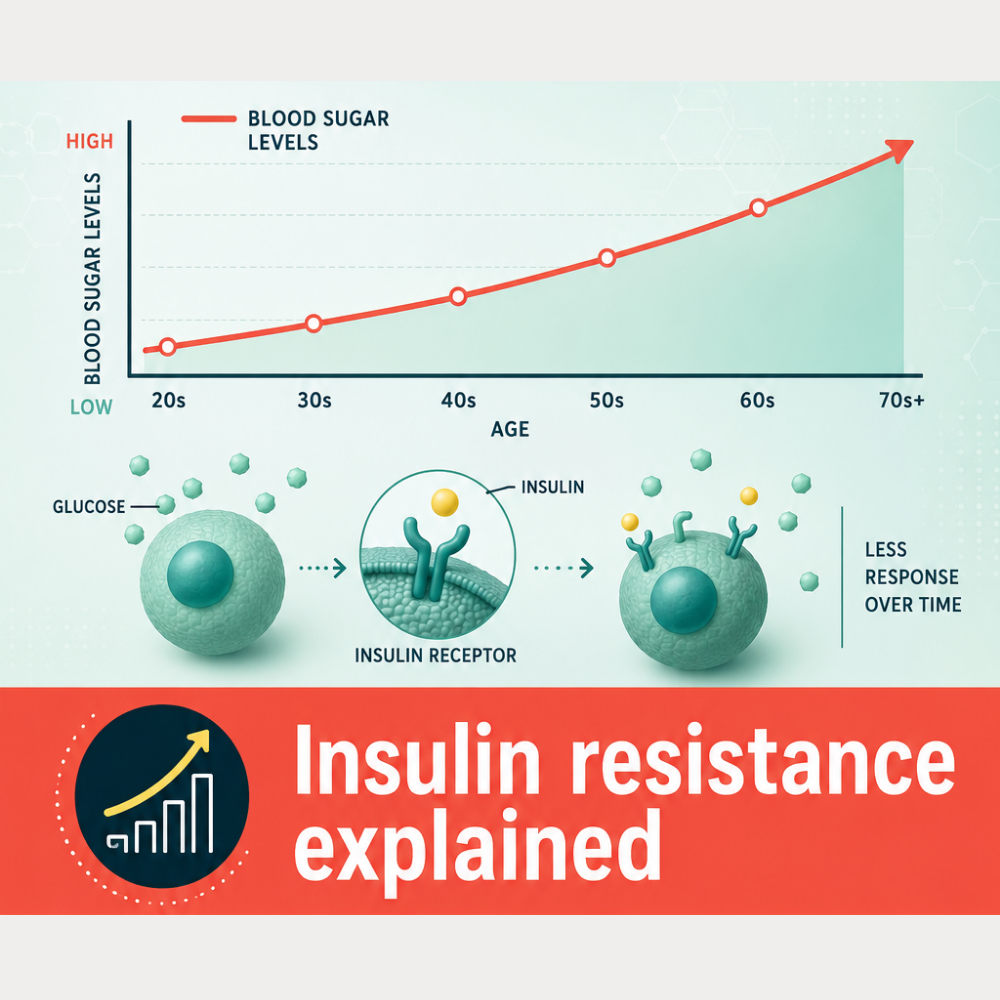## How Is Insulin Resistance Tested?
There is no single everyday test that is always used to diagnose insulin resistance directly.
Instead, healthcare professionals usually look at blood sugar markers and overall risk. These may include:
- **HbA1c:** shows average blood sugar over the previous 2 to 3 months.
- **Fasting blood glucose:** measures blood sugar after fasting.
- **Oral glucose tolerance test:** sometimes used to see how the body handles glucose.
- **Cholesterol and triglycerides:** useful for wider metabolic health.
- **Blood pressure and waist measurement:** helpful risk indicators.
In the UK, NICE recommends blood testing for adults at high risk of type 2 diabetes, using fasting plasma glucose or HbA1c [NICE](https://www.nice.org.uk/guidance/ph38/chapter/recommendations).
## Can Insulin Resistance Be Improved?
In many cases, insulin sensitivity can improve with consistent diet and lifestyle changes. This does not mean every case is fully reversible, and some people may still need medical support. But small, steady changes can make a meaningful difference.
### 1. Build Balanced Meals
A blood-sugar-friendly meal does not need to be extreme. Aim to combine protein, fibre-rich carbohydrates, healthy fats and colourful plants.
Better meal combinations may include:
- Greek yoghurt with berries and chia seeds
- Eggs with avocado and wholegrain toast
- Chicken salad with lentils or chickpeas
- Oats with flaxseed, berries and Greek yoghurt
- Salmon with vegetables and brown rice
- Tofu stir-fry with vegetables and wholegrain noodles
- Bean chilli with salad and avocado
This combination can help slow digestion and support steadier energy after meals.
### 2. Increase Fibre Gradually
Fibre is especially important for blood sugar balance. Soluble fibre forms a gel-like texture in the gut, which can slow digestion and support steadier post-meal glucose responses.
Good sources include:
- Oats
- Beans
- Lentils
- Chickpeas
- Apples
- Berries
- Ground flaxseed
- Chia seeds
- Psyllium husk
- Vegetables
Increase fibre slowly and drink enough water to help reduce digestive discomfort.
You may also like:
- [50 High Fibre Foods ](https://prettypea.blog/50-high-fibre-foods-ranked-by-fibre-content-full-nutrition-chart/)
- [What Is Psyllium Husk?]()
- [Glucomannan for Weight Loss: Does It Work and How Does It Compare to Medications?](https://prettypea.blog/glucomannan-weight-loss/)
- [Why Fibre Could Be the Secret to a Better Menopause](https://prettypea.blog/why-fibre-could-be-the-secret-to-a-better-menopause/)
- [Best Fibre Supplements for Women]()
- [Signs You Need More Fibre ](https://prettypea.blog/signs-you-need-more-fibre/)
Looking to increase your daily fibre intake? Our fibre blends are designed to support everyday fibre intake, fullness and digestive wellbeing as part of a balanced diet.
## [What Is Insulin Resistance? Signs, Causes & What Helps](https://prettypea.blog/what-is-insulin-resistance/)
### 3. Move After Meals
A short walk after meals can help your muscles use glucose from the bloodstream. This does not need to be intense. Even 10 to 15 minutes of gentle movement after a meal may be helpful for blood sugar management.
Strength training is also useful because muscle is one of the main places the body stores and uses glucose. More active muscle tissue can support better insulin sensitivity over time.
### 4. Prioritise Sleep
Poor sleep can affect appetite, cravings, stress hormones and blood sugar control. If possible, aim for a regular sleep routine, morning daylight, less late caffeine and a calmer wind-down routine.
If you snore heavily, wake up gasping or feel exhausted despite sleeping, speak to your GP about sleep apnoea, as it is linked with insulin resistance.
### 5. Manage Stress Where Possible
Long-term stress can affect hormones involved in blood sugar regulation. You do not need a perfect lifestyle, but simple routines can help.
Helpful options include:
- Walking
- Breathing exercises
- Time outdoors
- Strength training
- Gentle stretching
- Reducing late-night screen time
- Creating more consistent meal times
## Can Fibre Supplements Support Blood Sugar Balance?
Fibre supplements are not a treatment for insulin resistance, prediabetes or diabetes.
However, increasing fibre intake may help support fullness, digestion and steadier post-meal blood sugar responses as part of a balanced diet. Fibre supplements may be useful for people who struggle to get enough fibre from food alone.
Always speak to your GP, pharmacist or dietitian if you have diabetes, take medication, are pregnant, or have concerns about your blood sugar.
## Fibre Supplements
Looking to increase your daily fibre intake? Our fibre blends are designed to support everyday fibre intake, fullness and digestive wellbeing as part of a balanced diet.
**[Appetite Fibre Powder](https://prettypea.blog/fibre-powder/ "Appetite Fibre Powder")**
Combine 4 Fibres, live cultures, prebiotic fibre, L-glutamine and digestive herbals for total gut love
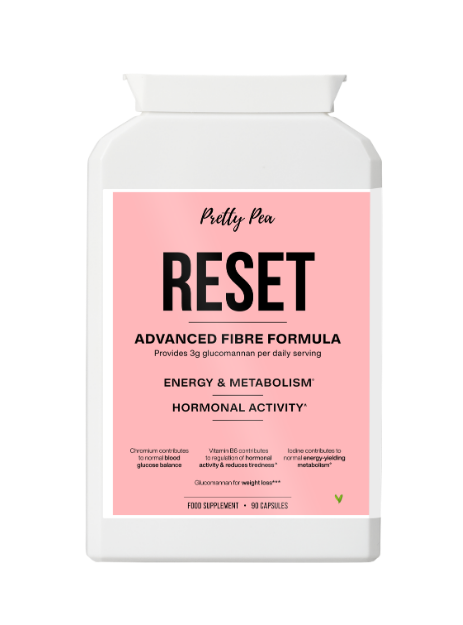[**Advanced Reset Glucomannan** Capsules](https://prettypea.blog/product/pretty-reset "Advanced Reset Glucomannan Capsules")
Fullness, Metabolism, Energy, Hormone Regulation
[High **Fibre Capsules**](https://prettypea.blog/fibre-capsules/ "High Fibre Capsules")
Healthy bowel formula with 11 soluble & insoluble high fibre foods
## FAQ Insulin Resistance
### Is insulin resistance the same as diabetes?
No. Insulin resistance means the body is not responding to insulin as effectively. Diabetes means blood sugar has reached a diagnostic range. Insulin resistance can increase the risk of prediabetes and type 2 diabetes, but they are not the same thing.
### Can you have insulin resistance with normal blood sugar?
Yes. In the early stages, the pancreas may produce extra insulin to keep blood sugar normal. This is one reason insulin resistance can go unnoticed for years.
### What is the best diet for insulin resistance?
There is no single perfect diet. A good starting point is a high-fibre, protein-rich diet based on whole foods, vegetables, beans, lentils, wholegrains, healthy fats and fewer sugary drinks or highly refined carbohydrates.
### Does insulin resistance symptoms cause weight gain?
It can make weight management harder for some people, especially around the middle. However, weight gain is usually influenced by several factors, including hormones, sleep, stress, appetite, activity, medication and overall diet.
### Can menopause make insulin resistance worse?
For some women, yes. Perimenopause and menopause can affect sleep, body fat distribution, muscle mass and blood sugar regulation. This may make cravings, energy dips and abdominal weight gain more noticeable.
### Can fibre help insulin resistance?
Fibre can support better blood sugar control by slowing digestion and helping reduce sharp post-meal glucose rises. It also supports fullness and gut health. Fibre is not a treatment for insulin resistance, but it can be part of a healthy diet pattern.
### Should I ask my GP for a blood test?
Yes, if you have risk factors such as family history of type 2 diabetes, PCOS, previous gestational diabetes, increased waist measurement, symptoms of diabetes, or concerns about blood sugar. Your GP may check HbA1c, fasting glucose and other metabolic markers
### Can supplements treat insulin resistance symptoms?
No supplement should be used as a treatment for insulin resistance or diabetes. Some fibres and nutrients may support a healthy diet, but diagnosis and treatment should always be discussed with a qualified healthcare professional.
## Final Thoughts
Insulin resistance is common, but it is not always obvious. You may not feel unwell, and your body may compensate for a long time before blood sugar levels rise.
The good news is that everyday habits can make a real difference. Fibre-rich meals, enough protein, regular movement, strength training, better sleep and stress support can all help support healthier blood sugar balance over time.
If you are concerned about insulin resistance, prediabetes or type 2 diabetes, ask your GP for appropriate blood tests and personalised advice.
**For more advice :**
[Why Fibre Could Be the Secret to a Better Menopause](https://prettypea.blog/why-fibre-could-be-the-secret-to-a-better-menopause/)
[The 100 Symptoms of Perimenopause](https://prettypea.blog/the-100-symptoms-of-perimenopause/)
[Weird Perimenopause Symptoms: 25 Unusual Signs You Didn’t Expect](https://prettypea.blog/weird-perimenopause-symptoms-25-unusual-signs-you-didnt-expect/)
[Hormone Imbalance in Women: Causes, Symptoms & How Hormones Work](https://prettypea.blog/hormone-imbalance-in-women/)
[9 Benefits of Fibre](https://prettypea.blog/9-benefits-of-fibre-why-its-essential-for-gut-health-weight-and-wellbeing/)
[GLP-1 Foods: The Ultimate List for Appetite Control, Fat Loss & Blood Sugar](https://prettypea.blog/glp-1-foods/)
[Appetite Regulation: How Fibre vs GLP-1 Compare](https://prettypea.blog/appetite-regulation-how-fibre-vs-glp-1-compare/)
[Understanding Visceral Fat: The Ultimate Belly Fat Guide](https://prettypea.blog/understanding-visceral-fat-the-ultimate-belly-fat-guide/)
- [](https://prettypea.blog/d-mannose-and-cranberry-for-women/)[Menopause Nutrition](https://prettypea.blog/category/menopause/) · [Superfoods](https://prettypea.blog/category/superfoods/) · [Supplements](https://prettypea.blog/category/supplements/)
October 8, 2026
- [](https://prettypea.blog/what-is-glp-1/)[Fibre & Gut Health](https://prettypea.blog/category/fibre/) · [Hormones & HRT](https://prettypea.blog/category/hormones-hrt/) · [Menopause Nutrition](https://prettypea.blog/category/menopause/) · [Supplements](https://prettypea.blog/category/supplements/)
August 18, 2026
### [What Is GLP-1? The Gut Hormone That Helps Regulate Hunger & Blood Sugar](https://prettypea.blog/what-is-glp-1/)
- [](https://prettypea.blog/psyllium-husk-benefits/)[Pretty Pea](https://prettypea.blog/category/pretty-pea/)
August 15, 2026
### [Psyllium Husk: Benefits, How to Take It, Side Effects & How It Compares](https://prettypea.blog/psyllium-husk-benefits/)
- [](https://prettypea.blog/why-am-i-always-tired/)[Supplements](https://prettypea.blog/category/supplements/)
August 4, 2026
### [Why Am I Always Tired? The Ultimate Guide to Fighting Fatigue Naturally](https://prettypea.blog/why-am-i-always-tired/)
### Insulin Resistance – Sources
Diabetes UK. Insulin resistance: meaning, causes and treatment. [Diabetes UK](https://www.diabetes.org.uk/about-diabetes/looking-after-diabetes/treatments/insulin/resistance)
Diabetes UK. Prediabetes. [Diabetes UK](https://www.diabetes.org.uk/about-diabetes/type-2-diabetes/prediabetes)
National Institute for Health and Care Excellence. Type 2 diabetes: prevention in people at high risk. [NICE PH38](https://www.nice.org.uk/guidance/ph38/chapter/recommendations)
National Institute of Diabetes and Digestive and Kidney Diseases. Insulin resistance and prediabetes. [NIDDK](https://www.niddk.nih.gov/health-information/diabetes/overview/what-is-diabetes/prediabetes-insulin-resistance)
Mayo Clinic. Prediabetes: symptoms and causes. [Mayo Clinic](https://www.mayoclinic.org/diseases-conditions/prediabetes/symptoms-causes/syc-20355278)
Lee, S. H., Park, S. Y., & Choi, C. S. (2022). Insulin resistance: From mechanisms to therapeutic strategies. *Diabetes & Metabolism Journal, 46*(1), 15-37. [PubMed](https://pubmed.ncbi.nlm.nih.gov/34965646/)
**Categories:** Hormones & HRT, Menopause Nutrition
---
### [Early Signs of Perimenopause in Your 40s: What to Look For](https://prettypea.blog/early-signs-of-perimenopause/)
**Published:** May 3, 2026
**Author:** Cate Boyd
**Excerpt:** Wondering if your symptoms could be early signs of perimenopause? This guide explains common symptoms and causes, including changing oestrogen and progesterone levels, irregular periods, poor sleep, mood changes, brain fog, weight gain, hot flushes and changes in energy.
**Content:**
Perimenopause often begins earlier than most women expect — sometimes in the late 30s or early 40s. While many people associate menopause with hot flushes, the **early signs of perimenopause are often subtle and easy to overlook**.
For many women, symptoms of perimenopause in your 40s don’t start with obvious physical changes, but with shifts in mood, sleep, and energy levels that can feel confusing or unrelated.
Around **5% of women experience early menopause**, which means menopause happens **between ages 40 and 45**.
Around **1% of women experience premature menopause** (also called premature ovarian insufficiency or POI), where menopause happens **before age 40**.
Common causes can include:
- Genetics/family history
- Autoimmune conditions
- Cancer treatments like chemotherapy
- Smoking
- Certain surgeries or medical conditions
- Sometimes there’s no clear cause at all
According to organizations like NHS, many women don’t realise symptoms can start in their 30s or early 40s, which is why early diagnosis is often delayed.
In this article we discuss 20 potential causes of the early signs of perimenopause, along with some of the common and less common symptoms and discuss when women should take action.
---
## What Are the Early Signs of Perimenopause?
The early signs of perimenopause often include sleep disturbances, anxiety, brain fog, fatigue, and subtle changes in menstrual cycles. These symptoms can appear years before menopause and are caused by fluctuating hormone levels.
---
### My Experience of Early Symptoms
I certainly didn’t expect to experience perimenopause symptoms before 40. Before I ever experienced the usual hot flushes, I noticed changes that didn’t seem hormonal at the time. I become anxious. Really anxious. I became emotional. My sleep became disrupted — I would wake in the early hours feeling alert but anxious. I struggled with concentration and felt more mentally foggy than usual.
At first, I blamed stress, lifestyle, or just being busy. It wasn’t until later that I realised these were actually **early perimenopause symptoms**, and perimenopause anxiety symptoms were actually something many women go through without recognising the cause.
---
## What Is Perimenopause?
Perimenopause is the transitional stage before menopause, when hormone levels — particularly oestrogen and progesterone — begin to fluctuate rather than decline steadily.
This stage can last **several years before menopause occurs**, and symptoms can appear long before periods become irregular (NICE).
**Key Takeaway:** Perimenopause can begin **up to 8–10 years** before your final period, often without any dramatic warning signs.
---
## What Causes Early Perimenopause Symptoms?
The early signs of perimenopause are driven by **hormonal instability**, not just low hormone levels.
Oestrogen fluctuations affect:
- Brain chemistry (mood, anxiety, focus)
- Sleep regulation
- Stress response (cortisol levels)
- Energy production
Research shows oestrogen plays a key role in **brain energy metabolism and neurotransmitter function**, helping explain symptoms like anxiety and brain fog (Brinton, 2013).
## [Early Signs of Perimenopause in Your 40s: What to Look For](https://prettypea.blog/early-signs-of-perimenopause/)
---
## 20 Potential Causes /Contributors to the Early Signs of Perimenopause
The early signs of perimenopause are mainly caused by changing hormone patterns as the ovaries gradually become less predictable.
However, symptoms can also be influenced by sleep, stress, lifestyle, diet and other health conditions.
Here are some of the most common causes and contributors.
### 1. Fluctuating oestrogen levels
Oestrogen does not simply fall in a straight line during perimenopause. It can rise and fall unpredictably, which may contribute to hot flushes, night sweats, mood changes, brain fog, breast tenderness and changes in body shape.
### 2. Falling progesterone
Progesterone often starts to decline as ovulation becomes less regular. This can affect sleep, mood, PMS-like symptoms and period patterns.
### 3. Less regular ovulation
During perimenopause, ovulation may not happen every month. This can make periods closer together, further apart, heavier, lighter or more unpredictable.
### 4. Changes in the balance between oestrogen and progesterone
Some women experience symptoms when oestrogen feels high relative to progesterone. This may contribute to breast tenderness, heavier periods, mood swings and stronger PMS symptoms.
### 5. Changes in brain temperature regulation
Hot flushes and night sweats are linked to changes in how the brain regulates body temperature. This is why you may suddenly feel hot, sweaty, flushed or wake up drenched at night.
### 6. Sleep disruption
Poor sleep can make many perimenopause symptoms feel worse, including anxiety, cravings, brain fog, low mood, fatigue and poor concentration.
### 7. Stress and cortisol
Ongoing stress can affect sleep, appetite, cravings, digestion, mood and energy. It may not cause perimenopause, but it can make symptoms feel harder to manage.
### 8. Blood sugar changes and insulin sensitivity
Some women notice more cravings, energy crashes or weight gain around the middle during midlife. Changes in insulin sensitivity, muscle mass, activity levels and diet can all play a role.
### 9. Changes in body fat distribution
As oestrogen levels change, some women notice fat shifting more towards the waist and abdomen. This can happen even if total weight gain is not dramatic.
### 10. Loss of muscle mass with age
Muscle naturally becomes harder to maintain with age. Less muscle can affect strength, metabolism, glucose control and body composition.
### 11. Alcohol and caffeine
Alcohol and caffeine can trigger or worsen symptoms in some women, especially hot flushes, night sweats, anxiety, palpitations and poor sleep.
### 12. Low fibre and poor diet quality
A low-fibre diet can affect digestion, fullness, blood sugar balance and gut health. This may make cravings, constipation, bloating or weight management feel more difficult.
## [Early Signs of Perimenopause in Your 40s: What to Look For](https://prettypea.blog/early-signs-of-perimenopause/)
### 13. Thyroid problems
Thyroid symptoms can overlap with perimenopause. Fatigue, weight changes, low mood, hair thinning, feeling hot or cold, constipation and palpitations may sometimes be linked to thyroid function rather than perimenopause alone.
### 14. Low iron or anaemia
Heavy or frequent periods can reduce iron levels. Low iron may contribute to tiredness, dizziness, breathlessness, weakness and poor concentration.
### 15. Vitamin deficiencies
Low vitamin B12, vitamin D or folate can sometimes contribute to fatigue, low mood, weakness, aches or brain fog. These symptoms can be mistaken for hormone changes.
### 16. Medication or contraception
Some medications and hormonal contraception can affect bleeding patterns, mood, libido, sleep or energy. They may also mask or mimic perimenopause symptoms.
### 17. Early or premature menopause
If symptoms begin before age 45, or periods stop before age 45, this should be discussed with a GP. Early menopause and premature ovarian insufficiency need proper medical assessment.
### 18. Surgery, chemotherapy or radiotherapy
Ovarian surgery, hysterectomy, chemotherapy or pelvic radiotherapy can sometimes trigger earlier menopause symptoms or affect hormone levels.
### 19. Family history
Some women may experience menopause earlier if close female relatives did. Family history is not the only factor, but it can be relevant.
### 20. Other health conditions
Conditions such as PCOS, diabetes, autoimmune disease, depression, anxiety and digestive disorders can overlap with perimenopause symptoms. This is why persistent, severe or unusual symptoms should not be dismissed as “just hormones.”
### Key takeaway
The early signs of perimenopause are usually linked to changing ovarian hormone patterns, especially oestrogen and progesterone. But symptoms are also affected by sleep, stress, nutrition, activity levels, medical conditions and lifestyle habits.
Understanding the cause can help you choose the right support, whether that means lifestyle changes, nutrition, symptom tracking or speaking to your GP.
**Speak to your GP if symptoms are severe, unusual, worsening, affecting your quality of life, or if your periods stop before age 45. Bleeding after menopause should always be checked.** NHS notes that menopause usually affects women aged 45–55 but can happen earlier, and that early or premature menopause should be assessed
## Early Signs of Perimenopause – 6 Common Symptoms
### 1. Sleep disturbances
Difficulty falling asleep or waking during the night is often one of the earliest signs.
You fall asleep but wake up at 3:00am — mind buzzing, body alert for no clear reason.
**How it can impact you:**
- Morning fatigue
- Slower thinking
- Irritability
- Increased cravings for sugar and caffeine
**Why it’s happening:**
- Declining progesterone (a calming, sleep-supporting hormone) makes it harder to stay asleep.
- Cortisol rises more easily, making your sleep cycle more sensitive to stress.
**Key Takeaway:** Many women experience **early morning waking linked to cortisol changes**.
---
### 2. Anxiety
Increased anxiety is one of the most commonly reported early symptoms. Hormonal fluctuations can overstimulate the nervous system and affect serotonin levels (Soares, 2014).
You might feel more easily overwhelmed or more tearful than usual — but still feel like “you.”
**Impact on daily life:**
- Feeling overstimulated
- Decreased resilience to stress
- Heightened emotional responses
**Underlying cause:**
- Fluctuating estrogen affects neurotransmitters like serotonin and dopamine.
- Lower progesterone removes its natural calming effect on the brain.
Even mild hormonal shifts can feel like emotional static in the background.
---
### 3. **Lower Stress Tolerance**
Even if you’re not suddenly anxious — daily stress can start to feel heavier.
**Impact:**
- Feeling overwhelmed more quickly
- Difficulty “switching off” at night
- Increased emotional reactivity
**Biological changes:**
- Estrogen helps regulate the stress response; when levels fluctuate, the body becomes more sensitive to cortisol.
- Progesterone normally has a calming, GABA-enhancing effect; as it drops, your nervous system becomes more reactive.
**Read:** [Weird Perimenopause Symptoms: 25 Unusual Signs You Didn’t Expect ](https://prettypea.blog/weird-perimenopause-symptoms-25-unusual-signs-you-didnt-expect/)
---
### 4. Fatigue
Persistent tiredness — even after rest — is often linked to disrupted sleep and hormonal imbalance.
Not exhaustion — just a slow drain on your energy levels.
**Impact:**
- Reduced motivation
- Slower recovery after exercise
- Feeling “wired but tired”
**What’s happening:**
- Sleep disruption
- Hormonal fluctuations affecting blood sugar
- Lower thyroid-support from shifting estrogen
This kind of fatigue often creeps in before any obvious symptom appears.
See the full **[The 100 Symptoms of Perimenopause](https://prettypea.blog/the-100-symptoms-of-perimenopause/)**
## [Early Signs of Perimenopause in Your 40s: What to Look For](https://prettypea.blog/early-signs-of-perimenopause/)
---
### 5. Subtle Menstrual Changes
Periods may still appear regular, but you might notice:
- Slightly shorter cycles
- Heavier or lighter bleeding
- Changes in PMS symptoms
Instead of completely irregular cycles, you may notice:
- Periods arriving a few days off
- Heavier or lighter bleeding
- Shortened cycles (often the first subtle sign)
**Impact:**
- Difficulty predicting your cycle
- Energy dips before your period feel stronger
**Biological cause:**
- Early perimenopause often begins with a **shortened luteal phase** (the second half of the cycle), caused by reduced progesterone.
- Estrogen starts fluctuating more wildly — sometimes higher than normal, sometimes lower.
---
### 6. Weight Changes
Your weight stays the same… but your shape shifts slightly. Or weight creeps up despite eating as usual.
**Impact:**
- Increased abdominal weight
- Feeling “inflamed” or puffy
- Clothes fitting differently
**Underlying physiology:**
- Estrogen influences where fat is stored and how efficiently you burn carbohydrates.
- Changes in insulin sensitivity make blood sugar spikes more common.
- Sleep issues elevate hunger hormones (ghrelin) and lower satiety hormones (leptin).
Read : [**Menopause Weight Changes Explained**](https://prettypea.blog/menopause-weight-changes-explained-uk-guide-what-research-says-about-body-composition-metabolism-nutrition/)
Read **:** [**The Menopause Diet 5 Day Plan to Lose Weight**](https://prettypea.blog/the-menopause-diet-5-day-plan-to-lose-weight/ "The Menopause Diet 5 Day Plan to Lose Weight")
---
## Less Obvious Early Symptoms
Some of the early signs of perimenopause are less well known, including:
- Irritability
- Loss of confidence
- Increased sensitivity to noise or stimulation such as alcohol or caffeine
---
### Increased Sensitivity to Alcohol and Caffeine
You might notice:
- Poor sleep after one drink
- Anxiety or shakiness after your usual coffee
- Worse PMS after alcohol
**Underlying causes:**
- Liver enzymes shift with changes in estrogen
- Alcohol lowers progesterone and disturbs blood sugar
- Caffeine tolerance decreases when estrogen destabilises neurotransmitters
These symptoms are often misattributed to stress or lifestyle factors.
Read **[25 Unusual Signs Perimenopause Symptoms You Didn’t Expect](https://prettypea.blog/weird-perimenopause-symptoms-25-unusual-signs-you-didnt-expect/)**
---
## Why Early Symptoms Are Often Missed
Many women don’t recognise the early signs of perimenopause because:
- Periods may still be regular
- Symptoms are non-specific
- They overlap with stress or burnout
Large-scale studies show that **psychological and cognitive symptoms often appear before physical symptoms like hot flushes** (Avis et al., 2001).
---
## Early vs Later Perimenopause Symptoms
### Early stage:
- Anxiety
- Sleep issues
- Brain fog
- Fatigue
### Later stage:
- Hot flushes
- Night sweats
- Irregular periods
---
## When Should You Take Action?
You may want to seek support if symptoms are:
- Persistent
- Affecting your sleep or mental health
- Impacting daily life
Speaking to a healthcare professional can help identify whether symptoms are hormone-related.
---
## How Early Can Perimenopause Start?
Perimenopause can begin in the **late 30s or early 40s**, although this varies between individuals.
Some women experience early symptoms even earlier, particularly if influenced by:
- Genetics
- Lifestyle factors
- Stress
---
## How Long Do Early Symptoms Last?
Early perimenopause symptoms can last **several years before menopause**, often fluctuating in intensity over time (NICE).
---
## Full List of Symptoms
If you’re experiencing multiple symptoms, you can explore the full breakdown here:
See the complete guide to the **[100 symptoms of perimenopaus](https://prettypea.blog/the-100-symptoms-of-perimenopause/ "100 symptoms of perimenopause")e**
---
### First Symptoms of Perimenopause: What’s Changing in Your Body — Even if You Feel “Totally Fine”
Most women 40+ experiencing these subtle first perimenopause symptoms and even those with **no noticeable symptoms** are experiencing significant hormonal changes in perimenopause. It’s important to recognise that these shifts can begin silently years before physical symptoms show up.
Here’s what’s happening beneath the surface with these subtle, or even silent first perimenopause symptoms:
---
### 1. Progesterone Declines First
Progesterone is the soothing, stabilising hormone — it helps regulate sleep, calm the nervous system, balance estrogen, and support metabolic function.
In early perimenopause:
- Ovulation becomes less consistent
- Progesterone levels drop
- Cycles shorten
This alone can create subtle symptoms without dramatic changes.
---
### 2. Estrogen Becomes Erratic — Not Just Low
Estrogen does NOT simply decrease in early perimenopause.
It becomes **spiky**, rising higher and falling lower than ever before.
These fluctuations affect:
- Brain chemistry
- Stress regulation
- Metabolism
- Skin and hair quality
- Menstrual cycles
Even if you don’t feel symptoms yet, your body is adjusting to these shifts.
---
### 3. Cortisol Reactivity Increases
Your stress system becomes more sensitive. This can affect sleep, mood, metabolism and inflammation — all without dramatic symptoms.
---
### 4. Blood Sugar Becomes Less Stable
Estrogen and progesterone both influence insulin sensitivity. When they fluctuate, so does your ability to manage blood sugar — which can lead to fatigue, cravings, and weight shifts that can appear from seemingly no-where.
[](https://www.amazon.co.uk/Menopause-Supplements-Balance-Perimenopause-Vitamins/dp/B0DZF2R2D4/)---
### **5. Inflammation and** **Immune Activity Shift**
Many women notice increased sensitivity to:
- Stress
- Illness
- Allergies
- Joint stiffness
Even if these don’t feel like “symptoms,” they’re signs of hormonal shifts.
---
### Why Understanding Silent Symptoms Matters
Many women feel blindsided when “real” symptoms later appear — hot flushes, night sweats, mood swings, heavy bleeding.
Recognising the **early, subtle signs** enables you to:
- Support your hormones sooner
- Protect long-term bone, heart, and metabolic health
- Check your weight status now, as weight gain affects most women and it can be harder to shift during this time
- Reduce future symptom severity
- Improve energy, sleep, and mood
- Make informed decisions about lifestyle and treatment options
Perimenopause isn’t just a phase — it’s a profound biological transition that affects every woman.
And the earlier you understand what’s happening in your body, the better you can support yourself through it.
[](https://www.amazon.co.uk/Menopause-Supplements-Balance-Perimenopause-Vitamins/dp/B0DZF2R2D4/)[See Price & Purchase on Amazon](https://www.amazon.co.uk/Menopause-Supplements-Balance-Perimenopause-Vitamins/dp/B0DZF2R2D4/)
### FAQ – Early Signs of Perimenopause
What are the first signs of perimenopause?
The first signs of perimenopause are often subtle and can include **sleep disturbances, anxiety, brain fog, fatigue, and mild changes in menstrual cycles**. Many women experience these symptoms years before more obvious signs like hot flushes appear, making them easy to overlook or misattribute to stress.
### Can perimenopause cause anxiety before other symptoms?
Yes. Anxiety is often one of the earliest symptoms due to hormonal effects on the brain and nervous system.
---
### Can you have perimenopause symptoms with regular periods?
Yes — symptoms can appear years before periods become irregular.
---
### Is brain fog normal in early perimenopause?
Yes. Cognitive symptoms are common due to hormonal effects on brain function.
---
### What are the early signs of perimenopause in your 40s?
The early signs of perimenopause in your 40s commonly include **difficulty sleeping, increased anxiety, mood changes, reduced concentration, and low energy levels**. Periods may still be regular at this stage, but hormonal fluctuations are already affecting the brain and body.
### Can perimenopause start at 35 or earlier?
Yes, perimenopause can start in the mid-to-late 30s for some women. Early symptoms are often psychological or neurological — such as anxiety, sleep issues, and brain fog — rather than physical symptoms like hot flushes. Genetics, stress, and lifestyle factors can influence when it begins.
### Can perimenopause cause anxiety every day?
Yes, perimenopause can cause persistent or fluctuating anxiety. Hormonal changes, particularly fluctuations in oestrogen, can affect neurotransmitters like serotonin and increase sensitivity to stress (Soares, 2014). This can make anxiety feel more intense or harder to manage than usual.
### How do I know if it’s perimenopause or just stress?
Perimenopause and stress can feel very similar, as both can cause fatigue, anxiety, and sleep problems. However, perimenopause symptoms are often **cyclical or fluctuate unpredictably**, and may be accompanied by subtle menstrual changes or other symptoms like brain fog or night waking.
### Can you have perimenopause symptoms with regular periods?
Yes. Many women experience early signs of perimenopause while their periods are still regular. Hormonal fluctuations can begin years before cycles become irregular, meaning symptoms can appear without obvious changes to menstruation.
### Is brain fog an early sign of perimenopause?
Yes, brain fog is a common early symptom. Women often report **difficulty concentrating, forgetfulness, or slower thinking**, which may be linked to the effect of oestrogen on brain function and energy metabolism (Brinton, 2013).
### Why does perimenopause affect sleep so much?
Perimenopause can disrupt sleep due to hormonal changes affecting melatonin, cortisol, and body temperature regulation. Even without night sweats, many women experience difficulty falling asleep or waking in the early hours.
### How long do early perimenopause symptoms last?
Early perimenopause symptoms can last several years, often gradually changing over time. For many women, this stage lasts **4–10 years before menopause**, with symptoms fluctuating rather than progressing in a straight line (NICE).
### When should I see a doctor about perimenopause symptoms
You should consider speaking to a healthcare professional if symptoms are **affecting your sleep, mental health, or quality of life**. Early support can help you manage symptoms more effectively and rule out other possible causes.
## See Supplements.
[View All →](#)
- ### [D-Mannose & Cranberry Capsules Complex | FEM URELA+ ](https://prettypea.blog/d-mannose-cranberry-capsules-for-women/)
[Supplements](https://prettypea.blog/product-category/supplements/), [Womens Health Supplements](https://prettypea.blog/product-category/womens-health-supplements/)
- ### [FIBREBIO Psyllium Husk Powder | High Fibre Supplement](https://prettypea.blog/fibrebio-psyllium-husk-supplement/)
[Fibre Supplements](https://prettypea.blog/product-category/fibre-supplements/), [Supplements](https://prettypea.blog/product-category/supplements/)
- ### [Psyllium Reset Recipe Guide](https://prettypea.blog/product/psyllium-reset-recipe-guide/)
[Fibre Supplements](https://prettypea.blog/product-category/fibre-supplements/)
- ### [Apple Cider Vinegar Supplement](https://prettypea.blog/apple-cider-vinegar/)
[Best Sellers](https://prettypea.blog/product-category/best-sellers/)
- ### [Multivitamin Gummies](https://prettypea.blog/multivitamin-gummies/)
[Supplements](https://prettypea.blog/product-category/supplements/)
- ### [Menopause Supplement Bundle 3 for 2 Offer](https://prettypea.blog/product/menopause-supplement-bundle-3-for-2-offer/)
[Womens Health Supplements](https://prettypea.blog/product-category/womens-health-supplements/)
- ### [Mushroom supplements](https://prettypea.blog/mushroom-supplement/)
[Supplements](https://prettypea.blog/product-category/supplements/)
- ### [Omega 369 Benefits](https://prettypea.blog/omega-369-benefits)
[Best Sellers](https://prettypea.blog/product-category/best-sellers/)
## RELATED ARTICLES
[**Best Menopause Supplements UK (2026)**](https://prettypea.blog/best-menopause-supplements-uk-2026-what-to-look-for-evidence-based-comparison-guide/)
[**The Role of Perimenopause Vitamins Supplements: A Guide for Women**](https://prettypea.blog/perimenopause-vitamins-supplements/)
[**Why Fibre Could Be the Secret to a Better Menopause** ](https://prettypea.blog/why-fibre-could-be-the-secret-to-a-better-menopause/)
[**The Ultimate Superfood List**](https://prettypea.blog/the-ultimate-superfood-list-what-are-superfoods-benefits-best-choices-and-how-to-use/)
[Bloating Isn’t Just “Too Much Gas”: The Real Causes of Bloating (and What Actually Helps)](https://prettypea.blog/7-real-causes-of-bloating-and-what-actually-helps/)
[Understanding Visceral Fat: The Ultimate Belly Fat Guide](https://prettypea.blog/understanding-visceral-fat-the-ultimate-belly-fat-guide/)
[The Menopause Diet 5 Day Plan to Lose Weight](https://prettypea.blog/the-menopause-diet-5-day-plan-to-lose-weight/)
- [](https://prettypea.blog/d-mannose-and-cranberry-for-women/)[Menopause Nutrition](https://prettypea.blog/category/menopause/) · [Superfoods](https://prettypea.blog/category/superfoods/) · [Supplements](https://prettypea.blog/category/supplements/)
October 8, 2026
- [](https://prettypea.blog/what-is-glp-1/)[Fibre & Gut Health](https://prettypea.blog/category/fibre/) · [Hormones & HRT](https://prettypea.blog/category/hormones-hrt/) · [Menopause Nutrition](https://prettypea.blog/category/menopause/) · [Supplements](https://prettypea.blog/category/supplements/)
### [What Is GLP-1? The Gut Hormone That Helps Regulate Hunger & Blood Sugar](https://prettypea.blog/what-is-glp-1/)
August 18, 2026
- [](https://prettypea.blog/psyllium-husk-benefits/)[Pretty Pea](https://prettypea.blog/category/pretty-pea/)
### [Psyllium Husk: Benefits, How to Take It, Side Effects & How It Compares](https://prettypea.blog/psyllium-husk-benefits/)
August 15, 2026
### Early Signs of Perimenopause- Sources
- [NICE (2015) Menopause guidelines](https://www.nice.org.uk/guidance/NG23 "NICE (2015) Menopause guidelines")
- Brinton RD. (2013). *Estrogen and brain metabolism*
- Soares CN. (2014). *Mood changes in perimenopause*
- Avis NE et al. (2001). *SWAN study on menopause symptoms*
**Categories:** Hormones & HRT
---
### [The Ultimate Guide to Fibre Supplements for a Happier Gut: Unlocking Your Digestive Health](https://prettypea.blog/the-ultimate-guide-to-fibre-supplements-for-a-happier-gut-unlocking-your-digestive-health/)
**Published:** July 2, 2025
**Author:** Cate Boyd
**Content:**
Fibre supplements have become the latest supplement staple- and for good reason. Here we share everything you need to know about fibre supplements.
- [Understanding Digestive Health](#aioseo-understanding-digestive-health)
- [What the Science Says](#aioseo-what-the-science-says)
- [Fibre Supplements 101](#aioseo-what-are-fibre-supplements)
- [Soluble vs. Insoluble](#aioseo-types-of-fibre-supplements-soluble-vs-insoluble)
- [Fibre Supplements Benefits](#aioseo-benefits-of-taking-fibre-supplements)
- [Choosing the Right Supplements ](#aioseo-how-to-choose-the-right-fibre-supplements-for-you)
- [Potential Side Effects](#aioseo-potential-side-effects-and-considerations)
- [Powder vs Capsule Comparison](#aioseo-powder-vs-capsule-comparison-103)
- [Quick Summary](#aioseo-quick-summary-106)
- [Taking Fibre Supplements](#aioseo-incorporating-fibre-supplements-into-your-daily-routine)
- [Food Alternatives ](#aioseo-dietary-alternatives-to-fibre-supplements)
- [Key Takeaway](#aioseo-achieving-optimal-digestive-health)
- [Latest Products](#aioseo-latest-products-172)
Fibre really is a gut health hero — but let’s be honest: getting the right amount from food every day isn’t always easy. That’s where **fibre** supplements come in.
Marketed as a quick fix for digestion, bloating, and even weight loss, these supplements help bridge the fibre gap as many people don’t consume the recommended 25-30g per day.
But do they actually work? And are they right for women navigating hormonal shifts, fatigue, and frustrating weight gain? Let’s dive into the science and real-world results behind fibre supplements.
## **Understanding Digestive Health**
Digestive health is a cornerstone of overall wellness. It’s home to most of our immune system and *happy hormone* serotonin, yet it is frequently overlooked in our diets.
When our digestive system is functioning optimally, it efficiently breaks down food, absorbs nutrients, and expels waste, all of which are vital to our health.
However, when digestive issues arise, such as bloating, constipation, or irregular bowel movements, they can significantly impact our quality of life.
Digestive discomfort can lead to lethargy, decreased productivity, and even mood disturbances.
Hormonal women often face:
- Slower digestion
- Perimenopausal bloating
- Weight gain around the middle
- Constipation or irregularity
Since fibre supports **gut motility, blood sugar balance, satiety, and estrogen clearance**, it can be a powerful ally — especially when consumed consistently.
The human digestive system is a complex network of organs and processes that work together to convert the food we eat into the energy our bodies need.
This system includes the mouth, esophagus, stomach, intestines, and involves accessory organs like the liver and pancreas.
Each part plays a specific role in breaking down food, absorbing nutrients, and eliminating waste. Any disruption in this process can lead to digestive disorders, which are often linked to dietary habits, lifestyle choices, and even stress levels.
A crucial aspect of digestive health is ensuring that our diet contains the right balance of nutrients, including fibre.
Fibre, often referred to as roughage, is the indigestible part of plant foods that helps regulate the body’s use of sugars, helping to keep hunger and blood sugar in check.
Despite its importance, many people do not consume enough fibre daily, leading to various digestive issues.
Understanding the role of fibre and how to incorporate it into our diets can be a game-changer for digestive wellness.
## **The Role of Fibre in Womens Digestive Wellness**
Fibre is typically classified into two main types: **soluble and insoluble fibre** (although foods can contain a combination of both).
Soluble fibre dissolves in water to form a gel-like substance, which can help lower blood cholesterol and glucose levels.
Insoluble fibre, on the other hand, does not dissolve in water and adds bulk to the stool, aiding in the passage of food and waste through the digestive tract.
Both types of fibre are important for keeping our digestive system running smoothly.
**Soluble fibre** is found in foods like psyllium husk, oats, peas, beans, apples, and citrus fruits and supplements such as glucomannan. It helps slow down the digestion process, which can be beneficial for controlling blood sugar levels and reducing cholesterol.
By forming a gel-like substance in the gut, soluble fibre also helps to soften stools, making them easier to pass and reducing the risk of constipation.
This type of fibre is popular with individuals with conditions like irritable bowel syndrome (IBS).
**Insoluble fibre** is found in whole grains, nuts, beans, and vegetables like cauliflower and potatoes. This type of fibre adds bulk to the stool and promotes regular bowel movements by helping food pass more quickly through the stomach and intestines.
Insoluble fibre is important for preventing digestive issues such as constipation and diverticulosis.
By maintaining a diet rich in both soluble and insoluble fibres, we can support a healthy digestive system and reduce the likelihood of digestive disorders.
## [The Ultimate Guide to Fibre Supplements for a Happier Gut: Unlocking Your Digestive Health](https://prettypea.blog/the-ultimate-guide-to-fibre-supplements-for-a-happier-gut-unlocking-your-digestive-health/)
## What the Science Says
**Psyllium Husk & Constipation**
A 2021 clinical trial involving 130 women with chronic constipation tested psyllium-based fibre pills (5g/day) vs placebo.
**Result:** After 4 weeks, the psyllium group reported **40% improvement in stool frequency**, with **less bloating and straining**.
**Glucomannan & Weight Loss** *“Significant Weight Loss”*
In a double-blind placebo-controlled study, 176 overweight adults took **glucomannan** before meals for 5 weeks.
**Result:** The glucomannan group lost significantly more weight than the placebo group — without major dietary changes.
✅ **Fibre Supplements & Cholesterol**
A review of 21 clinical trials found that soluble fibre supplements (such as psyllium) can reduce **LDL cholesterol by up to 10%** in just 8 weeks.
## **Fibre Supplements 101**
Fibre supplements are **concentrated dietary fibre supplements**, designed to help individuals meet their daily fibre needs, especially when they struggle to get enough fibre from their diet alone, typically available in capsule or tablet form.
They offer an easy, no-prep way to increase your daily fibre intake without changing your diet — appealing for women with busy lifestyles or sensitive guts.
Common fibre sources used in fibre supplements include:
- **Psyllium husk** (Plantago ovata)
- **Glucomannan** (from konjac root)
- **Inulin** (prebiotic from chicory root)
- **Methylcellulose** (semi-synthetic soluble fibre)
These supplements contain concentrated forms of fibre, typically derived from natural sources such as psyllium husk, inulin, glucomannan or methylcellulose and also from other everyday food sources such as figs, flaxseed, fenugreek, prunes and beetroot.
Fibre supplements are available in various forms, including capsules and tablets making them a convenient option for those with busy lifestyles or specific dietary restrictions.
The primary purpose of fibre supplements is to provide the same benefits as dietary fibre, including promoting regular bowel movements, reducing constipation, and supporting overall digestive health.
They can be particularly helpful for individuals who have difficulty consuming enough fibre-rich foods due to dietary preferences, allergies, or medical conditions.
One of the key advantages of fibre supplements is their convenience. Unlike high-fibre foods that may require preparation and cooking, fibre supplements can be easily incorporated into a daily routine with minimal effort.
Additionally, fibre supplements can provide a consistent and measurable amount of fibre, helping individuals track their intake more accurately.
## [The Ultimate Guide to Fibre Supplements for a Happier Gut: Unlocking Your Digestive Health](https://prettypea.blog/the-ultimate-guide-to-fibre-supplements-for-a-happier-gut-unlocking-your-digestive-health/)
## **Types of Fibre Supplements: Soluble vs. Insoluble**
When it comes to choosing fibre supplements, it is important to understand the difference between soluble and insoluble fibre supplements.
Soluble fibre supplements, such as those containing psyllium husk or inulin, dissolve in water and form a gel-like substance in the digestive tract. These supplements are often recommended for individuals who need to manage blood sugar levels, lower cholesterol, or alleviate symptoms of IBS.
Soluble fibre supplements can help regulate the digestive process and promote a feeling of fullness, which can be beneficial for weight management.
In contrast, insoluble fibre supplements, which may contain ingredients like methylcellulose or wheat dextrin, do not dissolve in water and add bulk to the stool. These supplements are particularly effective for individuals who suffer from constipation or irregular bowel movements.
By increasing stool bulk and promoting regularity, insoluble fibre supplements can help prevent and relieve constipation, as well as reduce the risk of developing diverticular disease.
Some fibre supplements contain a blend of both soluble and insoluble fibres, providing a comprehensive approach to digestive health. These combination supplements can offer the benefits of both types of fibres, supporting overall digestive function and promoting a healthy gut.
When selecting the best fibre supplements for you, it is important to consider your specific digestive needs, whether you’re consuming a mix of both fibres regularly and if you’re meeting the fibre recommended daily amount. In addition, it’s always advisable to consult with a healthcare professional to determine the most appropriate supplement for you.
Fibre supplements can be helpful if you:
Struggle to hit 25–30g of fibre from food
Have IBS, SIBO, or a sensitive gut that limits high-fibre foods
Want to reduce bloating, sugar cravings, or constipation
Need a simple way to support hormone detox and gut health
## **Benefits of Taking Fibre** Supplements
One of the most significant benefits of taking fibre supplements is the promotion of **regular bowel movements**. Many people struggle with constipation due to a lack of fibre in their diet, leading to discomfort and digestive distress.
By supplementing with fibre supplements, individuals can increase their fibre intake, soften stools, and make bowel movements more regular and comfortable. This can lead to a significant improvement in overall digestive health and a reduction in symptoms like bloating and abdominal pain.
Fibre supplements can also play a crucial role in maintaining a **healthy weight**. High-fibre diets are known to promote a feeling of fullness and reduce overall calorie intake, which can be beneficial for weight management.
By taking fibre supplements, individuals can **enhance their satiety** and reduce overeating. This can be particularly helpful for those who are trying to lose weight or maintain a healthy weight without feeling deprived.
Additionally, fibre supplements can help improve cardiovascular health by **lowering cholesterol levels**. Soluble fibre, in particular, has been shown to reduce LDL (bad) cholesterol by binding to it in the digestive system and preventing its absorption into the bloodstream.
By incorporating fibre supplements into their daily routine, individuals can support heart health and reduce their risk of developing cardiovascular diseases.
Furthermore, fibre can help **regulate blood sugar levels**, making it beneficial for individuals with diabetes or those at risk of developing the condition.
Women over 30 often face:
Slower digestion
Perimenopausal bloating
Weight gain around the middle
Constipation or irregularity
Since fibre supports **gut motility, blood sugar balance, satiety, and estrogen clearance**, it can be a powerful ally — especially when consumed consistently.
## **How to Choose the Right Fibre Supplements for You**
Choosing the right fibre supplements involves considering several factors, including your specific digestive needs, any existing health conditions, and personal preferences. It is essential to first identify whether you need more soluble or insoluble fibre, or a combination of both.
For instance, if you are dealing with constipation, an insoluble fibre supplement may be more beneficial. Conversely, if you need to manage blood sugar or cholesterol levels, a soluble fibre supplement might be the better choice.
Another important factor to consider is the source of the fibre in the supplement. Some fibre supplements are derived from natural sources like psyllium husk or inulin, while others may contain synthetic ingredients like methylcellulose.
Natural sources of fibre are generally preferred as they are less likely to cause adverse reactions and can provide additional health benefits. However, individuals with specific allergies or sensitivities should carefully read the ingredient list and consult with a healthcare professional before choosing a supplement.
The form of the fibre supplement is also a consideration. Fibre supplements come in various forms, including capsules, tablets, powders, and chewable gummies. The best form for you will depend on your personal preferences and lifestyle.
For example, capsules and tablets may be more convenient for those who need a quick and easy option, while powders can be mixed into drinks or food for those who prefer a more versatile approach.
It’s also advisable to choose **quality over price**, in order to avoid supplements with artificial sweeteners, fillers and binders.
**Summary of Benefits of Fibre Supplements**
✅ Quick, easy and convenient
✅ No taste or texture issues
✅ Ideal for sensitive guts or restrictive diets
✅ Good for topping up fibre intake (e.g. after meals)
## Powder vs Capsule – Comparison
FeatureFibre Powder SupplementsFibre Capsule Supplements**Fibre Amount Per Serving**Usually higher (3–10g+)Usually lower (often 1–3g)**Best For**Digestion, constipation, fullness, gut health supportConvenience and travel**Ease Of Use**Mixed into water, smoothies or yoghurtQuick and easy to swallow**Feeling Full**Often more effective for satiety due to larger doseMay provide less fullness**Hydration Support**Encourages increased fluid intakeEasier to forget water intake**Convenience**Requires mixing/preparationVery portable and convenient**Taste & Texture**Some people dislike texture or flavourTasteless and easy to take**Customisable Dose**Easy to increase or decrease serving sizeLimited by capsule quantity**Digestive Support**Often better for regularity and bowel healthMay work more gradually**Travel Friendly**Less convenient on the goIdeal for busy lifestyles**Cost Per Serving**Often more cost-effectiveCan be more expensive per gram of fibre**Ingredient Variety**More likely to include probiotics, greens or prebioticsCan be simpler formulations**Best For Weight Management**Often better due to higher fibre content and fullnessHelpful but may be less filling**Speed Of Results**Some people notice benefits fasterMay take longer depending on dose**Who May Prefer It**People focused on gut health or increasing fibre intake significantlyPeople wanting simplicity and convenience### Quick Summary
- **Choose fibre powder** if your goal is improving digestion, regularity, fullness or overall fibre intake.
- **Choose fibre capsules** if convenience, portability and ease of use matter most.
- Some people use both — capsules while travelling and powder at home for higher daily fibre intake.
## Potential Side Effects and Considerations
While fibre supplements can offer numerous benefits, it is important to be aware of potential side effects and considerations. One common side effect of increasing fibre intake too quickly is gastrointestinal discomfort, such as bloating, gas, and cramping. These symptoms can occur as the body adjusts to the increased fibre intake.
To minimize these side effects, it is recommended to start with a low dose of fibre supplements and gradually increase the dosage over time, allowing the digestive system to adapt.
Another consideration is the importance of **staying hydrated** when taking fibre supplements. Fibre absorbs water in the digestive tract, which helps to soften stools and promote regularity. However, without adequate water intake, fibre can have the opposite effect and lead to constipation.
It is essential to drink plenty of water throughout the day, especially when taking fibre supplements, to ensure that the fibre can work effectively and prevent any potential digestive issues.
Individuals with certain medical conditions, such as bowel obstructions or Crohn’s disease, should exercise caution when taking fibre supplements and are advised to consult with a healthcare professional before starting any new supplement.
Additionally, some fibre supplements may interact with medications, affecting their absorption and efficacy. It is important to discuss any potential interactions with a healthcare provider to ensure that fibre supplements are safe and appropriate for your specific health needs.
**Summary of Considerations Before Taking Fibre Supplements**
❌ Can cause bloating if introduced too quickly
❌ Won’t replace fibre-rich whole foods (no vitamins/minerals)
❌ Some need to be taken with lots of water (especially glucomannan)
❌ May interact with certain medications
## **Incorporating Fibre Supplements into Your Daily Routine**
Incorporating fibre supplements into your daily routine can be simple and straightforward with a few practical tips. One of the easiest ways to start is by setting a specific time each day to take your fibre supplement, such as with breakfast or dinner.
By establishing a routine, you are more likely to remember to take your supplement consistently, which is key to experiencing the full benefits of fibre. Using a pill organizer or setting reminders on your phone can also help you stay on track.
Another effective strategy is to pair your fibre supplements with other healthy habits. For instance, you can take your fibre supplement with a glass of water to ensure you are staying hydrated, or incorporate it into a meal that is already high in fibre to boost your overall intake.
Combining fibre supplements with a balanced diet rich in fruits, vegetables, whole grains, and legumes can enhance the positive effects on your digestive health and overall well-being.
If you prefer a more flexible approach, consider integrating fibre powders into your favourite foods and beverages. Fibre powders can be easily mixed into smoothies, oatmeal, yogurt, or even baked goods, providing a seamless way to increase your fibre intake without disrupting your routine.
[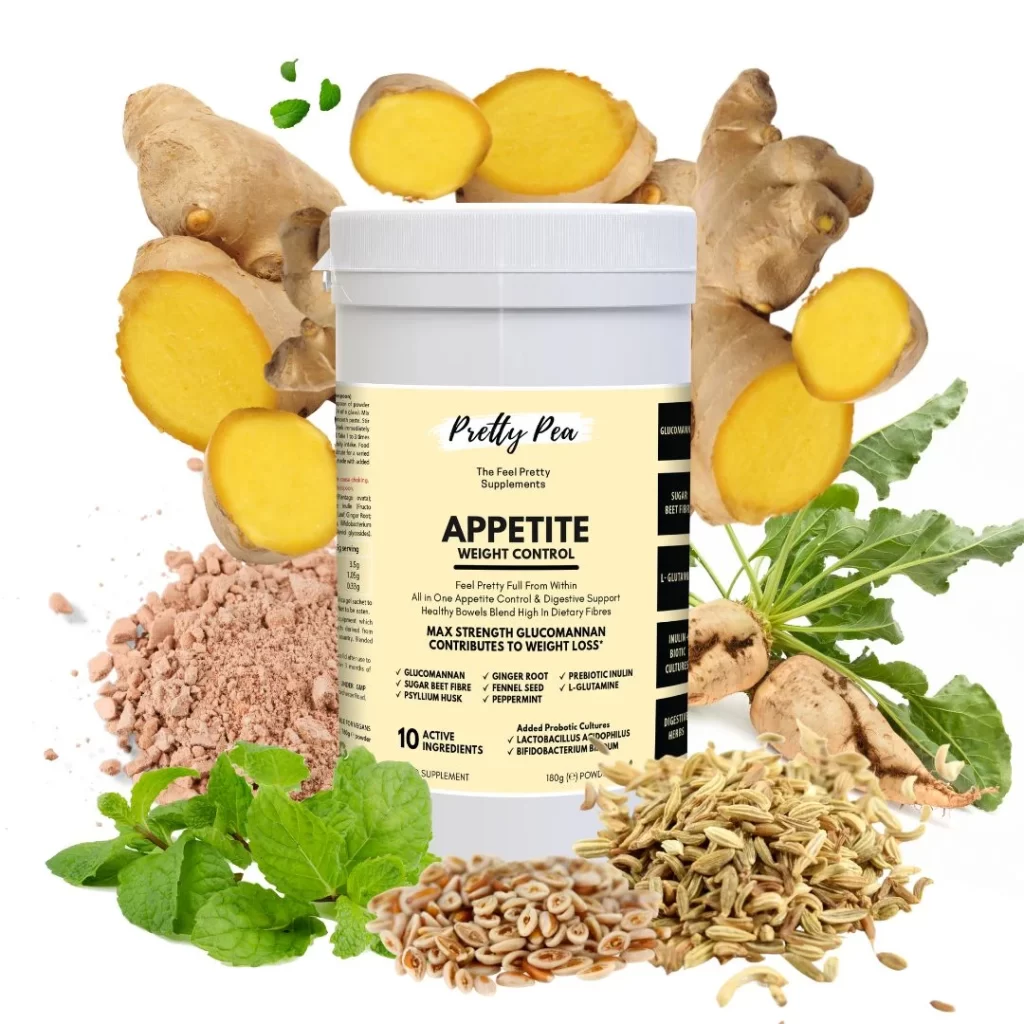](https://prettypea.blog/psyllium-husk/)This method allows you to enjoy the benefits of fibre while still enjoying a variety of delicious and nutritious foods. Experimenting with different recipes and combinations can make taking fibre supplements an enjoyable part of your daily routine.
[Pretty Pea APPETITE](https://prettypea.blog/psyllium-husk/) contains a powdered formula of soluble, insoluble and prebiotic fibre plus digestive herbals and biotic cultures for total digestive support.
## **Dietary Alternatives to Fibre Supplements**
While **fibre supplements** offer a convenient way to boost your fibre intake, it is also possible to achieve your daily fibre needs through dietary sources. Some excellent sources of dietary fibre include fruits, vegetables, whole grains, legumes, nuts, and seeds.
**Fruits** such as apples, berries, pears, and oranges are not only delicious but also high in fibre. These fruits can be eaten fresh, added to salads, or blended into smoothies for a nutritious and fibre-packed snack.
**Vegetables** like broccoli, carrots, Brussels sprouts, and sweet potatoes are also great sources of fibre and can be easily incorporated into meals. Roasting, steaming, or adding them to soups and stews are simple ways to enjoy their fibre benefits.
**Whole grains**, including oats, quinoa, brown rice, and whole wheat products, are another excellent source of dietary fibre. Swapping refined grains for whole grains in your meals can significantly increase your fibre intake.
**Legumes** such as beans, lentils, and chickpeas are also fibre powerhouses that can be added to soups, salads, and main dishes.
**Nuts and seeds**, like almonds, chia seeds, and flaxseeds, can be sprinkled on top of yogurt, oatmeal, or salads for an extra fibre boost.
## **Key Takeaway**
Fibre supplements can be a valuable addition to your daily routine, providing a convenient way to ensure you are meeting your fibre needs and supporting your digestive system.
By choosing the right type of fibre supplements for your specific needs, starting with a low dose, and gradually increasing your intake, you can minimize potential side effects and enjoy the full benefits of fibre.
Staying hydrated, consulting with healthcare professionals, and integrating fibre supplements into a balanced diet are all important considerations for achieving digestive health.
## Latest Products
[View All →](#)
- ### [D-Mannose & Cranberry Capsules Complex | FEM URELA+ ](https://prettypea.blog/d-mannose-cranberry-capsules-for-women/)
[Supplements](https://prettypea.blog/product-category/supplements/), [Womens Health Supplements](https://prettypea.blog/product-category/womens-health-supplements/)
- ### [FIBREBIO Psyllium Husk Powder | High Fibre Supplement](https://prettypea.blog/fibrebio-psyllium-husk-supplement/)
[Fibre Supplements](https://prettypea.blog/product-category/fibre-supplements/), [Supplements](https://prettypea.blog/product-category/supplements/)
- ### [Psyllium Reset Recipe Guide](https://prettypea.blog/product/psyllium-reset-recipe-guide/)
[Fibre Supplements](https://prettypea.blog/product-category/fibre-supplements/)
- ### [Apple Cider Vinegar Supplement](https://prettypea.blog/apple-cider-vinegar/)
[Best Sellers](https://prettypea.blog/product-category/best-sellers/)
- ### [Multivitamin Gummies](https://prettypea.blog/multivitamin-gummies/)
[Supplements](https://prettypea.blog/product-category/supplements/)
- ### [Menopause Supplement Bundle 3 for 2 Offer](https://prettypea.blog/product/menopause-supplement-bundle-3-for-2-offer/)
[Womens Health Supplements](https://prettypea.blog/product-category/womens-health-supplements/)
- ### [Mushroom supplements](https://prettypea.blog/mushroom-supplement/)
[Supplements](https://prettypea.blog/product-category/supplements/)
- ### [Omega 369 Benefits](https://prettypea.blog/omega-369-benefits)
[Best Sellers](https://prettypea.blog/product-category/best-sellers/)
## Frequently Asked Questions
### What are fibre supplements?
Fibre supplements are **concentrated dietary fibre supplements**. They offer an easy, no-prep way to increase your daily fibre intake without changing your diet — appealing for women with busy lifestyles or sensitive guts.
Common fibre sources used in supplements include:
**Glucomannan** (Konjac root)
**Inulin** (prebiotic)
**Psyllium Husk** (Plantago ovata)
### Fibre Benefits for Women Over 30+
Women over 30 often face:
- Slower digestion
- Perimenopausal bloating
- Weight gain around the middle
- Constipation or irregularity
Since fibre supports **gut motility, blood sugar balance, satiety, and estrogen clearance**, it can be a powerful ally for women — especially when consumed consistently.
### Insoluble Fibre vs Soluble Fibre
Soluble fibre dissolves in water to form a gel-like substance, which can help lower blood cholesterol and glucose levels.
Insoluble fibre does not dissolve in water, it adds bulk to the stool, aiding in the passage of food and waste through the digestive tract.
### Benefits of Fibre Supplements
✅ Easy and portable
✅ No taste or texture issues
✅ Ideal for sensitive guts or restrictive diets
✅ Good for topping up fibre intake (e.g. after meals)
Have additional inquiries?
We are here to help.
[Shop Supplements](https://prettypea.blog/store-two/)
- [](https://prettypea.blog/d-mannose-and-cranberry-for-women/)[Menopause Nutrition](https://prettypea.blog/category/menopause/) · [Superfoods](https://prettypea.blog/category/superfoods/) · [Supplements](https://prettypea.blog/category/supplements/)
October 8, 2026
- [](https://prettypea.blog/what-is-glp-1/)[Fibre & Gut Health](https://prettypea.blog/category/fibre/) · [Hormones & HRT](https://prettypea.blog/category/hormones-hrt/) · [Menopause Nutrition](https://prettypea.blog/category/menopause/) · [Supplements](https://prettypea.blog/category/supplements/)
### [What Is GLP-1? The Gut Hormone That Helps Regulate Hunger & Blood Sugar](https://prettypea.blog/what-is-glp-1/)
August 18, 2026
- [](https://prettypea.blog/psyllium-husk-benefits/)[Pretty Pea](https://prettypea.blog/category/pretty-pea/)
### [Psyllium Husk: Benefits, How to Take It, Side Effects & How It Compares](https://prettypea.blog/psyllium-husk-benefits/)
August 15, 2026
## [The Ultimate Guide to Fibre Supplements for a Happier Gut: Unlocking Your Digestive Health](https://prettypea.blog/the-ultimate-guide-to-fibre-supplements-for-a-happier-gut-unlocking-your-digestive-health/)
### Reference – Fibre Supplements
*Birketvedt et al., “Efficacy of glucomannan in overweight and obese people,” Int J Obes. 2005;29(8):934–939.*
[PubMed: 15884862](https://pubmed.ncbi.nlm.nih.gov/15884862/)
> *“Psyllium improves chronic constipation and quality of life,”* *Neurogastroenterology & Motility*, 2021. [PMID: 33973378](https://pubmed.ncbi.nlm.nih.gov/33973378/)
>
> *Anderson JW et al., “Health benefits of dietary fiber,” Am J Clin Nutr. 2009;89(2):447–465.*
> [PMID: 19176725](https://pubmed.ncbi.nlm.nih.gov/19176725/)
**Categories:** Fibre & Gut Health
---
### [Why Fibre and Water Always Go Together](https://prettypea.blog/why-fibre-and-water-always-go-together/)
**Published:** March 4, 2026
**Author:** Cate Boyd
**Content:**
If you’ve ever increased your fibre intake and suddenly felt more bloated, sluggish, or constipated — you’re not alone. Many women focus on adding more fibre but forget the other half of the equation: **water**. So much water with fibre is necessary?
Fibre works by absorbing fluid in the gut. Without enough water, it can’t do its job properly — and instead of easing digestion, it may make things worse.
Let’s break it down properly.
- [How Fibre Works in the Body](#aioseo-how-fibre-works-in-the-body-8)
- [How Much Water Do You Really Need With Fibre?](#aioseo-so-how-much-water-do-you-really-need-with-fibre-24)
- [What Happens If You Don’t Drink Enough?](#aioseo-what-happens-if-you-dont-drink-enough-39)
- [Fibre Supplements.](#aioseo-rent-a-car-at-the-best-price-57)
- [A Quick Self-Check](#aioseo-a-quick-self-check-49)
- [How to Increase Fibre Without Digestive Drama](#aioseo-how-to-increase-fibre-without-digestive-drama-64)
- [Does Drinking More Water Alone Improve Digestion?](#aioseo-does-drinking-more-water-alone-improve-digestion-68)
- [Latest Products](#aioseo-latest-products-101)
---
## How Fibre Works in the Body
There are two main types of fibre:
**1️⃣ Soluble Fibre**
Found in oats, flaxseeds, beans, and glucomannan (konjac root), soluble fibre dissolves in water and forms a gel-like substance in the digestive tract.
This:
- Slows digestion
- Supports fullness
- Helps regulate bowel movements
- Contributes to normal blood glucose responses
But here’s the key: **it needs water to form that gel.**
---
**2️⃣ Insoluble Fibre**
Found in wholegrains and vegetables, insoluble fibre adds bulk to stool and helps it pass through the gut more efficiently.
Again — it relies on hydration to move comfortably through the digestive system.
---
## How Much Water Do You Really Need With Fibre?
**General Daily Guidance**
In the UK, women are typically advised to drink around **1.6–2 litres of fluid daily** (around 6–8 glasses), depending on body size and activity level.
When increasing fibre intake, especially through supplements, you may need slightly more.
---
## If You’re Taking Fibre Supplements (Including Glucomannan)
For glucomannan specifically, EFSA guidance states:
The beneficial effect is obtained with 3g per day, taken in three doses of 1g each, with 1–2 glasses of water before meals, in the context of an energy-restricted diet.
That means:
- **At least 250–500ml of water per dose**
- Never take without sufficient liquid
- Avoid taking just before lying down
This is particularly important because glucomannan can expand significantly as it absorbs water.
## [Why Fibre and Water Always Go Together](https://prettypea.blog/why-fibre-and-water-always-go-together/)
---
## What Happens If You Don’t Drink Enough?
When fibre doesn’t get enough water, it can:
- Feel heavy in the stomach
- Increase bloating temporarily
- Worsen constipation
- Cause uncomfortable gas
Instead of softening stool, dry fibre can sit in the gut and slow things down.
This is why some women think “fibre doesn’t work for me” — when actually, hydration was the missing piece.
## Fibre Supplements.
**[Appetite Multi Fibre Powder](https://prettypea.blog/fibre-powder/ "Appetite Multi Fibre Powder")**
Gut love with blend of 4 soluble fibres, prebiotic Inulin, live cultures, L-Glutamine & herbs
**[Glucomannan Reset Capsules](https://prettypea.blog/product/pretty-reset/ "Glucomannan Reset Capsules")**
Max strength Glucomannan, supporting satiety, energy, metabolism & hormonal activity
**[High Fibre Capsules](https://prettypea.blog/fibre-capsules/ "High Fibre Capsules")**
Soluble & insoluble capsules from 11 high fibre foods supporting bowel function.
---
## A Quick Self-Check
If you’ve recently increased fibre and feel uncomfortable, ask yourself:
- Have I increased water at the same time?
- Am I spacing water throughout the day?
- Am I drinking with each fibre dose?
Often, adjusting fluid intake solves the issue within days.
---
## A Very Common Story
Many women in their 30s and 40s increase fibre because they’re feeling more bloated, struggling with midlife weight changes, or noticing slower digestion.
They start a fibre supplement — but keep their usual coffee-heavy, low-water routine.
Within a week they think:
“This made me worse.”
In reality, fibre was doing exactly what it’s designed to do — but without enough water to support it.
Hydration isn’t optional with fibre. It’s essential.
---
## How to Increase Fibre Without Digestive Drama
Here’s the safest way to do it:
✔ Increase fibre gradually (over 1–2 weeks)
✔ Drink an extra glass of water for each fibre serving
✔ Spread fibre intake across the day
✔ Keep caffeine balanced with water
✔ Aim for pale straw-coloured urine as a hydration indicator
---
## Does Drinking More Water Alone Improve Digestion?
Interestingly, studies show that **water alone doesn’t necessarily relieve constipation** unless fibre intake is adequate.
A 2010 review in the *American Journal of Gastroenterology* found that increased fluid intake improves stool frequency primarily when fibre intake is sufficient.
It’s the combination that works best.
---
## Key Takeaway
If you’re increasing fibre, especially soluble fibre like glucomannan:
💧 Pair every dose with water
💧 Aim for at least 1.6–2 litres daily
💧 Increase gradually
💧 Stay consistent
Fibre and water are partners. One without the other doesn’t deliver the full benefit.
## FAQ – Fibre and Water
### **Can I drink tea or coffee instead of water with fibre?**
While tea and coffee count toward total fluid intake, plain water is best when taking fibre supplements. Caffeine can have a mild diuretic effect, so relying solely on coffee isn’t ideal.
### **Can too much fibre without water cause constipation?**
Yes. Increasing fibre without enough water can make stools harder and more difficult to pass. Fibre needs fluid to soften and move comfortably through the digestive tract.
### **Does fibre make you more thirsty?**
It can. Soluble fibre absorbs water in the gut, so your body may signal thirst more strongly — especially if you increase intake quickly.
### **How long does it take for fibre and water to improve digestion?**
Some people notice changes within a few days, but for many women — especially 30+ — it may take 1–3 weeks of consistent intake for digestion to feel more regular.
### **Is sparkling water okay with fibre?**
Yes, but still ensure you’re drinking enough total fluid. If you’re prone to bloating, carbonated drinks may increase temporary gas.
### **Should I drink water before or after taking fibre?**
If using supplements, drink water **with the fibre dose** and continue sipping throughout the day for best comfort.
### **Does fibre help menopause bloating?**
Fibre can support digestive regularity, which may reduce bloating related to sluggish digestion. Hormonal bloating is different, but improving gut function often helps overall comfort.
## Latest Products
[View All →](#)
- ### [D-Mannose & Cranberry Capsules Complex | FEM URELA+ ](https://prettypea.blog/d-mannose-cranberry-capsules-for-women/)
[Supplements](https://prettypea.blog/product-category/supplements/), [Womens Health Supplements](https://prettypea.blog/product-category/womens-health-supplements/)
- ### [FIBREBIO Psyllium Husk Powder | High Fibre Supplement](https://prettypea.blog/fibrebio-psyllium-husk-supplement/)
[Fibre Supplements](https://prettypea.blog/product-category/fibre-supplements/), [Supplements](https://prettypea.blog/product-category/supplements/)
- ### [Psyllium Reset Recipe Guide](https://prettypea.blog/product/psyllium-reset-recipe-guide/)
[Fibre Supplements](https://prettypea.blog/product-category/fibre-supplements/)
- ### [Apple Cider Vinegar Supplement](https://prettypea.blog/apple-cider-vinegar/)
[Best Sellers](https://prettypea.blog/product-category/best-sellers/)
- ### [Multivitamin Gummies](https://prettypea.blog/multivitamin-gummies/)
[Supplements](https://prettypea.blog/product-category/supplements/)
- ### [Menopause Supplement Bundle 3 for 2 Offer](https://prettypea.blog/product/menopause-supplement-bundle-3-for-2-offer/)
[Womens Health Supplements](https://prettypea.blog/product-category/womens-health-supplements/)
- ### [Mushroom supplements](https://prettypea.blog/mushroom-supplement/)
[Supplements](https://prettypea.blog/product-category/supplements/)
- ### [Omega 369 Benefits](https://prettypea.blog/omega-369-benefits)
[Best Sellers](https://prettypea.blog/product-category/best-sellers/)
#### You might also like..
- [Bloating Isn’t Just “Too Much Gas”: The Real Causes of Bloating (and What Actually Helps)](https://prettypea.blog/7-real-causes-of-bloating-and-what-actually-helps/)
- [Plantago Ovata (Psyllium Husk): Benefits, Uses, Science and FAQs](https://prettypea.blog/plantago-ovata-psyllium-husk-benefits-uses-science-and-faqs/)
- [GLP-1 Foods: The Ultimate List for Appetite Control, Fat Loss & Blood Sugar](https://prettypea.blog/glp-1-foods/)
- [50 High Fibre Foods Ranked by Fibre Content (+ Full Nutrition Chart)](https://prettypea.blog/50-high-fibre-foods-ranked-by-fibre-content-full-nutrition-chart/)
- [Best Fibre Supplements for Women | Complete UK Fibre Supplement Guide](https://prettypea.blog/fibre-supplements-for-women/)
[Your Gut Microbiome Is Talking to Your Brain — Are You Listening?](https://prettypea.blog/your-gut-microbiome-is-talking-to-your-brain-are-you-listening/)
[Appetite Regulation: How Fibre vs GLP-1 Compare](https://prettypea.blog/appetite-regulation-how-fibre-vs-glp-1-compare/)
[What is the Highest Fibre Food](https://prettypea.blog/what-is-the-highest-fibre-food/)
[The Ultimate Guide to Fibre Supplements for a Happier Gut: Unlocking Your Digestive Health](https://prettypea.blog/the-ultimate-guide-to-fibre-supplements-for-a-happier-gut-unlocking-your-digestive-health/)
[10 Green Tea Benefits: The Ultimate Science-Backed Guide](https://prettypea.blog/10-green-tea-benefits-the-ultimate-science-backed-guide/)
[The Ultimate Superfood List: What are Superfoods, Benefits, Best Choices, and How to Use](https://prettypea.blog/the-ultimate-superfood-list-what-are-superfoods-benefits-best-choices-and-how-to-use/)
[The Rich List: Insoluble Fibre Rich Food List](https://prettypea.blog/the-rich-list-insoluble-fibre-rich-food-list/)
[Understanding Visceral Fat: The Ultimate Belly Fat Guide](https://prettypea.blog/understanding-visceral-fat-the-ultimate-belly-fat-guide/)
[Everything Psyllium How To Use: A Comprehensive Guide on How to Use It for Maximum Health Benefits](https://prettypea.blog/psyllium-how-to-use/)
[Simple Food Group Swaps – Make Life Easier for Yourself](https://prettypea.blog/simple-food-group-swaps-make-life-easier-for-yourself/)
[The 100 Symptoms of Perimenopause](https://prettypea.blog/the-100-symptoms-of-perimenopause/)
- [](https://prettypea.blog/d-mannose-and-cranberry-for-women/)[Menopause Nutrition](https://prettypea.blog/category/menopause/) · [Superfoods](https://prettypea.blog/category/superfoods/) · [Supplements](https://prettypea.blog/category/supplements/)
October 8, 2026
- [](https://prettypea.blog/what-is-glp-1/)[Fibre & Gut Health](https://prettypea.blog/category/fibre/) · [Hormones & HRT](https://prettypea.blog/category/hormones-hrt/) · [Menopause Nutrition](https://prettypea.blog/category/menopause/) · [Supplements](https://prettypea.blog/category/supplements/)
### [What Is GLP-1? The Gut Hormone That Helps Regulate Hunger & Blood Sugar](https://prettypea.blog/what-is-glp-1/)
August 18, 2026
- [](https://prettypea.blog/psyllium-husk-benefits/)[Pretty Pea](https://prettypea.blog/category/pretty-pea/)
### [Psyllium Husk: Benefits, How to Take It, Side Effects & How It Compares](https://prettypea.blog/psyllium-husk-benefits/)
August 15, 2026
---
### Sources – How Much Water With Fibre
1. European Food Safety Authority (EFSA). Scientific Opinion on the substantiation of a health claim related to glucomannan and weight loss. EFSA Journal, 2010.
2. McRorie JW. Evidence-Based Approach to Fiber Supplements and Clinically Meaningful Health Benefits. *Nutrition Today*, 2015.
3. Anti M et al. Water supplementation enhances the effect of high-fiber diet on stool frequency. *American Journal of Gastroenterology*, 1998.
4. [NHS UK. Healthy hydration guidance and daily fluid recommendations.](https://www.nhs.uk/live-well/eat-well/food-guidelines-and-food-labels/water-drinks-nutrition/ "NHS UK. Healthy hydration guidance and daily fluid recommendations.")
**Categories:** Fibre & Gut Health
---
### [Your Gut Microbiome Is Talking to Your Brain — Are You Listening?](https://prettypea.blog/your-gut-microbiome-is-talking-to-your-brain-are-you-listening/)
**Published:** October 20, 2025
**Author:** Cate Boyd
**Content:**
If you’ve ever had “butterflies” before a big event or lost your appetite when stressed, you’ve experienced the **gut-brain connection** in action. Emerging research shows that the trillions of bacteria living in your gut – *friends with benefits* (collectively known as the **gut microbiome**) are a key regulator of gut-brain function and have a powerful influence on mood, stress response, and even hormone balance.
And one of the easiest — yet most overlooked — ways to nurture this connection is through **dietary fibre**.
In this article we’ll explore how fibre may literally help you feel happier.
- [What Is the Gut-Brain Axis?](#aioseo-what-is-the-gut-brain-axis)
- [Read More – High Cortisol – The Real Impact of Stress on Your Body](#aioseo-read-more-high-cortisol-the-real-impact-of-stress-on-your-body-22)
- [How Fibre Feeds a Happier Gut Microbiome](#aioseo-how-fibre-feeds-a-happier-gut)
- [The Science: How Fibre Affects Gut Microbiome, Mood and Mental Health](#aioseo-the-science-how-fibre-affects-mood-and-mental-health)
- [1️⃣ Higher Fibre = Lower Risk of Depression](#aioseo-1️-higher-fibre-lower-risk-of-depression)
- [2️⃣ Gut Microbiome Produce Mood-Boosting Compounds](#aioseo-2️-gut-bacteria-produce-mood-boosting-compounds)
- [3️⃣ Prebiotic Fibre Reduces Stress Hormones](#aioseo-3️-prebiotic-fibre-reduces-stress-hormones)
- [4️⃣ Better Fibre Intake = More Resilient Gut-Brain Axis](#aioseo-4️-better-fibre-intake-more-resilient-gut-brain-axis)
- [Fibre, Hormones, and Mood in Women 30+](#aioseo-fibre-hormones-and-mood-in-women-30)
- [Best Fibre-Rich Foods for a Happy Gut u0026 Mind](#aioseo-best-fibre-rich-foods-for-a-happy-gut-mind)
- [How Much Fibre Do You Need?](#aioseo-how-much-fibre-do-you-need)
---
## **What Is the Gut-Brain Axis?**
The **gut-brain axis** is a two-way communication system between your digestive tract and your brain. It connects the **central nervous system** (your brain and spinal cord) with the **enteric nervous system** (the “second brain” in your gut) — allowing your gut and brain to constantly “talk” to each other through nerves, hormones, and immune messengers.[1](#acd4e8f7-1710-4284-b2f4-833d08abb6bb)
These two pathways communicate through various systems including:
**The vagus nerve**, the most direct pathway linking the gut to the brain sending messages from gut to brain in milliseconds
**Immune molecules** and metabolites produced by gut microbiome, our immune system is one of the most direct signalling pathways along the microbiota-gut-brain axis. The highest concentration of immune cells is located within the GI tract, these cells are in constant communication with the gut microbiota to identify potentially harmful pathogens. [2](#ad93d1dd-dc11-4d80-8d80-c992339b0c66)
**Hormones and neurotransmitters**, like serotonin and dopamine
At the heart of this network lies the **HPA axis**, short for the **Hypothalamic–Pituitary–Adrenal axis** — your body’s main **stress response system**.
**How the HPA axis works:** When you experience stress, the HPA axis triggers the release of **cortisol**, the hormone that prepares your body to “fight or flee.” In small doses, this response is helpful. But chronic activation — the kind that happens with ongoing stress or poor gut health — can disrupt digestion, sleep, and mood.
Here’s how your gut plays a role in regulating this system:
- **Stress and the gut:** Chronic stress can disturb your gut microbiome, reducing levels of beneficial bacteria and increasing intestinal permeability (sometimes called “leaky gut”).
- **Gut to brain:** When the gut is inflamed or imbalanced, it sends distress signals to the brain through the **vagus nerve** and immune molecules.
- **Brain to gut:** This can overstimulate the HPA axis, keeping cortisol levels high — a cycle that contributes to anxiety, fatigue, and low mood.
- **Restoring balance:** A diverse, fibre-fed gut microbiome helps **modulate the HPA axis**, lowering cortisol production and supporting emotional balance.
> Your gut microbiome plays a key role here — and **dietary fibre** is its favourite food.
>
> **Study spotlight:**
> A 2016 review in *Frontiers in Psychiatry* found that **prebiotics and probiotics** can positively influence the gut–brain–HPA axis by **reducing stress-induced cortisol levels** and improving mood stability.[3](#ec53ed2a-d923-4fb0-8646-7ebba8fe7daa)
>
> ##### **Read More** – [High Cortisol – The Real Impact of Stress on Your Body](https://prettypea.blog/high-cortisol-levels-the-real-impact-of-stress-on-the-body/)
## [Your Gut Microbiome Is Talking to Your Brain — Are You Listening?](https://prettypea.blog/your-gut-microbiome-is-talking-to-your-brain-are-you-listening/)
---
## **How Fibre Feeds a Happier Gut** **Microbiome**
Not all fibre is the same. Two main types have distinct effects:
**Fibre Type****Description****Main Benefit****Soluble fibre**Dissolves in water and forms a gel-like substanceFeeds good bacteria; balances blood sugar; supports serotonin production**Insoluble fibre**Adds bulk to stool; speeds up eliminationKeeps digestion regular; prevents bloating and sluggishnessWhen gut microbiome digest **soluble fibre** (from foods like oats, apples, beans, and flaxseeds), they produce **short-chain fatty acids (SCFAs)** — particularly **butyrate**, **propionate**, and **acetate**.
These SCFAs:
- Nourish intestinal cells
- Reduce inflammation
- Influence neurotransmitter production
- Support the integrity of the gut barrier (often called the “gut lining”)
A healthy gut lining = less inflammation and a steadier mood.
##### [Read More: The Fibre Fix – Why Women Need Soluble & Insoluble Fibre](Read: The Fibre Fix - Why Women Need Soluble & Insoluble Fibre "Read: The Fibre Fix - Why Women Need Soluble & Insoluble Fibre")
---
## **The Science: How Fibre Affects Gut Microbiome, Mood and Mental Health**
### **1️⃣ Higher Fibre = Lower Risk of Depression**
Fibre consumption both alone and as part of a healthy dietary pattern has been consistently associated with better mood.[4](#aef38445-2e6b-42f1-ba59-4b25c370ecc5)
A large study from the **National Health and Nutrition Examination Survey (NHANES)** found that adults who ate more dietary fibre had significantly **lower odds of depression** compared to those who consumed the least.
---
### **2️⃣ Gut Microbiome Produce Mood-Boosting Compounds**
Certain gut bacteria, such as *Bifidobacterium* and *Lactobacillus*, thrive on soluble fibre and produce **serotonin precursors** like tryptophan.
About **90–95% of serotonin** — the “feel-good” neurotransmitter — is made in the gut, not the brain. Fibre literally fuels the microbiome that help your body make serotonin.[5](#e44a4d78-d071-4115-a189-648bc222c25e)
---
### **3️⃣ Prebiotic Fibre Reduces Stress Hormones**
A clinical trial published in *Psychopharmacology* gave healthy adults **prebiotic fibre (galacto-oligosaccharides)** for 3 weeks.[6](#4ef5c09f-8b59-4c65-92d9-46e05bcaa5a0)
Result: lower **cortisol (stress hormone)** levels and improved emotional processing — suggesting a calmer, more positive mood.
A recent also study found that an **8-week diet** with a high potential prebiotic content improved anxiety, stress, and sleep in adults. The prebiotic diet comprised a **minimum of 5 g/d** of **asparagus, garlic, onion, oats, whole wheat, chickpeas, or watermelon.**[7](#a6dd8ccc-3c28-45a7-91f7-073e606cb32c)
**Inulins** are well-established popular prebiotics, predominantly found in a variety of fruits, vegetables, and wheat. Numerous studies have shown that inulin can stimulate the growth of *Bifidobacterium* spp. and *Faecalibacterium prausnitzii*. [8](#b0f9b7d8-bf97-4626-b8fe-d36df8a0de72)
---
### **4️⃣ Better Fibre Intake = More Resilient Gut-Brain Axis**
A 2022 review in *Frontiers in Nutrition* highlighted how **dietary fibre improves gut microbiome diversity**, strengthens the gut barrier, and reduces systemic inflammation — all linked to a more resilient gut-brain axis and improved mental well-being.
---
## **Fibre, Hormones, and Mood in Women 30+**
Women in their 30s and 40s experience **fluctuations in oestrogen and progesterone**, which can affect serotonin levels, sleep, and stress resilience.
Fibre supports hormone balance by:
- **Aiding oestrogen detoxification** in the liver and gut
- **Reducing reabsorption** of excess hormones through the bowel
- **Supporting steady blood sugar**, reducing energy dips and irritability
A 2018 study in *The Journal of Nutrition* found that higher fibre intake was linked to **lower circulating oestrogen levels**, which can help reduce PMS, [bloating,](https://prettypea.blog/how-can-you-stop-constipation/) and mood swings.[9](#5239520e-e315-4036-bc9a-ead7eed16acc)
##### [**Read** More: Feeling constipated? ](https://prettypea.blog/how-can-you-stop-constipation/)
## [Your Gut Microbiome Is Talking to Your Brain — Are You Listening?](https://prettypea.blog/your-gut-microbiome-is-talking-to-your-brain-are-you-listening/)
---
## **Best Fibre-Rich Foods for a Happy Gut & Mind**
Here are some great mood-supporting, fibre-rich foods to include daily:
**Food****Fibre Type****Approx. Fibre per 100g****Mood Support Benefit**OatsSoluble10gBeta-glucan supports gut bacteria and serotoninApples (with skin)Soluble & Insoluble2.4gContains pectin, a prebiotic fibreFlaxseedsSoluble & Insoluble27gHigh in ALA omega-3 and prebiotic fibreLentilsSoluble8gStabilises blood sugar and feeds gut microbesChickpeasSoluble7gProduces SCFAs for gut and mood healthPsyllium huskSoluble80gClinically proven to improve gut functionCarrotsInsoluble2.8gAdds bulk and aids detoxificationBananas (ripe)Soluble2.6gContain prebiotic inulinAsparagusSoluble2gRich in prebiotic inulin for gut floraSweet potatoSoluble & Insoluble3gSupports digestion and oestrogen metabolism##### [Read More: ]()[how-to-use-psyllium-husk](https://prettypea.blog/how-to-use-psyllium-husk/)
## [Your Gut Microbiome Is Talking to Your Brain — Are You Listening?](https://prettypea.blog/your-gut-microbiome-is-talking-to-your-brain-are-you-listening/)
---
## **How Much Fibre Do You Need?**
Most UK adults only eat **18g of fibre per day**, far below the **recommended 30g**. [10](#b3122c78-906b-4f0e-bf25-b0d27d0d0c08)
To support both gut microbiome and brain health:
- Aim for **25–30g daily**
- Include a mix of soluble and insoluble sources
- Increase intake slowly, and **drink plenty of water**
---
## **Practical Tips to Boost Fibre for a Happier Gut**
✅ Add **chia or flaxseeds** to your breakfast
✅ Choose **wholegrain bread or oats** instead of refined carbs
✅ Snack on **fruit with skins** (like apples or pears)
✅ Include **beans or lentils** in soups and salads
✅ Try **prebiotic fibre supplements** (like inulin or galacto-oligosaccharides) if you struggle to meet your needs through diet
---
### **Key Takeaway**
Your gut and brain are in constant conversation — and fibre is one of the best mediators in that dialogue.
By nourishing your gut microbiome with a variety of fibre-rich foods, you can:
- Improve digestion
- Support hormone balance
- Reduce inflammation
- And potentially **boost your mood and emotional resilience**
So, the next time you’re feeling low, reach for a bowl of oats, a handful of chickpeas, or a smoothie with flaxseeds — your gut (and brain) will thank you as you *feed your friends with benefits.*
## **Fibre, Mood & Gut Microbiome** – **Frequently Asked Questions**
### 1. Can eating more fibre really improve my gut microbiome and my mood?
Yes — growing evidence suggests that **increasing fibre intake** supports a healthy gut microbiome, which in turn affects neurotransmitters like **serotonin**, often called the “happy hormone.” Studies show that people with higher fibre diets report **fewer depressive symptoms** and better emotional well-being.
### 2. What’s the best type of fibre for mental health?
**Soluble fibre** and **prebiotic fibre** are most beneficial for the **gut-brain connection**. These feed beneficial bacteria that produce **short-chain fatty acids (SCFAs)**, which reduce inflammation and support brain signalling.
✅ Best sources: oats, apples, bananas, flaxseeds, and legumes.
### 3. How long does it take to feel benefits from eating more fibre?
Some people notice improvements in digestion and energy within **a few days**, but changes in mood and gut health may take **3–4 weeks** of consistent intake. A gradual increase (plus plenty of water) is key to avoiding bloating.
**Read** [How can you stop constipation? ](https://prettypea.blog/how-can-you-stop-constipation/)
### 4. Can I take a fibre supplement instead of eating fibre-rich foods?
You can, but it’s best to combine both. Supplements like **psyllium husk** or **inulin** can boost soluble fibre intake, but whole foods provide **vitamins, minerals, and phytonutrients** that also support mental well-being.
Tip: Always start with small doses to let your gut adjust.
## [Your Gut Microbiome Is Talking to Your Brain — Are You Listening?](https://prettypea.blog/your-gut-microbiome-is-talking-to-your-brain-are-you-listening/)
### 5. Is too much fibre bad for you?
Excessive fibre — especially if increased too quickly — can cause **gas, bloating, or constipation**, particularly if you’re not drinking enough water. Aim for the NHS-recommended **25–30g per day** for optimal balance.
### 6. How does fibre help with hormone-related mood swings?
Fibre supports **oestrogen metabolism** and helps remove excess hormones through the gut. This can ease **PMS symptoms, bloating, and irritability**. A high-fibre diet is linked to more stable hormones and mood regulation during perimenopause.
### 7. Which high-fibre foods are best for gut microbiome, gut health and mood?
Top sources include —
- Chickpeas
- Oats
- Lentils
- Apples (with skin)
- Bananas
- Flaxseeds
- Asparagus
- Psyllium husk
These provide a mix of **soluble, insoluble, and prebiotic fibre** to nourish gut microbes and support serotonin production.
### 8. Can better gut health really help me sleep or reduce anxiety?
Yes — gut bacteria influence the production of **GABA, serotonin, and melatonin**, all of which play roles in relaxation and sleep regulation. Improving gut diversity through fibre can lead to **calmer moods and better sleep quality**.
### 9. Does fibre help with weight management too?
Absolutely. Fibre helps regulate **blood sugar**, **reduces cravings**, and promotes **fullness** — all of which can support healthy weight balance and mood stability.
### 10. How can I get more fibre daily without feeling bloated?
Increase gradually (add 5g per week)
- Drink plenty of water
- Mix soluble and insoluble soources
- Include fermented foods (like kefir or sauerkraut) to help your gut adapt
## [Your Gut Microbiome Is Talking to Your Brain — Are You Listening?](https://prettypea.blog/your-gut-microbiome-is-talking-to-your-brain-are-you-listening/)
---
- [](https://prettypea.blog/d-mannose-and-cranberry-for-women/)[Menopause Nutrition](https://prettypea.blog/category/menopause/) · [Superfoods](https://prettypea.blog/category/superfoods/) · [Supplements](https://prettypea.blog/category/supplements/)
October 8, 2026
- [](https://prettypea.blog/what-is-glp-1/)[Fibre & Gut Health](https://prettypea.blog/category/fibre/) · [Hormones & HRT](https://prettypea.blog/category/hormones-hrt/) · [Menopause Nutrition](https://prettypea.blog/category/menopause/) · [Supplements](https://prettypea.blog/category/supplements/)
### [What Is GLP-1? The Gut Hormone That Helps Regulate Hunger & Blood Sugar](https://prettypea.blog/what-is-glp-1/)
August 18, 2026
- [](https://prettypea.blog/psyllium-husk-benefits/)[Pretty Pea](https://prettypea.blog/category/pretty-pea/)
### [Psyllium Husk: Benefits, How to Take It, Side Effects & How It Compares](https://prettypea.blog/psyllium-husk-benefits/)
August 15, 2026
### You might also like..
**[Appetite Regulation: How Fibre vs GLP-1 Compare ](https://prettypea.blog/appetite-regulation-how-fibre-vs-glp-1-compare/)**
**[What is the Highest Fibre Food ](https://prettypea.blog/what-is-the-highest-fibre-food/)**
**[The Ultimate Guide to Fibre Supplements for a Happier Gut: Unlocking Your Digestive Health ](https://prettypea.blog/the-ultimate-guide-to-fibre-supplements-for-a-happier-gut-unlocking-your-digestive-health/)**
**[10 Green Tea Benefits: The Ultimate Science-Backed Guide ](https://prettypea.blog/10-green-tea-benefits-the-ultimate-science-backed-guide/)**
**[The Ultimate Superfood List: What are Superfoods, Benefits, Best Choices, and How to Use ](https://prettypea.blog/the-ultimate-superfood-list-what-are-superfoods-benefits-best-choices-and-how-to-use/)**
**[The Rich List: Insoluble Fibre Rich Food List – Pretty Pea](https://prettypea.blog/the-rich-list-insoluble-fibre-rich-food-list/)**
**[Understanding Visceral Fat: The Ultimate Belly Fat Guide – Pretty Pea](https://prettypea.blog/understanding-visceral-fat-the-ultimate-belly-fat-guide/)**
**[Everything Psyllium How To Use: A Comprehensive Guide on How to Use It for Maximum Health Benefits – Pretty Pea](https://prettypea.blog/psyllium-how-to-use/)**
**[Simple Food Group Swaps – Make Life Easier for Yourself – Pretty Pea](https://prettypea.blog/simple-food-group-swaps-make-life-easier-for-yourself/)**
**[The 100 Symptoms of Perimenopause – Pretty Pea](https://prettypea.blog/the-100-symptoms-of-perimenopause/)**
### **Gut Microbiome: Sources**
1. Xu, H. et al. (2020). “Association between dietary fibre intake and depression in adults.” *Nutritional Neuroscience.*
2. O’Mahony, S.M. et al. (2015). “Serotonin, tryptophan metabolism and the brain–gut–microbiome axis.” *Behavioural Brain Research.*
3. Schmidt, K. et al. (2015). “Prebiotic intake reduces waking cortisol and alters emotional bias in healthy volunteers.” *Psychopharmacology.*
4. Liang, S. et al. (2022). “Dietary fibre, the gut microbiota, and mental health.” *Frontiers in Nutrition.*
5. Gaskins, A.J. et al. (2018). “Dietary fibre intake and reproductive hormone levels.” *Journal of Nutrition.*
6. [NHS (2024). “How to get more fibre into your diet.” *NHS.uk.*](https://www.nhs.uk/live-well/eat-well/digestive-health/how-to-get-more-fibre-into-your-diet/)
1. [The Microbiota-Gut-Brain Axis – PubMed](https://pubmed.ncbi.nlm.nih.gov/31460832/) [↩︎](#acd4e8f7-1710-4284-b2f4-833d08abb6bb-link)
2. [Fibre & fermented foods: differential effects on the microbiota-gut-brain axis | Proceedings of the Nutrition Society | Cambridge Core](https://www.cambridge.org/core/journals/proceedings-of-the-nutrition-society/article/fibre-fermented-foods-differential-effects-on-the-microbiotagutbrain-axis/1FCFCF34665A6E10E34928301CA9EDE3#ref92) [↩︎](#ad93d1dd-dc11-4d80-8d80-c992339b0c66-link)
3. *Sarkar, A. et al. “The microbiome in psychology and cognitive neuroscience.” Frontiers in Psychiatry, 2016.* [↩︎](#ec53ed2a-d923-4fb0-8646-7ebba8fe7daa-link)
4. [Fibre & fermented foods: differential effects on the microbiota-gut-brain axis | Proceedings of the Nutrition Society | Cambridge Core](https://www.cambridge.org/core/journals/proceedings-of-the-nutrition-society/article/fibre-fermented-foods-differential-effects-on-the-microbiotagutbrain-axis/1FCFCF34665A6E10E34928301CA9EDE3) [↩︎](#aef38445-2e6b-42f1-ba59-4b25c370ecc5-link)
5. [Serotonin, tryptophan metabolism and the brain-gut-microbiome axis – PubMed](https://pubmed.ncbi.nlm.nih.gov/25078296/) [↩︎](#e44a4d78-d071-4115-a189-648bc222c25e-link)
6. [Prebiotic intake reduces the waking cortisol response and alters emotional bias in healthy volunteers – PubMed](https://pubmed.ncbi.nlm.nih.gov/25449699/) [↩︎](#4ef5c09f-8b59-4c65-92d9-46e05bcaa5a0-link)
7. [Fibre & fermented foods: differential effects on the microbiota-gut-brain axis | Proceedings of the Nutrition Society | Cambridge Core](https://www.cambridge.org/core/journals/proceedings-of-the-nutrition-society/article/fibre-fermented-foods-differential-effects-on-the-microbiotagutbrain-axis/1FCFCF34665A6E10E34928301CA9EDE3) [↩︎](#a6dd8ccc-3c28-45a7-91f7-073e606cb32c-link)
8. [The Microbiota-Gut-Brain Axis | Physiological Reviews | American Physiological Society](https://journals.physiology.org/doi/full/10.1152/physrev.00018.2018) [↩︎](#b0f9b7d8-bf97-4626-b8fe-d36df8a0de72-link)
9. [Association between the adherence to different dietary patterns and sperm chromatin integrity in healthy men – Reproductive BioMedicine Online](https://www.rbmojournal.com/article/S1472-6483(25)00563-2/fulltext) [↩︎](#5239520e-e315-4036-bc9a-ead7eed16acc-link)
10. NHS (2024). “How to get more fibre into your diet.” *NHS.uk.* [↩︎](#b3122c78-906b-4f0e-bf25-b0d27d0d0c08-link)
**Categories:** Fibre & Gut Health, Menopause Nutrition
---
### [Skipping Breakfast, Weight Loss & Hormones: Why Women Benefit from a Protein Breakfast](https://prettypea.blog/skipping-breakfast-weight-loss-hormones-why-women-benefit-from-a-protein-breakfast/)
**Published:** August 24, 2025
**Author:** Cate Boyd
**Content:**
**Does breakfast skipping really help with how to lose weight?** With weight loss jabs and intermittent fasting so on trend is a protein breakfast still the most important meal of the day?
While skipping breakfast might seem harmless — or even beneficial for **cutting calories** — the evidence stacks in favour with consistent **breakfast eaters** tending to **weigh less less** than breakfast skippers.
Yes you read that right. Eating breakfast can help you be in better control of your body weight. What’s more, simply making breakfast a consistent daily habit is linked to a **25–30% lower risk of dying early**. Anyone here not want to live longer?
‘Oh and it seems being a habitual breakfast eater you can gain **better mood, sharper thinking and a reduced risk of dementia** too.
**So does breakfast skipping really help you lose weight?**
Let’s separate the fact from the fiction and take a quick look at some of the evidence when it comes to breakfast skipping…
A [study of 5761 Americans tracked over 12 years](https://www.jabfm.org/content/jabfp/34/4/678.full.pdf), found breakfast eaters ate more calories than the breakfast skippers and, on average, had **a lower BMI**.
In another [study 26,902 ](https://www.ahajournals.org/doi/10.1161/CIRCULATIONAHA.113.001474)male American health professionals tracked over 16 years, found breakfast skippers were **15% more likely to have ‘*substantial weight gain*‘ (at least 5 kg (11 lb)** over ten years.A study involving [50,660 Seventh Day Adventists](https://pmc.ncbi.nlm.nih.gov/articles/PMC5572489/), a group known to be relatively healthy North Americans, aged 30+, found that breakfast eaters had a **lower BMI** than breakfast skippers.
[A 2020 trial](https://www.ahajournals.org/doi/10.1161/circ.142.suppl_3.14192) of 3,862 adults with obesity and type 2 diabetes, found that every extra breakfast day per week over 4 years was linked to a **0.43% drop in body weight**.
A study of [776 Brazilian](https://www.sciencedirect.com/science/article/abs/pii/S1871403X22001181)‘s with an average age of 33, found breakfast skippers had higher odds of having obesity.
Research shows that women’s hormones respond differently to missed meals compared with men.
Skipping breakfast can disrupt circadian rhythm, elevate **stress hormones** like cortisol, impair **insulin sensitivity**, and even affect **thyroid health**.
Whereas, on the flip side, eating a regular**,** protein-rich breakfast supports hormone balance, stabilises energy, and can help with **weight management**.
In this article sharing the science behind breakfast skippers and weight gain we’ll compare skippers with breakfast eaters, explore how breakfast timing affects hormones, find out why protein is just so powerful in the morning and separate fact from fiction when it comes to eating “breakfast like a king”.
Table of Contents
- [Circadian Rhythm: Your Body Clock and Breakfast](#aioseo-circadian-rhythm-your-body-clock-and-breakfast)
- [What Happens When You Skip Breakfast?](#aioseo-what-happens-when-you-skip-breakfast)
- [Consistency is Key](#aioseo-consistency-is-key)
- [Protein Breakfast: How Do Skippers Eat Less but Gain More](#aioseo-the-power-of-protein-at-breakfast)
- [Calorie Quality Vs Calorie Quantity](#aioseo-calorie-quality-v-calorie-quantity)
- [Breakfast Like a King: The Chrono-Nutrition Approach](#aioseo-breakfast-like-a-king-the-chrono-nutrition-approach)
- [Circadian Nutrition: Eating in Sync With Your Body Clock](#aioseo-circadian-nutrition-eating-in-sync-with-your-body-clock)
- [FAQ: Should Women Ever Skip Breakfast?](#aioseo-frequentky-asked-questions)
- [Practical Protein Breakfast Ideas](#aioseo-practical-breakfast-ideas-for-women)
## Circadian Rhythm: Your Body Clock and Breakfast
Let’s start with how your body works. Your circadian rhythm is your 24-hour internal body clock that regulates sleep, energy, digestion, and hormones.
Eating breakfast helps “set” this rhythm by signalling to your body that it’s time to start the day.
Cortisol peaks in the morning, insulin rises after meals, and melatonin increases in the evening.
Eating a protein-rich breakfast around 8 a.m. helps women align with their circadian rhythm, supporting hormone balance, metabolism, and energy levels (Almoosawi et al., 2017).A 2017 review in *Nutrients* analysed **over 20 studies worldwide** and found that **breakfast skippers** or people who ate irregularly were **38% more likely to be overweight or obese** compared with those who ate breakfast consistently \[1\].
Disrupted meal timing was also linked with higher risk of insulin resistance and metabolic syndrome.
For women, who already experience hormonal fluctuations (menstrual cycles, perimenopause, menopause), regular breakfast helps stabilise the body clock and reduce metabolic stress.
**Key Point:** Eating in the morning works with your biology.
---
## What Happens When You Skip Breakfast?
**Insulin Spikes Later in the Day**
Insulin, also known as the ***fat storage hormone***, helps your body move glucose from the blood into cells for energy. Skipping breakfast makes this process less efficient.
In a study of **22 people with type 2 diabetes**, those who skipped breakfast had **36% higher post-lunch blood sugar levels** and impaired insulin response, even though daily calorie intake was the same \[2\]. This effect can **increase fat storage** and **cravings** later in the day**.**
Skipping breakfast can raise post-lunch blood sugar by 36% in women, even with identical daily calorie intake. Regular morning meals help stabilise insulin and reduce late-day cravings (Jakubowicz et al., 2015).---
**Cortisol Stays Elevated**
Cortisol, your main stress hormone, peaks naturally in the morning to help you wake up. Eating breakfast helps bring it back down. If you skip food, cortisol can remain elevated for hours, encouraging fat storage (especially belly fat).
Research in *Psychoneuroendocrinology* showed that people with consistently higher cortisol were **15% more likely to develop central obesity** \[3\]. For women under persistent stress, this effect can be even more pronounced as the abdominal region has more cortisol (stress) receptors.
---
**Thyroid Slows Down**
Your thyroid gland controls metabolism, and its hormones are sensitive to meal timing. In fasting conditions, levels of the active thyroid hormone (T3) can fall by **up to 30% within 72 hours**, while inactive reverse T3 rises \[4\].
Even shorter-term irregular eating can send “conserve energy” signals, slowing metabolism — something women often notice as fatigue, weight plateaus, or cold hands and feet.
---
## Consistency is Key
Eating at consistent times stabilises hormones and metabolism. An analysis from the **UK National Diet and Nutrition Survey** found that adults with irregular meal patterns had a **22% higher risk of metabolic syndrome** compared with those who ate meals consistently \[5\]. Women also showed stronger links between irregular eating and **waist circumference.**
This bar chart illustrates obesity risk in women based on breakfast consistency. Women who ate breakfast every day or never ate it consistently had lower obesity risk (11–22%) compared to those with irregular breakfast habits, who showed the highest risk. Data from a 5-year study of 46,000 American women and a follow-up study of 1,200 graduate students highlight the importance of regularity in morning eating patterns (Yang et al., 2024).---
## Protein Breakfast: How Do Skippers Eat Less but Gain More
OK, how do breakfast skippers eat less but gain more? The typical argument being breakfast skippers are hungrier later on so tend to snack more and eat more calories overall.
But hang on, that’s not what the data says..
A study of 6,550 American mid-lifers found breakfast skippers consumed 14% fewer calories than breakfast eaters.
This pattern followed for younger people too. A [meta-analysis of 38 studies in children/ teens](https://www.mdpi.com/2072-6643/12/8/2460) found breakfast skippers actually consumed less calories on a daily basis.
### *Calorie Quality Vs Calorie Quantity*
So if it’s not quantity that matters it’s where you get you calories from that matters.
Wh*ere* you get your calories from matters just as much how many calories you eat. It seems data shows breakfast skippers may be eating fewer calories, however, skippers tend to eat differently compared to breakfast eaters, typically eating:
- Less complex carbs and more simple carbs
- Less protein
- Less fibre
- Less fruit and vegetables
- More simple carbs
- More soft drinks
- Fewer micronutrients
We know that not all breakfasts are equal -a bowl of sugary cereal or just toast won’t provide the same benefits as a protein-rich meal. Here’s why:
A protein breakfast has the highest **thermic effect of food** — your body burns **20–30% of protein calories during digestion**, compared with **5–10% for carbs** and **0–3% for fats** \[6\]. That means protein both fuels and boosts your metabolism.
*“Protein has the highest thermic effect of food, with 20–30% of calories burned during digestion, compared with 5–10% for carbs and 0–3% for fats. Eating a protein-rich breakfast supports women’s metabolism and weight management (Westerterp, 2004).”*
For women, a high-protein breakfast helps with:
- **Blood sugar control:** Prevents spikes and crashes.
- **Satiety:** Keeps you full longer, reducing snacking.
- **Hormone production:** Amino acids are the building blocks of thyroid hormones, estrogen, and progesterone.
- **Mood stability:** Protein provides tryptophan, essential for serotonin.
In one study, women who ate a **35g protein breakfast** reported **60% fewer late-night cravings** and had reduced brain activity in food reward regions, compared with women who ate a low-protein breakfast or skipped it altogether \[7\].
Let’s not forget fibre. Fibre is a really important nutrient, that’s thankfully making a bit of a come-back. A [study of 5761 Americans tracked over 12 years](https://www.jabfm.org/content/jabfp/34/4/678.full.pdf), found breakfast eaters ate more calories than the breakfast skippers and, on average, had **a lower BMI**. In those calories the breakfast eaters ate more fibre too. Fibre intake **intake >25 g/day** was associated with **21% reduction in all-cause mortality** too.
Practical goal: aim for **20–30g protein breakfast**. Non-GMO soy protein powder, tofu scrambles, or Greek yogurt bowls with added soy protein are great options.
---
## [Skipping Breakfast, Weight Loss & Hormones: Why Women Benefit from a Protein Breakfast](https://prettypea.blog/skipping-breakfast-weight-loss-hormones-why-women-benefit-from-a-protein-breakfast/)
## Breakfast Like a King: The Chrono-Nutrition Approach
Chrono-Nutrition is emerging area of science looking at how our circadian body clock system can interact with nutrients to influence bodily functions.
Because it seems there is some substance to the old saying “*Eat breakfast like a king, lunch like a prince, dinner like a pauper.”*
However, eating patterns have shifted over the last 50-70 years steering towards later eating times. Nowadays, over [one-third of energy intake is being consumed ]()** [1](#83e9db6a-df01-4816-a4ad-ac5a213a7399).
Not eating in tune with our body can lead to circadian misalignment and hormone and metabolic disarray – and could be playing a part in the rising obesity trend.
Data shows that individuals with obesity tend to eat later in the day, tend to skip breakfast, delay meal timing, and concentrate higher caloric intake at the end of the day.
In a 2013 landmark study, 2 groups of **overweight / obese women** followed two calorie-matched diets for 12 weeks.
One group ate **700 calories at breakfast, 500 at lunch, and 200 at dinner**. The other group ate the **calories in reverse order.**
Results? The breakfast-heavy group:
- Lost **2.5 times more weight** (8.7 kg vs. 3.6 kg).
- Had greater reductions in waist circumference.
- Showed significantly better fasting glucose and insulin sensitivity \[8\].
**Key Takeaway:** Eating a hearty, protein-rich breakfast may be far more effective for women’s weight loss and hormone health than focusing on dinner.
## [Skipping Breakfast, Weight Loss & Hormones: Why Women Benefit from a Protein Breakfast](https://prettypea.blog/skipping-breakfast-weight-loss-hormones-why-women-benefit-from-a-protein-breakfast/)
---
## Circadian Nutrition: Eating in Sync With Your Body Clock
So switching up meal patterns to front load more calories in tune with the most metabolically friendly part of the day, *aka the morning*, matters when it comes to weight management.
Multiple studies show that making breakfast (or lunch) the biggest meal of the day can reduce obesity risk by a third.
In that [Seventh Day Adventist study](https://pmc.ncbi.nlm.nih.gov/articles/PMC5572489/), the biggest benefit was seen in people who **made breakfast their largest meal of the day**.
Despite this most of us do the opposite and work against our biology.
A [study of 27911 Americans](https://nutritionj.biomedcentral.com/articles/10.1186/s12937-025-01094-9) **swapped breakfast and dinner calories** and achieved different outcomes.
It found that eating the same foods at dinner rather than breakfast was associated with reduced **abdominal fat**.
**Key takeaway:**
- **Morning (cortisol peak):** Prioritise protein, fibre, and complex carbs for stable energy.
- **Midday:** Balanced meals sustain performance and focus.
- **Evening (melatonin rise):** Keep it lighter — protein plus vegetables, fewer heavy carbs — to support sleep and overnight repair.
This approach helps balance hunger hormones, improves sleep, and aligns metabolism with your natural rhythms.
---
### FAQ: Should Women Ever Skip Breakfast?
Some women, especially postmenopausal, may tolerate intermittent fasting better than others.
But the evidence leans strongly toward breakfast being protective.
In the *PESA* study of **4,052 adults**, people who regularly skipped breakfast had a **27% higher risk of developing atherosclerosis (plaque in arteries)** compared with those who ate a high-energy breakfast \[9\].
For women juggling stress, hormone shifts, or weight concerns, skipping breakfast is usually counterproductive.
---
## Practical Protein Breakfast Ideas
- **Soy protein smoothie:** Fibre enriched soy protein powder (non-GMO), almond milk, spinach, flaxseed, berries.
- **Overnight oats:** Rolled oats, soy protein, chia seeds, almond butter, blueberries.
- **Tofu scramble:** With peppers, spinach, avocado, wholegrain toast.
- **Greek yogurt bowl:** With soy protein, walnuts, and raspberries.
## [Skipping Breakfast, Weight Loss & Hormones: Why Women Benefit from a Protein Breakfast](https://prettypea.blog/skipping-breakfast-weight-loss-hormones-why-women-benefit-from-a-protein-breakfast/)
## Skipping Breakfast, Weight Loss & Hormones: Why Women Benefit from a Protein Breakfast
- [](https://prettypea.blog/d-mannose-and-cranberry-for-women/)[Menopause Nutrition](https://prettypea.blog/category/menopause/) · [Superfoods](https://prettypea.blog/category/superfoods/) · [Supplements](https://prettypea.blog/category/supplements/)
October 8, 2026
- [](https://prettypea.blog/what-is-glp-1/)[Fibre & Gut Health](https://prettypea.blog/category/fibre/) · [Hormones & HRT](https://prettypea.blog/category/hormones-hrt/) · [Menopause Nutrition](https://prettypea.blog/category/menopause/) · [Supplements](https://prettypea.blog/category/supplements/)
### [What Is GLP-1? The Gut Hormone That Helps Regulate Hunger & Blood Sugar](https://prettypea.blog/what-is-glp-1/)
August 18, 2026
- [](https://prettypea.blog/psyllium-husk-benefits/)[Pretty Pea](https://prettypea.blog/category/pretty-pea/)
### [Psyllium Husk: Benefits, How to Take It, Side Effects & How It Compares](https://prettypea.blog/psyllium-husk-benefits/)
August 15, 2026
### Sources: Protein Benefits / Fastest Weight Loss
1. Almoosawi, S. et al. (2017). Chrono-nutrition: A review of current evidence from observational studies on global trends in time-of-day of energy intake and its association with obesity. *Nutrients, 9*(12), 1324.
2. Jakubowicz, D. et al. (2015). Fasting until noon triggers increased postprandial hyperglycemia and impaired insulin response after lunch and dinner in individuals with type 2 diabetes. *Diabetes Care, 38*(10), 1820–1826.
3. Rimmele, U. et al. (2009). The level of physical activity affects adrenal and cardiovascular reactivity to psychosocial stress. *Psychoneuroendocrinology, 34*(2), 190–198.
4. Boelen, A. et al. (2011). Fasting-induced changes in the hypothalamus-pituitary-thyroid axis. *Thyroid, 21*(8), 879–886.
5. Pot, G. K. et al. (2016). Regularity of meal timing and metabolic health: Evidence from the UK National Diet and Nutrition Survey. *Frontiers in Nutrition, 3*, 30.
6. Westerterp, K. R. (2004). Diet-induced thermogenesis. *Nutrition & Metabolism, 1*, 5.
7. Leidy, H. J. et al. (2013). The role of protein in weight loss and maintenance. *American Journal of Clinical Nutrition, 97*(4), 727–735.
8. Jakubowicz, D. et al. (2013). High caloric intake at breakfast vs. dinner differentially influences weight loss of overweight and obese women. *Obesity, 21*(12), 2504–2512.
9. Uzhova, I. et al. (2017). The importance of breakfast in atherosclerosis disease: Insights from the PESA study. *Journal of the American College of Cardiology, 70*(15), 1833–1842.
10. [Breakfast skipping and timing of lunch and dinner: Relationship with BMI and obesity – ScienceDirect](https://www.sciencedirect.com/science/article/abs/pii/S1871403X22001181)
11. [Meal Frequency and Timing Are Associated with Changes in Body Mass Index in Adventist Health Study 2 – PMC](https://pmc.ncbi.nlm.nih.gov/articles/PMC5572489/)
---
1. [Breakfast skipping and timing of lunch and dinner: Relationship with BMI and obesity – ScienceDirect](https://www.sciencedirect.com/science/article/abs/pii/S1871403X22001181) [↩︎](#83e9db6a-df01-4816-a4ad-ac5a213a7399-link)
**Categories:** Menopause Nutrition
---
### [Think a Slow Metabolic Rate is to blame for Gaining Weight? Think Again..](https://prettypea.blog/think-a-slow-metabolic-rate-is-to-blame-for-gaining-weight-think-again/)
**Published:** October 11, 2025
**Author:** Cate Boyd
**Content:**
Does Your Metabolic Rate Really Slow Down with Age? Science Says — Not Until 60! A recent large scale study in *Science* analysed data from over **6,400 people aged 8 days to 95 years** and identified **four distinct phases of metabolism** across the human lifespan.[1](#899238af-a1c5-4454-be5b-1a438d48c8d5)
**These results strongly suggest we may no longer be able to blame weight gain in our 40’s on a slow metabolism.**
But metabolism is not static. Over our lifetime, metabolic demands shift considerably, and maybe not as you expect.
In this post, I’ll walk through those four phases, what drives them, and why they matter.
- [Metabolic Rate Explained](#aioseo-metabolic-rate-explained)
- [Phase 1: Infancy – The Metabolic Peak](#aioseo-phase-1-infancy-neonatal-growth-the-metabolic-peak)
- [Phase 2: Childhood u0026 Adolescence – The Efficiency Shift](#aioseo-phase-2-childhood-adolescence-phase-2-childhood-adolescence-the-efficiency-shift)
- [Phase 3: Prime Adulthood – The Stable Years](#aioseo-phase-3-prime-adulthood-the-stable-years)
- [Phase 4: Older Adulthood – The Gradual Decline](#aioseo-phase-4-older-adulthood-the-gradual-decline)
- [Why These Phases Matter](#aioseo-why-these-phases-matter)
- [Key Takeaways](#aioseo-concluding-thoughts)
- [Metabolic Rate](#aioseo-key-takeaways)
- [Frequently Asked Questions: Q. What are the 4 phases of metabolism?](#aioseo-what-are-the-4-phases-of-metabolism)
- [Q. So why does it metabolism feel slower in midlife?](#aioseo-what-are-the-4-phases-of-metabolism)
- [Q. Why do most of us assume our metabolism starts to slow in our 30s or 40s?](#aioseo-what-are-the-4-phases-of-metabolism)
- [Q. How can I increase my metabolism?](#aioseo-what-are-the-4-phases-of-metabolism)
- [Q. Can Green Tea boost metabolic rate?](#aioseo-what-are-the-4-phases-of-metabolism)
## Metabolic Rate Explained
[Metabolism](https://www.nhs.uk/live-well/healthy-weight/metabolism-and-weight-loss/) is the combination of all the chemical processes that allow an organism to sustain life.
For humans, this includes conversion of energy from food into energy for life-sustaining tasks such as breathing, circulating blood, building and repairing cells, digesting food, and eliminating waste.[2](#c50d8396-16e3-494f-a6e0-92c04901326b)
(It’s important not to confuse these lifespan phases with biochemical **metabolic pathways** such as glycolysis.)
Basal metabolic rate (BMR) is the minimum amount of energy needed to carry out these basic processes while at rest (fasting/asleep).
This can be calculated using online [calculators](https://www.active.com/fitness/calculators/bmr) that take into account an individual age, sex, height and weight.
BMR is also known as resting metabolic rate (RMR).
BMR accounts for about 50% to 70% of total energy output for the average sedentary adult.
The remaining energy expenditure is typically:
Physical activity: 20-30% This includes exercise plus non-exercise activity (NEAT) such as cleaning, typing etc.. think any movement that uses energy that isn’t ‘exercise’ – it accounts for using more calories than you might think!
Dietary thermogenesis: 10-15% (energy used to digest food). Protein is the most thermogenic food group requiring the most energy (calories) to digest.
[Total energy expenditure](https://www.sciencedirect.com/topics/neuroscience/energy-expenditure) (TEE) = a combination of BMR, plus energy used for physical activities and energy used to digest food (dietary thermogenesis).
Recent studies[3](#b1da8d6e-c759-4968-bf5c-a9b161e10742) show that TEE has been declining since the late 1980s giving rise to the rise of obesity.
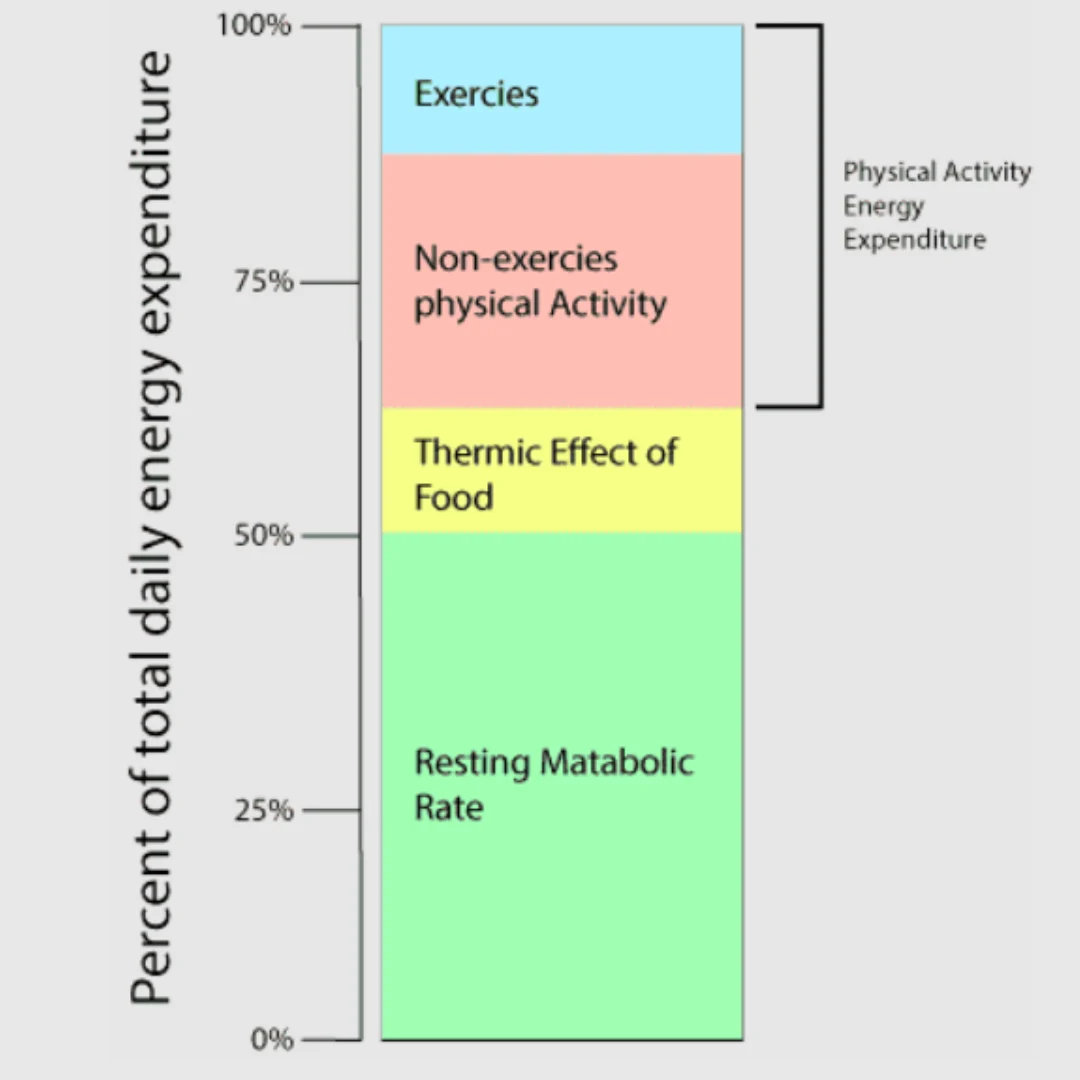Obesity is caused by a prolonged positive energy balance (too much energy going in and not energy enough going out).
But metabolism is not static. Over our lifetime, metabolic demands shift considerably.
---
## **Phase 1: Infancy** – **The Metabolic Peak**
**Age range:** Birth to ~1 year
- Babies burn calories *faster than any other age group*, about **50% higher** than adults (adjusted for body size).
- This fuels rapid growth, brain development, and muscle and organ formation.
- The infant body prioritises **growth and repair**, not efficiency.
- A global study measuring total energy expenditure (TEE) using doubly labeled water across ages 8 days to 95 years found that by around **0.7 years**, adjusted energy expenditure peaks at nearly 50 % above adult levels.
**Takeaway:** Infants’ metabolic rates are disproportionately high:
(1) organs such as heart, brain, kidneys are metabolically expensive relative to body size,
(2) Infant growth is also energetically costly.
## **Phase 2: Childhood & Adolescence – The Efficiency Shift**
**Age range:** 1–20 years
- As growth continues, metabolism per unit of body mass gradually decreases.
- Surprisingly, even during puberty, metabolic rate (adjusted for size) continues to *decline slightly*.
- The body is becoming more energy-efficient as tissues mature.
- Interestingly, during puberty (ages ~10–15), the study noted *no increase* in adjusted metabolic rate; it continues its gradual decline until about age 20.
- This phase reflects a shift: growth continues, but the relative metabolic “overhead” per unit body mass declines. The body becomes more “efficient” as tissues mature and structure stabilises.
**Takeaway:** Even during growth, metabolic intensity per unit of mass decreases — the body becomes more efficient.
[](https://www.amazon.co.uk/gp/product/B0DZF2R2D4?maas=maas_adg_A249D8C9C90C2449307E18E07E649FF5_afap_abs&ref_=aa_maas&tag=maas)Give your metabolism the edge with Meno Shape!---
## **Phase 3: Prime Adulthood** – **The Stable Years**
**Age range:** 20–60 years
- The *Science* study found that metabolism **stays remarkably stable** during adulthood.¹
- Both basal metabolic rate (BMR) and total energy expenditure (TEE) remain consistent when adjusted for body composition.
- This means your metabolism at 40 is virtually the same as it was at 25 — assuming no major changes in muscle mass or activity.
- The large scale study found that adjusted TEE and RMR plateau in these years.
- Only beyond certain thresholds do declines begin: for RMR at ~46.5 years and TEE at ~63 years.
- In practical terms, in this phase the body’s energetic demands are dominated by maintenance, repair, daily activity, and baseline organ function — less by growth or decline.
**So Why Do Middle-Aged People Think Their Metabolism Has Slowed?**
Because *lifestyle*, not biology, changes most during midlife:
- **Muscle mass decreases** (sarcopenia), especially without resistance training.
- **Activity levels drop** — fewer steps, less intensity, more sedentary work.
- **Caloric intake often stays the same**, creating a subtle energy imbalance.
- **Sleep and stress** can affect appetite-regulating hormones, leading to perceived “metabolic slowdown.”
In other words, metabolism hasn’t slowed — *we’ve slowed down*.
**Takeaway:** The middle years are a metabolic “steady state,” where efficiency and balance are key.
---
## **Phase 4: Older Adulthood** **– The Gradual Decline**
**Age range:** 60+ years
- Around 60, both total and resting energy expenditure begin to **decline by about 0.7% per year**, even after adjusting for body size.¹ (changes in body mass and composition (fat:muscle ratio).
- This reflects reduced organ metabolic activity, loss of lean tissue, and hormonal changes.
- Staying active and maintaining muscle can help slow this decline.
- The decline is steeper than what body loss alone would predict: adjusted TEE and RMR drop at about 0.7 % per year.
- By age 90+, adjusted total energy use is ~26 % lower than in middle age.
- Causes include loss of lean (metabolically active) tissue, reduced organ metabolic activity, hormonal changes, and decreased physical activity.
**Takeaway:** Aging brings metabolic slowing beyond mere weight or muscle loss, reflecting systemic changes in physiology.
---
## **Why These Phases Matter**
Understanding metabolic phases has real implications:
1. **Nutritional planning** — Calorie needs vary enormously across life stages. What’s sufficient (or excessive) for a toddler is quite different from what’s needed at 70.
2. **Disease risk & prevention** — Age‐related metabolic slowing can contribute to obesity, sarcopenia, and metabolic disorders if nutrition and activity aren’t adapted.
3. **Drug dosing & pharmacokinetics** — Metabolism of drugs also changes (via liver, kidney, enzyme activity), so dosing must adapt to age and metabolic function.
4. **Public health & policy** — Recognising different “energy budgets” across populations helps tailor guidelines for diet, exercise, and aging strategies.
---
## Key Takeaways
Human metabolism is not a fixed machine but a dynamic one, shifting as we grow, mature, and age.
The “four phases” framework offers a useful lens through which to understand how our energy needs evolve.
Infancy demands extraordinary metabolic investment; childhood and adolescence bring efficiency; adulthood maintains balance; and older age brings natural decline.
These insights remind us that what “metabolism” means — how much we need, how we use energy, how we manage health — is deeply contextual.
Tailoring nutrition, activity, and interventions to life stage is critical.
---
## Metabolic Rate
**Life Phase****Key Feature****What’s Happening****Infancy**Peak metabolismEnergy fuels rapid growth and organ development**Child – Teens**Efficiency increasesBody refines energy use as growth slows**Adult (20–60)**StabilityEnergy needs plateau when adjusted for muscle mass**Older Age (60+)**Gradual declineEnergy use falls due to muscle loss and organ changes---
**Why This Matters**
Understanding these phases helps explain how to maintain health at every age:
- **Infants/children:** Adequate nutrition supports growth.
- **Adults:** Focus on *muscle preservation* and activity to sustain energy balance.
- **Older adults:** Adapt diet and resistance training to counter decline.
---
### **Frequently Asked Questions:**
Q. What are the 4 phases of metabolism?
**Infancy:** Supercharged — burns 50% more than adults.
**Childhood/Teens:** Gradually becomes more efficient.
**Adulthood (20–60):** Steady — metabolism doesn’t really slow!
**Older Age (60+):** Finally starts to decline by ~0.7% a year.
### Q. So why does it metabolism feel slower in midlife?
It’s probably lifestyle: less movement, less muscle, and the same calories.
Your metabolism is more resilient than you think — it just needs a little help to keep up.
The fix? **Move more, lift weights, eat protein, sleep well.**
### Q. Why do most of us assume our metabolism starts to slow in our 30s or 40s?
Most of us start to notice weight gain in our 30’s and 40’s and blame our metabolism as we don’t usually understand why we are gaining weight.
Surprisingly, a 2021 *Science* study found metabolic rate stays *steady from 20 to 6*0.
What we don’t see however is that small differences in our lifestyle have likely been compounding over many years, even decades:
This can include less physical activity, more sedentary either during the day or in the evening (or both), less muscle mass as we age, more stress, more calories, broken sleep and for women hormonal chaos which for most brings abdominal fat. A combination for guaranteed weight gain.
### Q. How can I increase my metabolism?
**Build muscle, stay active, eat enough protein, sleep well, and stay hydrated**.
1\. **Build Muscle**
Muscle burns more calories at rest than fat. Strength training (like lifting weights or bodyweight exercises) increases muscle mass, which boosts your **resting metabolic rate**—meaning you burn more calories even when you’re not moving.
2\. **Stay Active**
Regular movement—especially cardio (like walking, running, or cycling)—burns calories and keeps your metabolism elevated. Adding short bursts of intense effort (HIIT) can give your metabolism a longer-lasting boost after exercise.
3\. **Eat Enough Protein**
Digesting protein uses more energy than fats or carbs (called the **thermic effect of food**). Eating protein-rich meals helps you burn more calories through digestion and also supports muscle maintenance and growth.
4\. **Sleep Well**
Lack of sleep can slow your metabolism and mess with hunger hormones, making you crave more food and store fat. Quality sleep helps regulate metabolism, hormones, and energy levels.
5\. **Stay Hydrated**
Water is essential for metabolic processes. Drinking enough (especially cold water) can temporarily boost metabolism and help with fat oxidation. Even mild dehydration can slow down your metabolic rate.
### Q. Can Green Tea boost metabolic rate?
Yes, Studies show Green tea contains natural compounds like caffeine and EGCG that may slightly boost metabolism and help the body burn fat more efficiently—especially when combined with exercise.
- [](https://prettypea.blog/d-mannose-and-cranberry-for-women/)[Menopause Nutrition](https://prettypea.blog/category/menopause/) · [Superfoods](https://prettypea.blog/category/superfoods/) · [Supplements](https://prettypea.blog/category/supplements/)
October 8, 2026
- [](https://prettypea.blog/what-is-glp-1/)[Fibre & Gut Health](https://prettypea.blog/category/fibre/) · [Hormones & HRT](https://prettypea.blog/category/hormones-hrt/) · [Menopause Nutrition](https://prettypea.blog/category/menopause/) · [Supplements](https://prettypea.blog/category/supplements/)
### [What Is GLP-1? The Gut Hormone That Helps Regulate Hunger & Blood Sugar](https://prettypea.blog/what-is-glp-1/)
August 18, 2026
- [](https://prettypea.blog/psyllium-husk-benefits/)[Pretty Pea](https://prettypea.blog/category/pretty-pea/)
### [Psyllium Husk: Benefits, How to Take It, Side Effects & How It Compares](https://prettypea.blog/psyllium-husk-benefits/)
August 15, 2026
---
[](https://www.amazon.co.uk/gp/product/B0DZF2R2D4?maas=maas_adg_A249D8C9C90C2449307E18E07E649FF5_afap_abs&ref_=aa_maas&tag=maas)**Give your body a metabolic edge with Meno Shape. Shop on Amazon!**
## [Think a Slow Metabolic Rate is to blame for Gaining Weight? Think Again..](https://prettypea.blog/think-a-slow-metabolic-rate-is-to-blame-for-gaining-weight-think-again/)
### Metabolic Rate : **References**
1. [Daily energy expenditure through the human life course | Science](https://www.science.org/doi/10.1126/science.abe5017) [↩︎](#899238af-a1c5-4454-be5b-1a438d48c8d5-link)
2. [Surprising findings about metabolism and age – Harvard Health](https://www.health.harvard.edu/blog/surprising-findings-about-metabolism-and-age-202110082613) [↩︎](#c50d8396-16e3-494f-a6e0-92c04901326b-link)
3. [Total daily energy expenditure has declined over the past three decades due to declining basal expenditure, not reduced activity expenditure | Nature Metabolism](https://www.nature.com/articles/s42255-023-00782-2) [↩︎](#b1da8d6e-c759-4968-bf5c-a9b161e10742-link)
**Categories:** Menopause Nutrition
---
### [Understanding Belly Fat](https://prettypea.blog/understanding-belly-fat/)
**Published:** August 5, 2024
**Author:** Cate Boyd
**Content:**
Whether your in your 30’s 40’s, 50’s or beyond, belly fat matters.
Did you know, that 2022 – 2023 stats show that 64% of UK adults were estimated to be overweight or obese. This includes around **28%** classed as obese (BMI of 30+).
With studies showing that millennials are gaining weight faster compared with generation X women, these numbers are only set to increase.
Obesity is more prevalent in women than men, particularly during midlife, when reproductive and physiological aging coincide, changing body composition.
In fact, obese post menopause women have a 4-fold increased risk of cardio vascular mortality.
The risk of postmenopausal breast cancer increases by 11% for every 5 kg gained as an adult.
Obesity is also the strongest risk factor for endometrial cancer, with every 5 kg/m2 increment in BMI associated with a 60% increase in risk .
Whether this increase in obesity is a consequence of menopause, age, genetics, and/or environmental factors is a subject of ongoing debate.
What we do know, is that during this time multiple factors contribute to the increase of body weight, belly fat and fat and a decrease in lean mass (muscle) that result in a change of body composition.
**The Perfect Weight Gain Storm**
Hormonal changes, poor nutritional intake and physical inactivity, all of which synergistically promote weight gain and belly fat.
Basal metabolic rate (how your body uses most of your energy/calories on a daily basis) is also reducing due to the aging process, along with muscle mass loss, and the reduction in brown tissue activity.
The decrease in muscle mass is accompanied by a progressive increase in fat mass, changes in body composition, and increased insulin resistance which in turn promotes weight gain.
There’s a lot happening – but that said, there are factors within our control.
Whilst weight gain has not been classified as a menopause symptom as such, the increase in body fat accumulation and shift of fat to the abdomen region with belly fat is the result of menopause–driven pathways.
To recognizing either aging, or menopause as the sole route of these changes is an over-simplification, as there are several factors that contribute to the changes in body composition, which happen in a synergistical manner.
What is happening is a perfect weight gain storm.
## Menopause Weight Gain
The hormonal changes during the menopause transition alter body composition dynamics, which in turn, induce a reduction in basal metabolic rate and bring with it an increase in appetite stimulating hormones.
Combined this with further age-related decreases in basal metabolic rate, inflammation, physical inactivity, gut dysbiosis (gut microbiome imbalance) and sleep disturbances all lead to a perfect storm for weight gain.
So what does these changes lead to…
Evidence suggests that obesity during the menopausal transition causes metabolism complications, oncologic disease, mental health disturbances and menopausal symptoms
Impairments of the circadian system are associated with reduced melatonin secretion, altered sleep–wake cycles and metabolic inflexibility.
Given that women may spend 30–40% of their lives in a post-menopause state, achieving a healthy body weight becomes crucial.
Menopause is a retrospective diagnosis made 12 months after the permanent cessation of menstruation.
The current average age of menopause is 51 years.
The menopause transition is a progressive transition, from the late reproductive years, through the perimenopause, to the final menstrual period and the early and late menopause, characterized by menstrual irregularity, vasomotor symptoms (VMS), sleep disturbances, and the genito-urinary symptoms, as well as increased risks of cardiovascular (CVS) disease, metabolic syndrome (MetS), osteoporosis, and several malignancies.
The physiologic and metabolic changes associated with the menopause are a direct effect of estrogen deficiency, which has been shown to affect lipid (fat) metabolism, energy consumption, insulin resistance.
Body fat composition changes also occur, with increased cardiometabolic and metabolic risks.
Body shape can shift from pear shape (hips & thigh fat) to more apple or android body shape with increase in both belly fat (subcutaneous fat) and visceral fat (internal fat) accumulation.
## Measuring Belly Fat: Waist to Hip Ratio
The complex interaction between age, obesity, and menopause is the subject of several ongoing studies.
Current evidence from studies, such as the Study of Women’s Health Across the Nation (SWAN) and the Women’s Health Initiative (WHI), suggests that the perimenopausal increase in obesity, measured by body mass index (BMI), is a consequence of age.
Menopause is, however, associated with an increase in truncal obesity (around the abdomen) and visceral adiposity (measured by waist circumference and waist-to-hip ratio), which are more associated with increased cardiovascular risk, metabolic syndrome, and hormone-related malignancies like endometrial and breast cancers.
It has been suggested that either the BMI threshold for health screening should be lowered in menopause women or that other measures that are more indicative of abdominal and visceral adiposity, such as waist-to-hip ratio, and newer anthropometric indexes, such as a body shape index, should be used.
**How To Measure** **Waist to Hip Ratio**
Find the bottom of the ribs and the top of the hips.
Wrap a tape measure around the waist midway between these points (this will be just above the belly button), and breathe out naturally before taking the measurement.
**How To Calculate** **Waist to Hip Ratio**
Measure waist circumference and height in the same units (either both in centimetres or both in inches). If you know your height in feet and inches, convert it to inches (for example, 5 feet 7 inches is 67 inches).
Divide waist measurement by height measurement. For example:
- 38 inches divided by 67 inches = waist-to-height ratio of 0.57 **or**
- 96.5 cm divided by 170 cm = waist-to-height ratio of 0.57.
- Use BMI as a practical measure of overweight and obesity. Interpret it with caution because it is not a direct measure of central adiposity.
Your results show:
- **healthy central adiposity:** waist-to-height ratio 0.4 to 0.49, indicating no increased health risks
- **increased central adiposity:** waist-to-height ratio 0.5 to 0.59, indicating increased health risks
- **high central adiposity:** waist-to-height ratio 0.6 or more, indicating further increased health risks.
These classifications can be used for people with a BMI under 35 kg/m2 of both sexes and all ethnicities, including adults with high muscle mass.
- The larger your waist, the higher your waist to height ratio.
- A ratio over 0.5 to 0.59 suggests that you have excess fat around your belly. This means you have an increased risk of health problems which include type 2 diabetes, hypertension and cardiovascular disease.
- And if your ratio is 0.6 or above, your risk is even higher.
When measuring belly fat, a good way of remembering is to keep the waist to half the height (so a waist-to-height ratio of under 0.5).
## Obesity, Belly Fat and Menopausal Transition
Your bodyweight can affect both the age you enter the menopause transition and also impact the severity of menopause symptoms.
Several factors have been suggested to affect the age of natural menopause; there is, for example, evidence for an association between genetics and smoking and younger age of onset of menopause.
The average menopause age has progressively increased, which is most likely because of a combination of factors, including genetic and environmental, especially that there remains a variance in the age at menopause from one country/region to another: for example, 49 years in Korea and Iran, **51 years in the United Kingdom**, and 52 years in the United States and Australia.
Most studies associate obesity with a later onset of menopause.
**Obesity, Bell Fat and Menopause Symptoms**
Several studies have shown that perimenopause women with obesity experience more severe vasomotor symptoms than women of normal weight.
Vasomotor symptoms are an important and common menopause symptom, hot flushes, are a sudden sensation of heat, usually starting from the face or chest, spreading through the body, and lasting 1–5 min.
This, together with night sweats, make up the vasomotor symptoms experienced by 50–80% of perimenopausal women, causing sleep disturbances, irritability, and poor quality of life.
Obesity, particularly that associated with an increased abdominal girth, has also been linked to sleep apnea and other sleep disturbances in menopausal women, as have genito-urinary symptoms.
Menopause weight gain has also been explained by the effect of estrogen deficiency on energy intake and expenditure.
Estrogen has been shown to have an inhibitory effect on appetite, and the depletion of estrogen postmenopause is thought to centrally control energy intake and energy expenditure.
## Management of menopause and related obesity
**Hormone Replacement Therapy**
Evidence shows that Hormone replacement therapy (HRT), is the most effective treatment for menopausal symptoms.
Current evidence supports its use in young, healthy menopausal women younger than 60 years and within 10 years of menopause, with benefits typically outweighing risks.
Perimenopausal women with obesity are more likely to be symptomatic and thus may require HRT.
HRT, however, is associated with increased risks of venous thromboembolism, cardiovascular complications, and breast and endometrial cancers, especially in women with obesity; as such, there should be a careful risk-benefit assessment in obese women requiring HRT.
Estrogen replacement has been shown in both animal and human studies to reverse the estrogen depletion associated with weight gain and body fat redistribution.
Several studies have shown a beneficial effect of hormone therapy in the reduction of central adiposity and preservation of lean body mass.
However, current advice, is not to use HRT to prevent or treat menopause-associated weight gain and visceral fat because the risks outweigh the benefits.
## Lifestyle changes and exercise
There is clear evidence that lifestyle changes, such as regular physical activity and dietary management, have a positive effect on health and prevention of chronic diseases.
In addition, intensive lifestyle changes leading to weight loss have been shown to reduce hot flushes.
A 5-year intervention study of pre-menopausal women aged 44–50 years showed the beneficial impact of lifestyle changes on body composition in middle-aged women.
The lifestyle intervention program included sessions on diet, cooking, and physical activity, as well as support and motivation to ensure adherence to the program.
After 4.5 years, 55% of those in the intervention group were at or below baseline weight, whereas only 26% of the control group maintained or lost weight.
Maintained weight loss also correlated with improvements in LDL-C level, triglyceride level, and systolic blood pressure.
This study showed that lifestyle intervention and education programs may prevent adverse changes in body composition during the peri-to postmenopausal period.
Age-related declines in resting energy expenditure are not seen among women who exercise regularly.
A recently published meta-analysis of walking intervention studies among perimenopause and postmenopausal women showed statistically significant improvements in BMI, body weight, and body fat percentage compared with the no-exercise groups.
For more support, check out Pretty Pea [Meno Weight supplements](https://prettypea.blog/menopause-weight-loss-supplement/ "Meno Weight supplements").
[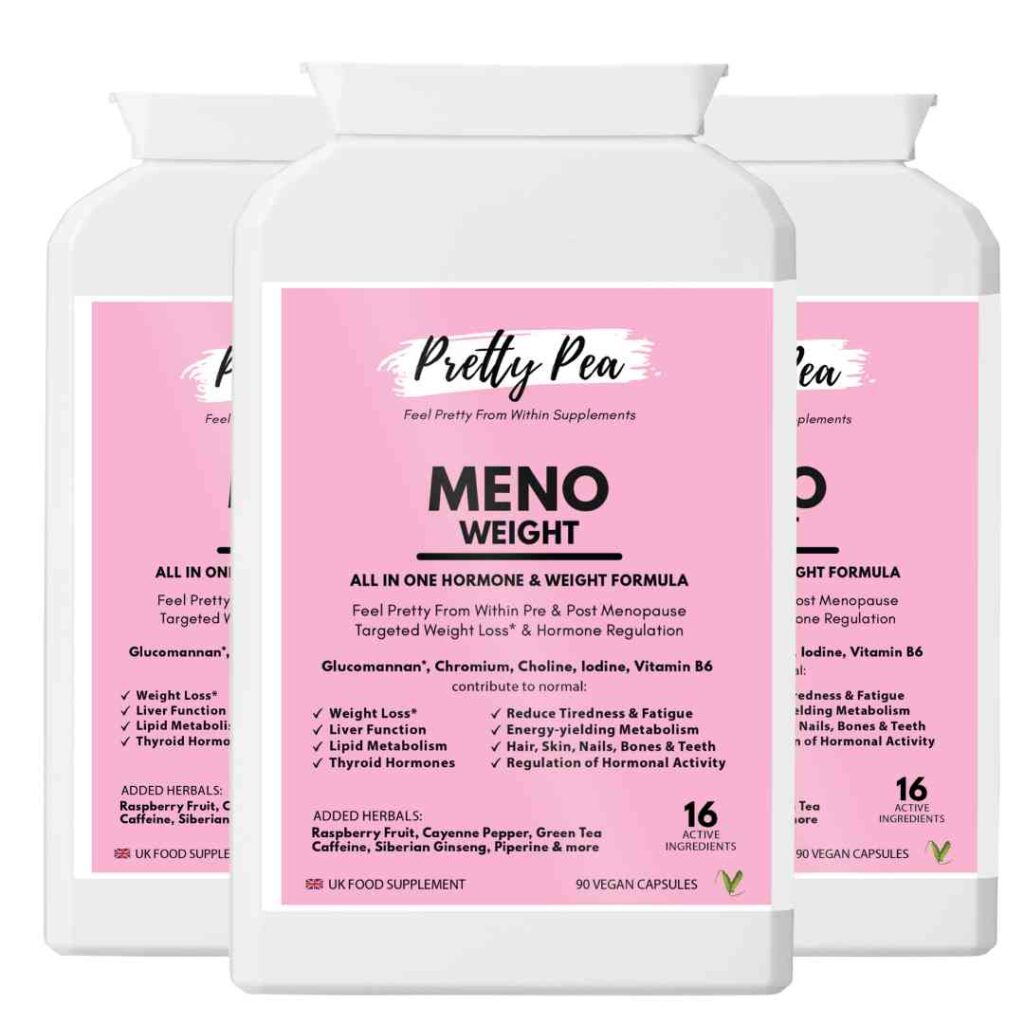](https://prettypea.blog/menopause-weight-loss-supplement/)
References
Obesity and menopause study 2023 science direct [doi.org/10.1016/j.bpobgyn.2023.102348](https://doi.org/10.1016/j.bpobgyn.2023.102348)
[Obesity Profile: short statistical commentary May 2024 – GOV.UK (www.gov.uk)](https://www.gov.uk/government/statistics/update-to-the-obesity-profile-on-fingertips/obesity-profile-short-statistical-commentary-may-2024)
[Recommendations | Obesity: identification, assessment and management | Guidance | NICE](https://www.nice.org.uk/guidance/cg189/chapter/Recommendations)
**Categories:** Menopause Nutrition
**Tags:** menopause supplements, menopause weight loss, perimenopause supplements, Weight Loss
---
### [What Nutrients Women Need](https://prettypea.blog/what-nutrients-women-need/)
**Published:** June 30, 2024
**Author:** Cate Boyd
**Content:**
Food is more than just calories. Food contains nutrients and these nutrients play a critical role in communicating with our body’s cells and systems, acting as biochemical messengers that influence various physiological processes. Let’s dive into what nutrients women need on a daily basis?
The human body requires a variety of nutrients to function properly. These nutrients can be categorized into macronutrients (carbohydrates, proteins, and fats) and micronutrients (vitamins and minerals).
Some nutrients need to be replenished daily, while others can be stored in the body and last longer. Here’s a detailed look at the macronutrients your body needs:
## Recommended Carbohydrate Intake
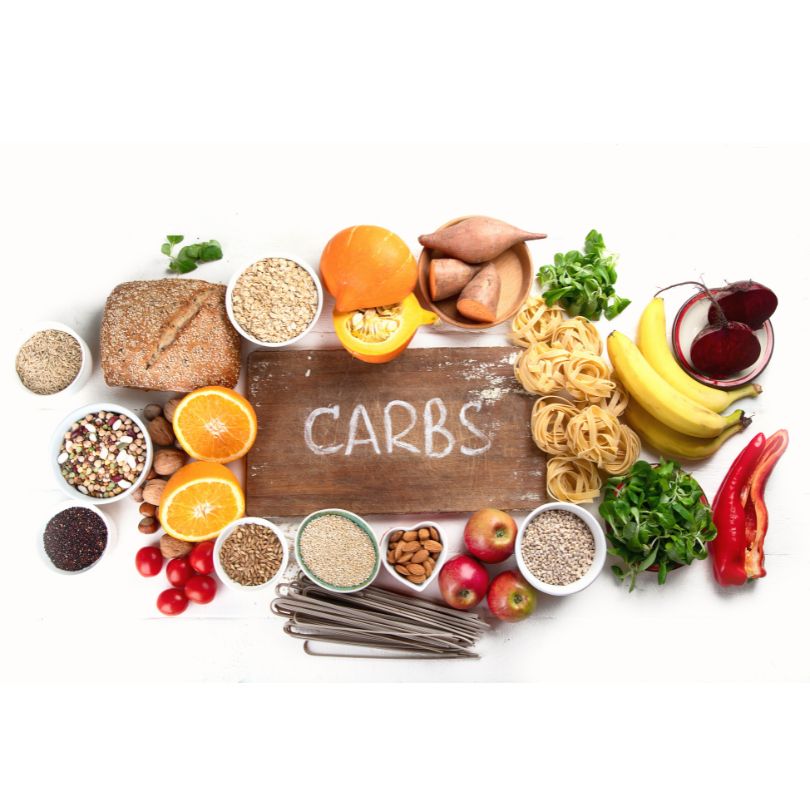
####
Daily Replacement
Carbohydrates often receive a mixed reputation in the diet world, especially for women navigating various life stages and health goals.
#### The Role of Carbohydrates
Carbohydrates are the body’s primary source of energy.
When consumed, they are broken down into glucose and fuel bodily functions and physical activity. They also signals the pancreas to release insulin.
Insulin helps regulate blood sugar levels and signals cells to uptake glucose for energy or storage as glycogen.
Carbohydrates are also crucial for brain function, as the brain relies heavily on glucose for energy.
Additionally, carbohydrates play a vital role in maintaining gut health, as they provide fibre (see below), which aids in digestion and promotes a healthy microbiome.
Carbohydrates should be **consumed** **daily** because they are quickly used for energy or stored as glycogen in the liver and muscles, which can be depleted within a day or two.
#### Are Carbohydrates Essential
Unlike proteins and fats, which are classified as essential nutrients (meaning the body cannot produce them and must obtain them through diet), carbohydrates are not technically essential.
The body can produce glucose from proteins and fats if necessary. However, for optimal health and energy levels, consuming carbohydrates is highly beneficial.
#### Are Carbs Bad for Women
So whilst carbs are both recommended and beneficial here are the downside of carbohydrates:
– **\*\*Weight Gain:\*\*** As metabolism slows with age, excess carbohydrate intake can more easily lead to weight gain.
– **\*\*Blood Sugar Spikes:\*\*** High carbohydrate intake, especially from refined carbs, can lead to spikes in blood sugar and insulin, contributing to weight gain and increasing the risk of type 2 diabetes.
– **\*\*Increased Hunger:\*\*** Rapid digestion of refined carbs can cause blood sugar crashes, leading to increased hunger and potential overeating.
#### Carbohydrates Recommended Daily Intake
The UK government’s Eatwell Guide recommends that carbohydrates make up around one-third of your diet.
For women, this means around 250 grams of carbohydrates per day on a 1600-2,000-calorie diet. Of course, individual needs may vary based on factors such as age, activity level, and health goals.
#### What are Net Carbs
Net carbohydrates are the total carbohydrates in a food minus the fibre and sugar alcohols (if any).
Fibre and certain sugar alcohols are not fully digested and absorbed by the body, so they do not significantly impact blood sugar levels.
Calculating net carbs can be especially useful for those on low-carb diets who aim to control blood sugar and insulin levels.
#### Consuming Excess Carbohydrates and Weight Gain
When you consume more carbohydrates than your body needs for energy, the excess is converted into fat and stored in adipose tissue, leading to weight gain.
High intake of refined carbohydrates and sugars can cause spikes in blood sugar levels, followed by crashes that increase hunger and cravings, potentially leading to overeating and further weight gain.
#### Low Carb Diets
**Low-Carbohydrate Diets:**
– Typically involve consuming 20-100 grams of net carbs per day.
– Focus on high-protein and high-fat foods while reducing carbohydrate intake.
– Pros: Can lead to rapid weight loss, improved blood sugar control, and reduced appetite.
– Cons: May lead to nutrient deficiencies if not well-balanced, can be difficult to maintain long-term, and may cause initial side effects like fatigue and dizziness.
#### Keto Diets
**Keto Diets:**
– Extremely low in carbohydrates (usually 20-50 grams of net carbs per day), high in fats, and moderate in proteins.
– The goal is to enter a state of ketosis, where the body burns fat for fuel instead of carbohydrates.
– Pros: Effective for rapid weight loss, improved mental clarity, and better blood sugar control.
– Cons: Can be challenging to maintain, may lead to nutrient deficiencies, potential for increased cholesterol levels, and may not be suitable for everyone, especially those with certain health conditions.
#### Top Carbohydrate Food Sources:
1. \*\*Whole wheat bread (1 slice):\*\* ~12g
2. \*\*Brown rice (1 cup, cooked):\*\* ~45g
3. \*\*Oats (1 cup, cooked):\*\* ~27g
4. \*\*Quinoa (1 cup, cooked):\*\* ~39g
5. \*\*Banana (1 medium):\*\* ~27g
## Recommended Protein Intake
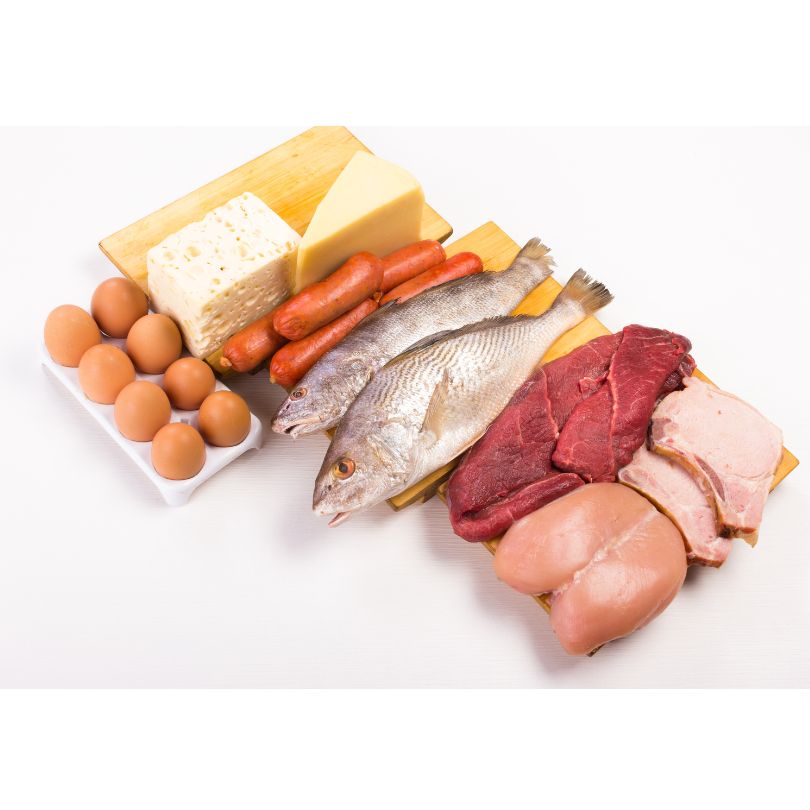
#### Protein Daily Replacement
Proteins are essential for tissue repair, muscle growth, and various metabolic processes.
Proteins are broken down into amino acids.
Proteins trigger the release of various hormones such as insulin and glucagon.
These hormones help regulate metabolism, muscle repair, and immune function.
Amino acids also act as precursors for neurotransmitters, which are crucial for brain function and mood regulation
While the body can recycle some amino acids, dietary protein should be **consumed daily** to ensure adequate supply for these functions.
#### Protein Recommended Daily Intake
The recommended daily intake of protein is 0.8g of protein per kilogram of bodyweight. For example a women weighing 70kg would need a minimum of 56 grams of protein each day.
However, for women looking to lose weight and/or build muscle and engaging in strength training, the recommended amount increases to about **1.2 to 2.0 grams of protein per kilogram of body weight**.
The exact amount will depend on factors such as the intensity of training and individual goals.
Whilst this amount may seem daunting for some it is totally do-able, I combine quality protein shakes with high protein foods.
> [Pretty Pea protein powder](https://prettypea.blog/vitamins-vegan-vanilla-protein-powder/ "Pretty Pea protein powder") is importantly low carbohydrate, packed full of daily essential vitamins and minerals, high in chicory root fibre and are under 100 calories per shake.
Protein intake should be split between each meal.
Protein increases satiety, so increasing your protein intake will have the added side effect of keeping you fuller for longer and curbing any snacking habits.
#### **Top Protein Food Sources:**
1. \*\*Chicken breast (100g):\*\* ~31g
2. \*\*Salmon (100g):\*\* ~25g
3. \*\*Eggs (1 large):\*\* ~6g
4. \*\*Greek yogurt (1 cup):\*\* ~10g
5. \*\*Lentils (1 cup, cooked):\*\* ~18g
## Recommended Fat Intake
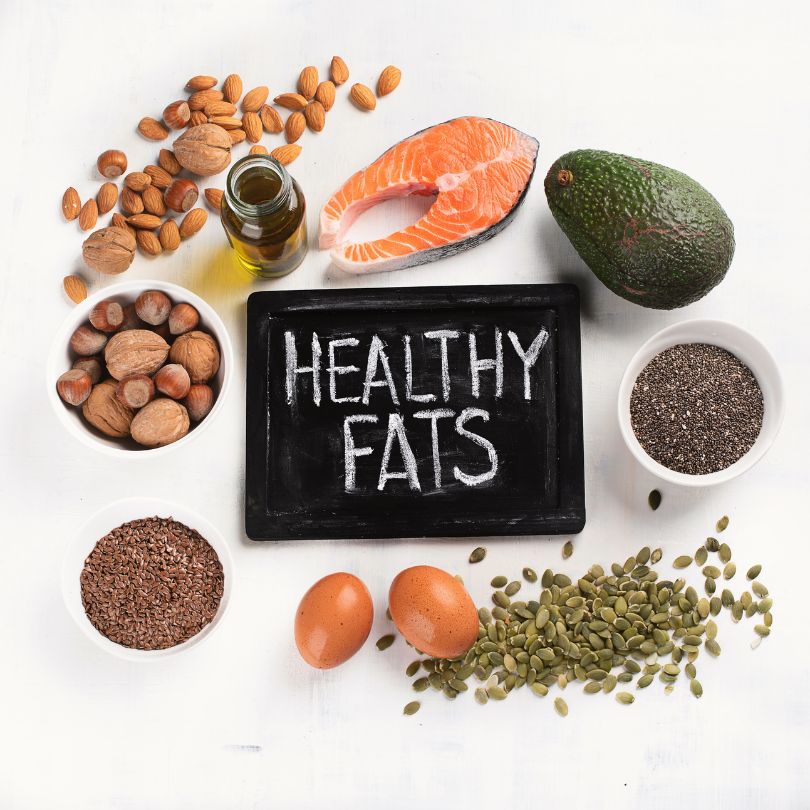
#### Longer Duration
Fats provide a concentrated energy source and are crucial for the absorption of fat-soluble vitamins (A, D, E, K).
Fats are metabolized into fatty acids and glycerol.
Fatty acids, particularly omega-3 and omega-6, are essential for the production of eicosanoids, which are signalling molecules that play roles in inflammation, immunity, and other critical cellular functions.
The body stores fats in adipose tissue, so they don’t need to be replenished as frequently as carbohydrates and proteins, but regular intake is still necessary.
#### Fats Recommended Daily Intake
Approximately 70 grams
#### Top Fats Food Sources:
1. \*\*Avocado (1 medium):\*\* ~21g
2. \*\*Olive oil (1 tablespoon):\*\* ~14g
3. \*\*Almonds (1 ounce):\*\* ~14g
4. \*\*Chia seeds (1 ounce):\*\* ~9g
5. \*\*Salmon (100g):\*\* ~13g
## Recommended Fibre Intake

So when talking about what nutrients women need, we need to talk about fibre.
Fibre is essentially a carbohydrate so should be considered when calculating your daily carbohydrate needs.
Though not absorbed by the body, fibre affects gut health by influencing the microbiota.
Short-chain fatty acids (SCFAs) produced by the fermentation of fibre in the colon serve as signalling molecules that influence gut health, inflammation, and even brain function through the gut-brain axis.
Women are recommended to consume 30 grams per day, combining both soluble and insoluble fibres.
#### Fibre Benefits
1. **Digestive Health**: Supports regular bowel movements and prevents constipation.
2. **Heart Health**: Helps lower cholesterol levels and reduce heart disease risk.
3. **Blood Sugar Control**: Slows sugar absorption, aiding in blood sugar management.
4. **Weight Management**: Promotes a feeling of fullness, reducing overall calorie intake.
**Top High Soluble Fibre Foods**
1. **Oats**: ~4 grams per cup (cooked)
2. **Beans and Lentils**: ~6-8 grams per 100g (cooked)
3. **Chia Seeds**: ~10 grams per ounce (28g)
4. **Apples**: ~4 grams per medium apple
5. **Chicory Root (Inulin)**: ~3 grams per tablespoon – Chicory root contains inulin, a prebiotic soluble fibre (food for your gut microbiome)
**Additional Recommendation: Glucomannan (from konjac root)**: ~ all fibre, so 1 gram of glucomannan = 1 gram of fibre.
Glucomannan is a highly viscous fibre, expanding up to 50 times its size once in your stomach.
Glucomannan’s many benefits include supporting blood glucose regulation, your digestive system and helping you feel fuller for longer and is a key nutrient in some of the Pretty Pea weight management supplements.
Glucomannan and weight loss: **3 grams per day supports weight loss**, to be taken 1 gram, 3 times daily, before meals (and in the context of a calorie controlled diet)
**Top High Insoluble Fibre Foods**
1. **Whole Wheat Bread**: ~2 grams per slice
2. **Brown Rice**: ~3.5 grams per cup (cooked)
3. **Nuts**: ~3 grams per 28g (1 ounce)
4. **Carrots**: ~2.8 grams per cup (chopped, raw)
5. **Bran (wheat or corn)**: ~6 grams per 1/4 cup
**Additional Recommended High-Fibre Food:**
**Sugar Beet Fibre**: ~5 grams per tablespoon. Sugar Beet supports an increase in faecal bulk (**bowel regularity**).
Sugar beet fibre contains a mix of soluble and insoluble fibres, with a significant portion being soluble. These fibres are beneficial for gut health and can help regulate blood sugar and cholesterol levels.
#### What Nutrients Women Need – Summary
In summary, nutrients in food serve as essential messengers by regulating hormonal activity, cellular communication, and gene expression, thereby maintaining homeostasis and influencing overall health.
While carbohydrates are not classified as essential nutrients like proteins and fats, they play a critical role in providing energy and supporting overall health.
Women may benefit from understanding their carbohydrate, protein and fat needs and how different dietary approaches can impact their health and weight loss goals.
Whether choosing a balanced diet or exploring low-carb or Keto options, it is important to consider individual needs and consult healthcare professionals for personalized advice.
It’s best to obtain these nutrients through a balanced diet and only supplement where needed for example to top up your protein needs, or to fill gaps in the diet, or as advised by a healthcare professional.
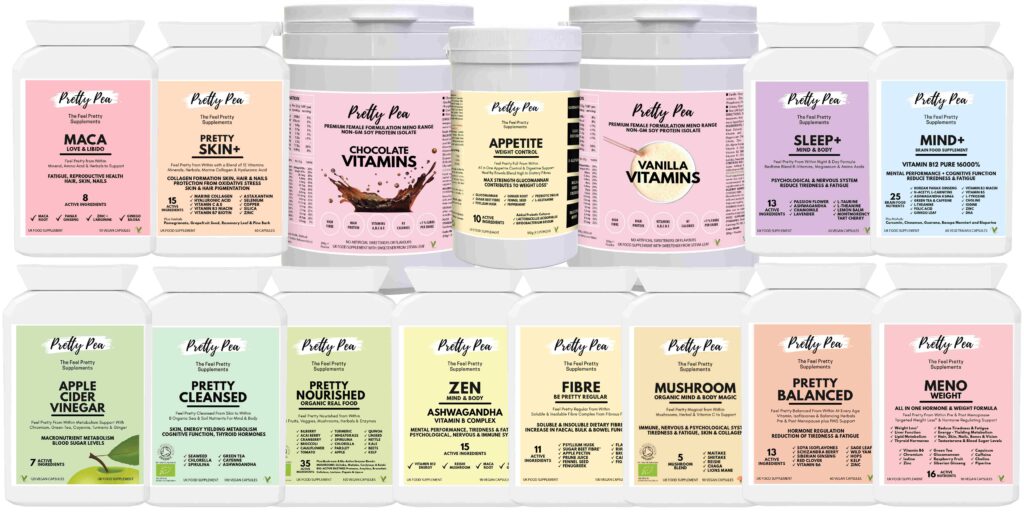
#### Sources of Information
Data from the UK National Health Service (NHS) and Food Standards Agency.
\*\*UK Government Dietary Recommendations\*\*
– Public Health England. (2016). Government dietary recommendations. \[Link\]([https://assets.publishing.service.gov.uk/government/uploads/system/uploads/attachment\_data/file/618167/government\_dietary\_recommendations.pdf](https://assets.publishing.service.gov.uk/government/uploads/system/uploads/attachment_data/file/618167/government_dietary_recommendations.pdf))
\*\*National Health Service (NHS) Guidelines\*\*
– NHS. (2020). Vitamins and minerals – Nutrition and diet. \[Link\]()
\*\*USDA National Nutrient Database for Standard Reference\*\*
– United States Department of Agriculture. (2019). USDA National Nutrient Database for Standard Reference. \[Link\]()
\*\*Glucomannan related health claims | EFSA (europa.eu)\*\*
Scientific Opinion on the substantiation of health claims related to konjac mannan (glucomannan) and **reduction of body weight** (ID 854, 1556, 3725), **reduction of post-prandial glycaemic responses** (ID 1559), maintenance of **normal blood glucose concentrations** (ID 835, 3724), maintenance of **normal (fasting) blood concentrations of triglycerides** (ID 3217), maintenance of **normal blood cholesterol concentrations** (ID 3100, 3217), maintenance of **normal bowel function** (ID 834, 1557, 3901) and **decreasing potentially pathogenic gastro-intestinal microorganisms** (ID 1558) pursuant to Article 13(1) of Regulation (EC) No 1924/2006
\*\*Scientific Opinion on the substantiation of a health claim related to sugar beet fibre and increasing faecal bulk\*\*
Sugar beet fibre and increasing faecal bulk | EFSA (europa.eu). http://efsa.europa.eu/en/efsajournal/pub/2468sing faecal bulk pursuant to Article 13(5) of Regulation (EC) No 1924/2006
National Health Service (NHS). The Eatwell Guide. Available at:
Public Health England. (2016). Government Dietary Recommendations.
Mayo Clinic Staff. (2020). Low-carb diet: Can it help you lose weight? Mayo Clinic.
Harvard T.H. Chan School of Public Health. Carbohydrates and Blood Sugar. The Nutrition Source.
**Categories:** Menopause Nutrition, Superfoods, Supplements
---
### [Bloated Stomach](https://prettypea.blog/bloated-stomach/)
**Published:** August 2, 2024
**Author:** Cate Boyd
**Content:**
Do you know why you’re feeling bloated? Here we go over the typical reasons for a bloated stomach and explain how your hormones could well be the culprit.
A bloated stomach is a common condition that affects many women, characterized by a feeling of fullness or swelling in the abdomen. While often considered a minor nuisance, a bloated stomach can significantly impact quality of life.
## Bloated Stomach Causes
Before you can identify the best bloating remedy for you, you ideally need to identify what the cause of your bloated stomach. Sounds obvious, right, but it’s often overlooked as we reach for a quick solution.
So let’s take a look at the most typical causes of bloating, because it’s not just diet related, we’ll delve into hormonal bloating, from pregnancy to menopause bloating.
Typical causes of stomach bloating include:
**1. Diet and Food Intolerances**
Certain foods and beverages are notorious for stomach bloating. Common culprits include:
– **\*\*High-fibre foods\*\*:** While essential for digestion, an excessive intake of high-fibre foods such as beans, lentils, broccoli, and whole grains can cause gas and bloating.
– **\*\*Dairy products\*\***: Lactose intolerance affects some people, leading to bloating, gas, and diarrhoea when consuming dairy products.
– **\*\*Carbonated drinks\*\*:** Beverages like soda and beer release carbon dioxide gas, which can build up in the digestive system and cause bloating.
**– \*\*Artificial sweeteners\*\***: Sorbitol and other sugar alcohols found in sugar-free products can ferment in the gut, leading to stomach bloating and gas.
**2. Overeating**
Eating large meals can stretch the stomach and slow down digestion, leading to a feeling of fullness and bloating. Eating too quickly can also cause one to swallow air, which contributes to a bloated stomach.
**3. Digestive Disorders**
Several gastrointestinal conditions can cause stomach bloating, including:
**– Irritable Bowel Syndrome (IBS):** A chronic condition characterized by abdominal pain, bloating, and altered bowel habits.
**– \*\*Small Intestinal Bacterial Overgrowth (SIBO)\*\***: An increase in the number or type of bacteria in the small intestine, causing gas production and bloating.
**– \*\*Celiac Disease\*\***: An autoimmune disorder where ingestion of gluten leads to damage in the small intestine, causing bloating and other digestive issues.
**– \*\*Gastroparesis\*\***: A condition where the stomach empties more slowly than normal, leading to bloating, nausea, and vomiting.
**4. Constipation**
When stool moves slowly through the digestive tract, it can cause a build up of gas and bloating. Lack of fibre, inadequate fluid intake, and sedentary lifestyle are common contributors to constipation.
**5. Swallowed Air**
Swallowing air, whether from eating too quickly, chewing gum, or smoking, can lead to bloating as the air accumulates in the digestive system.
**6. Stress and Anxiety**
Stress and anxiety can affect digestion, leading to symptoms such as bloating, gas, and abdominal pain. The gut-brain axis plays a significant role in how emotional and psychological stress can impact gut function.
**7. Hormonal Changes**
Women may experience bloating during menstrual cycles, pregnancy and experience menopause bloating too due to hormonal fluctuations.
Here we delve deeper into how hormones contribute to a bloated stomach, focusing on the specific hormones involved and the mechanisms through which they affect the digestive system.
## **Bloating: Key Hormones**

**1. Estrogen**
Estrogen is a primary female sex hormone responsible for the development and regulation of the female reproductive system and secondary sexual characteristics. It fluctuates throughout the menstrual cycle, reaching its peak just before ovulation.
– **\*\*Mechanism\*\***: High levels of estrogen can cause water retention, which can lead to a feeling of bloating. Estrogen also influences the gastrointestinal (GI) tract by affecting the motility and transit time of food through the intestines. Increased estrogen levels can slow down bowel movements, leading to constipation and bloating.
– **\*\*Menstrual Cycle\*\***: During the follicular phase (the first half of the menstrual cycle), estrogen levels rise, which can contribute to bloating. Additionally, estrogen levels peak just before ovulation, potentially exacerbating bloating and other premenstrual symptoms.
**2. Progesterone**
Progesterone is another key female sex hormone, which increases after ovulation during the luteal phase of the menstrual cycle. It prepares the body for potential pregnancy by thickening the uterine lining.
**– \*\*Mechanism\*\***: Progesterone has a relaxing effect on smooth muscles, including those in the GI tract. This relaxation can slow down gastrointestinal motility, leading to delayed emptying of the stomach and intestines, which in turn can cause bloating, gas, and constipation.
**– \*\*Menstrual Cycle\*\***: Progesterone levels rise after ovulation and remain elevated until the onset of menstruation. The peak in progesterone during the luteal phase often corresponds with the worst bloating symptoms in the menstrual cycle.
**3. Aldosterone**
Aldosterone is a hormone produced by the adrenal glands that helps regulate sodium and potassium levels in the body, as well as fluid balance.
**– \*\*Mechanism\*\***: Elevated levels of aldosterone can lead to water and salt retention in the body. This retention increases the volume of fluid in the blood and tissues, contributing to a sensation of bloating and abdominal fullness. Aldosterone levels can be influenced by hormonal changes during the menstrual cycle.
**– \*\*Menstrual Cycle\*\***: Aldosterone secretion can increase during the luteal phase of the menstrual cycle, exacerbating fluid retention and a bloated stomach.
**4. Cortisol**
Cortisol, often referred to as the stress hormone, is produced by the adrenal glands and is released in response to stress. It plays a crucial role in various bodily functions, including metabolism and immune response.
**– \*\*Mechanism\*\***: Elevated cortisol levels can lead to increased fat storage in the abdominal area and can influence digestive processes. Chronic stress and elevated cortisol can alter gut motility and permeability, potentially leading to bloating and other digestive issues. Additionally, high cortisol levels can promote the release of aldosterone, further contributing to fluid retention and stomach bloating.
**– \*\*Stress Impact\*\***: Stress and anxiety can exacerbate bloating by increasing cortisol levels, leading to changes in gut motility and sensitivity.
**5. Insulin**
Insulin is a hormone produced by the pancreas that regulates blood glucose levels by facilitating the uptake of glucose into cells for energy or storage.
**– \*\*Mechanism\*\***: High levels of insulin, often seen in conditions like insulin resistance and polycystic ovary syndrome (PCOS), can lead to bloating. Insulin resistance can cause the body to retain more sodium, leading to water retention and bloating. Moreover, insulin can influence the gut microbiota, potentially leading to dysbiosis and gastrointestinal symptoms, including bloating.
**– \*\*PCOS and Insulin Resistance\*\***: Women with PCOS often experience insulin resistance, which can contribute to bloating and other digestive discomforts.
## **Pregnancy Bloating**
Pregnancy involves significant hormonal changes that can lead to bloating:
**– \*\*Progesterone\*\***: During pregnancy, progesterone levels rise substantially to maintain the uterine lining and prevent contractions. This high level of progesterone relaxes smooth muscles throughout the body, including the gastrointestinal tract, which can slow digestion and lead to bloating and constipation.
**– \*\*Human Chorionic Gonadotropin (hCG)\*\***: This hormone, produced during pregnancy, can also affect digestion and contribute to early pregnancy bloating.
**– \*\*Estrogen\*\***: Estrogen levels also increase during pregnancy, contributing to water retention and a bloated stomach.
**– \*\*Relaxin\*\***: This hormone helps relax ligaments and joints to prepare the body for childbirth, but it also relaxes the GI tract, slowing down bowel movements and causing bloating.
## **Menopause Bloating**
Menopause marks the end of a woman’s reproductive years and involves significant hormonal shifts that can contribute to menopause bloating:
**– \*\*Estrogen Decline\*\***: During menopause, estrogen levels decline, which can lead to changes in how the body retains water and how the digestive system functions. This hormonal imbalance can cause bloating and other gastrointestinal issues.
**– \*\*Progesterone Decline\*\***: Similar to estrogen, progesterone levels also drop during menopause, which can alter gut motility and contribute to bloating and constipation.
**– \*\*Increased Cortisol\*\***: Stress levels and cortisol can increase during menopause due to various menopause symptoms, including sleep disturbances and anxiety, further contributing to bloating.
## **Hormonal Bloating** Remedies
Understanding the hormonal causes of bloating can help in managing and mitigating bloating symptoms. Here are some strategies to consider:
**1. Dietary Adjustments**
**– \*\*Balanced Diet\*\*:** Consuming a balanced diet rich in fibre, lean proteins, and healthy fats can help regulate digestion. Avoiding known trigger foods like high-sodium foods, artificial sweeteners, and excessive carbohydrates can reduce bloating.
**– \*\*Low-FODMAP Diet\*\*:** For individuals with IBS, a low-FODMAP diet can help reduce bloating and other gastrointestinal symptoms.
**– \*\*Hydration\*\*:** Drinking plenty of water helps prevent fluid retention and supports digestion.
[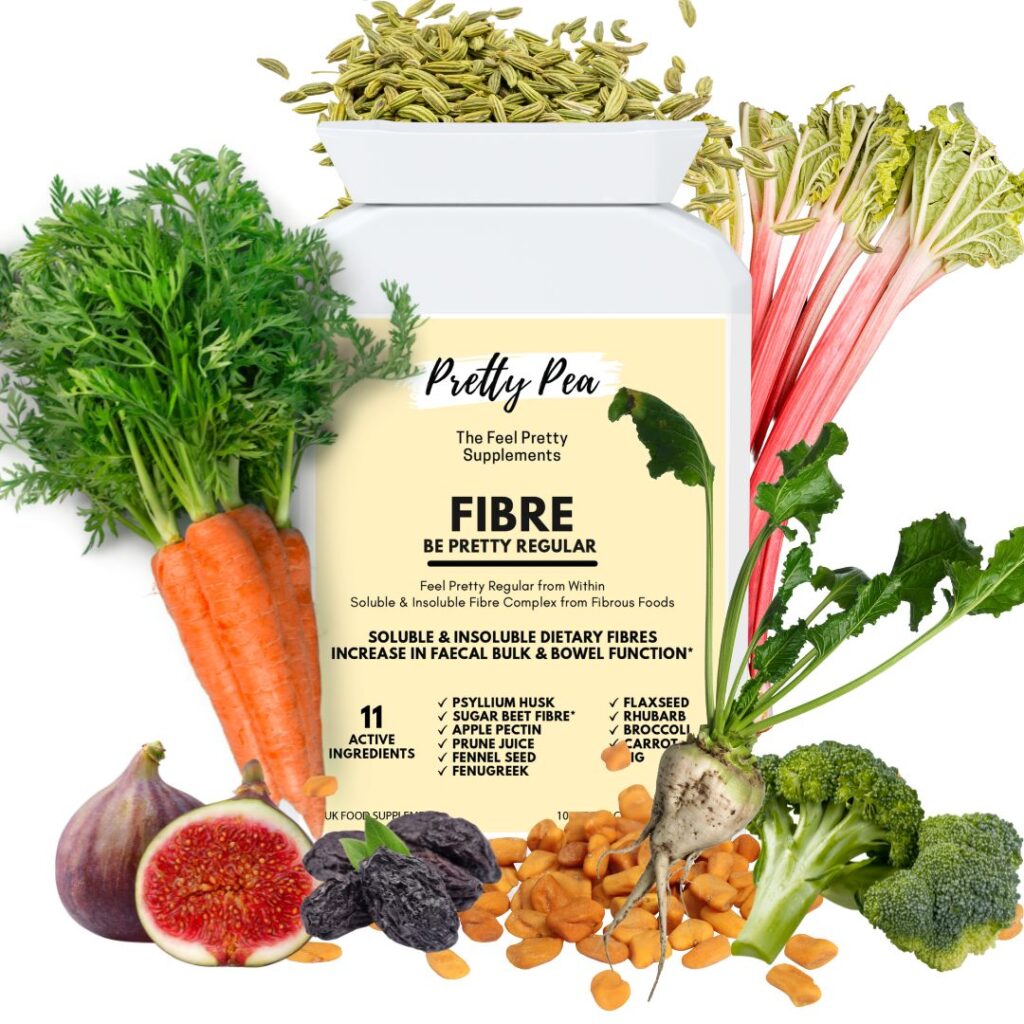](https://prettypea.blog/fibre-supplements-fibre-psyllium-husk-supplements/)
**2. Regular Physical Activity**
**– \*\*Exercise\*\***: Regular exercise promotes healthy digestion and reduces fluid retention. Activities like walking, yoga, and stretching can be particularly beneficial for relieving bloating.
**3. Stress Management**
**– \*\*Mindfulness and Meditation\*\***: Practices like mindfulness and meditation can help manage stress levels and reduce cortisol, which can alleviate stress-related bloating.
**– \*\*Adequate Sleep\*\*:** Ensuring sufficient sleep supports hormonal balance and reduces stress.
**4. Hormonal Therapies**
**– \*\*Birth Control\*\***: For some women, hormonal birth control can help regulate menstrual cycles and reduce bloating associated with hormonal fluctuations.
**– \*\*Hormone Replacement Therapy (HRT)\*\***: For women experiencing menopause, HRT can help balance hormones and alleviate symptoms, including bloating.
**5. Natural Remedies**
**– \*\*Herbals\*\***: Peppermint, ginger, and chamomile can help soothe the digestive system and reduce bloating.
**– \*\*Probiotics\*\***: Probiotics can help balance gut microbiota and improve digestion, potentially reducing bloating
**-\*\*Phytoestrogens\*\*:** Plant-based phytoestrogens, such as Red Clover, are believed to mimic the effect of estrogen in the body.
**6. Medical Consultation**
**– \*\*Professional Advice\*\*:** For persistent or severe bloating, consulting with a healthcare provider is essential. They can provide personalized recommendations and may suggest treatments like antispasmodics, medications for IBS, or other targeted therapies.
## **Conclusion**
Hormonal fluctuations can be a significant factor in the development of womens bloating. Understanding the role of hormones like estrogen, progesterone, aldosterone, cortisol, and insulin in digestive health is crucial for managing bloating effectively.
By adopting a holistic approach that includes dietary adjustments, regular exercise, stress management, and professional guidance, individuals can mitigate the impact of hormonal bloating and improve their overall well-being.
For womens supplements and herbal remedies shop [www.prettypea.blog](http://www.prettypea.blog "www.prettypea.blog"). The range includes weight loss, hormone balance and menopause supplements, stress and sleep supplements and hacks to increase your daily fibre, protein and fruit & veg intake *(the easy way).*
[](www.prettypea.blog)
References
1\. Mayo Clinic. (2021). “Hormonal Causes of Bloating.” Available at:
2\. National Institute of Diabetes and Digestive and Kidney Diseases (NIDDK). (2020). “The Impact of Hormones on Digestive Health.” Available at:
3\. American College of Obstetricians and Gynecologists (ACOG). (2021). “Hormonal Changes and Digestive Health.” Available at:
4\. National Health Service (NHS). (2021). “Hormonal Bloating During Menstrual Cycle and Pregnancy.” Available at: https://www.nhs.uk/conditions/bloating-and-excess-gas/
5\. Cleveland Clinic. (2021). “Managing Hormonal Bloating: Tips and Strategies.” Available at: https://health.clevelandclinic.org/how-to-manage-hormonal-bloating/
**Categories:** Fibre & Gut Health, Menopause Nutrition
**Tags:** bloated stomach
---
### [Weight Gain on Menopause](https://prettypea.blog/weight-gain-on-menopause/)
**Published:** January 3, 2025
**Author:** Cate Boyd
**Content:**
## **8 Causes of Weight Gain on Menopause**
Menopause is a natural phase in a woman’s life, typically occurring in the late 40s to early 50s. While this transition brings many changes, one common concern for many women is weight gain on menopause. Understanding the causes can empower women to take proactive steps to manage their health during this time, so here we share 8 causes of menopause weight gain.
## **Weight Gain on Menopause : 8 Causes**
1. **Hormonal Changes** Menopause is marked by a significant drop in estrogen levels. Estrogen plays a crucial role in regulating body fat distribution. When estrogen levels decrease, fat tends to accumulate around the abdomen, leading to weight gain and what’s known as menopause belly fat. Studies have shown that postmenopausal women are more likely to experience central obesity and this *meno belly* due to these hormonal shifts ([Source](https://www.ncbi.nlm.nih.gov)).
**2. Appetite Regulation** Changes in hormones such as ghrelin (the hunger hormone) and leptin (the satiety hormone) during menopause can disrupt appetite regulation. Lower estrogen levels can increase ghrelin production, making women feel hungrier, while reduced leptin sensitivity may impair feelings of fullness. This combination can lead to overeating and weight gain ([Source](https://www.ncbi.nlm.nih.gov)).
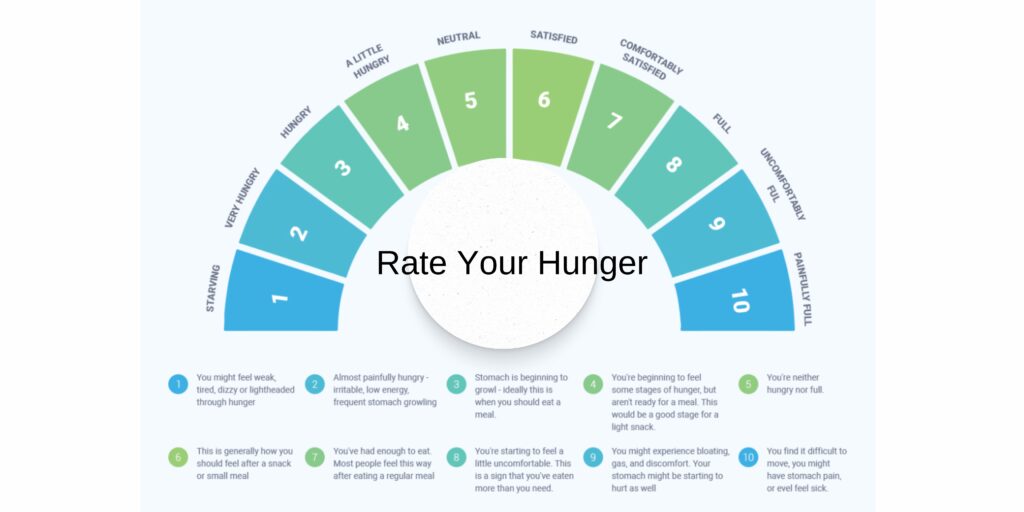**3. Slowed Metabolism** As women age, their basal metabolic rate naturally slows down. This means the body burns fewer calories at rest, making it easier to gain weight. Coupled with hormonal changes, this can significantly contribute to weight gain on menopause.
4\. **Loss of Muscle Mass** Aging is also associated with a gradual loss of muscle mass, a condition known as sarcopenia. Since muscle tissue burns more calories than fat tissue, losing muscle can further reduce metabolic rate, leading to increased fat storage. Reduced muscle also causes the body to lose shape and firmness.
**5**. **Sleep Disruptions** Hormonal changes during menopause often lead to sleep disturbances, including insomnia and fragmented sleep. Poor sleep is linked to increased levels of cortisol (the stress hormone) and altered levels of appetite-regulating hormones, which can lead to overeating and weight gain ([Source](https://www.ncbi.nlm.nih.gov)).
6\. **Stress and Cortisol Levels** The menopausal transition can be a stressful time due to physical, emotional, and social changes. Elevated stress levels can increase cortisol production, which is associated with abdominal fat accumulation, and again menopause belly fat, and cravings for high-calorie comfort foods.
7\. **Lifestyle Factors** Many women face lifestyle changes during menopause, such as reduced physical activity or changes in eating habits. Stress, fatigue, and emotional challenges brought on by menopause symptoms can lead to overeating or unhealthy food choices, exacerbating weight gain.
8\. **Insulin Resistance** Some women develop insulin resistance during menopause, which can make it harder for the body to regulate blood sugar levels. This condition can lead to increased fat storage and particularly around the midsection – menopause belly fat.
## **Managing Weight Gain on Menopause**
You can see a theme with weight gain causing menopause belly fat, and although weight gain on menopause can be challenging, and results can be slower, there are effective strategies to address it:
1. **Adopt a Balanced Diet**
- Focus on nutrient-dense foods, including fruits, vegetables, lean proteins, and whole grains.
- Limit processed foods, sugary snacks, and saturated fats.
- Include healthy fats, such as omega-3 fatty acids, which support overall health.
- Protein and fibre are key to keeping you full so making these a priority will get best results. Top up any gaps in your diet with Pretty Pea protein powder, fibre supplements or [fruit and vegetable supplements](https://prettypea.blog/fruit-and-vegetable-supplements/ "fruit and vegetable supplements").
2. **Consult Healthcare Providers** Speak with a doctor or dietitian about tailored strategies for managing weight gain on menopause. Estrogen does impact weight gain. In some cases, hormone replacement therapy (HRT) or other medical interventions may be beneficial. Some medications, including certain antidepressants can make loss feel almost impossible so its important to discuss your needs with your GP.
3. **Stay Physically Active**
- Engage in regular aerobic exercise, such as walking, cycling, or swimming, to burn calories and improve cardiovascular health. Exercise also boosts natural feel good endorphines.
- Incorporate strength training exercises to build and maintain muscle mass and metabolism. This, alongside increasing protein and fibre, could be the singles biggest change to drive results and change how you feel about your body.
4. **Manage Stress**
- Practice mindfulness, yoga, or meditation to reduce stress levels.
- Prioritize sleep, as poor sleep can contribute to weight gain by disrupting hunger-regulating hormones.
5. **Monitor Portion Sizes**
- Being mindful of portion sizes can prevent overeating. Consider using smaller plates or measuring servings to stay on track. Start looking at package labels for nutritional value. We all tend to consume more calories than we realise. Pretty Pea Meno Weight can help with this too.
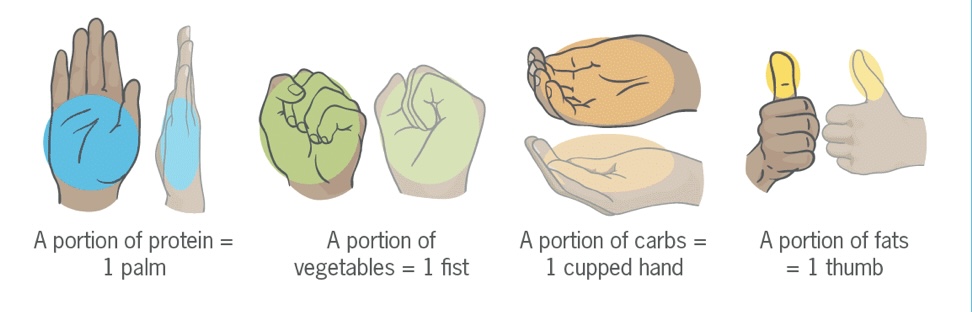
## **Conclusion**
Weight gain on menopause is a common but manageable by making certain changes. By understanding the underlying causes—from hormonal changes to lifestyle factors—and adopting healthy habits, women can take control of their health during this transformative phase. If you’re struggling with weight gain on menopause and menopause belly fat, remember that small, consistent changes can lead to significant improvements over time.
For more information on managing menopause-related health issues, consult your healthcare professional.
[](https://prettypea.blog/menopause-weight-loss-supplement/)
**Categories:** Hormones & HRT, Menopause Nutrition
---
### [Multivitamins](https://prettypea.blog/multivitamins/)
**Published:** October 10, 2024
**Author:** Cate Boyd
**Content:**
**The Benefits of Multivitamin Gummies for Women: A Comprehensive Guide to Pretty Pea Multivitamins**
In today’s fast-paced world, maintaining optimal health can be challenging, especially for women juggling multiple roles and responsibilities. While a balanced diet is essential, it’s not always easy to get all the necessary nutrients from food alone. This is where female specific multivitamins in a delicious gummy come into play, offering a quick and convenient way to ensure you’re meeting your nutritional needs.
Our focus today is on a specific product: **Women’s Multivitamins, Tasty Strawberry Multivitamin Gummies, Women’s Wellbeing All Ages,** the ABCDE of womens vitamins (and much more) available on Amazon. These multivitamins are packed with essential nutrients designed to support women’s health at every life stage and are a gamechanger – you won’t forget to take your vitamins with these delicious multivitamin gummies!
[](https://www.amazon.co.uk/Multivitamins-Strawberry-Multivitamin-Wellbeing-Pregnancy/dp/B0DHYL1LGP?maas=maas_adg_4C8E1BD7143F8FC8AF243F6CA7AA81A3_afap_abs&ref_=aa_maas&tag=maas)**Why Multivitamin Gummies?**
Multivitamin gummies are a game-changer in the world of supplements. They are easy to take, taste great, and provide an effective way to ensure your body gets the vitamins and minerals it needs to function optimally.
Unlike traditional pills, gummies are more enjoyable to consume, making it less likely that you’ll skip your daily dose ***(and these strawberry gummies really are a tasty treat you won’t forget to take)***.
But why are these specific vitamins and minerals so important for women, and how do they benefit your health? Let’s dive into the science and benefits behind the key ingredients in these multivitamin gummies.
**The Pretty Pea Powerhouse Ingredients in Womens Multivitamins**
These multivitamin gummies are formulated with a blend of essential vitamins and minerals that play crucial roles in women’s health:
- **Vitamin A**
- **Vitamin B6**
- **Vitamin B12**
- **Vitamin C**
- **Vitamin D**
- **Vitamin E**
- **Inositol**
- **Iodine**
- **Folic Acid**
- **Zinc**
Let’s explore the benefits of each of these multivitamin ingredients in detail and how they support women from the inside out:
**1. Vitamin A: For Vision and Immune Health**
Vitamin A is vital for maintaining good vision, supporting immune function, and promoting healthy skin. It acts as an antioxidant, protecting your cells from damage and enhancing skin elasticity. For women of all ages, especially those concerned with skin aging and eye health, Vitamin A is a must-have.
**How It Helps:**
- Improves vision, especially in low light.
- Supports a robust immune system.
- Promotes skin health and slows the aging process.
**2. Vitamin B6: Balancing Hormones and Boosting Mood**
Vitamin B6 plays a key role in hormone regulation, which is crucial for women dealing with hormone imbalance at every age, from difficult cycles, PMS, to perimenopause or menopause. It also supports brain health and mood stabilization by helping produce neurotransmitters like serotonin and dopamine.
**How It Helps:**
- Eases PMS symptoms and supports hormonal balance.
- Boosts mood and reduces symptoms of depression.
- Enhances brain function and energy levels.
[](https://www.amazon.co.uk/Multivitamins-Strawberry-Multivitamin-Wellbeing-Pregnancy/dp/B0DHYL1LGP?maas=maas_adg_4C8E1BD7143F8FC8AF243F6CA7AA81A3_afap_abs&ref_=aa_maas&tag=maas)**3. Vitamin B12: Energy and Nervous System Support**
Vitamin B12 is essential for energy production and maintaining the health of the nervous system. It helps prevent anemia, which can cause fatigue and weakness, making it particularly beneficial for women with busy lifestyles.
**How It Helps:**
- Increases energy levels and reduces fatigue.
- Supports a healthy nervous system.
- Aids in red blood cell production, preventing anemia.
**4. Vitamin C: Immune System and Skin Health**
Vitamin C is well-known for its immune-boosting properties, but it also plays a significant role in collagen production, which is essential for healthy skin and connective tissues. For women, this means fewer wrinkles and more vibrant skin.
**How It Helps:**
- Strengthens the immune system, reducing the risk of illness.
- Promotes collagen production for firm, youthful skin.
- Acts as an antioxidant to protect against skin damage.
**5. Vitamin D: Bone and Mood Health**
Supplementing with Vitamin D is vital for many women especially in the winter months. Vitamin D is involved in almost every aspect of the body. It’s crucial for maintaining bone health by aiding calcium absorption. It also plays a role in mood regulation, helping to alleviate symptoms of depression, which is more common in women.
**How It Helps:**
- Supports strong bones and teeth.
- Enhances calcium absorption.
- Helps stabilize mood and combat seasonal affective disorder (SAD).
**6. Vitamin E: Skin and Hair Care**
Vitamin E is a powerful antioxidant that supports skin health, making it a great choice for women looking to maintain a youthful appearance. It also helps with hair growth and overall cellular repair.
**How It Helps:**
- Promotes healthy skin and reduces signs of aging.
- Supports hair growth and scalp health.
- Protects cells from oxidative damage that age the body.
[](https://www.amazon.co.uk/Multivitamins-Strawberry-Multivitamin-Wellbeing-Pregnancy/dp/B0DHYL1LGP?maas=maas_adg_4C8E1BD7143F8FC8AF243F6CA7AA81A3_afap_abs&ref_=aa_maas&tag=maas)**7. Inositol: Mental Health and Hormonal Balance**
Inositol is a lesser-known but essential nutrient that plays a significant role in mood stabilization and hormonal balance. It’s particularly beneficial for women dealing with conditions like PCOS or hormonal imbalances.
**How It Helps:**
- Regulates hormones and supports reproductive health.
- Improves mood and reduces anxiety.
- Supports brain health and cognitive function.
**8. Iodine: Thyroid Function and Metabolism**
Iodine is essential for thyroid function, which regulates metabolism and energy levels. A healthy thyroid is crucial for women to maintain a balanced weight and overall energy.
**How It Helps:**
- Supports thyroid health and metabolic rate.
- Helps regulate hormones.
- Prevents thyroid-related issues like hypothyroidism.
- Supports healthy skin
- Supports development of children
**9. Folic Acid: Pregnancy and Beyond**
Folic acid is a critical nutrient for women of childbearing age, as it plays a key role in preventing birth defects. However, it’s also beneficial for heart health and cellular function in women of all ages.
**How It Helps:**
- Supports healthy pregnancy and foetal development.
- Promotes heart health by reducing homocysteine levels.
- Aids in DNA repair and cell growth.
**10. Zinc: Immune Support and Skin Health**
Zinc is a mineral that supports immune health, wound healing, and skin clarity. It’s particularly helpful for women in reducing acne and other skin concerns while boosting their immune response.
**How It Helps:**
- Strengthens the immune system and fights infections.
- Promotes clear, healthy skin.
- Aids in wound healing and skin regeneration.
[](https://www.amazon.co.uk/Multivitamins-Strawberry-Multivitamin-Wellbeing-Pregnancy/dp/B0DHYL1LGP?maas=maas_adg_4C8E1BD7143F8FC8AF243F6CA7AA81A3_afap_abs&ref_=aa_maas&tag=maas)**Why Women of All Ages Need These Nutrients**
From adolescence to menopause and beyond, women’s bodies go through various changes that require different levels of nutritional support. Multivitamin gummies with these specific vitamins and minerals cater to every life stage, helping:
- **Young Women:** Support growth, skin health, and energy levels.
- **Women in Their 30s and 40s:** Enhance hormonal balance, skin vitality, and stress resilience.
- **Pregnancy and Postpartum:** Provide critical nutrients for both mother and baby.
- **Women in Their 50s and Beyond:** Maintain bone health, cognitive function, and combat the effects of aging.
**Introducing the Ultimate Women’s Multivitamin Gummies**
If you’re looking for a convenient, delicious way to boost your health, look no further than the **Women’s Multivitamins, Tasty Strawberry Multivitamin Gummies**. These gummies are specially formulated to provide all the essential nutrients discussed above in a tasty, easy-to-take format.
**Why Choose These Gummies?**
- **Delicious Flavour:** Tasty natural strawberry flavour (no artificial taste) makes taking your daily vitamins a treat, no longer a chore that’s easily forgotten.
- **All In One Formula:** Packed with vitamins A, B6, B12, C, D, E, inositol, iodine, folic acid, and zinc. No more taking a handful of different supplements.
- **Hormone Harmony:** Supports hormone balance, which is crucial for mood stability and overall well-being.
- **All Ages:** Suitable for women at any stage of life.
- **Convenient and Effective:** No need to swallow large pills; simply chew and enjoy. *Did we mention they really are delicious.*
These gummies are designed to support women’s health in a holistic way, making them an ideal choice for daily use. Whether you’re focusing on skin health, energy levels, or overall well-being, these multivitamin gummies have got you covered.
**Final Thoughts**
Investing in your health doesn’t have to be complicated or boring. With the right multivitamin gummies, you can easily fill any nutritional gaps and support your body’s needs at every stage of life. The **[Women’s Multivitamins, Tasty Strawberry Multivitamin Gummies](https://www.amazon.co.uk/Multivitamins-Strawberry-Multivitamin-Wellbeing-Pregnancy/dp/B0DHYL1LGP?maas=maas_adg_4C8E1BD7143F8FC8AF243F6CA7AA81A3_afap_abs&ref_=aa_maas&tag=maas "Women’s Multivitamins, Tasty Strawberry Multivitamin Gummies")** offer a perfect blend of essential vitamins and minerals tailored to women’s unique health requirements.
Ready to take the next step in your wellness journey? Try these **[Women’s Multivitamins](https://www.amazon.co.uk/Multivitamins-Strawberry-Multivitamin-Wellbeing-Pregnancy/dp/B0DHYL1LGP?maas=maas_adg_4C8E1BD7143F8FC8AF243F6CA7AA81A3_afap_abs&ref_=aa_maas&tag=maas "Women’s Multivitamins")** over on Amazon today and experience the difference they can make in your overall health, energy, and vitality.
---
[](https://www.amazon.co.uk/Multivitamins-Strawberry-Multivitamin-Wellbeing-Pregnancy/dp/B0DHYL1LGP?maas=maas_adg_4C8E1BD7143F8FC8AF243F6CA7AA81A3_afap_abs&ref_=aa_maas&tag=maas)**References**
1. **Vitamin A**
- National Institutes of Health (NIH). (2022). [Vitamin A: Fact Sheet for Health Professionals](https://ods.od.nih.gov/factsheets/VitaminA-HealthProfessional/). Discusses the role of vitamin A in vision, immune function, and skin health.
2. **Vitamin B6**
- Harvard T.H. Chan School of Public Health. (n.d.). [Vitamin B6](https://www.hsph.harvard.edu/nutritionsource/vitamin-b6/). Provides details on the importance of vitamin B6 in brain function, mood regulation, and hormonal balance.
3. **Vitamin B12**
- National Institutes of Health (NIH). (2022). [Vitamin B12: Fact Sheet for Health Professionals](https://ods.od.nih.gov/factsheets/VitaminB12-HealthProfessional/). Highlights vitamin B12’s role in energy production, nerve function, and preventing anemia.
4. **Vitamin C**
- Mayo Clinic. (2021). [Vitamin C](https://www.mayoclinic.org/drugs-supplements-vitamin-c/art-20363932). Describes the benefits of vitamin C for the immune system, skin health, and its antioxidant properties.
5. **Vitamin D**
- National Institutes of Health (NIH). (2022). [Vitamin D: Fact Sheet for Health Professionals](https://ods.od.nih.gov/factsheets/VitaminD-HealthProfessional/). Explains the role of vitamin D in bone health, calcium absorption, and mood regulation.
6. **Vitamin E**
- Mayo Clinic. (2022). Vitamin E. Outlines the importance of vitamin E in skin care, hair health, and its function as an antioxidant.
7. **Inositol**
- National Center for Biotechnology Information (NCBI). (2020). [Inositol and Its Role in Mental Health](https://www.ncbi.nlm.nih.gov/pmc/articles/PMC6760478/). Discusses inositol’s impact on mood, cognitive function, and hormonal balance.
8. **Iodine**
- World Health Organization (WHO). (2021). [Iodine](https://www.who.int/news-room/fact-sheets/detail/iodine). Details iodine’s role in thyroid function and metabolic rate regulation.
9. **Folic Acid**
- Centers for Disease Control and Prevention (CDC). (2020). Folic Acid. Covers the importance of folic acid in pregnancy, cell growth, and heart health.
10. **Zinc**
- National Institutes of Health (NIH). (2022). [Zinc: Fact Sheet for Health Professionals](https://ods.od.nih.gov/factsheets/Zinc-HealthProfessional/). Discusses zinc’s benefits for immune function, skin health, and wound healing.
**Categories:** Supplements
---
### [What is Glucomannan](https://prettypea.blog/what-is-glucomannan/)
**Published:** August 16, 2024
**Author:** Cate Boyd
**Content:**
Glucomannan, a water-soluble dietary fibre, has garnered significant attention in the health and wellness world. This naturally occurring fibre is derived from the root of the konjac plant, and has been praised for its potential benefits in weight management, digestive health, and even blood sugar regulation and cholesterol management. However, like any supplement, it’s essential to understand what glucomannan is, how it works, the correct dosage, potential side effects, and who should avoid using it.
In this blog, we delve into these aspects to provide a thorough guide on glucomannan – as it really is a super simple health hack that many can use to upgrade how they both look and feel.
## **What is Glucomannan**
So what is Glucomannan? Glucomannan is from the konjac plant (Amorphophallus konjac), which is native to Southeast Asia. The konjac plant has been used for centuries in traditional Chinese medicine (TCM) and as a dietary staple in Asian countries, primarily due to its thickening properties and ability to absorb large amounts of water.
Glucomannan has the unique characteristic where it has the ability to absorb water up to 50 times its weight, forming a gel-like substance. This property makes it ideal for weight management and digestive health support.
### Types of Glucomannan
Glucomannan is available in several forms, including:
- **Powder**: Often mixed with water or added to foods and beverages.
- **Capsules and Tablets**: Convenient for those who prefer a pre-measured dose.
- **Shirataki Noodles**: A low-calorie food product made from glucomannan, popular among those following low-carb diets.
## Glucomannan Benefits
## 1. Glucomannan Weight Loss / Management
Glucomannan weight loss is one the best known benefits. This filling fibre supplement has fast become a popular weight loss supplement thanks largely to its appetite suppressing powers.
**How It Works**
Glucomannan contributes to weight loss through several mechanisms:
**Low-Calorie Content**: Glucomannan itself is very low in calories, yet it occupies space in the stomach, helping to reduce overall caloric intake without compromising satiety and hunger pangs.
**Satiety and Appetite Control**: When consumed with water, glucomannan expands in the stomach, creating a feeling of fullness. This can help reduce overall food intake by curbing appetite, reducing the urge to snack and making it easier to stick to a calorie-controlled diet.
**Delayed Gastric Emptying**: The gel-like substance formed by glucomannan slows the passage of food from the stomach to the intestines. This not only prolongs the feeling of fullness but also helps stabilize blood sugar levels, reducing the likelihood of energy crashes that lead to overeating and cravings.
### **Evidence Supporting Glucomannan Weight Loss Claims**
- The European Food Safety Authority (EFSA) approve glucomannan for weight loss when taken 3 grams daily (1g before meals, 3 times daily) and, obviously, in the context of a calorie controlled diet.
- Several studies have investigated glucomannan’s efficacy in promoting weight loss. A notable study published in the *Journal of the American College of Nutrition* found that overweight individuals who took glucomannan supplements experienced significant weight loss compared to those who took a placebo. The study highlighted that glucomannan supplementation, combined with a healthy diet, could be an effective strategy for weight management .
## **2. Glucomannan Digestive Health**
Digestive health is another area where glucomannan can play a significant role.
**How It Works**
**Prebiotic Effects**: As a soluble fibre, glucomannan is not digested in the stomach or small intestine. Instead, it reaches the colon, where it is fermented by gut bacteria. This fermentation process produces short-chain fatty acids, which can promote the growth of beneficial bacteria in the gut, thereby improving overall gut health.
**Constipation**: Glucomannan is a bulk-forming laxative, meaning it increases the volume of stool by absorbing water. This action stimulates bowel movements and may be an effective solution for constipation. Regular consumption of glucomannan can lead to more regular and comfortable bowel movements.
### **Evidence Supporting Digestive Health Claims**
- A systematic review published in the *World Journal of Gastroenterology* examined the effects of glucomannan on constipation and found that it significantly improved bowel movement frequency and stool consistency in individuals with chronic constipation . Additionally, its prebiotic properties have been shown to positively influence gut microbiota, increasing the amounts of probiotic bacteria in faeces, vital for maintaining a healthy digestive system.
- A 2008 placebo controlled trial also found that even a modest dose of glucomannan supplement promoted bowel movement by 30% and improved colonic ecology in constipated adults.
## **3. Glucomannan Blood Sugar Control**
Glucomannan may offer benefits in blood sugar regulation and may be particularly helpful for those at risk of or managing type 2 diabetes or anyone who wants to better manage their weight, their insulin sensitivity or curb cravings.
**How It Works**
**Improves Insulin Sensitivity**: Some studies suggest that glucomannan can improve insulin sensitivity, which is crucial for blood sugar control, especially in individuals with insulin resistance.
**Slows Carbohydrate Absorption**: By forming a gel-like substance in the stomach, glucomannan slows the absorption of carbohydrates. This can lead to a slower, more gradual and steady increase in blood sugar levels after meals, reducing the risk of blood sugar spikes.
### **Evidence Supporting Blood Sugar Control Claims**
- A study published in the *Diabetes Care* journal found that glucomannan supplementation improved glycemic control in individuals with type 2 diabetes. The study demonstrated that glucomannan helped reduce fasting blood sugar levels and improved overall insulin sensitivity .
## **4. Glucomannan Cholesterol Reduction**
Glucomannan has also been shown to positively impact cholesterol levels, which is important for cardiovascular health, the leading cause of death for women in the UK. This is particularly important for postmenopausal women who are at increased risk of heart disease as they lose estrogens protective support.
**How It Works**
**Improves HDL Cholesterol**: Some studies have indicated that glucomannan may also help increase levels of HDL (good) cholesterol, which is protective against heart disease.
**Reduces LDL Cholesterol**: Glucomannan binds to bile acids in the intestine, which are then excreted from the body. This process forces the liver to use more cholesterol to produce bile acids, thereby lowering the overall levels of LDL (bad) cholesterol in the bloodstream.
### **Evidence Supporting Cholesterol Reduction Claims**
- A meta-analysis published in the *American Journal of Clinical Nutrition* reviewed several studies on glucomannan and cholesterol levels. The analysis concluded that glucomannan supplementation significantly reduced total cholesterol, LDL cholesterol, and triglycerides while slightly increasing HDL cholesterol .
## 5. Glucomannan Skin Health
Glucomannan hydrolysates (GMH) have been shown to have positive prebiotic properties and when ingested have been shown to have a positive but indirect impact on the skin.
### **Evidence Supporting Glucomannan and Skin**
- According to a [2013 study](http://article.sapub.org/10.5923.j.ajdv.20130202.02.html), konjac can reduce acne and improve skin health.
- In this study twenty six female volunteers aged between 18 to 39 years with active lesions of acne vulgaris were assigned randomly into two groups to receive either a standard treatment or a spray formulation containing GMH at a concentration of 5% (w/v). Before and during treatment, the skin was evaluated according to the acne severity index (ASI). The results showed that there was a significant improvement of the skin health at the second (20 days) and third clinical evaluation (40 days).
## Recommended Glucomannan Dosage
**Recommended Dosage of Glucomannan**
Determining the correct dosage of glucomannan is crucial for reaping its benefits while minimizing potential side effects.
Take konjac with plenty of water, preferably before a meal. There’s no approved, standardized dose of konjac. Recommended dosages vary by manufacturer and what you’re using the konjac for.
**General Guidelines**
**Blood Sugar and Cholesterol Management**: For blood sugar and cholesterol control, studies have used doses ranging from 3 to 4 grams per day. However, it’s advisable to start with a lower dose and gradually increase it under medical supervision.
**Weight Loss / Management**: For glucomannan weight loss, the commonly recommended dosage is 1 gram of glucomannan taken three times per day. It is most effective when taken before meals with a large glass of water.
**Digestive System**: To alleviate constipation, a dosage of 1-2 grams per day is generally effective. It’s important to ensure adequate fluid intake to prevent the fibre from causing blockages in the digestive tract.
### **How to Take Glucomannan**
- Glucomannan should always be taken with plenty of water. When taking capsules or tablets, consume them with at least 1-2 glasses of water to ensure the fibre expands properly in the stomach. For glucomannan powder, mix it thoroughly with water or another beverage and drink it immediately to prevent it from thickening too much.
- For weight loss, a dosage of 1 gram, 3 times per day is considered sufficient. A 2005 study concluded that doses of 2-4 g per day, were well-tolerated and resulted in significant weight loss in overweight and obese individuals and were also shown to improve lipid (fat) and lipoprotein parameters and glycemic (blood sugar) status.
- It’s always advisable to start on a low dose to allow the body time to acclimatise and avoid any temporary digestive upset fibre may cause in some people.
- Mixed with water, glucomannan expands and can absorb up to 50 times its weight. Therefore, the recommended dosage of glucomannan is lower compared to other fibre supplements.
- It’s important to note that glucomannan does not have any effect on weight loss unless taken before a meal. Recommended timings range from 15 minutes to 1 hour before meals.
- Glucomannan is well tolerated and generally considered safe.
- It’s important to be aware that if glucomannan expands before reaching the stomach, it may cause choking or blockage of the throat and oesophagus, the tube that moves food from your mouth to your stomach.
- To prevent this, it should be washed down with 1–2 glasses of water or another liquid.
## Potential Glucomannan Side Effects
**Glucomannan risks, precautions, and side effects**
Glucomannan is generally well-tolerated at the correct dose. However, as with any high fibre product, it may cause temporary digestive problems in some people, such as:
- bloating
- diarrhoea or loose stools
- abdominal pain
- gas
- nausea
These issue tend to arise when not taken correctly or in women who do not regularly consume the recommended RDA fibre (25-30g) and the body needs time to acclimatize to the increase in fibre.
**Who Should Avoid Glucomannan?**
Certain groups of women should avoid glucomannan or use it with caution:
1. **Pregnant and Breastfeeding Women**: There is limited research on the safety of glucomannan during pregnancy and breastfeeding. It’s advisable to use caution and consult a healthcare provider before using glucomannan supplements and any other supplements.
2. **Women with Gastrointestinal Disorders**: Women with conditions like Crohn’s disease, ulcerative colitis, or any history of gastrointestinal blockages should avoid glucomannan due to the risk of exacerbating these conditions.
3. **Women Taking Medications**: Glucomannan can interfere with the absorption of certain medications, particularly those taken for diabetes and cholesterol. It’s essential to take glucomannan at least 2 hours before or after any medication to avoid interactions. Always discuss any dietary changes or use of supplements with your healthcare provider.
## Recommended Glucomannan Supplements
**[MENO WEIGHT](https://prettypea.blog/menopause-weight-loss-supplement/ "MENO WEIGHT")**
[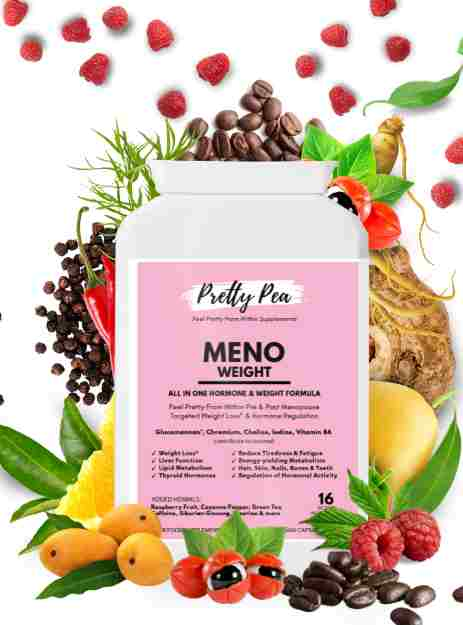](https://prettypea.blog/menopause-weight-loss-supplement/)
[Pretty Pea Meno Weight](https://prettypea.blog/menopause-weight-loss-supplement/ "Pretty Pea Meno Weight") is an all in one menopause supplement with targeted menopause weight loss and hormone regulation. A powerful combination Meno Weight combines Glucomannan with Vitamin B6 plus synergistic vitamins, minerals and herbals that include Green Tea, Iodine, Raspberry, and Ginseng and much more.
###### APPETITE
[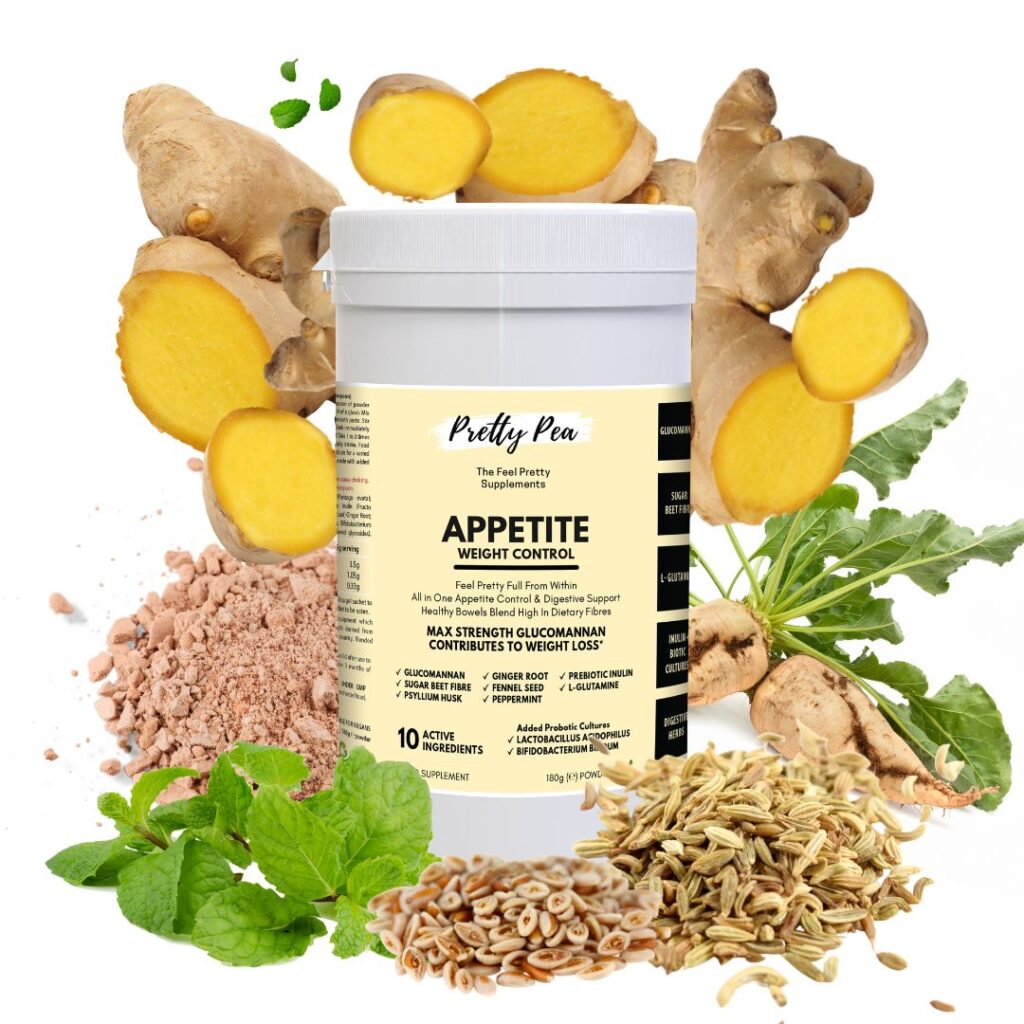](https://prettypea.blog/appetite-control/)
[Pretty Pea Appetite ](https://prettypea.blog/appetite-control/ "Pretty Pea Appetite ")is an all in one weight management and digestive supplement. A powder blend combining the appetite suppressant benefits of Glucomannan fibre along with Psyllium Husk, Sugar Beet fibre and prebiotic Inulin fibre to provide your digestion with the benefit of both soluble and insoluble fibre.
This powerful synergistic fibre supplement blend provides prebiotic and probiotic support along with gut healing L-Glutamine and soothing digestive herbals Peppermint, Ginger and Fennel.
Ideal for those looking for healthy weight management support, complete digestive harmony and an easy way to top up their daily fibre needs and meet the fibre recommended daily amount (25-30g).
## Conclusion
Glucomannan offers a range of potential benefits particularly in areas like weight loss / weight management, digestive health, blood sugar control, and cholesterol reduction. However, as with any supplement, it’s crucial to approach its use with caution. Understanding the correct dosage, potential glucomannan side effects, and who should avoid glucomannan can help ensure that this powerful fibre is used safely and effectively.
For women considering starting a new supplement, or making dietary changes, it’s always advisable to consult with a healthcare provider before starting supplementation, especially if there are underlying health conditions or concerns about interactions with medications. When used correctly, glucomannan can be a valuable addition to a balanced diet and healthy lifestyle.
.
### **References**
- Keithley, J., & Swanson, B. (2005). Glucomannan and obesity: A critical review. *Alternative Therapies in Health and Medicine*, 11(6), 30-34.
- Vuksan, V., Jenkins, A. L., Jenkins, D. J., Rogovik, A. L., Sievenpiper, J. L., & Leiter, L. A. (2008). Viscous dietary fiber reduces postprandial blood glucose, insulin, and serum lipids in type 2 diabetes. *Diabetes Care*, 31(2), 212-217.
- Chen, H. L., Sheu, W. H., Tai, T. S., Liaw, Y. P., Chen, Y. C., & Tarng, D. C. (2003). Konjac supplement alleviated hypercholesterolemia and hyperglycemia in type 2 diabetic subjects—a randomized double-blind trial. *Journal of the American College of Nutrition*, 22(1), 36-42.
- Passmore, C., & Eastwood, M. A. (1986). Glucomannan in chronic constipation: A double-blind, controlled trial. *Scandinavian Journal of Gastroenterology*, 21(2), 217-220.
- Chua, M., Baldwin, T. C., Hocking, T. J., & Chan, K. (2010). Traditional uses and potential health benefits of Amorphophallus konjac K. Koch ex N.E.Br. (Araceae). *Journal of Ethnopharmacology*, 128(2), 268-278.
- Sood, N., Baker, W. L., & Coleman, C. I. (2008). Effect of glucomannan on plasma lipid and glucose concentrations, body weight, and blood pressure: Systematic review and meta-analysis. *American Journal of Clinical Nutrition*, 88(4), 1167-1175.
- Supplementation of Konjac Glucomannan into a Low-Fiber Chinese Diet Promoted Bowel Movement and Improved Colonic Ecology in Constipated Adults: A Placebo-Controlled, Diet-Controlled Trial
*Journal of the American College of Nutrition 2008* [doi.org/ 10.1080/07315724.2008.10719681](https://doi.org/10.1080/07315724.2008.10719681)
- The Use of Konjac Glucomannan Hydrolysates (GMH) to Improve the Health of the Skin and Reduce Acne Vulgaris *American Journal of Dermatology and Venereology 2013; 2(2): 10-14 doi:10.5923/j.ajdv.20130202.02*
- Effect of depolymerised konjac glucomannan on wound healing
- *Bioactive Carbohydrates and Dietary Fibre Vol 5 April 2015, Pages 125-128* [doi.org/10.1016/j.bcdf.2015.03.003](https://doi.org/10.1016/j.bcdf.2015.03.003)
**Categories:** Fibre & Gut Health, Superfoods, Supplements
---
### [Chromium](https://prettypea.blog/chromium-2/)
**Published:** August 19, 2024
**Author:** Cate Boyd
**Content:**
**The Role of Chromium in the Body: Benefits, Recommendations, and Food Sources**
Chromium is an essential trace mineral that plays a crucial role in various physiological processes in the human body.
Although it is required only in small amounts, its impact on health is significant, particularly in glucose metabolism and insulin sensitivity.
This blog will delve into the functions of chromium, its benefits, its potential role in weight loss, recommended intake for adults in the UK, signs of deficiency, and the top foods rich in this vital mineral.
## **What Does Chromium Do in the Body?**
Chromium primarily supports the metabolism of carbohydrates, fats, and proteins by enhancing the action of insulin, a hormone critical for regulating blood sugar levels.
This function is particularly important for maintaining stable blood glucose levels and preventing conditions such as type 2 diabetes.
Additionally, chromium is involved in lipid (fat) metabolism, and chromium supplementation has been linked to improved cholesterol profiles, including reduced levels of low-density lipoprotein (LDL) cholesterol and increased levels of high-density lipoprotein (HDL) cholesterol.
## **Benefits of Chromium**
**Potential Role in Weight Loss**: Chromium supplements have been marketed for their potential to aid in weight loss, primarily by curbing appetite, reducing cravings, and improving the body’s ability to burn fat. However, the evidence supporting these claims is mixed, and further research is needed to fully understand chromium’s role in weight management.
**Improved Insulin Sensitivity**: Chromium helps to increase the efficiency of insulin, thereby assisting in the maintenance of normal blood glucose levels. This can be particularly beneficial for individuals with insulin resistance or those at risk of developing type 2 diabetes.
**Enhanced Metabolism**: By aiding in the breakdown of macronutrients, chromium supports overall metabolic health, which can have a positive effect on energy levels and weight management.
**Cardiovascular Health**: Chromium may contribute to cardiovascular health by helping to regulate cholesterol levels, reducing the risk of atherosclerosis and other heart-related conditions.
### The Role of Chromium
- Chromium is an essential trace mineral involved in carbohydrate, fat and protein metabolism and is combined with picolinic acid to enhance absorption.
- It facilitates the action of insulin, has been shown to improve glycemic control in diabetes, and has been shown to improve body composition by helping to maintain lean body mass (LBM).
- Moreover, enhanced insulin action increases the rate of glucose and amino acid uptake in muscle cells.
**Benefits of Chromium**
**Potential Role in Weight Loss**: Chromium supplements have been marketed for their potential to aid in weight loss, primarily by curbing appetite, reducing cravings, and improving the body’s ability to burn fat. However, the evidence supporting these claims is mixed, and further research is needed to fully understand chromium’s role in weight management.
**Improved Insulin Sensitivity**: Chromium helps to increase the efficiency of insulin, thereby assisting in the maintenance of normal blood glucose levels. This can be particularly beneficial for individuals with insulin resistance or those at risk of developing type 2 diabetes.
**Enhanced Metabolism**: By aiding in the breakdown of macronutrients, chromium supports overall metabolic health, which can have a positive effect on energy levels and weight management.
**Cardiovascular Health**: Chromium may contribute to cardiovascular health by helping to regulate cholesterol levels, reducing the risk of atherosclerosis and other heart-related conditions.
## **The evidence supporting Chromium and Weight Loss**
**Chromium and Weight Loss**
The role of chromium in weight loss has been the subject of much debate. Some studies suggest that chromium picolinate, a popular form of chromium supplement, may help reduce body fat and appetite.
Whilst the evidence is not conclusive, the potential mechanisms behind these effects include improved insulin sensitivity and enhanced metabolism, which may contribute to a reduction in body weight when combined with a healthy diet and regular exercise.
## Chromium Weight Loss Studies
Several studies support Chromium’s role in maintaining lean body mass (LBM) during weight loss.
In one study, obese subjects followed a Very Low Calorie Diet (VLCD) for eight weeks followed by 18 weeks of weight maintenance and were supplemented with 200 mcg of chromium picolinate. They showed an increase in lean body mass (LBM) compared to those taking a placebo.
The study concluded that Chromium picolinate, but not chromium yeast, is able to increase lean body mass in obese patients in the maintenance period after a very-low-calorie diet without counteracting the weight loss achieved.
A study of 122 people found a statistically significant improvement in body composition after 90 days of supplementation with 200-400 mcg/day of chromium picolinate in subjects who continued with their normal physical and dietary habits.
Chromium supplementation not only lead to weight loss, but also favourable body composition changes, as the weight lost was 98% fat mass and only 2% lean body mass.
An 8 week study of healthy overweight women, found that taking 1000ug/day chromium picolinate reduced food intake, hunger and cravings.
A 400 mcg dose of chromium taken for 24 weeks by competitive swimmers significantly increased lean mass by 3.5%, decreased fat mass by 4.5%, and decreased body fat percentage by over 6%.
## **Fat Mass v Lean Body Mass**
Chromium picolinate has been shown to improve body composition by maintaining lean body mass.
**Maintaining lean body mass is vital for lasting fat loss results.**
Focusing on body composition is essential, because even more important than overall weight loss is sustainably losing fat mass (FM) while maintaining lean body mass (LBM).
Most popular commercial weight loss programs are marketed as being able to reduce body weight within the first few weeks; however, of the weight lost, a significant amount includes losses in both LBM and FM, as well as changes in fluid status (water loss).
Much of the early weight loss research were designed around dietary changes that focused on calorie restriction and outcomes focused primarily on total body weight changes as opposed to body composition changes.
This approach was found to be misleading and potentially detrimental to health due to the fact that substantive reductions in lean body mass (LBM) also occurred and weight lost was often quickly regained.
The loss of lean body mass is problematic for a number of reasons, including impacts on health, ability to conduct activities of daily living and potential effects on emotion and psychological states.
The loss of lean body mass impedes long term weight loss success, as it results in a lowered resting energy expenditure/metabolism, fatigue, declines in neuromuscular function, and also increases risk for injury.
**Figure 1 Below** An overview of various weight loss clinical trials to examine the changes in body composition that occur from using popular weight loss supplements.
Results showed that whilst weight loss was achieved with all supplements, Chromium Picolinate supported both the largest amount of weight loss and the smallest lean mass.
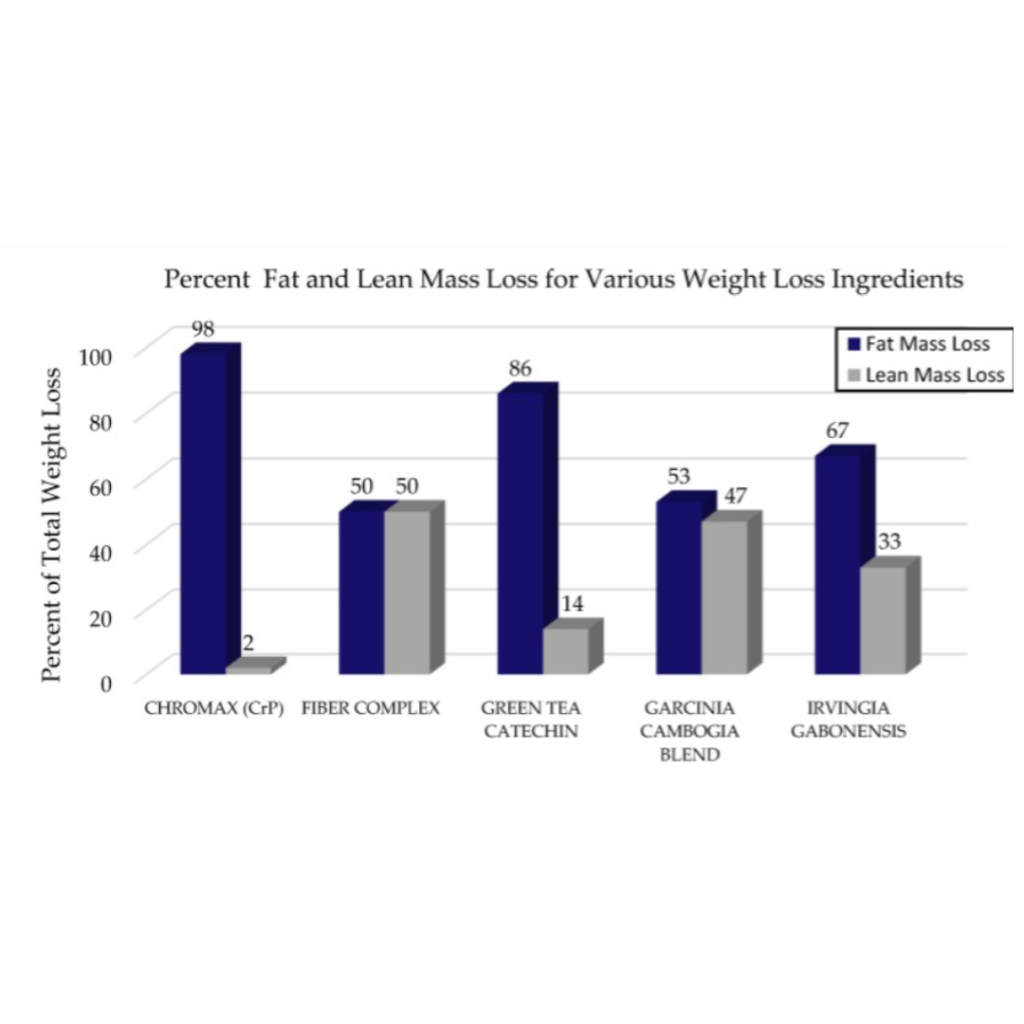**Figure 2 Below** An overview of various weight loss clinical trials to examine the changes in body composition that occur from using popular diet programs.
It should be emphasized that each diet program is distinct and contains unique and different exercise programs and diets that are thought to be helpful for weight loss but are not always evaluated by change in body composition.
Results showed that all the popular diet programs examined lead to weight loss, though a large percent of the weight lost during these diet programs comes from a loss in lean body mass (LBM).
For example, the **Very Low-Calorie Diet** (VLCD) approach is typically used to achieve rapid weight loss and is centred on meal replacement powders and ready to drink beverages. A VLCD typically includes 400–800 k-calories (kcal)/day and is intended for rapid weight loss.
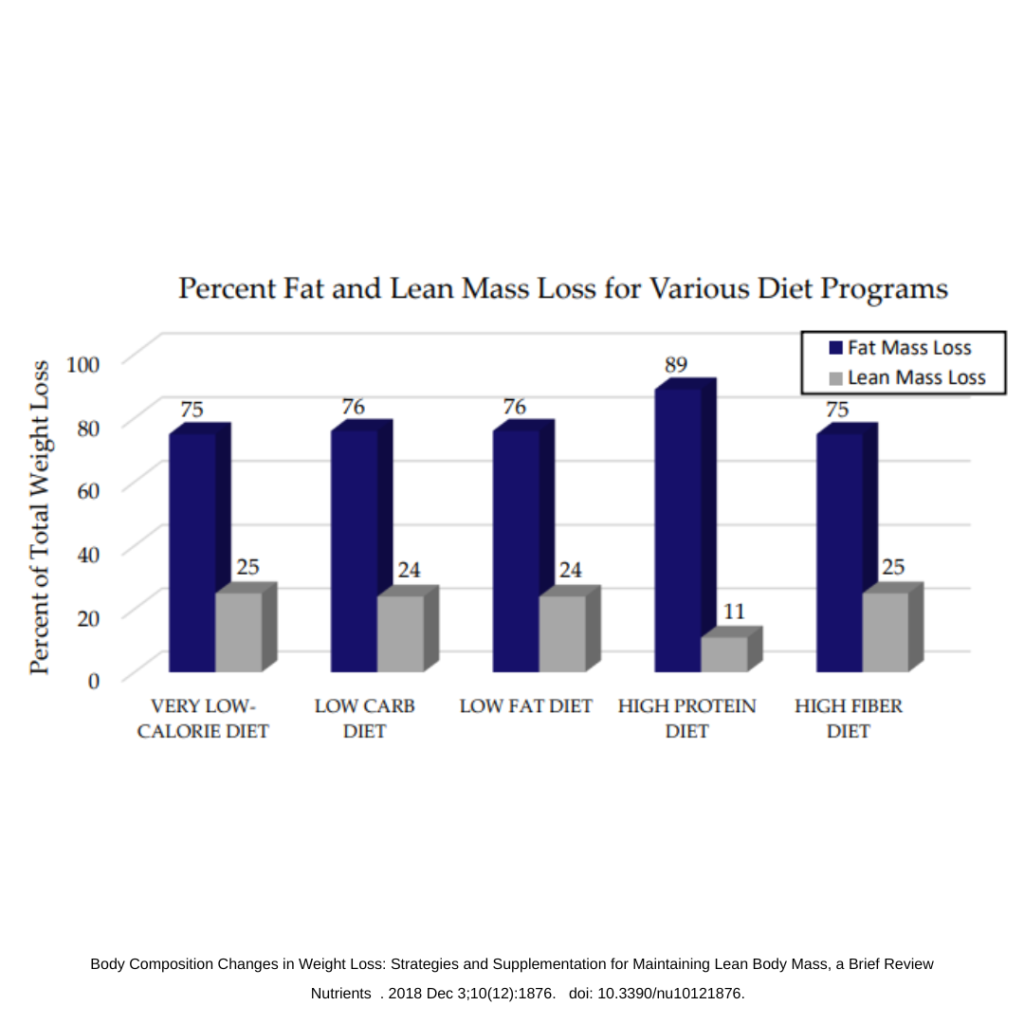Although the weight loss observed with VLCD treatment is clinically significant, the accompanying decline in LBM may be equally significant and therefore detrimental in terms of a slower metabolism and long term weight loss success.
### Key Notes
- Many popular commercial weight loss programs are marketed as being able to reduce body weight within a few weeks; however, of the weight lost, a significant amount includes losses in both LBM and FM, and water weight and weight lost is often quickly regained
- Loss of lean body mass makes lasting weight loss unsustainable as it results in slower metabolism and causes fatigue
- Chromium picolinate has been shown to improve body composition by maintaining lean body mass.
**Top 10 Foods Chromium** **Rich Foods**
Chromium is naturally found in a variety of foods, including meats, bread, grains, fruits and vegetables. However, the exact content can vary based on factors such as soil quality and food processing methods which can often negate nutrients profiles.
The amount of chromium in meat depends on the animals diet and the amount in fruit and vegetables depends on the amount of chromium in the soil and water in which they are grown.
Plus, dietary chromium absorption is low, ranging from about 0.4% – 2.5%. Chromium **picolinate,** typically found in supplements, is absorbed better.
Most dairy products and foods high in sugars (sucrose and fructose) are typically low in chromium.
Below are the top 10 foods that are good sources of chromium, along with the approximate amount of chromium they contain per 100 grams:
1. **Broccoli**: 11 micrograms
2. **Grape Juice**: 8 micrograms (per 240 ml serving)
3. **Whole Wheat Bread**: 6 micrograms
4. **Oats**: 12 micrograms
5. **Barley**: 13 micrograms
6. **Green Beans**: 6 micrograms
7. **Turkey Breast**: 2 micrograms
8. **Beef**: 2 micrograms
9. **Tomatoes**: 3 micrograms
10. **Lettuce**: 3 micrograms
Incorporating these foods into your diet can help ensure adequate chromium intake, supporting overall metabolic health.
**Signs of Chromium Deficiency**
Chromium deficiency, although rare, can lead to several health issues, particularly those related to impaired glucose metabolism. Common signs of chromium deficiency can include:
- Impaired glucose tolerance
- Elevated blood glucose levels
- Increased insulin resistance
- Fatigue
- Anxiety
- Poor skin health
In severe cases, chromium deficiency can contribute to the development of diabetes and cardiovascular diseases.
## Recommended Chromium Supplements
[](https://prettypea.blog/menopause-weight-loss-supplement/)
[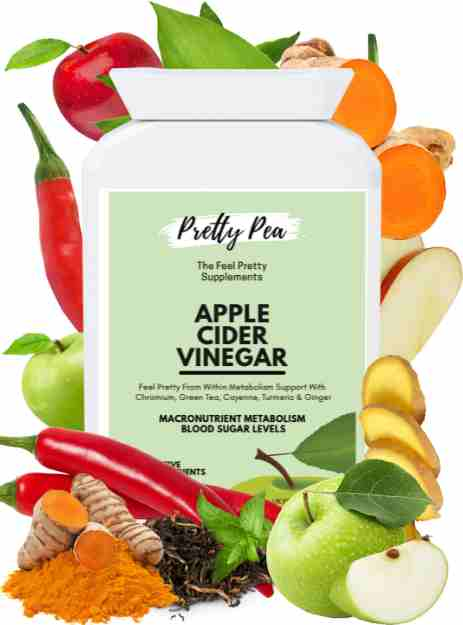](https://prettypea.blog/apple-cider-vinegar/)
[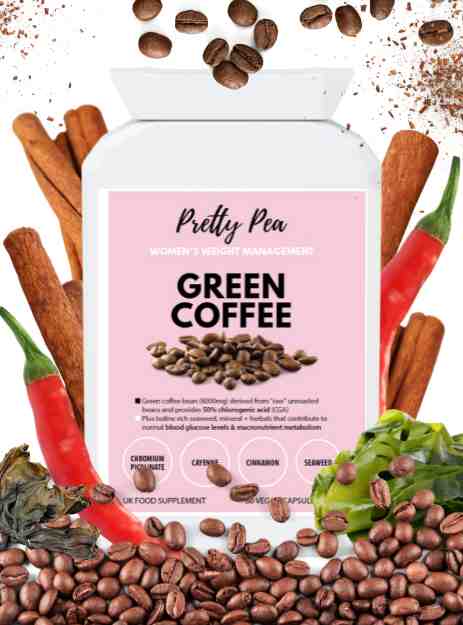](https://prettypea.blog/green-coffee-bean/)
## Conclusion
Chromium is a trace mineral that plays a vital role in maintaining blood glucose levels, supporting metabolism, and potentially aiding in weight management. While deficiency is rare, it can lead to significant health issues, particularly related to insulin resistance. To maintain optimal health, it is important to consume a diet rich in chromium-containing foods, particularly for those at risk of glucose metabolism disorders. As with any nutrient, balance is key, and it is generally advisable to meet your nutrients needs through diet rather than supplements and only top up where deficient.
Supplements are not intended to replace a healthy diet and balanced lifestyle. Chromium supplements can interact with certain medications. Always consult your GP before taking supplements.
**References**
- European Food Safety Authority. (2014). Scientific Opinion on Dietary Reference Values for chromium. EFSA Journal, 12(10), 3845.
- Chromium related health claims | EFSA (europa.eu)
- National Institutes of Health. (2021). Chromium – Fact Sheet for Health Professionals.
- Anderson, R. A. (1998). Chromium, glucose intolerance and diabetes. Journal of the American College of Nutrition, 17(6), 548-555.
- [Vitamins and minerals – Others – NHS (www.nhs.uk)](https://www.nhs.uk/conditions/vitamins-and-minerals/others/)
- Nutrients 2018, 10, 1876; doi:10.3390/nu10121876 www.mdpi.com/journal/nutrients Nutrients 2018, 10, 1876 2 of 10
- Body Composition Changes in Weight Loss: Strategies and Supplementation for Maintaining Lean Body Mass, a Brief Review Nutrients . 2018 Dec 3;10(12):1876. doi: 10.3390/nu10121876.
- Kaats, G.R.; Blum, K.; Fisher, J.A.; Adelman, J.A. Effects of chromium picolinate supplementation on body composition: A randomized, double-masked, placebo-controlled study. *Curr. Ther. Res.* **1996**, *57*, 747.
- Kaats, G.R.; Blum, K.; Pullin, D.; Keith, S.C.; Wood, R. A randomized, double-masked, placebo-controlled study of the effects of chromium picolinate supplementation on body composition: A replication and extension of a previous study. *Curr. Ther. Res.* **1998**, *59*, 379–388
- Bhadori, B.; Wallner, S.; Schneider, H.; Wascher, T.C.; Toplak, H. Effect of chromium yeast and chromium picolinate on body composition of obese, non-diabetic patients during and after a formula diet. *Acta Med. Austriaca* **1997**, *24*, 185–187.
**Categories:** Supplements
---
### [How Hormones Affect Sleep](https://prettypea.blog/how-hormones-affect-sleep/)
**Published:** October 21, 2024
**Author:** Cate Boyd
**Content:**
Sleep is a fundamental aspect of our well-being, affecting everything from mood and cognitive function to physical health. For women, sleep can be particularly complex due to the role that hormones play throughout their lives. Hormonal fluctuations linked to the menstrual cycle, pregnancy, menopause, and even stress can significantly impact sleep quality. In this article, we will explore how hormones affect sleep and share 3 best herbal sleep supplements that can help achieve a restful night’s sleep.
## **The Role of Hormones in Women’s Sleep**
**1. Estrogen**
Estrogen is a primary female sex hormone that has a considerable influence on sleep. This hormone is involved in regulating the sleep-wake cycle by influencing serotonin levels, which is a neurotransmitter that helps regulate mood and sleep.
- **Impact on Sleep:** During the menstrual cycle, estrogen levels fluctuate, peaking during the follicular phase and dropping after ovulation. This decline in estrogen can lead to sleep disturbances, mood swings, and increased sensitivity to pain, which can all affect sleep quality.
- **Perimenopause and Menopause:** As women approach menopause, estrogen levels significantly decline, which often results in hot flashes, night sweats, and insomnia. Research has shown that low estrogen levels are linked to difficulty falling asleep and staying asleep, as well as poorer overall sleep quality.
**2. Progesterone**
Progesterone, another critical hormone in the menstrual cycle and menopause, also plays a role in sleep regulation. It has a calming effect on the body and is known for its sedative-like properties.
- **Menstrual Cycle:** Progesterone levels are higher in the luteal phase (after ovulation), which can lead to more restful sleep. However, if progesterone levels are low, it can contribute to sleep disturbances and anxiety, which may keep you awake at night.
- **Pregnancy:** During pregnancy, progesterone levels increase significantly, especially in the first trimester, which is one reason why many women feel excessively tired and sleepy. This hormone helps prepare the body for sleep, although its effects may vary throughout pregnancy due to other hormonal shifts.
**Progesterone Levels During Menopause**
During perimenopause, the transitional phase leading up to menopause, progesterone levels begin to decline significantly. This decline continues into menopause when ovulation ceases entirely, resulting in very low levels of both progesterone and estrogen.
- **Impact on Sleep:** The decrease in progesterone during menopause can have a pronounced effect on sleep quality. Lower progesterone levels are associated with increased anxiety, mood swings, and insomnia. Women often report difficulty falling asleep and staying asleep during this time, which can be attributed to the lack of progesterone’s calming effects. Additionally, the absence of progesterone can exacerbate the effects of declining estrogen levels, leading to increased hot flushes and night sweats, further disrupting sleep.
**3. Melatonin**
Melatonin is the hormone that plays a direct role in regulating the sleep-wake cycle. It is produced in the pineal gland and signals the brain that it’s time to sleep as darkness falls.
- **Impact on Sleep:** The production of melatonin can be influenced by estrogen levels, meaning that when estrogen is high, melatonin production can be disrupted. This is why many women experience sleep problems during times of hormonal changes, such as menstruation, pregnancy, or menopause.
- **Age-Related Decline:** Melatonin levels naturally decrease with age, which partly explains why many older adults, including women in menopause, experience insomnia or difficulty falling asleep.
**4. Cortisol**
Cortisol is the body’s primary stress hormone, released in response to stress and low blood-glucose concentration. It also plays a part in the sleep-wake cycle.
- **Impact on Sleep:** High levels of cortisol can cause insomnia or disrupt sleep by making it difficult to fall asleep or stay asleep. This stress hormone is supposed to be at its lowest during the evening, but if stress levels are high or the body’s rhythm is off, cortisol levels can remain elevated, leading to restless sleep or early waking.
- **Chronic Stress:** Women who experience chronic stress may have persistently high cortisol levels, which can negatively affect sleep and contribute to sleep disorders over time.
**5. Prolactin**
Prolactin is another hormone that affects sleep and is linked to the sleep cycle. Its levels are typically higher during sleep, and it plays a role in sleep depth.
- **Impact on Sleep:** Prolactin levels tend to rise during the deeper stages of sleep, particularly during REM (rapid eye movement) sleep. Low levels of prolactin can lead to disturbed sleep and issues with sleep continuity.
- **Breastfeeding:** During breastfeeding, prolactin levels increase to aid milk production, which may also lead to increased sleepiness in mothers. However, the demands of breastfeeding itself can sometimes interrupt regular sleep patterns.
## **Herbal Supplements For Better Sleep**
For those struggling with sleep due to hormonal imbalances, natural herbal supplements can offer a gentle yet effective solution. Here are some of the best herbal supplements that can help promote sleep:
[](https://prettypea.blog/sleep-supplement/)**1. Chamomile**
Chamomile is one of the most well-known herbs for promoting relaxation and sleep. It contains apigenin, an antioxidant that binds to specific receptors in the brain that may decrease anxiety and initiate sleep.
- **Benefits for Sleep:** Chamomile has long been used as a natural remedy for its calming effects. It can help reduce anxiety and promote relaxation, making it easier to fall asleep. A study conducted on postpartum women who drank chamomile tea for two weeks showed significantly improved sleep quality compared to those who did not.
- **How to Use:** Chamomile is commonly consumed as a tea and available in capsule for those who prefer a more concentrated dose.
**2. Lavender**
Lavender is widely known for its relaxing and calming effects, making it a popular herb for sleep. It contains compounds that can lower heart rate and blood pressure, promoting a state of relaxation conducive to sleep.
- **Benefits for Sleep:** Inhaling lavender essential oil has been found to improve sleep quality, increase the amount of deep sleep, and reduce symptoms of insomnia. A study showed that participants who used lavender oil before bed had improved sleep patterns and felt more refreshed upon waking.
- **How to Use:** Lavender can be used in various forms, including essential oils, teas, and supplements.
**3. Montmorency Cherry**
Montmorency cherries are a natural source of melatonin, the hormone responsible for regulating sleep-wake cycles. Consuming these cherries or their juice can help increase melatonin levels in the body, making it easier to fall asleep.
- **Benefits for Sleep:** Research has shown that Montmorency cherry juice can improve sleep duration and quality due to its high melatonin content.
- **How to Use:** Montmorency cherry is available in juice form and as a supplement.
## **Tips for Enhancing Sleep Naturally**
In addition to herbal supplements, here are some other strategies to improve sleep quality:
1. **Maintain a Consistent Sleep Schedule:** Going to bed and waking up at the same time every day helps regulate your body’s internal clock.
2. **Create a Relaxing Bedtime Routine:** Activities such as reading, taking a warm bath, or practicing meditation can signal to your body that it’s time to wind down.
3. **Limit Caffeine and Alcohol:** These substances can interfere with sleep, so try to avoid them in the late afternoon and evening.
4. **Create a Comfortable Sleep Environment:** Ensure that your bedroom is cool, dark, and quiet, and invest in a good-quality mattress and pillows.
5. **Limit Screen Time:** The blue light emitted by phones and computers can suppress melatonin production, making it harder to fall asleep.
## **Conclusion**
Hormonal fluctuations significantly impact women’s sleep, affecting both the quality and quantity of rest they receive. Estrogen, progesterone, melatonin, cortisol, and prolactin all play crucial roles in how well women sleep, with each hormone influencing different aspects of the sleep cycle. Managing these hormonal changes is essential for achieving restful sleep, and incorporating natural remedies like chamomile, lavender, and Montmorency cherry can be an effective way to support this goal.
For women experiencing sleep issues due to hormonal changes, these herbal supplements offer a safe and natural approach to improving sleep quality. Combined with healthy sleep habits and stress management techniques, they can help women achieve better, more restorative sleep.
[](https://prettypea.blog/sleep-supplement/)**References**
- Baker, F. C., de Zambotti, M., Colrain, I. M., & Bei, B. (2018). Sleep problems during the menopausal transition: prevalence, impact, and management challenges. *Nature and Science of Sleep*, 10, 73-95.
- Shechter, A., Kim, E. W., St-Onge, M.-P., & Westwood, A. J. (2020). Blocking nocturnal blue light for insomnia: A randomized controlled trial. *Journal of Psychiatric Research*, 123, 89-96.
- Zisapel, N. (2018). New perspectives on the role of melatonin in human sleep, circadian rhythms and their regulation. *British Journal of Pharmacology*, 175(16), 3190-3199.
- Wright, C. E., Erblich, J., Valdimarsdottir, H. B., & Bovbjerg, D. H. (2015). Poor sleep, perceived stress, and cortisol in healthy women: testing the moderating role of negative affect. *Health Psychology*, 34(1), 104-113.
- Kendall-Tackett, K. (2017). Breastfeeding and sleep: Understanding maternal fatigue. *Clinical Lactation*, 8(2), 58-64.
- Zick, S. M., Wright, B. D., Sen, A., & Arnedt, J. T. (2011). Preliminary examination of the efficacy and safety of a standardized chamomile extract for chronic primary insomnia: A randomized placebo-controlled pilot study. *BMC Complementary and Alternative Medicine*, 11(1), 78.
- Chien, L.-W., Cheng, S.-L., & Liu, C.-F. (2012). The effect of lavender aromatherapy on autonomic nervous system in midlife women with insomnia. *Evidence-Based Complementary and Alternative Medicine*, 2012, 740813.
- Pigeon, W. R., Carr, M., Gorman, C., & Perlis, M. L. (2010). Effects of a tart cherry juice beverage on the sleep of older adults with insomnia: A pilot study. *Journal of Medicinal Food*, 13(3), 579-583.
**Categories:** Hormones & HRT
---
### [20 Reasons Women Feel Tired - Vitamins for Tiredness](https://prettypea.blog/vitamins-for-tiredness/)
**Published:** October 21, 2024
**Author:** Cate Boyd
**Content:**
Feeling constantly tired can be more than just a lack of sleep—it can indicate underlying issues, particularly nutritional deficiencies. Women are often more prone to certain vitamin deficiencies due to menstruation, pregnancy, menopause, and lifestyle habits. In this article, we’ll discuss 20 reasons why women can feel fatigued and the best vitamins for tiredness.
## 1. **Iron Deficiency Anaemia**
#### Cause
Iron deficiency anaemia is one of the most common nutritional deficiencies in women, especially those of childbearing age. Heavy menstrual cycles, pregnancy, and a diet low in iron can significantly deplete iron levels.
#### Impact on Energy
Low iron levels lead to decreased haemoglobin production, which impairs oxygen transport in the blood, resulting in fatigue and weakness.
#### How Common in the UK
Iron deficiency is the most common nutritional deficiency worldwide and a leading cause of anaemia in the UK. An estimated 23% of women of childbearing age in the UK are affected by iron deficiency anaemia, primarily due to menstrual blood loss and inadequate dietary intake .
#### Supplement Benefits
Iron supplements, particularly ferrous sulfate or ferrous gluconate, can help replenish iron stores and improve energy levels. Vitamin C is often recommended alongside iron to enhance absorption .
You’ll find both iron and vitamin C in Pretty Pea [chocolate vegan protein powder](https://prettypea.blog/vegan-chocolate-protein-powder/), along with a whole load of other essential womens vitamins for tiredness.
## 2. **Vitamin for Tiredness – B12 Deficiency**
#### Cause
Women, especially those following vegetarian or vegan diets, are at risk of vitamin B12 deficiency since it is primarily found in animal products.
#### Impact on Energy
When it comes to vitamins for tiredness Vitamin B12 should always be checked. Vitamin B12 is essential for red blood cell formation and neurological function. Low vitamin B12 levels can lead to anaemia, fatigue, and cognitive issues.
#### How Common in the UK
Studies show Vitamin B12 deficiency affects up to 6% of people under the age of 60 in the UK, with higher rates among older adults and those following vegetarian or vegan diets.
#### Supplement Benefits
Vitamin B12 supplements in the form of methylcobalamin or cyanocobalamin can effectively restore levels, improve energy, and support nerve health .
You’ll find vitamin B12 in [Pretty Pea ZEN ashwagandha supplement](https://prettypea.blog/test-zen-ashwagandha/), along with calming adaptogens such as maca root and reishi mushroom.
## 3. **Folate (Vitamin B9) Deficiency**
#### Cause
Folate is crucial for DNA synthesis and cell division. Women with diets low in leafy greens, beans, or who are pregnant, might experience a deficiency.
#### Impact on Energy
A lack of folate can lead to megaloblastic anaemia, resulting in fatigue, weakness, and shortness of breath.
#### How Common in the UK
Folate deficiency is relatively common, particularly among pregnant women. Approximately 11% of women in the UK have low folate levels, which can lead to complications during pregnancy .
#### Supplement Benefits
For vitamins for tiredness Folic acid supplements can correct deficiency, and can be particularly beneficial for pregnant women to prevent birth defects and improve energy levels .
You’ll find Folic acid in Pretty Pea strawberry [Multivitamin Gummies](https://prettypea.blog/multivitamin-gummies/).
## 4. **Vitamins for Tiredness – Vitamin D Deficiency**
#### Cause
Vitamins for tiredness include Vitamin D. Vitamin D deficiency is widespread due to limited sun exposure and diets low in fortified foods. Women living in colder climates or those with darker skin are also more at risk.
#### Impact on Energy
For vitamins for tiredness Vitamin D plays a critical role in bone health, immune function, and muscle strength. Low vitamin D levels can cause muscle weakness and chronic fatigue amongst other issues.
#### How Common in the UK
In the UK Vitamin D deficiency is widespread, with up to 50% of adults with low vitamin D levels. This is due to limited sun exposure, especially during the winter months .
#### Supplement Benefits
Vitamin D supplements may help improve mood, energy levels, and overall well-being, particularly when taken during the winter months .
You’ll find the A B C D E of vitamins, with 100% RDA vitamin D, in Pretty Pea [Multivitamin Gummies.](https://prettypea.blog/multivitamin-gummies/)
## 5. **Magnesium Deficiency**
#### Cause
Magnesium is a mineral involved in over 300 biochemical reactions in the body. Women may become deficient due to inadequate dietary intake, stress, or excessive coffee and alcohol consumption.
#### Impact on Energy
Magnesium is crucial for energy production in cells. A deficiency can lead to muscle cramps, poor sleep, and overall fatigue.
#### How Common in the UK
It is estimated that around 20% of the UK has a magnesium deficiency, often linked to poor dietary habits and high-stress levels .
#### Supplement Benefits
Magnesium supplements can help relax muscles, improve sleep quality, and boost energy levels, especially when taken before bed .
You’ll find magnesium in Pretty Pea Sleep supplement, along with sleep supporting amino acids and herbals such as cherry and passionflower.
## 6. **Calcium Deficiency**
#### Cause
Calcium is essential for bone health and muscle function. Women, particularly post-menopausal, are at risk of calcium deficiency due to hormonal changes.
#### Impact on Energy
Low calcium levels can cause muscle cramps, fatigue, and even osteoporosis over time.
#### How Common in the UK
Calcium deficiency is common among post-menopausal women in the UK, with 30% of women over the age of 50 not meeting their daily calcium needs .
#### Supplement Benefits
Calcium supplements, combined with vitamin D, can enhance bone health and energy, reducing the risk of fractures and improving muscle performance .
## 7. **Omega-3 Fatty Acids Deficiency**
#### Cause
Omega-3 fatty acids are vital for heart and brain health. Women who do not consume enough fatty fish or plant-based omega-3 sources may develop a deficiency.
#### Impact on Energy
Deficiency in omega-3s can lead to mood disorders, inflammation, and a decline in cognitive function, all contributing to fatigue.
#### How Common in the UK
A study found that 68% of the UK population, including women, does not consume adequate levels of omega-3 fatty acids due to low fish intake .
#### Supplement Benefits
Omega-3 supplements, such as fish oil or flaxseed oil, can improve mental clarity, reduce inflammation, and enhance energy levels .
## 8. **Zinc Deficiency**
#### Cause
Zinc is important for immune function and metabolism. A poor diet, high in processed foods, can lead to insufficient zinc intake.
#### Impact on Energy
Low zinc levels can cause weakened immunity, poor wound healing, and chronic fatigue.
#### How Common in the UK
Zinc deficiency is estimated to affect about 10% of the UK population, with women being at particular risk due to dietary choices and higher nutritional needs .
#### Supplement Benefits
Zinc supplements can boost immune health, reduce oxidative stress, and increase energy and alertness .
You’ll find Zinc in Pretty Pea [Meno Weight supplements](https://prettypea.blog/menopause-weight-loss-supplement/).
## 9. **Iodine Deficiency**
#### Cause
Iodine is essential for thyroid function and the production of thyroid hormones, cognition and skin. Many women do not get enough iodine from their diets, especially those living in areas with iodine-poor soil.
#### Impact on Energy
Iodine deficiency can lead to hypothyroidism, a condition that causes weight gain, depression, and extreme tiredness.
#### How Common in the UK
Iodine deficiency is a growing concern in the UK, particularly among young women, with approximately 76% not meeting the recommended iodine intake .
#### Supplement Benefits
Iodine supplements or iodized salt can support thyroid health and improve metabolism and energy levels .
For iodine supplements, you’ll find Iodine in [Pretty Cleansed](https://prettypea.blog/pretty-cleansed-seaweed-supplement/), alongside some of the most nutrient dense plants and herbs on the planet, including spirulina, chlorella, green tea and artichoke.
## 10. **Selenium Deficiency**
#### Cause
Selenium is a powerful antioxidant and plays a role in thyroid function. Women with low selenium intake may develop hypothyroid symptoms.
#### Impact on Energy
Selenium deficiency may lead to poor thyroid function, resulting in fatigue, slow metabolism, and weakness.
#### How Common in the UK
Selenium levels in the UK population have been declining due to low selenium content in European soil. About 25% of women in the UK are estimated to have inadequate selenium intake .
#### Supplement Benefits
Selenium supplements may improve thyroid function, support skin health and protect cells from damage, and help reduce fatigue .
For selenium supplements, you’ll find Selenium in Pretty Pea’s Collagen hair skin and nails supplement.
## 11. **Vitamin C Deficiency**
#### Cause
Vitamin C is crucial for collagen synthesis, immune function, and iron absorption. A lack of fruits and vegetables in the diet can lead to vitamin C deficiency.
#### Vitamins for Tiredness – Impact on Energy
Vitamin C deficiency can result in scurvy, weakened immunity, and fatigue.
#### How Common in the UK
While severe vitamin C deficiency is rare, mild deficiency affects around 25% of the UK population, particularly among those with low fruit and vegetable intake .
#### Supplement Benefits
Vitamin C supplements may reduce tiredness and fatigue, enhance immune health, reduce oxidative stress, and boost iron absorption, leading to higher energy levels .
For vitamins for tiredness you’ll find vitamin C in several Pretty Pea supplements including [Multivitamin Gummies ](https://prettypea.blog/multivitamin-gummies/)and both vanilla and [chocolate vegan protein powder](https://prettypea.blog/product/chocolate-protein-powder-bundle/) too.
## 12. **Protein Deficiency**
#### Cause
Protein is essential for muscle repair and hormone production. Women following restrictive diets may not consume adequate protein.
#### Impact on Energy
In addition to vitamins for tiredness, protein is also a key nutrient. Low protein intake may lead to muscle loss, weakness, and a slowed metabolism, and feelings or tiredness and sluggish.
#### How Common in the UK
Based on the current recommended guidelines, protein deficiency as such is less common but can still affect women following restrictive diets or those with increased physical activity demands and this can impact energy and muscle maintenance and muscle growth.
Many women do not consume sufficient protein to be at their best. The RDA is 0.8g per kg of bodyweight, this is the amount required to prevent deficiency and for the body to survive – not necessarily for the body to be at its best and to thrive. There is general consensus that the recommended daily amount is on the low side and studies find that women should ideally be aiming at around 1.2 – 1.6g per kg of bodyweight. This is particularly so if exercising regularly and / or weight loss is the goal. On this basis protein deficiency may be more common than realised.
#### Supplement Benefits
Protein powder supplements like whey or plant-based, vegan protein powders are a convenient way for women to top up their daily protein requirements and help support muscle growth, repair, and increase energy levels. Muscle mass declines with age and results in a decline in metabolism too – as with less muscle mass your body requires less energy. A deceased metabolism can lead to weight gain.
You’ll find an easy way to top up your daily protein requirements with Pretty Pea vanilla and [chocolate vegan protein powder](https://prettypea.blog/product/chocolate-protein-powder-bundle/), delicious and packed with minerals and vitamins for tiredness.
## 13. **Thiamine (Vitamin B1) Deficiency**
#### Cause
Thiamine, vitamin B1, is vital for energy metabolism. Women who consume excessive alcohol or have poor diets might be at risk of vitamin B1 deficiency.
#### Vitamins for Tiredness – Impact on Energy
A lack of thiamine can lead to fatigue, irritability, and nerve damage.
#### How Common in the UK
Thiamine deficiency is relatively rare but can occur in people with excessive alcohol consumption or poor diets, leading to energy depletion.
#### Supplement Benefits
For vitamins for tiredness Thiamine supplements, vitamin B1 supplements can enhance carbohydrate metabolism, improving energy production and cognitive function .
## 14. **Riboflavin (Vitamin B2) Deficiency**
#### Cause
Riboflavin, vitamin B2, supports energy production in cells. Women with insufficient dairy or meat intake may develop a vitamin B2 deficiency.
#### Vitamins for Tiredness – Impact on Energy
Low vitamin B2 levels may result in fatigue, sore throat, and cracked lips.
#### How Common in the UK
Vitamin B2 deficiency is uncommon but can affect those who consume low amounts of dairy or meat, leading to fatigue and other symptoms.
#### Supplement Benefits
Riboflavin supplements, vitamin B2 supplements, support energy production and improve skin and eye health .
## 15. Vitamins for Tiredness – **Niacin (Vitamin B3) Deficiency**
#### Cause
Niacin, vitamin B3, is important for converting food into energy. Diets low in protein can lead to a vitamin B3 deficiency.
#### Vitamins for Tiredness – Impact on Energy
Niacin deficiency, vitamin B3, can cause pellagra, characterized by fatigue, digestive problems, and skin issues.
#### How Common in the UK
On the list of vitamins for tiredness Vitamin B3 deficiency is rare in the UK, however, deficiency may occur in individuals with very low protein diets or certain medical conditions.
#### Supplement Benefits
Niacin supplements, vitamin B3 supplements, can help improve metabolism, reduce cholesterol, and boost overall energy levels .
You’ll find vitamin B3 in [Pretty Pea ZEN](https://prettypea.blog/test-zen-ashwagandha/) – the mind and body balancing supplement.
## 16. **Vitamins for Tiredness – B6 Deficiency** (**Pyridoxine**)
#### Cause
Vitamin B6 is involved in neurotransmitter synthesis and the regulation of hormone activity. It can also help reduce tiredness and fatigue. Women taking certain medications or with poor diets may be deficient.
#### Vitamins for Tiredness – Impact on Energy
Low vitamin B6 levels can cause anaemia, depression, and nerve damage, all contributing to fatigue.
#### How Common in the UK
Approximately 20% of adults in the UK, particularly women, may have insufficient vitamin B6 levels due to dietary limitations or medication use .
#### Supplement Benefits
Vitamin B6 supplements may enhance brain function, boost mood, and alleviate fatigue .
Important for hormone balance for women and energy, you’ll find vitamin B6 supplement in [Pretty Pea Meno Weight ](https://prettypea.blog/menopause-weight-loss-supplement/)and Pretty Balanced and [ZEN ashwagandha](https://prettypea.blog/test-zen-ashwagandha/) supplements.
## 17. **Vitamins for Tiredness – B5 Deficiency** (**Pantothenic Acid**)
#### Cause
Pantothenic acid, vitamin B5, is essential for producing coenzyme A. Women who do not consume a balanced diet might lack vitamin B5.
#### Vitamins for Tiredness – Impact on Energy
Vitamin B5 deficiency can lead to irritability, sleep disturbances, and a constant feeling of tiredness.
#### How Common in the UK
Pantothenic acid, vitamin B5 deficiency is very rare, but mild shortages can still affect energy levels, particularly in women with restrictive diets.
#### Supplement Benefits
Vitamin B5 supplements, may improve adrenal function, stress response, and energy production .
For vitamins for tiredness you’ll find vitamin B5 in [Pretty Pea ZEN](https://prettypea.blog/test-zen-ashwagandha/) mind and body balance supplement.
## 18. **Choline Deficiency**
#### Cause
Choline is vital for liver function and brain health. Many women do not consume enough eggs or meat, which are primary sources.
#### Impact on Energy
Low choline levels can lead to muscle damage, liver issues, and cognitive decline.
#### How Common in the UK
Choline deficiency affects about 15% of the UK population, with women who do not consume adequate amounts of eggs or meat being more at risk .
#### Supplement Benefits
Choline supplements support liver function, brain function, improve focus, and increase energy levels .
For choline supplements see Pretty Pea [Meno Weight supplement](https://prettypea.blog/menopause-weight-loss-supplement/). Choline is one of 17 active nutrients in this menopause supplement. Meno Weight is weight loss and hormone harmony in one.
## 19. **Vitamins for Tiredness – Biotin / B7 Deficiency**
#### Cause
Biotin is crucial for energy metabolism. Women may experience deficiencies due to inadequate diet or certain medical conditions.
#### Impact on Energy
Low biotin levels and vitamin B7 deficiency can cause hair loss, skin rashes, and extreme fatigue.
#### How Common in the UK
Biotin deficiency is rare but can be triggered by genetic disorders, certain medications, or inadequate dietary intake.
#### Supplement Benefits
In deficiency, biotin supplements can boost energy, improve skin health, and promote hair growth .
For biotin supplements, see Pretty Pea Collagen hair, skin and nails. A marine collagen supplement with hyaluronic acid, vitamin E, astaxanthin, pomegranate, selenium, copper and hair, skin and nails vitamins plus herbals and vitamins for tiredness.
## 20. **Copper Deficiency**
#### Cause
Copper is essential for iron metabolism and neurological function. Women who consume high levels of zinc may unintentionally deplete copper levels.
#### Impact on Energy
Copper deficiency can lead to anaemia, weakened immunity, and constant fatigue.
#### How Common in the UK
Copper deficiency is relatively uncommon but can develop in women with high zinc intake or gastrointestinal disorders.
#### Supplement Benefits
Copper supplements can restore balance, improve iron utilization, and enhance energy and vitality . Copper also supports hair pigment too.
For a copper supplement, see Pretty Pea Collagen hair skin and nail supplement.
---
### Vitamins For Tiredness – Conclusion
Nutritional deficiencies are a major cause of fatigue in women, but the good news is that they are usually correctable with diet changes and supplements. Understanding which vitamins for tiredness and minerals your body lacks can be a game-changer in overcoming tiredness and regaining your energy levels.
If you suspect you have any of these vitamin deficiencies, consult with a healthcare provider to determine the best supplement strategy for your needs.
[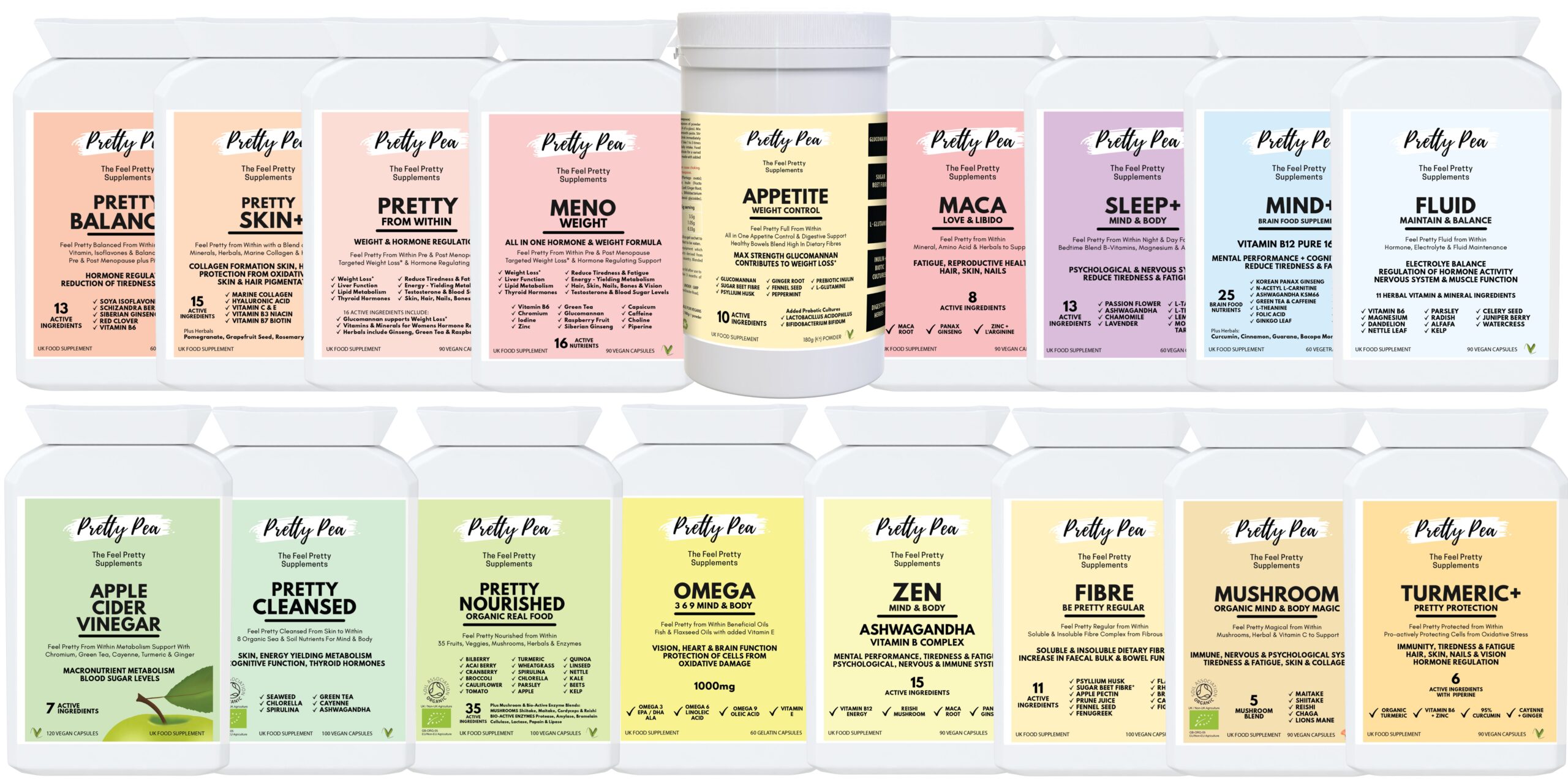](https://prettypea.blog/)[See Vitamins for Tiredness](https://prettypea.blog/store-two/)
### Vitamins for Tiredness – References
1. NIH Office of Dietary Supplements. “Iron.”
2. NIH Office of Dietary Supplements. “Vitamin B12.”
3. NIH Office of Dietary Supplements. “Folate.”
4. Harvard T.H. Chan School of Public Health. “Vitamin D and Health.”
5. NIH Office of Dietary Supplements. “Magnesium.”
6. Cleveland Clinic. “The Benefits of Omega-3 Supplements.” https://health.clevelandclinic.org/the-benefits-of-omega-3-supplements/
7. Mayo Clinic. “Calcium and Calcium Supplements: Achieving the Right Balance.”
8. British Journal of General Practice. “Iron Deficiency Anaemia in the UK.”
9. NHS UK. “Vitamin B12 or Folate Deficiency Anaemia.”
10. Public Health England. “Folate Levels in UK Women.”
11. Scientific Advisory Committee on Nutrition. “Vitamin D and Health.”
12. British Nutrition Foundation. “Magnesium and Diet.”
13. National Osteoporosis Society. “Calcium Intake in UK Women.”
14. Omega-3 Index UK Study. “Omega-3 Intake in the UK Population.”
15. British Medical Journal. “Zinc Deficiency in the UK.” https://bmj.com/
16. Lancet Endocrinology. “Iodine Levels in UK Adults.”
17. Soil Association UK. “Selenium Levels in UK Soils.”
18. NHS UK. “Vitamin C Deficiency.”
19. British Dietetic Association. “Vitamin B6 Deficiency.”
20. European Journal of Clinical Nutrition. “Choline Intake in Europe.”
These references offer a comprehensive view of how common these deficiencies are in the UK and highlight the importance of addressing them through diet and supplements to restore energy and overall health.
**Categories:** Menopause Nutrition, Supplements
---
### [What is Perimenopause - 11 Signs of Perimenopause](https://prettypea.blog/what-is-perimenopause-what-women-need-to-know/)
**Published:** October 21, 2024
**Author:** Cate Boyd
**Content:**
Perimenopause is a natural transition that marks the beginning of the end of a woman’s reproductive years. This period can bring about significant physical, emotional, and hormonal changes, often leading to a lot of questions and uncertainties. Understanding exactly what is perimenopause and what to expect can make this transition smoother and less stressful.
This article will answer many of the questions women ask and guide you through the stages of menopause, the symptoms to watch for, how it’s diagnosed, treatment options, and how to manage symptoms, including both medical and herbal remedies.
## **What is Perimenopause?**
Perimenopause, often referred to as the “transition to menopause,” is the phase before menopause when a woman’s body begins to undergo changes due to fluctuating hormone levels.
This stage can last anywhere from a few months to several years and ends when a woman reaches menopause—defined as 12 consecutive months without a menstrual period.
## **The Stages of Menopause: Perimenopause, Menopause, and Postmenopause**
1. Perimenopause: This stage can begin as early as a woman’s late 30s or early 40s, but the average age is around 45. During this time, estrogen and progesterone levels fluctuate, causing irregular periods and various other symptoms.
2. Menopause: Menopause is officially diagnosed when a woman has not had a menstrual period for 12 consecutive months. The average age for menopause in the United States is 51 years old.
3. Postmenopause: This stage refers to the time after menopause. Symptoms like hot flashes may continue, but many women find they lessen over time. However, the risk for certain health conditions, such as osteoporosis and heart disease, increases.
## **The Difference Between Perimenopause and Menopause**
Perimenopause is the transition phase leading up to menopause, characterized by hormonal changes and the onset of symptoms like hot flashes, mood swings, and irregular periods.
Menopause itself is the point at which menstruation stops completely, and the reproductive years are over.
Postmenopause is the stage following menopause, where the body adjusts to lower hormone levels.
## **The First Signs of Perimenopause**
The first signs of perimenopause can vary greatly among women, but common early indicators include:
- Irregular menstrual cycles: Periods may become longer or shorter, heavier or lighter, and the timing may be unpredictable.
- Hot flashes and night sweats: These sudden feelings of heat, often accompanied by sweating, are among the most well-known symptoms.
- Sleep disturbances: Difficulty falling asleep or staying asleep is common due to hormonal changes and night sweats.
- Mood swings: Fluctuating hormones can lead to moodiness, irritability, and even symptoms of depression or anxiety.
- Decreased libido: Many women notice a reduction in sexual desire and responsiveness.
## **Average Age and Statistics**
- The average age for the onset of perimenopause is 45, but it can start as early as the mid-30s.
- Approximately 70-80% of women experience perimenopausal symptoms, with hot flashes affecting nearly 75% of women.
- The transition period typically lasts 4 to 10 years before reaching menopause.
## **Common Perimenopause** **Symptoms**
#### **1. Menstrual Irregularities**
One of the earliest signs of perimenopause is a change in the menstrual cycle. Periods may become irregular, either shorter or longer, with some women experiencing heavier or lighter bleeding. The cycle length may also vary from month to month, becoming unpredictable. These changes are due to fluctuations in estrogen and progesterone levels
#### **2. Hot Flashes and Night Sweats**
Hot flashes are one of the most common symptoms of perimenopause, affecting about 75% of women during this transition. These sudden feelings of heat, often accompanied by sweating and flushed skin, can last from a few seconds to several minutes. Night sweats, a related symptom, can disrupt sleep and lead to fatigue during the day
#### **3. Mood Changes and Anxiety**
Mood swings, irritability, and increased anxiety are common during perimenopause due to the hormonal changes that affect brain chemistry. Some women may also experience heightened episodes of depression, particularly if they have a history of mood disorders or are sensitive to hormonal shifts
#### **4. Sleep Problems**
Difficulty sleeping is a frequent complaint among women going through perimenopause. Insomnia, waking up frequently during the night, or experiencing difficulty falling back asleep can be directly linked to hormonal changes as well as symptoms like night sweats
#### **5. Vaginal Dryness and Changes in Sexual Function**
As estrogen levels decline, vaginal tissues can become thinner, drier, and less elastic, leading to discomfort during intercourse. This change in vaginal lubrication can also contribute to a decrease in libido or sexual drive, affecting intimacy and sexual health
#### **6. Weight Gain and Changes in Body Composition**
During perimenopause, many women notice weight gain, particularly around the abdomen. Hormonal fluctuations can slow down metabolism, and changes in estrogen levels may lead to a redistribution of body fat. Additionally, lifestyle factors like reduced physical activity during middle age can compound this effect
#### **7. Cognitive Changes: Memory and Concentration Issues**
Some women experience what is often referred to as “brain fog” during perimenopause. Symptoms may include difficulty concentrating, memory lapses, and trouble staying focused on tasks. These cognitive changes are linked to the decrease in estrogen levels, which play a role in brain function
#### **8. Physical Symptoms: Joint Pain and Migraines**
Decreased estrogen can lead to a rise in inflammation, causing joint and muscle pain. Some women may also experience an increase in the frequency or severity of migraines during this time. Migraines during perimenopause can be more intense due to the instability of hormone levels.
#### **9. Changes in Hair and Skin**
Hormonal fluctuations during perimenopause can lead to changes in hair texture and even hair loss. Skin may also become drier and more prone to irritation due to decreased oil production, making wrinkles and fine lines more pronounced
## **Less Common but Significant Symptoms**
#### **1. Heart Palpitations**
Some women may experience heart palpitations, which feel like the heart is racing or skipping beats. These are usually harmless but can be unsettling. They are often linked to hormonal imbalances and are worth discussing with a healthcare provider if they occur frequently.
#### **2. Urinary Symptoms**
Urinary incontinence or increased urgency. The decline in estrogen can cause thinning of the tissues in the urethra and bladder, leading to an increased risk of incontinence and urinary tract infections (UTIs) issues. These symptoms can be both distressing and inconvenient, but they are treatable with lifestyle changes or medical interventions
## **Factors Influencing the Severity and Onset of Symptoms**
The experience of perimenopause varies widely among women. Factors that can influence the severity and onset of symptoms include:
- **Genetics:** If your mother or close female relatives went through menopause early, you’re more likely to experience early onset of perimenopause.
- **Medical Conditions:** Autoimmune diseases, thyroid disorders, and conditions like epilepsy can lead to an earlier onset of perimenopause.
- **Lifestyle Factors:** Smoking, low body mass index (BMI), diet, and physical activity levels all play a role in determining how early or severely you experience perimenopause
## **Diagnosing Perimenopause**
There is no single test to diagnose perimenopause. Diagnosis is often based on a combination of factors, including:
1. Medical history and symptom evaluation: A healthcare provider will review menstrual history and symptoms.
2. Blood tests: To check hormone levels like estrogen, follicle-stimulating hormone (FSH), and thyroid function, as thyroid disorders can mimic perimenopausal symptoms.
3. Physical exam: To rule out other conditions that may cause similar symptoms.
## **Treatment Options for Perimenopause**
#### **Medical Treatments**
1. Hormone Therapy (HT): The most effective treatment for hot flashes and night sweats. Hormones like estrogen and progesterone are prescribed to balance levels.
2. Antidepressants: SSRIs and SNRIs can help with mood swings and hot flashes in some women.
3. Vaginal estrogen: Used to relieve vaginal dryness and discomfort during intercourse.
4. Non-hormonal medications: Such as Gabapentin and Clonidine, which may help with hot flashes and night sweats.
#### **Herbal and Natural Remedies**
1. Red Clover: Contains phytoestrogens, plant-based compounds that mimic estrogen in the body and may reduce hot flashes.
2. Black Cohosh: Commonly used to alleviate hot flashes and mood swings.
3. Evening Primrose Oil: May help with hot flashes and mood stability.
4. Flaxseed: Contains lignans that have estrogen-like properties.
5. Soy Isoflavones: Phytoestrogens found in soy can help balance hormone levels naturally.
[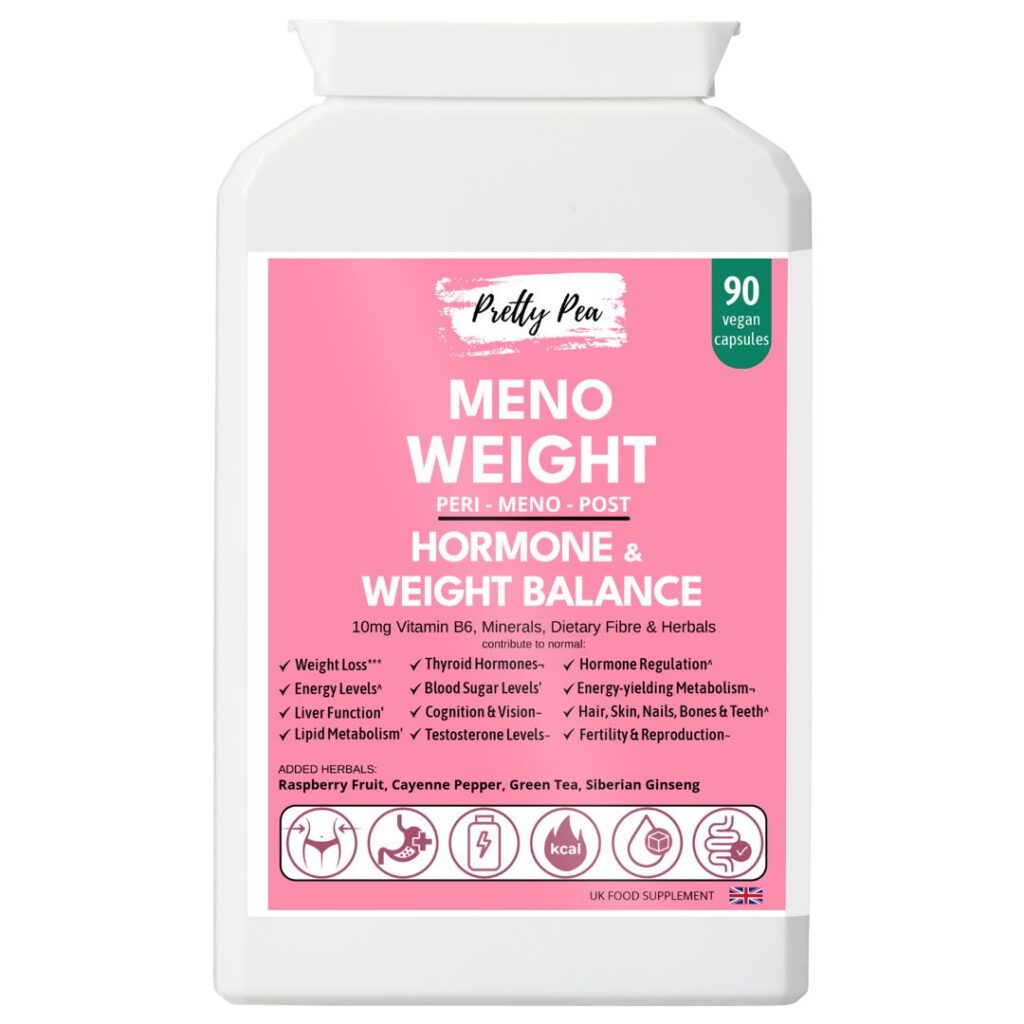](https://prettypea.blog/menopause-weight-loss-supplement/)#### **Lifestyle Modifications to Manage Symptoms**
- Exercise regularly: Physical activity can help manage weight, improve mood, and reduce hot flashes.
- Eat a balanced diet: Rich in calcium, vitamin D, and other nutrients to support bone health.
- Stress management: Techniques like yoga, meditation, and deep breathing exercises can help with mood swings.
- Stay hydrated: Drink plenty of water to reduce bloating and help regulate body temperature.
- Limit caffeine and alcohol: Both can trigger hot flushes and disrupt sleep.
## Health Complications That Can Arise
During perimenopause, women are at an increased risk for several health conditions, including:
- Osteoporosis: Decreasing estrogen levels can lead to bone density loss.
- Cardiovascular disease: The risk of heart disease increases after menopause due to changes in cholesterol and blood pressure.
- Urinary incontinence: Hormonal changes can weaken pelvic floor muscles.
- Mental health issues: Higher rates of anxiety, depression, and mood disorders are reported during this stage.
## **Frequently Asked Questions**
**1. At what age does perimenopause usually start?**
- Perimenopause typically starts between ages 45 and 55, but it can begin as early as the mid-30s.
**2. How long does perimenopause last?**
- It can last anywhere from 4 to 10 years, with symptoms gradually increasing in frequency and intensity as menopause approaches.
**3. Can I get pregnant during perimenopause?**
- **Yes, pregnancy is still possible during perimenopause as ovulation can be irregular but not completely stopped.**
**4. What is the difference between perimenopause and menopause?**
- Perimenopause is the transition period leading up to menopause, characterized by irregular menstrual cycles and symptoms. Menopause is reached when you have not had a period for 12 consecutive months.
**5. Is hormone therapy safe for treating perimenopausal symptoms?**
- Hormone therapy can be safe for many women, but it depends on individual health factors. It is essential to discuss the risks and benefits with your healthcare provider.
**6. Are there any natural remedies that can help with perimenopause symptoms?**
- Yes, herbal supplements like red clover, soy, black cohosh, and evening primrose oil are popular natural remedies that may help manage symptoms.
## **Conclusion**
Perimenopause is a natural but often challenging stage of life that can bring a variety of symptoms and health risks. Understanding the changes happening in your body, knowing what to expect, and exploring treatment options can help you manage this transition with confidence. Whether you opt for lifestyle changes, medical treatments, or natural remedies like red clover, the key is to find a strategy that works best for you.
Always consult with your healthcare provider before starting any treatment, especially herbal supplements, to ensure they are safe and appropriate for your specific situation.
## RELATED ARTICLES
[**The Menopause Diet 5 Day Plan to Lose Weight**](https://prettypea.blog/the-menopause-diet-5-day-plan-to-lose-weight/ "The Menopause Diet 5 Day Plan to Lose Weight")
**List of** [**The 100 Symptoms of Perimenopause** ](https://prettypea.blog/the-100-symptoms-of-perimenopause/)
[**Early First Symptoms of Perimenopause – 7 Telling Subtle Signs**](https://prettypea.blog/early-first-symptoms-of-perimenopause-7-telling-subtle-signs/)
[**The Role of Perimenopause Vitamins Supplements: A Guide for Women**](https://prettypea.blog/perimenopause-vitamins-supplements/)
[**Why Fibre Could Be the Secret to a Better Menopause** ](https://prettypea.blog/why-fibre-could-be-the-secret-to-a-better-menopause/)
[**The Ultimate Superfood List: What are Superfoods, Benefits, Best Choices, and How to Use** ](https://prettypea.blog/the-ultimate-superfood-list-what-are-superfoods-benefits-best-choices-and-how-to-use/)
[See Perimenopause Supplements](https://prettypea.blog/store-two/)
References
1. **[North American Menopause Society](https://www.menopause.org/)**
2. **National Institute on Aging**
3. **[American College of Obstetricians and Gynecologists](https://www.acog.org/)**
4. **Mayo Clinic, “Perimenopause: Symptoms and causes.”**
5. **World Health Organization, “Women’s health and aging.”**
**Categories:** Hormones, Menopause Matters
---
### [Early Menopause Symptoms- What Every Woman Needs to Know](https://prettypea.blog/early-menopause-symptoms-what-every-woman-needs-to-know/)
**Published:** March 21, 2025
**Author:** Cate Boyd
**Content:**
**Understanding Early Menopause Symptoms: A Comprehensive Guide for Women**
- [What is Early Menopause](#aioseo-what-is-early-menopause)
- [How Common is Premature and Early Menopause](#aioseo-how-common-is-premature-and-early-menopause-in-the-uk)
- [Premature and Early Menopause Causes](#aioseo-premature-and-early-menopause-causes)
- [Early Menopause Symptoms](#aioseo-early-menopause-symptoms)
- [Health Implications of Early Menopause](#aioseo-health-implications-of-early-menopause)
- [Diagnosis of Premature and Early Menopause](#aioseo-diagnosis-of-premature-and-early-menopause)
- [How to Manage Early Menopause Symptoms](#aioseo-how-to-manage-early-menopause-symptoms)
Menopause creeps up on many women. Talking from personal experience it doesn’t usually come with an announcement, nor a schedule of what to expect and when, and what took me most by surprise was that early menopause symptoms can happen much earlier than expected. Contrary to common beliefs, menopause symptoms can begin well before age 50. Symptoms usually appear without warning pretty early during the menopausal transition and for some women these symptoms can start well before any menstrual changes are noticed – continuing well beyond the final menstrual period.
My own menopause journey taught me hard and fast that early menopause symptoms and the hormonal changes it brings can be both abrupt and severe. This guide aims to provide women with detailed information about early menopause, what it is, when it happens, the signs of early menopause, how common early menopause symptoms are, the causes, and offers current evidence on early menopause symptoms with strategies for women on how to manage early menopause.
## **What is Early Menopause**
Menopause is a natural biological process marking the end of a woman’s reproductive years – and refers to the time where a women has had no menstrual period for 12 consecutive months. So menopause is pretty much just a day, and it typically occurs between the ages of 45 and 55, with the average age being 51.
Some women (like myself) experience menopause earlier, either as early menopause (between ages 40 – 44) or premature menopause before age 40 (also known as primary ovarian insufficiency (POI).
Both these conditions involve a decline in ovarian function, resulting in reduced hormone levels such as estrogen and progesterone – hormones which are essential for regulating the menstrual cycle and maintaining various bodily functions.
## **How Common is Premature and Early Menopause**
2024 research states that there are around 1.1 billion postmenopausal women worldwide. But what about the women who hit menopause early?
Early menopause is experienced by around 8% of women in the UK, while premature menopause affects about 2% of women under the age of 40.
Whilst they are relatively uncommon, speaking from first hand experience, early menopause symptoms are a significant condition for some women as it can cause abrupt and severe symptoms.
## **Premature and Early Menopause** **Causes**
Not every cause of early menopause will be identified. There are, however several factors that can contribute to the onset of premature or early menopause symptoms:
**Genetic Factors**: A family history of early menopause can increase the likelihood of experiencing it.
**Premenstrual disorders (PMDs)**: Studies have linked recurring PMD symptoms before menstruation to increased risks of early menopause and moderate or severe vasomotor symptoms VMS (hot flushes/night sweats).
Premenstrual syndrome (PMS) is a milder form and affects 20% – 30% women of reproductive age. Premenstrual dysphoric disorder (PMDD), though less common than PMS, is dominated by affective symptoms and can severely affect quality of life.
**Lifestyle Factors**: Smoking has been associated with an earlier onset of menopause.
A recent 2025 study published in the *International Journal of Obstetrics & Gynaecology* associated smoking with a higher risk of early menopause. The study of 139,869 women found that daily cigarette consumption was a causal factor in early menopause and women with over 30 pack-years of smoking had around 1.5 times higher risk of early menopause.
**Autoimmune Disorders**: Conditions such as thyroid or rheumatoid arthritis can lead to the immune system attacking ovarian tissue, resulting in decreased ovarian function.
**Surgery/Treatments**: Chemotherapy and radiation therapy can damage the ovaries, leading to early menopause. Additionally, surgical removal of the ovaries (oophorectomy) induces immediate menopause.
I**nfections**: Although rare, certain viral infections can lead to ovarian failure.
## **Early Menopause** **Symptoms**
4 out of 5 women experience psychological or physical symptoms around menopause in both varying degrees of severity and disruption.
The premature and early menopause symptoms are similar to those experienced during typical menopause but may be more pronounced due to the more abrupt decline in hormone levels.
Clinicians and women normally identify the transition to menopause by the onset of irregular menstrual cycles, or by the start of vasomotor symptoms (otherwise known as hot flushes) – common menopause symptoms.
However, not every woman will experience the same early menopause symptoms. In addition to the more easily identified symptoms of hot flushes and period irregularities women can experience other pretty common menopausal symptoms, such as mood changes, fatigue and sleep difficulties – *but without noticing any menstrual changes*.
Or it could just be a case of knowing something’s amiss with your body – where you know something is different, as nobody knows your body better than you.
Some symptoms are only linked to menopause in hindsight when connecting the dots backwards. So here’s what to look out for:
Common early menopause symptoms include:
**Vasomotor Symptoms**: Hot flashes and/or night sweats affect approximately 80% of women during the menopausal transition.
Symptoms involve the sudden sensation of extreme heat in the upper body, particularly the face, neck, and chest and referred to as a “hot flush.”
Flushing, chills, clamminess, sweating, anxiety, and occasionally palpitations can occur lasting for around 1 – 5 minutes. Episodes can vary in both frequency and duration and can include night sweats.
Some studies have shown that up to 87% of women experience hot flushes daily, with one-third experiencing over 10 episodes per day.
**Menstrual Irregularities**: Changes in the frequency, duration, or flow of menstrual periods.
**Genitourinary symptoms**: More than 50% of women experience genitourinary symptoms (genitourinary syndrome of menopause \[GSM\]). Decreased estrogen levels can lead to thinning and drying of tissues, causing discomfort.
**Mood Changes**: Increased risk of anxiety, depression, irritability, and mood and emotional swings.
**Sleep Disturbances**: Disrupted sleep patterns can affect quality of life.
**Cognitive Changes**: Difficulties with concentration and memory, often referred to as “brain fog.”
**Decreased Energy**: Fatigue in both life and the bedroom.
## **Health Implications of Early Menopause**
In the short-term early menopause symptoms can cause physical and psychological distress.
Whether early menopause affects long-term health, however, is uncertain.
It’s been proposed early menopause is a risk factor for adverse outcomes such as cardiovascular disease and osteoporosis, however early menopause may also reduce the risk of breast cancer, *more studies are needed.*
Estrogen has several protective effects in the body, so experiencing early menopause may lead to health implications due to prolonged exposure to low levels of estrogen:
**Cardiovascular Health**: Estrogen has a protective effect on the heart. Early menopause may increase the risk of cardiovascular diseases, including heart attacks and strokes.
**Bone Health**: Estrogen is crucial for maintaining bone density. Women with early menopause are at a higher risk of osteoporosis and fractures.
**Neurological Health**: There is an increased risk of neurological diseases, including cognitive decline and dementia.
**Infertility**: Early menopause results in the loss of fertility, which can be distressing for women desiring children.
## **Diagnosis of Premature and Early Menopause**
Diagnosing early menopause can involve a combination of clinical evaluation and laboratory tests:
**Medical History and Physical Examination**: Assessment of symptoms, life events and menstrual history. Any significant stress, physical or emotional, can play a role.
**Blood Tests:** Measurement of hormone levels, particularly elevated follicle-stimulating hormone (FSH) and luteinizing hormone (LH), alongside decreased estrogen levels, can indicate ovarian insufficiency.
## **How to Manage Early Menopause** **Symptoms**
Managing early menopause is about alleviating symptoms and mitigating long-term health risks:
**Hormone Replacement Therapy (HRT)**: Your G.P. is your first contact as HRT is typically the primary treatment to relieve menopausal symptoms and prevent bone loss. It involves administering estrogen, with or without progesterone, depending on whether the woman has an intact uterus.
**Non-Hormonal Therapies**: For women who cannot or choose not to take HRT, non-hormonal medications such as selective serotonin reuptake inhibitors (SSRIs) or certain natural supplements such as isoflavones may help manage vasomotor symptoms.
**Lifestyle Modifications**: Regular physical activity, a balanced diet rich in calcium and vitamin D, and avoiding smoking can improve overall health and reduce the risk of osteoporosis and cardiovascular diseases.
**Bone Health Management:** Calcium and vitamin D supplements, along with weight-bearing exercises, are crucial for maintaining bone density.
**Cardiovascular Health Monitoring**: Regular monitoring of blood pressure, cholesterol levels, and relevant lifestyle changes are crucial to manage cardiovascular risk factors.
**Mental Health Support**: Counselling or support groups can help address the emotional impact of early menopause symptoms, including feelings of loss, anxiety, or depression.
**Early Menopause Supplements**: In addition to conventional treatments, certain supplements may help alleviate menopausal symptoms. However, it’s always essential to consult a healthcare professional before starting any new supplement regime, as interactions with medications or underlying health conditions can occur.
## [Early Menopause Symptoms- What Every Woman Needs to Know](https://prettypea.blog/early-menopause-symptoms-what-every-woman-needs-to-know/)
[Shop Supplements](https://prettypea.blog/store-two/)
**References**
1. British Menopause Society. (2023). *What is the menopause?* Retrieved from https://thebms.org.uk
2. National Institute for Health and Care Excellence (NICE). (2023). *Menopause: Background Information – Prevalence.* Retrieved from https://cks.nice.org.uk
3. NHS Inform Scotland. (2023). *Early and Premature Menopause.* Retrieved from https://www.nhsinform.scot
4. House of Commons Library. (2021). *Menopause and the Workplace.* Retrieved from https://commonslibrary.parliament.uk
5. The Lancet. (2023). *Impact of Early Menopause on Cardiovascular and Neurological Health.* Retrieved from https://www.thelancet.com
6. NHS. (2023). *Calcium and Vitamin D: Healthy Bones.* Retrieved from [https://www.nhs.uk](https://www.nhs.uk/conditions/vitamins-and-minerals/calcium/)
7. British Dietetic Association. (2023). *Nutrition and Menopause.* Retrieved from https://www.bda.uk.com
8. National Center for Complementary and Integrative Health (NCCIH). (2023). *Herbal Supplements for Menopause.* Retrieved from https://www.nccih.nih.gov
9. [Early menopause – NCBI Bookshelf](https://www.ncbi.nlm.nih.gov/books/NBK609726/)
10. [Smoking, Genetic Susceptibility and Early Menopause: Unveiling Biological Mechanisms and Potential Therapy Targets – Liang – 2025 – BJOG: An International Journal of Obstetrics & Gynaecology – Wiley Online Library](https://obgyn.onlinelibrary.wiley.com/doi/full/10.1111/1471-0528.18052)
**Categories:** Hormones & HRT, Menopause Nutrition
---
### [7 Benefits Of Resistance Training For Women](https://prettypea.blog/7-benefits-of-resistance-training-for-women/)
**Published:** February 26, 2025
**Author:** Cate Boyd
**Excerpt:** Exercise is very beneficial for perimenopause, menopause and post-menopausal women and resistance training can make a significant difference to health.
**Content:**
The older we get, the more important it becomes to prioritise our health and wellbeing. Following a well-balanced diet, getting good-quality sleep consistently and getting regular exercise to stay strong, flexible and resilient are all key factors in promoting longevity.
It’s been found that in terms of diet, women consuming less fibre and eating more fat in midlife is associated with increased risk of weight gain, however studies report a **decrease** rather than an increase in calorie intake in midlife women. Moreover, weight gain in midlife women has been better explained by decreased levels of physical activity as opposed to increased calorie intake.
So should women be exercising more? Probably, and yes, it can absolutely help you lose weight but the benefits of exercise can go far beyond burning calories during your workout. The right type of exercise can change how you look and feel about your body and literally transform your body. Because not all exercise is created equal.
So to keep control of a changing body and give yourself the best results and protection in the face of declining muscle mass and metabolism, strength and stability, prioritising resistance training is the way to make a significant difference.
Exercise can be especially beneficial for perimenopause, menopause and post-menopausal women. And if you’re over 40, you’re perimenopausal whether you know it or not. We only find out retrospectively!
## **What happens during menopause?**
Menopause is one of the most significant phases in a woman’s life. It’s where hormone levels decline and is defined as 12 months from where menstrual cycles come to an end.
Menopause typically happens between the ages of 45 and 55 but can be earlier and can come with a vast range of different physical and emotional changes that can be difficult to manage.
As you approach perimenopause and move through menopause, sex hormone production is reduced. These changes, combined with factors involved in the ageing process, can drive a significant drop in muscle mass and strength.
For women, particularly those perimenopausal or at menopause, maintaining muscle mass is crucial. The changes around the age of menopause can lead to reductions in muscle mass and strength, with a condition known as sarcopenia.
Understanding this relationship is a must. Muscle mass plays a crucial role in regulating not only metabolism and bone density but also maintaining healthy blood glucose levels and insulin sensitivity, and managing the risk of developing type 2 diabetes and cardiovascular diseases.
The amount of muscle mass you have really can change your body and can be a game changer.
The good news is that these hormonal changes such as menopause weight gain, loss of bone density, loss of muscle mass and reduced metabolism, increased cravings and blood sugars can all be targeted with resistance training.
## **The importance of building muscle in menopause**
Menopause is a time of life that pretty much creates the perfect storm for weight gain, as changes in an ageing body coincide with hormonal changes. It’s a time when many women start to notice a shift in the metabolism.
Physical activity and resistance training play a key role in slowing muscle loss and increasing BMR and active energy expenditure.
Almost 30% of adults ≥50 years of age in the US report no physical activity outside of work.
The UK guidelines recommend adults should aim for at least 150 minutes of moderate intensity activity per week, or 75 minutes of vigorous intensity exercise, and should include **muscle strengthening activities at least twice a week.**
Studies following the dietary and lifestyle habits of 1143 women over a 15 year period around perimenopause and menopause age found that just 7.2% of the women reported physical activity levels that consistently met the recommendation over their midlife span.
It also found that 25% of midlife women had decreasing physical activity over a 15-year follow-up, and that the decrease in physical activity was associated with the most weight gain.
Muscle = Metabolism
The amount of muscle mass in the body impacts metabolic rate and as muscle mass declines the body then requires fewer calories to run on and stores excess calories as fat. This is because muscle mass is not only what firms and shapes the body, it’s metabolic tissue and calorie hungry, requiring calories 24/7.
Studies show that BMR (basal metabolic rate) / RMR (resting metabolic rate) decline linearly with age, meaning the body uses fewer calories/energy. Consequently, as a woman ages, weight gain can naturally occur if dietary habits and physical activity remain unchanged.
Muscle mass is one of the strongest determinants of BMR, how many calories your body needs, and the major contributor to the decline in BMR with age. As such, age-related muscle mass loss may explain most of the decline in BMR in midlife women. After the age of 30, muscle mass loss occurs at a rate of 3–8% per decade, making it more challenging to maintain muscle mass.
In addition, this is further exacerbated by the hormonal changes around menopause. Estrogen deficit is associated with increased inflammatory markers that are associated with muscle degradation. Moreover, estrogen acts directly on muscle stem cells to promote muscle maintenance, regeneration, and repair, effects that are attenuated after menopause.
There is also some evidence that lower testosterone levels are associated with lower body lean mass, and increased risk of sarcopenia in women – *the gradual progressive loss of muscle mass strength and function.* Women experience loss of androgen hormones, which includes testosterone, as they age. This is mainly during the early reproductive years, with a slower decline during midlife. Therefore, androgen loss may also contribute to the muscle loss in midlife women, and hence to the decrease in BMR.
It’s not just sex hormones causing chaos. Skeletal muscle is also a primary site for glucose (carbohydrate) uptake in response to insulin. Insulin shunts glucose (blood sugars) into our cells to provide energy and having more muscle mass provides a larger reservoir for the disposal of glucose and results in enhancing the body’s insulin sensitivity.
This means that with increased muscle mass, the body can better manage blood sugar levels and, in turn, reduce not only cravings but reduce the risk of insulin resistance and associated metabolic disorders.
Engaging in regular resistance exercise is likely to be the single biggest change a woman can make in order to maintain and increase muscle mass and reap these benefits.
## **The benefits of resistance training in menopause**
Estrogen plays a crucial role in protecting various systems in a woman’s body and the decline of this hormone during perimenopause and menopause leads to several physiological changes, menopause symptoms and increased health risks.
Estrogen supports the body in several ways. Here are seven evidence based protective effects of estrogen that are lost or reduced during perimenopause and menopause and explain how resistance training can help:
1. **Cardiovascular Protection**
Cardiovascular protection is number one on this list as heart disease and hypertension are among the leading causes of death in women. So it’s a big deal.
Menopause significantly impacts women’s cardiometabolic health and can increase the risk of cardiovascular diseases (CVD) and metabolic disorders.
The Framingham Heart Study found that postmenopausal women have twice the rate of cardiovascular events compared to premenopausal women.
Exercise training has been shown to improve cardiometabolic risk, decreasing abdominal visceral fat (internal fat that surrounds the organs) and improving insulin sensitivity.
A study published in the Journal of Clinical Endocrinology & Metabolism found that postmenopausal women who participated in a 16-week resistance training programme experienced significant improvements in insulin sensitivity.
• *Before menopause*: Estrogen helps maintain healthy blood vessels by promoting vasodilation (widening of blood vessels) and reducing inflammation. It also regulates cholesterol levels by increasing HDL (“good” cholesterol) and lowering LDL (“bad” cholesterol).
• *Post menopause*: The loss of the protective effect of estrogen leads to an increased cardiometabolic risk, increasing the risk of heart disease, hypertension, and atherosclerosis.
***Metabolic Changes***
Some 99 per cent of female CVD deaths occur after the age of 45, coinciding with the menopausal transition.
• Dyslipidemia: Approximately 55% of menopausal women in England have high total cholesterol levels, compared to 21 per cent of premenopausal women.
• Body Fat Redistribution: Postmenopausal women experience a 36% increase in thoracic fat and a 49% increase in intra-abdominal fat compared to premenopausal women, contributing to heightened cardiometabolic risk.
• Insulin Resistance: Insulin resistance is where cells no longer respond as insulin, having built up resistance over time. This results in higher blood sugar levels and increased fat storage. There’s a 50% increase in insulin resistance during menopause, elevating the risk of type 2 diabetes, which affects 9% of menopausal women.
• Risk Increase: Menopausal women have a 2-3 fold increased risk of developing metabolic syndrome, a cluster of conditions that raise the risk for heart disease, stroke, and diabetes.
2\. **Bone Health**
The decline in oestrogen during menopause can lead to decreased bone density, increasing the risk of osteoporosis where bones become more fragile and prone to breakage.
Strength training stimulates bone growth and helps maintain bone density, for stronger bones, improved stability and thereby reducing the risk of fractures.
• Before Menopause: Oestrogen supports bone density by inhibiting osteoclasts (cells that break down bone).
• Post Menopause: Bone loss accelerates, increasing the risk of osteoporosis and fractures.
Approximately 50% of women over the age of 50 will experience an osteoporosis-related fracture in their remaining lifetime.
A systematic review and meta-analysis found that women who experience early menopause (before age 45) have a 36% higher risk of fractures compared to those who undergo menopause later.
These statistics highlight the importance of proactive measures to maintain bone health after menopause, such as resistance exercise, ensuring adequate protein, calcium and vitamin D intake, and discussing bone density screening with healthcare providers.
3\. **Brain and Cognitive Function**
Regular strength training has been linked to better mental health, improved sleep and mood with reduced symptoms of anxiety and depression, all of which are common menopause symptoms.
• Before Menopause: Estrogen has neuroprotective effects, enhancing memory, reducing inflammation, and promoting blood flow in the brain.
• After Menopause: The risk of cognitive decline, including Alzheimer’s disease, may increase.
4\. **Skin and collagen maintenance**
Is your skin changing? Resistance training offers significant benefits for skin health and collagen production in aging women. Recent research has highlighted its role in enhancing skin elasticity, improving dermal structure, and increasing collagen synthesis.
• Before Menopause: Estrogen helps maintain skin elasticity, thickness and hydration by stimulating collagen production.
• Post Menopause: Skin becomes thinner, drier, and more prone to wrinkling.
A 16-week study of sedentary middle-aged women compared the effects of aerobic training (AT) and resistance training (RT) on skin aging. The findings revealed that both AT and RT significantly improved skin elasticity and the structure of the upper dermis.
Notably, resistance training also led to an increase in dermal thickness. Changes in gene expression also indicated increased collagen production and inflammatory factors involved in skin aging were also improved.
5\. **Weight gain and metabolic regulation**
Increased muscle mass from resistance training boosts resting metabolic rate, supporting weight management, with menopause weight gain being a common menopause symptom.
• Before Menopause: Estrogen helps regulate metabolism and fat distribution, favouring fat storage in hips and thighs rather than the abdomen.
• Post Menopause: Body shape can change from pear shape to apple shape with increased abdominal fat and a higher risk of metabolic syndrome and diabetes.
6\. **Joint and Muscle Health**
Resistance training helps counteract muscle loss by building and maintaining muscle mass, essential for overall mobility and daily activities. Resistance training has been shown to improve muscle strength, even in the absence of a significant change in muscle mass.
• Before Menopause: Estrogen has anti-inflammatory effects and supports muscle mass and joint lubrication.
• Post Menopause: Women may experience more joint pain, stiffness, and loss of muscle mass.
7\. **Urinary Health**
Make your goal for a stronger body with a stronger abdominal area. During exercise sessions incorporate pelvic floor exercises – Kegels help strengthen pelvic muscles and reduce urinary incontinence.
• Before Menopause: Estrogen maintains the elasticity and moisture of urinary tract tissues.
• Post Menopause: Women may experience dryness in that area, with atrophy, painful intercourse, and increased risk of urinary tract infections.
## **7 Protein Benefits**
To get the best results from resistance training it’s vital to support your body with sufficient protein.
Maintaining and building muscle requires protein. And most women don’t consume enough. So there’s a very good reason why protein powders are so popular with women who resistance train.
Protein really is key to building muscle. Protein is indispensable for maintaining and enhancing health and vital in muscle development, metabolic function, disease prevention and is even involved in the production of some hormones.
Combining resistance training with sufficient protein intake can significantly improve health outcomes for women of all ages, and especially in perimenopause and menopause and a changing body.
Here are 7 evidence-based reasons why resistance training and protein can really benefit women during perimenopause and menopause.
**1. Muscle Growth and Repair:** Proteins supply amino acids, the building blocks essential for muscle synthesis and repair.
Resistance training stimulates muscle protein synthesis. It involves making micro-tears in muscle fibres, and adequate protein then facilitates muscle repair and growth, resulting in increased muscle mass and strength.
**2. Thermic Effect of Food (TEF):** The thermic effect of food refers to the energy used during digestion, absorption, and metabolism processes in the body.
Protein has a higher TEF compared to other macronutrients, with estimates ranging from 20 to 30 per cent of calories. This means that 20 to 30 per cent of the calories from protein are used for its digestion and processing, contributing to increased energy expenditure.
**3. Satiety and Weight Management:** High-protein diets can enhance feelings of fullness, decrease hunger and prevent overeating, reducing overall calorie intake.
A meta-analysis of 24 trials, including 1063 individuals found that high-protein diets produced more favourable changes in body weight and triglycerides than a standard protein, low-fat diet.
**4. Metabolic Health:** Adequate protein intake supports metabolic health by maintaining muscle mass, crucial for sustaining a healthy metabolic rate. Plus, protein consumption can improve blood sugar regulation and insulin sensitivity.
**5. Bone Health**: Protein plays a role in bone structure and strength providing the necessary building blocks for bone tissue. Higher protein intake has been associated with increased bone density and a reduced risk of fractures.
**6. Immune Function:** Proteins are integral components of antibodies and immune cells, playing a critical role in the body’s defence mechanisms fighting against infections and illnesses.
**7. Hormone Production:** Several hormones are protein-based and adequate protein intake is essential for their synthesis and proper functioning.
## **FAQs – Resistance training for women & protein** requirements
*W****hen should women start resistance training?***
The earlier you start strength training the better, as you’ll be able to build healthy habits into your lifestyle. Consistency is key with resistance training.
***How much protein do women need?***
The RDA is 0.8g of protein per kg of bodyweight per day. This, however, is the minimum amount required for the body to survive and prevent disease, not necessarily the amount of protein for the body to thrive.
More protein is typically recommended when building muscle and performing resistance training. A recent 2025 study confirmed that during weight loss the rebuilding of the body is likely to need at least 1.2 g/kg body weight.
***How to hit your protein goals?***
Eat protein at every meal. One of the hardest meals to achieve this is breakfast, but you can easily get your protein hit with a delicious [chocolate vegan protein powder](https://prettypea.blog/vegan-chocolate-protein-powder/) from [Pretty Pea](https://prettypea.blog/store-two/). At under 100 calories, Pretty Pea protein is packed with essential women’s vitamins and minerals, plus dietary fibre to keep you feeling full for hours.
***Why choose vegan protein powder?***
Studies show plant based protein consumption is associated with a reduced risk for multiple diseases and overall mortality.
These results complement the recommendations by the American Institute for Cancer Research and the World Cancer Research Fund to reduce red and processed meat intake to decrease cancer incidence.
When changing your diet and or taking supplements its always advisable to consult with your healthcare providers to develop a personalised plan that addresses individual needs and health status.
[See more Pretty Pea](https://prettypea.blog/ "See more Pretty Pea")
*References:*
[Protein requirement in obesity – PubMed](https://pubmed.ncbi.nlm.nih.gov/39514335/)
[Weight Gain in Midlife Women – PMC](https://pmc.ncbi.nlm.nih.gov/articles/PMC11150086/)
[Health-enhancing physical activity in obesity management: the need to (seriously) go beyond weight loss – PubMed](https://pubmed.ncbi.nlm.nih.gov/39271931/)
[Increasing muscle mass to improve metabolism – PubMed](https://pubmed.ncbi.nlm.nih.gov/23805405/)
Protein Quantity and Source, Fasting-Mimicking Diets, and Longevity – ScienceDirect
[Muscle mass and insulin sensitivity in postmenopausal women after 6-month exercise training](https://pubmed.ncbi.nlm.nih.gov/26524194/)
[Exercise and insulin resistance in type 2 diabetes mellitus: A systematic review and meta-analysis](https://doi.org/10.1016/j.rehab.2018.11.001)
**Categories:** Menopause Nutrition
---
### [The Role of Soluble Fibre and Weight Loss](https://prettypea.blog/the-role-of-soluble-fibre-and-weight-loss/)
**Published:** October 31, 2023
**Author:** Cate Boyd
**Excerpt:** Incorporating soluble fibre into your diet can be a powerful tool in promoting weight loss and improving overall health. The beneficial effects of soluble fibre on gut bacteria, inflammation, and appetite suppression make it an essential nutrient for those seeking to shed excess pounds.
**Content:**
Many people often overlook the importance of dietary fibre in the diet. However, research suggests that consuming sufficient amounts of soluble fibre can play a significant role in promoting weight loss and improving overall health. This comprehensive guide will explore the various ways in which soluble fibre can aid in weight loss, including its impact on gut bacteria, inflammation, and appetite suppression.
Here we share a checklist of the different sources of soluble fibre and what you need to know about the pros and cons of fibre supplements.
- [Gut Microbiome and Soluble Fibre](#aioseo-gut-microbiome-and-soluble-fibre-5)
- [Soluble Fibre and Inflammation](#aioseo-soluble-fibre-and-inflammation-9)
- [Appetite and Soluble Fibre](#aioseo-appetite-suppression-and-soluble-fibre-13)
- [Incorporating Soluble Fibre Foods into Your Diet](#aioseo-incorporating-soluble-fibre-foods-into-your-diet-27)
## **Gut Microbiome and Soluble Fibre**
The human gut is home to trillions of bacteria, collectively known as the gut microbiome. These bacteria play a crucial role in maintaining overall health, including weight management and metabolism.
Soluble fibre, which is not digested by the gut, serves as a source of nourishment for these beneficial gut bacteria. This type of fibre, known as prebiotic fibre, or fermentable fibre. It’s essential for optimal gut health and body weight management and a nutrient many of us don’t consume enough of.
Studies have shown that a high intake of soluble fibre can positively influence the composition and function of the gut microbiome (1). By providing nourishment to these bacteria, soluble fibre promotes their growth and activity, leading to improved overall health and weight management.
## **Soluble Fibre and Inflammation**
Chronic inflammation is a common underlying factor in many chronic diseases, including obesity. The gut microbiome plays a crucial role in regulating inflammation levels in the body. Soluble fibre has been found to reduce inflammation by promoting the production of short-chain fatty acids (SCFAs) by gut bacteria (2).
SCFAs, such as butyrate, have anti-inflammatory properties and help maintain a healthy gut lining. By reducing gut inflammation, soluble fibre can contribute to improved metabolic health and a lower risk of chronic diseases associated with obesity, such as heart disease and metabolic syndrome (3).
## **Appetite and Soluble Fibre**
While calorie counting is a common approach, certain dietary strategies can naturally reduce appetite, leading to lower calorie intake without conscious effort. Soluble fibre has been shown to be one such strategy.
Viscous soluble fibres, such as pectins, beta-glucans, psyllium, glucomannan, and guar gum, form a gel-like substance in the gut when combined with water (4). This gel slows down the emptying of the stomach, prolonging the feeling of fullness and reducing appetite. Research suggests that consuming high-viscosity soluble fibres can lead to automatic weight loss by reducing calorie intake (5).
Additionally, some evidence suggests that soluble fibre may specifically target belly fat, which is associated with increased health risks (6). By incorporating more high-viscosity soluble fibres into your diet, you can not only suppress your appetite but may just target some stubborn abdominal fat.
[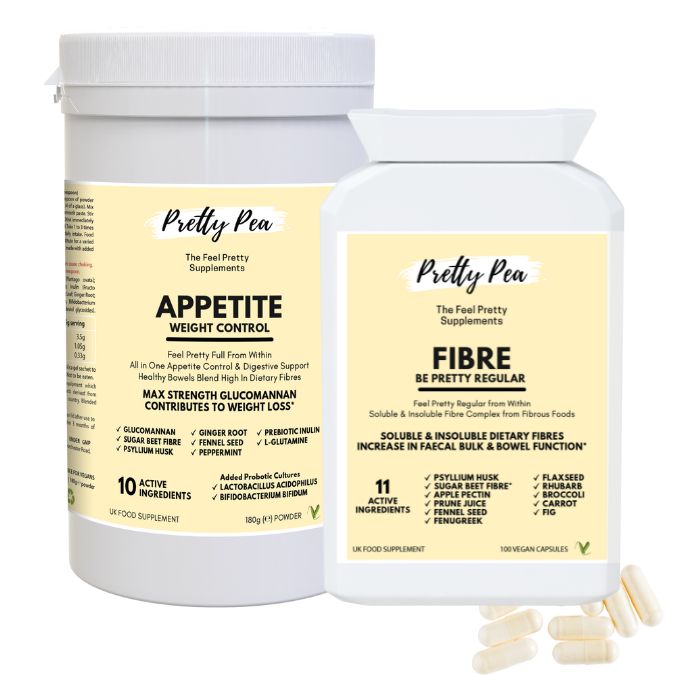](https://prettypea.blog/womens-health-supplements)## **Incorporating Soluble Fibre Foods into Your Diet**
To reap the benefits of soluble fibre for weight loss, it is crucial to incorporate fibre-rich foods into your daily diet. Here are some excellent sources of soluble fibre:
1. Legumes: Beans, lentils, and chickpeas are not only rich in fibre but also provide a good source of plant-based protein.
2. Flaxseeds: These tiny seeds are packed with fibre, omega-3 fatty acids, and antioxidants. They can be easily incorporated into smoothies, yogurt, or baked goods.
3. Vegetables: Asparagus, Brussels sprouts, and broccoli are excellent sources of soluble fibre. Aim to include a variety of vegetables in your meals to maximize fibre intake.
4. Whole Grains: Oats, quinoa, and brown rice are examples of whole grains that provide both soluble and insoluble fibre. These grains can serve as a nutritious base for your meals.
Remember that when increasing your fibre intake, it is important to do so gradually to allow your body to adjust. Rapidly increasing fibre intake can lead to temporary digestive discomfort, such as abdominal cramps and diarrhoea.
By combining these healthy habits with a high-fibre diet, you can optimize your weight loss journey and improve your overall health.
- [](https://prettypea.blog/d-mannose-and-cranberry-for-women/)[Menopause Nutrition](https://prettypea.blog/category/menopause/) · [Superfoods](https://prettypea.blog/category/superfoods/) · [Supplements](https://prettypea.blog/category/supplements/)
October 8, 2026
- [](https://prettypea.blog/what-is-glp-1/)[Fibre & Gut Health](https://prettypea.blog/category/fibre/) · [Hormones & HRT](https://prettypea.blog/category/hormones-hrt/) · [Menopause Nutrition](https://prettypea.blog/category/menopause/) · [Supplements](https://prettypea.blog/category/supplements/)
### [What Is GLP-1? The Gut Hormone That Helps Regulate Hunger & Blood Sugar](https://prettypea.blog/what-is-glp-1/)
August 18, 2026
- [](https://prettypea.blog/psyllium-husk-benefits/)[Pretty Pea](https://prettypea.blog/category/pretty-pea/)
### [Psyllium Husk: Benefits, How to Take It, Side Effects & How It Compares](https://prettypea.blog/psyllium-husk-benefits/)
August 15, 2026
## You may also like:
[9 Benefits of Fibre: Why It’s Essential for Gut Health, Weight and Wellbeing](https://prettypea.blog/9-benefits-of-fibre-why-its-essential-for-gut-health-weight-and-wellbeing/)
[Your Gut Microbiome Is Talking to Your Brain — Are You Listening?](https://prettypea.blog/your-gut-microbiome-is-talking-to-your-brain-are-you-listening/)
[Appetite Regulation: How Fibre vs GLP-1 Compare](https://prettypea.blog/appetite-regulation-how-fibre-vs-glp-1-compare/)
[Glucomannan for Weight Loss: Does It Work and How Does It Compare to Medications?](https://prettypea.blog/glucomannan-weight-loss/)
[What is the Highest Fibre Food](https://prettypea.blog/what-is-the-highest-fibre-food/)
[The Ultimate Guide to Fibre Supplements for a Happier Gut: Unlocking Your Digestive Health](https://prettypea.blog/the-ultimate-guide-to-fibre-supplements-for-a-happier-gut-unlocking-your-digestive-health/)
[10 Green Tea Benefits: The Ultimate Science-Backed Guide](https://prettypea.blog/10-green-tea-benefits-the-ultimate-science-backed-guide/)
[The Ultimate Superfood List: What are Superfoods, Benefits, Best Choices, and How to Use](https://prettypea.blog/the-ultimate-superfood-list-what-are-superfoods-benefits-best-choices-and-how-to-use/)
[The Rich List: Insoluble Fibre Rich Food List](https://prettypea.blog/the-rich-list-insoluble-fibre-rich-food-list/)
[Understanding Visceral Fat: The Ultimate Belly Fat Guide](https://prettypea.blog/understanding-visceral-fat-the-ultimate-belly-fat-guide/)
[Everything Psyllium How To Use: A Comprehensive Guide on How to Use It for Maximum Health Benefits](https://prettypea.blog/psyllium-how-to-use/)
[Can You Use Psyllium Husk for Weight Loss? Benefits, Dosage & Science Explained ](https://prettypea.blog/psyllium-husk-for-weight-loss/)
## Sources
The impact of dietary fiber consumption on human health: An umbrella review of evidence from 17,155,277 individuals – ScienceDirect
**Categories:** Fibre & Gut Health, Menopause Nutrition, Superfoods
---
### [Manage Menopause Weight Gain Causes - 5 Ways](https://prettypea.blog/menopause-weight-gain-4/)
**Published:** October 2, 2024
**Author:** Cate Boyd
**Content:**
**What Causes Menopause Weight Gain, and Is It Inevitable? 5 Solutions to Manage Weight**
For many women, menopause signals a significant change, not just in reproductive health but also in physical appearance and body weight. One of the most common concerns during this transition is **menopause weight gain**.
If you’re in your 40s or 50s, you may have noticed that the pounds seem to creep up, particularly around the abdomen. While this is a natural part of aging, it doesn’t make it any less frustrating.
But why does this happen? Is it inevitable? And, most importantly, what can you do about it? Let’s explore the causes of menopause weight gain, debunk myths and find out the 5 best solutions.
---
## What Causes Menopause Weight Gain, and Is It Inevitable?
For many women, menopause brings more than just hot flashes and mood swings—it also tends to come with unwelcome weight gain. If you’re approaching or currently experiencing menopause, you might have noticed the numbers on the scale creeping upward, especially around your abdomen.
So, what’s causing this menopause weight gain, and is there anything you can do about it?
The short answer: It’s complicated but not entirely inevitable. In this blog post, we’ll explore the reasons behind menopause weight gain and provide you with five actionable solutions to help you manage it. Plus, we’ll introduce you to [Pretty Pea’s meno reset supplement](https://prettypea.blog/menopause-supplement-womens-nutrition-support/ "Pretty Pea’s meno reset supplement"), a formula specifically designed to support women through this transitional phase.
## [Manage Menopause Weight Gain Causes – 5 Ways](https://prettypea.blog/menopause-weight-gain-4/)
## Why Does Menopause Cause Weight Gain?
Menopause is a natural biological process that marks the end of a woman’s reproductive years, typically occurring between the ages of 45 and 55. During this time, your body undergoes several hormonal changes that can significantly impact your metabolism and fat distribution. Let’s dive deeper into the reasons behind this weight gain:
## **1. Hormonal Changes: The Drop in Estrogen Levels**
One of the primary culprits behind menopause weight gain is a drop in estrogen levels. Estrogen is a hormone that plays a key role in regulating metabolism and fat distribution in the body. As your estrogen levels decline during menopause, your body may begin to store more fat, particularly around the abdomen.
Lower estrogen also affects your body’s ability to use starches and blood sugar effectively, leading to increased fat storage. Moreover, estrogen loss can influence how your body produces and uses insulin, potentially contributing to insulin resistance—a condition that makes it easier to gain weight.
## **2. Slower Metabolism**
With age metabolism can slow down, however, this is mostly attributed to loss of muscle mass which can be accelerated during menopause. Muscle is more metabolically active than fat, so the less muscle you have, the fewer calories you burn, even when at rest. A slower metabolism means you’ll need fewer calories to maintain your weight, and any excess calories are more likely to be stored as fat.
## **3. Changes in Fat Distribution**
Before menopause, women tend to store fat around their hips and thighs (often called “pear-shaped” fat distribution). However, during and after menopause, fat is more likely to accumulate around the abdomen (leading to an “apple-shaped” fat distribution). This shift is not just a cosmetic issue; this abdominal fat is linked to a higher risk of developing chronic diseases like heart disease, type 2 diabetes, and certain cancers .
## **4. Decreased Physical Activity**
Many women find that their energy levels drop during menopause, and as a result, they become less physically active. The combination of a slower metabolism and reduced physical activity can make it easier to gain weight. Additionally, lifestyle changes that often occur around the time of menopause—such as children leaving home, changes in work routines, or increased caregiving responsibilities—can also contribute to less time for exercise.
## **5. Sleep Disturbances**
Menopause is notorious for causing sleep disturbances due to night sweats, hot flashes, and anxiety. Poor sleep can disrupt your body’s hunger and satiety hormones, like ghrelin and leptin, making you more likely to overeat and crave high-calorie foods. Lack of sleep also reduces your energy levels, making it harder to stay active during the day.
## [Manage Menopause Weight Gain Causes – 5 Ways](https://prettypea.blog/menopause-weight-gain-4/)
## Is Menopause Weight Gain Inevitable?
While the hormonal and metabolic changes during menopause can certainly make it easier to gain weight, it doesn’t mean that menopause weight gain is inevitable. By understanding these changes and adopting the right strategies, you can take control of your weight and overall health.
Let’s explore five actionable solutions to manage menopause weight gain.
## 5 Solutions to Combat Menopause Weight Gain
### 1. Prioritize Strength Training
One of the most effective ways to combat the loss of muscle mass during menopause is through strength training. Lifting weights or doing bodyweight exercises, such as squats, lunges, and push-ups, helps to preserve and build muscle mass. More muscle mass means a higher metabolic rate, which can help you burn more calories throughout the day—even at rest.
Incorporating strength training into your weekly routine, even just two or three times per week, can make a significant difference in maintaining a healthy weight and preventing fat accumulation around the abdomen .
### 2. Focus on a Balanced Diet
While it may be tempting to try restrictive diets, the best approach for managing menopause weight gain is a balanced, nutrient-dense diet. Here are some key dietary principles to follow:
- **Protein**: Prioritize lean protein at every meal. Sources such as chicken, fish, legumes, and tofu support muscle preservation and promote satiety.
- **Healthy Fats**: Include healthy fats from sources like avocados, nuts, seeds, and olive oil to help balance your hormones and support overall health.
- **Fibre**: Increase your intake of fibre-rich foods like vegetables, berries, whole grains, and legumes to improve digestion and keep you feeling fuller longer.
- **Limit Processed Foods**: Reduce your intake of processed, high-sugar, and high-fat foods that contribute to weight gain.
### 3. Manage Stress Levels
The hormonal changes during menopause can increase your body’s production of cortisol, the stress hormone. Elevated cortisol levels are associated with weight gain, particularly around the abdomen where there are more stress receptors. Incorporating stress management techniques such as meditation, yoga, or deep breathing exercises can help lower cortisol levels and reduce the likelihood of stress-induced weight gain.
### 4. Stay Hydrated
As simple as it sounds, drinking enough water is essential for managing your weight. Staying hydrated can help control hunger, improve digestion, and boost your metabolism. It’s easy to mistake thirst for hunger, which can lead to overeating, so make sure you’re drinking enough water throughout the day.
Additionally, consuming water-rich foods like cucumbers, watermelon, and leafy greens can help keep you hydrated while also providing essential nutrients.
### 5. Consider a Menopause-Specific Supplement
While diet and exercise are crucial, sometimes you need a little extra support to manage menopause weight gain. This is where Pretty Pea [meno supplement](https://prettypea.blog/menopause-supplement-womens-nutrition-support/ "meno supplement") comes into play, designed to address the unique challenges women face during menopause. It contains natural ingredients that support hormonal balance, boost metabolism, and support the body’s fat burning processes.
With its blend of vitamins, minerals, and herbal extracts, Pretty Pea’s supplement helps to ease the transition through menopause while supporting your weight management goals.
**Why Choose Pretty Pea’s Meno Supplement?**
Pretty Pea’s Meno formula supports women through perimenopause and menopause. With 16 key ingredients these capsules support energy levels, cognitive function, metabolism and much more.
Some of the key ingredients include:
- **Green Tea Extract**: Known for its metabolism-boosting and fat-burning properties, green tea extract can help you burn more calories and reduce belly fat .
- **Glucomannan**: This unique fibre is an exceptionally viscous fibre. Alongside the usual digestive support fibre brings, this fibre naturally expands in the stomach promoting a feeling of fullness helping to regulate appetite and prevent over-eating.
- **Vitamin B6**: This vitamin is vital for the regulation of hormone activity in the body whilst also reducing tiredness and fatigue.
- **Chromium** contributes to normal blood glucose levels, (affecting fat storage hormone insulin).
---
**Take Control of Menopause Weight Gain**
Menopause weight gain is a common challenge, but it’s not an inevitable one. By understanding the hormonal and metabolic changes that occur during this phase and adopting healthy lifestyle habits, you can take control of your weight and your health. Incorporating strength training, following a balanced diet, managing stress, and staying hydrated are essential strategies.
And for that extra support, consider adding [Pretty Pea’s menopause reset ](https://prettypea.blog/menopause-supplement-womens-nutrition-support/ "Pretty Pea’s menopause weight loss ")[supplement](https://prettypea.blog/menopause-weight-loss-supplement/) to your regime. With the right approach, you can navigate menopause with confidence and maintain a healthy weight.
---
- [](https://prettypea.blog/d-mannose-and-cranberry-for-women/)[Menopause Nutrition](https://prettypea.blog/category/menopause/) · [Superfoods](https://prettypea.blog/category/superfoods/) · [Supplements](https://prettypea.blog/category/supplements/)
October 8, 2026
- [](https://prettypea.blog/what-is-glp-1/)[Fibre & Gut Health](https://prettypea.blog/category/fibre/) · [Hormones & HRT](https://prettypea.blog/category/hormones-hrt/) · [Menopause Nutrition](https://prettypea.blog/category/menopause/) · [Supplements](https://prettypea.blog/category/supplements/)
### [What Is GLP-1? The Gut Hormone That Helps Regulate Hunger & Blood Sugar](https://prettypea.blog/what-is-glp-1/)
August 18, 2026
- [](https://prettypea.blog/psyllium-husk-benefits/)[Pretty Pea](https://prettypea.blog/category/pretty-pea/)
### [Psyllium Husk: Benefits, How to Take It, Side Effects & How It Compares](https://prettypea.blog/psyllium-husk-benefits/)
August 15, 2026
### Menopause Weight Gain Causes – References
1. [Green Tea and Weight Loss: How it Works](https://www.ncbi.nlm.nih.gov/pmc/articles/PMC2855614/)
2. [Strength Training and Muscle Loss Prevention](https://pubmed.ncbi.nlm.nih.gov/12580689/)
3. [The Role of Hydration in Metabolism](https://pubmed.ncbi.nlm.nih.gov/19501757/)
4. [Abdominal Fat and Health Risks During Menopause](https://www.ncbi.nlm.nih.gov/pmc/articles/PMC2804950/)
5. [Cortisol and Abdominal Fat](https://www.ncbi.nlm.nih.gov/pmc/articles/PMC3079864/)
6. [Sleep and Weight Gain in Women](https://pubmed.ncbi.nlm.nih.gov/26439669/)
**Categories:** Menopause Nutrition
---
### [Perimenopause Weight Gain (Causes and What Actually Helps)](https://prettypea.blog/perimenopause-weight-gain/)
**Published:** April 19, 2021
**Author:** Cate Boyd
**Content:**
Perimenopause weight gain is one of the most common and frustrating changes women experience in their 30s and 40s. Many notice that weight increases—particularly around the abdomen—even when diet and exercise habits haven’t changed.
This isn’t just about calories or willpower. Hormonal changes during perimenopause can affect how your body stores fat, regulates appetite, and uses energy.
Understanding these changes is key to managing weight more effectively.
In this guide, we’ll explain:
- [Why does Perimenopause Cause Weight Gain?](#aioseo-why-does-perimenopause-cause-weight-gain-6)
- [Calories and weight loss](#aioseo-calories-and-weight-loss-18)
- [Why is it harder to lose weight](#aioseo-why-is-it-harder-to-lose-weight-26)
- [7 Steps to Manage Perimenopause Weight Gain](#aioseo-7-steps-to-manage-perimenopause-weight-gain-35)
> ## Why does Perimenopause Cause Weight Gain?
During perimenopause, levels of oestrogen begin to fluctuate and gradually decline. This affects several systems in the body:
> - **Fat distribution:** Lower oestrogen is linked to increased abdominal fat storage
> - **Insulin sensitivity:** Hormonal changes can make it easier to gain weight and harder to lose it
> - **Appetite regulation:** Changes in hunger hormones may increase cravings
> - **Muscle mass:** Natural age-related muscle loss slows metabolism
“Menopause is a high-risk time for weight gain in women. Although the average woman gains 2-5 pounds during menopausal transition, some women are at risk for greater weight gains. There is also a hormonally driven shift in body fat distribution from peripheral to abdominal at menopause, which may increase health risks.”
## [Perimenopause Weight Gain (Causes and What Actually Helps)](https://prettypea.blog/perimenopause-weight-gain/)
## Perimenopause Weight Gain
The *calories in -v- calories out* equation is all well and good in your 20’s, when the metabolism is fired up by your muscle mass and hormones are happily in sync. It’s when you approach perimenopause and your hormones go into free-fall that you face new obstacles. Unbalanced hormones are a real issue for women as it’s hormones that control how our calories are used. Hormones decide whether to store your calories as energy or store them as fat.
## Calories and weight loss
A recent [study ](https://www.sciencedaily.com/releases/2021/08/210812145028.htm)published in the Science Journal found that our metabolism doesn’t actually start to slow down until age 60, not around 40 as previously thought!
The study recognised that muscle mass plays a role as it’s more metabolically active than fat tissues, ie muscle burns more calories than fat does.
When hormones are unbalanced it’s often the case that no amount of cardio or calorie restriction will shift the number on the scales.
## Why is it harder to lose weight
During perimenopause our sex hormones oestrogen, progesterone and testosterone start to decline. Whilst your ovaries start shutting up shop they call on your adrenal glands (they produce your stress hormones) for help (as your body still needs some oestrogen for other functions in your body).
Adrenal fatigue is an issue for many women, making menopause feel like more than a *normal transition*, because for many the adrenals are already taxed by the time they reach menopause.
> **Hormones drive whether** **calories are stored as FAT or as ENERGY**
Other hormones include **fat storing hormone** Insulin, **hunger hormone** Leptin and Thyroid which controls your **metabolism**. So many women have sluggish metabolism at this age and it’s no coincidence. Years of yo-yo dieting programmed into women can cause havoc on the your metabolism too.
## How to Manage Weight During Perimenopause
From years of training women, and my own early menopause experience I can’t emphasise the power of nutrition and exercise enough when it comes to transforming both how you look and how you feel.
Here are my 7 steps that every woman can start implementing today to start taking charge of her hormones and body. Practical everyday steps to make a difference.
## 7 Steps to Manage Perimenopause Weight Gain
### Step 1 – Blood Tests
Ask your GP to check your hormones and other essential markers, especially if you’ve been feeling tired or run down. A simple blood test can give you vital information on what you body could be lacking. It can be useful to obtain a copy of the results. Because there is usually a wide bracket of what’s deemed as ‘normal’ and what’s deficient. You want to know if you are at the lower end of any of these brackets so you can do something about it.
### Step 2 – Stop Dieting
It’s time to ditch the diet mentality and adopt the quality not quantity approach to your food. Stop counting calories and start eating for nutrition instead. Get off the dieting roundabout of points, syns and counting. Not all calories are created equal. Some calories are packed with nutrients, whereas alcohol is empty calories. We can’t outsmart our hormones nor metabolism. Put your focus on your food quality and start thinking about your food as the nutrients that feed your cells and balance your hormones.
### Step 3 – Add Protein & Fibre at Every Meal
Protein, protein, protein…. most women don’t eat enough despite it being the number one macronutrient for weight loss. To lose weight eat your bodyweight in protein each day, at least 1 gram per kg of bodyweight. Do this and there won’t be room for snacking. Take an honest review to see if you’re getting enough. Consider supplementing with protein powder to top up any gaps if necessary.
### Step 4 – Stop Snacking
Talking of snacking, it’s time to ditch eating every 2-3 hours. Snacking doesn’t boost the metabolism. Plus it’s not how your body is designed to eat either. Grazing like this is the green light for fat storage as it spikes your Insulin fat storing hormone. If you feel the need to eat every 2 hours it’s definitely time to look at the quality of your food, focus on protein and fibre to re-set your hormones and switch them from fat storing to fat burning mode.
### Step 5 – Add Hormone Balancing Foods + Adaptogens
The decline in sex hormones means fat storage goes to the abdomen now more now than ever. The typical pear shape carrying fat on the thighs and buttocks can start to become more apple shape with fat going straight to the abdomen instead.
### Hormone balancing foods
You can give your hormones (and weight) a helping hand with foods such as cruciferous veggies (think cauliflower, broccoli, sprouts, kale – the veggies that look like trees) as they contain specific compounds. Harmonising adaptogens include Maca root, Ashwangandha, Spirulina, Seaweed, Red Clover, Sage to name a few. These clever herbals adapt to what your body needs. All adaptogens you can find in the Pretty Pea range.
Note some herbal hormone balancing supplements are not recommended for those on HRT prescription medication. It’s always advisable to consult your GP before changing your diet and /or taking supplements.
Further reading: [Can You Take Supplements with HRT? What’s Safe and What to Avoid ](https://prettypea.blog/can-you-take-supplements-with-hrt-whats-safe-and-what-to-avoid/)
### Step 6 – Manage Daily Stress
Manage daily stress levels as cortisol, your stress hormone, is also associated with fat storage especially around your middle. Modern life has created a constant undercurrent of continuous stressors which the body isn’t designed for. Our stress hormones were designed to be used in short bursts, not the continuous worries we have going on in the background 24-7.
Relationships, family drama, work issues, financial worries, endless to-do lists, pandemics, living on caffeine and sugar, anxiety, depression and mental health concerns and being at the bottom of your own to-do list all ultimately take their toll.
## [Perimenopause Weight Gain (Causes and What Actually Helps)](https://prettypea.blog/perimenopause-weight-gain/)
### Step 7 – Strength Training
Strength training, also known as resistance training, doesn’t require a gym membership. Resistance training simply means your body is resisting, working against something. It could be gravity using your own bodyweight or it can be using a weight such as a kettlebell, dumbbell or medicine ball etc.
Your body releases HGH, Human Growth Hormone, when working against a force. HGH, known as the youth hormone, plays a vital role in cell regeneration and in maintaining healthy tissues and optimising metabolic function.
### Age and loss of muscle mass
With each decade after 50 we lose around 6% muscle mass. That’s associated with a 10-15% loss in strength making you feel physically weaker and less functional.
Losing muscle makes it more difficult to lose weight. Fat burns 2-3 calories per pound whereas muscle burns around 50 calories. This is why those who strength train regularly and have built up their lean muscle tissue can eat thousands of calories each day – muscles is metabolically active tissue and hungry!
It also explains why most men cab lose weight quicker than women – they naturally have more muscle mass than women. Women typically carry more bodyfat.
Know that the more muscle you have the more calories your body will burn 24/7 and not just when you’re working out.
These 7 steps can make perimenopause weight loss easier. You just have to start and take it step by step.
## FAQ – Perimenopause Weight Gain
### Why do I gain weight during perimenopause?
Hormonal changes, particularly declining oestrogen levels, can affect fat storage, metabolism, and appetite regulation.
---
### Where does perimenopause weight gain occur?
Weight is often gained around the abdomen, sometimes referred to as “menopause belly fat”.
---
### Can you lose weight during perimenopause?
Yes, but it may require adjustments to diet, exercise, and lifestyle to account for hormonal changes.
---
### What is the best diet for perimenopause weight gain?
A balanced diet including protein, fibre, and whole foods is generally recommended.
---
### Does fibre help with menopause weight gain?
Fibre may support appetite control and help regulate blood sugar, which can be beneficial for weight management.
## RELATED ARTICLES
[Understanding Visceral Fat: The Ultimate Belly Fat Guide](https://prettypea.blog/understanding-visceral-fat-the-ultimate-belly-fat-guide/)
[9 Benefits of Fibre: Why It’s Essential for Gut Health, Weight and Wellbeing](https://prettypea.blog/9-benefits-of-fibre-why-its-essential-for-gut-health-weight-and-wellbeing/)
[Your Gut Microbiome Is Talking to Your Brain — Are You Listening?](https://prettypea.blog/your-gut-microbiome-is-talking-to-your-brain-are-you-listening/)
[Appetite Regulation: How Fibre vs GLP-1 Compare](https://prettypea.blog/appetite-regulation-how-fibre-vs-glp-1-compare/)
[Glucomannan for Weight Loss: Does It Work and How Does It Compare to Medications?](https://prettypea.blog/glucomannan-weight-loss/)
[What is the Highest Fibre Food](https://prettypea.blog/what-is-the-highest-fibre-food/)
[The Ultimate Guide to Fibre Supplements for a Happier Gut: Unlocking Your Digestive Health](https://prettypea.blog/the-ultimate-guide-to-fibre-supplements-for-a-happier-gut-unlocking-your-digestive-health/)
[10 Green Tea Benefits: The Ultimate Science-Backed Guide](https://prettypea.blog/10-green-tea-benefits-the-ultimate-science-backed-guide/)
[The Ultimate Superfood List: What are Superfoods, Benefits, Best Choices, and How to Use](https://prettypea.blog/the-ultimate-superfood-list-what-are-superfoods-benefits-best-choices-and-how-to-use/)
[The Rich List: Insoluble Fibre Rich Food List](https://prettypea.blog/the-rich-list-insoluble-fibre-rich-food-list/)
[Understanding Visceral Fat: The Ultimate Belly Fat Guide](https://prettypea.blog/understanding-visceral-fat-the-ultimate-belly-fat-guide/)
[Everything Psyllium How To Use: A Comprehensive Guide on How to Use It for Maximum Health Benefits](https://prettypea.blog/psyllium-how-to-use/)
[Can You Use Psyllium Husk for Weight Loss? Benefits, Dosage & Science Explained – Pretty Pea](https://prettypea.blog/psyllium-husk-for-weight-loss/)
[Simple Food Group Swaps – Make Life Easier for Yourself](https://prettypea.blog/simple-food-group-swaps-make-life-easier-for-yourself/)
[The 100 Symptoms of Perimenopause](https://prettypea.blog/the-100-symptoms-of-perimenopause/)
- [](https://prettypea.blog/d-mannose-and-cranberry-for-women/)[Menopause Nutrition](https://prettypea.blog/category/menopause/) · [Superfoods](https://prettypea.blog/category/superfoods/) · [Supplements](https://prettypea.blog/category/supplements/)
October 8, 2026
- [](https://prettypea.blog/what-is-glp-1/)[Fibre & Gut Health](https://prettypea.blog/category/fibre/) · [Hormones & HRT](https://prettypea.blog/category/hormones-hrt/) · [Menopause Nutrition](https://prettypea.blog/category/menopause/) · [Supplements](https://prettypea.blog/category/supplements/)
### [What Is GLP-1? The Gut Hormone That Helps Regulate Hunger & Blood Sugar](https://prettypea.blog/what-is-glp-1/)
August 18, 2026
- [](https://prettypea.blog/psyllium-husk-benefits/)[Pretty Pea](https://prettypea.blog/category/pretty-pea/)
### [Psyllium Husk: Benefits, How to Take It, Side Effects & How It Compares](https://prettypea.blog/psyllium-husk-benefits/)
August 15, 2026
## Sources: Perimenopause Weight Gain
- NHS – Menopause and weight changes
- British Nutrition Foundation – Healthy eating guidelines
- Lovejoy, J. C. (2008). The menopause and obesity. *Primary Care*
- Davis, S. R. et al. (2012). Menopause and weight management. *Climacteric*
- Ko, S. H., & Kim, H. S. (2020). Menopause-associated metabolic changes. *Journal of Menopausal Medicine*
*DISCLAIMER The information provided on www.prettypea.blog is for education purposes only. The information provided is based on my own experience as well as my own interpretations of current research available at the time*. *This page does not provide medical advice; it is intended for informational purposes only. It is not a substitute for professional medical advice, diagnosis or treatment. Never ignore obtaining or following professional medical advice in seeking treatment because of something you have read* *on the internet.* *Always seek professional medical advice.*
**Categories:** Menopause Nutrition
---
### [How to Combine Foods for Weight Loss: Simple Pairing Rules That Work](https://prettypea.blog/how-to-combine-foods-for-weight-loss/)
**Published:** September 9, 2025
**Author:** Cate Boyd
**Content:**
Trying to lose weight can feel overwhelming. Who really wants to start the day calculating macros or tracking every calorie? For most busy women, that approach simply isn’t realistic — or sustainable. One of the most overlooked factors is **how to combine our foods**.
Of course, calories and food choices matter. But so does *how* we eat. And often, there’s a much simpler way to support weight management without overcomplicating every meal.
Most of us choose meals based on habit, convenience or taste. But once we’ve eaten, that food remains in the body for hours — being digested, absorbed and influencing how our body responds behind the scenes.
Our food is in our body anywhere between 14 to 58 hours.
That bolus of food makes it’s way down the esophagus to your stomach for digestion and breakdown in your digestive tract and at the same time is dictating how your body responds, signalling our fat storage hormone on / off ‘switch’ and metabolic health.
If you think about it we keep our body pretty busy with just eating.
Every meal you eat is dictating how your body responds affecting things like blood sugar, energy levels and hunger signals. It can influence how full you feel, how quickly you get hungry again, and how your body manages fat storage and metabolism.
When you think about it, your body is constantly working to process what you eat — and the way foods are combined can either support that process, or make it harder.
So what actually drives your food choices?
Are your meals planned and structured, or more reactive to your day?
Do you rotate the same handful of meals each week?
Do you think about calories — or just assume you are?
And what about balance?
Are you including protein, healthy fats and fibre at most meals — or are some meals more carbohydrate-heavy and less filling?
Because what’s on your plate is about far more than just calories.
The **combination of carbohydrates, fats and protein** directly affects how quickly food is digested, how stable your blood sugar remains, and how satisfied you feel after eating.
Small changes in how you pair foods can make a significant difference — not just to weight management, but to energy, cravings and long-term metabolic health.
By focusing on simple food pairings, you can support your body more effectively — without strict dieting, complicated tracking, or feeling like every meal needs to be calculated. Here we explore:
- [Simple Food Pairing Rules for Weight Loss](#aioseo-simple-food-pairing-rules-for-weight-loss-20)
- [Why Food Combining Matters to your Body](#aioseo-why-food-pairings-matter-in-the-body)
- [The Impact of Carbs and Fat Storage Hormone Insulin](#aioseo-how-carbs-glucose-and-insulin-work)
- [How Combining High-Carb + High-Fat Meals Stall Weight Loss](#aioseo-the-impact-of-high-carb-high-fat-meals)
- [The Role of Carbohydrates in Food Combinations](#aioseo-the-role-of-carbohydrates-in-food-pairings)
- [The Role of Proteins in Food Combinations](#aioseo-the-role-of-proteins-in-food-pairings)
- [The Role of Fats in Food Combinations](#aioseo-the-role-of-fats-in-food-pairings)
- [What To Add To Sweet Treats](#aioseo-smarter-ways-to-enjoy-treats)
- [Food Group Pairings](#aioseo-examples-of-good-and-bad-food-pairings)
---
## **Simple Food Pairing Rules for Weight Loss**
Understanding how to combine foods for weight loss can make a significant difference to how your body responds to meals. By pairing carbohydrates, protein and fats in the right way, you can help stabilise blood sugar levels, reduce hunger, support appetite control and more consistent energy throughout the day.
You don’t need to track every calorie or follow a strict plan to improve how your body responds to food. Instead, focusing on a few simple pairing principles can help you feel fuller, reduce cravings and support steady energy levels throughout the day.
---
### 1. Always pair carbohydrates with protein or fat
Eating carbohydrates on their own (like toast or fruit) can lead to a quicker rise and fall in blood sugar, which may leave you feeling hungry again soon after.
👉 Instead pair them with:
- protein (eggs, yogurt, chicken)
- healthy fats (nuts, seeds, avocado)
**Example food combining for weight loss:**
- Toast → Toast + eggs or nut butter
- Fruit → Fruit + yogurt or nuts
---
### **2. Add fibre to every meal**
Fibre slows digestion, supports gut health and helps you feel fuller for longer.
Try to include:
- vegetables
- whole grains
- seeds (like chia or flax)
👉 This is especially important at breakfast and lunch, where fibre is often low.
Check out the top 20[ Highest Fibre Food](https://prettypea.blog/what-is-the-highest-fibre-food/) here.
Further reading: [Appetite Regulation: How Fibre vs GLP-1 Compare](https://prettypea.blog/appetite-regulation-how-fibre-vs-glp-1-compare/)
---
### 3. Build meals around protein
Protein is one of the most satisfying nutrients and plays a key role in appetite control.
👉 For balanced meals for weight loss aim to include a protein source in every meal:
- eggs
- chicken
- fish
- tofu
- Greek yogurt
Add a scoop of [Pretty Pea protein](https://prettypea.blog/vegan-vanilla-protein-powder/) to your fruit smoothies.
---
### **4. Avoid “naked carbs”**
Carbohydrates eaten alone (like biscuits, cereal or white toast) are quickly digested and can lead to energy dips and increased hunger.
👉 Instead of cutting carbs out completely, just **pair them better**.
---
### **5. Balance your plate**
A simple way to structure meals:
- ½ plate: vegetables (fibre)
- ¼ plate: protein
- ¼ plate: carbohydrates
- healthy fats
👉 This naturally supports better blood sugar balance and satiety.
---
### **6. Think about meals, not just calories**
Two meals with the same calories can affect your body very differently depending on how they’re combined.
👉 It’s not just what you eat — it’s how you eat it.
If you struggle to feel full between meals, increasing fibre intake can be a simple way to support appetite control alongside balanced food pairings.
## [How to Combine Foods for Weight Loss: Simple Pairing Rules That Work](https://prettypea.blog/how-to-combine-foods-for-weight-loss/)
Further Reading: [Understanding Visceral Fat: The Ultimate Belly Fat Guide](https://prettypea.blog/understanding-visceral-fat-the-ultimate-belly-fat-guide/)
---
## Why Food Combining Matters to your Body
When we eat, our body breaks food down into glucose (from carbs), amino acids (from protein), and fatty acids (from fats). How quickly these nutrients enter the bloodstream depends on the combination of food group on your plate.
- Carbs alone tend to cause a sharp rise in blood sugar balance and insulin.
- Adding protein or fat slows digestion, blunts the glucose spike, and keeps you fuller for longer.
- Certain food combinations can even increase the absorption of key nutrients, like pairing healthy fats with fat-soluble vitamins (A, D, E, K).
**Why it matters:** The way food group are paired affects energy levels, appetite control, blood sugar balance, and long-term metabolic health.
---
## How Carbs, Glucose, and Insulin Work
When you eat carbohydrates, they’re broken down into glucose (sugar), which enters the bloodstream.
- This rise in glucose signals the pancreas to release insulin, a hormone that helps shuttle glucose into cells for energy.
- If your cells don’t need the extra glucose right away, insulin directs the surplus to be stored as glycogen in muscles and the liver.
- Once glycogen stores are full, excess glucose is converted into fat for long-term storage.
- Insulin is a double edge sword – we need it to shuttle glucose and give us energy and nutrients from our food, but when it’s busy the body is NOT is fat burning mode.
**Why it matters:** Regularly eating more carbs than your body needs—especially refined carbs—leads to frequent insulin spikes and more fat storage over time .
---
## The Impact of High-Carb + High-Fat Meals
Individually, carbs or fats are not inherently “bad.” But when they’re eaten together in large amounts, the body responds differently.
- High carb + high fat meals (e.g., pizza, fries, pastries, burgers) cause blood sugar spikes from carbs + fat storage signals from insulin.
- Because fat is more than double the calories of protein or carbs (9 calories per gram), excess energy from these meals is more easily stored as body fat. (protein and carbs are 4 calories per gram)
- Studies suggest this combination encourages overeating, as the mix of sugar and fat strongly activates the brain’s reward system .
**Why it matters:** Meals high in both refined carbs and fats may be the most fat-storing and hardest to resist—contributing to weight gain and metabolic problems over time.
---
## The Role of Carbohydrates in Food Combinations
Carbohydrates are the body’s main energy source. They are all digested into glucose, which triggers insulin release.
- Refined carbs (white bread, pastries, sugary drinks) are absorbed quickly, leading to sharp blood sugar and insulin spikes.
- Whole carbs (brown rice, oats, beans) contain fibre, which slows absorption and reduces glucose peaks.
- When carbs are combined with protein or fat, digestion slows further, leading to steadier blood sugar balance
**Why it matters:** Combining carbs wisely can help stabilise blood sugar balance, prevent energy crashes, reduce cravings and support appetite control.
---
## The Role of Proteins in Food Combinations
Proteins are broken down into amino acids, which are building blocks for muscles, enzymes, and hormones.
- Protein stimulates the release of glucagon, which balances insulin.
- When combined with carbs, protein slows gastric emptying and reduces the glycaemic response.
- Protein increases satiety hormones, helping reduce overeating.
**Why it matters:** Adding protein to meals helps control hunger, reduce blood sugar spikes, and support muscle health.
---
## The Role of Fats in Food Combinations
Dietary fats are digested more slowly than carbs or protein, and they don’t directly raise blood sugar.
- Fats slow gastric emptying, which can flatten glucose and insulin curves.
- Healthy fats (olive oil, avocado, nuts) improve absorption of fat-soluble vitamins and antioxidants.
- Pairing fats with refined carbs, however, can amplify insulin-driven fat storage.
**Why it matters:** Combining fats with vegetables and protein enhances nutrition, while combining fats with refined carbs can be negative.
---
## Food Group Swaps – Smarter Ways to Enjoy Treats
Completely cutting out treats isn’t realistic—or enjoyable. Instead, you can balance your indulgences by pairing them smartly.
**Examples of Smarter Treat Pairings**
- Berries + Ice Cream → Fibre from berries slows sugar absorption.
- Dark Chocolate + Almonds → Healthy fats and protein blunt the glucose spike.
- Cookie + Glass of Milk → Protein helps balance cookie carb absorption.
- Fruit + Greek Yogurt → Protein and probiotics for better satiety.
- Cake + Handful of Walnuts → Adds fibre, protein, and omega-3s.
**Why it matters:** You don’t have to give up desserts—pairing them with protein, fibre, or healthy fats helps reduce sugar spikes and keeps energy stable.
## Food Group Pairings
✅ Good Food Group Pairings
- Oats + Nuts/Seeds → Slower glucose release, sustained energy.
- Rice + Chicken + Vegetables → Balanced blood sugar, more satiety.
- Salad + Olive Oil or Avocado → Better absorption of vitamins and antioxidants.
- Apple + Peanut Butter → Protein and fat help blunt sugar spike from fruit.
- Wholegrain Toast + Egg + Spinach → Balanced mix of carbs, protein, and fibre.
❌ Bad Food Group Pairings
- Sugary Drinks + Fast Food Burger/Fries → High fat + high refined carbs = insulin spike and fat storage.
- Pastry + Coffee with Sugar → Quick glucose surge followed by energy crash.
- White Bread + Jam → Rapid glucose release without protein or fat buffer.
- Doughnuts or Cake → Refined carbs with added fats = poor metabolic response.
**Why it matters:** Choosing the right food pairings helps you feel fuller, energised, and metabolically balanced, while poor pairings can trigger energy crashes, cravings, and fat storage.
### Frequently Asked Questions (FAQs) About Food Group Pairings.
### Why is food pairing important for blood sugar?
Food pairings affect how quickly glucose enters your bloodstream. Pairing carbs with protein or fat slows digestion and helps prevent blood sugar spikes.
### What are the best foods to pair with carbs?
Protein-rich foods (chicken, eggs, fish, legumes) or healthy fats (avocado, nuts, olive oil) are excellent pairings to help balance blood sugar and insulin response.
### Is it bad to eat carbs alone?
Eating carbs alone, especially refined ones, can cause quick spikes in blood sugar and insulin. While not always harmful, doing so regularly may contribute to cravings, fatigue, and weight gain.
### Do food combinations affect weight loss?
Yes. Balanced pairings reduce hunger and prevent overeating, which supports weight management. Poor pairings (like refined carbs with fats) may promote fat storage.
### Does combining fat with vegetables really help?
Yes. Healthy fats like olive oil or avocado increase absorption of fat-soluble vitamins (A, D, E, K) and antioxidants found in vegetables.
## [How to Combine Foods for Weight Loss: Simple Pairing Rules That Work](https://prettypea.blog/how-to-combine-foods-for-weight-loss/)
## [How to Combine Foods for Weight Loss: Simple Pairing Rules That Work](https://prettypea.blog/how-to-combine-foods-for-weight-loss/)
- [](https://prettypea.blog/d-mannose-and-cranberry-for-women/)[Menopause Nutrition](https://prettypea.blog/category/menopause/) · [Superfoods](https://prettypea.blog/category/superfoods/) · [Supplements](https://prettypea.blog/category/supplements/)
October 8, 2026
- [](https://prettypea.blog/what-is-glp-1/)[Fibre & Gut Health](https://prettypea.blog/category/fibre/) · [Hormones & HRT](https://prettypea.blog/category/hormones-hrt/) · [Menopause Nutrition](https://prettypea.blog/category/menopause/) · [Supplements](https://prettypea.blog/category/supplements/)
### [What Is GLP-1? The Gut Hormone That Helps Regulate Hunger & Blood Sugar](https://prettypea.blog/what-is-glp-1/)
August 18, 2026
- [](https://prettypea.blog/psyllium-husk-benefits/)[Pretty Pea](https://prettypea.blog/category/pretty-pea/)
### [Psyllium Husk: Benefits, How to Take It, Side Effects & How It Compares](https://prettypea.blog/psyllium-husk-benefits/)
August 15, 2026
#### You may also be interested in:
[Understanding Visceral Fat: The Ultimate Belly Fat Guide](https://prettypea.blog/understanding-visceral-fat-the-ultimate-belly-fat-guide/)
[Glucomannan for Weight Loss: Does It Work and How Does It Compare to Medications?](https://prettypea.blog/glucomannan-weight-loss/)
[9 Benefits of Fibre: Why It’s Essential for Gut Health, Weight and Wellbeing](https://prettypea.blog/9-benefits-of-fibre-why-its-essential-for-gut-health-weight-and-wellbeing/)
---
### How to Combine Foods for Weight Loss: Sources
- Brown, M. J., et al. (2004). Carotenoid bioavailability is higher from salads ingested with full-fat dressing than with fat-reduced dressing or no fat. *Am J Clin Nutr, 80*(2), 396–403.
- Collier, G., & O’Dea, K. (1983). The effect of co-ingestion of fat on the glucose, insulin, and gastric inhibitory polypeptide responses. *Am J Clin Nutr, 37*(6), 941–944.
- Granfeldt, Y., et al. (1992). The glycaemic index of foods: A physiological basis for carbohydrate exchange. *Diabetologia, 35*(6), 526–528.
- Ludwig, D. S. (2002). The glycemic index: Physiological mechanisms relating to obesity, diabetes, and cardiovascular disease. *JAMA, 287*(18), 2414–2423.
- Lundsgaard, A. M., et al. (2020). The effect of a high-fat, high-carbohydrate meal on metabolism. *J Physiol, 598*(4), 755–768.
- Nuttall, F. Q., & Gannon, M. C. (1991). Plasma glucose and insulin response to macronutrients. *Diabetes Care, 14*(9), 824–838.
- Small, D. M. (2009). Individual differences in the neurophysiology of reward and the obesity epidemic. *Int J Obes, 33*(S2), S44–S48.
- [Weigle, D. S., et al. (2005). A high-protein diet induces sustained reductions in appetite, caloric intake, and body weight. *Am J Clin Nutr, 82*(1), 41–48.](https://pubmed.ncbi.nlm.nih.gov/16002798/)
**Categories:** Menopause Nutrition
---
### [Cell Turnover - How Often Your Cells Renew](https://prettypea.blog/cell-turnover-how-often-your-cells-renew/)
**Published:** June 24, 2024
**Author:** Cate Boyd
**Content:**
Are you the same person you were yesterday or last year?
The human body is composed of trillions of cells, from skin cells to fat cells to bone cells, each with a specific role and cell turnover life cycle.
You’ll see below cell turnover, also known as cell renewal, varies significantly between different tissues and organs.
As our cells renew it’s important to continuously nourish our cells with the nutrients they need.
Here’s an overview of how the cell turnover process works and the frequency of renewal for various cell types:
**1. Skin Cells**
- **Epidermis (Outer Layer of Skin)**: Skin cells, particularly keratinocytes, renew approximately every 28-30 days. This process involves the production of new cells in the basal layer, which then move upward, gradually becoming dead cells that form the protective outer layer of the skin.
**2. Blood Cells**
- **Red Blood Cells (Erythrocytes)**: These cells have a lifespan of about 120 days. The body constantly produces new red blood cells in the bone marrow to replace old ones.
- **White Blood Cells (Leukocytes)**: Lifespan varies significantly. Neutrophils, for example, live for about a few hours to a few days, while lymphocytes can live for months to years.
- **Platelets**: Lifespan is approximately 7-10 days.
**3. Gastrointestinal Cells**
- **Stomach Lining**: Epithelial cells lining the stomach replace themselves every 2-9 days due to the harsh acidic environment.
- **Intestinal Epithelium**: The cells lining the small intestine renew every 2-4 days.
**4. Liver Cells**
- **Hepatocytes**: Liver cells have a slower turnover, these cells turnover roughly every 150-500 days. However, the liver has a high regenerative capacity in response to injury.
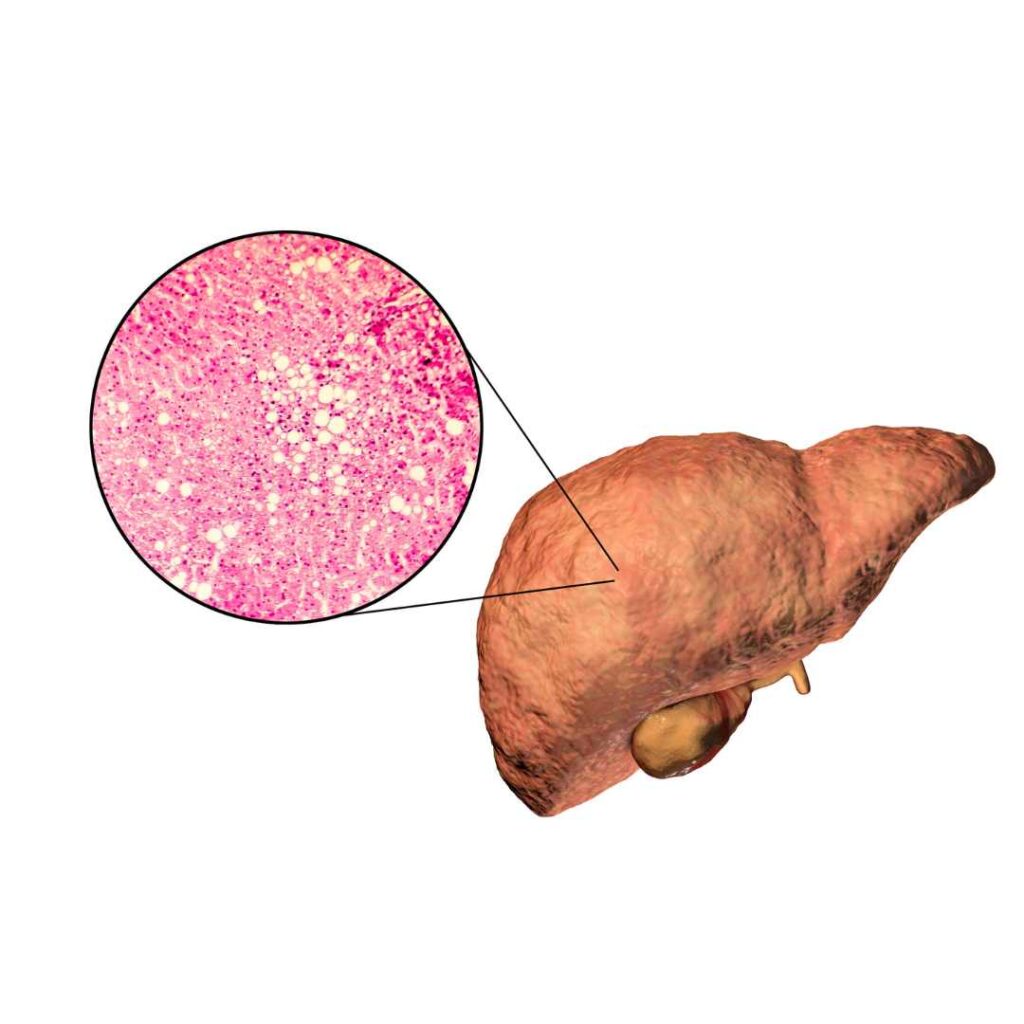
**5. Lung Cells**
- **Alveolar Cells**: The cells lining the alveoli, where gas exchange occurs, renew every 8 days.
- **Bronchial Epithelium**: Cells in the bronchi renew every 10-14 days.
**6. Bone Cells**
- **Osteoclasts and Osteoblasts**: The entire human skeleton is replaced roughly every 10 years through the processes of bone resorption by osteoclasts and bone formation by osteoblasts. Bone is continually being remodeled through the activity of osteoclasts (which break down bone) and osteoblasts (which form new bone). This process means bone tissue is completely renewed around every 10 years.
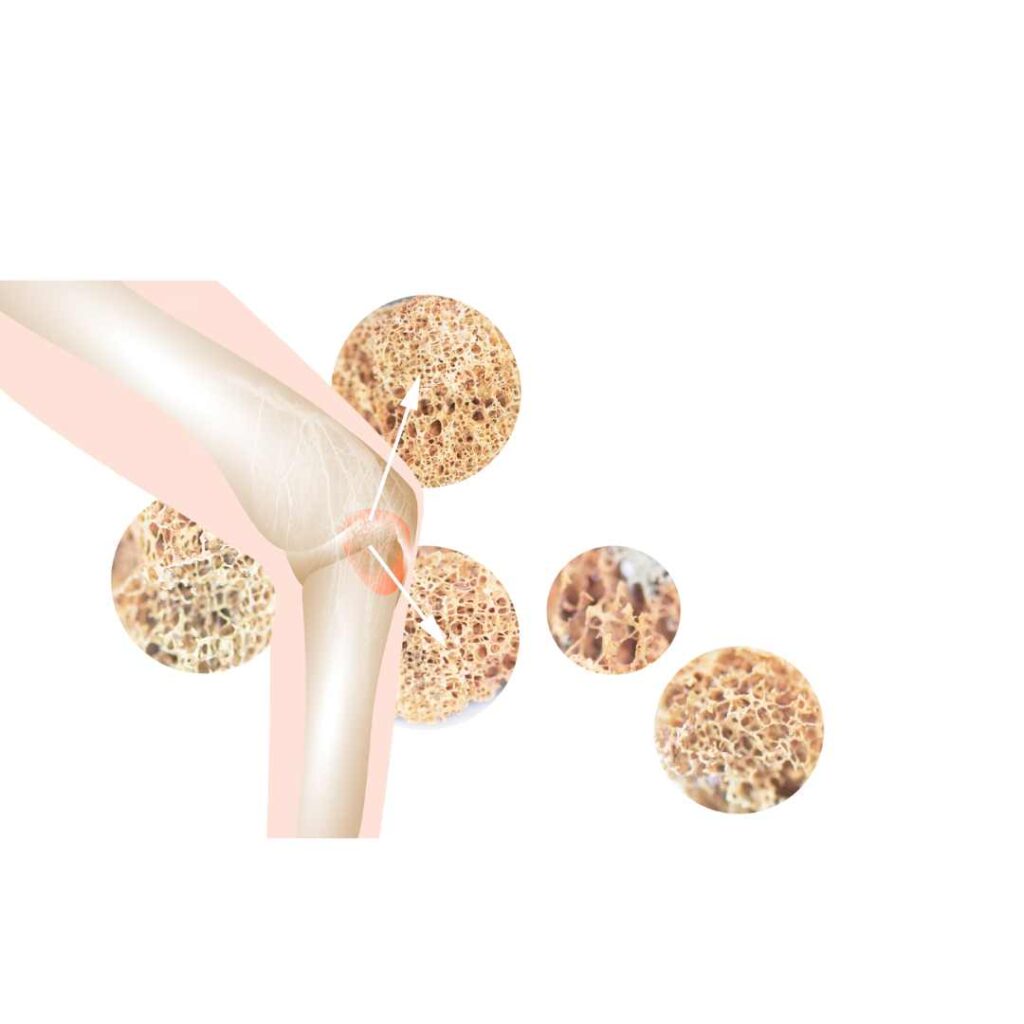
**7. Muscle Cells**
- **Skeletal Muscle Cells**: These cells do not typically renew in the same way as others; instead, they can repair and regenerate to some extent through satellite cells.
- **Cardiac Muscle Cells**: Cardiac cells (myocytes) have a very low turnover rate. Research suggests that only about 1% of heart muscle cells are replaced per year.
**8. Heart Muscle (Cardiomyocytes)
- **Growth Completion**: The growth of heart muscle cells (cardiomyocytes) largely stops after birth, but the cells can increase in size (hypertrophy). Cardiomyocyte turnover in adults is very low, with studies indicating that about 1% of cardiomyocytes are replaced annually at age 25, and this rate declines with age to about 0.45% by age 75.
- **Endothelial Cells:** lining the blood vessels in the heart have a turnover rate of about 1-2 years.
**9. Brain & Neurons**
- **Central Nervous System**: Neurons in the brain and spinal cord are mostly non-renewable after a certain developmental stage. However, some brain regions, like the hippocampus, exhibit neurogenesis (formation of new neurons) throughout life, though at a slow rate.
- **Hippocampal Neurons:** Neurogenesis in the hippocampus occurs throughout life but at a very slow rate. Estimates suggest that around 1.75% of hippocampal neurons are replaced each year.
- **Cerebellum Grey Matter:** Growth Completion: The cerebellum’s grey matter stops growing around the age of 2-3 years, after which it undergoes pruning and maturation rather than growth.
**10. Adipose Cells**
- **Fat Cells (Adipocytes)**: These cells have a turnover rate of about 8 years. Adipocytes can expand and contract in size, but their number can increase through differentiation of precursor cells. So whilst relatively long-lived they do undergo continual renewal with the generation of new adipocytes and the removal of old or damaged ones.
- **Adipogenesis**: Is the formation of new fat cells.
- **Factors Influencing Renewal: Ageing, Physical Activity and Hormones** such as insulin, cortisol and growth hormone influence adipogenesis and the overall metabolism of adipose tissue.
- **Differentiation:** Under certain conditions such as hormonal signals or nutrient availability these precursor cells undergo a process of differentiation, transforming into mature adipocytes.
- **Expansion of Existing Adipocytes**: In addition to creating new fat cells, existing adipocytes can expand to store more lipids when there is an excess in calories.
**11. Hair and Nails**
- **Hair Follicles**: Hair growth occurs in cycles, with growth phases (anagen) lasting several years, followed by resting phases (telogen) and shedding (catagen).
- **Head Hair Growth Rate**: Hair grows approximately 0.35 mm per day, which translates to about 1 cm per month and roughly 12 cm per year.
- **Nail Cells**: Fingernails grow about 3.5 mm per month, while toenails grow about 1.6 mm per month.
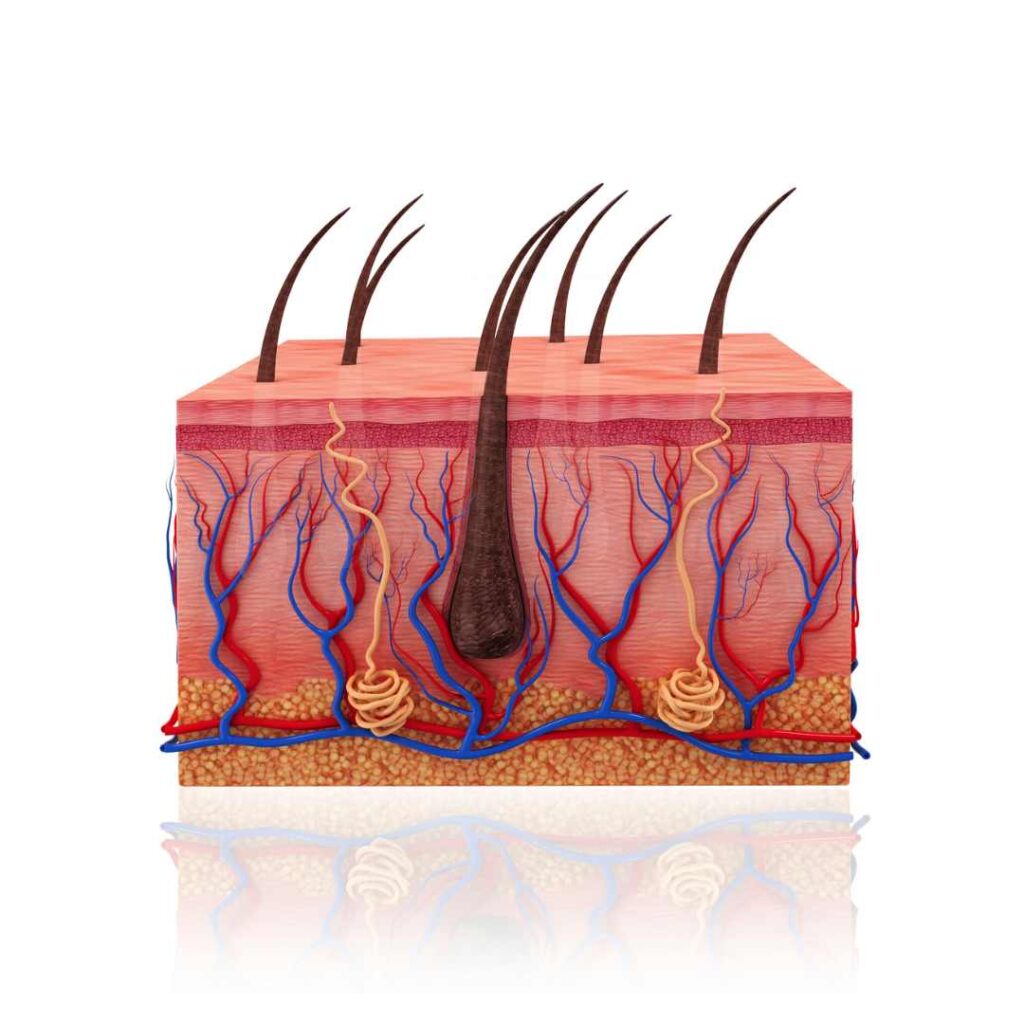
**Cell Turnover Conclusion**
Love the skin you’re in each and every day. The human body undergoes a continuous process of growth and renewal, with different tissues and organs having distinct timelines for cell turnover and growth cessation.
The rate of cell turnover varies widely across different tissues and organs, influenced by factors such as cell type, function, and environmental conditions.
Some cells, like those in the skin and gastrointestinal tract, renew rapidly due to their exposure to harsh environments, while others, such as neurons and cardiac cells, renew very slowly or not at all under normal conditions.
**Summary**
Here is a consolidated summary:
- **Head Hair**: Grows about 1 cm per month.
- **Skeleton**: Replaces every 10 years.
- **Intestinal Cells and Epithelial Cells**: Replace every 2-4 days.
- **Skeletal Muscle Cells**: Do not regularly replace but can regenerate through satellite cells.
- **Heart Endothelial Cells**: Replace every 1-2 years.
- **Hippocampal Neurons**: Replace at a rate of about 1.75% per year.
- **Cerebellum Grey Matter**: Stops growing around age 2-3.
- **Heart Muscle Cells**: Largely stop growing after birth, with a low turnover rate throughout life.
This dynamic process of cell renewal is crucial for maintaining health and enabling the body to recover from injury whilst reminding us we are not the person we were yesterday or last year.
Nourishing your body on a cellular level is truly what matters…. and it couldn’t be easier than with Pretty Pea supplements.
[](https://prettypea.blog/store-two/)
**Categories:** Menopause Nutrition
---
### [What is Inositol](https://prettypea.blog/what-is-inositol/)
**Published:** September 30, 2024
**Author:** Cate Boyd
**Content:**
**A Comprehensive Guide to Inositol, it’s Role in the Body, Benefits, and Dosage for Women**
Inositol, often referred to as a vitamin-like substance, is a naturally occurring compound found in many foods. Despite being widely grouped with the B-vitamins, it is technically a type of sugar, contributing to cellular health.
Inositol plays a crucial role in various biological processes, including cell membrane formation, neurotransmitter signalling, and insulin regulation.
Here we share what inositol is, its role in the body, its specific benefits for women’s health, and the appropriate dosage and safety considerations.
## What is Inositol?
Inositol is a type of carbohydrate that is present in small quantities in many foods like fruits, beans, grains, and nuts.
It is often classified into different forms (isomers), with **myo-inositol** and **D-chiro-inositol** being the most biologically significant.
- **Myo-inositol** is one specific form of inositol – it’s the most abundant in the body.
- **Myo-inositol** helps with the activation and use of substances and hormones.
- **D-chiro inositol** is involved in storage and synthesis.
It was once considered part of the B-vitamin complex (sometimes referred to as Vitamin B8), but due to its ability to be synthesized in the body from glucose, it no longer holds that classification.
[](https://www.amazon.co.uk/Multivitamins-Strawberry-Multivitamin-Wellbeing-Pregnancy/dp/B0DHYL1LGP?maas=maas_adg_4C8E1BD7143F8FC8AF243F6CA7AA81A3_afap_abs&ref_=aa_maas&tag=maas)## What Does Inositol Do in the Body?
Inositol is essential in multiple processes in the body:
1\. **Cell membrane structure**: It is a critical component of phospholipids, which are vital for healthy cell membranes.
2\. **Insulin signalling:** Inositol plays a pivotal role in insulin function, helping cells use glucose effectively.
3\. **Neurotransmitter signalling**: It influences several important brain chemicals, such as serotonin and dopamine, contributing to mood regulation.
4\. **Fat metabolism:** It supports the breakdown of fats, particularly in the liver.
## Key Health Benefits of Inositol for Women
## **1. May Improve Polycystic Ovary Syndrome (PCOS)** **Symptoms**
PCOS is a hormonal disorder common among women of reproductive age. It often leads to insulin resistance, irregular menstrual cycles, and infertility. Weight gain, high blood sugar and undesirable cholesterol and triglyceride levels can also be an issue. Myo-inositol and D-chiro-inositol have been shown to improve insulin sensitivity, which helps in reducing androgen levels (male hormones) and improving ovulation.
A 2016 study found that inositol supplements improved ovarian function, regulated menstrual cycles, and reduced insulin levels in women with PCOS
Inositol supplements may improve PCOS symptoms, particularly when combined with folic acid.
## **2. May Improve Symptoms of Metabolic Syndrome**
Inositol has shown promise in improving markers of metabolic syndrome, which includes high blood pressure, high cholesterol, and insulin resistance.
By enhancing insulin sensitivity, inositol helps regulate blood sugar and lipid levels, reducing the risk of type 2 diabetes and cardiovascular disease.
## **3. Inositol May Have Mental Health Benefits**
Inositol influences neurotransmitter pathways in the brain, which are crucial in regulating mood. Inositol may help balance these important chemicals such as serotonin and dopamine.
Research has found that some people with depression, anxiety and compulsive disorders have lower levels of inositol in their brain.
Several studies have explored inositol’s benefits in treating:
**Depression**
Inositol can affect serotonin pathways, potentially improving depressive symptoms. Some research suggests that inositol may be as effective as selective serotonin reuptake inhibitors (SSRIs) in treating mild to moderate depression.
**Panic Disorder**
In a 1995 study, inositol reduced the frequency and severity of panic attacks, comparable to the drug fluvoxamine.
**Bipolar Disorder**
Although research is still in its early stages, inositol has been investigated for its potential to reduce depressive episodes in people with bipolar.
## **4. May Improve Gestational Diabetes**
Inositol may reduce the risk of gestational diabetes in pregnant women,
particularly those who are predisposed to insulin resistance, such as those
with PCOS or obesity.
A 2012 study found that myo-inositol supplements in high-risk women resulted in a lower incidence of gestational diabetes .
[](https://www.amazon.co.uk/Multivitamins-Strawberry-Multivitamin-Wellbeing-Pregnancy/dp/B0DHYL1LGP?maas=maas_adg_4C8E1BD7143F8FC8AF243F6CA7AA81A3_afap_abs&ref_=aa_maas&tag=maas)## 5. Other Potential Benefits
## **Inositol and Fertility**
Inositol, particularly myo-inositol, has been shown to improve fertility by enhancing ovarian function and egg quality, particularly in women with PCOS.
A study conducted in 2011 demonstrated that myo-inositol supplementation improved oocyte (egg) quality, leading to better outcomes for women undergoing assisted reproductive technologies (ART).
## **Inositol and Acne**
Due to its ability to modulate insulin and hormones, inositol has also been used to improve skin conditions like acne that are associated with hormonal imbalances.
Inositol has been found to reduce acne in women with PCOS, likely due to its role in reducing insulin resistance and balancing hormones.
A study published in 2014 revealed that myo-inositol improved skin conditions such as acne by regulating androgen levels, which are often elevated in women with PCOS.
## **Inositol and Weight Loss**
Inositol, particularly myo-inositol and D-chiro-inositol, has been associated with reductions in body mass index (BMI) and weight in women with PCOS.
A study in 2015 demonstrated that myo-inositol supplementation led to significant weight loss in women by improving insulin sensitivity and hormonal balance.
## How Much Inositol Do Women Need?
While there is no established Recommended Daily Allowance (RDA) for inositol, typical dietary intake is estimated to be between 1 to 4 grams per day.
Women, particularly those dealing with specific health conditions, may benefit from additional inositol beyond what is consumed through the diet.
[](https://www.amazon.co.uk/Multivitamins-Strawberry-Multivitamin-Wellbeing-Pregnancy/dp/B0DHYL1LGP?maas=maas_adg_4C8E1BD7143F8FC8AF243F6CA7AA81A3_afap_abs&ref_=aa_maas&tag=maas)## Typical Dietary Sources of Inositol
Inositol is naturally present in a variety of foods:
– Citrus fruits (such as oranges and grapefruits)
– Beans and legumes
– Whole grains
– Nuts (especially almonds and walnuts)
However, the amounts in these foods are relatively small compared to the dosages used in supplements for therapeutic purposes.
## Possible Side Effects and Safety
Inositol is generally considered safe, even in relatively high doses. However, some individuals may experience mild side effects, including:
– **Gastrointestinal distress**: Such as nausea, gas, and diarrhoea, especially at higher doses.
– **Headaches**: In rare cases, people may experience headaches or dizziness.
For women who are pregnant, breastfeeding, or taking medications for bipolar disorder, it’s important to consult a healthcare provider before starting inositol supplementation.
## Conclusion
Inositol is a versatile and beneficial compound, particularly for women managing PCOS, mental health disorders, and metabolic syndrome. Its role in insulin sensitivity, neurotransmitter regulation, and hormone balance makes it a valuable tool in addressing various health concerns. While it is found in everyday foods, therapeutic doses often require supplementation.
As with any supplement, it’s essential to consult a healthcare professional before adding inositol to your routine, especially if you have existing medical conditions or are taking medications.
[](https://www.amazon.co.uk/Multivitamins-Strawberry-Multivitamin-Wellbeing-Pregnancy/dp/B0DHYL1LGP?maas=maas_adg_4C8E1BD7143F8FC8AF243F6CA7AA81A3_afap_abs&ref_=aa_maas&tag=maas) **References:** \[Inositol for PCOS and Fertility\]()
\[Inositol in Mental Health disorders\]()
\[Controlled trials of inositol in psychiatry\] h[ttps://www.ncbi.nlm.nih.gov/pubmed/9169302](https://www.ncbi.nlm.nih.gov/pubmed/9169302)
\[D-Chiro-Inositol – Its Functional Role in Insulin Action and its Deficit in Insulin Resistance\]
\[The Efficacy of Inositol and N-Acetyl Cysteine Administration (Ovaric HP) in Improving the Ovarian Function in Infertile Women with PCOS with or without Insulin Resistance\] https://www.hindawi.com/journals/ogi/2014/141020
\[Gestational Diabetes and Inositol\] )
\[Myo-inositol content of common foods: development of a high-myo-inositol diet\] https://www.ncbi.nlm.nih.gov/pubmed/7416064
\[Myo-inositol in patients with polycystic ovary syndrome\] \[[https://pubmed.ncbi.nlm.nih.gov/21517724/\]](https://pubmed.ncbi.nlm.nih.gov/21517724/%5D(https:/pubmed.ncbi.nlm.nih.gov/21517724/))
\[Effects of a combination of myo-inositol and D-chiro-inositol on metabolic and hormonal parameters in polycystic ovary syndrome patients\] \[[https://pubmed.ncbi.nlm.nih.gov/25592426/\]](https://pubmed.ncbi.nlm.nih.gov/25592426/%5D(https:/pubmed.ncbi.nlm.nih.gov/25592426/))
\[Insulin sensitiser agents alone and in co-treatment with r-FSH for ovulation induction in PCOS women\] \[[https://pubmed.ncbi.nlm.nih.gov/24720520/](https://pubmed.ncbi.nlm.nih.gov/24720520/%5D(https:/pubmed.ncbi.nlm.nih.gov/24720520/))
**Categories:** Supplements
---
### [Meno Weight Reviews: 7 Women Share their Stories](https://prettypea.blog/meno-weight-reviews-7-women-share-their-stories/)
**Published:** October 16, 2024
**Author:** Cate Boyd
**Content:**
Menopause weight gain can be challenging for many women. Hormonal changes during this phase often lead to increased difficulty in maintaining a healthy weight, leaving many women frustrated and searching for solutions. That’s where Pretty Pea Meno Weight menopause weight loss supplement is supporting women. Targeting the unique shifts that occur around perimenopause and menopause, this supplement has been embraced by women for its ability to support weight loss, hormone balance and by helping bring back that feeling of overall well-being you might be missing- *you know the one*. Here we share real customer Meno Weight reviews highlighting the benefits they’ve experienced. From improved energy levels to easier weight management to life changing transformations, these meno weight reviews are helping other women to see how this supplement could be a game-changer for them too.
## SARAH
Sarah shares that Meno Weight has transformed her during what can be a difficult stage for many women. Here’s Sarah’s Meno Weight review:
“Best buy ever! Absolutely love these menopause supplements!! It’s transformed me during a difficult stage for most women.
No HRT needed. I can’t go a day without it now. It does exactly as it says.
It has kept my menopause weight down and lost more.. no bloating, plus my energy levels, mood and sleep are so much better. Also clear skin! Plus I have underlying health conditions and I’m fine with it.
Definitely recommend! I have been using for a long time now and wouldn’t use anything else”
— Sarah D
## CAROL
Carol wants to shout from the roof tops just how life changing Meno Weight has been on her journey. Here Carol shares her Meno Weight reviews:
“I’ve not had a great time over the last few months, along with personal things on top of the menopause! I have been really struggling with my weight and sleeping has been virtually non existent. I have tried so many herbal based tablets and Meno Weight was my last option.
I can not even explain my delight in discovering this product! I feel like a different woman. My weight is coming down, my constant hunger pangs have completely gone, my sleep is better, I just feel completely different!
Pretty Pea you are Pretty amazing! **This product has genuinely changed my life.**
I very rarely leave reviews but I am so passionate and truly thankful for this product that I had to shout about it so all the women out there that are really struggling with the menopause are aware of these tablets because they really have helped to turn me around!
Just one tip, don’t leave it too late before re-ordering because like me, you will run out and find yourself stressing that you haven’t got any! They really are that good!
Thank you Pretty Pea!

★★★★★
I started taking these tablets back in October last year, they have reduced my bloating and helped me with energy to get back into the gym and walking. I have currently lost 2 stone and feel so much more like the old me. I’m wearing clothes that I never thought I would wear again. Thankyou pretty pea I’m so happy with my results!
Katie B.
## MISS J.
**Miss J. shares that Meno Weight has really worked for her!**
“As a 44 year old mother of 2 teenage girls I would consider to be fairly intelligent. I have googled and read up on so many different products that could/would help me feel more like the me I have always known before hitting perimenopause.
After reading reviews, I bought this product hoping that what others had written was in fact true and not written by people being paid to say what they had been told. I have taken this product exactly as it has been recommended and no word of a lie I have lost 6 pounds this week. I have watched my food intake and my days are quite active.
But moreso than the weight loss I feel motivated, focused, calm and more importantly like me again!!
I highly recommend this product as long as you are determined to stick by their recommendations and do the obvious healthy eating and exercise.”
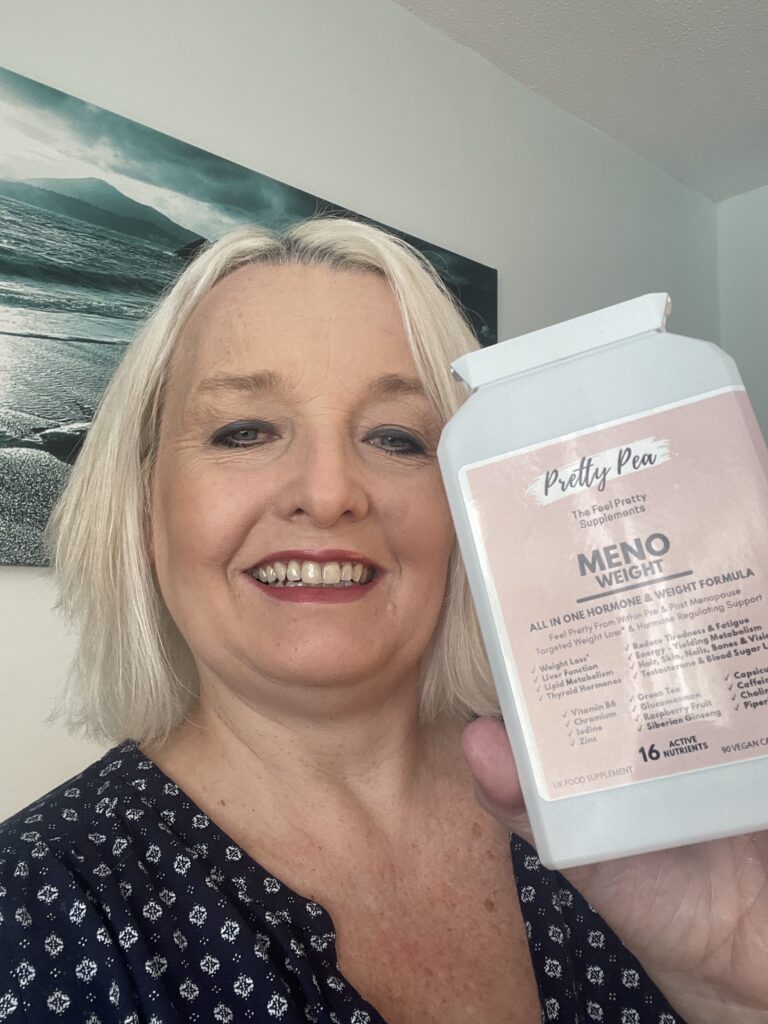
★★★★★
**Finally I feel like me again. No mood swings , no tears, no hot flushes. I can’t tell how much I feel they have made me feel normal again..**.
Lisa JK.
## JOSIE
Josie has been taking Meno Weight for 4 months and says that they really work for her too. She was shocked what a difference she saw even after just the first week.. Here’s what she has to say in her Meno Weight reviews:
“After having a hysterectomy I really piled the weight especially around the stomach, I was also struggling with hot flushes mood swings and constant food cravings, I tried so many things the help, calorie counting and 1 full hour per day of treadmill and 7 different supplements per day.
Nothing was having and real impact on my weight. I came across these and thought they were a little pricey but I’ll give them ago and I was so shocked that after the first week I had lost 2 pound and stopped craving food constantly.
Now 4 months on I’m back to 9 stone and my bloaty stomach is gone. I’m no longer snacking all day/night because I’m not hungry after I’ve eaten my meals. I feel a lot calmer and I’m having less hot flushes too!
Needless to say that this is the only supplement I need to take now and I will continue on them. If you are having similar issues than I was then these are really worth a shot :)”
## SHA
Sha come across Pretty Pea after trying loads of other supplements that never seemed to worked for her. Here’s what Sha’s has to say in her Meno Weight reviews:
“I have tried so many tablets to lose weight and vitamins trying to make my self better wish I came a cross these tablets years ago I can’t believe how much better I feel how much energy and don’t feel bloated either”
## GINA
“I saw the previous reviews and I said I am gonna give it a try. I tried so many diets and pills to lose weight and I said to myself is nothing to lose apart from money as hope was lost long time ago.
I started in mid March, and I lost a stone in 3 months without any effort. I want to add that I am 48, premenopausal probably , and since I have these tablets I am good as new! Before I was gaining weight if I was breathing air! I did not changed anything in my diet, what I noticed tho was the fact that my appetite decreased a lot, loads of energy and IT REALLY WORKS!!!
The best thing is losing weight steady and sure and not putting anything back on.
***Thank you! You saved my life!”***
[](https://prettypea.blog/menopause-weight-loss-supplements/)## PAOLA
*Paola* doesn’t normally leave reviews, but in her own words felt ***this extraordinary supplement*** deserves a great review. Read on to see Paola’s Meno weight reviews:
“I just ordered my second box as I fell much less bloated since I’ve integrated these tablets to my diet. I’m in my early Perimenopause but I have stopped feeling those night hot flashes thanks to this product. Highly recommended even if a bit pricey”
So as you can see these women can testify the journey through menopause doesn’t have to be a battle with weight gain. These Pretty Pea Meno Weight reviews show, Meno Weight menopause weight loss supplement has made a meaningful difference in the lives of many women, providing real support and at a time when it’s really needed most.
Whether it’s helping to control the waist line, or simply offering the energy needed to stay active, this supplement is proving to be a valuable ally in navigating what can be a difficult stage of life.
If you’re looking for a natural, effective way to manage menopause weight, consider joining the many women who have found success with Meno Weight as part of your solution. Your next chapter of health and vitality could be just a supplement away!
## RELATED ARTICLES
[**The Menopause Diet 5 Day Plan to Lose Weight**](https://prettypea.blog/the-menopause-diet-5-day-plan-to-lose-weight/ "The Menopause Diet 5 Day Plan to Lose Weight")
**List of** [**The 100 Symptoms of Perimenopause** ](https://prettypea.blog/the-100-symptoms-of-perimenopause/)
[**Early First Symptoms of Perimenopause – 7 Telling Subtle Signs**](https://prettypea.blog/early-first-symptoms-of-perimenopause-7-telling-subtle-signs/)
[**The Role of Perimenopause Vitamins Supplements: A Guide for Women**](https://prettypea.blog/perimenopause-vitamins-supplements/)
[**Why Fibre Could Be the Secret to a Better Menopause** ](https://prettypea.blog/why-fibre-could-be-the-secret-to-a-better-menopause/)
[**The Ultimate Superfood List: What are Superfoods, Benefits, Best Choices, and How to Use** ](https://prettypea.blog/the-ultimate-superfood-list-what-are-superfoods-benefits-best-choices-and-how-to-use/)
[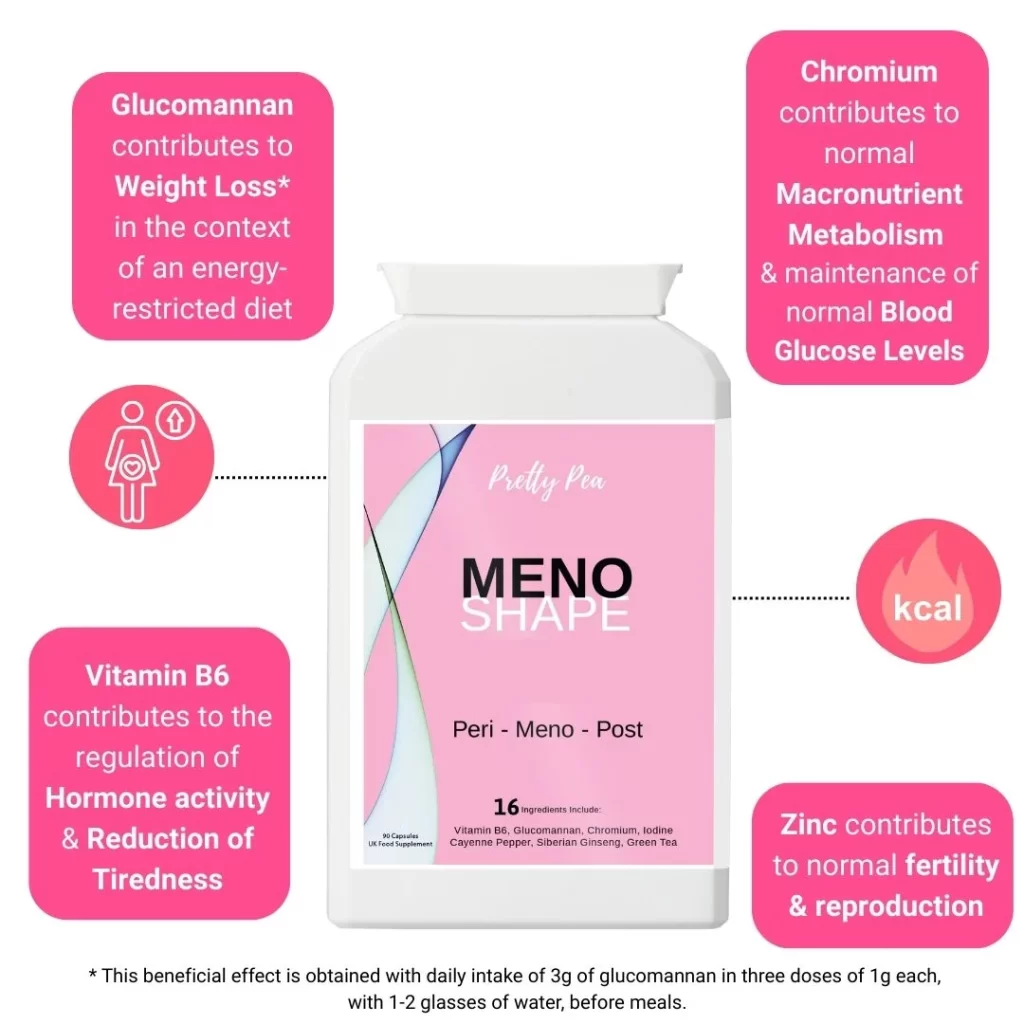](https://prettypea.blog/menopause-weight-loss-supplements/)
**Categories:** Menopause Nutrition, Supplements
---
### [Feeling Tired all the time? You need to know the Vitamins For Fatigue](https://prettypea.blog/vitamins-for-fatigue/)
**Published:** March 18, 2025
**Author:** Cate Boyd
**Excerpt:** Fatigue is complex and affected by a wide variety of processes in the body, and because of this, certain aspects of the tired feeling can be shaped by vitamins.
**Content:**
- [Iron](#aioseo-iron)
- [Vitamin B12](#aioseo-vitamin-b12)
- [Magnesium](#aioseo-magnesium)
- [Vitamin C](#aioseo-vitamin-c)
- [Vitamin B6](#aioseo-vitamin-b6)
While the first assumption is that sleeping patterns are the only part of your daily routine that affects how tired you feel, there are a lot of other processes in the body that can affect your alertness. Nutrition is absolutely key to energy levels and feeling alert, and there are several vitamins that can affect fatigue and the daily energy levels in the body. In this article we share the vitamins for fatigue every women needs to know about.
Women, in particular, can often be more prone to certain vitamin deficiencies due to menstruation, pregnancy, menopause and lifestyle habits, and you can find many [vitamins and supplements](https://prettypea.blog/store-two/) that can help redress the balance to any dietary deficiencies.
Here are five vitamins and minerals for women to focus on:
## [Iron](https://www.nhs.uk/conditions/vitamins-and-minerals/iron/)
Vitamins for fatigue: Iron deficiency is the most common nutritional deficiency worldwide and a leading cause of anaemia in the UK.
While there are many nutritional sources of iron, it can be lost in several different ways which can contribute to fatigue, low mood and a lack of energy.
Vital for the production of red blood cells, Iron helps in the production of haemoglobin, transporting oxygen in the blood around the body.
Supplements with iron, particularly ferrous sulfate or ferrous gluconate, can help replenish iron stores and improve energy levels if sources such as red meat and spinach are not suitable.
Vitamin C is often recommended alongside iron to enhance absorption.
## [Vitamin B12](https://www.nhs.uk/conditions/vitamin-b12-or-folate-deficiency-anaemia/)
Vitamins for fatigue: B12, also known as cobalamin, cyanocobalamin or methylcobalamin, is a crucial part of ensuring that your energy levels are high. Not just because they are essential for red blood cell formation but also because the vitamin is a critical part of metabolising other energy sources such as fats, carbohydrates and certain types of proteins.
Low vitamin B12 levels can lead to anaemia, fatigue, and cognitive issues.
Those following vegetarian or vegan diets are at increased risk of vitamin B12 deficiency since this vitamin is primarily found in animal products.
Vitamin B12 supplements may help balance levels, improve energy, and support nerve health.
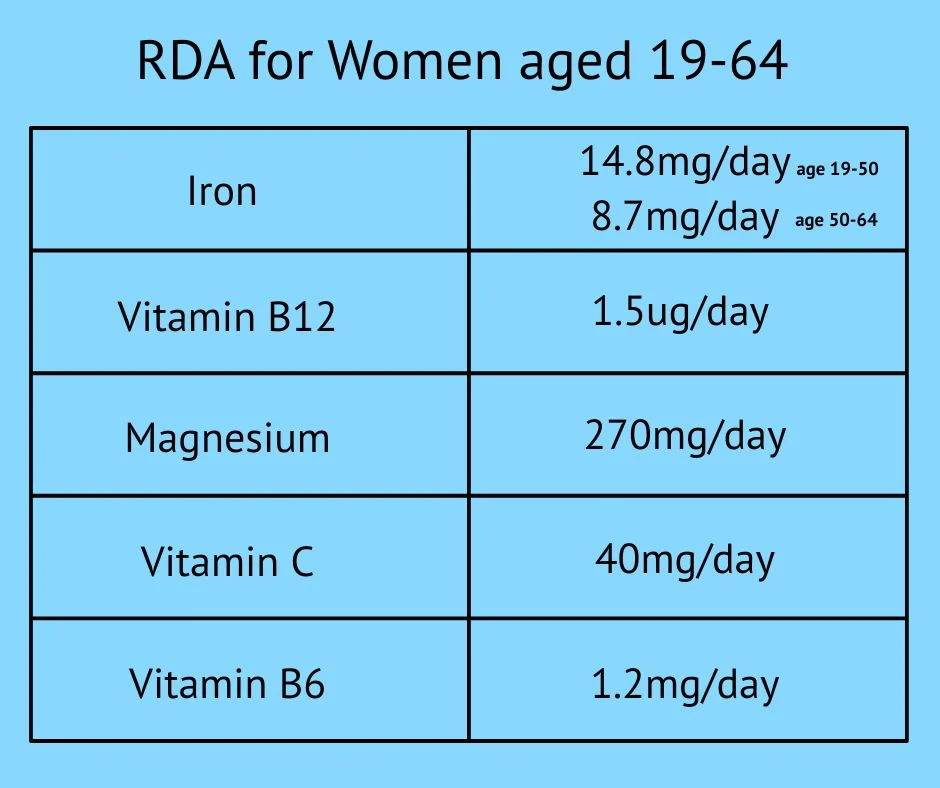## [Magnesium](https://www.healthline.com/nutrition/magnesium-benefits)
Vitamins for fatigue: In some respects, the importance of magnesium almost goes without saying, as it’s involved in over 300 biochemical reactions in the body.
Magnesium is crucial for energy production in cells and it’s an active mineral that helps in the function of nerves, the formation of cells and the uptake of oxygen in the muscles.
Women may become deficient due to inadequate dietary intake, stress, or excessive coffee or alcohol consumption.
Magnesium deficiency can lead to muscle cramps, poor sleep, and body fatigue.
Magnesium supplements can help relax muscles, improve sleep quality and boost energy levels, especially when taken before bed.
[](https://prettypea.blog/multivitamin-gummies/)## [Vitamin C](https://www.nhs.uk/conditions/vitamins-and-minerals/vitamin-c/)
Vitamins for fatigue: Commonly found in fruit and vegetables, vitamin C is a vital antioxidant that is used to help absorb iron, which can combine with its own anti-fatigue effects to help promote alertness and boosted energy.
Vitamin C is crucial for collagen synthesis, immune function, and iron absorption.
A lack of fruits and vegetables in the diet can lead to vitamin C deficiency.
Vitamin C deficiency can result in scurvy, weakened immunity, and fatigue.
While severe vitamin C deficiency is rare, mild deficiencies can affect those with low fruit and vegetable intake .
Vitamin C supplements may help reduce tiredness and fatigue, enhance immune health, reduce oxidative stress, and boost iron absorption, leading to higher energy levels.
## [Vitamin B6](https://www.nhs.uk/conditions/vitamins-and-minerals/vitamin-b/)
Vitamins for fatigue: Vitamin B6, (pyridoxine), is involved in the regulation of hormone activity and neurotransmitter synthesis and can reduce tiredness and fatigue.
Women taking certain medications or with poor diets may be deficient.
Low vitamin B6 levels can cause anaemia, depression, and nerve damage, all contributing to fatigue.
Between [11-24 per cent](https://bmcgeriatr.biomedcentral.com/articles/10.1186/1471-2318-13-13) of adults in the UK may have insufficient vitamin B6 levels due to dietary limitations or medication use.
Vitamin B6 supplements may enhance brain function, boost mood, and alleviate fatigue.
[Shop Multi vitamins for fatigue & tiredness](https://prettypea.blog/multivitamin-gummies/)
## [Feeling Tired all the time? You need to know the Vitamins For Fatigue](https://prettypea.blog/vitamins-for-fatigue/)
**Categories:** Menopause Nutrition, Supplements
---
### [How to Combat Menopause Gain Weight](https://prettypea.blog/how-to-combat-menopause-gain-weight/)
**Published:** June 8, 2025
**Author:** Cate Boyd
**Content:**
- [Understanding Menopause and Its Impact on Weight](#aioseo-understanding-menopause-and-its-impact-on-weight)
- [Aging and Menopause Gain Weight](#aioseo-aging-and-menopause-gain-weight)
- [Hormonal Changes in Menopause Gain Weight](#aioseo-hormonal-changes-in-menopause-gain-weight)
- [Menopause Supplements](#aioseo-menopause-supplements-20)
- [Nutrition Tips for Managing Menopause Gain Weight](#aioseo-nutrition-tips-for-managing-menopause-gain-weight)
- [The Importance of Physical Activity and Exercise](#aioseo-the-importance-of-physical-activity-and-exercise)
- [Mindful Eating: Strategies to Curb Cravings](#aioseo-mindful-eating-strategies-to-curb-cravings)
- [The Benefits of Strength Training for Weight Management](#aioseo-the-benefits-of-strength-training-for-weight-management)
- [Managing Stress and Its Effects on Weight](#aioseo-managing-stress-and-its-effects-on-weight)
- [The Role of Sleep in Weight Control During Menopause](#aioseo-the-role-of-sleep-in-weight-control-during-menopause)
- [When to Consult a Doctor or Nutritionist: Menopause Gain Weight](#aioseo-when-to-consult-a-doctor-or-nutritionist-menopause-gain-weight)
- [RELATED ARTICLES](#)
- [See Menopause Supplements](#aioseo-see-menopause-supplements-73)
- [Frequently Asked Questions?](#aioseo-frequently-asked-questions-79)
- [What is Menopause](#aioseo-what-is-menopause-83)
- [Menopause Gain Weight – Why Do Women Gain Weight During Menopause?](#aioseo-menopause-gain-weight-why-do-women-gain-weight-during-menopause-89)
Menopause can feel like an unwelcome chapter in a woman’s life, often bringing along stubborn weight gain. As your body responds to fluctuating hormones these changes can disrupt both your routines and self-image. But it doesn’t have to be this way! The right strategies can help you reclaim your body and your confidence. With practical tips here we’ll explore effective strategies to combat menopause gain weight so you’ll be equipped to take charge of your body. Let’s dive in!
## Understanding Menopause and Its Impact on Weight
Menopause marks a significant transition in a woman’s life, typically occurring between age 45 and 55. This biological process signifies the end of menstrual cycles and fertility, and can often be accompanied by a variety of physical and emotional symptoms. Weight gain during menopause is common and can be both unexpected and challenging to manage for many women. Understanding the underlying causes of this weight gain is crucial for developing effective strategies to combat it.
### Aging and Menopause Gain Weight
Menopause, including the perimenopause years, coincides with an aging body and age-related weight gain is pretty much universal for both men and women. And even for those where the changes on the scales are not obvious the evidence is clear that muscle mass starts to decline with age. This decline starts as early as in our 30’s, which means the start of a decreasing metabolic rate and decrease in fat-free mass.
Combined with general lower physical activity levels that typically occurs with aging, these changes (even if subtle) result in a decrease in both resting and activity related energy expenditure – your metabolism. This means the body can now run on fewer calories than it used to, and, unless changes in dietary habits and physical activity are made, aging can result in weight gain as calories no longer required by the body now become excess calories stored as body fat.
### Hormonal Changes in Menopause Gain Weight
The aging process aside, menopause, per se, does not necessarily result in significant menopause gain weight, but, however, can lead to increased belly fat as hormonal changes can play a significant role in menopause weight gain. As estrogen levels decline, the body’s ability to regulate weight and fat distribution is affected.
Estrogen is known to influence how fat is stored and burned in the body. When estrogen levels drop, the body tends to store more fat, and especially belly fat. This shift in fat distribution and increase in abdominal fat can increase the risk of developing metabolic syndrome, type 2 diabetes, and cardiovascular disease.
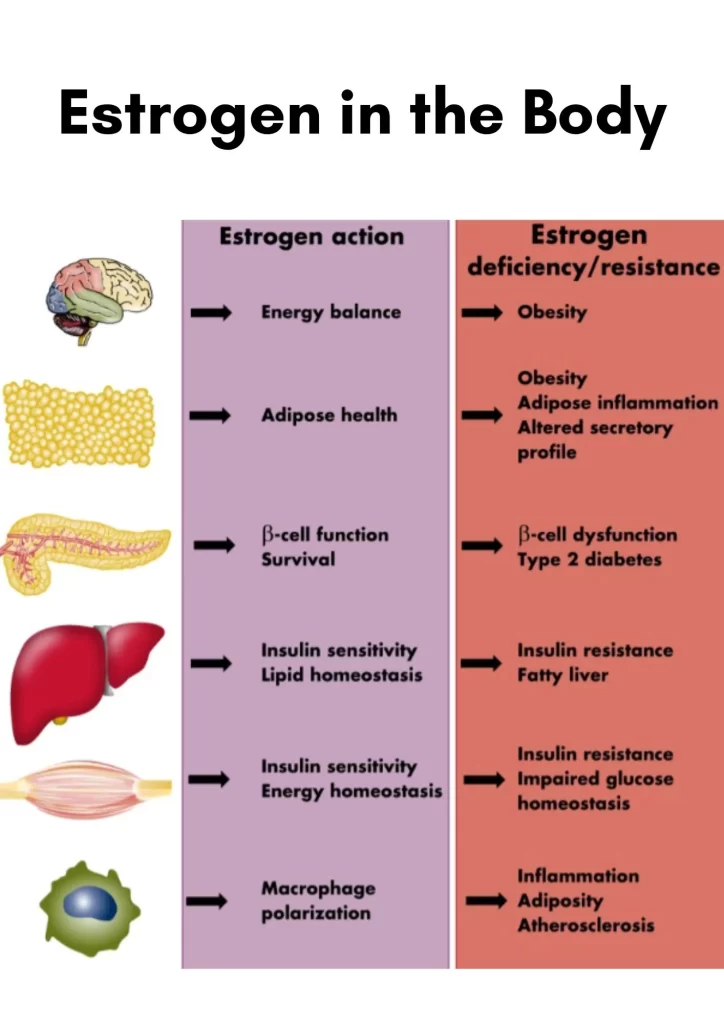In addition to hormonal fluctuations, menopause can also bring about lifestyle changes that contribute to weight gain. Menopause symptoms can include increased stress, joint pain, mood changes and lack of motivation to exercise to name a few. Decreased levels of physical activity, sleep issues, cravings and alterations in eating habits all combine to create a perfect storm for menopause gain weight. However, with the right knowledge and strategies, it is possible to navigate this transition healthily and maintain a healthy weight.
Progesterone, another hormone that decreases during menopause, may also affect weight. Lower levels of progesterone can lead to water retention and bloating in menopause, which can contribute to a feeling of weight gain. While this type of weight gain may not be as significant as fat gain, it can still feel like it is and affect self confidence.
The hormonal changes of menopause can also impact other hormones that regulate appetite and metabolism. For example, changes in estrogen levels can affect the production of leptin, a hormone that helps regulate hunger and energy balance.
With lower levels of leptin, women may experience increased hunger and cravings, making it more challenging to maintain a healthy diet and weight.
These changes can make it more difficult to maintain or lose weight, even for women who have previously managed their weight successfully. Understanding these hormonal changes can help women develop targeted strategies to manage their menopause gain weight.
## Menopause Supplements
Supplement Smart-Find the right supplements for you.
### Nutrition Tips for Managing Menopause Gain Weight
Maintaining a balanced diet is one of the most effective ways to manage weight during menopause. A well-balanced diet can help regulate hormones, boost metabolism, and reduce the risk of weight gain.
One key strategy is to focus on nutrient-dense foods that provide essential vitamins and minerals without excess calories. This includes a variety of fruits, vegetables, whole grains, lean proteins, and healthy fats.
Incorporating more plant-based foods into the diet can be particularly beneficial during menopause. Foods such as leafy greens, berries, nuts, seeds, and legumes are rich in antioxidants, fibre, and phytoestrogens, which can help balance hormones and reduce inflammation.
Fibre and protein rich foods can also help keep you feeling full and satisfied for longer, reducing the likelihood of overeating and cravings for unhealthy snacks.
Another important nutrition tip is to monitor portion sizes and avoid high-calorie, low-nutrient foods. The obvious processed foods, sugary beverages, and high-fat snacks can contribute to menopause gain weight and should be limited.
It’s also important to check the nutritional content of items marketed as ‘healthy’. For example, some low fat products are packed with higher levels of carbohydrates instead. Instead, focus on whole, unprocessed foods that provide sustained energy and support overall health.
Drinking plenty of water is also essential, as staying hydrated can help regulate appetite and support metabolic function. By making mindful food choices, women can better manage their weight and navigate menopause with confidence.
### The Importance of Physical Activity and Exercise
Regular physical activity is crucial for managing weight during menopause. Exercise helps boost metabolism, burn calories, and maintain muscle mass, all of which are important for weight control. Engaging in a combination of aerobic exercise and strength training can provide the best results.
Aerobic exercises, such as walking, jogging, swimming, and cycling, help increase heart rate and burn calories, while strength training exercises, such as weightlifting and resistance band workouts, help build and maintain all important muscle mass.
Incorporating physical activity into daily routines can also help improve mood and reduce stress, which are important factors in managing weight. Exercise releases endorphins, which are natural mood boosters, and can help alleviate symptoms of low mood, depression and anxiety that some women experience during menopause. Additionally, regular physical activity can improve sleep quality, which is essential for weight management.
Consistency is key: Finding an exercise routine that is enjoyable and sustainable is key to maintaining long-term physical activity and long term weight management. Whether it’s joining a fitness class, going for a daily walk, or participating in a sport, finding activities that bring satisfaction can help ensure consistency.
It’s also important to listen to the body and adjust the intensity and duration of workouts as needed. By staying active and making exercise a regular part of life, women can better manage their weight and overall health during menopause.
[](https://prettypea.blog/menopause-weight-loss-supplements/)### Mindful Eating: Strategies to Curb Cravings
Mindful eating is a powerful strategy for managing weight during menopause. This approach involves paying attention to hunger and fullness cues, eating slowly, and savouring each bite. By being more aware of the eating experience, women can make healthier food choices and avoid overeating. Mindful eating can also help reduce emotional eating, which is a common response to stress and hormonal changes during menopause.
Taking the time to appreciate the flavors, textures, and aromas of food can enhance the eating experience and promote a greater sense of satisfaction. Chewing food thoroughly and taking small bites can also help slow down the eating process and give the body time to register fullness.
Another strategy is to practice portion control and mindful portion sizes. Using smaller plates and serving sizes can help prevent overeating and make it easier to stick to appropriate portion sizes. It’s also important to pay attention to hunger and fullness cues and eat only when truly hungry.
By tuning in to the body’s natural signals, women can avoid mindless snacking and emotional eating, which can contribute to weight gain. Mindful eating can empower women to make healthier choices and maintain a healthy weight during menopause.
### The Benefits of Strength Training for Weight Management
Strength training is a highly effective strategy for managing menopause gain weight. Women naturally lose muscle mass with age, at a rate of 6% per decade, and can be the reason behind why many women feel their metabolism is slowing down and the weight is creeping on.
Strength training helps counteract this process by building and maintaining muscle mass, which in turn boosts metabolism and helps the body burn more calories, even at rest.
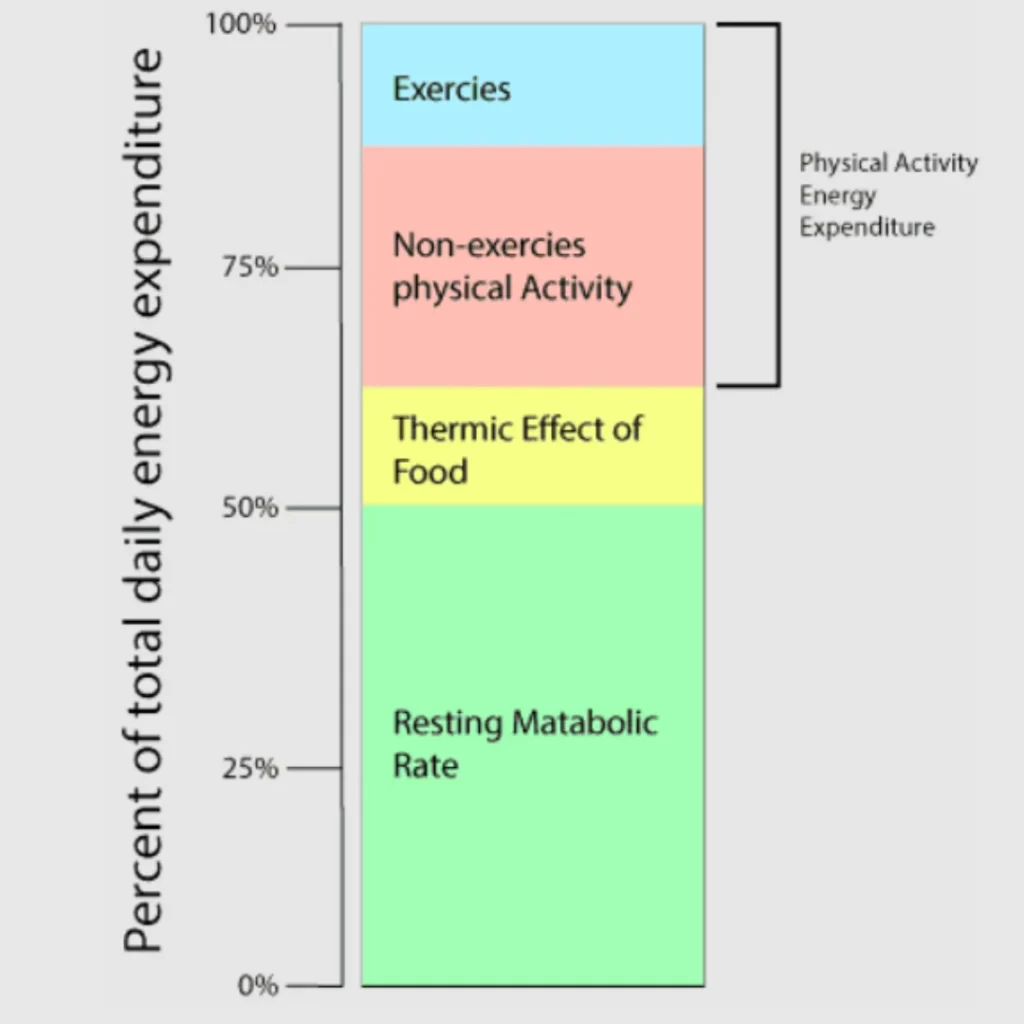Increased muscle mass means an increased resting metabolic rate (RMR) and with RMR accounting for at least 50% of daily energy (calories) used, probably nearer 70%, you can see why building muscle is key to both fat loss and firming up your body.
In addition to its metabolic benefits, strength training also helps improve bone density and reduce the risk of osteoporosis, a condition that becomes more prevalent post menopause. Weight-bearing exercises, such as lifting weights, using resistance bands, and performing bodyweight exercises, stimulate bone growth and help maintain bone strength. This is especially important for women during menopause, as declining estrogen levels can lead to decreased bone density and an increased risk of fractures.
Strength training also offers numerous other health benefits, including improved balance, flexibility, and cardiovascular health. It can help reduce the risk of chronic diseases, such as heart disease and type 2 diabetes, and improve overall quality of life. Incorporating strength training into a regular exercise routine can provide both physical and mental benefits, bringing a feel good factor, helping women manage their weight and navigate menopause with strength and resilience.
### Managing Stress and Its Effects on Weight
Stress management is a crucial aspect of weight management during menopause. Chronic stress can lead to increased levels of cortisol, a hormone that promotes fat storage, especially belly fat with more receptors around the abdominal area.
High cortisol levels can also increase appetite and cravings for high-calorie, sugary foods, making it more challenging to maintain a healthy diet and weight. Learning effective stress management techniques can help mitigate these effects and support overall health.
One effective stress management technique is practicing mindfulness and relaxation exercises, such as meditation, deep breathing, and yoga. These practices can help calm the mind, reduce cortisol levels, and promote a sense of well-being. Regular mindfulness practice can also improve emotional regulation and reduce the likelihood of stress-related eating. By incorporating these techniques into daily routines, women can better manage stress and its impact on weight.
It’s also important to prioritize sleep, as adequate rest is essential for stress management and weight control. By addressing stress and its effects on weight, women can navigate menopause with greater ease and maintain a healthy weight.
### The Role of Sleep in Weight Control During Menopause
Sleep plays a critical role in weight control, especially during menopause. Poor sleep quality and insufficient sleep can disrupt the balance of hunger-regulating hormones, such as ghrelin and leptin, leading to increased appetite and cravings for high-calorie foods. Sleep deprivation can also negatively impact metabolism and insulin sensitivity, making it more difficult to manage weight.
To improve sleep quality, it’s important to establish a consistent sleep routine and create a conducive sleep environment. Going to bed and waking up at the same time each day can help regulate the body’s internal clock and promote better sleep.
Creating a relaxing bedtime routine, such as reading, taking a warm bath, or practicing relaxation exercises, can help signal the body that it’s time to wind down. Additionally, ensuring that the sleep environment is cool, dark, and quiet can improve sleep quality and duration.
Limiting caffeine and alcohol intake, especially in the evening (and earlier ideally), can also help improve sleep. Both caffeine and alcohol can disrupt sleep patterns and reduce the quality of rest. Even if alcohol helps you fall asleep know that it affects the quality of your sleep, impacting the deep restorative sleep your body needs. Caffeine has a half life of 5 hours meaning after 5 hours you’ll have about half of it your body and it can take 10 hours for it to be completely out of your system.
It’s also important to avoid heavy meals and excessive fluid intake before bedtime, as these can cause discomfort and interrupt sleep. By prioritizing good sleep hygiene and addressing factors that impact sleep quality, women can better manage their weight and overall health during menopause.
### When to Consult a Doctor or Nutritionist: Menopause Gain Weight
Navigating menopause symptomsand managing weight can be challenging, and seeking professional guidance can provide valuable support and personalized strategies. Consulting with a doctor, nutritionist, or other healthcare professional can help women understand their unique needs and develop a tailored plan for managing menopause gain weight. These professionals can provide expert advice on nutrition, exercise, and lifestyle changes that are most effective for each individual.
A doctor can help identify any underlying health issues that may be contributing to weight gain, such as thyroid disorders or hormonal imbalances. They can also provide guidance on hormone replacement therapy (HRT) or other treatments that may be beneficial for managing menopausal symptoms and weight. HRT can be a game changer for so many women.
A nutritionist or dietitian can provide personalized dietary recommendations and meal plans that support weight management and overall health. They can help identify nutrient deficiencies, suggest appropriate supplements, and provide strategies for managing cravings and emotional eating. Working with a nutritionist can help women develop sustainable eating habits that promote long-term health and well-being. By seeking professional guidance, women can navigate menopause with greater confidence and achieve their weight management goals.
## RELATED ARTICLES
[**The Menopause Diet 5 Day Plan to Lose Weight**](https://prettypea.blog/the-menopause-diet-5-day-plan-to-lose-weight/ "The Menopause Diet 5 Day Plan to Lose Weight")
**List of** [**The 100 Symptoms of Perimenopause** ](https://prettypea.blog/the-100-symptoms-of-perimenopause/)
[**Early First Symptoms of Perimenopause – 7 Telling Subtle Signs**](https://prettypea.blog/early-first-symptoms-of-perimenopause-7-telling-subtle-signs/)
[**The Role of Perimenopause Vitamins Supplements: A Guide for Women**](https://prettypea.blog/perimenopause-vitamins-supplements/)
[**Why Fibre Could Be the Secret to a Better Menopause** ](https://prettypea.blog/why-fibre-could-be-the-secret-to-a-better-menopause/)
[**The Ultimate Superfood List: What are Superfoods, Benefits, Best Choices, and How to Use** ](https://prettypea.blog/the-ultimate-superfood-list-what-are-superfoods-benefits-best-choices-and-how-to-use/)
## See Menopause Supplements
Find the right supplements for you!
## Frequently Asked Questions?
### What is Menopause
+
Menopause is a natural part of aging for women, marking the end of menstrual cycles and fertility. It’s officially diagnosed after 12 consecutive months without a period. The average age for menopause is around 51, but it can vary. Studies show that 90% of women experience menopause between ages 45 and 56 .
### Menopause Gain Weight – Why Do Women Gain Weight During Menopause?
+
Several factors contribute to weight gain during menopause:
**Hormonal Changes**: A decrease in estrogen levels can lead to increased appetite and fat storage .
**Slower Metabolism**: Aging naturally reduces muscle mass, which in turn slows down metabolic rate and reduces the number of calories the body requires .
**Lifestyle Factors**: Reduced physical activity, poor diet, and emotional stress can lead to weight gain .
**Sleep Disturbances**: Menopause-related sleep issues can affect hunger hormones, leading to overeating .
**Stress**: Chronic stress can lead to increased levels of cortisol, a hormone that promotes fat storage, especially belly fat .
Menopause Gain Weight: References
[Prospective study of the determinants of age at menopause – PubMed](https://pubmed.ncbi.nlm.nih.gov/9006309/)
[Weight gain at the time of menopause – PubMe](https://pubmed.ncbi.nlm.nih.gov/9403329/)d
**Categories:** Menopause Nutrition
---
### [The Rich List: Insoluble Fibre Rich Food List](https://prettypea.blog/the-rich-list-insoluble-fibre-rich-food-list/)
**Published:** June 30, 2025
**Author:** Cate Boyd
**Content:**
Find out which foods are on the rich list: Here we share the insoluble fibre rich food list, with recipes and everything else you need to know.
- [What Is Insoluble Fibre](#aioseo-what-is-insoluble-fibre)
- [Why Women 30+ Need Insoluble Fibre Rich Food](#aioseo-why-women-30-need-insoluble-fibre-rich-food)
- [Best Insoluble Fibre Rich Food for Women](#aioseo-top-insoluble-fibre-rich-food-for-women)
- [Insoluble Fibre Rich Food Meal & Snack Ideas](#aioseo-high-insoluble-fibre-rich-food-meal-snack-ideas)
- [Breakfast Ideas](#aioseo-breakfast-ideas)
- [Lunch Ideas](#aioseo-lunch-ideas)
- [Dinner Ideas](#aioseo-dinner-ideas)
- [Snack Ideas](#aioseo-snack-ideas)
- [Easy Tips to Boost Insoluble Fibre Intake](#aioseo-top-tips-to-boost-insoluble-fibre-easily)
- [What Does the Science Say?](#aioseo-what-does-the-science-say)
- [Insoluble Fibre Rich Food – Final Thoughts](#aioseo-insoluble-fibre-rich-food-final-thoughts)
## **What Is Insoluble Fibre**
Insoluble fibre rich food is a type of dietary fibre that doesn’t dissolve in water. Instead, it adds *bulk* to your stool and helps food pass more quickly through your digestive tract. It’s often referred to as the “roughage” in your diet — but it’s much more than that – it’s crucial for gut health, and especially as we age.
Dietary fibres can be either water-soluble or water-insoluble, with most plant foods containing a mixture of both. Around 20 per cent of consumed dietary fibre is soluble, and 80 per cent insoluble.
**Two main types of dietary fibre** **include:**
- **Soluble fibre**: dissolves in water and forms a gel (good for cholesterol and blood sugar)
- **Insoluble fibre**: does *not* dissolve in water and helps prevent constipation
---
## **Why Women 30+ Need Insoluble Fibre** **Rich Food**
As women hit their 30s and 40s, changes in hormones (like estrogen and progesterone) can affect digestion. Common complaints include:
- Constipation
- Bloating
- Sluggish bowel movements
- Feeling “backed up” before periods
**Insoluble fibre helps by:**
✅ Increasing stool bulk
✅ Stool softening, shortening bowel transit time, preventing constipation
✅ Supporting hormone detox through regular elimination
✅ Feeding beneficial bacteria (yes, insoluble fibre helps too!)
✅ Reducing risk of colon disease
[](https://prettypea.blog/fibre-pills/)---
## **Best Insoluble Fibre Rich Food for Women**
Insoluble fibres consist mainly of cellulose, hemicellulose, and lignin, and are found in wheat bran, most grain products and vegetables
These foods, which are particularly high in **insoluble fibre**, help increase stool bulk and support regular bowel movements — essential for hormone clearance, gut health, and feeling lighter and less bloated.
**Food****Serving Size****Fibre (approx.)****Fibre Type**Whole wheat pasta1 cup (cooked)5–6gInsolubleQuinoa1 cup (cooked)5gMixed (mostly insoluble)Popcorn (plain, air-popped)3 cups3.6gInsolubleApple (with skin)1 medium3–4gMixed (skin = insoluble)Pear (with skin)1 medium5–6gMixed (skin = insoluble)Berries (esp. raspberries)1 cup8gMixed (skins = insoluble)Green beans½ cup (cooked)2gInsolubleCourgette (with skin)1 cup (cooked)2gInsolubleWholegrain crackers (e.g., Ryvita)2 crackers3–4gInsolubleChickpeas (whole)½ cup6gMixedFlaxseed (ground)1 tbsp2gMixed (insoluble + lignans)Wheat bran2 tbsp4gInsoluble[](https://prettypea.blog/fruit-and-vegetable-supplements/)Here’s a list of insoluble fibre rich foods you can easily add to your daily meals:
**Food****Serving Size****Fibre Content****Fibre Type**Whole wheat bread1 slice2gMostly insolubleBrown rice½ cup (cooked)1.8gInsolubleBran flakes1 cup7gInsolubleCarrots (raw)1 medium2gInsolubleCelery2 stalks2gInsolubleBroccoli½ cup (cooked)2.5gMixed (mostly insoluble)Cabbage (raw)1 cup1.8gInsolubleWhole almonds28g (about 23 nuts)3.5gMixed (skin = insoluble)Kidney beans½ cup (cooked)5gMixed (good insoluble)Sweetcorn½ cup2gInsolubleHummus (chickpea-based)2 tbsp (approx. 60g)~2.5gMostly soluble*Tip:* **Leave skins on fruits and veg** like apples, pears, and potatoes — the skins are loaded with insoluble fibre. For example leaving the skin on potatoes doubles the fibre content.
## **Insoluble Fibre Rich Food Meal & Snack Ideas**
These suggestions are packed with *bulk-building*, *gut-sweeping* fibre to keep things moving and support hormone detox.
### **Breakfast Ideas**
- **High-fibre porridge**: Rolled oats + grated apple (with skin) + ground flaxseed
- **Wholegrain toast** with almond butter + sliced pear (skin on)
- **Bran cereal or Weetabix** with berries and oat milk
- **Omelette with mushrooms and broccoli** + a slice of wholemeal toast
---
### **Lunch Ideas**
- **Wholemeal wrap** with hummus, grated carrot, red cabbage & rocket
- **Quinoa salad** with chickpeas, roasted courgette, and tahini dressing
- **Lentil and vegetable soup** with a slice of seeded wholemeal bread
- **Baked sweet potato** with black beans, green onions, and salsa
---
### **Dinner Ideas**
- **Brown rice stir-fry** with tofu, cabbage, and green beans
- **Whole wheat pasta** with roasted veg (broccoli, peppers, onions) and pesto
- **Stuffed peppers** with quinoa, lentils, and chopped veg
- **Salmon with bulgur wheat** and steamed carrots + kale
---
### **Snack Ideas**
- **Ryvita + mashed avocado** and cherry tomatoes
- **Apple slices with peanut butter** (leave skin on!)
- **Air-popped popcorn** with a sprinkle of nutritional yeast
- **Hummus + raw veg sticks** (carrot, celery, cucumber)
- **Chia pudding** with berries and almond flakes
- **Baked oat bars** with flaxseed, nuts, and dried fruits
---
## Easy Tips to Boost Insoluble Fibre Intake
- Don’t fear **stalks and skins** – it’s where the fibre hides!
- Add **seeds or bran** to your breakfast or baking
- Choose **whole grains** over white/refined alternatives
- Include **legumes** at least 3x per week
- **Snack smart** — nuts, raw veg, or high-fibre crackers are easy wins
- Drink **plenty of water** when increasing fibre to avoid bloating
- **Supplement** with Psyllium Husk (blend of insoluble and soluble fibre) – See Pretty Pea [APPETITE](https://prettypea.blog/psyllium-husk/ "APPETITE") and [FIBRE PILLS](https://prettypea.blog/fibre-pills/)
---
## **What Does the Science Say?**
**1. Improved Digestion & Bowel Function**
Studies show insoluble fibre shortens transit time and increases stool bulk, helping prevent constipation — a common issue among women.
**2. Supports Hormone Detox**
Regular bowel movements are essential for excreting metabolised oestrogen. A sluggish gut can lead to **oestrogen dominance**, linked with PMS, heavy periods, and breast tenderness.
[](https://prettypea.blog/menopause-weight-loss-supplements/)
PERIMENOPAUSE SUPPLEMENTS
## The Science: High Fibre Diet Study
The effect of dietary fibre on serum estrogen concentrations was studied in 62 premenopausal women. Their daily dietary fibre intake was increased from an average of 15 g to 30 g/d by supplementation with **wheat, oat, or corn bran**.
After 2 monoths on the high fibre diets, the **wheat-bran**–**supplemented group** showed **significant reductions in serum estrone and estradiol.** The serum estrogens were unaffected by dietary-fibre supplementation with oat or corn brans.
Shop Supplements
**3. Reduces Risk of Colon Disease**
Studies indicate long-term intake of insoluble fibre is associated with a lower risk of diverticulitis and colon disease.
---
## Insoluble Fibre Rich Food – **Final Thoughts**
If you’ve been focusing only on “gut-friendly” yoghurts or probiotics, it’s time to give fibre—*especially insoluble fibre*—the credit it deserves. It’s one of the simplest, cheapest, and most effective ways to support gut health, mood and hormones as you move through your 30s, 40s and beyond.
---
### **You might be interested in..**
**[SHOP FIBRE PILL](https://prettypea.blog/fibre-pills/ "SHOP FIBRE PILL")S**
## [The Rich List: Insoluble Fibre Rich Food List](https://prettypea.blog/the-rich-list-insoluble-fibre-rich-food-list/)
- [](https://prettypea.blog/d-mannose-and-cranberry-for-women/)[Menopause Nutrition](https://prettypea.blog/category/menopause/) · [Superfoods](https://prettypea.blog/category/superfoods/) · [Supplements](https://prettypea.blog/category/supplements/)
October 8, 2026
- [](https://prettypea.blog/what-is-glp-1/)[Fibre & Gut Health](https://prettypea.blog/category/fibre/) · [Hormones & HRT](https://prettypea.blog/category/hormones-hrt/) · [Menopause Nutrition](https://prettypea.blog/category/menopause/) · [Supplements](https://prettypea.blog/category/supplements/)
### [What Is GLP-1? The Gut Hormone That Helps Regulate Hunger & Blood Sugar](https://prettypea.blog/what-is-glp-1/)
August 18, 2026
- [](https://prettypea.blog/psyllium-husk-benefits/)[Pretty Pea](https://prettypea.blog/category/pretty-pea/)
### [Psyllium Husk: Benefits, How to Take It, Side Effects & How It Compares](https://prettypea.blog/psyllium-husk-benefits/)
August 15, 2026
## [The Rich List: Insoluble Fibre Rich Food List](https://prettypea.blog/the-rich-list-insoluble-fibre-rich-food-list/)
### Insoluble Fibre Rich Food – References
[High-fiber diet ameliorates gut microbiota, serum metabolism and emotional mood in type 2 diabetes patients – PubMed](https://pubmed.ncbi.nlm.nih.gov/36794003/)
[Source: Harvard T.H. Chan School of Public Health](https://www.hsph.harvard.edu/nutritionsource/carbohydrates/fiber/)
[Study: Safe & MacRae, 2016, *Nutrients*](https://www.ncbi.nlm.nih.gov/pmc/articles/PMC5188421/)
[Source: Eswaran et al., 2013, *Gastroenterology Clinics*](https://www.ncbi.nlm.nih.gov/pmc/articles/PMC3435786/)
Source: [Slavin, J., 2013, *Advances in Nutrition*](https://www.ncbi.nlm.nih.gov/pmc/articles/PMC3705355/)
[High-fiber diet reduces serum estrogen concentrations in premenopausal women – PubMed](https://pubmed.ncbi.nlm.nih.gov/1652197/)
**Categories:** Fibre & Gut Health
---
### [Discover the Importance of Omega 3 6 9 : Why these fats matter after 30](https://prettypea.blog/importance-of-omega-3-6-9/)
**Published:** July 6, 2025
**Author:** Cate Boyd
**Content:**
---
# The Good Fats Every Woman Should Know About
- [Understanding the Importance of Omega 3 6 9](#aioseo-understanding-the-importance-of-omega-3-6-9)
- [1. Omega-3: The Anti-Inflammatory Powerhouse](#aioseo-1-omega-3-the-anti-inflammatory-powerhouse)
- [✅ Health Benefits:](#aioseo-health-benefits)
- [What the Science Says:](#aioseo-what-the-science-says)
- [Omega 3 and Weight Loss](#aioseo-omega-3-and-weight-loss)
- [2. Omega-6: The Balancer (in moderation)](#aioseo-2-omega-6-the-balancer-but-needs-moderation)
- [What the Science Says:](#aioseo-what-the-science-says)
- [3. Omega-9: The Heart-Friendly Fat](#aioseo-3-omega-9-the-heart-friendly-fat)
- [✅ Health Benefits:](#aioseo-health-benefits)
- [Research Highlight:](#aioseo-research-highlight)
- [The Importance of Omega 3 6 9 & Getting the Balance Right](#aioseo-getting-the-right-balance-of-omegas)
- [Best Food Sources of Omega 3 6 9](#aioseo-best-food-sources-of-omega-3-6-9)
- [✅ Omega-3](#aioseo-omega-3)
- [✅ Omega-6](#aioseo-omega-6)
- [✅ Omega-9](#aioseo-omega-9)
- [The Importance of Omega 3 6 9 Supplements](#aioseo-the-importance-of-omega-3-6-9-supplements)
For years, we were led to believe fat was the enemy. But now, science confirms what traditional diets have long known: **healthy fats are essential**, especially for women 30+. From **hormone health** to **brain function**, **mood balance** to **glowing skin**, fats — specifically the importance of **omega 3 6 9** — play a critical role in how we look and feel every day.
But what exactly are these fats, and how do they work together? Let’s dive in.
---
## Understanding the Importance of Omega 3 6 9
These are types of **unsaturated fatty acids**, each with different structures, functions, and food sources:
Fatty AcidTypeFound InKey BenefitOmega-3PolyunsaturatedFatty fish, flax, chia, walnutsBrain, heart, inflammationOmega-6PolyunsaturatedSunflower oil, nuts, seedsSkin, metabolism, energyOmega-9MonounsaturatedOlive oil, avocado, almondsHeart health, cholesterol---
## 1. **Omega-3: The Anti-Inflammatory Powerhouse**
Omega-3s include **ALA**, **EPA**, and **DHA** — all vital for brain and heart function.
### ✅ Health Benefits:
- **Brain & mood**: DHA makes up 25%+ of your brain’s fat. Low levels are linked to brain fog and low mood.
- **Heart**: EPA helps reduce blood triglycerides and inflammation, lowering heart disease risk.
- **Hormones**: Omega-3 helps reduce **prostaglandins** that trigger PMS and menstrual cramps.
- **Skin**: Keeps skin barrier strong and reduces redness.
### What the Science Says:
- A meta-analysis of 19 studies found that **EPA and DHA supplements significantly reduce blood pressure**, especially in hypertensive adults. (*Miller et al., 2014. American Journal of Hypertension*)
- Another study found **Omega-3 improved depression symptoms**, especially in women over 40.
## Omega 3 and Weight Loss
Omega-3 polyunsaturated fatty acids (PUFAs) are also believed to play a role in obesity, body lipids and inflammation and this was investigated in a 2022 randomised controlled study.
40 adults aged 30-60 years, with a BMI between 27.0 – 35, were randomly allocated into two groups. All subjects were involved in a weight loss diet program.
The subjects in the omega-3 group also received daily supplementation with 1020 mg of omega-3 PUFAs (580mg EPA), (390mg DHA), 50mg (other omega-3 PUFAs).
**Results after 12 weeks**: Significant decreases were observed in weight, waist, and BMI in both groups. **Abdominal fat mass** and percentage **decreased more** in the **omega-3 supplement group** than in the control group.
Study Conclusion: omega-3 PUFA supplementation supported the reduction of abdominal fat mass and percentage in overweight or obese individuals on a weight loss diet.
A further 2018 study published in *Science Direct* also found that “Based on our findings omega-3 capsule as a safe over-the-counter supplement might be **helpful in reducing the signs of depression and also body weight** in patients with co-morbidity of depression and obesity.”
## [Discover the Importance of Omega 3 6 9 : Why these fats matter after 30](https://prettypea.blog/importance-of-omega-3-6-9/)
---
## 2. **Omega-6: The Balancer (in moderation)**
Omega-6 (especially **linoleic acid**) is essential for:
- **Skin and hair health**
- **Cell growth and repair**
- **Hormone production**
But here’s the catch: too much omega-6 (and not enough omega-3) can fuel **inflammation**.
Most modern diets are **omega-6 dominant**, thanks to seed oils, processed snacks, and ready meals. This imbalance has been linked to chronic inflammation and diseases.
### What the Science Says:
A review published in *Nutrients* (2016) linked a high **omega-6/omega-3 ratio** with increased risk of obesity and inflammation-related conditions.
> (*Simopoulos, 2016*)
---
## 3. **Omega-9: The Heart-Friendly Fat**
Unlike omega-3 and 6, omega-9 (oleic acid) is **not essential** (our bodies can make it). Still, it offers big benefits in the diet:
### ✅ Health Benefits:
- **Lowers LDL (“bad”) cholesterol**
- **Boosts HDL (“good”) cholesterol**
- **Reduces inflammation**
It’s the main fat in the **Mediterranean diet**, linked to lower risks of heart disease and cognitive decline.
### Research Highlight:
A study in *Lipids in Health and Disease* (2015) found that replacing saturated fat with omega-9-rich olive oil improved cholesterol levels and endothelial function.
> (*Schwingshackl & Hoffmann, 2015*)
---
## The Importance of Omega 3 6 9 & Getting the Balance Right
The key isn’t just adding more fat — it’s **getting the right ratio**:
Ideal Omega Ratio3 : 6 : 9Suggested intake1 : 4 or lower (omega-3 to omega-6)Reality (Western diets)1 : 15 or more 😬Too much omega-6 and too little omega-3 = increased risk of inflammation, metabolic issues, mood disorders, and hormonal imbalances.
---
## Best Food Sources of Omega 3 6 9
### ✅ Omega-3
- Oily fish (salmon, mackerel, sardines)
- Flaxseed & chia seeds
- Walnuts
- Algal oil (for plant-based DHA)
### ✅ Omega-6
- Sunflower seeds
- Pumpkin seeds
- Safflower oil
- Corn oil *(in moderation)*
### ✅ Omega-9
- Olive oil
- Avocados
- Almonds
- Macadamia nuts
---
## The Importance of Omega 3 6 9 Supplements
Combined **omega 3-6-9 capsules** can be convenient — but not all are equal. Choose:
- **High EPA & DHA content**
- Balanced omega-6 levels (not excessive)
- Cold-pressed or sustainably sourced oils
- No artificial fillers
Always check the **omega-3 dosage** — it should still be the **dominant** fatty acid.
Pretty Pea Omega 369 supplements ticks all these boxes!
[](https://prettypea.blog/omega-369-benefits/)---
## Final Thoughts on the Importance of Omega 3 6 9
For women navigating hormonal shifts, mood dips, and heart health concerns, **healthy fats are essential**. Omega-3, 6, and 9 all have unique benefits — but **balance is key**. Focus on whole food sources, prioritise omega-3s, and consider a well-formulated supplement if your diet needs a boost, and especially if you’re not consuming fish on a regular basis.
---
## You might also be interested in…(another easy top up)
## [Discover the Importance of Omega 3 6 9 : Why these fats matter after 30](https://prettypea.blog/importance-of-omega-3-6-9/)
- [](https://prettypea.blog/d-mannose-and-cranberry-for-women/)[Menopause Nutrition](https://prettypea.blog/category/menopause/) · [Superfoods](https://prettypea.blog/category/superfoods/) · [Supplements](https://prettypea.blog/category/supplements/)
October 8, 2026
- [](https://prettypea.blog/what-is-glp-1/)[Fibre & Gut Health](https://prettypea.blog/category/fibre/) · [Hormones & HRT](https://prettypea.blog/category/hormones-hrt/) · [Menopause Nutrition](https://prettypea.blog/category/menopause/) · [Supplements](https://prettypea.blog/category/supplements/)
### [What Is GLP-1? The Gut Hormone That Helps Regulate Hunger & Blood Sugar](https://prettypea.blog/what-is-glp-1/)
August 18, 2026
- [](https://prettypea.blog/psyllium-husk-benefits/)[Pretty Pea](https://prettypea.blog/category/pretty-pea/)
### [Psyllium Husk: Benefits, How to Take It, Side Effects & How It Compares](https://prettypea.blog/psyllium-husk-benefits/)
August 15, 2026
## References: The Importance of Omega 3 6 9
1. Miller, P. E., et al. (2014). “Meta-analysis of EPA and DHA on blood pressure.” *Am J Hypertens*.
2. Grosso, G., et al. (2014). “Omega-3 fatty acids and depression.” *Front Aging Neurosci.*
3. Simopoulos, A. P. (2016). “An increase in the omega-6/omega-3 ratio increases the risk of obesity.” *Nutrients*.
4. Schwingshackl, L., & Hoffmann, G. (2015). “Olive oil and cardiovascular outcomes.” *Lipids Health Dis*.
5. Omega-3 fatty acids and depression: scientific evidence and biological mechanisms – PubMed
6. The effect of omega-3 fatty acid supplementation on weight loss and cognitive function in overweight or obese individuals on weight-loss diet – PubMed
7. The importance of the ratio of omega-6/omega-3 essential fatty acids – PubMed
8. [The role of Omega-3 and Omega-9 fatty acids for the treatment of neuropathic pain after neurotrauma – PubMed](https://pubmed.ncbi.nlm.nih.gov/28495596/)
9. Omega-3 supplementation effects on body weight and depression among dieter women with co-morbidity of depression and obesity compared with the placebo: A randomized clinical trial – ScienceDirect
**Categories:** Supplements
---
### [The Role of Perimenopause Vitamins Supplements: A Guide for Women](https://prettypea.blog/perimenopause-vitamins-supplements/)
**Published:** July 13, 2025
**Author:** Cate Boyd
**Content:**
Everything you need to know about **Perimenopause Vitamins Supplements**
- [Understanding Perimenopause: Knowledge is Power](#aioseo-understanding-perimenopause-an-overview)
- [Common Symptoms of Perimenopause](#aioseo-common-symptoms-of-perimenopause)
- [The Role of Vitamins in Hormonal Balance](#aioseo-the-role-of-vitamins-in-hormonal-balance)
- [How Diet Influences Perimenopause Symptoms](#aioseo-how-diet-influences-perimenopause-symptoms)
- [Consulting with Healthcare Professionals: What to Know about Perimenopause Vitamins Supplements](#aioseo-consulting-with-healthcare-professionals-what-to-know-about-perimenopause-vitamins-supplements)
- [Myths and Misconceptions About Perimenopause Vitamins Supplements](#aioseo-myths-and-misconceptions-about-perimenopause-vitamins-supplements)
- [Perimenopause Vitamins Supplements: Finding the Right Approach for You](#aioseo-perimenopause-vitamins-supplements-finding-the-right-approach-for-you)
- [Recommended Perimenopause Vitamins Supplements](#aioseo-perimenopause-vitamins-supplements-recommended-for-you)
**Perimenopause** — this disruptive transitional phase before menopause — can last for over a decade bringing a wide range of physical and emotional changes. Hormonal fluctuations, especially the gradual decline of estrogen and progesterone, affect nearly every system in the body and causing symptoms in the majority of women[1](#921f1c29-8910-4ad7-9d3e-8774eb24f091). But one often overlooked area of support during this time is **micronutrition** — specifically, **perimenopause** **vitamins supplements** that can ease symptoms, support mood, strengthen bones, and regulate metabolism.
This article explores the most essential vitamins and minerals for perimenopausal women, perimenopause vitamins and supplements I’ve tried and tested for years, how they work in the body, and what the research says.
## Understanding Perimenopause: Knowledge is Power
Perimenopause is a significant transitional phase in a woman’s life, marking the end of her reproductive years. This period can begin as early as a woman’s 30s but typically starts in the 40s.[2](#ad8a183b-ffe2-47b7-abdd-40e3605678d7) It is characterized by the gradual decline in ovarian function, leading to irregular menstrual cycles and a host of other symptoms due to fluctuating hormone levels. Understanding this process is crucial for managing the associated physical and emotional changes effectively. The decline in estrogen and progesterone levels during perimenopause is responsible for many of the symptoms experienced.[3](#0be1c5d3-d664-428b-8a31-88c9908865b3) These hormonal changes can cause a variety of issues, including hot flushes, night sweats, mood swings, and sleep disturbances, among others.[4](#6b06697e-c469-486c-ab6d-235197af2a86) Recognizing these symptoms as part of the natural aging process can help reduce anxiety and foster a proactive approach to health during this time.
Perimenopause typically lasts for several years, ending when a woman has gone 12 consecutive months without a menstrual period, marking the onset of menopause. The duration and intensity of perimenopausal symptoms can vary widely among women. Some may experience only mild discomfort, while others may find the symptoms significantly impact their daily lives. With women now expected to live one third of their life peri-post menopausal being informed about what to expect can help women prepare and seek appropriate interventions to manage their symptoms.[5](#5632ae92-509f-4fbb-887f-14f9d8562dbc)
Knowledge is power, and understanding the biological processes behind perimenopause can empower women to take control of their health. By educating themselves about the changes occurring in their bodies, women can make informed decisions about lifestyle modifications, diet, and supplementation that can ease their transition through this phase. This guide will delve into the essential vitamins and supplements that can help alleviate perimenopausal symptoms, providing a roadmap for women to navigate this journey with confidence and grace.
## Common Symptoms of Perimenopause
Perimenopause brings with it a variety of symptoms that can affect both physical and emotional well-being. One of the most common and often most disruptive symptoms is hot flashes.[6](#69afff67-d984-45de-9840-4753611ed939) These sudden feelings of warmth, typically in the upper body, can be intense and uncomfortable, often accompanied by sweating and flushing. Night sweats, which are essentially hot flashes that occur during sleep, can disrupt rest and lead to fatigue and irritability.
Mood swings are another prevalent symptom, driven by fluctuating hormone levels. Women may experience sudden changes in mood, including increased anxiety, irritability, and even depression. These emotional changes can be challenging to manage, especially when combined with other perimenopausal symptoms. Additionally, many women report difficulties with concentration and memory, often referred to as “brain fog,” which can impact daily functioning and productivity.[7](#a4abccd4-a31f-4fd9-9b07-bc318704ef6a)
Sleep disturbances are also common during perimenopause. Hormonal changes can lead to insomnia or fragmented sleep, compounding feelings of fatigue and affecting overall quality of life. Indeed studies show insomnia continues post menopause in almost 60% of postmenopausal women.[8](#ae2cf9bd-6bec-41ff-a035-ab184dcee26e) Other symptoms may include weight gain, particularly around the abdomen, joint pain, and a decrease in libido. Understanding these symptoms and recognizing them as part of the perimenopausal process is the first step towards managing them effectively.
## The Role of Vitamins in Hormonal Balance
Vitamins play a crucial role in maintaining hormonal balance, which is essential during perimenopause. Hormones like estrogen and progesterone are vital for various bodily functions, and their decline can lead to significant discomfort. Vitamins can support the body’s natural hormone production and regulation processes, helping to alleviate some of the symptoms associated with perimenopause.
For instance, Vitamin D is essential for bone health, and its deficiency can exacerbate the risk of osteoporosis, a concern during perimenopause. Adequate levels of Vitamin D can support calcium absorption and promote bone density, reducing the risk of fractures. Additionally, Vitamin B6 and B12 are important for energy production and mood regulation. They help in the synthesis of neurotransmitters like serotonin, which can mitigate mood swings and depression.
Vitamin E is known for its antioxidant properties and can help alleviate hot flashes and night sweats. It works by stabilizing cell membranes and reducing oxidative stress, which can exacerbate symptoms. Furthermore, Vitamin C supports the adrenal glands, which are responsible for producing stress hormones like cortisol. Maintaining healthy adrenal function can help the body cope with stress and reduce anxiety levels during perimenopause.
---
**🌞 1. Vitamin D – The Bone & Mood Stabiliser**
**Why it matters:**
Vitamin D is paramount for maintaining bone health, particularly during perimenopause when the risk of osteoporosis increases. This is because estrogen helps maintain bone density. As estrogen levels fall in perimenopause, bone loss accelerates — increasing the risk of **osteopenia and osteoporosis**. Vitamin D is essential for calcium absorption, which is crucial for maintaining bone density, and supports **bone strength, immune function**, and **mood regulation**.
**What the research says:**
A 2014 review in *Menopause* found that women with higher vitamin D levels reported **fewer menopausal symptoms**, particularly in mood and sleep.
Another study in *The Journal of Clinical Endocrinology & Metabolism* showed that **vitamin D deficiency correlates strongly with lower bone mineral density** in perimenopausal women.
**How to get it:**
Women in perimenopause should ensure they get adequate sunlight exposure and consider supplements if necessary, especially during the winter months when natural sunlight is limited.
- Sunlight (10–30 minutes a few times a week)
- Fatty fish, fortified dairy, and eggs
- Supplements: Aim for 800–2,000 IU daily (check blood levels first)
- **Recommended Perimenopause Vitamins Supplements** – Pretty Pea [Multi Vitamin Gummies for Women](https://prettypea.blog/multivitamin-gummies/), the ABCDE of vitamins, including 100% vitamin D RDA
[](https://prettypea.blog/multivitamin-gummies/)---
**🦴 2. Calcium – The Bone Builder**
**Why it matters:**
With declining estrogen, **bone resorption** (breakdown) outpaces formation. Calcium works alongside vitamin D to help maintain strong bones and prevent fractures.
Calcium is essential for maintaining bone health, especially during perimenopause when the risk of osteoporosis increases. Women should ensure they get adequate calcium through diet or supplements to support bone density and reduce the risk of fractures. Dairy products, leafy greens, and fortified foods are excellent sources of calcium. Additionally, calcium supplements are available for those who may not get enough from their diet alone. Combining calcium with Vitamin D can enhance its absorption and effectiveness.
**What the research says:**
A study in *Osteoporosis International* (2004) showed that calcium supplementation (1,200 mg/day) in women over 45 **slowed bone loss** significantly, especially when combined with vitamin D.
**How to get it:**
- Dairy, leafy greens, fortified plant milks
- Sardines with bones, tofu, almonds
- Recommended: 1,000–1,200 mg/day
---
**🧠 3. Magnesium – The Relaxation Mineral**
**Why it matters:**
Magnesium plays a key role in **muscle relaxation, sleep quality, stress management**, and **blood sugar regulation** — all of which can be disrupted in perimenopause.
Magnesium is a vital mineral that can help alleviate several perimenopausal symptoms, including insomnia, muscle cramps, and mood swings. It plays a crucial role in muscle relaxation and nerve function, which can improve sleep quality and reduce anxiety.
Additionally, magnesium supports bone health by aiding in calcium absorption and promoting bone density. Women experiencing perimenopausal symptoms should consider magnesium supplements or incorporate magnesium-rich foods like leafy greens, nuts, and seeds into their diet.
**What the research says:**
A 2012 study in *Journal of Research in Medical Sciences* found that magnesium supplementation helped reduce symptoms like **anxiety, mood swings, and insomnia** in perimenopausal women. It also supports bone health by working synergistically with calcium and vitamin D.
**How to get it:**
- Dark leafy greens, seeds, nuts, legumes
- Dark chocolate, whole grains
- Aim for 320–400 mg/day
- **Recommended Perimenopause Vitamins Supplements** – Pretty Pea Vitamin & Mineral [Protein Powder](https://prettypea.blog/vegan-chocolate-protein-powder/) includes Magnesium
---
**💊 4. B Vitamins – The Energy and Nerve Supporters**
**Why they matter:**
B vitamins, especially **B6, B12, and folate**, are critical for **nervous system health, energy production**, and **mood regulation**. They also play a role in **homocysteine metabolism** — high levels of which are linked to cardiovascular risk during perimenopause.
**Vitamin B6**
Vitamin B6 is essential for neurotransmitter production (including serotonin), and crucial for mood regulation and helping alleviate **PMS-like mood swings** and irritability.
During perimenopause, women often experience mood swings and depression due to fluctuating hormone levels. Supplementing with Vitamin B6 can help alleviate these symptoms by promoting the synthesis of serotonin and other mood-stabilizing neurotransmitters. Additionally, Vitamin B6 supports energy metabolism, which can combat the fatigue often associated with perimenopause.
**Vitamin B12**
Vitamin B12 is another crucial vitamin for perimenopausal women, it prevents fatigue, supports nerve function and cognition, and helps with **red blood cell production** — especially important if heavy periods occur.
A deficiency in B12 can lead to symptoms such as fatigue, weakness, and even mood disturbances. Ensuring adequate intake of Vitamin B12 through diet or supplements can help maintain energy levels and support overall health.
**What the research says:**
A 2013 study in *Psychopharmacology* found that vitamin B6 improved **mood and cognitive function** in women with premenstrual and menopausal symptoms. Another study in *The American Journal of Clinical Nutrition* linked low B12 to **cognitive decline** in midlife women.
**How to get them:**
- B6: Poultry, bananas, potatoes, fortified cereals
- B12: Eggs, dairy, meat, nutritional yeast (supplements may be needed for vegans)
- Folate: Leafy greens, legumes, citrus
- **Recommended Perimenopause Vitamins Supplements** – Pretty Pea Protein Powder, [Meno Weight capsules](https://prettypea.blog/menopause-tablets-for-weight-loss/) includes 714% Vitamin B6 RDA. You’ll also find vital B vitamins in [Pretty Pea protein powder](https://prettypea.blog/vegan-chocolate-protein-powder/) and [Multi Vitamin Gummies](https://prettypea.blog/multivitamin-gummies/).
---
**💓 5. Omega-3**
**Why it matters:**
While not technically a vitamin or mineral, **omega-3 fatty acids** (EPA & DHA) are an essential nutrient – essential they are obtained via diet/supplementation. They reduce **inflammation, support heart health**, and help with **mood and cognition**, all of which are vulnerable in perimenopause.
Omega-3 fatty acids, found in fish oil and flaxseed oil, are known for their anti-inflammatory properties and can be beneficial during perimenopause. These healthy fats support cardiovascular health, reduce joint pain, and improve mood. Some studies suggest that omega-3 supplements can help alleviate symptoms of depression and anxiety, which are common during perimenopause. Incorporating omega-3-rich foods like fatty fish, walnuts, and chia seeds into the diet can also provide these benefits naturally.
**What the research says:**
A 2018 study in *Menopause* found that omega-3 supplementation reduced **hot flashes and depressive symptoms** in perimenopausal women. Additionally, omega-3s have been shown to support **metabolic health** and may assist with weight control.
**How to get it:**
- Fatty fish (salmon, mackerel, sardines) are the best source
- Chia seeds, flaxseeds, walnuts
- For those with restricted diets and do not consume oily fish 1-2x each week then supplementing is an important consideration
- Supplements: 1,000–2,000 mg combined EPA & DHA daily
- **Recommended Perimenopause Vitamins Supplements** – [Pretty Pea Omega 369](https://prettypea.blog/omega-369-benefits/)
[](https://prettypea.blog/omega-369-benefits/)---
**💧 6. Iron – For Energy and Oxygen**
**Why it matters:**
Iron needs may remain high in perimenopause, especially if you still have menstrual bleeding. Low iron levels can cause **fatigue, dizziness, poor concentration**, and **hair thinning**.
**What the research says:**
The *NHS* recommends women under 50 maintain iron intake around **14.8mg/day**. Studies show that many women in their 40s are borderline iron-deficient, especially with heavy or irregular bleeding.
**How to get it:**
- Red meat, lentils, spinach, fortified cereals
- Pair with vitamin C to enhance absorption
- Avoid tea/coffee at meals — they block iron uptake
- **Recommended Perimenopause Vitamins Supplements** – [Pretty Pea protein powder ](https://prettypea.blog/vegan-chocolate-protein-powder/)includes vital vitamins and minerals including iron
---
**🧂 7. Zinc – The Immune & Skin Supporter**
**Why it matters:**
Zinc supports **immune function, skin health**, wound healing, and hormone production. Deficiencies can affect **taste, smell, and mood**, which can already fluctuate during perimenopause.
**What the research says:**
A 2011 study in *Biological Trace Element Research* found that zinc supplementation improved **immune function and mood stability** in middle-aged women. It may also help reduce the severity of **hot flashes**.
**How to get it:**
- Shellfish (especially oysters), beef, pumpkin seeds
- Whole grains, legumes
- Aim for 8–12 mg/day
- **Recommended Perimenopause Vitamins Supplements** – Pretty Pea [Meno Weight](https://prettypea.blog/menopause-tablets-for-weight-loss/), [Protein Powder](https://prettypea.blog/vegan-chocolate-protein-powder/) and [Multi Vitamin Gummies](https://prettypea.blog/multivitamin-gummies/) all include the mineral Zinc
**🍊 8. Vitamin C – Collagen, Immunity & Stress Resilience**
**Why it matters:**
Vitamin C is essential for **collagen synthesis**, **immune defence**, and **adrenal support** — all of which can be taxed during perimenopause. It also enhances **iron absorption**, which is helpful if iron levels are borderline.
Vitamin C is crucial for supporting adrenal gland function, which is essential for **stress hormone** production. During perimenopause, women may experience increased stress and anxiety due to hormonal fluctuations. Vitamin C helps the adrenal glands produce **cortisol**, the body’s primary stress hormone, aiding in stress management. Additionally, Vitamin C supports collagen production, which can help maintain **skin elasticity** and reduce the appearance of aging, a common concern during perimenopause.
**What the research says:**
A 2012 review in *Nutrients* highlighted vitamin C’s role in **reducing oxidative stress** and supporting **skin elasticity**, which declines during menopause. It also supports the **production of neurotransmitters** like dopamine and serotonin, influencing mood.
**Sources:** Citrus fruits, bell peppers, kiwi, broccoli, strawberries
**Target:** 75–120 mg/day (more if stressed or sick)
**Recommended Perimenopause Vitamins Supplements** – Pretty Pea [Multi Vitamin Strawberry Gummies ](https://prettypea.blog/multivitamin-gummies/)include Vitamins A B C D & E
---
**🌸 9. Inositol (Myo- and D-chiro-inositol) – Hormone & Mood Balancer**
**Why it matters:**
Inositol is a B-vitamin-like compound that helps improve **insulin sensitivity**, which is key during perimenopause when the risk of **insulin resistance and belly fat** increases. It also has calming effects and may help with **anxiety, sleep**, and **mood regulation**.
**What the research says:**
- A 2020 study in *Nutrients* showed that **myo-inositol improved insulin sensitivity** and reduced abdominal fat in midlife women.
- Clinical trials also show benefits in **reducing anxiety** and improving sleep quality (Perrone et al., 2012).
**Sources:** Naturally found in fruits, beans, and grains — but **clinical doses require supplementation**
**Target:** 2–4 grams/day (split across the day)
**Recommended Perimenopause Vitamins Supplements** – Pretty Pea [Multi Vitamin Strawberry Gummies include Inositol](https://prettypea.blog/multivitamin-gummies/ "Multi Vitamin Strawberry Gummies include Inositol")
---
**🌱 10. Soy Isoflavones – Natural Estrogen Support**
**Why it matters:**
Soy contains **phytoestrogens** — plant compounds that **mimic estrogen** in the body. These can help **balance hormones naturally**, easing symptoms like **hot flashes, mood swings**, and **night sweats**.
**What the research says:**
- A 2021 meta-analysis in *Climacteric* confirmed that soy isoflavones significantly **reduced hot flash frequency and severity**.
- Another study in *Menopause* (2015) found **soy supplements improved bone density markers** in perimenopausal women.
**Sources:** Tofu, tempeh, edamame, soy milk
**Target:** 40–80 mg isoflavones/day from food or supplements
**Recommended Perimenopause Vitamins Supplements** – Pretty Pea Non GMO Soy Protein Powder, choose [natural chocolate flavour](https://prettypea.blog/vegan-chocolate-protein-powder/) or [creamy vanilla](https://prettypea.blog/vegan-vanilla-protein-powder/)
[](https://prettypea.blog/vegan-chocolate-protein-powder/)---
**🍵 11. Green Tea Extract (EGCG) – Fat Burning & Metabolic Support**
**Why it matters:**
Green tea extract, rich in **EGCG (epigallocatechin gallate)**, supports **fat oxidation**, boosts **metabolism**, and may help reduce **waist circumference**. It also has antioxidant and anti-inflammatory properties.
**What the research says:**
A study in *The American Journal of Clinical Nutrition* (2009) found that green tea extract increased **energy expenditure** and **fat oxidation**, particularly in abdominal fat. It may also reduce LDL cholesterol and support insulin sensitivity.
**Dose:** 250–500 mg EGCG/day (standardized supplement or several cups of brewed green tea)
**Recommended Perimenopause Vitamins Supplements** – Pretty Pea [Meno Weight ](https://prettypea.blog/menopause-tablets-for-weight-loss/)contains Green Tea, alongside Vitamin B6 and other balancing nutrients
---
**Summary Table: Perimenopause Vitamins Supplements**
**Nutrient/Supplement****Key Benefits****Ideal Intake (Approx.)****Sources**Vitamin DBone, immune & hormone balance800–2,000 IUSun, oily fish, fortified dairyCalciumBone strength1,000–1,200 mgDairy, leafy greens, tofuMagnesiumSleep, relaxation, stress relief320–400 mgNuts, seeds, leafy greensB6, B12, FolateMood, energy, cognitionVaries per typeMeat, eggs, greens, fortified foodsOmega-3Mood, metabolism, heart health1,000–2,000 mg EPA/DHAFish, flax, walnutsIronPrevents fatigue, supports oxygen transport14.8 mg (if menstruating)Red meat, lentils, spinachZincImmunity, healing, hormone function8–12 mgShellfish, pumpkin seedsVitamin CSkin, immune, stress resilience75–120 mgCitrus, berries, bell peppersInositolBlood sugar control, mood, anxiety2–4 gSupplements, small amounts in grainsSoy IsoflavonesHot flashes, bone, natural estrogen support40–80 mgTofu, tempeh, soy milkGreen Tea ExtractMetabolism, fat loss, inflammation250–500 mg EGCGSupplements, brewed green tea
## How Diet Influences Perimenopause Symptoms
Diet plays a significant role in managing perimenopausal symptoms and overall health during this transitional phase. A balanced diet rich in essential nutrients can help alleviate symptoms and promote well-being. Incorporating a variety of fruits, vegetables, whole grains, lean proteins, and healthy fats can provide the necessary vitamins and minerals to support hormonal balance and reduce inflammation.
Phytoestrogens, found in foods like soy, flaxseeds, and legumes, can mimic the effects of estrogen in the body and help alleviate symptoms like hot flashes. Including these foods in the diet can provide a natural way to support hormonal balance. Additionally, fiber-rich foods can help regulate blood sugar levels and support digestive health, reducing symptoms like bloating and weight gain.
Hydration is also crucial during perimenopause. Drinking plenty of water can help manage symptoms like hot flashes and reduce the risk of urinary tract infections, which can be more common during this phase. Limiting caffeine and alcohol intake can also help reduce hot flashes and improve sleep quality. A well-balanced diet, combined with adequate hydration, can significantly impact the severity and frequency of perimenopausal symptoms.
## Consulting with Healthcare Professionals: What to Know about Perimenopause Vitamins Supplements
Consulting with healthcare professionals is essential when managing perimenopausal symptoms. A healthcare provider can help identify specific symptoms, recommend appropriate supplements, and ensure there are no underlying health conditions contributing to the discomfort. Regular check-ups and discussions about symptoms can lead to personalized treatment plans tailored to individual needs.
It is important to discuss any supplements or vitamins being considered with a healthcare provider to avoid potential interactions with other medications or conditions. A provider can also recommend appropriate dosages and monitor for any side effects. Hormone replacement therapy (HRT) may be an option for some women, and a healthcare professional can provide information on the benefits and risks associated with HRT.
Healthcare providers can also offer resources and referrals to specialists, such as nutritionists or mental health professionals, who can provide additional support. Building a collaborative relationship with healthcare professionals ensures a comprehensive approach to managing perimenopausal symptoms and promotes overall health and well-being.
## Myths and Misconceptions About Perimenopause Vitamins Supplements
There are several myths and misconceptions about vitamins and supplements that can lead to confusion and misinformation. One common myth is that all supplements are safe and effective for everyone. In reality, the efficacy and safety of supplements can vary widely, and what works for one person may not work for another. It is important to research and consult with healthcare professionals before starting any new supplement regimen.
Another misconception is that more is always better when it comes to vitamins and supplements. Taking excessive amounts of certain vitamins can be harmful and lead to toxicity. For example, high doses of Vitamin A can cause liver damage, and excessive calcium intake can lead to kidney stones. It is essential to take supplements in recommended dosages and under the guidance of a healthcare provider.
Some people believe that supplements can replace a healthy diet. While supplements can provide additional support, they should not be a substitute for a balanced diet rich in whole foods. Nutrient-dense foods provide a wide range of vitamins, minerals, and other beneficial compounds that work synergistically to support health. Supplements should be used to complement, not replace, a healthy diet.
## Perimenopause Vitamins Supplements: Finding the Right Approach for You
Navigating perimenopause can be challenging, but understanding the role of essential vitamins and supplements can make a significant difference in managing symptoms and improving quality of life. By incorporating key nutrients like Vitamin D, B6, B12, E, and C, along with supplements like magnesium, omega-3 fatty acids, calcium, probiotics, and black cohosh, women can find relief from the discomforts of perimenopause.
Diet and lifestyle changes, such as a balanced diet, regular exercise, stress management, and maintaining social connections, can further support well-being during this transitional phase. Consulting with healthcare professionals ensures a personalized and safe approach to managing symptoms, providing additional resources and support.
Ultimately, finding the right approach involves a combination of education, self-awareness, and collaboration with healthcare providers. By taking a proactive and informed approach, women can embrace perimenopause with confidence and grace, reclaiming their vitality and thriving in this new chapter of life.
### Recommended Perimenopause Vitamins Supplements
## [The Role of Perimenopause Vitamins Supplements: A Guide for Women](https://prettypea.blog/perimenopause-vitamins-supplements/)
- [](https://prettypea.blog/d-mannose-and-cranberry-for-women/)[Menopause Nutrition](https://prettypea.blog/category/menopause/) · [Superfoods](https://prettypea.blog/category/superfoods/) · [Supplements](https://prettypea.blog/category/supplements/)
October 8, 2026
- [](https://prettypea.blog/what-is-glp-1/)[Fibre & Gut Health](https://prettypea.blog/category/fibre/) · [Hormones & HRT](https://prettypea.blog/category/hormones-hrt/) · [Menopause Nutrition](https://prettypea.blog/category/menopause/) · [Supplements](https://prettypea.blog/category/supplements/)
### [What Is GLP-1? The Gut Hormone That Helps Regulate Hunger & Blood Sugar](https://prettypea.blog/what-is-glp-1/)
August 18, 2026
- [](https://prettypea.blog/psyllium-husk-benefits/)[Pretty Pea](https://prettypea.blog/category/pretty-pea/)
### [Psyllium Husk: Benefits, How to Take It, Side Effects & How It Compares](https://prettypea.blog/psyllium-husk-benefits/)
August 15, 2026
## Frequently Asked Questions
### Perimenopause Vitamins Supplements
### Why is Vitamin B6 important in perimenopause?
Vitamin B6 is essential for neurotransmitter production (including serotonin), and crucial for mood regulation and helping alleviate **PMS-like mood swings** and irritability.
### Why are Omega 3 fatty acids important in perimenopause?
A 2018 study in *Menopause* found that omega-3 supplementation reduced **hot flashes and depressive symptoms** in perimenopausal women. Additionally, omega-3s have been shown to support **metabolic health** and may assist with weight control.
### Why is Vitamin B12 important in perimenopause?
A deficiency in Vitamin B12 can lead to fatigue, weakness, and even mood disturbances. Ensuring adequate intake of Vitamin B12 through diet or supplements can help maintain energy levels and support overall health.
### Why is Iron important in perimenopause?
Iron needs may remain high in perimenopause, especially if you still have menstrual bleeding, with many women 40+ borderline deficient. Low iron levels can cause **fatigue, dizziness, poor concentration**, and **hair thinning**.
By Cate Boyd
[Shop Perimenopause Vitamins Supplements](https://prettypea.blog/store-two/)
### References – Perimenopause Vitamins Supplements
1. [The Menopause Transition: Signs, Symptoms, and Management Options – PubMed](https://pubmed.ncbi.nlm.nih.gov/33095879/) [↩︎](#921f1c29-8910-4ad7-9d3e-8774eb24f091-link)
2. Premature ovarian insufficiency, early menopause, and induced menopause – PubMed [↩︎](#ad8a183b-ffe2-47b7-abdd-40e3605678d7-link)
3. Estrogen deficiency in the menopause and the role of hormone therapy: integrating the findings of basic science research with clinical trials – PubMed [↩︎](#0be1c5d3-d664-428b-8a31-88c9908865b3-link)
4. Management of perimenopausal and menopausal symptoms – PubMed [↩︎](#6b06697e-c469-486c-ab6d-235197af2a86-link)
5. Menopause: Physiology, definitions, and symptoms – PubMed [↩︎](#5632ae92-509f-4fbb-887f-14f9d8562dbc-link)
6. [Menopausal hot flashes: mechanisms, endocrinology, treatment – PubMed](https://pubmed.ncbi.nlm.nih.gov/24012626/) [↩︎](#69afff67-d984-45de-9840-4753611ed939-link)
7. [Cognition, Mood and Sleep in Menopausal Transition: The Role of Menopause Hormone Therapy – PubMed](https://pubmed.ncbi.nlm.nih.gov/31581598/) [↩︎](#a4abccd4-a31f-4fd9-9b07-bc318704ef6a-link)
8. Sleep During Menopause – PubMed [↩︎](#ae2cf9bd-6bec-41ff-a035-ab184dcee26e-link)
Gallagher JC, et al. (2014). Vitamin D and menopausal symptoms. *Menopause*, 21(11), 1161–1168.
Tandon VR, et al. (2010). Calcium and vitamin D in postmenopausal women. *Osteoporosis Int*, 21(3), 471–478.
DiNicolantonio JJ, et al. (2014). Magnesium in prevention and therapy. *Open Heart*, 1(1), e000039.
Kennedy DO, et al. (2013). Vitamin B6 and mood. *Psychopharmacology*, 229(4), 741–748.
Lucas M, et al. (2018). Omega-3 for menopausal symptoms. *Menopause*, 25(7), 745–752.
Grodstein F, et al. (2013). B12 and cognition. *Am J Clin Nutr*, 97(2), 349–355.
NHS UK. Iron for women.
Maret W, et al. (2011). Zinc and immunity. *Biol Trace Elem Res*, 143(1), 1–18.
Carr AC, Maggini S. (2017). Vitamin C and immunity. *Nutrients*, 9(11), 1211.
Unfer V, et al. (2020). Myo-inositol in metabolic health. *Nutrients*, 12(4), 999.
Perrone F, et al. (2012). Inositol and mood disorders. *CNS Drugs*, 26(7), 585–600.
Chen MN, et al. (2021). Soy isoflavones in menopausal women. *Climacteric*, 24(5), 480–489.
Nagata C, et al. (2015). Soy and bone density. *Menopause*, 22(11), 1157–1163.
Hursel R, et al. (2009). Green tea and fat metabolism. *Am J Clin Nutr*, 89(1), 25–32.
**Categories:** Menopause Nutrition, Supplements
---
### [High Cortisol Levels - The Real Impact of Stress on the Body](https://prettypea.blog/high-cortisol-levels-the-real-impact-of-stress-on-the-body/)
**Published:** September 1, 2025
**Author:** Cate Boyd
**Content:**
Stress is part of life — but when it lingers, the impact of stress on the body and mind can quietly take a toll. From weight gain to digestive problems, high cortisol levels and chronic stress are linked to multiple health concerns. The good news? Your diet can play a powerful role in supporting resilience and balance as we share 7 foods that fight cortisol.
---
## High Cortisol Levels – Impact of Stress on the Body
When you experience stress (work deadlines, family pressures, financial worries), your body activates the *“fight-or-flight*” response:
1. **Cortisol and adrenaline rise → boosting alertness and energy.**
2. **Heart rate and blood pressure increase → preparing your body for action.**
3. **Digestion slows down → energy is diverted away from your gut.**
4. **Blood sugar rises → giving muscles quick fuel.**
In the short term, this is useful. But if stress is chronic, research shows the effects of stress on the body and high cortisol levels can lead to:
- **Weight gain (particularly abdominal fat) due to elevated cortisol**
- **Anxiety, irritability, and mood swings (changes in brain neurotransmitters)** .
- **Digestive problems such as IBS**
- **Weakened immunity (as energy is diverted away from this system)**
- **Sleep problems, which amplify stress responses**
## Cortisol: The Stress Hormone
Cortisol is your body’s **primary stress hormone**. It helps regulate energy, blood sugar, and metabolism — but high cortisol levels that stay high for too long, can cause problems.
### Effects of **high cortisol levels** include:
- Increased **abdominal fat storage**
- Disrupted **sleep-wake cycle**, leading to fatigue
- Higher **blood sugar and insulin resistance**, raising diabetes risk
- Suppressed **immune function**, making you prone to illness
- Mood issues, from **anxiety to low mood**
Lifestyle habits like exercise, relaxation techniques, good sleep, and **diet** can all help bring cortisol back into balance. On top of this [Ashwagandha](https://prettypea.blog/ashwagandha-supplements/) is my go to supplement.
---
## Best Foods to Support Stress Resilience & High Cortisol Levels
### 1. Magnesium-Rich Foods – The “Calming Mineral”
Magnesium regulates the body’s stress response and helps reduce anxiety symptoms. Low magnesium is linked with high cortisol levels and increased stress sensitivity.
**Good sources:** spinach, pumpkin seeds, almonds, dark chocolate, avocado.
---
### 2. Omega-3 Fats – Brain & Mood Support
Omega-3s (EPA and DHA) reduce inflammation and play a role in mood regulation. [Supplementation](https://prettypea.blog/omega-369-benefits/) has been shown to lower anxiety and stress in adults.
**Good sources:** salmon, mackerel, sardines, chia seeds, flaxseeds, walnuts.
## [High Cortisol Levels – The Real Impact of Stress on the Body](https://prettypea.blog/high-cortisol-levels-the-real-impact-of-stress-on-the-body/)
---
### 3. High-Fibre Foods – Gut-Brain Axis Support
The gut microbiome influences mood and stress resilience. Dietary fibre feeds beneficial gut bacteria, improving gut health and potentially reducing stress and anxiety.
**Good sources:** oats, lentils, chickpeas, broccoli, carrots, apples, figs.
### 4. Vitamin C Foods – High Cortisol Levels Buffer
Vitamin C is linked with reduced cortisol responses during stress. One study found that people taking vitamin C supplements had lower blood pressure and cortisol after stressful tasks.
**Good sources:** oranges, kiwis, strawberries, red peppers, broccoli.
---
### 5. B Vitamins – Nervous System Support
B vitamins, especially B6, B9 (folate), and B12, support the nervous system and neurotransmitter production. B-vitamin supplementation has been shown to reduce perceived stress and improve mood.
**Good sources:** whole grains, eggs, chicken, leafy greens, legumes.
## [High Cortisol Levels – The Real Impact of Stress on the Body](https://prettypea.blog/high-cortisol-levels-the-real-impact-of-stress-on-the-body/)
### 6. Fermented Foods – Gut Calm
Probiotics in fermented foods can improve stress resilience and mood by modulating gut-brain communication. A study showed that daily probiotic yoghurt reduced stress in medical students during exams.
**Good sources:** yoghurt, kefir, sauerkraut, kimchi, miso.
---
### 7. Hydration & Herbal Teas
Hydration matters. Even mild dehydration can increase cortisol reactivity to stress \[Pross et al., 2014\]. Herbal teas like chamomile and lemon balm may also reduce anxiety and promote relaxation.
A new study published this month looked at how fluid intake and hydration status affect the body’s stress response (measured by cortisol).
- Two groups were compared:
- Low fluid drinkers: ~1.3 L/day (range 0.9–1.7 L)
- High fluid drinkers: ~4.4 L/day (range 3.2–5.6 L)
- After 7 days both groups were exposed to a stress test.
- Findings:
- Both groups felt anxious and had higher heart rates during stress.
- But only the low fluid group showed a big spike in high cortisol levels.
- Cortisol reactivity was much greater in low drinkers compared to high drinkers.
- Poor hydration (measured by concentrated, darker urine) was strongly linked to higher cortisol stress responses.
**Why This Matters:**
- **Stress resilience:** If you drink less than ~1.5 L/day, your body may release more cortisol when under pressure. Over time, higher cortisol levels are linked to weight gain (especially around the middle), mood swings, anxiety, and even increased risk of chronic conditions.
- **Energy & mood:** Staying hydrated may help your body handle stressful moments more smoothly — whether it’s work, family, or hormonal shifts in your 30s and beyond.
- **Simple solution:** Just by aiming for around 2–2.5 L/day of fluids (varied sources like water, herbal teas, or foods rich in water), you may help buffer your stress response and support long-term health.
**Good sources:** water, chamomile tea, lemon balm tea, hydrating fruits and vegetables.
---
## Daily Stress Management
Daily stress management on your plate might look like:
- **Breakfast:** Overnight oats with chia seeds, flax, and berries
- **Lunch:** Lentil and spinach salad with avocado and pumpkin seeds
- **Dinner:** Grilled salmon with quinoa, broccoli, and carrots
- **Snacks:** Dark chocolate, walnuts, or a kefir smoothie
- **Hydration**, Hydration, Hydration
- **Supplement** gaps in your diet or where it makes sense for you
---
## Key Takeaway – High Cortisol Levels
Stress may be unavoidable, but **high cortisol levels don’t have to be**. By adding **magnesium, omega-3s, fibre, vitamin C, B vitamins, probiotics, and not overlooking the importance of hydration** to your diet, you can reduce cortisol, support mood, and build resilience.
It’s not about one miracle food — but about building everyday eating habits that nourish both body and mind and supplementing any gaps in your diet and where is makes sense for you.
### You might also be interested in…
[**The Menopause Diet 5 Day Plan to Lose Weight**](https://prettypea.blog/the-menopause-diet-5-day-plan-to-lose-weight/ "The Menopause Diet 5 Day Plan to Lose Weight")
**List of** [**The 100 Symptoms of Perimenopause** ](https://prettypea.blog/the-100-symptoms-of-perimenopause/)
[**Early First Symptoms of Perimenopause – 7 Telling Subtle Signs**](https://prettypea.blog/early-first-symptoms-of-perimenopause-7-telling-subtle-signs/)
[**The Role of Perimenopause Vitamins Supplements: A Guide for Women**](https://prettypea.blog/perimenopause-vitamins-supplements/)
[**Why Fibre Could Be the Secret to a Better Menopause** ](https://prettypea.blog/why-fibre-could-be-the-secret-to-a-better-menopause/)
[**The Ultimate Superfood List: What are Superfoods, Benefits, Best Choices, and How to Use** ](https://prettypea.blog/the-ultimate-superfood-list-what-are-superfoods-benefits-best-choices-and-how-to-use/)
- [](https://prettypea.blog/d-mannose-and-cranberry-for-women/)[Menopause Nutrition](https://prettypea.blog/category/menopause/) · [Superfoods](https://prettypea.blog/category/superfoods/) · [Supplements](https://prettypea.blog/category/supplements/)
October 8, 2026
- [](https://prettypea.blog/what-is-glp-1/)[Fibre & Gut Health](https://prettypea.blog/category/fibre/) · [Hormones & HRT](https://prettypea.blog/category/hormones-hrt/) · [Menopause Nutrition](https://prettypea.blog/category/menopause/) · [Supplements](https://prettypea.blog/category/supplements/)
### [What Is GLP-1? The Gut Hormone That Helps Regulate Hunger & Blood Sugar](https://prettypea.blog/what-is-glp-1/)
August 18, 2026
- [](https://prettypea.blog/psyllium-husk-benefits/)[Pretty Pea](https://prettypea.blog/category/pretty-pea/)
### [Psyllium Husk: Benefits, How to Take It, Side Effects & How It Compares](https://prettypea.blog/psyllium-husk-benefits/)
August 15, 2026
## High Cortisol Levels – Sources
- Amsterdam, J. D., Li, Y., Soeller, I., Rockwell, K., Mao, J. J., & Shults, J. (2009). A randomized, double-blind, placebo-controlled trial of oral Matricaria recutita (chamomile) extract therapy for generalized anxiety disorder. *Journal of Clinical Psychopharmacology, 29*(4), 378–382.
- Boyle, N. B., Lawton, C., & Dye, L. (2017). The effects of magnesium supplementation on subjective anxiety and stress—A systematic review. *Nutrients, 9*(5), 429.
- Brody, S., Preut, R., Schommer, K., & Schürmeyer, T. (2002). Vitamin C high-dose supplementation reduces blood pressure, cortisol, and subjective responses to psychological stress. *Psychopharmacology, 159*(3), 319–324.
- Epel, E. S., et al. (2000). Stress and body shape: Stress-induced cortisol secretion is consistently greater among women with central fat. *Psychosomatic Medicine, 62*(5), 623–632.
- Glaser, R., & Kiecolt-Glaser, J. K. (2005). Stress-induced immune dysfunction: Implications for health. *Nature Reviews Immunology, 5*(3), 243–251.
- Kiecolt-Glaser, J. K., Belury, M. A., Andridge, R., Malarkey, W. B., & Glaser, R. (2011). Omega-3 supplementation lowers inflammation and anxiety in medical students: A randomized controlled trial. *Brain, Behavior, and Immunity, 25*(8), 1725–1734.
- Mayer, E. A. (2011). Gut feelings: The emerging biology of gut–brain communication. *Nature Reviews Neuroscience, 12*(8), 453–466.
- Meerlo, P., Sgoifo, A., & Suchecki, D. (2008). Restricted and disrupted sleep: Effects on autonomic function, neuroendocrine stress systems, and stress responsivity. *Sleep Medicine Reviews, 12*(3), 197–210.
- Ménard, C., Pfau, M. L., Hodes, G. E., & Russo, S. J. (2016). Immune and neuroendocrine mechanisms of stress vulnerability and resilience. *Neuropsychopharmacology, 42*(1), 62–80.
- Mohammadi, A. A., Jazayeri, S., Khosravi-Darani, K., Solati, Z., Mohammadpour, N., & Asemi, Z. (2016). The effects of probiotics on mental health and hypothalamic–pituitary–adrenal axis: A randomized, double-blind, placebo-controlled trial in petrochemical workers. *Nutrients, 8*(5), 1–10.
- Pross, N., et al. (2014). Effects of changes in water intake on mood of high and low drinkers. *PLoS One, 9*(4), e94754.
- Sarkar, A., Lehto, S. M., Harty, S., Dinan, T. G., Cryan, J. F., & Burnet, P. W. J. (2016). Psychobiotics and the manipulation of bacteria–gut–brain signals. *Trends in Neurosciences, 39*(11), 763–781.
- Young, H., & Benton, D. (2015). The effect of B vitamin supplementation on mood and cognitive performance in healthy subjects: A systematic review and meta-analysis. *Nutrients, 7*(4), 2259–2273.
-
**Categories:** Hormones & HRT, Menopause Nutrition
---
### [Can You Take Supplements with HRT? What’s Safe and What to Avoid](https://prettypea.blog/can-you-take-supplements-with-hrt-whats-safe-and-what-to-avoid/)
**Published:** April 10, 2026
**Author:** Cate Boyd
**Content:**
If you’re taking hormone replacement therapy (HRT), it’s completely normal to wonder if you can take supplements with HRT. Many women turn to vitamins, minerals and natural supplements to support energy, sleep, mood and overall health — especially during menopause.
In most cases, common supplements can be taken with HRT. However, some ingredients may affect how hormones are processed in the body, so it’s important to understand what’s safe, what to be cautious about, and when to check with a healthcare professional.
---
## Can you take supplements with HRT?
In general, most standard supplements — including vitamins, minerals and fibre — are considered safe to take alongside HRT.
These include:
- Magnesium
- Vitamin D
- Omega-3
- Fibre supplements
- B vitamins
However, safety can depend on:
- the type of HRT you’re taking
- the specific ingredients in the supplement
- your individual health needs
---
## Are there any supplements to avoid with HRT?
Some supplements may interact with hormone metabolism and should be used with caution.
### Key ingredients to be aware of:
- **St John’s Wort** – may reduce the effectiveness of HRT by increasing how quickly hormones are processed in the body
- **Grapefruit and grapefruit juice** – may affect how hormones are broken down, potentially increasing hormone levels
- **Some herbal supplements** – may influence how the body processes hormones
These effects are linked to how the liver processes hormones (sometimes referred to as enzyme systems like CYP450), which can influence how HRT works in the body.
These interactions don’t necessarily mean you must avoid them completely — but they should be used carefully and ideally discussed with a professional.
---
## What does official guidance say?
Safety information for HRT medications is based on documents called **Summary of Product Characteristics (SPCs)**, approved by the Medicines and Healthcare products Regulatory Agency.
The SPC covers commonly prescribed HRT medicines and used by:
- doctors
- pharmacists
- healthcare professionals
The SPC includes the latest information on :
- known interactions
- contraindications
- safety guidance
Based on current guidance, **there are no widely reported direct interactions between standard nutritional supplements and HRT medications**, although certain substances (like St John’s Wort) may affect hormone metabolism.
---
## Can phytoestrogens affect HRT?
Phytoestrogens are natural compounds found in plant foods such as soy, flaxseeds and legumes. They have a mild oestrogen-like effect in the body, which is why they’re often discussed in relation to menopause and hormone balance.
For most people, eating phytoestrogen-rich foods as part of a balanced diet is considered safe — even when taking HRT. Foods like tofu, soy milk, flaxseeds and chickpeas are commonly included in a healthy diet and are not typically associated with harmful interactions.
However, higher-dose phytoestrogen supplements may have a stronger effect and are sometimes used specifically for menopause symptoms. If you’re taking HRT, it’s a good idea to speak to a healthcare professional before combining it with concentrated phytoestrogen supplements.
See the [top 20 High Fibre foods](https://prettypea.blog/wp-content/uploads/2025/07/What-is-the-highest-fibre-food.webp "What is the highest fibre food")
---
## What should you do before taking supplements with HRT?
To stay safe:
- Check your **HRT patient information leaflet**
- Review supplement ingredient lists carefully
- Avoid combining multiple supplements unnecessarily
- Speak to a GP or pharmacist if unsure
---
## Important safety note
**Safety guidance can change over time**, and individual responses vary. If you have any concerns about combining supplements with HRT, it’s always best to speak to a qualified healthcare professional.
---
### FAQ: Supplements and HRT
### Can I take vitamins with HRT?
Yes, most common vitamins such as vitamin D, B vitamins and magnesium are generally safe to take with HRT.
---
### Can supplements affect how HRT works?
Some supplements, particularly herbal ones like St John’s Wort, may affect hormone metabolism and reduce the effectiveness of HRT.
---
### Is magnesium safe with HRT?
Magnesium is generally considered safe and is often used to support sleep, muscle relaxation and overall wellbeing.
---
### Are natural supplements safer than HRT?
Not necessarily. “Natural” does not always mean risk-free. Some herbal supplements can interact with medications, including HRT.
---
### Should I speak to a doctor before taking supplements with HRT?
Yes, especially if you are taking multiple supplements or have any underlying health conditions.
### Do phytoestrogens interfere with HRT?
There is no strong evidence that phytoestrogens from foods interfere with HRT. However, high-dose phytoestrogen supplements may have a more noticeable effect, so it’s best to check with a healthcare professional before combining them.
### Can I eat soy foods while taking HRT?
Yes, soy foods such as tofu, soy milk and edamame are generally considered safe to eat while taking HRT. These foods contain phytoestrogens, but in amounts that are typically part of a normal, balanced diet.
### Are phytoestrogen supplements safe with HRT?
Phytoestrogen supplements are more concentrated than food sources and may have a stronger effect in the body. If you’re taking HRT, it’s advisable to speak to a GP or pharmacist before using these supplements.
Sources: [MHRA Products | Home](https://products.mhra.gov.uk/) (Medicines & Healthcare Products Regulatory Agency)
## [Can You Take Supplements with HRT? What’s Safe and What to Avoid](https://prettypea.blog/can-you-take-supplements-with-hrt-whats-safe-and-what-to-avoid/)
**Categories:** Hormones & HRT
---
### [How To Lose Belly Fat - The Million $ Question?](https://prettypea.blog/how-to-lose-belly-fat-the-million-question/)
**Published:** September 6, 2025
**Author:** Cate Boyd
**Content:**
Belly fat matters and how to lose belly fat remains the million dollar question the world over. As every woman knows when it comes to fat loss not all fat is created equal. There are different types of fat. We can’t pick and choose where we lose fat from. The weight loss jabs promoted everywhere don’t target belly fat, so are the rules different on how to lose belly fat compared to other fat? We take a look at 7 ways science says how to lose belly fat.
Just rewind to why belly fat matters. Because it really does.
The types of belly fat explained:
(1) **Subcutaneous fat** is the softer layer of fat that sits under the skin.
(2) **Visceral fat** is harder and is not fat you can typically pinch. It’s the deep abdominal fat that wraps around organs like the liver, pancreas, and intestines.
The distinction is important as belly fat is more than just cosmetic in appearance, high levels of visceral fat are linked with:
- Type 2 diabetes
- Heart disease
- Hormonal imbalances
- Increased inflammation
This makes finding the **best diet on how to lose belly fat** more than just a cosmetic goal — it’s about long-term health.
---
## **What Science Says About the Best Diet How to Lose Belly Fat (Visceral Fat**)
Not as much is known about the predictors of abdominal obesity (visceral fat), when compared to knowing the predictors of increased waist size (subcutaneous fat). Here’s a handful of intersting studies:
One study of white college students, found **total dietary fat** was the strongest predictor of abdominal visceral fat.
A Japanese study found that regaining previously lost visceral fat was linked to a a **diet high in rice, pickles, miso, alcohol, and meat**.
A study in middle-aged white adults found that **high intensity physical activity** had a significant impact on reducing visceral fat.
A study of African Americans and Hispanics, aged 18–80, found **short sleep duration** was a risk factor for increased visceral fat.
Lots of variables, right- so we’ve bundled up 7 key dietary habits science says can help target belly fat.
## **7 Science Backed Dietary Tips on How to Lose Belly Fat**
### **1. High-Fibre Diet**
Fibre is known for supporting gut health, slowing digestion and balancing blood sugar. But it gets better for this underrated nutrient.
A[ 5-year study ](https://pubmed.ncbi.nlm.nih.gov/21681224/ " 5-year study ")found that every additional **10g of soluble fibre per day** was linked to a **3.7% reduction in visceral fat**.
Increased consumption of soluble fibre can also lead to a decreased rate of the accumulation of visceral fat that occurs with the aging process, suggesting that increasing soluble fibre intake may help slowing this natural progression.
**Soluble fibre** sources are also **inversely associated** with long term weight gain. Fibre’s higher satiety value, when compared to digestible complex carbohydrates and simple sugars, promotes the consumption of meals with lower energy content and longer durations between meals (**eating fewer calories and feeling fuller for longer)**, which is a likely explanation for reduced weight gain.
- **Best sources:** oats, beans, lentils, flaxseeds, apples, carrots.
- [Check out the list of **20 High Fibre Foods**](https://prettypea.blog/what-is-the-highest-fibre-food/ "Check out the list of 20 High Fibre Foods")
- Recommended Fibre RDA: 25-30g, top up with [fibre supplements ](https://prettypea.blog/fibre-pills/ "fibre supplements ")to **top up any dietary gaps** – *your body will thankyou*
[](https://prettypea.blog/fibre-pills/)---
### **2. Prioritise Protein-Rich Meals**
Protein first – Build each meal around a source of protein.
Why? Protein helps preserve muscle, muscle is your body’s engine room and **boosts metabolism**. It’s vital to preserve muscle whilst you’re losing fat. Not only because you’re naturally already **losing muscle mass with age**. But losing weight on a calorie controlled diet means losing fat AND losing muscle. It’s not just a lump of fat we lose when the number on the scales changes, it includes water and a chunk of muscle mass too.
A cross-sectional study showed that **higher protein intake** was associated with **less abdominal fat** \[Vergnaud et al., 2013\].
- **Best sources:** eggs, chicken, Greek yoghurt, fish, tofu, legumes.
- **Daily Tip:** Top up with protein powder to ensure you’re getting at least 1g per kg of bodyweight, so if you weight 70kg = 70g protein **each day** (minimum)
- The key to **building muscle is resistance training + protein intake = increased metabolism + firmer body**
---
### **3. Healthy Fats (Not Low-Fat Diets)**
**Omega-3s** and monounsaturated fats help reduce inflammation and belly fat storage.
A study showed that diets high in **monounsaturated fat** reduced central fat distribution compared to high-carb diets.
- **Best sources:** olive oil as a staple, oily fatty fish salmon, mackerel, walnuts, avocado, nuts and seeds.
- **Daily Tip:** If you’re not consuming **oily fish twice a week**, its definitely time to consider [supplementing](https://prettypea.blog/omega-369-benefits/ "supplementing") the dietary gap. Omega’s are that important.
---
### **4. Be Carb Conscious**
Carbs morning and lunch – your body handles them better in the earlier part of the day AND..
Eat paired with protein, AND..
**Cut Back on Added Sugar & Refined Carbs** – Sugary drinks and refined carbs (white bread, pastries) spike insulin, promoting belly fat storage.
A clinical trial showed that **liquid sugar (fructose) calories** **increase visceral fat** more than solid carbs. Drinks typically sweetened with sucrose (can be 50% glucose and 50% fructose) or high-fructose corn syrup (HFCS), which is also a mix.
- **Swap for:** whole grains, fruits, sweet potatoes, brown rice.
[](https://prettypea.blog/menopause-tablets-for-weight-loss/)---
### **5. Alcohol Intake**
Excessive alcohol, especially beer and spirits, is linked with more abdominal fat.
- **Takeaway:** Even a small amount can burden the liver to stall fat loss. If you’re not seeing results cut out alcohol completely.
---
### **6. Mediterranean Diet**
Put it altogether and enjoy a Mediterranean style diet. It’s one of the most studied diets to lose belly fat.
A review of 16 randomised controlled trials showed that the **Mediterranean diet** reduced waist circumference and visceral fat, even **without calorie restriction**.
- **Key foods:** vegetables, whole grains, olive oil, nuts, fish, legumes.
---
In a lifestyle trial with pre-diabetic adults, participants who reduced added sugar and increased whole foods **lost significant** **belly fat over 18 months**, even without strict calorie counting \[Kirk et al., 2009\].
This shows small, sustainable dietary changes can have a measurable impact.
---
### **7. Breakfast Like a King**
It’s not just what to eat that matters, but when and how much you eat matters too.
Have breakfast or lunch as your **biggest meal of the day** (your main meal with most calories), having a lighter evening meal as early on as possible.
Eating late in the day makes it harder for insulin to do its job (part of that job being fat storage). Aim to consume at least half of your calories (minimum) in the first 2/3 of your day.
**Tip:** Protect your overnight fasting window with no evening snacking.
**Hunger Hormones:** It takes 20 minutes for your brain and stomach to communicate when you’re 100% full, so to prevent over-eating stop at feeling 80% full – you don’t need to clear your plate *(you’re not 5 years old)*, you shouldn’t feel stuffed afterwards.
## **Daily Eating Pattern How to Lose Belly Fat**
- **Breakfast:** Overnight oats with flaxseeds, blueberries, and Greek yoghurt
- **Lunch:** Quinoa salad with chickpeas, avocado, and olive oil
- **Dinner:** Grilled salmon with broccoli, carrots, and lentils
- **Post Meal:** Apple slices with almond butter, or a handful of walnuts
- **Fill up** on fibre and protein (include protein shake) so you don’t feel you need to snack *(it’s often out of habit)*
---
**Key Takeaway**
The **best diet for how to lose belly fat** isn’t about quick fixes or extreme restrictions. It’s about making swaps and eating in a way that lowers inflammation, balances blood sugar, and supports gut and hormone health.
Focus on:
- High **fibre**
- Lean **protein**
- Healthy **fats**
- Less **added sugar and refined carbs**
- A **Mediterranean-style eating pattern**
- **Front-load** Calories
Together, these science backed strategies can set you on the way to lose **visceral fat** and protect your long-term health.
To get results – focus on these key strategies, forget about having to chase the next shiny object and forever running on short term motivation and starting over on Monday and instead build sustainable habits and systems that last. Boring advice – maybe, but does it work, yes!
---
### **FAQs: Best Diet for Belly Fat & Visceral Fat**
**1. What is the best diet for how to lose belly fat?**
The best diet for belly fat is a **Mediterranean-style diet** rich in vegetables, whole grains, lean protein, fibre, and healthy fats. Studies show it reduces **visceral fat** and supports long-term weight management \[Esposito et al., 2010\].
## [How To Lose Belly Fat – The Million $ Question?](https://prettypea.blog/how-to-lose-belly-fat-the-million-question/)
### **2. How can I reduce visceral fat quickly?**
The fastest way to reduce visceral fat is to **cut added sugar and refined carbs**, increase **soluble fibre** (oats, beans, flaxseeds), and eat more **protein-rich foods**. Even small daily changes have been shown to shrink belly fat over time \[Hairston et al., 2011\].
### **3. Which foods burn belly fat?**
Foods that help burn belly fat include:
**Fermented foods** like kefir and sauerkraut to support gut health
**Fibre-rich foods** like lentils, beans, oats, and apples
**Protein** such as eggs, salmon, and Greek yoghurt
**Healthy fats** like olive oil, walnuts, and avocado
### **4. Does sugar cause belly fat?**
Yes. Added sugars, especially in soft drinks and processed foods, increase insulin resistance and lead to **visceral fat storage**. Clinical trials show that sugary drinks promote more belly fat compared to solid carbs.
### **5. Is the Mediterranean diet good for visceral fat?**
Yes. The Mediterranean diet lowers belly fat by reducing inflammation and balancing blood sugar. A review of 16 studies found it reduced **waist size and visceral fat**, even without calorie restriction.
### **6. Does alcohol increase belly fat?**
Excess alcohol, particularly beer and spirits, is strongly linked to abdominal fat gain. Limiting intake to within safe guidelines helps reduce visceral fat.
### **7. Can protein help reduce belly fat?**
Yes. Higher protein intake preserves lean muscle, boosts metabolism, and is linked with **lower abdominal fat levels**.
### **8. How much fibre should I eat to lose belly fat?**
Aim for at least **25–30 g of fibre per day**, including **10 g of soluble fibre**. In a 5-year study, every extra 10 g/day of soluble fibre reduced visceral fat by 3.7%.
### **9. What’s the difference between belly fat and visceral fat?**
**Belly fat** refers to fat around the waistline, visible under the skin.
**Visceral fat** is hidden deeper, wrapping around internal organs. It’s more dangerous and linked with diabetes, heart disease, and inflammation.
### **10. Can I lose belly fat without dieting?**
Yes. Lifestyle changes like **better sleep, reduced stress, and regular physical activity** all reduce visceral fat. However, pairing these with a balanced diet has the most powerful effect.
## **Ready to Take Action?**
Reducing **belly fat and visceral fat** is not about quick fixes — it’s about building habits and a lifestyle that supports your body with the right **nutrients, balance, and consistency**.
Research shows that **fibre, protein, omega-3 fats, and targeted nutrition** all play a powerful role in shrinking visceral fat, lowering inflammation, balancing hormones and supporting long-term health.
If you’re looking for a simple way to start, explore **Pretty Pea Supplements**. Our range includes:
**Fibre** to support digestion and gut health
**Protein** to help preserve lean muscle and boost metabolism
**Omega-3s** to fight inflammation and support heart health
**Weight management supplements** designed to fit into a healthy routine
With the right nutrition, you can move closer to a **flatter stomach, better energy, and improved long-term health**.
Discover Pretty Pea Supplements today and take your first step towards reducing belly fat naturally.
RELATED ARTICLES
[**The Menopause Diet 5 Day Plan to Lose Weight**](https://prettypea.blog/the-menopause-diet-5-day-plan-to-lose-weight/ "The Menopause Diet 5 Day Plan to Lose Weight")
**List of** [**The 100 Symptoms of Perimenopause** ](https://prettypea.blog/the-100-symptoms-of-perimenopause/)
[**Early First Symptoms of Perimenopause – 7 Telling Subtle Signs**](https://prettypea.blog/early-first-symptoms-of-perimenopause-7-telling-subtle-signs/)
[**The Role of Perimenopause Vitamins Supplements: A Guide for Women**](https://prettypea.blog/perimenopause-vitamins-supplements/)
[**Why Fibre Could Be the Secret to a Better Menopause** ](https://prettypea.blog/why-fibre-could-be-the-secret-to-a-better-menopause/)
[**The Ultimate Superfood List: What are Superfoods, Benefits, Best Choices, and How to Use** ](https://prettypea.blog/the-ultimate-superfood-list-what-are-superfoods-benefits-best-choices-and-how-to-use/)
## [How To Lose Belly Fat – The Million $ Question?](https://prettypea.blog/how-to-lose-belly-fat-the-million-question/)
- [](https://prettypea.blog/d-mannose-and-cranberry-for-women/)[Menopause Nutrition](https://prettypea.blog/category/menopause/) · [Superfoods](https://prettypea.blog/category/superfoods/) · [Supplements](https://prettypea.blog/category/supplements/)
October 8, 2026
- [](https://prettypea.blog/what-is-glp-1/)[Fibre & Gut Health](https://prettypea.blog/category/fibre/) · [Hormones & HRT](https://prettypea.blog/category/hormones-hrt/) · [Menopause Nutrition](https://prettypea.blog/category/menopause/) · [Supplements](https://prettypea.blog/category/supplements/)
### [What Is GLP-1? The Gut Hormone That Helps Regulate Hunger & Blood Sugar](https://prettypea.blog/what-is-glp-1/)
August 18, 2026
- [](https://prettypea.blog/psyllium-husk-benefits/)[Pretty Pea](https://prettypea.blog/category/pretty-pea/)
### [Psyllium Husk: Benefits, How to Take It, Side Effects & How It Compares](https://prettypea.blog/psyllium-husk-benefits/)
August 15, 2026
### How To Lose Belly Fat – **Sources**
- Després, J. P. (2012). *Nat Rev Cardiol*, 9(5), 307–322.
- Esposito, K. et al. (2010). *Metab Syndr Relat Disord*, 8(1), 1–12.
- Fontana, L. et al. (2007). *Obesity*, 15(9), 2245–2254.
- [Hairston, K. G. et al. (2011). *Obesity (Silver Spring)*, 19(3), 368–375.](https://pubmed.ncbi.nlm.nih.gov/21681224/ "Hairston, K. G. et al. (2011). Obesity (Silver Spring), 19(3), 368–375.")
- Ibrahim, M. M. (2010). *Nat Rev Cardiol*, 7(8), 456–463.
- Kahn, S. E. et al. (2006). *Diabetes*, 55(11), 2890–2895.
- Kirk, E. et al. (2009). *Diabetes Care*, 32(4), 672–678.
- Paniagua, J. A. et al. (2007). *Diabetes Care*, 30(7), 1717–1723.
- Sayon-Orea, C. et al. (2011). *Nutr Rev*, 69(8), 419–431.
- Stanhope, K. L. et al. (2009). *J Clin Invest*, 119(5), 1322–1334.
- Vergnaud, A. C. et al. (2013). *Am J Clin Nutr*, 97(3), 604–616.
---
**Categories:** Menopause Nutrition
---
### [10 Green Tea Benefits: The Ultimate Science-Backed Guide](https://prettypea.blog/10-green-tea-benefits-the-ultimate-science-backed-guide/)
**Published:** October 7, 2025
**Author:** Cate Boyd
**Content:**
- [1. Rich in Antioxidants](#aioseo-1-rich-in-antioxidants)
- [2. Supports Heart and Cardiovascular Health](#aioseo-2-supports-heart-and-cardiovascular-health)
- [3. May Enhance Brain Function and Alertness](#aioseo-3-may-enhance-brain-function-and-alertness)
- [4. Potential Role in Weight Management](#aioseo-4-potential-role-in-weight-management)
- [5. Can Green Tea Benefit PCOS?](#aioseo-5-can-green-tea-benefit-pcos)
- [6. Supports Blood Sugar Regulation](#aioseo-6-supports-blood-sugar-regulation)
- [7. May Protect Brain Health with Aging](#aioseo-7-may-protect-brain-health-with-aging)
- [8. Oral Health Benefits](#aioseo-8-oral-health-benefits)
- [9. Longevity and Overall Mortality](#aioseo-9-longevity-and-overall-mortality)
- [10. Supporting Healthy Skin](#aioseo-10-supporting-healthy-skin)
- [Frequently Asked Questions About Green Tea Benefits 1. Does green tea burn fat?](#aioseo-frequently-asked-questions-about-green-tea-benefits-1-does-green-tea-burn-fat)
- [RELATED ARTICLES](#aioseo-related-articles-203)
Green tea is one of the most consumed beverages worldwide, revered for centuries- and for good reason. Unlike many “superfoods” that rise and fall with trends, green tea has been studied for decades, with thousands of scientific papers exploring its impact on health helping us catch up to what ancient cultures have long known- that green tea is much more than a refreshing beverage – it’s a powerhouse of health benefits. So let’s delve into green tea benefits.
Studies[1](#3afc0f20-48d5-4fd3-b12f-e0386e6fdef2) suggest that green tea may contribute to a reduction in the risk of cardiovascular disease and even some forms of cancer, as well as enhancing brain power, promoting oral and skin health, balancing body weight and blood sugar control, bone mineral density and other physiological functions such as anti-bacterial and anti-virasic activity, solar ultraviolet protection and more.
This article shares **10 science-backed green tea** **benefits,** and how this simple drink (or supplement) can transform your well-being. The secrets contained in each cup of this ancient brew are nothing short of extraordinary.
## **1. Rich in Antioxidants**
Green tea is a concentrated source of **polyphenols**, particularly **catechins** such as epigallocatechin gallate (EGCG).
These compounds have strong antioxidant potential, helping protect cells from oxidative stress.
📖 *Study highlight* [2](#7c9de753-3463-4382-bdb2-516953351b25)*:* “Catechins in green tea have significant free radical scavenging activity, reducing oxidative damage to DNA, lipids and proteins”.
Green tea contains numerous components with **antioxidant activity**: polyphenols (especially catechins), minerals, vitamins.
Green tea contains more catechins than black or oolong teas.
Catechins also possess **antimutagenic, antidiabetic, anti-inflammatory, antibacterial** and **antiviral** properties.
**Why it matters:** Oxidative stress contributes to aging and chronic diseases. Regular consumption of antioxidant-rich beverages like green tea may help reduce this load.
**[SHOP MENO SHAPE GREEN TEA ON AMAZON](https://www.amazon.co.uk/gp/product/B0DZF2R2D4?maas=maas_adg_A249D8C9C90C2449307E18E07E649FF5_afap_abs&ref_=aa_maas&tag=maas)**
---
## **2. Supports Heart and Cardiovascular Health**
Several studies suggest green tea may benefit heart health by improving cholesterol profiles, blood vessel function, and circulation.
Green tea has been linked to:
- Reduced **LDL cholesterol** (“bad” cholesterol)
- Improved **endothelial function** (blood vessel flexibility)
- Reduced **oxidative stress in arteries**
The antioxidants in green tea, particularly catechins, have been shown to improve heart health by **reducing inflammation** and preventing the oxidation of LDL cholesterol.
Oxidized LDL cholesterol can lead to the **formation of plaques in the arteries**, increasing the risk of heart disease. By inhibiting this process, green tea helps maintain healthy blood vessels and reduces the risk of cardiovascular problems.
Green tea benefits heart health by improving blood lipid levels. Studies have indicated that regular consumption of green tea can lower total cholesterol and triglycerides while **increasing HDL (good) cholesterol.**
These effects contribute to a healthier lipid profile and **reduce the risk of atherosclerosis**, a condition characterized by the **hardening and narrowing of the arteries**.
Additionally, green tea can **help regulate blood pressure**, further enhancing cardiovascular health.
📖 *Study extract:* A large meta-analysis found: “an increase in green tea consumption of **1 cup/d has been associated with a 10% decrease in the risk** of developing coronary artery disease (CAD).[3](#be806cb0-30b7-48f8-826e-28006297e753)
Furthermore, the more cups of green tea consumed, the lower the risk of CAD. The **dose-response relationship** between green tea consumption and the prevention of CAD showed that the risk of CAD gradually decreased as green tea consumption increased.
**Why it matters:** Heart disease remains one of the leading causes of death worldwide, and green tea offers promising benefits for cardiovascular health / coronary artery disease.
Incorporating green tea into your diet can be a simple yet effective way to support heart health.
---
## **3. May Enhance Brain Function and Alertness**
Green tea benefits are traditionally known to induce **mental clarity, cognitive function**, **physical activation** and **relaxation** thanks to its combination of caffeine and L-theanine.
Green tea naturally contains **caffeine**, though in smaller amounts than coffee, alongside **L-theanine**, an amino acid that promotes relaxation without drowsiness.
📖 *Study extract:* “The combination of caffeine and L-theanine **improved performance in** **attention-switching tasks** and **reduced susceptibility to distraction**”[4](#09bdafe7-4833-4c70-9bf4-d483e4c7f57f)
A study compared 50 mg caffeine, with and without 100 mg L-theanine, on cognition and mood in healthy volunteers looking at the effects of these treatments on word recognition, rapid visual information processing, critical flicker fusion threshold, attention switching and mood. They found:
Caffeine improved subjective alertness at 60 min and accuracy on the attention-switching task at 90 min
The L-theanine and caffeine combination improved both speed and accuracy of performance of the attention-switching task at 60 min
The combination also reduced susceptibility to distracting information in the memory task at both 60 min and 90 min
**What else** **is known..**
Caffeine was found to mainly improve performance on demanding long-duration cognitive tasks and self-reported alertness, arousal, and vigor.
Significant effects already occurred at low doses of 40 mg.
L-theanine alone improved self-reported relaxation, tension, and calmness starting at 200 mg.
L-theanine and caffeine combined were found to particularly improve performance in attention-switching tasks and alertness, but to a lesser extent than caffeine alone.
Moreover, L-theanine was found to lead to relaxation by reducing caffeine induced arousal.
These results replicate previous evidence which suggests that **L-theanine and caffeine in combination are beneficial for improving attention, memory and performance on cognitively demanding tasks.**
**Why it matters:** Green tea provides a more balanced, steady lift in mental alertness compared to coffee, supporting focus and productivity without jitters.
**[SHOP MENO SHAPE GREEN TEA ON AMAZON](https://www.amazon.co.uk/gp/product/B0DZF2R2D4?maas=maas_adg_A249D8C9C90C2449307E18E07E649FF5_afap_abs&ref_=aa_maas&tag=maas)**
---
## **4. Potential Role in Weight Management**
Some studies indicate that green tea extract may reduce body weight and fat.[5](#136d9488-0fdd-4efa-b1c1-87b67ccfa1d8)
Green tea catechins, particularly powerful EGCG, have been shown to enhance fat oxidation and increase the metabolic rate.
Studies suggest consuming green tea can **increase calorie burning** by approximately 4-5% in 24-h energy expenditure **promoting fat oxidation**, whilst small, may translate to significant weight loss over time.
Importantly it’s not just weight loss, green tea can help reduce body fat, particularly **abdominal fat.**
Decreased nutrient absorption in the gastrointestinal tract has also been proposed as a potential mechanism explaining its anti-obesity effects.
📖 *Study extract:* “Green tea catechins combined with caffeine significantly increased energy expenditure and fat oxidation”[6](#f8e2f651-ef96-47a7-b533-3c44b1200627)
A combination of **green tea-caffeine** has the potential to improve weight maintenance, through increased thermogenesis, fat oxidation, and sparing fat free mass. [7](#f1897466-0641-49da-a7ac-27bf94eb0512)
[](https://www.amazon.co.uk/gp/product/B0DZF2R2D4?maas=maas_adg_A249D8C9C90C2449307E18E07E649FF5_afap_abs&ref_=aa_maas&tag=maas)
**[SHOP MENO SHAPE GREEN TEA ON AMA](https://www.amazon.co.uk/gp/product/B0DZF2R2D4?maas=maas_adg_A249D8C9C90C2449307E18E07E649FF5_afap_abs&ref_=aa_maas&tag=maas)ZON**
**S*tudy Highlight:*** A recent meta-analysis of 11 trials reported an average body weight loss of 1.31 kg over an average period of 12 weeks.
**The Evidence:** Results from a number of randomized trials have shown that consumption of green tea catechins (270 mg to 1200 mg/day) may reduce body weight and fat.[8](#9125496c-1bf3-47d0-988e-272602b1aed9)
**Why it matters:** Green tea benefits may provide a natural, gentle metabolism boost, making it a useful tool for weight maintenance when combined with other healthy habits.
It’s important to note: green tea is not a weight-loss cure but may complement a balanced diet and active lifestyle.
## 5. **Can Green Tea Benefit PCOS?**
Polycystic ovary syndrome (PCOS) often comes with challenges like irregular cycles, weight gain, and insulin resistance. Emerging research suggests that green tea benefits may offer some support.
***Study highlight:*** A recent review of clinical trials found that women with PCOS who took green tea supplements experienced a significant reduction in body weight compared with a placebo group. [9](#7940fe76-3dd2-4efc-94c4-1454376ed5e4)
The study concluded that green tea benefits have potential positive effects for the reduction of weight and could be a helpful **complementary option alongside lifestyle and medical management of PCOS**, however further studies are needed to support these early results.
**Key takeaway:** Green tea isn’t a cure, but it may support weight management and overall health in women with PCOS when paired with a balanced diet, regular movement, and medical care.
---
## **6. Supports Blood Sugar Regulation**
Green tea catechins (GTC) may play a role in supporting metabolic health, including **blood sugar control.**
📖 *Study extract:* “Green tea catechins improved glucose tolerance and insulin sensitivity” [10](#9c95a7ca-a02d-4ee2-96c5-110f196f4e60)
A 5 year Japanese study[11](#eb8f6097-e462-42d4-bb2c-87b29085e310) of total of 17,413 men and women examined the relationship between green, black, and oolong teas and diabetes. It found:
Consumption of green tea and coffee was **inversely associated with risk for diabetes** after adjustment for age, sex, body mass index, and other risk factors.
Total caffeine intake from these beverages was associated with a **33% reduced risk for diabetes.**
These inverse associations were more **pronounced in women** and in overweight men.
No association was found between consumption of black or oolong teas and the risk for diabetes.
**Why it matters:** While not a replacement for medical treatment, green tea benefits may help support healthy blood sugar levels, making it a useful addition to a balanced diet.
**[SHOP MENO SHAPE GREEN TEA ON AMAZON](https://www.amazon.co.uk/gp/product/B0DZF2R2D4?maas=maas_adg_A249D8C9C90C2449307E18E07E649FF5_afap_abs&ref_=aa_maas&tag=maas)**
---
## **7. May Protect Brain Health with Aging**
Research suggests long-term green tea consumption may be linked to reduced risk of neurodegenerative conditions such as Alzheimer’s and Parkinson’s disease.
📖 *Study extract:* “Habitual green tea consumption was associated with **reduced risk of cognitive decline** in elderly populations”
**Why it matters:** Supporting brain health as we age is essential. Green tea’s combination of antioxidants and neuroprotective compounds may help protect memory and cognitive function.
The combination of caffeine and L-theanine in green tea creates a unique synergy that can improve cognitive performance.
Caffeine is a well-known stimulant that increases alertness and concentration, while L-theanine promotes relaxation and reduces anxiety.
Together, these compounds can enhance brain function **without the jittery effects** often associated with high caffeine consumption.
Studies have shown that green tea can improve various aspects of brain function, including memory, attention, and reaction time.
The presence of antioxidants such as catechins also plays a role in protecting the brain from oxidative stress, which is linked to neurodegenerative diseases like Alzheimer’s and Parkinson’s.
Regular consumption of green tea may help reduce the risk of these conditions and support overall brain health.
Moreover, green tea can enhance mood and mental well-being.
**How it works:** The amino acid L-theanine increases the production of dopamine and serotonin, neurotransmitters that regulate mood and emotions.
This can lead to improved feelings of happiness and relaxation, making green tea an excellent choice for those seeking to enhance their mental clarity and emotional balance.
**[SHOP MENO SHAPE GREEN TEA ON AMAZON](https://www.amazon.co.uk/gp/product/B0DZF2R2D4?maas=maas_adg_A249D8C9C90C2449307E18E07E649FF5_afap_abs&ref_=aa_maas&tag=maas)**
---
## **8. Oral Health Benefits**
Green tea contains catechins that have antibacterial effects against oral bacteria such as *Streptococcus mutans*, which is linked to tooth decay.
📖 ***Study extract:*** “Green tea catechins exhibited strong antibacterial activity against oral pathogens and reduced dental plaque formation” [12](#059dd3a1-8ad5-4d8f-914e-2156a6406713)
**How it works 1**: The catechins in green tea possess **antimicrobial properties** that can help reduce the growth of bacteria in the mouth, particularly Streptococcus mutans, which is a leading cause of tooth decay. By inhibiting the growth of this bacteria, green tea benefits helps prevent cavities and promotes dental health.
**How it works 2**: Green tea benefits support oral health by **reducing bad breath**. The polyphenols in green tea can neutralize sulfur compounds produced by bacteria in the mouth, which are responsible for bad breath. Drinking green tea or using green tea mouthwash can help freshen breath and maintain oral hygiene.
**How it works 3:** Additionally, green tea’s anti-inflammatory properties can **benefit gum health**. Inflammation of the gums, known as gingivitis, can lead to periodontal disease if left untreated.
The antioxidants in green tea reduce inflammation and promote healthy gums, reducing the risk of gum disease. Incorporating green tea into your oral care routine, whether through drinking or using green tea-infused products, can support overall dental and gum health.
**Why it matters:** Regular green tea consumption may help maintain fresher breath and contribute to overall oral hygiene when combined with brushing and flossing.
---
## **9. Longevity and Overall Mortality**
Several large population studies suggest green tea drinkers may live longer.
📖 *Study extract:* In a Japanese cohort of over 40,000 adults, “Green tea consumption was inversely associated with all-cause mortality, particularly from cardiovascular disease”[13](#0402441b-eda8-4f26-8347-bd0009ec1557)
A Japanese study of 40,530 Japanese adults aged 40 to 79 years without history of stroke, coronary heart disease, or cancer investigated the association between green tea consumption and mortality, and found:
Green tea consumption was inversely associated with mortality due to all causes and due to cardiovascular disease.
The inverse association with all-cause mortality was **stronger in women.**
The inverse association with cardiovascular disease mortality was stronger than that with all-cause mortality.
Among the types of cardiovascular disease mortality, the strongest inverse association was observed for stroke mortality.
**Why it matters:** While no single food guarantees longevity, green tea may support healthier aging and reduced disease risk when enjoyed regularly as part of a balanced lifestyle.
## 10. **Supporting Healthy Skin**
Green tea benefits extend beyond internal health; it also offers remarkable advantages for skin health. Green tea catechins enhance the body’s defence mechanisms both inside and out by protecting against oxidative stress.
The antioxidants in green tea, particularly EGCG, protect the skin from damage caused by free radicals and **UV radiation**.[14](#12bc7de9-956f-43f5-be15-60f069b94647)
Free radicals are unstable molecules that can cause oxidative stress and accelerate the aging process. By neutralizing these harmful molecules, green tea helps maintain youthful and radiant skin.
Green tea’s anti-inflammatory properties can also help soothe skin conditions such as **acne, rosacea, and eczema.**
The polyphenols in green tea **reduce inflammation and redness,** promoting clearer and calmer skin.
Additionally, green tea can help regulate sebum production, which is beneficial for individuals with oily or **acne-prone skin.**
Its **antimicrobial properties** further support skin health by reducing the growth of bacteria that can cause acne.
---
### Green Tea Benefits : Takeaway
Green tea is one of the most researched superfoods, with evidence suggesting benefits for **heart health, brain function, metabolism, and longevity**. While it’s not a cure-all, regular consumption of green tea can be a powerful addition to a healthy lifestyle.
You’ll find Green Tea in Pretty Pea Meno Shape supplements, shaping women from the inside out. **[SHOP MENO SHAPE GREEN TEA ON AMAZON](https://www.amazon.co.uk/gp/product/B0DZF2R2D4?maas=maas_adg_A249D8C9C90C2449307E18E07E649FF5_afap_abs&ref_=aa_maas&tag=maas)**
### **Frequently Asked Questions About Green Tea** **Benefits**
**1. Does green tea burn fat?**
Some studies suggest green tea catechins (especially EGCG) combined with caffeine may slightly increase fat oxidation and energy expenditure.
📖 *One study reported*: “Green tea extract increased 24-h energy expenditure by 4% and fat oxidation by 35% compared with placebo”
However, effects are modest—green tea alone will not cause significant weight loss but may support weight management when paired with diet and exercise.
### **2. How many cups of green tea should I drink per day?**
Most studies showing benefits used **3–5 cups per day** (about 600–900 mg of catechins).
For safety, it’s generally recommended not to exceed 8–10 cups daily due to caffeine content and potential effects on iron absorption.
### **3. Is matcha healthier than regular green tea?**
Matcha is powdered whole green tea leaves, so you consume the entire leaf rather than just the infusion. This means matcha typically provides **higher levels of antioxidants, caffeine, and L-theanine** than regular brewed green tea.
📖 *Study extract:* “The catechin content of matcha is at least three times higher than that of conventional green tea”.
### **4. Can green tea reduce the risk of heart disease?**
Yes, several large population studies link green tea consumption with lower cardiovascular risk.
📖 *Example:* In a study of over 40,000 Japanese adults, those who drank 5+ cups per day had a **26% lower risk of cardiovascular death** compared to non-drinkers
### **5. Does green tea improve brain function?**
Green tea contains caffeine and L-theanine, which together improve alertness, focus, and relaxation.
📖 *Study extract:* “The combination of caffeine and L-theanine improved performance in attention tasks and reduced mental fatigue”
This makes green tea a gentler alternative to coffee for sustained focus without jitters.
### **6. Are there any side effects of drinking green tea?**
For most people, green tea is safe in moderation. Possible side effects include:
- **Caffeine sensitivity** (insomnia, jitters, fast heartbeat)
- **Reduced iron absorption** if consumed with meals (best to drink between meals)
- **High-dose extracts** (e.g., supplements) have occasionally been linked to liver issues—rare but worth noting
Most people tolerate **3–5 cups daily** without issue. If you have a medical condition, consult your doctor before using concentrated extracts.
### **7. Is decaffeinated green tea still healthy?**
Yes. While decaf green tea contains less caffeine, it still provides beneficial catechins and antioxidants. However, some decaf processing methods may slightly reduce catechin levels.
**[SHOP ON AMAZON](https://www.amazon.co.uk/gp/product/B0DZF2R2D4?maas=maas_adg_A249D8C9C90C2449307E18E07E649FF5_afap_abs&ref_=aa_maas&tag=maas)**
[](https://www.amazon.co.uk/gp/product/B0DZF2R2D4?maas=maas_adg_A249D8C9C90C2449307E18E07E649FF5_afap_abs&ref_=aa_maas&tag=maas)
### Green Tea Benefits : Sources
1. [Beneficial effects of green tea–a review – PubMed](https://pubmed.ncbi.nlm.nih.gov/16582024/) [↩︎](#3afc0f20-48d5-4fd3-b12f-e0386e6fdef2-link)
2. [Beneficial effects of green tea–a review – PubMed](https://pubmed.ncbi.nlm.nih.gov/16582024/)
[↩︎](#7c9de753-3463-4382-bdb2-516953351b25-link)
3. [Black and green tea consumption and the risk of coronary artery disease: a meta-analysis – PubMed](https://pubmed.ncbi.nlm.nih.gov/21248184/) [↩︎](#be806cb0-30b7-48f8-826e-28006297e753-link)
4. [The combined effects of L-theanine and caffeine on cognitive performance and mood – PubMed](https://pubmed.ncbi.nlm.nih.gov/18681988/)
[↩︎](#09bdafe7-4833-4c70-9bf4-d483e4c7f57f-link)
5. [Antiobesity effects of green tea catechins: a mechanistic review – PubMed](https://pubmed.ncbi.nlm.nih.gov/21115335/) [↩︎](#136d9488-0fdd-4efa-b1c1-87b67ccfa1d8-link)
6. [Efficacy of a green tea extract rich in catechin polyphenols and caffeine in increasing 24-h energy expenditure and fat oxidation in humans – PubMed](https://pubmed.ncbi.nlm.nih.gov/10584049/)
[↩︎](#f8e2f651-ef96-47a7-b533-3c44b1200627-link)
7. [Green tea catechins, caffeine and body-weight regulation – PubMed](https://pubmed.ncbi.nlm.nih.gov/20156466/)
[↩︎](#f1897466-0641-49da-a7ac-27bf94eb0512-link)
8. [Antiobesity effects of green tea catechins: a mechanistic review – PubMed](https://pubmed.ncbi.nlm.nih.gov/21115335/) [↩︎](#9125496c-1bf3-47d0-988e-272602b1aed9-link)
9. [Green tea promotes weight loss in women with polycystic ovary syndrome: Systematic review and meta-analysis – PubMed](https://pubmed.ncbi.nlm.nih.gov/35504067/)
[↩︎](#7940fe76-3dd2-4efc-94c4-1454376ed5e4-link)
10. [The relationship between green tea and total caffeine intake and risk for self-reported type 2 diabetes among Japanese adults – PubMed](https://pubmed.ncbi.nlm.nih.gov/16618952/)
[↩︎](#9c95a7ca-a02d-4ee2-96c5-110f196f4e60-link)
11. [The relationship between green tea and total caffeine intake and risk for self-reported type 2 diabetes among Japanese adults – PubMed](https://pubmed.ncbi.nlm.nih.gov/16618952/)
[↩︎](#eb8f6097-e462-42d4-bb2c-87b29085e310-link)
12. [Antimicrobial properties of green tea catechins – PubMed](https://pubmed.ncbi.nlm.nih.gov/19844590/)
[↩︎](#059dd3a1-8ad5-4d8f-914e-2156a6406713-link)
13. [Green tea consumption and mortality due to cardiovascular disease, cancer, and all causes in Japan: the Ohsaki study – PubMed](https://pubmed.ncbi.nlm.nih.gov/16968850/) [↩︎](#0402441b-eda8-4f26-8347-bd0009ec1557-link)
14. [Beneficial effects of green tea–a review – PubMed](https://pubmed.ncbi.nlm.nih.gov/16582024/)
[↩︎](#12bc7de9-956f-43f5-be15-60f069b94647-link)
[Beneficial effects of green tea–a review – PubMed](https://pubmed.ncbi.nlm.nih.gov/16582024/)
[](https://www.amazon.co.uk/gp/product/B0DZF2R2D4?maas=maas_adg_A249D8C9C90C2449307E18E07E649FF5_afap_abs&ref_=aa_maas&tag=maas)- [](https://prettypea.blog/d-mannose-and-cranberry-for-women/)[Menopause Nutrition](https://prettypea.blog/category/menopause/) · [Superfoods](https://prettypea.blog/category/superfoods/) · [Supplements](https://prettypea.blog/category/supplements/)
October 8, 2026
- [](https://prettypea.blog/what-is-glp-1/)[Fibre & Gut Health](https://prettypea.blog/category/fibre/) · [Hormones & HRT](https://prettypea.blog/category/hormones-hrt/) · [Menopause Nutrition](https://prettypea.blog/category/menopause/) · [Supplements](https://prettypea.blog/category/supplements/)
### [What Is GLP-1? The Gut Hormone That Helps Regulate Hunger & Blood Sugar](https://prettypea.blog/what-is-glp-1/)
August 18, 2026
- [](https://prettypea.blog/psyllium-husk-benefits/)[Pretty Pea](https://prettypea.blog/category/pretty-pea/)
### [Psyllium Husk: Benefits, How to Take It, Side Effects & How It Compares](https://prettypea.blog/psyllium-husk-benefits/)
August 15, 2026
## [10 Green Tea Benefits: The Ultimate Science-Backed Guide](https://prettypea.blog/10-green-tea-benefits-the-ultimate-science-backed-guide/)
## [10 Green Tea Benefits: The Ultimate Science-Backed Guide](https://prettypea.blog/10-green-tea-benefits-the-ultimate-science-backed-guide/)
## [10 Green Tea Benefits: The Ultimate Science-Backed Guide](https://prettypea.blog/10-green-tea-benefits-the-ultimate-science-backed-guide/)
## RELATED ARTICLES
[**The Menopause Diet 5 Day Plan to Lose Weight**](https://prettypea.blog/the-menopause-diet-5-day-plan-to-lose-weight/ "The Menopause Diet 5 Day Plan to Lose Weight")
**List of** [**The 100 Symptoms of Perimenopause** ](https://prettypea.blog/the-100-symptoms-of-perimenopause/)
[**Early First Symptoms of Perimenopause – 7 Telling Subtle Signs**](https://prettypea.blog/early-first-symptoms-of-perimenopause-7-telling-subtle-signs/)
[**The Role of Perimenopause Vitamins Supplements: A Guide for Women**](https://prettypea.blog/perimenopause-vitamins-supplements/)
[**Why Fibre Could Be the Secret to a Better Menopause** ](https://prettypea.blog/why-fibre-could-be-the-secret-to-a-better-menopause/)
[**The Ultimate Superfood List: What are Superfoods, Benefits, Best Choices, and How to Use** ](https://prettypea.blog/the-ultimate-superfood-list-what-are-superfoods-benefits-best-choices-and-how-to-use/)
**Categories:** Superfoods
---
### [15 Best High Fibre Foods for Weight Loss (That Actually Keep You Full)](https://prettypea.blog/15-best-high-fibre-foods-for-weight-loss-that-actually-keep-you-full/)
**Published:** March 30, 2026
**Author:** Cate Boyd
**Content:**
If you’ve ever tried to “eat less” only to end up **hungry, snacking and thinking about food all day**, you’re not alone.
For many women, weight loss doesn’t fail because of a lack of willpower — it often fails because meals simply **aren’t filling enough**.
That’s where **fibre** can make a real difference.
High fibre foods can help you feel fuller for longer, support digestion, and may even help regulate appetite and cravings. In fact, many nutrition experts consider fibre one of the most underrated nutrients for sustainable weight management.
The problem? Most people still aren’t getting enough of it.
So if you’re trying to eat in a way that feels **more satisfying and less restrictive**, here are some of the **best high fibre foods for weight loss** — plus why they work.
---
## **Why Fibre Can Help With Weight Loss**
Fibre is the part of plant foods your body doesn’t fully digest.
That may not sound glamorous, but it’s exactly what makes it so helpful.
Fibre can support weight management by:
- **slowing digestion**
- **helping you feel fuller after meals**
- **supporting blood sugar balance**
- **reducing the urge to snack constantly**
- **supporting gut health**
One of the most relatable signs of low fibre intake?
**Feeling hungry not long after eating.**
If breakfast leaves you starving by 11am or you always crave something sweet after lunch, it may be less about “self-control” and more about what your meals are missing.
A large review published in *The Lancet* in 2019 found that higher fibre intake is associated with **better body weight regulation and improved overall health outcomes**.
---
# **15 Best High Fibre Foods for Weight Loss**
---
## **1. Oats**
**Fibre per serving:** around 4g per 40g serving
Oats are one of the best breakfast staples for appetite support.
They contain a type of soluble fibre called **beta-glucan**, which helps slow digestion and may increase fullness after eating.
They’re especially useful if your usual breakfast leaves you hungry an hour later.
**Easy ways to use them:**
porridge, overnight oats, protein oats, added to smoothies
---
## **2. Chia Seeds**
**Fibre per serving:** around 5g per tablespoon
Tiny but powerful.
Chia seeds absorb liquid and form a gel-like texture, which can help increase satiety. They’re also easy to sprinkle into foods without changing the flavour too much.
**Easy ways to use them:**
overnight oats, yoghurt, smoothies, puddings
---
## **3. Lentils**
**Fibre per serving:** around 8g per 100g cooked
Lentils are one of the most effective foods for staying fuller for longer.
They also provide **plant protein**, which makes them even more helpful for appetite control.
If you often find salads unsatisfying, adding lentils can make a huge difference.
**Easy ways to use them:**
soups, curries, salads, bolognese, lunch bowls
---
## **4. Raspberries**
**Fibre per serving:** around 6–7g per 100g
Fruit sometimes gets unfairly blamed in weight loss conversations, but berries are one of the best foods for fibre.
Raspberries are naturally sweet, satisfying and much more filling than many processed snack options.
**Easy ways to use them:**
breakfast bowls, yoghurt, snacks, smoothies
---
## **5. Avocado**
**Fibre per serving:** around 6–7g per half avocado
Avocados provide fibre **and healthy fats**, which is a brilliant combination for satiety.
Meals that include both fibre and fat tend to feel much more satisfying than low-fat, low-fibre meals.
**Easy ways to use them:**
toast, eggs, salads, wraps, smoothies
---
## **6. Chickpeas**
**Fibre per serving:** around 7g per 100g cooked
Chickpeas are ideal for building meals that feel substantial.
They’re also incredibly versatile and pair well with Mediterranean-style meals, salads and soups.
**Easy ways to use them:**
hummus, curries, salads, traybakes, roasted snacks
---
## **7. Pears**
**Fibre per serving:** around 5–6g per medium pear
Pears are one of the highest fibre fruits and make a great snack when paired with protein or healthy fats.
If you tend to reach for biscuits or something sweet mid-afternoon, a pear can be a much more filling option.
---
## **8. Broccoli**
**Fibre per serving:** around 3–4g per 100g
Broccoli is low in calories but high in volume and fibre, making it a great food for adding bulk to meals.
Sometimes meals don’t need to be “smaller” — they need to be **more filling**.
---
## **9. Sweet Potato**
**Fibre per serving:** around 4g per medium potato
Sweet potatoes can be a more satisfying carb option than many processed alternatives because they provide fibre alongside carbohydrates.
They’re also incredibly versatile and pair well with protein-based meals.
---
## **10. Black Beans**
**Fibre per serving:** around 8g per 100g cooked
Beans are one of the most underrated foods for appetite control.
They provide both **fibre and protein**, which is a powerful combination if you’re trying to reduce constant hunger.
---
## **11. Apples (with skin)**
**Fibre per serving:** around 4g per medium apple
Simple, convenient and surprisingly effective.
Apples are a brilliant example of how whole foods can be more satisfying than many “diet snacks”.
---
## **12. Flaxseeds**
**Fibre per serving:** around 3g per tablespoon
Flaxseeds are easy to add to porridge, yoghurt or smoothies and may help support digestion and satiety.
Ground flaxseeds are usually easier to absorb than whole ones.
---
## **13. Quinoa**
**Fibre per serving:** around 5g per 100g cooked
Quinoa is a helpful alternative to lower-fibre grains and can make meals feel more substantial.
It’s also useful if you want more variety than rice or pasta.
---
## **14. Brussels Sprouts**
**Fibre per serving:** around 4g per 100g
A surprisingly effective fibre food.
Roasted well, they’re much better than their reputation suggests.
---
## **15. Psyllium Husk**
**Fibre per serving:** varies, often 4–5g per teaspoon
Psyllium husk is a concentrated soluble fibre often used in supplements and digestive support products.
It can be a useful addition for people who struggle to meet fibre needs through food alone.
## [15 Best High Fibre Foods for Weight Loss (That Actually Keep You Full)](https://prettypea.blog/15-best-high-fibre-foods-for-weight-loss-that-actually-keep-you-full/)
---
# **What the Research Says About Fibre and Weight Loss**
Research consistently suggests that higher fibre intake may support healthier body weight and appetite regulation.
### **Study highlight 1**
A major review published in **The Lancet** found that people who consumed more fibre tended to have **better body weight outcomes and improved health markers** overall.
### **Study highlight 2**
A review published in **Nutrition Reviews** reported that increasing fibre intake was associated with **greater fullness, reduced hunger and lower energy intake** in many studies
### **Study highlight 3**
**Fibre type matters:** A systematic review in Obesity Reviews found that some types of fibre — particularly **more viscous fibres** such as beta-glucans, pectins and guar gum — were **more likely to reduce appetite** and short-term food intake than less viscous fibres (59% vs 14%).
That’s what makes fibre so helpful:
it supports a way of eating that feels **more sustainable**.
---
# **How to Eat More Fibre Without Feeling Overwhelmed**
If your current diet is relatively low in fibre, the key is not to overhaul everything overnight.
Start small:
- add chia or flax to breakfast
- swap white carbs for higher fibre versions
- include beans or lentils in meals
- snack on fruit instead of ultra-processed foods
- consider a [fibre supplement ](https://prettypea.blog/fibre-capsules/ "fibre supplement ")if needed
The goal isn’t perfection.
It’s simply making meals **more satisfying and supportive**.
---
# Key Takeaway
When it comes to sustainable weight loss, feeling full matters.
High fibre foods can support appetite, digestion and healthier eating patterns in a way that feels far more realistic than restrictive dieting.
If you’re constantly hungry, snacking or craving sugar, increasing fibre intake could be one of the most helpful changes you make.
Sometimes it’s not about eating less.
It’s about eating in a way that actually **works with your body**.
---
# FAQ Section
### What is the best high fibre food for weight loss?
There isn’t one single “best” food, but oats, lentils, chia seeds, chickpeas and berries are among the most helpful because they support fullness and are easy to include regularly.
---
## [15 Best High Fibre Foods for Weight Loss (That Actually Keep You Full)](https://prettypea.blog/15-best-high-fibre-foods-for-weight-loss-that-actually-keep-you-full/)
### How much fibre should I eat per day for weight loss?
In the UK, adults are generally advised to aim for around **30g of fibre per day**. Many people eat much less than this, which may affect appetite and digestion.
---
### Can fibre help reduce cravings?
Yes, fibre may help reduce cravings by slowing digestion and supporting more stable blood sugar levels, which can help with appetite regulation.
---
### Do I need a fibre supplement if I eat healthy?
Not always. It is possible to get enough fibre from whole foods, but many people find it difficult in practice. A supplement can help bridge the gap where needed.
### Further reading you might also like:
**[9 Benefits of Fibre: Why It’s Essential for Gut Health, Weight and Wellbeing](https://prettypea.blog/9-benefits-of-fibre-why-its-essential-for-gut-health-weight-and-wellbeing/)**
[**Appetite Regulation: How Fibre vs GLP-1 Compare**](https://prettypea.blog/appetite-regulation-how-fibre-vs-glp-1-compare/)
[**What is the Highest Fibre Food**](https://prettypea.blog/what-is-the-highest-fibre-food/)
[**The Ultimate Guide to Fibre Supplements for a Happier Gut: Unlocking Your Digestive Health**](https://prettypea.blog/the-ultimate-guide-to-fibre-supplements-for-a-happier-gut-unlocking-your-digestive-health/)
[**Insoluble Fibre Rich Food List**](https://prettypea.blog/the-rich-list-insoluble-fibre-rich-food-list/)
[**Understanding Visceral Fat: The Ultimate Belly Fat Guide**](https://prettypea.blog/understanding-visceral-fat-the-ultimate-belly-fat-guide/)
[**Everything Psyllium How To Use: A Comprehensive Guide on How to Use It for Maximum Health Benefits**](https://prettypea.blog/psyllium-how-to-use/)
[**The Ultimate Superfood List: What are Superfoods, Benefits, Best Choices, and How to Use**](https://prettypea.blog/the-ultimate-superfood-list-what-are-superfoods-benefits-best-choices-and-how-to-use/)
- [](https://prettypea.blog/d-mannose-and-cranberry-for-women/)[Menopause Nutrition](https://prettypea.blog/category/menopause/) · [Superfoods](https://prettypea.blog/category/superfoods/) · [Supplements](https://prettypea.blog/category/supplements/)
October 8, 2026
- [](https://prettypea.blog/what-is-glp-1/)[Fibre & Gut Health](https://prettypea.blog/category/fibre/) · [Hormones & HRT](https://prettypea.blog/category/hormones-hrt/) · [Menopause Nutrition](https://prettypea.blog/category/menopause/) · [Supplements](https://prettypea.blog/category/supplements/)
### [What Is GLP-1? The Gut Hormone That Helps Regulate Hunger & Blood Sugar](https://prettypea.blog/what-is-glp-1/)
August 18, 2026
- [](https://prettypea.blog/psyllium-husk-benefits/)[Pretty Pea](https://prettypea.blog/category/pretty-pea/)
### [Psyllium Husk: Benefits, How to Take It, Side Effects & How It Compares](https://prettypea.blog/psyllium-husk-benefits/)
August 15, 2026
---
### Sources: Best High Fibre Foods for Weight Loss
1. [Reynolds A, Mann J, Cummings J, et al. (2019). Carbohydrate quality and human health: a series of systematic reviews and meta-analyses. *The Lancet*](https://pubmed.ncbi.nlm.nih.gov/30638909/).
2. Slavin JL. (2013). Dietary fibre and body weight. *Nutrition*.
3. Howarth NC, Saltzman E, Roberts SB. (2001). Dietary fibre and weight regulation. *Nutrition Reviews*.
4. [Wanders AJ, van den Borne JJGC, de Graaf C, et al. (2011). Effects of dietary fibre on subjective appetite, energy intake and body weight. *Obesity Reviews*.](https://pubmed.ncbi.nlm.nih.gov/21676152/)
5. Anderson JW, Baird P, Davis RH Jr, et al. (2009). Health benefits of dietary fibre. *Nutrition Reviews*.
**Categories:** Fibre & Gut Health
---
### [Fibre for Weight Loss? The Science Women Should Know](https://prettypea.blog/fibre-for-weight-loss-the-science-women-should-know/)
**Published:** March 8, 2026
**Author:** Cate Boyd
**Content:**
Fibre for weight loss? Weight loss advice can feel overwhelming. One week carbs are the enemy, the next it’s fats. But one nutrient consistently recommended by nutrition experts is **fibre**.
For many women, especially those over 30 experiencing hormonal changes, metabolism shifts and busy lifestyles, fibre may be one of the simplest nutritional tools to support weight management.
But can fibre really help you lose weight? And if so, **what does the science actually say?**
Here we explore the research and why fibre deserves more attention in your daily routine.
- [Why Fibre Matters More Than Most People Think](#aioseo-why-fibre-matters-more-than-most-people-think-6)
- [Fibre and Fullness: Why It May Reduce Hunger](#aioseo-fibre-and-fullness-why-it-may-reduce-hunger-19)
- [Fibre, Blood Sugar and Cravings](#aioseo-fibre-blood-sugar-and-cravings-27)
- [The Role of Fibre in Gut Health](#aioseo-the-role-of-fibre-in-gut-health-34)
- [Glucomannan: Science Backed Fibre for Weight Loss](#aioseo-glucomannan-a-fibre-with-strong-research-41)
- [Why Fibre Can Be Especially Helpful for Women Over 30](#aioseo-why-fibre-can-be-especially-helpful-for-women-over-30-49)
- [Easy Ways to Increase Fibre in Your Diet](#aioseo-easy-ways-to-increase-fibre-in-your-diet-60)
- [FAQ Fibre for Weight Loss](#aioseo-faq-76)
- [Does fibre help reduce appetite?](#aioseo-does-fibre-help-reduce-appetite-80)
- [Can fibre help with menopause weight gain?](#aioseo-can-fibre-help-with-menopause-weight-gain-84)
- [What is glucomannan and how does it work?](#aioseo-what-is-glucomannan-and-how-does-it-work-89)
---
## **Why Fibre Matters More Than Most People Think**
Dietary fibre is found in plant-based foods such as:
- vegetables
- fruit
- oats
- legumes
- whole grains
Unlike many nutrients, fibre isn’t fully digested by the body. Instead, it travels through the digestive system, helping regulate digestion, support gut bacteria and promote fullness.
Despite its importance, **most people in the UK don’t get enough**.
The NHS recommends **30g of fibre per day**, yet surveys suggest the average UK adult consumes closer to **18g daily**.
For women trying to manage weight, that gap could matter more than they realise.
---
## **Fibre and Fullness: Why It May Reduce Hunger**
One of the main ways fibre may support weight management is through **satiety**, the feeling of fullness after eating.
Fibre slows the digestion process. This means food remains in the stomach longer, helping reduce hunger signals.
A well-known study published in the **Annals of Internal Medicine** looked at whether simply increasing fibre intake could improve weight loss outcomes. Participants who increased their fibre intake to **30 grams per day lost weight even without other strict dietary changes**.
Researchers concluded:
*“A simple dietary message to increase fibre intake may be easier to follow and may lead to meaningful weight loss.”*
This finding is particularly relevant for women who find complicated diets difficult to maintain long term.
---
## **Fibre, Blood Sugar and Cravings**
Another reason fibre may support weight management is its impact on **blood sugar levels**.
When we eat refined carbohydrates or sugary foods, blood glucose rises quickly. This can lead to a spike followed by a crash, often triggering cravings and hunger.
Fibre helps slow the absorption of carbohydrates, leading to a **more gradual release of glucose into the bloodstream**.
A review in the **Journal of Nutrition** found that higher fibre intake was linked to improved blood sugar control and reduced appetite levels.
For many women navigating hormone changes, this steadier energy balance can make a real difference to daily food choices.
---
## **The Role of Fibre in Gut Health**
Your gut microbiome — the trillions of bacteria living in your digestive system — plays a growing role in weight regulation.
Fibre acts as a **prebiotic**, feeding beneficial gut bacteria.
When these bacteria break down fibre, they produce compounds called **short-chain fatty acids**, which may influence metabolism, inflammation and appetite regulation.
Research from **King’s College London** highlights how fibre-rich diets support a diverse gut microbiome, which is associated with better metabolic health.
While gut health research is still evolving, scientists increasingly recognise the link between **fibre intake, gut bacteria and weight management**.
**Read**: [Your Gut Microbiome is talking to you – are you listening?](https://prettypea.blog/your-gut-microbiome-is-talking-to-your-brain-are-you-listening/ "Your Gut Microbiome is talking to you - are you listening?")
---
## **Glucomannan: Science Backed Fibre** **for Weight Loss**
Some fibres have been studied more extensively for weight management, including **glucomannan**.
Glucomannan is a natural soluble fibre derived from the konjac root. It has a remarkable ability to absorb water and expand in the stomach, which may promote fullness.
## [Fibre for Weight Loss? The Science Women Should Know](https://prettypea.blog/fibre-for-weight-loss-the-science-women-should-know/)
The **European Food Safety Authority (EFSA)** reviewed evidence on glucomannan and concluded that:
Glucomannan contributes to weight loss in the context of an energy-restricted diet.
This approved health claim is based on studies showing that **3 grams per day, taken with water before meals**, may support weight loss when combined with a calorie-controlled diet.
Because glucomannan expands significantly in liquid, it is important that it is **always taken with plenty of water**.
You’ll find Glucomannan in Pretty Pea Meno Shape capsules.
---
## **Why Fibre Can Be Especially Helpful for Women Over 30**
Many women notice weight changes in their 30s and 40s.
Hormonal shifts, increased stress, changes in muscle mass and busy schedules can all affect metabolism and appetite.
Higher fibre intake may help by:
- supporting digestive health
- helping control appetite
- stabilising blood sugar levels
- promoting healthy gut bacteria
While fibre for weight loss is not a magic solution (*because there isn’t one*), it can be an **important foundation of a balanced diet**.
---
## **Easy Ways to Increase Fibre in Your Diet**
If you want to increase fibre intake, small changes can make a big difference.
## [Fibre for Weight Loss? The Science Women Should Know](https://prettypea.blog/fibre-for-weight-loss-the-science-women-should-know/)
Some simple ideas include:
- starting the day with oats or wholegrain cereals
- adding beans or lentils to soups and salads
- choosing wholegrain bread instead of white
- including more vegetables at meals
- adding fibre-rich supplements when needed
If you are increasing fibre intake, remember to do so gradually and drink plenty of water to support digestion.
---
## **The Bottom Line**
Fibre is not a quick fix for weight loss. But the science suggests it can play a meaningful role in supporting appetite control, gut health and blood sugar balance.
For women trying to manage weight in a sustainable way, increasing fibre intake may be one of the simplest steps toward better health.
Rather than focusing on restrictive diets, building meals around **fibre-rich foods** may help support long-term wellbeing.
Sometimes the most effective changes are also the most straightforward.
## FAQ Fibre for Weight Loss
### **How much fibre should women eat per day in the UK?**
The NHS recommends adults consume **around 30 grams of fibre per day**. However, most UK adults only consume about **18 grams daily**, meaning many people fall short of recommended levels.
Increasing fibre gradually through whole foods or supplements can help support digestion, appetite control and overall health
### **Does fibre help reduce appetite?**
Yes. Fibre slows digestion and increases feelings of fullness after meals. This may help reduce overall calorie intake and prevent frequent snacking.
Certain soluble fibres, such as **glucomannan**, expand in the stomach when taken with water, which may further support appetite control.
---
## [Fibre for Weight Loss? The Science Women Should Know](https://prettypea.blog/fibre-for-weight-loss-the-science-women-should-know/)
### **Can fibre help with menopause weight gain?**
Weight gain during menopause is often linked to hormonal changes, metabolism shifts and lifestyle factors.
Higher fibre intake may help support weight management by promoting fullness, stabilising blood sugar levels and supporting gut health.
While fibre alone will not cause weight loss, it can be a helpful part of a balanced diet and healthy lifestyle.
---
### **What is glucomannan and how does it work?**
Glucomannan is a natural soluble fibre derived from the konjac root. It absorbs water and expands in the stomach, which may help increase feelings of fullness.
The **European Food Safety Authority (EFSA)** has approved a health claim stating that **glucomannan contributes to weight loss when consumed as part of an energy-restricted diet**.
---
### **Is it safe to increase fibre intake quickly?**
It is best to increase fibre gradually to allow the digestive system to adjust. Rapid increases may cause temporary bloating or discomfort.
Drinking plenty of water is also important, particularly when taking soluble fibre supplements such as glucomannan.
---
### **You might also like..**
[Appetite Regulation: How Fibre vs GLP-1 Compare ](https://prettypea.blog/appetite-regulation-how-fibre-vs-glp-1-compare/)
[What is the Highest Fibre Food ](https://prettypea.blog/what-is-the-highest-fibre-food/)
[The Ultimate Guide to Fibre Supplements for a Happier Gut: Unlocking Your Digestive Health ](https://prettypea.blog/the-ultimate-guide-to-fibre-supplements-for-a-happier-gut-unlocking-your-digestive-health/)
[10 Green Tea Benefits: The Ultimate Science-Backed Guide ](https://prettypea.blog/10-green-tea-benefits-the-ultimate-science-backed-guide/)
[The Ultimate Superfood List: What are Superfoods, Benefits, Best Choices, and How to Use](https://prettypea.blog/the-ultimate-superfood-list-what-are-superfoods-benefits-best-choices-and-how-to-use/)
[The Rich List: Insoluble Fibre Rich Food List ](https://prettypea.blog/the-rich-list-insoluble-fibre-rich-food-list/)
[Understanding Visceral Fat: The Ultimate Belly Fat Guide ](https://prettypea.blog/understanding-visceral-fat-the-ultimate-belly-fat-guide/)
[Everything Psyllium How To Use: A Comprehensive Guide on How to Use It for Maximum Health Benefits ](https://prettypea.blog/psyllium-how-to-use/)
[The 100 Symptoms of Perimenopause ](https://prettypea.blog/the-100-symptoms-of-perimenopause/)
## [Fibre for Weight Loss? The Science Women Should Know](https://prettypea.blog/fibre-for-weight-loss-the-science-women-should-know/)
- [](https://prettypea.blog/d-mannose-and-cranberry-for-women/)[Menopause Nutrition](https://prettypea.blog/category/menopause/) · [Superfoods](https://prettypea.blog/category/superfoods/) · [Supplements](https://prettypea.blog/category/supplements/)
October 8, 2026
- [](https://prettypea.blog/what-is-glp-1/)[Fibre & Gut Health](https://prettypea.blog/category/fibre/) · [Hormones & HRT](https://prettypea.blog/category/hormones-hrt/) · [Menopause Nutrition](https://prettypea.blog/category/menopause/) · [Supplements](https://prettypea.blog/category/supplements/)
### [What Is GLP-1? The Gut Hormone That Helps Regulate Hunger & Blood Sugar](https://prettypea.blog/what-is-glp-1/)
August 18, 2026
- [](https://prettypea.blog/psyllium-husk-benefits/)[Pretty Pea](https://prettypea.blog/category/pretty-pea/)
### [Psyllium Husk: Benefits, How to Take It, Side Effects & How It Compares](https://prettypea.blog/psyllium-husk-benefits/)
August 15, 2026
---
### **Fibre for Weight Loss –** **References**
Anderson JW et al. Dietary fiber and weight management. *Journal of the American College of Nutrition*.
[Ma Y et al. A high-fiber diet and weight loss. *Annals of Internal Medicine*.](https://www.alliedacademies.org/articles/fiber-and-weight-management-how-a-highfiber-diet-can-aid-in-weight-loss-and-maintenance.pdf "Ma Y et al. A high-fiber diet and weight loss. Annals of Internal Medicine.")
Slavin JL. Dietary fiber and body weight. *Nutrition Reviews*.
European Food Safety Authority (EFSA). Scientific opinion on the substantiation of a health claim related to glucomannan and weight loss.
King’s College London. Gut microbiome research and dietary fibre studies.
**Categories:** Fibre & Gut Health
---
### [Tired, Bloated, or Moody? Signs You Need More Fibre?](https://prettypea.blog/tired-bloated-or-moody-signs-you-need-more-fibre/)
**Published:** February 24, 2026
**Author:** Cate Boyd
**Content:**
**Tired, bloated, or moody? Could it be fibre deficiency and signs you need more fibre?**
If you’ve been feeling tired, bloated, uncomfortable after meals, or simply “not quite yourself,” you’re not alone. Many women experience these symptoms for months — sometimes years — without realising they may be linked to something surprisingly simple: low fibre intake.
While fibre is often associated with digestion or “going to the loo,” it actually plays a **critical role** in **energy, hormones, mental clarity,** and even **skin health.**
In today’s busy world, it’s easy to rely on quick meals, convenience foods, and irregular eating patterns. Over time, this can lead to a low fibre diet, affecting digestion, energy, mood, and overall wellbeing.
Shockingly, **most UK women only get about 17g of fibre daily—far below the recommended 30g** \[1\]. That shortfall could be silently affecting everything from your gut to your hormones.
In this article, we explore the most common signs you need more fibre, how fibre deficiency symptoms can show up in everyday life, and what you can do to support your gut health naturally.
- [Why These Symptoms Are Often Missed](#aioseo-why-these-symptoms-are-often-missed-8)
- [What Is Fibre Deficiency—and Why Does It Matter?](#aioseo-what-is-fibre-deficiencyand-why-does-it-matter-15)
- [10 Hidden Signs of Fibre Deficiency in Women Over 30](#aioseo-10-hidden-signs-of-fibre-deficiency-in-women-over-30-35)
- [Digestive Signs: Constipation, Bloating, and Gas](#aioseo-digestive-signs-constipation-bloating-and-gas-55)
- [The Science: Why Fibre Impacts Energy, Mood, and Digestion](#aioseo-the-science-why-fibre-impacts-energy-mood-and-digestion-67)
- [1. Fibre, Mood & the Gut-Brain Axis](#aioseo-1-fibre-mood-the-gut-brain-axis-68)
- [2. Blood Sugar Swings = Energy Crashes](#aioseo-2-blood-sugar-swings-energy-crashes-71)
- [3. Hormone Detox via the Gut](#aioseo-3-hormone-detox-via-the-gut-74)
- [The Fibre Gap: A UK Health Crisis](#aioseo-the-fibre-gap-a-uk-health-crisis-78)
- [Quiz: Are You Fibre Deficient?](#aioseo-quiz-are-you-fibre-deficient-91)
- [First Steps to Increasing Fibre Intake](#aioseo-first-steps-to-increasing-fibre-intake-102)
- [Quick Ways to Increase Your Fibre (That Won’t Upset Your Gut)](#aioseo-quick-ways-to-increase-your-fibre-that-wont-upset-your-gut-113)
- [Can You Test for Fibre Deficiency?](#aioseo-can-you-test-for-fibre-deficiency-120)
- [Should You Use a Fibre Supplement?](#aioseo-should-you-use-a-fibre-supplement-124)
- [Frequently Asked Questions How do I know if I’m not getting enough fibre?](#aioseo-frequently-asked-questions-how-do-i-know-if-im-not-getting-enough-fibre-150)
- [Can fibre help with bloating?](#aioseo-can-fibre-help-with-bloating-152)
- [Is fibre important during menopause?](#aioseo-is-fibre-important-during-menopause-154)
- [How long does it take to feel better?](#aioseo-how-long-does-it-take-to-feel-better-158)
---
## **Why These Symptoms Are Often Missed**
Fibre deficiency rarely announces itself clearly. Instead, it tends to develop slowly, with subtle changes that are easy to ignore.
A bit of bloating after lunch. Feeling sluggish in the afternoon. Irregular digestion. Mild skin breakouts. Mood dips before your period. Many women assume these are caused by stress, hormones, ageing, or lack of sleep — and simply learn to live with them.
At Pretty Pea, we regularly hear from women who believed feeling uncomfortable was “normal.” It was only when they began paying attention to their fibre intake that they realised how much better they could feel day to day.
Because fibre affects so many systems in the body, low intake can present in unexpected ways — making it one of the most overlooked nutritional gaps in women’s health.
---
[](https://prettypea.blog/fibre-capsules/)## **What Is Fibre Deficiency—and Why Does It Matter?**
Fibre deficiency occurs when your body doesn’t get enough dietary fibre from plant-based sources. Fibre isn’t just “roughage”—it:
- **Feeds beneficial gut bacteria**
- **Regulates blood sugar and insulin levels**
- **Supports estrogen detox**
- **Helps eliminate waste efficiently**
A deficiency can trigger a chain reaction of gut issues, hormone imbalances, and chronic inflammation.
Fibre deficiency symptoms aren’t limited to digestion. Many women are surprised to learn that low fibre can affect how they feel emotionally and physically.
Possible non-digestive signs include:
- Fluctuating energy levels
- Mood swings or irritability
- Brain fog
- Skin breakouts or dullness
- Increased sugar cravings
- Difficulty feeling full after meals
Fibre helps regulate blood sugar, supports the gut microbiome, and assists with hormone metabolism. When fibre intake is low, these systems may become less stable.
Over time, this can contribute to mood changes, appetite fluctuations, and skin concerns — all of which are often attributed to stress or hormones alone.
---
## **10 Hidden Signs of Fibre Deficiency in Women Over 30**
1. **Persistent bloating or gas** after meals
2. **Constipation** or inconsistent bowel movements
3. **Chronic tiredness** despite sleeping well
4. **Mood swings or low mood** around your cycle
5. **Hormonal acne**, especially on the chin or jaw
6. **Sugar cravings**, especially mid-afternoon
7. **Brain fog or poor focus**
8. **Weight gain**, particularly around the belly
9. **Frequent UTIs or infections**
10. **Feeling hungry soon after eating**
Many of these are linked to **gut dysbiosis** and hormone fluctuations, both of which fibre directly supports \[2\]\[3\].
For many women, the early signs of low fibre intake don’t feel serious enough to act on. A bit of bloating after meals, irregular digestion, low energy, or feeling “out of sync” can easily be blamed on stress, hormones, or a busy lifestyle.
At Pretty Pea, we regularly hear from women who thought these symptoms were simply part of getting older or juggling multiple responsibilities. Many describe pushing through discomfort, relying on coffee or quick snacks, and putting their own wellbeing last.
Often, it’s only when they begin paying attention to fibre intake — through simple dietary changes or gentle supplementation — that they realise how much better they can feel day to day. Improved digestion, more stable energy, and greater comfort become noticeable reminders that small nutritional foundations really matter.
This awareness can be empowering. Rather than searching for complex solutions, many women find that addressing basic fibre intake is one of the most practical first steps towards feeling more balanced and supported.
Read: [**The Rich List: Insoluble Fibre Rich Food List** ](https://prettypea.blog/the-rich-list-insoluble-fibre-rich-food-list/)
[](https://prettypea.blog/nutrition-support-for-women-during-menopause/)---
## **Digestive Signs: Constipation, Bloating, and Gas**
One of the clearest gut health signs of low fibre intake is digestive discomfort.
Common digestive symptoms include:
- **Constipation or irregular bowel movements**
- **Feeling bloated after meals**
- **Excess gas or abdominal discomfort**
- **Feeling “heavy” or sluggish after eating**
- **Incomplete emptying**
Fibre plays a crucial role in keeping digestion moving smoothly. It adds bulk to stool, supports healthy gut bacteria, and helps regulate bowel function.
When your diet lacks fibre, digestion can slow down. Waste moves more slowly through the gut, leading to discomfort, bloating, and constipation.
---
## **The Science: Why Fibre Impacts Energy, Mood, and Digestion**
#### **1. Fibre, Mood & the Gut-Brain Axis**
Your gut produces **90% of serotonin**, the mood-regulating hormone. Fibre helps feed gut bacteria that influence mood and reduce anxiety and depression symptoms \[4\]\[5\].
Read: **[Your Gut Microbiome Is Talking to Your Brain — Are You Listening? ](https://prettypea.blog/your-gut-microbiome-is-talking-to-your-brain-are-you-listening/)**
#### **2. Blood Sugar Swings = Energy Crashes**
Low fibre = rapid digestion = blood sugar spikes and crashes. Fibre slows glucose absorption, which supports **stable energy and fewer cravings** \[6\].
Read: [**Appetite Regulation: How Fibre vs GLP-1 Compare** ](https://prettypea.blog/appetite-regulation-how-fibre-vs-glp-1-compare/)
#### **3. Hormone Detox via the Gut**
Excess estrogen is excreted via the gut—and fibre is essential for binding and removing it. Without enough fibre, estrogen re-enters circulation, leading to **PMS, mood changes, and weight gain** \[7\].
Read: [**The 100 Symptoms of Perimenopause** ](https://prettypea.blog/the-100-symptoms-of-perimenopause/)
---
## **The Fibre Gap: A UK Health Crisis**
According to NHS guidance, adults should aim for around 30g of fibre per day.
However, most people in the UK consume significantly less.
This gap explains why fibre deficiency symptoms are so widespread.
- Only **9% of adults** meet the 30g daily fibre target
- The **average UK woman** consumes **just 17g per day** \[1\]
That shortfall is linked to:
- Higher risk of bowel cancer
- Poor gut health
- Increased rates of diabetes, heart disease, and obesity \[8\]
---
## **Quiz: Are You Fibre Deficient?**
Answer these questions honestly:
Do you:
**☐** Feel bloated most days?
☐ Struggle with constipation or irregular digestion?
☐ Rarely eat whole grains, beans, or seeds?
☐ Feel tired after meals?
☐ Experience frequent sugar cravings?
☐ Eat fewer than 5 portions of fruit and veg per day?
☐ Rely heavily on processed or convenience foods?
**Your Results:**
- 0–2 ticks: Likely getting reasonable fibre
- 3–4 ticks: Possible low fibre intake
- 5+ ticks: High chance you need more fibre
If you ticked several boxes, your symptoms may be linked to a low fibre diet.
---
## **First Steps to Increasing Fibre Intake**
Improving fibre intake doesn’t need to be complicated.
Start small and be consistent.
Practical ways to increase fibre:
**1. Add plants to every meal** Aim for fruit, vegetables, or whole grains at each meal.
**2. Swap refined for whole** Choose wholemeal bread, brown rice, and oats where possible.
**3. Include seeds and legumes** Chia seeds, lentils, chickpeas, and flaxseed are excellent sources.
**4. Increase gradually** Raising fibre too quickly can cause bloating. Go slowly.
**5. Drink more water** Fibre works best with adequate hydration.
**6. Consider gentle supplementation** If diet alone isn’t enough, plant-based [fibre supplements](https://prettypea.blog/fibre-powder/ "fibre supplements") can help bridge the gap.
---
## **Quick Ways to Increase Your Fibre (That Won’t Upset Your Gut)**
If you’re fibre-deficient, start slow to avoid bloating.
Here are **easy ways to boost intake** without digestive discomfort:
**Fibre Source****Approx. Fibre (g)****How to Use**1 tbsp chia seeds5gIn yogurt, smoothies½ cup cooked lentils8gIn soups, salads1 apple with skin3–4gAs a snack1 tbsp psyllium husk5gIn water or porridgePrebiotic fibre supplement4–6gDaily with water👉 **Bonus Tip:** Choose **soluble, [prebiotic fibres](https://prettypea.blog/fibre-powder/ "prebiotic fibres")** (like PHGG or inulin) that support gut bacteria and are gentler on the stomach \[9\].
Read: [**What is the Highest Fibre Food**](https://prettypea.blog/what-is-the-highest-fibre-food/)
---
## **Can You Test for Fibre Deficiency?**
There’s no direct test, but common signs (bloating, sluggish digestion, hormonal symptoms) are strong indicators. If you’re unsure:
✅ **Track your fibre intake for 3 days**
✅ Use apps like MyFitnessPal or Cronometer
✅ Aim for **30g/day minimum** (gradually increasing if needed)
---
## **Should You Use a Fibre Supplement?**
For many women, especially with busy lives, fibre supplements can be a **simple and effective** way to close the gap.
Look for:
- **Prebiotic fibre blends** (inulin, or FOS)
- **No added sugar or artificial sweeteners**
- **Low FODMAP or gut-friendly formulas**
Avoid stimulant-based laxative powders.
## [Tired, Bloated, or Moody? Signs You Need More Fibre?](https://prettypea.blog/tired-bloated-or-moody-signs-you-need-more-fibre/)
---
**✅ Key Takeaways**
- Fibre is essential for **gut health, energy, hormones, and mood**
- Most UK women don’t meet the daily fibre target
- A deficiency can trigger **bloating, cravings, fatigue, and PMS**
- Start increasing fibre with food and consider **gentle supplementation**
---
### Frequently Asked Questions
**How do I know if I’m not getting enough fibre?**
Common signs include bloating, constipation, fatigue, and irregular appetite. Tracking your food for a few days can help reveal gaps.
### ****Can fibre help with bloating?****
Yes, when increased gradually. Sudden increases may temporarily worsen bloating.
### ******Is fibre important during menopause?******
Fibre supports digestion, blood sugar balance, and appetite regulation, all of which may change during menopause.
### ********Should I use a fibre supplement?********
Reaching recommended levels consistently can be challenging without conscious planning, especially during busy periods of life. Supplements can be helpful if diet alone doesn’t meet your needs. Choose gentle, plant-based options.
### **********How long does it take to feel better?**********
Some people notice changes within days, while others need a few weeks of consistent intake.
---
**A Note from the Founder**
Pretty Pea was created from a simple belief: that women deserve honest, evidence-informed support through every stage of life. Through my own experience of changing digestion, energy, and wellbeing, I saw how easily uncomfortable symptoms can become “normalised.”
That experience shaped our approach — gentle formulations, transparent ingredients, and practical solutions that fit into real life. Our aim is to help women feel informed, confident, and supported, so that looking after their health feels achievable, not overwhelming.
---
You might also like..
[**The Ultimate Guide to Fibre Supplements for a Happier Gut: Unlocking Your Digestive Health** ](https://prettypea.blog/the-ultimate-guide-to-fibre-supplements-for-a-happier-gut-unlocking-your-digestive-health/)
[**10 Green Tea Benefits: The Ultimate Science-Backed Guide – Pretty Pea**](https://prettypea.blog/10-green-tea-benefits-the-ultimate-science-backed-guide/)
[**The Ultimate Superfood List: What are Superfoods, Benefits, Best Choices, and How to Use – Pretty Pea**](https://prettypea.blog/the-ultimate-superfood-list-what-are-superfoods-benefits-best-choices-and-how-to-use/)
[**Understanding Visceral Fat: The Ultimate Belly Fat Guide – Pretty Pea**](https://prettypea.blog/understanding-visceral-fat-the-ultimate-belly-fat-guide/)
[**Everything Psyllium How To Use: A Comprehensive Guide on How to Use It for Maximum Health Benefits – Pretty Pea**](https://prettypea.blog/psyllium-how-to-use/)
[**Simple Food Group Swaps – Make Life Easier for Yourself – Pretty Pea**](https://prettypea.blog/simple-food-group-swaps-make-life-easier-for-yourself/)
---
### Signs You Need More Fibre: References & Studies
1. Public Health England (2020). *NDNS: Results from years 9–11 (2016–2019).*
2. Slavin JL (2005). *Dietary fibre and body weight.* Nutrition.
3. Goldin BR et al. (1982). *Dietary fibre effects on estrogen metabolism.* J Natl Cancer Inst.
4. Cryan JF et al. (2019). *The gut microbiota: a key regulator of brain and behaviour.* Nat Rev Neurosci.
5. Schmidt K et al. (2015). *Prebiotic intake and emotional processing.* Psychopharmacology.
6. Weickert MO, Pfeiffer AF (2018). *Impact of dietary fibre on glucose regulation.* Curr Opin Clin Nutr.
7. Brenner D et al. (2001). *Fibre reduces estrogen reabsorption and breast cancer risk.* Am J Clin Nutr.
8. [British Nutrition Foundation (2022). *Fibre fact sheet.*](https://www.nutrition.org.uk/nutritional-information/fibre/ "British Nutrition Foundation (2022). Fibre fact sheet.")
9. Holscher HD (2017). *Dietary fibres and prebiotics and the gastrointestinal microbiota.* Gut Microbes.
---
- [](https://prettypea.blog/d-mannose-and-cranberry-for-women/)[Menopause Nutrition](https://prettypea.blog/category/menopause/) · [Superfoods](https://prettypea.blog/category/superfoods/) · [Supplements](https://prettypea.blog/category/supplements/)
October 8, 2026
- [](https://prettypea.blog/what-is-glp-1/)[Fibre & Gut Health](https://prettypea.blog/category/fibre/) · [Hormones & HRT](https://prettypea.blog/category/hormones-hrt/) · [Menopause Nutrition](https://prettypea.blog/category/menopause/) · [Supplements](https://prettypea.blog/category/supplements/)
### [What Is GLP-1? The Gut Hormone That Helps Regulate Hunger & Blood Sugar](https://prettypea.blog/what-is-glp-1/)
August 18, 2026
- [](https://prettypea.blog/psyllium-husk-benefits/)[Pretty Pea](https://prettypea.blog/category/pretty-pea/)
### [Psyllium Husk: Benefits, How to Take It, Side Effects & How It Compares](https://prettypea.blog/psyllium-husk-benefits/)
August 15, 2026
**Categories:** Fibre & Gut Health
---
### [Cayenne Pepper Benefits: How It Supports Digestion, Metabolism, Appetite in Women after 30](https://prettypea.blog/cayenne-pepper-benefits-how-it-supports-digestion-metabolism-appetite/)
**Published:** February 14, 2026
**Author:** Cate Boyd
**Content:**
Cayenne pepper has been used for centuries in traditional diets, yet in recent years it has gained renewed attention for its potential role in digestion, metabolism, and weight balance.
For many women, especially after 30, changes in appetite, energy, and digestion can feel confusing and frustrating. Slower metabolism, bloating, and irregular digestion often appear gradually — making it difficult to know where to start.
In this article, we explore the science-backed benefits of cayenne pepper, how its active compound capsaicin works in the body, and why it is increasingly used in modern nutritional formulations.
---
## **What Is Cayenne Pepper?**
Cayenne pepper is made from dried and ground chilli peppers belonging to the Capsicum family. Its distinctive heat comes from **capsaicin**, a bioactive compound responsible for many of its health effects.
Capsaicin interacts with receptors in the nervous system and digestive tract, influencing:
- Heat production
- Appetite regulation
- Blood flow
- Digestive activity
These properties make cayenne particularly interesting in nutritional support for gut health and metabolic balance.
---
## **How Cayenne Supports Metabolism**
One of the most researched benefits of cayenne pepper is its effect on metabolism.
**What Studies Suggest**
Research indicates that capsaicin may:
- Increase thermogenesis (heat production)
- Support calorie expenditure
- Enhance fat oxidation
- Reduce appetite temporarily
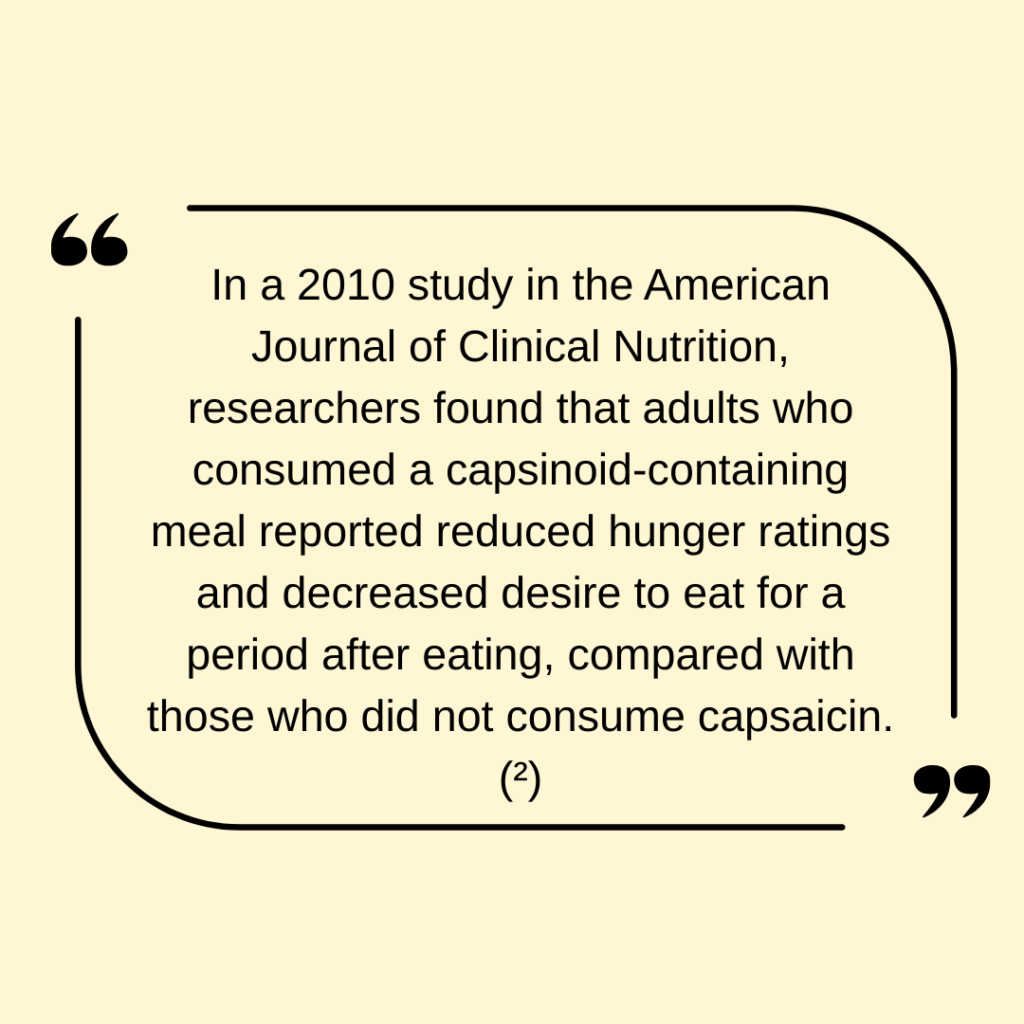Several human studies have shown that capsaicin consumption can modestly increase energy expenditure and fat burning, particularly when combined with balanced nutrition.
For women experiencing metabolic slowing during midlife, this gentle support can be valuable as part of a wider lifestyle approach.
Importantly, cayenne is not a “*quick fix*” — its benefits are subtle and cumulative, working best alongside fibre-rich diets and regular movement.
---
## **Cayenne and Digestive Health**
Cayenne pepper also plays a role in supporting digestion.
**Potential Digestive Benefits**
Capsaicin may:
- Stimulate digestive enzyme production
- Increase gastric blood flow
- Support gut motility
- Encourage regular bowel movement patterns
Contrary to common myths, moderate cayenne intake does not damage the stomach in healthy individuals. In fact, some studies suggest capsaicin may help protect the stomach lining by improving circulation.
When combined with fibre, cayenne may help support smoother digestion and reduce feelings of sluggishness after meals.
**Cayenne Pepper Benefits: Research Findings**
A 2001 paper in *European Journal of Clinical Nutrition* evaluated the impact of red pepper in meals and found that spicy components could **enhance digestive enzyme secretion and gastric blood flow**.
While the study focused on healthy volunteers without digestive disease, the authors noted that stimulating these physiological processes could support more efficient digestion and nutrient breakdown. (³)
---
## **Appetite Control and Cravings**
Many women struggle with increased cravings and fluctuating appetite after 30.
Cayenne may help by influencing satiety signals.
[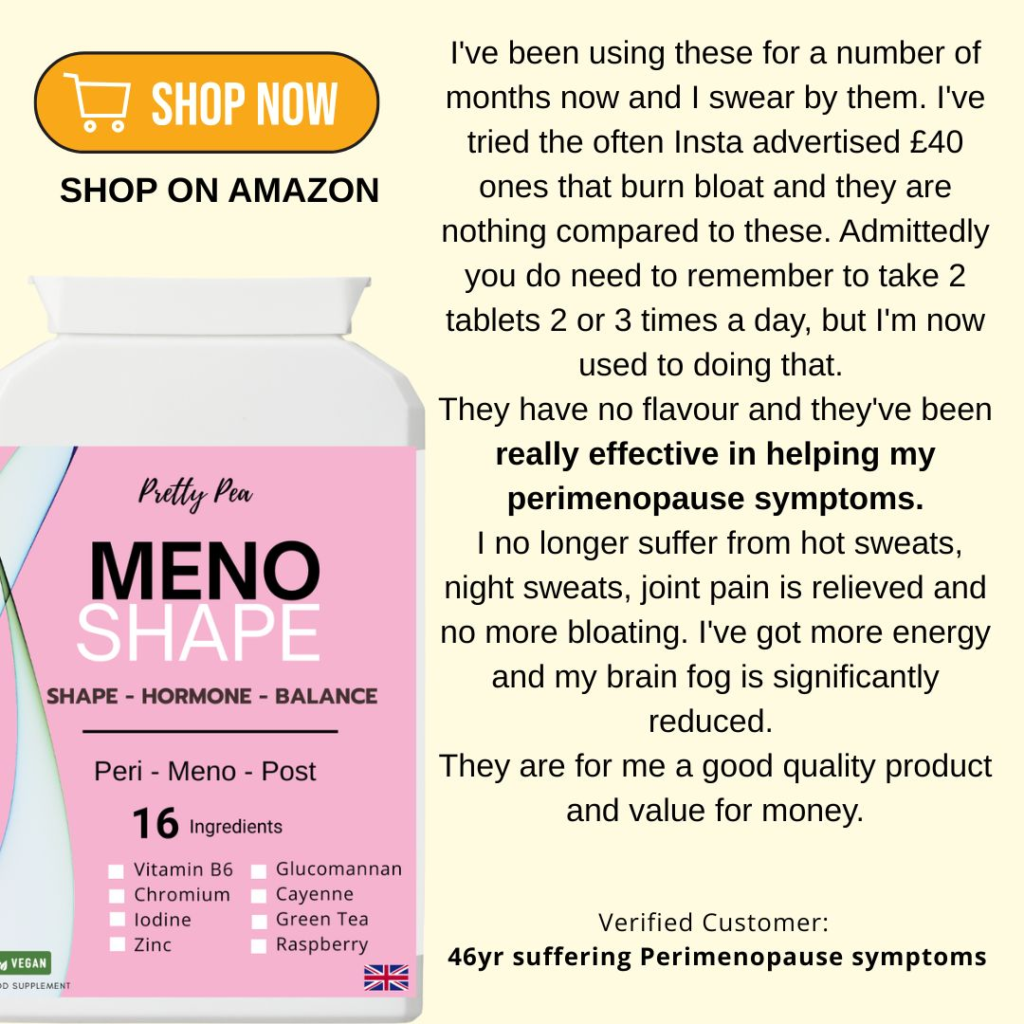](https://www.amazon.co.uk/gp/product/B0DZF2R2D4)**Cayenne Pepper Benefits: Research Findings**
Studies show that capsaicin consumption may:
- Reduce hunger
- Lower calorie intake at meals
- Decrease desire for high-fat foods
- Improve post-meal fullness
This effect is believed to involve hormonal pathways linked to appetite regulation and gut-brain communication.
> **Extract from study:**
> *“Capsaicinoids reduce subjective appetite sensations and decrease subsequent energy intake in human subjects.”* (²)
This suggests that including capsaicin (from cayenne) in meals may help support feelings of fullness and reduce cravings — useful for women balancing appetite and energy after 30 when metabolic signals can become less stable.
While results vary between individuals, cayenne can be a helpful addition for women seeking better appetite awareness.
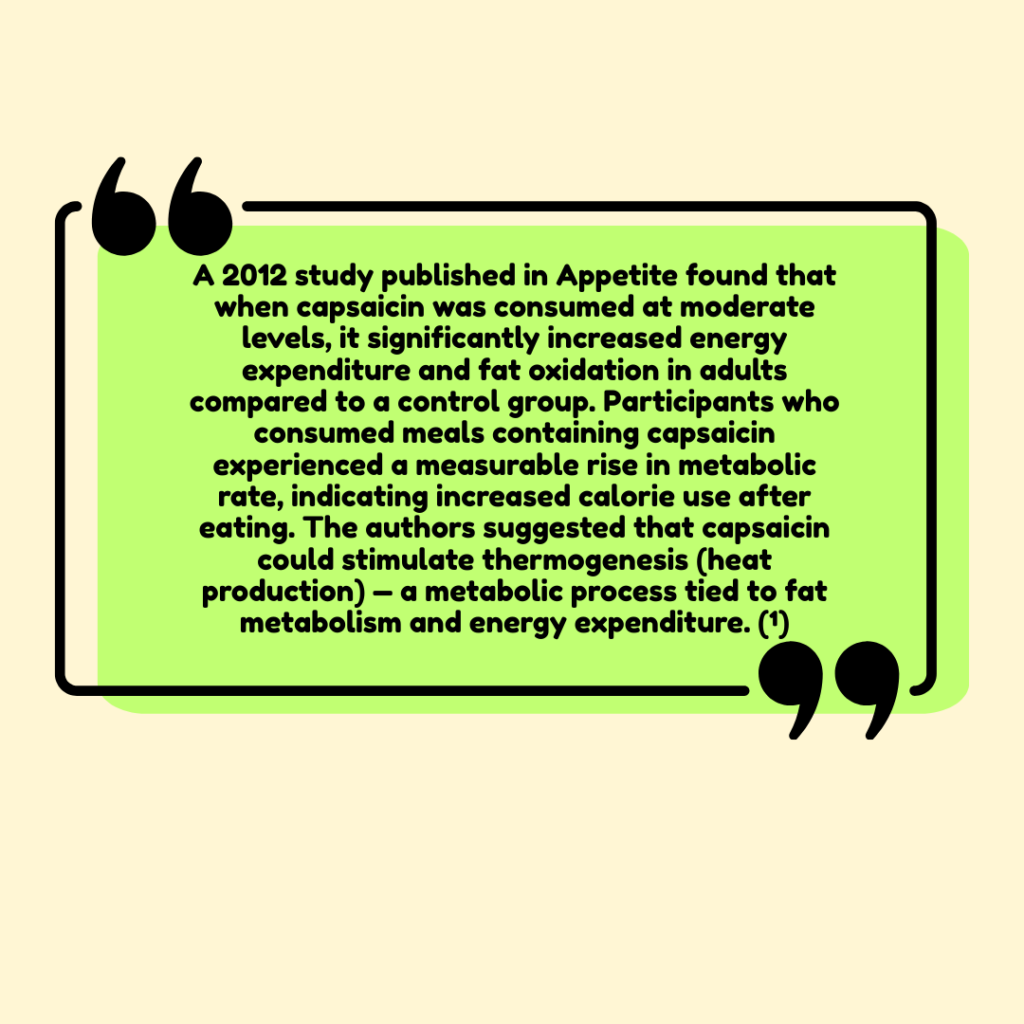---
## **When *Low Energy* and *Bloating* Become Normal**
For many women, digestive discomfort and low energy slowly become part of everyday life.
A bit of bloating after meals. Afternoon fatigue.
Cravings in the evening.
Feeling “heavy” despite eating reasonably well.
At Pretty Pea, we often hear from women who assumed these symptoms were inevitable — caused by age, stress, or hormones.
Many are surprised when small changes, such as improving fibre intake and adding supportive ingredients like cayenne, lead to noticeable improvements.
Better digestion. More stable energy. Greater comfort.
These shifts remind us that wellbeing often begins with simple nutritional foundations.
---
## **Cayenne for Women Over 30 and During Menopause**
Hormonal changes can influence:
- Fat distribution
- Blood sugar regulation
- Appetite
- Digestive function
During perimenopause and menopause, many women experience increased abdominal fat and reduced metabolic flexibility.
Cayenne may support this transition by:
- Encouraging thermogenesis
- Supporting blood flow
- Aiding digestion
- Enhancing satiety
Although cayenne isn’t a hormone regulator per se, capsaicin has been studied for its *indirect* effects on hormonal pathways involved in appetite and metabolic regulation.
**Cayenne Pepper Benefits:** **Research Findings**
A 2015 randomized controlled trial in *Physiology & Behavior* examined the metabolic effects of capsaicin ingestion and noted changes in **ghrelin and peptide YY**, both hormones linked to hunger and satiety.
Participants who consumed capsaicin showed trends toward *higher satiety hormones and lower hunger hormones* after meals. (⁴)
These hormonal shifts may partly explain why some people report feeling more satisfied after meals containing spicy components like cayenne.
When combined with fibre, protein, and plant-based nutrition, cayenne fits well into a holistic approach to midlife wellbeing.
---
## **Cayenne in Supplements vs Food**
Cayenne can be consumed through food or supplements.
**In Food**
- Fresh chillies
- Hot sauces
- Spiced dishes
Benefits: Natural, enjoyable
Limitations: Inconsistent dosing
**In Cayenne Pepper Supplements**
- Standardised capsaicin content
- Gentle controlled dosage
- Combined with fibre or botanicals
Benefits: Convenience, consistency
Limitations: Quality varies
High-quality formulations focus on moderate, safe amounts designed for daily support rather than extreme stimulation.
---
## **Nutrition and Plant Compounds: What’s Really in Cayenne**
Cayenne pepper isn’t just “spicy” — it’s rich in plant bioactives, micronutrients, and antioxidants that contribute to its health-related effects.
**Key Plant Compounds in Cayenne**
- Capsaicin — the compound that gives cayenne its heat; linked with metabolic and appetite effects in research on capsaicin and metabolism.
- Phenolic compounds and flavonoids — secondary plant metabolites with antioxidant activity found widely across Capsicum species.
- Vitamins A and C — potent antioxidants that support immune and skin health**.**
These compounds work together to provide not only flavour but also nutritional value that can support overall wellbeing when included as part of a balanced diet.
---
## **Is Cayenne Safe?**
For most healthy adults, cayenne is safe when consumed in moderate amounts.
**Use with Caution If You:**
- Have severe acid reflux
- Have stomach ulcers
- Are sensitive to spicy foods
- Are pregnant
- Take certain medications
Start low and monitor your response.
Quality supplements use carefully balanced doses to minimise irritation.
---
## **How to Use Cayenne for Best Results**
For sustainable benefits:
✔ Combine with fibre-rich foods
✔ Stay well hydrated
✔ Use consistently
✔ Avoid excessive doses
✔ Focus on lifestyle first
Cayenne works best as part of a wider gut-health and metabolism strategy.
---
###
**Does cayenne really help with weight loss?**
Cayenne may modestly support metabolism and appetite control, but it works best alongside balanced nutrition and exercise.
### ********Can cayenne reduce bloating?********
It may help by supporting gut motility and digestion, especially when paired with fibre.
### ****Is cayenne good during menopause?****
It can support metabolic and digestive changes associated with hormonal transition.
### ****Should I take cayenne daily?****
Moderate daily intake is generally safe for most people.
### **Is cayenne better than other fat burners?**
Cayenne offers gentle, natural support without stimulants.
---
**A Note from the Founder**
Pretty Pea was created from personal experience of how digestion, energy, and confidence can shift over time — often without clear guidance.
I learned first-hand that small nutritional foundations, like fibre and plant-based support, make a meaningful difference. Ingredients such as cayenne are chosen not for hype, but for their evidence-backed ability to work gently with the body.
Our aim is to help women feel supported, informed, and empowered in everyday wellbeing — without extremes.
## [Cayenne Pepper Benefits: How It Supports Digestion, Metabolism, Appetite in Women after 30](https://prettypea.blog/cayenne-pepper-benefits-how-it-supports-digestion-metabolism-appetite/)
## [Cayenne Pepper Benefits: How It Supports Digestion, Metabolism, Appetite in Women after 30](https://prettypea.blog/cayenne-pepper-benefits-how-it-supports-digestion-metabolism-appetite/)
---
### You might also like..
**[Your Gut Microbiome Is Talking to Your Brain — Are You Listening? ](https://prettypea.blog/your-gut-microbiome-is-talking-to-your-brain-are-you-listening/)**
[**What is the Highest Fibre Food** ](https://prettypea.blog/what-is-the-highest-fibre-food/)
[**The Ultimate Guide to Fibre Supplements for a Happier Gut: Unlocking Your Digestive Health** ](https://prettypea.blog/the-ultimate-guide-to-fibre-supplements-for-a-happier-gut-unlocking-your-digestive-health/)
[**10 Green Tea Benefits: The Ultimate Science-Backed Guide** ](https://prettypea.blog/10-green-tea-benefits-the-ultimate-science-backed-guide/)
[**The Ultimate Superfood List: What are Superfoods, Benefits, Best Choices, and How to Use** ](https://prettypea.blog/the-ultimate-superfood-list-what-are-superfoods-benefits-best-choices-and-how-to-use/)
[**The Rich List: Insoluble Fibre Rich Food List – Pretty Pea**](https://prettypea.blog/the-rich-list-insoluble-fibre-rich-food-list/)
[**Understanding Visceral Fat: The Ultimate Belly Fat Guide – Pretty Pea**](https://prettypea.blog/understanding-visceral-fat-the-ultimate-belly-fat-guide/)
[**Everything Psyllium How To Use: A Comprehensive Guide on How to Use It for Maximum Health Benefits – Pretty Pea**](https://prettypea.blog/psyllium-how-to-use/)
[**Simple Food Group Swaps – Make Life Easier for Yourself – Pretty Pea**](https://prettypea.blog/simple-food-group-swaps-make-life-easier-for-yourself/)
[**The 100 Symptoms of Perimenopause – Pretty Pea**](https://prettypea.blog/the-100-symptoms-of-perimenopause/)
- [](https://prettypea.blog/d-mannose-and-cranberry-for-women/)[Menopause Nutrition](https://prettypea.blog/category/menopause/) · [Superfoods](https://prettypea.blog/category/superfoods/) · [Supplements](https://prettypea.blog/category/supplements/)
October 8, 2026
- [](https://prettypea.blog/what-is-glp-1/)[Fibre & Gut Health](https://prettypea.blog/category/fibre/) · [Hormones & HRT](https://prettypea.blog/category/hormones-hrt/) · [Menopause Nutrition](https://prettypea.blog/category/menopause/) · [Supplements](https://prettypea.blog/category/supplements/)
### [What Is GLP-1? The Gut Hormone That Helps Regulate Hunger & Blood Sugar](https://prettypea.blog/what-is-glp-1/)
August 18, 2026
- [](https://prettypea.blog/psyllium-husk-benefits/)[Pretty Pea](https://prettypea.blog/category/pretty-pea/)
### [Psyllium Husk: Benefits, How to Take It, Side Effects & How It Compares](https://prettypea.blog/psyllium-husk-benefits/)
August 15, 2026
### References – Cayenne Pepper Benefits
1. **Appetite (2012)** — capsaicin and metabolic rate increase
*https://pubmed.ncbi.nlm.nih.gov/22830540/*
2. **American Journal of Clinical Nutrition (2010)** — capsaicin and appetite regulation
*https://pubmed.ncbi.nlm.nih.gov/20053876/*
3. **European Journal of Clinical Nutrition (2001)** — red pepper and digestion
**
4. **Physiology & Behavior (2015)** — capsaicin and appetite hormones
*https://pubmed.ncbi.nlm.nih.gov/25455380/*
**Categories:** Superfoods
---
## Pages
### [Home](https://prettypea.blog/)
**Published:** November 28, 2023
**Author:** Cate Boyd
**Content:**
## Save 20% on Orders Over £50
## Use Code: BULKSAVE
# **Pretty Pea**
Science-Led Supplements for Women’s Health & Wellbeing
Pretty Pea provides **evidence-informed formulas designed to support perimenopause & hormone harmony, healthy weight management, energy and everyday wellbeing**, helping women better understand their body to make informed, confident choices.
[Find Your Pretty Perfect Supplement](https://prettypea.blog/womens-health-supplements/)
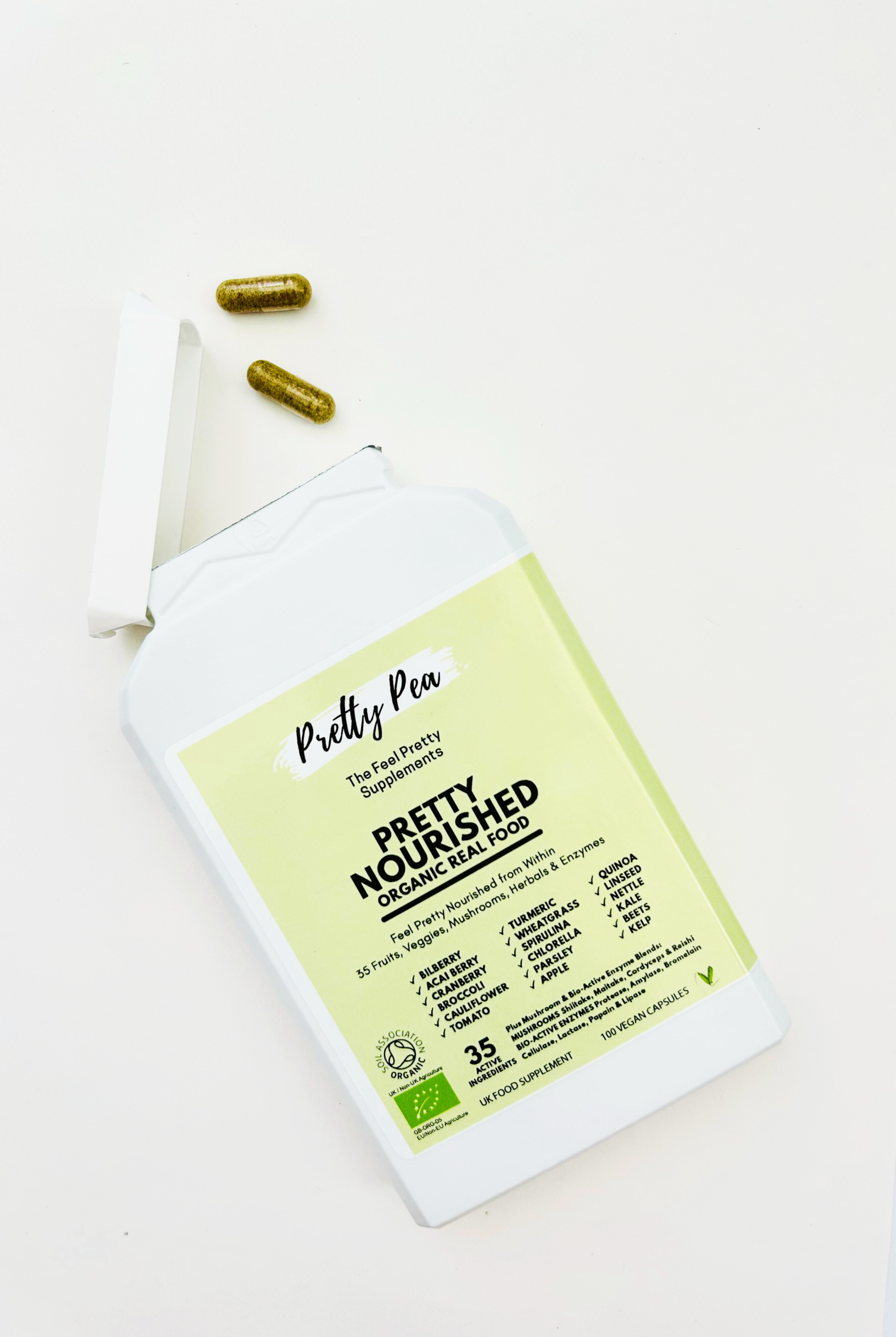
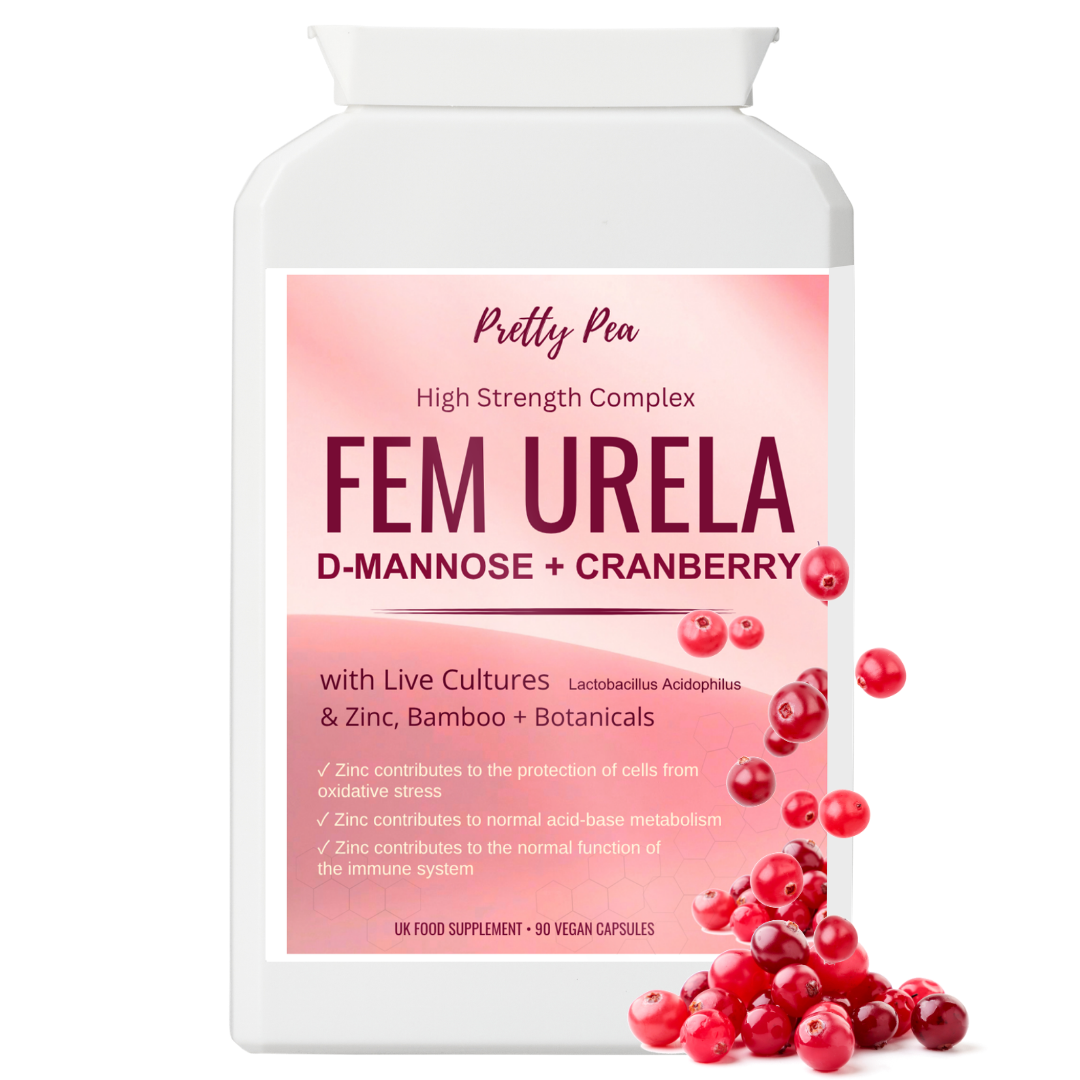

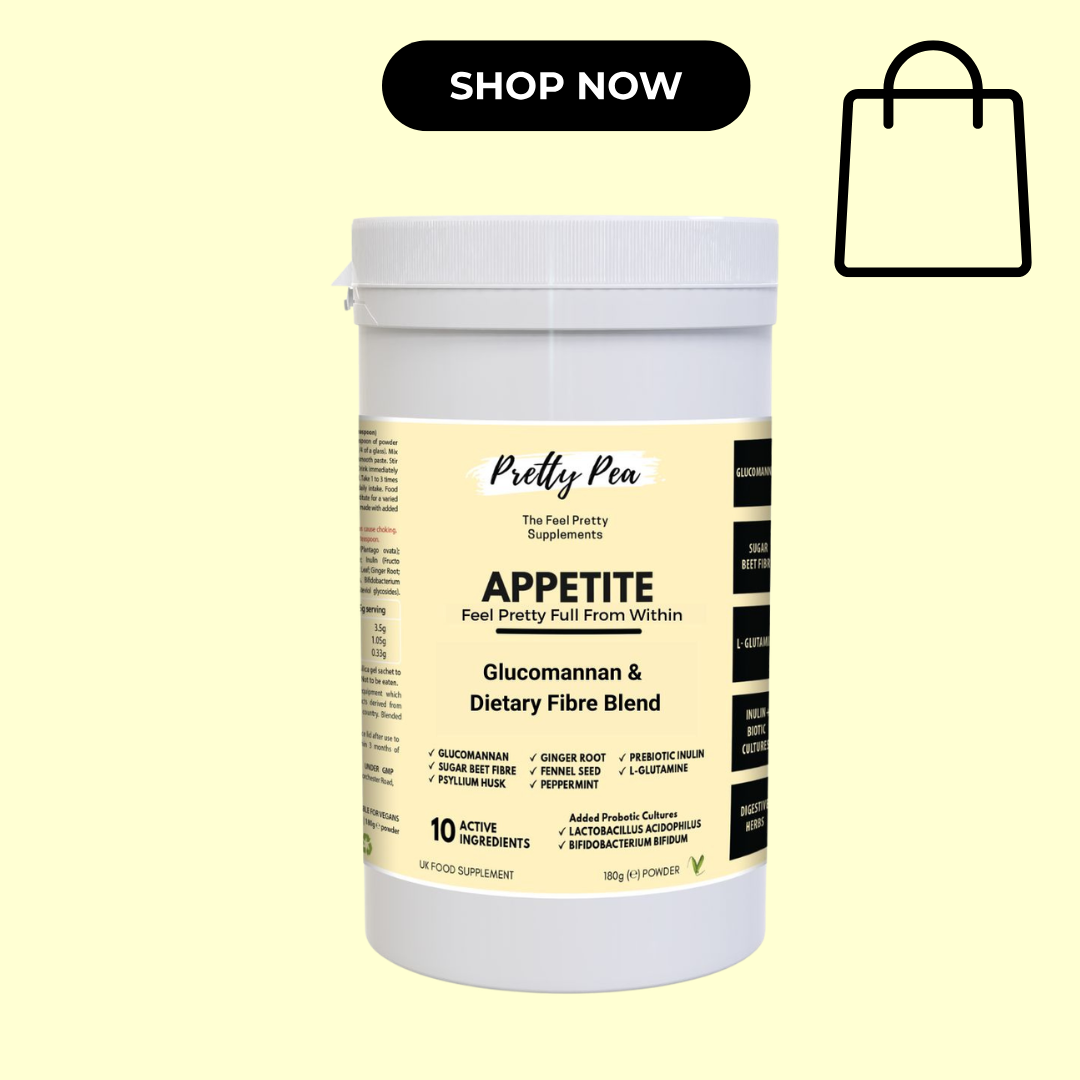
## The Sun
## Natural Health
## Top Sante
## Marie Claire
## Save 20% on Orders Over £50
## Save 20% on Orders Over £50
## Vitamins & Supplements
## Fibre Supplements for Women, & Hormone Harmony Supplements
View All Products
## **Women’s Nutrition**
**Vitamins & Minerals**
Vitamins and minerals support essential processes in the body, including energy metabolism, bone health and normal physiological function.
[Womens Health Supplements](https://prettypea.blog/womens-health-supplements/)
**Dietary Fibre**
Fibre plays an important role in digestive health and contributes to overall dietary balance. Many women do not meet recommended daily [fibre intake](https://prettypea.blog/how-to-increase-fibre-intake-30g-a-day-easy-science-backed-tips-that-actually-work/) levels.
**Balanced Nutrition**
A consistent, balanced diet remains the foundation of good health during midlife, supported where needed by targeted nutritional choices.
---
**Daily Nutritional Support for Women**
A balanced approach to nutrition may include carefully selected supplements designed to complement your diet.
Formulations that include vitamins, minerals and dietary fibre can support overall nutritional intake as part of a daily routine.
[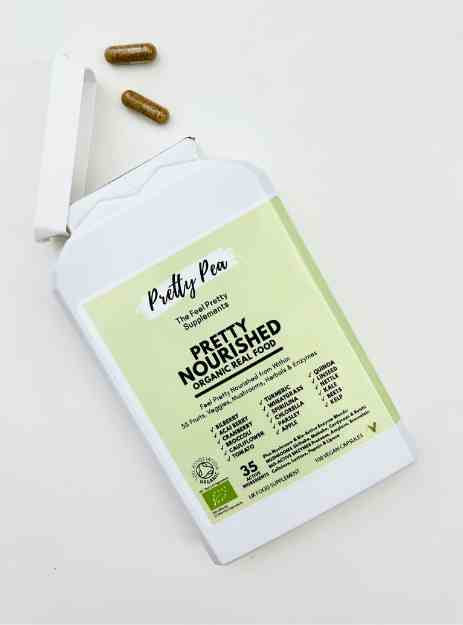](https://prettypea.blog/fruit-and-vegetable-supplements/)
[Shop Womens Health Supplements](https://prettypea.blog/womens-health-supplements/)
> **“Energy has returned”**
>
> Feeling much more alert and energetic. Is helping with weight alongside healthy eating and exercise.
>
> Fiona ★ ★ ★ ★ ★
## MENO
> **“Feeling Great”**
>
> I have found that it does curb appetite and reduces wanting to binge eat through being perimenopausal.
>
> Amanda ★ ★ ★ ★ ★
## MENO
> **“Recommend Trying”**
>
> I’ve recommended this product to so many people! It’s made such a difference to my energy levels and bloating, I was getting to lunch time and finding it hard to stay awake and now I can get through the day no problem 😊
>
> Nicki ★ ★ ★ ★ ★
## MENO
[Find Your Pretty Perfect Supplement](https://prettypea.blog/womens-health-supplements/)
## Fibre & Digestive Health Support
Dietary fibre plays an important role in supporting normal digestion and overall dietary balance. Some women choose to include fibre supplements, such as glucomannan, as part of their daily nutrition routine.
👉[ Explore fibre-based supplements](https://prettypea.blog/womens-health-supplements " Explore fibre-based supplements")
👉 [View menopause nutrition support →](https://prettypea.blog/menopause-supplement-womens-nutritional-support/ "View menopause nutrition support →")
Explore our core products:
- Fibre Capsules — convenient daily fibre support
- Fibre Powder — natural psyllium-based supplement
- Weight Management Formulas — botanical and nutrient blends
[Browse the range](https://prettypea.blog/womens-health-supplements/ "Browse the range").
[Fibre Supplements](https://prettypea.blog/womens-health-supplements/)
[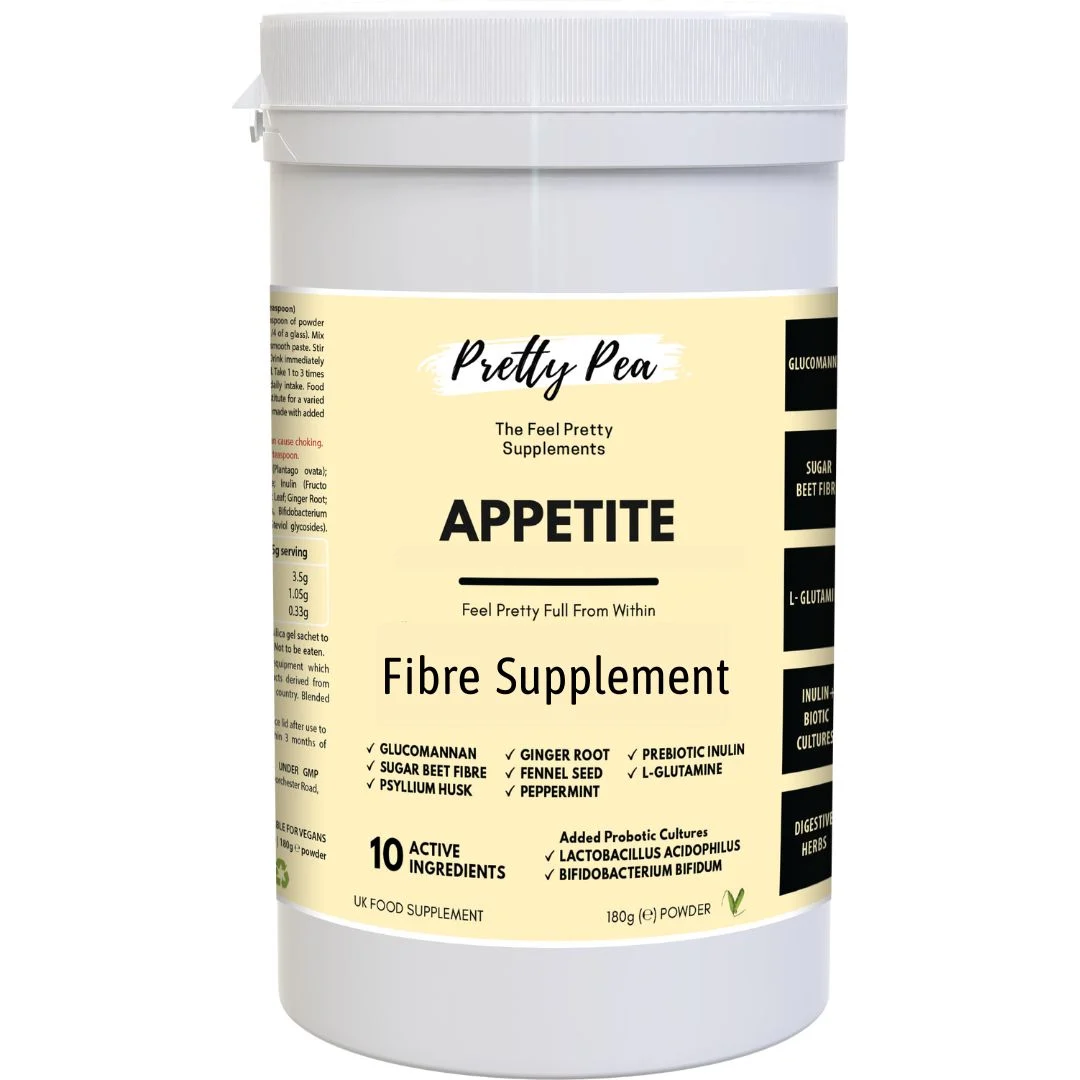](https://prettypea.blog/psyllium-husk)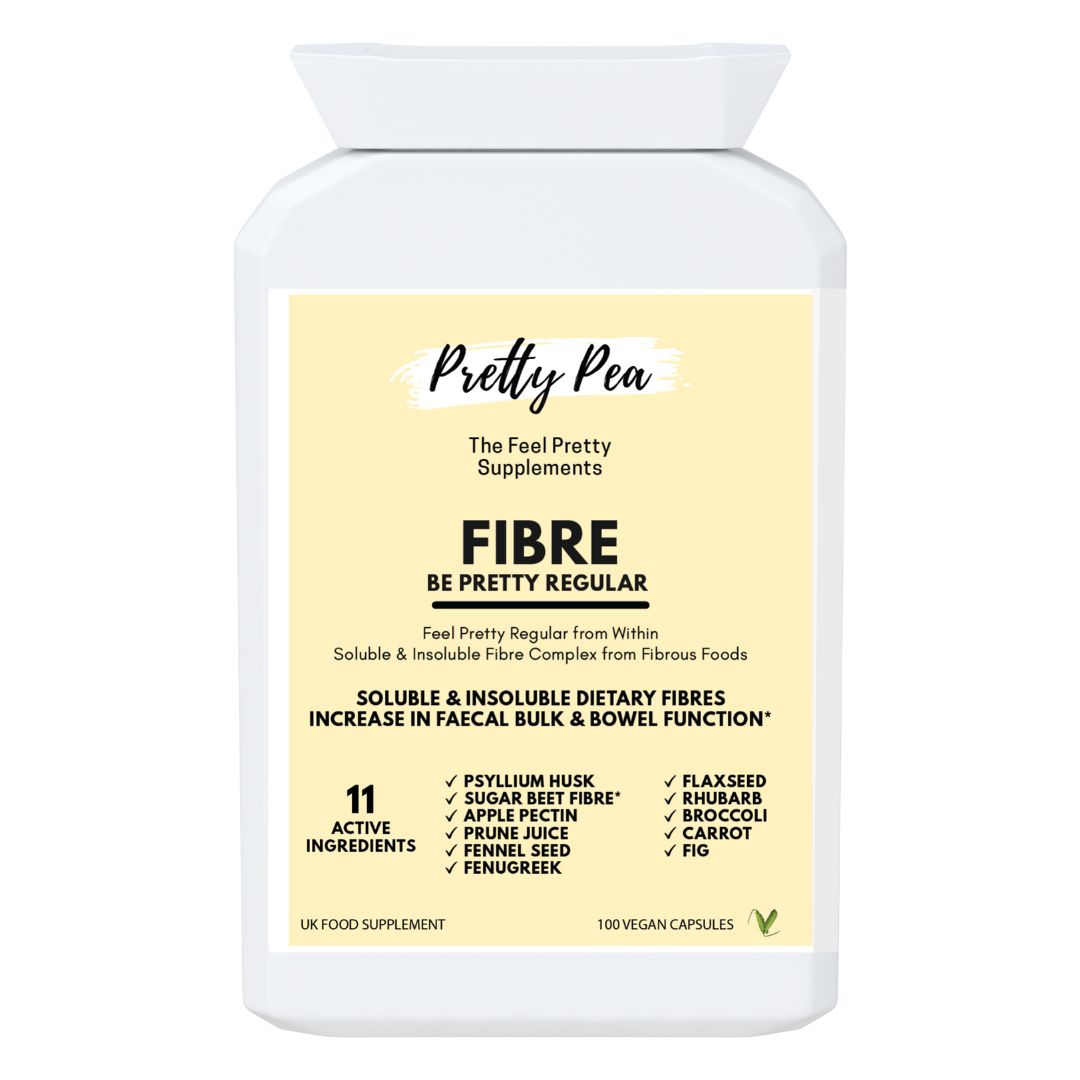
## Feel Pretty From Within – **Understanding Nutrition During Menopause**
Menopause is a natural stage of life that can influence metabolism, body composition and overall nutritional needs.
Focusing on a balanced intake of key nutrients — including vitamins, minerals and fibre — can help support normal bodily functions and overall wellbeing during this transition.
👉 Explore more:
[Fibre and digestive health during menopause](https://prettypea.blog/9-benefits-of-fibre-why-its-essential-for-gut-health-weight-and-wellbeing/ "9 Benefits of Fibre: Why It’s Essential for Gut Health, Weight and Wellbeing")
[Menopause Weight Changes Explained (UK Guide): What Research Says About Body Composition, Metabolism & Nutrition](https://prettypea.blog/menopause-weight-changes-explained-uk-guide-what-research-says-about-body-composition-metabolism-nutrition/)
[Find Your Pretty Perfect Supplement](https://prettypea.blog/womens-health-supplements/)

### Vegan Protein
Your Body is made up of Proteins, Are You Getting Enough?
### Hormone *Harmony*
Vitamins & Nutrients to support Hormone Balance for Women
### Menopause Supplements
Feel Pretty From Within with Supplements that Make Sense
### Womens Health Supplements
Fibre, Organic Fruit & Veggies, Mushrooms Seaweed & more
See more Pretty Pea on Instagram..
[](https://www.instagram.com/prettypeavitamins/)
prettypeavitamins
[
View Instagram post by prettypeavitamins
](https://www.instagram.com/p/DZNSP1XiP3o/)
Jun 5
[
Open post by prettypeavitamins with ID 17952191358157904
](https://scontent-lax3-1.cdninstagram.com/v/t51.82787-15/718726700_18457810528117964_9137427655213713090_n.jpg?stp=dst-jpg_e35_tt6&_nc_cat=108&ccb=7-5&_nc_sid=18de74&efg=eyJlZmdfdGFnIjoiRkVFRC5iZXN0X2ltYWdlX3VybGdlbi5DMyJ9&_nc_ohc=vSgJeoLIV-sQ7kNvwFlmbli&_nc_oc=AdoH6axHJdkrANNjVfW4PLADaxPuGV-Y_ABg50_Y2eh-2zNGFprSi3e03YudyHcxN8Q&_nc_zt=23&_nc_ht=scontent-lax3-1.cdninstagram.com&edm=AM6HXa8EAAAA&_nc_gid=Dgg33RfXbWzSSjZmvzMxvA&oh=00_AQPPtpLEvxQqZvr1ofzpuwsG9RvIYORQdTqxUpV3n6CIxA&oe=6AD73FD0)
[ 
](https://www.instagram.com/p/DZNSP1XiP3o/)
Why is everyone talking about glucomannan lately?
Glucomannan is a naturally occurring soluble fibre derived from the konjac root. What makes it unique is its ability to absorb water and form a gel-like consistency, which is why it has become increasingly popular in fibre supplements and wellness routines.
In fact, the European Food Safety Authority (EFSA) has approved the claim that glucomannan contributes to weight loss in the context of an energy-restricted diet, when consumed at 3g per day in three 1g doses with 1–2 glasses of water before meals.
Beyond this, glucomannan is simply another way to increase your daily fibre intake alongside a healthy, balanced diet.
Many people choose glucomannan because it is:
✔ A source of soluble fibre
✔ Derived from konjac root
✔ Available in convenient capsule and powder formats
✔ Easy to incorporate into a daily routine
Remember, fibre doesn`t just come from supplements. Foods such as oats, legumes, fruits and vegetables also contribute to your daily fibre intake.
📌 Save this post if you`re curious about different types of fibre.
💬 Have you tried glucomannan before?
You can find Glucomannan in Pretty Pea supplements.
\#glucomannan #konjacroot #solublefibre #fibresupplement #highfibre #weightlosssupport #nutritiontips #wellnessjourney #healthyhabits #womenshealth #digestivewellbeing #healthylifestyle #nutritioneducation #prettypeasupplements #prettypea #fibresupplements #fibresupplement
[…](#)
0
0
[](https://www.instagram.com/prettypeavitamins/)
prettypeavitamins
[
View Instagram post by prettypeavitamins
](https://www.instagram.com/reel/DV6SxyPgls0/)
Mar 15
[
Open post by prettypeavitamins with ID 17850932685643864
](https://scontent-lax3-1.cdninstagram.com/v/t51.82787-15/651174663_18442740625117964_1508200042461708880_n.jpg?stp=dst-jpg_e35_tt6&_nc_cat=108&ccb=7-5&_nc_sid=18de74&efg=eyJlZmdfdGFnIjoiQ0xJUFMuYmVzdF9pbWFnZV91cmxnZW4uQzMifQ%3D%3D&_nc_ohc=y1ilSv_9oPIQ7kNvwGWl1Dv&_nc_oc=Adovuko5_AtIZUNFwNCBbIsZUHwuvNTTx1RgRMD4a45psALLG7_PX7odLTz-pSShcJk&_nc_zt=23&_nc_ht=scontent-lax3-1.cdninstagram.com&edm=AM6HXa8EAAAA&_nc_gid=Dgg33RfXbWzSSjZmvzMxvA&_nc_tpa=Q5bMBQIj8KpuiRFleBiEgLEjKycViQ4hxJmK8Yn-gi-pW9Ktm4W0pU43wMdz4b6TPHOcOa658nndIkGB&oh=00_AQPFRdnUgveXfuRfynfpyQHSi6eMl3avW0YaBxIMFaRQvA&oe=6AD742B0)
[ 
](https://www.instagram.com/reel/DV6SxyPgls0/)
Do you ever feel hungry again soon after eating?
Appetite is influenced by several hormones that help regulate hunger and fullness.
Ghrelin is often referred to as the “hunger hormone” because it signals when the body needs food.
Leptin helps signal fullness and energy balance.
Blood sugar also plays a role. When meals are very low in fibre or protein, digestion may happen more quickly, which can contribute to blood sugar fluctuations and increased hunger signals.
Another hormone involved is insulin, which helps regulate blood sugar levels.
Including meals that provide fibre, protein and healthy fats may help support more stable energy levels and appetite regulation.
Understanding these mechanisms can help make nutrition choices feel more supportive rather than restrictive.
\#hormonehealth
\#womensnutrition
\#guthealthuk
\#balancednutrition
\#nutritiontips
\#fibreintake
\#womenover40health
\#menopausehealth
\#digestivehealth
\#wellnessforwomen
\#bloodsugarbalance
\#healthyeatingtips
\#menopausehealth
\#perimenopausehealth
\#menopause
\#perimenopause
\#menopauseweightloss
\#perimenopausesupport
\#menopauseremedies
\#perimenopauseweightloss
\#hormoneharmony
\#prettypea
\#prettypeasupplements
\#fibresupplements
[…](#)
1
0
[](https://www.instagram.com/prettypeavitamins/)
prettypeavitamins
[
View Instagram post by prettypeavitamins
](https://www.instagram.com/reel/DV4bttmgv7p/)
Mar 14
[
Open post by prettypeavitamins with ID 17989436180943483
](https://scontent-lax3-1.cdninstagram.com/v/t51.82787-15/651479231_18442620952117964_3760421816417068679_n.jpg?stp=dst-jpg_e35_tt6&_nc_cat=110&ccb=7-5&_nc_sid=18de74&efg=eyJlZmdfdGFnIjoiQ0xJUFMuYmVzdF9pbWFnZV91cmxnZW4uQzMifQ%3D%3D&_nc_ohc=j1bvgsNsHQgQ7kNvwGY26nH&_nc_oc=Adq93-5x8DUZG5-a9yE-6ZHQriiOij054kdGaJZQjr4hKcsosvxjzx0A0usQNK2-26E&_nc_zt=23&_nc_ht=scontent-lax3-1.cdninstagram.com&edm=AM6HXa8EAAAA&_nc_gid=Dgg33RfXbWzSSjZmvzMxvA&_nc_tpa=Q5bMBQIS0N5orY7FatsZgzRMPN62Ucn-N2BdNGx1txCnUpQwq7RF8wL7b9xGILTSKcQkhy08p0_vqycC&oh=00_AQO0rjqvtcXmIjVTbE9qlmyr1831Tp0M-6T0MoHzor9Ikw&oe=6AD75F81)
[ 
](https://www.instagram.com/reel/DV4bttmgv7p/)
Welcome Pretty Pea 🌿
If you’re new here, this post is your mini guide to the page. Pretty Pea is all about helping women 30+ support hormone harmony, gut health, digestion, and balanced nutrition through practical tips and plant-based supplements.
Here’s what you’ll find:
✅ Evidence-based advice on fibre, protein, and gut health
✅Latest science on Nutrition & Botanicals
✅Tips for managing energy, digestion, and menopause nutrition & weight
✅Simple ways to build healthy habits that last
Start exploring posts on fibre, gut health, and balanced nutrition — and follow for weekly tips and supplement guidance.
Tip: See link in bio to get you Meno Weight guide
\#guthealthuk
\#fibreintake
\#digestivehealth
\#nutritiontips
\#womenover40health
\#menopausehealth
\#balancednutrition
\#wellnessforwomen
\#guthealthmatters
\#healthyeatingtips
\#menopausetips
\#perimenopausetips
\#menopauseweightloss
\#perimenopauseweightloss
\#prettypeasupplements
\#womenssupplements
\#womenshealthsupplements
\#menopausesupport
\#perimenopausesupport
\#menopauseremedies
\#perimenopause
\#menopause
\#prettypea
[…](#)
1
0
[](https://www.instagram.com/prettypeavitamins/)
prettypeavitamins
[
View Instagram post by prettypeavitamins
](https://www.instagram.com/reel/DV3U0bZgpl-/)
Mar 14
[
Open post by prettypeavitamins with ID 18101314298479126
](https://scontent-lax3-2.cdninstagram.com/v/t51.82787-15/651142021_18442551835117964_5643017192836676390_n.jpg?stp=dst-jpg_e35_tt6&_nc_cat=107&ccb=7-5&_nc_sid=18de74&efg=eyJlZmdfdGFnIjoiQ0xJUFMuYmVzdF9pbWFnZV91cmxnZW4uQzMifQ%3D%3D&_nc_ohc=DtP_AWKfoasQ7kNvwEl3-pr&_nc_oc=AdqF_zNGazKXtC_G3RtxPBGUaa9m2v1us2aQZ-lqVzl2uZILxydXkyKXYS0Tq_lZmrM&_nc_zt=23&_nc_ht=scontent-lax3-2.cdninstagram.com&edm=AM6HXa8EAAAA&_nc_gid=Dgg33RfXbWzSSjZmvzMxvA&_nc_tpa=Q5bMBQLCzsiYJ27EmsfrDoZSEyOQCRnMlLGqyjqewo6WfAvk2LUIlQdqWxix9Qjxh_ZdbAQcNrPw6x_Q&oh=00_AQPC5b9wYZVWYZbrSsp9ZyealNRVby15-UMPGMHlcWE3XA&oe=6AD7335A)
[ 
](https://www.instagram.com/reel/DV3U0bZgpl-/)
Do you ever feel hungry shortly after eating?
Or notice sugar cravings creeping in during the afternoon?
It might not just be willpower — you could simply be low in fibre.
Fibre plays an important role in supporting digestion, appetite control and balanced blood sugar levels.
3 signs you may need more fibre:
1️⃣ You feel hungry soon after meals
Fibre slows digestion and can help you feel fuller for longer.
2️⃣ You experience sugar cravings
Low fibre meals can cause faster blood sugar spikes and crashes.
3️⃣ Your digestion feels sluggish
Fibre helps support regular, healthy digestion.
Most adults should aim for around 30g of fibre per day, yet many people consume far less.
Small changes — like adding more whole grains, vegetables, seeds or fibre-rich foods — can make a big difference over time.
Save this post if you’re working on improving your gut health and nutrition.
\#fibreintake
\#guthealthuk
\#digestivehealth
\#nutritiontips
\#balancednutrition
\#weightlossforwomen
\#womenover40health
\#healthyhabits
\#guthealthmatters
\#wellnessforwomen
\#healthyeatingtips
\#prettypea
\#prettypeasupplements
\#prettypeavitamins
\#menopausesupport
\#menopauseweightloss
\#perimenopauseweightloss
\#menopauseremedies
\#menopausehealth
\#perimenopausehealth
[…](#)
2
0
[](https://www.instagram.com/prettypeavitamins/)
prettypeavitamins
[
View Instagram post by prettypeavitamins
](https://www.instagram.com/reel/DV3TjLNgq7h/)
Mar 14
[
Open post by prettypeavitamins with ID 18328202950218317
](https://scontent-lax7-1.cdninstagram.com/v/t51.82787-15/651348842_18442550686117964_6704724303515500217_n.jpg?stp=dst-jpg_e35_tt6&_nc_cat=101&ccb=7-5&_nc_sid=18de74&efg=eyJlZmdfdGFnIjoiQ0xJUFMuYmVzdF9pbWFnZV91cmxnZW4uQzMifQ%3D%3D&_nc_ohc=Rrs0x54s6mMQ7kNvwHPfTzX&_nc_oc=AdrjWmdpzjQPJkGhP-gpmKrZ1sXvQB9P1CNPMv_9XU_rW5Tb9m0CYoyUjGkT7rn5Y_w&_nc_zt=23&_nc_ht=scontent-lax7-1.cdninstagram.com&edm=AM6HXa8EAAAA&_nc_gid=Dgg33RfXbWzSSjZmvzMxvA&_nc_tpa=Q5bMBQL0mPQX1LWztBLH4K7R8B8Hw66JvLxZ3sCijOpyAKhlFAffW9BRuhkNsdSOOybmmB4RYCE32apJ&oh=00_AQOhdTNvarwFW_7LG9G_atkgkEJqMd-Z2fWNvkUHCWQ1CQ&oe=6AD73BDB)
[ 
](https://www.instagram.com/reel/DV3TjLNgq7h/)
Why choose Pretty Pea supplements?
Pretty Pea supports every woman with an ever evolving body..
"I started taking these tablets back in October last year, they have reduced my bloating and helped me with energy to get back into the gym and walking. I have currently lost 2 stone and feel so much more like the old me. I’m wearing clothes that I never thought I would wear again. Thankyou pretty pea I’m so happy with my results!"
\#prettypea
\#prettypeasupplements
\#womensvitamins
\#womenshealthsupplements
\#womenshealth
\#nutritiontips
\#menopauseweightloss
\#menopause
\#perimenopause
\#perimenopauseweightloss
\#menopausesupport
\#menopauseweightgain
\#menopausesupplements
\#menopauseremedies
\#weightlosssupplements
\#fibreintake
\#guthealthuk
\#digestivehealth
\#nutritiontips
\#balancednutrition
\#weightlossforwomen
\#womenover40health
\#healthyhabits
\#guthealthmatters
\#wellnessforwomen
\#healthyeatingtips
\#nutritionforwomen
[…](#)
0
0
[](https://www.instagram.com/prettypeavitamins/)
prettypeavitamins
[
View Instagram post by prettypeavitamins
](https://www.instagram.com/reel/DV3Kc9FAmoy/)
Mar 14
[
Open post by prettypeavitamins with ID 18118746598548900
](https://scontent-lax7-1.cdninstagram.com/v/t51.82787-15/650258490_18442541587117964_8944071027667761562_n.jpg?stp=dst-jpg_e35_tt6&_nc_cat=105&ccb=7-5&_nc_sid=18de74&efg=eyJlZmdfdGFnIjoiQ0xJUFMuYmVzdF9pbWFnZV91cmxnZW4uQzMifQ%3D%3D&_nc_ohc=1fFknPj3FX0Q7kNvwFdo95H&_nc_oc=Adq2xojqBIGOVQ6nnWQnrjfzgVDH57ceEIgsfAqLfzptXWOtthbd5VRbKeK4TYAXCq4&_nc_zt=23&_nc_ht=scontent-lax7-1.cdninstagram.com&edm=AM6HXa8EAAAA&_nc_gid=Dgg33RfXbWzSSjZmvzMxvA&_nc_tpa=Q5bMBQLdMegrNMd18eRQZR8LZ9oAL_e0FoklIms-ROytfEhQ0sdONTsRxElCHMDqDMudgaPbRKXgHuPn&oh=00_AQPcjhkX_ymfrh-CZhsuDr9W1BRy68uIv031XWP9aEbzCA&oe=6AD75F3E)
[ 
](https://www.instagram.com/reel/DV3Kc9FAmoy/)
Trying to lose weight but constantly feeling hungry?
You might be missing one of the most important nutrients for appetite control: FIBRE
Fibre isn’t just about digestion. Research shows it can play a powerful role in supporting healthy weight management, especially for women over 30 navigating changing bodies and appetites with hormone imbalances and metabolic shifts.
Here’s why fibre can help:
✅Keeps you fuller for longer – fibre slows digestion, helping reduce hunger between meals.
✅Supports balanced blood sugar – fewer spikes can mean fewer cravings.
✅Feeds beneficial gut bacteria – your gut microbiome influences metabolism and appetite.
✅Naturally reduces calorie intake – many fibre-rich foods are filling but lower in calories.
In fact, some studies have found that simply increasing fibre intake can lead to gradual weight loss, even without strict dieting.
For many women navigating busy lifestyles, hormone shifts, or menopause, fibre can be one of the easiest and most natural ways to support weight goals.
For more, including the science (in simple terms):
• how fibre supports weight management
• the best fibre-rich foods to eat
• how to increase fibre without bloating
Read the full article via link in bio
And tell me below –
Do you think you get enough fibre each day?
\#fibreintake
\#weightlossforwomen
\#guthealthuk
\#highfibrediet
\#womenover30health
\#menopauseweightloss
\#digestivehealth
\#balancednutrition
\#healthyweightlossjourney
\#guthealthmatters
\#ukwellness
\#nutritionforwomen
\#wellnessforwomen
\#fibrefacts
\#prettypea
\#prettypeasupplements
\#prettypeavitamins
\#prettypeamenopause
\#menopausesupplements
\#menopauseweightloss
\#fibresupplements
\#perimenopauseweightloss
\#womenshealthsupplements
\#fibrefoods
[…](#)
1
0
[](https://www.instagram.com/prettypeavitamins/)
prettypeavitamins
[
View Instagram post by prettypeavitamins
](https://www.instagram.com/p/DVo6OTdCJyr/)
Mar 8
[
Open post by prettypeavitamins with ID 17969783597867317
](https://scontent-lax3-1.cdninstagram.com/v/t51.82787-15/642647450_18441673522117964_7651934007009657050_n.jpg?stp=dst-jpg_e35_tt6&_nc_cat=104&ccb=7-5&_nc_sid=18de74&efg=eyJlZmdfdGFnIjoiRkVFRC5iZXN0X2ltYWdlX3VybGdlbi5DMyJ9&_nc_ohc=_Es57anYu-sQ7kNvwHISwt8&_nc_oc=Adrgiuk3sNVdk0YO9KRM1WwWZTqW1-i1eHSj2h-vfsZcef54B7aQzE3bbFABYr5GeUM&_nc_zt=23&_nc_ht=scontent-lax3-1.cdninstagram.com&edm=AM6HXa8EAAAA&_nc_gid=Dgg33RfXbWzSSjZmvzMxvA&oh=00_AQNWOVUyze67mE1BYV9YS9B-6BTnjaYHilOPHUmbIh1gFg&oe=6AD736C3)
[ 
](https://www.instagram.com/p/DVo6OTdCJyr/)
Struggling with bloating, tiredness, or weight that won’t budge—then fibre might just be your secret weapon
You’ve probably heard fibre helps with digestion, but it does so much more. From regulating hormones to supporting weight management, fibre is essential for women—especially in their 30s, 40s and 50s. Yet studies show over 90% of UK adults don’t meet daily fibre intake recommendations
So Why Should You Care?
Fibre is the part of plant-based food your body can’t digest. It travels through your system, supporting digestion, blood sugar balance, and gut bacteria. There are two main types:
Soluble fibre: dissolves in water to form a gel that slows digestion & helps lower cholesterol
Insoluble fibre: adds bulk to stool & keeps things moving
Fibre also plays a vital role in feeding beneficial gut microbes which support immune function, hormone regulation, & mental health
Regulates estrogen: Fibre binds excess estrogen in the gut, helping it be excreted
Balances blood sugar: High-fibre diets reduce insulin spikes, which affect energy & weight
Supports satiety: Helps you feel full, leading to lower calorie intake
Improves gut health: A high-fibre diet increases beneficial bacteria diversity
Reduces systemic inflammation: Linked to clearer skin & better mood
Many women experience increased bloating, cravings & weight gain during perimenopause & menopause—and fibre can be a natural ally
Common signs of low fibre intake include:
Constipation or irregularity
Persistent bloating or gas
Fatigue and brain fog
Feeling hungry soon after meals
Hormonal skin breakouts
Difficulty losing weight
NHS guidelines:
Women should aim for 30g of fibre daily
Most common foods provide 3–6g per serving:
Food Fibre (approx.)
1 apple (with skin) 3–4g
½ cup lentils 8g
2 slices wholemeal bread 5g
1 tbsp chia seeds 5g
It can be difficult to meet your fibre needs through diet alone, especially when busy—making supplements a helpful option for many
See more at:
https://prettypea.blog/fibre-women-over-30-gut-health/
\#fibrefoods
\#fibresupplements
\#solublefibre
\#prettypeasupplements
\#prettypea
\#menopauseweight
\#menopause
\#fibretips
shop https://prettypea.blog/
[…](#)
0
0
[](https://www.instagram.com/prettypeavitamins/)
prettypeavitamins
[
View Instagram post by prettypeavitamins
](https://www.instagram.com/p/DVeGddDiMaN/)
Mar 4
[
Open post by prettypeavitamins with ID 17961444147029690
](https://scontent-lax7-1.cdninstagram.com/v/t51.82787-15/641868326_18440974171117964_6416401163210815368_n.jpg?stp=dst-jpg_e35_tt6&_nc_cat=105&ccb=7-5&_nc_sid=18de74&efg=eyJlZmdfdGFnIjoiRkVFRC5iZXN0X2ltYWdlX3VybGdlbi5DMyJ9&_nc_ohc=4p-BUSeLCtEQ7kNvwFdXqaw&_nc_oc=AdqVPkZeM3ZXUsnxVP-j7uTpC9yTjiCsPCGkVauwpMZvINWtLP5XdpxTAhGJi3kk51o&_nc_zt=23&_nc_ht=scontent-lax7-1.cdninstagram.com&edm=AM6HXa8EAAAA&_nc_gid=Dgg33RfXbWzSSjZmvzMxvA&oh=00_AQP6qzrV-sG5EXTRXzCTNFXvPnrCndR0rjeXqer2VOvU8w&oe=6AD759B6)
[ 
](https://www.instagram.com/p/DVeGddDiMaN/)
GLP-1 medications have changed the conversation around appetite, blood sugar & weight regulation. But long before injections entered the picture, the body already had its own systems for managing hunger & fullness — and fibre plays a key role. So how does fibre vs GLP-1 compare?
This doesn’t mean fibre works like GLP-1 medication or replaces it. But it does mean fibre supports many of the same natural pathways involved in digestion, satiety & blood sugar stability — especially relevant during perimenopause & menopause, when appetite cues often feel unpredictable.
What is GLP-1 (in simple terms)?
GLP-1 (glucagon-like peptide-1) is a hormone released in the gut after eating
It helps the body by:
✅signalling fullness to the brain
✅slowing the emptying of the stomach
✅supporting healthy blood sugar responses after meals
✅In everyday terms, GLP-1 helps you feel:
✅satisfied sooner
✅full for longer
✅less prone to sharp hunger swings
Fibre, on the other hand, supports the body’s own appetite regulation through digestion and gut health
How fibre supports similar outcomes (without acting as a drug)
1️⃣ Fibre slows digestion naturally
Soluble fibre absorbs water and forms a gel-like substance in the gut. This:
✅slows how quickly food leaves the stomach
✅reduces rapid absorption of carbohydrates
✅helps meals feel more sustaining
GLP-1 medications slow gastric emptying pharmacologically.
Fibre achieves a similar digestive effect through food structure, not hormone manipulation
2️⃣ Fibre supports steadier blood sugar
✅Slower digestion means glucose enter gradually helping:
✅reduce post-meal spikes
✅prevent energy crashes
✅limit rebound hunger
Blood sugar swings are a major driver of cravings…
Read full article: ✅https://prettypea.blog/appetite-regulation-how-fibre-vs-glp-1-compare/
\#glp1
\#glp-1
\#glp-1supplements
\#glp
\#glp-1weightloss
\#fibre
\#fibresupplements
\#fibreforwomen
\#fibrefoods
\#prettypea
\#prettypeasupplements
\#womenshealth
\#womenshealthsupplements
\#menopausesupport
\#perimenopausesupport
\#menopauseweightgain
\#perimenopauseweightgain
\#menopauseweightloss
\#perimenopauseweightloss
\#solublefibre
\#glucomannanfibre
\#psylliumhusk
\#psylliumhuskfibre
[…](#)
0
0
[](https://www.instagram.com/prettypeavitamins/)
prettypeavitamins
[
View Instagram post by prettypeavitamins
](https://www.instagram.com/p/DVQ0ucYiMXX/)
Feb 27
[
Open post by prettypeavitamins with ID 17916384219284974
](https://scontent-lax3-1.cdninstagram.com/v/t51.82787-15/642933553_18440244112117964_378148970359524954_n.jpg?stp=dst-jpg_e35_tt6&_nc_cat=109&ccb=7-5&_nc_sid=18de74&efg=eyJlZmdfdGFnIjoiRkVFRC5iZXN0X2ltYWdlX3VybGdlbi5DMyJ9&_nc_ohc=B5pvgUuRE7AQ7kNvwGMjd23&_nc_oc=AdqGmYgC76Jvi92CvXxKff49wKx3dzcQfMuuII8ASGWErJEiXjJ3oGGG7JqNMD9ooU4&_nc_zt=23&_nc_ht=scontent-lax3-1.cdninstagram.com&edm=AM6HXa8EAAAA&_nc_gid=Dgg33RfXbWzSSjZmvzMxvA&oh=00_AQNjvtavHLn1GseiyyZHUP0J3nyaWP9U_hVoVAxP-m6fJA&oe=6AD743EC)
[ ![10 Hidden Signs of Fibre Deficiency in Women Over 30:
✔ Persistent bloating or gas after meals
✔ Constipation or inconsistent bowel movements
✔ Chronic tiredness despite sleeping well
✔ Mood swings or low mood around your cycle
✔ Hormonal acne, especially on the chin or jaw
✔ Sugar cravings, especially mid-afternoon
✔ Brain fog or poor focus
✔ Weight gain, particularly around the belly
✔ Frequent UTIs or infections
✔ Feeling hungry soon after eating
Many of these are linked to gut dysbiosis and hormone fluctuations, both of which fibre directly supports [2][3].
For many women, the early signs of low fibre intake don’t feel serious enough to act on. A bit of bloating after meals, irregular digestion, low energy, or feeling “out of sync” can easily be blamed on stress, hormones, or a busy lifestyle.
At Pretty Pea, we regularly hear from women who thought these symptoms were simply part of getting older or juggling multiple responsibilities. Many describe pushing through discomfort, relying on coffee or quick snacks, and putting their own wellbeing last.
Often, it’s only when they begin paying attention to fibre intake — through simple dietary changes or gentle supplementation — that they realise how much better they can feel day to day. Improved digestion, more stable energy, and greater comfort become noticeable reminders that small nutritional foundations really matter.
This awareness can be empowering. Rather than searching for complex solutions, many women find that addressing basic fibre intake is one of the most practical first steps towards feeling more balanced and supported.
Read: The Rich List: Insoluble Fibre Rich Food List - Pretty Pea
#fibrefoods
#fibresupplements
#insolublefibre
#solublefibre
#nutritiontipoftheday
#prettypea
#prettypeavitamins
#prettypeasupplements
#womenshealthsupplements
#womenshealth
#womensvitamins
#womenssupplements
#fibredeficiency
#fibresymptoms
#fibresupport
#psylliumhusk
#psylliumhuskpowder
#menopausesymptoms
#menopausebloating
#perimenopausebloating
#bloatingsupport
#highfibrefoods
#fibrerichfoods
#highfibresupplements
#dietarysupplements
#supplementstore
#shopsupplements](https://prettypea.blog/wp-content/plugins/instagram-feed-pro/img/placeholder.png)
](https://www.instagram.com/p/DVQ0ucYiMXX/)
10 Hidden Signs of Fibre Deficiency in Women Over 30:
✔ Persistent bloating or gas after meals
✔ Constipation or inconsistent bowel movements
✔ Chronic tiredness despite sleeping well
✔ Mood swings or low mood around your cycle
✔ Hormonal acne, especially on the chin or jaw
✔ Sugar cravings, especially mid-afternoon
✔ Brain fog or poor focus
✔ Weight gain, particularly around the belly
✔ Frequent UTIs or infections
✔ Feeling hungry soon after eating
Many of these are linked to gut dysbiosis and hormone fluctuations, both of which fibre directly supports \[2\]\[3\].
For many women, the early signs of low fibre intake don’t feel serious enough to act on. A bit of bloating after meals, irregular digestion, low energy, or feeling “out of sync” can easily be blamed on stress, hormones, or a busy lifestyle.
At Pretty Pea, we regularly hear from women who thought these symptoms were simply part of getting older or juggling multiple responsibilities. Many describe pushing through discomfort, relying on coffee or quick snacks, and putting their own wellbeing last.
Often, it’s only when they begin paying attention to fibre intake — through simple dietary changes or gentle supplementation — that they realise how much better they can feel day to day. Improved digestion, more stable energy, and greater comfort become noticeable reminders that small nutritional foundations really matter.
This awareness can be empowering. Rather than searching for complex solutions, many women find that addressing basic fibre intake is one of the most practical first steps towards feeling more balanced and supported.
Read: The Rich List: Insoluble Fibre Rich Food List – Pretty Pea
\#fibrefoods
\#fibresupplements
\#insolublefibre
\#solublefibre
\#nutritiontipoftheday
\#prettypea
\#prettypeavitamins
\#prettypeasupplements
\#womenshealthsupplements
\#womenshealth
\#womensvitamins
\#womenssupplements
\#fibredeficiency
\#fibresymptoms
\#fibresupport
\#psylliumhusk
\#psylliumhuskpowder
\#menopausesymptoms
\#menopausebloating
\#perimenopausebloating
\#bloatingsupport
\#highfibrefoods
\#fibrerichfoods
\#highfibresupplements
\#dietarysupplements
\#supplementstore
\#shopsupplements
[…](#)
2
0
[](https://www.instagram.com/prettypeavitamins/)
prettypeavitamins
[
View Instagram post by prettypeavitamins
](https://www.instagram.com/p/DVGwzjwiOCp/)
Feb 23
[
Open post by prettypeavitamins with ID 17877175890483370
](https://scontent-lax3-1.cdninstagram.com/v/t51.82787-15/640442537_18439721491117964_8973249849085842385_n.jpg?stp=dst-jpg_e35_tt6&_nc_cat=104&ccb=7-5&_nc_sid=18de74&efg=eyJlZmdfdGFnIjoiRkVFRC5iZXN0X2ltYWdlX3VybGdlbi5DMyJ9&_nc_ohc=camxnaEVRegQ7kNvwGAzBUS&_nc_oc=AdojERNB2Dj8gqxi0RtUMtBTWiiOectVXBxwSKIn8GoAczKmY2baCcjCJwwdYzDmQaI&_nc_zt=23&_nc_ht=scontent-lax3-1.cdninstagram.com&edm=AM6HXa8EAAAA&_nc_gid=Dgg33RfXbWzSSjZmvzMxvA&oh=00_AQMYbanvVHoHFxpVow16Q3nXrMYjt0myZGpfLx5kTXlCag&oe=6AD761CC)
[ 
](https://www.instagram.com/p/DVGwzjwiOCp/)
Cayenne pepper is made from dried and ground chilli peppers belonging to the Capsicum family. Its distinctive heat comes from capsaicin, a bioactive compound responsible for many of its health effects.
Capsaicin interacts with receptors in the nervous system and digestive tract, influencing:
Heat production
Appetite regulation
Blood flow
Digestive activity
These properties make cayenne particularly interesting in nutritional support for gut health and metabolic balance.
We explain how in our latest article at Pretty Pea.blog
\#vitamins
\#womenshealth
\#womenshealthsupplements
\#cayenne
\#cayennepepper
\#nutritionsupplements
\#menopausesupplements
\#perimenopausesupplements
\#womenshealthtips
\#nutritiontipoftheday
\#foodsupplements
\#dietarysupport
\#dietips
\#menopauseweight
\#perimenopauseweight
\#perimenopausesupport
\#perimenopause
\#prettypea
\#prettypeasupplements
\#naturalsupplements
\#herbalsupplements
[…](#)
0
0
[](https://www.instagram.com/prettypeavitamins/)
prettypeavitamins
[
View Instagram post by prettypeavitamins
](https://www.instagram.com/p/DNxx5QK0Noz/)
Aug 25
[
Open post by prettypeavitamins with ID 17881639650366930
](https://scontent-lax7-1.cdninstagram.com/v/t51.82787-15/539149951_18409683463117964_5370965696519736898_n.jpg?stp=dst-jpg_e35_tt6&_nc_cat=101&ccb=7-5&_nc_sid=18de74&efg=eyJlZmdfdGFnIjoiRkVFRC5iZXN0X2ltYWdlX3VybGdlbi5DMyJ9&_nc_ohc=_yb4QdAX-jIQ7kNvwHqHuu5&_nc_oc=AdrP7L6SwUzBDVcp7uuzIRjLilvcp4asXjFNJEc0--fZF8gDc2_2WTIkMfihd1ZMDRU&_nc_zt=23&_nc_ht=scontent-lax7-1.cdninstagram.com&edm=AM6HXa8EAAAA&_nc_gid=Dgg33RfXbWzSSjZmvzMxvA&oh=00_AQNNKzLqvcSTW-3Lj4H8DQpc9NMZHem1F0SxMzfCPrnEaQ&oe=6AD762EC)
[ 
](https://www.instagram.com/p/DNxx5QK0Noz/)
Menopause Supplements can be a minefield! There can be so many to choose from, but then there’s so many issues women want help with – not to mention not all supplements are created equal and not all will be suitable for all women… it’s highly individual…It’s about what’s right for you. Here at Pretty Pea we’re happy to help.
Here’s a recent review of our hero supplement we wanted to share – MENO SHAPE- when she ran out boy did her body let her know about it…
“I’ve been taking Meno Shape for a couple of years now and swear by them. When I run out, boy do I know about it coz my meno symptoms play havoc! They are also excellent at curbing my appetite, so help with the dreaded meno weight gain. I used to take a few different over the counter supplements to help with the symptoms of menopause, but since taking these, I’ve stopped! I only take Meno Shape now as they provide everything I need. I absolutely swear by these and tell everyone about them. These are the best supplements I’ve tried and swear by them.”
Ps. You can find Meno Shape on AMAZON.
Note from us : Supplements are not intended to replace a healthy lifestyle. Consult your GP before taking supplements or changing your diet.
\#prettypea
\#prettypeasupplements
\#perimenopause
\#menopausesupplements
\#menopauseweightloss
\#menopause
\#menopausehelp
\#menopausematters
\#menopauseawareness
\#menopausehealth
\#menopauserelief
\#menopauseremedies
\#naturalmenopause
\#menopauseweightgain
\#davinamenopause
\#medicalmenopause
\#menopausefitness
\#prematuremenopause
\#menopausesymptoms
\#perimenopauserelief
\#perimenopausesupport
\#perimenopauseweightloss #perimenopausediet
\#weightlosssupplementsforwomen #womenssupplements #perimenopausejourney #perimenopausewellness #perimenopauseweightgain #perimenopausehelp
[…](#)
4
2
[](https://www.instagram.com/prettypeavitamins/)
prettypeavitamins
[
View Instagram post by prettypeavitamins
](https://www.instagram.com/p/DMQF6tqIKb-/)
Jul 18
[
Open post by prettypeavitamins with ID 18516097453040697
](https://scontent-lax3-1.cdninstagram.com/v/t51.82787-15/520709680_18404668819117964_2992464521800847167_n.jpg?stp=dst-jpg_e35_tt6&_nc_cat=109&ccb=7-5&_nc_sid=18de74&efg=eyJlZmdfdGFnIjoiRkVFRC5iZXN0X2ltYWdlX3VybGdlbi5DMyJ9&_nc_ohc=VjqddBZ1GQYQ7kNvwGG6yxp&_nc_oc=AdpFIoyzFIUXT0c3zHly5PDodw0RhzNmdWsTFd9K3ENt5Kklkb-cujuMLTy0hKnTlsc&_nc_zt=23&_nc_ht=scontent-lax3-1.cdninstagram.com&edm=AM6HXa8EAAAA&_nc_gid=Dgg33RfXbWzSSjZmvzMxvA&oh=00_AQOzKP9Ki79FASNmJ2QTThhSy90UhfWjuG5dHAli6Drgig&oe=6AD7646C)
[ 
](https://www.instagram.com/p/DMQF6tqIKb-/)
21 Best Foods for Constipation
1\. CHIA Seeds – 10g fibre per 2 tbsp
Form a gel in the gut to hydrate & soften stools
2\. FLAXSEED – 7g per 2 tbsp
A natural laxative with omega-3s
3\. PRUNES – 6g per 50g
High in fibre and sorbitol, a natural sugar alcohol that draws water into the colon
4\. KIWI – 2.5g per fruit
Contains actinidin, an enzyme that promotes gut movement
5\. OATS – 4g per 40g
High in beta-glucan, a soluble fibre that acts as a softening agent
6\. LENTILS – 7.9g per 100g
Promote satiety & improve bowel regularity
7\. PEARS – 5.5g per fruit
Contain sorbitol & fermentable fibre beneficial for constipation
8\. AVOCADO – 6.7g per ½ fruit
High-fibre & fats promote digestive motility & microbiome diversity
9\. RASPEBRRY – 6.5g per 100g
Berry fibre supports microbial fermentation & regularity
10\. SWEET POTATOE – 3.8g per 100g
Promote improved stool weight & gut bacteria growth
11\. BRUSSELS SPROUTS – 4.1g per 100g
Sulphur-rich cruciferous vegetables enhance gut transit
12\. FIGS (Dried) – 5g per 3 figs
Increase stool frequency & reduce discomfort
13\. APPLES – 4.4g per medium
Apple pectin has a prebiotic effect & normalises stool
14\. CHICKPEAS – 6.4g per 100g
Pulses boost stool bulk & gut fermentation
15\. LEAFY GREENS – 3–4g per cup
Magnesium & fibre stimulate bowel function
16\. FENUGREEK Seeds – 3g per tbsp
Increase stool weight & reduce time to bowel movement
17\. CARROTS – 2.8g per 100g
Insoluble fibre promotes bulk formation & regularity
18\. RHUBARB – 2g per 100g
Anthraquinones in rhubarb act as natural laxative
19\. BROCCOLI – 3.3g per 100g
Boosts gut microbiota diversity & stool softness
20\. SUGAR BEET Fibre – ~5g per 10g
Improves transit time & bowel frequency
21\. PSYLLIUM HUSK – 7g per tbsp
Improves stool output, frequency & consistency
For support adding these to your diet, shop Pretty Pea Fibre supplements
\#fibre
\#fibresupplement #fibrefood #fibrefoods #insolublefiber #insolublefibre #solublefiber #solublefibre #constipation #constipationremedy #constipationrelief #prettypea #onlinesupplements #menopausesupplements #menopausesupplement #perimenopausesupport #constipationsupport #bloatingrelief #foodremedy #womenshealthuk #womenshealth #menopauseweightloss
[…](#)
2
0
[](https://www.instagram.com/prettypeavitamins/)
prettypeavitamins
[
View Instagram post by prettypeavitamins
](https://www.instagram.com/p/DL5EwUJNwMb/)
Jul 9
[
Open post by prettypeavitamins with ID 18070775081011591
](https://scontent-lax3-1.cdninstagram.com/v/t51.82787-15/517394527_18403474741117964_8404012162993624883_n.jpg?stp=dst-jpg_e35_tt6&_nc_cat=109&ccb=7-5&_nc_sid=18de74&efg=eyJlZmdfdGFnIjoiRkVFRC5iZXN0X2ltYWdlX3VybGdlbi5DMyJ9&_nc_ohc=aXjQ27m6TCsQ7kNvwEr6rvV&_nc_oc=Adp0AqUkTP1OdYIfzrDy6dgaYILv4laVqYxNzKqnJJ4i2tloRpW2DtNy2nINE3cPV2w&_nc_zt=23&_nc_ht=scontent-lax3-1.cdninstagram.com&edm=AM6HXa8EAAAA&_nc_gid=Dgg33RfXbWzSSjZmvzMxvA&oh=00_AQP2HLFPp-7qoGk87FvTUJi__iH8DWrZM7BiLxiP_5KyOw&oe=6AD7475D)
[ 
](https://www.instagram.com/p/DL5EwUJNwMb/)
PSYLLIUM HUSK, derived from the seeds of the Plantago ovata, has gained attention for its ability to aid in weight loss & digestive issues
Psyllium husk is primarily composed of soluble fibre, ratio 7:3 soluble: insoluble (so you get a bit of both. One tablespoon contains approx 5 grams of fibre, making it an incredibly dense source of dietary fibre
The weight loss science behind psyllium husk lies in its high fibre content. Psyllium is water soluble so when consumed, it absorbs water forming a gel-like substance in the digestive tract. This gel slows down the digestion process & by expanding, creating bulk in the stomach, it signals to the brain that you are full, thereby reducing overall food & calorie intake
Psyllium also has the capacity to reduce the glycaemic index. With its slower digestion rate it helps to stabilize blood sugar levels by slowing the absorption of sugar into the bloodstream, preventing sudden spikes & crashes that can also trigger overeating
This gel not only aids in slowing digestion but also acts as a prebiotic, feeding the beneficial bacteria in your gut. A healthy gut microbiome is essential for efficient digestion, nutrient absorption & even mood regulation
Described as the gold standard in regulating bowel movements, Psyllium is also widely used for constipation as it traps water in the intestine increasing stool water, to ease movements, altering the colonic environment.
Results of studies indicate that the use of psyllium husk for bowel disorders has “significantly higher efficacy compared to pharmacological preparations such as loperamide”
You can find out more about Psyllium Husk and fibre supplements at https://prettypea.blog/unlock-weight-loss-success-the-surprising-benefits-of-psyllium-husk-to-lose-weight/
\#psylliumhusk
\#prettypea #supplementshop
\#ispaghula #psylliumhuskpowder #fibre #fibrepowder #fibresupplement #fibrefoods #fiberrich #fibresupplement #constipationproblems #psylliumfiber #solublefiber #insolublefiber #digestivesupport #digestivesupplements #digestiverelief #digestiveissues #digestivehelp #constipation #constipationrelief #constipationremedies #constipationremedy #constipationtips
[…](#)
4
0
[](https://www.instagram.com/prettypeavitamins/)
prettypeavitamins
[
View Instagram post by prettypeavitamins
](https://www.instagram.com/p/DHIwemENPa1/)
Mar 13
[
Open post by prettypeavitamins with ID 17966019599852684
](https://scontent-lax3-2.cdninstagram.com/v/t51.75761-15/484313405_18386490913117964_4684839506576503552_n.jpg?stp=dst-jpg_e35_tt6&_nc_cat=103&ccb=7-5&_nc_sid=18de74&efg=eyJlZmdfdGFnIjoiRkVFRC5iZXN0X2ltYWdlX3VybGdlbi5DMyJ9&_nc_ohc=TPyyYyGe5fgQ7kNvwGuFnxG&_nc_oc=AdqE2j9QD0mrRfTAzaW69DC0f2SRQVqnoWV6alBgbTKf2b1Exgg7Oh4gty0vXGAISvE&_nc_zt=23&_nc_ht=scontent-lax3-2.cdninstagram.com&edm=AM6HXa8EAAAA&_nc_gid=Dgg33RfXbWzSSjZmvzMxvA&oh=00_AQPTxBhlu796YYF17Dfoj7oM61LGZgYIw0FmXcucnGs_gw&oe=6AD74687)
[ 
](https://www.instagram.com/p/DHIwemENPa1/)
Glucomannan fibre, is a natural water-soluble dietary fibre that with exceptional water-absorbing capacity with ability to absorb water upto 50x its weight, forming a gel-like substance in the digestive system.
From the konjac root, glucomannan has become widely used as a dietary supplement thanks to its water-absorbing ability making this feel-full fibre effective in promoting satiety.
This prebiotic fibre passes through the upper gastrointestinal tract pretty much unaltered, reaching the colon intact. In the colon, konjac glucomannan acts as a fermentable substrate for intestinal microorganisms, contributing to metabolism and short-chain fatty acid production.
Glucomannan is supported by the European Food Safety Authority (EFSA) for use as a weight loss\* supplement (when taken in the context of a calorie controlled diet) and a favourite here at Pretty Pea supplements.
You’ll find Glucomannan at Pretty Pea supplements as in fibre blend powder and in Meno capsules.
\#glucomannan #fibresupplement #solublefiber #insolublefiber #fibre #dietaryfibre #dietarysupplements #dietarysupplement #menopausesupplements #menopausesupplement #perimenopausesupport #menopausesupport #menopausediet #menopauseremedies #perimenopauserelief #menopauseweightloss #menopauseweightgain #perimenopauseweightloss #nutritiontip #foodsupplement #foodsupplements #menopausehealth #menopausesymptoms #menopauseweightloss #menopauserelief #naturalmenopause #perimenopausesymptoms #menopausehelp #perimenopausehelp
\#
[…](#)
7
0
[](https://www.instagram.com/prettypeavitamins/)
prettypeavitamins
[
View Instagram post by prettypeavitamins
](https://www.instagram.com/p/DGxmKketxpN/)
Mar 4
[
Open post by prettypeavitamins with ID 17958647300867136
](https://scontent-lax3-2.cdninstagram.com/v/t51.75761-15/482718576_18384993787117964_763401957530175433_n.jpg?stp=dst-jpg_e35_tt6&_nc_cat=106&ccb=7-5&_nc_sid=18de74&efg=eyJlZmdfdGFnIjoiRkVFRC5iZXN0X2ltYWdlX3VybGdlbi5DMyJ9&_nc_ohc=gJ4U2EicghYQ7kNvwGu91Y7&_nc_oc=AdrBtcmfd5IZJbhvS1xiKFmxKfOYJ8ydrnwja7STnqrMHtNbKm8bJNdealUyUkxwg-c&_nc_zt=23&_nc_ht=scontent-lax3-2.cdninstagram.com&edm=AM6HXa8EAAAA&_nc_gid=Dgg33RfXbWzSSjZmvzMxvA&oh=00_AQOG_7dkXKVBOXoNmnSFi3LHcq-DzBgxnBbGyhQhKPl8dA&oe=6AD730D7)
[ 
](https://www.instagram.com/p/DGxmKketxpN/)
10 evidence based protective effects of estrogen lost or reduced during perimenopause & menopause:
1\. CARDIOVASCULAR PROTECTION: Estrogen helps maintain healthy blood vessels, promoting widening & reduces inflammation. Postmenopause women have x2 the rate of cardiovascular events compared to premenopause
2\. DYSLIPIDEMIA: Approx 55% of menopausal women have high total cholesterol levels, compared to 21% premenopause
3\. WEIGHT GAIN: Postmenopause women have 36% increase in thoracic fat & 49% increase in intra-abdominal fat
4\. BODY FAT REDISTRIBUTION Estrogen helps regulate metabolism & fat distribution, favouring fat storage in hips & thighs rather than the abdomen
5\. INSULIN RESISTANCE: There’s a 50% increase in insulin resistance during menopause, elevating the risk of type 2 diabetes
6\. WEIGHT GAIN: Estrogen helps regulate metabolism & fat distribution with fat storage in hips & thighs rather than the abdomen
7\. METABOLIC RISK: Menopausal women have a 2-3 fold increased risk of developing metabolic syndrome
8\. BONE HEALTH: Estrogen supports bone density. Approx 50% of women over 50 experience an osteoporosis-related fracture in their remaining lifetime
9\. BRAIN HEALTH: Estrogen has neuroprotective effects, enhancing memory
10\. SKIN HEALTH: Estrogen helps maintain skin elasticity, thickness, and hydration by stimulating collagen production
#estrogen #menopausesymptoms #menopause #menopauseweightloss #menopauseweight #menopauseweightgain #menopausesupplements #perimenopauseweightloss #perimenopausetips #menopausetips #estrogendominance #lowestrogen #prettypea #prettypessupplements #menoweight #menopausefacts #menopausecommunity #menopauseproblems #menopausehelp #menopausediet #nutritionblogger #foodsupplement #supplementsthatwork #menopausesupplement #perimenopausesupplements #hormoneimbalances #hormonebalancing #hormonehelp #estrogenbalance
[…](#)
13
2
[](https://www.instagram.com/prettypeavitamins/)
prettypeavitamins
[
View Instagram post by prettypeavitamins
](https://www.instagram.com/p/DGp8wY2NvY6/)
Mar 1
[
Open post by prettypeavitamins with ID 17856283554329793
](https://scontent-lax3-2.cdninstagram.com/v/t51.75761-15/482275020_18384545113117964_4253758566533431353_n.jpg?stp=dst-jpg_e35_tt6&_nc_cat=111&ccb=7-5&_nc_sid=18de74&efg=eyJlZmdfdGFnIjoiRkVFRC5iZXN0X2ltYWdlX3VybGdlbi5DMyJ9&_nc_ohc=2slDerTmSGAQ7kNvwEmxxeD&_nc_oc=AdrwvmbE7SQQl_XmKvQOC9ulbHlZ-FaqWjY482jG8kFQwrA4KDhT1x_fWXA2AkQZb9Q&_nc_zt=23&_nc_ht=scontent-lax3-2.cdninstagram.com&edm=AM6HXa8EAAAA&_nc_gid=Dgg33RfXbWzSSjZmvzMxvA&oh=00_AQOCzl8Qx7iwOCb3KM-Gkzp-xw88Hoy_qmbUS7lGmvDWxQ&oe=6AD75AEC)
[ 
](https://www.instagram.com/p/DGp8wY2NvY6/)
Menopause Weight Gain: 8 Causes During perimenopause an aging body coincides with a changing body and causes the perfect storm for weight gain.
Here’s 8 changes that can result in weight gain:
1\. Hormonal Changes Menopause is marked by a significant drop in estrogen. Estrogen plays a crucial role in regulating body fat distribution & lower estrogen levels causes fat to accumulate around the abdomen
2\. Appetite Regulation Changes in ghrelin (hunger hormone) & leptin (satiety hormone) in menopause can disrupt appetite regulation. Low estrogen levels can increase ghrelin, making women feel hungrier, & reduced leptin sensitivity & impair feelings of fullness. Combined this can lead to overeating & weight gain
3. Slowed Metabolism with age basal metabolic rate slows. This means the body burns fewer calories at rest, making it easier to gain weight
4. Loss of Muscle Mass Aging can be associated with gradual loss of muscle mass. muscle tissue burns more calories than fat tissue, losing muscle can l reduce metabolic rate & increase fat storage
5. Poor Sleep Hormonal changes often lead to sleep issues which is linked to increased levels of cortisol (stress hormone) & altered levels of appetite-regulating hormones, leading to overeating & weight gain
6. Stress and Cortisol Levels The menopausal transition can be a stressful time due to physical & emotional changes. Elevated stress levels can increase cortisol production, which is associated with abdominal fat & craving high-calorie comfort foods
7. Lifestyle Factors lifestyle changes at menopause, such as reduced physical activity, Stress, fatigue, & emotional challenges brought on by menopause symptoms can lead to overeating or unhealthy food choices, exacerbating weight gain
8. Insulin Resistance Some women develop insulin resistance around menopause, this makes it harder for the body to regulate blood sugars & lead to increased fat storage and belly fat
See more Pretty Pea www.pretty.pea.blog #menopauseweightloss #menopausesymptoms #menopause #menopausematters #menopausehelp #menopausetips #menopausetreatment #menopausediet
[…](#)
4
0
[](https://www.instagram.com/prettypeavitamins/)
prettypeavitamins
[
View Instagram post by prettypeavitamins
](https://www.instagram.com/p/C81ziSaIqPe/)
Jun 30
[
Open post by prettypeavitamins with ID 18036446275983929
](https://scontent-lax3-2.cdninstagram.com/v/t51.82787-15/625082267_18093020323983929_2459093401589225152_n.jpg?stp=dst-jpg_e35_tt6&_nc_cat=106&ccb=7-5&_nc_sid=18de74&efg=eyJlZmdfdGFnIjoiRkVFRC5iZXN0X2ltYWdlX3VybGdlbi5DMyJ9&_nc_ohc=4ZQauPyNc2gQ7kNvwGwavtL&_nc_oc=Adr29S2bcUrY0_sg1k2_ivE8-VFV3yu_jEGUmqRRQvpevvVpdHKXD1lazj5JaAQZfAM&_nc_zt=23&_nc_ht=scontent-lax3-2.cdninstagram.com&edm=AM6HXa8EAAAA&_nc_gid=Dgg33RfXbWzSSjZmvzMxvA&oh=00_AQMOtbJ8GR4gLde0WZJ4YJ13IEXgY4cIPIsMtL5h17htXw&oe=6AD74EE6)
[ 
](https://www.instagram.com/p/C81ziSaIqPe/)
Vitamin B6 (pyridoxine), is vital for women’s health, with a key role in hormone balance, mood regulation, & energy production
Here`s why it`s essential:
☑ Hormonal Balance & PMS Relief
B6 helps manage hormonal fluctuations, alleviating symptoms of PMS like irritability & mood swings
Studies show that doses of 50-100 mg can significantly reduce these symptoms
☑ Menopause Support
During menopause, B6 can improve mood by boosting serotonin levels, helping to ease anxiety & depression
☑ Energy Boost
B6 is crucial in converting food into energy, combating fatigue & supporting metabolism.
☑ Mood Regulation
B6 aids in the production of serotonin & dopamine, enhancing mood & reducing symptoms of depression & anxiety
☑ Cognitive Function
It supports brain health, potentially reducing the risk of cognitive decline
☑ Recommended Daily Intake
Women (19-50): 1.4 mg/day
Women (51+): 1.5 mg/day
Note many of the established RDA`s are set at levels that keep your body alive & to prevent deficiency & disease and not necessarily for your body to thrive.
Safe upper limit: 100 mg/day
Doses of 30–250 mg per day have been used in research on PMS, morning sickness & heart disease
Always consult a healthcare provider before starting any supplement regime to see what`s right for you
As the body cannot produce Vitamin B6 it`s essential to obtain it via diet & supplement if necessary
☑ Top Foods:
✔ Chickpeas (cooked): 1.1 mg
✔ Tuna (cooked): 1.0 mg
✔ Salmon (cooked): 0.9 mg
✔ Chicken breast: 0.6 mg
✔ Turkey: 0.8 mg
✔ Potatoes (boiled): 0.3 mg
✔ Bananas: 0.4 mg
✔ Avocado: 0.3 mg
✔ Spinach (cooked): 0.2 mg
✔ Sunflower seeds: 1.3 mg
Incorporating these foods into your diet can help maintain optimal health.
\#VitaminB6
\#womenshealth
\#HormoneBalance
\#energytips
\#PMS
\#MenopauseSupport
\#healthylivingtips
\#nutritiontips
\#nutritiontips✔️
\#nutritiontip
\#supplementfacts
\#supplementtips
\#supplements
\#supplementsforwomen
\#prettypeasupplements
\#prettypea
\#menopausesupplements
\#perimenopausesymptoms
\#perimenopausetips
\#perimenopausehealth
\#vitaminb6
\#vitaminsandsupplements
\#menopausediet
\#menopausehealth
\#menopausetips
\#hormonebalancingfoods
\#hormonebalance
\#hormone
[…](#)
12
0
[](https://www.instagram.com/prettypeavitamins/)
prettypeavitamins
[
View Instagram post by prettypeavitamins
](https://www.instagram.com/p/C8rrQnUoPID/)
Jun 26
[
Open post by prettypeavitamins with ID 18033745757012582
](https://scontent-lax3-2.cdninstagram.com/v/t51.82787-15/625055532_18091101284012582_2590366971428723670_n.jpg?stp=dst-jpg_e35_tt6&_nc_cat=103&ccb=7-5&_nc_sid=18de74&efg=eyJlZmdfdGFnIjoiRkVFRC5iZXN0X2ltYWdlX3VybGdlbi5DMyJ9&_nc_ohc=UneYVBUAPSQQ7kNvwEE-Txb&_nc_oc=AdrLr_VTIKs4QLxOQgEUewpaS2I5Kh1gCTRrUnTBF-RhyTn12ISkFq8Eo_Fkt15v3CM&_nc_zt=23&_nc_ht=scontent-lax3-2.cdninstagram.com&edm=AM6HXa8EAAAA&_nc_gid=Dgg33RfXbWzSSjZmvzMxvA&oh=00_AQPwTPSWKu4l2jcnTRFxlRNMZ6K7m5Uk4RnqTEcvkTN9ow&oe=6AD72F10)
[ 
](https://www.instagram.com/p/C8rrQnUoPID/)
🍄 Discover the Magic of Medicinal Mushrooms!
Let`s dive into the benefits of Chaga, Maitake, Shiitake, Lion’s Mane, and Reishi mushrooms! 🌿
🍄CHAGA Known as the "King of Mushrooms," Chaga is a powerhouse of antioxidants. It`s used to support immune function, reduce inflammation & combat oxidative stress. Perfect for those seeking to boost their overall health & vitality
🍄MAITAKE Known as the "Dancing Mushroom," & famous for its immune-enhancing properties. Rich in beta-glucans, which help regulate blood sugar levels & improve cardiovascular health
🍄SHIITAKE A culinary & medicinal gem, Shiitake mushrooms are loaded with vitamins B & vitamin D, selenium & polysaccharides. They support liver health, improve skin quality & strengthen the immune system
🍄LIONS MANE This unique mushroom, resembling a lion’s mane, is a brain booster! It enhances cognitive function, supports memory & promotes nerve growth. Pretty perfect anyone looking to keep their mind sharp
🍄REISHI Known as the "Mushroom of Immortality," Reishi is revered for its calming properties. It supports stress relief, enhances sleep quality & boosts the immune system. Ideal for those seeking balance & relaxation in their busy lives
Incorporate these magical mushrooms into your routine through teas, supplements, or culinary dishes and experience the transformative power of nature!
Which mushroom are you most excited to try?
You can get the goodness of all 5 of these mushrooms in Pretty Pea`s Mushroom supplement!
Share your thoughts below! 👇
\#MedicinalMushrooms
\#mushroomsupplements
\#Chaga
\#Maitake
\#Shiitake
\#LionsMane
\#Reishi
\#naturalhealingremedies
\#wellnesssupplements
\#naturalsupplements
\#prettypeasupplements
\#prettypea
\#womenssupplements
\#supplementsthatwork
\#menopausesupplements
\#perimenopausehealth
\#brainfog
\#herbalremedy
\#herbalremedies
\#nutritiontips✔️
\#nutritiontip
\#nutritionsupplements
\#nutritionsupplement
\#foodsupplement
\#foodsupplements
\#bestsupplements
\#bestsupplement
\#perimenopauserelief
\#menopauseremedies
\#naturalmenopauserelief
[…](#)
7
1
[](https://www.instagram.com/prettypeavitamins/)
prettypeavitamins
[
View Instagram post by prettypeavitamins
](https://www.instagram.com/p/C8psSpZo9J2/)
Jun 25
[
Open post by prettypeavitamins with ID 17873378721103743
](https://scontent-lax3-2.cdninstagram.com/v/t51.82787-15/621206311_17941459488103743_2998705891074527905_n.jpg?stp=dst-jpg_e35_tt6&_nc_cat=103&ccb=7-5&_nc_sid=18de74&efg=eyJlZmdfdGFnIjoiRkVFRC5iZXN0X2ltYWdlX3VybGdlbi5DMyJ9&_nc_ohc=fQnIS0poQY0Q7kNvwFbXX8D&_nc_oc=AdoU3K47EIBIwDkBDHo7cZrMOM-tyP2oEMxIJYLWex1DhEECkhZyTh8mbKCLQIn938Q&_nc_zt=23&_nc_ht=scontent-lax3-2.cdninstagram.com&edm=AM6HXa8EAAAA&_nc_gid=Dgg33RfXbWzSSjZmvzMxvA&oh=00_AQPXJJxE_Y0ooHizN1yUDLLYh1jvWciE2dKPlxjxfkbqdw&oe=6AD7444B)
[ 
](https://www.instagram.com/p/C8psSpZo9J2/)
Ginseng has been used for centuries in traditional medicine & now embraced globally by those looking to boost their health naturally.
It`s a staple in Traditional Chinese Medicine (TCM), where it`s known as a vital energy tonic.
The most popular types are Asian ginseng (Panax ginseng), Siberian ginseng & American ginseng
Benefits of Ginseng
☑ Energy Booster: Ginseng is renowned for its ability to combat fatigue & enhance physical endurance. It`s often used by athletes & those needing a natural pick-me-up
☑ Cognitive Function: Studies suggest that ginseng can improve mental performance, focus & memory
☑ Immune Support: Regular consumption of ginseng is believed to strengthen the immune system, helping to ward off colds & other illnesses
☑ Anti-inflammatory Effects: Ginseng`s ginsenosides have shown anti-inflammatory properties, which may help reduce inflammation
☑ Blood Sugar Regulation: Some research indicates that ginseng can help maintain healthy blood sugar levels
☑ Stress Relief: Ginseng is an adaptogen, meaning it helps the body adapt to stress & restore balance
☑ How to Use Ginseng?
Ginseng is available in various forms including capsules, powders, teas, and extracts.
☑ Who Can Take Ginseng?
While ginseng is generally safe, it can interact with certain medications & may not be suitable for everyone.
As with all supplements, pregnant or breastfeeding women & those with specific health conditions, should seek medical advice before use
☑ Recommended Ginseng Supplements:
You can find Ginseng in Meno Weight, ZEN Ashwagandha & Adaptogen capsules & MIND+ Brain Food Supplements
\#supplementsforwomen
\#ginseng
\#ginsengroot
\#redginseng
\#panaxginseng
\#vitaminsupplements
\#perimenopause
\#adaptogens
\#adaptogen
\#adaptogenic
\#adaptogenicherbs
\#adaptogenscience
\#adaptogenherbs
\#prettypea
\#prettypeasupplements
\#stressrelief
\#stressmanagementtips
\#nutritionalsupplements
\#nutritionsupplement
\#nutritiontip
\#nutritiontips
\#nutritiontips✔️
\#foodsupplements
\#foodsupplement
\#vitaminsandsupplements
\#vitaminsforwomen
\#womenshealthtips
\#menopausehealth
\#perimenopausehealth
\#menopausesupplements
[…](#)
6
0
[](https://www.instagram.com/prettypeavitamins/)
prettypeavitamins
[
View Instagram post by prettypeavitamins
](https://www.instagram.com/p/C8j-pDoIfw1/)
Jun 23
[
Open post by prettypeavitamins with ID 17888635011051900
](https://scontent-lax3-1.cdninstagram.com/v/t51.82787-15/620219484_17957131953051900_4632488062601329511_n.jpg?stp=dst-jpg_e35_tt6&_nc_cat=108&ccb=7-5&_nc_sid=18de74&efg=eyJlZmdfdGFnIjoiRkVFRC5iZXN0X2ltYWdlX3VybGdlbi5DMyJ9&_nc_ohc=7TDP3FaRHlAQ7kNvwGQy8P8&_nc_oc=AdqLiEOwvVWG4WsEY2pS7W-MFLE_YUnQoQJUjX6AJA-476L3UA61529g8na7Y7uRHRU&_nc_zt=23&_nc_ht=scontent-lax3-1.cdninstagram.com&edm=AM6HXa8EAAAA&_nc_gid=Dgg33RfXbWzSSjZmvzMxvA&oh=00_AQMvzJ_zUJVmJJCMMZor9b08zen0HjxPFrbi6gFAYme7uQ&oe=6AD748D6)
[ 
](https://www.instagram.com/p/C8j-pDoIfw1/)
The human body is composed of trillions of cells, each with a specific role & life cycle
Cell renewal (turnover) varies significantly between different tissues & organs:
☑ Skin Cells
• Epidermis (Outer Layer of Skin): Skin cells, particularly keratinocytes, renew approx every 28-30 days.
The process involves the production of new cells in the basal layer, which then move upward, gradually becoming dead cells that form the protective outer layer of the skin.
☑ Liver Cells
• Hepatocytes: Liver cells have a slower turnover, renewing roughly every 150-500 days. That said, the liver has a high regenerative capacity in response to injury
☑ Hair and Nails
• Hair Follicles: Hair growth occurs in cycles, with growth phases (anagen) lasting several years, followed by resting phases (telogen) and shedding (catagen)
• Nail Cells: Fingernails grow about 3.5 mm per month, while toenails grow about 1.6 mm per month
☑ Adipose Cells
• Fat Cells (Adipocytes): These cells have a turnover rate of about 8 years. Adipocytes can expand and contract in size, but their number can increase through differentiation of precursor cells
☑ Gastrointestinal Cells
• Stomach Lining: Epithelial cells lining the stomach replace themselves every 2-9 days due to the harsh acidic environment.
• Intestinal Epithelium: The cells lining the small intestine renew every 2-4 days
☑ Blood Cells
• Red Blood Cells (Erythrocytes): Have a lifespan of about 120 days
• Platelets: Lifespan is approx 7-10 days
You are a new you every day!
\#nutritionfacts
\#nutritionfactsdaily
\#nutritionsupplements
\#nutritionsupplement
\#nutritionalsupplement
\#supplements
\#supplementsthatwork
\#naturalsupplements
\#supplementshop
\#supplementsuperstores
\#supplementstack
\#supplementsmarter
\#prettypeasupplements
\#prettypea
\#supplement
\#supplementstore
\#supplementation
\#supplementworld
\#supplementstores
\#collagensupplement
\#bestsupplements
\#bestsupplement
\#menopausesupplements
\#perimenopausehealth
\#womensupplements
\#womensupplement
\#supplementsforwomen
\#supplementsforskin
\#supplementsforhealth
[…](#)
4
0
[](https://www.instagram.com/prettypeavitamins/)
prettypeavitamins
[
View Instagram post by prettypeavitamins
](https://www.instagram.com/p/C8CBizOIAe5/)
Jun 10
[
Open post by prettypeavitamins with ID 18072506503465942
](https://scontent-lax3-1.cdninstagram.com/v/t51.82787-15/624564130_18129779659465942_4480712017011748904_n.jpg?stp=dst-jpg_e35_tt6&_nc_cat=102&ccb=7-5&_nc_sid=18de74&efg=eyJlZmdfdGFnIjoiRkVFRC5iZXN0X2ltYWdlX3VybGdlbi5DMyJ9&_nc_ohc=13ZpVjN-6pQQ7kNvwG-j4en&_nc_oc=Adq9USwy7gNLgwbRroZSwgHgouStwkaHdyouk15SZjLn9Eov62eYa03NflBE6DBdiZ4&_nc_zt=23&_nc_ht=scontent-lax3-1.cdninstagram.com&edm=AM6HXa8EAAAA&_nc_gid=Dgg33RfXbWzSSjZmvzMxvA&oh=00_AQMaIY7PuK5TEtlVHAm3Doq2j8gQDkdCejEutI1RFh6y-Q&oe=6AD74A9D)
[ 
](https://www.instagram.com/p/C8CBizOIAe5/)
Cherries are delicious & nutritious, here`s why:
• Nutrient Rich: Excellent source of vitamins (C, A, K), potassium & magnesium, fibre & antioxidants
• Disease Prevention: Antioxidants & anti-inflammatory compounds
• Hydration: High water content
• Skin Health: Collagen production & fight free radicals
4 Popular Types of Cherry
1\. MONTMORENCY CHERRY
• Muscle Recovery: Support muscle recovery & pain relief post-exercise due to high antioxidant content
• Joint Health: Anti-inflammatory properties may help joints
• Improved Sleep: High levels of melatonin can improve sleep duration & quality. You’ll find these cherries in our SLEEP+ supplements.
2\. ACEROLA CHERRY
• Immune Boost: One of the richest natural sources of vitamin C, crucial for a strong immune system, collagen production & skin health
• Antioxidant Power: The high vitamin C content & other antioxidants, help combat oxidative stress & may lower risk of chronic diseases
• Skin Health: Vitamin C is essential for collagen synthesis, helps maintain skin elasticity & reduce the appearance of wrinkles
• Anti-Aging: Antioxidants help protect the body from damage, potentially slowing the aging process
• Eye Health: Rich in vitamin A, supports eye health & may help prevent cataracts & age-related macular degeneration
• You’ll find these in our MUSHROOM supplement
3\. BING CHERRY
• Antioxidants: Rich in anthocyanins, to fight oxidative stress & inflammation
• Anti-inflammatory: May reduce arthritis symptoms
• Heart Health: Contains potassium & polyphenols, regulate blood pressure & improve cardiovascular function
4\. SWEETHEART CHERRY
• Weight Management: Low in calories & high in fibre, promoting satiety
• Blood Sugar Control: Fibre regulates blood sugar levels
• Immune Support: Rich in vitamin C & other antioxidants
\#cherry
\#cherries
\#cherry🍒
\#cherryberry
\#acerola
\#acerolacherry
\#acerolacherries
\#acerolas
\#acerolacherryc
\#acerolac
\#acerolacherryscrub
\#montmorency
\#montmorencycherries
\#nutritiontips✔️
\#nutritiontip
\#foodsupplements
\#foodsupplement
\#prettypeasupplements
\#prettypea
\#supplements
\#supplement
\#supplementstore
\#supplementshop
\#nutritionsupplements
\#nutritionsupplement
[…](#)
25
0
[](https://www.instagram.com/prettypeavitamins/)
prettypeavitamins
[
View Instagram post by prettypeavitamins
](https://www.instagram.com/p/C7yyJnCot86/)
Jun 4
[
Open post by prettypeavitamins with ID 18044070301839335
](https://scontent-lax7-1.cdninstagram.com/v/t51.82787-15/627858313_18104489068839335_8088427317821809989_n.jpg?stp=dst-jpg_e35_tt6&_nc_cat=101&ccb=7-5&_nc_sid=18de74&efg=eyJlZmdfdGFnIjoiRkVFRC5iZXN0X2ltYWdlX3VybGdlbi5DMyJ9&_nc_ohc=UFZu4wheAmIQ7kNvwEsivKg&_nc_oc=AdqSH8MwS8Sh49-9dFVnOx0RaVel4CjStDljZm0Vjurtc8q4JcLs6lkyNJ2j0rOq2Fw&_nc_zt=23&_nc_ht=scontent-lax7-1.cdninstagram.com&edm=AM6HXa8EAAAA&_nc_gid=Dgg33RfXbWzSSjZmvzMxvA&oh=00_AQM4VlwDf1FolGj1A-ty7R3qnBjAlr1FBvutZqobOPT2gQ&oe=6AD759EC)
[ 
](https://www.instagram.com/p/C7yyJnCot86/)
A delicious way to get your daily vitamins..
Vitamin A (Retinol)
• Renowned for skin benefits, promoting a radiant complexion & natural glow. Helps reduce the appearance of wrinkles
• Strengthens immunity, fights infections & illnesses
• Crucial for maintaining good vision, night vision & overall eye health
Vitamin B6
• Vital role in regulating hormones, alleviate PMS symptoms & improve mood
• Supports cognitive function, memory & reduces risk of cognitive decline
• Aids the metabolism of proteins, fats & carbs, helps boost energy levels
Vitamin B7 (Biotin)
• Famous for promoting healthy hair, strong nails & glowing skin
• Aids the metabolism of fats, carbs & proteins, for effective nutrient utility
Vitamin B5
• Helps reduce stress & anxiety
• Essential for converting food into energy for consistent energy levels
• Helps maintain healthy skin, improving hydration & reducing acne
Vitamin B12
• Energy production, helps combat fatigue
• Supports a healthy nervous system
• Essential for red blood cell formation, & ensuring oxygen transport
Vitamin C
• A potent antioxidant that boosts immunity, protecting against infections
• Vital for collagen production, to keep skin firm & youthful
• Helps fight free radicals, reducing oxidative stress
Vitamin D (The Sunshine Vitamin)
• Crucial for calcium absorption, maintaining strong & healthy bones
• Plays a role in mood regulation
• Supports your immune system & fight infections
Vitamin E
• A powerful antioxidant, helps protect skin from damage
• Supports heart health, preventing oxidative stress
• Enhances immune function
Iodine
• Essential for healthy thyroid function, regulates metabolism & energy levels
• Cognitive Function & Skin Health
\#multivitamins
\#multivitamin
\#vitamingummy
\#gummyvitamin
\#strawberrygummies
\#multivitaminsforwomen
\#vitaminsforwomen
\#vitaminsforhair
\#vitaminsforlife
\#prettypea
\#prettypeasupplements
\#womensupplement
\#nutritiontip
\#supplements
\#supplementsthatwork
\#menopausesupport
\#menopausesupplements
\#menopausehealth
\#perimenopausehealth
\#perimenopause
\#perimenopausesupplements
\#perimenopausehelp
\#perimenopausesupport
\#perimenopauserelief
\#vitaminb12
[…](#)
25
1
[](https://www.instagram.com/prettypeavitamins/)
prettypeavitamins
[
View Instagram post by prettypeavitamins
](https://www.instagram.com/p/C7ucRyhoc_7/)
Jun 2
[
Open post by prettypeavitamins with ID 18299908423089293
](https://scontent-lax7-1.cdninstagram.com/v/t51.82787-15/634382070_18380403874089293_2959278772110719588_n.jpg?stp=dst-jpg_e35_tt6&_nc_cat=105&ccb=7-5&_nc_sid=18de74&efg=eyJlZmdfdGFnIjoiRkVFRC5iZXN0X2ltYWdlX3VybGdlbi5DMyJ9&_nc_ohc=ve0MT8l8yyAQ7kNvwH3yqVX&_nc_oc=Adq2ip_yphJ8KNcfM5J5AqGN68UnJV-1Dz6hJmR8k-w9k8A-zUTuX6YN6EBWcoe4g68&_nc_zt=23&_nc_ht=scontent-lax7-1.cdninstagram.com&edm=AM6HXa8EAAAA&_nc_gid=Dgg33RfXbWzSSjZmvzMxvA&oh=00_AQPr1YdqfKeUKn-eQQzBD6gP2zL8obpITVOed8FdOuGukQ&oe=6AD75764)
[ 
](https://www.instagram.com/p/C7ucRyhoc_7/)
Top 10 Benefits of Wheatgrass & Wheatgrass Juice
Wheatgrass, the young grass of the wheat plant can be consumed fresh, juiced, or in supplements.
1\. Rich in Nutrients & Antioxidants: Contains vitamins A, C, & E, iron, magnesium, calcium & amino acids. Also super-rich in chlorophyll, a natural detoxifier
2\. Boosts Immunity: The high concentration of vitamins & antioxidants strengthen the immune system & ward off infections
3\. Aids in Digestion: It`s high fibre content & natural enzymes assist in breaking down food & absorbing nutrients. It has 80+ enzymes, including superoxide dismutase (SOD), which helps fight oxidative stress
4\. Detoxifies the Liver: Chlorophyll in wheatgrass helps detoxify the liver & improve function, essential for overall health
5\. Alkalizes the Body: Wheatgrass is alkaline & can help balance the body`s pH levels, counteracting the effects of a diet high in acidic foods
6\. Improves Skin Health: The antioxidants in wheatgrass can help reduce skin issues such as acne, eczema & psoriasis by promoting detoxification & reducing inflammation
7\. Enhances Energy Levels: Wheatgrass is known to increase energy levels due to its dense nutrient profile, providing a natural energy boost
8\. Reduces Inflammation: The anti-inflammatory properties of wheatgrass can help reduce chronic inflammation, which is linked to various health issues like arthritis & heart disease
9\. Supports Weight Loss: Consuming wheatgrass can aid in weight loss by boosting metabolism, aiding digestion, & providing a feeling of fullness
10\. Improves Mental Clarity: The high levels of oxygen in wheatgrass can improve brain function & mental clarity by increasing oxygen supply to the brain
You`ll find Wheatgrass in our organic PRETTY NOURISHED supplements
\#wheatgrass
\#superfoods
\#superfood
\#functionalfood
\#fun
\#superfoodsupplements
\#functionalfoods
\#functionalfood
\#nutritiontip
\#nutritiontips
\#prettypeasupplements
\#prettypea
\#womenssupplements
\#hormonebalancesupplements
\#menopausesupplements
\#perimenopausehealth
\#over50
\#over30
\#over40
\#wheatgrassjuice
\#wheatgrassbenefits
\#herbalsupplements
\#naturalsupplements
\#organicsupplements
\#supplementstore
\#nutritionmadeeasy
[…](#)
20
0
[](https://www.instagram.com/prettypeavitamins/)
prettypeavitamins
[
View Instagram post by prettypeavitamins
](https://www.instagram.com/p/C7rtfPuo40K/)
Jun 1
[
Open post by prettypeavitamins with ID 18051645574637974
](https://scontent-lax3-1.cdninstagram.com/v/t51.82787-15/623535244_18110670976637974_3718621520515008505_n.jpg?stp=dst-jpg_e35_tt6&_nc_cat=102&ccb=7-5&_nc_sid=18de74&efg=eyJlZmdfdGFnIjoiRkVFRC5iZXN0X2ltYWdlX3VybGdlbi5DMyJ9&_nc_ohc=vuDeGPdysXMQ7kNvwEQHyJw&_nc_oc=AdoMiw3fr53ZHAxR6DcwmL1e7DxN2ZHBm89FLeKcdJUGalkyQ3zVErXAXh6ZxQOitIY&_nc_zt=23&_nc_ht=scontent-lax3-1.cdninstagram.com&edm=AM6HXa8EAAAA&_nc_gid=Dgg33RfXbWzSSjZmvzMxvA&oh=00_AQNUN1ZV7WUrZb2i4THiLTrtj47ej9WM6VjLzqG0vZYH_A&oe=6AD759BB)
[ 
](https://www.instagram.com/p/C7rtfPuo40K/)
I.B.S and Dietary Fibre: Should you take bran for irritable bowel syndrome (IBS)?
What`s already known is:
• Increasing dietary fibre (either insoluble or soluble) is almost universally advocated for IBS treatment
• No trial has assessed its effects in a primary care setting, where the vast majority of patients are managed
A study of IBS patients in primary care
found that:
• The addition of soluble fibre (psyllium) but not insoluble fibre (bran) was effective in the clinical management of IBS patients in primary care
• The benefit of psyllium is greater in patients who fulfil the Rome II criteria for IBS
• Bran may worsen IBS symptoms, especially at the start of treatment & should be advised only with caution
Definition of IBS as set out in Rome II criteria:
✔ At least 12 consecutive weeks of abdominal discomfort or pain in the preceding 12 months, with at least two of the following features:
1\. Relieved with defecation
2\. Onset associated with change in stool frequency
3\. Onset associated with change in stool consistency
✔ In the absence of structural or metabolic abnormalities to explain the symptoms
Pragmatic definition of IBS:
✔ Chronic gastrointestinal disorder characterised by recurrence of abdominal pain or bloating in relation to disturbed bowel habits, for at least 4 weeks
✔ Mucus without blood in the stools, the presence of a palpable tender colon, and discomfort during rectal examination have been proposed to support the diagnosis of IBS
✔ In the absence of alarm symptoms (weight loss, rectal bleeding, nocturnal symptoms, or anaemia)
pmc/articles/PMC3272664/
You`ll find psyllium plus other digestion-loving fibrous foods in Pretty Pea Fibre supplements
\#psyllium
\#psylliumhusk
\#psylliumhusks
\#psylliumhuskpowder
\#solublefiber
\#solublefibre
\#insolublefiber
\#insolublefibre
\#fibresupplement
\#ibs
\#ibsdiet
\#ibsfood
\#ibsproblems
\#ibstips
\#digestionsupport
\#digestion
\#digestivehealth
\#nutritiontips
\#nutritiontip
\#digestiontips
\#digestionhealth
\#prettypeasupplements
\#prettypea
\#menopausesupplements
\#perimenopausehealth
\#over50
\#over30
\#healthyageing
\#supplementsthatwork
\#womenssupplements
[…](#)
39
0
[](https://www.instagram.com/prettypeavitamins/)
prettypeavitamins
[
View Instagram post by prettypeavitamins
](https://www.instagram.com/p/C7o4oW2olzs/)
May 31
[
Open post by prettypeavitamins with ID 17976615881569753
](https://scontent-lax3-2.cdninstagram.com/v/t51.82787-15/626799610_18033347738569753_5495297828605954858_n.jpg?stp=dst-jpg_e35_tt6&_nc_cat=107&ccb=7-5&_nc_sid=18de74&efg=eyJlZmdfdGFnIjoiRkVFRC5iZXN0X2ltYWdlX3VybGdlbi5DMyJ9&_nc_ohc=LKoxoyIv4JkQ7kNvwGsE-yf&_nc_oc=AdqxaJjKGn5EUX_t616JwqLSIwBHEdLYkNeYRItdOIpNLvhBc1nZx53LU0nO5JgtWSg&_nc_zt=23&_nc_ht=scontent-lax3-2.cdninstagram.com&edm=AM6HXa8EAAAA&_nc_gid=Dgg33RfXbWzSSjZmvzMxvA&oh=00_AQM0qXFUxROinWllnK3mWzie1LyvNu_HwUZfDOBDh2-YAQ&oe=6AD75B9E)
[ 
](https://www.instagram.com/p/C7o4oW2olzs/)
Pretty Cleansed combines some of the most nutrient dense foods on the planet, from both sea and soil.
From the sea it contains mineral rich Seaweed, protein packed Spirulina & heavy metal cleansing Chlorella.
Chlorella is a single-cell marine algae. Also known as sea-moss or sea lettuce it has biological & pharmacological properties important for human health.
✔ Chlorella provides useful detoxification support as it can bind with heavy metals & pesticides (such as PCBs), that can accumulate in the body.
✔ Studies have found that Chlorella may increase collagen production in the skin, making it ideal for anti-aging and wound-healing.
✔ Rich in fibre it also supports healthy digestion & overall digestive tract health.
✔ Chlorella’s high nutrient content, liver protection, digestive tract cleansing actions and other elimination support, help to keep the blood free from impurities and the immune system strong.
✔ Chlorella has a long history of use as a functional food source and contains a unique and diverse composition of functional macro- and micro-nutrients including:
✔ Proteins, omega-3 polyunsaturated fatty acids, polysaccharides, vitamins and minerals.
✔ Beta-carotene and 19 amino acids (including the 8 essential amino acids).
✔ Vitamins include D and B12, that are absent in plant-derived food sources.
✔ It contains even more vitamin B12 than liver.
✔ Chlorella contains larger amounts of folate and iron than other plant-derived foods.
✔ Chlorella contains more chlorophyll than many known foods.
✔ It’s also a rich source of calcium, iron, selenium and zinc.
\#chlorella
\#chlorellapowder
\#seaweed
\#alga
\#algae
\#algaeeater
\#macroalgae
\#algaesupplements
\#algaesupplement
\#detoxsupport
\#detoxsupplements
\#prettypeasupplements
\#prettypea
\#womenshealth
\#healthyageing
\#healthyfood
\#healthfoods
\#nutritiontips
\#nutritiontip
\#nutritiontipsforwomen
\#womenssupplements
\#menopausesupplements
\#perimenopausesupplements
\#perimenopausehealth
\#hormonedetox
\#estrogendominance
\#hormoneimbalance
\#hormoneimbalances
\#supplementsthatwork
[…](#)
22
0
[](https://www.instagram.com/prettypeavitamins/)
prettypeavitamins
[
View Instagram post by prettypeavitamins
](https://www.instagram.com/p/C5ibUn3I0Jx/)
Apr 9
[
Open post by prettypeavitamins with ID 18030460240807082
](https://scontent-lax3-1.cdninstagram.com/v/t51.82787-15/625323139_18093309529807082_8306259116083317591_n.jpg?stp=dst-jpg_e35_tt6&_nc_cat=110&ccb=7-5&_nc_sid=18de74&efg=eyJlZmdfdGFnIjoiRkVFRC5iZXN0X2ltYWdlX3VybGdlbi5DMyJ9&_nc_ohc=baWQB94EZXUQ7kNvwGd23kf&_nc_oc=Ado0WeDDyVlLhCWpi3Y-_NVNrAWj38JNVo1kN2VdgYylPqMnPzc7KiRzbjYnfucU8CY&_nc_zt=23&_nc_ht=scontent-lax3-1.cdninstagram.com&edm=AM6HXa8EAAAA&_nc_gid=Dgg33RfXbWzSSjZmvzMxvA&oh=00_AQNGE85SGMHaYweCVZs2iMNXH0wt16h21nNP81hdVZe-4g&oe=6AD759D8)
[ 
](https://www.instagram.com/p/C5ibUn3I0Jx/)
�10 sources of phytoestrogens & their potential benefits:
Soy (tofu, tempeh, edamame): Phytoestrogens in soy may help reduce menopausal symptoms, such as hot flashes & night sweats
Flaxseeds: Rich in lignans, a type of phytoestrogen, may help regulate estrogen levels, potentially reducing the risk of breast cancer & improving heart health
Sesame seeds: Contain lignans similar to those found in flaxseeds, and may also have protective effects against breast cancer & promote heart health
Whole grains (oats, barley & wheat): Phytoestrogens in whole grains may help regulate menstrual cycles & reduce the risk of hormone-related cancers
Legumes (lentils, chickpeas, beans): Contain phytoestrogens that may help alleviate menopause symptoms & support bone health
Alfalfa sprouts: Rich in phytoestrogens, they may help reduce menopausal symptoms & support cardiovascular health
Fruits (apples, berries & grapes): Certain fruits contain phytoestrogens that may help balance hormone levels & reduce the risk of hormone-related cancers
Vegetables (broccoli, cauliflower & kale): Cruciferous veg contain phytoestrogens that may help regulate estrogen levels & reduce the risk of breast cancer
Nuts (almonds, walnuts & pistachios): Contain phytoestrogens that may help support cardiovascular health & reduce the risk of hormone-related cancers
Red clover: This herb contains high levels of phytoestrogens called isoflavones. It has long been used as a traditional remedy in the East to alleviate menopausal symptoms, such as hot flashes
Important note: while phytoestrogens may offer some health benefits to women, effects vary depending on individual factors such as hormonal balance & health status. Phytoestrogens may mimic the effect of estrogen in the body. Always consult a healthcare professional before making significant dietary changes or starting any new supplements
\#phytoestrogen
\#redclovernails
\#soy
\#soya
\#naturalsupplement
\#naturalsupplementsthatwork
\#prettypeasupplements
\#prettypea
\#menopausesupport
\#menopauserelief
\#menopausenutrition
\#menopausediet
\#perimenopausediet
\#perimenopausenutrition
\#pms
\#nutritiontips
\#hormonebalancingfoods
\#hormoneimbalance
[…](#)
33
1
[](https://www.instagram.com/prettypeavitamins/)
prettypeavitamins
[
View Instagram post by prettypeavitamins
](https://www.instagram.com/p/C5grNiZoUgw/)
Apr 8
[
Open post by prettypeavitamins with ID 18016225904332966
](https://scontent-lax7-1.cdninstagram.com/v/t51.82787-15/623918840_18084341675332966_2339269852985688667_n.jpg?stp=dst-jpg_e35_tt6&_nc_cat=101&ccb=7-5&_nc_sid=18de74&efg=eyJlZmdfdGFnIjoiRkVFRC5iZXN0X2ltYWdlX3VybGdlbi5DMyJ9&_nc_ohc=bWwMw_3MnLgQ7kNvwFVM45u&_nc_oc=Adp6UDObnzviVe8ti7v_n-AX18YdVnuq3Lvg1AnNO7EEad__wIPnDcm5LXW8-2U9TtY&_nc_zt=23&_nc_ht=scontent-lax7-1.cdninstagram.com&edm=AM6HXa8EAAAA&_nc_gid=Dgg33RfXbWzSSjZmvzMxvA&oh=00_AQOyOpv2aB8reirJJCi-Pgx9IGdG4ePatDqezYR-I3546w&oe=6AD75741)
[ 
](https://www.instagram.com/p/C5grNiZoUgw/)
Supplements That Make Sense
Organic nutrition made easy with 35 nutrients in our Pretty Nourished super-food supplements.
Made with real organic super-foods packed with nutrients PLUS digestive enzymes for optimum absorption you`ll get the nourishment of:
ORGANIC GREENS:
Pre-sprouted activated barley, wheat grass, barley grass, barley grass juice and wheat grass juice
ORGANIC FRUIT & BERRIES:
Apple, Acai berry, acerola cherry, bilberry fruit, baobab fruit pulp, bilberry extract, blueberry, cranberry and lucuma fruit
ORGANIC VEGGIES:
Broccoli sprout, beet, carrot, cauliflower sprout, green cabbage. kale sprout, kale, parsley, spinach leaf and tomato
MUSHROOMS, SEEDS & HERBS:
Alfalfa, chlorella (broken cell wall), cordyceps mushroom, linseed (flaxseed), maitake mushroom, nettle, quinoa, reishi mushroom, kelp (ascophyllum nodosum), shiitake mushroom, spirulina and turmeric
PLUS BIO-ACTIVE ENZYMES:
Protease, amylase, bromelain, cellulase, lactase, papain and lipase
Nutrition made easy!
\#superfood
\#superfoods
\#superfoodideas
\#superfoodsupplement
\#superfoodsupplements
\#supergreen
\#supergreens
\#supergreenspowder
\#greenspowder
\#nutritiontips
\#nutritiontip
\#nutritiontips✔️
\#nutritionfacts
\#nutritionfact
\#nutritionblogger
\#superfoodies
\#superfoodshake
\#superfoodsnacks
\#superfoodseveryday
\#superfooddrink
\#superfoodforyourskin
\#superfoodswap
\#organicsuperfoods
\#prettypeasupplements
\#prettypea
\#supplementstores
\#womansupplement
\#womensupplements
\#womensupplement
\#organicveggies
[…](#)
26
0
[](https://www.instagram.com/prettypeavitamins/)
prettypeavitamins
[
View Instagram post by prettypeavitamins
](https://www.instagram.com/p/C5YWQdVI3ik/)
Apr 5
[
Open post by prettypeavitamins with ID 18015750242270870
](https://scontent-lax3-2.cdninstagram.com/v/t51.82787-15/624830927_18083252678270870_7759636064239764865_n.jpg?stp=dst-jpg_e35_tt6&_nc_cat=106&ccb=7-5&_nc_sid=18de74&efg=eyJlZmdfdGFnIjoiRkVFRC5iZXN0X2ltYWdlX3VybGdlbi5DMyJ9&_nc_ohc=EOFvggY12a8Q7kNvwGeV5pM&_nc_oc=AdrgBm1UUKommM0LjDgC35ZVaCHcBqr1InYjMj9mO-tjSmbwA7uiLJgh6LwGkUJXDFc&_nc_zt=23&_nc_ht=scontent-lax3-2.cdninstagram.com&edm=AM6HXa8EAAAA&_nc_gid=Dgg33RfXbWzSSjZmvzMxvA&oh=00_AQOgl5Kj2uubj_EQUtliv3McdDVUOZrJTBEBOjiArv_azQ&oe=6AD74ABD)
[ 
](https://www.instagram.com/p/C5YWQdVI3ik/)
29
0
[](https://www.instagram.com/prettypeavitamins/)
prettypeavitamins
[
View Instagram post by prettypeavitamins
](https://www.instagram.com/p/C5TOiFKoPPN/)
Apr 3
[
Open post by prettypeavitamins with ID 18027623128962298
](https://scontent-lax3-1.cdninstagram.com/v/t51.82787-15/625105903_18092556682962298_5467049119984492250_n.jpg?stp=dst-jpg_e35_tt6&_nc_cat=108&ccb=7-5&_nc_sid=18de74&efg=eyJlZmdfdGFnIjoiRkVFRC5iZXN0X2ltYWdlX3VybGdlbi5DMyJ9&_nc_ohc=hks8hmNzzVkQ7kNvwFoshSu&_nc_oc=AdqgRFjdKQG4lBjEZlZVrutNu8q7-bYB6aANLcczuKZd_Apuf1aQeIQA84FKLcf8OZw&_nc_zt=23&_nc_ht=scontent-lax3-1.cdninstagram.com&edm=AM6HXa8EAAAA&_nc_gid=Dgg33RfXbWzSSjZmvzMxvA&oh=00_AQNfiLmet6iWa57ttYFt9ODsQDKw46fTlpp6lB3f6Q7iYA&oe=6AD75D4F)
[ 
](https://www.instagram.com/p/C5TOiFKoPPN/)
A recent study has found that Curcumin (found in turmeric) has comparable effect as the medication omeprazole for treating indigestion & curbing excess stomach acid
Experts say these findings published in the journal BMJ Evidence-Based Medicine may justify considering its use in clinical practice
Turmeric is derived from the root of the Curcuma longa plant
It contains a naturally active compound called curcumin thought to have anti-inflammatory & antimicrobial properties.
It has traditionally long been used as a medicinal remedy, including for the treatment of indigestion and other ailments, in Asia.
Omeprazole is a proton pump inhibitor (PPI), which has been linked to increased fracture risk, micronutrient deficiencies & a heightened risk of infections
The results of this randomised, double blind controlled trial found significant reductions in symptom severity by day 28 for pain & even stronger results after day 56.
doi 10.1136/bmjebm-2022-112231
Journal: BMJ Evidence-Based Medicine
\#turmeric
\#turmericbenefits
\#turmerictea
\#turmericpowder
\#turmericskincare
\#turmericroot
\#turmericsupplements
\#turmericcurcumin
\#turmerictonic
\#curcumin
\#curcuminbenefits
\#indigestion
\#stomachaches
\#indigestionrelief
\#digestiverelief
\#digestionsupport
\#digestiontips
\#digestionhealth
\#digestionhelp
\#nutritiontip
\#nutritiontips
\#nutritiontips✔️
\#prettypeasupplements
\#prettypea
\#supplementstores
\#bestsupplements
\#bestsupplement
\#vitaminsandnutrients
[…](#)
39
0
[](https://www.instagram.com/prettypeavitamins/)
prettypeavitamins
[
View Instagram post by prettypeavitamins
](https://www.instagram.com/p/C5OCg0EIdHz/)
Apr 1
[
Open post by prettypeavitamins with ID 18024720968042985
](https://scontent-lax3-2.cdninstagram.com/v/t51.82787-15/626922050_18090689024042985_1895671904000663020_n.jpg?stp=dst-jpg_e35_tt6&_nc_cat=103&ccb=7-5&_nc_sid=18de74&efg=eyJlZmdfdGFnIjoiRkVFRC5iZXN0X2ltYWdlX3VybGdlbi5DMyJ9&_nc_ohc=KnhSfaxu4AUQ7kNvwGFZrw-&_nc_oc=Adpc3BDMFPD4amsZkGcCWSETTA-2K4c080NtRh0G9Pkn0wOBtevGMwKed7KHrc4jyak&_nc_zt=23&_nc_ht=scontent-lax3-2.cdninstagram.com&edm=AM6HXa8EAAAA&_nc_gid=Dgg33RfXbWzSSjZmvzMxvA&oh=00_AQM4KkhoKN71VAWjTsNKteEFS2aYkV4EzSHnOcq6ublLIg&oe=6AD75E91)
[ 
](https://www.instagram.com/p/C5OCg0EIdHz/)
21
0
[](https://www.instagram.com/prettypeavitamins/)
prettypeavitamins
[
View Instagram post by prettypeavitamins
](https://www.instagram.com/p/C4f_ASFtS6w/)
Mar 14
[
Open post by prettypeavitamins with ID 17901408680958216
](https://scontent-lax3-1.cdninstagram.com/v/t39.30808-6/467315870_18369841846117964_1575091597499707258_n.jpg?stp=dst-jpg_e35_tt6&_nc_cat=102&ccb=7-5&_nc_sid=18de74&efg=eyJlZmdfdGFnIjoiRkVFRC5iZXN0X2ltYWdlX3VybGdlbi5DMyJ9&_nc_ohc=GDTS6ROZn3EQ7kNvwGQju5W&_nc_oc=AdqaeQqis8__1wkBJ_1ME5DSt3KkruvTU4Z7bWUhLK0DAP5alke1W6mJJkg1ACSSP50&_nc_zt=23&_nc_ht=scontent-lax3-1.cdninstagram.com&edm=AM6HXa8EAAAA&_nc_gid=Dgg33RfXbWzSSjZmvzMxvA&oh=00_AQPJ-fqXaCIoSTPDorUtQGZtyR_Jr4V8BS9dX0pRJQ5U5Q&oe=6AD74BB4)
[ 
](https://www.instagram.com/p/C4f_ASFtS6w/)
The maca plant has traditionally been used to:
✔️enhance fertility
✔️boost sex drive (in both men and women)
✔️improve energy & stamina
✔️menopause remedy
Studies also show Maca may improve symptoms of menopause, including hot flashes and disrupted sleep at night.
\#maca
\#macaroot
\#macarootpowder
\#macabenefits
\#supplements
\#supplementsforlife
\#prettypeasupplements
\#womenshealth
\#prettypea
\#womenshealthuk
\#womenshealthmatters
\#supplement
\#supplementstores
\#bestsupplements
\#supplementsuperstores
\#herbalsupplements
\#nutritiontip
\#nutritiontips
\#nutritionfacts
\#nutritionalsupplements
\#nutrition
[…](#)
30
0
[](https://www.instagram.com/prettypeavitamins/)
prettypeavitamins
[
View Instagram post by prettypeavitamins
](https://www.instagram.com/p/C3QA3BeIYCr/)
Feb 12
[
Open post by prettypeavitamins with ID 18023276146970742
](https://scontent-lax3-2.cdninstagram.com/v/t51.82787-15/623407759_18093743041970742_5371041364838537450_n.jpg?stp=dst-jpg_e35_tt6&_nc_cat=111&ccb=7-5&_nc_sid=18de74&efg=eyJlZmdfdGFnIjoiRkVFRC5iZXN0X2ltYWdlX3VybGdlbi5DMyJ9&_nc_ohc=PEUz_j2YjvAQ7kNvwG6QMEk&_nc_oc=AdoXbtOlyCIjBL-iRyjgXq2lXZgCgxnJbqlM4jaD-jcnSVqeyuvVzXbpH2sKnNXC6DU&_nc_zt=23&_nc_ht=scontent-lax3-2.cdninstagram.com&edm=AM6HXa8EAAAA&_nc_gid=Dgg33RfXbWzSSjZmvzMxvA&oh=00_AQNwOUWPY8xTrtfl2hDFsVnLJBUKDt1R_-sDet_NAlIsvw&oe=6AD75E14)
[ 
](https://www.instagram.com/p/C3QA3BeIYCr/)
Maca is part of the Brassicaceae family and it has been used as a traditional food and medicinal plant for more than 2000 years
In 1843, Gerhard Walpers named the species Lepidium meyenii
Maca contains several bioactive chemical compounds, including:
glucosinolates, long-chain fatty acid, unsaturated long-chain fatty acid derivatives, alkaloids, sterols, fatty acids (caprylic, capric, lauric, myristic, palmitic, palmitoleic, stearic, oleic, linoleic, and linolenic acids) and vitamins B, C, and E
Maca is very nutritious, containing an average of 60–75% carbohydrates, 10–14% protein, 8.5% fibre, and 2.2% lipids
The dried root is rich in essential amino acids, while fresh root has unusually high iodine and iron contents
Studies show Maca has potential anti-fatigue treatment and findings suggest that Maca could provide a beneficial functional food in the future to slow age-related cognitive decline
Studies have revealed various nootropic effects such as memory and learning enhancement, reduced fatigue, and neuroprotective activity
The studies that have been conducted have shown that maca has enormous potential
Pretty Pea MACA supplement is combined with other traditional herbals used by women since ancient times
See more in the Pretty Pea store
\#maca
\#macaroot
\#macasupplement
\#naturalsupplements
\#naturalsupplement
\#naturalsupport
\#naturalremedies
\#naturalremedy
\#herbalmedicine
\#herbalremedies
\#herbalremedy
\#menopausesupplements
\#menopausesupport
\#menopause
\#menopauserelief
\#menopauseresources
\#menopausehelp
\#prettypeasupplements
\#prettypea
\#perimenopause
\#perimenopauserelief
\#perimenopausehealth
\#perimenopausehelp
\#perimenopausesupplements
\#perimenopausefitness
\#naturalenergyboost
\#supplementshop
\#supplements
\#supplement
\#supplementstore
[…](#)
36
1
[](https://www.instagram.com/prettypeavitamins/)
prettypeavitamins
[
View Instagram post by prettypeavitamins
](https://www.instagram.com/p/C3IsjhfI2xd/)
Feb 9
[
Open post by prettypeavitamins with ID 17950848440639760
](https://scontent-lax3-2.cdninstagram.com/v/t51.82787-15/621456183_18017176304639760_3093682274138314754_n.jpg?stp=dst-jpg_e35_tt6&_nc_cat=106&ccb=7-5&_nc_sid=18de74&efg=eyJlZmdfdGFnIjoiRkVFRC5iZXN0X2ltYWdlX3VybGdlbi5DMyJ9&_nc_ohc=8MzK6XrpBEMQ7kNvwF0qeAx&_nc_oc=AdrlMl565Kd2Ynoo0y5bsdDEe71mc6cGlopigcolHM7ECxWYb3iFlDA9VSPTOYbhdBo&_nc_zt=23&_nc_ht=scontent-lax3-2.cdninstagram.com&edm=AM6HXa8EAAAA&_nc_gid=Dgg33RfXbWzSSjZmvzMxvA&oh=00_AQO-uWQOO6G4ke53nJjYaenj-pM4Zm36_qLNTO-WFf3bHA&oe=6AD753C3)
[ 
](https://www.instagram.com/p/C3IsjhfI2xd/)
Vitamin D deficiency is fairly common in the UK, especially during the winter months when sunlight exposure is limited
Deficiency affects various age groups, & factors like age, lifestyle & skin pigmentation can increase risk:
• live in an area with high pollution
• use sunscreen
• spend most of your time indoors
• live where buildings block sunlight
• have darker skin (The higher the levels of melanin, the less vitamin D the skin can absorb)
So it’s important to get some of your vitamin D from non-sunlight sources
Deficiency signs may include fatigue, bone pain, muscle pain or weakness, stress fractures & weakened immunity
Vitamin D is a fat-soluble vitamin crucial for bone health & immune function
It’s also important for your nerves & muscles & regulating the absorption of calcium & phosphorus
Research has shown that vitamin D may play an important role in regulating mood & decreasing the risk of depression
Studies also show a link between vitamin D and weight. The current research doesn’t show that vitamin D can cause weight loss, however there does seems to be a relationship between vitamin D and body weight
FOOD SOURCES
• Fatty fish, salmon, sardines, herring, canned tuna, mackerel
• cod liver oil
• shrimp
• beef liver
• egg yolk
• mushrooms
• milk & yoghurt (fortified)
• certain cereals / oatmeal (fortified)
• orange juice (fortified)
Quantities vary, but for example, salmon provides about 570 IU per 3.5 ounces
In the UK, adults need 400 IU (10 mcg) daily
Adults are advised to take a daily vitamin D supplement of 400 IU (10 mcg), especially during autumn & winter when sunlight exposure is limited
You`ll find 100% of your vitamin D daily requirements in Pretty Pea Multi Vitamin Yummy Gummies
If you have concerns about your vitamin D levels, consulting a healthcare professional
\#vitamind
\#vitaminsandminerals
\#vitamins
\#naturalsupplements
\#supplement
\#supplementstore
\#prettypeasupplements
\#prettypea
\#supplementshop
\#bestsupplements
\#foodsupplements
\#dietarysupplements
\#glutenfreesupplements
\#vegansupplement
\#herbalmedicine
\#vitaminproduction
\#vitaminsforwomen
\#menopausesupplements
\#menopausesupport
\#menopause
\#perimenopause
[…](#)
33
2
[](https://www.instagram.com/prettypeavitamins/)
prettypeavitamins
[
View Instagram post by prettypeavitamins
](https://www.instagram.com/p/C2-o2WiIhlG/)
Feb 5
[
Open post by prettypeavitamins with ID 18052954843553577
](https://scontent-lax3-1.cdninstagram.com/v/t51.82787-15/625057084_18124465663553577_4680012808711651193_n.jpg?stp=dst-jpg_e35_tt6&_nc_cat=104&ccb=7-5&_nc_sid=18de74&efg=eyJlZmdfdGFnIjoiRkVFRC5iZXN0X2ltYWdlX3VybGdlbi5DMyJ9&_nc_ohc=j2t1xAIu-iwQ7kNvwGcKCyp&_nc_oc=AdoCn6j18n-EXdV9nIu5IGAnHx1oouuNQPL1NobByRZi4g6SALxrPDsc7rqHAa096WI&_nc_zt=23&_nc_ht=scontent-lax3-1.cdninstagram.com&edm=AM6HXa8EAAAA&_nc_gid=Dgg33RfXbWzSSjZmvzMxvA&oh=00_AQO8whl_WS8cZWCuEt8oYPkK8OpfX13COVYNPqAKKc6oiA&oe=6AD74E2B)
[ 
](https://www.instagram.com/p/C2-o2WiIhlG/)
`The tablets have certainly stopped the bloating and suppressed my appetite for sure. I`m gradually seeing the weight coming off and feel so much like me again. Sleeping is so much better, and i never stop have so much energy now….
….Thankyou for making me feel human again`
\#supplementsthatwork
\#prettypeasupplements
\#prettypea
\#menoweight
\#menopauseweightloss
\#menopauseweightgain
\#menopause
\#menopauseweight
\#hormonebalance
\#perimenopause
\#perimenopausesupplements
\#perimenopausehealth
\#vitaminb
\#vitaminbsupplements
\#vitaminsandminerals
\#womenssupplements
\#naturalsupplements
\#weightlossresults
\#weightlosssupplements
\#hormonebalancing
\#energyboost
\#sleepsupport
\#nutritiontip
\#nutritiontips
\#supplementshop
\#supplementsstore
\#vitaminsandsupplements
\#vegansupplements
\#menopausevitamins
[…](#)
36
0
[](https://www.instagram.com/prettypeavitamins/)
prettypeavitamins
[
View Instagram post by prettypeavitamins
](https://www.instagram.com/p/C2pF0qRoF_f/)
Jan 28
[
Open post by prettypeavitamins with ID 18013129133285511
](https://scontent-lax7-1.cdninstagram.com/v/t51.82787-15/624842931_18089554691285511_8051196209441750538_n.jpg?stp=dst-jpg_e35_tt6&_nc_cat=101&ccb=7-5&_nc_sid=18de74&efg=eyJlZmdfdGFnIjoiRkVFRC5iZXN0X2ltYWdlX3VybGdlbi5DMyJ9&_nc_ohc=qLFIen4cFfMQ7kNvwEzwpqg&_nc_oc=AdqMQ3oAFwZbWe-YhKRdI1b8o4aBdp_DDzYZwT8oBUD6BxgOpn2hX7OckExAS9k-6lo&_nc_zt=23&_nc_ht=scontent-lax7-1.cdninstagram.com&edm=AM6HXa8EAAAA&_nc_gid=Dgg33RfXbWzSSjZmvzMxvA&oh=00_AQNv1O5kTTccjESisrTPiz0M8JxzaCq2WNrW4WXnWjttcQ&oe=6AD75265)
[ 
](https://www.instagram.com/p/C2pF0qRoF_f/)
Here`s what our customers love about Meno; "This product really works!!"
"I am a 44 year old mother of 2 teenage girls who I would consider to be fairly intelligent. I have googled and read up on so many different products that could/would help me feel more like the me I have always known before hitting perimenopause…..
…..After reading reviews, I bought this product hoping that what others had written was in fact true and not written by people being paid to say what they had been told…..
….I have taken this product exactly as it has been recommended and no word of a lie I have lost 6 pounds this week….
….. I have watched my food intake and my days are quite active. But more so than the weightloss I feel motivated, focused, calm and more importantly like me again!!…
… I highly recommend this product as long as you are determined to stick by their recommendations and do the obvious healthy eating and exercise!!!"
Miss J. – Verified Purchase
\#hormonebalance
\#hormonebalancing
\#hormonebalanceforwomen
\#appetitecontrol
\#menopause
\#perimenopause
\#menoweight
\#menopauseweightloss
\#menopauseweightgain
\#menopausesupplements
\#perimenopausesupplements
\#perimenopausehealth
\#vitaminb6
\#bvitamins
\#highstrengthvitaminb
\#perimenopauseweightgain
\#perimenopauseweightloss
\#vitaminsandminerals
\#womensvitamins
\#prettypea
\#prettypeasupplements
\#supplementstore
\#supplementsonline
\#nutritiontip
\#nutritiontips
\#nutritionfacts
\#supplements
\#supplement
\#menopausesupport
\#menopauseremedies
[…](#)
11
0
[](https://www.instagram.com/prettypeavitamins/)
prettypeavitamins
[
View Instagram post by prettypeavitamins
](https://www.instagram.com/p/C2f0gkOo1k2/)
Jan 24
[
Open post by prettypeavitamins with ID 18045015025544851
](https://scontent-lax3-1.cdninstagram.com/v/t51.82787-15/625138213_18115235593544851_158696773250309615_n.jpg?stp=dst-jpg_e35_tt6&_nc_cat=102&ccb=7-5&_nc_sid=18de74&efg=eyJlZmdfdGFnIjoiRkVFRC5iZXN0X2ltYWdlX3VybGdlbi5DMyJ9&_nc_ohc=vZx1OUy3sBUQ7kNvwFszWaX&_nc_oc=AdqvcpwpIebYyIsaZIPn-uv8KD62yBITPGU2gUPOYZOQ8muiKXQuAaTiHLwaBbxy0c4&_nc_zt=23&_nc_ht=scontent-lax3-1.cdninstagram.com&edm=AM6HXa8EAAAA&_nc_gid=Dgg33RfXbWzSSjZmvzMxvA&oh=00_AQO1dHwgJfqBccsmJTie7ylABXUWmuBmLnKFTJ_GwkW3gg&oe=6AD74558)
[ 
](https://www.instagram.com/p/C2f0gkOo1k2/)
Psyllium husk is a soluble fibre derived from the husks and seeds of the Plantago ovata plant
Its primary benefit is promoting digestive health by relieving constipation and acting a as a bulking agent to support regular bowel movements
Additionally, it may help lower cholesterol levels and manage blood sugar levels
Psyllium is an excellent source of dietary fibre, providing the extra fibre that so many people need in order to maintain regular and healthy bowels
It contains around 71 grams of fibre per 100 grams
However, it`s important to note that a typical serving size is much smaller, usually around 5 grams, which would provide approximately 3.5 grams of fibre
It provides a water absorbing / retention fibre, which gives bulk to stools by absorbing water – as much as 20 times its own weight
This gives the bowel wall something to work on and lets it push matter through smoothly and quickly via peristalsis
Fibre also stimulates natural bacteria in the bowel
When water is added to psyllium husks, a soft gel is formed, which helps the unwanted matter in the colon (constipation) move through smoothly, with no straining or discomfort, known as colon cleansing
Good dietary sources include psyllium husk supplements, whole grains, and some cereals
It`s important to consume it with sufficient water to avoid potential choking hazards and to enhance its effectiveness in promoting digestive health.
When adding additional fibre to your usual diet it’s important to do so slowly to allow the body time to acclimatize and prevent any potential digestive discomfort.
Always consult with a healthcare professional before adding new supplements to your routine.
\#psyllium
\#psylliumhusk
\#psylliumhusks
\#psylliumhuskpowder
\#fibre
\#fibresupplement
\#solublefiber
\#solublefibre
\#digestivehealth
\#guthealthsupplements
\#guthealthsupplement
\#prettypeasupplements
\#prettypea
\#supplementsshop
\#supplementstore
\#supplementsuk
\#supplementstop
\#menopausesupplements
\#menopauserelief
\#menopausesupport
\#menopause
\#perimenopausehealth
\#perimenopause
\#coloncleansing
\#nutritionfacts
\#nutritionfact
\#nutritiontips
\#coloncleanse
\#vitaminsandminerals
[…](#)
15
0
[](https://www.instagram.com/prettypeavitamins/)
prettypeavitamins
[
View Instagram post by prettypeavitamins
](https://www.instagram.com/p/C2Z5m0vI8a7/)
Jan 22
[
Open post by prettypeavitamins with ID 18243938755217019
](https://scontent-lax3-2.cdninstagram.com/v/t51.82787-15/630234128_18328970773217019_6659853592468040965_n.jpg?stp=dst-jpg_e35_tt6&_nc_cat=100&ccb=7-5&_nc_sid=18de74&efg=eyJlZmdfdGFnIjoiRkVFRC5iZXN0X2ltYWdlX3VybGdlbi5DMyJ9&_nc_ohc=GdMn3mUyokUQ7kNvwGIglMo&_nc_oc=AdrVqt9QdhiKzsZr5aRa0o20guMpx5GF74zj9mGKR4ICrQEU7k-8ghh4HEQ48D6iS5M&_nc_zt=23&_nc_ht=scontent-lax3-2.cdninstagram.com&edm=AM6HXa8EAAAA&_nc_gid=Dgg33RfXbWzSSjZmvzMxvA&oh=00_AQNsuPuKjgUjk-wYz2hSpd6amiA0dQja9DLrGKQHUiAThg&oe=6AD73BBF)
[ 
](https://www.instagram.com/p/C2Z5m0vI8a7/)
12
0
[](https://www.instagram.com/prettypeavitamins/)
prettypeavitamins
[
View Instagram post by prettypeavitamins
](https://www.instagram.com/p/C2VSXqQoOLp/)
Jan 20
[
Open post by prettypeavitamins with ID 18414960877010929
](https://scontent-lax7-1.cdninstagram.com/v/t51.82787-15/639684936_18572892898010929_9182256534338035982_n.jpg?stp=dst-jpg_e35_tt6&_nc_cat=101&ccb=7-5&_nc_sid=18de74&efg=eyJlZmdfdGFnIjoiRkVFRC5iZXN0X2ltYWdlX3VybGdlbi5DMyJ9&_nc_ohc=nbK8M__wXjsQ7kNvwFzmUNK&_nc_oc=AdoC34hPhQteSYqt_SGw848rpD-sZc-ZdpKp-qTijwtfSEIlt9UDS_OBac9qnlSJoFM&_nc_zt=23&_nc_ht=scontent-lax7-1.cdninstagram.com&edm=AM6HXa8EAAAA&_nc_gid=Dgg33RfXbWzSSjZmvzMxvA&oh=00_AQNyHVPUqhUGQGoEVVOh3teBtRMAk9pyAMs_Rm4cpOw-aw&oe=6AD75DA9)
[ 
](https://www.instagram.com/p/C2VSXqQoOLp/)
APPETITE is the all in one solution for healthy weight and digestive support
Combining a blend of 4 different types of soluble & insoluble fibre
\* Glucomannan fibre
\* Popular soluble fibre Psyllium Husk
\* Bowel & regularity Sugar Beet fibre support
\* Including prebiotic fibre Inulin, food & nourishment for your friendly bacteria
\* PLUS probiotic bacteria
\* PLUS digestive herbals Peppermint, Ginger & Fennel
\* PLUS gut L-Glutamine
See more in the Pretty Pea store
\#glucomannan
\#fibresupplement
\#appetite
\#appetitesuppressant
\#prettypeasupplements
\#prettypea
\#supplementstore
\#supplementshop
\#supplements
\#supplementsuperstores
\#supplement
\#foodsupplement
\#healthyweightmanagement
\#weightwatchers
\#weightmanagement
\#weightmanagment
\#onlinesupplement
\#naturalsupplements
\#naturalsupplement
\#vegansupplement
\#vegansupport
\#guthealth
\#guthealthsupplements
\#guthealthsupplement
\#guthealthy
\#konjac
[…](#)
9
0
[](https://www.instagram.com/prettypeavitamins/)
prettypeavitamins
[
View Instagram post by prettypeavitamins
](https://www.instagram.com/p/C2SVAcpMRDL/)
Jan 19
[
Open post by prettypeavitamins with ID 18013264048950894
](https://scontent-lax3-2.cdninstagram.com/v/t51.82787-15/622888555_18082928278950894_1441792881192642098_n.jpg?stp=dst-jpg_e35_tt6&_nc_cat=107&ccb=7-5&_nc_sid=18de74&efg=eyJlZmdfdGFnIjoiRkVFRC5iZXN0X2ltYWdlX3VybGdlbi5DMyJ9&_nc_ohc=xqCuzOKTTS0Q7kNvwHWuw9N&_nc_oc=AdrvHNRH_JMV0XkPKWg4mceHbaf95XXCdJw6sMeNc7Ditch3xBxnyVyQaEFY0hXeCYc&_nc_zt=23&_nc_ht=scontent-lax3-2.cdninstagram.com&edm=AM6HXa8EAAAA&_nc_gid=Dgg33RfXbWzSSjZmvzMxvA&oh=00_AQOfjIZb8yxswr5_or5lLAFrBABcrh67pmXSqBjyk9I_CQ&oe=6AD73B83)
[ 
](https://www.instagram.com/p/C2SVAcpMRDL/)
A review of 3 million adults found that fibre can lengthen lifespan
A higher fibre intake significantly decreased the risk of all-causes by 23%, cardiovascular disease (CVD) 26% & cancer mortality 22%
Fibre from whole grains & veg is linked to a reduced risk of all-cause mortality, with fibre from nuts & seeds reducing the risk of CVD-related death by 43%
DOI:https://doi.org/10.1016/j.clnu.2023.11.005
Other fibre benefits range from digestive health, preventing constipation, appetite control, balancing blood sugar levels, maintaining healthy weight to lowering cholesterol & supporting heart health
Soluble fibre is viscous – it dissolves in water
Soluble fibre may help people to reduce appetite, lower cholesterol & balance blood sugars
Examples of Soluble Fibres
1\. Inulin (found in chicory root)
2\. Beta-glucans (found in oats / barley)
3\. Pectin (found in fruits like apples & citrus)
4\. Guar gum (found in guar beans)
5\. Psyllium
6\. Gums (e.g., locust bean gum, found in carob seeds)
7\. Mucilage (e.g. found in flaxseeds)
8\. Fructooligosaccharides (FOS, found in certain fruits & veg)
9\. Resistant starch (can act as soluble or insoluble, found in green bananas)
10\. Glucomannan (extremely viscous & useful for weight loss)
Insoluble Fibre
Insoluble fibre, found in whole grains & veg. It adds bulk to the stool, aiding in regular bowel movements & preventing constipation
Examples of Insoluble Fibres
1\. Cellulose (found in most plant cell walls)
2\. Hemicellulose (found in the bran of cereal grains)
3\. Lignin (found in plant cell walls)
4\. Wheat bran
5\. Sugar Beet fibre
6\. Brown rice
7\. Nuts and seeds
8\. Green beans
9\. Cauliflower
10\. Potato skins
Both soluble & insoluble fibre support overall digestive well-being
\#fibre
\#fibresupplement
\#nutritiontips
\#nutritiontip
\#nutritiontips✔️
\#nutritiontipsforwomen
\#longevity
\#longevitytips
\#solublefiber
\#insolublefiber
\#insolublefibre
\#supplements
\#supplementsthatwork
\#prettypeasupplements
\#prettypea
\#naturalsupplements
\#naturalsupplement
\#fibrefood
\#menopausesupplements
\#menopauserelief
\#menopause
\#perimenopausehealth
\#womenshealth
\#nutritionsupplements
\#diettips
\#diettip
\#healthyfood
[…](#)
11
0
[](https://www.instagram.com/prettypeavitamins/)
prettypeavitamins
[
View Instagram post by prettypeavitamins
](https://www.instagram.com/p/C2KG_gRI1NX/)
Jan 16
[
Open post by prettypeavitamins with ID 18035243380706410
](https://scontent-lax3-2.cdninstagram.com/v/t51.82787-15/623876249_18107989654706410_9072689778676936345_n.jpg?stp=dst-jpg_e35_tt6&_nc_cat=100&ccb=7-5&_nc_sid=18de74&efg=eyJlZmdfdGFnIjoiRkVFRC5iZXN0X2ltYWdlX3VybGdlbi5DMyJ9&_nc_ohc=k-vIgcT5vwIQ7kNvwGbAQaM&_nc_oc=AdpVxK6xhx6ru_jLibcYr7OnIM1a_ZRHnuFIN10OBYSdsehW2pHfyxVDvousDZwqLIc&_nc_zt=23&_nc_ht=scontent-lax3-2.cdninstagram.com&edm=AM6HXa8EAAAA&_nc_gid=Dgg33RfXbWzSSjZmvzMxvA&oh=00_AQNNSzd7PjGcM0wIGQeA453XgKZjiF7Ok67TvXjgGMOC8w&oe=6AD749C0)
[ 
](https://www.instagram.com/p/C2KG_gRI1NX/)
Do you get enough fibre?
Prebiotic fibre is food for our gut bacteria
The human body is more bacteria than it is cells with 10x more bacteria in the body than cells.
Most of our bacteria is located in the large intestine and it needs food to function and survive.
Diet is considered as one of the main drivers in shaping the gut microbiota across the life time.
There are hundreds of different types of gut bacteria with an estimated 500–1000 species of bacteria existing in the human body at any one time, with many being vital to our health, such as supporting the immune system, blood sugar control and weight management.
They are also known to have a role in the prevention or treatment of some diseases and can even affect brain function by influencing the gut-brain axis.
Fibre reaches the large intestine relatively undigested because humans don’t have the necessary enzymes to digest fibre, like we do for digesting protein and fats – (these are absorbed in the bloodstream before reaching the large intestine).
Our intestinal bacteria do however have the enzymes needed to digest many of these fibres which is why these fibres are vital for our health.
These prebiotic fibres feed the “good” bacteria in our intestine which is why these fibres are so vital for our health.
As the fibre is fermented by the gut bacteria this can produce gases which may cause some people to experience temporary flatulence and stomach discomfort. These side effects resolve as the body adjusts.
To see more about the benefits of fibre, how much we need daily, and list of fibre rich foods check our recent blog on the PrettyPea.blog website – Fibre Facts – Pretty Pea
\#fibre
\#fibrebenefits
\#solublefiber
\#solublefibre
\#insolublefiber
\#insolublefibre
\#fibresupplement
\#prebioticfiber
\#prebioticfibre
\#prebiotics
\#prebiotic
\#prebiotics
\#prebioticskincare
\#guthealth
\#guthealthy
\#guthealthyfood
\#guthealthyfoods
\#gut
\#prettypea
\#prettypeasupplements
\#supplementsthatwork
\#supplementsthatmakesense
\#supplements
\#naturalsupplements
\#vegansupplements
\#supplement
\#nutritiontips
\#nutritiontip
\#nutritionfacts
\#nutritionfact
[…](#)
11
0
[](https://www.instagram.com/prettypeavitamins/)
prettypeavitamins
[
View Instagram post by prettypeavitamins
](https://www.instagram.com/p/CzUH5xqIHGG/)
Nov 6
[
Open post by prettypeavitamins with ID 18011474659845030
](https://scontent-lax3-2.cdninstagram.com/v/t51.82787-15/622435633_18089593348845030_5751849494769430360_n.jpg?stp=dst-jpg_e35_tt6&_nc_cat=111&ccb=7-5&_nc_sid=18de74&efg=eyJlZmdfdGFnIjoiRkVFRC5iZXN0X2ltYWdlX3VybGdlbi5DMyJ9&_nc_ohc=i27yivVKrlQQ7kNvwEpd08G&_nc_oc=Adp7m6wVmjFGSbqN4Op_BcFHjCVO1fudD9_EVNitJV0mem42889R-O-g8jnSHOUKUc0&_nc_zt=23&_nc_ht=scontent-lax3-2.cdninstagram.com&edm=AM6HXa8EAAAA&_nc_gid=Dgg33RfXbWzSSjZmvzMxvA&oh=00_AQP1DSYVed9xtL95eRV8jCfW-CauF_Q1_O1xblYNaWLzqw&oe=6AD7652B)
[ 
](https://www.instagram.com/p/CzUH5xqIHGG/)
40
2
[](https://www.instagram.com/prettypeavitamins/)
prettypeavitamins
[
View Instagram post by prettypeavitamins
](https://www.instagram.com/p/CylSqvOtvvk/)
Oct 19
[
Open post by prettypeavitamins with ID 17919745592720910
](https://scontent-lax3-2.cdninstagram.com/v/t51.82787-15/623283844_17998726577720910_1712499709931570013_n.jpg?stp=dst-jpg_e35_tt6&_nc_cat=106&ccb=7-5&_nc_sid=18de74&efg=eyJlZmdfdGFnIjoiRkVFRC5iZXN0X2ltYWdlX3VybGdlbi5DMyJ9&_nc_ohc=vipPxp5xt_cQ7kNvwGZKiwr&_nc_oc=AdqAAZb2r2CMK0tXQJm6WLf9axaHNsZmkyZedtv57qVnNCfSgMsSEdvKR6_h1yH6OJg&_nc_zt=23&_nc_ht=scontent-lax3-2.cdninstagram.com&edm=AM6HXa8EAAAA&_nc_gid=Dgg33RfXbWzSSjZmvzMxvA&oh=00_AQO07m4GNlW02Ya1CS-tmFJ2_BBk-90Yab0Amr5KrlqP-g&oe=6AD7439D)
[ 
](https://www.instagram.com/p/CylSqvOtvvk/)
�Kelp is a type of seaweed that belongs to the brown algae family. Rich in various nutrients, including:
1\. Iodine: Kelp is one of the best natural sources of iodine, essential for thyroid function, healthy skin, energy yielding metabolism (& therefore healthy weight management), cognitive function, immune function & overall health
2\. Vitamins: It contains vitamins like vitamin K, vitamin A, vitamin C, & B vitamins
3\. Minerals: Kelp is a good source of minerals such as calcium, magnesium, & potassium
4\. Fibre: It provides dietary fibre, which is beneficial for digestion, &has a prebiotic effect on gut flora. It also supports the gut lining & stimulates the secretion of digestive enzymes
5\. Antioxidant: Kelp contains antioxidants like fucoxanthin, which may help protect cells from damage. Research suggests that the Kelp used in Pretty Pea supplements has a high concentration of antioxidants that are released in the gut lumen where it can provide protection from oxidative damage. Importantly its antioxidant capacity remains high through digestion, after enzymatic digestion
6\. Alkalising effect: Kelp supports the acid-alkaline balance, with its powerful alkalising effect on the body
7\. Immunity: Kelp assists nutrient absorption & metabolism & thereby strengthens immunity
8\. There is also evidence to show that it’s been found to help women with abnormal menstrual cycle patterns & menstrual related disease
However, it`s essential to consume kelp in moderation, as excessive iodine intake can have adverse effects. More is not always better.
If you`re considering adding kelp to your diet, consult a healthcare professional for guidance on appropriate quantities
You’ll find quality organic Kelp in our Pretty Nourished & Pretty Cleansed supplements. See www.PrettyPea.blog
\#kelp
\#seaweed
\#seaweeds
\#iodine
\#iodinedeficiency
\#iodinesources
\#iodinerichfoods
\#iodinesupplement
\#thyroidhealing
\#thyroid
\#thyroidproblems
\#thyroidsupplements
\#thyroidsupport
\#skinhealth
\#skinsupplement
\#skincareproducts
\#prettypeasupplements
\#prettypea
\#womenshealth
\#womenssupplements
\#supplementsthatwork
\#supplementshop
\#supplementstore
\#organic
\#organicsupplement
[…](#)
49
3
[](https://www.instagram.com/prettypeavitamins/)
prettypeavitamins
[
View Instagram post by prettypeavitamins
](https://www.instagram.com/p/CybbYHBo87f/)
Oct 15
[
Open post by prettypeavitamins with ID 17970707582621144
](https://scontent-lax3-2.cdninstagram.com/v/t51.82787-15/621963979_18071331800621144_1572720380770332030_n.jpg?stp=dst-jpg_e35_tt6&_nc_cat=107&ccb=7-5&_nc_sid=18de74&efg=eyJlZmdfdGFnIjoiRkVFRC5iZXN0X2ltYWdlX3VybGdlbi5DMyJ9&_nc_ohc=Xvhx0SKQs6sQ7kNvwF1-X8h&_nc_oc=Adq5N43NQVQ7FccjOmAP0hNmYCQcv0RfuMzxj37jvWTWLKx3IDDnfOE4FfJZSB0Appk&_nc_zt=23&_nc_ht=scontent-lax3-2.cdninstagram.com&edm=AM6HXa8EAAAA&_nc_gid=Dgg33RfXbWzSSjZmvzMxvA&oh=00_AQOnILEXtJ9Ybv6vFvobYuXynEyGogu_LqCucXApRsxOwA&oe=6AD76403)
[ 
](https://www.instagram.com/p/CybbYHBo87f/)
Feel nourished with 35 organic fruits, berries, greens, mushrooms & enzymes in just one capsule.
Get more than your 5 a day and eat the rainbow with greens like broccoli, apple & kale, bright orange turmeric, red & purple berries such as cranberry, bilberry & acai berry and `superfoods` spirulina & wheatgrass.
Add in detoxifier chlorella, hormone supporting linseed and nutrient rich kelp, beets & quinoa.
And powerful adaptogenic mushrooms reishi, cordyceps, shiitake & maitake and your body will thank you.
Plus, Digestive enzymes that include amylase, bromelain, papain, lactase, cellulose, lipase & protease to ensure your body breaks down the food you consume for maximum nutrient absorption and daily energy.
See Pretty Nourished at www.prettypea.blog
\#superfoods
\#superfood
\#superfoodsupplement
\#greenssupplement
\#organicfoods
\#dailynourishment
\#supplementsmarter
\#supplementsthatmakesense
\#feelgood
\#nourishyourbody
\#nutritiontips
\#nutritiontip
\#organicsupplements
\#digestiveenzymes
\#mushroomsupplements
\#reishimushroom
\#prettypeaprotein
\#prettypea
\#prettypeasupplements
\#eattherainbow
\#eattherainbow🌈
\#nutritionmadeeasy
\#nutritionmadesimple
\#supplementstore
\#supplementshop
\#supplementsonline
\#womenssupplements
\#womenshealth
\#menopausesupplements
\#weightlosssupplementsthatwork
[…](#)
42
2
[](https://www.instagram.com/prettypeavitamins/)
prettypeavitamins
[
View Instagram post by prettypeavitamins
](https://www.instagram.com/p/CyZGtIRI8E4/)
Oct 14
[
Open post by prettypeavitamins with ID 17974243439612834
](https://scontent-lax3-1.cdninstagram.com/v/t51.82787-15/623210991_18074587631612834_4961738821592873577_n.jpg?stp=dst-jpg_e35_tt6&_nc_cat=104&ccb=7-5&_nc_sid=18de74&efg=eyJlZmdfdGFnIjoiRkVFRC5iZXN0X2ltYWdlX3VybGdlbi5DMyJ9&_nc_ohc=50squWMWhhoQ7kNvwEfpHwK&_nc_oc=AdoUBGVV5kSWMtURj5tOJhKsgva6TcQ4aDw1c2R37bsLvM6COhfX0fxZZCohDKTuyQU&_nc_zt=23&_nc_ht=scontent-lax3-1.cdninstagram.com&edm=AM6HXa8EAAAA&_nc_gid=Dgg33RfXbWzSSjZmvzMxvA&oh=00_AQOsmayJn6lXmavcjAtiK-E_rlDdLFcpUvJEugtZZ70oaA&oe=6AD75208)
[ 
](https://www.instagram.com/p/CyZGtIRI8E4/)
10 adaptogens known for their potential to help manage stress & promote relaxation:
ASHWAGANDHA: One of the most powerful herbs in Ayurveda, known for its ability to reduce stress & anxiety & rejuvenating powers. Its effective in helping reduce stress by lowering cortisol levels & mimicking the inhibitory neurotransmitter GABA
HOLY BASIL: Reduces stress & promotes mental clarity
REISHI: the ‘spirit mushroom’, & ‘mushroom of immortality’ for its anti-ageing powers, it supports detoxification, energy boosting & overall well-being
CORDYCEPS MUSHROOM: Used to support the adrenal system, reduce stress & help the body produce & maintain consistent energy levels
SCHISANDRA: Said to ‘calm the heart & quiet the spirit’, it helps the body adapt to stressors &promotes mental clarity. It’s red berries have been traditionally used by hunters & athletes to combat fatigue, stress & increase endurance
PANAX GINSENG: a rich source of photo-estrogen & biologically active ingredients called eleutherosides supporting the body’s recuperative powers used traditionally to strengthen the immune system & ward off stress & disease
LIQUORICE ROOT: One of the top herbs for adrenal exhaustion, it’s active ingredient inhibits cortisol breakdown helping regulate cortisol levels & reduce stress
MACA ROOT: Rich in vitamins & minerals and also in beneficial plant sterols that are biochemically related to estrogen, progesterone & testosterone & used to balance hormones & manage stress
GOTU KOLA: the ancient herb of enlightenment & longevity, also known as Bhrami, `God consciousness, & considered one of the most powerful brain tonics in Ayurvedic healing, used to relieve symptoms of anxiety, improve memory & boost circulation
RHODIOLA: Helps the body adapt to stress & improves resilience
Note: adaptogens may have individual variations in effectiveness, so it’s important to consult with a healthcare professional
\#adaptogens
\#ashwagandha
\#ashwaganda
\#ashwagandhabenefits
\#stressrelief
\#stressrelieving
\#stressreliever
\#stressmanagementtips
\#stresstips
\#prettypeaprotein
\#prettypea
\#nutritiontip
\#supplementsthatwork
\#supplementshop
\#supplementstore
\#suppléments
\#anxietyrelief
[…](#)
36
1
[](https://www.instagram.com/prettypeavitamins/)
prettypeavitamins
[
View Instagram post by prettypeavitamins
](https://www.instagram.com/p/CyV5D_EoUAo/)
Oct 13
[
Open post by prettypeavitamins with ID 17984169179449237
](https://scontent-lax3-2.cdninstagram.com/v/t51.82787-15/624083405_18070793567449237_6684774464655480090_n.jpg?stp=dst-jpg_e35_tt6&_nc_cat=103&ccb=7-5&_nc_sid=18de74&efg=eyJlZmdfdGFnIjoiRkVFRC5iZXN0X2ltYWdlX3VybGdlbi5DMyJ9&_nc_ohc=7_WSBPK05SYQ7kNvwHJ-S-Q&_nc_oc=AdpMB2hX8d-ixQ3MBIpw-N7aIJsIlStw3jH8puEddRTiS2gepgEeqXO35LzDnb5Pwss&_nc_zt=23&_nc_ht=scontent-lax3-2.cdninstagram.com&edm=AM6HXa8EAAAA&_nc_gid=Dgg33RfXbWzSSjZmvzMxvA&oh=00_AQMZ-4dFswQZ0VQMLKHCJoXhtZV-1sBu8XBELThjJdB1HA&oe=6AD7460D)
[ 
](https://www.instagram.com/p/CyV5D_EoUAo/)
Ashwagandha is an ancient medicinal herb, often referred to as "Indian ginseng" or "Winter Cherry." As an adaptogen it helps the body respond to stressors and it has been used in traditional Ayurvedic medicine for centuries.
Some potential benefits of ashwagandha include:
1\. Stress Reduction: Ashwagandha is considered an adaptogen, which may help the body manage stress by reducing the production of the stress hormone cortisol.
2\. Anxiety and Mood: It may have anxiolytic properties and could help improve mood and reduce symptoms of anxiety and depression.
3\. Anti-Inflammatory: Ashwagandha contains compounds with anti-inflammatory properties, which can help with various inflammatory conditions.
4\. Cognitive Function: Some studies suggest it may enhance cognitive function, memory, and concentration.
5\. Energy and Stamina: It`s believed to boost energy levels, endurance, and overall vitality.
6\. Immune Support: Ashwagandha may have immune-enhancing properties.
7\. Hormonal Balance: Some research indicates it could help regulate hormones, including thyroid hormones.
\#adaptogens
\#ashwagandha
\#ashwagandhabenefits
\#stressrelief
\#supplementsthatwork
\#supplementsmart
\#prettypeasupplements
\#prettypea
\#zen
\#mindfulness
\#ashwaganda
\#ashwagandharoot
\#ashwagandhaksm66
\#feelgoodtips
\#supplementstore
\#supplements
\#supplementshop
\#stressmanagement
\#stresssupplements
\#stressrelieftips
\#supplementsforwomen
\#supplementsthatwork
\#supplementsthatmakesense
\#supplementsmarter
\#relaxationtips
\#nutritiontips
\#womenshealthtips
See the full range of Pretty Pea supplements at www.prettypea.blog
Note: If you`re considering using ashwagandha for its benefits, or any other supplements, consult a healthcare professional for guidance, especially if you have underlying health conditions or are taking medications.
[…](#)
30
2
[](https://www.instagram.com/prettypeavitamins/)
prettypeavitamins
[
View Instagram post by prettypeavitamins
](https://www.instagram.com/p/Cw7tq3DIV-1/)
Sep 8
[
Open post by prettypeavitamins with ID 18002071486885258
](https://scontent-lax3-2.cdninstagram.com/v/t51.82787-15/621048310_18086850214885258_83218794937845667_n.jpg?stp=dst-jpg_e35_tt6&_nc_cat=107&ccb=7-5&_nc_sid=18de74&efg=eyJlZmdfdGFnIjoiRkVFRC5iZXN0X2ltYWdlX3VybGdlbi5DMyJ9&_nc_ohc=JtzaQUa1Zc0Q7kNvwEArAWR&_nc_oc=Adq6u429yxHT5eKHlewW0TmwgiW16SqvcBaqD_lFsNRFadvYRXFWWyctjlYUYJV5FiQ&_nc_zt=23&_nc_ht=scontent-lax3-2.cdninstagram.com&edm=AM6HXa8EAAAA&_nc_gid=Dgg33RfXbWzSSjZmvzMxvA&oh=00_AQMcbC97EKlKtPSLyqgPBiIYLCD0rHtyl77aQnNWZNKLIg&oe=6AD74205)
[ 
](https://www.instagram.com/p/Cw7tq3DIV-1/)
47
2
Load More
[ Follow on Instagram
](https://www.instagram.com/prettypeavitamins/)
#### [Articles & Expert Opinion Supplements and Nutrition](https://prettypea.blog/articles/)
## **Explore Articles & Nutrition Guides**
We provide clear, research-informed content to help you understand nutrition during menopause and midlife:
- [Best menopause supplements UK: what to look for]()
- [Best natural GLP-1 Foods ](https://prettypea.blog/glp-1-foods/)
- [7 Causes of Bloating](https://prettypea.blog/7-real-causes-of-bloating-and-what-actually-helps/)
- [Is fibre important during menopause?](https://prettypea.blog/why-fibre-could-be-the-secret-to-a-better-menopause/ "Why Fibre Could Be the Secret to a Better Menopause")
- [What nutrients do you need during menopause?](https://prettypea.blog/the-menopause-diet-5-day-plan-to-lose-weight/ "The Menopause Diet 5-Day Plan to Lose Weight")
- [100 Signs of Perimenopause](https://prettypea.blog/the-100-symptoms-of-perimenopause/)
- [Menopause weight changes explained]()
Our content is based on current nutrition research and guidance from recognised organisations such as the NHS and the European Food Safety Authority. We focus on:
- evidence-based information
- balanced, realistic guidance
- no exaggerated claims
- [](https://prettypea.blog/d-mannose-and-cranberry-for-women/)[Menopause Nutrition](https://prettypea.blog/category/menopause/) · [Superfoods](https://prettypea.blog/category/superfoods/) · [Supplements](https://prettypea.blog/category/supplements/)
October 8, 2026
- [](https://prettypea.blog/what-is-glp-1/)[Fibre & Gut Health](https://prettypea.blog/category/fibre/) · [Hormones & HRT](https://prettypea.blog/category/hormones-hrt/) · [Menopause Nutrition](https://prettypea.blog/category/menopause/) · [Supplements](https://prettypea.blog/category/supplements/)
August 18, 2026
### [What Is GLP-1? The Gut Hormone That Helps Regulate Hunger & Blood Sugar](https://prettypea.blog/what-is-glp-1/)
- [](https://prettypea.blog/psyllium-husk-benefits/)[Pretty Pea](https://prettypea.blog/category/pretty-pea/)
August 15, 2026
### [Psyllium Husk: Benefits, How to Take It, Side Effects & How It Compares](https://prettypea.blog/psyllium-husk-benefits/)
- [](https://prettypea.blog/why-am-i-always-tired/)[Supplements](https://prettypea.blog/category/supplements/)
August 4, 2026
### [Why Am I Always Tired? The Ultimate Guide to Fighting Fatigue Naturally](https://prettypea.blog/why-am-i-always-tired/)
### Get Your Reset Guide
[Guide](https://prettypea.blog/weight-loss-over-40/)
###### What our customers are saying about MENO…
> ***This product really works!***
>
> I am a 44 year old mother of 2 teenage girls who I would consider to be fairly intelligent. I have googled and read up on so many different products that could/would help me feel more like the me I have always known before hitting perimenopause.
>
> After reading reviews, I bought this product hoping that what others had written was in fact true and not written by people being paid to say what they had been told. I have taken this product exactly as it has been recommended and no word of a lie I have lost 6 pounds this week. I have watched my food intake and my days are quite active.
>
> But moreso than the weightloss I feel motivated, focused, calm and more importantly like me again!!
>
> I highly recommend this product as long as you are determined to stick by their recommendations and do the obvious healthy eating and exercise!!!
>
> Miss J
> ***It Really Works!***
>
> I saw the previous reviews and I said I am gonna give it a try. I tried so many diets and pills to lose weight and I said to myself is nothing to lose apart from money as hope was lost long time ago.
>
> I started in mid March, and I lost a stone in 3 months without any effort. I want to add that I am 48, premenopausal probably , and since I have these tablets I am good as new!
>
> Before I was gaining weight if I was breathing air! I did not changed anything in my diet, what I noticed tho was the fact that my appetite decreased a lot, loads of energy and IT REALLY WORKS!!!
>
> The best thing is losing weight steady and sure and not putting anything back on.
> Thank you! You saved my life!
>
> Gina
> ***Feel Like a New Woman!***
>
> I have not had a great time over the last few months, along with personal things on top of the menopause! I have been really struggling with my weight and sleeping has been virtually non existent. I have tried so many herbal based tablets and Meno-weight was my last option.
>
> I can not even explain my delight in discovering this product! I feel like a different woman. My weight is coming down, my constant hunger pangs have completely gone, my sleep is better, I just feel completely different! Pretty Pea you are Pretty amazing! This product has genuinely changed my life.
>
> I very rarely leave reviews but I am so passionate and truly thankful for this product that I had to shout about it so all the women out there that are really struggling with the menopause are aware of these tablets because they really have helped to turn me around!
>
> Just one tip, don’t leave it too late before re-ordering because like me, you will run out and find yourself stressing that you haven’t got any! They really are that good! Thank you Pretty Pea!
>
> Carol
[**Shop Now**](https://prettypea.blog/womens-health-supplements/ "Shop Now")
### Frequently Asked Questions
Which supplement is right for me?
The best supplement depends on your individual goals and stage of life. Whether you’re looking for support during menopause, healthy weight management, energy or overall wellbeing, our product pages provide guidance to help you choose the most suitable option.
### Can supplements replace a healthy diet?
No. Food supplements are intended to complement a varied, balanced diet and healthy lifestyle, not replace them. We believe supplements work best when combined with healthy eating habits, regular physical activity and good self-care practices.
### How long does it take to notice results from a supplement?
Everyone is different. Factors such as diet, lifestyle, age and individual nutritional needs can influence results. Consistency is important, and many people choose to take supplements as part of their long-term wellness routine.
### Why is nutrition important for women’s health?
Women’s nutritional needs can change throughout life. A balanced diet rich in vitamins, minerals, protein, fibre and healthy fats provides the foundation for overall wellbeing, while targeted supplementation may help support specific health goals when needed.
### Why is fibre important?
Fibre contributes to normal digestive function and supports overall dietary balance.
---
### [Fibre Powder](https://prettypea.blog/fibre-powder/)
**Published:** April 9, 2024
**Author:** Cate Boyd
**Content:**
Search
[](https://prettypea.blog/)
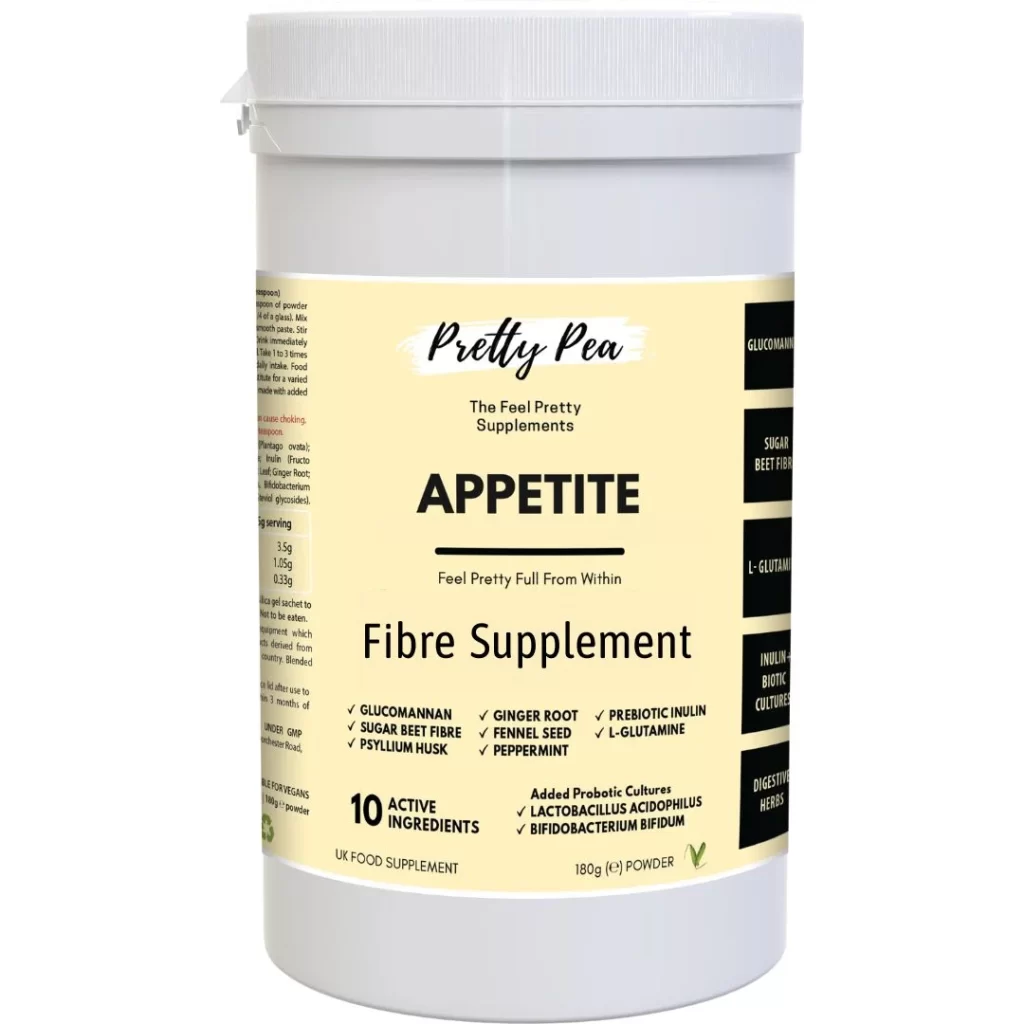
# FIBRE POWDER – FIBRE SUPPLEMENTS
*PRETTY REGULAR* FIBRE FULL Fibre Powder
**£21.99**
- Synbiotic Fibre Powder Supplement
- All in One Fibre Full Formula to love your body from the inside out
- Combines 4 Fibre Powders, including Soluble Fibre & Insoluble Fibres
- Psyllium Husk Powder & Glucomannan Fibre Powder
- Prebiotic Fibre Inulin *to ‘feed’ your gut microbiome*
- Sugar Beet Fibre Powder\* for Bowel Function
- Amino Acid L-Glutamine *gut health digestive building blocks*
- Biotic Cultures
- Plus Ginger, Peppermint & Fennel Seed Powder
[Add Fibre Powder to cart](https://prettypea.blog/cart/?add-to-cart=451)
**“Cuts out the snacking”**
Great product, curbs snacking between meals, being at home with a new baby I was grabbing handfuls of biscuits, since using Pretty Pea Appetite I no longer head for the biscuit tin. Been using for a week along with healthy meals and have lost 5lb so far. Admittedly it doesn’t look great but its so easy to drink and lasts well for the money. I would definitely recommend.
★ ★ ★ ★ ★
Alana W. Verified Purchase
**“Fills Me Up”**
Does help to suppress appetite. Taken half an hour before eating and it does help to fill me up so that I’m not so hungry
★ ★ ★ ★ ★
## Mrs Herring, Verified Purchase
**“Easy to drink”**
It does help to control your appetite and doesn’t have any flavour. Easy to drink. Thank youuuu.
★ ★ ★ ★ ★
Aurelija, Verified Purchase
**“Best I’ve Tried”**
I have tried a few products as natural appetite suppressant (fibre) and this is one of the best! Very good price also.
★ ★ ★ ★ ★
Milda, Verified Purchase
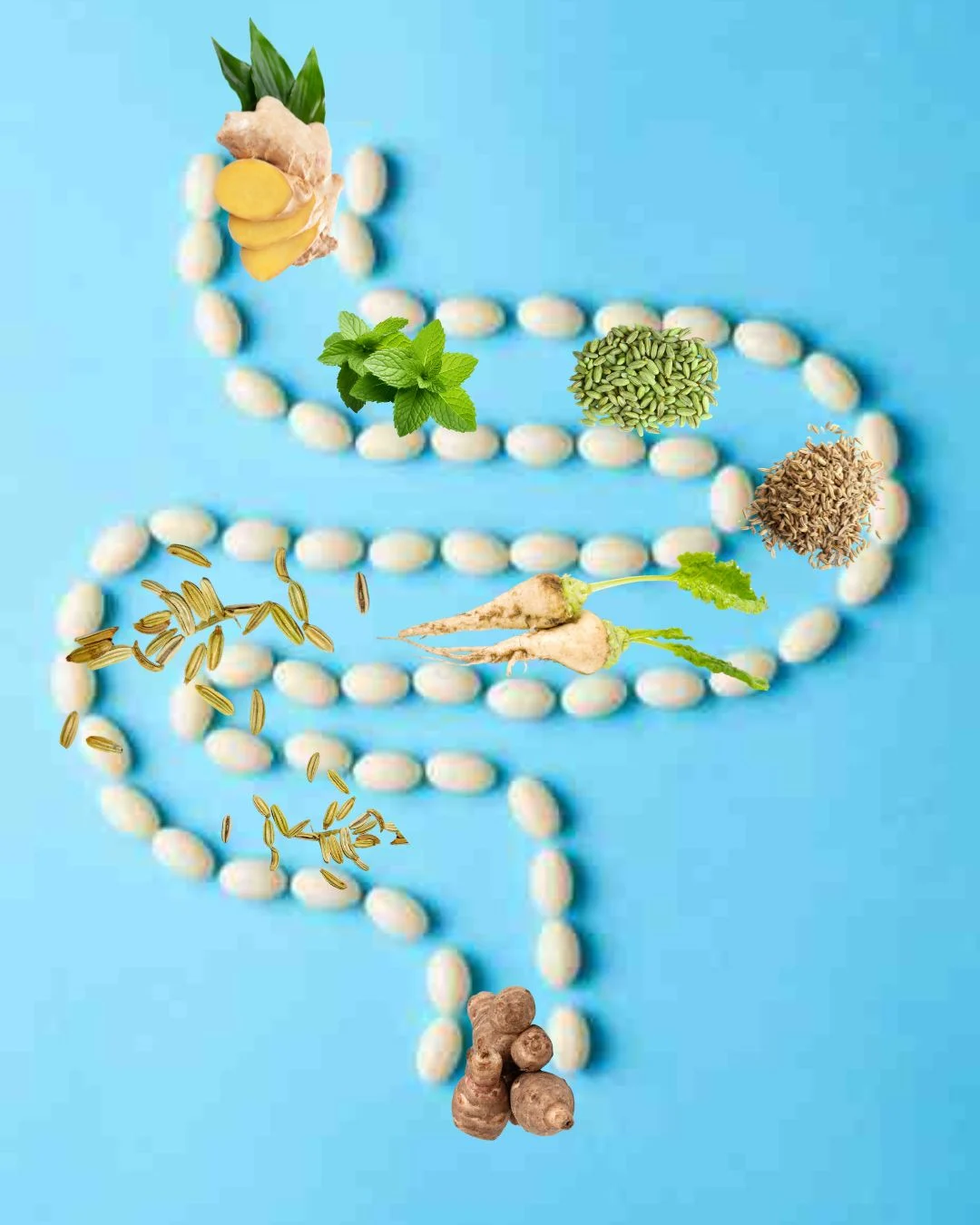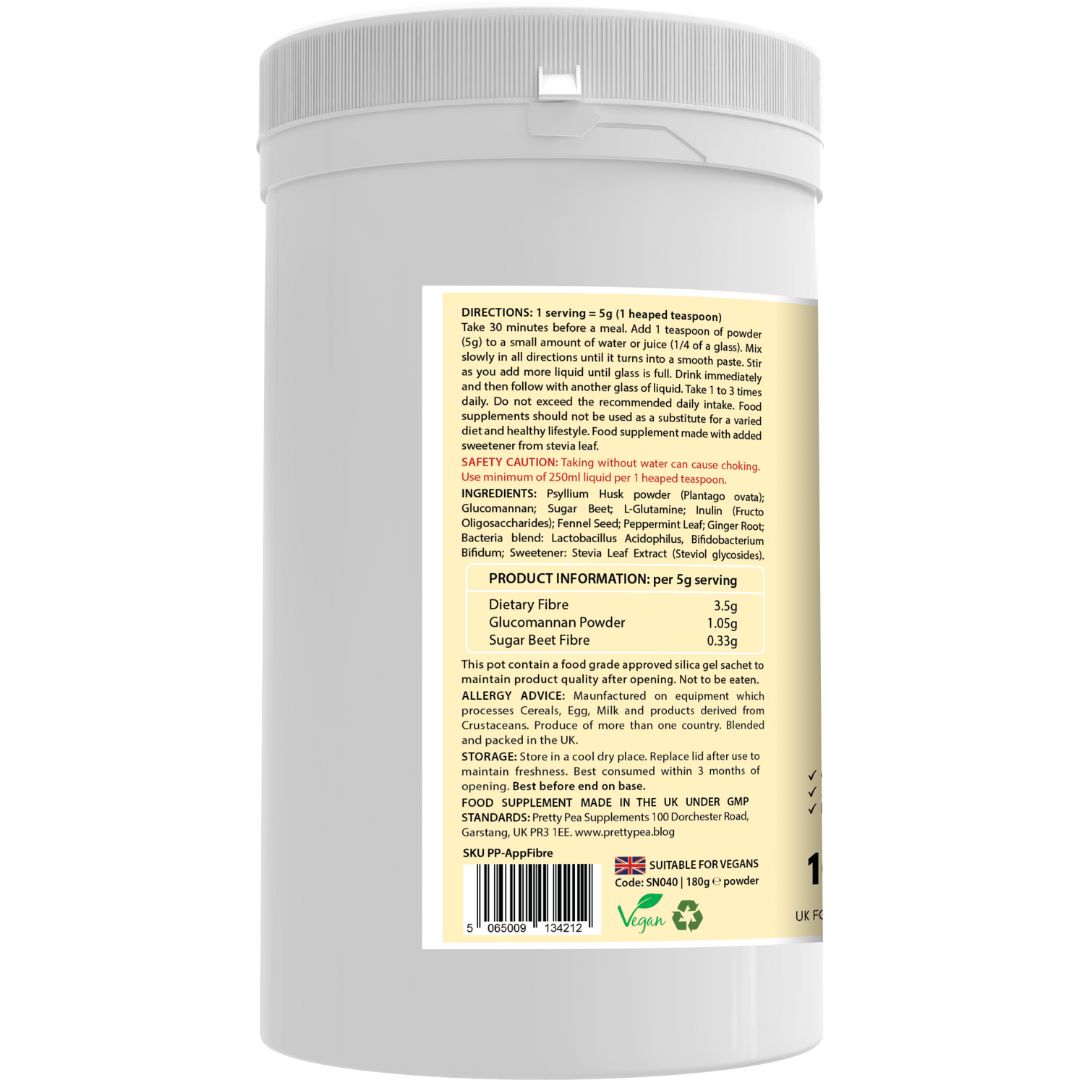
FEEL PRETTY FULL FROM WITHIN
## FIBRE POWDER
Looking & Feeling Good Really Does Start on the Inside!
### Fibre Full Formula
Fill up on Glucomannan & Psyllium Husk Powder. Take 15-60 Minutes Before Meals for Best Actions
### *Pretty* Regular Habits
Be Pretty Regular with Sugar Beet Fibre\*
### Pretty Balanced
Get the Benefits of Prebiotic Inulin Fibre and (pro)Biotic Cultures
### Digestive Harmony
Peppermint Leaf, Ginger Root & Fennel Seed
## Psyllium Husk Powder
Glucomannan
## Appetite Psyllium Husk
### Fibre Powder Benefits
### Fibre Powder Benefits
+
### DAILY NUTRITION
The recommended daily amount of fibre is 25-30g. With many only achieving half the RDA supplementing with fibre such as psyllium husk and glucomannan can help increase daily fibre intake.
Combining the nutritional goodness and benefits of 4 fibre types, and soluble, insoluble and prebiotic fibres, Appetite gives your body what it needs to look and feel *pretty good* from the inside out.
When our digestive system is moving regularly we just feel better, less bloated and sluggish as the accumulation of toxins that put a stress load on the body are excreted via our bodily waste.
Plus, the digestive system is home to around 70-80% of our **immune system** and ***happy hormones*** our formula really is here to support how you look and feel.
PSYLLIUM HUSK POWDER
**Psyllium Husk powder**, a water-soluble high fibre, that has long been used in Asia as a Bowel regulator. Psyllium husk seeds absorb water and expand to increase bulk and moisture content to stools to stimulate normal movements.
Studies have shown psyllium husk to provide nutritional benefits including capacity to reduce the glycaemic index, minimize risk of cardiovascular diseases, decrease cholesterol and constipation problems.
Psyllium husk is the only fibre recommended by the American Society of Gastroenterology for IBS.
Psyllium husk is also readily fermentable, thereby causes less abdominal bloating than some fibres may do in some people, making it a popular fibre supplement.
INULIN FIBRE
(1) **Prebiotic Inulin fibre**, Prebiotic fibres are non-digestible carbohydrates that promote the growth of beneficial bacteria in the gut.
(2) **Sugar Beet Fibre** contributes to normal **bowel function** and an **increase in faecal bulk** which can make for easier bowel movements.
SUGAR BEET FIBRE
Sugar Beet fibre is clinically proven to contribute to an increase in faecal bulk in 2 ways:
(1) The insoluble components of the fibre increase bulk by absorbing water in the large intestine
(2) the soluble components are fermented by bacteria to help keep your digestive tract moving as it should be.
### Glucomannan
+
GLUCOMANNAN
High in dietary fibre, **Glucomannan**\*\*\* is particularly effective for weight loss and weight management. It’s a natural water soluble fibre extracted from the Konjac plant and has an exceptional ability to absorb water up to 50 times its weight.
Glucomannan differs from most other soluble fibres, it is exceptionally viscous, making it particularly effective for weight loss. It works by absorbing water in your stomach and gently expanding taking up space.
With many supplements nowadays purporting to support weight loss you can be assured that Glucomannan is EFSA approved to support **weight loss**, when taken 3g daily, 1g x 3 daily before meals with water in the context of a calorie controlled diet.
For weight loss benefits glucomannan needs to be taken (approx 30 minutes) before meals.
Backed by science, studies show that at the correct dose Glucomannan can result in **significant weight loss** in overweight and obese individuals.
### L-Glutamine, Biotics & Herbals
\+
HERBALS
Our fibre blend also combines **Peppermint Leaf, Ginger Root** and **Fennel Seed**, herbals traditionally used to soothe the digestive system.
BIOTIC CULTURES
Plus with added **Biotic Cultures** and vegan Amino Acid (intestinal protein building block) L-Glutamine (typically found in meat sources).
L-GLUTAMINE
**L-Glutamine** is not only the most abundant amino acid for muscle tissue but it’s also pretty much one of the most important and abundant nutrients in your entire body as it heals the tissue in your body, and especially those irritated tissues in the digestive tract and gut lining.
### Free From Supplement
+
Under 10 calories per serving. With no artificial sweeteners, Fibre full blend is free from artificial nasties. Vegan and gluten free.
### How to use
+
APPETITE fibre powder formula comes in 180g pot and contains 36 servings.
Add 1 serving (a heaped teaspoon) to a small amount of water or juice (1/4 glass).
Mix slowly in all directions until its turns into a smooth *paste*. Continue to stir as more liquid is added until the glass is full or your desired consistency is achieved.
Consume immediately and follow with another large glass of water to ensure the the fibres reach the stomach quickly where it will naturally get to work.
For best weight results it’s recommended to take Glucomannan 3g daily (1g each x 3 daily before each meal) and in the context of a energy controlled diet.
To be taken with water approximately 15-60 minutes before each meal (3x daily) for best actions. *Individual times may vary person to person*.
### Safety
\+
It’s important to note that, as with all fibre, when increasing any dietary fibre intake, for those with a sensitive digestion or perhaps not used to much fibre on a regular basis then it can be advisable to start on a reduced dose, (approx half dose) for around 7 days and then increasing every 3-4 days as the body acclimatises to the increased fibre content.
Results may vary from person to person.
Store in a cool dry place, out of the reach of children.
Best before end: see base of container.
Caution: Do not exceed the recommended daily intake.
Not recommended to take alongside other products containing Glucomannan. (Meno Weight/Shape)
A food supplement should not be used as a substitute for a varied, balanced diet and healthy lifestyle. Always consult your GP before taking food supplements if you are taking medication or have an existing medical condition.
**GLUCOMANNAN SAFETY CONSIDERATIONS**
Glucomannan is considered safe and well tolerated.
WARNING**:** Appetite must be taken with 1-2 glasses of water to ensure it reaches the stomach before expanding.
This is especially important for people with swallowing difficulties when ingesting as it may cause choking or blockage of the throat.
For those who do not consume a lot of fibre on a regular basis or have a sensitive digestion it’s advisable to start on a half dose and build up gradually to enable the body to acclimatize to the increased fibre intake.
For those who may experience mild side effects, such as flatulence, bloating, soft stools or diarrhoea, these effects are usually transient as the body adapts and are typically uncommon.
As with all supplements, if you feel unwell whilst taking this supplement discontinue use immediately and seek medical advice.
### References – Fibre Powder
\+
Gut microbiota composition correlates with changes in body fat content due to weight loss – PubMed (nih.gov)
\[Plantago ovata\] – PubMed
The Prebiotic Potential of Inulin-Type Fructans: A Systematic Review – PubMed (nih.gov)
Scientific Opinion on the substantiation of a health claim related to sugar beet fibre and increasing faecal bulk pursuant to Article 13(5) of Regulation (EC) No 1924/2006 (wiley.com)
Psyllium: a useful functional ingredient in food systems – PubMed (nih.gov)
Peppermint oil for the treatment of irritable bowel syndrome: a systematic review and meta-analysis – PubMed (nih.gov)
Review article: probiotics and prebiotics in irritable bowel syndrome – PubMed (nih.gov)
Evaluation of mint efficacy regarding dysmenorrhea in comparison with mefenamic acid: A double blinded randomized crossover study – PubMed (nih.gov)
Dietary fibres in the regulation of appetite and food intake. Importance of viscosity. Appetite. 2011 Feb;56(1):65-70. doi: 10.1016/j.appet.2010.11.147. Epub 2010 Nov 27. PMID: 21115081.Beck EJ, Tapsell LC, Batterham MJ, pubmed.ncbi.nlm.nih.gov/21115081/
How to get more fibre into your diet – NHS (www.nhs.uk)
Scientific Opinion on the substantiation of a health claim related to sugar beet fibre and increasing faecal bulk pursuant to Article 13(5) of Regulation (EC) No 1924/2006 (wiley.com)
Effect of Fennel on the Health Status of Menopausal Women: A Systematic and Meta-analysis – PMC (nih.gov)
Gut microbiota, obesity and diabetes – PubMed (nih.gov)
A Descriptive Overview of the Medical Uses Given to Mentha Aromatic Herbs throughout History – PMC (nih.gov)
Peppermint oil in irritable bowel syndrome – PubMed (nih.gov)
Peppermint oil for the treatment of irritable bowel syndrome: a systematic review and meta-analysis – PubMed (nih.gov)
Evaluation of mint efficacy regarding dysmenorrhea in comparison with mefenamic acid: A double blinded randomized crossover study – PubMed (nih.gov)
Food supplements and diet as treatment options in irritable bowel syndrome – PubMed (nih.gov)
Glucomannan and obesity: a critical review – PubMed (nih.gov)
The Wonderful Activities of the Genus Mentha: Not Only Antioxidant Properties – PMC (nih.gov)
Ginger on Human Health: A Comprehensive Systematic Review of 109 Randomized Controlled Trials – PMC (nih.gov)
Dietary fiber and weight regulation. Nutr Rev. 2001 May;59(5):129-39. doi: 10.1111/j.1753-4887.2001.tb07001.x. PMID: 11396693.[](https://www.nhs.uk/live-well/eat-well/digestive-health/how-to-get-more-fibre-into-your-diet/)
Experiences with three different fiber supplements in weight reduction. Med Sci Monit. 2005 Jan;11(1):PI5-8. PMID: 15614200.
Probiotic supplements and bone health in postmenopausal women: a meta-analysis of randomised controlled trials | BMJ Open
Fennel (Foeniculum vulgare) and Fenugreek (Trigonella foenum-graecum) Tea Drinking Suppresses Subjective Short-term Appetite in Overweight Women – PMC (nih.gov)
Foeniculum vulgare: A comprehensive review of its traditional use, phytochemistry, pharmacology, and safety – ScienceDirect
Ginger on Human Health: A Comprehensive Systematic Review of 109 Randomized Controlled Trials – PMC (nih.gov)
The Amazing and Mighty Ginger – Herbal Medicine – NCBI Bookshelf (nih.gov)
Gut microbiota, obesity and diabetes – PubMed (nih.gov)
Scientific Opinion on the substantiation of a health claim related to sugar beet fibre and increasing faecal bulk pursuant to Article 13(5) of Regulation (EC) No 1924/2006 (wiley.com)
Effect of glucomannan on plasma lipid and glucose concentrations, body weight, and blood pressure: systematic review and meta-analysis. Am J Clin Nutr. 2008 Oct;88(4):1167-75. doi: 10.1093/ajcn/88.4.1167. PMID: 18842808.
Effect of glucomannan on obese patients: a clinical study. Int J Obes. 1984;8(4):289-93. PMID: 6096282
EFSA Panel on Dietetic Products, Nutrition and Allergies (NDA); Scientific Opinion on the substantiation of a health claim related to sugar beet fibre and increasing faecal bulk pursuant to Article 13(5) of Regulation (EC) No 1924/2006. *EFSA Journal* 2011; 9(12):2468. \[8 pp.\]. doi:10.2903/j.efsa.2011.2468.
The Prebiotic Potential of Inulin-Type Fructans: A Systematic Review. Adv Nutr. 2022 Mar;13(2):492-529. doi: 10.1093/advances/nmab119. Epub 2023 Feb 10. PMID: 34555168; PMCID: PMC8970830.
Prebiotic fiber modulation of the gut microbiota improves risk factors for obesity and the metabolic syndrome – PubMed (nih.gov)
Food & mood: a review of supplementary prebiotic and probiotic interventions in the treatment of anxiety and depression in adults – PMC (nih.gov)
Review article: prebiotics in the gastrointestinal tract. Aliment Pharmacol Ther. 2006 Sep 1;24(5):701-14. doi: 10.1111/j.1365-2036.2006.03042.x. PMID: 16918875.
Psyllium: a useful functional ingredient in food systems. Crit Rev Food Sci Nutr. 2022;62(2):527-538. doi: 10.1080/10408398.2020.1822276. Epub 2020 Sep 21. PMID: 32951436.
Glutamine and intestinal barrier function. Amino Acids. 2015 Oct;47(10):2143-54. doi: 10.1007/s00726-014-1773-4. Epub 2014 Jun 26. PMID: 24965526.
Glutamine: an essential amino acid for the gut. Nutrition. 1996 Nov-Dec;12(11-12 Suppl):S78-81. doi: 10.1016/s0899-9007(97)85206-9. PMID: 8974125.
Glutamine supplementation favors weight loss in nondieting obese female patients. A pilot study. Eur J Clin Nutr. 2014 Nov;68(11):1264-6. doi: 10.1038/ejcn.2014.184. Epub 2014 Sep 17. PMID: 25226827.
The Role of Glutamine in the Complex Interaction between Gut Microbiota and Health: A Narrative Review. Int J Mol Sci. 2019 Oct 22;20(20):5232. doi: 10.3390/ijms20205232. PMID: 31652531; PMCID: PMC6834172.
The Gut Microbiome and Its Role in Obesity. Nutr Today. 2016 Jul-Aug;51(4):167-174. doi: 10.1097/NT.0000000000000167. PMID: 27795585; PMCID: PMC5082693.
Gut microbiota composition correlates with changes in body fat content due to weight loss – PubMed (nih.gov)
Combined Red Clover isoflavones and probiotics potently reduce menopausal vasomotor symptoms | PLOS ONE
Probiotic supplements and bone health in postmenopausal women: a meta-analysis of randomised controlled trials
Food supplements and diet as treatment options in irritable bowel syndrome – PubMed (nih.gov)
A Novel Delivery System of Peppermint Oil Is an Effective Therapy for Irritable Bowel Syndrome Symptoms. Dig Dis Sci. 2016 Feb;61(2):560-71. doi: 10.1007/s10620-015-3858-7. Epub 2015 Aug 29. PMID: 26319955; PMCID: PMC4729798. Food supplements and diet as treatment options in irritable bowel syndrome. Neurogastroenterol Motil. 2020 Aug;32(8):e13951. doi: 10.1111/nmo.13951. PMID: 32697018.
Peppermint oil for the treatment of irritable bowel syndrome: a systematic review and meta-analysis. J Clin Gastroenterol. 2014 Jul;48(6):505-12. doi: 10.1097/MCG.0b013e3182a88357. PMID: 24100754.
Fennel (Foeniculum vulgare) and Fenugreek (Trigonella foenum-graecum) Tea Drinking Suppresses Subjective Short-term Appetite in Overweight Women – PubMed (nih.gov)
Effect of Fennel on the Health Status of Menopausal Women: A Systematic and Meta-analysis – PubMed (nih.gov)
The Amazing and Mighty Ginger. In: Benzie IFF, Wachtel-Galor S, editors. Herbal Medicine: Biomolecular and Clinical Aspects. 2nd edition. Boca Raton (FL): CRC Press/Taylor & Francis; 2011. Chapter 7. Available from: https://www.ncbi.nlm.nih.gov/books/NBK92775/
Ford AC, Moayyedi P, Chey WD, et al. American College of Gastroenterology monograph on management of irritable bowel syndrome. Am J Gastroenterol 2018; 113 (Suppl 2): 1-18.
## You Might Also Like….Psyllium Husk in our Fibre Capsules
## Save 20% on Orders Over £50
## Save 20% on Orders Over £50
## Psyllium Husk
## Save 20% on Orders Over £50
## [Fibre Powder](https://prettypea.blog/fibre-powder/)
---
### [D-Mannose + Cranberry Capsules For Women | FEM URELA](https://prettypea.blog/d-mannose-cranberry-capsules-for-women/)
**Published:** October 5, 2026
**Author:** Cate Boyd
**Content:**
Search
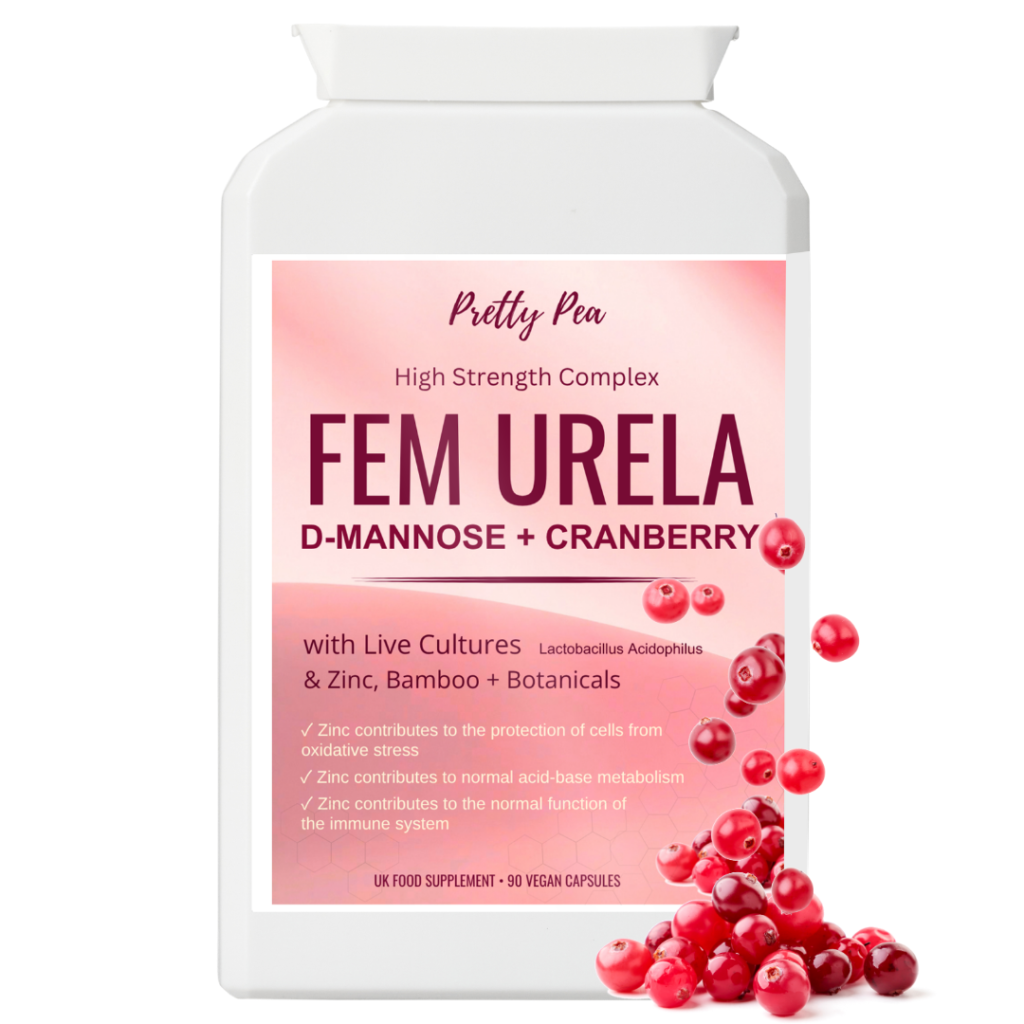
## D-Mannose + Cranberry Capsules for Women | FEM URELA
More than D-Mannose and Cranberry. FEM URELA+ is a combined women’s health formula with 900 mg D-Mannose, Cranberry extract equivalent to 2,160 mg cranberry, 2 billion CFU Lactobacillus acidophilus, Zinc and selected studied botanical extracts per 2-capsule serving.
Zinc contributes to normal **Fertility + Reproduction**
Zinc contributes to normal **Acid-Base Metabolism**
Zinc contributes to normal function of the **Immune system**
Zinc contributes to maintenance of normal **Hair, Skin and Nails**
Zinc contributes to the **Protection of Cells from Oxidative Stress**
Studied Botanicals include: Oregano Leaf, Bamboo + Ceylon Cinnamon
**£19.99**
[Add D-Mannose + Cranberry to Cart](https://prettypea.blog/cart/?add-to-cart=12878)
## Save 20% on Orders Over £50
## Save 20% on Orders Over £50
## Save 20% on Orders Over £50
## Save 20% on Orders Over £50
FeelING PRETTY good starts WITHIN
## D-Mannose + Cranberry Capsules for Women
### 2 Billion CFU
Live cultures Lactobacillus acidophilus (probiotics)
### Immune Function
Zinc contributes to normal function of the immune system
### Fertility & Reproduction
Zinc contributes to normal fertility + reproduction
### Acid-Base Metabolism
Zinc contributes to normal acid-base metabolism
## What to Know about FEM URELA D-Mannose + Cranberry
## What to Know
- **What is D-Mannose?**
- D-Mannose is a naturally occurring simple sugar, or monosaccharide, related to glucose. It occurs naturally in small amounts in some fruits and plants and is also used as an ingredient in food supplements.
- FEM URELA+ provides **900 mg D-Mannose per 2-capsule serving**, together with cranberry extract, Lactobacillus acidophilus, (*commonly known as probiotics*), zinc and selected botanicals studied for women’s health.
- **What is cranberry extract?**
- Cranberry (*Vaccinium macrocarpon*) is a red berry containing naturally occurring plant compounds including polyphenols and proanthocyanidins.
- Cranberry has a long history as a food and drink in North America and is now widely used in juices, powders, extracts and food supplements.
- FEM URELA+ uses a **concentrated cranberry extract equivalent to 2,160 mg cranberry per 2-capsule serving**.
- Using an extract allows cranberry to be provided in a convenient capsule format without the need to regularly drink large quantities of cranberry juice or sweetened cranberry drinks.
## Why Women Use This Supplement
D-Mannose and cranberry have become widely recognised ingredients in women’s wellness supplements. Many women choose capsule supplements because they provide:
concentrated cranberry without relying on sweetened cranberry juice
a convenient daily format with clearly stated ingredient amounts
combined D-Mannose and cranberry with other ingredients in one high-strength formula
## Who This Is For
FEM URELA+ is designed for women looking for a **combined D-Mannose and cranberry supplement** rather than a single-ingredient formula.
It may particularly appeal to women who want:
- High strength D-Mannose and concentrated cranberry extract in one convenient capsule formula
- live cultures (commonly known as probiotics) from **Lactobacillus acidophilus**
- zinc with authorised benefits for **normal fertility and reproduction, acid-base metabolism, immune function, hair, skin, nails** and **bones**
- selected botanicals including bamboo (providing silica), Ceylon cinnamon and oregano, clinically studied in women’s health
- a convenient alternative to regularly drinking sweetened cranberry juice
- a vegan, gluten-free supplement made in the UK
[Add to Cart](https://prettypea.blog/cart/?add-to-cart=12878)
**Product Highlights**
Women’s Wellness Formula
EFSA validated ingredients
Optimally dosed formula
UK manufactured to assured GMP standards
90 easy take vegan capsules
No artificial nonsense
Money back guarantee
## Save 20% on Orders Over £50
## Save 20% on Orders Over £50
## Save 20% on Orders Over £50
## Save 20% on Orders Over £50
## [D-Mannose + Cranberry Capsules For Women | FEM URELA](https://prettypea.blog/d-mannose-cranberry-capsules-for-women/)
## You might also like..
How to Use D-Mannose + Cranberry Capsules for Women? Take 2 capsules, 2-3 times per day or as advised. Take with water or unsweetened cranberry juice.
Do not exceed the recommended daily amount.
What are the ingredients in D-Mannose + Cranberry Capsules for Women?D-Mannose, Cranberry extract, Zinc, Oregano Leaf, Bamboo, Ceylon Cinnamon, Lactobacillus acidophilus
Are the supplements vegan and free from artificial ingredients?Yes, contains 90 Vegan easy take capsules with no artificial nasties.
Safety Food supplements should not be used as a substitute for a varied, balanced diet and healthy lifestyle. If you are pregnant, breastfeeding or if you are taking medication or taking any medication under supervision consult a GP before use.
Store in a cool dry place out of reach of children. Best before date: See base of container.
UK ManufacturedPretty Pea supplements are UK manufactured to the highest GMP quality standards.
## You might also be interested in..
[**The Menopause Diet 5 Day Plan to Lose Weight**](https://prettypea.blog/the-menopause-diet-5-day-plan-to-lose-weight/)
[**Why Fibre Could Be the Secret to a Better Menopause**](https://prettypea.blog/why-fibre-could-be-the-secret-to-a-better-menopause/)
[**Best Menopause Supplements UK (2026): What to Look For + Evidence-Based Comparison Guide**](https://prettypea.blog/best-menopause-supplements-uk-2026-what-to-look-for-evidence-based-comparison-guide/)
[9 Benefits of Fibre: Why It’s Essential for Gut Health, Weight and Wellbeing](https://prettypea.blog/9-benefits-of-fibre-why-its-essential-for-gut-health-weight-and-wellbeing/)
[Appetite Regulation: How Fibre vs GLP-1 Compare](https://prettypea.blog/appetite-regulation-how-fibre-vs-glp-1-compare/)
[Glucomannan for Weight Loss: Does It Work and How Does It Compare to Medications?](https://prettypea.blog/glucomannan-weight-loss/)
[What is the Highest Fibre Food](https://prettypea.blog/what-is-the-highest-fibre-food/)
[The Ultimate Guide to Fibre Supplements for a Happier Gut: Unlocking Your Digestive Health](https://prettypea.blog/the-ultimate-guide-to-fibre-supplements-for-a-happier-gut-unlocking-your-digestive-health/)
[10 Green Tea Benefits: The Ultimate Science-Backed Guide](https://prettypea.blog/10-green-tea-benefits-the-ultimate-science-backed-guide/)
[The Ultimate Superfood List: What are Superfoods, Benefits, Best Choices, and How to Use](https://prettypea.blog/the-ultimate-superfood-list-what-are-superfoods-benefits-best-choices-and-how-to-use/)
[](https://prettypea.blog/the-menopause-diet-5-day-plan-to-lose-weight/)
---
### [Menopause Supplement UK – Women’s Nutrition Support with Vitamins, Minerals & Fibre](https://prettypea.blog/menopause-supplement-womens-nutrition-support/)
**Published:** April 9, 2024
**Author:** Cate Boyd
**Content:**
Search
[](https://prettypea.blog/)
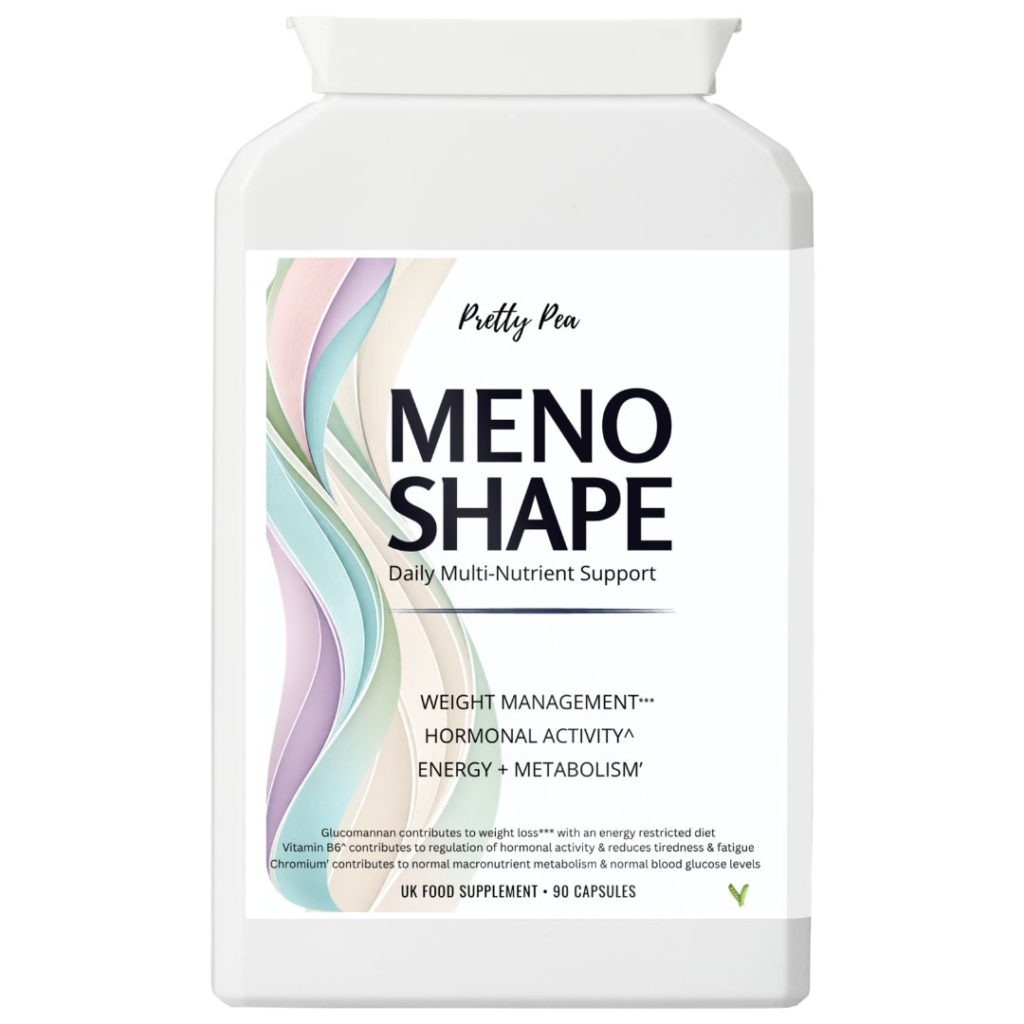
## Menopause Supplement UK | Women’s Nutrition Support with Vitamins, Minerals & Fibre
Daily menopause nutrition support supplement for women, combining vitamins, minerals and dietary fibre to support overall nutritional intake as part of a balanced lifestyle.
Glucomannan\* supports normal Digestion and **Feelings of Fullness**
Key Hormone support with 714% **Vitamin B6** contributes to normal **Hormone Regulation** and **Reduces Tiredness & Fatigue**
Chromium contributes to normal **Blood Sugar Levels** and normal **Macronutrient metabolism**
Choline contributes to normal **Lipid (fat) metabolism**
Iodine contributes to normal **Energy-yielding** **metabolism** & normal **Thyroid function**
Botanicals include: Glucomannan fibre, Green Tea, Siberian Ginseng, Cayenne Pepper, Caffeine, Raspberry Fruit & more
**£25.00**
[Add MENO to Cart](https://prettypea.blog/cart/?add-to-cart=418)
**“It really works”**
“I have been taking these menopause supplements for 9 months now. After 6 months, along with a healthy diet I lost a stone and a half. I only took 2 tablets in the morning and at teatime. I feel less bloated, sleeping better and I’ve got way more energy. I would recommend for sure”
★ ★ ★ ★ ★
— Laura W. Verified Buyer
**“Great product that really works”**
“Absolutely love these menopause supplements!! It’s transformed me during a difficult stage for most women. No HRT needed. I can’t go a day without it now. It does exactly as it says. It has kept my meno weight down and lost more.. no bloating, plus my energy levels, mood and sleep are so much better. Definitely recommend!
— Sarah D. Verified Buyer
★ ★ ★ ★ ★
**“Taken the edge off””**
“After a pointless visit to the GP where they didn’t help me I decided to take matters into my own hands and discovered Pretty Pea – it’s definitely taken the edge off for me – give it a try”
★ ★ ★ ★ ★
— Rebecca. Verified Buyer
## Key Nutrients in This Formula
Supporting your body through midlife starts with consistent nutrition. As nutritional needs change during menopause, it becomes important to ensure you are getting adequate vitamins, minerals and fibre through diet and supplementation where needed.
This daily formula is designed to support overall nutritional intake as part of a balanced lifestyle:
## Key Ingredients Include
- **Vitamin B6** play an important role in the regulation of **hormonal activity** and **reducing tiredness** and fatigue.
- Minerals such as **iodine, chromium,** **zinc** and **choline** support your body in a number of ways including: supporting normal **energy metabolism**, normal **lipid metabolism**, normal **blood sugar balance**, maintenance of normal **bones**, the maintenance of normal **hair**, **nails** and **skin**, the maintenance of normal **vision**, the normal function of the **immune** system
- Soluble **dietary fibres glucomannan** supports normal **digestive function** and helps support dietary balance and **feelings of fullness**.
- **Botanicals** used in women’s wellness include Siberian Ginseng, Raspberry and Orange Fruit and Green Tea
## Why Women Use This Supplement
Many women choose to include a menopause nutrition supplement to help:
Maintain dietary and weight consistency during midlife
Support daily nutrient intake
Complement a balanced diet
## Who This Is For
This supplement is designed for:
- women seeking combined hormonal regulation and weight management support
- women experiencing early perimenopause through to menopause and beyond
- those looking to support nutritional intake
- those wanting added dietary fibre support
## How to Use
Take daily as part of your normal nutrition routine. Best used alongside a balanced diet and healthy lifestyle (see below)
Learn more about:
Menopause Nutrition → [**The Menopause Diet 5 Day Plan to Lose Weight**](https://prettypea.blog/the-menopause-diet-5-day-plan-to-lose-weight/)
Fibre during menopause → [**Why Fibre Could Be the Secret to a Better Menopause**](https://prettypea.blog/why-fibre-could-be-the-secret-to-a-better-menopause/)
Best menopause supplements UK → [**Best Menopause Supplements UK (2026): What to Look For + Evidence-Based Comparison Guide**](https://prettypea.blog/best-menopause-supplements-uk-2026-what-to-look-for-evidence-based-comparison-guide/)
Absolutely love this menopause supplement. I’m on my 3rd box and wouldn’t be without them. My bloating has totally gone, my belly is so much flatter and I just feel so much better. I highly recommend
“Definitely helped with bloating and giving me my curves back. My friends noticed a change after 1 month, so I’ve ordered again and very happy with the results. Thankyou for making a product that actually works and gives your confidence back!”
**Verified Buyers** – *Customer experiences vary. This product is designed to support nutritional intake as part of a balanced diet.*
★ ★ ★ ★ ★
**“Great Supplement”**
I usually don’t take the time to review the items I buy but I feel this extraordinary supplement deserves a great review. I just ordered my 2nd box as I fell much less bloated since I’ve integrated these tablets into my diet. I’m in early perimenopause but I have stopped those night hot flashes thanks to this product. Highly recommend even if a bit pricey!
★ ★ ★ ★ ★
Paola. Verified Buyer
“**Would definitely recommend”**
Very good product. From first month of taking the capsules I wasn’t bloated any more and I didn’t fee; the hunger. I was able NOT to eat after 4-5pm Love them!!!
★ ★ ★ ★ ★
B. Verified Buyer
“**It works, be patient, each body has its own time”**
I can give more than 5 stars, they took away the fatigue I had, I suffered a lot because of it. I am less bloated. Great supplement. I definitely recommend it. Thanks
★ ★ ★ ★ ★
Vanilda. Verified Buyer
**Product Highlights**
Wellness for women premenopause, perimenopause & menopause
EFSA validated ingredients
Optimally dosed formula
UK manufactured to highest GMP standards
90 easy take vegan capsules
No artificial nonsense
Money back guarantee
**“Energy has returned & water retention gone!”**
Feeling much more alert and energetic. Is helping with weight alongside healthy eating and exercise.
★ ★ ★ ★ ★
Fiona.
Meno
**“Helps with Bloating & Flushes”**
Used these for 3 months, noticed a difference with bloating with in a couple of weeks. Stopped using for a month and the bloating started to come back!
Hot flushes are fewer. Sleep is better.
Now have them on a subscription so I never run out!
Worth every penny !
★ ★ ★ ★ ★
Rachel H.
Meno
**“Extremely Happy”**
My daughter gave me some of these to try. I was so impressed with them I ordered some myself. They most definitely kerb my appetite but what I’m more impressed with, is they have given me the energy I have been lacking for so long. I’m extremely happy with the results
★ ★ ★ ★ ★
Debra S.
Meno
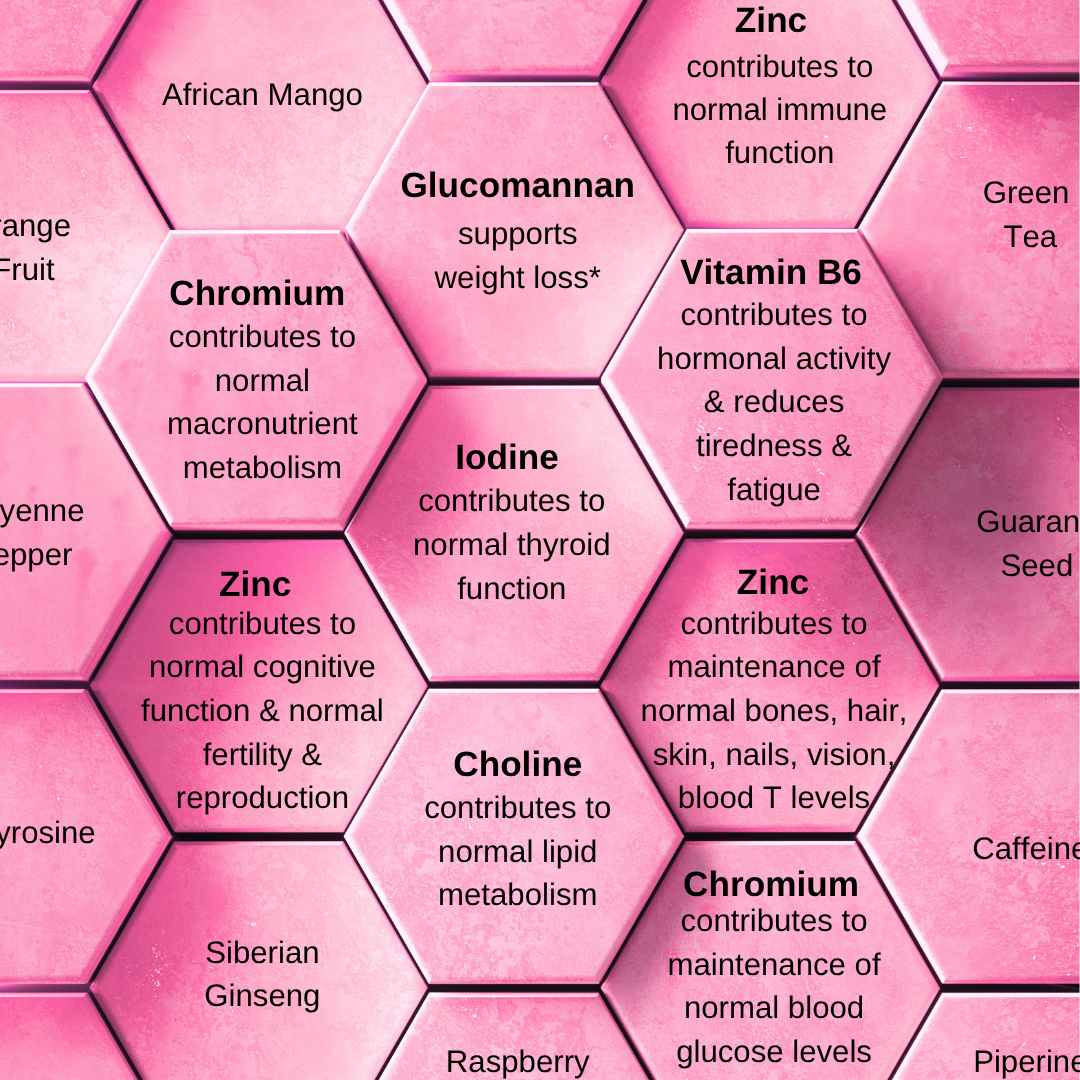
## [Menopause Supplement UK – Women’s Nutrition Support with Vitamins, Minerals & Fibre](https://prettypea.blog/menopause-supplement-womens-nutrition-support/)
FeelING PRETTY good starts on the inside
## Perimenopause & Menopause Support Supplement

BEST BUY EVER ★★★★★
Absolutely love this product!! I can’t go a day without it now. It does exactly as it says.. it has kept my meno weight down and lost more.. plus my energy levels and sleep are so much better.. no bloating. It helps balance my mood also. Definitely recommend. 5 stars plus! I have been using now for a long time and wouldn’t use anything else! Best buy ever!
Sarah D.
### Meno Shaping From Within
Feelings of Fullness
### Take 30 mins before meals
Take 30 Minutes Before Meals
### Hormone Harmony
Vitamin B6 contributes to the regulation of Hormone Activity
### Daily Nutrition
Increased Daily Fibre & Nutrient Intake
###
Frequently Asked Questions
What is a menopause supplement?
A menopause supplement is designed to support women’s nutritional needs during menopause. It typically contains vitamins, minerals, and botanical ingredients to complement a balanced diet and healthy lifestyle.
### What nutrients are important during menopause?
Nutrients such as vitamins, minerals, and dietary fibre are often included in menopause supplements to support general wellbeing and nutritional intake during this stage of life.
### Does this supplement contain fibre?
Yes, this formula includes glucomannan, a naturally sourced soluble dietary fibre. Fibre contributes to normal digestive function as part of a balanced diet.
### How should I take this supplement?
Take daily as directed on the label, ideally with food and water. Always follow the recommended intake guidelines provided on the packaging.
### Who is this supplement suitable for?
This supplement is designed for women looking to support their nutritional intake during early perimenopause through to post menopause as part of a balanced diet and active lifestyle.
### Can this be taken alongside a healthy diet?
Yes, this supplement is intended to complement a varied and balanced diet, not replace it.
## You might also like..

FANTASTIC PRODUCT ★★★★★
Finally I feel like me again. No mood swings , no tears, no hot flushes. I can’t tell how much I feel they have made me feel normal again.
Lisa JK
## Save 20% on Orders Over £50
## Save 20% on Orders Over £50
## Save 20% on Orders Over £50
## Save 20% on Orders Over £50




**“Highly Recommend”**
I would highly recommend pretty pea menoweight 😊
I told some of my friends and family about it and they now take it
I take 2 per day and it works for me!
★ ★ ★ ★ ★
Roseanne P.
**“They work for me”**
I am on day 5 and already see a big difference. My bloating is gone, I feel lighter and I have lost my appetite, which is great as I used to snack constantly. At the same time my energy level is high, so win win. A bit pricey but will order another box, as so far they are worth it.
★ ★ ★ ★ ★
Monika
**“Positive Changes”**
After one month of using these tablets I noticed positive changes, especially my stomach and gut
★ ★ ★ ★ ★
Anon. Verified Buyer
How to Use Menopause Dietary Supplement Support? Take 2 capsules with a large glass of water approximately 30-60 minutes before each meal. For best results take 3x daily before each mealtime.
For those who do not currently consume much fibre on a daily basis, or those with a sensitive digestion, it’s advisable to start on a reduced dose and build up gradually every 3-4 days to allow the body to acclimatize to the fibre content.
Do not exceed the recommended daily amount.
What are the ingredients in Menopause Dietary Supplement Support?Glucomannan powder, Raspberry Fruit extract, Caffeine, Citrus Fruit, L-Tyrosine, Green Tea leaf extract, Zinc, Choline, African Mango Seed extract, Siberian Ginseng extract, Vitamin B6, Guaran Seed extract, Cayenne Pepper extract, Kelp extract, Black Pepper extract, Chromium Picolinate
Are they vegan and free from artificial ingredients?Yes, contains 90 Vegan easy take capsules with no artificial nasties.
Safety Results may vary from person to person. A food supplement should not be used as a substitute for a varied, balanced diet and healthy lifestyle. Always consult your GP before taking food supplements if you are taking medication or have an existing medical condition. As with all supplements, if you feel unwell, stop taking immediately and seek medical advice.
**Warning**: There is a risk of choking for people with swallowing difficulties and when ingested with inadequate fluid intake. Plenty of water should be consumed with these capsules to ensure they reach the stomach.
Not recommended to take alongside other products containing glucomannan.
**Contains caffeine**. Contains 50mg caffeine per 2 capsule serving. High intakes of caffeine may cause insomnia and anxiety. Not recommended for children or pregnant women.
(For comparison purposes the average cup of coffee contains in the region of 95mg)
Store in a cool dry place out of reach of children. Best before date: See base of container.
UK ManufacturedPretty Pea supplements are UK manufactured to the highest GMP quality standards.
## You might also be interested in..
[9 Benefits of Fibre: Why It’s Essential for Gut Health, Weight and Wellbeing](https://prettypea.blog/9-benefits-of-fibre-why-its-essential-for-gut-health-weight-and-wellbeing/)
[Appetite Regulation: How Fibre vs GLP-1 Compare](https://prettypea.blog/appetite-regulation-how-fibre-vs-glp-1-compare/)
[Glucomannan for Weight Loss: Does It Work and How Does It Compare to Medications?](https://prettypea.blog/glucomannan-weight-loss/)
[What is the Highest Fibre Food](https://prettypea.blog/what-is-the-highest-fibre-food/)
[The Ultimate Guide to Fibre Supplements for a Happier Gut: Unlocking Your Digestive Health](https://prettypea.blog/the-ultimate-guide-to-fibre-supplements-for-a-happier-gut-unlocking-your-digestive-health/)
[10 Green Tea Benefits: The Ultimate Science-Backed Guide](https://prettypea.blog/10-green-tea-benefits-the-ultimate-science-backed-guide/)
[The Ultimate Superfood List: What are Superfoods, Benefits, Best Choices, and How to Use](https://prettypea.blog/the-ultimate-superfood-list-what-are-superfoods-benefits-best-choices-and-how-to-use/)
[](https://prettypea.blog/the-menopause-diet-5-day-plan-to-lose-weight/)
References – Menopause Supplements & Nutrition Support During Menopause
Scientific Opinion on the substantiation of health claims related to konjac mannan (glucomannan) and reduction of body weight (ID 854, 1556, 3725), reduction of post‐prandial glycaemic responses (ID 1559), maintenance of normal blood glucose concentrations (ID 835, 3724), maintenance of normal (fasting) blood concentrations of triglycerides (ID 3217), maintenance of normal blood cholesterol concentrations (ID 3100, 3217), maintenance of normal bowel function (ID 834, 1557, 3901) and decreasing potentially pathogenic gastro‐intestinal microorganisms (ID 1558) pursuant to Article 13(1) of Regulation (EC) No 1924/2006 – – 2010 – EFSA Journal – Wiley Online Library
Choline related health claims | EFSA
Zinc related health claims | EFSA
Zinc related health claims | EFSA
Iodine related health claims | EFSA
Iodine related health claims | EFSA
Chromium related health claims | EFSA
Health claims already evaluated | EFSA
Vitamin B6 related health claims | EFSA
Vitamin B6 related health claims | EFSA
---
### [Sea + Earth Organic Iodine Supplement](https://prettypea.blog/sea-earth-iodine-supplement/)
**Published:** April 28, 2025
**Author:** Cate Boyd
**Content:**
Free Delivery on ALL orders.
Don’t miss saving 20% on Orders Over £50 use code: BULKSAVE
Search
[](https://prettypea.blog/)
## Free Delivery
## Save 20% on Orders Over £50
## Save 20% on Orders Over £50
## Sea + Earth Iodine | Organic Seaweed + Super Greens
ORGANIC SEAWEED + SUPER GREENS
**£25.99**
Iodine Rich Organic Seaweed Supplement plus 6 of the most Nutrient Dense Foods on the Planet *to contribute to normal:*
Skin Maintainance
Cognitive Function
Nervous System
Energy-yielding Metabolism
Thyroid Hormones
Organic Sea Nutrients Spirulina, Chlorella & Seaweeds
Organic Earth Nutrients Green Tea, Cayenne & Alfalfa
Liver-Loving Organic Artichoke
[Add to cart](https://prettypea.blog/stage/cart/?add-to-cart=386)
I have been taking these for over 2 years now and notice a real difference when I go without. It really helped me with my bloating, especially in a sedentary office job. I feel like I digest food better and my metabolism has recovered. Love these and I recommend them to my friends and family
**Katy H**
/
28th July 2024
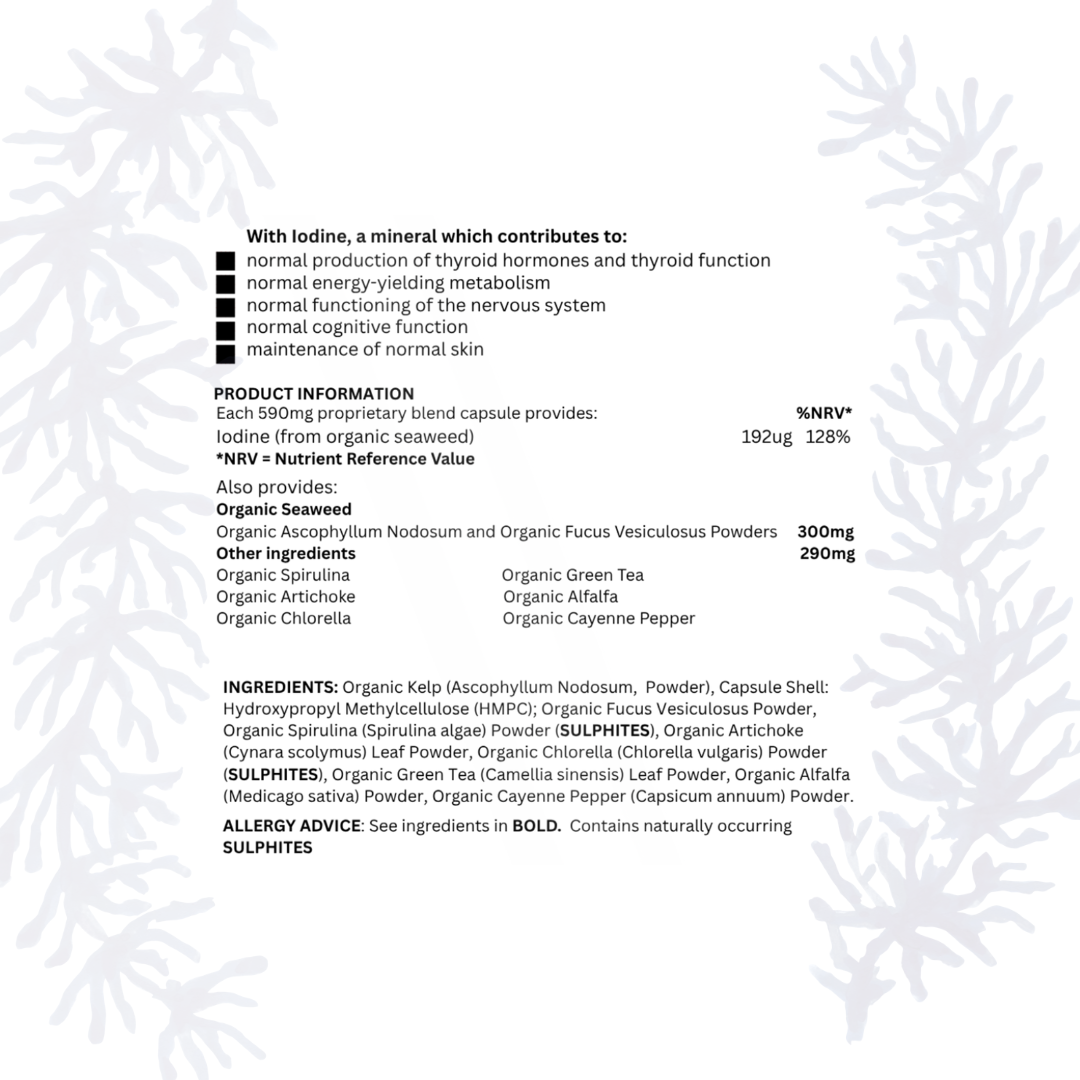
### Thyroid Metabolism
Contributes to normal production of Thyroid Hormones & Thyroid Function
### Cognitive Function
Contributes to normal Cognitive Function
### Pretty Skin From Within
Contributes to the maintenance of normal Skin
### Sea & Soil Nutrients
Green Tea, Cayenne, Spirulina, Chlorella, Alfalfa & Artichoke
## Free Delivery
## Save 20% on Orders Over £50
## Save 20% on Orders Over £50
## Iodine Supplement + SuperGreens Benefits
### Benefits
+
Sea+Earth Elixir combines some of the most nutrient-dense organic ingredients on the planet. Nutrients from the earth’s soils and planets’ seas that powerfully support the body.
These supercharged organic seaweed tablets combine Spirulina, Chlorella, Green Tea, Alfalfa, Cayenne and Artichoke to provide nourishment and metabolic support.
Sea +Earth Elixir is packed full of iodine rich organic seaweeds to support the production of thyroid hormone and maintain your metabolism.
This seaweed supplement is also high in a broad spectrum of protective nutrients, including antioxidants, phyto-chemicals, polyphenols, enzymes, amino acids, vitamins and minerals.
### How many servings
+
Contains 100 Organic Easy Take Vegan Capsules.
### How to use
+
Take 1 capsule, 1 to 3 times per day or as advised by your healthcare provider
### Safety & Contraindications
Results may vary from person to person.
Store in a cool dry place, out of the reach of children.
Best before date: see base of container.
Caution: Do not exceed the recommended daily intake.
A food supplement should not be used as a substitute for a varied, balanced diet and healthy lifestyle.
Always consult your GP before taking food supplements if you are taking medication or have an existing medical condition.
If you feel unwell, stop taking this product immediately and seek medical advice.
### References
Iodine deficiency in the UK: grabbing the low-hanging fruit – The Lancet Diabetes & Endocrinology
Medicina | Free Full-Text | Nutritional Supplements for Skin Health—A Review of What Should Be Chosen and Why (mdpi.com)
Development of Databases on Iodine in Foods and Dietary Supplements – PubMed (nih.gov)
Iodine deficiency in Europe and its consequences: an update – PubMed (nih.gov)
Iodine deficiency disorders in Europe – PubMed (nih.gov)
Iodine related health claims | EFSA (europa.eu)
Iodine and the growth of children | EFSA (europa.eu)
www.efsa.europa.eu/en/efsajournal/pub/1756
Pharmacological Studies of Artichoke Leaf Extract and Their Health Benefits – PubMed (nih.gov)
Bioactive Compounds from Artichoke and Application Potential – PubMed (nih.gov)
Biological Properties, Bioactive Constituents, and Pharmacokinetics of Some Capsicum spp. and Capsaicinoids – PubMed (nih.gov)
Biological Activities of Red Pepper (Capsicum annuum) and Its Pungent Principle Capsaicin: A Review – PubMed (nih.gov)
Capsaicin and Its Effects on Body Weight – PubMed (nih.gov)
Green Tea (Camellia sinensis): A Review of Its Phytochemistry, Pharmacology, and Toxicology – PubMed (nih.gov)
The effects of green tea on weight loss and weight maintenance: a meta-analysis – PubMed (nih.gov)
Antiobesity effects of green tea catechins: a mechanistic review – PubMed (nih.gov)
Hursel R, Westerterp-Plantenga MS. Catechin- and caffeine-rich teas for control of body weight in humans. Am J Clin Nutr 2013;98:1682S-93S. \[PubMed abstract\]
Rains TM, Agarwal S, Maki KC. Antiobesity effects of green tea catechins: a mechanistic review. J Nutr Biochem 2011;22:1-7. \[PubMed abstract\]
Janssens PL, Hursel R, Westerterp-Plantenga MS. Nutraceuticals for body-weight management: The role of green tea catechins. Physiol Behav 2016;162:83-7. \[PubMed abstract\]
Turkozu D, Tek NA. A minireview of effects of green tea on energy expenditure. Crit Rev Food Sci Nutr 2017;57:254-8. \[PubMed abstract\]
Lochocka K, Bajerska J, Glapa A, Fidler-Witon E, Nowak JK, Szczapa T, et al. Green tea extract decreases starch digestion and absorption from a test meal in humans: a randomized, placebo-controlled crossover study. Sci Rep 2015;5:12015. \[PubMed abstract\]
Lonac MC, Richards JC, Schweder MM, Johnson TK, Bell C. Influence of short-term consumption of the caffeine-free, epigallocatechin-3-gallate supplement, Teavigo, on resting metabolism and the thermic effect of feeding. Obesity (Silver Spring) 2011;19:298-304. \[PubMed abstract\]
Mielgo-Ayuso J, Barrenechea L, Alcorta P, Larrarte E, Margareto J, Labayen I. Effects of dietary supplementation with epigallocatechin-3-gallate on weight loss, energy homeostasis, cardiometabolic risk factors and liver function in obese women: randomised, double-blind, placebo-controlled clinical trial. Br J Nutr 2014;111:1263-71. \[PubMed abstract\]
Jurgens TM, Whelan AM, Killian L, Doucette S, Kirk S, Foy E. Green tea for weight loss and weight maintenance in overweight or obese adults. Cochrane Database Syst Rev 2012;12:CD008650. \[PubMed abstract\]
Phung OJ, Baker WL, Matthews LJ, Lanosa M, Thorne A, Coleman CI. Effect of green tea catechins with or without caffeine on anthropometric measures: a systematic review and meta-analysis. Am J Clin Nutr 2010;91:73-81. \[PubMed abstract\]
Dostal AM, Samavat H, Espejo L, Arikawa AY, Stendell-Hollis NR, Kurzer MS. Green tea extract and catechol-O-methyltransferase genotype modify fasting serum insulin and plasma adiponectin concentrations in a randomized controlled trial of overweight and obese postmenopausal women. J Nutr 2016;146:38-45. \[PubMed abstract\]
Hursel R, Viechtbauer W, Westerterp-Plantenga MS. The effects of green tea on weight loss and weight maintenance: a meta-analysis. Int J Obes (Lond) 2009;33:956-61. \[PubMed abstract\]
EFSA Panel on Dietetic Products, Nutrition and Allergies (NDA). Scientific opinion on the substantiation of health claims related to *Camellia sinensis* (L.) kuntze (tea), including catechins from green tea, and contribution to the maintenance or achievement of a normal body weight (ID 1107, 1112, 1544, 2716), increased beta-oxidation of fatty acids leading to a reduction in body fat mass (ID 1123, 1124, 3698), and maintenance of normal blood glucose concentrations (ID 1115, 1545) pursuant to Article 13(1) of Regulation (EC) No 1924/2006. EFSA Journal 2010;8:1791-812.
Chlorella vulgaris: A Multifunctional Dietary Supplement with Diverse Medicinal Properties – PubMed (nih.gov)
Potential of Chlorella as a Dietary Supplement to Promote Human Health – PubMed (nih.gov)
Spirulina for the food and functional food industries – PubMed (nih.gov)
Nutritional and medical applications of spirulina microalgae – PubMed (nih.gov)
Spirulina Microalgae and Brain Health: A Scoping Review of Experimental and Clinical Evidence – PubMed (nih.gov)
Your review
Your overall rating Select a Rating5 Stars4 Stars3 Stars2 Stars1 Star
Title of your review
Your review
Your name
Your email
This review is based on my own experience and is my genuine opinion.
Submit Review
---
### [Mushroom Supplement](https://prettypea.blog/mushroom-supplement/)
**Published:** April 9, 2024
**Author:** Cate Boyd
**Content:**
Search
[](https://prettypea.blog/)

## Mushroom Supplement
Mushroom Supplement with Acerola Cherry Vitamin C
**£25.99**
Mushroom supplement blend with Organic Reishi, Lions Mane, Maitake, Shiitake & Chaga Mushroom magic with added Herbals & food form Acerola Cherry Vitamin C *to contribute to normal:*
Immune Function
Nervous System
Psychological Function
Skin & Collagen
Reduce Tiredness & Fatigue
Plus Piperine for Optimum Nutrient Absorption
[Add to cart](https://prettypea.blog/mushroom-supplement/?add-to-cart=3979)
FEELING PRETTY RESILIENT STARTS FROM WITHIN
## Immunity, Psychological & Nervous System Support
### Immune Support
Vitamin C contributes to Immune Function
### Resilience
Vitamin C contributes to normal Nervous & Psychological function
### Energy Levels
Vitamin C Reduce Tiredness & Fatigue
### Optimise Absorption
Added Piperine for Increased Absorption & Bioavailability
## Shiitake Mushroom
## Chaga Mushroom
## Lions Mane
## Reishi Mushroom
## Save 20% on Orders Over £50
## Save 20% on Orders Over £50
## Save 20% on Orders Over £50
## Save 20% on Orders Over £50
---
### [FIBREBIO Psyllium Husk Supplement](https://prettypea.blog/fibrebio-psyllium-husk-supplement/)
**Published:** August 16, 2026
**Author:** Cate Boyd
**Content:**
Search
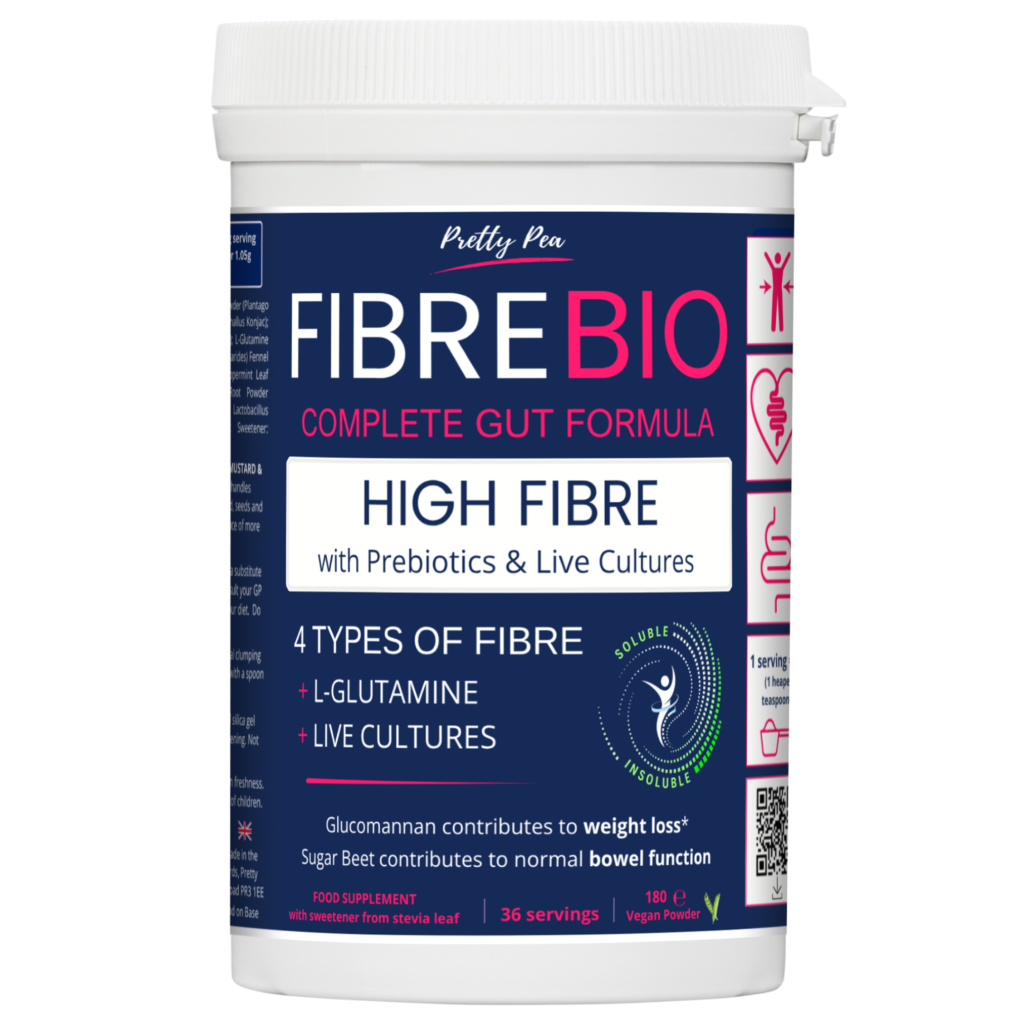
# FIBREBIO – PSYLLIUM HUSK SUPPLEMENT
More than psyllium. A complete multi-fibre formula
**£21.99**
- **4 types of fibre** — psyllium, glucomannan, inulin & sugar beet
- **High fibre** with soluble + insoluble fibre
- **Nourish your gut**: Prebiotics + live cultures
- With L-glutamine, peppermint, ginger & fennel
- Sugar Beet Fibre Powder\* for Bowel Function
- Amino Acid L-Glutamine *gut health digestive building blocks*
- No add sugar
- 36 servings | Vegan | UK made
[Add FIBREBio to cart](/cart/?add-to-cart=12808)
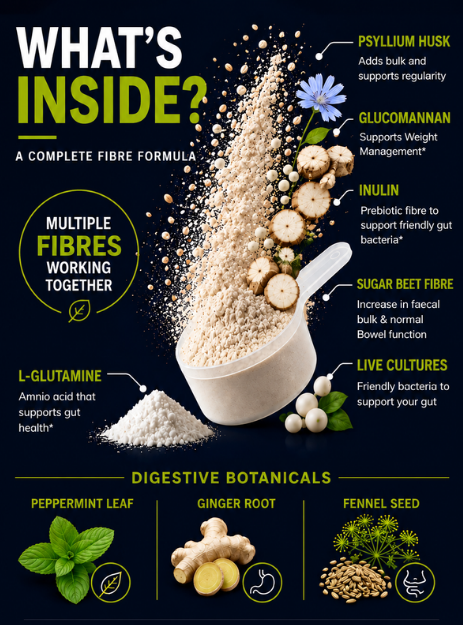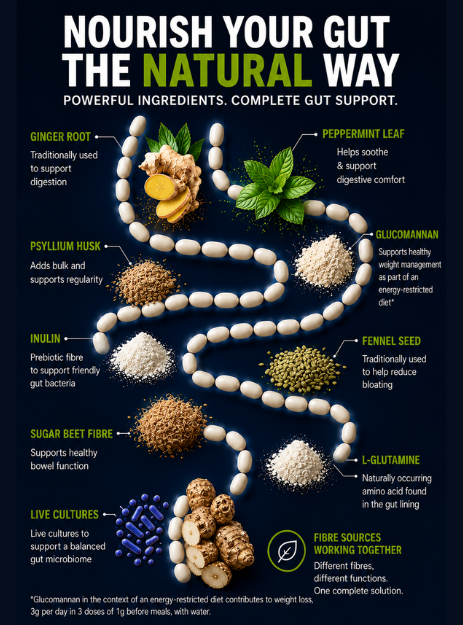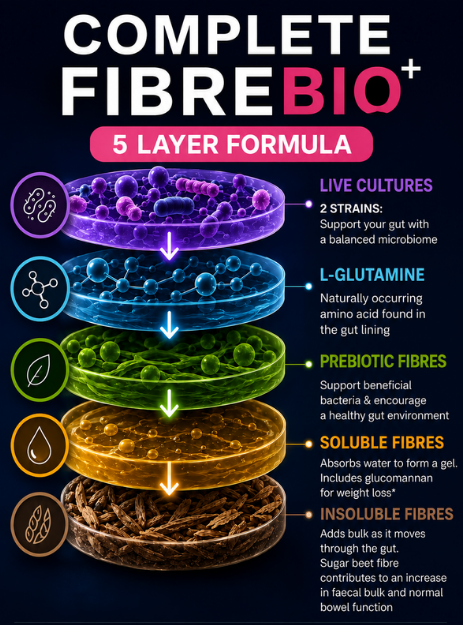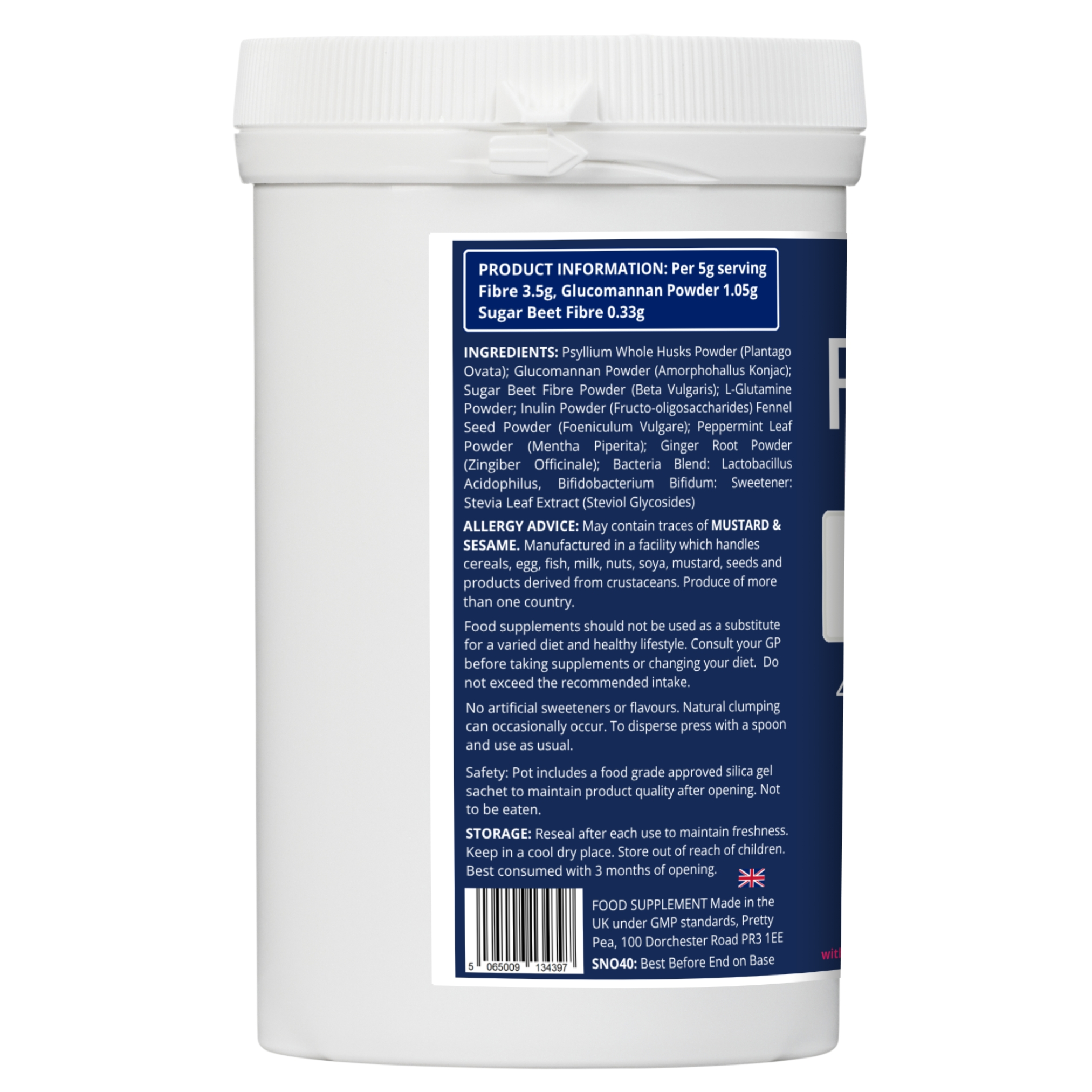
FEEL PRETTY FULL FROM WITHIN
## FIBRE POWDER POWER
More Than Just Psyllium
**FIBREBIO is a high fibre psyllium husk supplement designed to combine 4 different types of fibre in one daily formula**
Rather than relying on a single fibre source, FIBREBIO combines **psyllium husk, glucomannan, inulin and sugar beet fibre**, alongside live cultures, L-glutamine and traditional botanicals.
Different fibres have different characteristics — including their **solubility, viscosity, fermentability and water-holding properties**. Supporting **gut diversity**, FIBREBIO brings several of them together in one convenient powder.
### Glucomannan
A soluble, viscous fibre derived from the konjac plant. Glucomannan contributes to weight loss in the context of an energy-restricted diet.\*
### Sugar Beet Fibre
Contains both soluble and insoluble fibre. Sugar beet fibre contributes to an increase in faecal bulk.\*
### Psyllium Husk Powder
A naturally derived fibre containing both soluble and insoluble components. Psyllium is particularly known for its viscous, gel-forming bulking properties when mixed with water.
### Inulin Powder
A soluble, fermentable fibre commonly known as a prebiotic fibre because it is utilised by intestinal bacteria.
## Psyllium Husk Powder
Glucomannan
## Psyllium Husk
Fibre TypeKey Fibre characteristicPsyllium HuskViscous, gel-forming fibreGlucomannanHighly viscous soluble fibreInulin FibreFermentable prebiotic fibreSugar beet fibreSoluble + insoluble fibre### Psyllium Powder Benefits
### What is FIBREBIO?
+
FIBREBIO is a **high fibre powder supplement** combining four fibre sources: **psyllium husk, glucomannan, inulin and sugar beet fibre**. The formula also contains two live culture strains, L-glutamine and the traditional botanicals peppermint leaf, ginger root and fennel seed.
### Is FIBREBIO a psyllium husk supplement?
+
Yes. **Psyllium husk is one of the four fibre sources in FIBREBIO**, alongside glucomannan, inulin and sugar beet fibre. This makes FIBREBIO different from a standard single-ingredient psyllium husk powder.
### What is psyllium husk?
\+
Psyllium husk is obtained from the outer coating of seeds from *Plantago ovata*. It is particularly rich in **soluble, viscous fibre** and forms a gel-like consistency when it comes into contact with water.
### What is inulin?
Inulin is a type of **soluble, fermentable fibre** found naturally in many plants. It is commonly described as a **prebiotic fibre** because it can be utilised by bacteria within the gut.
### Does FIBREBIO contain prebiotics?
Yes. FIBREBIO contains **inulin, a prebiotic fibre**, alongside its other fibre sources.
### Does FIBREBIO contain live cultures?
Yes. FIBREBIO contains **two live culture strains** as part of its multi-ingredient formula.
### Does psyllium husk contain soluble and insoluble fibre?
+
Yes. Psyllium contains both **soluble and insoluble fibre**, although it is particularly valued for being a viscous, gel-forming soluble fibre.
### What’s the difference between psyllium and glucomannan?
+
Both are **viscous, soluble fibres**, but they come from different plants and have different characteristics. Psyllium comes from *Plantago ovata* seed husks, while glucomannan is obtained from the konjac plant.
Glucomannan also has an authorised health claim in Great Britain: **glucomannan in the context of an energy-restricted diet contributes to weight loss**, when the required conditions of use are met.\*
### Can glucomannan help with weight loss?
\+
Glucomannan has an authorised health claim for weight loss. The beneficial effect is obtained from a daily intake of **3g glucomannan in three doses of 1g each, together with 1–2 glasses of water, before meals and in the context of an energy-restricted diet.**\*
### Free From Supplement
+
Under 10 calories per serving. With no artificial sweeteners, Fibre full blend is free from artificial nasties. Vegan and gluten free.
### Is FIBREBIO vegan?
Yes. FIBREBIO is suitable for **vegans**.
### Is FIBREBIO made in the UK?
Yes. FIBREBIO is **made in the UK**.
### How to use
+
FIBREBIO psyllium husk fibre powder formula comes in 180g pot and contains 36 servings.
Add 1 serving (a heaped teaspoon) to a small amount of water or juice (1/4 glass).
Mix slowly in all directions until its turns into a smooth paste. Continue to stir as more liquid is added until the glass is full or your desired consistency is achieved.
Consume the fibre powder immediately and follow with another large glass of water to ensure the the fibres reach the stomach quickly where it will naturally get to work.
If taking for weight management: For best weight results it’s recommended to take Glucomannan 3g daily (1g each x 3 daily before each meal) and in the context of a energy controlled diet.
To be taken with water approximately before each meal (3x daily) for best actions.
*Individual results will vary*.
### Why is water important when taking psyllium?
Psyllium is a **viscous, gel-forming fibre**. When hydrated, it absorbs and retains water and develops its characteristic gel-like consistency. This is why psyllium products should be consumed with sufficient fluid and according to their directions.
### Safety
\+
It’s important to note that, as with all fibre, when increasing any dietary fibre intake, for those with a sensitive digestion or perhaps not used to much fibre on a regular basis then it can be advisable to start on a reduced dose, for a few days and then increasing as your body adapts to the increased fibre. Results may vary from person to person.
Do not exceed the recommended daily intake. A food supplement should not be used as a substitute for a varied, balanced diet and healthy lifestyle. Always consult your GP before taking food supplements if you are taking medication or have an existing medical condition.
**GLUCOMANNAN SAFETY CONSIDERATIONS**
Glucomannan is considered safe and well tolerated. For those who may experience mild side effects, such as flatulence, bloating, soft stools or diarrhoea, these effects are usually transient as the body adapts and are typically uncommon.
WARNING**:** FIBREBIO must be taken with 1-2 glasses of water to ensure it reaches the stomach before expanding. This is especially important for people with swallowing difficulties when ingesting as it may cause choking or blockage of the throat.
As with all supplements, if you feel unwell whilst taking this supplement discontinue use immediately and seek medical advice.
### FIBREBio Psyllium Powder Benefits
+
### DAILY NUTRITION
The recommended daily amount of fibre is 25-30g. With many only achieving half the RDA supplementing with fibre including psyllium husk inulin, sugar beet and glucomannan can help increase daily fibre intake.
Combining the nutritional goodness of 4 fibre types, soluble, insoluble, and prebiotic fibres, plus live cultures FIBREBIO supports the diversity the body needs to be at its best from the inside out.
**PSYLLIUM HUSK POWDER**
**Psyllium Husk powder**, a water-soluble high fibre, that has long been used in Asia as a bowel regulator. Psyllium husk seeds absorb water and expand to increase bulk and moisture content to stools to stimulate normal movements.
Studies have shown psyllium husk to provide nutritional benefits including capacity to reduce the glycaemic index and constipation problems.
Psyllium husk is the only fibre recommended by the American Society of Gastroenterology for IBS.
Psyllium husk is also readily fermentable, thereby causes less abdominal bloating than some fibres may do in some people, making it a popular fibre supplement.
**PREBIOTIC INULIN FIBRE**
**Inulin powder**: **Prebiotic** Inulin fibres are non-digestible carbohydrates that promote the growth of beneficial bacteria in the gut.
**SUGAR BEET FIBRE**
**Sugar Beet fibre** supports **bowel function** with an **increase in faecal bulk** which can make for easier bowel movements.
Sugar Beet fibre is clinically proven to contribute to an increase in faecal bulk in 2 ways:
(1) The insoluble components of the fibre increase bulk by absorbing water in the large intestine
(2) the soluble components are fermented by bacteria to help keep your digestive tract moving as it should be.
### Glucomannan
+
**GLUCOMANNAN**
High in dietary fibre, soluble fibre **Glucomannan**\*\*\* is particularly effective for weight loss and weight management. It’s a natural water soluble fibre extracted from the Konjac plant and has an exceptional ability to absorb water up to 50 times its weight.
Glucomannan differs from most other soluble fibres, it is exceptionally viscous, making it particularly effective for weight loss. It works by absorbing water in your stomach and gently expanding taking up space.
With many supplements nowadays purporting to support weight loss you can be assured that Glucomannan is EFSA approved to support **weight loss**, when taken 3g daily, 1g x 3 daily before meals with water in the context of a calorie controlled diet.
For weight loss benefits glucomannan needs to be taken (approx 30 minutes) before meals.
Backed by science, studies show that at the correct dose Glucomannan can result in **significant weight loss** in overweight and obese individuals.
### L-Glutamine, Live Biotics & Herbals
\+
**HERBALS**
FIBREBIO psyllium husk powder blend also combines **Peppermint Leaf, Ginger Root** and **Fennel Seed**, herbals traditionally used to soothe the digestive system.
**LIVE BIOTIC CULTURES**
Plus with added **Live Biotic Cultures**, 2 carefully selected bacterial strains. and vegan Amino Acid L-Glutamine
**L-GLUTAMINE**
A naturally occurring intestinal protein building block also typically found in meat sources.
**L-Glutamine** is not only the most abundant amino acid for muscle tissue but it’s also pretty much one of the most important and abundant nutrients in your entire body as it heals the tissue in your body, and especially irritated tissues in the digestive tract and gut lining.
### Sources
\+
Gut microbiota composition correlates with changes in body fat content due to weight loss – PubMed (nih.gov)
\[Plantago ovata\] – PubMed
The Prebiotic Potential of Inulin-Type Fructans: A Systematic Review – PubMed (nih.gov)
Scientific Opinion on the substantiation of a health claim related to sugar beet fibre and increasing faecal bulk pursuant to Article 13(5) of Regulation (EC) No 1924/2006 (wiley.com)
Psyllium: a useful functional ingredient in food systems – PubMed (nih.gov)
Peppermint oil for the treatment of irritable bowel syndrome: a systematic review and meta-analysis – PubMed (nih.gov)
Review article: probiotics and prebiotics in irritable bowel syndrome – PubMed (nih.gov)
Evaluation of mint efficacy regarding dysmenorrhea in comparison with mefenamic acid: A double blinded randomized crossover study – PubMed (nih.gov)
Dietary fibres in the regulation of appetite and food intake. Importance of viscosity. Appetite. 2011 Feb;56(1):65-70. doi: 10.1016/j.appet.2010.11.147. Epub 2010 Nov 27. PMID: 21115081.Beck EJ, Tapsell LC, Batterham MJ, pubmed.ncbi.nlm.nih.gov/21115081/
How to get more fibre into your diet – NHS (www.nhs.uk)
Scientific Opinion on the substantiation of a health claim related to sugar beet fibre and increasing faecal bulk pursuant to Article 13(5) of Regulation (EC) No 1924/2006 (wiley.com)
Effect of Fennel on the Health Status of Menopausal Women: A Systematic and Meta-analysis – PMC (nih.gov)
Gut microbiota, obesity and diabetes – PubMed (nih.gov)
A Descriptive Overview of the Medical Uses Given to Mentha Aromatic Herbs throughout History – PMC (nih.gov)
Peppermint oil in irritable bowel syndrome – PubMed (nih.gov)
Peppermint oil for the treatment of irritable bowel syndrome: a systematic review and meta-analysis – PubMed (nih.gov)
Evaluation of mint efficacy regarding dysmenorrhea in comparison with mefenamic acid: A double blinded randomized crossover study – PubMed (nih.gov)
Food supplements and diet as treatment options in irritable bowel syndrome – PubMed (nih.gov)
Glucomannan and obesity: a critical review – PubMed (nih.gov)
The Wonderful Activities of the Genus Mentha: Not Only Antioxidant Properties – PMC (nih.gov)
Ginger on Human Health: A Comprehensive Systematic Review of 109 Randomized Controlled Trials – PMC (nih.gov)
Dietary fiber and weight regulation. Nutr Rev. 2001 May;59(5):129-39. doi: 10.1111/j.1753-4887.2001.tb07001.x. PMID: 11396693.[](https://www.nhs.uk/live-well/eat-well/digestive-health/how-to-get-more-fibre-into-your-diet/)
Experiences with three different fiber supplements in weight reduction. Med Sci Monit. 2005 Jan;11(1):PI5-8. PMID: 15614200.
Probiotic supplements and bone health in postmenopausal women: a meta-analysis of randomised controlled trials | BMJ Open
Fennel (Foeniculum vulgare) and Fenugreek (Trigonella foenum-graecum) Tea Drinking Suppresses Subjective Short-term Appetite in Overweight Women – PMC (nih.gov)
Foeniculum vulgare: A comprehensive review of its traditional use, phytochemistry, pharmacology, and safety – ScienceDirect
Ginger on Human Health: A Comprehensive Systematic Review of 109 Randomized Controlled Trials – PMC (nih.gov)
The Amazing and Mighty Ginger – Herbal Medicine – NCBI Bookshelf (nih.gov)
Gut microbiota, obesity and diabetes – PubMed (nih.gov)
Scientific Opinion on the substantiation of a health claim related to sugar beet fibre and increasing faecal bulk pursuant to Article 13(5) of Regulation (EC) No 1924/2006 (wiley.com)
Effect of glucomannan on plasma lipid and glucose concentrations, body weight, and blood pressure: systematic review and meta-analysis. Am J Clin Nutr. 2008 Oct;88(4):1167-75. doi: 10.1093/ajcn/88.4.1167. PMID: 18842808.
Effect of glucomannan on obese patients: a clinical study. Int J Obes. 1984;8(4):289-93. PMID: 6096282
EFSA Panel on Dietetic Products, Nutrition and Allergies (NDA); Scientific Opinion on the substantiation of a health claim related to sugar beet fibre and increasing faecal bulk pursuant to Article 13(5) of Regulation (EC) No 1924/2006. *EFSA Journal* 2011; 9(12):2468. \[8 pp.\]. doi:10.2903/j.efsa.2011.2468.
The Prebiotic Potential of Inulin-Type Fructans: A Systematic Review. Adv Nutr. 2022 Mar;13(2):492-529. doi: 10.1093/advances/nmab119. Epub 2023 Feb 10. PMID: 34555168; PMCID: PMC8970830.
Prebiotic fiber modulation of the gut microbiota improves risk factors for obesity and the metabolic syndrome – PubMed (nih.gov)
Food & mood: a review of supplementary prebiotic and probiotic interventions in the treatment of anxiety and depression in adults – PMC (nih.gov)
Review article: prebiotics in the gastrointestinal tract. Aliment Pharmacol Ther. 2006 Sep 1;24(5):701-14. doi: 10.1111/j.1365-2036.2006.03042.x. PMID: 16918875.
Psyllium: a useful functional ingredient in food systems. Crit Rev Food Sci Nutr. 2022;62(2):527-538. doi: 10.1080/10408398.2020.1822276. Epub 2020 Sep 21. PMID: 32951436.
Glutamine and intestinal barrier function. Amino Acids. 2015 Oct;47(10):2143-54. doi: 10.1007/s00726-014-1773-4. Epub 2014 Jun 26. PMID: 24965526.
Glutamine: an essential amino acid for the gut. Nutrition. 1996 Nov-Dec;12(11-12 Suppl):S78-81. doi: 10.1016/s0899-9007(97)85206-9. PMID: 8974125.
Glutamine supplementation favors weight loss in nondieting obese female patients. A pilot study. Eur J Clin Nutr. 2014 Nov;68(11):1264-6. doi: 10.1038/ejcn.2014.184. Epub 2014 Sep 17. PMID: 25226827.
The Role of Glutamine in the Complex Interaction between Gut Microbiota and Health: A Narrative Review. Int J Mol Sci. 2019 Oct 22;20(20):5232. doi: 10.3390/ijms20205232. PMID: 31652531; PMCID: PMC6834172.
The Gut Microbiome and Its Role in Obesity. Nutr Today. 2016 Jul-Aug;51(4):167-174. doi: 10.1097/NT.0000000000000167. PMID: 27795585; PMCID: PMC5082693.
Gut microbiota composition correlates with changes in body fat content due to weight loss – PubMed (nih.gov)
Combined Red Clover isoflavones and probiotics potently reduce menopausal vasomotor symptoms | PLOS ONE
Probiotic supplements and bone health in postmenopausal women: a meta-analysis of randomised controlled trials
Food supplements and diet as treatment options in irritable bowel syndrome – PubMed (nih.gov)
A Novel Delivery System of Peppermint Oil Is an Effective Therapy for Irritable Bowel Syndrome Symptoms. Dig Dis Sci. 2016 Feb;61(2):560-71. doi: 10.1007/s10620-015-3858-7. Epub 2015 Aug 29. PMID: 26319955; PMCID: PMC4729798. Food supplements and diet as treatment options in irritable bowel syndrome. Neurogastroenterol Motil. 2020 Aug;32(8):e13951. doi: 10.1111/nmo.13951. PMID: 32697018.
Peppermint oil for the treatment of irritable bowel syndrome: a systematic review and meta-analysis. J Clin Gastroenterol. 2014 Jul;48(6):505-12. doi: 10.1097/MCG.0b013e3182a88357. PMID: 24100754.
Fennel (Foeniculum vulgare) and Fenugreek (Trigonella foenum-graecum) Tea Drinking Suppresses Subjective Short-term Appetite in Overweight Women – PubMed (nih.gov)
Effect of Fennel on the Health Status of Menopausal Women: A Systematic and Meta-analysis – PubMed (nih.gov)
The Amazing and Mighty Ginger. In: Benzie IFF, Wachtel-Galor S, editors. Herbal Medicine: Biomolecular and Clinical Aspects. 2nd edition. Boca Raton (FL): CRC Press/Taylor & Francis; 2011. Chapter 7. Available from: https://www.ncbi.nlm.nih.gov/books/NBK92775/
Ford AC, Moayyedi P, Chey WD, et al. American College of Gastroenterology monograph on management of irritable bowel syndrome. Am J Gastroenterol 2018; 113 (Suppl 2): 1-18.
## You Might Also Like….Psyllium Husk in our Fibre Capsules
---
## Save 20% on Orders Over £50
## Save 20% on Orders Over £50
## Psyllium Husk
## Save 20% on Orders Over £50
## [FIBREBIO Psyllium Husk Supplement](https://prettypea.blog/fibrebio-psyllium-husk-supplement/)
---
### [Thankyou Page Recipe Guide](https://prettypea.blog/thankyou-page-2/)
**Published:** May 23, 2026
**Author:** Cate Boyd
**Content:**
# Thank you Pretty Pea
Please check your inbox for an email with a link to download your free guide. Check your spam/junk folders if you don’t see it in your inbox within the next few minutes.
[Download Guide](https://prettypea.blog/wp-content/uploads/2026/06/25-PSYLLIUM-HUSK-RECIPE-GUIDE.pdf)
## Latest Products
[View All → →](#)
### [Thankyou Page Recipe Guide](https://prettypea.blog/thankyou-page-2/)
- [Best High Fibre Foods for Weight Loss (That Actually Keep You Full)](https://prettypea.blog/15-best-high-fibre-foods-for-weight-loss-that-actually-keep-you-full/)
- [Guide to Fibre Supplements](https://prettypea.blog/the-ultimate-guide-to-fibre-supplements-for-a-happier-gut-unlocking-your-digestive-health/)
- [Compare Fibre vs GLP-1](https://prettypea.blog/appetite-regulation-how-fibre-vs-glp-1-compare)
- [Signs You Need More Fibre](https://prettypea.blog/signs-you-need-more-fibre/)
- [The Ultimate Superfood List](https://prettypea.blog/superfood-list/)
- [Bloating Isn’t Just “Too Much Gas”: The Real Causes of Bloating (and What Actually Helps)](https://prettypea.blog/7-real-causes-of-bloating-and-what-actually-helps/)
---
### [Pretty Reset Get Started](https://prettypea.blog/pretty-reset-get-started/)
**Published:** April 26, 2026
**Author:** Cate Boyd
**Content:**
# SUPPLEMENT SUPPORT
## Get the most from your supplement
Thank you for choosing Pretty Pea. This page contains guidance, FAQs and helpful resources to support your daily routine.
[](https://prettypea.blog/wp-content/uploads/2026/06/PRETTY-RESET-Getting-Started-4.pdf)[**GET STARTED GUIDE** →](https://prettypea.blog/wp-content/uploads/2026/08/Getting-Started-v-4.pdf)
Prefer to read online? Key information is available below.
## How to Take Your Supplement
For best results:
- Take **2 capsules before each meal**
- Use with a **full glass of water**
- Ensure adequate water intake throughout the day
- Start with a lower amount if needed
- Take consistently as part of a balanced calorie- aware diet and daily routine
Always follow the directions provided on the product label.
Remember food supplements should not be used as a substitute for a varied, balanced diet and healthy lifestyle.
## Key Features
- Vegan & Gluten Free
- UK Manufactured
- Designed to complement a balanced lifestyle
- Includes fibre, vitamin and plant extracts
- 90 Capsules
## **Why Reset is different**
## Frequently Asked Questions
How to take this supplement?Take 2 capsules, with water before each meal. Please follow the usage instructions on the product label and consult a healthcare professional if you have any concerns.
Why is different about Glucomannan FibreGlucomannan is a naturally occurring soluble fibre derived from the konjac root.
When consumed with water, glucomannan forms a gel-like substance that contributes to its unique physical properties.
Many people choose glucomannan as part of a balanced eating plan and healthy lifestyle approach.
Why is Water ImportantGlucomannan absorbs water, so it is important to take your capsules with plenty of fluid and maintain good hydration throughout the day.
Drinking adequate water helps you incorporate fibre comfortably into your daily routine and supports normal digestive function. Always follow the directions on the product label and ensure you consume sufficient water when taking fibre-containing supplements.
Do I still need a healthy diet?This is not a “quick fix” product. It’s designed to support fullness and fibre intake as part of a structured routine. Glucomannan’s beneficial effect is obtained with an energy-restricted diet.
EFSA guidelines state weight loss can be achieved taking glucomannan 3 g daily, 1g x 3 daily, before meals, with 1-2 glasses of water and an energy-restricted diet.
(per 2 capsules = 1g glucomannan)
Consider focusing on:
- Regular meal patterns
- Adequate hydration
- Eating a variety of vegetables & fibre foods
- Regular physical activity
- Consistent sleep routines
Small changes carried out consistently can often be easier to maintain than dramatic short-term approaches.
Food supplements are intended to complement, not replace, a balanced diet and healthy lifestyle.
When should I expect results?Individual experiences vary depending on diet, lifestyle and personal circumstances. Consistency and healthy habits are important factors.
Need Support?> If you have questions about your product, please contact our customer support team.
Download the full Guide, we hope you find it useful. We’re here to help.
## Download Guide
[Get Started Guide](https://prettypea.blog/wp-content/uploads/2026/08/Getting-Started-v-4.pdf)
---
## Ingredients
A blend of fibre, nutrients and plant extracts, including:
- **Glucomannan** – a soluble dietary fibre derived from konjac root, supports weight loss\*
- **Vitamin B6** – contributes to normal energy metabolism, hormonal activity and reduces tiredness
- **Chromium** – contributes to normal macronutrient metabolism and maintenance of normal blood glucose levels
- **Green Tea Extract** – a plant extract traditionally used in daily wellness routines
- **Choline** – contributes to normal lipid metabolism
- **Raspberry Extract** – a fruit-derived ingredient
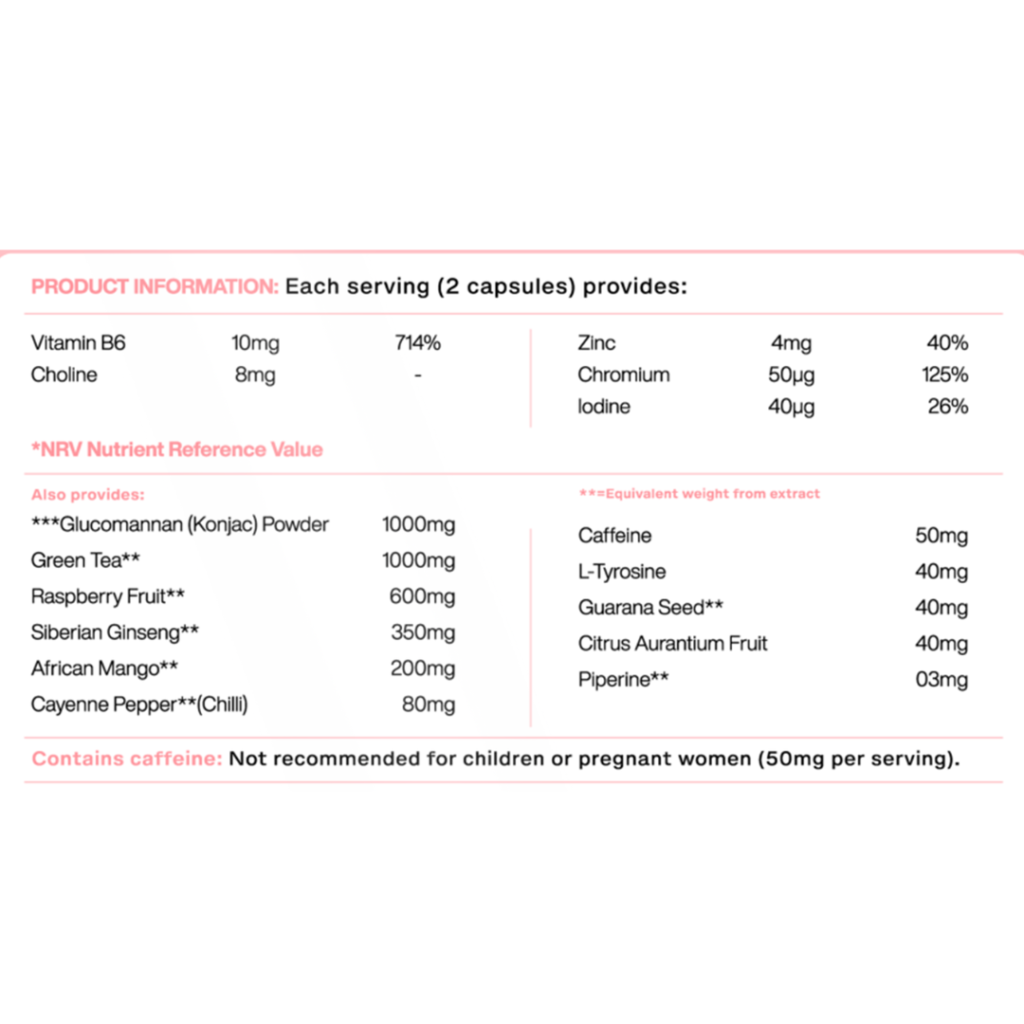## Important Information
- Do not exceed the recommended daily intake
- Food supplements should not replace a varied, balanced diet
- Keep out of reach of children
- Store in a cool, dry place
Glucomannan should be taken with plenty of water. There may be a risk of choking for individuals with swallowing difficulties or when consumed with inadequate fluid intake. Always follow the directions for use and consume with sufficient water.
If you are pregnant, breastfeeding, sensitive to caffeine, or taking medication, consult a healthcare professional before use.
[Get Started Guide](https://prettypea.blog/wp-content/uploads/2026/06/PRETTY-RESET-Getting-Started-4.pdf)
Supporting simple, balanced wellness
---
### [Fibre - Get Started](https://prettypea.blog/fibre-get-started/)
**Published:** July 26, 2026
**Author:** Cate Boyd
**Content:**
# FIBRE – GET STARTED
## Get the most from your fibre supplement
This page contains guidance, FAQs and helpful resources to support your daily routine.
[](https://prettypea.blog/wp-content/uploads/2026/06/PRETTY-RESET-Getting-Started-4.pdf)GET STARTED GUIDE →
Prefer to read online? Key information is available below.
## How to Take Your Supplement
For best results:
- Take **approx 30 minutes before each meal**
- Use with a **full glass of water**
- Ensure adequate water intake throughout the day
- Start with a lower amount if needed
- Take consistently as part of a balanced calorie- aware diet and daily routine
Always follow the directions provided on the product label.
Remember food supplements should not be used as a substitute for a varied, balanced diet and healthy lifestyle.
## Key Features
- Vegan & Gluten Free
- UK Manufactured
- Designed to complement a balanced lifestyle
- Soluble & Insoluble 4 Fibre Prebiotic Diversity
- L-Glutamine Gut Love
- Live Cultures, 2 Beneficial Strains
- Digestive Botanicals Peppermint, Ginger, Fennel
## **Why Fibre**Bio **is different**

## Frequently Asked Questions
How to take this supplement?Take with water before each meal. Please follow the usage instructions on the product label and consult a healthcare professional if you have any concerns.
Why is different about Glucomannan FibreGlucomannan is a naturally occurring soluble fibre derived from the konjac root.
When consumed with water, glucomannan forms a gel-like substance that contributes to its unique physical properties.
Many people choose glucomannan as part of a balanced eating plan and healthy lifestyle approach.
Why is Water ImportantGlucomannan absorbs water, so it is important to take your capsules with plenty of fluid and maintain good hydration throughout the day.
Drinking adequate water helps you incorporate fibre comfortably into your daily routine and supports normal digestive function. Always follow the directions on the product label and ensure you consume sufficient water when taking fibre-containing supplements.
Do I still need a healthy diet?This is not a “quick fix” product. It’s designed to support fullness and fibre intake as part of a structured routine. Glucomannan’s beneficial effect is obtained with an energy-restricted diet.
EFSA guidelines state weight loss can be achieved taking glucomannan 3 g daily, 1g x 3 daily, before meals, with 1-2 glasses of water and an energy-restricted diet.
Consider focusing on:
- Regular meal patterns
- Adequate hydration
- Eating a variety of vegetables & fibre foods
- Regular physical activity
- Consistent sleep routines
Small changes carried out consistently can often be easier to maintain than dramatic short-term approaches.
Food supplements are intended to complement, not replace, a balanced diet and healthy lifestyle.
When should I expect results?Individual experiences vary depending on diet, lifestyle and personal circumstances. Consistency and healthy habits are important factors.
Need Support?> If you have questions about your product, please contact our customer support team.
Download the full Guide, we hope you find it useful. We’re here to help.
## Download Guide
Get Started Guide
---
## Ingredients
A blend of fibre, nutrients and plant extracts, including:
#### Email Signup
Receive future wellness tips and guides.
## Important Information
- Do not exceed the recommended daily intake
- Food supplements should not replace a varied, balanced diet
- Keep out of reach of children
- Store in a cool, dry place
Glucomannan should be taken with plenty of water. There may be a risk of choking for individuals with swallowing difficulties or when consumed with inadequate fluid intake. Always follow the directions for use and consume with sufficient water.
If you are pregnant, breastfeeding, sensitive to caffeine, or taking medication, consult a healthcare professional before use.
[Get Started Guide](https://prettypea.blog/wp-content/uploads/2026/06/PRETTY-RESET-Getting-Started-4.pdf)
[](https://prettypea.blog/)
Supporting simple, balanced wellness
---
### [Fibre Supplement | RESET Glucomannan Supplement Complex](https://prettypea.blog/fibre-supplement-reset-glucomannan-supplement-complex/)
**Published:** July 3, 2026
**Author:** Cate Boyd
**Content:**
Search
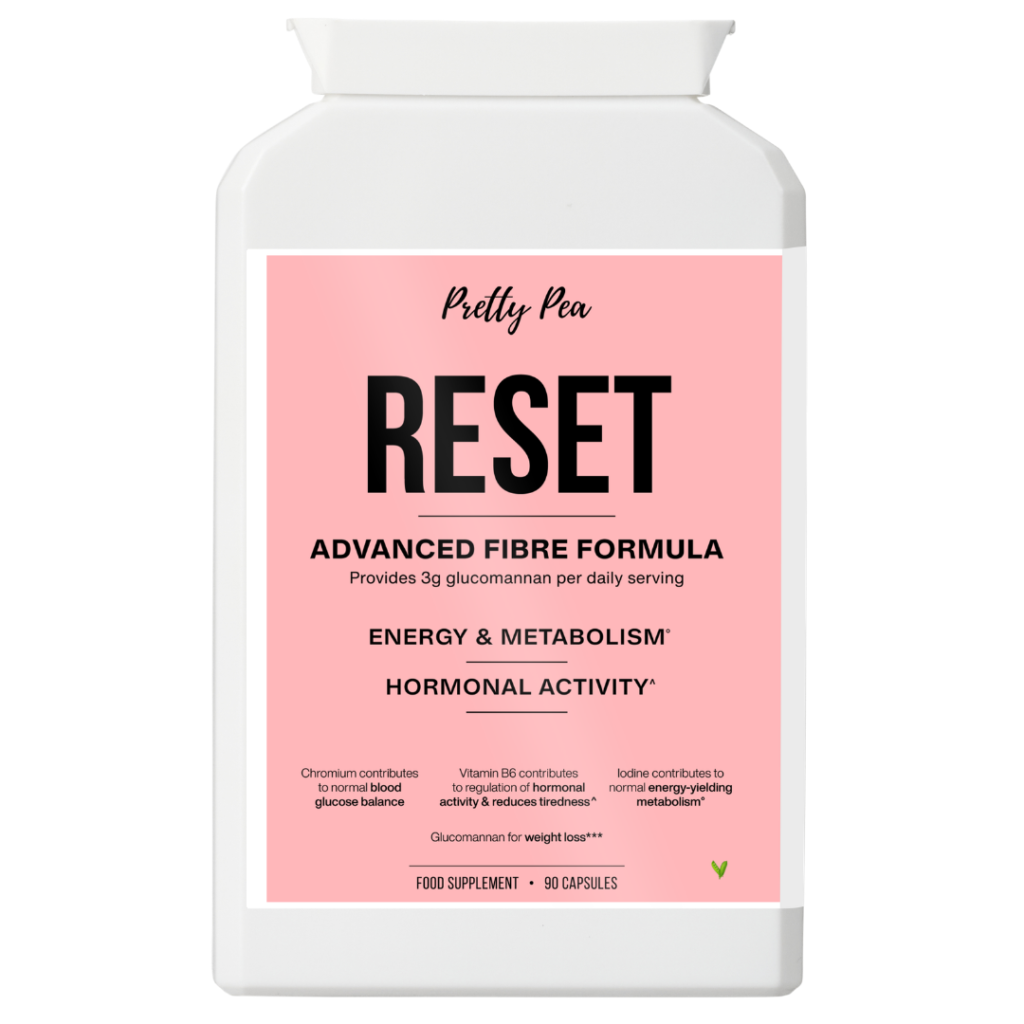
# Advanced Fibre Supplement | Glucomannan Supplement Complex
FIBRE RESET Glucomannan Supplement
Fibre Supplement designed to support nutrition in 16 ways
Weight Management, Hormonal Regulation, Energy, Metabolism
Formulated with a blend of nutrients for daily support with **Vitamin**: B6, **Minerals**: Chromium, Iodine, Choline, Zinc; **Amino Acid**: L-Tyrosine, **Botanicals**: Glucomannan fibre, Green Tea, Caffeine, Cayenne Pepper, Siberian Ginseng and more
Vegan, Gluten-Free, no added Preservatives or Additives
UK Manufactured
SALE PRICE **£19.99**
[Add RESET to cart](/cart/?add-to-cart=12296)
**Fibre Supplement | Weight Management** Fibre-First Approach to Weight Goals
At the heart of Reset is glucomannan, a natural soluble fibre derived from konjac root.
Fibre capsules combined with chromium, green tea extract and botanical ingredients, Reset has been formulated to complement healthy lifestyle habits.
\*Glucomannan contributes to **weight loss** in the context of an energy-restricted diet. This beneficial effect is obtained with a daily intake of 3g of glucomannan in three doses of 1g each, together with 1-2 glasses of water, before meals*.*
## Save 20% on Orders Over £50
## Save 20% on Orders Over £50
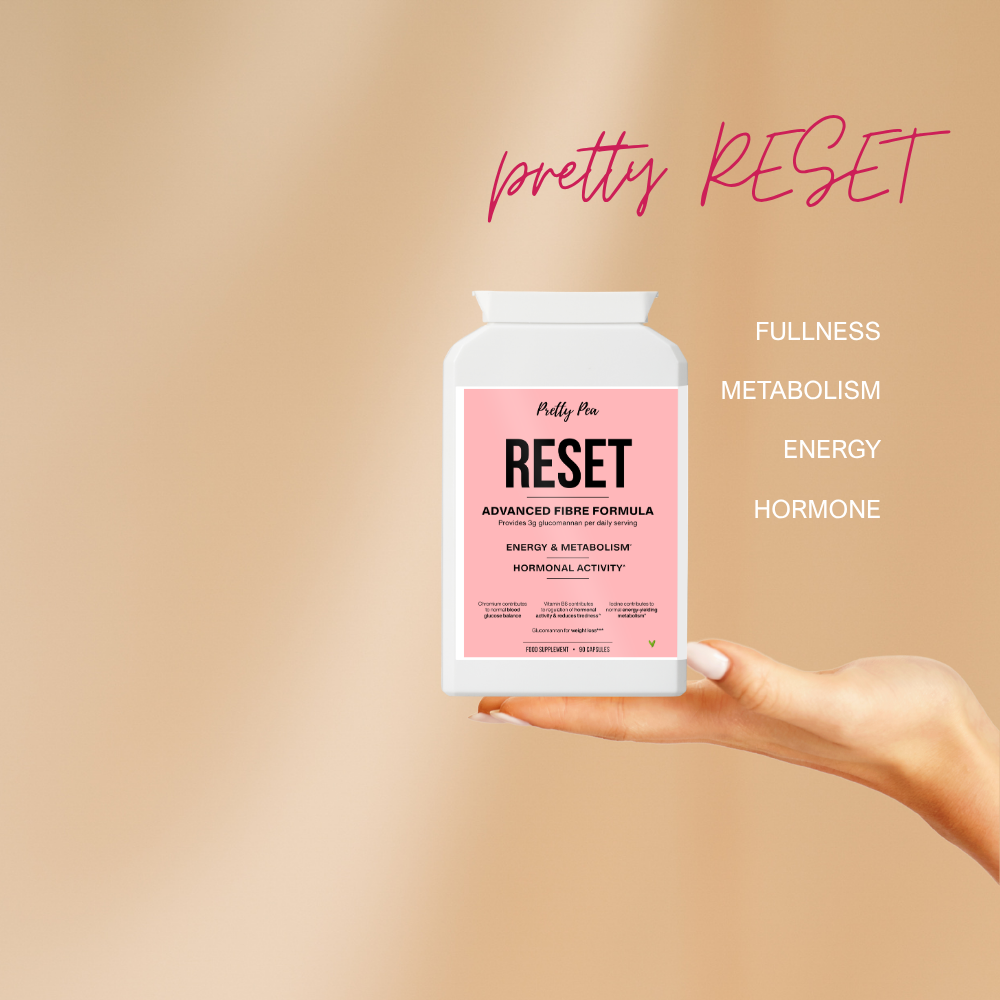# Reset is for women who:
✓ Want support for healthy weight management
✓ Are looking for a fibre-based supplement
✓ Want support for energy and wellbeing
✓ Prefer an all-in-one daily formula
[Fibre Reset →](/cart/?add-to-cart=12296)
## Fibre Full
## Energy-Metabolism Reduce Fatigue
**Ingredient****Why Included**GlucomannanExceptionally viscous soluble fibre, supporting Weight LossVitamin B6Hormonal activity, Reduction of FatigueChromiumMacronutrient metabolism, Blood Sugar balanceIodineEnergy metabolismGreen TeaBotanical extractSiberian GinsengTraditional botanical---
### **Product Information**
✓ Wellness all-in-one for women
✓ Scientifically validated ingredients
✓ Optimally dosed formula
✓ UK manufactured to highest GMP standards
✓ 90 easy take vegan capsules
✓ No artificial nonsense
✓ Money back guarantee
## Fibre Capsules Benefits
### Fibre RESET
+
Daily Nutrition | Increased Fibre Intake
**Glucomannan** is a natural, water-soluble fibre extracted from the root of the **konjac plant** (*Amorphophallus konjac*). Known for its exceptional ability to absorb water, glucomannan forms a gentle gel in the stomach, helping you **feel fuller for longer** as part of an energy-restricted diet.
It also contributes to your daily fibre intake and supports normal bowel function by adding **bulk to stools**. In addition, glucomannan helps maintain normal **blood cholesterol levels** when consumed daily at the recommended intake.
As a versatile **fibre supplement**, glucomannan is an easy way to increase soluble fibre intake and support digestive health, fullness and overall wellbeing as part of a balanced diet and healthy lifestyle.
### How many capsules of Fibre RESET
+
Contains 90 vegan easy take capsules
### How to use Fibre RESET
+
Take 2 capsules, 2 or 3 times per day with water approx 30 minutes before meals.
**1 serving = 2 capsules**
Reset contains glucomannan fibre, which absorbs water. It is important to consume with adequate fluid and follow the directions for use.
When increasing fibre intake, either from foods, or fibre supplements, it’s recommended to build up slowly, increasing intake gradually.
### What’s Inside Fibre RESET
### Glucomannan
**Glucomannan** is an exceptionally viscous soluble fibre which contributes to **weight loss**\* in the context of an energy-restricted diet.
\*This beneficial effect is obtained with a daily intake of 3g of glucomannan in three doses of 1g each, together with 1-2 glasses of water, before meals.
### Choline
+
**Choline** contributes to normal **lipid metabolism**
### Chromium
**Chromium** contributes to normal **macronutrient metabolism** and to the maintenance of normal **blood glucose** levels.
### Vitamin B6
**Vitamin B6** contributes to the regulation of **hormonal activity**, normal **energy-yielding metabolism** and the **reduction of tiredness and fatigue**,
Vitamin B6 also supports normal function of the immune system, normal homocysteine metabolism, normal protein and glycogen metabolism.
### Iodine
**Iodine** contributes to normal **energy-yielding metabolism**, the normal production of **thyroid hormones** and normal thyroid function.
### Zinc
**Zinc** contributes to normal **carbohydrate metabolism**, normal **cognitive** function, normal **fertility and reproduction**, normal **macronutrient metabolism**, normal **metabolism of fatty acids** and maintenance of normal **testosterone levels** in the blood.
Zinc also supports normal metabolism of vitamin A, normal protein synthesis, the maintenance of normal **bones**, and normal **vision**, and normal **hair, nails** and **skin**, the normal function of the **immune system**, the protection of cells from **oxidative stress** and it has a role in the process of cell division.
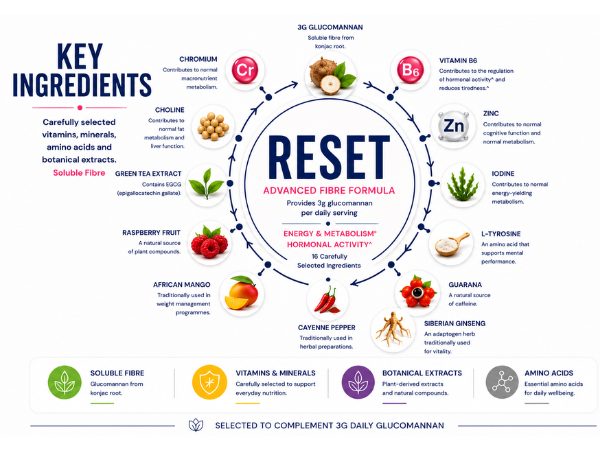### L-Tyrosine
L-Tyrosine is a naturally occurring amino acid found in foods such as dairy, meat and fish. It is included in this formula as part of a carefully selected blend of nutrients designed to support everyday wellbeing.
---
### Botanicals
Botanical extracts include Green Tea, naturally rich in plant polyphenols.
Siberian Ginseng is used in herbal traditions to support vitality and wellbeing.
Also provides Caffeine, Raspberry Fruit, Cayenne Pepper, African Mango & more
### Safety
Results may vary from person to person.
**Contains caffeine:** Not recommended for pregnant women or children (contains 50mg)
**Caution:** Do not exceed the recommended daily intake.
**Warning:** There is a risk of choking for people with swallowing difficulties and when ingested with inadequate fluid intake. Plenty of water should be consumed with this product to ensure it reaches the stomach.
Supplements should not be used as a substitute for a balanced and varied diet and healthy lifestyle.
Consult your doctor before taking any supplements or changing your diet. As with all supplements, if you feel unwell, stop taking this product immediately and seek medical advice.
Store in a cool dry place, out of the reach of children. For best before date see base of container.
### Sources
The Health Benefits of Dietary Fibre – PMC (nih.gov)
Scientific Opinion on Dietary Reference Values for carbohydrates and dietary fibre (unimi.it)
Scientific Opinion on the substantiation of a health claim related to sugar beet fibre and increasing faecal bulk pursuant to Article 13(5) of Regulation (EC) No 1924/2006 (wiley.com)
[How to get more fibre into your diet – NHS](https://www.nhs.uk/live-well/eat-well/digestive-health/how-to-get-more-fibre-into-your-diet/)
Fibre RDA – Public Health England Public[https://assets.publishing.service.gov.uk/government/uploads/system/uploads/attachment\_data/file/618167/government\_dietary\_recommendations.pdf](https://assets.publishing.service.gov.uk/government/uploads/system/uploads/attachment_data/file/618167/government_dietary_recommendations.pdf)
## You might like these too…
## See Womens Supplements
[View All → →](#)
### [Fibre Supplement | RESET Glucomannan Supplement Complex](https://prettypea.blog/fibre-supplement-reset-glucomannan-supplement-complex/)
---
### [Womens Health Supplements](https://prettypea.blog/womens-health-supplements/)
**Published:** November 28, 2023
**Author:** Cate Boyd
**Content:**
## Womens Health Supplements
## Get Your Shape Guide
[Yes I Want The Meno Shape Guide](https://prettypea.blog/weight-loss-over-40/)
See more Pretty Pea on Instagram..
[](https://www.instagram.com/prettypeavitamins/)
prettypeavitamins
[
View Instagram post by prettypeavitamins
](https://www.instagram.com/p/DZNSP1XiP3o/)
Jun 5
[
Open post by prettypeavitamins with ID 17952191358157904
](https://scontent-lax3-1.cdninstagram.com/v/t51.82787-15/718726700_18457810528117964_9137427655213713090_n.jpg?stp=dst-jpg_e35_tt6&_nc_cat=108&ccb=7-5&_nc_sid=18de74&efg=eyJlZmdfdGFnIjoiRkVFRC5iZXN0X2ltYWdlX3VybGdlbi5DMyJ9&_nc_ohc=vSgJeoLIV-sQ7kNvwFlmbli&_nc_oc=AdoH6axHJdkrANNjVfW4PLADaxPuGV-Y_ABg50_Y2eh-2zNGFprSi3e03YudyHcxN8Q&_nc_zt=23&_nc_ht=scontent-lax3-1.cdninstagram.com&edm=AM6HXa8EAAAA&_nc_gid=Dgg33RfXbWzSSjZmvzMxvA&oh=00_AQPPtpLEvxQqZvr1ofzpuwsG9RvIYORQdTqxUpV3n6CIxA&oe=6AD73FD0)
[ 
](https://www.instagram.com/p/DZNSP1XiP3o/)
Why is everyone talking about glucomannan lately?
Glucomannan is a naturally occurring soluble fibre derived from the konjac root. What makes it unique is its ability to absorb water and form a gel-like consistency, which is why it has become increasingly popular in fibre supplements and wellness routines.
In fact, the European Food Safety Authority (EFSA) has approved the claim that glucomannan contributes to weight loss in the context of an energy-restricted diet, when consumed at 3g per day in three 1g doses with 1–2 glasses of water before meals.
Beyond this, glucomannan is simply another way to increase your daily fibre intake alongside a healthy, balanced diet.
Many people choose glucomannan because it is:
✔ A source of soluble fibre
✔ Derived from konjac root
✔ Available in convenient capsule and powder formats
✔ Easy to incorporate into a daily routine
Remember, fibre doesn`t just come from supplements. Foods such as oats, legumes, fruits and vegetables also contribute to your daily fibre intake.
📌 Save this post if you`re curious about different types of fibre.
💬 Have you tried glucomannan before?
You can find Glucomannan in Pretty Pea supplements.
\#glucomannan #konjacroot #solublefibre #fibresupplement #highfibre #weightlosssupport #nutritiontips #wellnessjourney #healthyhabits #womenshealth #digestivewellbeing #healthylifestyle #nutritioneducation #prettypeasupplements #prettypea #fibresupplements #fibresupplement
[…](#)
0
0
[](https://www.instagram.com/prettypeavitamins/)
prettypeavitamins
[
View Instagram post by prettypeavitamins
](https://www.instagram.com/reel/DV6SxyPgls0/)
Mar 15
[
Open post by prettypeavitamins with ID 17850932685643864
](https://scontent-lax3-1.cdninstagram.com/v/t51.82787-15/651174663_18442740625117964_1508200042461708880_n.jpg?stp=dst-jpg_e35_tt6&_nc_cat=108&ccb=7-5&_nc_sid=18de74&efg=eyJlZmdfdGFnIjoiQ0xJUFMuYmVzdF9pbWFnZV91cmxnZW4uQzMifQ%3D%3D&_nc_ohc=y1ilSv_9oPIQ7kNvwGWl1Dv&_nc_oc=Adovuko5_AtIZUNFwNCBbIsZUHwuvNTTx1RgRMD4a45psALLG7_PX7odLTz-pSShcJk&_nc_zt=23&_nc_ht=scontent-lax3-1.cdninstagram.com&edm=AM6HXa8EAAAA&_nc_gid=Dgg33RfXbWzSSjZmvzMxvA&_nc_tpa=Q5bMBQIj8KpuiRFleBiEgLEjKycViQ4hxJmK8Yn-gi-pW9Ktm4W0pU43wMdz4b6TPHOcOa658nndIkGB&oh=00_AQPFRdnUgveXfuRfynfpyQHSi6eMl3avW0YaBxIMFaRQvA&oe=6AD742B0)
[ 
](https://www.instagram.com/reel/DV6SxyPgls0/)
Do you ever feel hungry again soon after eating?
Appetite is influenced by several hormones that help regulate hunger and fullness.
Ghrelin is often referred to as the “hunger hormone” because it signals when the body needs food.
Leptin helps signal fullness and energy balance.
Blood sugar also plays a role. When meals are very low in fibre or protein, digestion may happen more quickly, which can contribute to blood sugar fluctuations and increased hunger signals.
Another hormone involved is insulin, which helps regulate blood sugar levels.
Including meals that provide fibre, protein and healthy fats may help support more stable energy levels and appetite regulation.
Understanding these mechanisms can help make nutrition choices feel more supportive rather than restrictive.
\#hormonehealth
\#womensnutrition
\#guthealthuk
\#balancednutrition
\#nutritiontips
\#fibreintake
\#womenover40health
\#menopausehealth
\#digestivehealth
\#wellnessforwomen
\#bloodsugarbalance
\#healthyeatingtips
\#menopausehealth
\#perimenopausehealth
\#menopause
\#perimenopause
\#menopauseweightloss
\#perimenopausesupport
\#menopauseremedies
\#perimenopauseweightloss
\#hormoneharmony
\#prettypea
\#prettypeasupplements
\#fibresupplements
[…](#)
1
0
[](https://www.instagram.com/prettypeavitamins/)
prettypeavitamins
[
View Instagram post by prettypeavitamins
](https://www.instagram.com/reel/DV4bttmgv7p/)
Mar 14
[
Open post by prettypeavitamins with ID 17989436180943483
](https://scontent-lax3-1.cdninstagram.com/v/t51.82787-15/651479231_18442620952117964_3760421816417068679_n.jpg?stp=dst-jpg_e35_tt6&_nc_cat=110&ccb=7-5&_nc_sid=18de74&efg=eyJlZmdfdGFnIjoiQ0xJUFMuYmVzdF9pbWFnZV91cmxnZW4uQzMifQ%3D%3D&_nc_ohc=j1bvgsNsHQgQ7kNvwGY26nH&_nc_oc=Adq93-5x8DUZG5-a9yE-6ZHQriiOij054kdGaJZQjr4hKcsosvxjzx0A0usQNK2-26E&_nc_zt=23&_nc_ht=scontent-lax3-1.cdninstagram.com&edm=AM6HXa8EAAAA&_nc_gid=Dgg33RfXbWzSSjZmvzMxvA&_nc_tpa=Q5bMBQIS0N5orY7FatsZgzRMPN62Ucn-N2BdNGx1txCnUpQwq7RF8wL7b9xGILTSKcQkhy08p0_vqycC&oh=00_AQO0rjqvtcXmIjVTbE9qlmyr1831Tp0M-6T0MoHzor9Ikw&oe=6AD75F81)
[ 
](https://www.instagram.com/reel/DV4bttmgv7p/)
Welcome Pretty Pea 🌿
If you’re new here, this post is your mini guide to the page. Pretty Pea is all about helping women 30+ support hormone harmony, gut health, digestion, and balanced nutrition through practical tips and plant-based supplements.
Here’s what you’ll find:
✅ Evidence-based advice on fibre, protein, and gut health
✅Latest science on Nutrition & Botanicals
✅Tips for managing energy, digestion, and menopause nutrition & weight
✅Simple ways to build healthy habits that last
Start exploring posts on fibre, gut health, and balanced nutrition — and follow for weekly tips and supplement guidance.
Tip: See link in bio to get you Meno Weight guide
\#guthealthuk
\#fibreintake
\#digestivehealth
\#nutritiontips
\#womenover40health
\#menopausehealth
\#balancednutrition
\#wellnessforwomen
\#guthealthmatters
\#healthyeatingtips
\#menopausetips
\#perimenopausetips
\#menopauseweightloss
\#perimenopauseweightloss
\#prettypeasupplements
\#womenssupplements
\#womenshealthsupplements
\#menopausesupport
\#perimenopausesupport
\#menopauseremedies
\#perimenopause
\#menopause
\#prettypea
[…](#)
1
0
[](https://www.instagram.com/prettypeavitamins/)
prettypeavitamins
[
View Instagram post by prettypeavitamins
](https://www.instagram.com/reel/DV3U0bZgpl-/)
Mar 14
[
Open post by prettypeavitamins with ID 18101314298479126
](https://scontent-lax3-2.cdninstagram.com/v/t51.82787-15/651142021_18442551835117964_5643017192836676390_n.jpg?stp=dst-jpg_e35_tt6&_nc_cat=107&ccb=7-5&_nc_sid=18de74&efg=eyJlZmdfdGFnIjoiQ0xJUFMuYmVzdF9pbWFnZV91cmxnZW4uQzMifQ%3D%3D&_nc_ohc=DtP_AWKfoasQ7kNvwEl3-pr&_nc_oc=AdqF_zNGazKXtC_G3RtxPBGUaa9m2v1us2aQZ-lqVzl2uZILxydXkyKXYS0Tq_lZmrM&_nc_zt=23&_nc_ht=scontent-lax3-2.cdninstagram.com&edm=AM6HXa8EAAAA&_nc_gid=Dgg33RfXbWzSSjZmvzMxvA&_nc_tpa=Q5bMBQLCzsiYJ27EmsfrDoZSEyOQCRnMlLGqyjqewo6WfAvk2LUIlQdqWxix9Qjxh_ZdbAQcNrPw6x_Q&oh=00_AQPC5b9wYZVWYZbrSsp9ZyealNRVby15-UMPGMHlcWE3XA&oe=6AD7335A)
[ 
](https://www.instagram.com/reel/DV3U0bZgpl-/)
Do you ever feel hungry shortly after eating?
Or notice sugar cravings creeping in during the afternoon?
It might not just be willpower — you could simply be low in fibre.
Fibre plays an important role in supporting digestion, appetite control and balanced blood sugar levels.
3 signs you may need more fibre:
1️⃣ You feel hungry soon after meals
Fibre slows digestion and can help you feel fuller for longer.
2️⃣ You experience sugar cravings
Low fibre meals can cause faster blood sugar spikes and crashes.
3️⃣ Your digestion feels sluggish
Fibre helps support regular, healthy digestion.
Most adults should aim for around 30g of fibre per day, yet many people consume far less.
Small changes — like adding more whole grains, vegetables, seeds or fibre-rich foods — can make a big difference over time.
Save this post if you’re working on improving your gut health and nutrition.
\#fibreintake
\#guthealthuk
\#digestivehealth
\#nutritiontips
\#balancednutrition
\#weightlossforwomen
\#womenover40health
\#healthyhabits
\#guthealthmatters
\#wellnessforwomen
\#healthyeatingtips
\#prettypea
\#prettypeasupplements
\#prettypeavitamins
\#menopausesupport
\#menopauseweightloss
\#perimenopauseweightloss
\#menopauseremedies
\#menopausehealth
\#perimenopausehealth
[…](#)
2
0
[](https://www.instagram.com/prettypeavitamins/)
prettypeavitamins
[
View Instagram post by prettypeavitamins
](https://www.instagram.com/reel/DV3TjLNgq7h/)
Mar 14
[
Open post by prettypeavitamins with ID 18328202950218317
](https://scontent-lax7-1.cdninstagram.com/v/t51.82787-15/651348842_18442550686117964_6704724303515500217_n.jpg?stp=dst-jpg_e35_tt6&_nc_cat=101&ccb=7-5&_nc_sid=18de74&efg=eyJlZmdfdGFnIjoiQ0xJUFMuYmVzdF9pbWFnZV91cmxnZW4uQzMifQ%3D%3D&_nc_ohc=Rrs0x54s6mMQ7kNvwHPfTzX&_nc_oc=AdrjWmdpzjQPJkGhP-gpmKrZ1sXvQB9P1CNPMv_9XU_rW5Tb9m0CYoyUjGkT7rn5Y_w&_nc_zt=23&_nc_ht=scontent-lax7-1.cdninstagram.com&edm=AM6HXa8EAAAA&_nc_gid=Dgg33RfXbWzSSjZmvzMxvA&_nc_tpa=Q5bMBQL0mPQX1LWztBLH4K7R8B8Hw66JvLxZ3sCijOpyAKhlFAffW9BRuhkNsdSOOybmmB4RYCE32apJ&oh=00_AQOhdTNvarwFW_7LG9G_atkgkEJqMd-Z2fWNvkUHCWQ1CQ&oe=6AD73BDB)
[ 
](https://www.instagram.com/reel/DV3TjLNgq7h/)
Why choose Pretty Pea supplements?
Pretty Pea supports every woman with an ever evolving body..
"I started taking these tablets back in October last year, they have reduced my bloating and helped me with energy to get back into the gym and walking. I have currently lost 2 stone and feel so much more like the old me. I’m wearing clothes that I never thought I would wear again. Thankyou pretty pea I’m so happy with my results!"
\#prettypea
\#prettypeasupplements
\#womensvitamins
\#womenshealthsupplements
\#womenshealth
\#nutritiontips
\#menopauseweightloss
\#menopause
\#perimenopause
\#perimenopauseweightloss
\#menopausesupport
\#menopauseweightgain
\#menopausesupplements
\#menopauseremedies
\#weightlosssupplements
\#fibreintake
\#guthealthuk
\#digestivehealth
\#nutritiontips
\#balancednutrition
\#weightlossforwomen
\#womenover40health
\#healthyhabits
\#guthealthmatters
\#wellnessforwomen
\#healthyeatingtips
\#nutritionforwomen
[…](#)
0
0
[](https://www.instagram.com/prettypeavitamins/)
prettypeavitamins
[
View Instagram post by prettypeavitamins
](https://www.instagram.com/reel/DV3Kc9FAmoy/)
Mar 14
[
Open post by prettypeavitamins with ID 18118746598548900
](https://scontent-lax7-1.cdninstagram.com/v/t51.82787-15/650258490_18442541587117964_8944071027667761562_n.jpg?stp=dst-jpg_e35_tt6&_nc_cat=105&ccb=7-5&_nc_sid=18de74&efg=eyJlZmdfdGFnIjoiQ0xJUFMuYmVzdF9pbWFnZV91cmxnZW4uQzMifQ%3D%3D&_nc_ohc=1fFknPj3FX0Q7kNvwFdo95H&_nc_oc=Adq2xojqBIGOVQ6nnWQnrjfzgVDH57ceEIgsfAqLfzptXWOtthbd5VRbKeK4TYAXCq4&_nc_zt=23&_nc_ht=scontent-lax7-1.cdninstagram.com&edm=AM6HXa8EAAAA&_nc_gid=Dgg33RfXbWzSSjZmvzMxvA&_nc_tpa=Q5bMBQLdMegrNMd18eRQZR8LZ9oAL_e0FoklIms-ROytfEhQ0sdONTsRxElCHMDqDMudgaPbRKXgHuPn&oh=00_AQPcjhkX_ymfrh-CZhsuDr9W1BRy68uIv031XWP9aEbzCA&oe=6AD75F3E)
[ 
](https://www.instagram.com/reel/DV3Kc9FAmoy/)
Trying to lose weight but constantly feeling hungry?
You might be missing one of the most important nutrients for appetite control: FIBRE
Fibre isn’t just about digestion. Research shows it can play a powerful role in supporting healthy weight management, especially for women over 30 navigating changing bodies and appetites with hormone imbalances and metabolic shifts.
Here’s why fibre can help:
✅Keeps you fuller for longer – fibre slows digestion, helping reduce hunger between meals.
✅Supports balanced blood sugar – fewer spikes can mean fewer cravings.
✅Feeds beneficial gut bacteria – your gut microbiome influences metabolism and appetite.
✅Naturally reduces calorie intake – many fibre-rich foods are filling but lower in calories.
In fact, some studies have found that simply increasing fibre intake can lead to gradual weight loss, even without strict dieting.
For many women navigating busy lifestyles, hormone shifts, or menopause, fibre can be one of the easiest and most natural ways to support weight goals.
For more, including the science (in simple terms):
• how fibre supports weight management
• the best fibre-rich foods to eat
• how to increase fibre without bloating
Read the full article via link in bio
And tell me below –
Do you think you get enough fibre each day?
\#fibreintake
\#weightlossforwomen
\#guthealthuk
\#highfibrediet
\#womenover30health
\#menopauseweightloss
\#digestivehealth
\#balancednutrition
\#healthyweightlossjourney
\#guthealthmatters
\#ukwellness
\#nutritionforwomen
\#wellnessforwomen
\#fibrefacts
\#prettypea
\#prettypeasupplements
\#prettypeavitamins
\#prettypeamenopause
\#menopausesupplements
\#menopauseweightloss
\#fibresupplements
\#perimenopauseweightloss
\#womenshealthsupplements
\#fibrefoods
[…](#)
1
0
[](https://www.instagram.com/prettypeavitamins/)
prettypeavitamins
[
View Instagram post by prettypeavitamins
](https://www.instagram.com/p/DVo6OTdCJyr/)
Mar 8
[
Open post by prettypeavitamins with ID 17969783597867317
](https://scontent-lax3-1.cdninstagram.com/v/t51.82787-15/642647450_18441673522117964_7651934007009657050_n.jpg?stp=dst-jpg_e35_tt6&_nc_cat=104&ccb=7-5&_nc_sid=18de74&efg=eyJlZmdfdGFnIjoiRkVFRC5iZXN0X2ltYWdlX3VybGdlbi5DMyJ9&_nc_ohc=_Es57anYu-sQ7kNvwHISwt8&_nc_oc=Adrgiuk3sNVdk0YO9KRM1WwWZTqW1-i1eHSj2h-vfsZcef54B7aQzE3bbFABYr5GeUM&_nc_zt=23&_nc_ht=scontent-lax3-1.cdninstagram.com&edm=AM6HXa8EAAAA&_nc_gid=Dgg33RfXbWzSSjZmvzMxvA&oh=00_AQNWOVUyze67mE1BYV9YS9B-6BTnjaYHilOPHUmbIh1gFg&oe=6AD736C3)
[ 
](https://www.instagram.com/p/DVo6OTdCJyr/)
Struggling with bloating, tiredness, or weight that won’t budge—then fibre might just be your secret weapon
You’ve probably heard fibre helps with digestion, but it does so much more. From regulating hormones to supporting weight management, fibre is essential for women—especially in their 30s, 40s and 50s. Yet studies show over 90% of UK adults don’t meet daily fibre intake recommendations
So Why Should You Care?
Fibre is the part of plant-based food your body can’t digest. It travels through your system, supporting digestion, blood sugar balance, and gut bacteria. There are two main types:
Soluble fibre: dissolves in water to form a gel that slows digestion & helps lower cholesterol
Insoluble fibre: adds bulk to stool & keeps things moving
Fibre also plays a vital role in feeding beneficial gut microbes which support immune function, hormone regulation, & mental health
Regulates estrogen: Fibre binds excess estrogen in the gut, helping it be excreted
Balances blood sugar: High-fibre diets reduce insulin spikes, which affect energy & weight
Supports satiety: Helps you feel full, leading to lower calorie intake
Improves gut health: A high-fibre diet increases beneficial bacteria diversity
Reduces systemic inflammation: Linked to clearer skin & better mood
Many women experience increased bloating, cravings & weight gain during perimenopause & menopause—and fibre can be a natural ally
Common signs of low fibre intake include:
Constipation or irregularity
Persistent bloating or gas
Fatigue and brain fog
Feeling hungry soon after meals
Hormonal skin breakouts
Difficulty losing weight
NHS guidelines:
Women should aim for 30g of fibre daily
Most common foods provide 3–6g per serving:
Food Fibre (approx.)
1 apple (with skin) 3–4g
½ cup lentils 8g
2 slices wholemeal bread 5g
1 tbsp chia seeds 5g
It can be difficult to meet your fibre needs through diet alone, especially when busy—making supplements a helpful option for many
See more at:
https://prettypea.blog/fibre-women-over-30-gut-health/
\#fibrefoods
\#fibresupplements
\#solublefibre
\#prettypeasupplements
\#prettypea
\#menopauseweight
\#menopause
\#fibretips
shop https://prettypea.blog/
[…](#)
0
0
[](https://www.instagram.com/prettypeavitamins/)
prettypeavitamins
[
View Instagram post by prettypeavitamins
](https://www.instagram.com/p/DVeGddDiMaN/)
Mar 4
[
Open post by prettypeavitamins with ID 17961444147029690
](https://scontent-lax7-1.cdninstagram.com/v/t51.82787-15/641868326_18440974171117964_6416401163210815368_n.jpg?stp=dst-jpg_e35_tt6&_nc_cat=105&ccb=7-5&_nc_sid=18de74&efg=eyJlZmdfdGFnIjoiRkVFRC5iZXN0X2ltYWdlX3VybGdlbi5DMyJ9&_nc_ohc=4p-BUSeLCtEQ7kNvwFdXqaw&_nc_oc=AdqVPkZeM3ZXUsnxVP-j7uTpC9yTjiCsPCGkVauwpMZvINWtLP5XdpxTAhGJi3kk51o&_nc_zt=23&_nc_ht=scontent-lax7-1.cdninstagram.com&edm=AM6HXa8EAAAA&_nc_gid=Dgg33RfXbWzSSjZmvzMxvA&oh=00_AQP6qzrV-sG5EXTRXzCTNFXvPnrCndR0rjeXqer2VOvU8w&oe=6AD759B6)
[ 
](https://www.instagram.com/p/DVeGddDiMaN/)
GLP-1 medications have changed the conversation around appetite, blood sugar & weight regulation. But long before injections entered the picture, the body already had its own systems for managing hunger & fullness — and fibre plays a key role. So how does fibre vs GLP-1 compare?
This doesn’t mean fibre works like GLP-1 medication or replaces it. But it does mean fibre supports many of the same natural pathways involved in digestion, satiety & blood sugar stability — especially relevant during perimenopause & menopause, when appetite cues often feel unpredictable.
What is GLP-1 (in simple terms)?
GLP-1 (glucagon-like peptide-1) is a hormone released in the gut after eating
It helps the body by:
✅signalling fullness to the brain
✅slowing the emptying of the stomach
✅supporting healthy blood sugar responses after meals
✅In everyday terms, GLP-1 helps you feel:
✅satisfied sooner
✅full for longer
✅less prone to sharp hunger swings
Fibre, on the other hand, supports the body’s own appetite regulation through digestion and gut health
How fibre supports similar outcomes (without acting as a drug)
1️⃣ Fibre slows digestion naturally
Soluble fibre absorbs water and forms a gel-like substance in the gut. This:
✅slows how quickly food leaves the stomach
✅reduces rapid absorption of carbohydrates
✅helps meals feel more sustaining
GLP-1 medications slow gastric emptying pharmacologically.
Fibre achieves a similar digestive effect through food structure, not hormone manipulation
2️⃣ Fibre supports steadier blood sugar
✅Slower digestion means glucose enter gradually helping:
✅reduce post-meal spikes
✅prevent energy crashes
✅limit rebound hunger
Blood sugar swings are a major driver of cravings…
Read full article: ✅https://prettypea.blog/appetite-regulation-how-fibre-vs-glp-1-compare/
\#glp1
\#glp-1
\#glp-1supplements
\#glp
\#glp-1weightloss
\#fibre
\#fibresupplements
\#fibreforwomen
\#fibrefoods
\#prettypea
\#prettypeasupplements
\#womenshealth
\#womenshealthsupplements
\#menopausesupport
\#perimenopausesupport
\#menopauseweightgain
\#perimenopauseweightgain
\#menopauseweightloss
\#perimenopauseweightloss
\#solublefibre
\#glucomannanfibre
\#psylliumhusk
\#psylliumhuskfibre
[…](#)
0
0
[](https://www.instagram.com/prettypeavitamins/)
prettypeavitamins
[
View Instagram post by prettypeavitamins
](https://www.instagram.com/p/DVQ0ucYiMXX/)
Feb 27
[
Open post by prettypeavitamins with ID 17916384219284974
](https://scontent-lax3-1.cdninstagram.com/v/t51.82787-15/642933553_18440244112117964_378148970359524954_n.jpg?stp=dst-jpg_e35_tt6&_nc_cat=109&ccb=7-5&_nc_sid=18de74&efg=eyJlZmdfdGFnIjoiRkVFRC5iZXN0X2ltYWdlX3VybGdlbi5DMyJ9&_nc_ohc=B5pvgUuRE7AQ7kNvwGMjd23&_nc_oc=AdqGmYgC76Jvi92CvXxKff49wKx3dzcQfMuuII8ASGWErJEiXjJ3oGGG7JqNMD9ooU4&_nc_zt=23&_nc_ht=scontent-lax3-1.cdninstagram.com&edm=AM6HXa8EAAAA&_nc_gid=Dgg33RfXbWzSSjZmvzMxvA&oh=00_AQNjvtavHLn1GseiyyZHUP0J3nyaWP9U_hVoVAxP-m6fJA&oe=6AD743EC)
[ ![10 Hidden Signs of Fibre Deficiency in Women Over 30:
✔ Persistent bloating or gas after meals
✔ Constipation or inconsistent bowel movements
✔ Chronic tiredness despite sleeping well
✔ Mood swings or low mood around your cycle
✔ Hormonal acne, especially on the chin or jaw
✔ Sugar cravings, especially mid-afternoon
✔ Brain fog or poor focus
✔ Weight gain, particularly around the belly
✔ Frequent UTIs or infections
✔ Feeling hungry soon after eating
Many of these are linked to gut dysbiosis and hormone fluctuations, both of which fibre directly supports [2][3].
For many women, the early signs of low fibre intake don’t feel serious enough to act on. A bit of bloating after meals, irregular digestion, low energy, or feeling “out of sync” can easily be blamed on stress, hormones, or a busy lifestyle.
At Pretty Pea, we regularly hear from women who thought these symptoms were simply part of getting older or juggling multiple responsibilities. Many describe pushing through discomfort, relying on coffee or quick snacks, and putting their own wellbeing last.
Often, it’s only when they begin paying attention to fibre intake — through simple dietary changes or gentle supplementation — that they realise how much better they can feel day to day. Improved digestion, more stable energy, and greater comfort become noticeable reminders that small nutritional foundations really matter.
This awareness can be empowering. Rather than searching for complex solutions, many women find that addressing basic fibre intake is one of the most practical first steps towards feeling more balanced and supported.
Read: The Rich List: Insoluble Fibre Rich Food List - Pretty Pea
#fibrefoods
#fibresupplements
#insolublefibre
#solublefibre
#nutritiontipoftheday
#prettypea
#prettypeavitamins
#prettypeasupplements
#womenshealthsupplements
#womenshealth
#womensvitamins
#womenssupplements
#fibredeficiency
#fibresymptoms
#fibresupport
#psylliumhusk
#psylliumhuskpowder
#menopausesymptoms
#menopausebloating
#perimenopausebloating
#bloatingsupport
#highfibrefoods
#fibrerichfoods
#highfibresupplements
#dietarysupplements
#supplementstore
#shopsupplements](https://prettypea.blog/wp-content/plugins/instagram-feed-pro/img/placeholder.png)
](https://www.instagram.com/p/DVQ0ucYiMXX/)
10 Hidden Signs of Fibre Deficiency in Women Over 30:
✔ Persistent bloating or gas after meals
✔ Constipation or inconsistent bowel movements
✔ Chronic tiredness despite sleeping well
✔ Mood swings or low mood around your cycle
✔ Hormonal acne, especially on the chin or jaw
✔ Sugar cravings, especially mid-afternoon
✔ Brain fog or poor focus
✔ Weight gain, particularly around the belly
✔ Frequent UTIs or infections
✔ Feeling hungry soon after eating
Many of these are linked to gut dysbiosis and hormone fluctuations, both of which fibre directly supports \[2\]\[3\].
For many women, the early signs of low fibre intake don’t feel serious enough to act on. A bit of bloating after meals, irregular digestion, low energy, or feeling “out of sync” can easily be blamed on stress, hormones, or a busy lifestyle.
At Pretty Pea, we regularly hear from women who thought these symptoms were simply part of getting older or juggling multiple responsibilities. Many describe pushing through discomfort, relying on coffee or quick snacks, and putting their own wellbeing last.
Often, it’s only when they begin paying attention to fibre intake — through simple dietary changes or gentle supplementation — that they realise how much better they can feel day to day. Improved digestion, more stable energy, and greater comfort become noticeable reminders that small nutritional foundations really matter.
This awareness can be empowering. Rather than searching for complex solutions, many women find that addressing basic fibre intake is one of the most practical first steps towards feeling more balanced and supported.
Read: The Rich List: Insoluble Fibre Rich Food List – Pretty Pea
\#fibrefoods
\#fibresupplements
\#insolublefibre
\#solublefibre
\#nutritiontipoftheday
\#prettypea
\#prettypeavitamins
\#prettypeasupplements
\#womenshealthsupplements
\#womenshealth
\#womensvitamins
\#womenssupplements
\#fibredeficiency
\#fibresymptoms
\#fibresupport
\#psylliumhusk
\#psylliumhuskpowder
\#menopausesymptoms
\#menopausebloating
\#perimenopausebloating
\#bloatingsupport
\#highfibrefoods
\#fibrerichfoods
\#highfibresupplements
\#dietarysupplements
\#supplementstore
\#shopsupplements
[…](#)
2
0
[](https://www.instagram.com/prettypeavitamins/)
prettypeavitamins
[
View Instagram post by prettypeavitamins
](https://www.instagram.com/p/DVGwzjwiOCp/)
Feb 23
[
Open post by prettypeavitamins with ID 17877175890483370
](https://scontent-lax3-1.cdninstagram.com/v/t51.82787-15/640442537_18439721491117964_8973249849085842385_n.jpg?stp=dst-jpg_e35_tt6&_nc_cat=104&ccb=7-5&_nc_sid=18de74&efg=eyJlZmdfdGFnIjoiRkVFRC5iZXN0X2ltYWdlX3VybGdlbi5DMyJ9&_nc_ohc=camxnaEVRegQ7kNvwGAzBUS&_nc_oc=AdojERNB2Dj8gqxi0RtUMtBTWiiOectVXBxwSKIn8GoAczKmY2baCcjCJwwdYzDmQaI&_nc_zt=23&_nc_ht=scontent-lax3-1.cdninstagram.com&edm=AM6HXa8EAAAA&_nc_gid=Dgg33RfXbWzSSjZmvzMxvA&oh=00_AQMYbanvVHoHFxpVow16Q3nXrMYjt0myZGpfLx5kTXlCag&oe=6AD761CC)
[ 
](https://www.instagram.com/p/DVGwzjwiOCp/)
Cayenne pepper is made from dried and ground chilli peppers belonging to the Capsicum family. Its distinctive heat comes from capsaicin, a bioactive compound responsible for many of its health effects.
Capsaicin interacts with receptors in the nervous system and digestive tract, influencing:
Heat production
Appetite regulation
Blood flow
Digestive activity
These properties make cayenne particularly interesting in nutritional support for gut health and metabolic balance.
We explain how in our latest article at Pretty Pea.blog
\#vitamins
\#womenshealth
\#womenshealthsupplements
\#cayenne
\#cayennepepper
\#nutritionsupplements
\#menopausesupplements
\#perimenopausesupplements
\#womenshealthtips
\#nutritiontipoftheday
\#foodsupplements
\#dietarysupport
\#dietips
\#menopauseweight
\#perimenopauseweight
\#perimenopausesupport
\#perimenopause
\#prettypea
\#prettypeasupplements
\#naturalsupplements
\#herbalsupplements
[…](#)
0
0
[](https://www.instagram.com/prettypeavitamins/)
prettypeavitamins
[
View Instagram post by prettypeavitamins
](https://www.instagram.com/p/DNxx5QK0Noz/)
Aug 25
[
Open post by prettypeavitamins with ID 17881639650366930
](https://scontent-lax7-1.cdninstagram.com/v/t51.82787-15/539149951_18409683463117964_5370965696519736898_n.jpg?stp=dst-jpg_e35_tt6&_nc_cat=101&ccb=7-5&_nc_sid=18de74&efg=eyJlZmdfdGFnIjoiRkVFRC5iZXN0X2ltYWdlX3VybGdlbi5DMyJ9&_nc_ohc=_yb4QdAX-jIQ7kNvwHqHuu5&_nc_oc=AdrP7L6SwUzBDVcp7uuzIRjLilvcp4asXjFNJEc0--fZF8gDc2_2WTIkMfihd1ZMDRU&_nc_zt=23&_nc_ht=scontent-lax7-1.cdninstagram.com&edm=AM6HXa8EAAAA&_nc_gid=Dgg33RfXbWzSSjZmvzMxvA&oh=00_AQNNKzLqvcSTW-3Lj4H8DQpc9NMZHem1F0SxMzfCPrnEaQ&oe=6AD762EC)
[ 
](https://www.instagram.com/p/DNxx5QK0Noz/)
Menopause Supplements can be a minefield! There can be so many to choose from, but then there’s so many issues women want help with – not to mention not all supplements are created equal and not all will be suitable for all women… it’s highly individual…It’s about what’s right for you. Here at Pretty Pea we’re happy to help.
Here’s a recent review of our hero supplement we wanted to share – MENO SHAPE- when she ran out boy did her body let her know about it…
“I’ve been taking Meno Shape for a couple of years now and swear by them. When I run out, boy do I know about it coz my meno symptoms play havoc! They are also excellent at curbing my appetite, so help with the dreaded meno weight gain. I used to take a few different over the counter supplements to help with the symptoms of menopause, but since taking these, I’ve stopped! I only take Meno Shape now as they provide everything I need. I absolutely swear by these and tell everyone about them. These are the best supplements I’ve tried and swear by them.”
Ps. You can find Meno Shape on AMAZON.
Note from us : Supplements are not intended to replace a healthy lifestyle. Consult your GP before taking supplements or changing your diet.
\#prettypea
\#prettypeasupplements
\#perimenopause
\#menopausesupplements
\#menopauseweightloss
\#menopause
\#menopausehelp
\#menopausematters
\#menopauseawareness
\#menopausehealth
\#menopauserelief
\#menopauseremedies
\#naturalmenopause
\#menopauseweightgain
\#davinamenopause
\#medicalmenopause
\#menopausefitness
\#prematuremenopause
\#menopausesymptoms
\#perimenopauserelief
\#perimenopausesupport
\#perimenopauseweightloss #perimenopausediet
\#weightlosssupplementsforwomen #womenssupplements #perimenopausejourney #perimenopausewellness #perimenopauseweightgain #perimenopausehelp
[…](#)
4
2
[](https://www.instagram.com/prettypeavitamins/)
prettypeavitamins
[
View Instagram post by prettypeavitamins
](https://www.instagram.com/p/DMQF6tqIKb-/)
Jul 18
[
Open post by prettypeavitamins with ID 18516097453040697
](https://scontent-lax3-1.cdninstagram.com/v/t51.82787-15/520709680_18404668819117964_2992464521800847167_n.jpg?stp=dst-jpg_e35_tt6&_nc_cat=109&ccb=7-5&_nc_sid=18de74&efg=eyJlZmdfdGFnIjoiRkVFRC5iZXN0X2ltYWdlX3VybGdlbi5DMyJ9&_nc_ohc=VjqddBZ1GQYQ7kNvwGG6yxp&_nc_oc=AdpFIoyzFIUXT0c3zHly5PDodw0RhzNmdWsTFd9K3ENt5Kklkb-cujuMLTy0hKnTlsc&_nc_zt=23&_nc_ht=scontent-lax3-1.cdninstagram.com&edm=AM6HXa8EAAAA&_nc_gid=Dgg33RfXbWzSSjZmvzMxvA&oh=00_AQOzKP9Ki79FASNmJ2QTThhSy90UhfWjuG5dHAli6Drgig&oe=6AD7646C)
[ 
](https://www.instagram.com/p/DMQF6tqIKb-/)
21 Best Foods for Constipation
1\. CHIA Seeds – 10g fibre per 2 tbsp
Form a gel in the gut to hydrate & soften stools
2\. FLAXSEED – 7g per 2 tbsp
A natural laxative with omega-3s
3\. PRUNES – 6g per 50g
High in fibre and sorbitol, a natural sugar alcohol that draws water into the colon
4\. KIWI – 2.5g per fruit
Contains actinidin, an enzyme that promotes gut movement
5\. OATS – 4g per 40g
High in beta-glucan, a soluble fibre that acts as a softening agent
6\. LENTILS – 7.9g per 100g
Promote satiety & improve bowel regularity
7\. PEARS – 5.5g per fruit
Contain sorbitol & fermentable fibre beneficial for constipation
8\. AVOCADO – 6.7g per ½ fruit
High-fibre & fats promote digestive motility & microbiome diversity
9\. RASPEBRRY – 6.5g per 100g
Berry fibre supports microbial fermentation & regularity
10\. SWEET POTATOE – 3.8g per 100g
Promote improved stool weight & gut bacteria growth
11\. BRUSSELS SPROUTS – 4.1g per 100g
Sulphur-rich cruciferous vegetables enhance gut transit
12\. FIGS (Dried) – 5g per 3 figs
Increase stool frequency & reduce discomfort
13\. APPLES – 4.4g per medium
Apple pectin has a prebiotic effect & normalises stool
14\. CHICKPEAS – 6.4g per 100g
Pulses boost stool bulk & gut fermentation
15\. LEAFY GREENS – 3–4g per cup
Magnesium & fibre stimulate bowel function
16\. FENUGREEK Seeds – 3g per tbsp
Increase stool weight & reduce time to bowel movement
17\. CARROTS – 2.8g per 100g
Insoluble fibre promotes bulk formation & regularity
18\. RHUBARB – 2g per 100g
Anthraquinones in rhubarb act as natural laxative
19\. BROCCOLI – 3.3g per 100g
Boosts gut microbiota diversity & stool softness
20\. SUGAR BEET Fibre – ~5g per 10g
Improves transit time & bowel frequency
21\. PSYLLIUM HUSK – 7g per tbsp
Improves stool output, frequency & consistency
For support adding these to your diet, shop Pretty Pea Fibre supplements
\#fibre
\#fibresupplement #fibrefood #fibrefoods #insolublefiber #insolublefibre #solublefiber #solublefibre #constipation #constipationremedy #constipationrelief #prettypea #onlinesupplements #menopausesupplements #menopausesupplement #perimenopausesupport #constipationsupport #bloatingrelief #foodremedy #womenshealthuk #womenshealth #menopauseweightloss
[…](#)
2
0
[](https://www.instagram.com/prettypeavitamins/)
prettypeavitamins
[
View Instagram post by prettypeavitamins
](https://www.instagram.com/p/DL5EwUJNwMb/)
Jul 9
[
Open post by prettypeavitamins with ID 18070775081011591
](https://scontent-lax3-1.cdninstagram.com/v/t51.82787-15/517394527_18403474741117964_8404012162993624883_n.jpg?stp=dst-jpg_e35_tt6&_nc_cat=109&ccb=7-5&_nc_sid=18de74&efg=eyJlZmdfdGFnIjoiRkVFRC5iZXN0X2ltYWdlX3VybGdlbi5DMyJ9&_nc_ohc=aXjQ27m6TCsQ7kNvwEr6rvV&_nc_oc=Adp0AqUkTP1OdYIfzrDy6dgaYILv4laVqYxNzKqnJJ4i2tloRpW2DtNy2nINE3cPV2w&_nc_zt=23&_nc_ht=scontent-lax3-1.cdninstagram.com&edm=AM6HXa8EAAAA&_nc_gid=Dgg33RfXbWzSSjZmvzMxvA&oh=00_AQP2HLFPp-7qoGk87FvTUJi__iH8DWrZM7BiLxiP_5KyOw&oe=6AD7475D)
[ 
](https://www.instagram.com/p/DL5EwUJNwMb/)
PSYLLIUM HUSK, derived from the seeds of the Plantago ovata, has gained attention for its ability to aid in weight loss & digestive issues
Psyllium husk is primarily composed of soluble fibre, ratio 7:3 soluble: insoluble (so you get a bit of both. One tablespoon contains approx 5 grams of fibre, making it an incredibly dense source of dietary fibre
The weight loss science behind psyllium husk lies in its high fibre content. Psyllium is water soluble so when consumed, it absorbs water forming a gel-like substance in the digestive tract. This gel slows down the digestion process & by expanding, creating bulk in the stomach, it signals to the brain that you are full, thereby reducing overall food & calorie intake
Psyllium also has the capacity to reduce the glycaemic index. With its slower digestion rate it helps to stabilize blood sugar levels by slowing the absorption of sugar into the bloodstream, preventing sudden spikes & crashes that can also trigger overeating
This gel not only aids in slowing digestion but also acts as a prebiotic, feeding the beneficial bacteria in your gut. A healthy gut microbiome is essential for efficient digestion, nutrient absorption & even mood regulation
Described as the gold standard in regulating bowel movements, Psyllium is also widely used for constipation as it traps water in the intestine increasing stool water, to ease movements, altering the colonic environment.
Results of studies indicate that the use of psyllium husk for bowel disorders has “significantly higher efficacy compared to pharmacological preparations such as loperamide”
You can find out more about Psyllium Husk and fibre supplements at https://prettypea.blog/unlock-weight-loss-success-the-surprising-benefits-of-psyllium-husk-to-lose-weight/
\#psylliumhusk
\#prettypea #supplementshop
\#ispaghula #psylliumhuskpowder #fibre #fibrepowder #fibresupplement #fibrefoods #fiberrich #fibresupplement #constipationproblems #psylliumfiber #solublefiber #insolublefiber #digestivesupport #digestivesupplements #digestiverelief #digestiveissues #digestivehelp #constipation #constipationrelief #constipationremedies #constipationremedy #constipationtips
[…](#)
4
0
[](https://www.instagram.com/prettypeavitamins/)
prettypeavitamins
[
View Instagram post by prettypeavitamins
](https://www.instagram.com/p/DHIwemENPa1/)
Mar 13
[
Open post by prettypeavitamins with ID 17966019599852684
](https://scontent-lax3-2.cdninstagram.com/v/t51.75761-15/484313405_18386490913117964_4684839506576503552_n.jpg?stp=dst-jpg_e35_tt6&_nc_cat=103&ccb=7-5&_nc_sid=18de74&efg=eyJlZmdfdGFnIjoiRkVFRC5iZXN0X2ltYWdlX3VybGdlbi5DMyJ9&_nc_ohc=TPyyYyGe5fgQ7kNvwGuFnxG&_nc_oc=AdqE2j9QD0mrRfTAzaW69DC0f2SRQVqnoWV6alBgbTKf2b1Exgg7Oh4gty0vXGAISvE&_nc_zt=23&_nc_ht=scontent-lax3-2.cdninstagram.com&edm=AM6HXa8EAAAA&_nc_gid=Dgg33RfXbWzSSjZmvzMxvA&oh=00_AQPTxBhlu796YYF17Dfoj7oM61LGZgYIw0FmXcucnGs_gw&oe=6AD74687)
[ 
](https://www.instagram.com/p/DHIwemENPa1/)
Glucomannan fibre, is a natural water-soluble dietary fibre that with exceptional water-absorbing capacity with ability to absorb water upto 50x its weight, forming a gel-like substance in the digestive system.
From the konjac root, glucomannan has become widely used as a dietary supplement thanks to its water-absorbing ability making this feel-full fibre effective in promoting satiety.
This prebiotic fibre passes through the upper gastrointestinal tract pretty much unaltered, reaching the colon intact. In the colon, konjac glucomannan acts as a fermentable substrate for intestinal microorganisms, contributing to metabolism and short-chain fatty acid production.
Glucomannan is supported by the European Food Safety Authority (EFSA) for use as a weight loss\* supplement (when taken in the context of a calorie controlled diet) and a favourite here at Pretty Pea supplements.
You’ll find Glucomannan at Pretty Pea supplements as in fibre blend powder and in Meno capsules.
\#glucomannan #fibresupplement #solublefiber #insolublefiber #fibre #dietaryfibre #dietarysupplements #dietarysupplement #menopausesupplements #menopausesupplement #perimenopausesupport #menopausesupport #menopausediet #menopauseremedies #perimenopauserelief #menopauseweightloss #menopauseweightgain #perimenopauseweightloss #nutritiontip #foodsupplement #foodsupplements #menopausehealth #menopausesymptoms #menopauseweightloss #menopauserelief #naturalmenopause #perimenopausesymptoms #menopausehelp #perimenopausehelp
\#
[…](#)
7
0
[](https://www.instagram.com/prettypeavitamins/)
prettypeavitamins
[
View Instagram post by prettypeavitamins
](https://www.instagram.com/p/DGxmKketxpN/)
Mar 4
[
Open post by prettypeavitamins with ID 17958647300867136
](https://scontent-lax3-2.cdninstagram.com/v/t51.75761-15/482718576_18384993787117964_763401957530175433_n.jpg?stp=dst-jpg_e35_tt6&_nc_cat=106&ccb=7-5&_nc_sid=18de74&efg=eyJlZmdfdGFnIjoiRkVFRC5iZXN0X2ltYWdlX3VybGdlbi5DMyJ9&_nc_ohc=gJ4U2EicghYQ7kNvwGu91Y7&_nc_oc=AdrBtcmfd5IZJbhvS1xiKFmxKfOYJ8ydrnwja7STnqrMHtNbKm8bJNdealUyUkxwg-c&_nc_zt=23&_nc_ht=scontent-lax3-2.cdninstagram.com&edm=AM6HXa8EAAAA&_nc_gid=Dgg33RfXbWzSSjZmvzMxvA&oh=00_AQOG_7dkXKVBOXoNmnSFi3LHcq-DzBgxnBbGyhQhKPl8dA&oe=6AD730D7)
[ 
](https://www.instagram.com/p/DGxmKketxpN/)
10 evidence based protective effects of estrogen lost or reduced during perimenopause & menopause:
1\. CARDIOVASCULAR PROTECTION: Estrogen helps maintain healthy blood vessels, promoting widening & reduces inflammation. Postmenopause women have x2 the rate of cardiovascular events compared to premenopause
2\. DYSLIPIDEMIA: Approx 55% of menopausal women have high total cholesterol levels, compared to 21% premenopause
3\. WEIGHT GAIN: Postmenopause women have 36% increase in thoracic fat & 49% increase in intra-abdominal fat
4\. BODY FAT REDISTRIBUTION Estrogen helps regulate metabolism & fat distribution, favouring fat storage in hips & thighs rather than the abdomen
5\. INSULIN RESISTANCE: There’s a 50% increase in insulin resistance during menopause, elevating the risk of type 2 diabetes
6\. WEIGHT GAIN: Estrogen helps regulate metabolism & fat distribution with fat storage in hips & thighs rather than the abdomen
7\. METABOLIC RISK: Menopausal women have a 2-3 fold increased risk of developing metabolic syndrome
8\. BONE HEALTH: Estrogen supports bone density. Approx 50% of women over 50 experience an osteoporosis-related fracture in their remaining lifetime
9\. BRAIN HEALTH: Estrogen has neuroprotective effects, enhancing memory
10\. SKIN HEALTH: Estrogen helps maintain skin elasticity, thickness, and hydration by stimulating collagen production
#estrogen #menopausesymptoms #menopause #menopauseweightloss #menopauseweight #menopauseweightgain #menopausesupplements #perimenopauseweightloss #perimenopausetips #menopausetips #estrogendominance #lowestrogen #prettypea #prettypessupplements #menoweight #menopausefacts #menopausecommunity #menopauseproblems #menopausehelp #menopausediet #nutritionblogger #foodsupplement #supplementsthatwork #menopausesupplement #perimenopausesupplements #hormoneimbalances #hormonebalancing #hormonehelp #estrogenbalance
[…](#)
13
2
[](https://www.instagram.com/prettypeavitamins/)
prettypeavitamins
[
View Instagram post by prettypeavitamins
](https://www.instagram.com/p/DGp8wY2NvY6/)
Mar 1
[
Open post by prettypeavitamins with ID 17856283554329793
](https://scontent-lax3-2.cdninstagram.com/v/t51.75761-15/482275020_18384545113117964_4253758566533431353_n.jpg?stp=dst-jpg_e35_tt6&_nc_cat=111&ccb=7-5&_nc_sid=18de74&efg=eyJlZmdfdGFnIjoiRkVFRC5iZXN0X2ltYWdlX3VybGdlbi5DMyJ9&_nc_ohc=2slDerTmSGAQ7kNvwEmxxeD&_nc_oc=AdrwvmbE7SQQl_XmKvQOC9ulbHlZ-FaqWjY482jG8kFQwrA4KDhT1x_fWXA2AkQZb9Q&_nc_zt=23&_nc_ht=scontent-lax3-2.cdninstagram.com&edm=AM6HXa8EAAAA&_nc_gid=Dgg33RfXbWzSSjZmvzMxvA&oh=00_AQOCzl8Qx7iwOCb3KM-Gkzp-xw88Hoy_qmbUS7lGmvDWxQ&oe=6AD75AEC)
[ 
](https://www.instagram.com/p/DGp8wY2NvY6/)
Menopause Weight Gain: 8 Causes During perimenopause an aging body coincides with a changing body and causes the perfect storm for weight gain.
Here’s 8 changes that can result in weight gain:
1\. Hormonal Changes Menopause is marked by a significant drop in estrogen. Estrogen plays a crucial role in regulating body fat distribution & lower estrogen levels causes fat to accumulate around the abdomen
2\. Appetite Regulation Changes in ghrelin (hunger hormone) & leptin (satiety hormone) in menopause can disrupt appetite regulation. Low estrogen levels can increase ghrelin, making women feel hungrier, & reduced leptin sensitivity & impair feelings of fullness. Combined this can lead to overeating & weight gain
3. Slowed Metabolism with age basal metabolic rate slows. This means the body burns fewer calories at rest, making it easier to gain weight
4. Loss of Muscle Mass Aging can be associated with gradual loss of muscle mass. muscle tissue burns more calories than fat tissue, losing muscle can l reduce metabolic rate & increase fat storage
5. Poor Sleep Hormonal changes often lead to sleep issues which is linked to increased levels of cortisol (stress hormone) & altered levels of appetite-regulating hormones, leading to overeating & weight gain
6. Stress and Cortisol Levels The menopausal transition can be a stressful time due to physical & emotional changes. Elevated stress levels can increase cortisol production, which is associated with abdominal fat & craving high-calorie comfort foods
7. Lifestyle Factors lifestyle changes at menopause, such as reduced physical activity, Stress, fatigue, & emotional challenges brought on by menopause symptoms can lead to overeating or unhealthy food choices, exacerbating weight gain
8. Insulin Resistance Some women develop insulin resistance around menopause, this makes it harder for the body to regulate blood sugars & lead to increased fat storage and belly fat
See more Pretty Pea www.pretty.pea.blog #menopauseweightloss #menopausesymptoms #menopause #menopausematters #menopausehelp #menopausetips #menopausetreatment #menopausediet
[…](#)
4
0
[](https://www.instagram.com/prettypeavitamins/)
prettypeavitamins
[
View Instagram post by prettypeavitamins
](https://www.instagram.com/p/C81ziSaIqPe/)
Jun 30
[
Open post by prettypeavitamins with ID 18036446275983929
](https://scontent-lax3-2.cdninstagram.com/v/t51.82787-15/625082267_18093020323983929_2459093401589225152_n.jpg?stp=dst-jpg_e35_tt6&_nc_cat=106&ccb=7-5&_nc_sid=18de74&efg=eyJlZmdfdGFnIjoiRkVFRC5iZXN0X2ltYWdlX3VybGdlbi5DMyJ9&_nc_ohc=4ZQauPyNc2gQ7kNvwGwavtL&_nc_oc=Adr29S2bcUrY0_sg1k2_ivE8-VFV3yu_jEGUmqRRQvpevvVpdHKXD1lazj5JaAQZfAM&_nc_zt=23&_nc_ht=scontent-lax3-2.cdninstagram.com&edm=AM6HXa8EAAAA&_nc_gid=Dgg33RfXbWzSSjZmvzMxvA&oh=00_AQMOtbJ8GR4gLde0WZJ4YJ13IEXgY4cIPIsMtL5h17htXw&oe=6AD74EE6)
[ 
](https://www.instagram.com/p/C81ziSaIqPe/)
Vitamin B6 (pyridoxine), is vital for women’s health, with a key role in hormone balance, mood regulation, & energy production
Here`s why it`s essential:
☑ Hormonal Balance & PMS Relief
B6 helps manage hormonal fluctuations, alleviating symptoms of PMS like irritability & mood swings
Studies show that doses of 50-100 mg can significantly reduce these symptoms
☑ Menopause Support
During menopause, B6 can improve mood by boosting serotonin levels, helping to ease anxiety & depression
☑ Energy Boost
B6 is crucial in converting food into energy, combating fatigue & supporting metabolism.
☑ Mood Regulation
B6 aids in the production of serotonin & dopamine, enhancing mood & reducing symptoms of depression & anxiety
☑ Cognitive Function
It supports brain health, potentially reducing the risk of cognitive decline
☑ Recommended Daily Intake
Women (19-50): 1.4 mg/day
Women (51+): 1.5 mg/day
Note many of the established RDA`s are set at levels that keep your body alive & to prevent deficiency & disease and not necessarily for your body to thrive.
Safe upper limit: 100 mg/day
Doses of 30–250 mg per day have been used in research on PMS, morning sickness & heart disease
Always consult a healthcare provider before starting any supplement regime to see what`s right for you
As the body cannot produce Vitamin B6 it`s essential to obtain it via diet & supplement if necessary
☑ Top Foods:
✔ Chickpeas (cooked): 1.1 mg
✔ Tuna (cooked): 1.0 mg
✔ Salmon (cooked): 0.9 mg
✔ Chicken breast: 0.6 mg
✔ Turkey: 0.8 mg
✔ Potatoes (boiled): 0.3 mg
✔ Bananas: 0.4 mg
✔ Avocado: 0.3 mg
✔ Spinach (cooked): 0.2 mg
✔ Sunflower seeds: 1.3 mg
Incorporating these foods into your diet can help maintain optimal health.
\#VitaminB6
\#womenshealth
\#HormoneBalance
\#energytips
\#PMS
\#MenopauseSupport
\#healthylivingtips
\#nutritiontips
\#nutritiontips✔️
\#nutritiontip
\#supplementfacts
\#supplementtips
\#supplements
\#supplementsforwomen
\#prettypeasupplements
\#prettypea
\#menopausesupplements
\#perimenopausesymptoms
\#perimenopausetips
\#perimenopausehealth
\#vitaminb6
\#vitaminsandsupplements
\#menopausediet
\#menopausehealth
\#menopausetips
\#hormonebalancingfoods
\#hormonebalance
\#hormone
[…](#)
12
0
[](https://www.instagram.com/prettypeavitamins/)
prettypeavitamins
[
View Instagram post by prettypeavitamins
](https://www.instagram.com/p/C8rrQnUoPID/)
Jun 26
[
Open post by prettypeavitamins with ID 18033745757012582
](https://scontent-lax3-2.cdninstagram.com/v/t51.82787-15/625055532_18091101284012582_2590366971428723670_n.jpg?stp=dst-jpg_e35_tt6&_nc_cat=103&ccb=7-5&_nc_sid=18de74&efg=eyJlZmdfdGFnIjoiRkVFRC5iZXN0X2ltYWdlX3VybGdlbi5DMyJ9&_nc_ohc=UneYVBUAPSQQ7kNvwEE-Txb&_nc_oc=AdrLr_VTIKs4QLxOQgEUewpaS2I5Kh1gCTRrUnTBF-RhyTn12ISkFq8Eo_Fkt15v3CM&_nc_zt=23&_nc_ht=scontent-lax3-2.cdninstagram.com&edm=AM6HXa8EAAAA&_nc_gid=Dgg33RfXbWzSSjZmvzMxvA&oh=00_AQPwTPSWKu4l2jcnTRFxlRNMZ6K7m5Uk4RnqTEcvkTN9ow&oe=6AD72F10)
[ 
](https://www.instagram.com/p/C8rrQnUoPID/)
🍄 Discover the Magic of Medicinal Mushrooms!
Let`s dive into the benefits of Chaga, Maitake, Shiitake, Lion’s Mane, and Reishi mushrooms! 🌿
🍄CHAGA Known as the "King of Mushrooms," Chaga is a powerhouse of antioxidants. It`s used to support immune function, reduce inflammation & combat oxidative stress. Perfect for those seeking to boost their overall health & vitality
🍄MAITAKE Known as the "Dancing Mushroom," & famous for its immune-enhancing properties. Rich in beta-glucans, which help regulate blood sugar levels & improve cardiovascular health
🍄SHIITAKE A culinary & medicinal gem, Shiitake mushrooms are loaded with vitamins B & vitamin D, selenium & polysaccharides. They support liver health, improve skin quality & strengthen the immune system
🍄LIONS MANE This unique mushroom, resembling a lion’s mane, is a brain booster! It enhances cognitive function, supports memory & promotes nerve growth. Pretty perfect anyone looking to keep their mind sharp
🍄REISHI Known as the "Mushroom of Immortality," Reishi is revered for its calming properties. It supports stress relief, enhances sleep quality & boosts the immune system. Ideal for those seeking balance & relaxation in their busy lives
Incorporate these magical mushrooms into your routine through teas, supplements, or culinary dishes and experience the transformative power of nature!
Which mushroom are you most excited to try?
You can get the goodness of all 5 of these mushrooms in Pretty Pea`s Mushroom supplement!
Share your thoughts below! 👇
\#MedicinalMushrooms
\#mushroomsupplements
\#Chaga
\#Maitake
\#Shiitake
\#LionsMane
\#Reishi
\#naturalhealingremedies
\#wellnesssupplements
\#naturalsupplements
\#prettypeasupplements
\#prettypea
\#womenssupplements
\#supplementsthatwork
\#menopausesupplements
\#perimenopausehealth
\#brainfog
\#herbalremedy
\#herbalremedies
\#nutritiontips✔️
\#nutritiontip
\#nutritionsupplements
\#nutritionsupplement
\#foodsupplement
\#foodsupplements
\#bestsupplements
\#bestsupplement
\#perimenopauserelief
\#menopauseremedies
\#naturalmenopauserelief
[…](#)
7
1
[](https://www.instagram.com/prettypeavitamins/)
prettypeavitamins
[
View Instagram post by prettypeavitamins
](https://www.instagram.com/p/C8psSpZo9J2/)
Jun 25
[
Open post by prettypeavitamins with ID 17873378721103743
](https://scontent-lax3-2.cdninstagram.com/v/t51.82787-15/621206311_17941459488103743_2998705891074527905_n.jpg?stp=dst-jpg_e35_tt6&_nc_cat=103&ccb=7-5&_nc_sid=18de74&efg=eyJlZmdfdGFnIjoiRkVFRC5iZXN0X2ltYWdlX3VybGdlbi5DMyJ9&_nc_ohc=fQnIS0poQY0Q7kNvwFbXX8D&_nc_oc=AdoU3K47EIBIwDkBDHo7cZrMOM-tyP2oEMxIJYLWex1DhEECkhZyTh8mbKCLQIn938Q&_nc_zt=23&_nc_ht=scontent-lax3-2.cdninstagram.com&edm=AM6HXa8EAAAA&_nc_gid=Dgg33RfXbWzSSjZmvzMxvA&oh=00_AQPXJJxE_Y0ooHizN1yUDLLYh1jvWciE2dKPlxjxfkbqdw&oe=6AD7444B)
[ 
](https://www.instagram.com/p/C8psSpZo9J2/)
Ginseng has been used for centuries in traditional medicine & now embraced globally by those looking to boost their health naturally.
It`s a staple in Traditional Chinese Medicine (TCM), where it`s known as a vital energy tonic.
The most popular types are Asian ginseng (Panax ginseng), Siberian ginseng & American ginseng
Benefits of Ginseng
☑ Energy Booster: Ginseng is renowned for its ability to combat fatigue & enhance physical endurance. It`s often used by athletes & those needing a natural pick-me-up
☑ Cognitive Function: Studies suggest that ginseng can improve mental performance, focus & memory
☑ Immune Support: Regular consumption of ginseng is believed to strengthen the immune system, helping to ward off colds & other illnesses
☑ Anti-inflammatory Effects: Ginseng`s ginsenosides have shown anti-inflammatory properties, which may help reduce inflammation
☑ Blood Sugar Regulation: Some research indicates that ginseng can help maintain healthy blood sugar levels
☑ Stress Relief: Ginseng is an adaptogen, meaning it helps the body adapt to stress & restore balance
☑ How to Use Ginseng?
Ginseng is available in various forms including capsules, powders, teas, and extracts.
☑ Who Can Take Ginseng?
While ginseng is generally safe, it can interact with certain medications & may not be suitable for everyone.
As with all supplements, pregnant or breastfeeding women & those with specific health conditions, should seek medical advice before use
☑ Recommended Ginseng Supplements:
You can find Ginseng in Meno Weight, ZEN Ashwagandha & Adaptogen capsules & MIND+ Brain Food Supplements
\#supplementsforwomen
\#ginseng
\#ginsengroot
\#redginseng
\#panaxginseng
\#vitaminsupplements
\#perimenopause
\#adaptogens
\#adaptogen
\#adaptogenic
\#adaptogenicherbs
\#adaptogenscience
\#adaptogenherbs
\#prettypea
\#prettypeasupplements
\#stressrelief
\#stressmanagementtips
\#nutritionalsupplements
\#nutritionsupplement
\#nutritiontip
\#nutritiontips
\#nutritiontips✔️
\#foodsupplements
\#foodsupplement
\#vitaminsandsupplements
\#vitaminsforwomen
\#womenshealthtips
\#menopausehealth
\#perimenopausehealth
\#menopausesupplements
[…](#)
6
0
[](https://www.instagram.com/prettypeavitamins/)
prettypeavitamins
[
View Instagram post by prettypeavitamins
](https://www.instagram.com/p/C8j-pDoIfw1/)
Jun 23
[
Open post by prettypeavitamins with ID 17888635011051900
](https://scontent-lax3-1.cdninstagram.com/v/t51.82787-15/620219484_17957131953051900_4632488062601329511_n.jpg?stp=dst-jpg_e35_tt6&_nc_cat=108&ccb=7-5&_nc_sid=18de74&efg=eyJlZmdfdGFnIjoiRkVFRC5iZXN0X2ltYWdlX3VybGdlbi5DMyJ9&_nc_ohc=7TDP3FaRHlAQ7kNvwGQy8P8&_nc_oc=AdqLiEOwvVWG4WsEY2pS7W-MFLE_YUnQoQJUjX6AJA-476L3UA61529g8na7Y7uRHRU&_nc_zt=23&_nc_ht=scontent-lax3-1.cdninstagram.com&edm=AM6HXa8EAAAA&_nc_gid=Dgg33RfXbWzSSjZmvzMxvA&oh=00_AQMvzJ_zUJVmJJCMMZor9b08zen0HjxPFrbi6gFAYme7uQ&oe=6AD748D6)
[ 
](https://www.instagram.com/p/C8j-pDoIfw1/)
The human body is composed of trillions of cells, each with a specific role & life cycle
Cell renewal (turnover) varies significantly between different tissues & organs:
☑ Skin Cells
• Epidermis (Outer Layer of Skin): Skin cells, particularly keratinocytes, renew approx every 28-30 days.
The process involves the production of new cells in the basal layer, which then move upward, gradually becoming dead cells that form the protective outer layer of the skin.
☑ Liver Cells
• Hepatocytes: Liver cells have a slower turnover, renewing roughly every 150-500 days. That said, the liver has a high regenerative capacity in response to injury
☑ Hair and Nails
• Hair Follicles: Hair growth occurs in cycles, with growth phases (anagen) lasting several years, followed by resting phases (telogen) and shedding (catagen)
• Nail Cells: Fingernails grow about 3.5 mm per month, while toenails grow about 1.6 mm per month
☑ Adipose Cells
• Fat Cells (Adipocytes): These cells have a turnover rate of about 8 years. Adipocytes can expand and contract in size, but their number can increase through differentiation of precursor cells
☑ Gastrointestinal Cells
• Stomach Lining: Epithelial cells lining the stomach replace themselves every 2-9 days due to the harsh acidic environment.
• Intestinal Epithelium: The cells lining the small intestine renew every 2-4 days
☑ Blood Cells
• Red Blood Cells (Erythrocytes): Have a lifespan of about 120 days
• Platelets: Lifespan is approx 7-10 days
You are a new you every day!
\#nutritionfacts
\#nutritionfactsdaily
\#nutritionsupplements
\#nutritionsupplement
\#nutritionalsupplement
\#supplements
\#supplementsthatwork
\#naturalsupplements
\#supplementshop
\#supplementsuperstores
\#supplementstack
\#supplementsmarter
\#prettypeasupplements
\#prettypea
\#supplement
\#supplementstore
\#supplementation
\#supplementworld
\#supplementstores
\#collagensupplement
\#bestsupplements
\#bestsupplement
\#menopausesupplements
\#perimenopausehealth
\#womensupplements
\#womensupplement
\#supplementsforwomen
\#supplementsforskin
\#supplementsforhealth
[…](#)
4
0
[](https://www.instagram.com/prettypeavitamins/)
prettypeavitamins
[
View Instagram post by prettypeavitamins
](https://www.instagram.com/p/C8CBizOIAe5/)
Jun 10
[
Open post by prettypeavitamins with ID 18072506503465942
](https://scontent-lax3-1.cdninstagram.com/v/t51.82787-15/624564130_18129779659465942_4480712017011748904_n.jpg?stp=dst-jpg_e35_tt6&_nc_cat=102&ccb=7-5&_nc_sid=18de74&efg=eyJlZmdfdGFnIjoiRkVFRC5iZXN0X2ltYWdlX3VybGdlbi5DMyJ9&_nc_ohc=13ZpVjN-6pQQ7kNvwG-j4en&_nc_oc=Adq9USwy7gNLgwbRroZSwgHgouStwkaHdyouk15SZjLn9Eov62eYa03NflBE6DBdiZ4&_nc_zt=23&_nc_ht=scontent-lax3-1.cdninstagram.com&edm=AM6HXa8EAAAA&_nc_gid=Dgg33RfXbWzSSjZmvzMxvA&oh=00_AQMaIY7PuK5TEtlVHAm3Doq2j8gQDkdCejEutI1RFh6y-Q&oe=6AD74A9D)
[ 
](https://www.instagram.com/p/C8CBizOIAe5/)
Cherries are delicious & nutritious, here`s why:
• Nutrient Rich: Excellent source of vitamins (C, A, K), potassium & magnesium, fibre & antioxidants
• Disease Prevention: Antioxidants & anti-inflammatory compounds
• Hydration: High water content
• Skin Health: Collagen production & fight free radicals
4 Popular Types of Cherry
1\. MONTMORENCY CHERRY
• Muscle Recovery: Support muscle recovery & pain relief post-exercise due to high antioxidant content
• Joint Health: Anti-inflammatory properties may help joints
• Improved Sleep: High levels of melatonin can improve sleep duration & quality. You’ll find these cherries in our SLEEP+ supplements.
2\. ACEROLA CHERRY
• Immune Boost: One of the richest natural sources of vitamin C, crucial for a strong immune system, collagen production & skin health
• Antioxidant Power: The high vitamin C content & other antioxidants, help combat oxidative stress & may lower risk of chronic diseases
• Skin Health: Vitamin C is essential for collagen synthesis, helps maintain skin elasticity & reduce the appearance of wrinkles
• Anti-Aging: Antioxidants help protect the body from damage, potentially slowing the aging process
• Eye Health: Rich in vitamin A, supports eye health & may help prevent cataracts & age-related macular degeneration
• You’ll find these in our MUSHROOM supplement
3\. BING CHERRY
• Antioxidants: Rich in anthocyanins, to fight oxidative stress & inflammation
• Anti-inflammatory: May reduce arthritis symptoms
• Heart Health: Contains potassium & polyphenols, regulate blood pressure & improve cardiovascular function
4\. SWEETHEART CHERRY
• Weight Management: Low in calories & high in fibre, promoting satiety
• Blood Sugar Control: Fibre regulates blood sugar levels
• Immune Support: Rich in vitamin C & other antioxidants
\#cherry
\#cherries
\#cherry🍒
\#cherryberry
\#acerola
\#acerolacherry
\#acerolacherries
\#acerolas
\#acerolacherryc
\#acerolac
\#acerolacherryscrub
\#montmorency
\#montmorencycherries
\#nutritiontips✔️
\#nutritiontip
\#foodsupplements
\#foodsupplement
\#prettypeasupplements
\#prettypea
\#supplements
\#supplement
\#supplementstore
\#supplementshop
\#nutritionsupplements
\#nutritionsupplement
[…](#)
25
0
[](https://www.instagram.com/prettypeavitamins/)
prettypeavitamins
[
View Instagram post by prettypeavitamins
](https://www.instagram.com/p/C7yyJnCot86/)
Jun 4
[
Open post by prettypeavitamins with ID 18044070301839335
](https://scontent-lax7-1.cdninstagram.com/v/t51.82787-15/627858313_18104489068839335_8088427317821809989_n.jpg?stp=dst-jpg_e35_tt6&_nc_cat=101&ccb=7-5&_nc_sid=18de74&efg=eyJlZmdfdGFnIjoiRkVFRC5iZXN0X2ltYWdlX3VybGdlbi5DMyJ9&_nc_ohc=UFZu4wheAmIQ7kNvwEsivKg&_nc_oc=AdqSH8MwS8Sh49-9dFVnOx0RaVel4CjStDljZm0Vjurtc8q4JcLs6lkyNJ2j0rOq2Fw&_nc_zt=23&_nc_ht=scontent-lax7-1.cdninstagram.com&edm=AM6HXa8EAAAA&_nc_gid=Dgg33RfXbWzSSjZmvzMxvA&oh=00_AQM4VlwDf1FolGj1A-ty7R3qnBjAlr1FBvutZqobOPT2gQ&oe=6AD759EC)
[ 
](https://www.instagram.com/p/C7yyJnCot86/)
A delicious way to get your daily vitamins..
Vitamin A (Retinol)
• Renowned for skin benefits, promoting a radiant complexion & natural glow. Helps reduce the appearance of wrinkles
• Strengthens immunity, fights infections & illnesses
• Crucial for maintaining good vision, night vision & overall eye health
Vitamin B6
• Vital role in regulating hormones, alleviate PMS symptoms & improve mood
• Supports cognitive function, memory & reduces risk of cognitive decline
• Aids the metabolism of proteins, fats & carbs, helps boost energy levels
Vitamin B7 (Biotin)
• Famous for promoting healthy hair, strong nails & glowing skin
• Aids the metabolism of fats, carbs & proteins, for effective nutrient utility
Vitamin B5
• Helps reduce stress & anxiety
• Essential for converting food into energy for consistent energy levels
• Helps maintain healthy skin, improving hydration & reducing acne
Vitamin B12
• Energy production, helps combat fatigue
• Supports a healthy nervous system
• Essential for red blood cell formation, & ensuring oxygen transport
Vitamin C
• A potent antioxidant that boosts immunity, protecting against infections
• Vital for collagen production, to keep skin firm & youthful
• Helps fight free radicals, reducing oxidative stress
Vitamin D (The Sunshine Vitamin)
• Crucial for calcium absorption, maintaining strong & healthy bones
• Plays a role in mood regulation
• Supports your immune system & fight infections
Vitamin E
• A powerful antioxidant, helps protect skin from damage
• Supports heart health, preventing oxidative stress
• Enhances immune function
Iodine
• Essential for healthy thyroid function, regulates metabolism & energy levels
• Cognitive Function & Skin Health
\#multivitamins
\#multivitamin
\#vitamingummy
\#gummyvitamin
\#strawberrygummies
\#multivitaminsforwomen
\#vitaminsforwomen
\#vitaminsforhair
\#vitaminsforlife
\#prettypea
\#prettypeasupplements
\#womensupplement
\#nutritiontip
\#supplements
\#supplementsthatwork
\#menopausesupport
\#menopausesupplements
\#menopausehealth
\#perimenopausehealth
\#perimenopause
\#perimenopausesupplements
\#perimenopausehelp
\#perimenopausesupport
\#perimenopauserelief
\#vitaminb12
[…](#)
25
1
[](https://www.instagram.com/prettypeavitamins/)
prettypeavitamins
[
View Instagram post by prettypeavitamins
](https://www.instagram.com/p/C7ucRyhoc_7/)
Jun 2
[
Open post by prettypeavitamins with ID 18299908423089293
](https://scontent-lax7-1.cdninstagram.com/v/t51.82787-15/634382070_18380403874089293_2959278772110719588_n.jpg?stp=dst-jpg_e35_tt6&_nc_cat=105&ccb=7-5&_nc_sid=18de74&efg=eyJlZmdfdGFnIjoiRkVFRC5iZXN0X2ltYWdlX3VybGdlbi5DMyJ9&_nc_ohc=ve0MT8l8yyAQ7kNvwH3yqVX&_nc_oc=Adq2ip_yphJ8KNcfM5J5AqGN68UnJV-1Dz6hJmR8k-w9k8A-zUTuX6YN6EBWcoe4g68&_nc_zt=23&_nc_ht=scontent-lax7-1.cdninstagram.com&edm=AM6HXa8EAAAA&_nc_gid=Dgg33RfXbWzSSjZmvzMxvA&oh=00_AQPr1YdqfKeUKn-eQQzBD6gP2zL8obpITVOed8FdOuGukQ&oe=6AD75764)
[ 
](https://www.instagram.com/p/C7ucRyhoc_7/)
Top 10 Benefits of Wheatgrass & Wheatgrass Juice
Wheatgrass, the young grass of the wheat plant can be consumed fresh, juiced, or in supplements.
1\. Rich in Nutrients & Antioxidants: Contains vitamins A, C, & E, iron, magnesium, calcium & amino acids. Also super-rich in chlorophyll, a natural detoxifier
2\. Boosts Immunity: The high concentration of vitamins & antioxidants strengthen the immune system & ward off infections
3\. Aids in Digestion: It`s high fibre content & natural enzymes assist in breaking down food & absorbing nutrients. It has 80+ enzymes, including superoxide dismutase (SOD), which helps fight oxidative stress
4\. Detoxifies the Liver: Chlorophyll in wheatgrass helps detoxify the liver & improve function, essential for overall health
5\. Alkalizes the Body: Wheatgrass is alkaline & can help balance the body`s pH levels, counteracting the effects of a diet high in acidic foods
6\. Improves Skin Health: The antioxidants in wheatgrass can help reduce skin issues such as acne, eczema & psoriasis by promoting detoxification & reducing inflammation
7\. Enhances Energy Levels: Wheatgrass is known to increase energy levels due to its dense nutrient profile, providing a natural energy boost
8\. Reduces Inflammation: The anti-inflammatory properties of wheatgrass can help reduce chronic inflammation, which is linked to various health issues like arthritis & heart disease
9\. Supports Weight Loss: Consuming wheatgrass can aid in weight loss by boosting metabolism, aiding digestion, & providing a feeling of fullness
10\. Improves Mental Clarity: The high levels of oxygen in wheatgrass can improve brain function & mental clarity by increasing oxygen supply to the brain
You`ll find Wheatgrass in our organic PRETTY NOURISHED supplements
\#wheatgrass
\#superfoods
\#superfood
\#functionalfood
\#fun
\#superfoodsupplements
\#functionalfoods
\#functionalfood
\#nutritiontip
\#nutritiontips
\#prettypeasupplements
\#prettypea
\#womenssupplements
\#hormonebalancesupplements
\#menopausesupplements
\#perimenopausehealth
\#over50
\#over30
\#over40
\#wheatgrassjuice
\#wheatgrassbenefits
\#herbalsupplements
\#naturalsupplements
\#organicsupplements
\#supplementstore
\#nutritionmadeeasy
[…](#)
20
0
[](https://www.instagram.com/prettypeavitamins/)
prettypeavitamins
[
View Instagram post by prettypeavitamins
](https://www.instagram.com/p/C7rtfPuo40K/)
Jun 1
[
Open post by prettypeavitamins with ID 18051645574637974
](https://scontent-lax3-1.cdninstagram.com/v/t51.82787-15/623535244_18110670976637974_3718621520515008505_n.jpg?stp=dst-jpg_e35_tt6&_nc_cat=102&ccb=7-5&_nc_sid=18de74&efg=eyJlZmdfdGFnIjoiRkVFRC5iZXN0X2ltYWdlX3VybGdlbi5DMyJ9&_nc_ohc=vuDeGPdysXMQ7kNvwEQHyJw&_nc_oc=AdoMiw3fr53ZHAxR6DcwmL1e7DxN2ZHBm89FLeKcdJUGalkyQ3zVErXAXh6ZxQOitIY&_nc_zt=23&_nc_ht=scontent-lax3-1.cdninstagram.com&edm=AM6HXa8EAAAA&_nc_gid=Dgg33RfXbWzSSjZmvzMxvA&oh=00_AQNUN1ZV7WUrZb2i4THiLTrtj47ej9WM6VjLzqG0vZYH_A&oe=6AD759BB)
[ 
](https://www.instagram.com/p/C7rtfPuo40K/)
I.B.S and Dietary Fibre: Should you take bran for irritable bowel syndrome (IBS)?
What`s already known is:
• Increasing dietary fibre (either insoluble or soluble) is almost universally advocated for IBS treatment
• No trial has assessed its effects in a primary care setting, where the vast majority of patients are managed
A study of IBS patients in primary care
found that:
• The addition of soluble fibre (psyllium) but not insoluble fibre (bran) was effective in the clinical management of IBS patients in primary care
• The benefit of psyllium is greater in patients who fulfil the Rome II criteria for IBS
• Bran may worsen IBS symptoms, especially at the start of treatment & should be advised only with caution
Definition of IBS as set out in Rome II criteria:
✔ At least 12 consecutive weeks of abdominal discomfort or pain in the preceding 12 months, with at least two of the following features:
1\. Relieved with defecation
2\. Onset associated with change in stool frequency
3\. Onset associated with change in stool consistency
✔ In the absence of structural or metabolic abnormalities to explain the symptoms
Pragmatic definition of IBS:
✔ Chronic gastrointestinal disorder characterised by recurrence of abdominal pain or bloating in relation to disturbed bowel habits, for at least 4 weeks
✔ Mucus without blood in the stools, the presence of a palpable tender colon, and discomfort during rectal examination have been proposed to support the diagnosis of IBS
✔ In the absence of alarm symptoms (weight loss, rectal bleeding, nocturnal symptoms, or anaemia)
pmc/articles/PMC3272664/
You`ll find psyllium plus other digestion-loving fibrous foods in Pretty Pea Fibre supplements
\#psyllium
\#psylliumhusk
\#psylliumhusks
\#psylliumhuskpowder
\#solublefiber
\#solublefibre
\#insolublefiber
\#insolublefibre
\#fibresupplement
\#ibs
\#ibsdiet
\#ibsfood
\#ibsproblems
\#ibstips
\#digestionsupport
\#digestion
\#digestivehealth
\#nutritiontips
\#nutritiontip
\#digestiontips
\#digestionhealth
\#prettypeasupplements
\#prettypea
\#menopausesupplements
\#perimenopausehealth
\#over50
\#over30
\#healthyageing
\#supplementsthatwork
\#womenssupplements
[…](#)
39
0
[](https://www.instagram.com/prettypeavitamins/)
prettypeavitamins
[
View Instagram post by prettypeavitamins
](https://www.instagram.com/p/C7o4oW2olzs/)
May 31
[
Open post by prettypeavitamins with ID 17976615881569753
](https://scontent-lax3-2.cdninstagram.com/v/t51.82787-15/626799610_18033347738569753_5495297828605954858_n.jpg?stp=dst-jpg_e35_tt6&_nc_cat=107&ccb=7-5&_nc_sid=18de74&efg=eyJlZmdfdGFnIjoiRkVFRC5iZXN0X2ltYWdlX3VybGdlbi5DMyJ9&_nc_ohc=LKoxoyIv4JkQ7kNvwGsE-yf&_nc_oc=AdqxaJjKGn5EUX_t616JwqLSIwBHEdLYkNeYRItdOIpNLvhBc1nZx53LU0nO5JgtWSg&_nc_zt=23&_nc_ht=scontent-lax3-2.cdninstagram.com&edm=AM6HXa8EAAAA&_nc_gid=Dgg33RfXbWzSSjZmvzMxvA&oh=00_AQM0qXFUxROinWllnK3mWzie1LyvNu_HwUZfDOBDh2-YAQ&oe=6AD75B9E)
[ 
](https://www.instagram.com/p/C7o4oW2olzs/)
Pretty Cleansed combines some of the most nutrient dense foods on the planet, from both sea and soil.
From the sea it contains mineral rich Seaweed, protein packed Spirulina & heavy metal cleansing Chlorella.
Chlorella is a single-cell marine algae. Also known as sea-moss or sea lettuce it has biological & pharmacological properties important for human health.
✔ Chlorella provides useful detoxification support as it can bind with heavy metals & pesticides (such as PCBs), that can accumulate in the body.
✔ Studies have found that Chlorella may increase collagen production in the skin, making it ideal for anti-aging and wound-healing.
✔ Rich in fibre it also supports healthy digestion & overall digestive tract health.
✔ Chlorella’s high nutrient content, liver protection, digestive tract cleansing actions and other elimination support, help to keep the blood free from impurities and the immune system strong.
✔ Chlorella has a long history of use as a functional food source and contains a unique and diverse composition of functional macro- and micro-nutrients including:
✔ Proteins, omega-3 polyunsaturated fatty acids, polysaccharides, vitamins and minerals.
✔ Beta-carotene and 19 amino acids (including the 8 essential amino acids).
✔ Vitamins include D and B12, that are absent in plant-derived food sources.
✔ It contains even more vitamin B12 than liver.
✔ Chlorella contains larger amounts of folate and iron than other plant-derived foods.
✔ Chlorella contains more chlorophyll than many known foods.
✔ It’s also a rich source of calcium, iron, selenium and zinc.
\#chlorella
\#chlorellapowder
\#seaweed
\#alga
\#algae
\#algaeeater
\#macroalgae
\#algaesupplements
\#algaesupplement
\#detoxsupport
\#detoxsupplements
\#prettypeasupplements
\#prettypea
\#womenshealth
\#healthyageing
\#healthyfood
\#healthfoods
\#nutritiontips
\#nutritiontip
\#nutritiontipsforwomen
\#womenssupplements
\#menopausesupplements
\#perimenopausesupplements
\#perimenopausehealth
\#hormonedetox
\#estrogendominance
\#hormoneimbalance
\#hormoneimbalances
\#supplementsthatwork
[…](#)
22
0
[](https://www.instagram.com/prettypeavitamins/)
prettypeavitamins
[
View Instagram post by prettypeavitamins
](https://www.instagram.com/p/C5ibUn3I0Jx/)
Apr 9
[
Open post by prettypeavitamins with ID 18030460240807082
](https://scontent-lax3-1.cdninstagram.com/v/t51.82787-15/625323139_18093309529807082_8306259116083317591_n.jpg?stp=dst-jpg_e35_tt6&_nc_cat=110&ccb=7-5&_nc_sid=18de74&efg=eyJlZmdfdGFnIjoiRkVFRC5iZXN0X2ltYWdlX3VybGdlbi5DMyJ9&_nc_ohc=baWQB94EZXUQ7kNvwGd23kf&_nc_oc=Ado0WeDDyVlLhCWpi3Y-_NVNrAWj38JNVo1kN2VdgYylPqMnPzc7KiRzbjYnfucU8CY&_nc_zt=23&_nc_ht=scontent-lax3-1.cdninstagram.com&edm=AM6HXa8EAAAA&_nc_gid=Dgg33RfXbWzSSjZmvzMxvA&oh=00_AQNGE85SGMHaYweCVZs2iMNXH0wt16h21nNP81hdVZe-4g&oe=6AD759D8)
[ 
](https://www.instagram.com/p/C5ibUn3I0Jx/)
�10 sources of phytoestrogens & their potential benefits:
Soy (tofu, tempeh, edamame): Phytoestrogens in soy may help reduce menopausal symptoms, such as hot flashes & night sweats
Flaxseeds: Rich in lignans, a type of phytoestrogen, may help regulate estrogen levels, potentially reducing the risk of breast cancer & improving heart health
Sesame seeds: Contain lignans similar to those found in flaxseeds, and may also have protective effects against breast cancer & promote heart health
Whole grains (oats, barley & wheat): Phytoestrogens in whole grains may help regulate menstrual cycles & reduce the risk of hormone-related cancers
Legumes (lentils, chickpeas, beans): Contain phytoestrogens that may help alleviate menopause symptoms & support bone health
Alfalfa sprouts: Rich in phytoestrogens, they may help reduce menopausal symptoms & support cardiovascular health
Fruits (apples, berries & grapes): Certain fruits contain phytoestrogens that may help balance hormone levels & reduce the risk of hormone-related cancers
Vegetables (broccoli, cauliflower & kale): Cruciferous veg contain phytoestrogens that may help regulate estrogen levels & reduce the risk of breast cancer
Nuts (almonds, walnuts & pistachios): Contain phytoestrogens that may help support cardiovascular health & reduce the risk of hormone-related cancers
Red clover: This herb contains high levels of phytoestrogens called isoflavones. It has long been used as a traditional remedy in the East to alleviate menopausal symptoms, such as hot flashes
Important note: while phytoestrogens may offer some health benefits to women, effects vary depending on individual factors such as hormonal balance & health status. Phytoestrogens may mimic the effect of estrogen in the body. Always consult a healthcare professional before making significant dietary changes or starting any new supplements
\#phytoestrogen
\#redclovernails
\#soy
\#soya
\#naturalsupplement
\#naturalsupplementsthatwork
\#prettypeasupplements
\#prettypea
\#menopausesupport
\#menopauserelief
\#menopausenutrition
\#menopausediet
\#perimenopausediet
\#perimenopausenutrition
\#pms
\#nutritiontips
\#hormonebalancingfoods
\#hormoneimbalance
[…](#)
33
1
[](https://www.instagram.com/prettypeavitamins/)
prettypeavitamins
[
View Instagram post by prettypeavitamins
](https://www.instagram.com/p/C5grNiZoUgw/)
Apr 8
[
Open post by prettypeavitamins with ID 18016225904332966
](https://scontent-lax7-1.cdninstagram.com/v/t51.82787-15/623918840_18084341675332966_2339269852985688667_n.jpg?stp=dst-jpg_e35_tt6&_nc_cat=101&ccb=7-5&_nc_sid=18de74&efg=eyJlZmdfdGFnIjoiRkVFRC5iZXN0X2ltYWdlX3VybGdlbi5DMyJ9&_nc_ohc=bWwMw_3MnLgQ7kNvwFVM45u&_nc_oc=Adp6UDObnzviVe8ti7v_n-AX18YdVnuq3Lvg1AnNO7EEad__wIPnDcm5LXW8-2U9TtY&_nc_zt=23&_nc_ht=scontent-lax7-1.cdninstagram.com&edm=AM6HXa8EAAAA&_nc_gid=Dgg33RfXbWzSSjZmvzMxvA&oh=00_AQOyOpv2aB8reirJJCi-Pgx9IGdG4ePatDqezYR-I3546w&oe=6AD75741)
[ 
](https://www.instagram.com/p/C5grNiZoUgw/)
Supplements That Make Sense
Organic nutrition made easy with 35 nutrients in our Pretty Nourished super-food supplements.
Made with real organic super-foods packed with nutrients PLUS digestive enzymes for optimum absorption you`ll get the nourishment of:
ORGANIC GREENS:
Pre-sprouted activated barley, wheat grass, barley grass, barley grass juice and wheat grass juice
ORGANIC FRUIT & BERRIES:
Apple, Acai berry, acerola cherry, bilberry fruit, baobab fruit pulp, bilberry extract, blueberry, cranberry and lucuma fruit
ORGANIC VEGGIES:
Broccoli sprout, beet, carrot, cauliflower sprout, green cabbage. kale sprout, kale, parsley, spinach leaf and tomato
MUSHROOMS, SEEDS & HERBS:
Alfalfa, chlorella (broken cell wall), cordyceps mushroom, linseed (flaxseed), maitake mushroom, nettle, quinoa, reishi mushroom, kelp (ascophyllum nodosum), shiitake mushroom, spirulina and turmeric
PLUS BIO-ACTIVE ENZYMES:
Protease, amylase, bromelain, cellulase, lactase, papain and lipase
Nutrition made easy!
\#superfood
\#superfoods
\#superfoodideas
\#superfoodsupplement
\#superfoodsupplements
\#supergreen
\#supergreens
\#supergreenspowder
\#greenspowder
\#nutritiontips
\#nutritiontip
\#nutritiontips✔️
\#nutritionfacts
\#nutritionfact
\#nutritionblogger
\#superfoodies
\#superfoodshake
\#superfoodsnacks
\#superfoodseveryday
\#superfooddrink
\#superfoodforyourskin
\#superfoodswap
\#organicsuperfoods
\#prettypeasupplements
\#prettypea
\#supplementstores
\#womansupplement
\#womensupplements
\#womensupplement
\#organicveggies
[…](#)
26
0
[](https://www.instagram.com/prettypeavitamins/)
prettypeavitamins
[
View Instagram post by prettypeavitamins
](https://www.instagram.com/p/C5YWQdVI3ik/)
Apr 5
[
Open post by prettypeavitamins with ID 18015750242270870
](https://scontent-lax3-2.cdninstagram.com/v/t51.82787-15/624830927_18083252678270870_7759636064239764865_n.jpg?stp=dst-jpg_e35_tt6&_nc_cat=106&ccb=7-5&_nc_sid=18de74&efg=eyJlZmdfdGFnIjoiRkVFRC5iZXN0X2ltYWdlX3VybGdlbi5DMyJ9&_nc_ohc=EOFvggY12a8Q7kNvwGeV5pM&_nc_oc=AdrgBm1UUKommM0LjDgC35ZVaCHcBqr1InYjMj9mO-tjSmbwA7uiLJgh6LwGkUJXDFc&_nc_zt=23&_nc_ht=scontent-lax3-2.cdninstagram.com&edm=AM6HXa8EAAAA&_nc_gid=Dgg33RfXbWzSSjZmvzMxvA&oh=00_AQOgl5Kj2uubj_EQUtliv3McdDVUOZrJTBEBOjiArv_azQ&oe=6AD74ABD)
[ 
](https://www.instagram.com/p/C5YWQdVI3ik/)
29
0
[](https://www.instagram.com/prettypeavitamins/)
prettypeavitamins
[
View Instagram post by prettypeavitamins
](https://www.instagram.com/p/C5TOiFKoPPN/)
Apr 3
[
Open post by prettypeavitamins with ID 18027623128962298
](https://scontent-lax3-1.cdninstagram.com/v/t51.82787-15/625105903_18092556682962298_5467049119984492250_n.jpg?stp=dst-jpg_e35_tt6&_nc_cat=108&ccb=7-5&_nc_sid=18de74&efg=eyJlZmdfdGFnIjoiRkVFRC5iZXN0X2ltYWdlX3VybGdlbi5DMyJ9&_nc_ohc=hks8hmNzzVkQ7kNvwFoshSu&_nc_oc=AdqgRFjdKQG4lBjEZlZVrutNu8q7-bYB6aANLcczuKZd_Apuf1aQeIQA84FKLcf8OZw&_nc_zt=23&_nc_ht=scontent-lax3-1.cdninstagram.com&edm=AM6HXa8EAAAA&_nc_gid=Dgg33RfXbWzSSjZmvzMxvA&oh=00_AQNfiLmet6iWa57ttYFt9ODsQDKw46fTlpp6lB3f6Q7iYA&oe=6AD75D4F)
[ 
](https://www.instagram.com/p/C5TOiFKoPPN/)
A recent study has found that Curcumin (found in turmeric) has comparable effect as the medication omeprazole for treating indigestion & curbing excess stomach acid
Experts say these findings published in the journal BMJ Evidence-Based Medicine may justify considering its use in clinical practice
Turmeric is derived from the root of the Curcuma longa plant
It contains a naturally active compound called curcumin thought to have anti-inflammatory & antimicrobial properties.
It has traditionally long been used as a medicinal remedy, including for the treatment of indigestion and other ailments, in Asia.
Omeprazole is a proton pump inhibitor (PPI), which has been linked to increased fracture risk, micronutrient deficiencies & a heightened risk of infections
The results of this randomised, double blind controlled trial found significant reductions in symptom severity by day 28 for pain & even stronger results after day 56.
doi 10.1136/bmjebm-2022-112231
Journal: BMJ Evidence-Based Medicine
\#turmeric
\#turmericbenefits
\#turmerictea
\#turmericpowder
\#turmericskincare
\#turmericroot
\#turmericsupplements
\#turmericcurcumin
\#turmerictonic
\#curcumin
\#curcuminbenefits
\#indigestion
\#stomachaches
\#indigestionrelief
\#digestiverelief
\#digestionsupport
\#digestiontips
\#digestionhealth
\#digestionhelp
\#nutritiontip
\#nutritiontips
\#nutritiontips✔️
\#prettypeasupplements
\#prettypea
\#supplementstores
\#bestsupplements
\#bestsupplement
\#vitaminsandnutrients
[…](#)
39
0
[](https://www.instagram.com/prettypeavitamins/)
prettypeavitamins
[
View Instagram post by prettypeavitamins
](https://www.instagram.com/p/C5OCg0EIdHz/)
Apr 1
[
Open post by prettypeavitamins with ID 18024720968042985
](https://scontent-lax3-2.cdninstagram.com/v/t51.82787-15/626922050_18090689024042985_1895671904000663020_n.jpg?stp=dst-jpg_e35_tt6&_nc_cat=103&ccb=7-5&_nc_sid=18de74&efg=eyJlZmdfdGFnIjoiRkVFRC5iZXN0X2ltYWdlX3VybGdlbi5DMyJ9&_nc_ohc=KnhSfaxu4AUQ7kNvwGFZrw-&_nc_oc=Adpc3BDMFPD4amsZkGcCWSETTA-2K4c080NtRh0G9Pkn0wOBtevGMwKed7KHrc4jyak&_nc_zt=23&_nc_ht=scontent-lax3-2.cdninstagram.com&edm=AM6HXa8EAAAA&_nc_gid=Dgg33RfXbWzSSjZmvzMxvA&oh=00_AQM4KkhoKN71VAWjTsNKteEFS2aYkV4EzSHnOcq6ublLIg&oe=6AD75E91)
[ 
](https://www.instagram.com/p/C5OCg0EIdHz/)
21
0
[](https://www.instagram.com/prettypeavitamins/)
prettypeavitamins
[
View Instagram post by prettypeavitamins
](https://www.instagram.com/p/C4f_ASFtS6w/)
Mar 14
[
Open post by prettypeavitamins with ID 17901408680958216
](https://scontent-lax3-1.cdninstagram.com/v/t39.30808-6/467315870_18369841846117964_1575091597499707258_n.jpg?stp=dst-jpg_e35_tt6&_nc_cat=102&ccb=7-5&_nc_sid=18de74&efg=eyJlZmdfdGFnIjoiRkVFRC5iZXN0X2ltYWdlX3VybGdlbi5DMyJ9&_nc_ohc=GDTS6ROZn3EQ7kNvwGQju5W&_nc_oc=AdqaeQqis8__1wkBJ_1ME5DSt3KkruvTU4Z7bWUhLK0DAP5alke1W6mJJkg1ACSSP50&_nc_zt=23&_nc_ht=scontent-lax3-1.cdninstagram.com&edm=AM6HXa8EAAAA&_nc_gid=Dgg33RfXbWzSSjZmvzMxvA&oh=00_AQPJ-fqXaCIoSTPDorUtQGZtyR_Jr4V8BS9dX0pRJQ5U5Q&oe=6AD74BB4)
[ 
](https://www.instagram.com/p/C4f_ASFtS6w/)
The maca plant has traditionally been used to:
✔️enhance fertility
✔️boost sex drive (in both men and women)
✔️improve energy & stamina
✔️menopause remedy
Studies also show Maca may improve symptoms of menopause, including hot flashes and disrupted sleep at night.
\#maca
\#macaroot
\#macarootpowder
\#macabenefits
\#supplements
\#supplementsforlife
\#prettypeasupplements
\#womenshealth
\#prettypea
\#womenshealthuk
\#womenshealthmatters
\#supplement
\#supplementstores
\#bestsupplements
\#supplementsuperstores
\#herbalsupplements
\#nutritiontip
\#nutritiontips
\#nutritionfacts
\#nutritionalsupplements
\#nutrition
[…](#)
30
0
[](https://www.instagram.com/prettypeavitamins/)
prettypeavitamins
[
View Instagram post by prettypeavitamins
](https://www.instagram.com/p/C3QA3BeIYCr/)
Feb 12
[
Open post by prettypeavitamins with ID 18023276146970742
](https://scontent-lax3-2.cdninstagram.com/v/t51.82787-15/623407759_18093743041970742_5371041364838537450_n.jpg?stp=dst-jpg_e35_tt6&_nc_cat=111&ccb=7-5&_nc_sid=18de74&efg=eyJlZmdfdGFnIjoiRkVFRC5iZXN0X2ltYWdlX3VybGdlbi5DMyJ9&_nc_ohc=PEUz_j2YjvAQ7kNvwG6QMEk&_nc_oc=AdoXbtOlyCIjBL-iRyjgXq2lXZgCgxnJbqlM4jaD-jcnSVqeyuvVzXbpH2sKnNXC6DU&_nc_zt=23&_nc_ht=scontent-lax3-2.cdninstagram.com&edm=AM6HXa8EAAAA&_nc_gid=Dgg33RfXbWzSSjZmvzMxvA&oh=00_AQNwOUWPY8xTrtfl2hDFsVnLJBUKDt1R_-sDet_NAlIsvw&oe=6AD75E14)
[ 
](https://www.instagram.com/p/C3QA3BeIYCr/)
Maca is part of the Brassicaceae family and it has been used as a traditional food and medicinal plant for more than 2000 years
In 1843, Gerhard Walpers named the species Lepidium meyenii
Maca contains several bioactive chemical compounds, including:
glucosinolates, long-chain fatty acid, unsaturated long-chain fatty acid derivatives, alkaloids, sterols, fatty acids (caprylic, capric, lauric, myristic, palmitic, palmitoleic, stearic, oleic, linoleic, and linolenic acids) and vitamins B, C, and E
Maca is very nutritious, containing an average of 60–75% carbohydrates, 10–14% protein, 8.5% fibre, and 2.2% lipids
The dried root is rich in essential amino acids, while fresh root has unusually high iodine and iron contents
Studies show Maca has potential anti-fatigue treatment and findings suggest that Maca could provide a beneficial functional food in the future to slow age-related cognitive decline
Studies have revealed various nootropic effects such as memory and learning enhancement, reduced fatigue, and neuroprotective activity
The studies that have been conducted have shown that maca has enormous potential
Pretty Pea MACA supplement is combined with other traditional herbals used by women since ancient times
See more in the Pretty Pea store
\#maca
\#macaroot
\#macasupplement
\#naturalsupplements
\#naturalsupplement
\#naturalsupport
\#naturalremedies
\#naturalremedy
\#herbalmedicine
\#herbalremedies
\#herbalremedy
\#menopausesupplements
\#menopausesupport
\#menopause
\#menopauserelief
\#menopauseresources
\#menopausehelp
\#prettypeasupplements
\#prettypea
\#perimenopause
\#perimenopauserelief
\#perimenopausehealth
\#perimenopausehelp
\#perimenopausesupplements
\#perimenopausefitness
\#naturalenergyboost
\#supplementshop
\#supplements
\#supplement
\#supplementstore
[…](#)
36
1
[](https://www.instagram.com/prettypeavitamins/)
prettypeavitamins
[
View Instagram post by prettypeavitamins
](https://www.instagram.com/p/C3IsjhfI2xd/)
Feb 9
[
Open post by prettypeavitamins with ID 17950848440639760
](https://scontent-lax3-2.cdninstagram.com/v/t51.82787-15/621456183_18017176304639760_3093682274138314754_n.jpg?stp=dst-jpg_e35_tt6&_nc_cat=106&ccb=7-5&_nc_sid=18de74&efg=eyJlZmdfdGFnIjoiRkVFRC5iZXN0X2ltYWdlX3VybGdlbi5DMyJ9&_nc_ohc=8MzK6XrpBEMQ7kNvwF0qeAx&_nc_oc=AdrlMl565Kd2Ynoo0y5bsdDEe71mc6cGlopigcolHM7ECxWYb3iFlDA9VSPTOYbhdBo&_nc_zt=23&_nc_ht=scontent-lax3-2.cdninstagram.com&edm=AM6HXa8EAAAA&_nc_gid=Dgg33RfXbWzSSjZmvzMxvA&oh=00_AQO-uWQOO6G4ke53nJjYaenj-pM4Zm36_qLNTO-WFf3bHA&oe=6AD753C3)
[ 
](https://www.instagram.com/p/C3IsjhfI2xd/)
Vitamin D deficiency is fairly common in the UK, especially during the winter months when sunlight exposure is limited
Deficiency affects various age groups, & factors like age, lifestyle & skin pigmentation can increase risk:
• live in an area with high pollution
• use sunscreen
• spend most of your time indoors
• live where buildings block sunlight
• have darker skin (The higher the levels of melanin, the less vitamin D the skin can absorb)
So it’s important to get some of your vitamin D from non-sunlight sources
Deficiency signs may include fatigue, bone pain, muscle pain or weakness, stress fractures & weakened immunity
Vitamin D is a fat-soluble vitamin crucial for bone health & immune function
It’s also important for your nerves & muscles & regulating the absorption of calcium & phosphorus
Research has shown that vitamin D may play an important role in regulating mood & decreasing the risk of depression
Studies also show a link between vitamin D and weight. The current research doesn’t show that vitamin D can cause weight loss, however there does seems to be a relationship between vitamin D and body weight
FOOD SOURCES
• Fatty fish, salmon, sardines, herring, canned tuna, mackerel
• cod liver oil
• shrimp
• beef liver
• egg yolk
• mushrooms
• milk & yoghurt (fortified)
• certain cereals / oatmeal (fortified)
• orange juice (fortified)
Quantities vary, but for example, salmon provides about 570 IU per 3.5 ounces
In the UK, adults need 400 IU (10 mcg) daily
Adults are advised to take a daily vitamin D supplement of 400 IU (10 mcg), especially during autumn & winter when sunlight exposure is limited
You`ll find 100% of your vitamin D daily requirements in Pretty Pea Multi Vitamin Yummy Gummies
If you have concerns about your vitamin D levels, consulting a healthcare professional
\#vitamind
\#vitaminsandminerals
\#vitamins
\#naturalsupplements
\#supplement
\#supplementstore
\#prettypeasupplements
\#prettypea
\#supplementshop
\#bestsupplements
\#foodsupplements
\#dietarysupplements
\#glutenfreesupplements
\#vegansupplement
\#herbalmedicine
\#vitaminproduction
\#vitaminsforwomen
\#menopausesupplements
\#menopausesupport
\#menopause
\#perimenopause
[…](#)
33
2
[](https://www.instagram.com/prettypeavitamins/)
prettypeavitamins
[
View Instagram post by prettypeavitamins
](https://www.instagram.com/p/C2-o2WiIhlG/)
Feb 5
[
Open post by prettypeavitamins with ID 18052954843553577
](https://scontent-lax3-1.cdninstagram.com/v/t51.82787-15/625057084_18124465663553577_4680012808711651193_n.jpg?stp=dst-jpg_e35_tt6&_nc_cat=104&ccb=7-5&_nc_sid=18de74&efg=eyJlZmdfdGFnIjoiRkVFRC5iZXN0X2ltYWdlX3VybGdlbi5DMyJ9&_nc_ohc=j2t1xAIu-iwQ7kNvwGcKCyp&_nc_oc=AdoCn6j18n-EXdV9nIu5IGAnHx1oouuNQPL1NobByRZi4g6SALxrPDsc7rqHAa096WI&_nc_zt=23&_nc_ht=scontent-lax3-1.cdninstagram.com&edm=AM6HXa8EAAAA&_nc_gid=Dgg33RfXbWzSSjZmvzMxvA&oh=00_AQO8whl_WS8cZWCuEt8oYPkK8OpfX13COVYNPqAKKc6oiA&oe=6AD74E2B)
[ 
](https://www.instagram.com/p/C2-o2WiIhlG/)
`The tablets have certainly stopped the bloating and suppressed my appetite for sure. I`m gradually seeing the weight coming off and feel so much like me again. Sleeping is so much better, and i never stop have so much energy now….
….Thankyou for making me feel human again`
\#supplementsthatwork
\#prettypeasupplements
\#prettypea
\#menoweight
\#menopauseweightloss
\#menopauseweightgain
\#menopause
\#menopauseweight
\#hormonebalance
\#perimenopause
\#perimenopausesupplements
\#perimenopausehealth
\#vitaminb
\#vitaminbsupplements
\#vitaminsandminerals
\#womenssupplements
\#naturalsupplements
\#weightlossresults
\#weightlosssupplements
\#hormonebalancing
\#energyboost
\#sleepsupport
\#nutritiontip
\#nutritiontips
\#supplementshop
\#supplementsstore
\#vitaminsandsupplements
\#vegansupplements
\#menopausevitamins
[…](#)
36
0
[](https://www.instagram.com/prettypeavitamins/)
prettypeavitamins
[
View Instagram post by prettypeavitamins
](https://www.instagram.com/p/C2pF0qRoF_f/)
Jan 28
[
Open post by prettypeavitamins with ID 18013129133285511
](https://scontent-lax7-1.cdninstagram.com/v/t51.82787-15/624842931_18089554691285511_8051196209441750538_n.jpg?stp=dst-jpg_e35_tt6&_nc_cat=101&ccb=7-5&_nc_sid=18de74&efg=eyJlZmdfdGFnIjoiRkVFRC5iZXN0X2ltYWdlX3VybGdlbi5DMyJ9&_nc_ohc=qLFIen4cFfMQ7kNvwEzwpqg&_nc_oc=AdqMQ3oAFwZbWe-YhKRdI1b8o4aBdp_DDzYZwT8oBUD6BxgOpn2hX7OckExAS9k-6lo&_nc_zt=23&_nc_ht=scontent-lax7-1.cdninstagram.com&edm=AM6HXa8EAAAA&_nc_gid=Dgg33RfXbWzSSjZmvzMxvA&oh=00_AQNv1O5kTTccjESisrTPiz0M8JxzaCq2WNrW4WXnWjttcQ&oe=6AD75265)
[ 
](https://www.instagram.com/p/C2pF0qRoF_f/)
Here`s what our customers love about Meno; "This product really works!!"
"I am a 44 year old mother of 2 teenage girls who I would consider to be fairly intelligent. I have googled and read up on so many different products that could/would help me feel more like the me I have always known before hitting perimenopause…..
…..After reading reviews, I bought this product hoping that what others had written was in fact true and not written by people being paid to say what they had been told…..
….I have taken this product exactly as it has been recommended and no word of a lie I have lost 6 pounds this week….
….. I have watched my food intake and my days are quite active. But more so than the weightloss I feel motivated, focused, calm and more importantly like me again!!…
… I highly recommend this product as long as you are determined to stick by their recommendations and do the obvious healthy eating and exercise!!!"
Miss J. – Verified Purchase
\#hormonebalance
\#hormonebalancing
\#hormonebalanceforwomen
\#appetitecontrol
\#menopause
\#perimenopause
\#menoweight
\#menopauseweightloss
\#menopauseweightgain
\#menopausesupplements
\#perimenopausesupplements
\#perimenopausehealth
\#vitaminb6
\#bvitamins
\#highstrengthvitaminb
\#perimenopauseweightgain
\#perimenopauseweightloss
\#vitaminsandminerals
\#womensvitamins
\#prettypea
\#prettypeasupplements
\#supplementstore
\#supplementsonline
\#nutritiontip
\#nutritiontips
\#nutritionfacts
\#supplements
\#supplement
\#menopausesupport
\#menopauseremedies
[…](#)
11
0
[](https://www.instagram.com/prettypeavitamins/)
prettypeavitamins
[
View Instagram post by prettypeavitamins
](https://www.instagram.com/p/C2f0gkOo1k2/)
Jan 24
[
Open post by prettypeavitamins with ID 18045015025544851
](https://scontent-lax3-1.cdninstagram.com/v/t51.82787-15/625138213_18115235593544851_158696773250309615_n.jpg?stp=dst-jpg_e35_tt6&_nc_cat=102&ccb=7-5&_nc_sid=18de74&efg=eyJlZmdfdGFnIjoiRkVFRC5iZXN0X2ltYWdlX3VybGdlbi5DMyJ9&_nc_ohc=vZx1OUy3sBUQ7kNvwFszWaX&_nc_oc=AdqvcpwpIebYyIsaZIPn-uv8KD62yBITPGU2gUPOYZOQ8muiKXQuAaTiHLwaBbxy0c4&_nc_zt=23&_nc_ht=scontent-lax3-1.cdninstagram.com&edm=AM6HXa8EAAAA&_nc_gid=Dgg33RfXbWzSSjZmvzMxvA&oh=00_AQO1dHwgJfqBccsmJTie7ylABXUWmuBmLnKFTJ_GwkW3gg&oe=6AD74558)
[ 
](https://www.instagram.com/p/C2f0gkOo1k2/)
Psyllium husk is a soluble fibre derived from the husks and seeds of the Plantago ovata plant
Its primary benefit is promoting digestive health by relieving constipation and acting a as a bulking agent to support regular bowel movements
Additionally, it may help lower cholesterol levels and manage blood sugar levels
Psyllium is an excellent source of dietary fibre, providing the extra fibre that so many people need in order to maintain regular and healthy bowels
It contains around 71 grams of fibre per 100 grams
However, it`s important to note that a typical serving size is much smaller, usually around 5 grams, which would provide approximately 3.5 grams of fibre
It provides a water absorbing / retention fibre, which gives bulk to stools by absorbing water – as much as 20 times its own weight
This gives the bowel wall something to work on and lets it push matter through smoothly and quickly via peristalsis
Fibre also stimulates natural bacteria in the bowel
When water is added to psyllium husks, a soft gel is formed, which helps the unwanted matter in the colon (constipation) move through smoothly, with no straining or discomfort, known as colon cleansing
Good dietary sources include psyllium husk supplements, whole grains, and some cereals
It`s important to consume it with sufficient water to avoid potential choking hazards and to enhance its effectiveness in promoting digestive health.
When adding additional fibre to your usual diet it’s important to do so slowly to allow the body time to acclimatize and prevent any potential digestive discomfort.
Always consult with a healthcare professional before adding new supplements to your routine.
\#psyllium
\#psylliumhusk
\#psylliumhusks
\#psylliumhuskpowder
\#fibre
\#fibresupplement
\#solublefiber
\#solublefibre
\#digestivehealth
\#guthealthsupplements
\#guthealthsupplement
\#prettypeasupplements
\#prettypea
\#supplementsshop
\#supplementstore
\#supplementsuk
\#supplementstop
\#menopausesupplements
\#menopauserelief
\#menopausesupport
\#menopause
\#perimenopausehealth
\#perimenopause
\#coloncleansing
\#nutritionfacts
\#nutritionfact
\#nutritiontips
\#coloncleanse
\#vitaminsandminerals
[…](#)
15
0
[](https://www.instagram.com/prettypeavitamins/)
prettypeavitamins
[
View Instagram post by prettypeavitamins
](https://www.instagram.com/p/C2Z5m0vI8a7/)
Jan 22
[
Open post by prettypeavitamins with ID 18243938755217019
](https://scontent-lax3-2.cdninstagram.com/v/t51.82787-15/630234128_18328970773217019_6659853592468040965_n.jpg?stp=dst-jpg_e35_tt6&_nc_cat=100&ccb=7-5&_nc_sid=18de74&efg=eyJlZmdfdGFnIjoiRkVFRC5iZXN0X2ltYWdlX3VybGdlbi5DMyJ9&_nc_ohc=GdMn3mUyokUQ7kNvwGIglMo&_nc_oc=AdrVqt9QdhiKzsZr5aRa0o20guMpx5GF74zj9mGKR4ICrQEU7k-8ghh4HEQ48D6iS5M&_nc_zt=23&_nc_ht=scontent-lax3-2.cdninstagram.com&edm=AM6HXa8EAAAA&_nc_gid=Dgg33RfXbWzSSjZmvzMxvA&oh=00_AQNsuPuKjgUjk-wYz2hSpd6amiA0dQja9DLrGKQHUiAThg&oe=6AD73BBF)
[ 
](https://www.instagram.com/p/C2Z5m0vI8a7/)
12
0
[](https://www.instagram.com/prettypeavitamins/)
prettypeavitamins
[
View Instagram post by prettypeavitamins
](https://www.instagram.com/p/C2VSXqQoOLp/)
Jan 20
[
Open post by prettypeavitamins with ID 18414960877010929
](https://scontent-lax7-1.cdninstagram.com/v/t51.82787-15/639684936_18572892898010929_9182256534338035982_n.jpg?stp=dst-jpg_e35_tt6&_nc_cat=101&ccb=7-5&_nc_sid=18de74&efg=eyJlZmdfdGFnIjoiRkVFRC5iZXN0X2ltYWdlX3VybGdlbi5DMyJ9&_nc_ohc=nbK8M__wXjsQ7kNvwFzmUNK&_nc_oc=AdoC34hPhQteSYqt_SGw848rpD-sZc-ZdpKp-qTijwtfSEIlt9UDS_OBac9qnlSJoFM&_nc_zt=23&_nc_ht=scontent-lax7-1.cdninstagram.com&edm=AM6HXa8EAAAA&_nc_gid=Dgg33RfXbWzSSjZmvzMxvA&oh=00_AQNyHVPUqhUGQGoEVVOh3teBtRMAk9pyAMs_Rm4cpOw-aw&oe=6AD75DA9)
[ 
](https://www.instagram.com/p/C2VSXqQoOLp/)
APPETITE is the all in one solution for healthy weight and digestive support
Combining a blend of 4 different types of soluble & insoluble fibre
\* Glucomannan fibre
\* Popular soluble fibre Psyllium Husk
\* Bowel & regularity Sugar Beet fibre support
\* Including prebiotic fibre Inulin, food & nourishment for your friendly bacteria
\* PLUS probiotic bacteria
\* PLUS digestive herbals Peppermint, Ginger & Fennel
\* PLUS gut L-Glutamine
See more in the Pretty Pea store
\#glucomannan
\#fibresupplement
\#appetite
\#appetitesuppressant
\#prettypeasupplements
\#prettypea
\#supplementstore
\#supplementshop
\#supplements
\#supplementsuperstores
\#supplement
\#foodsupplement
\#healthyweightmanagement
\#weightwatchers
\#weightmanagement
\#weightmanagment
\#onlinesupplement
\#naturalsupplements
\#naturalsupplement
\#vegansupplement
\#vegansupport
\#guthealth
\#guthealthsupplements
\#guthealthsupplement
\#guthealthy
\#konjac
[…](#)
9
0
[](https://www.instagram.com/prettypeavitamins/)
prettypeavitamins
[
View Instagram post by prettypeavitamins
](https://www.instagram.com/p/C2SVAcpMRDL/)
Jan 19
[
Open post by prettypeavitamins with ID 18013264048950894
](https://scontent-lax3-2.cdninstagram.com/v/t51.82787-15/622888555_18082928278950894_1441792881192642098_n.jpg?stp=dst-jpg_e35_tt6&_nc_cat=107&ccb=7-5&_nc_sid=18de74&efg=eyJlZmdfdGFnIjoiRkVFRC5iZXN0X2ltYWdlX3VybGdlbi5DMyJ9&_nc_ohc=xqCuzOKTTS0Q7kNvwHWuw9N&_nc_oc=AdrvHNRH_JMV0XkPKWg4mceHbaf95XXCdJw6sMeNc7Ditch3xBxnyVyQaEFY0hXeCYc&_nc_zt=23&_nc_ht=scontent-lax3-2.cdninstagram.com&edm=AM6HXa8EAAAA&_nc_gid=Dgg33RfXbWzSSjZmvzMxvA&oh=00_AQOfjIZb8yxswr5_or5lLAFrBABcrh67pmXSqBjyk9I_CQ&oe=6AD73B83)
[ 
](https://www.instagram.com/p/C2SVAcpMRDL/)
A review of 3 million adults found that fibre can lengthen lifespan
A higher fibre intake significantly decreased the risk of all-causes by 23%, cardiovascular disease (CVD) 26% & cancer mortality 22%
Fibre from whole grains & veg is linked to a reduced risk of all-cause mortality, with fibre from nuts & seeds reducing the risk of CVD-related death by 43%
DOI:https://doi.org/10.1016/j.clnu.2023.11.005
Other fibre benefits range from digestive health, preventing constipation, appetite control, balancing blood sugar levels, maintaining healthy weight to lowering cholesterol & supporting heart health
Soluble fibre is viscous – it dissolves in water
Soluble fibre may help people to reduce appetite, lower cholesterol & balance blood sugars
Examples of Soluble Fibres
1\. Inulin (found in chicory root)
2\. Beta-glucans (found in oats / barley)
3\. Pectin (found in fruits like apples & citrus)
4\. Guar gum (found in guar beans)
5\. Psyllium
6\. Gums (e.g., locust bean gum, found in carob seeds)
7\. Mucilage (e.g. found in flaxseeds)
8\. Fructooligosaccharides (FOS, found in certain fruits & veg)
9\. Resistant starch (can act as soluble or insoluble, found in green bananas)
10\. Glucomannan (extremely viscous & useful for weight loss)
Insoluble Fibre
Insoluble fibre, found in whole grains & veg. It adds bulk to the stool, aiding in regular bowel movements & preventing constipation
Examples of Insoluble Fibres
1\. Cellulose (found in most plant cell walls)
2\. Hemicellulose (found in the bran of cereal grains)
3\. Lignin (found in plant cell walls)
4\. Wheat bran
5\. Sugar Beet fibre
6\. Brown rice
7\. Nuts and seeds
8\. Green beans
9\. Cauliflower
10\. Potato skins
Both soluble & insoluble fibre support overall digestive well-being
\#fibre
\#fibresupplement
\#nutritiontips
\#nutritiontip
\#nutritiontips✔️
\#nutritiontipsforwomen
\#longevity
\#longevitytips
\#solublefiber
\#insolublefiber
\#insolublefibre
\#supplements
\#supplementsthatwork
\#prettypeasupplements
\#prettypea
\#naturalsupplements
\#naturalsupplement
\#fibrefood
\#menopausesupplements
\#menopauserelief
\#menopause
\#perimenopausehealth
\#womenshealth
\#nutritionsupplements
\#diettips
\#diettip
\#healthyfood
[…](#)
11
0
[](https://www.instagram.com/prettypeavitamins/)
prettypeavitamins
[
View Instagram post by prettypeavitamins
](https://www.instagram.com/p/C2KG_gRI1NX/)
Jan 16
[
Open post by prettypeavitamins with ID 18035243380706410
](https://scontent-lax3-2.cdninstagram.com/v/t51.82787-15/623876249_18107989654706410_9072689778676936345_n.jpg?stp=dst-jpg_e35_tt6&_nc_cat=100&ccb=7-5&_nc_sid=18de74&efg=eyJlZmdfdGFnIjoiRkVFRC5iZXN0X2ltYWdlX3VybGdlbi5DMyJ9&_nc_ohc=k-vIgcT5vwIQ7kNvwGbAQaM&_nc_oc=AdpVxK6xhx6ru_jLibcYr7OnIM1a_ZRHnuFIN10OBYSdsehW2pHfyxVDvousDZwqLIc&_nc_zt=23&_nc_ht=scontent-lax3-2.cdninstagram.com&edm=AM6HXa8EAAAA&_nc_gid=Dgg33RfXbWzSSjZmvzMxvA&oh=00_AQNNSzd7PjGcM0wIGQeA453XgKZjiF7Ok67TvXjgGMOC8w&oe=6AD749C0)
[ 
](https://www.instagram.com/p/C2KG_gRI1NX/)
Do you get enough fibre?
Prebiotic fibre is food for our gut bacteria
The human body is more bacteria than it is cells with 10x more bacteria in the body than cells.
Most of our bacteria is located in the large intestine and it needs food to function and survive.
Diet is considered as one of the main drivers in shaping the gut microbiota across the life time.
There are hundreds of different types of gut bacteria with an estimated 500–1000 species of bacteria existing in the human body at any one time, with many being vital to our health, such as supporting the immune system, blood sugar control and weight management.
They are also known to have a role in the prevention or treatment of some diseases and can even affect brain function by influencing the gut-brain axis.
Fibre reaches the large intestine relatively undigested because humans don’t have the necessary enzymes to digest fibre, like we do for digesting protein and fats – (these are absorbed in the bloodstream before reaching the large intestine).
Our intestinal bacteria do however have the enzymes needed to digest many of these fibres which is why these fibres are vital for our health.
These prebiotic fibres feed the “good” bacteria in our intestine which is why these fibres are so vital for our health.
As the fibre is fermented by the gut bacteria this can produce gases which may cause some people to experience temporary flatulence and stomach discomfort. These side effects resolve as the body adjusts.
To see more about the benefits of fibre, how much we need daily, and list of fibre rich foods check our recent blog on the PrettyPea.blog website – Fibre Facts – Pretty Pea
\#fibre
\#fibrebenefits
\#solublefiber
\#solublefibre
\#insolublefiber
\#insolublefibre
\#fibresupplement
\#prebioticfiber
\#prebioticfibre
\#prebiotics
\#prebiotic
\#prebiotics
\#prebioticskincare
\#guthealth
\#guthealthy
\#guthealthyfood
\#guthealthyfoods
\#gut
\#prettypea
\#prettypeasupplements
\#supplementsthatwork
\#supplementsthatmakesense
\#supplements
\#naturalsupplements
\#vegansupplements
\#supplement
\#nutritiontips
\#nutritiontip
\#nutritionfacts
\#nutritionfact
[…](#)
11
0
[](https://www.instagram.com/prettypeavitamins/)
prettypeavitamins
[
View Instagram post by prettypeavitamins
](https://www.instagram.com/p/CzUH5xqIHGG/)
Nov 6
[
Open post by prettypeavitamins with ID 18011474659845030
](https://scontent-lax3-2.cdninstagram.com/v/t51.82787-15/622435633_18089593348845030_5751849494769430360_n.jpg?stp=dst-jpg_e35_tt6&_nc_cat=111&ccb=7-5&_nc_sid=18de74&efg=eyJlZmdfdGFnIjoiRkVFRC5iZXN0X2ltYWdlX3VybGdlbi5DMyJ9&_nc_ohc=i27yivVKrlQQ7kNvwEpd08G&_nc_oc=Adp7m6wVmjFGSbqN4Op_BcFHjCVO1fudD9_EVNitJV0mem42889R-O-g8jnSHOUKUc0&_nc_zt=23&_nc_ht=scontent-lax3-2.cdninstagram.com&edm=AM6HXa8EAAAA&_nc_gid=Dgg33RfXbWzSSjZmvzMxvA&oh=00_AQP1DSYVed9xtL95eRV8jCfW-CauF_Q1_O1xblYNaWLzqw&oe=6AD7652B)
[ 
](https://www.instagram.com/p/CzUH5xqIHGG/)
40
2
[](https://www.instagram.com/prettypeavitamins/)
prettypeavitamins
[
View Instagram post by prettypeavitamins
](https://www.instagram.com/p/CylSqvOtvvk/)
Oct 19
[
Open post by prettypeavitamins with ID 17919745592720910
](https://scontent-lax3-2.cdninstagram.com/v/t51.82787-15/623283844_17998726577720910_1712499709931570013_n.jpg?stp=dst-jpg_e35_tt6&_nc_cat=106&ccb=7-5&_nc_sid=18de74&efg=eyJlZmdfdGFnIjoiRkVFRC5iZXN0X2ltYWdlX3VybGdlbi5DMyJ9&_nc_ohc=vipPxp5xt_cQ7kNvwGZKiwr&_nc_oc=AdqAAZb2r2CMK0tXQJm6WLf9axaHNsZmkyZedtv57qVnNCfSgMsSEdvKR6_h1yH6OJg&_nc_zt=23&_nc_ht=scontent-lax3-2.cdninstagram.com&edm=AM6HXa8EAAAA&_nc_gid=Dgg33RfXbWzSSjZmvzMxvA&oh=00_AQO07m4GNlW02Ya1CS-tmFJ2_BBk-90Yab0Amr5KrlqP-g&oe=6AD7439D)
[ 
](https://www.instagram.com/p/CylSqvOtvvk/)
�Kelp is a type of seaweed that belongs to the brown algae family. Rich in various nutrients, including:
1\. Iodine: Kelp is one of the best natural sources of iodine, essential for thyroid function, healthy skin, energy yielding metabolism (& therefore healthy weight management), cognitive function, immune function & overall health
2\. Vitamins: It contains vitamins like vitamin K, vitamin A, vitamin C, & B vitamins
3\. Minerals: Kelp is a good source of minerals such as calcium, magnesium, & potassium
4\. Fibre: It provides dietary fibre, which is beneficial for digestion, &has a prebiotic effect on gut flora. It also supports the gut lining & stimulates the secretion of digestive enzymes
5\. Antioxidant: Kelp contains antioxidants like fucoxanthin, which may help protect cells from damage. Research suggests that the Kelp used in Pretty Pea supplements has a high concentration of antioxidants that are released in the gut lumen where it can provide protection from oxidative damage. Importantly its antioxidant capacity remains high through digestion, after enzymatic digestion
6\. Alkalising effect: Kelp supports the acid-alkaline balance, with its powerful alkalising effect on the body
7\. Immunity: Kelp assists nutrient absorption & metabolism & thereby strengthens immunity
8\. There is also evidence to show that it’s been found to help women with abnormal menstrual cycle patterns & menstrual related disease
However, it`s essential to consume kelp in moderation, as excessive iodine intake can have adverse effects. More is not always better.
If you`re considering adding kelp to your diet, consult a healthcare professional for guidance on appropriate quantities
You’ll find quality organic Kelp in our Pretty Nourished & Pretty Cleansed supplements. See www.PrettyPea.blog
\#kelp
\#seaweed
\#seaweeds
\#iodine
\#iodinedeficiency
\#iodinesources
\#iodinerichfoods
\#iodinesupplement
\#thyroidhealing
\#thyroid
\#thyroidproblems
\#thyroidsupplements
\#thyroidsupport
\#skinhealth
\#skinsupplement
\#skincareproducts
\#prettypeasupplements
\#prettypea
\#womenshealth
\#womenssupplements
\#supplementsthatwork
\#supplementshop
\#supplementstore
\#organic
\#organicsupplement
[…](#)
49
3
[](https://www.instagram.com/prettypeavitamins/)
prettypeavitamins
[
View Instagram post by prettypeavitamins
](https://www.instagram.com/p/CybbYHBo87f/)
Oct 15
[
Open post by prettypeavitamins with ID 17970707582621144
](https://scontent-lax3-2.cdninstagram.com/v/t51.82787-15/621963979_18071331800621144_1572720380770332030_n.jpg?stp=dst-jpg_e35_tt6&_nc_cat=107&ccb=7-5&_nc_sid=18de74&efg=eyJlZmdfdGFnIjoiRkVFRC5iZXN0X2ltYWdlX3VybGdlbi5DMyJ9&_nc_ohc=Xvhx0SKQs6sQ7kNvwF1-X8h&_nc_oc=Adq5N43NQVQ7FccjOmAP0hNmYCQcv0RfuMzxj37jvWTWLKx3IDDnfOE4FfJZSB0Appk&_nc_zt=23&_nc_ht=scontent-lax3-2.cdninstagram.com&edm=AM6HXa8EAAAA&_nc_gid=Dgg33RfXbWzSSjZmvzMxvA&oh=00_AQOnILEXtJ9Ybv6vFvobYuXynEyGogu_LqCucXApRsxOwA&oe=6AD76403)
[ 
](https://www.instagram.com/p/CybbYHBo87f/)
Feel nourished with 35 organic fruits, berries, greens, mushrooms & enzymes in just one capsule.
Get more than your 5 a day and eat the rainbow with greens like broccoli, apple & kale, bright orange turmeric, red & purple berries such as cranberry, bilberry & acai berry and `superfoods` spirulina & wheatgrass.
Add in detoxifier chlorella, hormone supporting linseed and nutrient rich kelp, beets & quinoa.
And powerful adaptogenic mushrooms reishi, cordyceps, shiitake & maitake and your body will thank you.
Plus, Digestive enzymes that include amylase, bromelain, papain, lactase, cellulose, lipase & protease to ensure your body breaks down the food you consume for maximum nutrient absorption and daily energy.
See Pretty Nourished at www.prettypea.blog
\#superfoods
\#superfood
\#superfoodsupplement
\#greenssupplement
\#organicfoods
\#dailynourishment
\#supplementsmarter
\#supplementsthatmakesense
\#feelgood
\#nourishyourbody
\#nutritiontips
\#nutritiontip
\#organicsupplements
\#digestiveenzymes
\#mushroomsupplements
\#reishimushroom
\#prettypeaprotein
\#prettypea
\#prettypeasupplements
\#eattherainbow
\#eattherainbow🌈
\#nutritionmadeeasy
\#nutritionmadesimple
\#supplementstore
\#supplementshop
\#supplementsonline
\#womenssupplements
\#womenshealth
\#menopausesupplements
\#weightlosssupplementsthatwork
[…](#)
42
2
[](https://www.instagram.com/prettypeavitamins/)
prettypeavitamins
[
View Instagram post by prettypeavitamins
](https://www.instagram.com/p/CyZGtIRI8E4/)
Oct 14
[
Open post by prettypeavitamins with ID 17974243439612834
](https://scontent-lax3-1.cdninstagram.com/v/t51.82787-15/623210991_18074587631612834_4961738821592873577_n.jpg?stp=dst-jpg_e35_tt6&_nc_cat=104&ccb=7-5&_nc_sid=18de74&efg=eyJlZmdfdGFnIjoiRkVFRC5iZXN0X2ltYWdlX3VybGdlbi5DMyJ9&_nc_ohc=50squWMWhhoQ7kNvwEfpHwK&_nc_oc=AdoUBGVV5kSWMtURj5tOJhKsgva6TcQ4aDw1c2R37bsLvM6COhfX0fxZZCohDKTuyQU&_nc_zt=23&_nc_ht=scontent-lax3-1.cdninstagram.com&edm=AM6HXa8EAAAA&_nc_gid=Dgg33RfXbWzSSjZmvzMxvA&oh=00_AQOsmayJn6lXmavcjAtiK-E_rlDdLFcpUvJEugtZZ70oaA&oe=6AD75208)
[ 
](https://www.instagram.com/p/CyZGtIRI8E4/)
10 adaptogens known for their potential to help manage stress & promote relaxation:
ASHWAGANDHA: One of the most powerful herbs in Ayurveda, known for its ability to reduce stress & anxiety & rejuvenating powers. Its effective in helping reduce stress by lowering cortisol levels & mimicking the inhibitory neurotransmitter GABA
HOLY BASIL: Reduces stress & promotes mental clarity
REISHI: the ‘spirit mushroom’, & ‘mushroom of immortality’ for its anti-ageing powers, it supports detoxification, energy boosting & overall well-being
CORDYCEPS MUSHROOM: Used to support the adrenal system, reduce stress & help the body produce & maintain consistent energy levels
SCHISANDRA: Said to ‘calm the heart & quiet the spirit’, it helps the body adapt to stressors &promotes mental clarity. It’s red berries have been traditionally used by hunters & athletes to combat fatigue, stress & increase endurance
PANAX GINSENG: a rich source of photo-estrogen & biologically active ingredients called eleutherosides supporting the body’s recuperative powers used traditionally to strengthen the immune system & ward off stress & disease
LIQUORICE ROOT: One of the top herbs for adrenal exhaustion, it’s active ingredient inhibits cortisol breakdown helping regulate cortisol levels & reduce stress
MACA ROOT: Rich in vitamins & minerals and also in beneficial plant sterols that are biochemically related to estrogen, progesterone & testosterone & used to balance hormones & manage stress
GOTU KOLA: the ancient herb of enlightenment & longevity, also known as Bhrami, `God consciousness, & considered one of the most powerful brain tonics in Ayurvedic healing, used to relieve symptoms of anxiety, improve memory & boost circulation
RHODIOLA: Helps the body adapt to stress & improves resilience
Note: adaptogens may have individual variations in effectiveness, so it’s important to consult with a healthcare professional
\#adaptogens
\#ashwagandha
\#ashwaganda
\#ashwagandhabenefits
\#stressrelief
\#stressrelieving
\#stressreliever
\#stressmanagementtips
\#stresstips
\#prettypeaprotein
\#prettypea
\#nutritiontip
\#supplementsthatwork
\#supplementshop
\#supplementstore
\#suppléments
\#anxietyrelief
[…](#)
36
1
[](https://www.instagram.com/prettypeavitamins/)
prettypeavitamins
[
View Instagram post by prettypeavitamins
](https://www.instagram.com/p/CyV5D_EoUAo/)
Oct 13
[
Open post by prettypeavitamins with ID 17984169179449237
](https://scontent-lax3-2.cdninstagram.com/v/t51.82787-15/624083405_18070793567449237_6684774464655480090_n.jpg?stp=dst-jpg_e35_tt6&_nc_cat=103&ccb=7-5&_nc_sid=18de74&efg=eyJlZmdfdGFnIjoiRkVFRC5iZXN0X2ltYWdlX3VybGdlbi5DMyJ9&_nc_ohc=7_WSBPK05SYQ7kNvwHJ-S-Q&_nc_oc=AdpMB2hX8d-ixQ3MBIpw-N7aIJsIlStw3jH8puEddRTiS2gepgEeqXO35LzDnb5Pwss&_nc_zt=23&_nc_ht=scontent-lax3-2.cdninstagram.com&edm=AM6HXa8EAAAA&_nc_gid=Dgg33RfXbWzSSjZmvzMxvA&oh=00_AQMZ-4dFswQZ0VQMLKHCJoXhtZV-1sBu8XBELThjJdB1HA&oe=6AD7460D)
[ 
](https://www.instagram.com/p/CyV5D_EoUAo/)
Ashwagandha is an ancient medicinal herb, often referred to as "Indian ginseng" or "Winter Cherry." As an adaptogen it helps the body respond to stressors and it has been used in traditional Ayurvedic medicine for centuries.
Some potential benefits of ashwagandha include:
1\. Stress Reduction: Ashwagandha is considered an adaptogen, which may help the body manage stress by reducing the production of the stress hormone cortisol.
2\. Anxiety and Mood: It may have anxiolytic properties and could help improve mood and reduce symptoms of anxiety and depression.
3\. Anti-Inflammatory: Ashwagandha contains compounds with anti-inflammatory properties, which can help with various inflammatory conditions.
4\. Cognitive Function: Some studies suggest it may enhance cognitive function, memory, and concentration.
5\. Energy and Stamina: It`s believed to boost energy levels, endurance, and overall vitality.
6\. Immune Support: Ashwagandha may have immune-enhancing properties.
7\. Hormonal Balance: Some research indicates it could help regulate hormones, including thyroid hormones.
\#adaptogens
\#ashwagandha
\#ashwagandhabenefits
\#stressrelief
\#supplementsthatwork
\#supplementsmart
\#prettypeasupplements
\#prettypea
\#zen
\#mindfulness
\#ashwaganda
\#ashwagandharoot
\#ashwagandhaksm66
\#feelgoodtips
\#supplementstore
\#supplements
\#supplementshop
\#stressmanagement
\#stresssupplements
\#stressrelieftips
\#supplementsforwomen
\#supplementsthatwork
\#supplementsthatmakesense
\#supplementsmarter
\#relaxationtips
\#nutritiontips
\#womenshealthtips
See the full range of Pretty Pea supplements at www.prettypea.blog
Note: If you`re considering using ashwagandha for its benefits, or any other supplements, consult a healthcare professional for guidance, especially if you have underlying health conditions or are taking medications.
[…](#)
30
2
[](https://www.instagram.com/prettypeavitamins/)
prettypeavitamins
[
View Instagram post by prettypeavitamins
](https://www.instagram.com/p/Cw7tq3DIV-1/)
Sep 8
[
Open post by prettypeavitamins with ID 18002071486885258
](https://scontent-lax3-2.cdninstagram.com/v/t51.82787-15/621048310_18086850214885258_83218794937845667_n.jpg?stp=dst-jpg_e35_tt6&_nc_cat=107&ccb=7-5&_nc_sid=18de74&efg=eyJlZmdfdGFnIjoiRkVFRC5iZXN0X2ltYWdlX3VybGdlbi5DMyJ9&_nc_ohc=JtzaQUa1Zc0Q7kNvwEArAWR&_nc_oc=Adq6u429yxHT5eKHlewW0TmwgiW16SqvcBaqD_lFsNRFadvYRXFWWyctjlYUYJV5FiQ&_nc_zt=23&_nc_ht=scontent-lax3-2.cdninstagram.com&edm=AM6HXa8EAAAA&_nc_gid=Dgg33RfXbWzSSjZmvzMxvA&oh=00_AQMcbC97EKlKtPSLyqgPBiIYLCD0rHtyl77aQnNWZNKLIg&oe=6AD74205)
[ 
](https://www.instagram.com/p/Cw7tq3DIV-1/)
47
2
Load More
[ Follow on Instagram
](https://www.instagram.com/prettypeavitamins/)
## Latest Articles
- [](https://prettypea.blog/d-mannose-and-cranberry-for-women/)[Menopause Nutrition](https://prettypea.blog/category/menopause/) · [Superfoods](https://prettypea.blog/category/superfoods/) · [Supplements](https://prettypea.blog/category/supplements/)
October 8, 2026
- [](https://prettypea.blog/what-is-glp-1/)[Fibre & Gut Health](https://prettypea.blog/category/fibre/) · [Hormones & HRT](https://prettypea.blog/category/hormones-hrt/) · [Menopause Nutrition](https://prettypea.blog/category/menopause/) · [Supplements](https://prettypea.blog/category/supplements/)
August 18, 2026
### [What Is GLP-1? The Gut Hormone That Helps Regulate Hunger & Blood Sugar](https://prettypea.blog/what-is-glp-1/)
- [](https://prettypea.blog/psyllium-husk-benefits/)[Pretty Pea](https://prettypea.blog/category/pretty-pea/)
August 15, 2026
### [Psyllium Husk: Benefits, How to Take It, Side Effects & How It Compares](https://prettypea.blog/psyllium-husk-benefits/)
- [](https://prettypea.blog/why-am-i-always-tired/)[Supplements](https://prettypea.blog/category/supplements/)
August 4, 2026
### [Why Am I Always Tired? The Ultimate Guide to Fighting Fatigue Naturally](https://prettypea.blog/why-am-i-always-tired/)
## Womens Health Supplements – Best Sellers!
[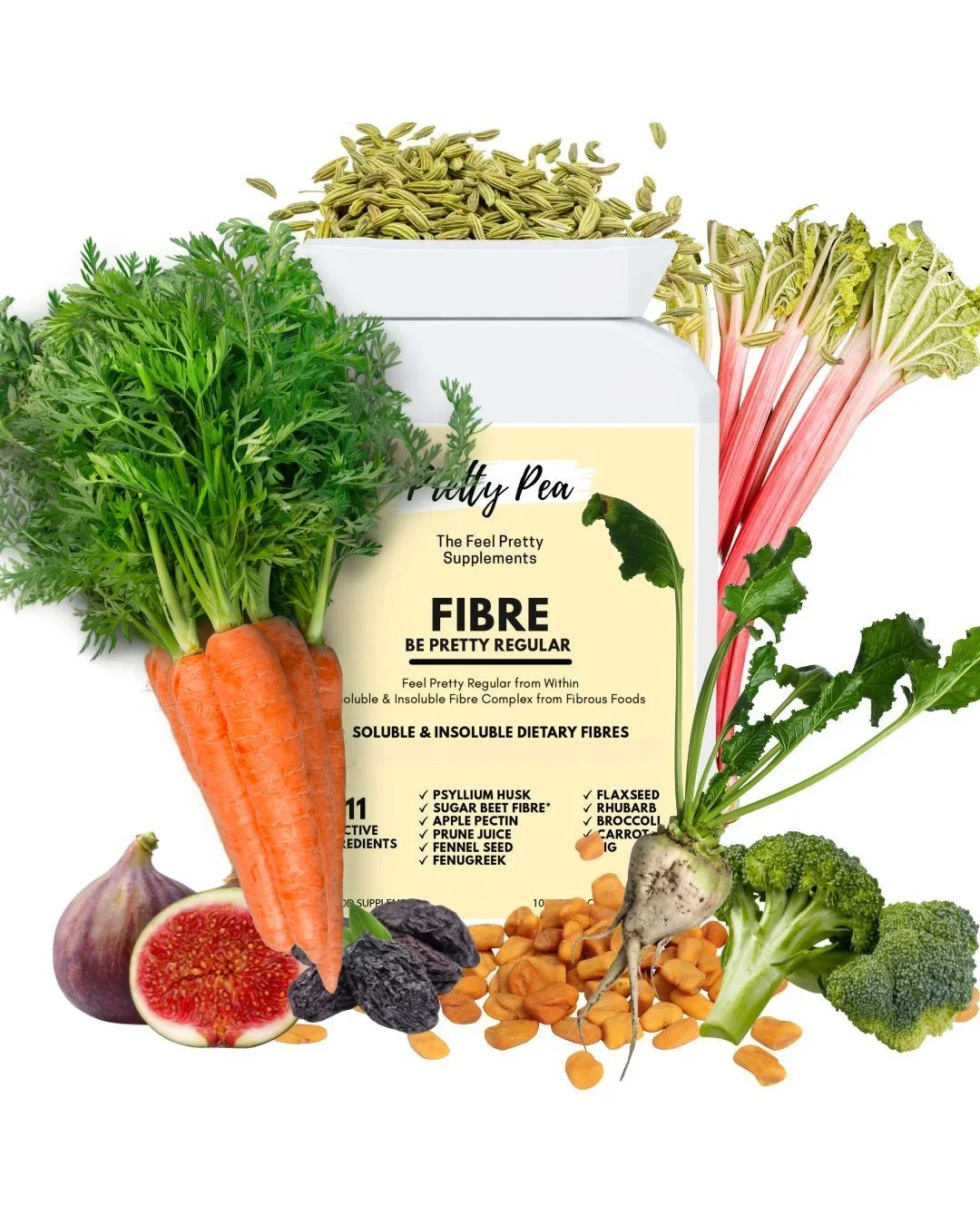](https://prettypea.blog/fibre-capsules)PRETTY REGULAR
## FIBRE SUPPLEMENTS
[Shop FIBRE CAPSULES](https://prettypea.blog/fibre-capsules)
[](https://prettypea.blog/apple-cider-vinegar/)APPLE CIDER VINEGAR
## APPLE CIDER VINEGAR+
[Shop APPLE CIDER VINEGAR+](https://prettypea.blog/apple-cider-vinegar/)
[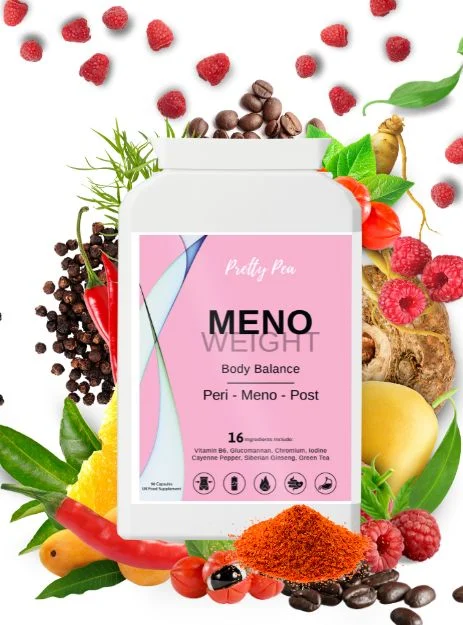](https://prettypea.blog/nutrition-support-for-women-during-menopause)MENO SHAPE BALANCE
## MENOPAUSE SUPPLEMENTS
[Shop MENO FORMULA](https://prettypea.blog/nutrition-support-for-women-during-menopause)
---
### [Apple Cider Vinegar Supplement](https://prettypea.blog/apple-cider-vinegar-supplement/)
**Published:** April 9, 2024
**Author:** Cate Boyd
**Content:**
Search
[](https://prettypea.blog/)
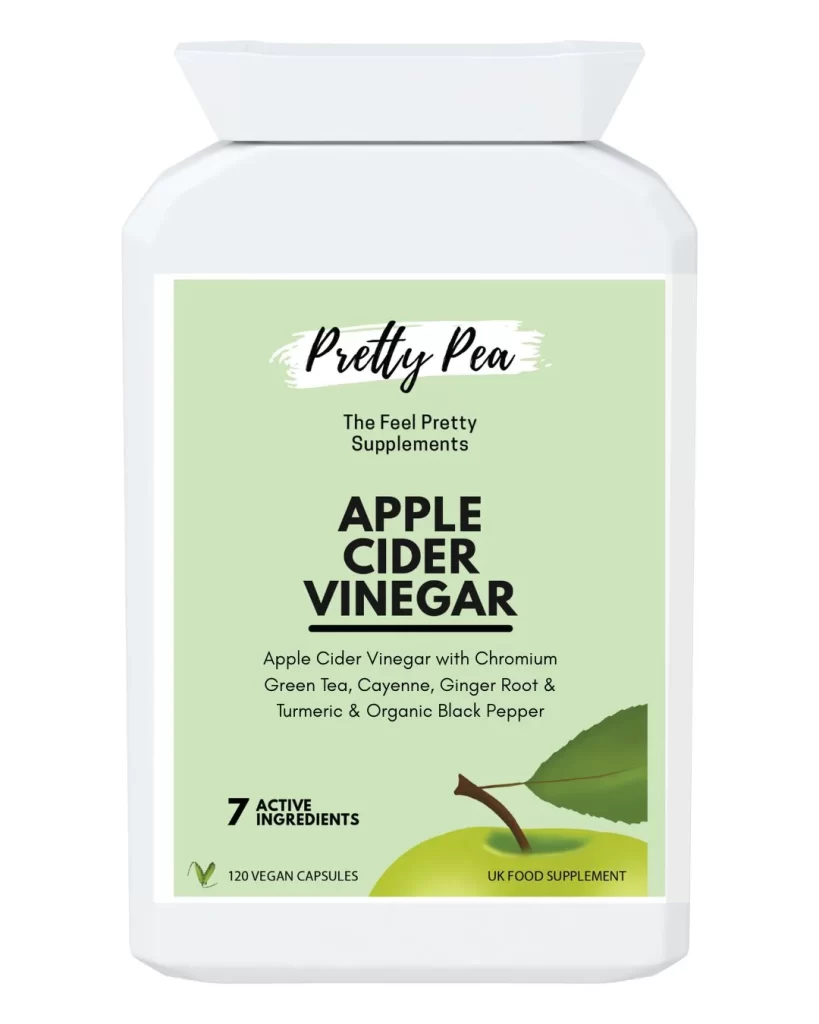
## Apple Cider Vinegar Supplement
APPLE CIDER VINEGAR SUPPLEMENT PLUS+
**£25.99**
All the benefits of an Apple Cider Vinegar supplement PLUS:
- Chromium
- Green Tea
- Cayenne
- Turmeric
- Ginger
[Add to cart](/cart/?add-to-cart=4298)
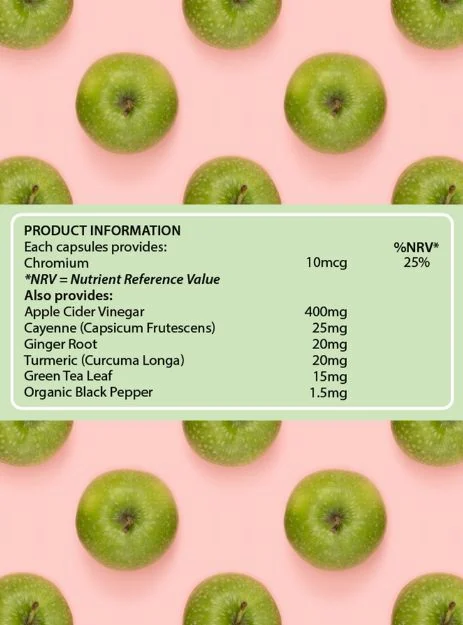
FEEL PRETTY FROM WITHIN
## Elevating Your Body From the Inside Out with Plant-Powered Goodness!
### Chromium
Chromium Contributes to normal Blood Sugar Levels
### Chromium
Chromium Contributes to normal Macronutrient Metabolism
### Botanicals
Green Tea, Turmeric, Cayenne & Ginger
## Save 20% on Orders Over £50
## Save 20% on Orders Over £50
## Save 20% on Orders Over £50
## Save 20% on Orders Over £50
### What is Apple Cider Vinegar
+
Apple cider vinegar (ACV) has been become a popular dietary supplement.
Apple cider vinegar is a type of vinegar made from the fermented juice of apples. It can contain a variety of vitamins, minerals and acids. It’s key benefits are from its key component acetic acid.
[](https://prettypea.blog/cart/?add-to-cart=4298)
### How many servings
+
Contains 120 Vegan Easy Take Capsules
### How to use
+
Take 1 capsule, 2 to 3 times per day or as advised by your healthcare provider.
### Safety & Contraindications
Results may vary from person to person.
Store in a cool dry place, out of the reach of children.
Best before date: see base of container.
Caution: Do not exceed the recommended daily intake.
A food supplement should not be used as a substitute for a varied, balanced diet and healthy lifestyle. Always consult your GP before taking food supplements if you are taking medication or have an existing medical condition. If you feel unwell, stop taking this product immediately and seek medical advice.
### References
[Chromium as an essential nutrient for humans – PubMed (nih.gov)](https://pubmed.ncbi.nlm.nih.gov/9380836/ "Chromium as an essential nutrient for humans - PubMed (nih.gov)")
Chromium and insulin resistance – PubMed (nih.gov)
Your review
Your overall rating Select a Rating5 Stars4 Stars3 Stars2 Stars1 Star
Title of your review
Your review
Your name
Your email
This review is based on my own experience and is my genuine opinion.
Submit Review
---
### [Fibre Guide](https://prettypea.blog/fibre-guide/)
**Published:** June 3, 2026
**Author:** Cate Boyd
**Content:**
## Fibre Checklist..
Get your handy guide with the lo-down on all things fibre, the different types, best sources, shopping lists and hacks how to increase your daily intake to keep things moving…
Get your **fibre free guide**. Add your details below\* and we’ll send you the download straight to your inbox!
#### Marketing Permissions
The information you provide on this form will only be used to provide you with updates and personalized marketing. Your privacy is important to us! Please let us know how you would like to keep in touch:
Email
We will send you occasional emails about promotions, new products and important updates to keep you in the loop.
Send Me The Guide
Loading…
#### Thank you!
You have successfully joined our subscriber list.
\*By giving your details you understand that you will be added to my mailing list and will receive occasional emails and information about nutrition, supplements and tips to feel your feel self and sometimes offers and discounts on Pretty Pea supplements. You can of course unsubscribe at any time.
---
### [Articles & Expert Guidance](https://prettypea.blog/articles/)
**Published:** April 11, 2026
**Author:** Cate Boyd
**Content:**
## Articles & Expert Guidance
Browse our collection of expert, science-backed articles on nutrition, menopause, fibre, superfoods and supplements. Designed to help you make informed choices and support your health at every stage.
[](https://prettypea.blog/category/menopause/)
### Menopause Nutrition
Support your body through menopause with clear, realistic nutrition advice. Learn what to eat for weight management, hormone balance, energy and long-term health.
👉 Begin with the [**menopause 5-day diet plan for weight loss** ](https://prettypea.blog/the-menopause-diet-5-day-plan-to-lose-weight/ "menopause 5-day diet plan for weight loss ")to see a practical example of structured eating.
👉 Explore wider guidance on **[menopause-friendly eating patterns and food swaps](https://prettypea.blog/simple-food-group-swaps-make-life-easier-for-yourself/ "menopause-friendly eating patterns and food swaps")** for long-term support.
[](https://prettypea.blog/category/supplements/)
### [Explore Supplements](https://prettypea.blog/category/supplements/)
Understand which supplements are worth taking and how they may support your health. Explore evidence-based guidance on vitamins, minerals and supplements for women.
👉 Learn more about **[fibre supplements and appetite support](https://prettypea.blog/appetite-regulation-how-fibre-vs-glp-1-compare/ "fibre supplements and appetite support")** if you’re looking at weight management options.
👉 You may also find it helpful to read about how **[supplements interact with medications such as HRT.](https://prettypea.blog/can-you-take-supplements-with-hrt-whats-safe-and-what-to-avoid/ "supplements interact with medications such as HRT.")**
[](https://prettypea.blog/category/fibre/)
### [Fibre & Gut Health](https://prettypea.blog/category/fibre/ "Fibre & Gut Health")
Improve your digestion and overall health with simple, practical advice on increasing fibre intake. Explore high-fibre foods, gut health tips, and easy ways to support bloating, constipation and daily wellbeing.
Start with **[20 highest fibre foods](https://prettypea.blog/what-is-the-highest-fibre-food/ "20 highest fibre foods")** for an easy way to increase your daily intake.
👉 You can also [read **the best 15 fibres for weight loss.**](https://prettypea.blog/15-best-high-fibre-foods-for-weight-loss-that-actually-keep-you-full/ "read the 15 fibres for weight loss.")
[](https://prettypea.blog/category/superfoods/)
### [Discover top Superfoods](https://prettypea.blog/category/superfoods/ "Discover top Superfoods")
Discover nutrient-dense foods that can support your health. Learn what superfoods are, their benefits, and simple ways to include them in your daily diet.
**👉** Read [**the ultimate** **superfood list** ](https://prettypea.blog/superfood-list/ "the ultimate superfood list ")to understand the best options to include in your diet.
👉 Discover **[GLP-1 Foods: The Ultimate List for Appetite Control, Fat Loss & Blood Sugar](https://prettypea.blog/glp-1-foods/)**
[](https://prettypea.blog/category/hormones-hrt/)
### [Hormones & HRT](https://prettypea.blog/category/hormones-hrt/ "Hormones & HRT")
Learn more about hormones, menopause and HRT with simple, trustworthy guidance. Explore how diet and supplements may support hormone health and what to be aware of.
👉 Read **[can you take supplements with HRT](https://prettypea.blog/can-you-take-supplements-with-hrt-whats-safe-and-what-to-avoid/ "can you take supplements with HRT")** to understand safety and interactions.
👉 You may also find it useful to explore **phytoestrogens and hormone balance**.
- [](https://prettypea.blog/the-menopause-diet-5-day-plan-to-lose-weight/)
## [The Menopause Diet 5-Day Plan to Lose Weight](https://prettypea.blog/the-menopause-diet-5-day-plan-to-lose-weight/)
Losing weight during menopause can feel frustrating, especially when the same eating habits that used to work suddenly stop making a difference. The Menopause Diet 5-Day Plan to…
[**Continue Reading**](https://prettypea.blog/the-menopause-diet-5-day-plan-to-lose-weight/)

Cate Boyd
May 13, 2026
4 min read
- [](https://prettypea.blog/superfood-list/)
## [Top 15 Superfood List for Energy, Immunity and Women’s Health](https://prettypea.blog/superfood-list/)
Looking to improve your energy, support your immune system, or simply eat a little healthier? This top superfood list is for you. Superfoods are often talked about as…
[**Continue Reading**](https://prettypea.blog/superfood-list/)

Cate Boyd
September 14, 2025
4 min read
- [](https://prettypea.blog/d-mannose-and-cranberry-for-women/)
D-Mannose and cranberry for women have become increasingly popular in supplements focused on urinary and intimate health. Cranberry has been associated with women’s urinary health for generations, while…
[**Continue Reading**](https://prettypea.blog/d-mannose-and-cranberry-for-women/)

Cate Boyd
October 8, 2026
4 min read
- [](https://prettypea.blog/what-is-glp-1/)
## [What Is GLP-1? The Gut Hormone That Helps Regulate Hunger & Blood Sugar](https://prettypea.blog/what-is-glp-1/)
If you’ve heard of GLP-1, there’s a good chance it has been in connection with weight-loss medications. But GLP-1 isn’t something invented for a medication. Your body makes…
[**Continue Reading**](https://prettypea.blog/what-is-glp-1/)

Cate Boyd
August 18, 2026
4 min read
- [](https://prettypea.blog/psyllium-husk-benefits/)
## [Psyllium Husk: Benefits, How to Take It, Side Effects & How It Compares](https://prettypea.blog/psyllium-husk-benefits/)
Psyllium husk has become one of the most popular fibre supplements — but what actually makes it different from other types of fibre? Also known as ispaghula husk,…
[**Continue Reading**](https://prettypea.blog/psyllium-husk-benefits/)

Cate Boyd
August 15, 2026
4 min read
- [](https://prettypea.blog/why-am-i-always-tired/)
## [Why Am I Always Tired? The Ultimate Guide to Fighting Fatigue Naturally](https://prettypea.blog/why-am-i-always-tired/)
Do you find yourself asking why am I always tired? Whilst feeling tired occasionally is normal. But when low energy follows you through the day—despite getting what seems…
[**Continue Reading**](https://prettypea.blog/why-am-i-always-tired/)

Cate Boyd
August 4, 2026
4 min read
- [](https://prettypea.blog/best-supplements-for-women/)
## [Which Supplements Do Women Really Need? An Evidence-Based Guide](https://prettypea.blog/best-supplements-for-women/)
Searching for the best supplements for women? How do you know the page you land on is actually evidence-based nutrition, not marketing hype? The supplement industry is worth…
[**Continue Reading**](https://prettypea.blog/best-supplements-for-women/)

Cate Boyd
July 26, 2026
4 min read
- [](https://prettypea.blog/how-to-lose-weight-during-menopause/)
## [How to Lose Weight During Menopause (Without Eating Less and Exercising More)](https://prettypea.blog/how-to-lose-weight-during-menopause/)
If you’re eating less than ever, exercising more than ever, and still struggling to lose weight, you’re far from alone. How to lose weight during menopause can feel,…
[**Continue Reading**](https://prettypea.blog/how-to-lose-weight-during-menopause/)

Cate Boyd
July 24, 2026
4 min read
1[2](?query-33-page=2&doing_wp_cron=1792147625.9723339080810546875000)[3](?query-33-page=3&doing_wp_cron=1792147625.9723339080810546875000)…[14](?query-33-page=14&doing_wp_cron=1792147625.9723339080810546875000)
[→](/wp-cron.php?doing_wp_cron=1792147625.9723339080810546875000&query-33-page=2)
---
### [Omega 369 Benefits, Dietary Supplement](https://prettypea.blog/omega-369-benefits/)
**Published:** July 5, 2025
**Author:** Cate Boyd
**Content:**
## [Omega 369 Benefits, Dietary Supplement](https://prettypea.blog/omega-369-benefits/)
Get Omega 369 Benefits and pretty protection for mind & body with balanced ratios of beneficial oils of Fish & Organic Flaxseed Oil & added Vitamin E
> With so many benefits, it’s no wonder Omegas are the most popular supplements across the world
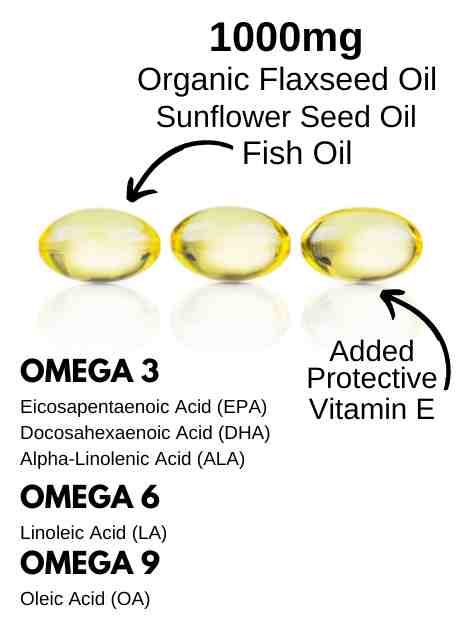
FEELING PRETTY PROTECTED STARTS FROM WITHIN
## Omega 369 Benefits Mind & Body Pretty Protection Starts From Within
### Vision
**DHA** contributes to maintenance of normal vision
### Brain
**DHA** contributes to maintenance of normal brain function
### Heart
**EPA** and **DHA** contribute to the normal function of the heart
### Pretty Protection
**Vitamin E** contributes to the protection of cells from oxidative stress
## Omega 369 Benefits
### Omega 369 Benefits
+
Omega 369 benefits mind and body and pretty much everything in between, from mood to balancing hormones to cognitive function to heart, bones, eyes, hair, skin & nails and immunity and essentially protecting every cell in your body.
Omega’s really are an essential. It’s no wonder Omegas are one of the most popular supplements worldwide.
Omega 369 benefits are associated with a whole host of mind and body benefits and being studied in the following areas:
- Heart Health
- Hormone Balance
- [Stable Moods](https://pubmed.ncbi.nlm.nih.gov/22910528/) & Concentration
- Depression
- Hair, Skin & Nails
- Circulation
- [Bone Health & Osteoporosis](https://www.ncbi.nlm.nih.gov/pmc/articles/PMC3899785/)
- [Rheumatoid arthritis](https://www.ncbi.nlm.nih.gov/pmc/articles/PMC5295086/)
- [Joint Health](https://www.ncbi.nlm.nih.gov/pmc/articles/PMC3899785/)
- [Eye Health](https://www.ncbi.nlm.nih.gov/pmc/articles/PMC5519357/)
- Cell Membranes
- [Weight Loss](https://www.nejm.org/doi/full/10.1056/NEJMoa1812792)
- Cholesterol Levels
- [Cognitive Function](https://www.ncbi.nlm.nih.gov/pmc/articles/PMC4537710/)
- Mental Performance
- Nervous System Function
- [Anti-inflammatory](https://www.ncbi.nlm.nih.gov/pmc/articles/PMC3257651/)
- [Immunity](https://www.ncbi.nlm.nih.gov/pmc/articles/PMC6834330/)
### How many servings
+
Contains 60 High Strength easy take gelatin capsules
### How to use
+
Take 1 capsule, to be taken 2-4 times per day, or as advised by your healthcare provider. To be taken 30 minutes before food.
Do not exceed the recommended daily intake.
Allergy Advice: Contains Fish
## What’s Inside?
### What are Omega 369 Oils
Omega-3 fatty acids are a type of polyunsaturated fat. These can be broken down into 3 major types: EPA. DHA and ALA.
ALA is the plant-derived omega-3. This is classed as *essential*, meaning it’s essential you obtain this in your diet daily via either food and/or supplements, because your body cannot produce this on its own.
EPA and DHA are marine-sourced omega-3’s. These are termed as “conditionally essential” as technically your body can synthesize these from ALA (assuming you consume sufficient ALA). However, science continues to tell us that the conversion rate of ALA into EPA and DHA is very low, which is why it’s recommended to obtain EPA and DHA from food and/or supplements.
Omega 3 and 6 fatty acids are **essential,** meaning your body cannot produce them so they must be sourced from the diet.
Omega 9 fatty acid is not considered *essential* (as it can be manufactured by the body), but its inclusion in the diet has been associated with a range of health benefits.
Pretty Pea’s OMEGA 369 is a **high strength formula (1000mg)**. It’s a specially blended combination of all 3 of these healthy fats, EPA, DHA and ALA.
These Omega 369 benefits supplements are high in EPA and DHA with balanced ratio’s of each for optimum intake of polyunsaturated and monounsaturated fatty acids.
These healthful fats are derived from a combination of sunflower seed oil, flaxseed oil and fish oil (marine being the best source) plus with added antioxidant Vitamin E for it’s protective effect on the body.
### Omega 369 Benefits
- **DHA (docosahexaenoic acid)** This can be found in several types of fatty fish and seafoods, plus in plant-based sources like algae. DHA supports total body health, and is especially know for it’s brain, eye, heart and joint benefits. It’s brain benefits can be associated with neurological function, and in particular with memory, learning ability, and long-term cognitive health.
- A [2017 systemic review](https://www.ncbi.nlm.nih.gov/pmc/articles/PMC5295086/) and meta-analysis of randomised trials found that taking fish oil supplements reduces symptoms of joint pain having a *‘significant effect*’ in patients with rheumatoid arthritis.
- **EPA (eicosapentaenoic acid)** alongside DHA, this is also marine-sourced and found in fatty fish and seafoods. EPA’s benefits include cardiovascular health (lipids, blood pressure, vascular function) and promoting a healthy inflammatory response in your body.
- **ALA (alpha-linolenic acid)** This plant based source of omega-3 can only be found in certain seeds (flax, chia, hemp) and nuts. The body then converts some ALA into EPA or DHA, albeit at *very modest levels*. It’s benefits are linked to brain and mood support.
### Approved Health Claims
These Omega 369 capsules are a source of Eicosapentaenoic Acid (**EPA**), Docosahexaenoic Acid (**DHA**), Alpha-Linolenic Acid (**ALA**), Linoleic Acid (**LA**), Oleic Acid (**OA**) and vitamin E.
**EPA** and **DHA** contribute to the normal function of the **heart** (with a daily intake of 250mg)
**DHA** and **EPA** contribute to the maintenance of normal **blood** **pressure** (with a daily intake of 3g of EPA and DHA)\*
**DHA** contributes to the maintenance of normal **blood triglyceride** **levels** (with a daily intake of 2g of DHA and when taken in combination with EPA)\*
**DHA** contributes to maintenance of normal **brain function** (with a daily intake of 250mg of DHA)
**DHA** contributes to maintenance of normal **vision** (with a daily intake of 250mg of DHA)
Maternal intake of **DHA** contributes to the normal **brain** and **eye** **development of the foetu**s and breastfed infants (a daily intake of at least 200mg).
**ALA** contributes to the maintenance of normal **blood cholesterol levels** (with a daily intake of 2g)
**LA** contributes to the maintenance of normal **blood cholesterol** **levels** (with a daily intake of 10g)
Replacing saturated fats in the diet with unsaturated fats contributes to the maintenance of normal blood cholesterol levels. OA is an unsaturated fat.
**Vitamin E** contributes to the **protection of cells from oxidative stress.**
*\*Users should not exceed a supplemental daily intake of 5g of EPA and DHA combined.*
## You Might Also Be Interested In…
## [Omega 369 Benefits, Dietary Supplement](https://prettypea.blog/omega-369-benefits/)
### Safety
Results may vary from person to person.
Allergy advice: Contains Fish
Store in a cool dry place, out of the reach of children.
Best before date: see base of container.
Caution: Do not exceed the recommended daily intake. *\*Users should not exceed a supplemental daily intake of 5g of EPA and DHA combined.*
Supplements should not be used as a substitute for a balanced and varied diet and healthy lifestyle. Always consult your doctor before taking any supplements or changing your diet.
As with all supplements, if you feel unwell, stop taking this product immediately and seek medical advice.
### References
EPA/DHA/DPA related health claims | EFSA
DHA/EPA related health claims | EFSA
EPA, DHA and DPA related health claims | EFSA
EPA/DHA/DPA related health claims | EFSA
Docosahexaenoic acid (DHA) related health claims | EFSA
DHA/EPA related health claims | EFSDHA and support of the cognitive development of the unborn child and breastfed infant – Scientific substantiation of a health claim related to DHA and support of the cognitive development of the unborn child and breastfed infant pursuant to Article 14 of | EFSA
ALA related health claims | EFSA
Health claims already evaluated | EFSA
Linoleic acid and maintenance of normal blood cholesterol concentrations | EFSA
Linoleic acid related health claims | EFSA
Vitamin E related health claims | EFSA
https://academic.oup.com/ajcn/article/83/6/1467S/4633217
https://www.hindawi.com/journals/bmri/2015/519830
---
### [Vegan Chocolate Protein Powder](https://prettypea.blog/vegan-chocolate-protein-powder/)
**Published:** April 9, 2024
**Author:** Cate Boyd
**Content:**
Search
[](https://prettypea.blog/)
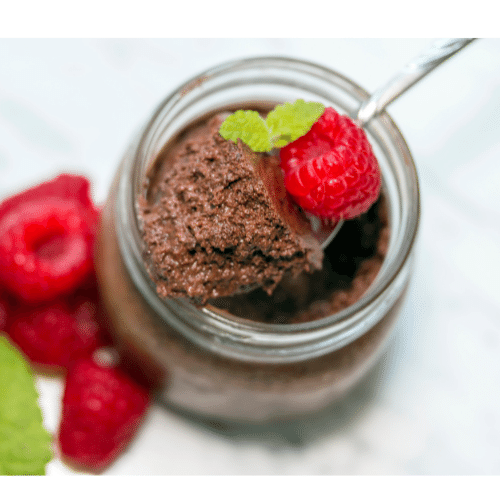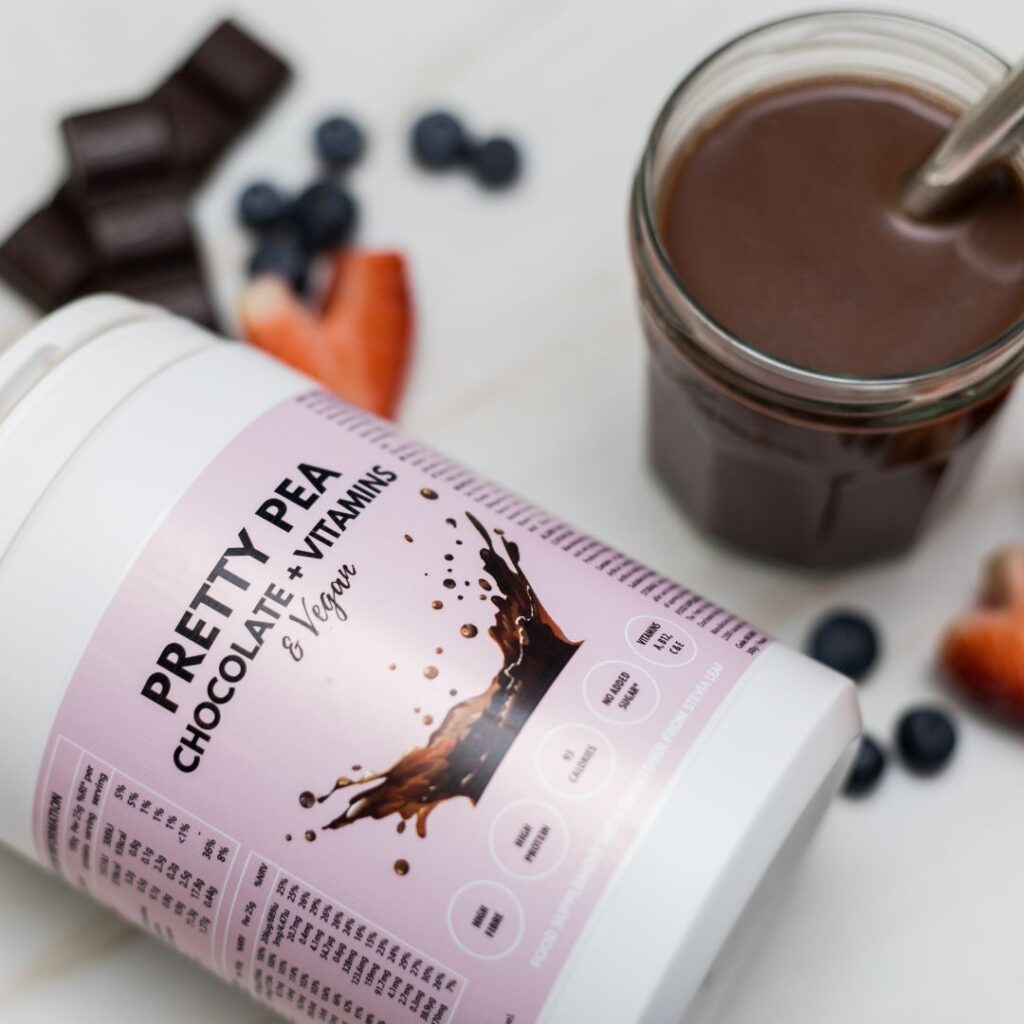
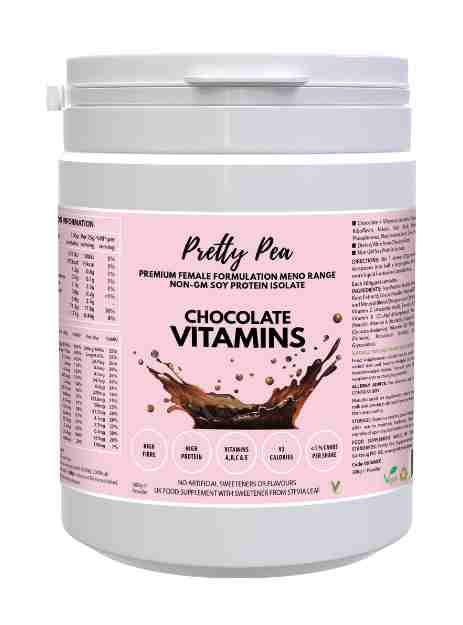
## Vitamins & Chocolate Protein Powder
DAILY NUTRITION – Chocolate Protein Powder
**£24.99**
Non-GMO Soy Protein
Added Vitamins & Minerals
Under 100 calories
17.8g Protein per serving
2.5g Chicory Root Fibre per serving
Only 0.1g Saturated Fat per serving
Under <1% Carbohydrate (of which sugars) per serving
No Artificial Sweetener
[Also available in Vanilla](https://prettypea.blog/vegan-vanilla-protein-powder/)
[Add Chocolate Protein Powder to cart](https://prettypea.blog/cart/?add-to-cart=1208)
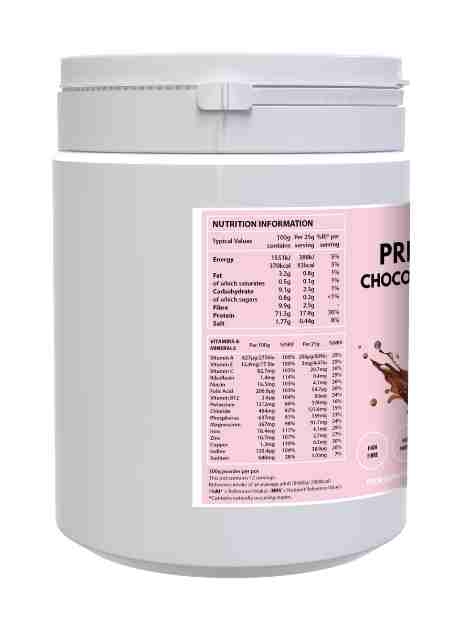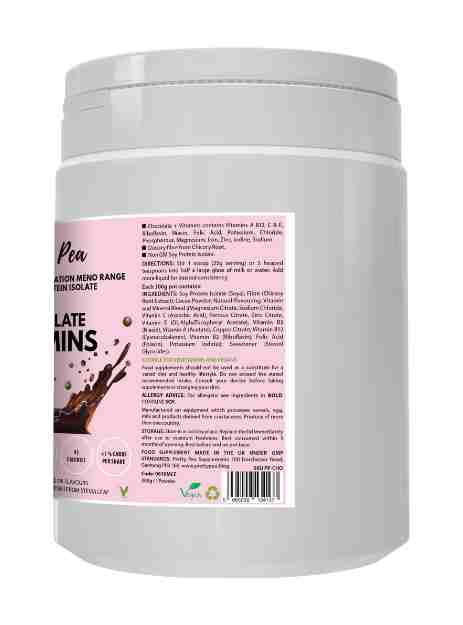
FEELING PRETTY NOURISHED STARTS FROM WITHIN
## Delicious Daily Nutrition, Just 93 Calories
### Protein & Fibre
```
Rich in Non GMO Soy Protein & in Dietary Fibre from Chicory Root
```
### Vitamins & Minerals
Daily Vitamins & Minerals to support wellbeing & vitality
### Only 93 Calories
Enjoy any time of day at Under 100 Calories per Serving
### No Artificial Sweetener
Naturally Sweetened with Plant Based Stevia
## Pretty Pea Protein
## Under 100 Calories
## Pretty Pea Vegan Chocolate Protein Powder
### Benefits
+
### Daily Nutrition
Rich in protein at 17.8g per serving, saturated fat is just 0.1g per serving and carbohydrates of which sugars 0.2g per serving and with no artificial sweeteners. This chocolate vegan protein powder is also fibre rich at 2.5g per serving (fibre from chicory root extract).
### Vitamins & Minerals
Packed with the daily vitamins & minerals women need, delicious and filling, Chocolate & Vitamins vegan protein powder makes for the pretty perfect in-between meals shake.
### **Under 100 Calories**
This Chocolate vegan protein powder can even be used as a tasty, calorie-controlled chocolate dessert (under 100 calories). Also available in creamy Vanilla flavour.
### How many servings
+
300g provides a minimum of 12 servings (or more, dependent on how thick you like your chocolate vegan protein shake)
### How to use
+
Add 1 scoop of Pretty Pea chocolate vegan protein powder to your favourite milk and shake well or better still, blitz in a blender for a super smooth texture.
## What’s Inside?
### Vitamins for Women
+
**Protein** contributes to the maintenance & **growth in muscle mass** and normal **bones.**
**Vitamin A** contributes to the maintenance of normal **skin**, **vision** and mucous membranes, normal iron metabolism, function of the **immune system** and has a role in the process of cell specialisation.
**Vitamin E** contributes to the **protection of cells from oxidative stress.**
**Vitamin C** contributes to maintaining normal function of the **immune** **system**, **nervous system** & **psychological function**. It also contributes to normal **collagen formation** for the normal function of **blood vessels, bones, cartilage, gums, skin** and **teeth**, normal **energy-yielding** **metabolism**, protection of cells from oxidative stress, the **reduction of tiredness and fatigue**, the regeneration of the reduced form of vitamin E and **increases iron absorption**.
**Riboflavin** contributes to normal **energy-yielding metabolism**, normal functioning of the **nervous system**, the maintenance of normal mucous membranes, the maintenance of normal red blood cells, the maintenance of normal **skin** & **vision**, the normal metabolism of iron, the **protection of cells from oxidative stress** and the **reduction of tiredness and fatigue.**
**Niacin** contributes to normal **psychological function**, normal **energy-yielding metabolism**, normal functioning of the **nervous system**, the maintenance of normal **skin** & mucous membranes and the **reduction of tiredness and fatigue**.
Supplemental **folic acid** intake increases maternal folate status. Low maternal folate status is a risk factor in the development of neural tube defects in the developing foetus. The target population is women of child-bearing age and the beneficial effect is obtained with a supplemental folic acid daily intake of 400 μg for at least one month before and up to three months after conception.
**Vitamin B12:** Vitamin B12 contributes to normal **energy-yielding metabolism**, normal functioning of the **nervous system**, normal **homocysteine metabolism**, normal **psychological function**, normal red blood cell formation, normal function of the **immune system**, the **reduction of** **tiredness and fatigue** and it has a role in the process of cell division. **Potassium** contributes to normal functioning of the **nervous system**, normal **muscle function** and to the maintenance of normal **blood pressure**.
**Chloride** contributes to normal **digestion** by production of hydrochloric acid in the stomach.
**Phosphorus** contributes to normal **energy-yielding metabolism**, normal function of cell membranes, the maintenance of normal **bones** & **teeth**.
**Magnesium** contributes to a **reduction of tiredness and fatigue, electrolyte balance**, normal **energy-yielding metabolism**, normal functioning of the **nervous system**, normal **muscle function**, normal **protein synthesis**, normal **psychological function**, the maintenance of normal **bones** and **teeth**, and it has a role in the process of cell division.
**Iron** contributes to normal **cognitive function**, normal **energy-yielding metabolism**, normal formation of red blood cells and haemoglobin, normal **oxygen transport in the body,** normal function of the **immune system**, the **reduction of tiredness and fatigue**, the process of cell division and to the normal cognitive development of children.
**Zinc** contributes to normal DNA synthesis, normal acid-base metabolism, normal **carbohydrate metabolism**, normal **cognitive function**, normal **fertility and reproduction**, normal **macronutrient metabolism**, normal **metabolism of fatty acids**, normal metabolism of vitamin A, normal protein synthesis, the maintenance of normal **bones** & **vision**, the maintenance of normal **hair, nails** and **skin**, the maintenance of normal **testosterone levels in the blood**, the normal function of the **immune system**, the **protection of cells from oxidative stress** and it has a role in the process of cell division.
**Copper** contributes to the maintenance of normal **connective tissues**, normal **hair pigmentation**, normal **skin pigmentation**, **protection of cells from oxidative stress**, normal function of the **immune system**, normal functioning of the **nervous system**, normal **energy-yielding metabolism** and normal iron transport in the body.
**Iodine** contributes to normal **cognitive function**, normal **energy-yielding metabolism**, normal functioning of the **nervous system**, the maintenance of normal **skin**, the normal **production of thyroid hormones** and normal **thyroid function** and the normal growth of children.
### Safety & Contraindications
Results may vary from person to person.
Store in a cool dry place, out of the reach of children.
Best before date: see base of container.
Caution: Do not exceed the recommended daily intake.
Supplements should not be used as a substitute for a balanced and varied diet and healthy lifestyle.
Always consult your doctor before taking any supplements or changing your diet.
As with all supplements, if you feel unwell, stop taking this product immediately and seek medical advice.
### References
Protein related health claims | EFSA (europa.eu)
Health claims already evaluated | EFSA (europa.eu)
Vitamin A related health claims | EFSA (europa.eu)
Beta carotene related health claims | EFSA (europa.eu)
Vitamin E related health claims | EFSA (europa.eu)
Vitamin C related health claims | EFSA (europa.eu)
Vitamin C related health claims | EFSA (europa.eu)
Riboflavin related health claims | EFSA (europa.eu)
Niacin related health claims | EFSA (europa.eu)
Niacin related health claims | EFSA (europa.eu)
Increasing maternal folate status by supplemental folate intake and reduced risk of neural tube defects | EFSA (europa.eu)
Vitamin B12 related health claims | EFSA (europa.eu)
Vitamin B12 related health claims | EFSA (europa.eu)
Potassium related health claims | EFSA (europa.eu)
Chloride as Na-, K-, Ca- or Mg-salt and contribution to normal digestion by production of hydrochloric acid in the stomach | EFSA (europa.eu)
Scientific Opinion on the substantiation of health claims related to phosphorus and function of cell membranes (ID 328), energy‐yielding metabolism (ID 329, 373) and maintenance of bone and teeth (ID 324, 327) pursuant to Article 13(1) of Regulation (EC) No 1924/2006 – – 2009 – EFSA Journal – Wiley Online Library
Magnesium related health claims | EFSA (europa.eu)
Magnesium related health claims | EFSA (europa.eu)
Iron related health claims | EFSA (europa.eu)
Meat or fish and improvement of non-haem iron absorption | EFSA (europa.eu)
Riboflavin related health claims | EFSA (europa.eu)
Iron and cognitive development of children | EFSA (europa.eu)
Zinc related health claims | EFSA (europa.eu)
Zinc related health claims | EFSA (europa.eu)
Scientific Opinion on the substantiation of health claims related to copper and protection of DNA, proteins and lipids from oxidative damage (ID 263, 1726), function of the immune system (ID 264), maintenance of connective tissues (ID 265, 271, 1722), energy‐yielding metabolism (ID 266), function of the nervous system (ID 267), maintenance of skin and hair pigmentation (ID 268, 1724), iron transport (ID 269, 270, 1727), cholesterol metabolism (ID 369), and glucose metabolism (ID 369) pursuant to Article 13(1) of Regulation (EC) No 1924/2006 – – 2009 – EFSA Journal – Wiley Online Library
Scientific Opinion on the substantiation of health claims related to copper and reduction of tiredness and fatigue (ID 272), maintenance of the normal function of the nervous system (ID 1723), maintenance of the normal function of the immune system (ID 1725) and contribution to normal energy‐yielding metabolism (ID 1729) pursuant to Article 13(1) of Regulation (EC) No 1924/2006 – – 2011 – EFSA Journal – Wiley Online Library
Iodine related health claims | EFSA (europa.eu)
Iodine related health claims | EFSA (europa.eu)
Iodine and the growth of children | EFSA (europa.eu)
Your review
Your overall rating Select a Rating5 Stars4 Stars3 Stars2 Stars1 Star
Title of your review
Your review
Your name
Your email
This review is based on my own experience and is my genuine opinion.
Submit Review
## Save 20% on Orders Over £50
## Save 20% on Orders Over £50
---
### [ZEN Ashwagandha Supplements](https://prettypea.blog/ashwagandha-supplements/)
**Published:** April 9, 2024
**Author:** Cate Boyd
**Content:**
Search
[](https://prettypea.blog/)
## Ashwagandha Supplement Complex
BOTANICAL & VITAMIN B COMPLEX
**£25.00**
Much more than your average Ashwagandha supplement, ZEN combines Ashwagandha KSM 66PLUS 8 additional body-balancing botanicals plus Vitamins B3, Vitamin B5, Vitamin B6 & Vitamin B12 to contribute to normal:
Mental Performance
Psychological Function
Nervous System
Hormone Regulation
Reduce Tiredness & Fatigue
**8** Added Adaptogens include Cordyceps & Reishi Mushroom, Maca, Liquorice Root, Panax Ginseng, Turmeric & more
[Add to cart](https://prettypea.blog/cart/?add-to-cart=1210)
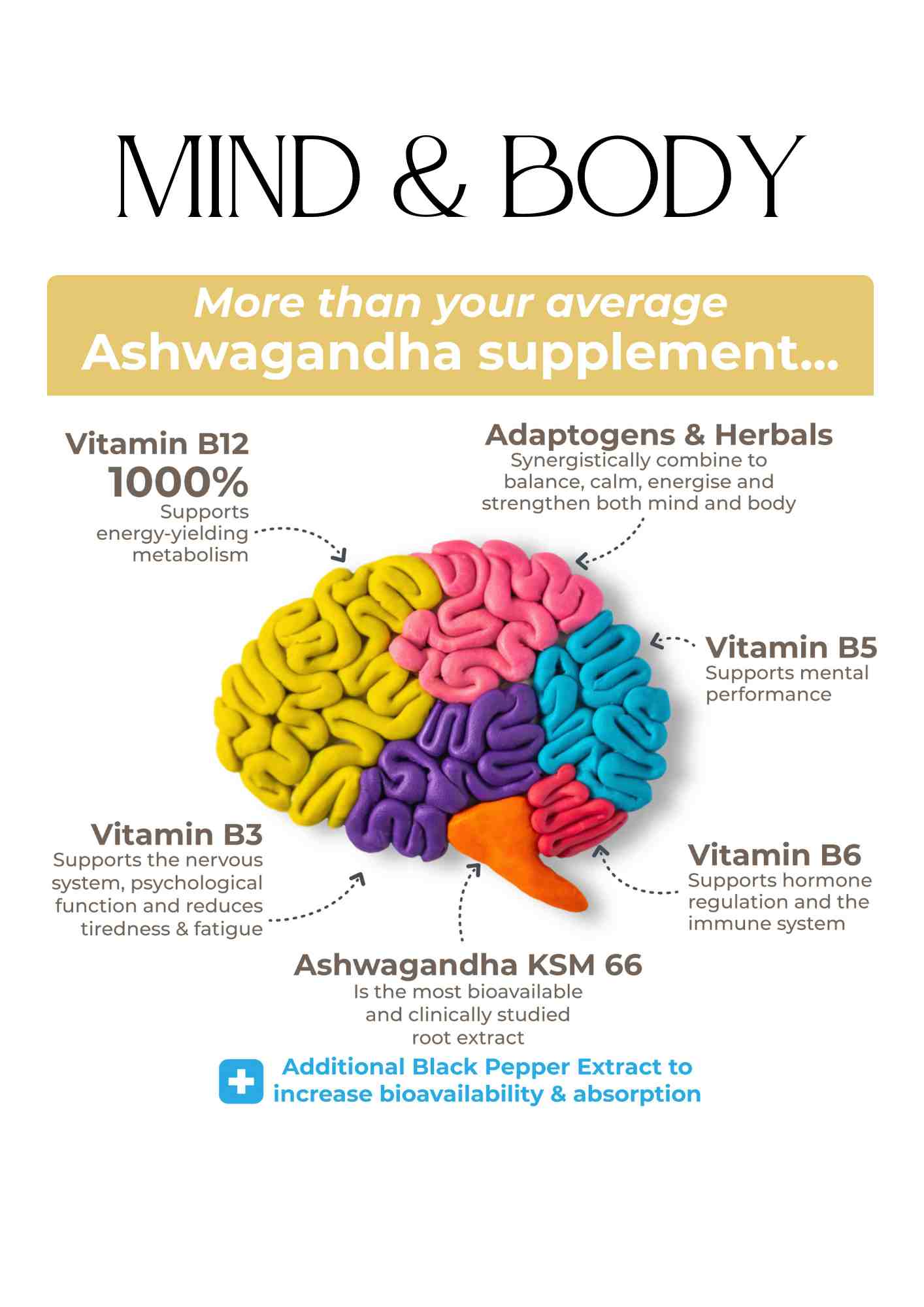
FEEL PRETTY ZEN FROM WITHIN
## Elevating Your Inner Zen with Plant-Powered Goodness!
### Inner Balance
Mind & Body Balance
### Energy Levels
Vitamin B6 contributes to Reduction of Tiredness & Fatigue
### Mental Performance
Contributes to normal Mental Performance, Psychological Function & Nervous System
### Adaptogen Mushrooms
**8** Synergistic Adaptogen Herbals Maca, Panax Ginseng, Schisandra, Gotu Kola, Turmeric & Black Pepper, Reishi & Cordyceps Mushrooms
## Free Delivery
## Save 20% on Orders Over £50
## Save 20% on Orders Over £50
## Save 20% on Orders Over £50
## ZEN Ashwagandha Benefits
### ZEN Benefits
+
ZEN is for you if you’re looking for inner calm and balance.
A synergistic combination of **ashwagandha KSM66**, roots, herbs, mushrooms and B vitamins formulated to contribute to normal:
hormone regulation
reduce tiredness & fatigue
immune function
mental performance
**ZEN ashwagandha combines important nutrients that support hormonal health**.
The adrenal glands produce hormones that underpin the body’s mechanisms for coping with physical and mental stress. Chronic anxiety, worry, nervous tension, over-exercising and other factors associated with excessive cortisol release are linked to adrenal exhaustion and fatigue. Over-reliance on caffeine and other stimulants also tax the adrenals.
ZEN combines adaptogens and vitamins that help to balance hormones, allowing users to better manage their stress response on a day to day basis.
Adaptogens have been described as ***“nutritional herbals promoting adaptability, resilience and survival of living organisms in stress***“
*“Adaptogens increase the ability of a person to resist, adapt, or become resilient in nonspecific ways to biological, physical, or chemical stressors.”*
The nature of adaptogenic herbs is to help a person “adapt” to their environment, as well as to normalise and regulate the body’s functioning. These clever herbs help the body adapt to what it needs and regulate the system up or down, as required in the moment.
ZEN works best when combined with adequate rest and nutrition and is ideal support for those who wish to put their body back in balance and reinvigorate their energy levels to combat life’s daily physical and mental stresses.
### How many servings
+
Contains 90 vegan easy take capsules.
### How to use
+
Take 1 capsule, 1 to 3 times per day or as required.
## What’s Inside?
### Ashwagandha KSM66
### **What is Ashwagandha**
Ashwagandha is a plant used in traditional Ayurvedic and Unani. It is commonly promoted for stress and anxiety, sleep and cognitive function.
Known as *Withania somnifera* (WS), Ashwagandha’s extracts have been used in traditional medicine for millennia to promote healthy aging and wellbeing.
Traditionally used to nurture the body, it has been used in the treatment of various illnesses in Indian Systems of Medicine for over 5,000 years.
In Ayurveda, Ashwagandha is classified as a rasayana (*a way of attaining excellence*) and purported to:
promote mental & physical wellbeing
promote strength & endurance
rejuvenate the body
increase longevity
### Gold Standard Ashwagandha KSM66
Not all ashwagandha supplements are created equal and when it comes to choosing the best ashwagandha Ashwagandha KSM66 is the ***gold standard***.
Ashwagandha KSM66 is one of the most popular ashwagandha supplements. Known for its high-quality and standardized form of ashwagandha, it’s derived using a unique extraction process which harnesses a full spectrum extract from just the ashwagandha root – not the leaves. The result is an ashwagandha extract which has the highest quality and **best bioavailability**.
KSM66 ashwagandha has the highest concentration of all major root-only extracts available on the market. Together with good manufacturing processes which use no solvents or added active ingredients, KSM66 is the most natural, potent and effective formulation of ashwagandha root.
**Standardization:** Ashwagandha KSM66 is standardized to contain a high concentration of bioactive *withanolides* – the compounds responsible for many of ashwagandha’s potential health benefits.
**Full Spectrum:** It aims to retain the full spectrum of the herb’s natural constituents, unlike some extracts that isolate specific compounds.
**Sustainably Grown** The ashwagandha used in KSM66 is typically sourced from sustainable farms.
**Clinical Research:** KSM66 has been the subject of various clinical studies that support its effectiveness in areas like stress reduction, cognitive function, and physical and energy enhancement.
**High Purity:** Ashwagandha KSM66 is processed using a proprietary extraction process to ensure high purity and quality.
### B Vitamins
**Vitamin B3 (niacin)** contributes to normal **psychological function**, normal energy-yielding metabolism, normal functioning of the **nervous system**, the maintenance of normal mucous membranes, the maintenance of normal **skin** and the **reduction of tiredness and fatigue.**
**Vitamin B5 (pantothenic acid**) is involved in the **synthesis and** **release of adrenal hormones**. It contributes to normal energy-yielding metabolism, **mental performance**, synthesis and metabolism of **steroid hormones**, vitamin D and some **neurotransmitters**, and the **reduction of tiredness and fatigue**.
**Vitamin B12 (cyanocobalamin)** contributes to normal energy-yielding metabolism, functioning of the **nervous system**, **homocysteine metabolism**, **psychological** function, red blood cell formation, function of the **immune** system, the **reduction of tiredness and fatigue** and it has a role in the process of cell division.
### Reishi Mushroom
Reishi mushroom, also known as *Ganoderma lucidum*, is a type of mushroom with a long history of use in traditional Chinese medicine (TCM).
With its Japanese name, Reishi is also known as Mannetake (10,000 year mushroom).
It’s Chinese name Ling Zhi means spirit mushroom – ***mushroom of spritual potency.***
In Chinese legend this mushroom is also referred to as the ‘***mushroom of immortality’*** because it has been associated with anti-ageing and longevity.
Reishi gets it’s benefits from being rich in active polysaccharides and triterpenoid compounds (primarily ganoderic and lucidenic acids).
### Cordyceps Mushroom
Cordyceps mushroom is another adaptogen mushroom that has been used in traditional Tibetan and TCM for centuries.
Traditionally Cordyceps is highly regarded for its energising effects and ability to reduce fatigue whilst supporting the adrenal glands.
Researchers found that Cordyceps acts like an adaptogen, helping people struggling with fatigue increase their levels of energy and endurance. Unlike stimulants that tax the adrenals, instead an adaptogenic mushroom supports your adrenal glands helping your body to produce and maintain consistent energy levels.
### Maca Root
Maca *(Lepidium meyenii)* is a plant of the brassica (mustard) family, and like broccoli and cauliflower, is a cruciferous vegetable.
Nutrient-rich it contains essential vitamins and minerals. Cultivated for at least 2000 years, it has been used traditionally for centuries as an adaptogen plant.
Maca is rich in beneficial plant sterols that are biochemically related to hormones such as oestrogen, testosterone and progesterone.
Classed as an adaptogen, maca can directly change the balance of your hormones to help you adapt to stress and illness.
Your endocrine (hormone) system is in the front line when it comes to handling the effects of stress on your body. If you’re under chronic stress or suffer from anxiety, the adaptogenic effects of maca may help to reduce the load.
Maca supports the HPA axis to support the body’s own production of numerous hormones, increasing or decreasing their levels according to what you individually need.
Highly nutritious Maca is often referred to as a ***superfood***. It’s rich in fibre, a large number of essential amino acids, fatty acids and other nutrients, packed with vitamins C and A, as well as B2, B6 and niacin and packed with minerals, including iron, zinc, iodine, calcium, copper, magnesium and potassium.
Maca is also rich in beneficial plant sterols that are biochemically related to hormones such as oestrogen, testosterone and
progesterone.
### Liquorice Root
Liquorice root has a long history of use, going back to ancient Assyrian, Egyptian, Chinese and Indian cultures. It was used traditionally for treating a variety of conditions thanks to its anti-inflammatory, anti-viral and anti-allergic properties.
Today, Liquorice is a popular supplement for adrenal exhaustion. It’s main active ingredient Glycyrrhizin, inhibits cortisol breakdown, thereby helping to restore normal levels of this *‘****stress’* hormone.**
### Panax Ginseng
Panax Ginseng, a fast-acting adaptogenic herb, traditionally used for alertness and vitality, as well as counteracting fatigue.
Panax ginseng, commonly referred to as Korean ginseng or Asian ginseng, is a rich source of phyto-estrogen.
It’s biologically active ingredients are called eleutherosides, support the recuperative power of the body. As such, it is traditionally used for supporting overall health and well-being, to strengthen the immune system and to help fight off stress.
### Schisdandra
Schisandra chinensis is another herbal classed as an adaptogen. It has been used since the dawn of Chinese civilisation as a tonic herb to strengthen the body and increase resilience to mind and body.
Chinese folklore says that Schisandra can *“calm the heart and quiet the spirit”.* Hunters would use this bright red berry to combat fatigue under physical stress and to increase endurance.
### Gotu Kola
Gotu kola *(Centella asiatica)*, has been used for centuries, and is considered one of the most powerful brain tonics in the Ayurvedic apothecary.
Known as Brahmi – one of the highest states of consciousness (Brahmi or God consciousness), and the ***“ancient herb of enlightenment and longevity”***.
It is considered to have great nutritional benefits as it contains carotenoids, vitamin B and C, minerals, and other phytonutrients including flavonoids and polyphenols.
### Turmeric & Black Pepper
Turmeric is a bright yellow spice derived from the root of the Curcuma longa plant.
Turmeric includes three different curcuminoids: curcumin, bisdemethoxycurcumin and demethoxycurcumin. It also contains volatile oils like tumerone, atlantone and zingiberone. These different substances are all associated with their own unique benefit.
---
Black pepper is often added to turmeric to **Enhance Absorption.**
Turmeric’s active compound, curcumin, is not easily absorbed by the body. Black pepper contains a compound called piperine, which studies show can enhance the absorption of curcumin **increasing bioavailability by 2000%** when the two are consumed together.
### Safety & Contraindications
Results may vary from person to person.
Store in a cool dry place, out of the reach of children.
Best before end: see base of container.
Caution: Do not exceed the recommended daily intake.
A food supplement should not be used as a substitute for a varied, balanced diet and healthy lifestyle.
**Warning:** Contain extracts that might act like estrogen. If you have any condition that might be made worse by estrogen, do not use.
Always consult your GP before taking food supplements if you are taking medication or have an existing medical condition.
If you feel unwell, stop taking this product immediately and seek medical advice.
### References
Antioxidant Effects of Schisandra chinensis Fruits and Their Active Constituents – PMC (nih.gov)
A randomized, double-blind, placebo-controlled trial of Schisandra chinensis for menopausal symptoms – PubMed (nih.gov)
Schisandra chinensis and its phytotherapeutical applications – PubMed (nih.gov)
Health Benefits of Culinary Herbs and Spices – PubMed (nih.gov)
Curcumin: A Review of Its Effects on Human Health – PubMed (nih.gov)
Gotu Kola (Centella asiatica): Nutritional Properties and Plausible Health Benefits – PubMed (nih.gov)
Centella asiatica in dermatology: an overview – PubMed (nih.gov)
Ginseng as a Treatment for Fatigue: A Systematic Review – PubMed (nih.gov)
Recent Advances in Panax ginseng C.A. Meyer as a Herb for Anti-Fatigue: An Effects and Mechanisms Review – PubMed (nih.gov)
Mechanisms of Panax ginseng action as an antidepressant – PubMed (nih.gov)
Review – Glycyrrhiza glabra L. (Liquorice) – PubMed (nih.gov)
Glycyrrhiza Genus: Enlightening Phytochemical Components for Pharmacological and Health-Promoting Abilities – PubMed (nih.gov)
Preclinical Evidence for the Pharmacological Actions of Glycyrrhizic Acid: A Comprehensive Review – PubMed (nih.gov)
Medicinal effects of Peruvian maca (Lepidium meyenii): a review – PubMed (nih.gov)
Chemical composition and health effects of maca (Lepidium meyenii) – PubMed (nih.gov)
\[Maca (Lepidium meyenii Walp), a review of its biological properties\] – PubMed (nih.gov)
Ganoderma lucidum (Reishi) an edible mushroom; a comprehensive and critical review of its nutritional, cosmeceutical, mycochemical, pharmacological, clinical, and toxicological properties – PubMed (nih.gov)
Cellular and physiological effects of Ganoderma lucidum (Reishi) – PubMed (nih.gov)
\[Higher fungi in traditional and modern medicine\] – PubMed (nih.gov)
Pharmacological Properties of Biocompounds from Spores of the Lingzhi or Reishi Medicinal Mushroom Ganoderma lucidum (Agaricomycetes): A Review – PubMed (nih.gov)
The genus Cordyceps: An extensive review of its traditional uses, phytochemistry and pharmacology – PubMed (nih.gov)
Cordycepin for Health and Wellbeing: A Potent Bioactive Metabolite of an Entomopathogenic Cordyceps Medicinal Fungus and Its Nutraceutical and Therapeutic Potential – PubMed (nih.gov)
A Review of Mushrooms as a Potential Source of Dietary Vitamin D – PubMed (nih.gov)
Mushrooms and immunity – PubMed (nih.gov)
Edible Mushrooms and Beta-Glucans: Impact on Human Health – PubMed (nih.gov)
Anti-Cancer Potential of Edible/Medicinal Mushrooms in Breast Cancer – PubMed (nih.gov)
Neuroprotective Herbs for the Management of Alzheimer’s Disease – PMC (nih.gov)
Herbal medicine for depression, anxiety and insomnia: A review of psychopharmacology and clinical evidence – ScienceDirect
The Safety and Efficacy of Botanicals with Nootropic Effects – PMC (nih.gov)
An investigation into the stress-relieving and pharmacological actions of an ashwagandha (Withania somnifera) extract – PMC (nih.gov)
Evolution of the adaptogenic concept from traditional use to medical systems: Pharmacology of stress- and aging-related diseases – PubMed (nih.gov)
Natural Withanolides in the Treatment of Chronic Diseases – PMC (nih.gov)
An Alternative Treatment for Anxiety: A Systematic Review of Human Trial Results Reported for the Ayurvedic Herb Ashwagandha (Withania somnifera) – PMC (nih.gov)
Effects of Withania somnifera (Ashwagandha) and Terminalia arjuna (Arjuna) on physical performance and cardiorespiratory endurance in healthy young adults – PubMed (nih.gov)
*Kuchewar et al., 2014; Kulkarni and Dhir, 2008*
*Dar et al., 2015; Mirjalili et al., 2009*
Pharmacology of Herbal Sexual Enhancers: A Review of Psychiatric and Neurological Adverse Effects – PMC (nih.gov)
Effects of Withania somnifera in patients of schizophrenia: A randomized, double blind, placebo controlled pilot trial study – PMC (nih.gov)
Withania Somnifera (Ashwagandha) and Withaferin A: Potential in Integrative Oncology – PMC (nih.gov)
Clinical evaluation of the pharmacological impact of ashwagandha root extract on sleep in healthy volunteers and insomnia patients: A double-blind, randomized, parallel-group, placebo-controlled study – PubMed (nih.gov)
Efficacy of Withania somnifera supplementation on adult’s cognition and mood – PubMed (nih.gov)
Pharmacological evaluation of Ashwagandha highlighting its healthcare claims, safety, and toxicity aspects – PubMed (nih.gov)
Effects of Withania somnifera (Ashwagandha) on Stress and the Stress- Related Neuropsychiatric Disorders Anxiety, Depression, and Insomnia – PubMed (nih.gov)
Ashwagandha (Withania somnifera) for the treatment and enhancement of mental and physical conditions: A systematic review of human trials – ScienceDirect
A randomized, double blind, placebo controlled study to evaluate the effects of ashwagandha (Withania somnifera) extract on sleep quality in healthy adults – PubMed (nih.gov)
Efficacy and Safety of Ashwagandha Root Extract on Cognitive Functions in Healthy, Stressed Adults: A Randomized, Double-Blind, Placebo-Controlled Study – PubMed (nih.gov)
Effect of Ashwagandha (Withania somnifera) extract on sleep: A systematic review and meta-analysis – PubMed (nih.gov)
Ashwagandha (Withania somnifera)-Current Research on the Health-Promoting Activities: A Narrative Review – PubMed (nih.gov)
Niacin related health claims | EFSA (europa.eu)
www.efsa.europa.eu/en/efsajournal/pub/1224
Pantothenic acid related health claims | EFSA (europa.eu)
efsa.onlinelibrary.wiley.com/doi/abs/10.2903/j.efsa.2009.1218
Vitamin B6 related health claims | EFSA (europa.eu)
www.efsa.europa.eu/en/efsajournal/pub/1225Vitamin B12 related health claims | EFSA (europa.eu)
www.efsa.europa.eu/en/efsajournal/pub/1756
https://pubmed.ncbi.nlm.nih.gov/21170205/
https://www.ncbi.nlm.nih.gov/pmc/articles/PMC3757622/
https://www.ncbi.nlm.nih.gov/pmc/articles/PMC6750292/
https://www.ncbi.nlm.nih.gov/pmc/articles/PMC4270108/
https://www.ncbi.nlm.nih.gov/pmc/articles/PMC6862083/
https://www.ncbi.nlm.nih.gov/pmc/articles/PMC7121644/
Your review
Your overall rating Select a Rating5 Stars4 Stars3 Stars2 Stars1 Star
Title of your review
Your review
Your name
Your email
This review is based on my own experience and is my genuine opinion.
Submit Review
---
### [Vegan Vanilla Protein Powder](https://prettypea.blog/vegan-vanilla-protein-powder/)
**Published:** April 9, 2024
**Author:** Cate Boyd
**Content:**
Search
[](https://prettypea.blog/)
# Vegan Vanilla Protein Powder
DAILY NUTRITION – Vegan Vanilla Protein Powder
**£24.99**
Non-GMO Soy Vegan Vanilla Protein Powder
With Vitamins & Minerals
Under 100 calories (per serving)
18g Plant Protein (per serving)
2.6g Chicory Root Fibre (per serving)
0.0g Saturated Fat (per serving)
Under <1% Carbohydrate (per serving)
No Artificial Sweetener or Flavourings
[ Also available in Chocolate](https://prettypea.blog/vegan-chocolate-protein-powder/)
[Add to cart](https://prettypea.blog/?add-to-cart=1156)
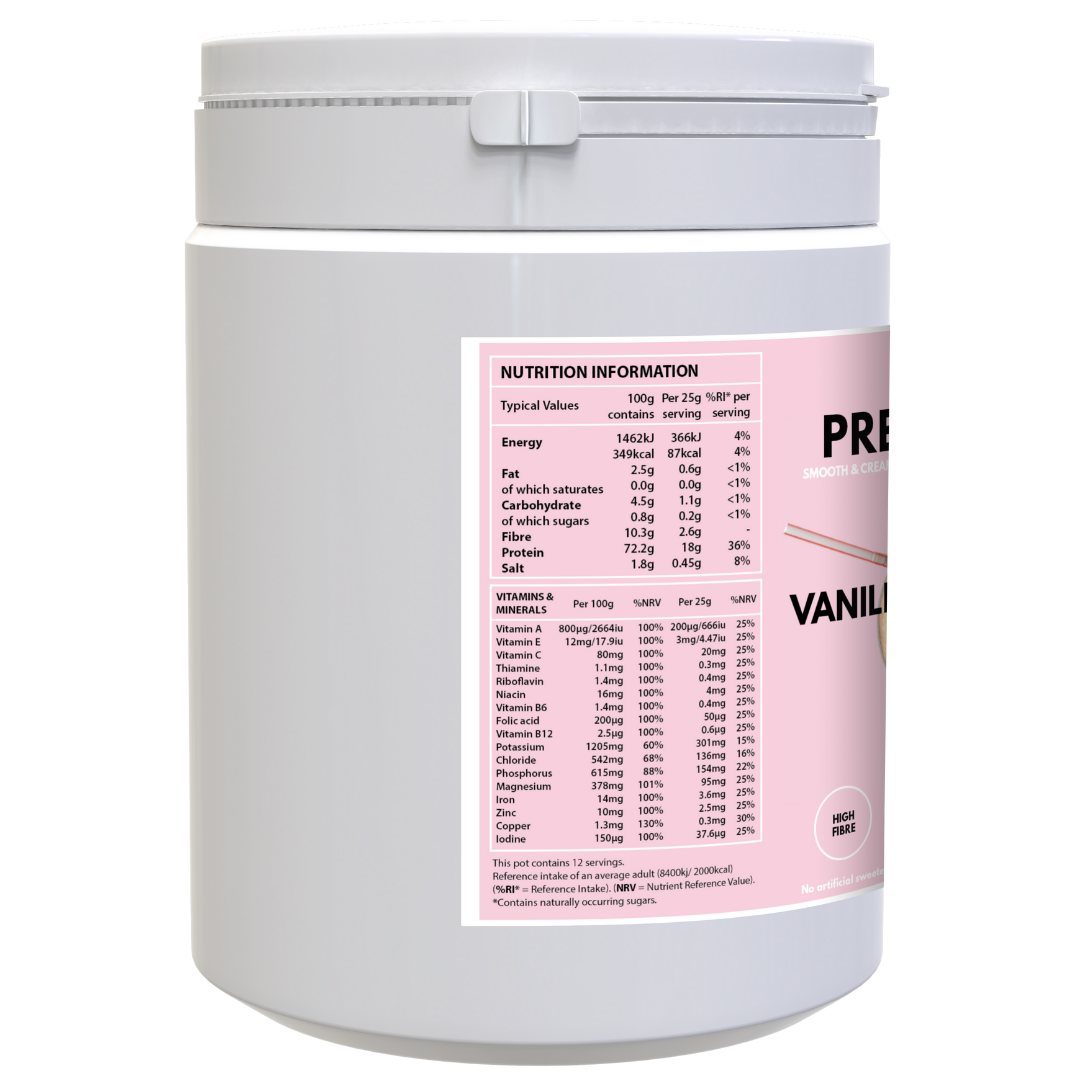
FEELING PRETTY NOURISHED STARTS FROM WITHIN
## Daily Nutrition – Simplified
### Protein & Fibre
Non GMO Soy Protein & Rich in Dietary Fibre from Chicory Root
### Vitamins & Minerals
Vitamin B6 Contributes to normal Hormone Regulation, Energy Levels, Psychological function, Nervous system & more
### Only 97 Calories
Enjoy any time of day at under 100 Calories per Serving
### No Artificial Sweetener
Naturally Sweetened with plant based Stevia
## Chicory Root Fibre
## Vitamins & Minerals
## Under 100 Calories
### Vegan Vanilla Protein Powder Benefits
### Benefits
+
**Soy** **Protein** rich, **low in saturated fat** and with **no artificial sweeteners**, this natural vanilla flavoured daily vitamins shake is also rich in **dietary** **fibre** (from chicory root extract).
Delicious and filling, Vanilla & Vitamins makes for the pretty perfect in-between meals shake. It can even be used as a tasty, calorie-controlled dessert.
Also available in tasty Chocolate flavour.
### How many servings
+
300g provides a minimum of 12 servings (even more, just dependent on how thick you like to make your shake)
### How to use
+
Add 1 scoop to your favourite milk and shake well or better still blitz in a blender for a super smooth creamy texture.
### What’s Inside Vegan Vanilla Protein Powder?
### Daily Nutrition – Vegan Vanilla Protein Powder
+
**Protein** contributes to a **growth in muscle mass**, the maintenance of muscle mass and the maintenance of normal bones.
**Vitamin A** contributes to normal iron metabolism, the maintenance of normal mucous membranes, the maintenance of normal **skin**, the maintenance of normal **vision**, the normal function of the **immune system** and has a role in the process of cell specialisation.
**Vitamin B6** contributes to normal cysteine synthesis, normal **energy-yielding metabolism**, normal functioning of the **nervous system**, normal **homocysteine metabolism**, normal protein and glycogen metabolism, normal **psychological** **function**, normal red blood cell formation, normal function of the **immune system**, the **reduction of tiredness and fatigue** and the **regulation of hormonal activity**.
**Vitamin E** contributes to the **protection of cells from oxidative stress.**
**Vitamin C** contributes to maintaining the normal function of the **immune** **system**. It also contributes to normal **collagen formation** for the normal function of **blood vessels, bones, cartilage, gums, skin** and **teeth**, normal **energy-yielding** **metabolism**, normal functioning of the **nervous system**, normal **psychological function**, protection of cells from oxidative stress, the **reduction of tiredness and fatigue**, the regeneration of the reduced form of vitamin E and increases iron absorption.
**Riboflavin** contributes to normal **energy-yielding metabolism**, normal functioning of the **nervous system**, the maintenance of normal mucous membranes, the maintenance of normal red blood cells, the maintenance of normal **skin**, the maintenance of normal **vision**, the normal metabolism of iron, the **protection of cells from oxidative stress** and the **reduction of tiredness and fatigue.**
**Niacin** contributes to normal **psychological function**, normal **energy-yielding metabolism**, normal functioning of the **nervous system**, the maintenance of normal mucous membranes, the maintenance of normal **skin** and the **reduction of tiredness and fatigue**.
**Thiamine** contributes to normal **energy-yielding metabolism**, normal functioning of the **nervous system**, normal **psychological** function and the normal function of the **heart**.
Supplemental **folic acid** intake increases maternal folate status. Low maternal folate status is a risk factor in the development of neural tube defects in the developing foetus. The target population is women of child-bearing age and the beneficial effect is obtained with a supplemental folic acid daily intake of 400 μg for at least one month before and up to three months after conception.
**Vitamin B12:** Vitamin B12 contributes to normal **energy-yielding metabolism**, normal functioning of the **nervous system**, normal **homocysteine metabolism**, normal **psychological function**, normal red blood cell formation, normal function of the **immune system**, the **reduction of** **tiredness and fatigue** and it has a role in the process of cell division.
**Potassium** contributes to normal functioning of the **nervous system**, normal **muscle function** and to the maintenance of normal **blood pressure**.
**Chloride** contributes to normal **digestion** by production of hydrochloric acid in the stomach.
**Phosphorus** contributes to normal **energy-yielding metabolism**, normal function of cell membranes, the maintenance of normal **bones** and the maintenance of normal **teeth**.
**Magnesium** contributes to a **reduction of tiredness and fatigue, electrolyte balance**, normal **energy-yielding metabolism**, normal functioning of the **nervous system**, normal **muscle function**, normal **protein synthesis**, normal **psychological function**, the maintenance of normal **bones** and **teeth**, and it has a role in the process of cell division.
**Iron** contributes to normal **cognitive function**, normal **energy-yielding metabolism**, normal formation of red blood cells and haemoglobin, normal **oxygen transport in the body,** normal function of the **immune system**, the **reduction of tiredness and fatigue**, the process of cell division and to the normal cognitive development of children.
**Zinc** contributes to normal DNA synthesis, normal acid-base metabolism, normal **carbohydrate metabolism**, normal **cognitive function**, normal **fertility and reproduction**, normal **macronutrient metabolism**, normal **metabolism of fatty acids**, normal metabolism of vitamin A, normal protein synthesis, the maintenance of normal **bones**, the maintenance of normal **hair, nails** and **skin**, the maintenance of normal **testosterone levels in the blood**, the maintenance of normal **vision**, the normal function of the **immune system**, the **protection of cells from oxidative stress** and it has a role in the process of cell division.
**Copper** contributes to the maintenance of normal **connective tissues**, normal **hair pigmentation**, normal **skin pigmentation**, **protection of cells from oxidative stress**, normal function of the **immune system**, normal functioning of the **nervous system**, normal **energy-yielding metabolism** and normal iron transport in the body.
**Iodine** contributes to normal **cognitive function**, normal **energy-yielding metabolism**, normal functioning of the **nervous system**, the maintenance of normal **skin**, the normal **production of thyroid hormones** and normal **thyroid function** and the normal growth of children.
### Safety & Contraindications
Results may vary from person to person.
Store in a cool dry place, out of the reach of children.
Best before date: see base of container.
Caution: Do not exceed the recommended daily intake.
Supplements should not be used as a substitute for a balanced and varied diet and healthy lifestyle. Always consult your doctor before taking any supplements or changing your diet.
As with all supplements, if you feel unwell, stop taking this product immediately and seek medical advice.
### References
Protein related health claims | EFSA (europa.eu)
Health claims already evaluated | EFSA (europa.eu)
Vitamin A related health claims | EFSA (europa.eu)
Vitamin B6 related health claims | EFSA (europa.eu)
Vitamin B6 related health claims | EFSA (europa.eu)
Beta carotene related health claims | EFSA (europa.eu)
Vitamin E related health claims | EFSA (europa.eu)
Vitamin C related health claims | EFSA (europa.eu)
Vitamin C related health claims | EFSA (europa.eu)
Riboflavin related health claims | EFSA (europa.eu)
Niacin related health claims | EFSA (europa.eu)
Niacin related health claims | EFSA (europa.eu)
Thiamine related health claims | EFSA (europa.eu)
Thiamin related health claims | EFSA (europa.eu)
Increasing maternal folate status by supplemental folate intake and reduced risk of neural tube defects | EFSA (europa.eu)
Vitamin B12 related health claims | EFSA (europa.eu)
Vitamin B12 related health claims | EFSA (europa.eu)
Potassium related health claims | EFSA (europa.eu)
Chloride as Na-, K-, Ca- or Mg-salt and contribution to normal digestion by production of hydrochloric acid in the stomach | EFSA (europa.eu)
Scientific Opinion on the substantiation of health claims related to phosphorus and function of cell membranes (ID 328), energy‐yielding metabolism (ID 329, 373) and maintenance of bone and teeth (ID 324, 327) pursuant to Article 13(1) of Regulation (EC) No 1924/2006 – – 2009 – EFSA Journal – Wiley Online Library
Magnesium related health claims | EFSA (europa.eu)
Magnesium related health claims | EFSA (europa.eu)
Iron related health claims | EFSA (europa.eu)
Meat or fish and improvement of non-haem iron absorption | EFSA (europa.eu)
Riboflavin related health claims | EFSA (europa.eu)
Iron and cognitive development of children | EFSA (europa.eu)
Zinc related health claims | EFSA (europa.eu)
Zinc related health claims | EFSA (europa.eu)
Scientific Opinion on the substantiation of health claims related to copper and protection of DNA, proteins and lipids from oxidative damage (ID 263, 1726), function of the immune system (ID 264), maintenance of connective tissues (ID 265, 271, 1722), energy‐yielding metabolism (ID 266), function of the nervous system (ID 267), maintenance of skin and hair pigmentation (ID 268, 1724), iron transport (ID 269, 270, 1727), cholesterol metabolism (ID 369), and glucose metabolism (ID 369) pursuant to Article 13(1) of Regulation (EC) No 1924/2006 – – 2009 – EFSA Journal – Wiley Online Library
Scientific Opinion on the substantiation of health claims related to copper and reduction of tiredness and fatigue (ID 272), maintenance of the normal function of the nervous system (ID 1723), maintenance of the normal function of the immune system (ID 1725) and contribution to normal energy‐yielding metabolism (ID 1729) pursuant to Article 13(1) of Regulation (EC) No 1924/2006 – – 2011 – EFSA Journal – Wiley Online Library
Iodine related health claims | EFSA (europa.eu)
Iodine related health claims | EFSA (europa.eu)
Iodine and the growth of children | EFSA (europa.eu)
###### Recommended For You..
## [Vegan Vanilla Protein Powder](https://prettypea.blog/vegan-vanilla-protein-powder/)
## Save 20% on Orders Over £50
## Save 20% on Orders Over £50
## Save 20% on Orders Over £50
## Save 20% on Orders Over £50
---
### [Thankyou Fibre Checklist Page](https://prettypea.blog/thankyou-fibre-checklist/)
**Published:** May 25, 2026
**Author:** Cate Boyd
**Content:**
# Thank you Pretty Pea
Please check your inbox for an email with a link to download your free fibre checklist. Be sure to check your spam/junk folders if you don’t see it in your inbox within the next 10 minutes.
[Download Fibre Checklist](https://prettypea.blog/wp-content/uploads/2026/05/FIBRE-CHECKLIST-1.pdf)
## While you’re here you can also enjoy..
## [Thankyou Fibre Checklist Page](https://prettypea.blog/thankyou-fibre-checklist/)
## You might also enjoy..
- [Best High Fibre Foods for Weight Loss (That Actually Keep You Full)](https://prettypea.blog/15-best-high-fibre-foods-for-weight-loss-that-actually-keep-you-full/)
- [Guide to Fibre Supplements](https://prettypea.blog/the-ultimate-guide-to-fibre-supplements-for-a-happier-gut-unlocking-your-digestive-health/)
- [Compare Fibre vs GLP-1](https://prettypea.blog/appetite-regulation-how-fibre-vs-glp-1-compare)
- [The Ultimate Superfood List](https://prettypea.blog/superfood-list/)
---
### [Fruit & Vegetable Supplement](https://prettypea.blog/fruit-and-vegetable-supplement/)
**Published:** April 9, 2024
**Author:** Cate Boyd
**Content:**
Search
[](https://prettypea.blog/)
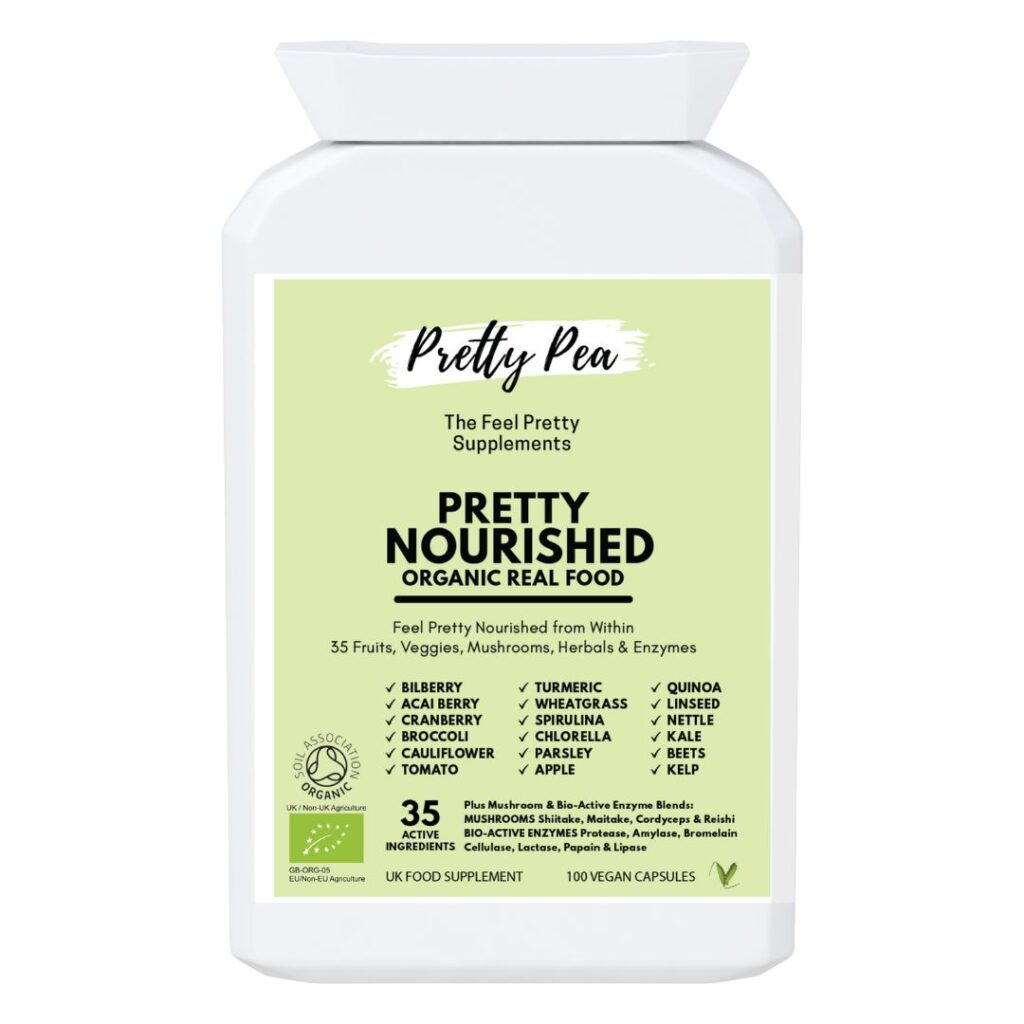
## Fruit and Vegetable Supplement 35+Organic Blend
**PRETTY NOURISHED** 35+ Organic Fruit & Vegetable Supplement
**£25.99**
## Supplement Overview
An Organic fruit and vegetable supplement made from a blend of 35+ plant-based ingredients, including powders derived from commonly consumed fruits, vegetables, greens, mushrooms, seeds and enzymes.
Designed as a convenient way to help increase plant-based nutrient intake, particularly for those with busy lifestyles.
## What’s Inside
**Fruits** include Bilberry, Cranberry, Acerola Cherry, Blueberry & Acai Berry
**Veggies** include Kale, Cauliflower, Broccoli, Carrots, Beets & Tomato
**Super-Greens** include Spirulina, Chlorella & Wheatgrass, Quino, Kelp
**Super-Herbs** include Turmeric, Parsley & Nettle
**Mushrooms & Seeds** Maiitake, Shitake, Cordyceps, Reishi & Linseeds
**Enzymes** to support the breakdown of Fats, Carbohydrates & Protein – Protease, Amylase, Bromelain, Cellulase, Lactase, Papain and Lipase
Full ingredient list below
[Add to cart](https://prettypea.blog/cart/?add-to-cart=1206)
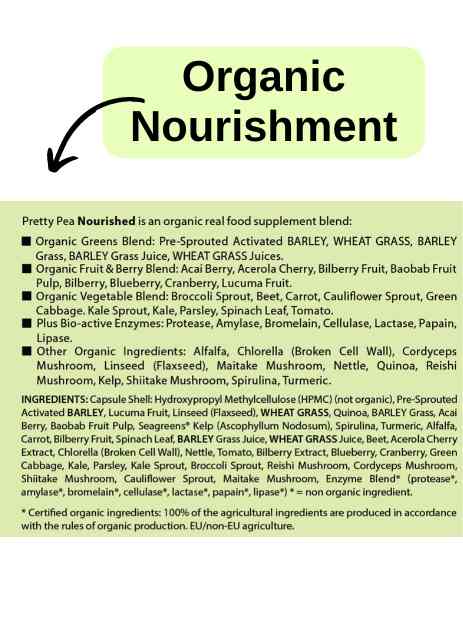
## Who is it for
This supplement may be suitable for:
Individuals aiming to increase their intake of plant-based ingredients
People who struggle to eat enough fruit and vegetables daily
Those with busy routines looking for convenient options
## Why people choose fruit and vegetable supplements
Many people find it difficult to consistently meet recommended fruit and vegetable intake.
Products like this are commonly used:
- as a convenient addition to a balanced diet
- to complement whole food intake
- as part of a wider approach to nutrition and wellbeing
### Organic Daily Nourishment
Give Your Body the Goodness of Organic Nutrition – Every Day!
### Eat The Rainbow
Eating the Rainbow has Never Been Simpler with a Diverse Range of Plants & Herbals in Every Capsule
### Mushrooms & Linseeds (Flaxseeds)
Add the Nutritional Powers of Mushrooms known as *The Mushroom of Immortality*
### Optimum Absorption Digestive Enzymes
Make the Most of the Nutrients You Give Your Body with Bio-active Enzymes
## Wheatgrass & Mushrooms & Linseeds
## Spirulina & Chlorella & Green Tea & Kelp
## Pretty Nourished Benefits
### What’s Inside
+
Functional foods are increasingly accepted as part of a healthy lifestyle, and with Pretty Nourished, organic vegan nutrition has never been easier!
These clever capsules give your body the goodness of over **35 green foods, vegetables, fruits, berries, herbs, sprouts, mushrooms and seeds plus bio-active enzymes** in every capsule.
**Soil Association certified organic** whole food supplement, with some of the most nutrient-dense ingredients that nature has to offer from both sea and soil.
No poorly absorbed man-made vitamins or minerals. These nutrients are easily assimilated in your body, as they are in their natural food form balanced state.
What’s more the addition of bio-active enzymes primes your body for optimum absorption of nutrients.
This formula provides a broad spectrum of the essential nutrients, phyto-chemicals, dietary fibre, beneficial oils, vitamins and minerals required by the body.
Each capsule contains:
**Organic Greens blend:**
Pre-sprouted activated barley, Wheat-grass, Barley-grass, Barley grass juice and Wheat grass juice
**Organic Fruit and Berry blend:**
Apple, Acai berry, Acerola cherry, Bilberry fruit, Baobab fruit pulp, Bilberry extract, Blueberry, Cranberry and Lucuma fruit
**Organic Vegetable blend:**
Broccoli sprout, Beet, Carrot, Cauliflower sprout, Green cabbage. Kale sprout, Kale, Parsley, Spinach leaf and Tomato
**Other Organic Ingredients:**
Alfalfa, Chlorella (broken cell wall), Cordyceps mushroom, Kelp (ascophyllum nodosum), Linseed (flaxseed), Maitake mushroom, Nettle, Quinoa, Reishi mushroom, Shiitake mushroom, Spirulina and Turmeric
**PLUS Bio-Active Enzymes:**
Protease, Amylase, Bromelain, Cellulase, Lactase, Papain and Lipase
### How many servings
+
Contains 100 Easy Take Vegan Capsules
### How to use
+
Take 1 or 2 capsules as directed, 1 to 3 times per day or as advised. Consume with water.
As with all supplements, Do not exceed the recommended daily amount.
Use daily for consistency.
Food Supplements are not intended to substitute a varied diet and healthy lifestyle. Consult your GP before taking supplements or changing your diet.
This product is not intended to replace whole foods or provide immediate results. It is best used consistently as part of a balanced diet and healthy lifestyle.
## Save 20% on Orders Over £50
## Save 20% on Orders Over £50
## Save 20% on Orders Over £50
## Save 20% on Orders Over £50
---
### [Thankyou Page](https://prettypea.blog/thankyou-page/)
**Published:** July 16, 2024
**Author:** Cate Boyd
**Content:**
# Thank you Pretty Pea
Check your inbox for an email with a link to download your guide. Check your spam/junk folders if you don’t see it in your inbox soon.
## Latest Products Your Body Could be Missing Out On..
[View All → →](#)
### [Thankyou Page](https://prettypea.blog/thankyou-page/)
---
### [Pretty Cleansed Seaweed Supplement](https://prettypea.blog/pretty-cleansed-seaweed-supplement/)
**Published:** April 9, 2024
**Author:** Cate Boyd
**Content:**
Search
[](https://prettypea.blog/)
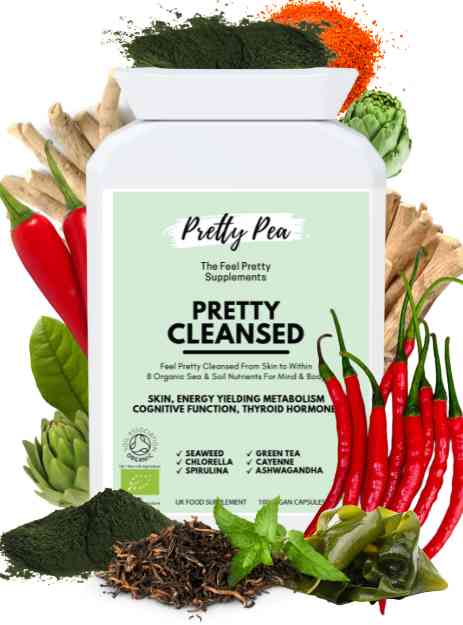
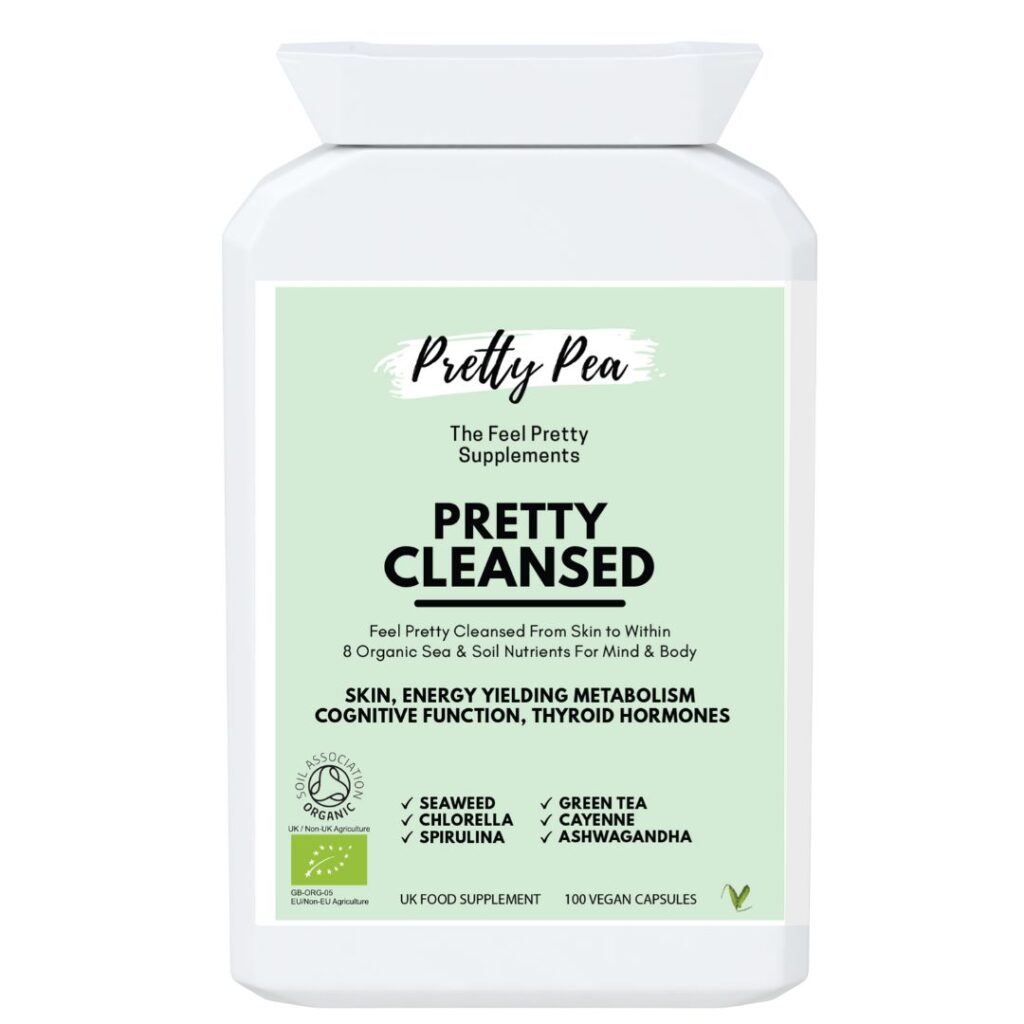
## Pretty Cleansed Seaweed Supplement
PRETTY CLEANSED FROM WITHIN SEAWEED SUPPLEMENT
**£25.99**
Iodine Rich Organic Seaweed Supplement plus 6 of the most Nutrient Dense Functional Foods on the Planet *to contribute to normal:*
Maintaining Healthy Skin
Cognitive Function
Nervous System
Energy-yielding Metabolism
Thyroid Hormones
Sea Nutrients Organic Spirulina, Chlorella & Seaweeds
Soil Nutrients Organic Green Tea, Cayenne & Ashwagandha
Plus Liver-Loving Organic Artichoke
[Add to cart](https://prettypea.blog/cart/?add-to-cart=386)
I have been taking these for over 2 years now and notice a real difference when I go without. It really helped me with my bloating, especially in a sedentary office job. I feel like I digest food better and my metabolism has recovered. Love these and I recommend them to my friends and family
**Katy H**
/
28th July 2024
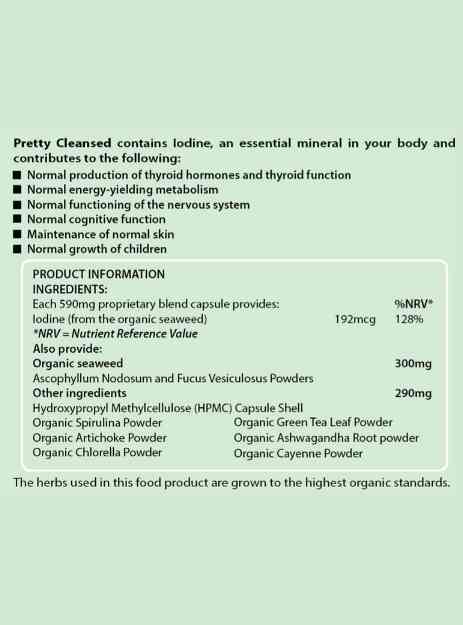
FEELING PRETTY CLEANSED STARTS FROM WITHIN
## Cellular Cleansing From Within – with Sea & Soil Goodness!
### Thyroid Metabolism
Contributes to normal production of Thyroid Hormones & Thyroid Function
### Cognitive Function
Contributes to normal Cognitive Function
### Pretty Skin From Within
Contributes to the maintenance of normal Skin
### Sea & Soil Nutrients
Green Tea, Cayenne, Spirulina, Chlorella, Ashwagandha & Artichoke
## Free Delivery
## Save 20% on Orders Over £50
## Save 20% on Orders Over £50
## Pretty Cleansed Benefits
### Benefits
+
Pretty Cleansed combines some of the most nutrient-dense organic ingredients on the planet. Nutrients from the earth’s soils and planets’ seas that powerfully alkalize, cleanse & detox your body, with heavy metal cleaning of the system.
These supercharged organic seaweed tablets combine Spirulina, Chlorella, Green Tea, Ashwagandha, Cayenne and Artichoke to provide nourishment and metabolic support.
Pretty Cleansed is packed full of iodine rich seaweeds to support the production of thyroid hormone and maintain your metabolism.
This seaweed supplement is also high in a broad spectrum of protective nutrients, including antioxidants, phyto-chemicals, polyphenols, enzymes, amino acids, vitamins and minerals.
### How many servings
+
Contains 100 Organic Easy Take Vegan Capsules.
### How to use
+
Take 1 capsule, 1 to 3 times per day or as advised by your healthcare provider
## What’s Inside?
### Organic Iodine
+
Iodine can be found in shellfish and dairy, with seaweed being one of the absolute best natural sources.
It’s been known since 2011 that the UK population is **mildly iodine deficient**.
With the UK now ranking seventh among the ten most iodine-deficient nations in the world, and one of only two high-income countries on the list.
In adults, iodine is important for thyroid function and a healthy metabolism.
Iodine deficiency is a particular issue during pregnancy and lactation, when the body’s demand for iodine escalates. Lack of iodine causes not only goitre, but also mental deficiency, hearing loss and other neurological impairments, plus short stature due to thyroid insufficiency during fetal development and childhood.
**Iodine** contributes to normal:
Cognitive function
Energy-yielding metabolism
Functioning of the nervous system
Maintenance of normal skin
Production of thyroid hormones & thyroid function
Growth of children
### Organic Spirulina
+
Spirulina, a blue-green micro-algae, is a highly nutritious functional food with many potential health benefits.
With a rich content of protein, polysaccharide, lipid, essential amino and fatty acids, dietary minerals and vitamins Spirulina has several pharmacological activities such as:
Antimicrobial (including antiviral and antibacterial)
Anticancer
Metalloprotective (prevention of heavy-metal poisoning against Cd, Pb, Fe, Hg)
Immunostimulant
Antioxidant
### Spirulina’s Nutritional Profile
High in protein, 100g of Spirulina yields 50-70% protein.
It contains 18 amino acids *(protein building blocks)*, including 8 essential amino acids which the body cannot produce from its own resources and have to be replaced daily by food.
Spirulina is also rich in beta-carotene, vitamin E, vitamin F factor (GLA), vitamins and minerals including iron.
Its exceptional levels of vitamin B12 is of special interest to vegans, vegetarians and non-meat eaters who have potential to be deficient in this important vitamin.
### Spirulina’s Potential..
Numerous in vivo evidence supports Spirulina’s potential for brain health with antioxidant, anti-inflammatory, and neuroprotective mechanisms.
Preliminary clinical studies have also suggested that Spirulina can help to reduce mental fatigue.
There is also evidence of spirulina on appetite regulation.
### Organic Chlorella
+
Chlorella is an edible, single-cell marine algae. Also known as sea-moss or sea lettuce it has biological and pharmacological properties important for human health.
Chlorella provides useful detoxification support because it can bind with heavy metals and pesticides (such as PCBs), that can accumulate in the body.
Studies have found that Chlorella may increase collagen production in the skin, making it ideal for anti-aging and wound-healing.
Rich in fibre it also supports healthy digestion and overall digestive tract health.
### Nutrient Rich Functional Food
Chlorella has a long history of use as a food source and contains a unique and diverse composition of functional macro- and micro-nutrients including:
Proteins, omega-3 polyunsaturated fatty acids, polysaccharides, vitamins and minerals.
Beta-carotene and 19 amino acids (including the 8 essential amino acids).
Vitamins include D and B12, that are absent in plant-derived food sources. It contains even more vitamin B12 than liver.
Chlorella contains larger amounts of folate and iron than other plant-derived foods.
Chlorella contains more chlorophyll than many known foods.
It’s also a rich source of calcium, iron, selenium and zinc.
Chlorella supplementation has been reported to exhibit various pharmacological activities, including:
Immunomodulatory
Antioxidant
Antidiabetic
Antihypertensive
Antihyperlipidemic
### Organic Green Tea
+
Green tea has multiple pharmacologically active components including polyphenols, alkaloids, amino acids, polysaccharides, and volatile components.
Green tea’s main antioxidant agents are polyphenol catechins, they include: epicatechin, epigallocatechin, epicatechin gallate and epigallocatechin gallate (EGCG).
Epigallocatechingallate (EGCG), in particular, has the most potent anti-inflammatory and anticancer potential and is also a powerful antioxidant.
Some studies have shown green tea polyphenols to have a stronger antioxidant action than vitamin C and vitamin E – *two of the most powerful antioxidants.*
Green tea polyphenols have also been documented for their anti-inflammation, anti-cancer, anti-cardiovascular, anti-microbial, anti-hyperglycemic, and anti-obesity properties.
### Green Tea and Weight Loss
The active components of green tea associated with weight loss are caffeine and catechins, primarily epigallocatechin gallate (EGCG), which is a flavonoid.
Results from a number of randomized, controlled intervention trials have shown that consumption of GTC (270 mg to 1200 mg/day) may reduce body weight and fat.
*(A typical brewed cup of green tea has about 240–320 mg catechins and 45 mg caffeine)*
Green tea catechins (GTC) may influence body weight and composition by:
Increased thermogenesis / energy expenditure
Increased fat oxidation
Reduced lipogenesis
Reduced fat absorption
### Organic Ashwagandha
+
Ashwagandha, *Withania somnifera* (WS), is one of the most powerful herbs in Ayurvedic healing. It has been used since ancient times for a wide variety of conditions, and is most well-known for its restorative benefits.
Ashwagandha’s extracts have been used in traditional medicine for millennia to promote healthy aging and wellbeing.
It has been used in the treatment of various illnesses in Indian Systems of Medicine for over 3,000 years. In Ayurveda it is classified as a rasayana (*a way of attaining excellence*) and purported to promote mental and physical wellbeing, rejuvenate the body and increase longevity.
In Sanskrit, ashwagandha means “the smell of a horse,” indicating that the herb imparts the vigour and strength of a stallion, and has traditionally been prescribed to help people strengthen their immune system after an illness.
Traditionally, Ashwagandha is used to promote strength, endurance, youthful vigour and health; it nurtures the time elements of the body; and increases the production of vital fluids such as blood, lymph, and semen*.*
Ashwagandha comprises a broad range of phytochemicals, including steroidal lactones and alkaloids that have a wide range of biological effects.
In pre-clinical studies, ashwagandha and its components have been shown to be anti-inflammatory, anti-cancer, anti-stress, immunomodulatory, antioxidant, anti-stress / adaptogenic, neuro-protective and endocrinological activities.
Ashwagandha is now widely used in Western countries as a nutritional supplement.
### Organic Cayenne
+
Cayenne (C*apsicum minimum*) also known as red pepper and chillies are regarded by herbalists as the purest and safest stimulating herb known, opening up tissues in the body to an increased blood flow.
Cayenne produces natural warmth, and often used by people with poor circulation and low energy levels.
It is also an iron-bearer, which accelerates the oxygenation of cells, along with an antiseptic, anti-spasmodic and carminative.
It also widely used to support digestion, reduce wind and
promote gastro-intestinal secretions.
### Organic Artichoke
Artichokes, (*Cynara scolymus L*.) with its hepatoprotective properties has traditionally been used in herbal treatments to promote a healthy liver and efficient digestive system.
Lifestyle has a significant impact on the functioning of the liver including: alcohol consumption, diet with high fats ingredients and prooxidative substances and synthetic drugs.
Over 50 years ago, Japanese researchers found that artichokes can boost the production of bile by the liver, which can in turn break down fat.
Artichoke has since undergone extensive biomedical herbal remedy research. Specifically, antioxidant, choleretic, hepatoprotective, bile-enhancing and lipid-lowering effects have been demonstrated, which corresponded with its historical use.
Artichoke is rich in polyphenols, flavonoids, anthocyanins, phenolic compounds, inulin, coumarins, terpenes, dietary fibre, enzymes, polysaccharides, minerals and vitamins.
One of the primary active constituents in artichoke is cynarin.
Cynarin is the close botanical cousin of the herb milk thistle and is popular support.
### Safety & Contraindications
Results may vary from person to person.
Store in a cool dry place, out of the reach of children.
Best before date: see base of container.
Caution: Do not exceed the recommended daily intake.
A food supplement should not be used as a substitute for a varied, balanced diet and healthy lifestyle. Always consult your GP before taking food supplements if you are taking medication or have an existing medical condition.
If you feel unwell, stop taking this product immediately and seek medical advice.
### References
Iodine deficiency in the UK: grabbing the low-hanging fruit – The Lancet Diabetes & Endocrinology
Medicina | Free Full-Text | Nutritional Supplements for Skin Health—A Review of What Should Be Chosen and Why (mdpi.com)
Development of Databases on Iodine in Foods and Dietary Supplements – PubMed (nih.gov)
Iodine deficiency in Europe and its consequences: an update – PubMed (nih.gov)
Iodine deficiency disorders in Europe – PubMed (nih.gov)
Iodine related health claims | EFSA (europa.eu)
Iodine and the growth of children | EFSA (europa.eu)
www.efsa.europa.eu/en/efsajournal/pub/1756
Pharmacological Studies of Artichoke Leaf Extract and Their Health Benefits – PubMed (nih.gov)
Bioactive Compounds from Artichoke and Application Potential – PubMed (nih.gov)
Biological Properties, Bioactive Constituents, and Pharmacokinetics of Some Capsicum spp. and Capsaicinoids – PubMed (nih.gov)
Biological Activities of Red Pepper (Capsicum annuum) and Its Pungent Principle Capsaicin: A Review – PubMed (nih.gov)
Capsaicin and Its Effects on Body Weight – PubMed (nih.gov)
Effects of Withania somnifera (Ashwagandha) and Terminalia arjuna (Arjuna) on physical performance and cardiorespiratory endurance in healthy young adults – PubMed (nih.gov)
An investigation into the stress-relieving and pharmacological actions of an ashwagandha (Withania somnifera) extract – PMC (nih.gov)
An Alternative Treatment for Anxiety: A Systematic Review of Human Trial Results Reported for the Ayurvedic Herb Ashwagandha (Withania somnifera) – PMC (nih.gov) www.ncbi.nlm.nih.gov/pmc/articles/PMC4270108/
Withania Somnifera (Ashwagandha) and Withaferin A: Potential in Integrative Oncology – PMC (nih.gov) www.ncbi.nlm.nih.gov/pmc/articles/PMC6862083/
Natural Withanolides in the Treatment of Chronic Diseases – PMC (nih.gov)
Green Tea (Camellia sinensis): A Review of Its Phytochemistry, Pharmacology, and Toxicology – PubMed (nih.gov)
The effects of green tea on weight loss and weight maintenance: a meta-analysis – PubMed (nih.gov)
Antiobesity effects of green tea catechins: a mechanistic review – PubMed (nih.gov)
Hursel R, Westerterp-Plantenga MS. Catechin- and caffeine-rich teas for control of body weight in humans. Am J Clin Nutr 2013;98:1682S-93S. \[PubMed abstract\]
Rains TM, Agarwal S, Maki KC. Antiobesity effects of green tea catechins: a mechanistic review. J Nutr Biochem 2011;22:1-7. \[PubMed abstract\]
Janssens PL, Hursel R, Westerterp-Plantenga MS. Nutraceuticals for body-weight management: The role of green tea catechins. Physiol Behav 2016;162:83-7. \[PubMed abstract\]
Turkozu D, Tek NA. A minireview of effects of green tea on energy expenditure. Crit Rev Food Sci Nutr 2017;57:254-8. \[PubMed abstract\]
Lochocka K, Bajerska J, Glapa A, Fidler-Witon E, Nowak JK, Szczapa T, et al. Green tea extract decreases starch digestion and absorption from a test meal in humans: a randomized, placebo-controlled crossover study. Sci Rep 2015;5:12015. \[PubMed abstract\]
Lonac MC, Richards JC, Schweder MM, Johnson TK, Bell C. Influence of short-term consumption of the caffeine-free, epigallocatechin-3-gallate supplement, Teavigo, on resting metabolism and the thermic effect of feeding. Obesity (Silver Spring) 2011;19:298-304. \[PubMed abstract\]
Mielgo-Ayuso J, Barrenechea L, Alcorta P, Larrarte E, Margareto J, Labayen I. Effects of dietary supplementation with epigallocatechin-3-gallate on weight loss, energy homeostasis, cardiometabolic risk factors and liver function in obese women: randomised, double-blind, placebo-controlled clinical trial. Br J Nutr 2014;111:1263-71. \[PubMed abstract\]
Jurgens TM, Whelan AM, Killian L, Doucette S, Kirk S, Foy E. Green tea for weight loss and weight maintenance in overweight or obese adults. Cochrane Database Syst Rev 2012;12:CD008650. \[PubMed abstract\]
Phung OJ, Baker WL, Matthews LJ, Lanosa M, Thorne A, Coleman CI. Effect of green tea catechins with or without caffeine on anthropometric measures: a systematic review and meta-analysis. Am J Clin Nutr 2010;91:73-81. \[PubMed abstract\]
Dostal AM, Samavat H, Espejo L, Arikawa AY, Stendell-Hollis NR, Kurzer MS. Green tea extract and catechol-O-methyltransferase genotype modify fasting serum insulin and plasma adiponectin concentrations in a randomized controlled trial of overweight and obese postmenopausal women. J Nutr 2016;146:38-45. \[PubMed abstract\]
Hursel R, Viechtbauer W, Westerterp-Plantenga MS. The effects of green tea on weight loss and weight maintenance: a meta-analysis. Int J Obes (Lond) 2009;33:956-61. \[PubMed abstract\]
EFSA Panel on Dietetic Products, Nutrition and Allergies (NDA). Scientific opinion on the substantiation of health claims related to *Camellia sinensis* (L.) kuntze (tea), including catechins from green tea, and contribution to the maintenance or achievement of a normal body weight (ID 1107, 1112, 1544, 2716), increased beta-oxidation of fatty acids leading to a reduction in body fat mass (ID 1123, 1124, 3698), and maintenance of normal blood glucose concentrations (ID 1115, 1545) pursuant to Article 13(1) of Regulation (EC) No 1924/2006. EFSA Journal 2010;8:1791-812.
Chlorella vulgaris: A Multifunctional Dietary Supplement with Diverse Medicinal Properties – PubMed (nih.gov)
Potential of Chlorella as a Dietary Supplement to Promote Human Health – PubMed (nih.gov)
Spirulina for the food and functional food industries – PubMed (nih.gov)
Nutritional and medical applications of spirulina microalgae – PubMed (nih.gov)
Spirulina Microalgae and Brain Health: A Scoping Review of Experimental and Clinical Evidence – PubMed (nih.gov)
Your review
Your overall rating Select a Rating5 Stars4 Stars3 Stars2 Stars1 Star
Title of your review
Your review
Your name
Your email
This review is based on my own experience and is my genuine opinion.
Submit Review
---
### [Multivitamin Gummies](https://prettypea.blog/multivitamin-gummies/)
**Published:** April 3, 2024
**Author:** Kelly
**Content:**
Search
[](https://prettypea.blog/)
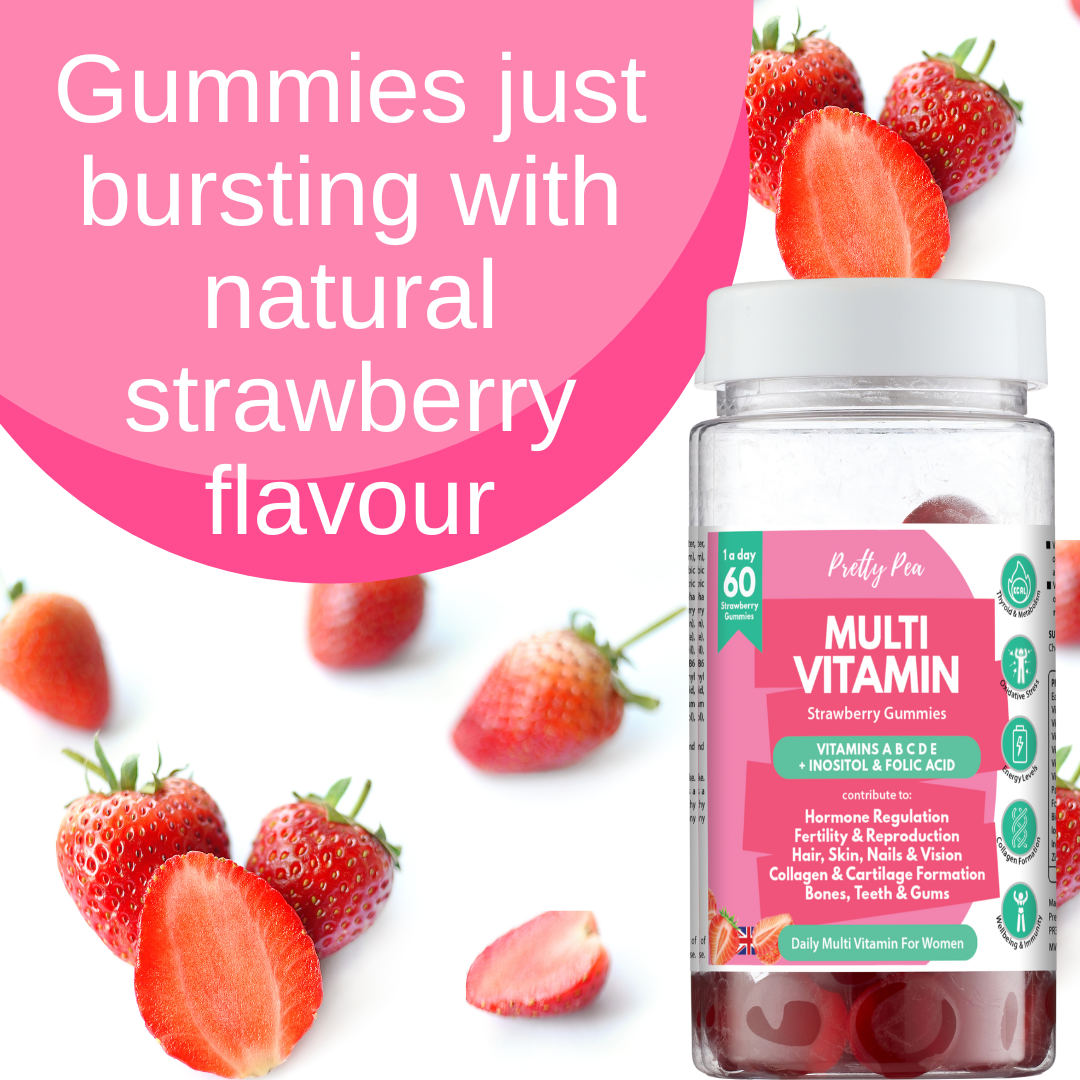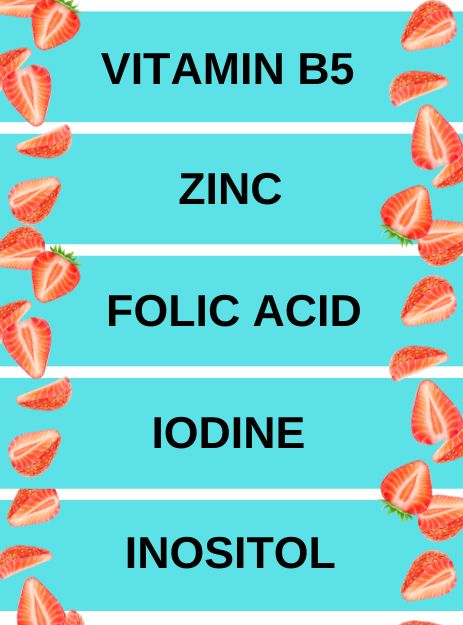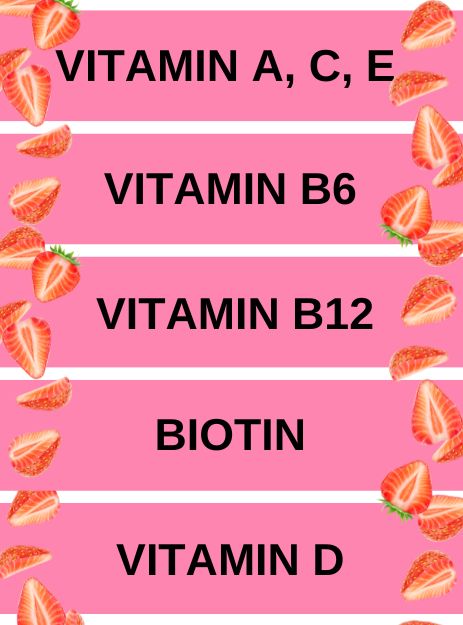
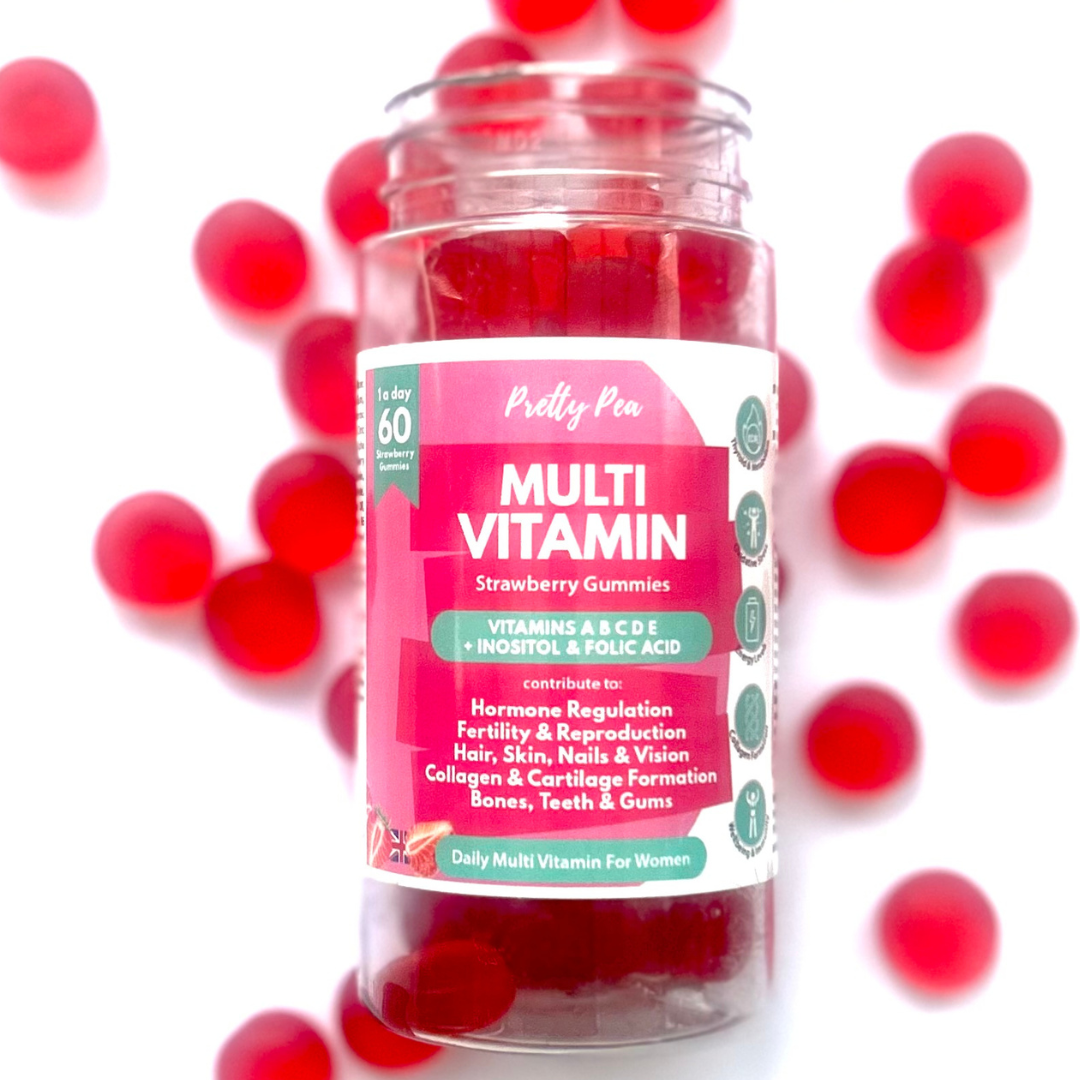
## Multivitamin Gummies
STRAWBERRY GUMMIES
**£15.00**
Delicious strawberry multivitamin gummies. Packed with the daily vitamins and minerals for women at every stage of life:
Vitamins A
Vitamin B6
Vitamin B12
Vitamin B5
Biotin (vitamin B7)
Vitamin C
Vitamin D
Vitamin E
Inositol
Iodine
Zinc
[Add to cart](https://prettypea.blog/cart/?add-to-cart=7162)
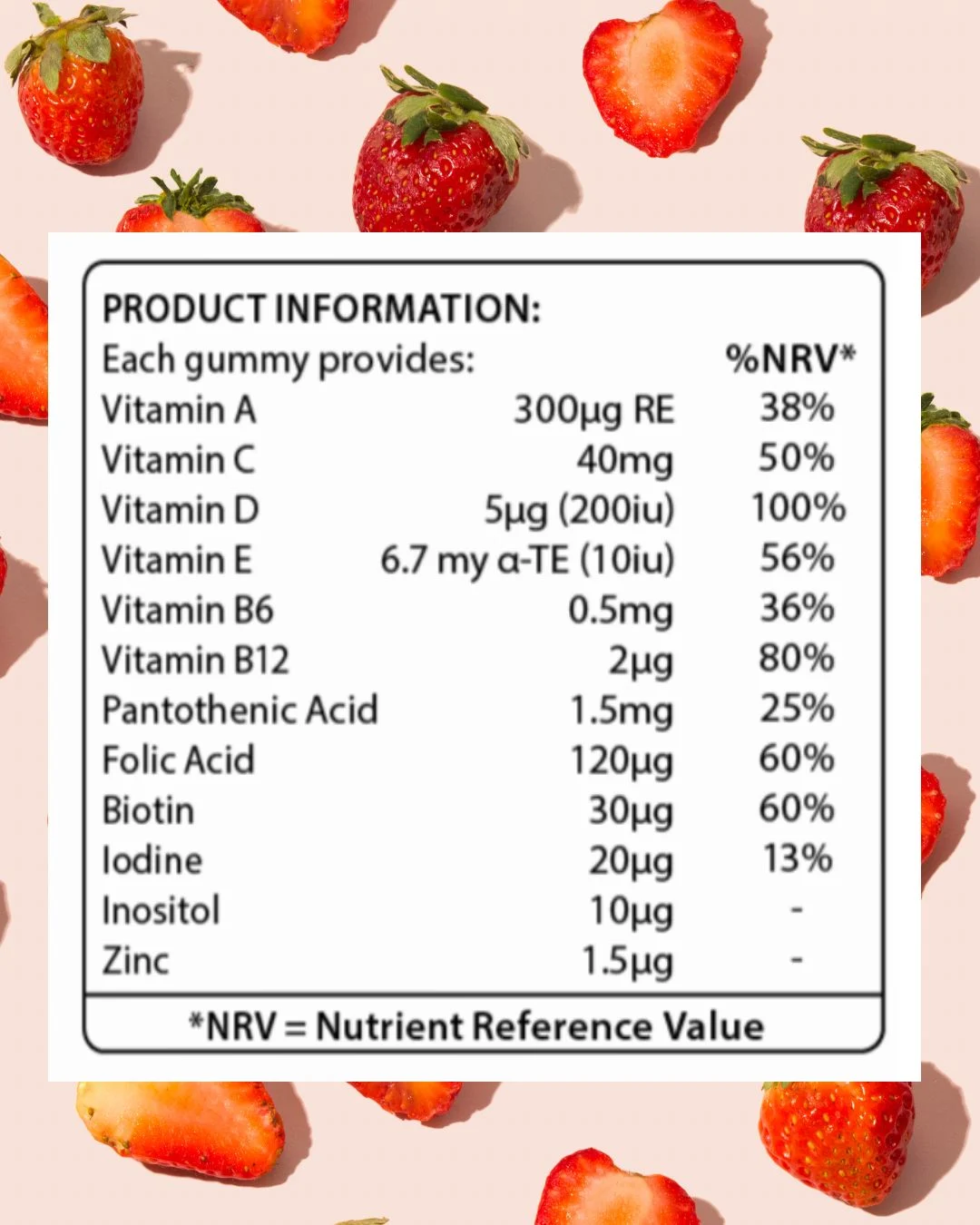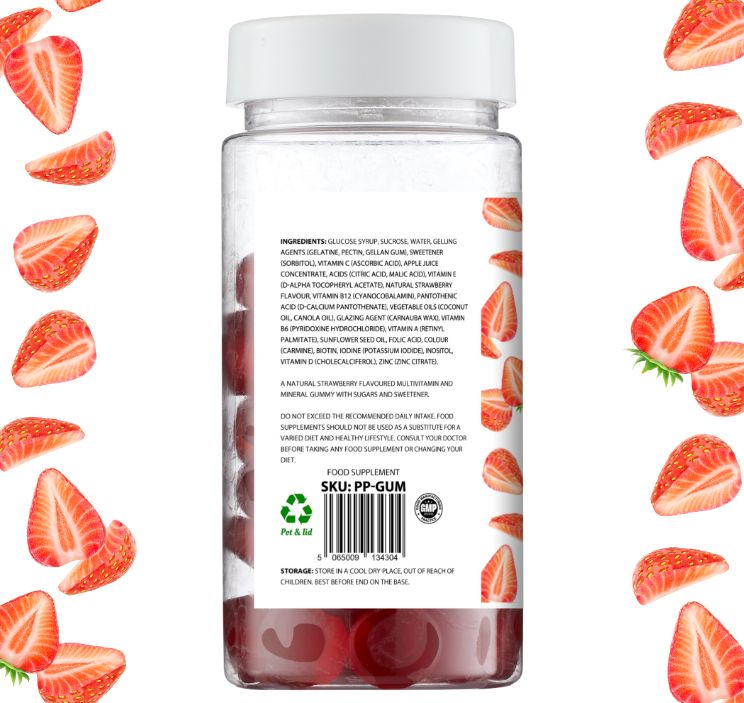
Feel Pretty from within
## Multivitamin For Women
## Inositol
## Vitamin D
## Vitamin B12
## Iodine
## What’s Inside?
### What’s inside
+
## Vitamin A
Vitamin A contributes to the function of the **immune** system, **iron metabolism**; the maintenance of normal **mucous membranes**; the maintenance of normal **skin** and **vision**; and has a role in the process of **cell specialisation**.
## Vitamin B5
Vitamin B5, Pantothenic acid, contributes to normal **energy-yielding metabolism; mental performance**; synthesis and metabolism of steroid hormones, **vitamin D** and some **neurotransmitters; reduction of tiredness and fatigue**.
## Vitamin B6
Vitamin B6 contributes to the regulation of **hormonal activity**; the function of the **immune** system; **psychologica**l function; **red blood cell formation; protein and glycogen metabolism;** functioning of the **nervous system; energy-yielding metabolism**; normal **cysteine synthesis**; and **reduction of tiredness and fatigue**.
## Vitamin B7 – Biotin
Biotin contributes to normal **psychological** function; the maintenance of normal **hair** and **skin**; functioning of the **nervous system;** maintenance of normal **mucous membranes**; normal **macronutrient metabolism** and **energy-yielding metabolism.**
## Vitamin B12
Vitamin B12 contributes to normal **energy-yielding metabolism**; functioning of the **nervous system**; **homocysteine metabolism; psychological** function; function of the **immune system; red blood cell formation**; and the **reduction of tiredness and fatigue**.
## Vitamin C
Vitamin C contributes to the normal function of the immune system; increases **iron absorption**; contributes to the regeneration of the reduced form of **vitamin E**; normal **psychological** function; functioning of the **nervous system;** **energy-yielding metabolism**; normal **collagen formation** for the normal function of the **skin, teeth, gums, cartilage, bones** and **blood vessels**, the **protection of cells from oxidative stress;** and contributes to the **reduction of tiredness and fatigue.**
## Vitamin D
Vitamin D contributes to the normal function of the **immune** system; contributes to the maintenance of normal **teeth** and **bones**; normal absorption/utilisation of calcium and phosphorus: normal **blood calcium levels**; the maintenance of normal **muscle function**; and has a role in the process of **cell division**.
## Vitamin E
Vitamin E contributes to the **protection of cells from oxidative stress.**
## Iodine
Iodine contributes to the maintenance of normal **skin**; production of **thyroid hormones** and **thyroid** **function**; **cognitive function**; functioning of the **nervous** system; **energy-yielding metabolism**.
## Zinc
Zinc contributes to the normal function of the **immune** system; contributes to the maintenance of **testosterone levels in the blood**; the maintenance of **hair, nails, skin, vision** and **bones**: contributes to **metabolism of vitamin A**; protein synthesis; **metabolism of fatty acids**; **macronutrient metabolism**; **carbohydrate metabolism**; **cognitive function**; **fertility** and **reproduction**; **acid-base metabolism**; **DNA synthesis**; contributes to the **protection of cells** from **oxidative stress**; and has a role in the process of **cell division.**
## Inositol
Inositol has become a popular womens supplement. Inositol is often referred to as vitamin B8, but it is not actually a vitamin. It’s a type of carbohydrate found naturally in the body and certain foods.
### Amount of servings
+
60 strawberry flavoured gummies – Take 1 gummy per day
### Safety & Contraindications
+
Results may vary from person to person.
Store in a cool dry place, out of the reach of children.
Best before end: see container base.
Caution: Do not exceed the recommended daily intake.
A food supplement should not be used as a substitute for a varied, balanced diet and healthy lifestyle.
Always consult your GP before taking food supplements if you are taking medication or have an existing medical condition.
If you feel unwell, stop taking this product immediately and seek medical advice.
### References
+
Search | EFSA (europa.eu)
## Save 20% on Orders Over £50
## Save 20% on Orders Over £50
## Save 20% on Orders Over £50
## Save 20% on Orders Over £50
---
### [Fibre Capsules](https://prettypea.blog/fibre-capsules/)
**Published:** April 9, 2024
**Author:** Cate Boyd
**Content:**
Search
[](https://prettypea.blog/)
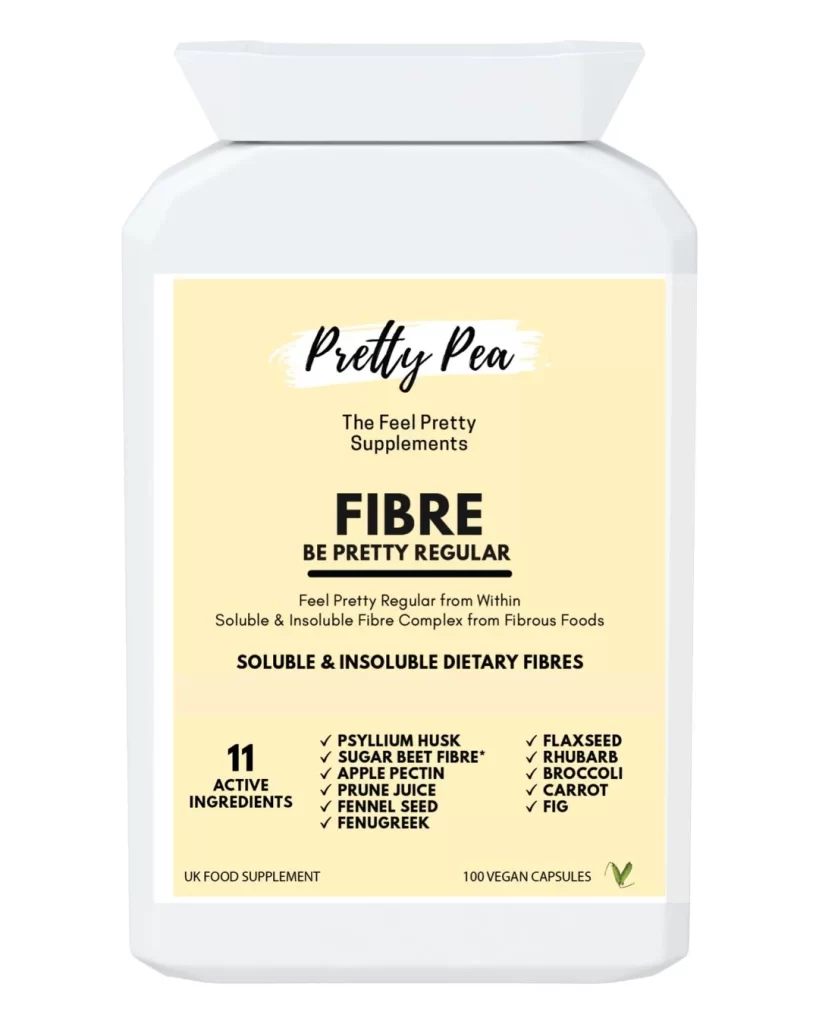
# FIBRE CAPSULES
HIGH FIBRE FOOD SUPPLEMENT
Fibre pills with **11** **Fibre Rich Foods**
Supplement Your Daily Nutrition *most people aren’t meeting the RDA 25-30g*
Soluble & Insoluble Fibre
Psyllium Husk
Sugar Beet Fibre
Prune Juice
Fenugreek
Fig
Fennel Seed
Flaxseed
Rhubarb
Broccoli
Carrot
Apple Pectin
Cellulose, Pectin, Hemicellulose, Lignin & Gums
More than just roughage, *Pretty Regular* fibre pills are food supplements that make sense.
**SALE PRICE £19.99**
[Add Fibre Capsules to cart](/cart/?add-to-cart=2072)
The digestive tract is home to around 70% of our **immune system** and ***happy hormone*** serotonin, meaning our digestion really does impact how we look and feel on a daily basis.
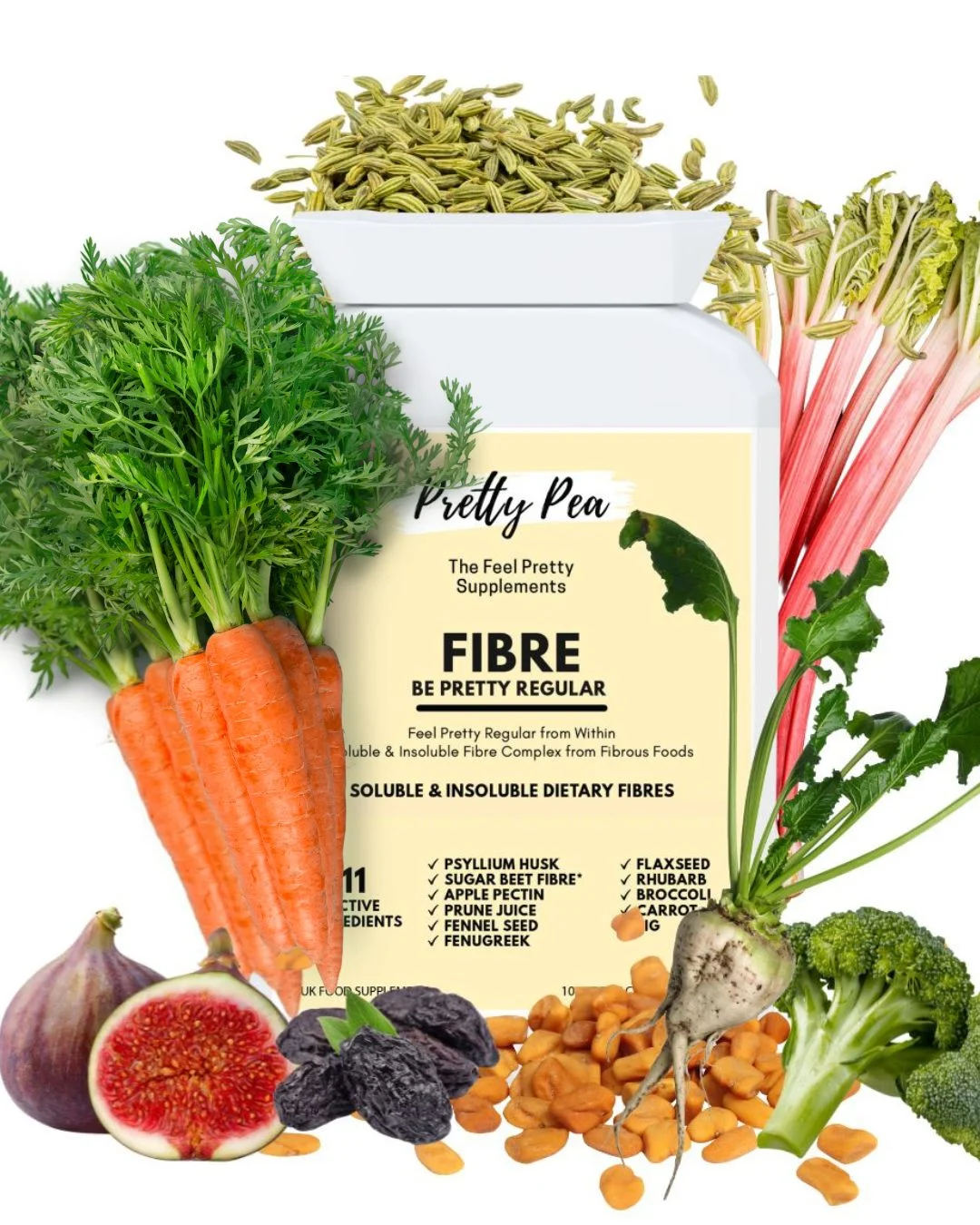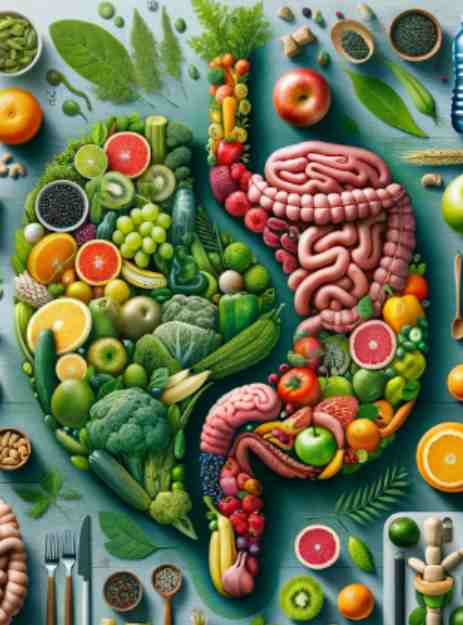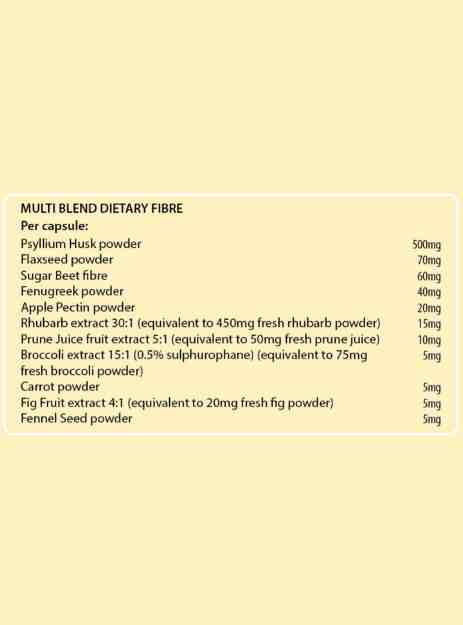
### Daily Fibre
**Soluble & Insoluble** **Fibre** are Key Nutrients to a Varied & Balanced Diet
### More than Roughage
More than just Roughage – these fibre pills also provide **Cellulose, Pectin, Hemicellulose, Lignin & Gums**
### Bowel Function
Sugar Beet fibre contributes to an **increase in Faecal Bulk** & Healthy Bowels
### Fibrous Foods
Fibre derived from High Fibre Foods **Psyllium husk, Flaxseed, Sugar beet, Prune juice, Fig fruit, Rhubarb, Apple Pectin** & more
## Sugar Beet Fibre
## Figs Prunes Carrot Flaxseed
## Psyllium Husk Rhubarb Fenugreek
## Fibre Capsules Benefits
### Fibre Capsules
+
### Daily Nutrition – Increased Fibre Intake
If you’re not consuming the fibre recommended daily amount (RDA) of 25-30g fibre then supplementing with fibre pills can help.
Not consuming the Fibre recommended daily amount (RDA) can leave women feeling sluggish, often with constipation, bloated with a lack energy as the toxins build up.
If that’s not enough, digestion is key to how we look and feel with our digestive tract being home to our *happy hormone* serotonin and around 70-80% of our immune system.
A happy efficient digestion also ensures optimum nutrient absorption from food.
The combination of ingredients in Pretty Pea fibre pills provide both soluble and insoluble fibres derived from flaxseed, psyllium husk, sugar beet, prune juice, fig fruit, rhubarb, pectin, fenugreek and other fibrous foods.
In addition, more than just roughage, these fibre pills provide your body with cellulose, pectin, hemicellulose, lignin and gums.
### How many servings of Fibre Capsules
+
Contains 100 Vegan Easy Take Capsules.
### How to use Fibre Capsules
+
Take 1 or 2 capsules, 1 to 3 times per day or adjust intake as required.
Always take with a minimum of 250ml of water.
Ideally take before an evening meal or split total intake over 2 meals.
When increasing your fibre intake, whether from foods, or from fibre pills, it’s advisable to build up slowly and increase your intake on a gradual basis to allow your body time to acclimatise.
### See What’s Inside Our Fibre Capsules?
### Psyllium Husk
Psyllium is naturally rich in dietary fibre, providing the extra fibre many people need in order to maintain regularity. Psyllium seed husks absorb water in the stomach and form a large mass which stimulates the bowel.
### Sugar Beet Fibre
+
Sugar Beet fibre contributes to normal **bowel function** and an **increase in faecal bulk** which can make for easier bowel movements, here’s how; (1) It’s insoluble components increases bulk by absorbing water in the large intestine, (2) The soluble components are fermented by bacteria in the large intestine leading to an increase in bacterial mass.
### Fenugreek
Fenugreek is considered as one of the oldest medicinal plants and its health-promoting effects have been cited in Ayurveda and traditional TCM.
The seeds (Methi) are rich in lipids, protein, proteas, alkaloids, Fcilaginous fibre, phosphorus, iron, calcium, niacin, vitamin C, selenium and several other nutrients. It’s known to contain over 100 phytochemicals including polysaccharides, polyphenols and flavonoids.
### Prune Juice
With high levels of dietary fibre and antioxidants, prunes are well known for their contribution to the maintenance of healthy bowels and getting things moving!
Prunes (and prune juice) contain phenolic compounds and various sugars including sucrose, fructose and sorbitol that help draw fluids into the intestines, helping the passage of waste.
### Figs
In India, some Fig species are considered sacred, being referred to as India’s National Tree that signifies spiritual knowledge and eternal life.
Figs contain pectin and are a good source of the indigestible fibre lignin, which retains water and helps bulk up the stool.
Figs are one of the highest plant sources of calcium, fibre, copper, manganese, magnesium, potassium and vitamin K.
Figs also contain ficin, a protein-breaking enzyme similar to papain in papaya and bromelain in pineapple. Together, pectin, lignin and ficin make figs a highly efficient *laxative* food.
### Apple Pectin
Pectins have recently been classified as an emerging prebiotic.
Prebiotics are defined as indigestible food ingredients that beneficially affect health. Pectin increases beneficial colon microbiota populations in the gastrointestinal tract, increasing production levels of short chain fatty acids.
Pectins are also a gentle soluble dietary fibre with several beneficial gastrointestinal effects including the delay of gastrointestinal emptying, decreasing gastrointestinal transit time, reducing glucose absorption, increasing faecal mass and mopping up toxins in the intestines.
### Fennel Seed
Fennel seeds act as a gentle warming agent for delicate stomachs. It’s a carminative, aromatic, anti-spasmodic, antibacterial, antifungal, digestive and gut soother, which has mild stimulant and anti-inflammatory properties.
Fennel is packed full of fibre and important nutrients such as vitamin C, calcium, magnesium, potassium and manganese.
### Broccoli
Rich in polyphenols and many biologically active compounds, broccoli is a rich source of dietary fibre supporting the digestive system, bowel regularity and stable blood sugar levels.
As a cruciferous vegetable broccoli is nutrient rich containing other essential nutrients like vitamin A, B vitamins, vitamin C, vitamin K, folate, magnesium, calcium and diindolylmethane (DIM) – a modulator of the immune system with anti-viral and anti-bacterial activity.
Broccoli is also high in sulphur, needed by the liver for detoxification and for the production of bile. Good bile flow is vital for the removal of toxins broken down by the liver.
### Flaxseed
Flaxseeds have been traditionally used for a variety of disorders that include stomach and intestinal complaints. The main bioactive compounds in flaxseed include Omega 3 fatty acid, alpha-linolenic acid (ALA), lignans and fibre.
Lignans are a type of fibre changed by friendly bacteria in the gut that influence hormones and are popular with menopausal women.
### Carrot
Carrots are a multi-nutritional food source. Rich in natural bioactive compounds they are one of most important vegetables in the world recognised for their nutraceutical effects and health benefits.
Phytochemicals contribute to their high dietary value, comprising 4 main types; phenolic compounds, carotenoids, polyacetylenes and Vitamin C.
Packed with nutrients, carrots are rich in dietary fibre, antioxidants, minerals, essential enzymes and vitamins, including vitamin B1, vitamin B2, vitamin B6, vitamin C, vitamin K, biotin, potassium and thiamine.
Rich in polyphenols, which have many favourable health impacts, particularly due to their antioxidant activity.
### Rhubarb
Rhubarb is one of the most ancient and important herbs in traditional Chinese medicine (TCM). It’s main effect on the gastrointestinal tract being to promote the digestion of residual food and get things moving!
Its active ingredients, anthraquinones, emodin, tannins, flavonoids (including rutin) and polyphenols support colon cleansing with astringent-bitter, gastric stimulant, anti-inflammatory, stomach tonic and antiseptic properties.
### Safety
Results may vary from person to person.
Store in a cool dry place, out of the reach of children.
Best before date: see base of container.
Caution: Do not exceed the recommended daily intake.
Take with water
Supplements should not be used as a substitute for a balanced and varied diet and healthy lifestyle.
Always consult your doctor before taking any supplements or changing your diet.
As with all supplements, if you feel unwell, stop taking this product immediately and seek medical advice
### Fibre Capsules – References
The Health Benefits of Dietary Fibre – PMC (nih.gov)
Scientific Opinion on Dietary Reference Values for carbohydrates and dietary fibre (unimi.it)
Scientific Opinion on the substantiation of a health claim related to sugar beet fibre and increasing faecal bulk pursuant to Article 13(5) of Regulation (EC) No 1924/2006 (wiley.com)
[How to get more fibre into your diet – NHS](https://www.nhs.uk/live-well/eat-well/digestive-health/how-to-get-more-fibre-into-your-diet/)
Fibre RDA – Public Health England Public[https://assets.publishing.service.gov.uk/government/uploads/system/uploads/attachment\_data/file/618167/government\_dietary\_recommendations.pdf](https://assets.publishing.service.gov.uk/government/uploads/system/uploads/attachment_data/file/618167/government_dietary_recommendations.pdf)
## You might like these too…
## [Fibre Capsules](https://prettypea.blog/fibre-capsules/)
## Save 20% on Orders Over £50
## Save 20% on Orders Over £50
## Save 20% on Orders Over £50
## Save 20% on Orders Over £50
## Frequently Asked Questions Fibre Capsules
### What are Fibre Capsules
Fibre capsules are **concentrated dietary fibre supplements**. They offer an easy, no-prep way to increase your daily fibre intake without changing your diet — appealing for women with busy lifestyles or sensitive guts.
Common fibre sources used in capsules include:
**Psyllium husk** (Plantago ovata)
**Glucomannan** (from konjac root)
**Inulin** (prebiotic from inulin)
### Fibre Benefits for Hormonal Women
Hormonal women often face:
- Slower digestion
- Perimenopausal bloating
- Weight gain around the middle
- Constipation or irregularity
Since fibre supports **gut motility, blood sugar balance, satiety, and estrogen clearance**, it can be a powerful ally for women — especially when consumed consistently.
### Insoluble Fibre vs Soluble Fibre
Soluble fibre dissolves in water to form a gel-like substance, which can help lower blood cholesterol and glucose levels.
Insoluble fibre does not dissolve in water, it adds bulk to the stool, aiding in the passage of food and waste through the digestive tract.
### Benefits of Fibre Capsules
✅ Easy and portable
✅ No taste or texture issues
✅ Ideal for sensitive guts or restrictive diets
✅ Good for topping up fibre intake (e.g. after meals)
Have additional inquiries?
We are here to help.
[Shop Supplements](https://prettypea.blog/store-two/)
---
### [About Pretty Pea Supplements](https://prettypea.blog/about-pretty-pea-supplements/)
**Published:** March 14, 2025
**Author:** Cate Boyd
**Content:**
# About Us

Welcome to Pretty Pea Supplements – Where Passion Meets Nutrition. At Pretty Pea, we’re more than just a brand; we’re dedicated to redefining the way women nourish their bodies with supplements that make sense.
In a fast paced world with changing life’s and changing bodies Pretty Pea is here to bring women beautifully simple supplements.
Pretty Pea is bringing women tried and trusted botanicals and adaptogens, used by women since ancient times in the East together with science backed vitamins & minerals of the West.
Our journey began with a simple vision of helping women feel better on a cellular level, from the inside out. Join us, Become a Pretty Pea, because we’re dedicated to bringing women like you beautifully simple ***feel pretty good*** supplements.
**The Pretty Promise to You**
## Do you offer Free Shipping?
Yes, your Pretty Pea supplements will be shipped for free using Royal mail standard shipping method. Please allow upto 1 week for safe delivery.
## Do you offer a Money Back Guarantee ?
Yes, we offer a 30 Day Money Guarantee to ensure you receive your full purchase price back if you are not satisfied with your purchase.
## Where are your Supplements Manufactured ?
We are a female founded British company, with our products proudly manufactured in the UK. Our products are manufactured using the highest quality ingredients and conforming to industry highest practice, GMP (Good Manufacturing Practice) and ISO 9001 standards ensuring quality and traceability. Our organic supplements are also Soil Association certified.
## Quality Assured Supplements
We pride ourselves on the quality of our products and are very careful in the selection of our ingredients and suppliers. Unlike many other supplements, our products are concentrated and cutting edge – continually being refined in line with the latest nutritional findings.
## Do you offer Flexible Payment ?
Yes we offer flexible payment options to allows our pretty pea customers to choose from a variety of payment methods, including credit cards, debit cards & online payment services.
## Do you provide Online Support ?
Yes, our online support is focused on providing our pretty pea’s with fast, reliable and helpful support. We are available business hours via email to answer any questions.
about us
## Welcome Pretty Pea – a journey of supplementing life

Pretty Pea founder fitness Coach Cate has spent years training women and lived and breathed the issues every woman faces on some level. Be it with how their body looks or performs, hormonal changes, changing body composition, ageing, eating habits, the cycle of dieting yo-yo’s and understands how all of these issues can affect confidence and self-esteem too.
From a love of fitness, and motivated by her own experience of difficult early menopause symptoms and a life-long journey of supplementing a vegetarian and somewhat faddy diet, Cate developed a passion for un-complicating nutrition and embracing the ease & convenience of supplementation in the knowledge it can give women the power to look & feel their very best every day.
Having tried & tested a vast array of supplements over 40+ years, Cate wanted to share with what she’d learnt along her journey in an ever-evolving market. The Pretty Pea range creates a way of bringing it altogether, to give women a supplement range that they can rely on and trust to love and nourish their body.
You no longer have to rely on blind faith when it comes to what supplements to trust. You no longer have to question what really works and what doesn’t. We’ve done the hard work for you and proudly bring you the best womens supplements to nourish the female body.
A quality (not cost) first approach, you can rest assured Pretty Pea has done the research for you, sourced the highest quality nutrients and carefully combined them to give you and your body optimum results.
With a 20 year legal career behind her, Cate is a stickler for compliance, skills which have proved useful implementing food supplement regulatory and compliance requirements to ensure Pretty Pea are amongst the brands only ever bringing the highest quality ingredients/products to market (Pretty Pea supplements are UK manufactured to GMP/HACCP standards).
We want every woman to feel pretty good from within and are committed to providing health-savvy women, *women like you*, everything they need in one place and to give the peace of mind and confidence that making good choices brings.
Cate has studied Herbalism and is a member of the Complimentary Medicine Association (CMA). Cate and Pretty Pea have been featured in Marie Claire, Natural Health, Top Sante, The Sun and more.

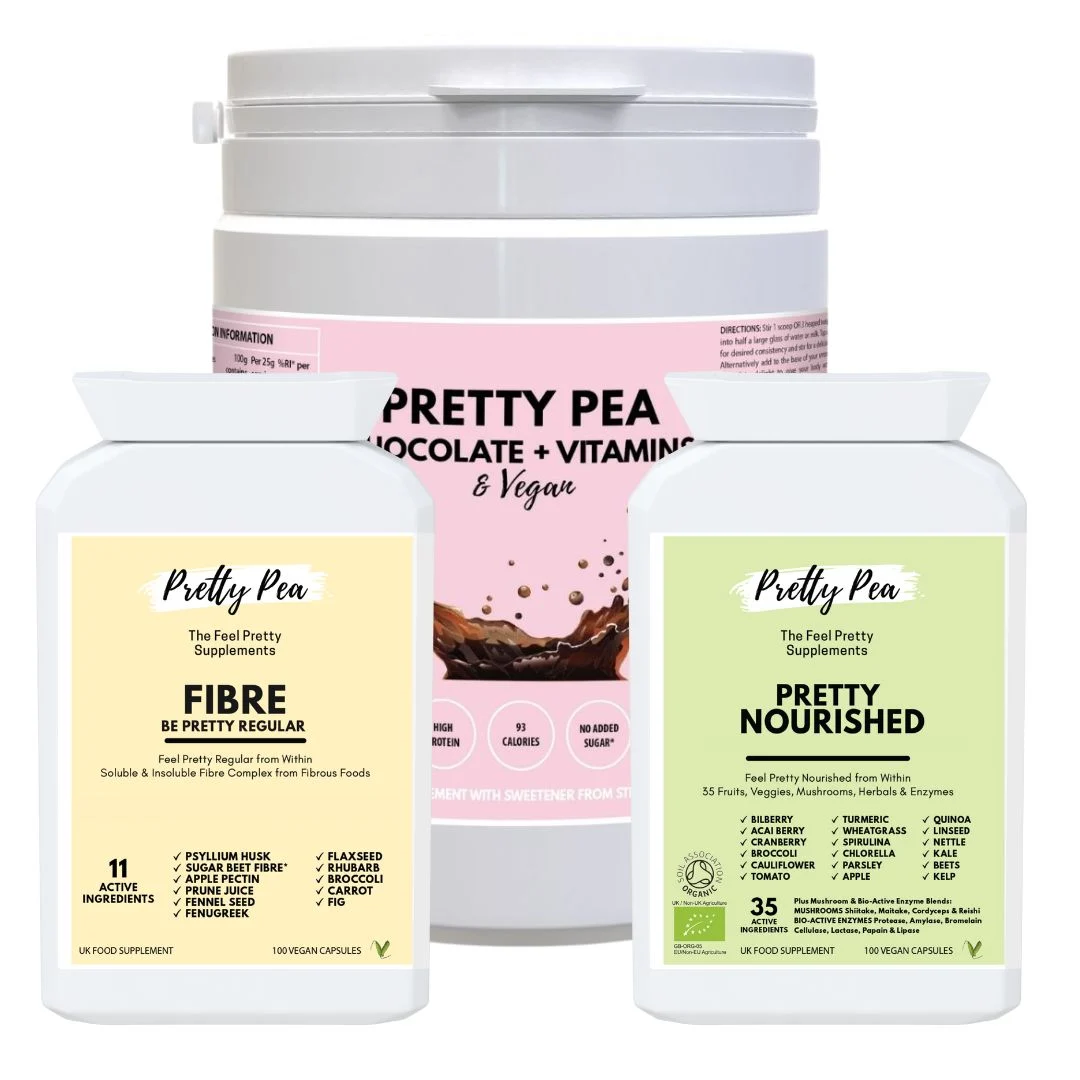
PRETTY PEA products
## Explore Pretty Pea Supplements Now Available
Our products are here to help women feel good about supplementing life! Because how we feel in life is everything. Pretty Pea supports women to feel more in control – *with pretty much everything* – to feeling *pretty nourished* with daily organic fruit & veggies in a capsule, to feeling in control of your changing body with our range of menopause supplements. We’re here to help with the *pretty* range of women’s supplements.
[Shop Supplements](https://prettypea.blog/womens-health-supplements/)
---
### [Pretty Pea Reviews](https://prettypea.blog/pretty-pea-reviews/)
**Published:** December 1, 2023
**Author:** Cate Boyd
**Content:**
PRETTY PEA REVIEWS
# See what our Pretty Peas are saying….
PRETTY PEA REVIEWS
## What our Pretty Pea’s are saying!
## MENO WEIGHT
★★★★★
> I am a 44 year old mother of 2 teenage girls who I would consider to be fairly intelligent. I have googled and read up on so many different products that could/would help me feel more like the me I have always known before hitting perimenopause. After reading reviews, I bought this product hoping that what others had written was in fact true and not written by people being paid to say what they had been told. I have taken this product exactly as it has been recommended and no word of a lie I have lost 6 pounds this week. I have watched my food intake and my days are quite active. But more so than the weight loss I feel motivated, focused, calm and more importantly like me again!! I highly recommend this product as long as you are determined to stick by their recommendations and do the obvious healthy eating and exercise.
## Miss J
## ZEN
★★★★★
> 1stly these ZEN Mind and Body, vitamins from Pretty Pea are the REAL DEAL !!
>
> Since I’ve been taking them they have made me feel more awake and alive in the morning (no more extra cups of coffee needed), and this continues throughout the whole day, with my forgetfulness becoming a thing of the past (I though I had dementia?)
>
> I also have started to feel much more relaxed, even though my anxiety is still very much there.
>
> I never thought that simple vitamin supplement tablets could do so much to make you feel normal again.
>
> Also the seal was on the product, good and proper, unlike many that I’ve received in the past that I’ve thrown away because the seal was off or broken.
>
> Most definitely worth buying.
## T.T.G
## VANILLA PROTEIN
★★★★★
> I really enjoy the flavour and the way it thickens up when whisked. It really helps with the sweet cravings i get in the mornings and evenings. It tastes delicious as well.
## Janet Y

★★★★★
MENO WEIGHT
**Finally I feel like me again. No mood swings , no tears, no hot flushes. I can’t tell how much I feel they have made me feel normal again..**
Lisa JK
> PRETTY BALANCED I have been suffering from fatigue, mood swings, hot flushes, weight gain around my middle, sleep problems, anxiety and breast tenderness. I have been taking BALANCE for a month and have seen positive results. They haven’t completely removed all my symptoms But are definitely helping me feel like my old self.
>
> Michelle R ★★★★★
## PRETTY BALANCED
> ## **APPETITE This product really works! I take it twice a day half an hour before breakfast and dinner and I only eat 3 small meals a day, no snaking in between which is a big thing for me! Just ordered my second tub and will recommend it to friends.**
>
> Verity ★★★★★
## APPETITE
> PRETTY SKIN There’s a lot of talk about collagen at the moment and as I’m now into my 50’s I thought I’d give these a go. I’m not sure I look 30 again…doh.. but my hair and nails tend to grow healthy! I have noticed that when I don’t have the capsules that my skin seems drier on my body so they definitely must be making a difference!
>
> Amanda J. ★★★★★
## PRETTY SKIN

★★★★★
MENO WEIGHT
I started taking these tablets back in October last year, they have reduced my bloating and helped me with energy to get back into the gym and walking. I have currently lost 2 stone and feel so much more like the old me. I’m wearing clothes that I never thought I would wear again. Thankyou pretty pea I’m so happy with my results!
Katie B
> **MUSHROOM** SUPPLEMENT
>
> **Has been Great for my Skin**!
>
> I was researching how to reduce hormonal acne and mushrooms are apparently really good. When I use these the acne on my forehead and neck disappears, I really notice a difference when I don’t take these. I have been taking them for 2 years now and have never looked back
>
> Kat ★★★★★
## PRETTY BALANCED
> **ZEN**
>
> I’ve ben taking these ashwagandha supplements for about 5 weeks and I can definitely tell the difference. I am going through the menopause and I noticed that my mental focus and clarity improved in the first couple of weeks – less foggy! I’ve also noticed that overall I feel calmer, more balanced and less bloated.
>
> Jenny R. ★★★★★
## ZEN
> **PRETTY CLEANSED**
>
> **No bloating, Feeling Good..**
>
> I have been taking these for over 2 years now and notice a real difference when I go without. It really helped me with my bloating, especially in a sedentary office job. I feel like I digest food better and my metabolism has recovered. Love these and I recommend them to my friends and family
>
> Katy H. ★★★★★
## PRETTY CLEANSED
## See what our ZEN Ashwagandha customers are saying..
> **ZEN** Mind & Body
>
> After incorporating this supplement, I felt a distinct change. Stress seems more manageable, and there’s an underlying sense of calm. My energy levels have been consistently up, and I’ve felt more focused.
>
> Not all supplements yield such noticeable results, but this one truly stands out in its effectiveness.
###### S O’Neill ★★★★★
> **ZEN** Mind & Body
>
> I’ve been taking Ashwagandha for a few years now as find it helps massively with my mood in general and helps to keep me calm when work is stressful too compared to not taking it.
>
> I love that this had added b vitamins to it as well and having now finished the course with no issues would recommend fully and about to get more as is good value too for the strength .
###### Mrs Hatter ★★★★★
> **ZEN** Mind & Body
>
> This is a high strength Ashwagandha supplement that is a nice easy size to swallow. With added herbals like reishi mushroom, maca and licorice root plus ginseng they are full of good ingredients.
>
> For 90 good quality capsules they are reasonably priced and they come in a solid easy to open container.
>
> R Hope ★★★★★
# Be More Pretty Pea..
# Quality Supplements Bringing Customers Quality Results
> **MENO WEIGHT** ★★★★★
>
> I saw the previous reviews and I said I am gonna give it a try. I tried so many diets and pills to lose weight and I said to myself is nothing to lose apart from money as hope was lost long time ago.
> I started in mid March, and I lost a stone in 3 months without any effort. I want to add that I am 48, premenopausal probably , and since I have these tablets I am good as new! Before I was gaining weight if I was breathing air! I did not changed anything in my diet, what I noticed tho was the fact that my appetite decreased a lot, loads of energy and IT REALLY WORKS!!!
> The best thing is losing weight steady and sure and not putting anything back on.
> Thank you! You saved my life!
>
> Gina
## MENO WEIGHT
> **MENO WEIGHT** ★★★★★
>
> These are easy to swallow, with a pleasant after taste. After about two weeks I noticed a difference in my mood( I felt more like myself again), I felt a lot less bloated and I’d lost a few pounds. Definitely worth a try, I’m going to keep taking them!
>
> Zoe
## MENO WEIGHT
> **MENO WEIGHT** ★★★★★
>
>
> I must admit I’m very impressed with this menopause weight loss supplement. It does exactly what it says. It reduces appetite and keeps me fuller for longer.
>
> Helerin
## MENO WEIGHT
> *5 stars* ★★★★★
>
> **It certainly helps!**
>
> My hot flushes were relentless and they’ve eased off a bit now. I’m getting a better sleep of a night as I only get 1 or 2 night sweats. The bonus is that I’m not eating everything in sight which is definitely an improvement. I’ve already recommended to my friends as we are all of that age .
>
> Linda
## MENO WEIGHT
> *5 stars* ★★★★★
>
> **Quickly spotted benefits.**
>
> I’ve been taking these supplements for just over two weeks and I can already feel benefits. I feel brighter, less bloated and more focused. I’m not as hungry and I feel full quicker. So far so good.
> Delivery was quick and customer service was spot on.
>
> Jac
## MENO WEIGHT
> *5 stars* ★★★★★
>
> **Work for me!**
>
> It took a few weeks, initially (assuming these may have an accumulative effect?), but I have 100% noticed a difference after taking these consistently. I have more energy and find intermittent fasting much easier. I have also noticed a significant reduction in bloating. Will be purchasing again.
>
> CJ
## MENO WEIGHT
> *5 stars* **★★★★★**
>
> **Great Menopause Supplement**
>
> A great help to support your diet. It helped me dramatically -reduced my food cravings, as well as hot flushes and night sweats . Be patient when waiting for the result- it took couple of weeks to work.
>
> Olga
## MENO WEIGHT
> *5 stars* ★★★★★
>
> **Quickly spotted benefits.**
>
> I’ve been taking these supplements for just over two weeks and I can already feel benefits. I feel brighter, less bloated and more focused. I’m not as hungry and I feel full quicker. So far so good.
> Delivery was quick and customer service was spot on.
>
> Jac
## MENO WEIGHT
> *5 stars* **★★★★★**
>
> **100% Effective**
>
> I have tried so many supplements over the years and I had given up trying to find one that works. I’m peri menopausal at 46.
> I can honestly say this does actually work. 6 a day is a lot to take but that’s why they are so effective. Highly recommend!! They really do work!
>
> Stephanie
## MENO WEIGHT
> *5 star***s ★★★★★**
>
> **Fantastic Supplement Helped me Lose Weight and Gain Energy**
>
> Easy to swallow capsules, I lost 2Ib in the first week of trying these wonder capsules!
> At 42 I was finding it much more difficult to lose any weight without losing energy! Menoweight really kick started my weight loss as the weight came off quicker than I had expected but they also gave me more energy to look after my two young children and also exercise in my free time!
> I definitely didn’t feel as hungry either which is a bonus!
> 100% recommend
>
> Miss Bell
## MENO WEIGHT
> *5 stars* **★★★★★**
>
> **Worked Well**
>
> I have been taking these tablets for around 4 weeks and have lost just over 4lbs. That may not sound like a lot but I haven’t had any weight loss for well over a year despite all my efforts!
>
> S.
## MENO WEIGHT
> *5 stars* **★★★★★**
>
> **Brilliant Menopause Support**
>
> Sceptical at first but these supplements have really made a positive difference to my mood, temperament and well-being. After 1 month I have begun to feel like my old self. Definitely recommend.
>
> Mrs Ramesh
## MENO WEIGHT
> *5 stars* **★★★★★**
>
> **I’ve Lost Weight!**
>
> These are a great hormonal balancer, kept me calm & stopped my food cravings…..I’ve ordered yet again.
> I’ve lost approx a stone on 2 months.
>
> Verified Purchase
## MENO WEIGHT
> *5 stars* ★★★★★
>
> **So Far So Good**
>
> After 2 weeks , sleep has improved appetite definitely suppressed and my menopause tummy has reduced I would recommend giving these a go I’ve tried many other products that haven’t worked until I tried these …so far so good . !
>
> Verified Purchase
## MENO WEIGHT
> *5 stars* ★★★★★
>
> **Helps With Menopause**
>
> I have purchased these twice now and I think they are great. I have found they lifted my mood and I have lost a few pounds, the best thing I have noticed is they help with belly bloating down by keeping you free daily.
> I have lost inches more than weight but I’m happy to continue using these.
>
> Caz
## MENO WEIGHT
> *5 stars* ★★★★★
>
> **Love This Menopause Supplement**
>
>
> Definitely curbs cravings, I’ve more energy. lighter mood, less bloating and feeling fantastic!
>
> Collette
## MENO WEIGHT
> *5 stars* ★★★★★
>
> **They Work For Me**
>
> I feel so much better in myself inside and outside, these really do work if you use them by following the instructions, I don’t feel bloated like I did before taking these tablets and my belly fat/bloating has reduced a lot and I have lost weight only a few pounds but this has made me feel amazing, I will be definitely be ordering again, thank you Pretty Pea.
>
> Verified Purchase
## MENO WEIGHT
> *5 stars* ★★★★★
>
> **Helps To Keep Menopause Weight Off**
>
> The capsules are easy to swallow and I didn’t have any adverse reactions to them at all. Bowels working well, always a problem I’ve found! So far I haven’t craved sweet things and not felt hungry during the day.
>
> Janet
## MENO WEIGHT
## We’ve done the research, we know what works for women and pay close attention to every detail, so there’s no need for you to worry.
**✓** Quality Ingredients
**✓** Science backed Vitamins & Minerals **✓** UK Manufactured
[SHOP SUPPLEMENTS](https://prettypea.blog/womens-health-supplements/)
Your review
Your overall rating Select a Rating5 Stars4 Stars3 Stars2 Stars1 Star
Title of your review
Your review
Your name
Your email
This review is based on my own experience and is my genuine opinion.
Submit Review
---
### [Privacy Policy](https://prettypea.blog/privacy-policy/)
**Published:** October 5, 2023
**Author:** Cate Boyd
**Content:**
## Who we are
Our website address is: http://www.prettypea.blog
## Comments
When visitors leave comments on the site we collect the data shown in the comments form, and also the visitor’s IP address and browser user agent string to help spam detection.
An anonymized string created from your email address (also called a hash) may be provided to the Gravatar service to see if you are using it. The Gravatar service privacy policy is available here: https://automattic.com/privacy/. After approval of your comment, your profile picture is visible to the public in the context of your comment.
## Media
If you upload images to the website, you should avoid uploading images with embedded location data (EXIF GPS) included. Visitors to the website can download and extract any location data from images on the website.
## Cookies
If you leave a comment on our site you may opt-in to saving your name, email address and website in cookies. These are for your convenience so that you do not have to fill in your details again when you leave another comment. These cookies will last for one year.
If you visit our login page, we will set a temporary cookie to determine if your browser accepts cookies. This cookie contains no personal data and is discarded when you close your browser.
When you log in, we will also set up several cookies to save your login information and your screen display choices. Login cookies last for two days, and screen options cookies last for a year. If you select “Remember Me”, your login will persist for two weeks. If you log out of your account, the login cookies will be removed.
If you edit or publish an article, an additional cookie will be saved in your browser. This cookie includes no personal data and simply indicates the post ID of the article you just edited. It expires after 1 day.
## Embedded content from other websites
Articles on this site may include embedded content (e.g. videos, images, articles, etc.). Embedded content from other websites behaves in the exact same way as if the visitor has visited the other website.
These websites may collect data about you, use cookies, embed additional third-party tracking, and monitor your interaction with that embedded content, including tracking your interaction with the embedded content if you have an account and are logged in to that website.
## Who we share your data with
If you request a password reset, your IP address will be included in the reset email.
## How long we retain your data
If you leave a comment, the comment and its metadata are retained indefinitely. This is so we can recognize and approve any follow-up comments automatically instead of holding them in a moderation queue.
For users that register on our website (if any), we also store the personal information they provide in their user profile. All users can see, edit, or delete their personal information at any time (except they cannot change their username). Website administrators can also see and edit that information.
## What rights you have over your data
If you have an account on this site, or have left comments, you can request to receive an exported file of the personal data we hold about you, including any data you have provided to us. You can also request that we erase any personal data we hold about you. This does not include any data we are obliged to keep for administrative, legal, or security purposes.
## Where your data is sent
Visitor comments may be checked through an automated spam detection service.
---
### [My account](https://prettypea.blog/my-account/)
**Published:** October 5, 2023
**Author:** Cate Boyd
**Content:**
---
### [Checkout](https://prettypea.blog/checkout/)
**Published:** November 29, 2023
**Author:** Cate Boyd
**Content:**
---
### [Cart](https://prettypea.blog/cart/)
**Published:** November 29, 2023
**Author:** Cate Boyd
**Content:**
## You may be interested in…
## Your cart is currently empty!
---
## New in store
---
### [Checkout-Result](https://prettypea.blog/stripe-checkout-result/)
**Published:** December 22, 2020
**Author:** Cate Boyd
**Content:**
# [Pretty Pea](https://prettypea.blog)
- [Home](https://prettypea.blog/)
- [Womens Health Supplements](https://prettypea.blog/womens-health-supplements/)
- [Reviews](https://prettypea.blog/pretty-pea-reviews/)
- [Articles & Expert Guidance](https://prettypea.blog/articles/)
---
### [Contact](https://prettypea.blog/contact/)
**Published:** October 24, 2023
**Author:** Cate Boyd
**Content:**
## Contact
# Get in Touch
We are here to help you with any enquiry. If you have any questions or would like to get in touch, please feel free to contact us at hello@prettypea.blog or fill out the form below and we will get back to you as soon as possible.
## Have **questions?**
### 1. Free Shipping?
+
Your supplements will be shipped using Royal Mail standard shipping service. Please allow up to 7 days for delivery.
### 2. Money Guarantee?
+
30 Day Money Guarantee ensures that you will receive your full purchase price back if you are not satisfied with your purchase within this timeframe.
### 3. How can I place an order?
+
Placing an order is quick and easy. Simply browse our online store, select the products you desire, and add them to your cart. Proceed to the checkout process, where you’ll provide your shipping and payment details. Once your order is confirmed, we’ll take care of the rest.
### 4. What payment methods do you accept?
+
We accept various payment methods, including major credit cards (Visa, Mastercard) and other secure online payment platforms. Rest assured that your payment information is protected and encrypted for a secure transaction.
### 5. How long will it take to receive my order?
+
We strive to process and ship orders as quickly as possible. After your order is placed, please allow 1-2 working days for processing. Once processed your supplements will be shipped via Royal Mail standard service.
### 6. Can I track my order?
+
Yes, absolutely! Once your order is shipped, we can send you a tracking number. You can use this tracking number to monitor the progress of your package and stay updated on its estimated delivery date. If you have any issues with tracking your order, feel free to reach out to our support team for assistance.
### 7. Can I receive an invoice?
+
Yes, of course! Simply email our customer support team with your request and order number.
### 8. Do we ship overseas?
+
Unfortunately, we do not ship outside of the UK at this time.
## If you have any questions feel free to
Contact Us
---
### [Cookies Policy](https://prettypea.blog/cookies-policy/)
**Published:** June 4, 2024
**Author:** Cate Boyd
**Content:**
# [Pretty Pea](https://prettypea.blog)
- [Home](https://prettypea.blog/)
- [Womens Health Supplements](https://prettypea.blog/womens-health-supplements/)
- [Reviews](https://prettypea.blog/pretty-pea-reviews/)
- [Articles & Expert Guidance](https://prettypea.blog/articles/)
## **Cookies Policy**
**Introduction**
Welcome to Pretty Pea (“we”). This Cookie Policy explains how we use cookies and similar technologies on our website www.prettytpea.blog (the “Website”). By using the Website, you consent to the use of cookies as described in this policy.
**What Are Cookies?**
Cookies are small text files that are stored on your device (computer, tablet, mobile phone, etc.) when you visit a website. They are widely used to make websites work, improve user experience, and provide information to the website owners.
**How We Use Cookies**
We use cookies to:
- Understand and save user preferences for future visits
- Compile aggregate data about site traffic and site interactions to provide better site experiences and tools
- Keep track of advertisements
- Enable certain website functions
- Provide analytics
**Types of Cookies We Use**
**1. Essential Cookies**
These cookies are necessary for the Website to function properly. They enable basic functions like page navigation and access to secure areas of the Website. The Website cannot function properly without these cookies.
- **Who serves the cookies:** Google Tag Manager
- **How to control them:** See Your Choices below
**2. Analytics / Performance Cookies**
These cookies collect information about how visitors use our Website, such as which pages are visited most often and any error messages received. This helps us improve the performance of our Website. These cookies may work with web beacons included in emails we send to track which emails are opened and which links are clicked by recipients.
- **Who serves the cookies:** Google Analytics, Google Optimize, Mailerlite
- **How to control them:** See Your Choices below
**3. Functionality Cookies**
These cookies allow the Website to remember choices you make and provide enhanced, more personalized features. For example, they may be used to remember your name and preferences.
- **How to control them:** See Your Choices below
**4. Targeting/Advertising Cookies**
These cookies are used to deliver advertisements that are more relevant to you and your interests. They remember that you have visited a website and this information may be shared with other organizations such as advertisers.
**Advertising**
- **Who serves the cookies:** Google, Bing, Amazon
- **How to control them:** You can opt-out of Google cookies [**here**](https://adssettings.google.com/)
You can opt-out of Bing cookies [**here**](https://about.ads.microsoft.com/en-us/resources/policies/personalized-ads)
You can opt out of Amazon cookies **[here](https://www.amazon.com/adprefs)**
See Your Choices below
**Social**
These cookies may allow you to log into the Sites through your social media account or share content in our Sites that you find interesting through third party social media providers. These cookies may also be used for advertising purposes.
- **Who serves the cookies:** META
- **How to control them:** See Your Choices below
**Third-Party Cookies**
In addition to our own cookies, we may also use various third-party cookies to report usage statistics of the Website, deliver advertisements on and through the Website, and so on. These third-party cookies may track your online activities over time and across different websites and services.
**Other technologies**
In addition to cookies, our Sites may use other technologies such as pixel tags to collect information automatically.
**Browser Web Storage**
We may use browser web storage (including via HTML5), also known as locally stored objects (“LSOs”), for similar purposes as cookies. Browser web storage enables the storage of a larger amount of data than cookies. Your web browser may provide functionality to clear your browser web storage.
**Web Beacons**
We may also use web beacons (which are also known as pixel tags and clear GIFs) on our Sites and in our HTML formatted emails to track the actions of users on our Sites and interactions with our emails. Unlike cookies, which are stored on the hard drive of your computer or mobile device by a website, web beacons are embedded invisibly on webpages or within HTML formatted emails. Web beacons are used to demonstrate that a webpage was accessed or that certain content was viewed, typically to measure the success of our marketing campaigns or engagement with our emails and to compile statistics about usage of the Sites, so that we can manage our content more effectively.
**Your choices**
Your options for controlling what information cookies and similar technologies collect about you include:
- **Blocking cookies in your browser.** Most browsers let you remove or reject cookies. To do this, follow the instructions in your browser settings. Many browsers accept cookies by default until you change your settings. For more information about cookies, including how to see what cookies have been set on your device and how to manage and delete them, visit allaboutcookies.org.
- **Third party opt-outs.** You can opt-out of interest-based advertising through some third parties by using the corresponding third party opt-out tools provided in the chart above.
- **Industry association opt-outs.** You may opt out of receiving interest-based advertising on websites through members of the Network Advertising Initiative by clicking here or the Digital Advertising Alliance by clicking here. Please note that we also may work with companies that offer their own opt-out mechanisms and may not participate in these opt-out mechanisms.
- **Blocking advertising ID use in your mobile settings.** Your mobile device settings may provide functionality to limit use of the advertising ID associated with your mobile device for interest-based advertising purposes.
If you do not accept our cookies, you may experience some inconvenience in your use of our Sites. For example, we may not be able to recognize your computer or mobile device and you may need to log in every time you visit our Sites.
If you choose to opt-out of targeted advertisements, you will still see advertisements online but they may not be relevant to you.
For more information about how we collect, use and share your information, see our Privacy Policy.
**Changes**
Information about the cookies we use may be updated from time to time, so please check back on a regular basis for any changes.
**Questions**
If you have any questions about this Cookie Policy, please contact us by email at hello@prettypea.blog
---
### [Weight Loss Guide](https://prettypea.blog/weight-loss-over-40/)
**Published:** July 16, 2024
**Author:** Cate Boyd
**Content:**
## Weight Loss.. over 40
Want to know why you’re gaining weight for what feels like no reason and what you can do about it? Our latest free guide explains what’s happening and how you can take charge of your body.
Get your **free guide**. Add your details below\* and we’ll send you the download straight to your inbox!
#### Marketing Permissions
The information you provide on this form will only be used to provide you with updates and personalized marketing. Your privacy is important to us! Please let us know how you would like to keep in touch:
Email
We will send you occasional emails about promotions, new products and important updates to keep you in the loop.
Send Me The Guide
Loading…
#### Thank you!
You have successfully joined our subscriber list.
\*By giving your details you understand that you will be added to my mailing list and will receive occasional emails and information about nutrition, supplements and tips to feel your feel self and sometimes offers and discounts on Pretty Pea supplements. You can of course unsubscribe at any time.
---
### [Refund and Returns Policy](https://prettypea.blog/refund_returns/)
**Published:** June 4, 2024
**Author:** Cate Boyd
**Content:**
REFUND & RETURNS POLICY
[Pretty Pea](https://prettypea.blog)
## Refund & Returns Policy
Our refund and returns policy lasts 30 days. If 30 days have passed since your purchase, we can’t offer you a full refund or exchange.
To be eligible for a return, your item must be unused and in the same condition that you received it. It must also be in the original packaging.
To complete your return, we require a receipt or proof of purchase.
There are certain situations where only partial refunds are granted:
(1) Any item not in its original condition, is damaged or missing parts for reasons not due to our error.
(2) Any item that is returned more than 30 days after delivery.
## Refunds
Once your return is received and inspected, we will send you an email to notify you that we have received your returned item. We will also notify you of the approval or rejection of your refund.
If you are approved, then your refund will be processed, and a credit will automatically be applied to your credit card or original method of payment, within 7 working days.
**Late or missing refunds**
If you haven’t received a refund yet, first check your bank account again.
Then contact your credit card company, it may take some time before your refund is officially posted.
Next contact your bank. There is often some processing time before a refund is posted.
If you’ve done all of this and you still have not received your refund yet, please contact us at hello@prettypea.blog.
**Sale items**
Only regular priced items may be refunded. Sale items cannot be refunded.
## Exchanges
We only replace items if they are defective or damaged. You will need to provide evidence of the damage/defect.
If you need to exchange it for the same item, send us an email at hello@prettypea.blog and send your item to: 100 Dorchester Road Garstang Preston PR3 1EE.
## Gifts
If the item was marked as a gift when purchased and shipped directly to you, you’ll receive a gift credit for the value of your return. Once the returned item is received, a gift certificate will be mailed to you.
If the item wasn’t marked as a gift when purchased, or the gift giver had the order shipped to themselves to give to you later, we will send a refund to the gift giver and they will be notified of your return.
## Shipping returns
To return your product, you should mail your product to: 100 Dorchester Road Garstang Preston PR3 1EE.
You will be responsible for paying for your own shipping costs for returning your item. Shipping costs are non-refundable. If you receive a refund, the cost of return shipping will be deducted from your refund.
Depending on where you live, the time it may take for your exchanged product to reach you may vary.
If you are returning more expensive items, you may consider using a trackable shipping service or purchasing shipping insurance. We cannot guarantee that we will receive your returned item.
## Need help?
Contact us at hello@prettypea.blog} for questions related to refunds and returns.
---
### [Terms and Conditions](https://prettypea.blog/terms-and-conditions/)
**Published:** June 3, 2024
**Author:** Cate Boyd
**Content:**
- [Facebook](https://facebook.com)
- [Instagram](https://instagram.com)
- [Pinterest](https://pinterest.com)
TERMS & CONDITIONS
[Pretty Pea](https://prettypea.blog)
## **Terms & Conditions**
Effective Date: 3 June 2024
This page (together with the documents expressly referred to on it) provides you with information about us and the legal terms and conditions (“Terms”) on which we sell any of the products (“products”) advertised on our website (“our site”) (“products”) and/or provide any of the products via one of our subscription plans (“subscription plans”) listed on our site to you.
These Terms will apply to any contract between us for the sale of products or the provision of subscription plans to you (“Contract”). Please read these Terms carefully and make sure that you understand them, before ordering any products and/or subscription plans from our site. Please note that before placing an order you will be asked to agree to these Terms. If you refuse to accept these Terms, you will not be able to order any products and/or subscription plans from our site.
You should print a copy of these Terms or save them to your computer for future reference.
We may amend these Terms from time to time as referred to in clause 10. Every time you wish to make an order, please check these Terms to ensure you understand the terms of your order which are applicable at that time.
These Terms, and any Contract between us, are only in the English language.
**1. INFORMATION ABOUT US**
1.1
We operate the website www.prettypea.blog. We are Pretty Pea Limited, a company registered in England and Wales under company number 14657346 and with our registered office at 100 Dorchester Road, Garstang PR3 1EE.
**2. COMMUNICATIONS BETWEEN US**
2.1
If you wish to contact us email hello@prettypea.blog.
2.2
If we have to contact you or give you notice in writing, we will do so via the email provided at the time of placing your order.
**3. YOUR STATUS**
In order to place an order on our site, you must be a consumer, not a business or a reseller and be at least 18 years of age.
**4. OUR PRODUCTS**
4.1
The images of the products on our site are for illustrative purposes only. Although we have made every effort to display the colours accurately, we cannot guarantee that your computer’s display of the colours accurately reflects the colour of the products. Your products may vary slightly from those images.
4.2
Although we have made every effort to be as accurate as possible, all sizes, weights, capacities, dimensions and measurements indicated on our site have a 2% tolerance.
4.3
The packaging of the products may vary from that shown on images on our site.
4.4
All products and subscription plans shown on our site are subject to availability. We will inform you by email as soon as possible if the product or subscription plan you have ordered is not available and we will cancel and refund your order.
4.5
We reserve the right to cancel any customer orders or subscription plans at any time before a Dispatch confirmation is sent to the customer. You shall be entitled to a full refund if we exercise the right to cancel your order after payment has been taken during the checkout process.
4.6
Content on our site is not intended to constitute medical or pharmaceutical advice, or to be a substitute for any advice given by a licenced healthcare professional. You should contact your medical practitioner immediately if you suspect you have a medical problem, and stop using any products or subscription plans that you suspect may contribute to the problem or if you experience any adverse effects. You should not use any information or statement about any of our products nor subscription plans nor website content to attempt to diagnose, treat, cure or prevent any medical condition.
**5. USE OF OUR SITE**
Your use of our site is governed by our Terms of Website Use. Please take the time to read these, as they include important terms which apply to you.
**6. HOW WE USE YOUR PERSONAL INFORMATION**
We only use your personal information in accordance with our Privacy Policy. For details, please see our Privacy Policy . Please take the time to read this policy, as it includes important terms which apply to you.
**7. USER CONTENT**
“User Content” means text, graphics, images, music, software, audio, video, works of authorship of any kind, and information or other materials that are posted, generated, provided or otherwise made available to Pretty Pea Ltd.
Any User Content, whether publicly posted or privately transmitted, is the sole responsibility of the person who originated such User Content. You represent that all User Content submitted by or on behalf of you is accurate, complete, up-to-date, and in compliance with these Terms and with all applicable laws, rules and regulations.
As between you and Pretty Pea, you represent that you own (or have all rights necessary to grant Pretty Pea the rights below to) all User Content that you submit to Pretty Pea, and that Pretty Pea will not need to obtain licences from any third party or pay royalties to any third party in order to use such User Content. You grant Pretty Pea a worldwide, perpetual, irrevocable, non-exclusive, sublicensable (through multiple tiers), transferable royalty-free licence and right to use, copy, transmit, distribute, publicly perform and display (through all media now known or later created), edit, modify, and make derivative works from your User Content (including, without limitation, translations) for any purpose whatsoever, commercial or otherwise, without compensation to you. In addition, you waive any so-called “moral rights” or rights of privacy or publicity in your User Content.
**8. CONSUMER RIGHTS**
As a consumer, you have legal rights in relation to products and/or subscription plans that are faulty or not as described. Advice about your legal rights is available from your local Citizens’ Advice Bureau or Trading Standards office. Nothing in these Terms will affect these legal rights. You also have a right to cancel the Contract as set out below in clause 10.
**9. HOW THE CONTRACT IS FORMED BETWEEN YOU AND US**
9.1
To place an order on our site, simply click the product or subscription plan of your choice and go through the checkout procedure.
9.2
Our order process allows you to check and amend any errors before submitting your order to us. Please take the time to read and check your order at each page of the order process.
9.3
After you place an order, you will receive an email from us acknowledging that we have received your order. However, please note that this does not mean that your order has been accepted. Our acceptance of your order will take place as described in clause 9.4.
9.4
We will confirm our acceptance to you by sending an email that confirms that the products or, where you have ordered a subscription plan, the first delivery of products, have been Dispatched (“Dispatch Confirmation”). The Contract between us will only be formed when we send you the Dispatch Confirmation. Once the order has been Dispatched, you may cancel the contract and return the products for a refund as described in clause 10.
9.5
If at any time prior to sending the Dispatch Confirmation, it becomes apparent that we are unable to supply you with a product or subscription plan, for example because a product is not in stock or no longer available, or because of an error in the price on our site as referred to in clause 14.6, we will inform you of this by email and we will not process your order. In such cases, we will refund you the full amount including any applicable delivery costs charged as soon as possible.
**10. OUR RIGHT TO VARY THESE TERMS**
10.1
We may revise these Terms from time to time.
10.2
Every time you order products or subscription plans from us, the Terms in force at that time will apply to the Contract between you and us.
10.3
Whenever we revise these Terms in accordance with this clause 10, we will keep you informed and give you notice of this by stating that these Terms have been amended.
10.4
If we have to revise these Terms as they apply to your order, we will contact you to give you reasonable advance notice of the changes and let you know how to cancel the Contract if you are not happy with the changes. You may cancel either in respect of all the affected products and/or subscription plans or just the products and/or subscription plans you have yet to receive. If you opt to cancel, you will have to return (at our cost) any relevant unused products you have already received and we will arrange a full refund of the price you have paid, including any delivery charges, in respect of such unused products.
**11. YOUR CONSUMER RIGHT OF CANCELLATION**
11.1
We are happy to refund or exchange any product returned to us within the relevant period detailed in clause 11.2, provided the product(s) is in its original packaging, unopened and unused. You must contact to notify us of your return. The price of the product and original shipping costs (if applicable) are refundable but return shipping costs are non-refundable and are at your own expense.
All returns should be sent, including a copy of your receipt (or a note with your order number, name and address) and reason for return to the below address;
Pretty Pea Ltd 100 Dorchester Road Garstang Lancashire PR3 1EE.
If you have any questions please email us at hello@prettypea.blog.
Note that where you have purchased one of our products from a Third Party retailer, you should contact them should you wish to return said product.
11.2
If you are a consumer, you have a 14 day legal right to cancel a Contract (“Cancellation Period”) from the day you take receipt of the products under the Consumer Contracts (Information, Cancellation and Additional Charges) Regulations 2013. This means that during the Cancellation Period if you change your mind or decide for any other reason that you do not want to keep a product you can notify us of your decision to cancel the Contract.
You have a further 14 days after the Cancellation Period to return the products to us as detailed in Clause 11.1.
A refund shall be issued within 14 days of receipt of the returned products. Advice about your legal right to cancel the Contract is available from your local Citizens’ Advice Bureau or Trading Standards office.
11.3
To cancel a subscription plan at any time, you can do so through your account on our website, or by contacting Client Care via email at hello@prettypea.blog.
If you would like to cancel an upcoming subscription order and ensure we do not charge your account, you must give us at least 2 working day’s notice ahead of your upcoming order date to allow us to postpone or cancel your order. Therefore, if you have an order due to ship on Monday and do not want it to go ahead, you must let us know no later than 5 pm the previous Thursday (excluding Public Holidays).
11.4
If a product is faulty, mis-described or damaged, you have 30 days to notify us, return the goods and claim a refund of a defective product in full, any applicable delivery charges, and any reasonable costs you incur in returning the item to us at the address specified in clause 11.1.
If you notify us of the defective goods after 30 days we shall provide you with a replacement product in line with the Consumer Rights Act 2015.
You are required to provide photographic evidence of any claimed defects when notifying us of a defective product under clause 11.4.
11.5
We will refund you on the credit card or debit card used by you to pay.
11.6
Any refund beyond the normal cancellation period will be entirely at our discretion.
**12. DELIVERY**
12.1
We aim to deliver products within 30 days of the date of the Dispatch Confirmation. Occasionally our delivery to you may be affected by an Event Outside Our Control. See clause 19 for our responsibilities when this happens.
12.2
Delivery of all products will be completed when we deliver the products to the address you gave us and the products will be your responsibility from that time. Proof of delivery shall be provided by our shipping partner which shall be conclusive evidence of delivery.
12.3
You own the products once we have received payment in full, including all applicable delivery charges.
**13. SHIPPING POLICY**
13.1
We only accept orders from UK residents. We are unable to accept orders from residents living in the Rest of the World.
13.2
Our up to date delivery information and charges can be found at www.prettypea.blog[](https://lumitylife.co.uk/pages/shipping-delivery). If you would like any additional information about deliveries e-mail hello@prettypea.blog. All orders are processed between Monday and Friday. Orders must be placed before 12pm (GMT) in order for us to ship your product on the following working day. We do not guarantee same day shipping.
13.3
You must comply with all applicable laws and regulations of the country for which the products are destined regarding the use to which the products are put. We will not be liable or responsible if you break any such law.
**14. PRICE OF PRODUCTS, SUBSCRIPTION PLANS AND DELIVERY CHARGES**
14.1
The prices of the products will be as quoted on our site at the time you place your order. We reserve the right to amend prices at any time on our site. We use our best efforts to ensure that the prices are correct at the time when the relevant information is posted on our site. However, if we discover an error in the price of any product(s) and/or subscription plan(s) you have ordered, please see clause 14.6 for what happens in this event.
14.2
We may change the price of any subscription plan by giving you a minimum of 30 days’ notice. We shall inform you of any such change to the price of a subscription plan by email to the address you provided us when purchasing your subscription. Any amended prices will take effect from the effective date of the price change per the email. You shall have the right to cancel your subscription as detailed in clause 11.3. If you do not cancel your subscription, you agree that the amended price shall apply from the effective date.
14.3
The price of a product or subscription plan includes VAT (where applicable) at the applicable current rate chargeable in the UK and EU for the time being. However, if the rate of VAT changes between the date of your order and the date of delivery, we will adjust the VAT you pay, unless you have already paid for the products in full before the change in VAT takes effect.
If your delivery address is outside of the EU, you may be required to pay import duties and taxes when your order reaches your country. These and any additional charges for customs clearance are your responsibility. UK orders are dispatched by Pretty Pea Limited from the UK.
14.5
Delivery charges apply according to the value or the order and shipping address. Delivery charges are detailed in clause 13.2.
14.6
It is always possible that, despite our best efforts, some of the products or subscription plans on our site may be incorrectly priced. We will normally check prices as part of our dispatch procedures so that where a product or subscription plan’s correct price is less than the price stated on our site, we will charge the lower amount when dispatching the products to you. However, if the pricing error is obvious and unmistakable and could have reasonably been recognised by you as a mispricing, we do not have to provide the products or subscription plans to you at the incorrect (lower) price and if the product or subscription plan’s correct price is higher than the price stated on our site, we will contact you as soon as possible to inform you of this error and we will give you the option of continuing to purchase the product or subscription plan at the correct price or cancelling your order. We will not process your order until we have your instructions. If we are unable to contact you using the contact details you provided during the order process, we will treat the order as cancelled and notify you in writing.
**15. HOW TO PAY**
15.1
You can only pay for products or subscription plans using a debit or credit card. We accept the following cards for one off purchases: Visa and Mastercard. In addition you may pay via your Paypal account which removes the requirement to enter your credit or debit card details into our site. We accept the following cards for subscription purchases: Visa and Mastercard. It is not possible to add Paypal or Apple Pay as the payment method to an existing subscription plan.
15.2
Payment for the products, subscription plans and all applicable delivery charges is made in full and in advance.
15.3
By subscribing to a subscription plan, you authorise us to use the card details you provide to us to take an initial payment for the first order of the subscription plan. Thereafter, unless you cancel the Contract under clause 11.3 we shall take recurring payments for the relevant subscription fee at the agreed frequency renewal date which is visible in your account. If your card expires at any time, or we are otherwise unable to take payment from it, you must provide us with an alternative payment method in order to continue your subscription. We reserve the right to suspend the subscription of any customer that has not paid all of their subscription fees.
**16. SUBSCRIPTION PLANS**
16.1
If you order a subscription plan, you will:
16.1.1
Receive regular deliveries of product in accordance with the chosen frequency; and
16.1.2
Have access to create an account on our site, through which you can amend or edit your delivery and billing details, and defer your subscription delivery dates or cancel subscription plans. An account is not automatically created on the completion of a purchase. You are responsible for actively creating an account either before or after the purchase of a subscription plan on our site.
16.2
Unless you cancel your subscription plan, by following the process in clause 10.3, the subscription plan will automatically renew for successive renewal periods of the same duration as the period you initially selected, at the existing non promotional subscription price as advertised within the Shop area of our website.
16.3
We reserve the right, at our absolute discretion, not to renew your Contract for a subscription plan. If we choose not to renew your Contract, we shall be under no obligation to give you reasons for our refusal.
**17. DISCOUNT CODES AND OFFERS**
Discount codes shall apply to the first charge only unless stated otherwise, are subject to availability, and can be taken down without notice. Discount codes may not be used in combination with any other promotions or any products which are already discounted, including bundles. Discount codes may not be used for the purchase of an e-gift card. We reserve the right to cancel any order due to ineligible use of discount codes and other offers.
The terms and conditions that apply to any specific discount code or offer may be requested by emailing hello@prettypea.blog.
If you see your product at a better price from a Pretty Pea Retailer please contact Client Care within 30 days of purchase including a screenshot and URL for the offer and we will refund the difference.
**18. MEDICAL ADVICE**
Our products are not intended to treat, cure or prevent any disease, nor is the information supplied on our website or other promotional material intended to replace the individual advice available from your own doctor. If you have a recurring health problem that concerns you, always tell and seek advice from your doctor. Our products are not intended to replace a balanced diet and healthy lifestyle. Consult your doctor before taking supplements. If you are taking prescription medicine, please consult your doctor or pharmacist before taking our products. If you experience an adverse reaction, stop taking our products and seek medical advice.
**19. OUR LIABILITY TO YOU AS A CONSUMER**
19.1
If we fail to comply with these Terms, we are responsible for loss or damage you suffer that is a foreseeable result of our breach of these Terms or our negligence, but we are not responsible for any loss or damage that is not foreseeable. Loss or damage is foreseeable if they were an obvious consequence of our breach or if they were contemplated by you and us at the time we entered into the Contract.
19.2
We only supply products for domestic and private use. You agree not to use any of our products for any commercial, business or resale purposes, and we have no liability to you for any loss of profit, loss of business, business interruption, or loss of business opportunity.
19.3
We do not in any way exclude or limit our liability for:
19.3.1
Death or personal injury caused by our negligence;
19.3.2
Fraud or fraudulent misrepresentation;
19.3.3
Any breach of the terms implied by section 12 of the Sale of Goods Act 1979 (title and quiet possession);
19.3.4
Any breach of the terms implied by section 13 to 15 of the Sale of Goods Act 1979 (description, satisfactory quality, fitness for purpose and samples); or
19.3.5
Defective products under the Consumer Protection Act 1987.
**20. EVENTS OUTSIDE OUR CONTROL**
20.1
We will not be liable or responsible for any failure to perform, or delay in performance of, any of our obligations under a Contract that is caused by an Event Outside Our Control. An Event Outside Our Control is defined below in clause 22.2.
20.2
An “Event Outside Our Control” means any act or event beyond our reasonable control, including without limitation strikes, lock-outs or other industrial action by third parties, civil commotion, riot, invasion, terrorist attack or threat of terrorist attack, war (whether declared or not) or threat or preparation for war, fire, explosion, storm, flood, earthquake, subsidence, epidemic or other natural disaster, failure of public or private telecommunications networks, impossibility of the use of railways, shipping, aircraft, motor transport or other means of public or private transport.
20.3
If an Event Outside Our Control takes place that affects the performance of our obligations under a Contract:
20.3.1
We will contact you as soon as reasonably possible to notify you; and
20.4
You may cancel a Contract affected by an Event Outside Our Control which has continued for more than 30 days. To cancel please contact us. If you opt to cancel, you will have to return (at our cost) any relevant products you have already received and we will refund the price you have paid, including any delivery charges.
**21. OTHER IMPORTANT TERMS**
21.1
We may transfer our rights and obligations under a Contract to another organisation, but this will not affect your rights or our obligations under these Terms.
21.2
You may only transfer your rights or your obligations under these Terms to another person if we agree in writing.
21.3
This contract is between you and us. No other person shall have any rights to enforce any of its terms, whether under the Contracts (Rights of Third Parties Act) 1999 or otherwise.
21.4
Each of the paragraphs of these Terms operates separately. If any court or relevant authority decides that any of them are unlawful or unenforceable, the remaining paragraphs will remain in full force and effect.
21.5
If we fail to insist that you perform any of your obligations under these Terms, or if we do not enforce our rights against you, or if we delay in doing so, that will not mean that we have waived our rights against you and will not mean that you do not have to comply with those obligations. If we do waive a default by you, we will only do so in writing, and that will not mean that we will automatically waive any later default by you.
21.6
Please note that these Terms are governed by English law. This means a Contract for the purchase of products through our site and any dispute or claim arising out of or in connection with it will be governed by English law. You and we both agree that the courts of England and Wales will have exclusive jurisdiction, however we reserve the right to bring proceedings against customers in their country of residence.
21.7
We will not file a copy of the Contract between us.
## **TERMS OF WEBSITE USE**
Pretty Pea Limited welcome you to our website (our site) located at [www.prettypea.blog](http://www.prettypea.blog) or any subsequent URL which may replace it in the future.
These terms of use (together with the documents referred to in them) explain the terms by which you may use our site, whether as a guest or a registered user. Use of our site includes accessing, browsing or registering to use our site.
By using our site you acknowledge that you have read, understood, and agreed to be bound by these terms.
If you do not agree to these terms, you should not use or access this site. If you have any questions, please contact us by email at hello@prettypea.blog.
**1. OTHER APPLICABLE TERMS**
These terms of use refer to the following additional terms, which also apply to your use of our site:
Our Privacy Policy, which sets out the terms on which we process any personal data we collect from you, or that you provide to us. By using our site, you consent to such processing and you warrant that all data provided by you is accurate.
Our Cookie Policy, which sets out information about the cookies on our site.
If you purchase goods from our site, our Terms and Conditions of Supply will apply to the sales.
**2. INFORMATION ABOUT US**
Pretty Pea Limited are registered in England and Wales under company number 14657346 and have our registered office at 100 Dorchester Road, Garstang, Lancashire PR3 1EE.
**3. CHANGES TO THESE TERMS**
We reserve the right to revise these terms at any time by updating this page. You are encouraged to review these terms each time you use the site because your use of the site after the posting of changes will constitute your acceptance of the changes.
**4. CHANGES TO OUR SITE**
We may update our site from time to time, and may change the content at any time. However, please note that any of the content on our site may be out of date at any given time, and we are under no obligation to update it.
We do not guarantee that our site, or any content on it, will be free from errors or omissions.
**5. ACCESSING OUR SITE**
Our site is made available free of charge.
We grant you a personal, limited, non-transferable and non-exclusive licence to access and use the site. We reserve the right, in our sole discretion and without notice to you, to suspend or discontinue any aspect of the site and we will not be liable to you or to any third party for doing so. We may also impose rules for and limits on use of the site or restrict your access to part, or all, of the site without notice or penalty. Your continued use of the site will constitute your acceptance of any such changes.
You are responsible for making all arrangements necessary for you to have access to our site.
You are also responsible for ensuring that all persons who access our site through your internet connection are aware of these terms of use and other applicable terms and conditions, and that they comply with them.
**6. MEMBERSHIP OF THE SITE**
You are invited to become a registered user of this site by signing up to a customer account.
Each registration is for a single user only. We do not permit you to share your user name and password with any other person nor with multiple users on a network.
You are responsible for maintaining the confidentiality of your account and password. You agree to accept responsibility for all activities that occur under your user name or password. You agree to immediately notify us in the event of any unauthorised use of your account or other breach of security.
If you know, or suspect that anyone other than you knows your user name or password, you must promptly notify us at hello@prettypea.blog.
We reserve the right to revoke or suspend access to your account for any reason at any time including as a result of a violation of these terms, or our Privacy Policy, without notice.
**7. PROPRIETARY RIGHTS**
You acknowledge and agree that the content (other than content that may be submitted by other registered users of our site), materials, text, images, videos, graphics, trademarks, logos, button icons, music, software and other elements available on the site are our property or our licensors and are protected by copyright, trademark and/or other proprietary rights and laws.
You may view, print and download the contents for personal use only. The contents must not be used for commercial purposes or incorporated in any publication in any form, without obtaining a licence to do so from us or our licensors. You agree not to sell, licence, rent, distribute, copy, reproduce, transmit, publicly display, publicly perform, publish, adapt, edit, modify or create derivative works from any content or materials on the site.
Our status (and that of any identified contributors) as the authors of the content on our site must always be acknowledged.
If you print off, copy or download any part of our site in breach of these terms of use, your right to use our site will cease immediately and you must, at our option, return or destroy any copies of the materials you have made.
“Pretty Pea” is a registered trademark protected by UK trademark laws with trade mark number UK00003651739. All other trademarks that appear at our site are the property of their respective owners. All of our site’s content is © Pretty Pea Limited, 2024, all rights reserved.
**8. DISCLAIMERS**
You assume all responsibility and risk with respect to your use of the site.
The content on our site is provided for general information only. It is not intended to amount to advice on which you should rely. You must obtain professional or specialist advice before taking, or refraining from, any action on the basis of the content on our site.
The site, and all content, products, and other information on or accessible from or through this site or a “linked” site are provided on an “as is” and “as available” basis without warranty of any kind, either express or implied, including but not limited to the implied warranties of merchantability, fitness for a particular purpose, non-infringement, security or accuracy. Specifically, but without limitation, we do not warrant that: (1) the information on this site is correct, accurate or reliable; (2) the functions contained on this site will be uninterrupted or error-free; or (3) defects will be corrected, or that this site or the server that makes it available is free of viruses or other harmful components.
We make no warranties of any kind regarding any non-Pretty Pea sites to which you may be directed or hyperlinked from this site. Hyperlinks are included solely for your convenience, and we make no representations or warranties with regard to the accuracy, availability, suitability or safety of information provided in such non-Pretty Pea sites. We do not endorse, warrant or guarantee any products or services offered or provided by or on behalf of third parties on the site.
**9. INDEMNIFICATION**
You agree to indemnify, hold harmless, and defend us, our parent, subsidiaries, divisions, and affiliates, and their respective officers, directors, employees, agents and affiliates from any and all claims, liabilities, damages, costs and expenses of defence, including legal costs, in any way arising from or related to your use of the site, your violation of these terms, our Privacy Policy, content posted to the site by you, or your violation of any law or the rights of a third party.
**10. LIMITATION OF LIABILITY**
Nothing in these terms of use excludes or limits our liability for death or personal injury arising from our negligence, or our fraud or fraudulent misrepresentation, or any other liability that cannot be excluded or limited by English law.
To the extent permitted by law, we exclude all conditions, warranties, representations or other terms which may apply to our site or any content on it, whether express or implied.
We will not be liable to any user for any loss or damage, whether in contract, tort (including negligence), breach of statutory duty, or otherwise, even if foreseeable, arising under or in connection with:
- use of, or inability to use, our site; or
- use of or reliance on any content displayed on our site.
If you are a business user, please note that in particular, we will not be liable for:
- loss of profits, sales, business, or revenue;
- business interruption;
- loss of anticipated savings;
- loss of business opportunity, goodwill or reputation; or
- any indirect or consequential loss or damage.
If you are a consumer user, please note that we only provide our site for domestic and private use. You agree not to use our site for any commercial or business purposes, and we have no liability to you for any loss of profit, loss of business, business interruption, or loss of business opportunity.
We will not be liable for any loss or damage caused by a virus, distributed denial-of-service attack, or other technologically harmful material that may infect your computer equipment, computer programs, data or other proprietary material due to your use of our site or to your downloading of any content on it, or on any website linked to it.
We assume no responsibility for the content of websites linked on our site. Such links should not be interpreted as endorsement by us of those linked websites. We will not be liable for any loss or damage that may arise from your use of them.
Different limitations and exclusions of liability will apply to liability arising as a result of the supply of any goods by us to you, which are set out in our Terms and conditions of supply.
**11. JURISDICTION**
If you are a consumer, please note that these terms of use, its subject matter and its formation, are governed by English law. You and we both agree that the courts of England and Wales will have non-exclusive jurisdiction. However, if you are a resident of Northern Ireland you may also bring proceedings in Northern Ireland, and if you are resident of Scotland, you may also bring proceedings in Scotland.
If you are a business, these terms of use, its subject matter and its formation (and any non-contractual disputes or claims) are governed by English law. We both agree to the exclusive jurisdiction of the courts of England and Wales.
To contact us, please email hello@prettypea.blog.
Thank you for visiting our site.
---
## Products
### [Healthy Habit Guide](https://prettypea.blog/asp-products/healthy-habit-guide/)
**Published:** December 22, 2020
**Author:** Cate Boyd
**Content:**
Healthy Habit Guide
£17.00
---
## Products
### [D-Mannose & Cranberry Capsules Complex | FEM URELA+ ](https://prettypea.blog/d-mannose-cranberry-capsules-for-women/)
**Published:** October 4, 2026
**Author:** Cate Boyd
**Excerpt:** More than D-Mannose and cranberry. FEM URELA+ is a combined women’s health formula with 900 mg D-Mannose, cranberry extract equivalent to 2,160 mg cranberry, 2 billion CFU Lactobacillus acidophilus, zinc and selected botanical extracts per 2-capsule serving.
With bamboo leaf, Ceylon cinnamon and oregano, plus zinc for normal fertility and reproduction, acid-base metabolism, immune function, hair, skin and nails.
90 vegan capsules • Gluten free • Made in the UK
**Content:**
## FEM URELA+ D-Mannose & Cranberry Complex
High strength FEM URELA+ brings together **D-Mannose, concentrated cranberry extract, Lactobacillus acidophilus live cultures, zinc and selected botanicals** in one convenient women’s supplement.
Rather than relying on a single ingredient, FEM URELA+ combines complementary ingredients in a clearly labelled capsule formula designed to fit easily into your daily routine.
### High strength D-Mannose + concentrated cranberry extract
D-Mannose is a **naturally occurring simple sugar** found in small amounts in a variety of fruits and plants.
Each 2-capsule serving of FEM URELA+ provides:
**900 mg D-Mannose**
plus concentrated cranberry extract equivalent to:
**2,160 mg cranberry**
Using a concentrated cranberry extract provides cranberry in a convenient capsule format, without needing to regularly drink large quantities of cranberry juice or sweetened cranberry drinks.
### 2 billion CFU live cultures
Each 2-capsule serving also provides **2 billion CFU Lactobacillus acidophilus**.
The live cultures, commonly known as probiotics, are combined with the D-Mannose and cranberry formula rather than being supplied as a separate supplement.
### Zinc for women
FEM URELA+ also contains zinc, an essential mineral with several authorised health benefits.
Zinc contributes to:
- normal fertility and reproduction
- normal function of the immune system
- maintenance of normal hair, skin and nails
- normal acid-base metabolism
- protection of cells from oxidative stress
### Selected clinically studied botanical extracts in women’s health
The formula is completed with:
**Bamboo leaf extract** – a natural source of silica
**Ceylon cinnamon bark extract**
**Oregano leaf extract**
Together they create a broader multi-ingredient complex than basic D-Mannose-only or cranberry-only supplements.
### FEM URELA+ at a glance
**D-Mannose – 900 mg per 2 capsules**
**Cranberry – equivalent to 2,160 mg**
**Lactobacillus acidophilus – 2 billion CFU**
**With zinc, bamboo, Ceylon cinnamon & oregano**
**90 vegan capsules**
**Gluten free**
**Made in the UK under GMP standards**
**Product categories:** Supplements, Womens Health Supplements
---
### [Menopause Supplement UK – Women’s Nutritional Support with Vitamins, Fibre & Botanicals](https://prettypea.blog/nutrition-support-for-women-during-menopause/)
**Published:** July 25, 2020
**Author:** Cate Boyd
**Excerpt:** A carefully formulated menopause supplement designed to support women’s nutritional needs during this stage of life. This daily supplement combines vitamins, minerals, and botanical ingredients that contribute to general wellbeing, energy levels, and everyday nutritional balance.
As women go through perimenopause and menopause, nutritional requirements can change. This formula is designed to help support those changing needs as part of a healthy lifestyle and balanced diet.
Key nutrients and botanical extracts have been selected to complement overall wellness, including:
- Vitamin and mineral support for general health maintenance
- Glucomannan fibre to support digestion
- Botanical ingredients traditionally used in women’s wellness routines
- Nutrients that contribute to normal energy-yielding metabolism and normal hormonal activity
This supplement is suitable for women looking to support their daily nutrition during perimenopause and menopause as part of a balanced diet and active lifestyle. Commonly searched as a menopause supplement for women, this product is designed to support nutritional intake during menopause.
**Content:**
Menopause supplement UK designed to support women’s nutritional needs during this stage of life. This daily supplement combines vitamins, minerals, and botanical ingredients that contribute to general wellbeing, energy levels, and everyday nutritional balance.
As women go through perimenopause and menopause, nutritional requirements can change. This formula is designed to help support those changing needs as part of a healthy lifestyle and balanced diet.
Key nutrients and botanical extracts have been selected to complement overall wellness, including:
– Vitamin and mineral support for general health maintenance
– Glucomannan fibre to support digestion and fullness
– Botanical ingredients traditionally used in women’s wellness routines
– Nutrients that contribute to normal energy-yielding metabolism, normal hormonal activity, normal blood sugar balance, reducing tiredness
This supplement is suitable for women looking to support their daily nutrition during perimenopause and menopause as part of a balanced diet and active lifestyle. Commonly searched as a menopause supplement for women, this product is designed to support nutritional intake during menopause.
[Menopause Supplement UK – Women’s Nutrition Support with Vitamins, Minerals & Fibre – Pretty Pea](https://prettypea.blog/menopause-supplement-womens-nutrition-support/)
**Product categories:** Best Sellers, Fibre Supplements, Womens Health Supplements
---
### [Menopause Supplement Bundle 3 for 2 Offer](https://prettypea.blog/product/menopause-supplement-bundle-3-for-2-offer/)
**Published:** July 15, 2022
**Author:** Cate Boyd
**Excerpt:** Menopause supplement bundle, 3 for 2 offer.
Please note that other promotional offers do not apply to sale products.
**Content:**
Menopause supplement bundle, 3 for 2 offer — Menopause supplements supporting healthy weight management, daily energy & perimenopause / menopause wellness
You may also be interested in: [Menopause Supplement UK – Women’s Nutrition Support with Vitamins, Minerals & Fibre](https://prettypea.blog/menopause-supplement-womens-nutrition-support/)
Food supplements are designed to support general wellbeing. It is not intended to diagnose, treat, cure or prevent any medical condition.
**Product categories:** Womens Health Supplements
---
### [Iodine Supplement - Organic Sea+Earth Elixir](https://prettypea.blog/sea-earth-iodine-supplement/)
**Published:** July 25, 2020
**Author:** Cate Boyd
**Excerpt:** Sea + Earth Iodine combines naturally sourced iodine from organic seaweed with spirulina, chlorella, alfalfa, green tea, artichoke and cayenne. Iodine contributes to normal thyroid function, normal energy-yielding metabolism and normal cognitive function.
**Content:**
**Sea + Earth Iodine** is a naturally sourced iodine supplement with organic seaweed, blended with spirulina, chlorella, alfalfa, green tea, artichoke and cayenne. Iodine contributes to normal thyroid function, normal energy-yielding metabolism and the normal functioning of the nervous system. A simple daily formula combining sea-sourced iodine with nutrient-rich greens that provide a spectrum of protective nutrients including phyto-chemicals, antioxidants, polyphenols, amino acids, enzymes, vitamins & minerals.
**Product categories:** Supplements
**Product tags:** iodine supplements, seaweed supplement
---
### [Mushroom supplements](https://prettypea.blog/mushroom-supplement/)
**Published:** November 19, 2021
**Author:** Cate Boyd
**Excerpt:** Organic mushroom supplement for mind & body, Chaga, Shiitake, Maitake, Reishi & Lions Mane mushrooms. Mind & body support, with Vitamin C for reduction of tiredness & fatigue, contribute to normal immune function, & protect cells from oxidative stress.
**Content:**
Organic mushroom supplement for mind & body, Chaga, Shiitake, Maitake, Reishi & Lions Mane mushrooms. Mind & body support, with Vitamin C for reduction of tiredness & fatigue, contribute to normal immune function, & protect cells from oxidative stress.
**Product categories:** Supplements
---
### [FIBREBIO Psyllium Husk Powder | High Fibre Supplement](https://prettypea.blog/fibrebio-psyllium-husk-supplement/)
**Published:** August 16, 2026
**Author:** Cate Boyd
**Excerpt:** Why FIBREBIO?
- High-fibre, diverse multi-fibre formula
- Psyllium husk + glucomannan
- Prebiotics + live cultures
- Sugar beet fibre contributes to an increase in faecal bulk*
- Glucomannan contributes to weight loss in the context of an energy-restricted diet*
- 36 servings | Vegan | UK made
**Content:**
FIBREBIO is a complete high-fibre powder combining 4 types of fibre — psyllium husk, glucomannan, inulin and sugar beet fibre — with prebiotics, live cultures, L-glutamine and traditional botanicals.
**Why FIBREBIO?**
- **High-fibre, diverse multi-fibre formula**
- **Psyllium husk + glucomannan**
- **Prebiotics + live cultures**
- **Sugar beet fibre contributes to an increase in faecal bulk**\*
- **Glucomannan contributes to weight loss in the context of an energy-restricted diet**\*
- **36 servings | Vegan | UK made**
A smarter way to add more fibre to your day.
**Product categories:** Fibre Supplements, Supplements
---
### [Ashwagandha Supplement plus B Vitamins](https://prettypea.blog/ashwagandha-supplements/)
**Published:** January 20, 2021
**Author:** Cate Boyd
**Excerpt:** ZEN Ashwagandha supplement. A synergistic blend of nature's most powerful Adaptogens and B Vitamins formulated to support the immune system, energy levels, mental performance along with promoting a sense of calm, focus & vitality, with 1000% NRV of Vitamin B12.
**Content:**
ZEN Ashwagandha supplement. A synergistic blend of nature’s most powerful Adaptogens and Vitamins formulated to combat stress and adrenal fatigue whilst supporting the immune system, energy levels, mental performance along with promoting a sense of calm, focus & vitality, with 1000% NRV of Vitamin B12.
**Product categories:** Best Sellers
---
### [Multivitamin Gummies](https://prettypea.blog/multivitamin-gummies/)
**Published:** January 15, 2024
**Author:** Cate Boyd
**Excerpt:** Tasty strawberry multivitamin gummies for women! The all in one supplement to support women with essential nutrients combining vitamin A, vitamin B5, vitamin B6, vitamin B12, folic acid, vitamin C, vitamin D, vitamin E, plus biotin (vitamin b7), zinc, iodine and inositol.
**Content:**
Tasty strawberry multivitamin gummies for women! The all in one supplement to support women with essential nutrients combining vitamin A, vitamin B5, vitamin B6, vitamin B12, folic acid, vitamin C, vitamin D, vitamin E, plus biotin (vitamin b7), zinc, iodine and inositol.
**Product categories:** Supplements
---
### [Fruit and Vegetable Supplement](https://prettypea.blog/fruit-and-vegetable-supplements/#new_tab)
**Published:** January 20, 2021
**Author:** Cate Boyd
**Excerpt:** Fruit and vegetable supplement, and so much more. Pretty Nourished is a Soil Association Organic blend of 35 of some of the most nutrient dense foods on the planet. Packed full of super-greens, seeds, mushrooms and digestive enzymes - real food nutrients your body recognises and readily absorbs.
Nourishing your body has never been simpler.
Certified Organic Ingredients include a blend of Fruits, Berries, Veggies, Sprouts, Seeds, Mushrooms plus Bioactive Enzymes.
**Content:**
Organic Fruit and Vegetable Supplement! With some 35 ingredients, a Soil Association Organic blend of some of the most nutrient dense foods on the planet. Whatever your diet, lifestyle or goals maximise your daily needs with Pretty Pea Vegan quality assured Fruit & Veg capsules.
Certified Organic Ingredients include a blend of Fruits, Berries, Veggies, Sprouts, Seeds, Mushrooms plus Bioactive Enzymes.
**Product categories:** Best Sellers
---
### [Fibre Powder](https://prettypea.blog/fibre-powder#new_tab)
**Published:** July 26, 2020
**Author:** Cate Boyd
**Excerpt:** Fibre Full blend with Psyllium Husk powder; Glucomannan; Sugar Beet; L-Glutamine; Inulin (FOS); Fennel Seed; Peppermint Leaf; Ginger Root; Bacteria blend, Lactobacillus Acidophilus, Bifidobacterium Bifidum; Sweetener, Stevia Leaf extract - No Artificial Sweeteners
**Content:**
Dietary fibre full blend with Psyllium Husk Powder, Glucomannan, Sugar Beet Fibre to support bowel function, prebiotic Inulin and biotic bacteria blend, with L-Glutamine, and herbals Peppermint Leaf, Fennel Seed, Ginger Root.
Psyllium Husk is a water soluble high fibre, described as a *bulk forming laxative*. The husk of the seeds of psyllium husk absorb water and expand providing increased bulk and moisture content to stools to encourage normal movements.
Psyllium husk contains soluble and insoluble fibre in a ratio of 7:3, making it an ideal source of health-beneficial fibre.
[See more at Psyllium Husk – Pretty Pea](https://prettypea.blog/psyllium-husk/)
[Scientific Opinion on the substantiation of a health claim related to sugar beet fibre and increasing faecal bulk pursuant to Article 13(5) of Regulation (EC) No 1924/2006 – – 2011 – EFSA Journal – Wiley Online Library](https://efsa.onlinelibrary.wiley.com/doi/abs/10.2903/j.efsa.2011.2468)
**Product categories:** Fibre Supplements
---
### [Fibre Capsules](https://prettypea.blog/fibre-capsules/)
**Published:** April 2, 2021
**Author:** Cate Boyd
**Excerpt:** High fibre pills derived from psyllium husk, flaxseed, sugar beet, prune juice, fig fruit, rhubarb, pectin, fenugreek and other naturally high fibre botanicals and foods. More than just roughage, these fibre pills contains cellulose, pectin, hemicellulose, lignin and gums.
Fibre Pills Ingredients: Psyllium Husk, Flaxseed, Sugar Beet Fibre, Fenugreek, Apple pectin, Rhubarb, Prune Juice, Broccoli, Carrot, Fig Fruit, Fennel Seed. Vegan, Dairy Free, Gluten Free. 100 capsules
**Content:**
High fibre capsules derived from fibrous foods including psyllium husk, flaxseed, sugar beet, prune juice, fig fruit, rhubarb, pectin, fenugreek and other naturally high fibre botanicals and foods to provide a soluble and insoluble fibre supplement. More than just roughage, it contains cellulose, pectin, hemicellulose, lignin and gums.
Additional reading – **[What is the Highest Fibre Food – Pretty Pea](https://prettypea.blog/what-is-the-highest-fibre-food/)**
Reference: [Psyllium: a useful functional ingredient in food systems – PubMed](https://pubmed.ncbi.nlm.nih.gov/32951436/)
**Product categories:** Fibre Supplements
---
### [Apple Cider Vinegar Supplement](https://prettypea.blog/apple-cider-vinegar/)
**Published:** March 14, 2025
**Author:** Cate Boyd
**Excerpt:** Apple Cider Vinegar supplement at its best. Combining Apple Cider Vinegar capsules into a complex formula that includes Chromium plus Green Tea Leaf, Cayenne, Ginger Root, Turmeric and Organic Black Pepper.
**Content:**
Pretty Pea brings you Apple Cider Vinegar supplement at its best. Combining Apple Cider Vinegar capsules into a complex formula that includes Chromium plus Green Tea Leaf, Cayenne, Ginger Root, Turmeric and Organic Black Pepper.
**Product categories:** Best Sellers
---
### [Omega 369 Benefits](https://prettypea.blog/omega-369-benefits)
**Published:** April 6, 2021
**Author:** Cate Boyd
**Excerpt:** Omega 3 supplement. A blend of Omega 3, 6, 9 oils, these healthy fats are high in EPA and DHA to ensure optimum amounts of essential polyunsaturated and monounsaturated fatty acids. Omega 3 and 6 are essential - your body can't manufacture these, so it's essential you provide your body with these. Are you getting enough in your daily diet?
**Content:**
Get Omega 369 Benefits in Pretty Pea 1000mg capsules, plus Vitamin E, Organic Flaxseed with EPA, DHA & ALA Omega 3 fish oil with balancing Omega 6 and 9 ratios.
A balanced blend of Omega 3, 6, 9 oils, these healthy fats are high in EPA and DHA to ensure optimum amounts of essential polyunsaturated and monounsaturated fatty acids. Omega 3 and 6 are essential – your body can’t manufacture these, so it’s essential you provide your body with these. Are you getting enough in your daily diet?
**Product categories:** Best Sellers
---
### [Vegan Chocolate Protein Powder](https://prettypea.blog/vegan-chocolate-protein-powder/)
**Published:** January 20, 2021
**Author:** Cate Boyd
**Excerpt:** Pretty Pea Protein: High Fibre Chocolate Protein powder packed with essential vitamins & minerals. Zero Carbohydrates & Under 100 Calories per serving. Non GMO Soy protein, Vegan, Gluten Free 300g
Ingredients: Soy Protein Isolate, Fibre, Cocoa powder, Flavouring, Vitamin & Mineral blend: Magnesium Citrate, Sodium Chloride, Vitamin C, Ferrous Citrate, Zinc Citrate, Vitamin E, Vitamin B3 (Niacin), Vitamin A, Copper Citrate, Vitamin B12, Vitamin B2, Folic Acid, Potassium Iodide. Sweetener (Steviol Glycosides).
**Content:**
Deliciously creamy vegan chocolate protein powder. Non GMO soy protein powder, high in protein and fibre and low in carbohydrates and packed full of daily vitamins and minerals, all at under 100 calories
**Product categories:** Womens Health Supplements
---
### [Vegan Vanilla Protein Powder](https://prettypea.blog/vegan-vanilla-protein-powder/)
**Published:** December 10, 2020
**Author:** Cate Boyd
**Excerpt:** Creamy Pretty Pea Vanilla Protein Powder packed with vitamins and minerals. High fibre, zero carb per serving and all at under 100 calories, it's the pretty perfect protein shake any time of day. No artificial sweetener. Non-GMO Soy. Vegan & Gluten free.
Ingredients: Soy protein isolate, Fibre, Natural Vanilla Flavour, Maltodextrin, Vitamin & Mineral blend: Potassium, Chloride, Magnesium Citrate, Vitamin C (ascorbic acid), Ferrous Citrate, Zinc Citrate, Copper Citrate, Vitamin E, Vitamin B3 (Niacin), Vitamin A (acetate), Vitamin B12, Vitamin B2 (Riboflavin), Vitamin B6, Vitamin B1, Folic Acid, Potassium Iodide, Sweetener (Steviol Glycosides).
**Content:**
Creamy Pretty Pea Vanilla Protein Powder packed with vitamins and minerals. High fibre, zero carb per serving and all at under 100 calories, it’s the pretty perfect protein shake any time of day.
**Product categories:** Vitamins for Tiredness
---
### [Vitamins & Chocolate Protein Powder Bundle x 3](https://prettypea.blog/product/chocolate-protein-powder-bundle/)
**Published:** February 19, 2021
**Author:** Cate Boyd
**Excerpt:** Pretty Pea Chocolate Protein powder bundle. Order 3 to get your discount and so you don't have to worry about running out.
**Content:**
Chocolate Protein Powder. Vitamin & mineral packed chocolate protein powder. Bundle together your favourite Pretty Pea Protein to enjoy a discount and so you don’t have to worry about running out.
**Product categories:** Vegan Protein Powder
---
### [Vitamins & Vanilla Protein Powder Bundle x 3](https://prettypea.blog/product/vanilla-protein-powder-bundle/)
**Published:** February 19, 2021
**Author:** Cate Boyd
**Excerpt:** Vanilla Protein Powder Offer. Bundle together your favourite Vanilla Pretty Pea Protein to enjoy a discount and so you don't have to worry about running out.
**Content:**
Vanilla Protein Powder Offer. Bundle together your favourite Vanilla Pretty Pea Protein to enjoy a discount and so you don’t have to worry about running out.
**Product categories:** Vegan Protein Powder
---
## Categories
### [Pretty Pea](https://prettypea.blog/category/pretty-pea/)
**Description:** Pretty Pea -
---
### [Menopause Matters](https://prettypea.blog/category/menopause-matters/)
**Description:** Menopause Matters -
---
### [Hormones](https://prettypea.blog/category/hormones/)
**Description:** Hormones -
---
### [Fibre & Gut Health](https://prettypea.blog/category/fibre/)
**Description:** Simple, science-backed guides to help you increase fibre intake, improve digestion & support gut health, bloating & constipation. Discover high-fibre foods & their benefits
---
### [Menopause Nutrition](https://prettypea.blog/category/menopause/)
**Description:** Practical nutrition advice to support your body during menopause. Learn what to eat for weight management, hormone balance & energy with evidence-based guidance
---
### [Superfoods](https://prettypea.blog/category/superfoods/)
**Description:** Discover the best superfoods & ingredients to support your health. Learn what superfoods are, their benefits, and how to include them easily in your daily diet
---
### [Supplements](https://prettypea.blog/category/supplements/)
**Description:** Clear, evidence-based guides to supplements and vitamins for women’s health. Learn what works, what to take, and how supplements can support energy, gut health, and menopause.
---
### [Hormones & HRT](https://prettypea.blog/category/hormones-hrt/)
**Description:** Understand hormones, menopause and HRT with simple, trustworthy guidance. Learn about hormone balance, HRT safety, and how diet & supplements may support health
---
## Categories
### [Reviews](https://prettypea.blog/lshowcase-categories/reviews/)
**Description:** Explore expert-led articles on menopause, digestion, fibre, and women’s health. Practical, science-backed guidance from Pretty Pea
---
## Product categories
### [Supplements](https://prettypea.blog/product-category/supplements/)
**Description:** Shop fibre and menopause supplements for women, including capsules and powders made with plant-based ingredients. Thoughtful daily nutrition from Pretty Pea.
---
### [Vitamins for Tiredness](https://prettypea.blog/product-category/vitamins-for-tiredness/)
**Description:** Shop fibre and menopause supplements for women, including capsules and powders made with plant-based ingredients. Thoughtful daily nutrition from Pretty Pea.
---
### [Best Sellers](https://prettypea.blog/product-category/best-sellers/)
**Description:** Shop fibre and menopause supplements for women, including capsules and powders made with plant-based ingredients. Thoughtful daily nutrition from Pretty Pea.
---
### [Vegan Protein Powder](https://prettypea.blog/product-category/vegan-protein-powder/)
**Description:** Shop fibre and menopause supplements for women, including capsules and powders made with plant-based ingredients. Thoughtful daily nutrition from Pretty Pea.
---
### [Fibre Supplements](https://prettypea.blog/product-category/fibre-supplements/)
**Description:** Shop fibre and menopause supplements for women, including capsules and powders made with plant-based ingredients. Thoughtful daily nutrition from Pretty Pea.
---
### [Womens Health Supplements](https://prettypea.blog/product-category/womens-health-supplements/)
**Description:** Shop fibre and menopause supplements for women, including capsules and powders made with plant-based ingredients. Thoughtful daily nutrition from Pretty Pea.
---